
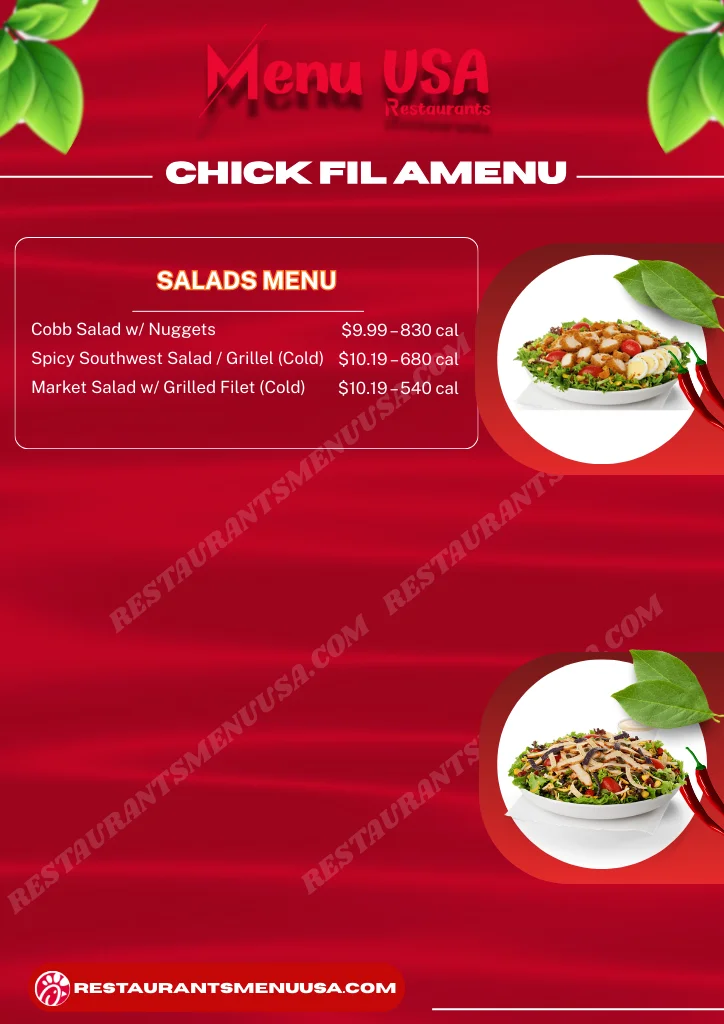
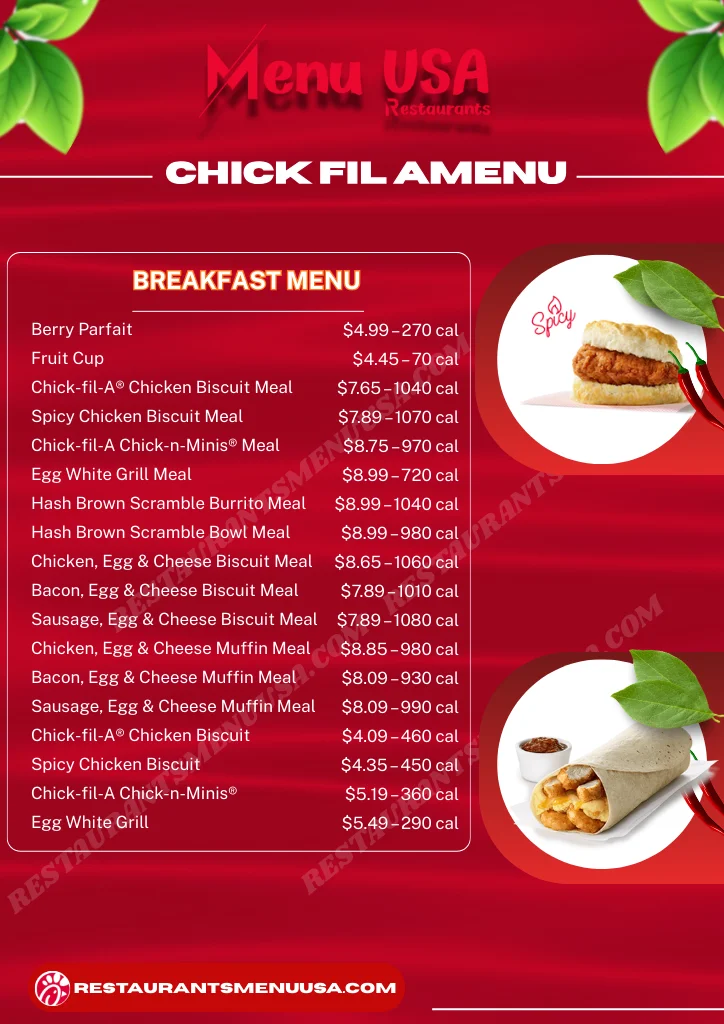
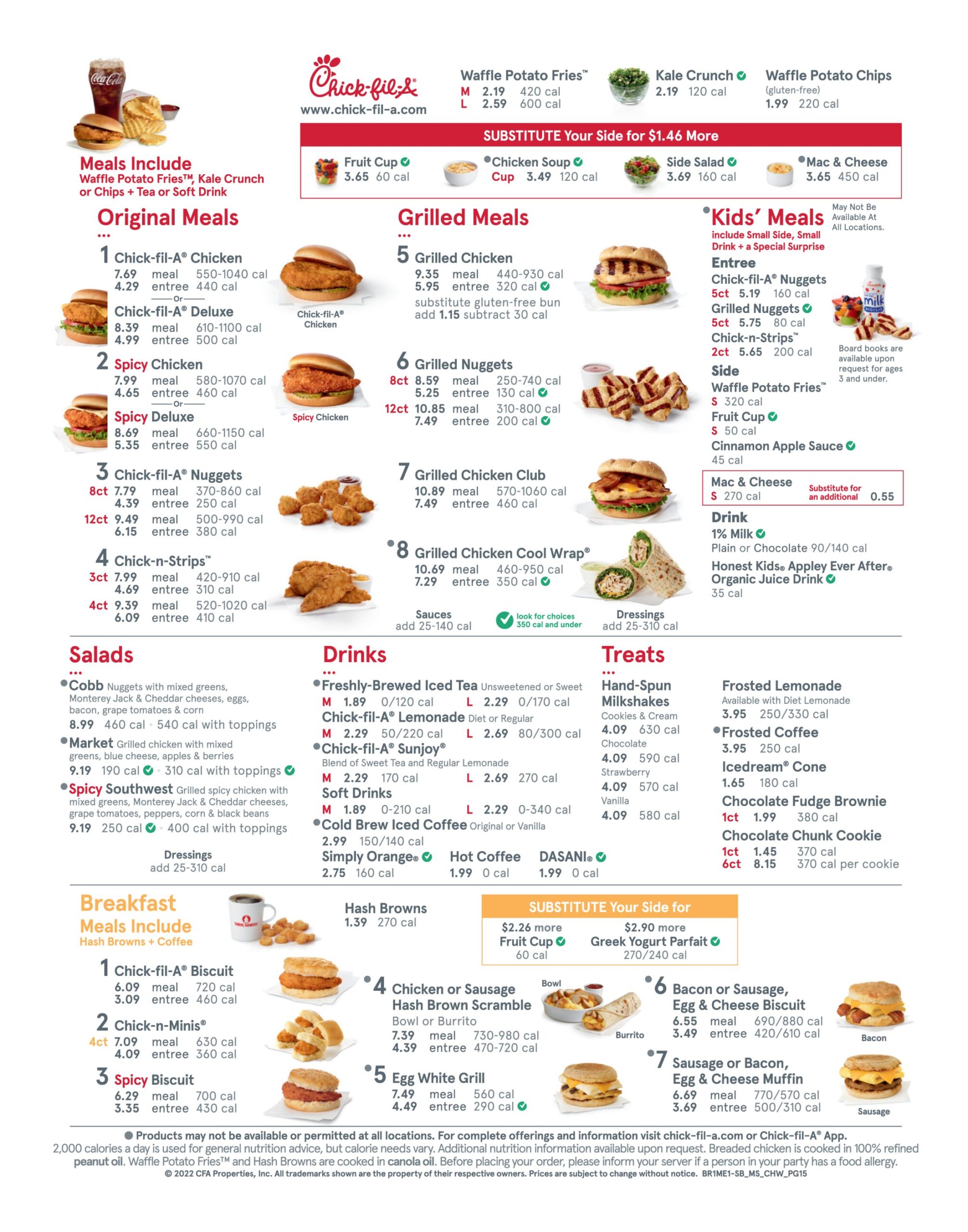
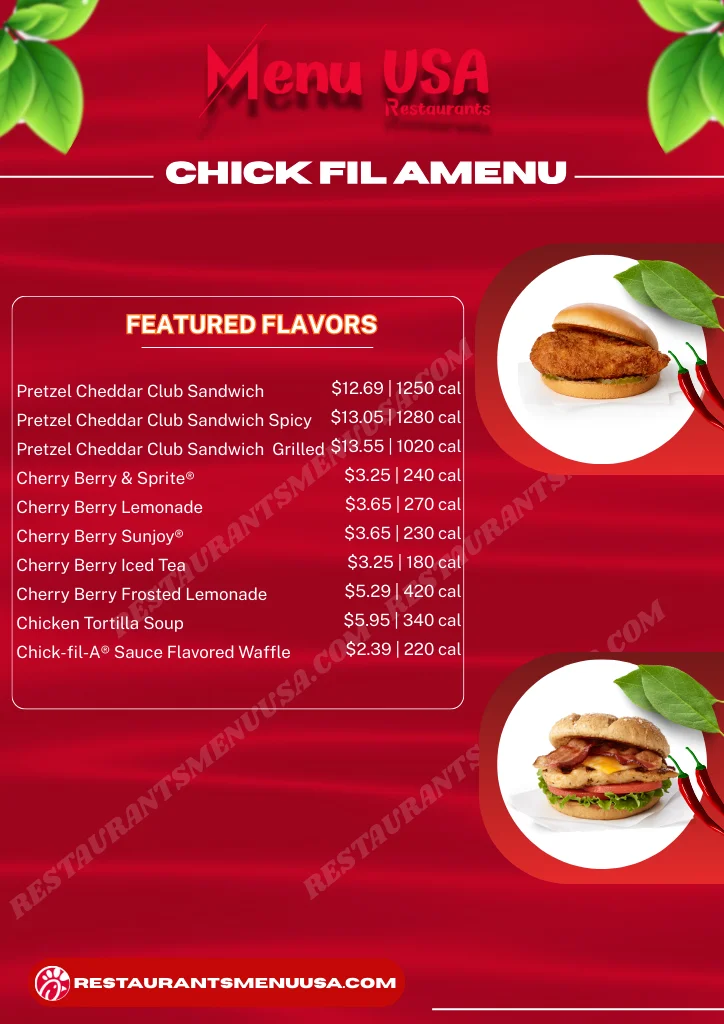
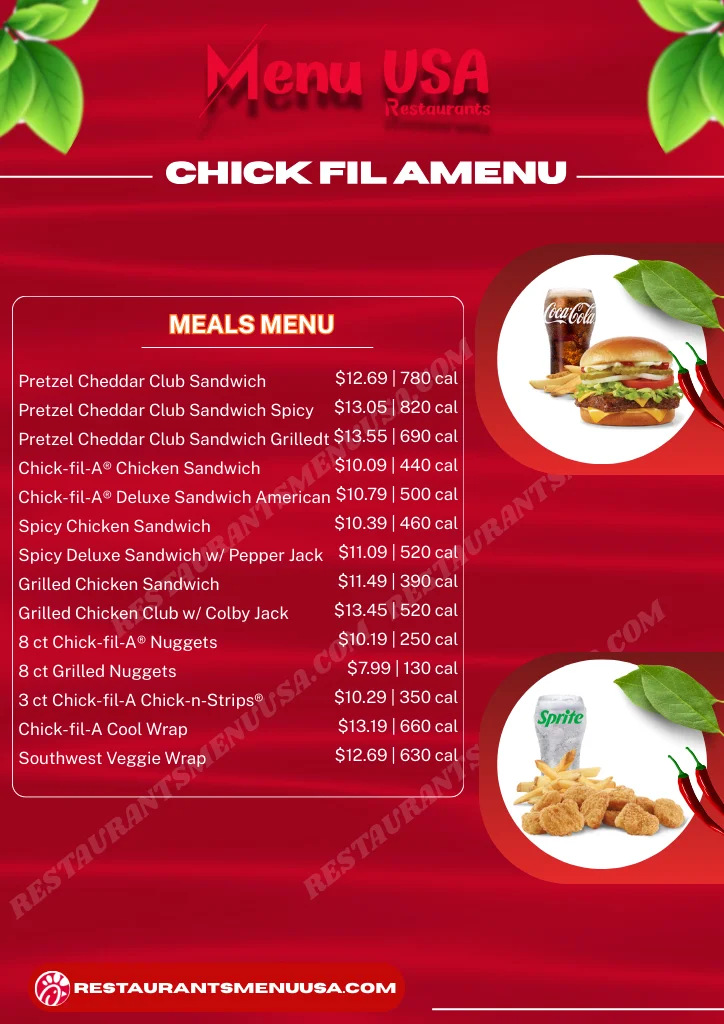
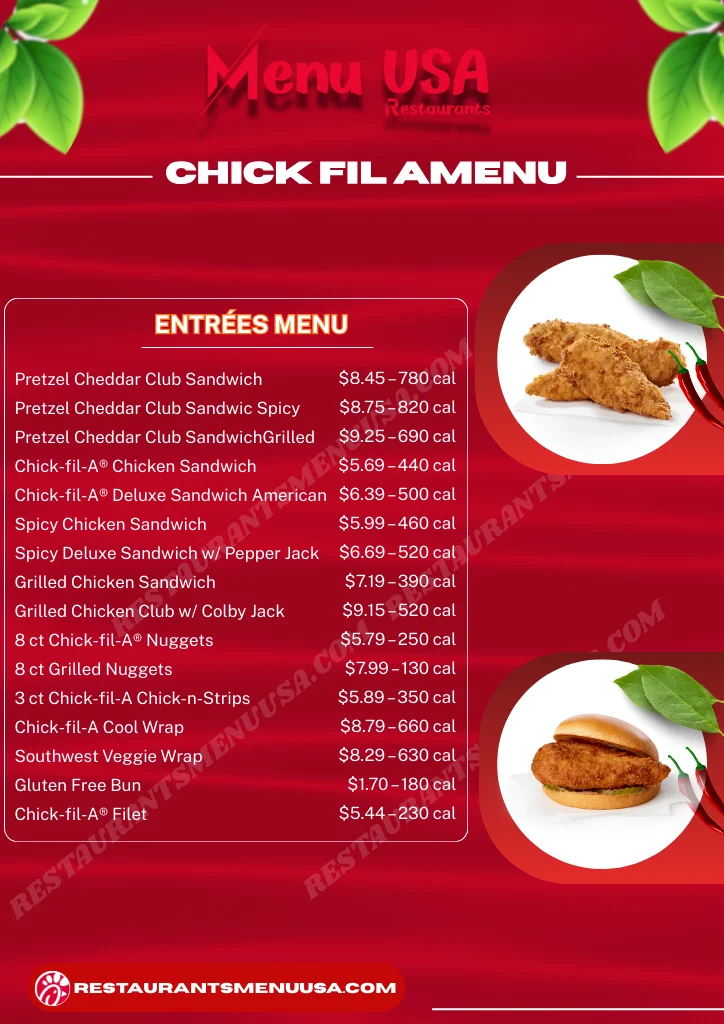
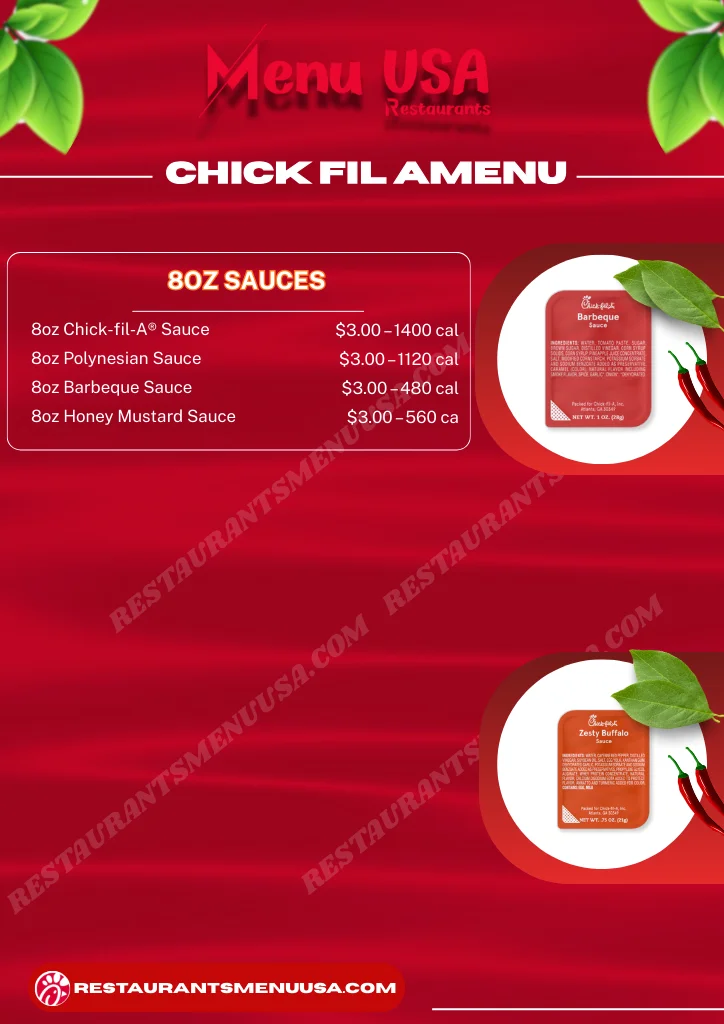
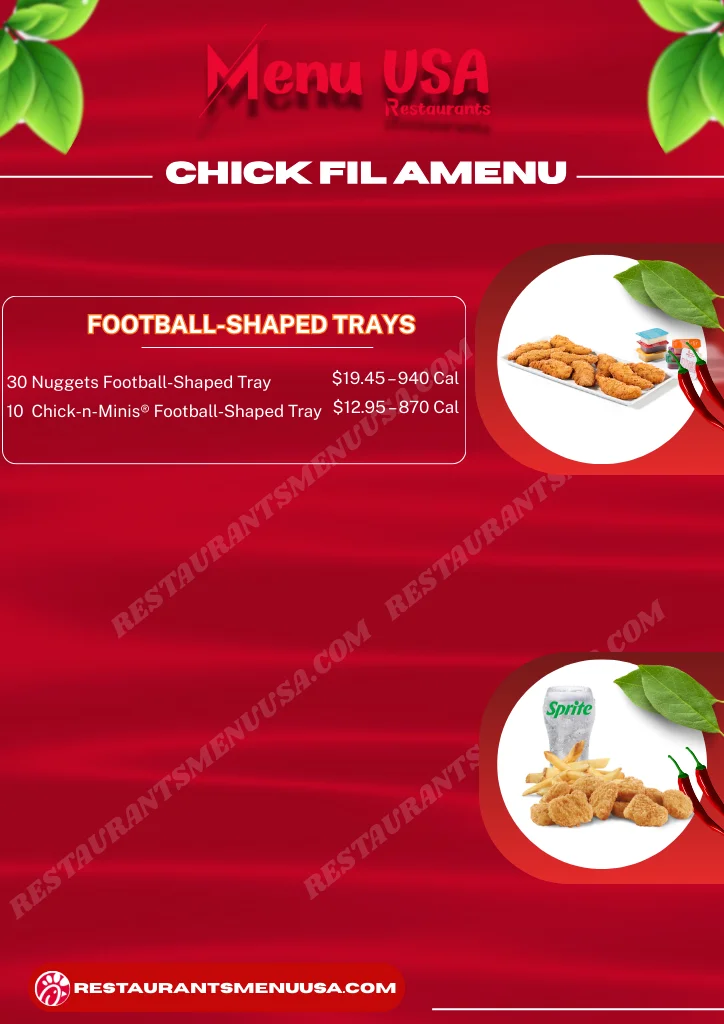
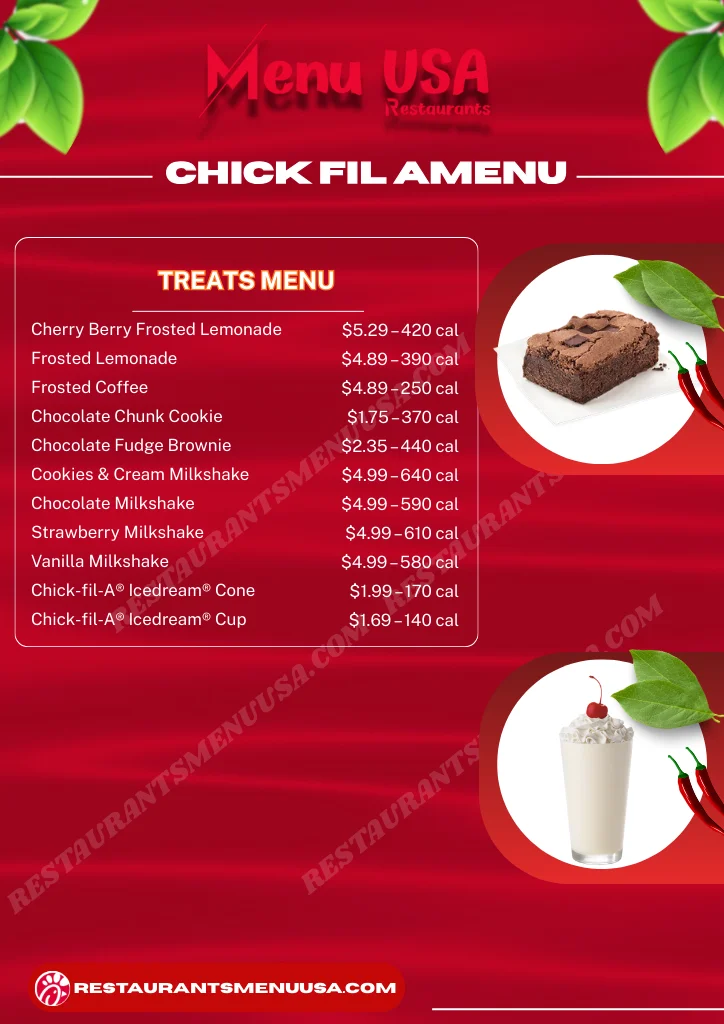
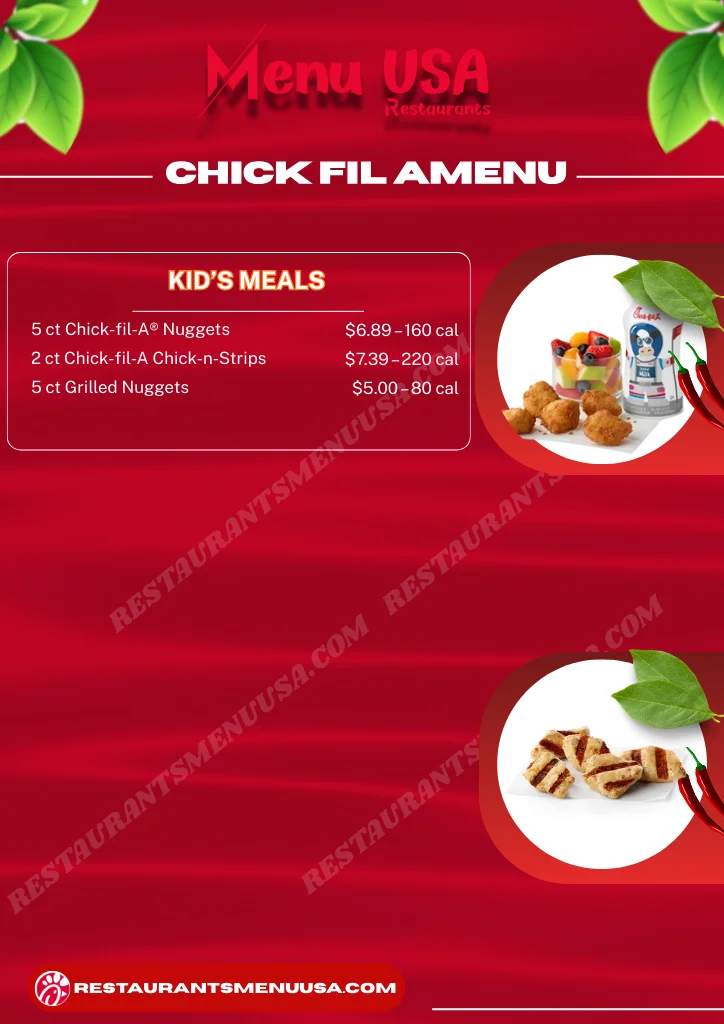
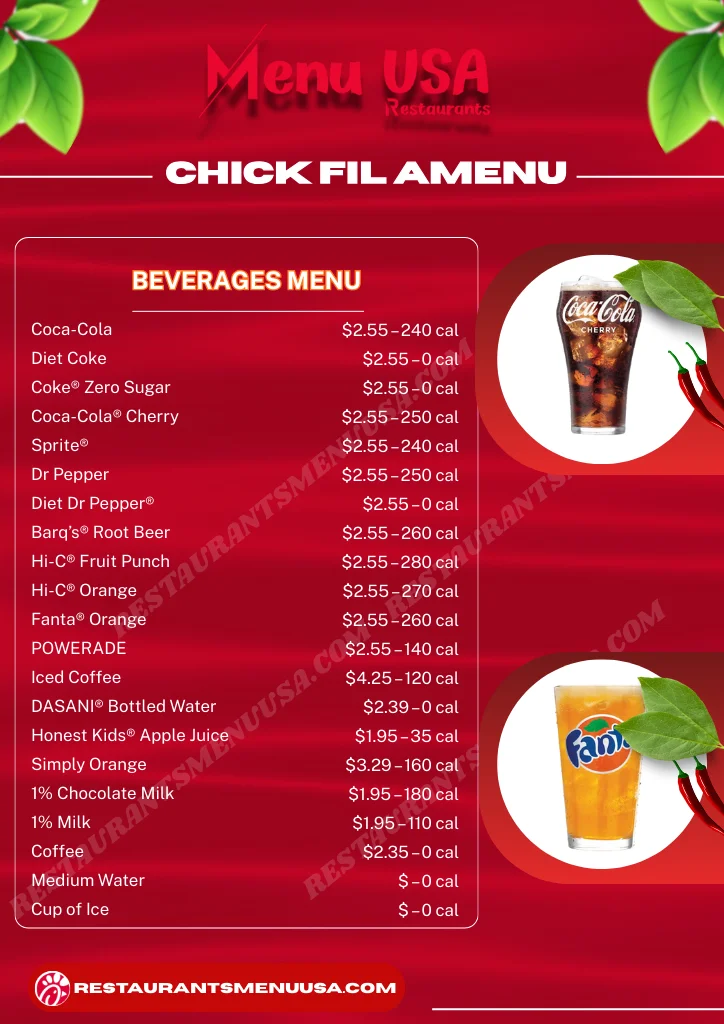
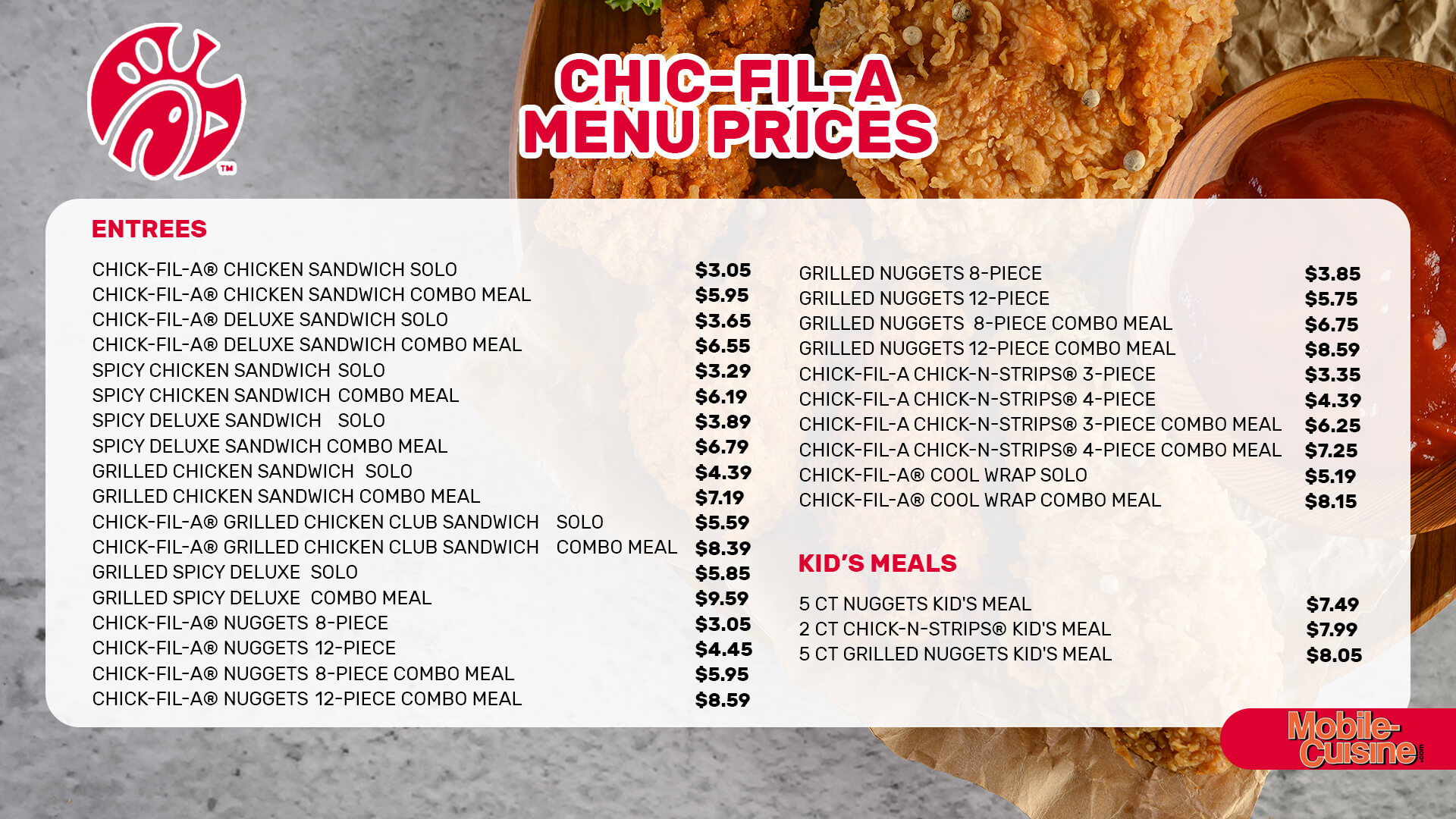
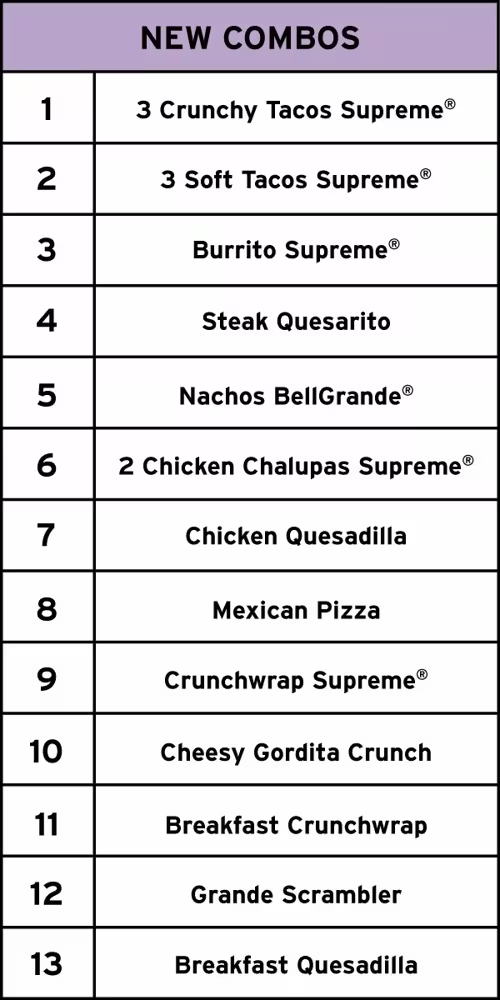
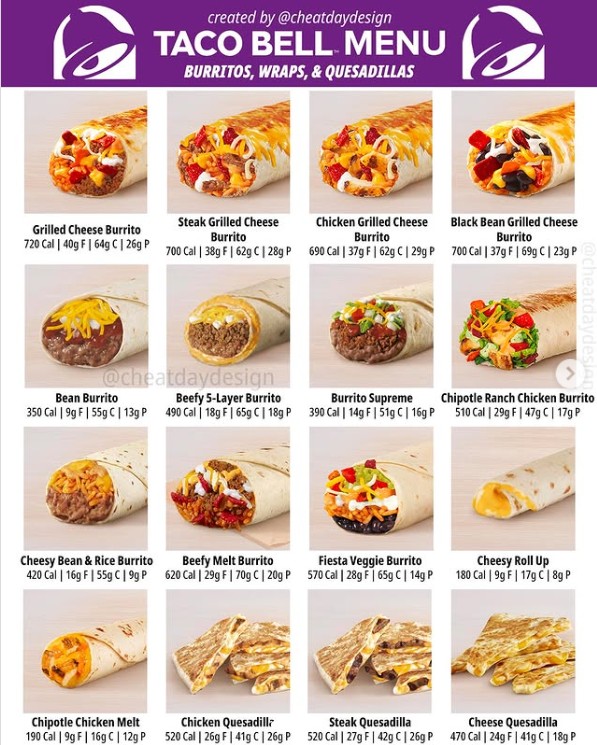
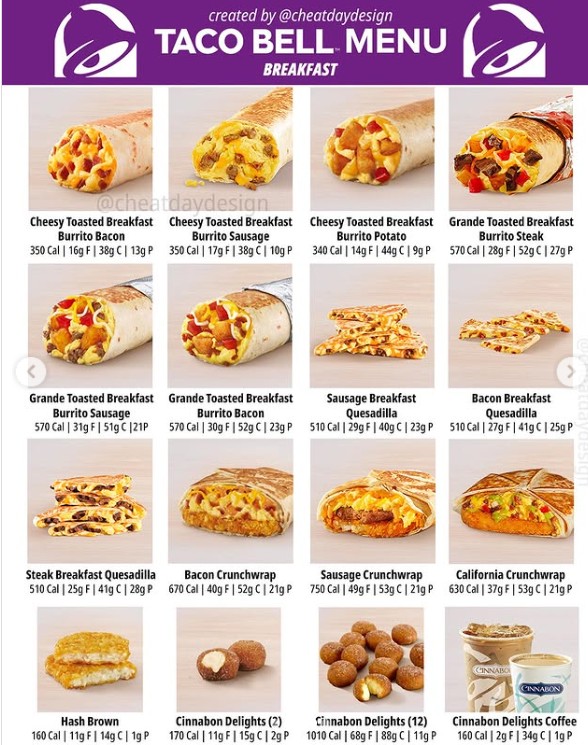
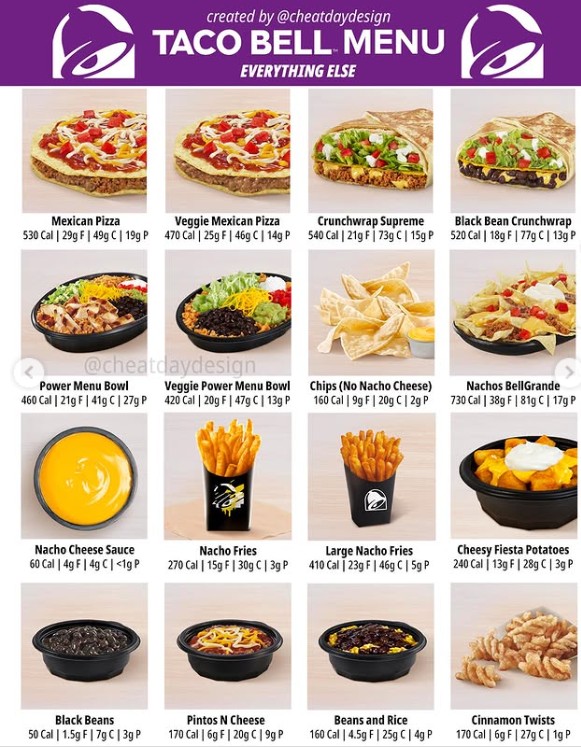
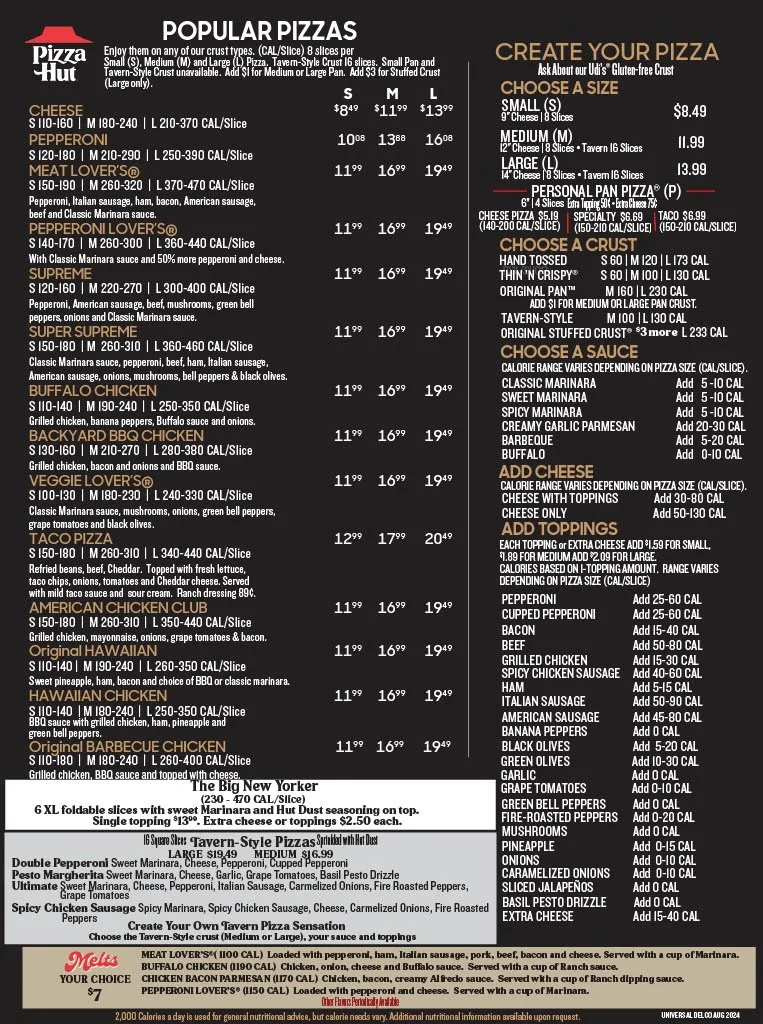
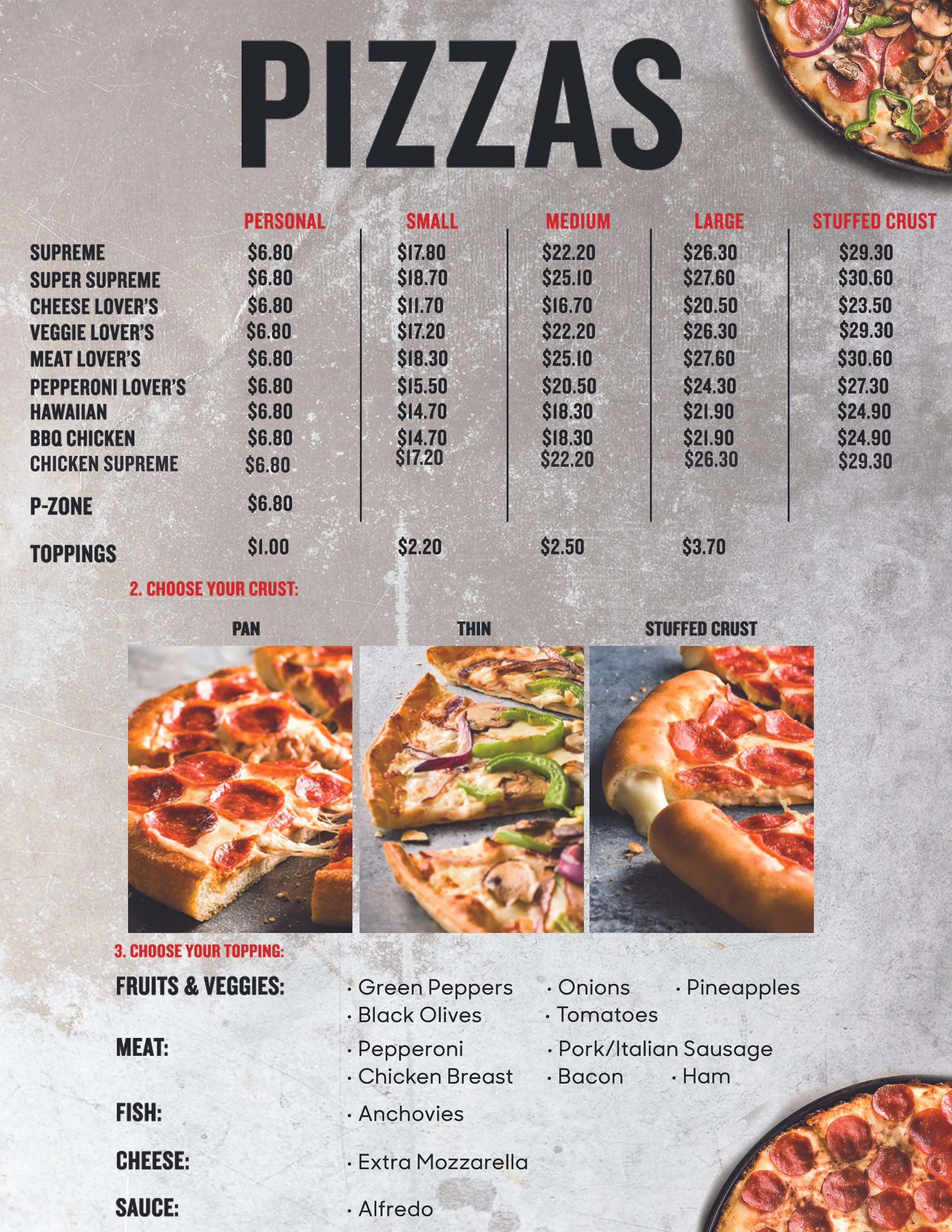
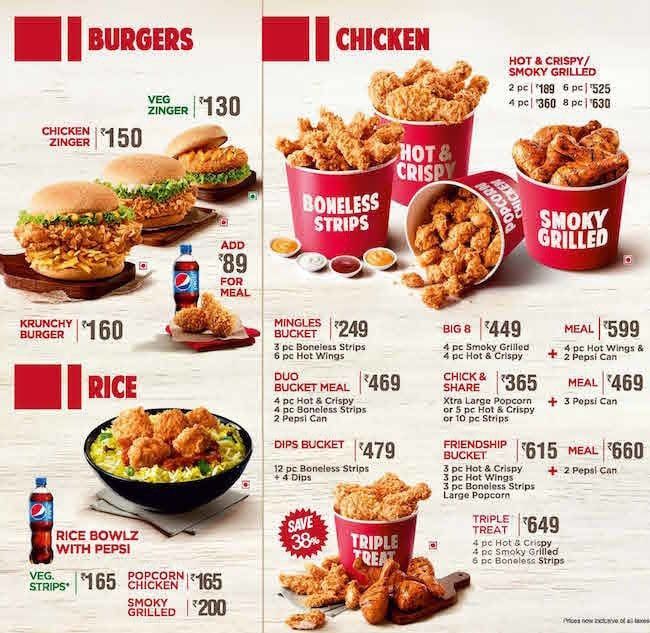
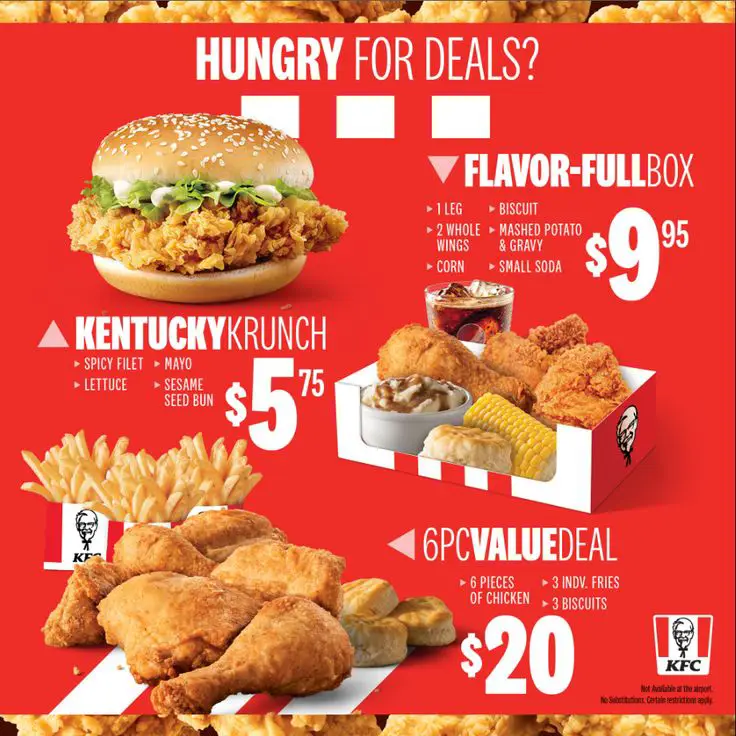
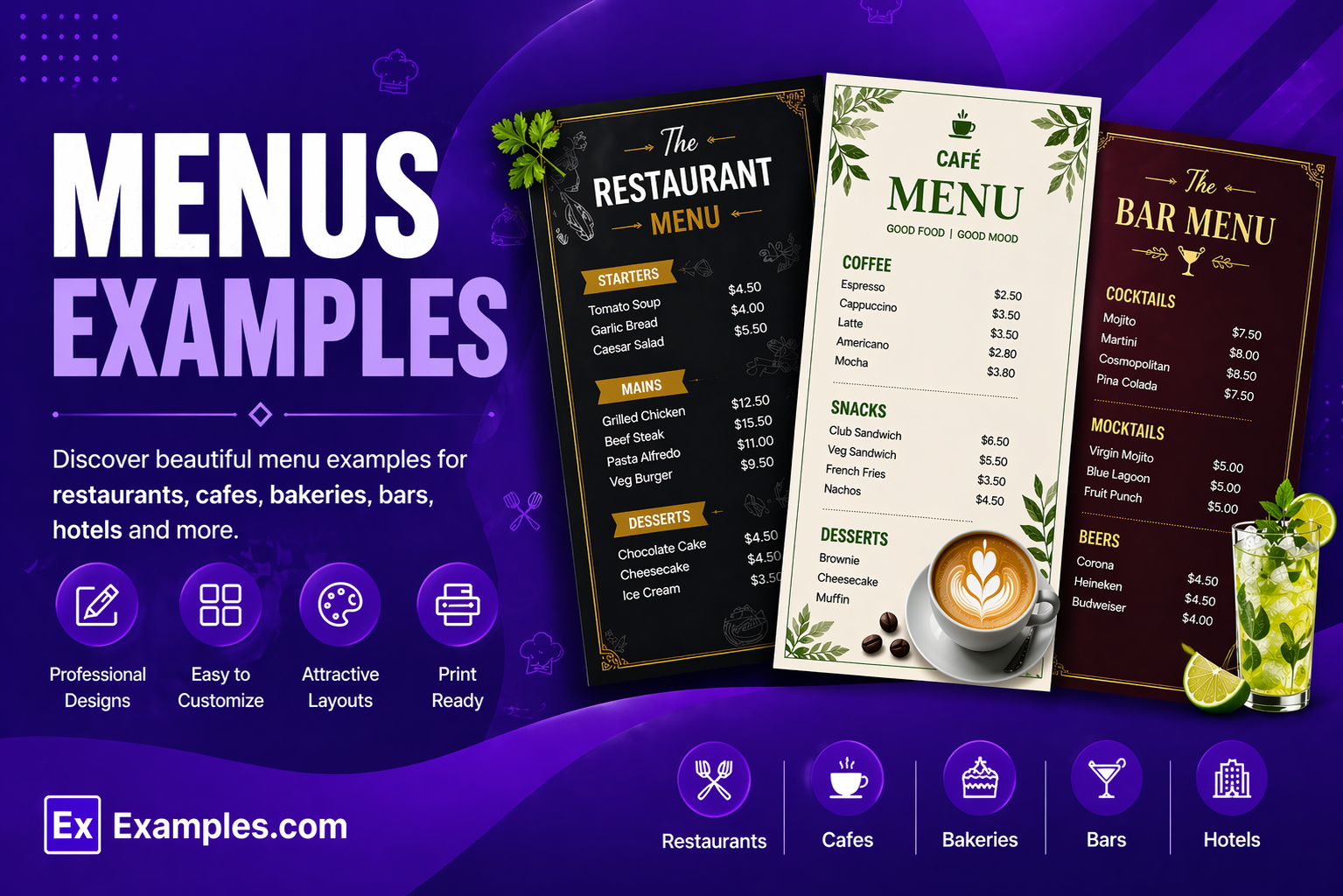
Menus examples are the best way to create a clear, attractive, and high-selling menu for restaurants, cafes, weddings, and businesses. A smart menu helps customers choose faster, increases sales, and improves brand image. In this guide, you will discover the best menus examples, design ideas, and tips to make a professional menu easily.
What Are Menus Examples?
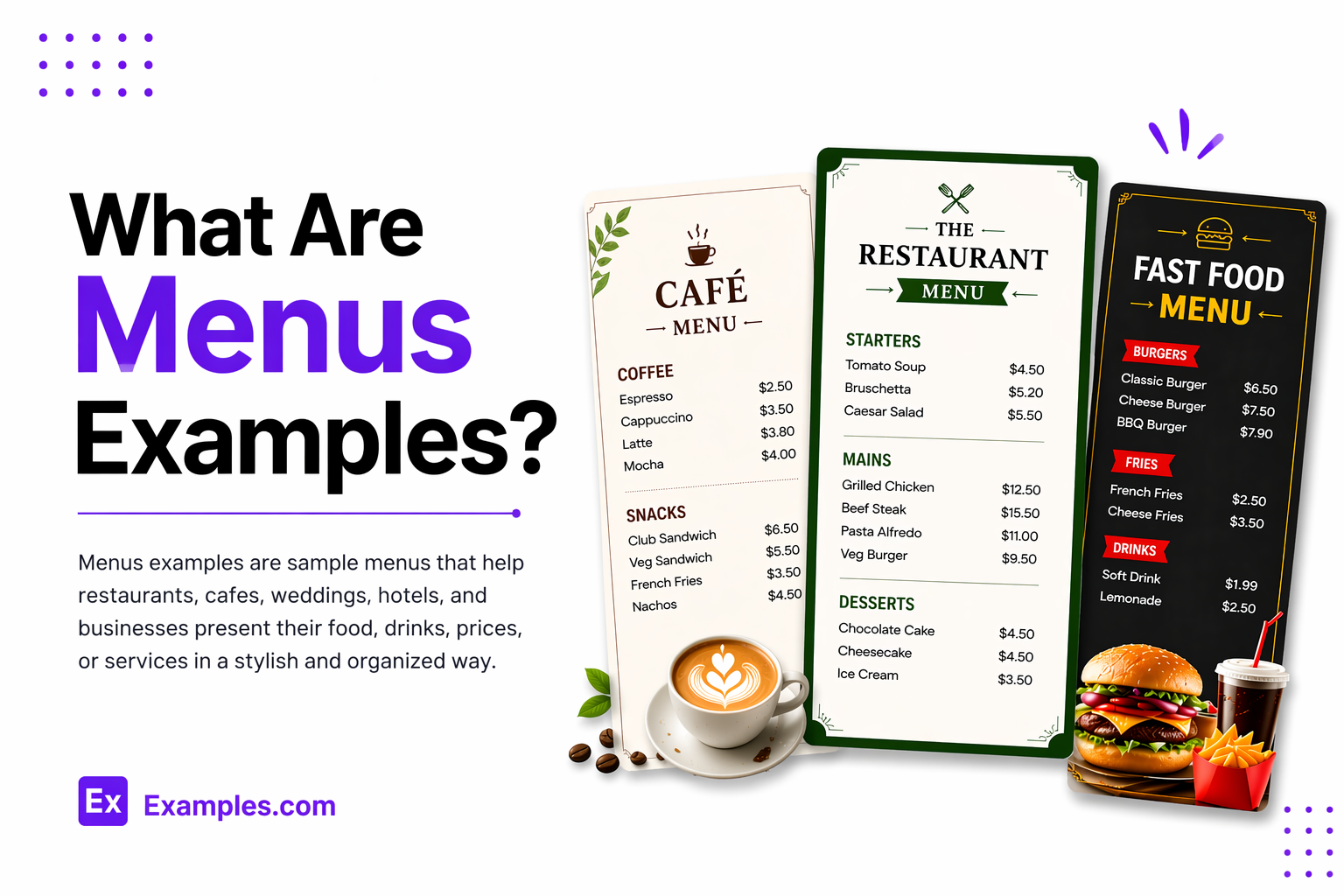
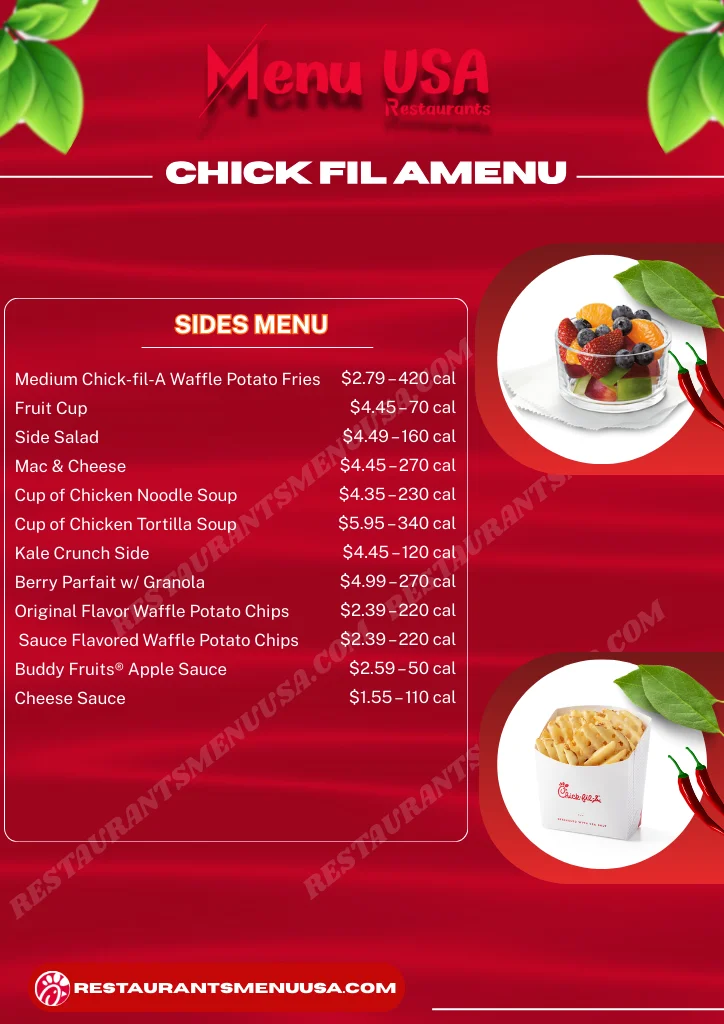
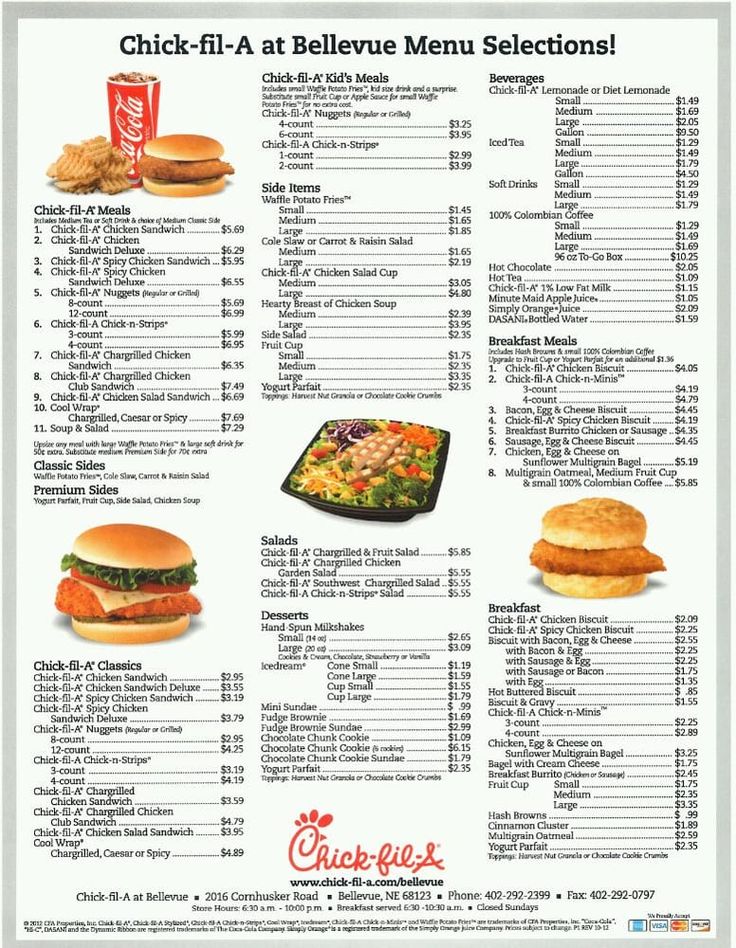
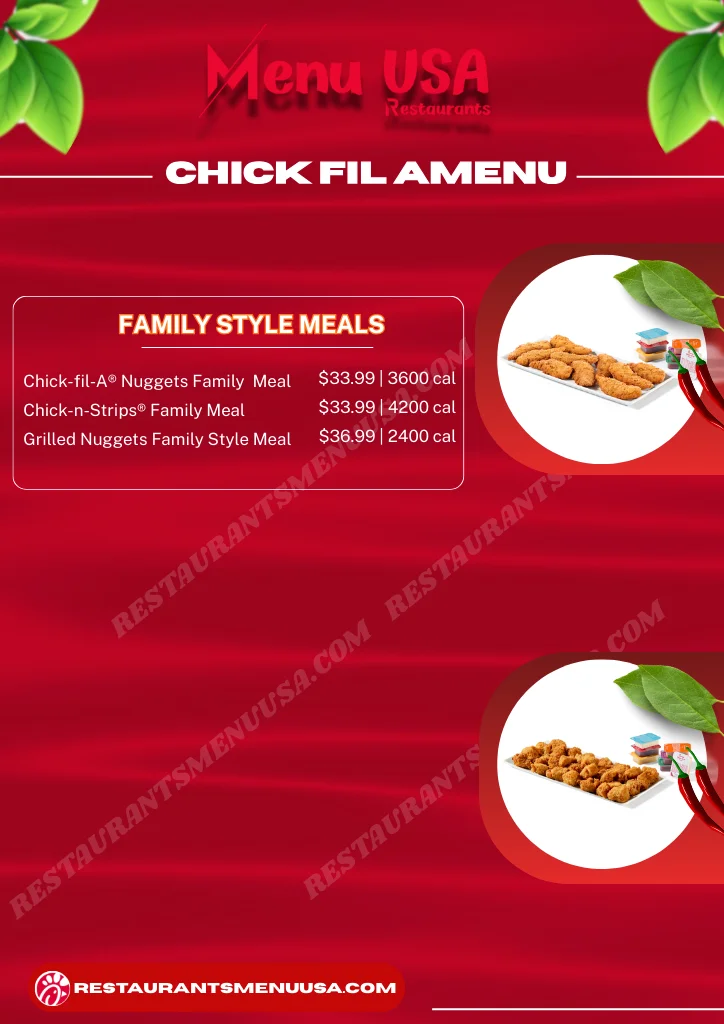
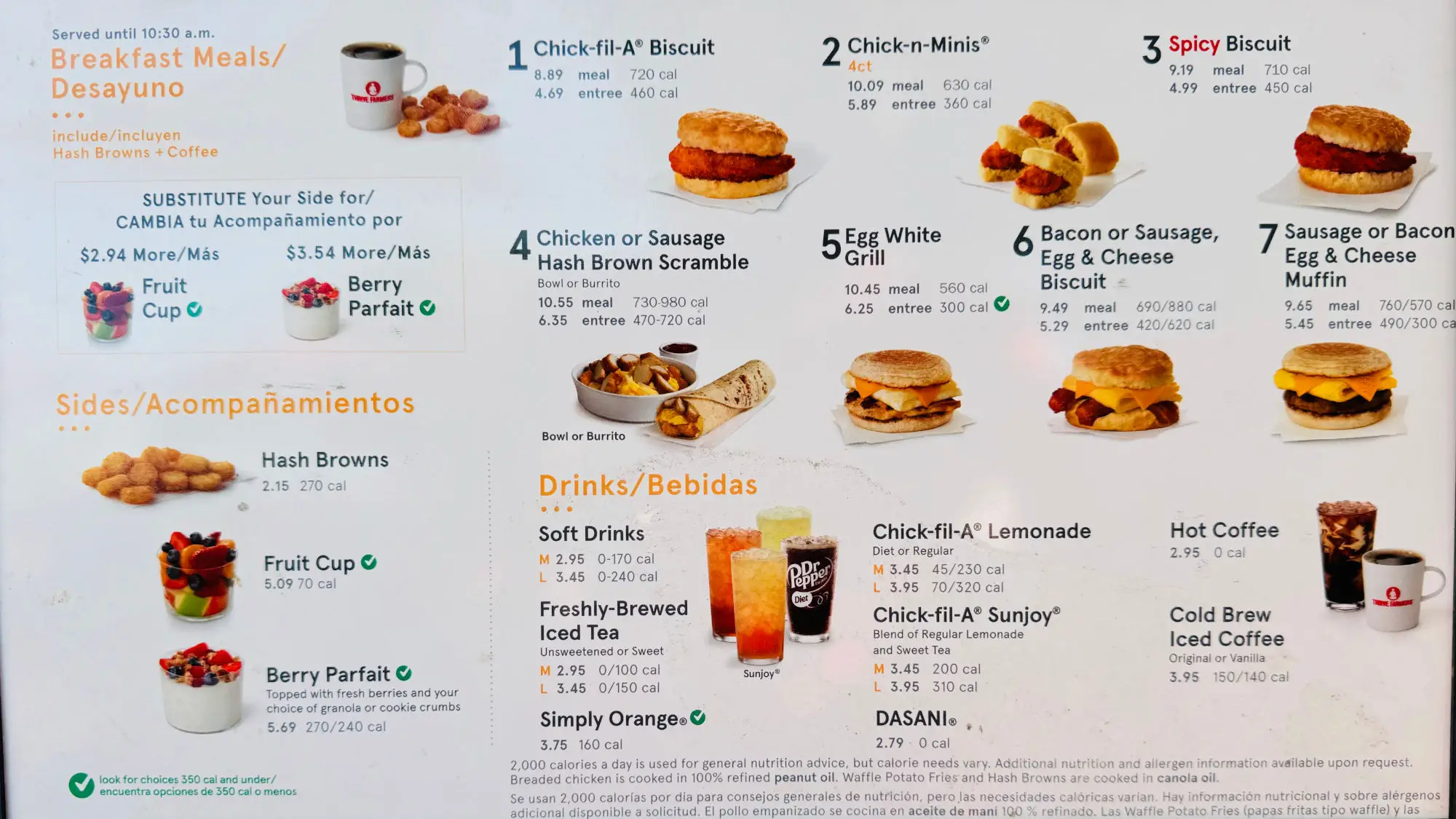
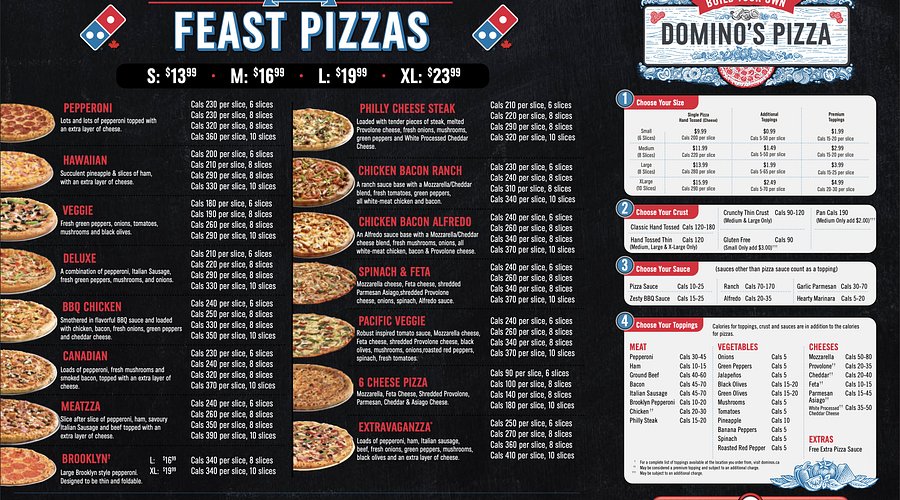
Menus examples are professionally designed sample menus that help restaurants, cafes, weddings, hotels, and businesses present their food, drinks, prices, or services in a stylish and organized way. They give you creative ideas for layout, colors, fonts, and item placement, making it easier to build a menu that looks attractive and easy to read. A good menu example can save time, improve customer experience, and even increase sales by highlighting the best items. Popular choices include restaurant menus, café menus, fast food menus, wedding menus, and event menus.
Why Good Menu Design Matters
Good menu design matters because it influences customer choices, improves brand image, and helps increase sales. A well-designed menu is more than a price list. It is a powerful marketing tool for any business.
Benefits of Good Menu Design
- Creates a Strong First Impression: A stylish menu makes your business look professional and trustworthy.
- Improves Readability: Clear fonts and organized sections help customers find items quickly.
- Increases Sales: Highlighting popular or premium items can encourage more orders.
- Speeds Up Decisions: Customers choose faster when the menu is simple and easy to scan.
- Builds Brand Identity: Colors, design, and style reflect your business personality.
- Enhances Customer Experience: A clean menu makes ordering more enjoyable and stress-free.
- Promotes Special Items: New dishes, combos, or offers get more attention with smart placement.
Popular Menus Examples
Different businesses use different menu styles based on their customers and services. Choosing the right format helps improve presentation, readability, and customer experience.
Most Popular Menus Examples
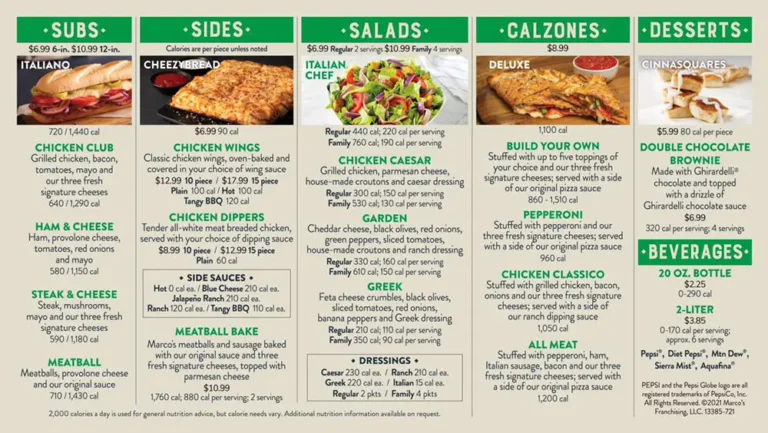
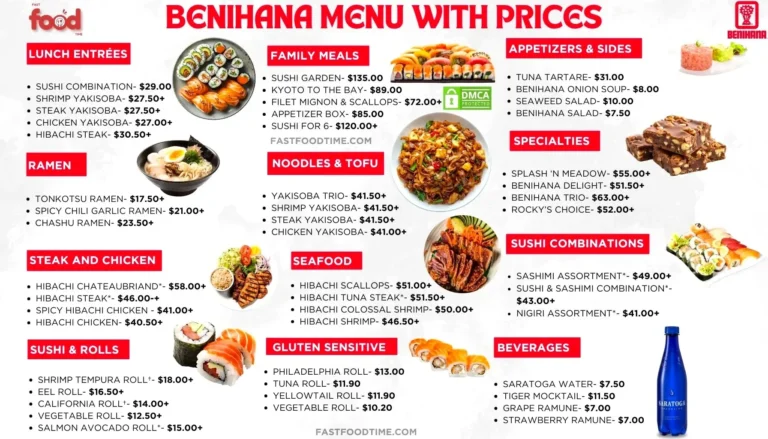
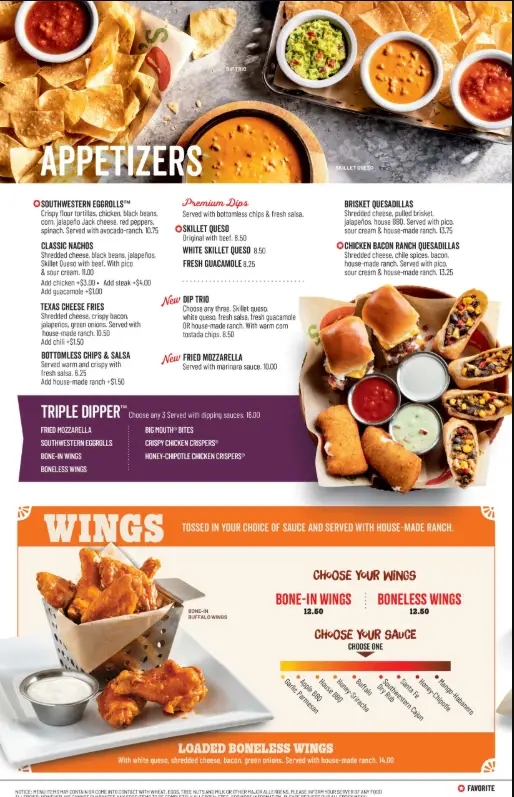
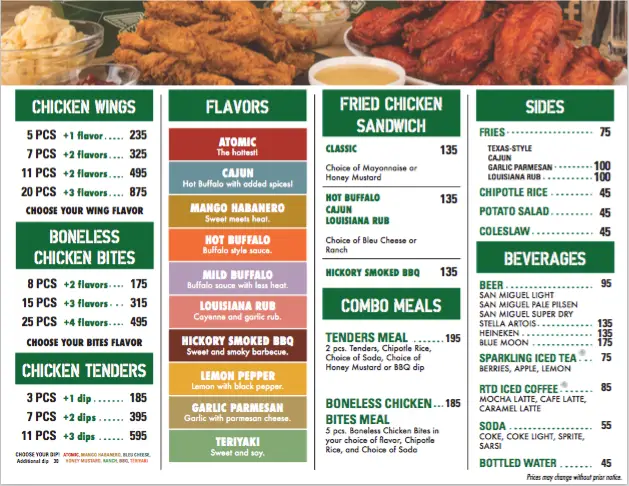
- Restaurant Menu Example: Best for dine-in restaurants with starters, main course, desserts, and drinks.
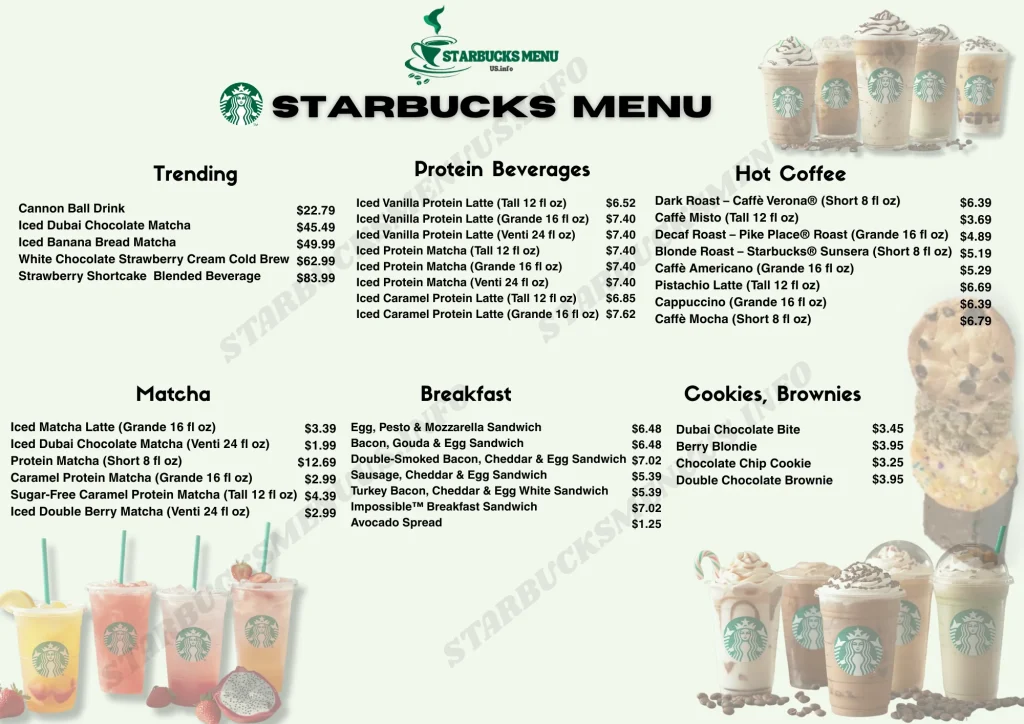
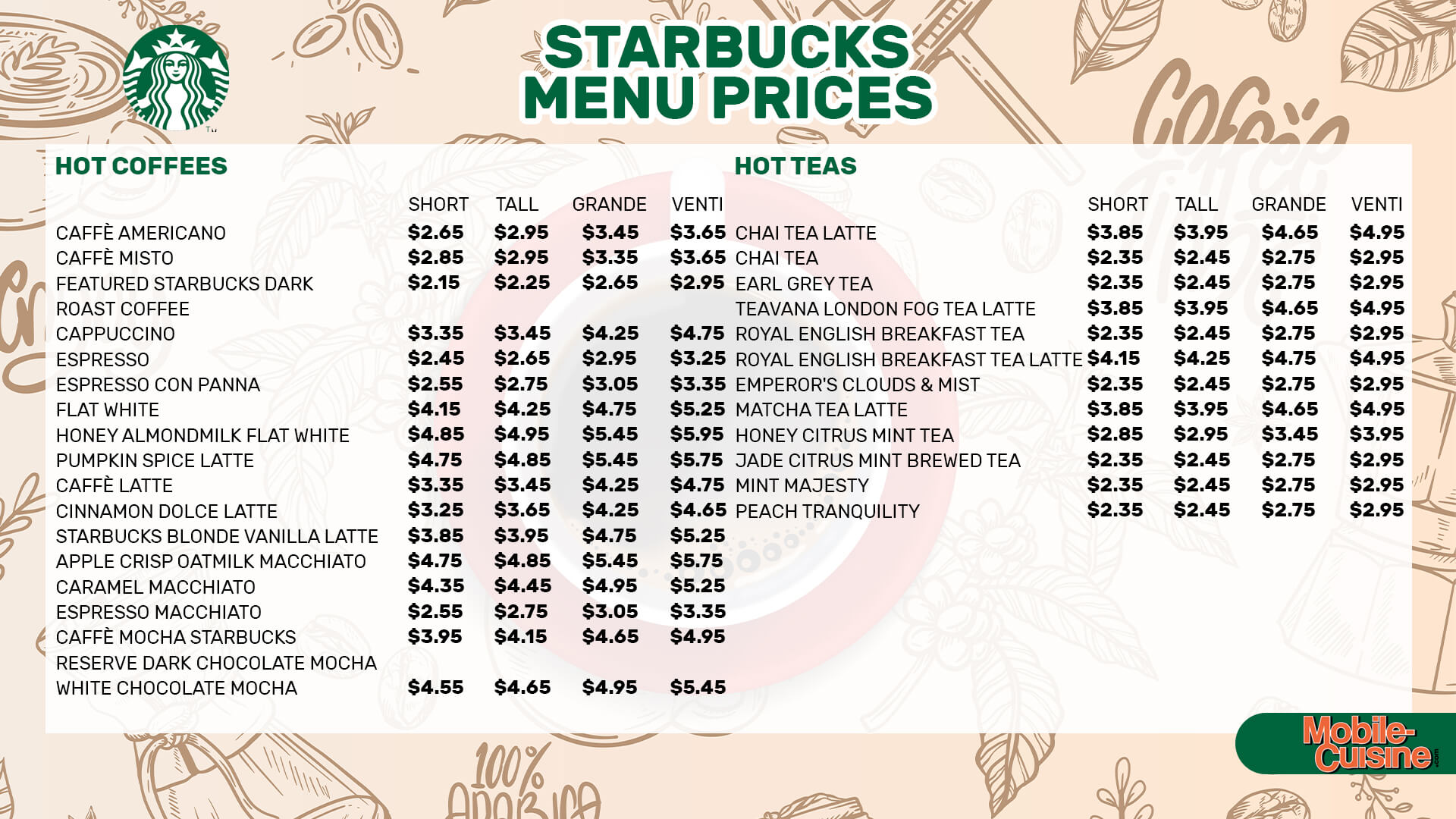
- Cafe Menu Example: Ideal for coffee shops offering beverages, snacks, and light meals.
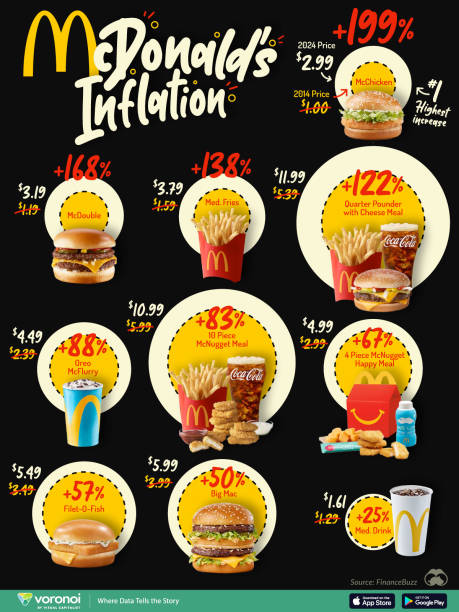
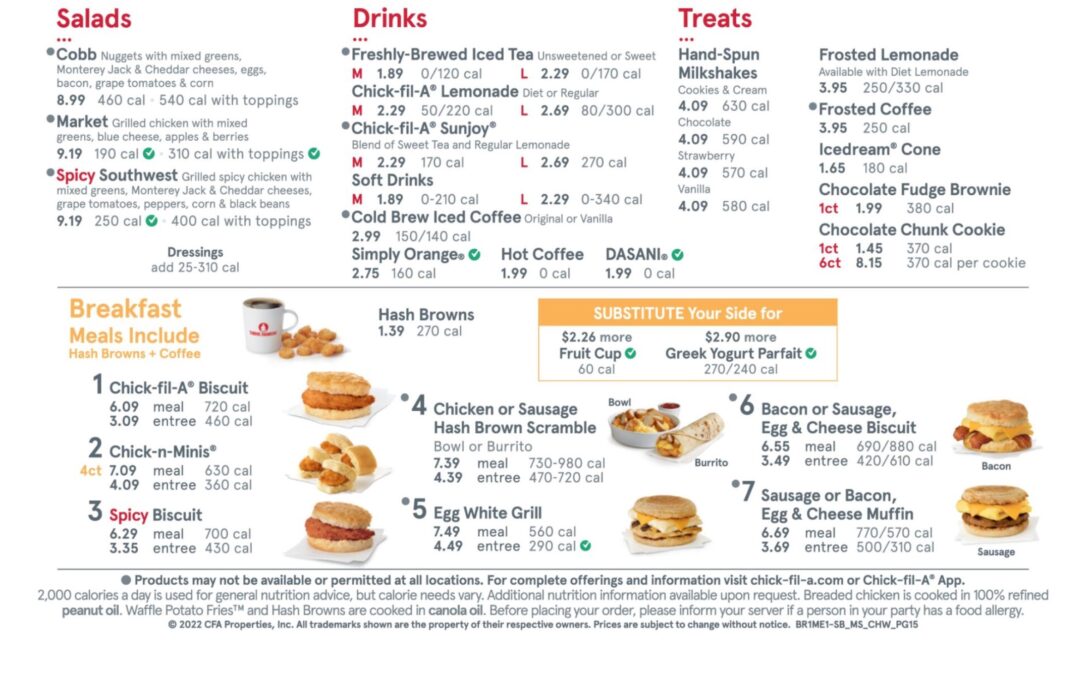
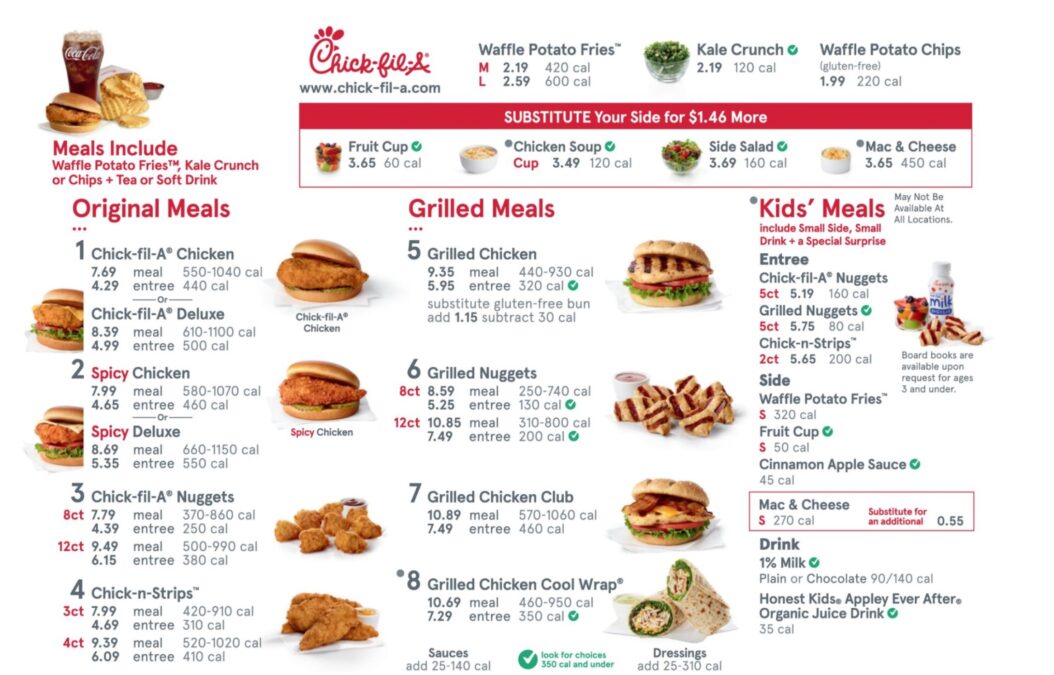
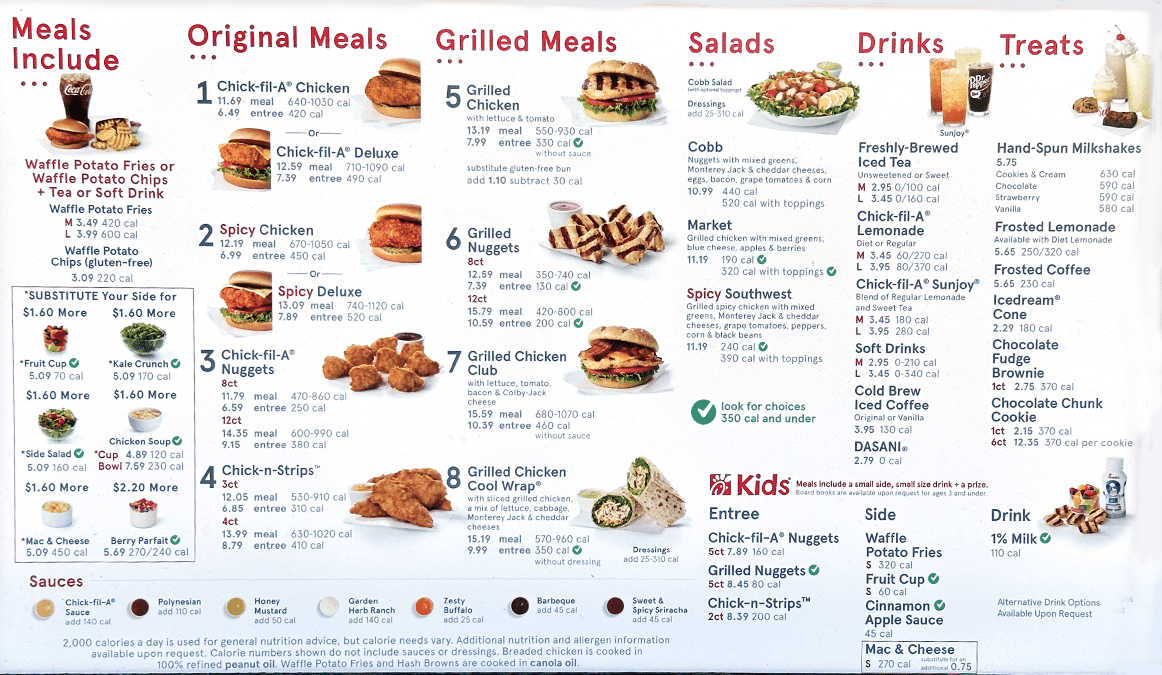
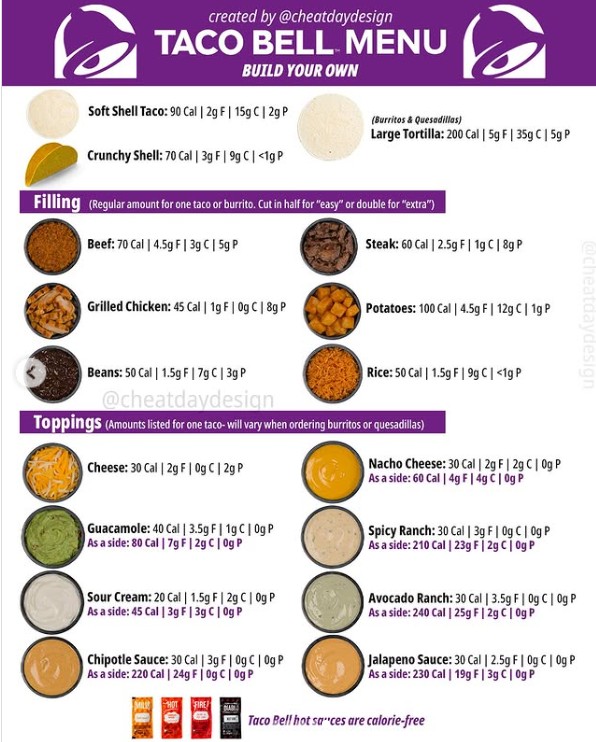
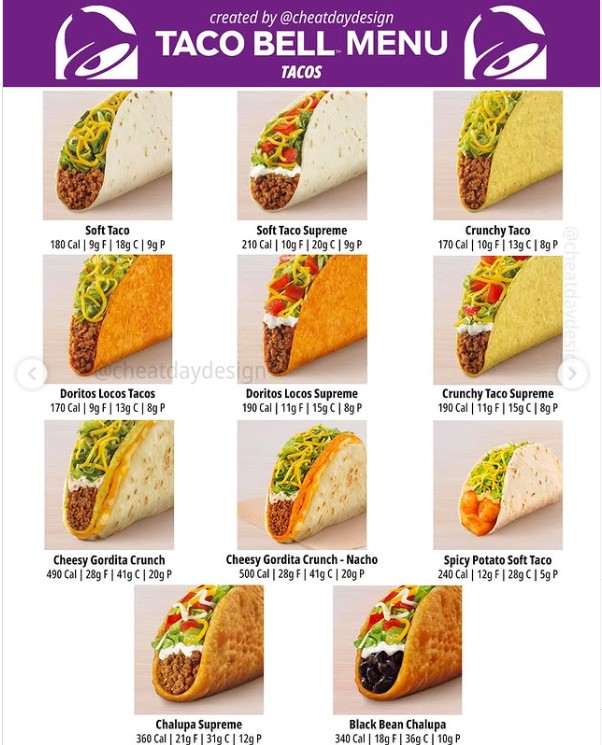
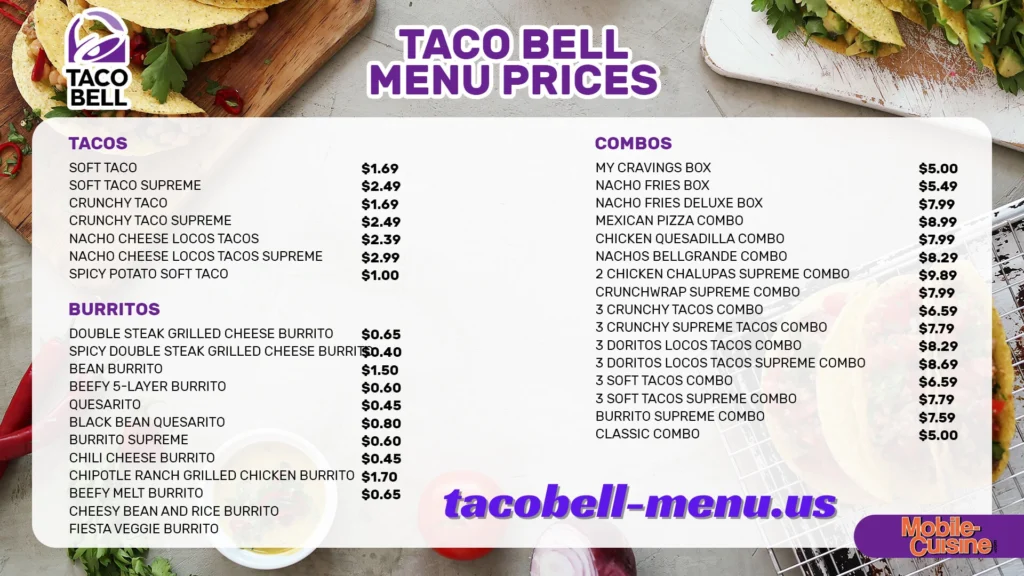
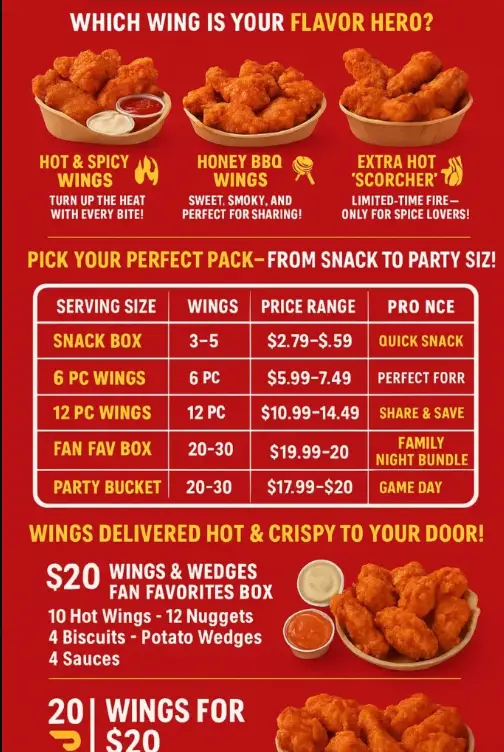
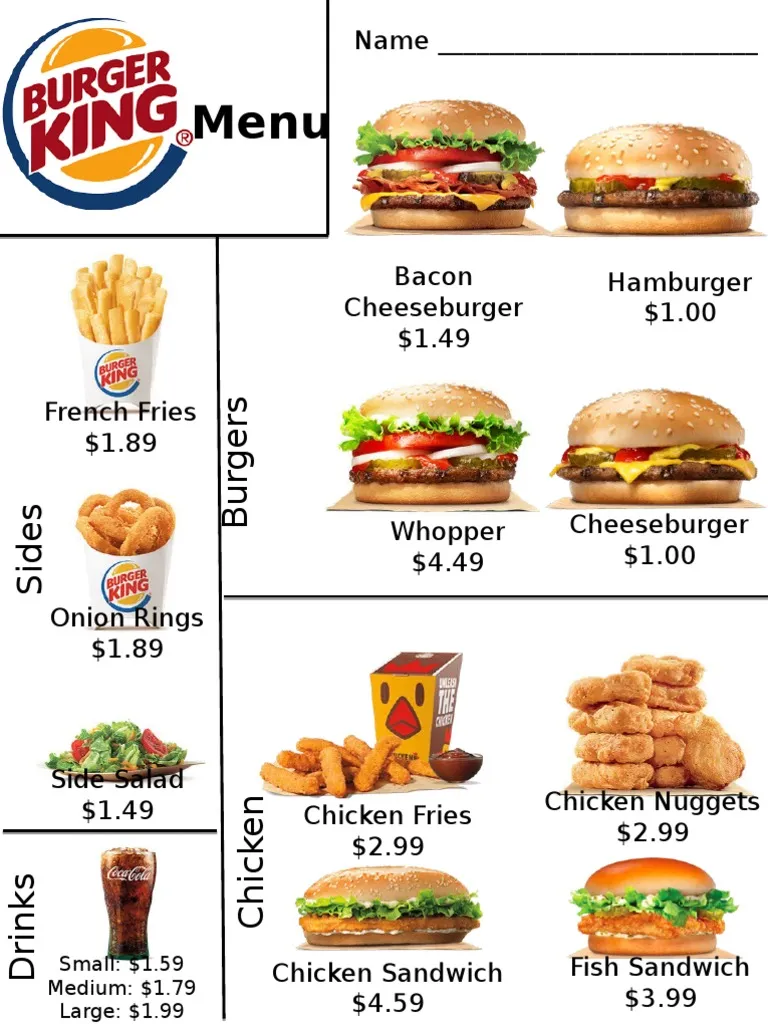
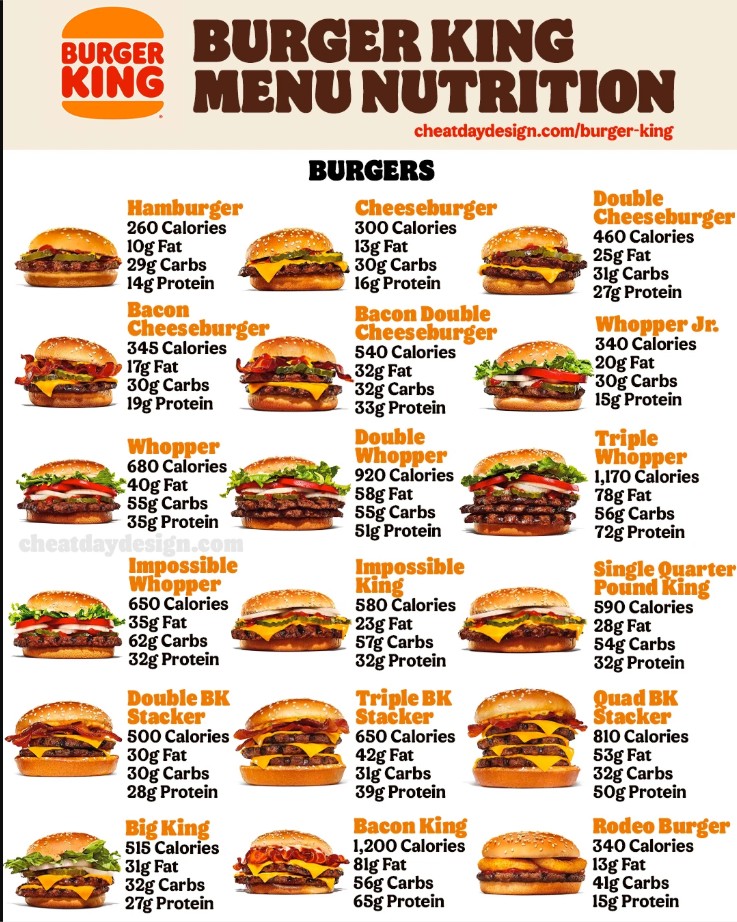
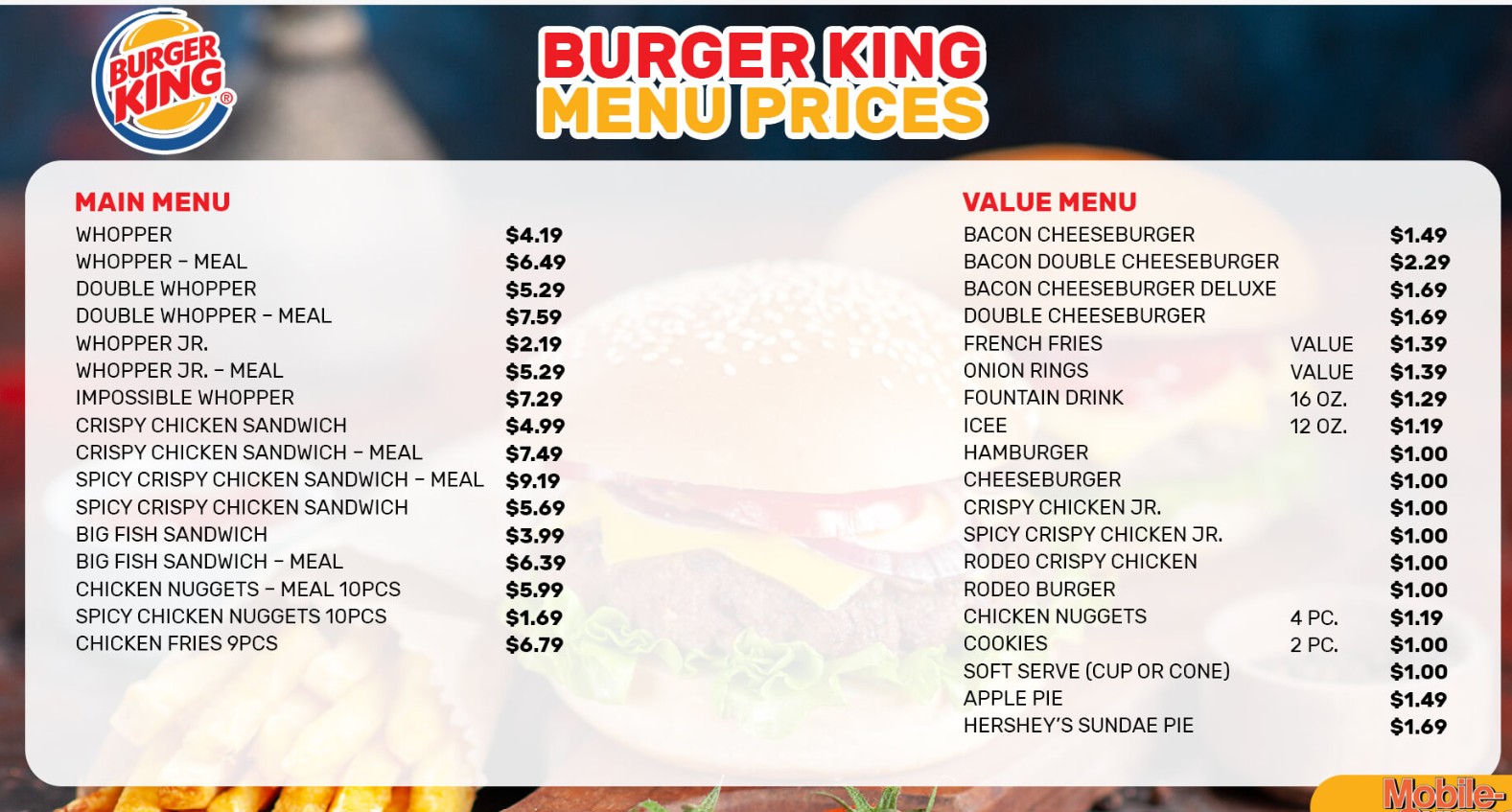
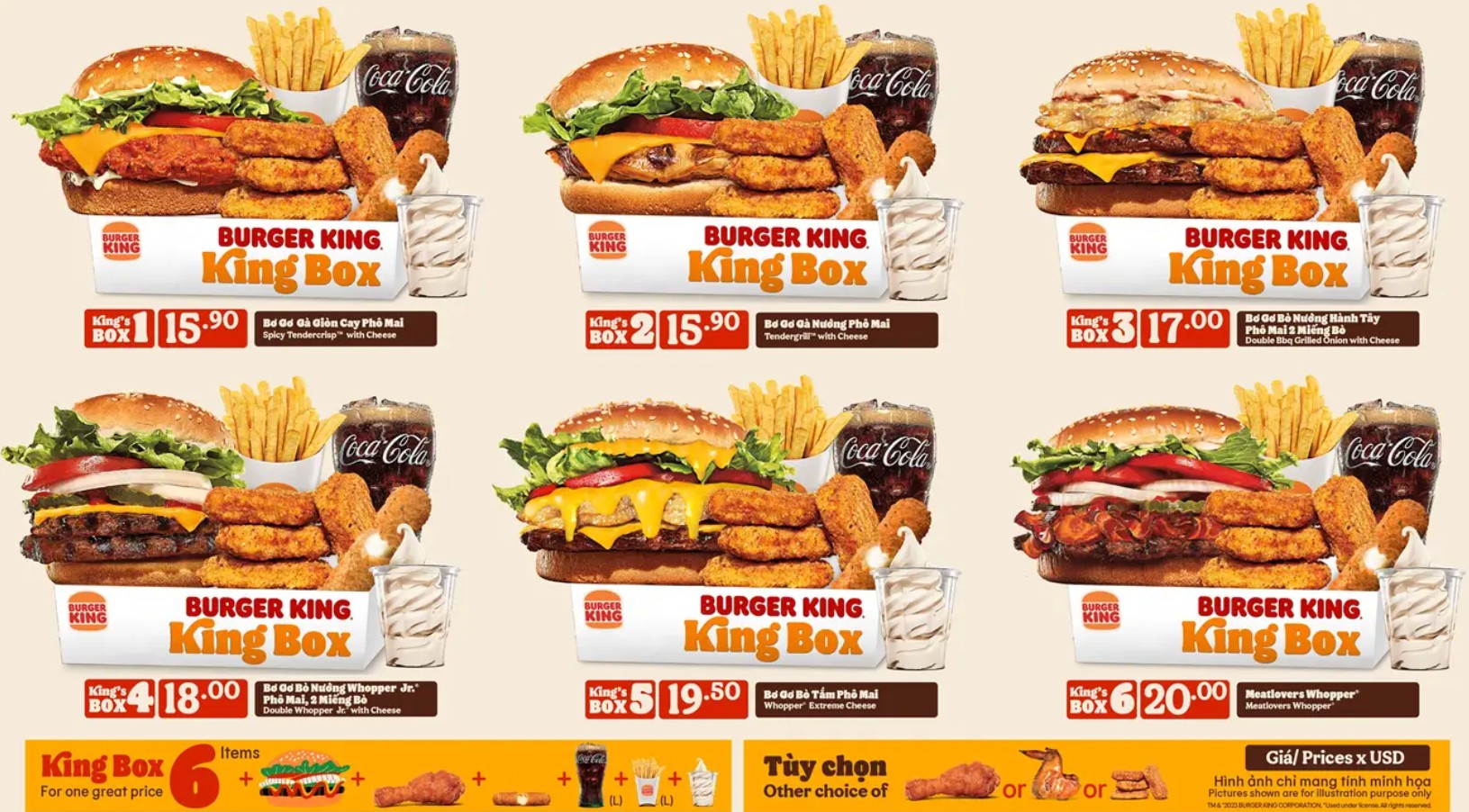
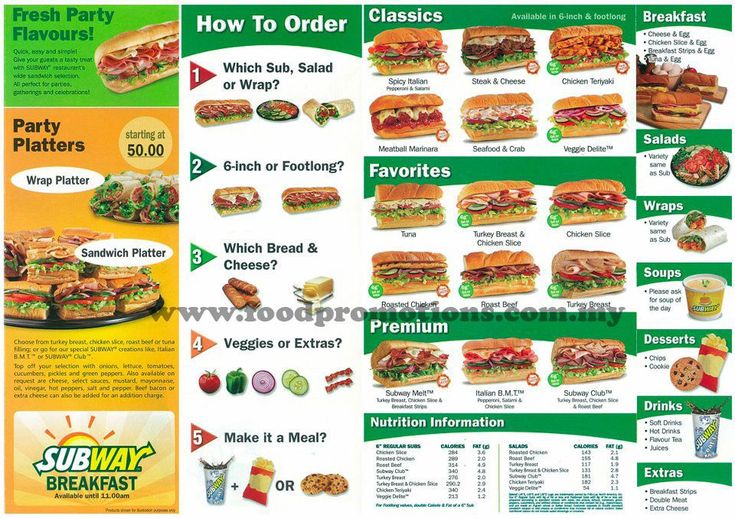
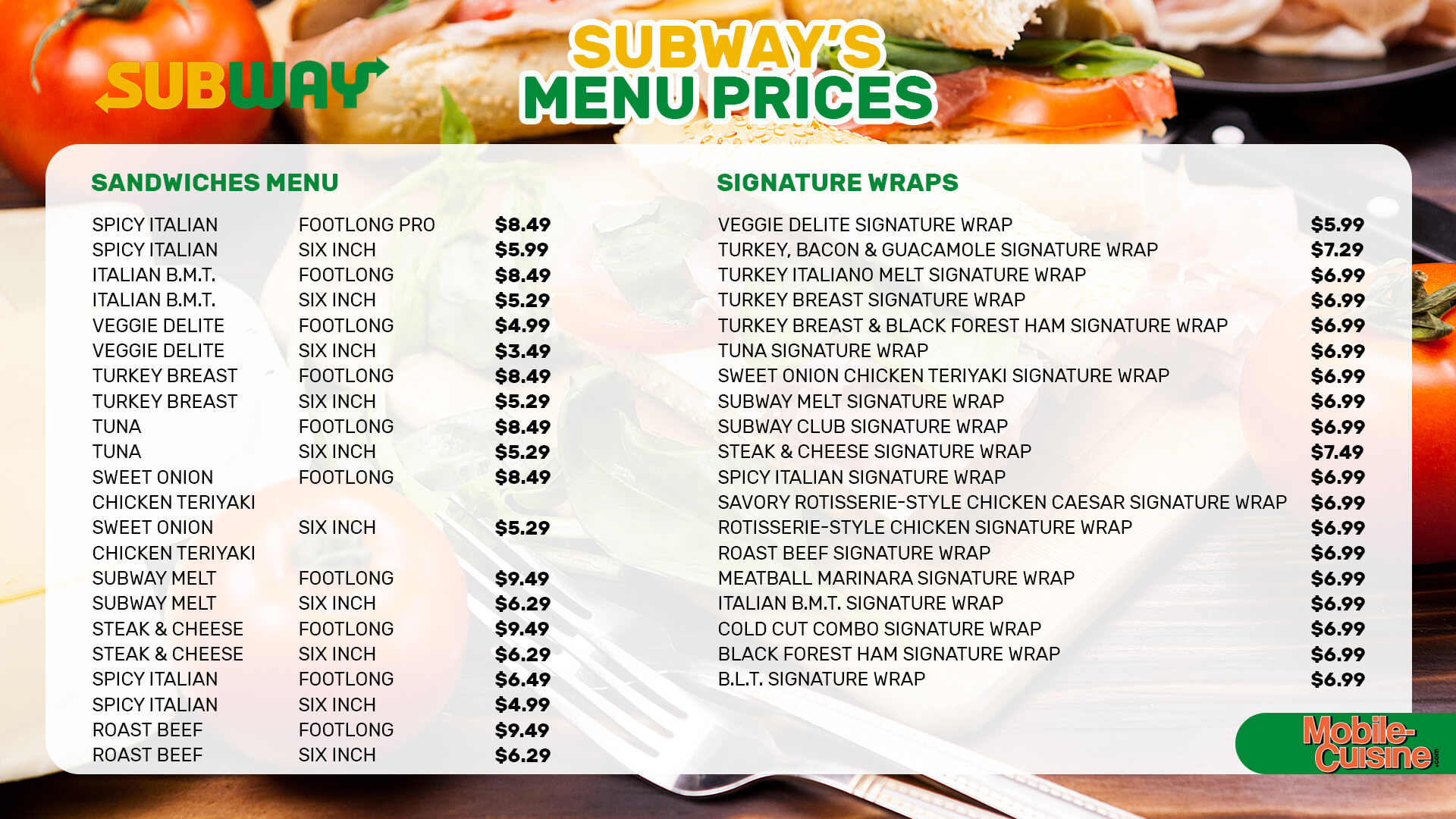
- Fast Food Menu Example: Designed for quick ordering with combos, burgers, fries, and drinks.
- Wedding Menu Example: Perfect for events with starters, buffet items, desserts, and beverages.
- Hotel Menu Example: Used for room service, dining halls, and premium meal options.
- Bakery Menu Example: Great for cakes, pastries, breads, and sweet treats.
- Bar Menu Example: Best for cocktails, mocktails, beer, and snacks.
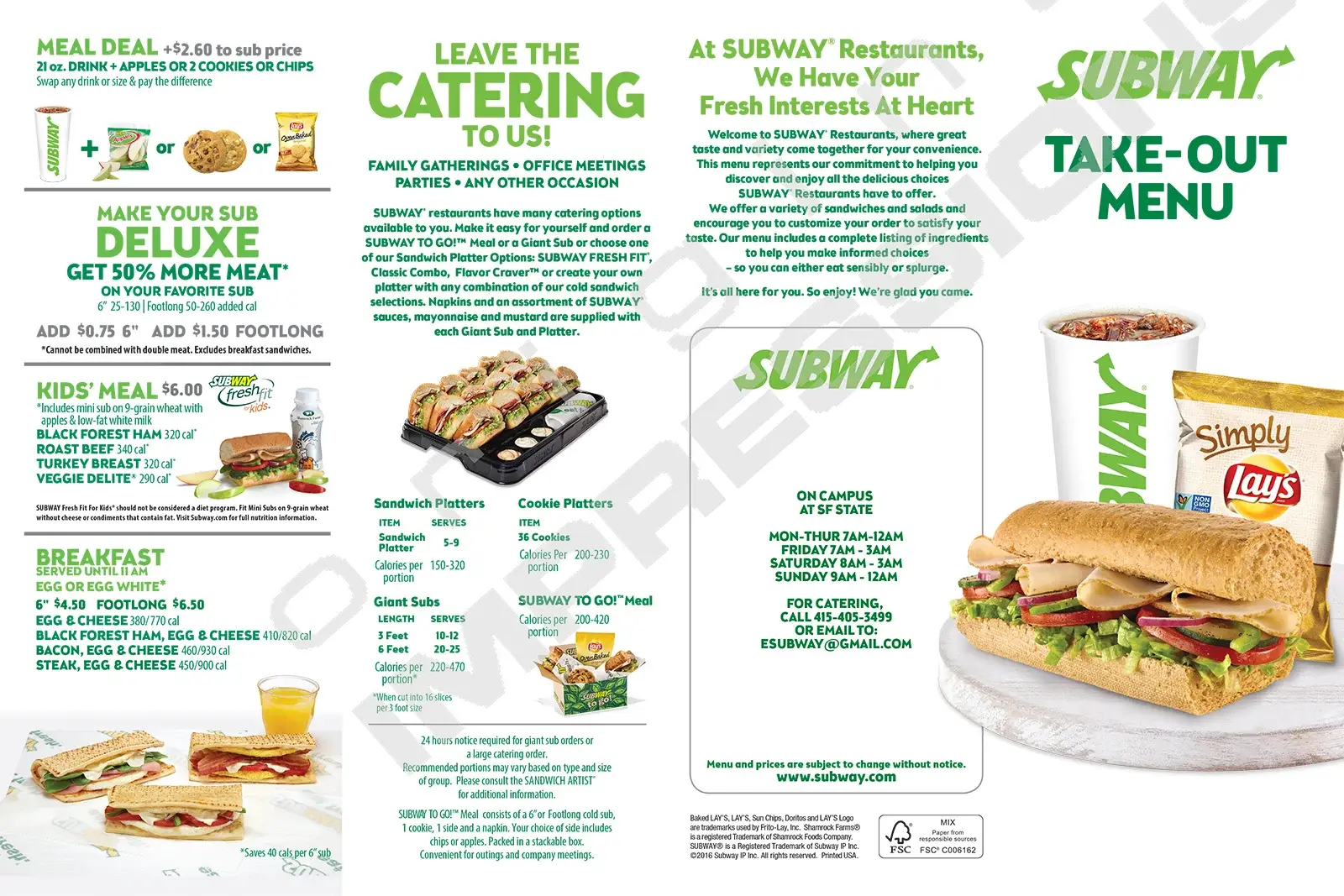
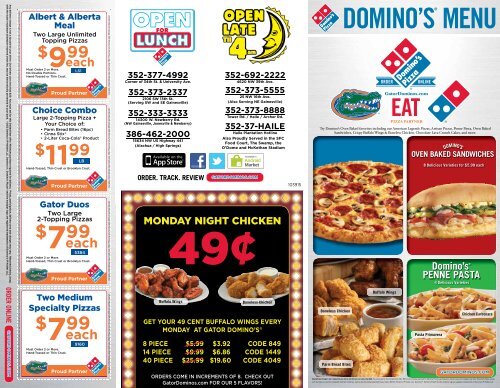
- Takeaway Menu Example: Made for delivery and pickup orders with clear pricing and contact details.
How to Create a Great Menu
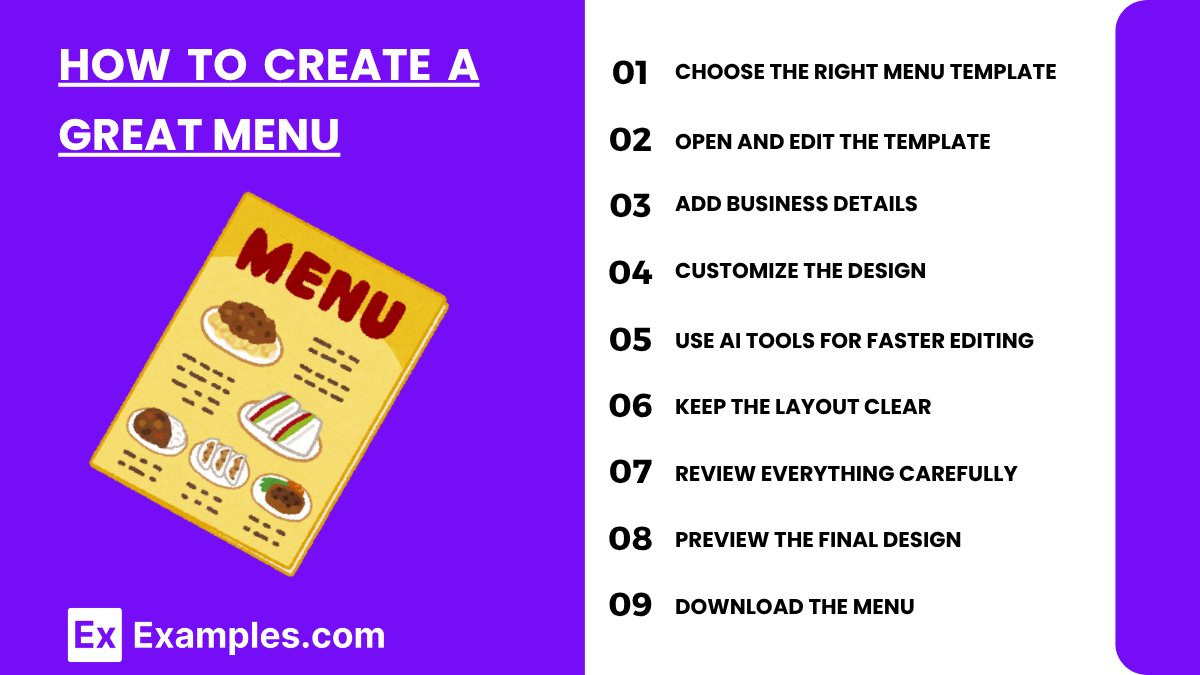
Creating a great menu starts with choosing the right template, customizing it clearly, and making it easy for customers to read. A professional menu should look attractive, organized, and simple to use. Follow these steps to create a menu that improves customer experience and boosts sales.
1. Choose the Right Menu Template
Select a menu design that matches your business type, such as restaurant, cafe, bakery, hotel, bar, or event menu. Pick a style that fits your brand.
2. Open and Edit the Template
Click on the selected menu design and open the editable version. This allows you to personalize every part of the menu.
3. Add Business Details
Update the menu title, business name, categories, item names, descriptions, and prices. You can also include contact details or address.
4. Customize the Design
Change fonts, colors, spacing, icons, and background elements to create a unique and professional look.
5. Use AI Tools for Faster Editing
AI tools can help you write better descriptions, improve wording, rename menu items, and suggest cleaner layouts.
6. Keep the Layout Clear
Organize sections properly so customers can quickly find starters, meals, desserts, drinks, or services.
7. Review Everything Carefully
Check spelling, prices, alignment, and readability before finalizing the menu.
8. Preview the Final Design
Use preview mode to make sure the menu looks clean, balanced, and attractive.
9. Download the Menu
Save the final menu as PNG or print-ready format for use in stores, websites, social media, or printed displays.
Best Colors for Menus
The best colors for menus are red, green, black, yellow, and brown because they influence customer mood, appetite, and buying decisions. Choosing the right menu color helps your business look attractive, improves readability, and strengthens brand identity.
Top Menu Colors and Their Meaning
- Red: Increases appetite, excitement, and quick decisions. Best for restaurants and fast food menus.
- Green: Represents freshness, health, and natural ingredients. Best for cafes, vegan, and organic menus.
- Black: Creates a premium, elegant, and luxury feel. Best for fine dining and upscale menus.
- Yellow: Feels friendly, energetic, and cheerful. Best for casual dining and family menus.
- Brown: Gives a warm, rustic, and homemade feeling. Best for bakeries, coffee shops, and traditional menus.
How to Choose the Best Menu Color
- Match the color with your brand identity.
- Use colors that make text easy to read.
- Choose colors based on your target customers.
- Keep the design clean and not too colorful.
- Use one main color with supporting shades for balance.
Menu Examples for Businesses
Menu examples for businesses help present products, services, and pricing in a clear and professional way. A well-designed business menu improves customer experience, builds trust, and makes buying decisions faster. Different industries use different menu styles based on their audience and offerings.
Popular Menu Examples for Businesses
- Restaurant Menu: Used for food items, combos, drinks, and specials.
- Cafe Menu: Best for coffee, tea, snacks, desserts, and breakfast items.
- Fast Food Menu: Designed for quick meals, combos, burgers, fries, and beverages.
- Bakery Menu: Perfect for cakes, pastries, breads, and sweet items.
- Hotel Menu: Used for room service, dining, and beverage options.
- Bar Menu: Ideal for cocktails, mocktails, drinks, and bar snacks.
- Wedding Menu: Used for starters, buffet meals, desserts, and beverages.
Why Businesses Need Good Menus
- Improves product presentation
- Builds a professional brand image
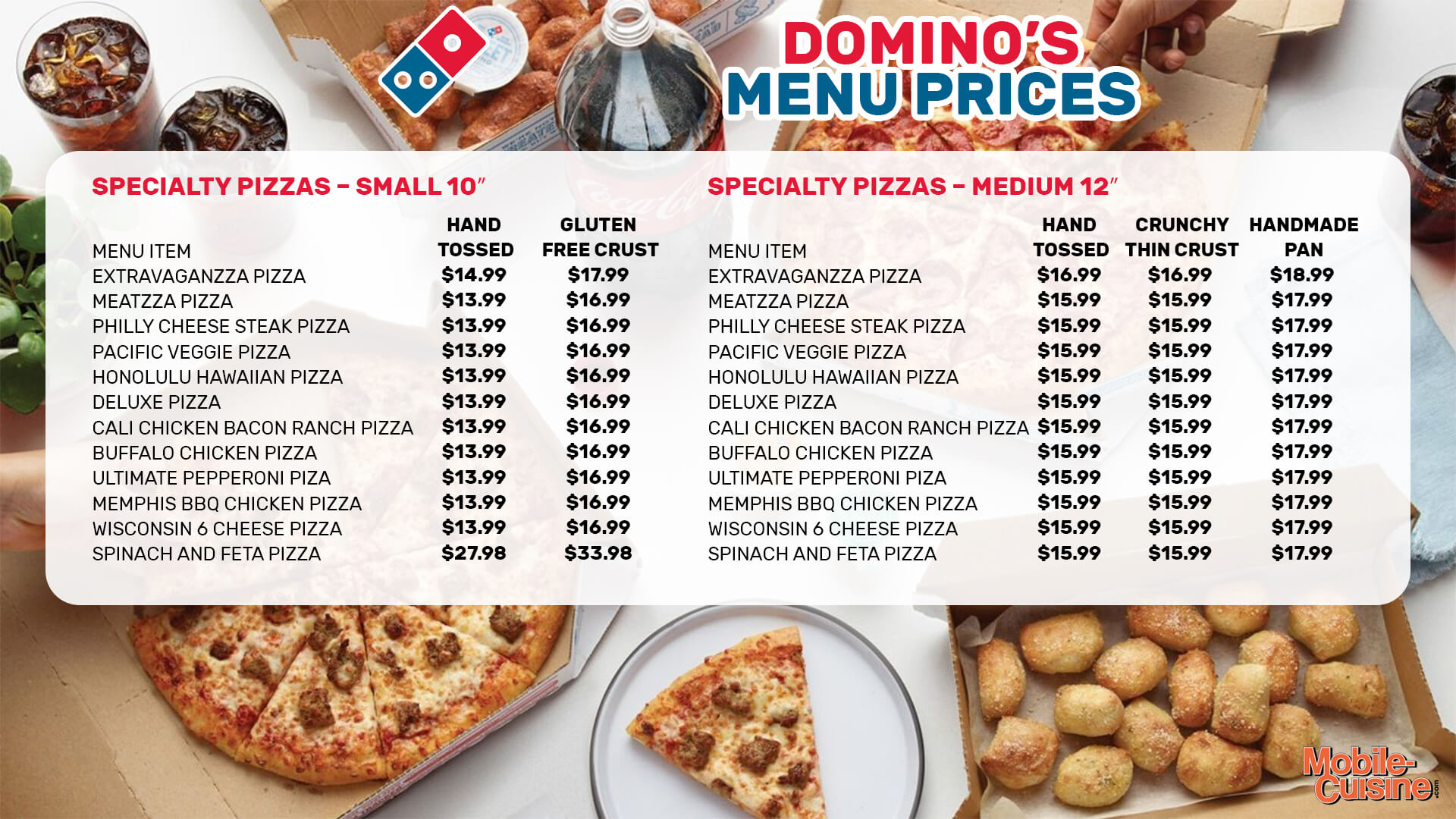
- Makes pricing clear and organized
- Helps customers choose faster
- Increases sales opportunities
Common Mistakes to Avoid
Many menus fail because they are confusing, crowded, or difficult to read. Avoiding these mistakes helps create a better customer experience and improves sales.
- Using Too Much Text: Long descriptions make the menu look cluttered and hard to scan.
- Choosing Poor Fonts: Small or fancy fonts reduce readability.
- Bad Organization: Unclear sections make it difficult for customers to find items.
- Using Too Many Colors: Excessive colors make the design look messy and unprofessional.
- Adding Low-Quality Images: Blurry or unnecessary photos reduce menu appeal.
- Showing Unclear Pricing: Prices should be simple, visible, and easy to understand.
- Not Highlighting Best Sellers: Missing popular items can reduce upselling opportunities.
- Keeping Outdated Information: Old prices or unavailable items create frustration.
- Ignoring Brand Style: The menu should match your business identity and theme.
- Overcrowding the Layout: Too many items on one page can overwhelm customers.
FAQs
How many items should a menu have?
A menu should include enough items to give choices without overwhelming customers. Most businesses keep menus focused, clear, and easy to browse.
Should menus include pictures?
Yes, high-quality images can attract attention and increase orders. Use only a few professional photos to keep the menu clean.
How often should a menu be updated?
Menus should be updated whenever prices change, new items launch, seasonal offers start, or unavailable products need removal.
What menu size is best for printing?
Popular menu sizes include A4, tri-fold, and booklet styles. The best size depends on your content and business type.
Can small businesses use menu examples?
Yes, menu examples help small businesses create professional menus quickly, save design costs, and improve product presentation for customers.