IBM
💻
Mission Statement
MISSION STATEMENT
Introduction
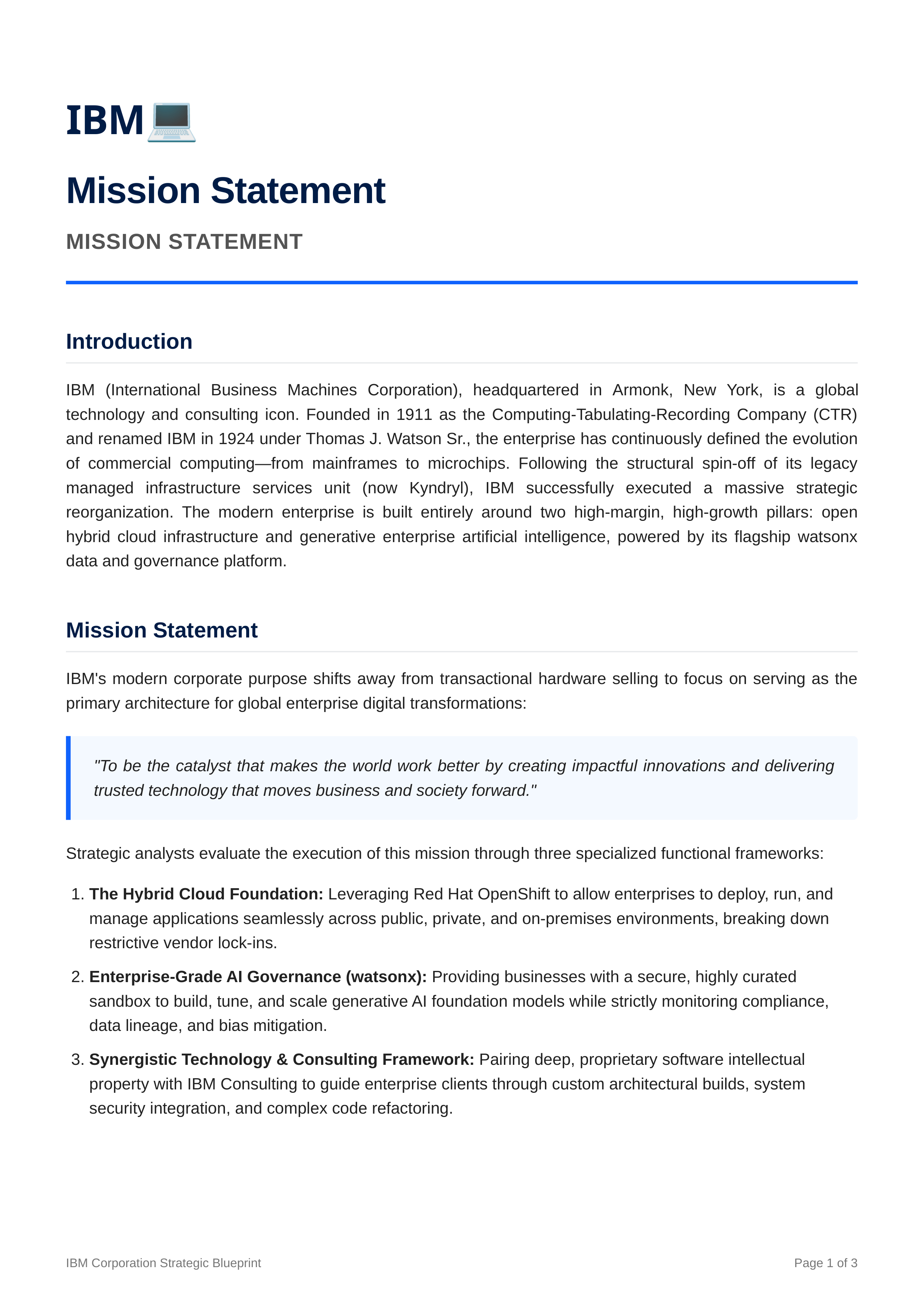
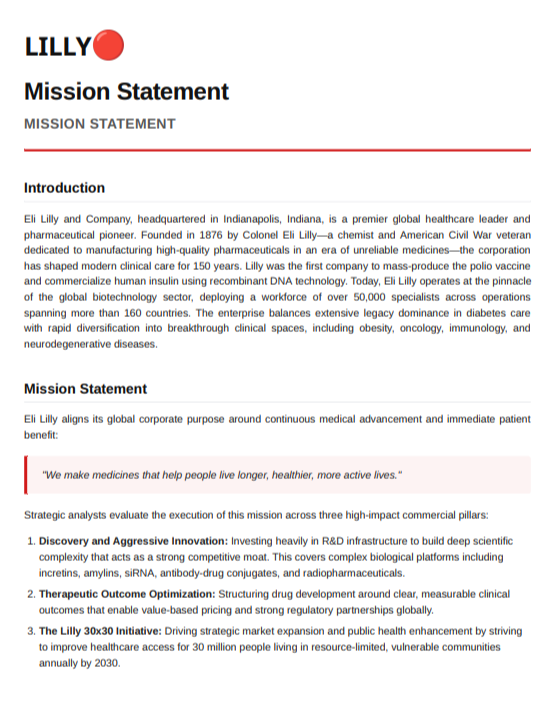
IBM (International Business Machines Corporation), headquartered in Armonk, New York, is a global
technology and consulting icon. Founded in 1911 as the Computing-Tabulating-Recording Company (CTR)
and renamed IBM in 1924 under Thomas J. Watson Sr., the enterprise has continuously defined the evolution
of commercial computing—from mainframes to microchips. Following the structural spin-off of its legacy
managed infrastructure services unit (now Kyndryl), IBM successfully executed a massive strategic
reorganization. The modern enterprise is built entirely around two high-margin, high-growth pillars: open
hybrid cloud infrastructure and generative enterprise artificial intelligence, powered by its flagship watsonx
data and governance platform.
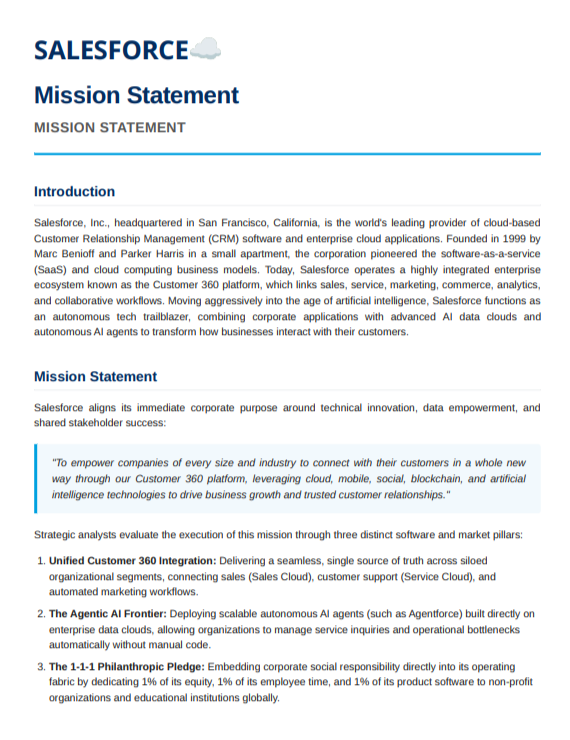
Mission Statement
IBM's modern corporate purpose shifts away from transactional hardware selling to focus on serving as the
primary architecture for global enterprise digital transformations:
"To be the catalyst that makes the world work better by creating impactful innovations and delivering
trusted technology that moves business and society forward."
Strategic analysts evaluate the execution of this mission through three specialized functional frameworks:
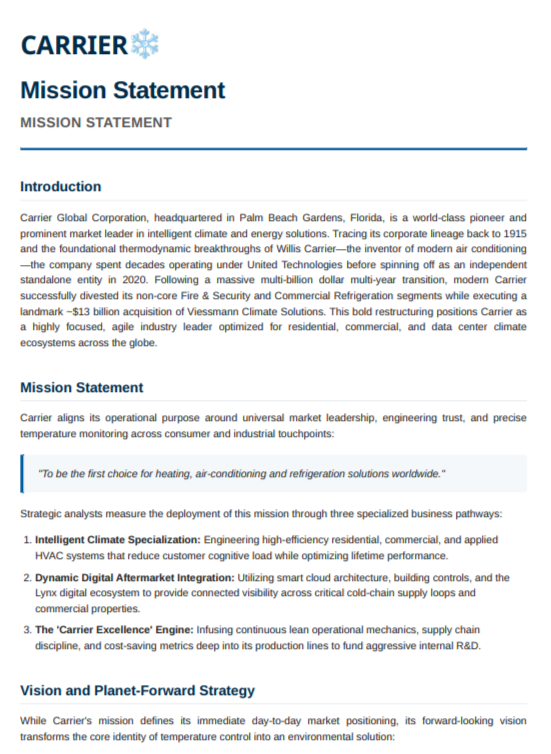
The Hybrid Cloud Foundation:
Leveraging Red Hat OpenShift to allow enterprises to deploy, run, and
manage applications seamlessly across public, private, and on-premises environments, breaking down
restrictive vendor lock-ins.
Enterprise-Grade AI Governance (watsonx):
Providing businesses with a secure, highly curated
sandbox to build, tune, and scale generative AI foundation models while strictly monitoring compliance,
data lineage, and bias mitigation.
Synergistic Technology & Consulting Framework:
Pairing deep, proprietary software intellectual
property with IBM Consulting to guide enterprise clients through custom architectural builds, system
security integration, and complex code refactoring.
1.
2.
3.
IBM Corporation Strategic Blueprint
Page 1 of 3