
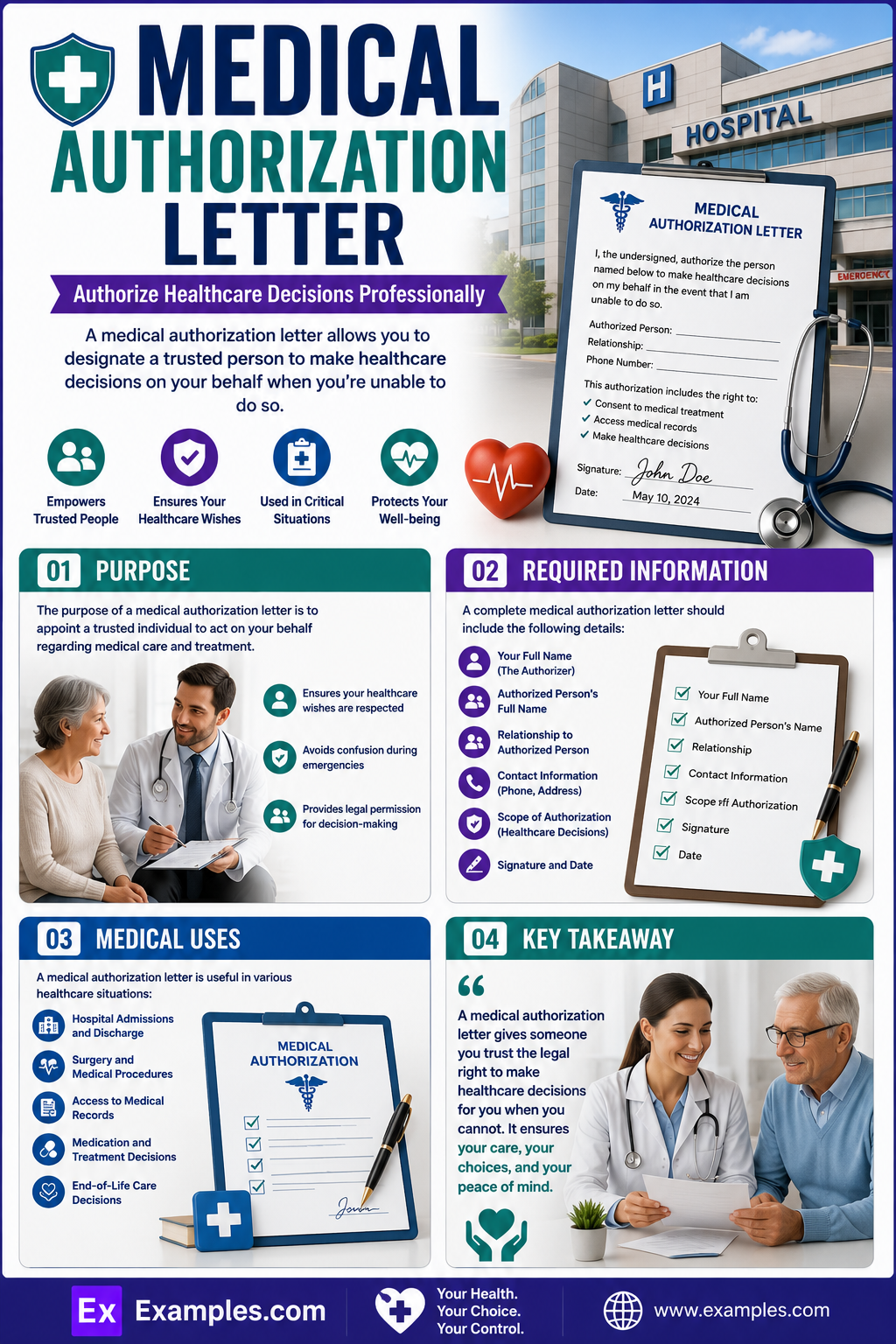
A medical authorization letter grants another person permission to make healthcare decisions or access medical information. It specifies the authorized individual and the scope of authority. These letters support timely and secure medical care.
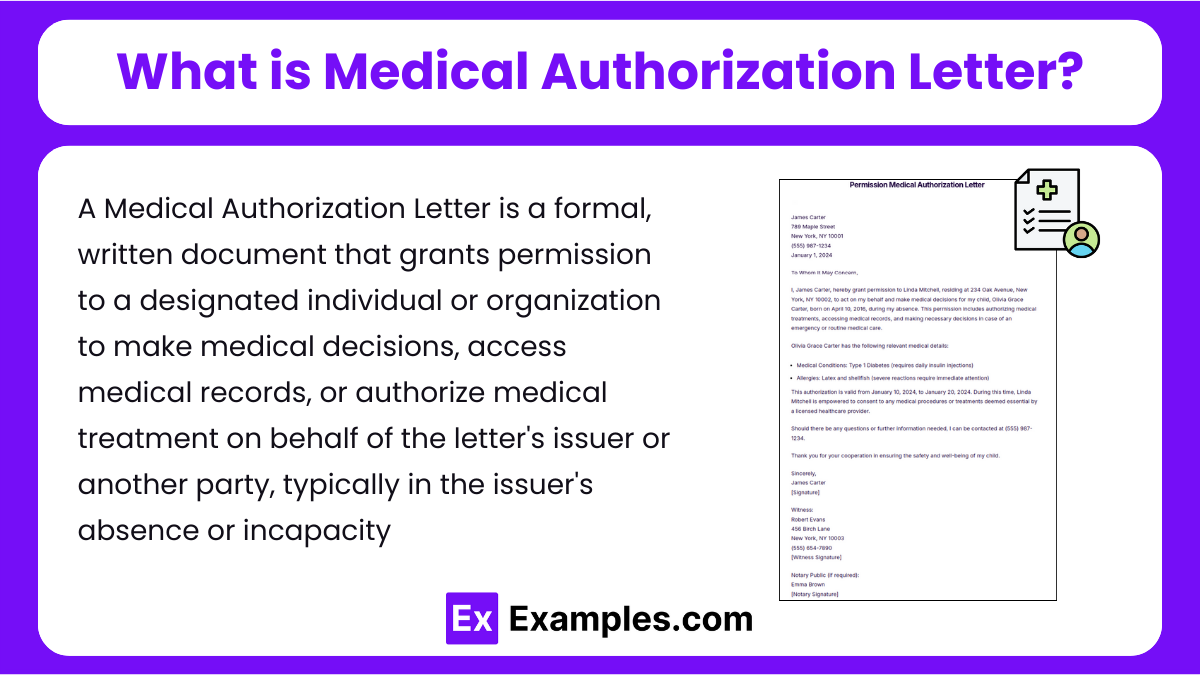
What is Medical Authorization Letter?
Medical Authorization Letter Format
Header
Include your full name, address, and contact information. Add the date of writing.
Recipient Details
Provide the name and relationship of the authorized individual along with their contact information.
Subject Line
State the purpose, such as “Authorization for Medical Decisions.”
Body of the Letter
Clearly state the authorization, specify the scope of medical decisions or access granted, and mention the duration of validity.
Signature Block
Include the signature of the issuer, the printed name of the issuer, and a witness signature or notary seal if required.
Medical Authorization Letter Examples
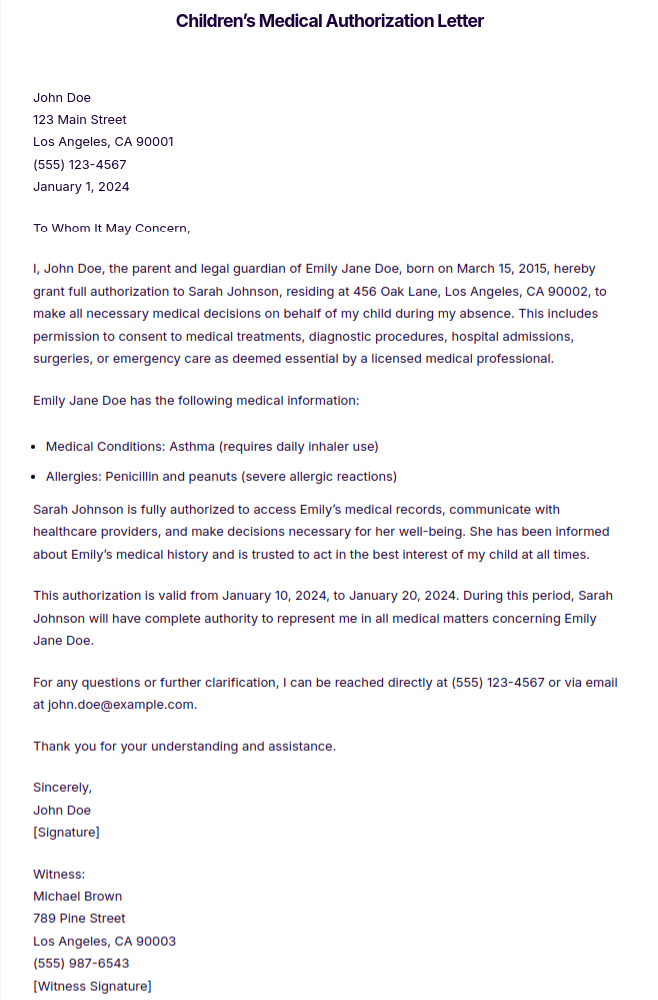
Children’s Medical Authorization Letter
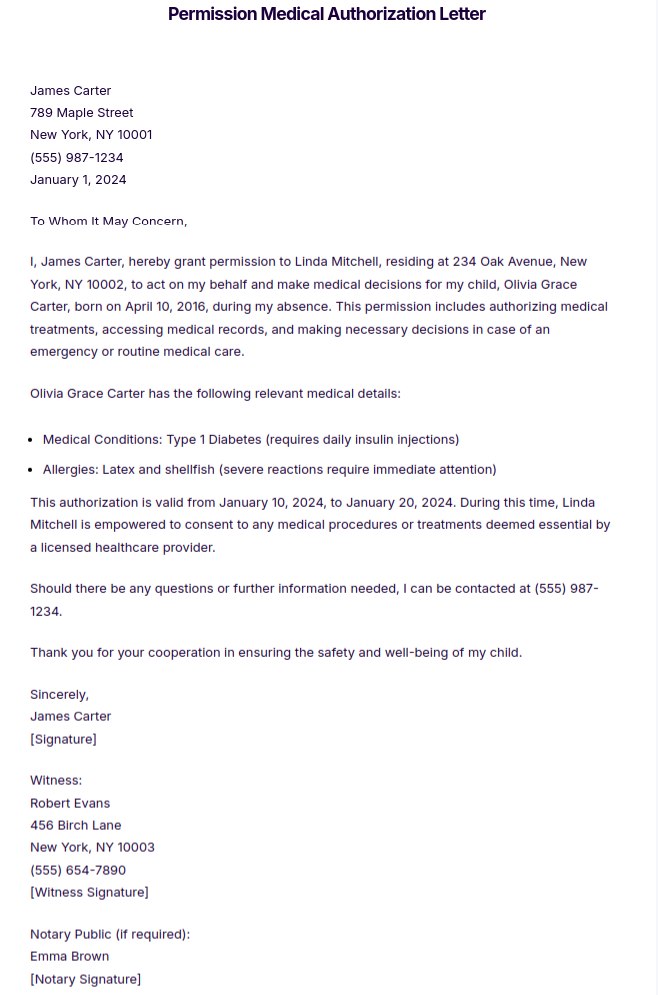
Permission Medical Authorization Letter
Prescreening Medical Authorization Letter
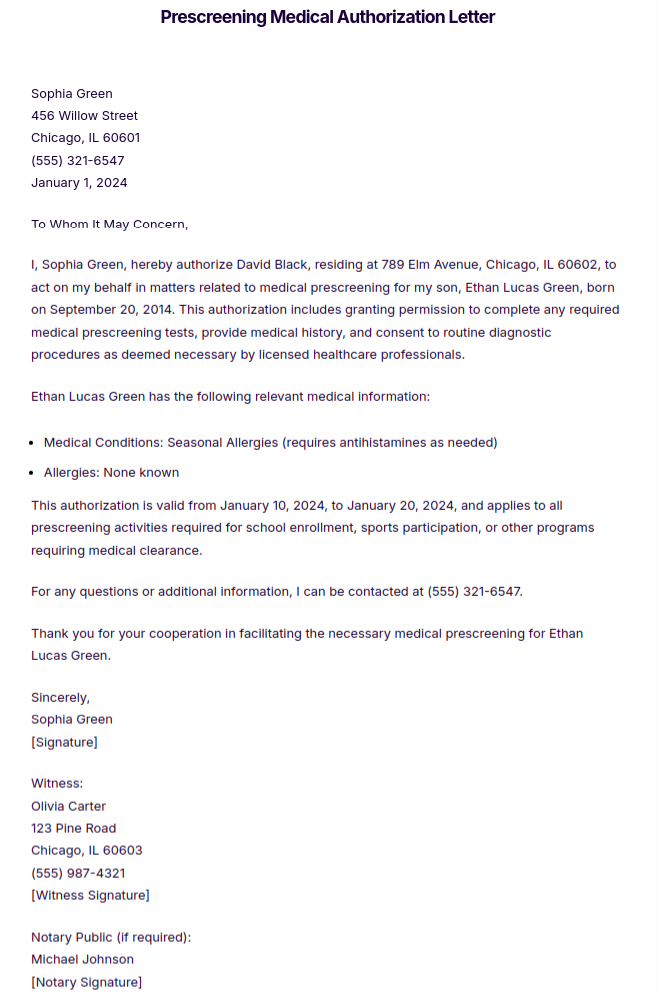
Emergency Medical Authorization Letter Example
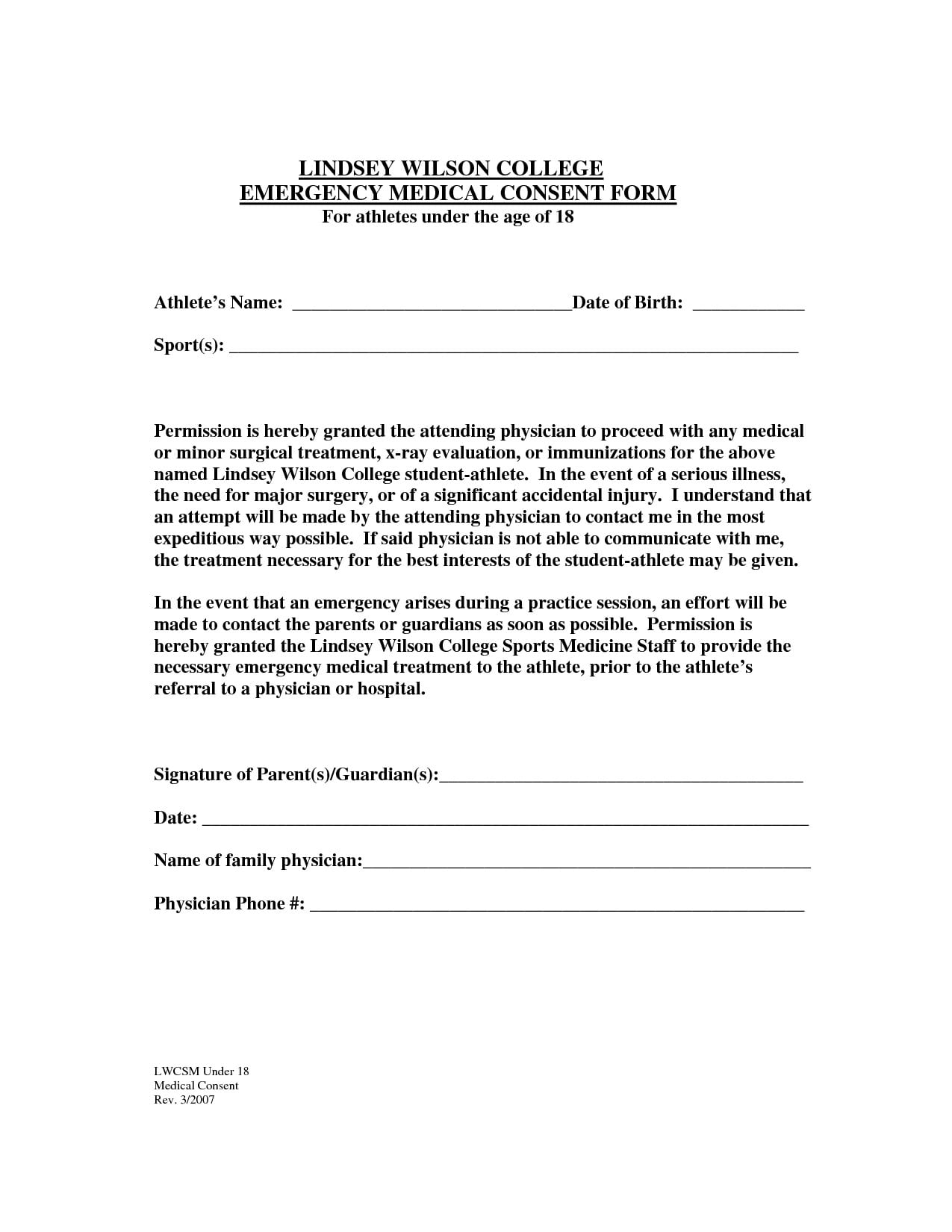
Formal Medical Authorization Letter Example

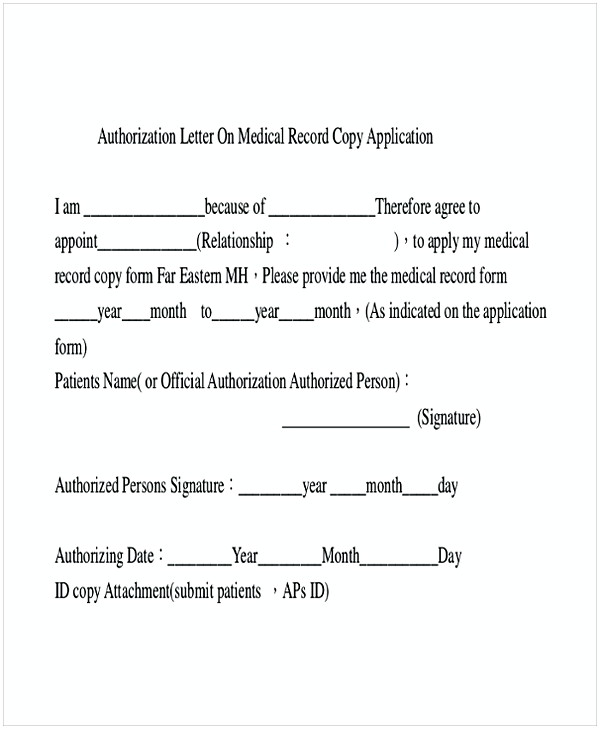
Medical Record Authorization Letter Example
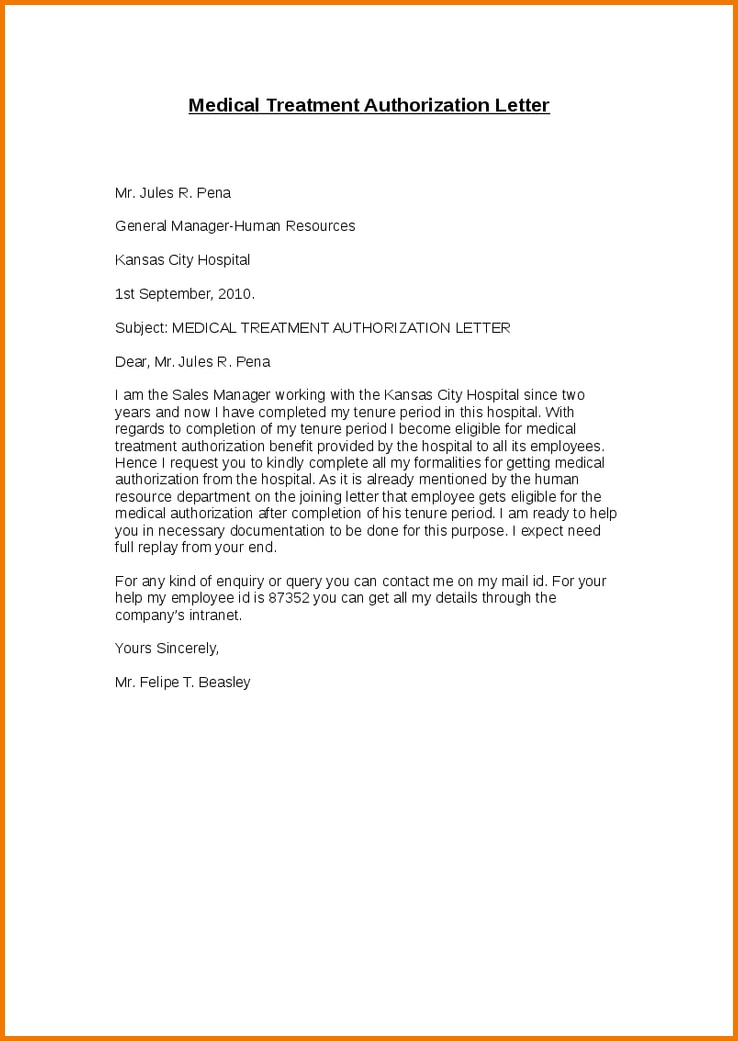
Medical Treatment Authorization Letter Example
Grandparent Medical Authorization Letter Example
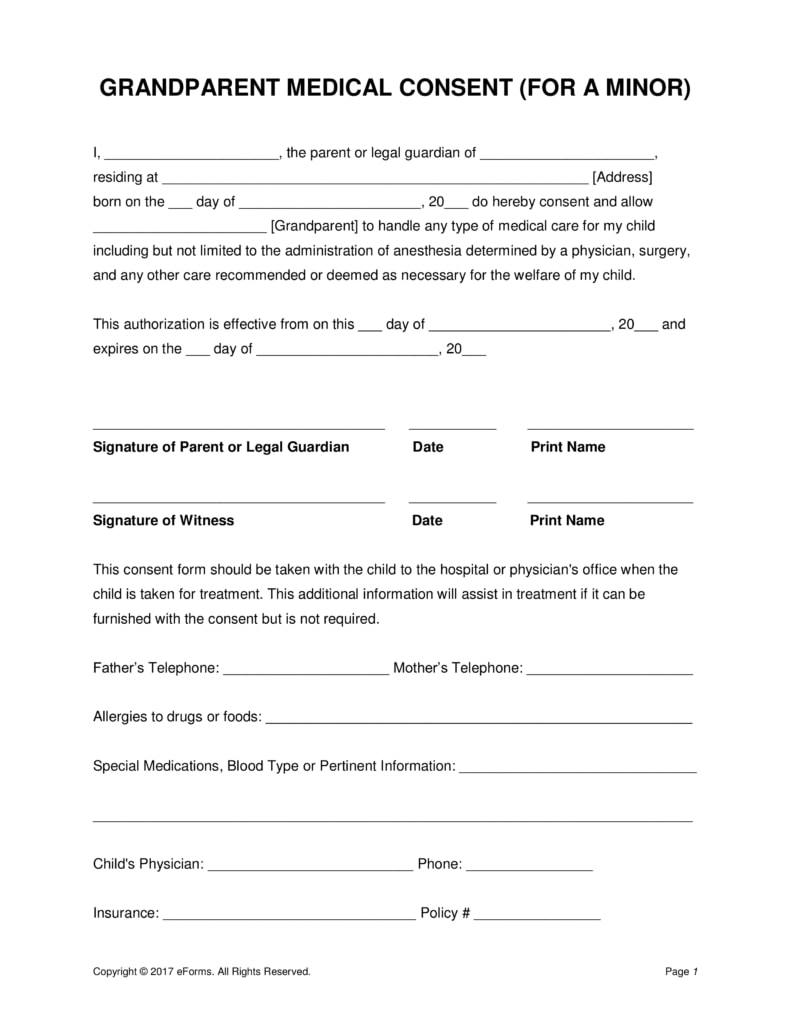
Medical Authorization Letter for Minors Example
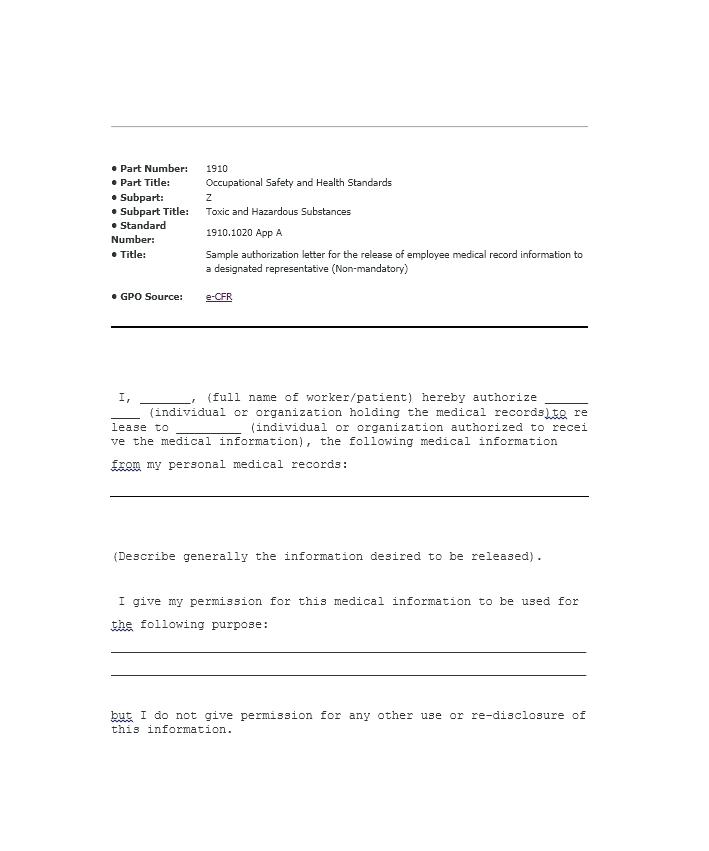
Simple Medical Treatment Authorization Letter Example
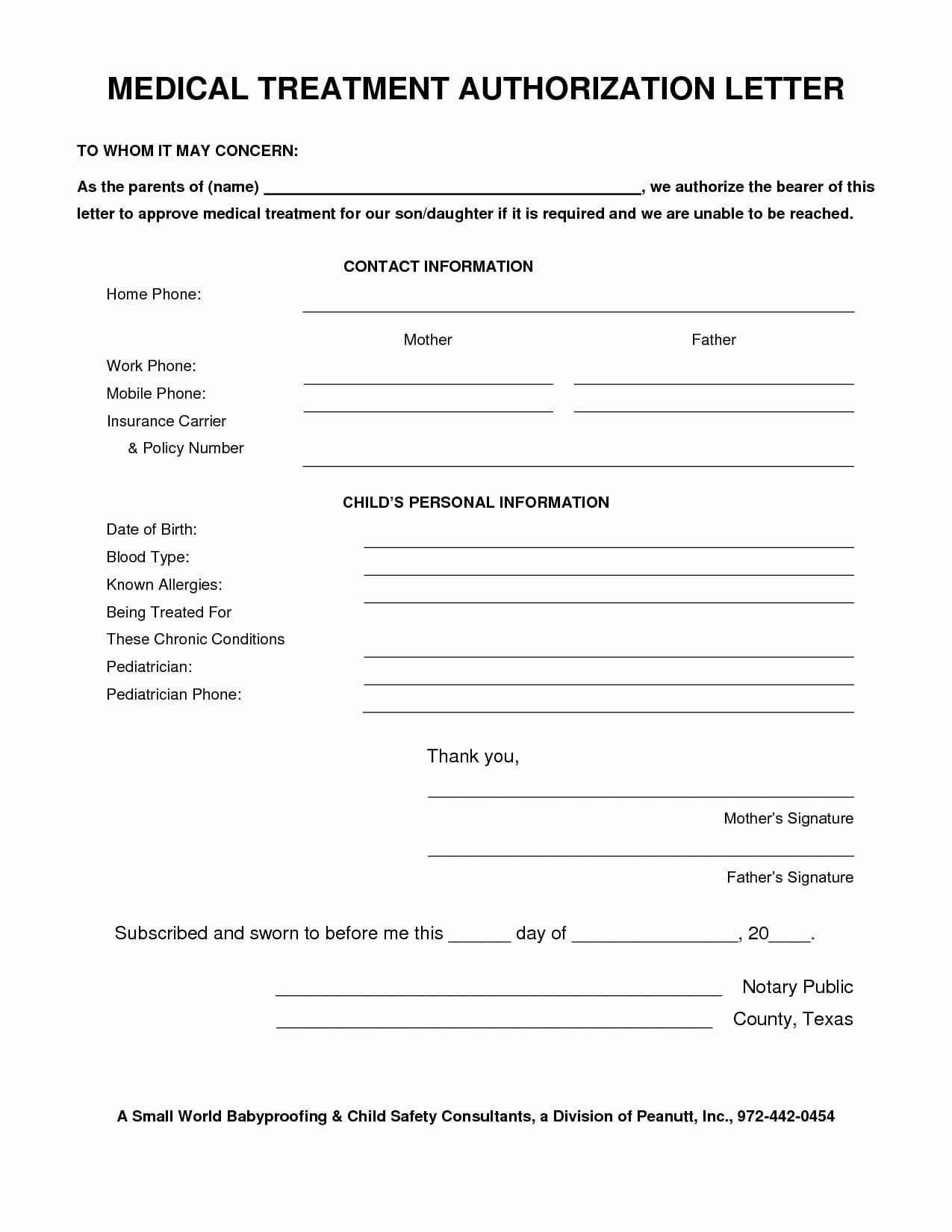
Temporary Guardian Medical Authorization Letter Example
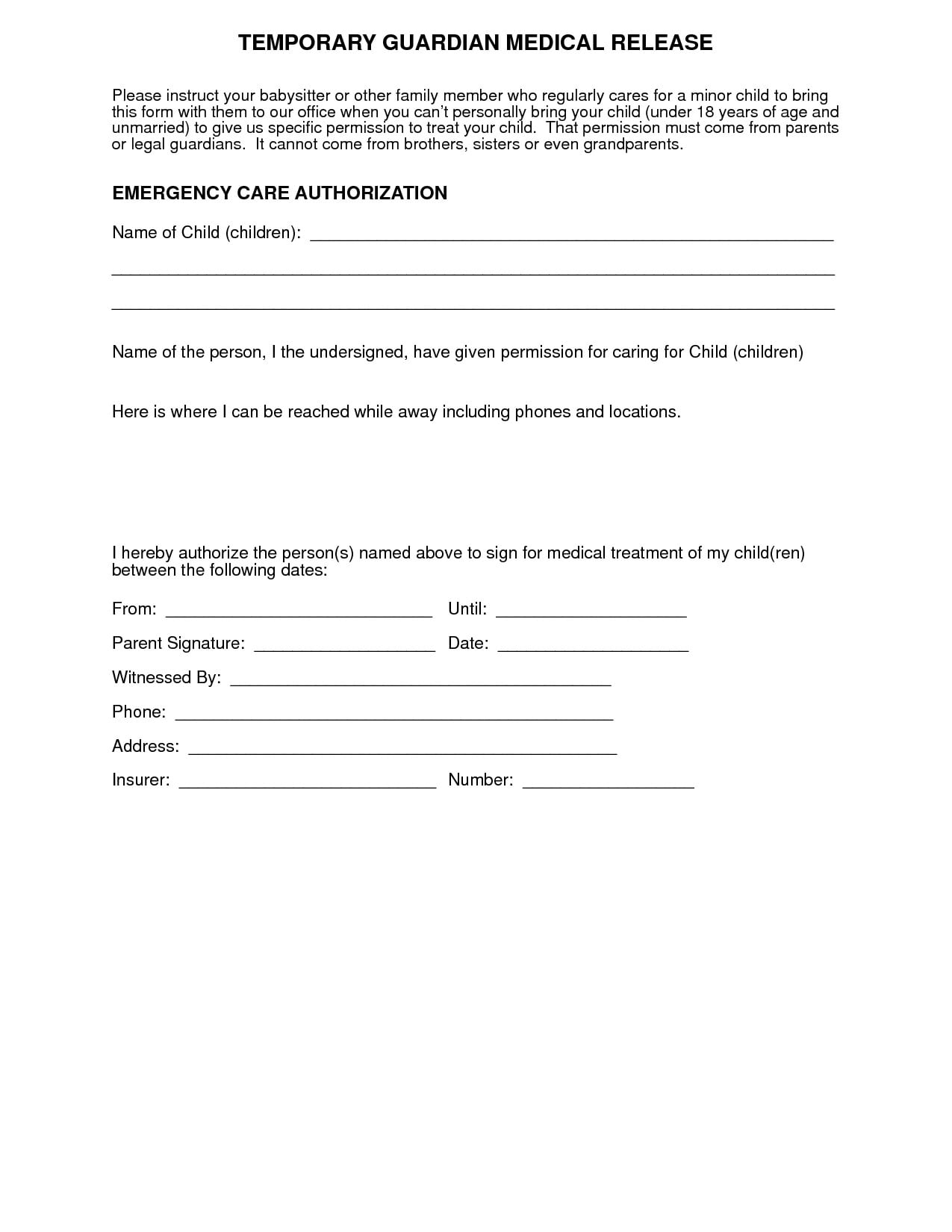
How to Write a Medical Authorization Letter
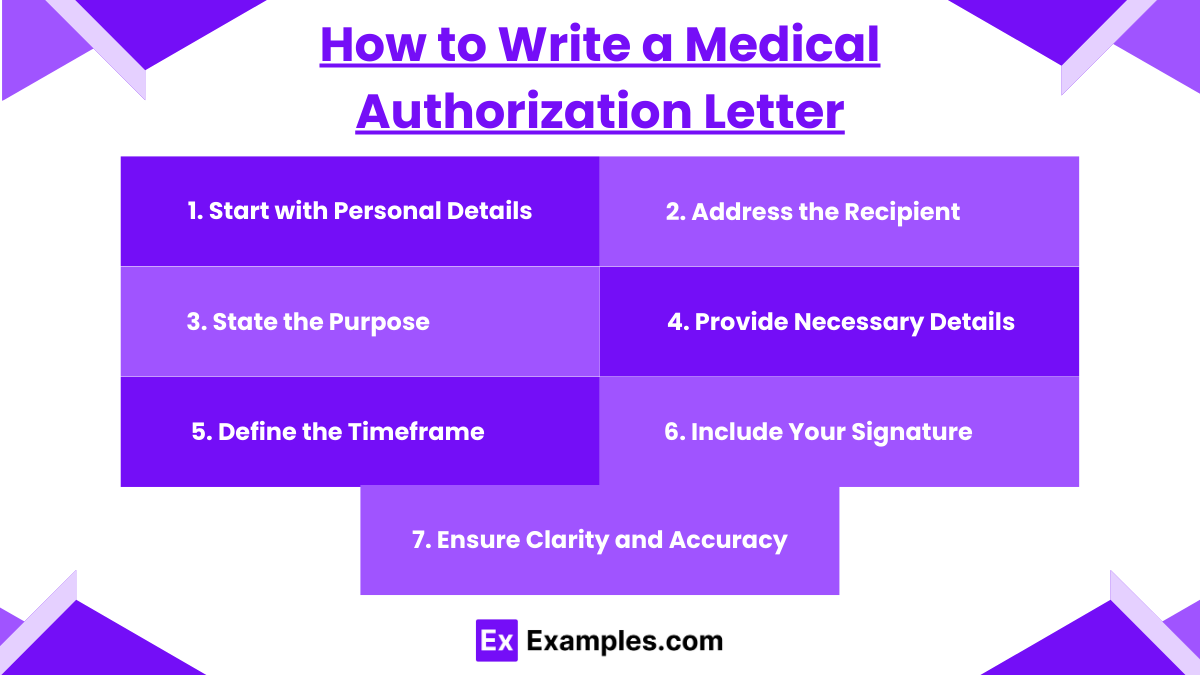
Writing a medical authorization letter involves clearly stating the purpose, authority, and relevant details to ensure it is legally valid and easily understood. Below are the steps to follow:
- Start with Personal Details
Begin with your full name, address, and contact information, followed by the current date. These details identify the author of the letter. - Address the Recipient
Clearly mention the name and relationship of the person or organization being authorized to act on your behalf. - State the Purpose
Specify why the authorization is being granted, such as consenting to medical treatments, accessing medical records, or handling medical emergencies. - Provide Necessary Details
Include the name, date of birth, and any relevant medical conditions or allergies of the individual for whom the letter is written. Mention any specific instructions or limitations to the authorization. - Define the Timeframe
Indicate the start and end dates of the authorization to avoid misuse. If applicable, include a clause for revocation. - Include Your Signature
Sign the letter to validate it. Optionally, include the signature of a witness or have it notarized for additional legal credibility. - Ensure Clarity and Accuracy
Use clear language, double-check all information, and ensure it aligns with legal and medical requirements.
FAQs
It ensures timely medical care when the primary decision-maker is unavailable, avoiding legal complications.
Parents, legal guardians, or individuals with authority over the person needing medical care.
Validity depends on the specified dates mentioned in the letter or until revoked in writing.
Notarization is optional but recommended for added legal credibility and acceptance.
It should include names, medical details, authorization scope, validity period, and signatures.