
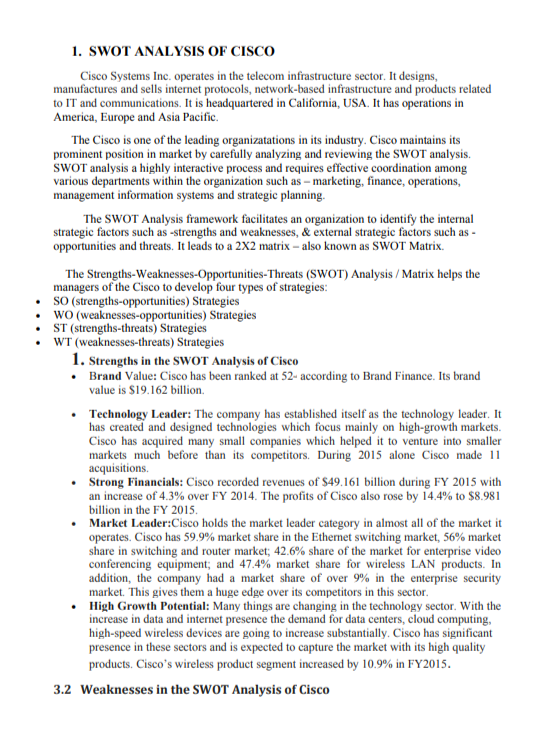
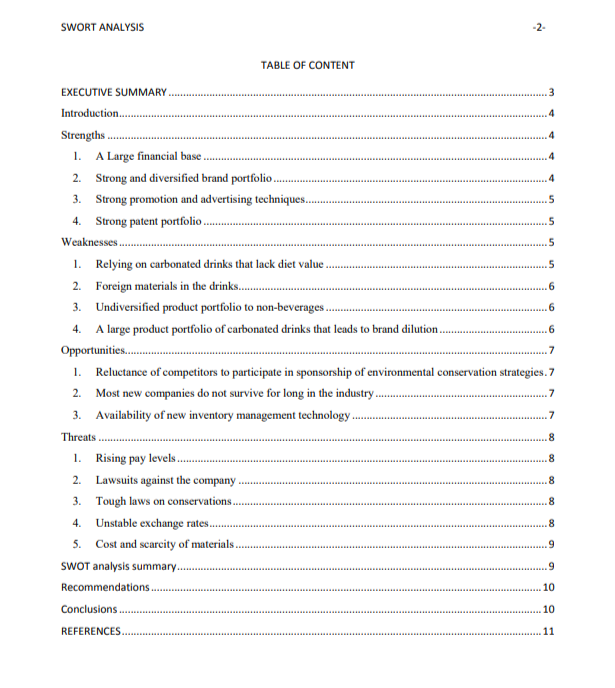
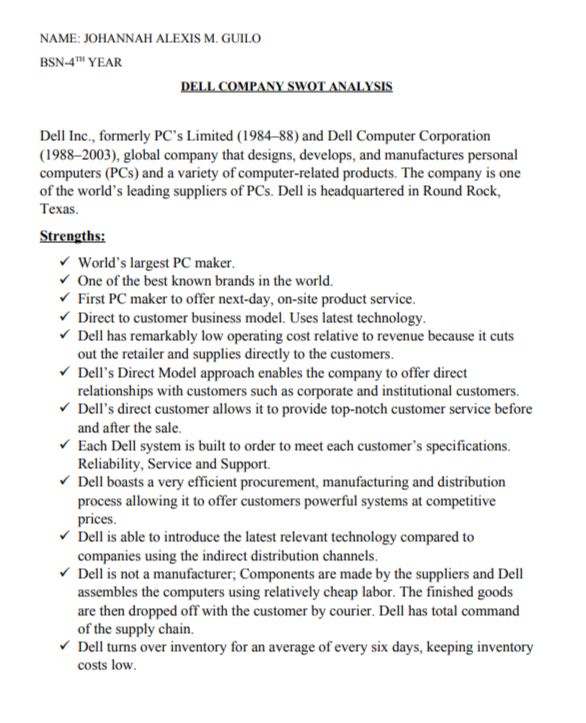
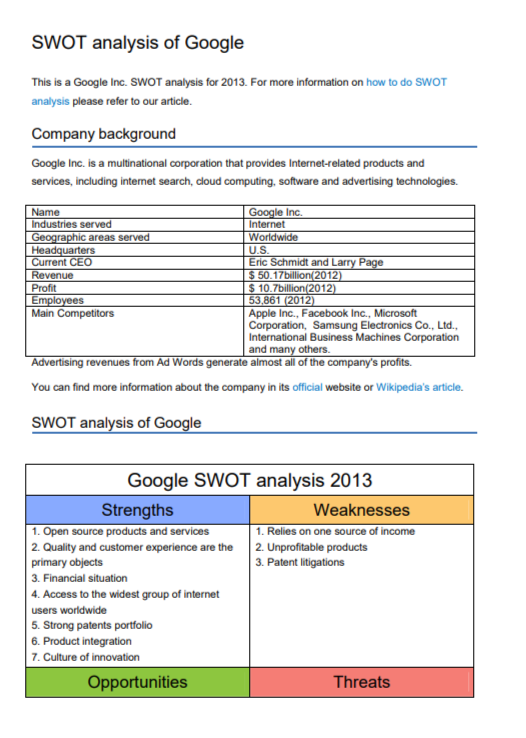
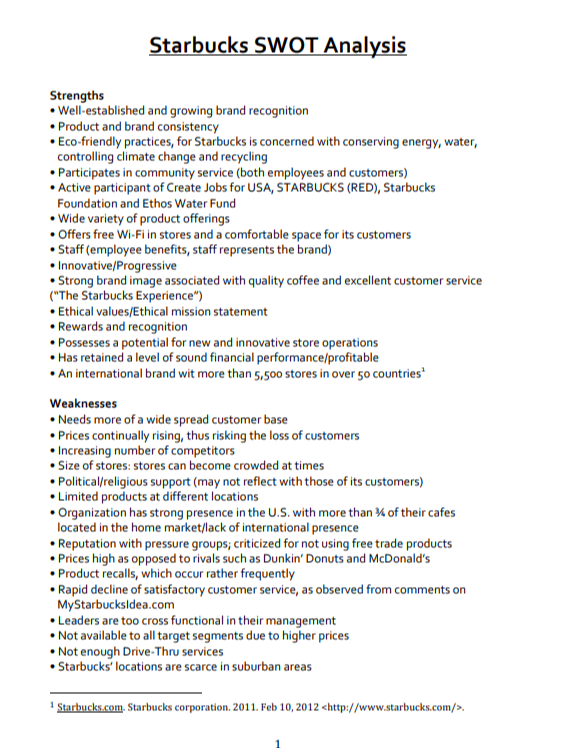
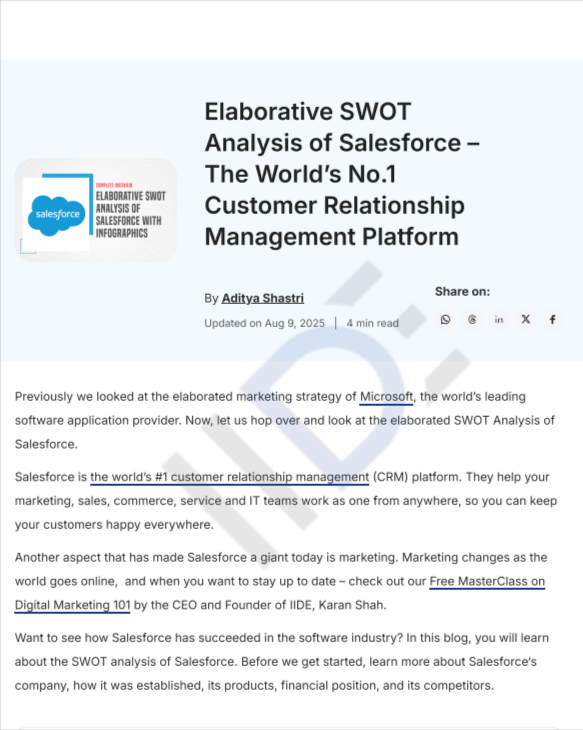
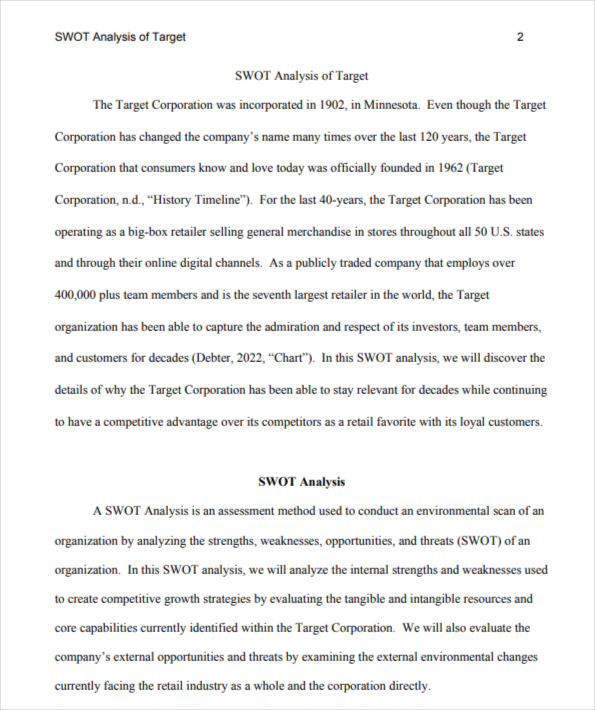
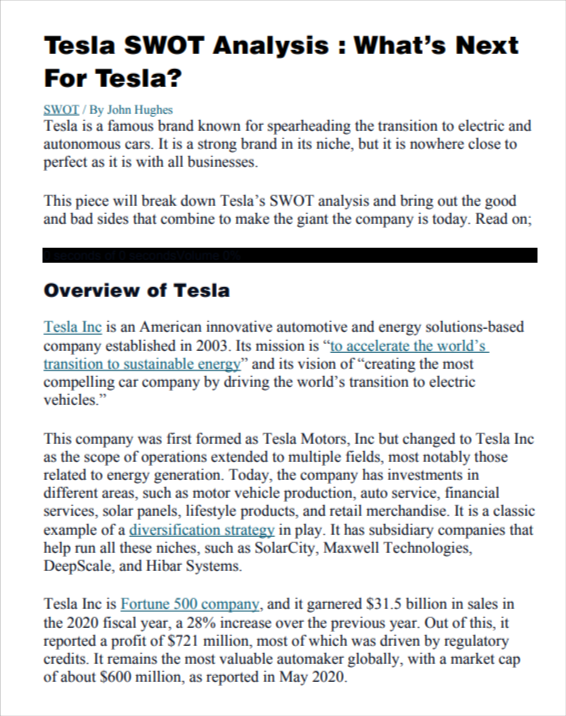
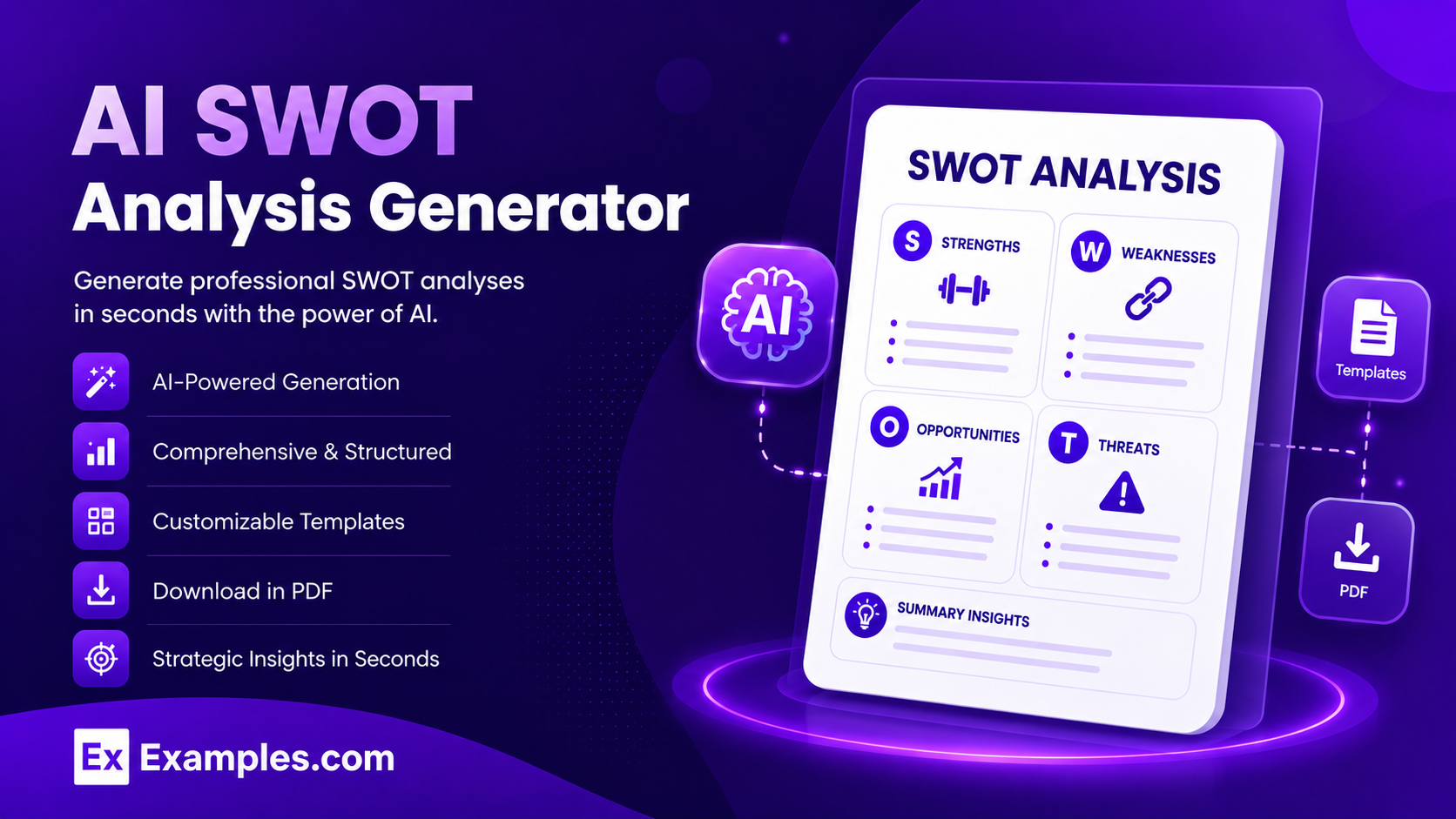
A SWOT Analysis is a strategic planning framework used to evaluate the Strengths, Weaknesses, Opportunities, and Threats of a business, project, product, or organization. Whether you’re assessing a startup, established company, marketing strategy, or personal development plan, a well-structured SWOT analysis helps identify internal capabilities, uncover external opportunities, address potential risks, and support informed decision-making. Explore real SWOT analysis examples, customize professional templates, and create comprehensive strategic assessments tailored to your goals quickly and confidently.
What Is a SWOT Analysis?
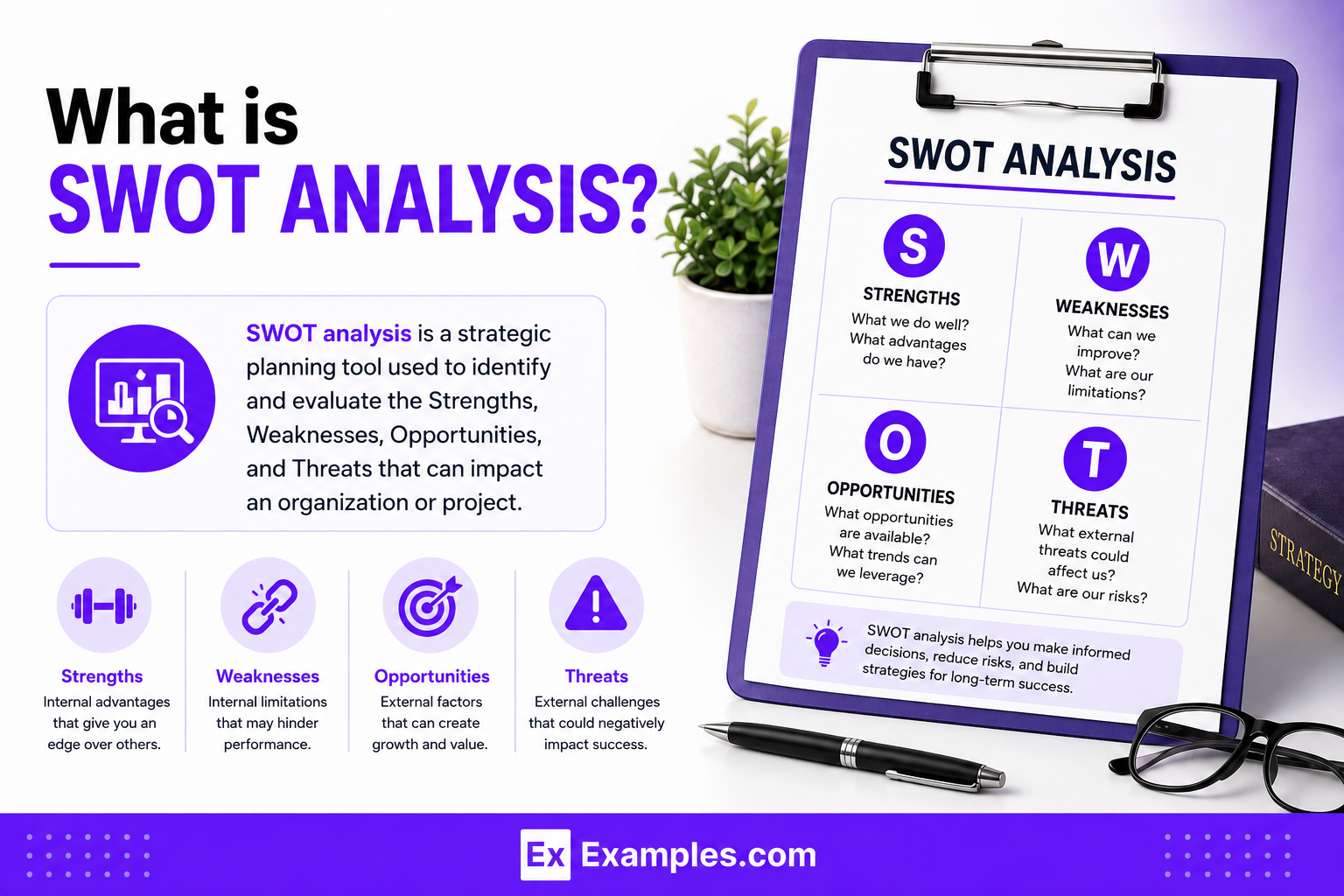
A SWOT Analysis is a strategic planning tool used to identify and evaluate the Strengths, Weaknesses, Opportunities, and Threats affecting a business, organization, project, or individual. It provides a structured framework for analyzing internal strengths and weaknesses alongside external opportunities and threats, helping decision-makers develop effective strategies, improve performance, minimize risks, and achieve long-term objectives.
Popular Types of SWOT Analysis
Business SWOT Analysis
A Business SWOT Analysis evaluates a company’s strengths, weaknesses, opportunities, and threats to support strategic planning, improve competitiveness, and identify areas for growth.
Startup SWOT Analysis
A Startup SWOT Analysis helps new businesses assess their competitive advantages, potential challenges, market opportunities, and external risks before launching or scaling operations.
Marketing SWOT Analysis
A Marketing SWOT Analysis examines the strengths and weaknesses of marketing strategies while identifying market opportunities and competitive threats to improve campaign performance.
Product SWOT Analysis
A Product SWOT Analysis evaluates a product’s strengths, limitations, market opportunities, and potential threats to guide product development, positioning, and lifecycle decisions.
Personal SWOT Analysis
A Personal SWOT Analysis helps individuals identify their skills, weaknesses, career opportunities, and possible challenges to support personal growth, career planning, and goal setting.
Competitor SWOT Analysis
A Competitor SWOT Analysis assesses a competitor’s strengths, weaknesses, opportunities, and threats to better understand market positioning and develop more effective business strategies.
How Do I Generate Swot Analysis Using Real Swot Analysis Examples?
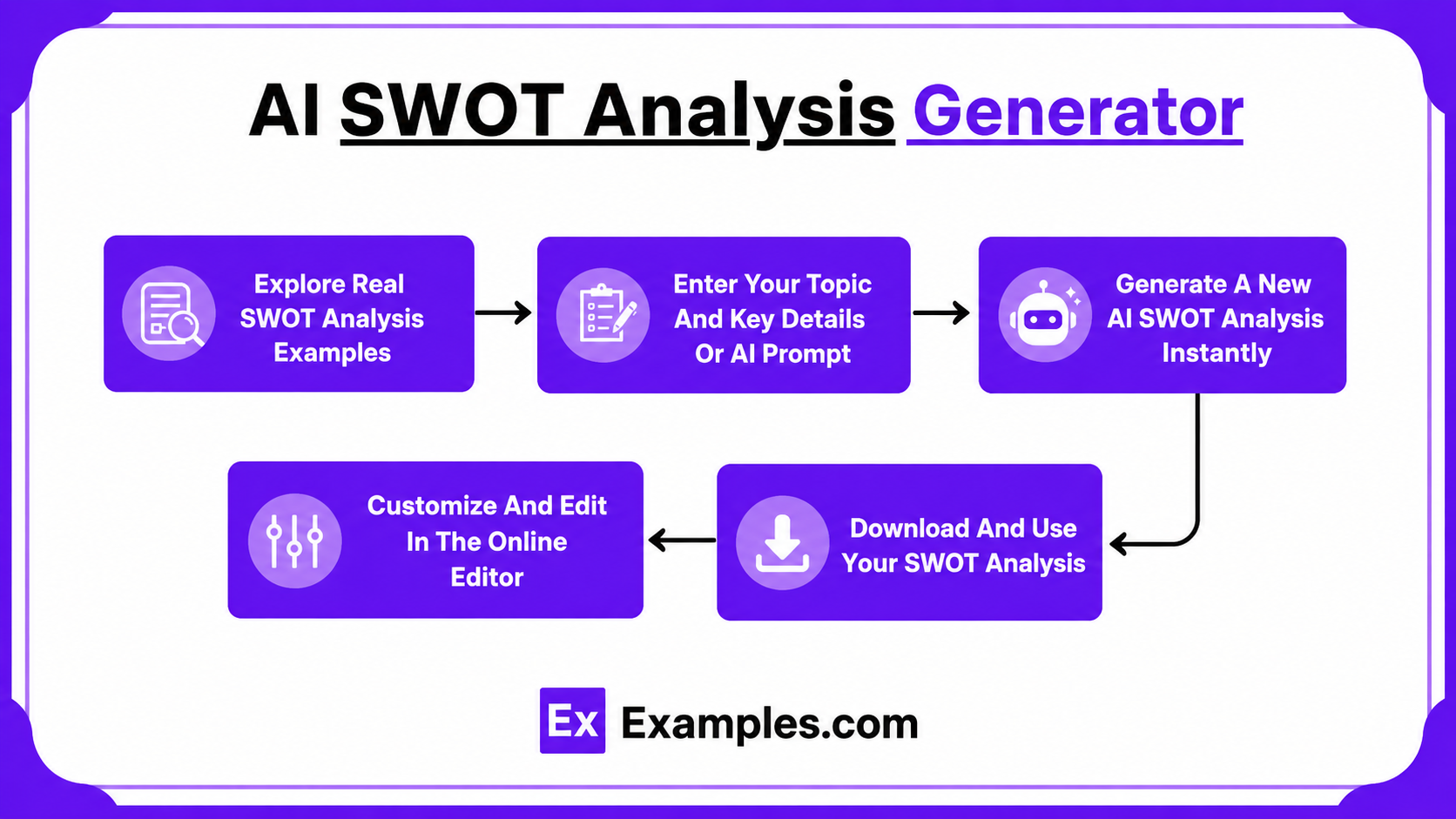
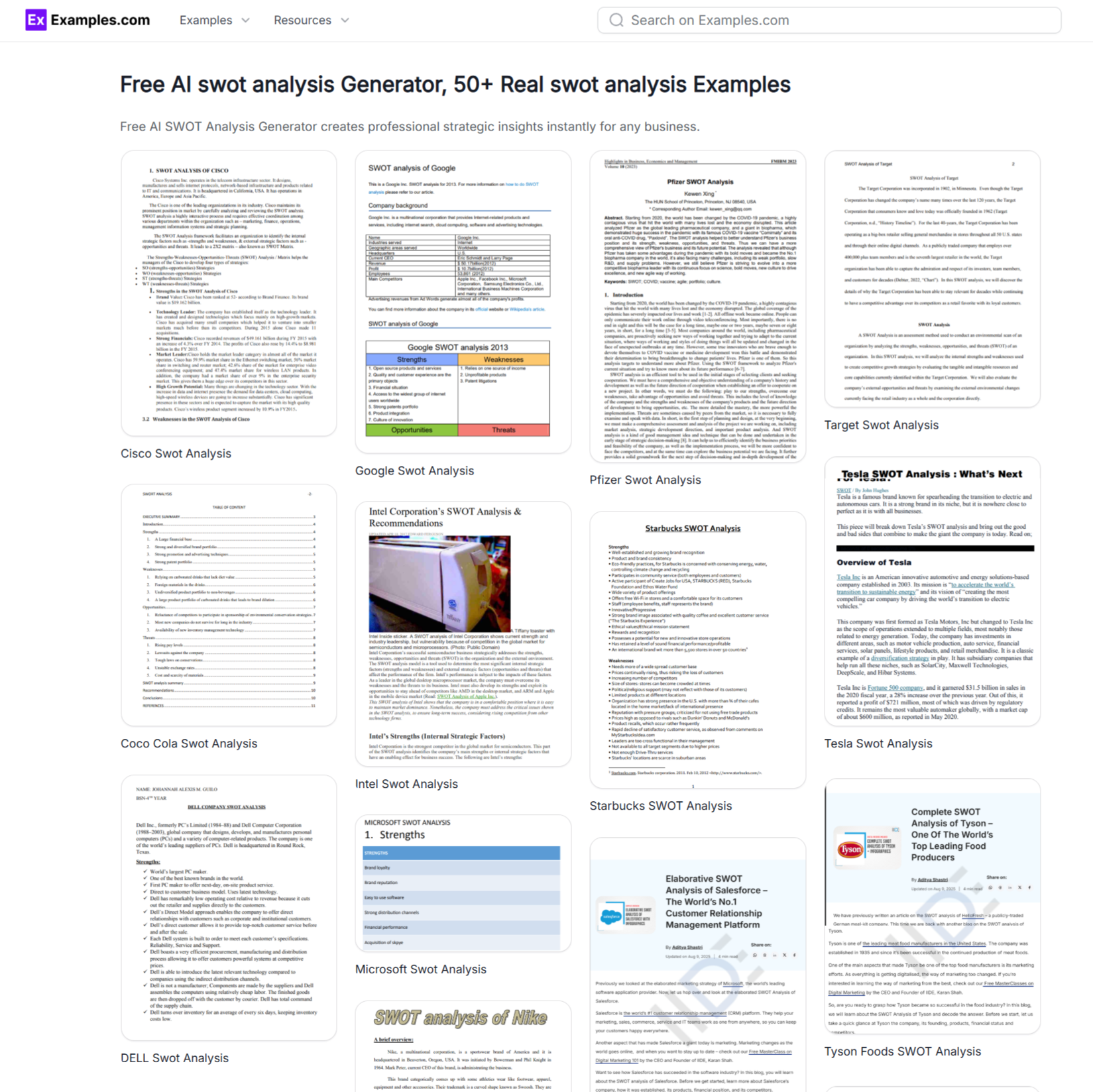
Explore Real SWOT Analysis Examples
Browse professionally written SWOT analysis examples to understand how strengths, weaknesses, opportunities, and threats are organized for different businesses, industries, products, and projects. Reviewing real examples helps you create strategic, well-structured analyses with confidence.
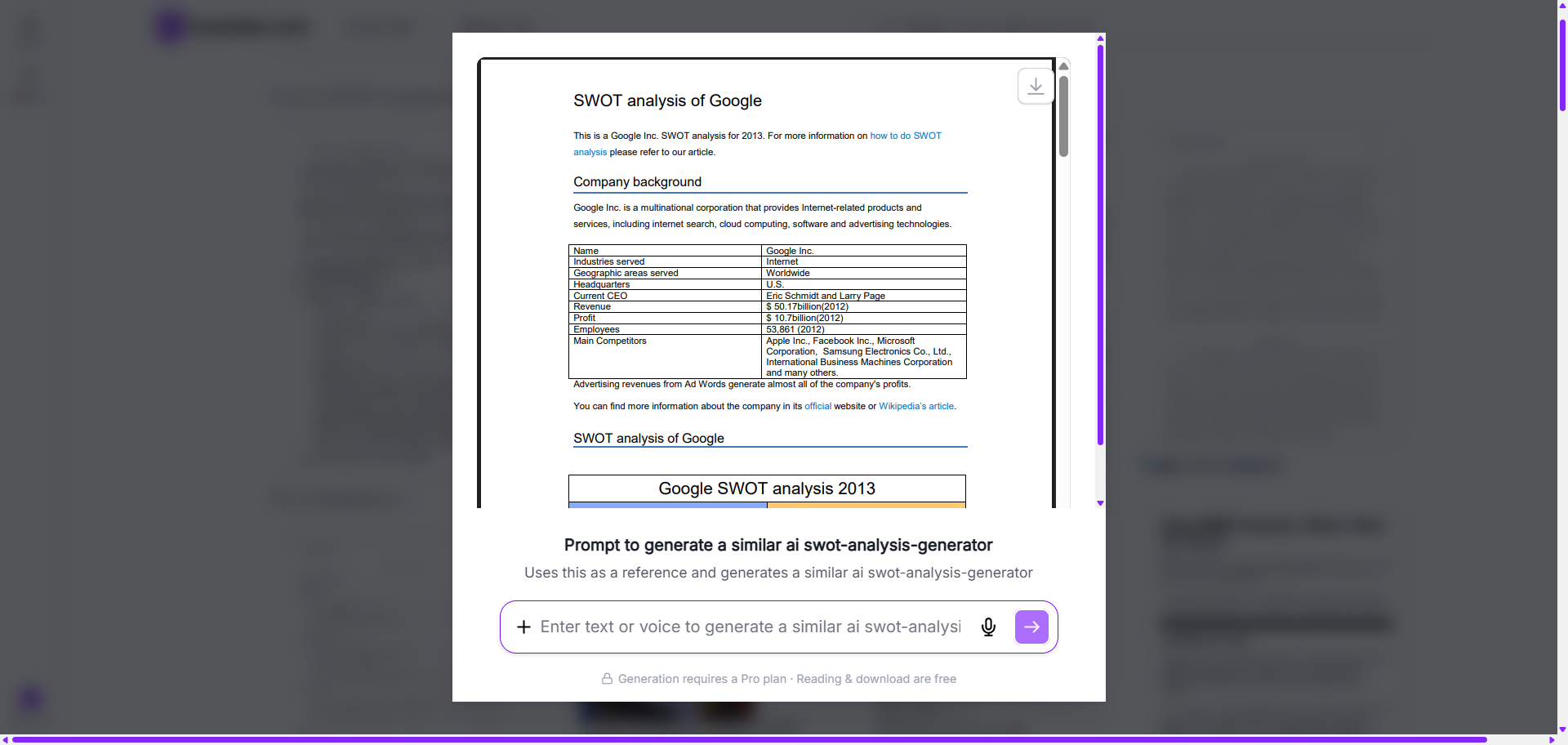
Choose A Reference SWOT Analysis And Enter An AI Prompt
Select a reference SWOT analysis and describe your business, organization, product, project, or personal objective. Include relevant strengths, weaknesses, opportunities, threats, industry details, and strategic goals for the most accurate results.
Generate A New AI SWOT Analysis
The AI generates a customized SWOT analysis based on your prompt, organizing insights into clear Strengths, Weaknesses, Opportunities, and Threats to support strategic planning and informed decision-making.
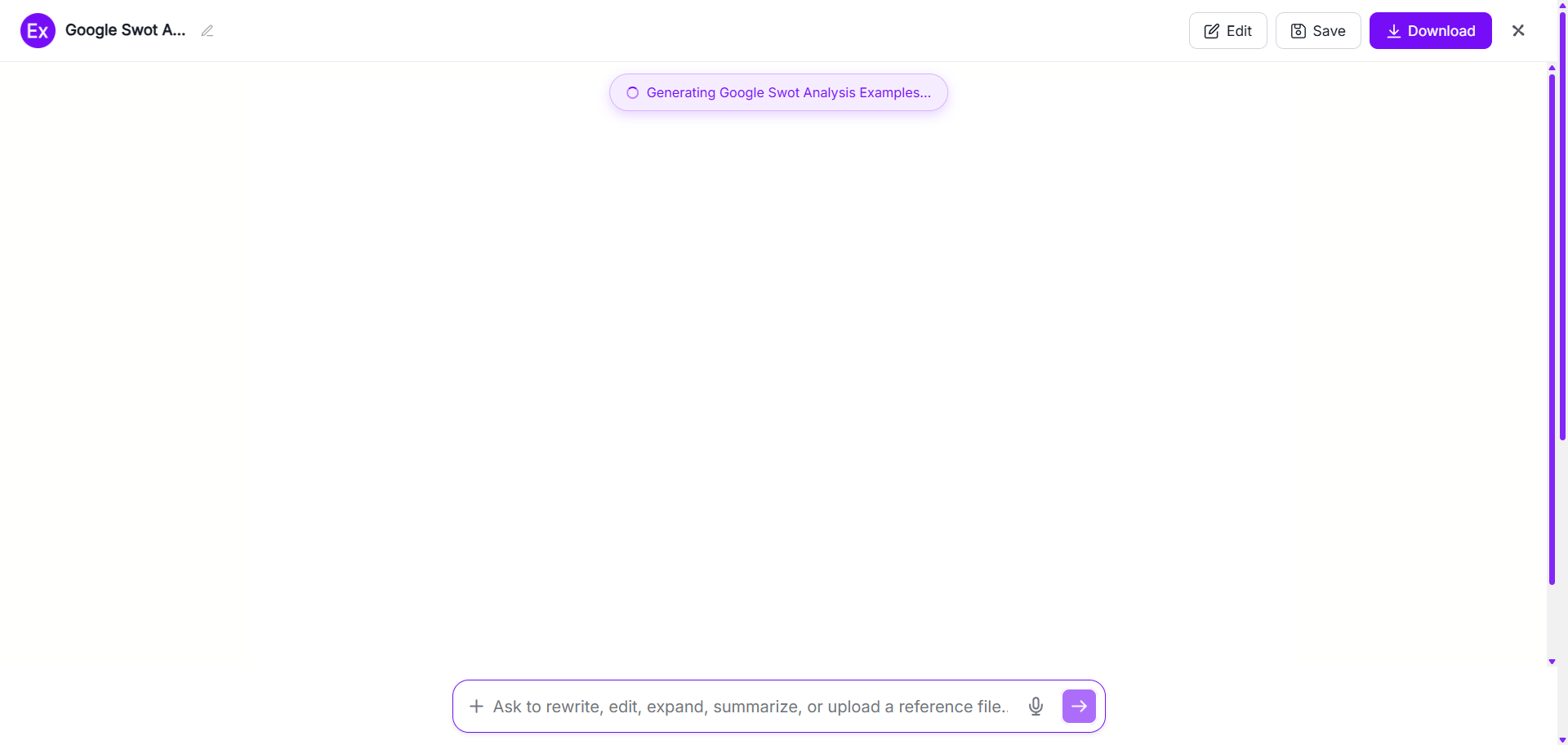
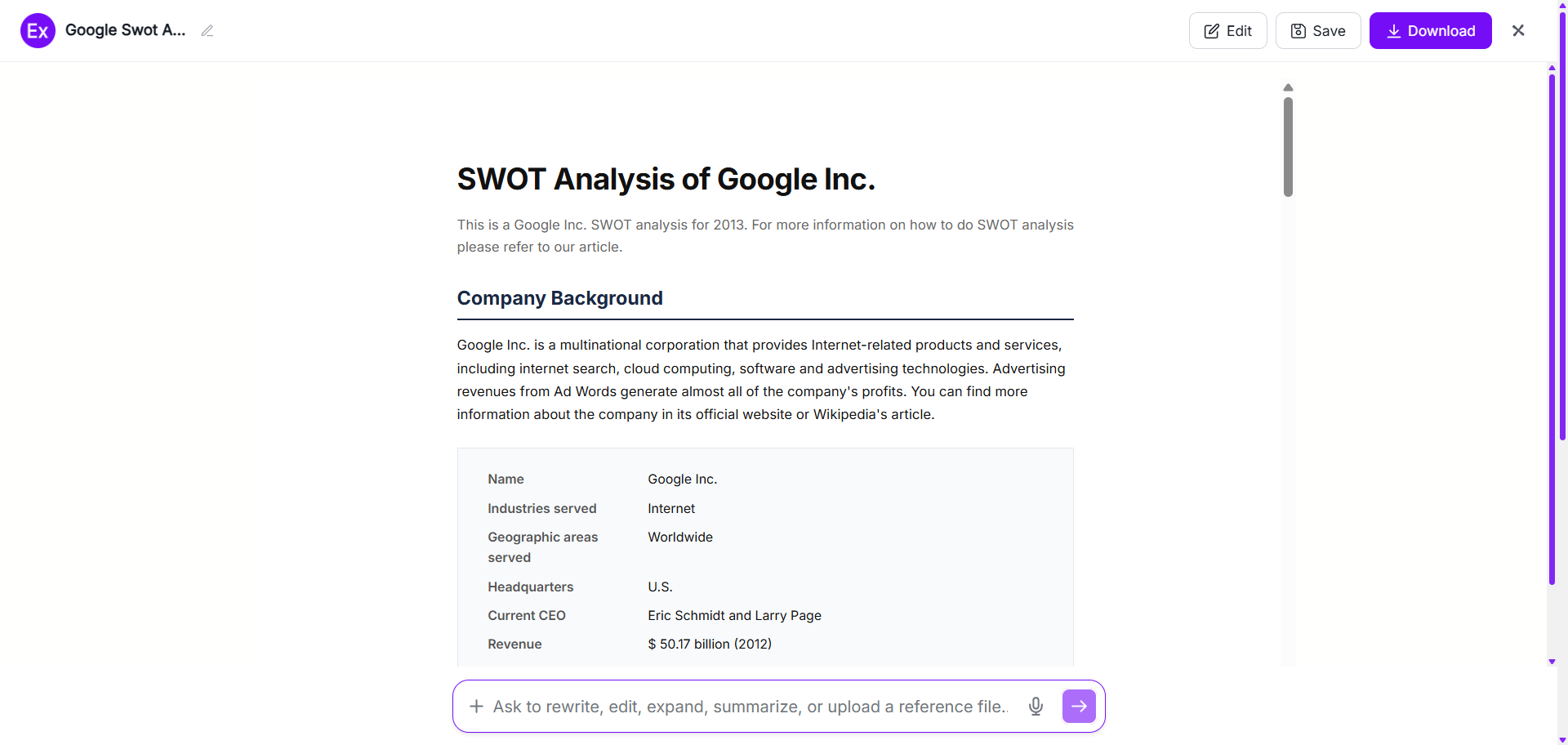
Customize The SWOT Analysis In The Online Editor
Edit each SWOT category, refine strategic insights, update business information, improve formatting, and tailor the analysis to match your specific goals, industry, or project requirements.
Download And Use Your SWOT Analysis
Download your completed SWOT analysis in PDF format for presentations, strategic planning, business meetings, reporting, or sharing with stakeholders and team members.

How Do I Customize An Swot Analysis Online?
Customize your SWOT analysis by updating strengths, weaknesses, opportunities, threats, business details, strategic objectives, and key insights to match your specific needs. You can also add or remove analysis points, refine recommendations, edit formatting, and tailor the content for businesses, products, projects, or personal planning. Once complete, review the SWOT analysis, make final adjustments, and download it for presentations, strategic planning, reporting, or sharing with stakeholders.
AI Swot Analysis Editing Features
AI SWOT Analysis Generation
Generate professionally structured SWOT analyses with clear strengths, weaknesses, opportunities, and threats based on your input.
Smart SWOT Editing
Add, remove, or modify SWOT points to reflect your business, product, project, or personal strategic objectives.
Auto Formatting
Automatically organize SWOT sections, headings, and layouts into a clean, professional, and easy-to-read format.
SWOT Analysis Customization
Update business details, strategic goals, industry insights, and SWOT factors with ease to create a personalized analysis.
Collaboration And Review
Share your SWOT analysis with colleagues, clients, or stakeholders for feedback, review, and strategic discussions before finalizing.
Instant Download Options
Download your completed SWOT analysis in your preferred format for presentations, reports, planning sessions, or future reference.
Which Essential Elements Should Every Swot Analysis Include?
Objective: Clearly define the purpose of the SWOT analysis, such as evaluating a business, product, project, marketing strategy, or personal development plan.
Strengths: Identify the internal advantages, core competencies, valuable resources, and capabilities that provide a competitive edge.
Weaknesses: List internal limitations, resource gaps, operational challenges, or areas that require improvement.
Opportunities: Analyze external trends, market gaps, emerging technologies, partnerships, or favorable conditions that can support growth and success.
Threats: Identify external risks such as competitors, economic changes, market disruptions, regulatory issues, or industry challenges that could impact performance.
Strategic Insights: Summarize the key findings and explain how strengths can be leveraged to seize opportunities while addressing weaknesses and minimizing threats.
Recommendations and Action Plan: Provide practical strategies, priorities, and next steps to improve performance, reduce risks, and achieve long-term objectives.
How Do I Write A Better Swot Analysis?
Define a Clear Objective: Clearly state the purpose of the SWOT analysis and what you want to evaluate.
Be Honest and Specific: Identify realistic strengths, weaknesses, opportunities, and threats using accurate information.
Use Reliable Data: Support your analysis with market research, performance metrics, customer feedback, and industry trends.
Focus on Key Factors: Include only the most relevant internal and external factors that influence your goals.
Develop Actionable Strategies: Turn your findings into practical recommendations that leverage strengths and address challenges.
Review and Update Regularly: Revisit your SWOT analysis periodically to reflect changing business conditions, markets, and objectives.
Why Should I Use Real Swot Analysis Examples Before Creating My Own?
- Save time by using a proven SWOT analysis framework.
- Understand how professional SWOT analyses are structured.
- Identify key strengths, weaknesses, opportunities, and threats.
- Make informed strategic decisions with organized insights.
- Customize the SWOT analysis to match your business or project goals.
- Create clear, actionable, and professional strategic assessments with confidence.
What Common Swot Analysis Mistakes Should I Avoid?
- Using vague or unsupported observations.
- Confusing internal factors with external factors.
- Including too many irrelevant strengths or weaknesses.
- Ignoring market trends, competitors, or potential risks.
- Failing to develop actionable strategies from the findings.
- Not reviewing and updating the SWOT analysis regularly
How Can Swot Analysis Protect Your Business?
Identify Internal Strengths and Weaknesses
Evaluate your organization’s capabilities, resources, and limitations to understand where you excel and where improvements are needed.
Recognize External Opportunities
Identify market trends, emerging technologies, partnerships, and growth opportunities that can support future success.
Anticipate Potential Threats
Analyze external risks such as competitors, economic conditions, regulatory changes, and industry challenges that could impact performance.
Support Better Strategic Decisions
Use SWOT findings to prioritize initiatives, allocate resources effectively, and develop informed business strategies.
Improve Long-Term Planning
A well-structured SWOT analysis helps organizations adapt to changing conditions, capitalize on opportunities, and achieve sustainable growth.
Swot Analysis Examples For Different Industries
Business
Business SWOT analyses evaluate a company’s competitive position, operational performance, market opportunities, and potential threats to support strategic planning and growth.
Marketing
Marketing SWOT analyses assess campaign strengths, branding challenges, customer opportunities, and competitive risks to improve marketing effectiveness.
Product
Product SWOT analyses identify a product’s advantages, limitations, market opportunities, and competitive threats to guide development and positioning.
Startup
Startup SWOT analyses help entrepreneurs evaluate business ideas, identify growth opportunities, recognize challenges, and prepare for market competition.
Industry
Industry SWOT analyses examine market trends, competitive landscapes, regulatory factors, and emerging opportunities affecting an entire industry or sector.
Personal
Personal SWOT analyses help individuals assess their skills, weaknesses, career opportunities, and potential challenges for professional and personal development.
FAQs
What Is a SWOT Analysis?
A SWOT analysis is a strategic planning framework used to evaluate the strengths, weaknesses, opportunities, and threats affecting a business, project, product, or individual.
When Should I Use a SWOT Analysis?
Use a SWOT analysis when planning a new strategy, launching a product, evaluating business performance, entering a new market, or making important decisions.
Can I Customize a SWOT Analysis?
Yes, you can customize strengths, weaknesses, opportunities, threats, strategic insights, and recommendations to match your specific goals and industry.
What Types of SWOT Analyses Can I Create?
You can create business, marketing, product, startup, competitor, industry, project, and personal SWOT analyses for strategic planning and decision-making.
What Should Every SWOT Analysis Include?
Every SWOT analysis should include clear strengths, weaknesses, opportunities, threats, strategic insights, and actionable recommendations based on accurate information.
Why Is a SWOT Analysis Important?
A SWOT analysis helps identify competitive advantages, address weaknesses, recognize growth opportunities, manage risks, and support informed strategic decisions.
Can AI Help Create a SWOT Analysis?
AI can generate structured SWOT analyses quickly by organizing strengths, weaknesses, opportunities, and threats while allowing you to customize every section.
Are SWOT Analysis Examples Useful?
Yes, SWOT analysis examples provide guidance on structure, strategic thinking, and best practices, making it easier to create accurate and effective analyses.