
Introduction
Reading music and building rhythm fluently takes consistent, short practice sessions. Music Flashcards make that practice fast, visual, and easy to repeat. If you’d rather skip building a deck by hand, the Examples.com flashcards tool can generate a full set on this topic in seconds.
What Are Music Flashcards?
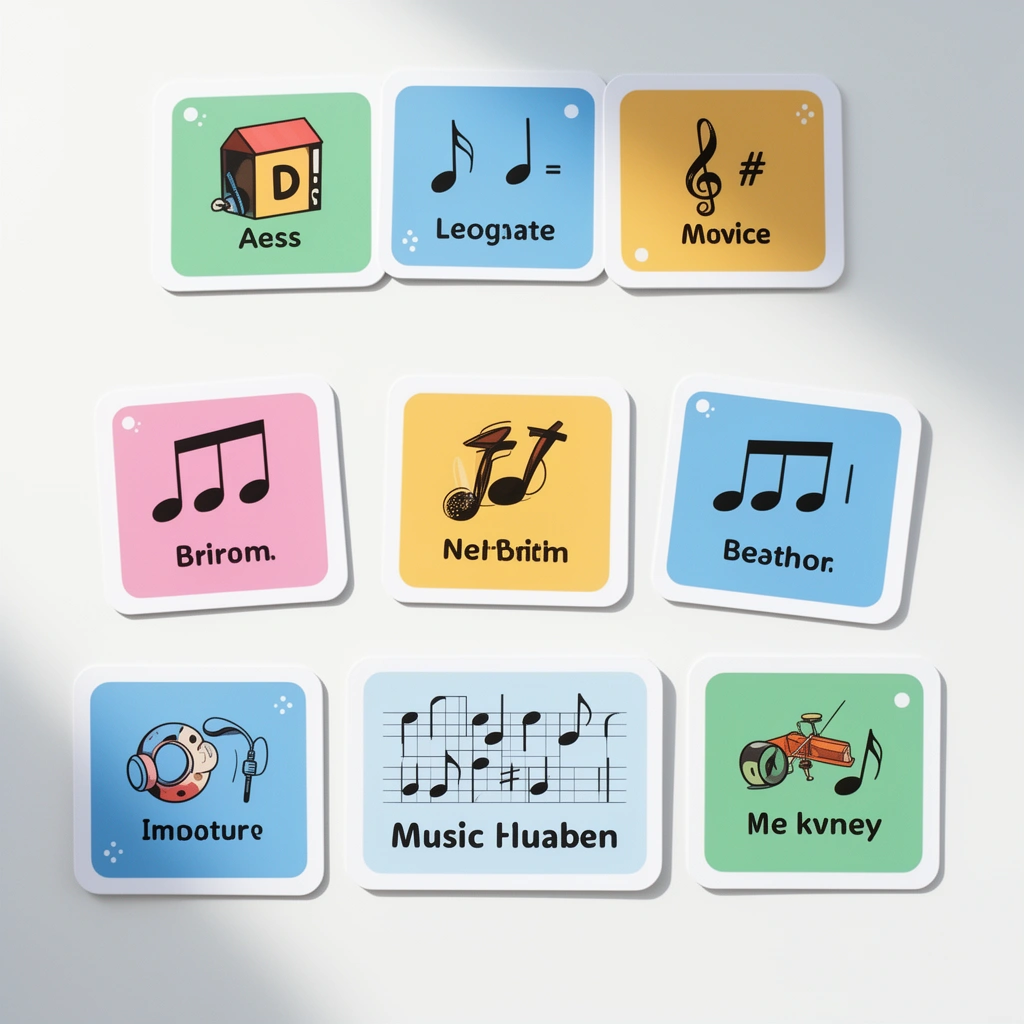
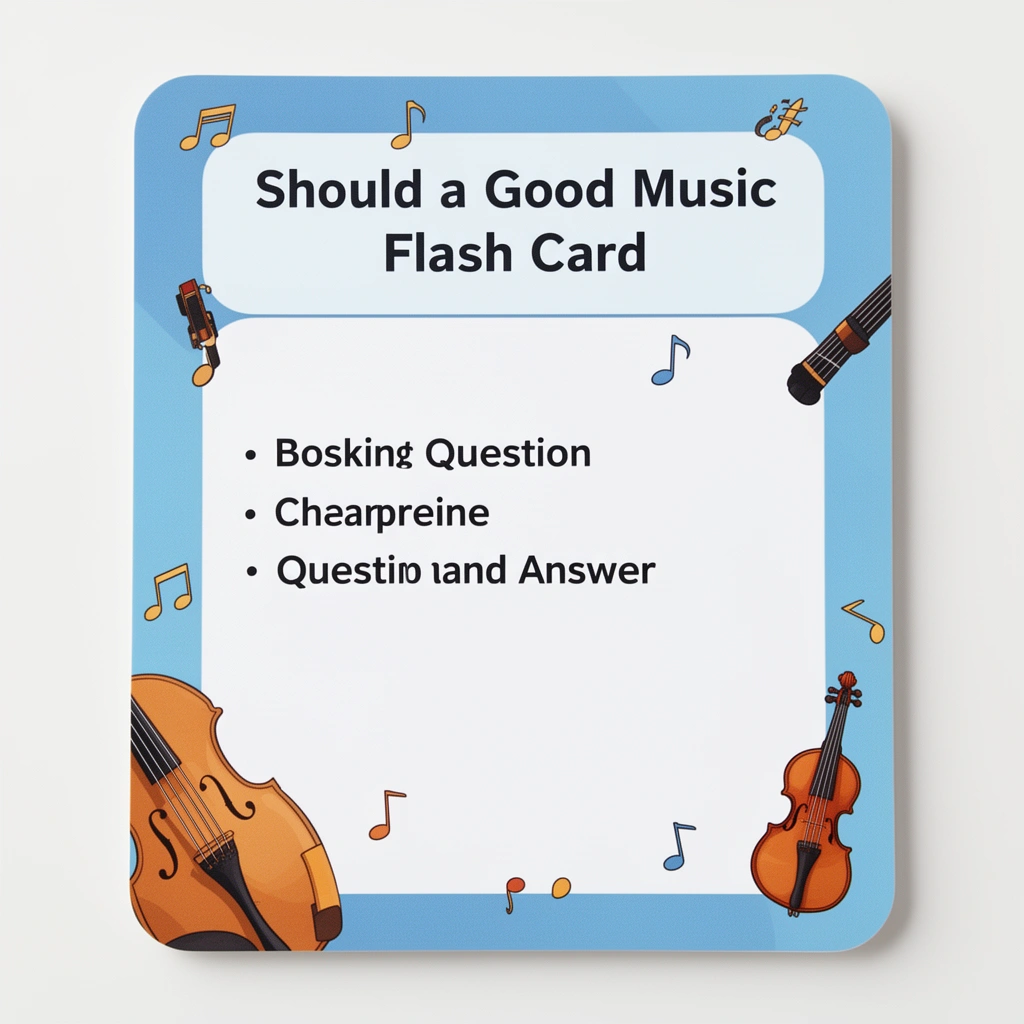
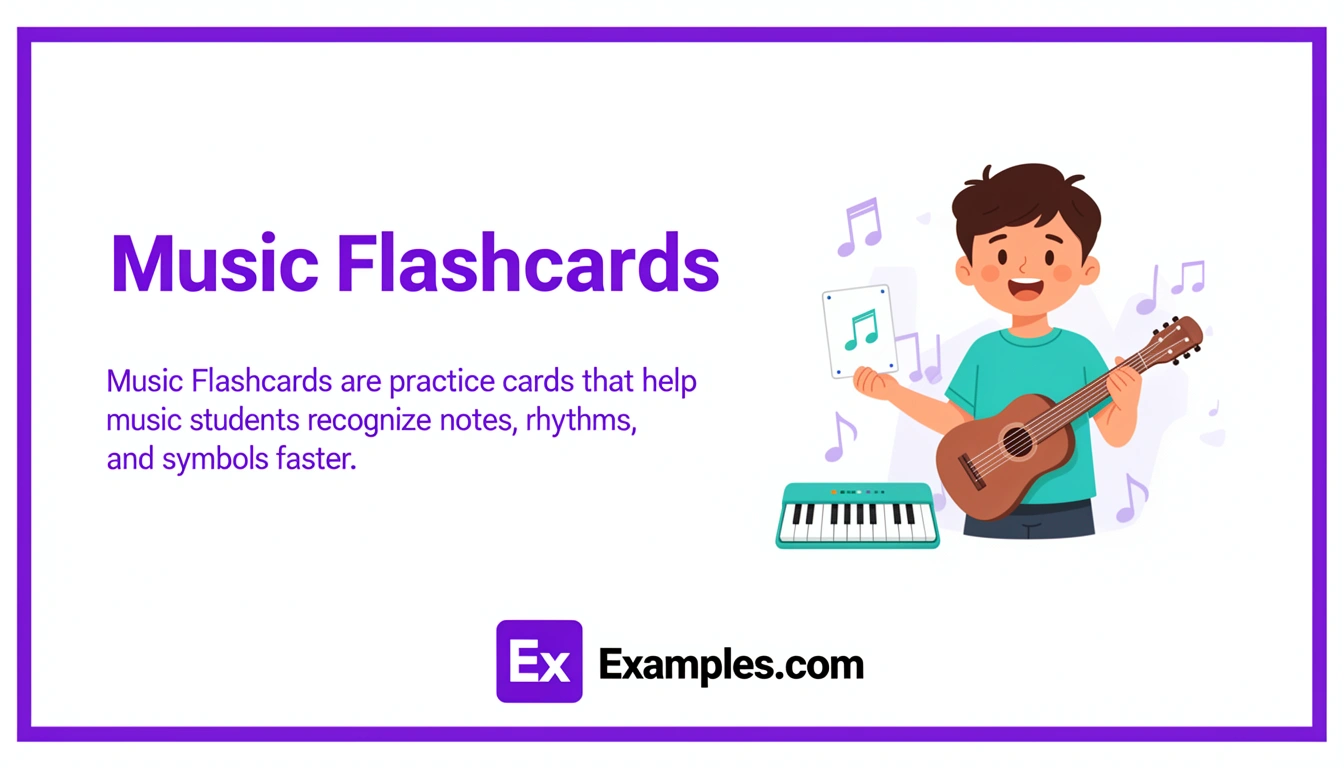
Music Flashcards pair a musical symbol, note, or rhythm pattern with its name or correct answer, giving music students a fast way to build recognition without needing an instrument in hand. A few music flashcard examples can serve as a helpful template before writing your own questions.
Why Flashcards Help With Music Fundamentals
Building Instant Recognition
Reading music fluently depends on recognizing notes and symbols instantly, rather than working them out one at a time. Flashcard drills build that speed through repetition. For a faster approach, an AI flashcard generator can generate this entire deck automatically, hints and all.
Practicing Away From the Instrument
Not every practice session needs an instrument. Music Flashcards let students reinforce note reading, rhythm counting, or terminology during downtime, which frees up instrument practice time for actual playing.
Reinforcing What’s Learned in Lessons
Between lessons, flashcards give students a simple way to keep reviewing concepts a teacher has introduced, rather than only reviewing them once a week during lesson time.
How to Practice Effectively
- Review little and often, a few minutes daily rather than one long session.
- Time yourself to track how quickly you can identify notes or symbols accurately.
- Mix in previously mastered cards to keep them fresh in memory.
- Pair with actual playing — once a note or rhythm is recognized quickly, try it on the instrument.
- Use a consistent set that matches what’s being taught in lessons for the clearest reinforcement.
For a faster setup, a flashcard maker can generate this whole deck automatically rather than writing each card by hand.
FAQs
How often should students practice with music flashcards?
A few minutes of daily practice tends to build recognition faster than longer, less frequent sessions.
Do flashcards replace instrument practice?
No — flashcards build recognition and theory knowledge, which should then be applied through regular practice on the instrument itself.
What age can children start using music flashcards?
Most children can begin with simple note or rhythm flashcards once they start formal music lessons, often around ages 5–7.
Conclusion
Music Flashcards offer a simple, proven way to build stronger recall and confidence around Music. Used consistently — in short, regular sessions rather than occasional cramming — they can turn what feels like a mountain of material into steady, manageable progress.