Clinical Research Medical School Personal Statement
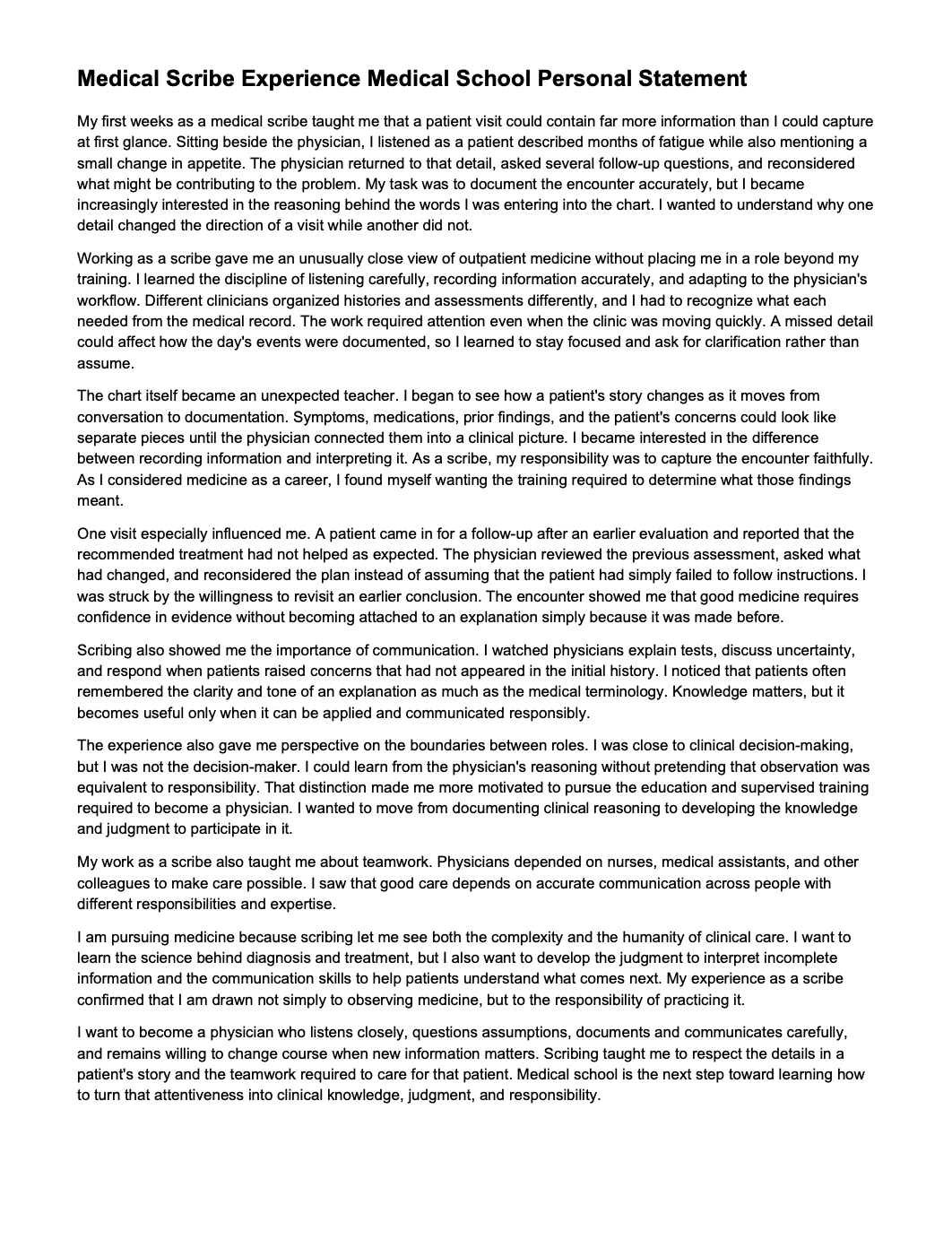
The first time I helped with a clinical research visit, I expected the work to feel mainly
scientific. Instead, I noticed how much of the study depended on a person feeling comfortable
enough to ask a question, describe a symptom accurately, or admit that they did not
understand what would happen next. I began to see clinical research not as information
collected from patients, but as a relationship in which careful science and careful
communication must work together.
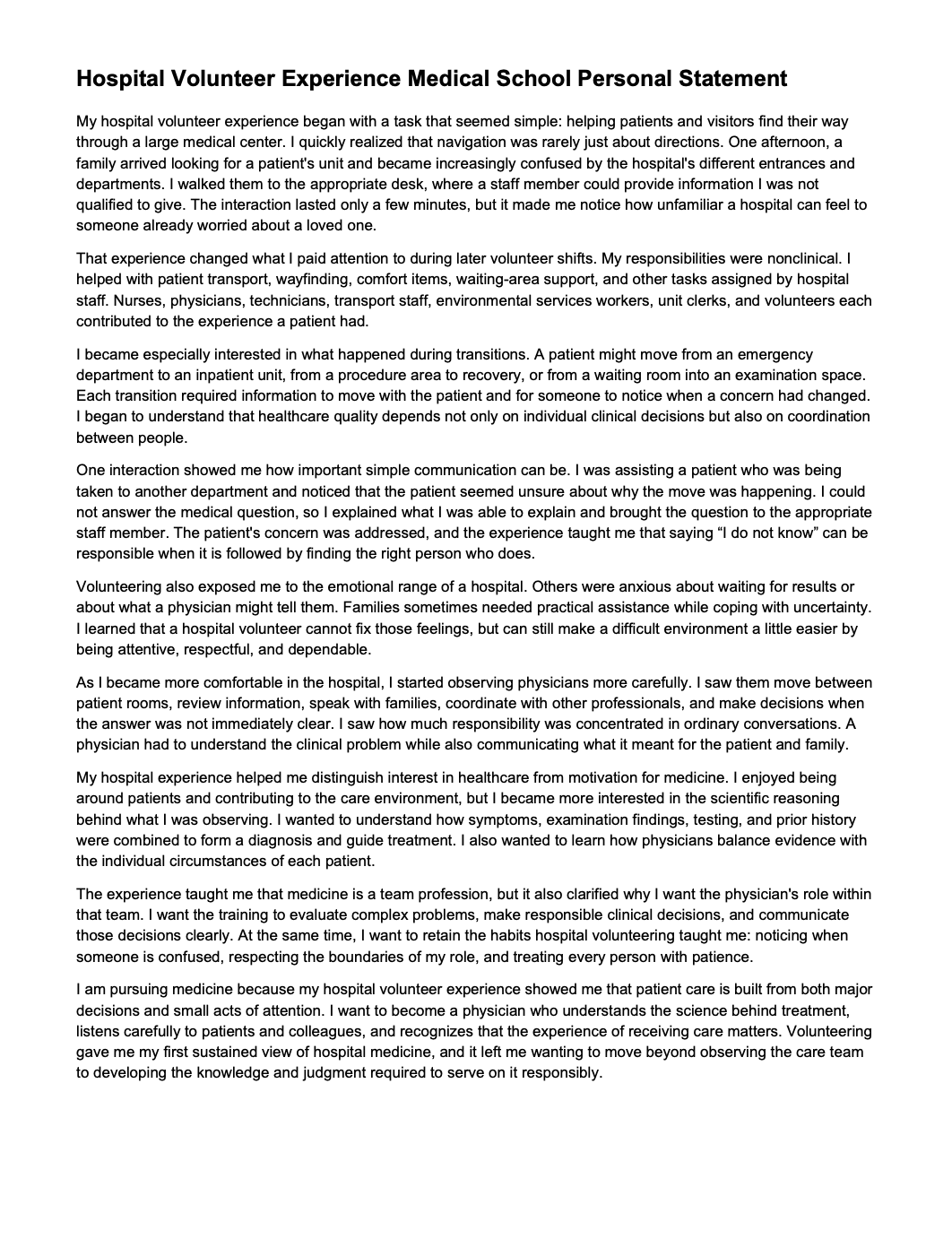
My role in the project included preparing visit materials, reviewing study information with
participants under supervision, documenting responses, and helping keep follow-up organized.
The tasks were precise, but the people were not predictable. One participant arrived worried
that agreeing to the study would affect the care they already received. Another needed
information explained more slowly than I had expected. I learned that informed consent is not
simply a signature. It is an opportunity to make sure a person understands the purpose of the
research, its demands, and the choice they are making.
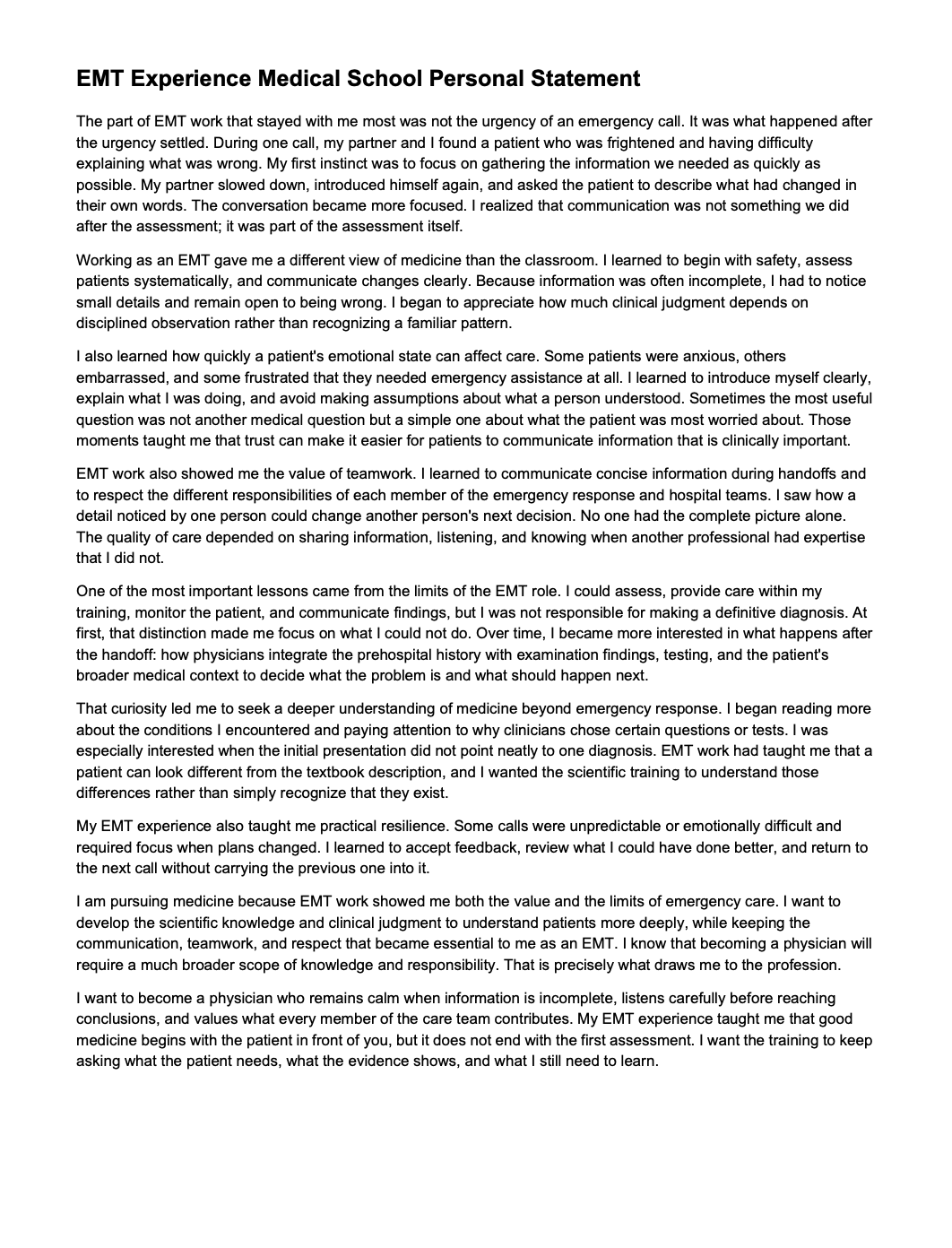
I was also drawn to the uncertainty built into clinical research. During a data review, an early
pattern seemed encouraging, but a closer look showed that missing follow-up information
could change how the finding was interpreted. I learned to resist the satisfaction of a quick
conclusion. Instead, I asked where the data came from, what might be missing, and whether
the question we were asking had actually been answered. That habit of questioning has stayed
with me.
Working with the research team showed me how many perspectives are needed to produce
useful evidence. Clinicians brought attention to symptoms and care decisions. Coordinators
focused on protocol requirements and participant follow-up. Researchers examined methods,
sources of bias, and whether the findings could be trusted. Seeing these roles together
changed the way I think about medicine. A physician does not practice with evidence in the
abstract. A physician must interpret evidence in the context of a particular person, explain
uncertainty honestly, and make decisions when the answer is not perfect.
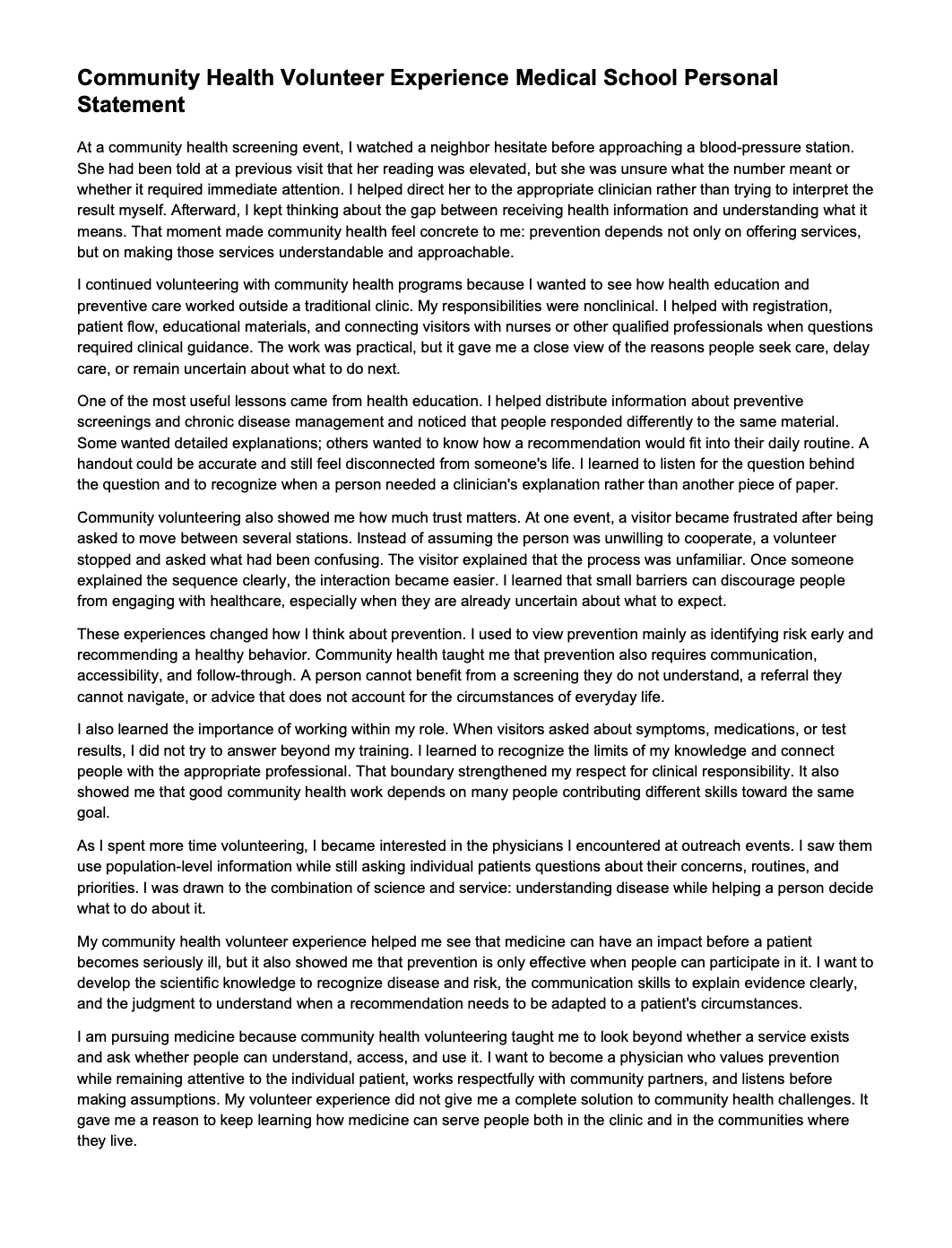
My clinical experiences reinforced this connection. Patients want treatment that is grounded in
evidence, but they also want to know that someone understands what matters to them.
Research taught me to pay attention to details and question assumptions. Clinical care taught
me that those skills have meaning only when they serve a person's needs. I became
increasingly interested in the space between discovering what works and helping an individual
decide what is right for them.
I want to study medicine because it offers the responsibility of combining scientific curiosity
with direct service. As a physician, I hope to remain involved in clinical research, particularly
questions that arise from everyday patient care. I want to learn how to recognize gaps in
knowledge, evaluate evidence carefully, and contribute to studies that answer useful clinical
questions. Just as importantly, I want to become the kind of physician who can discuss
research findings with patients in clear language and respect their values when evidence
leaves room for choice.
Clinical research gave me a more grounded understanding of medicine. It showed me that
meaningful evidence begins with trust, depends on disciplined inquiry, and ultimately matters
because it can improve decisions for real people. I am drawn to medicine because I want to
participate in that full process: listening to patients, asking better questions, and using
evidence responsibly in their care.