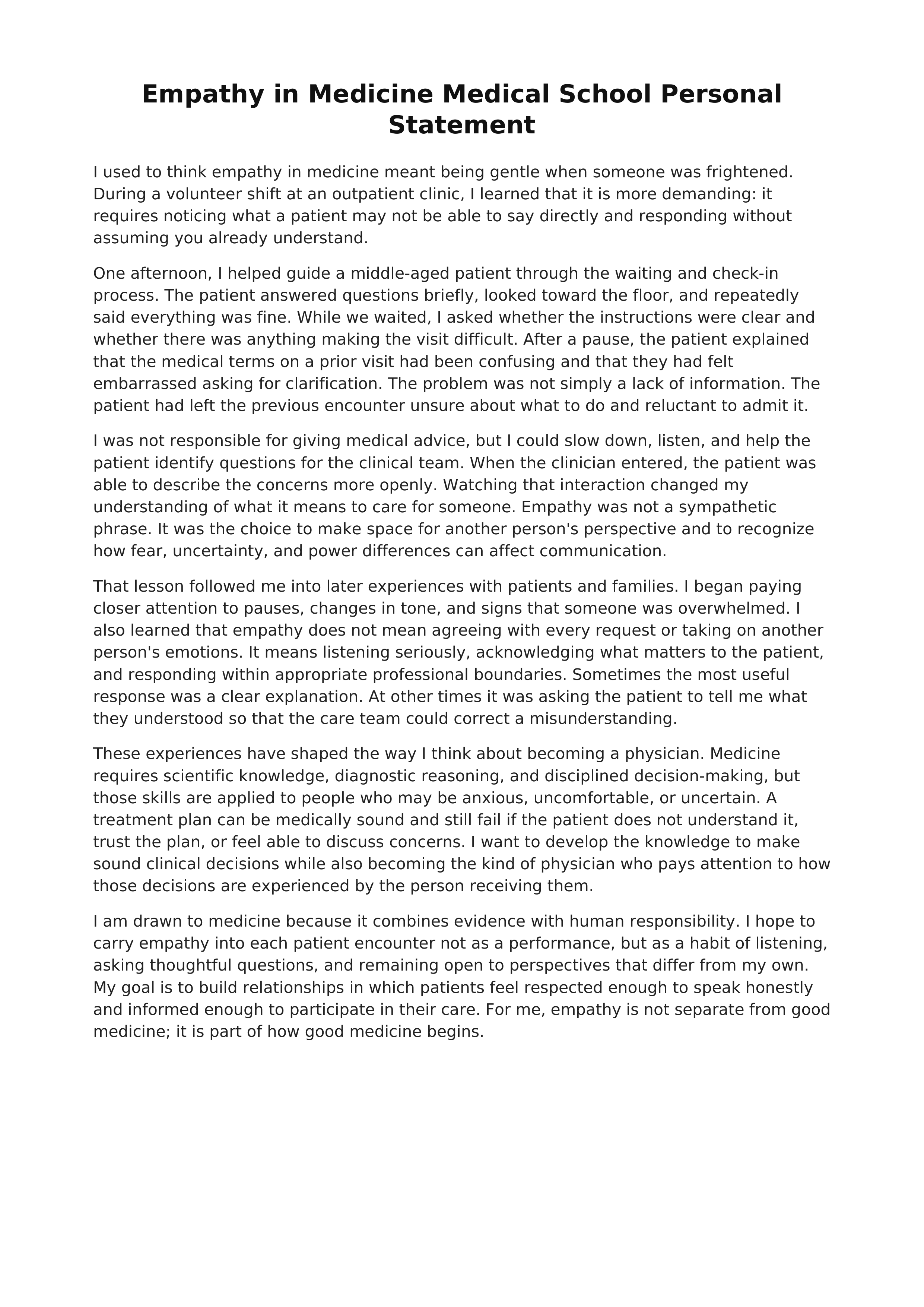
Empathy in Medicine Medical School Personal
Statement
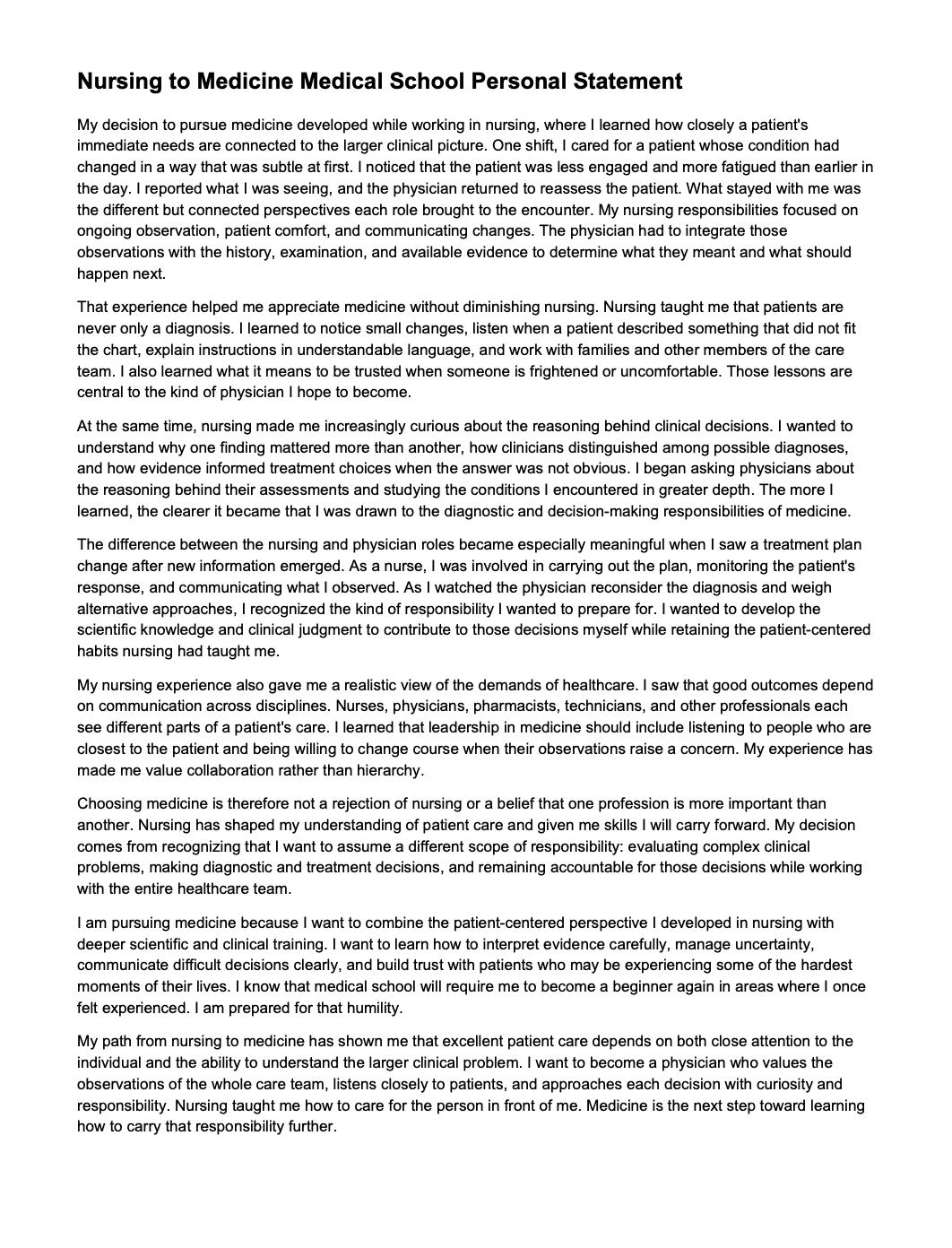
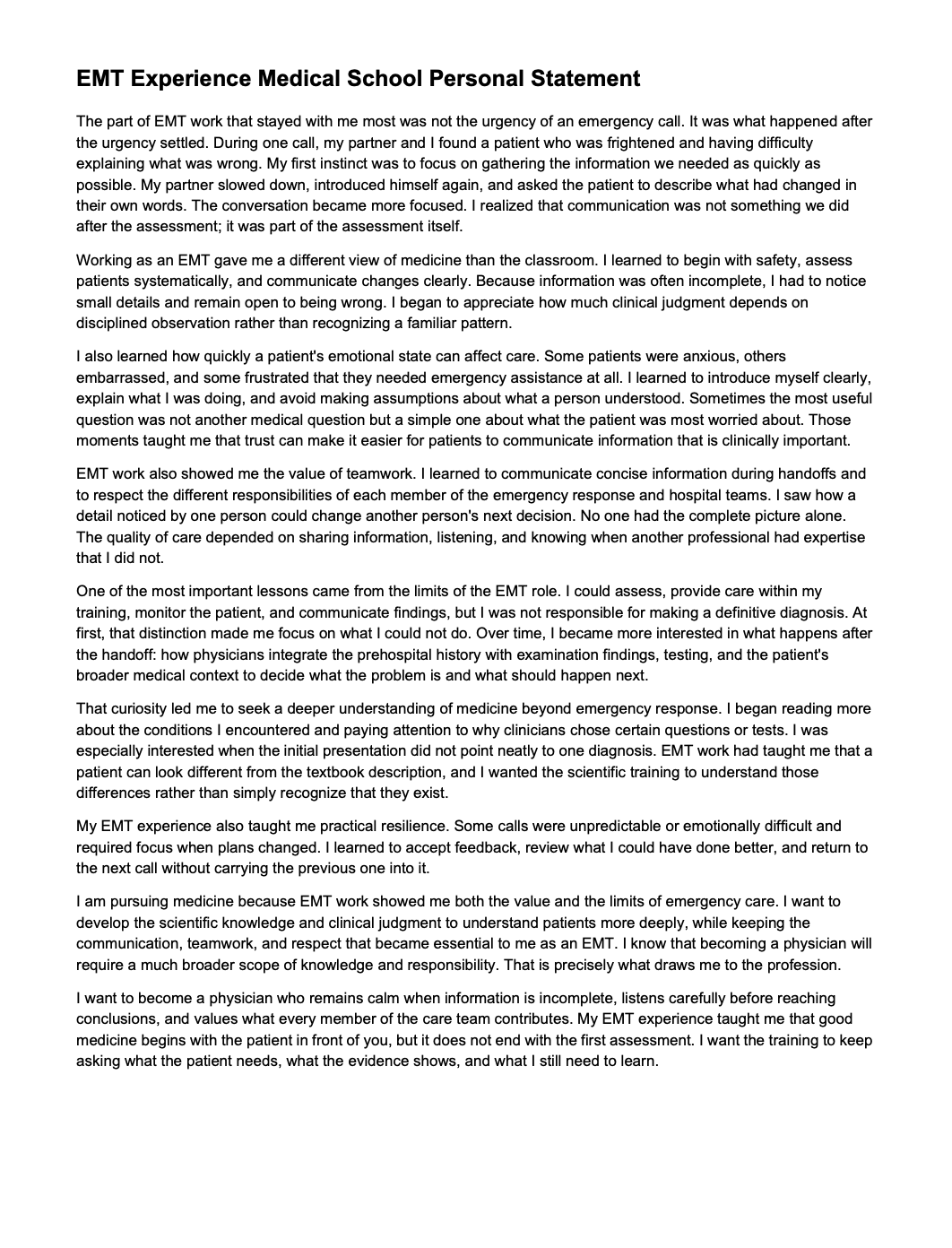
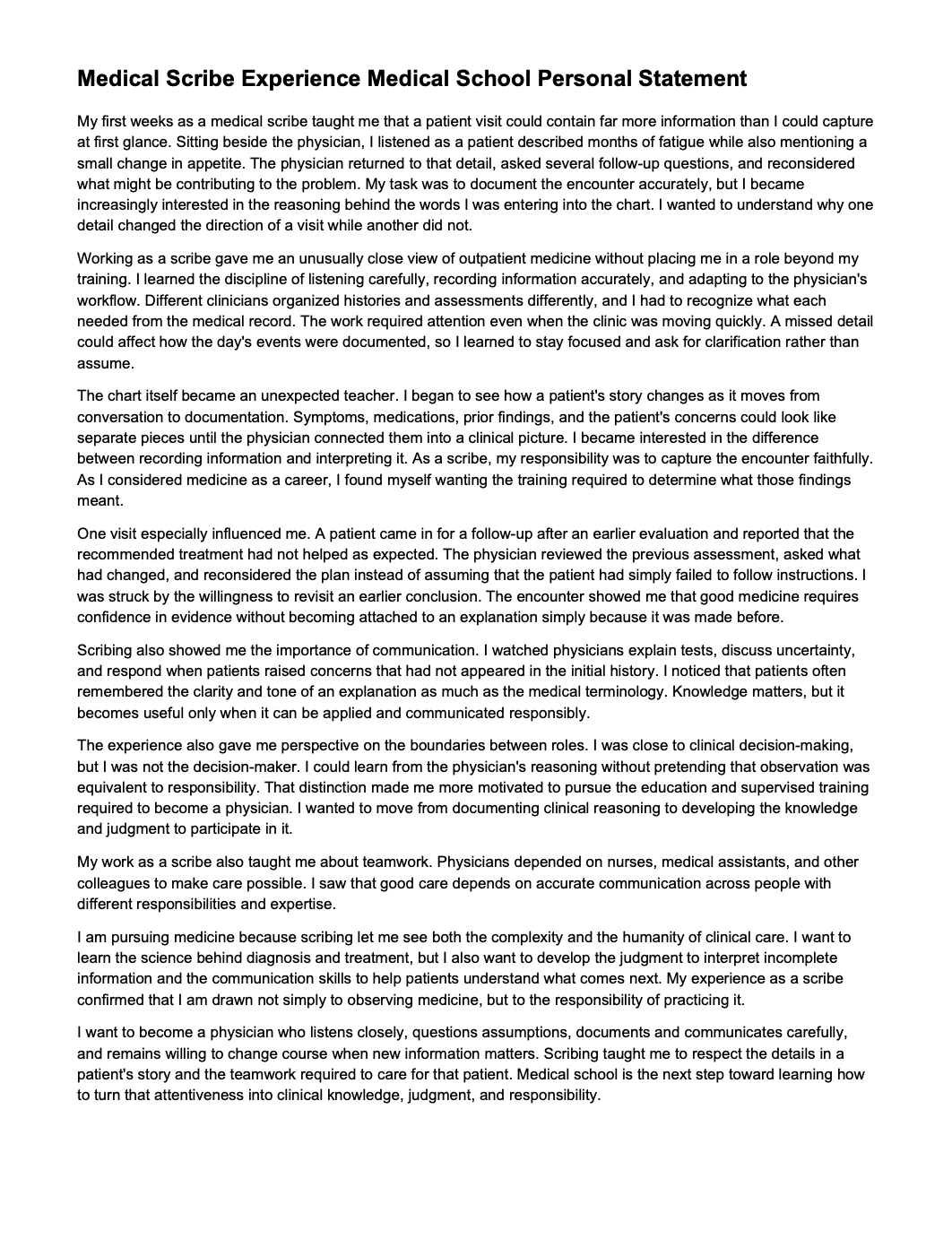
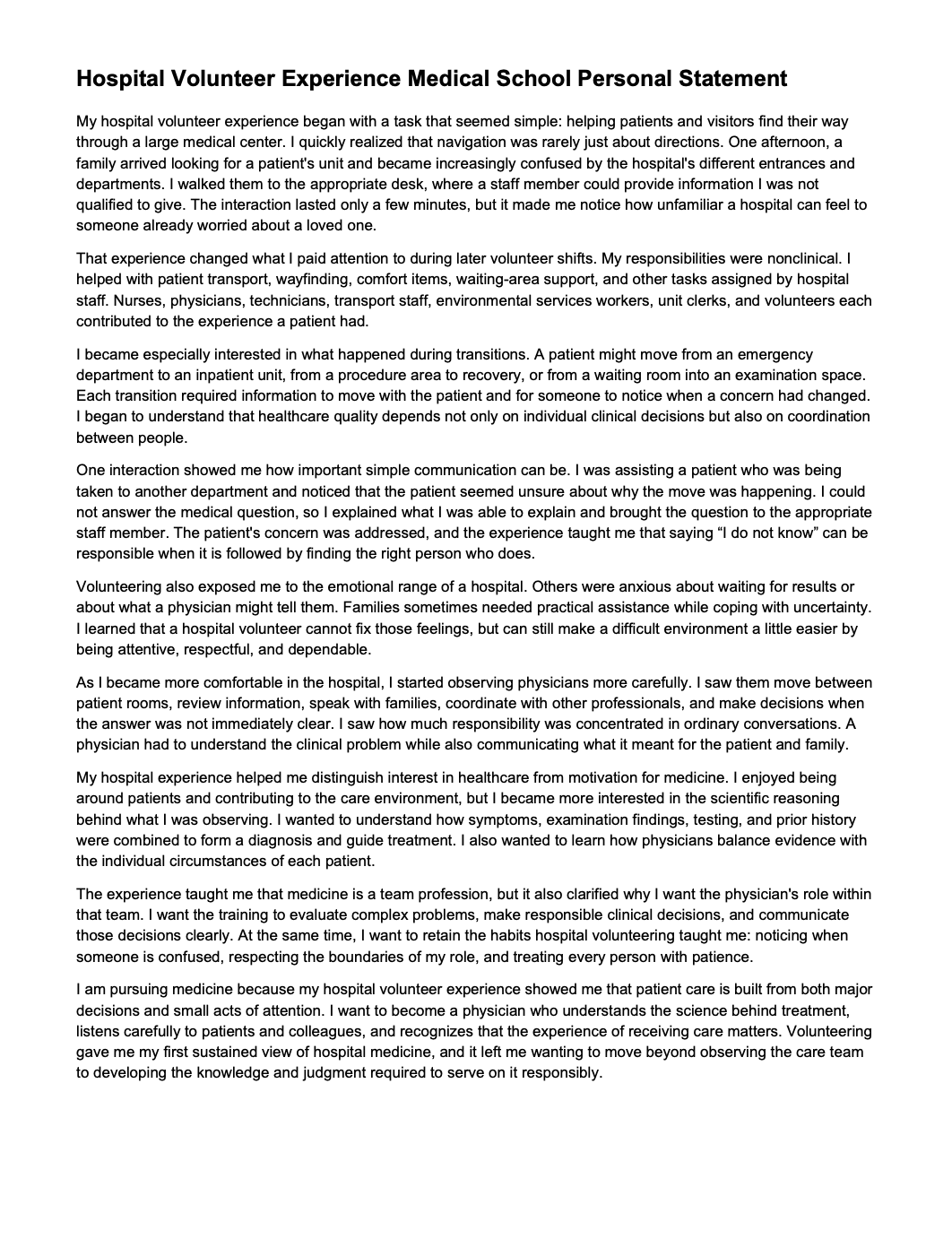
I used to think empathy in medicine meant being gentle when someone was frightened.
During a volunteer shift at an outpatient clinic, I learned that it is more demanding: it
requires noticing what a patient may not be able to say directly and responding without
assuming you already understand.
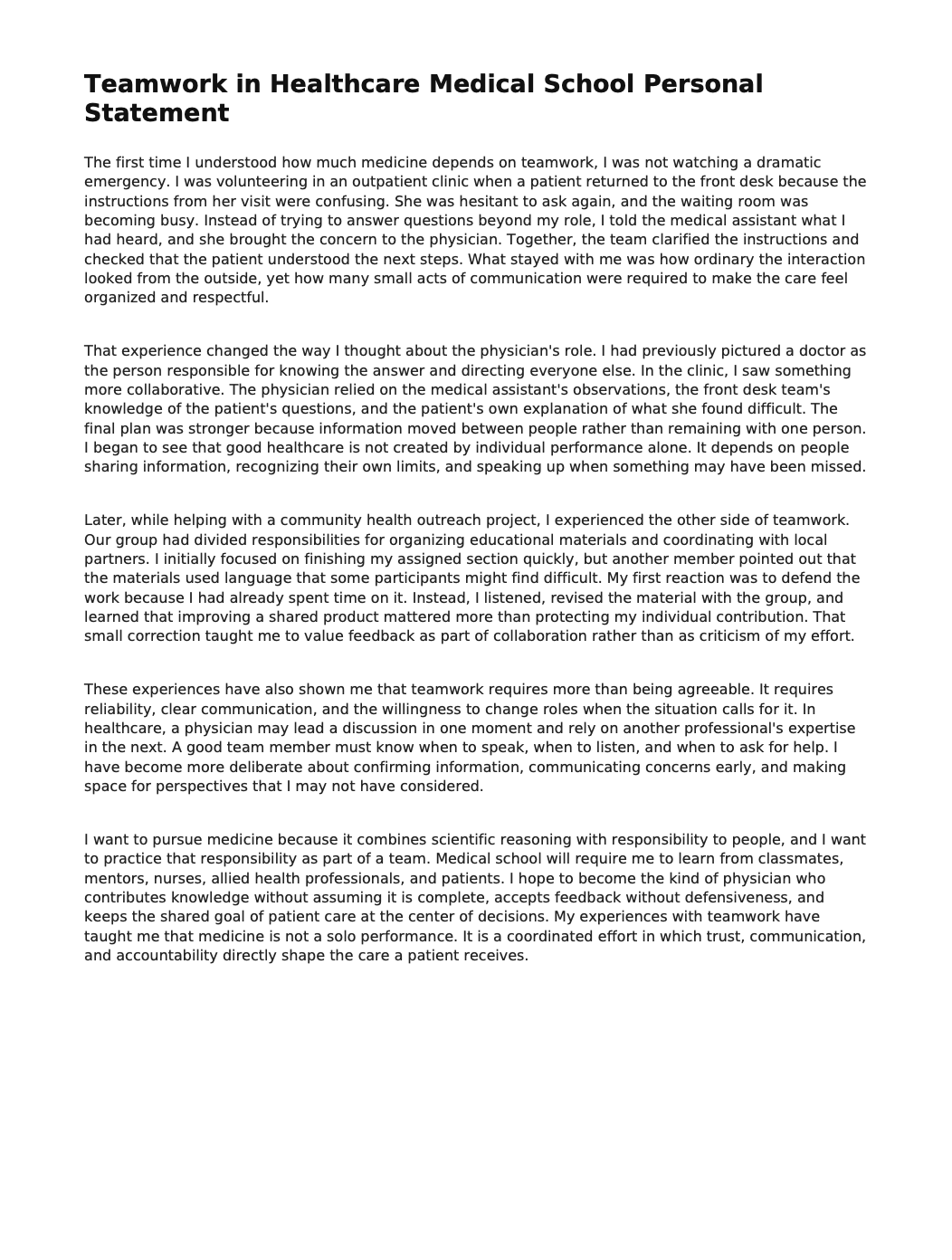
One afternoon, I helped guide a middle-aged patient through the waiting and check-in
process. The patient answered questions briefly, looked toward the floor, and repeatedly
said everything was fine. While we waited, I asked whether the instructions were clear and
whether there was anything making the visit difficult. After a pause, the patient explained
that the medical terms on a prior visit had been confusing and that they had felt
embarrassed asking for clarification. The problem was not simply a lack of information. The
patient had left the previous encounter unsure about what to do and reluctant to admit it.
I was not responsible for giving medical advice, but I could slow down, listen, and help the
patient identify questions for the clinical team. When the clinician entered, the patient was
able to describe the concerns more openly. Watching that interaction changed my
understanding of what it means to care for someone. Empathy was not a sympathetic
phrase. It was the choice to make space for another person's perspective and to recognize
how fear, uncertainty, and power differences can affect communication.
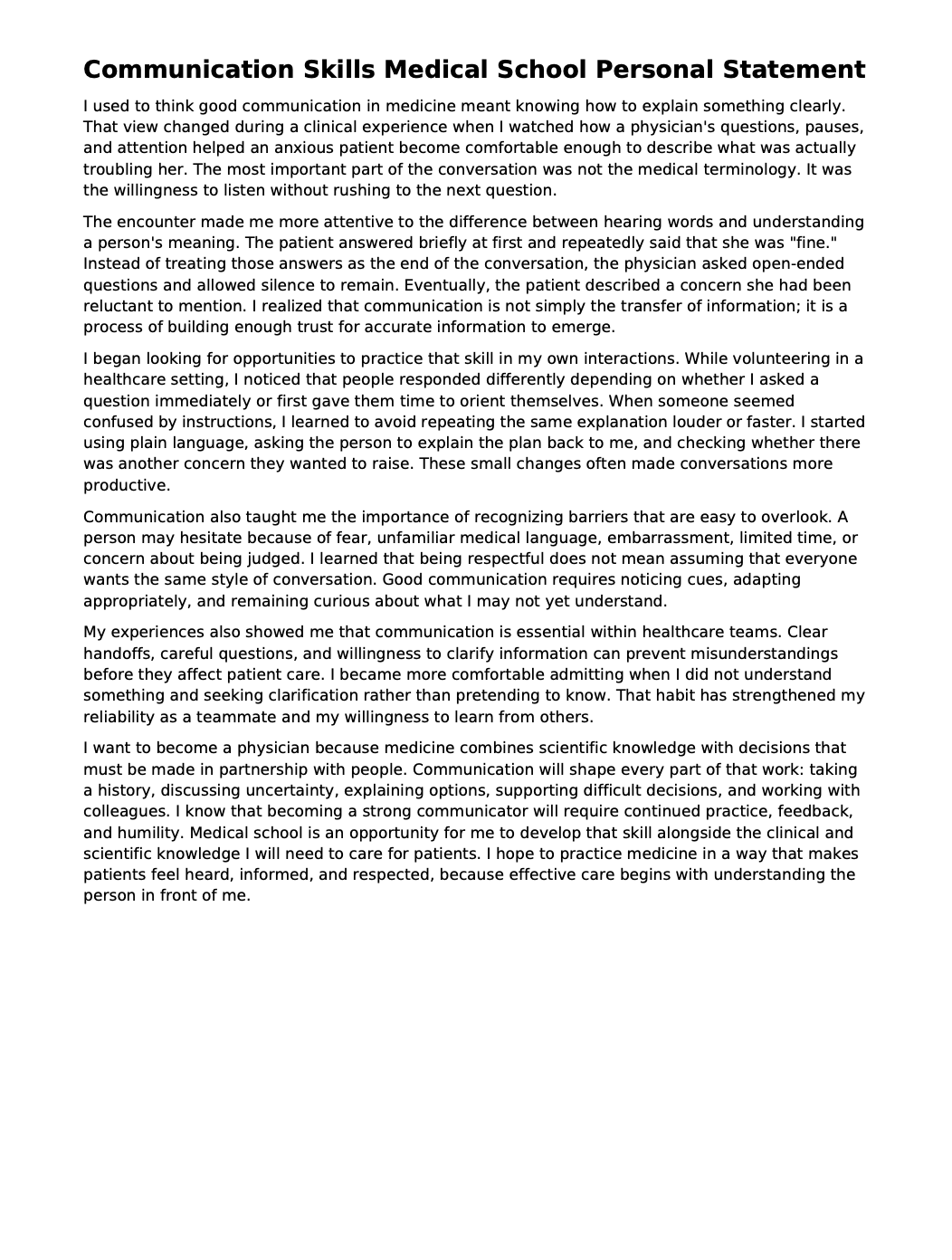
That lesson followed me into later experiences with patients and families. I began paying
closer attention to pauses, changes in tone, and signs that someone was overwhelmed. I
also learned that empathy does not mean agreeing with every request or taking on another
person's emotions. It means listening seriously, acknowledging what matters to the patient,
and responding within appropriate professional boundaries. Sometimes the most useful
response was a clear explanation. At other times it was asking the patient to tell me what
they understood so that the care team could correct a misunderstanding.
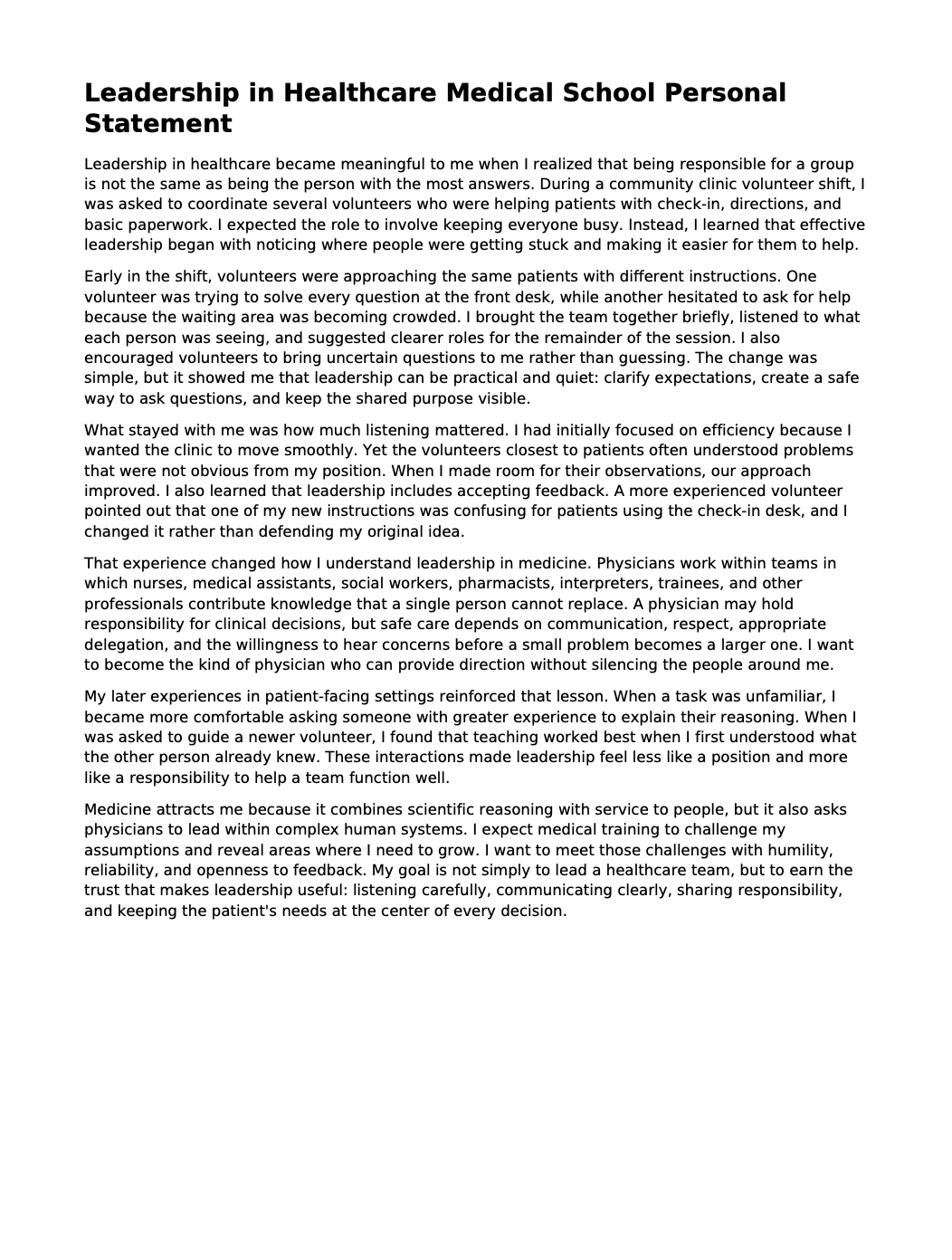
These experiences have shaped the way I think about becoming a physician. Medicine
requires scientific knowledge, diagnostic reasoning, and disciplined decision-making, but
those skills are applied to people who may be anxious, uncomfortable, or uncertain. A
treatment plan can be medically sound and still fail if the patient does not understand it,
trust the plan, or feel able to discuss concerns. I want to develop the knowledge to make
sound clinical decisions while also becoming the kind of physician who pays attention to how
those decisions are experienced by the person receiving them.
I am drawn to medicine because it combines evidence with human responsibility. I hope to
carry empathy into each patient encounter not as a performance, but as a habit of listening,
asking thoughtful questions, and remaining open to perspectives that differ from my own.
My goal is to build relationships in which patients feel respected enough to speak honestly
and informed enough to participate in their care. For me, empathy is not separate from good
medicine; it is part of how good medicine begins.