Nontraditional Applicant Medical School Personal Statement
For a long time, I assumed that the right path to medicine was a straight one. I finished college, entered the
workforce, and expected my career to develop from there. Instead, my path unfolded through several stages of work,
continued education, and growing exposure to healthcare. By the time I seriously considered medical school, I was
no longer making the decision as a college student choosing a first profession. I was making it after experiencing
professional responsibility, learning how organizations affect the people they serve, and becoming more certain
about the kind of work I wanted to spend my life doing.
My earlier work taught me habits I did not initially associate with medicine. I learned to manage competing
responsibilities, communicate with people who had different priorities, and stay organized when circumstances
changed. I became comfortable receiving feedback from people with more experience and making decisions when
there was no perfect option. Those skills made me a more mature professional, but they did not answer the question
that increasingly mattered to me: whether I wanted my long-term work to involve direct responsibility for patients.
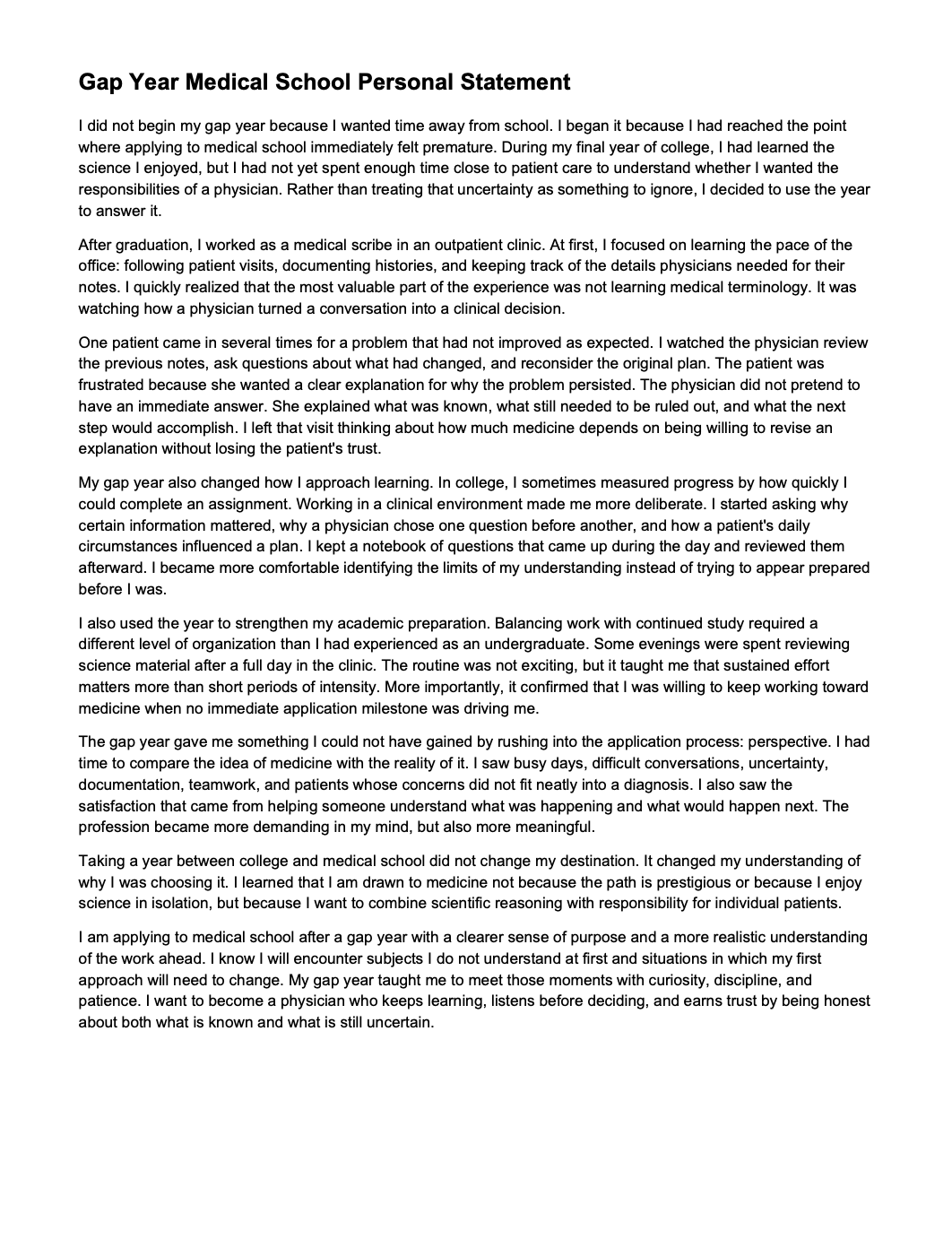
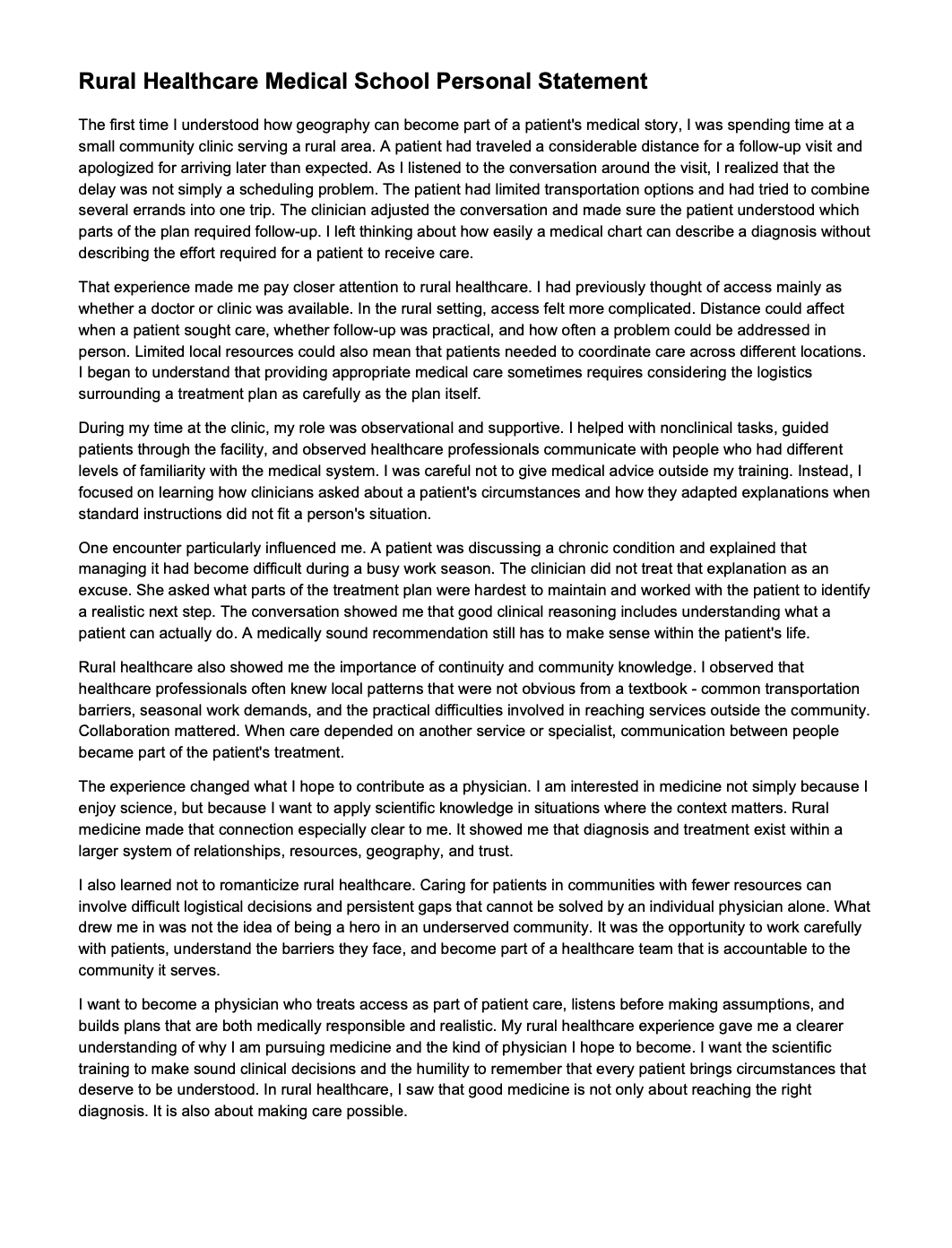
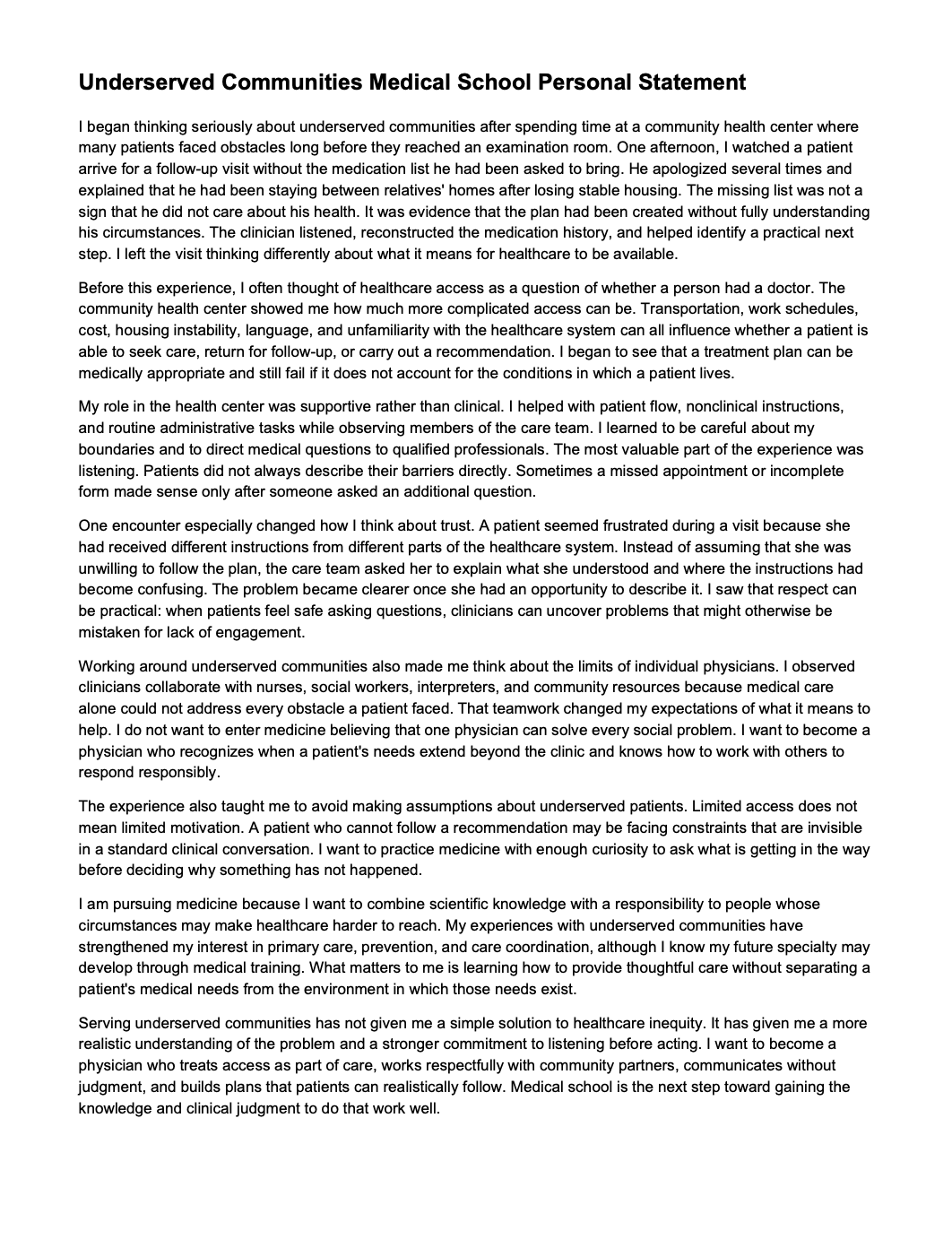
I began answering that question through sustained exposure to healthcare rather than through a single dramatic
event. In clinical and service settings, I observed how patients experienced the healthcare system and how
professionals responded to them. I noticed the amount of reasoning behind ordinary encounters: gathering a history,
deciding which details required more attention, explaining uncertainty, and adjusting a plan when new information
appeared. I was drawn to the combination of scientific knowledge and human responsibility. Just as importantly, I
was realistic about what I was observing. Watching a physician make a decision is very different from being
accountable for making it.
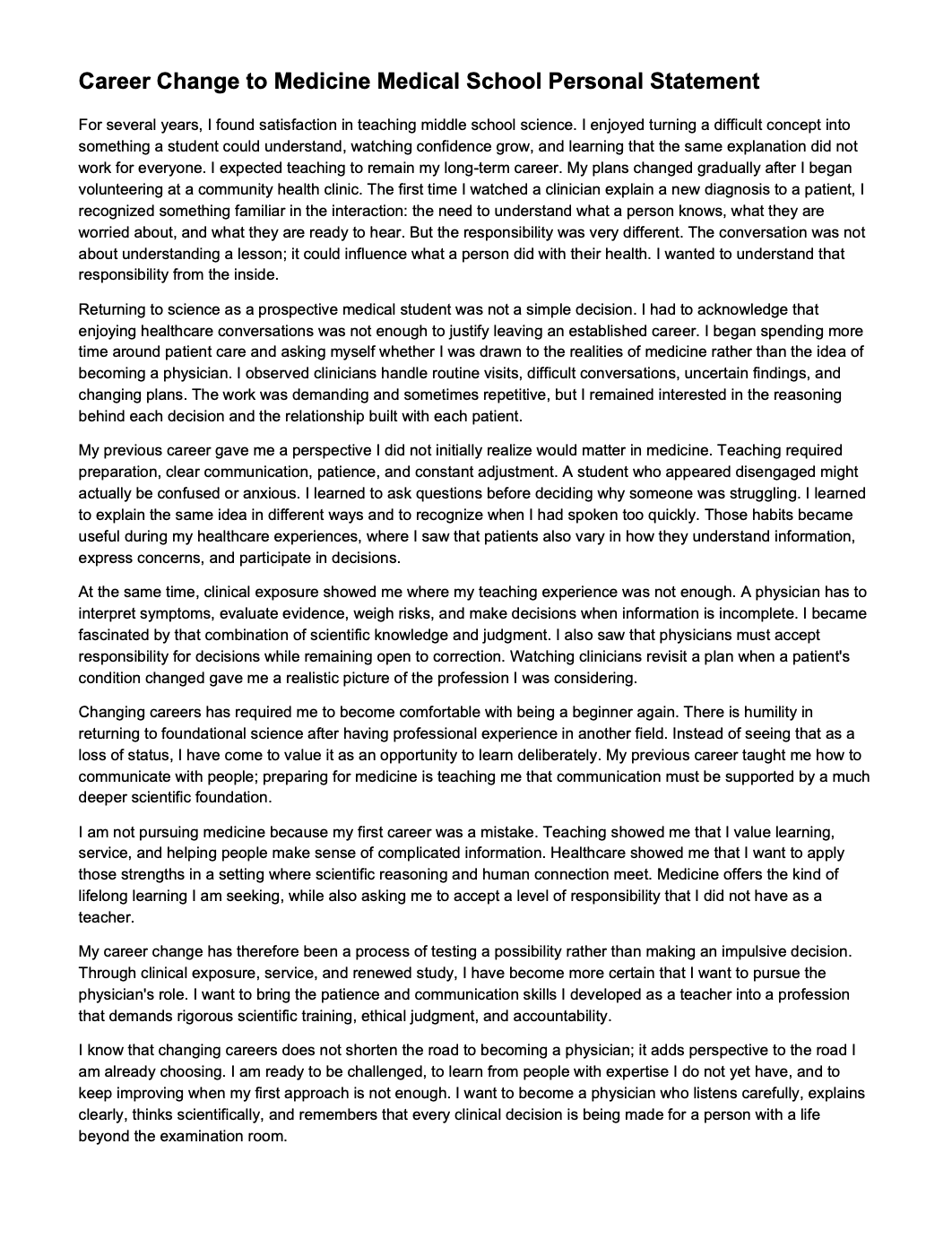
Returning to academic preparation was one of the most humbling parts of my path. I had already learned how to
function in a professional environment, but I had to become a student again while carrying responsibilities that I did
not have earlier in life. I had to relearn how to study difficult science efficiently, ask questions before I became
overwhelmed, and accept that progress could be slower than I wanted. My previous work experience helped me
bring discipline to that process, while returning to school reminded me how valuable curiosity and intellectual humility
are.
Being a nontraditional applicant has also changed how I define readiness. I do not believe readiness means having
every answer or having a perfectly linear résumé. For me, it means understanding why I am making this commitment
and having tested that decision against the reality of healthcare. My experiences have shown me both the
demanding and rewarding parts of medicine. They have also made me more deliberate about how I use my time,
how I respond to setbacks, and how I listen to people whose experiences differ from my own.
I am pursuing medicine because I want a career that requires continual learning while allowing me to build
relationships around meaningful decisions. I want to understand disease scientifically, but I also want to understand
how illness affects a person's daily life and choices. The years I spent outside the traditional premedical path have
not taken me away from that goal. They have given me perspective on communication, accountability, and the
importance of choosing a profession for reasons that can withstand difficult days.
I know that entering medical school later than some applicants means beginning a demanding training process after
gaining experience in another part of life. I see that as responsibility rather than disadvantage. I am bringing a clearer
sense of purpose, greater comfort with asking for help, and a willingness to keep learning when I am not immediately
confident.
My path to medicine has not been straight, but it has been intentional. Each stage has asked me to learn something
different about work, education, and responsibility. Those lessons have brought me to medicine with a conviction
grounded not in the idea of becoming a doctor, but in a sustained understanding of why I want to become one. I am
ready to begin the next stage with the humility to start again, the discipline to keep going, and the perspective to
recognize the person behind every clinical problem.