Civil Rights Movement Essay Introduction
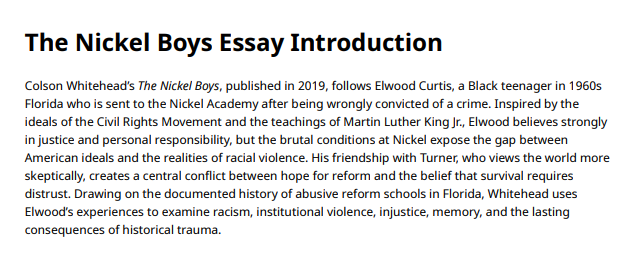
The Civil Rights Movement of the 1950s and 1960s was a major struggle against racial
segregation and discrimination in the United States, combining grassroots activism, legal
challenges, boycotts, demonstrations, and efforts to secure voting rights. The movement gained
national momentum through events such as the 1954 Supreme Court decision in Brown v. Board
of Education, the Montgomery Bus Boycott beginning in 1955, the 1963 March on Washington,
and the Selma voting-rights campaign of 1965. These actions contributed to landmark federal
legislation, including the Civil Rights Act of 1964 and the Voting Rights Act of 1965, which
prohibited major forms of racial discrimination and strengthened protections for African American
voting rights. The movement therefore represents not only a period of protest but also a sustained
effort to transform American law, political participation, and public life.