The Nickel Boys Essay Introduction
Colson Whitehead’s
The Nickel Boys
, published in 2019, follows Elwood Curtis, a Black teenager in 1960s
Florida who is sent to the Nickel Academy after being wrongly convicted of a crime. Inspired by the
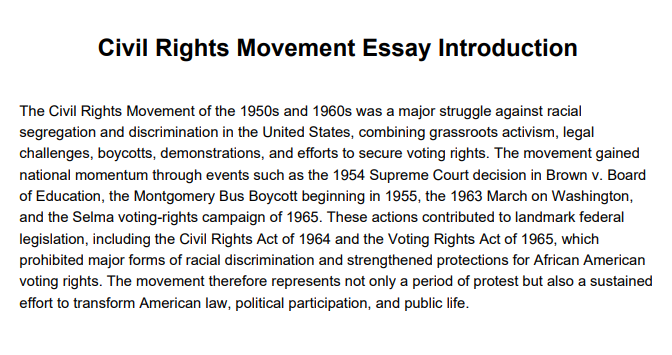
ideals of the Civil Rights Movement and the teachings of Martin Luther King Jr., Elwood believes strongly
in justice and personal responsibility, but the brutal conditions at Nickel expose the gap between
American ideals and the realities of racial violence. His friendship with Turner, who views the world more
skeptically, creates a central conflict between hope for reform and the belief that survival requires
distrust. Drawing on the documented history of abusive reform schools in Florida, Whitehead uses
Elwood’s experiences to examine racism, institutional violence, injustice, memory, and the lasting
consequences of historical trauma.
1