2
c.
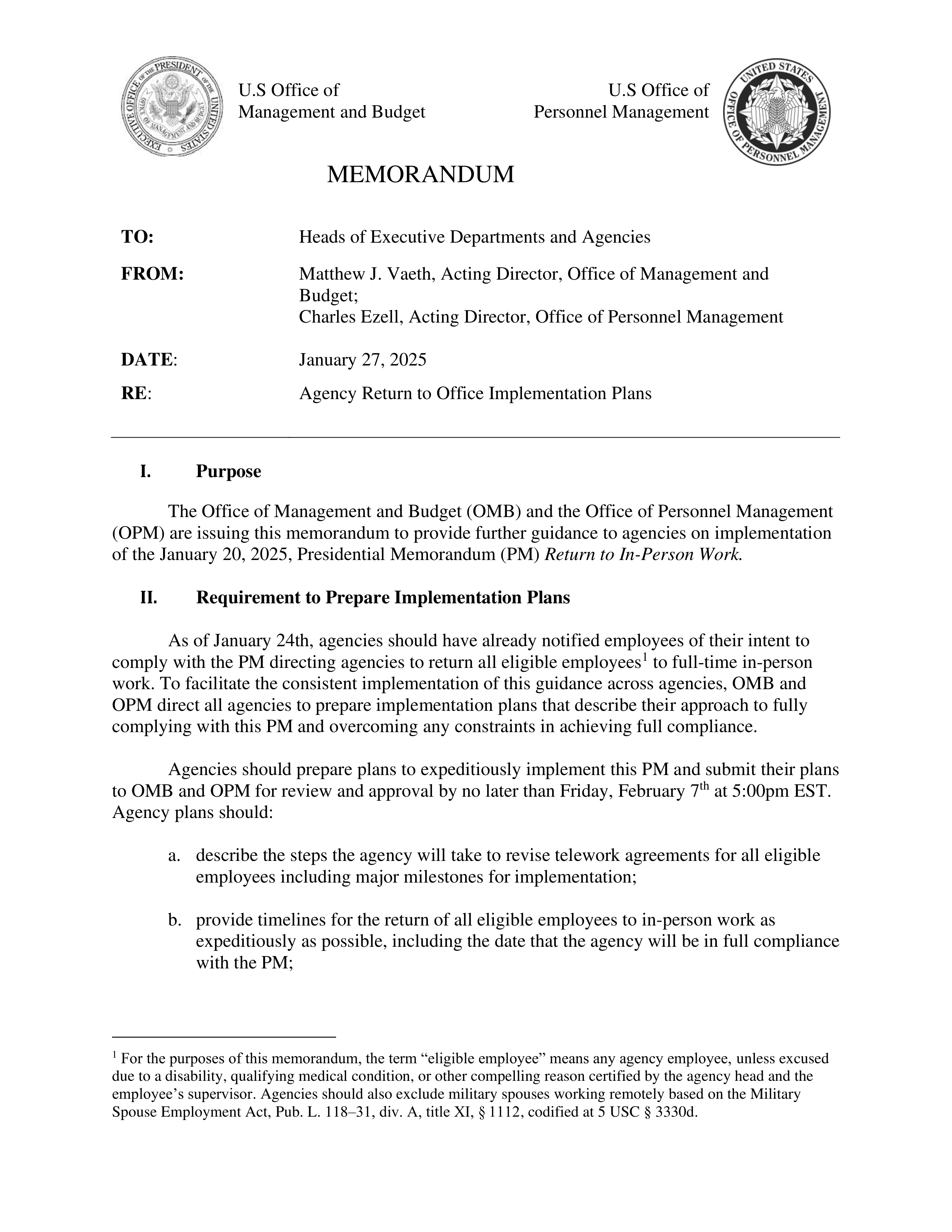
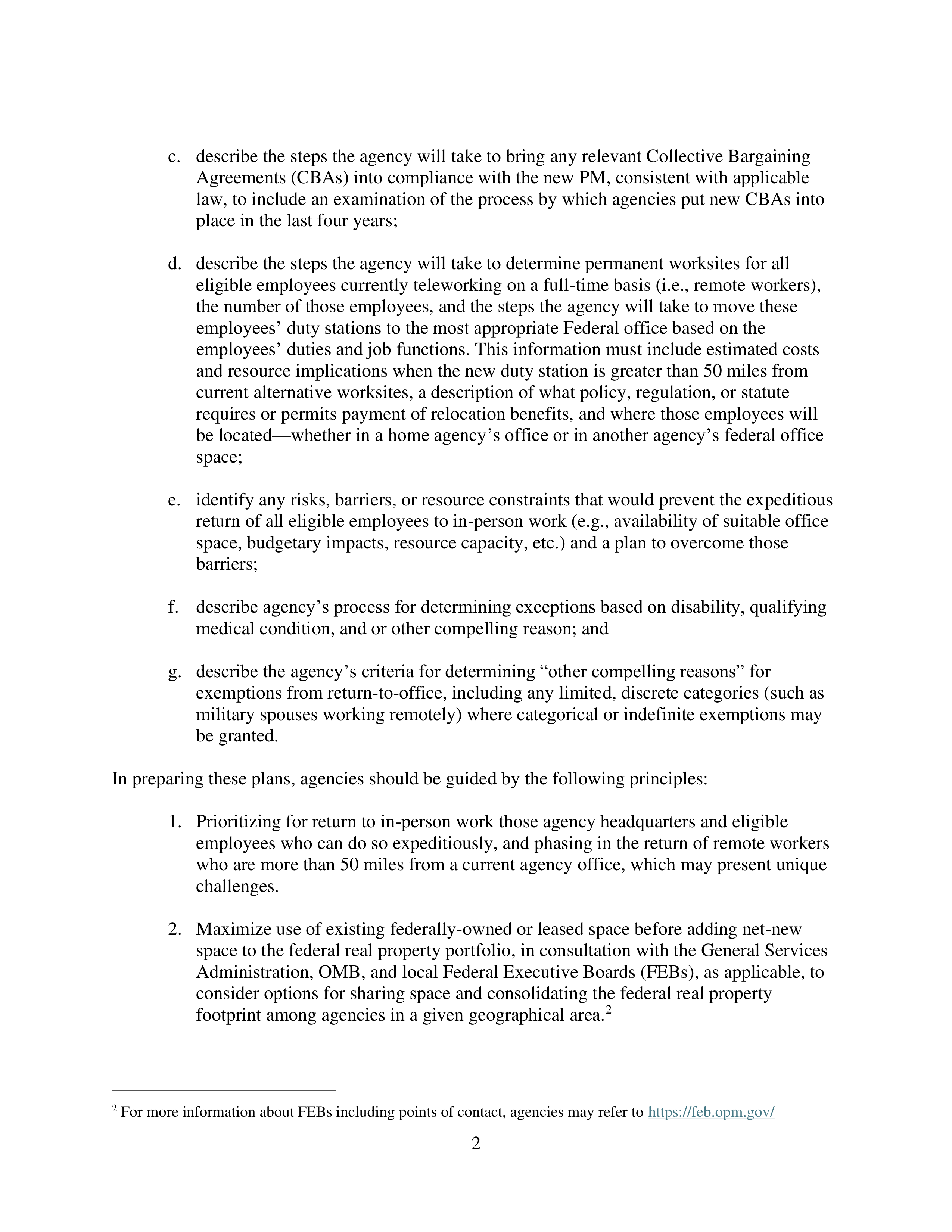
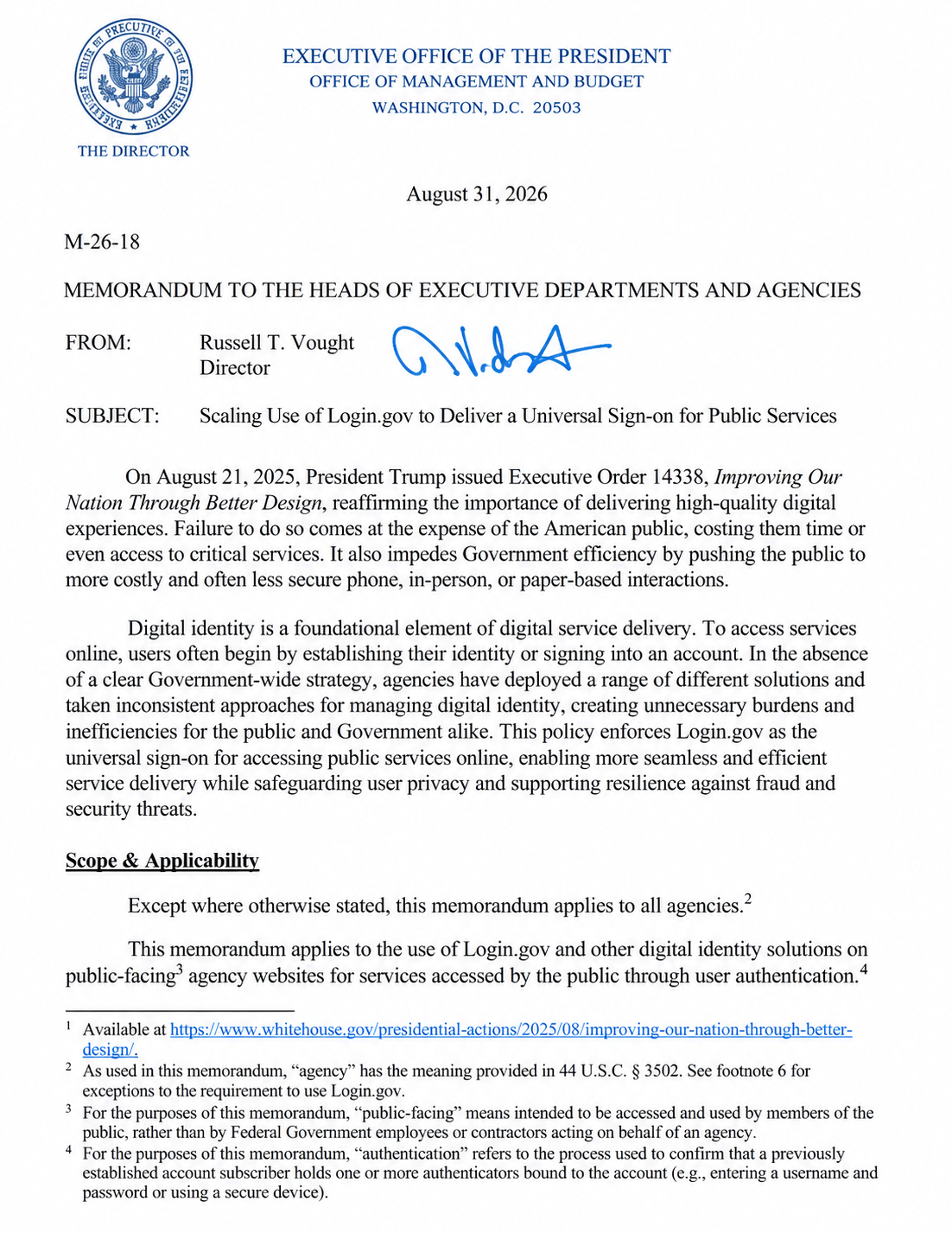
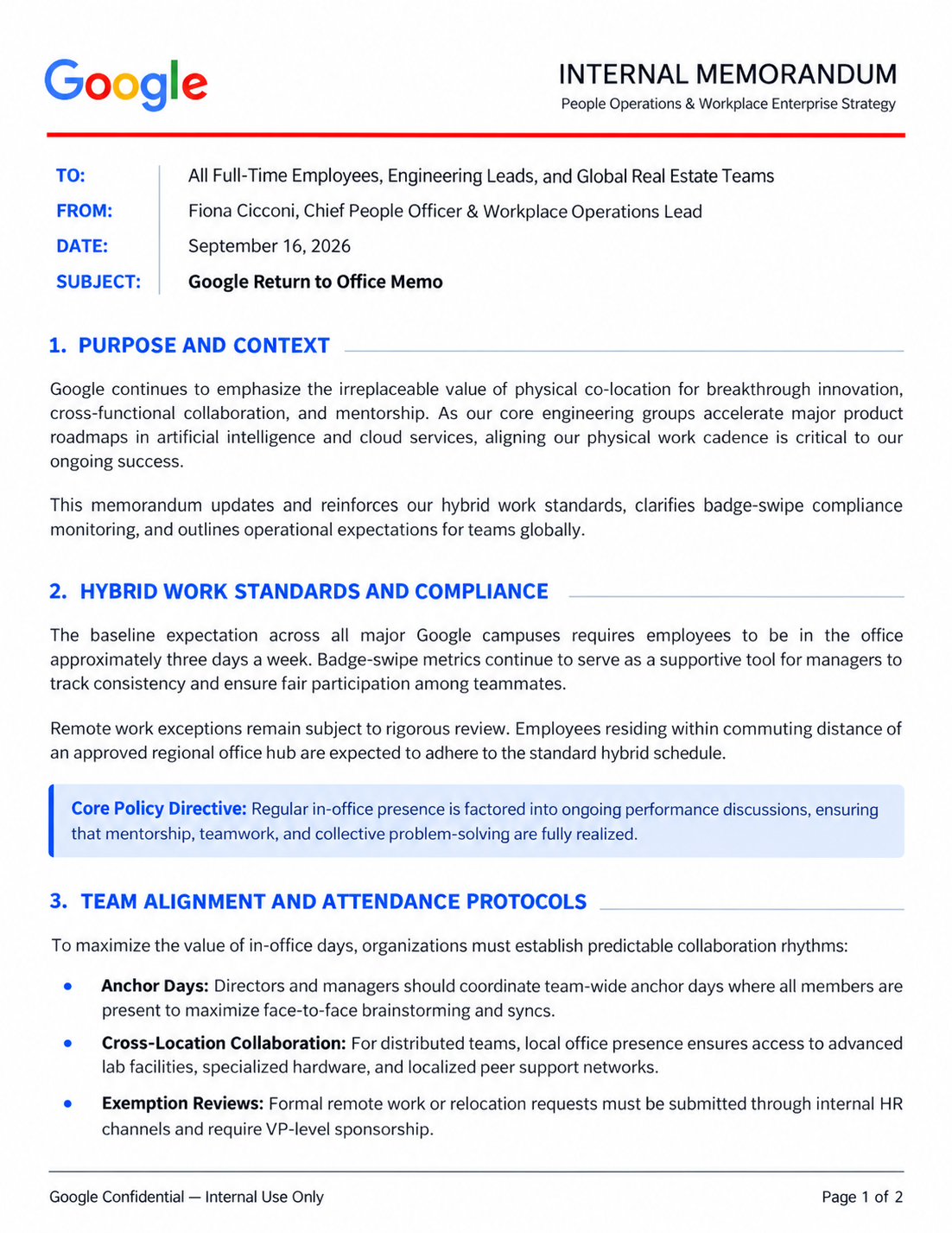
describe the steps the agency will take to bring any relevant Collective Bargaining
Agreements (CBAs) into compliance with the new PM, consistent with applicable
law, to include an examination of the process by which agencies put new CBAs into
place in the last four years;
d.
describe the steps the agency will take to determine permanent worksites for all
eligible employees currently teleworking on a full-time basis (i.e., remote workers),
the number of those employees, and the steps the agency will take to move these
employees’ duty stations to the most appropriate Federal office based on the
employees’ duties and job functions. This information must include estimated costs
and resource implications when the new duty station is greater than 50 miles from
current alternative worksites, a description of what policy, regulation, or statute
requires or permits payment of relocation benefits, and where those employees will
be located—whether in a home agency’s office or in another agency’s federal office
space;
e.
identify any risks, barriers, or resource constraints that would prevent the expeditious
return of all eligible employees to in-person work (e.g., availability of suitable office
space, budgetary impacts, resource capacity, etc.) and a plan to overcome those
barriers;
f.
describe agency’s process for determining exceptions based on disability, qualifying
medical condition, and or other compelling reason; and
g.
describe the agency’s criteria for determining “other compelling reasons” for
exemptions from return-to-office, including any limited, discrete categories (such as
military spouses working remotely) where categorical or indefinite exemptions may
be granted.
In preparing these plans, agencies should be guided by the following principles:
1.
Prioritizing for return to in-person work those agency headquarters and eligible
employees who can do so expeditiously, and phasing in the return of remote workers
who are more than 50 miles from a current agency office, which may present unique
challenges.
2.
Maximize use of existing federally-owned or leased space before adding net-new
space to the federal real property portfolio, in consultation with the General Services
Administration, OMB, and local Federal Executive Boards (FEBs), as applicable, to
consider options for sharing space and consolidating the federal real property
footprint among agencies in a given geographical area.
2
2
For more information about FEBs including points of contact, agencies may refer to
https://feb.opm.gov/