
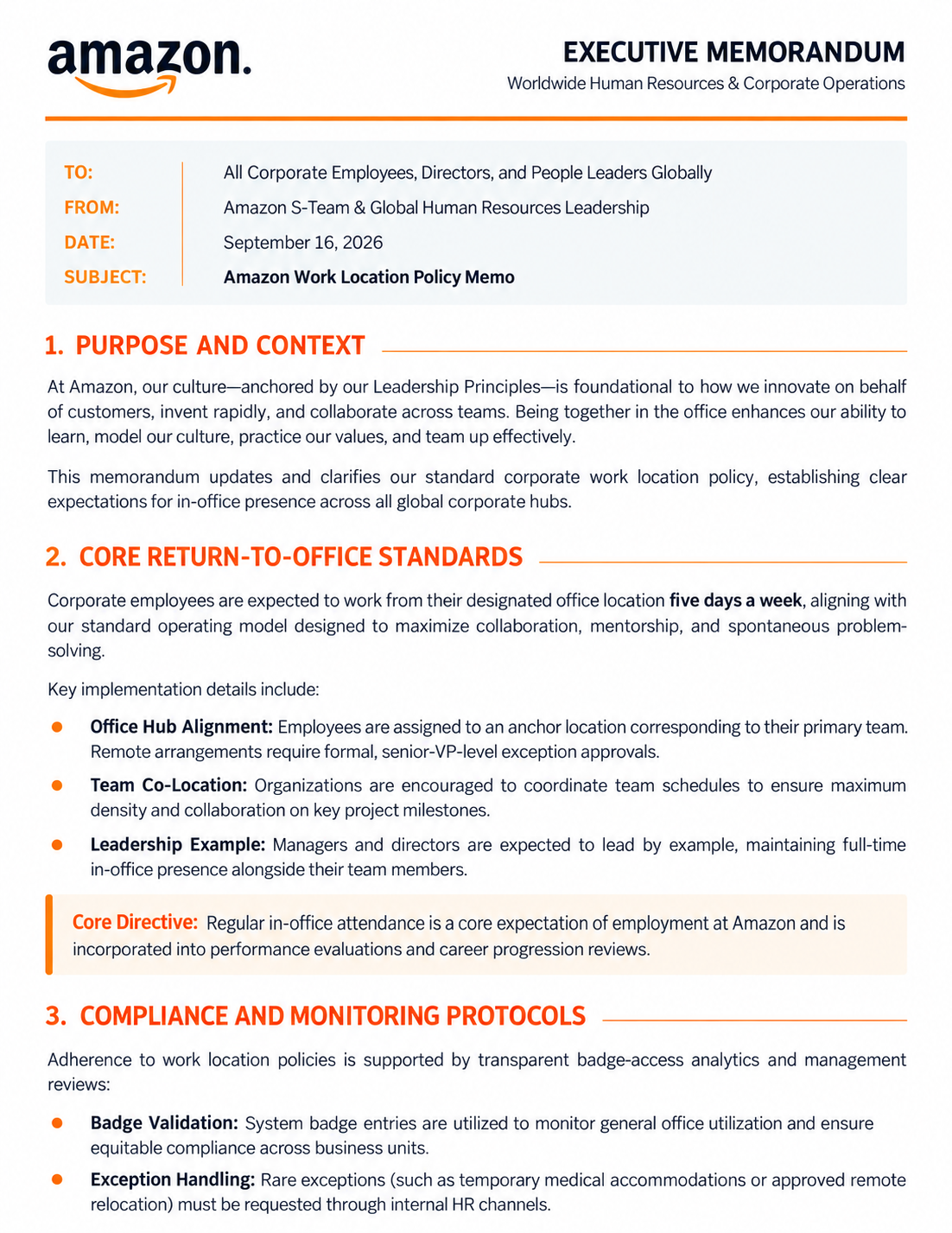
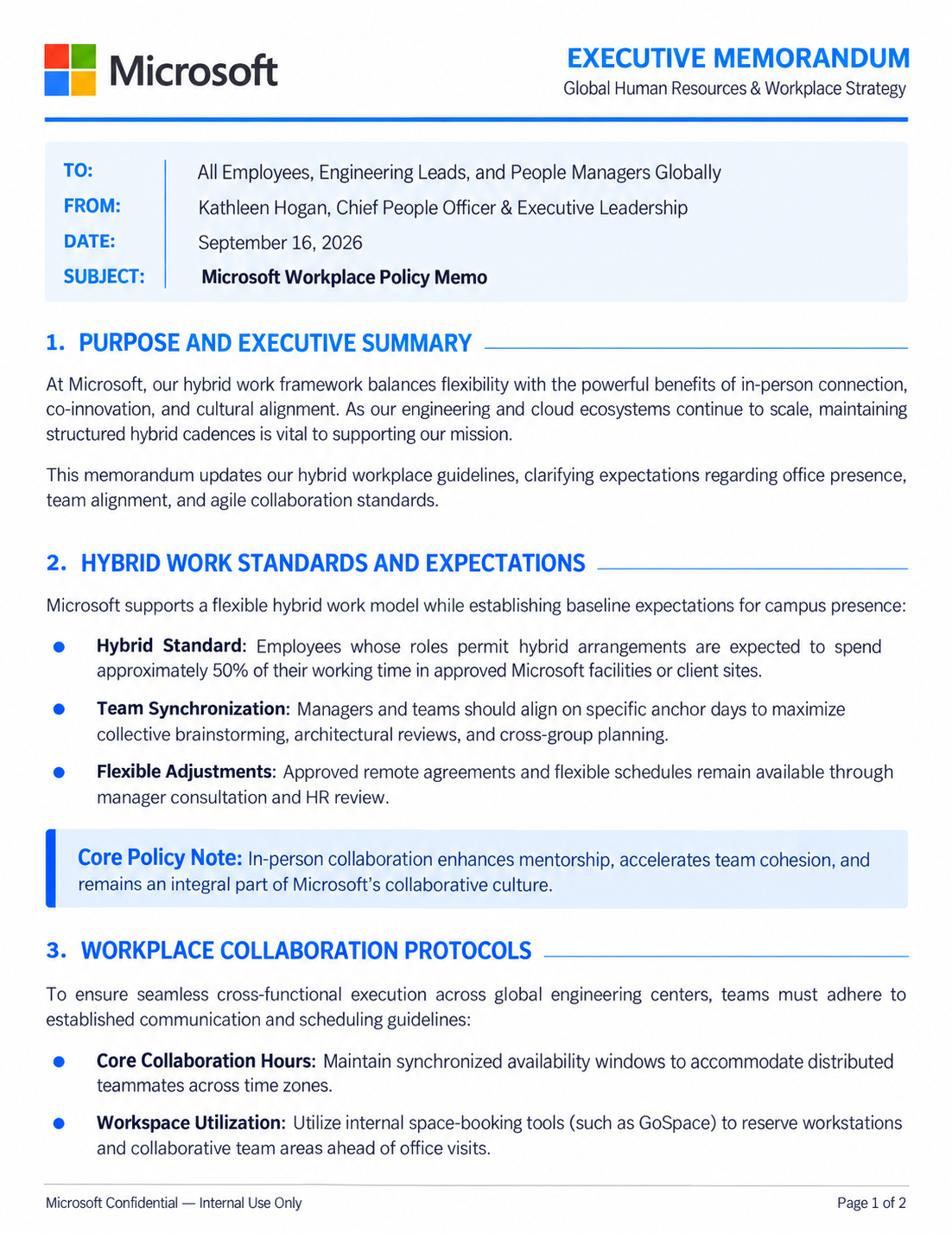
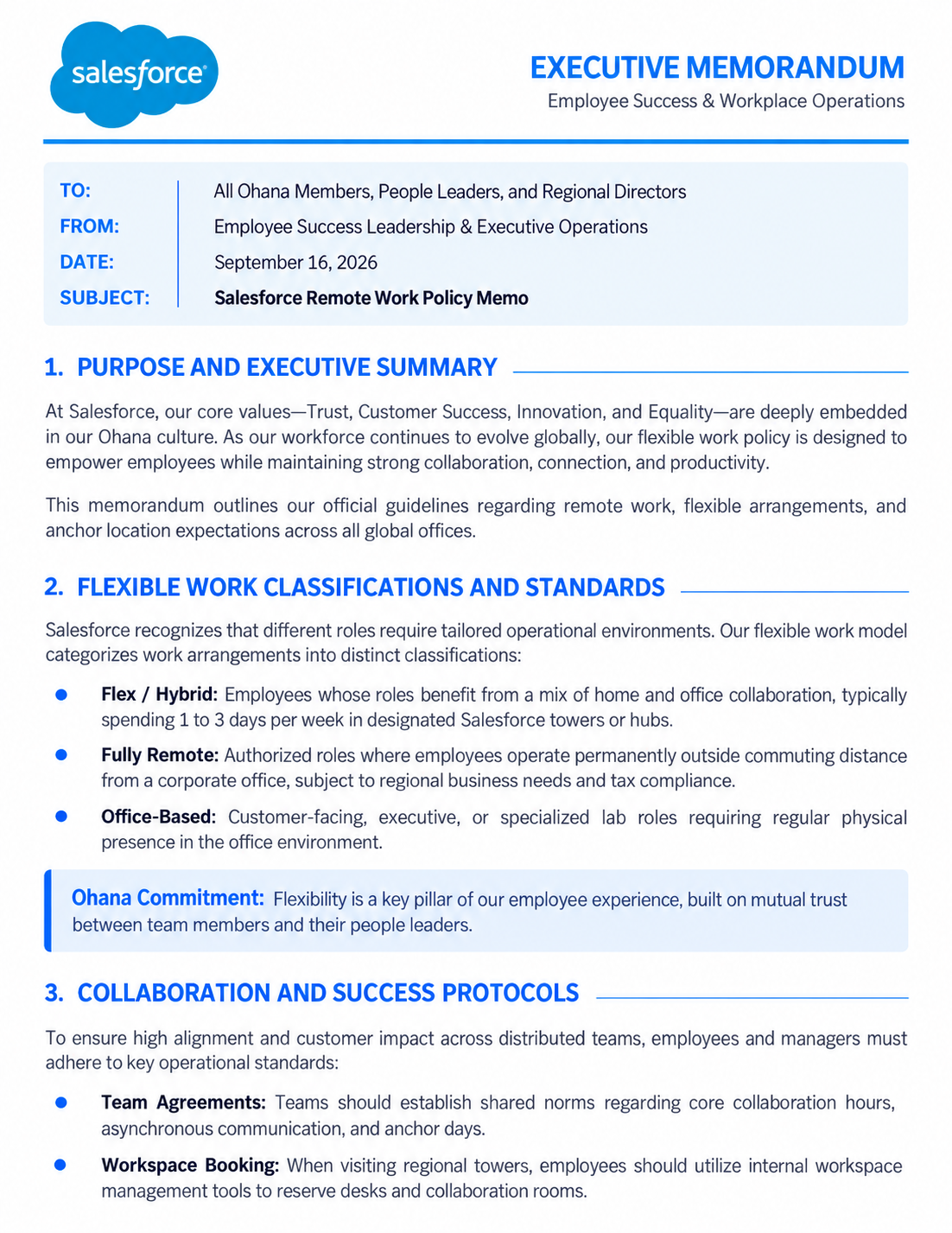
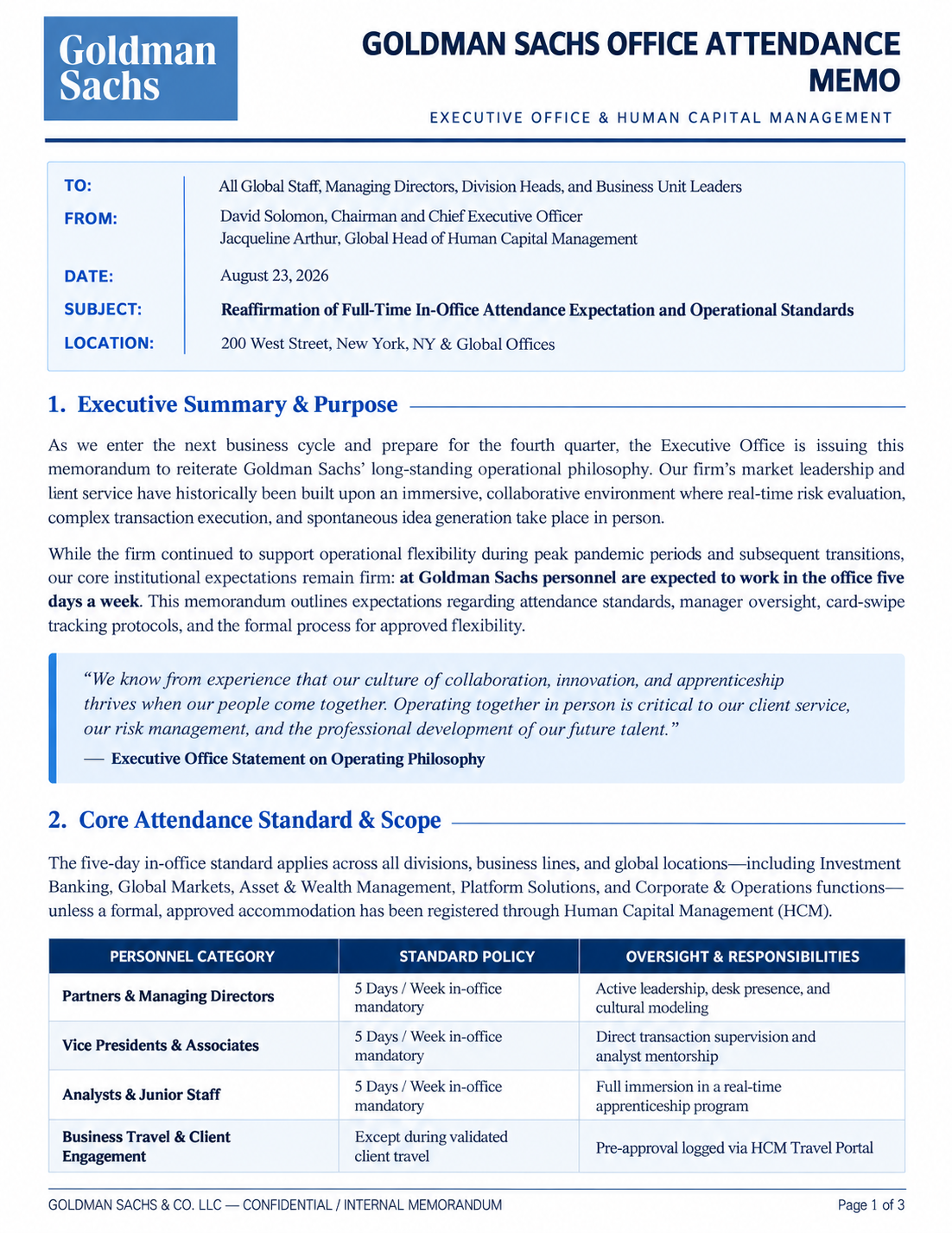
A memo is a concise, professional message used to communicate important information, decisions, instructions, or updates within a business or organization. It is best for sharing information clearly with a specific group without the formality of a letter. Explore real-world memo examples to understand effective formats, discover essential memo elements, and create a professional memo that communicates your message quickly and clearly.
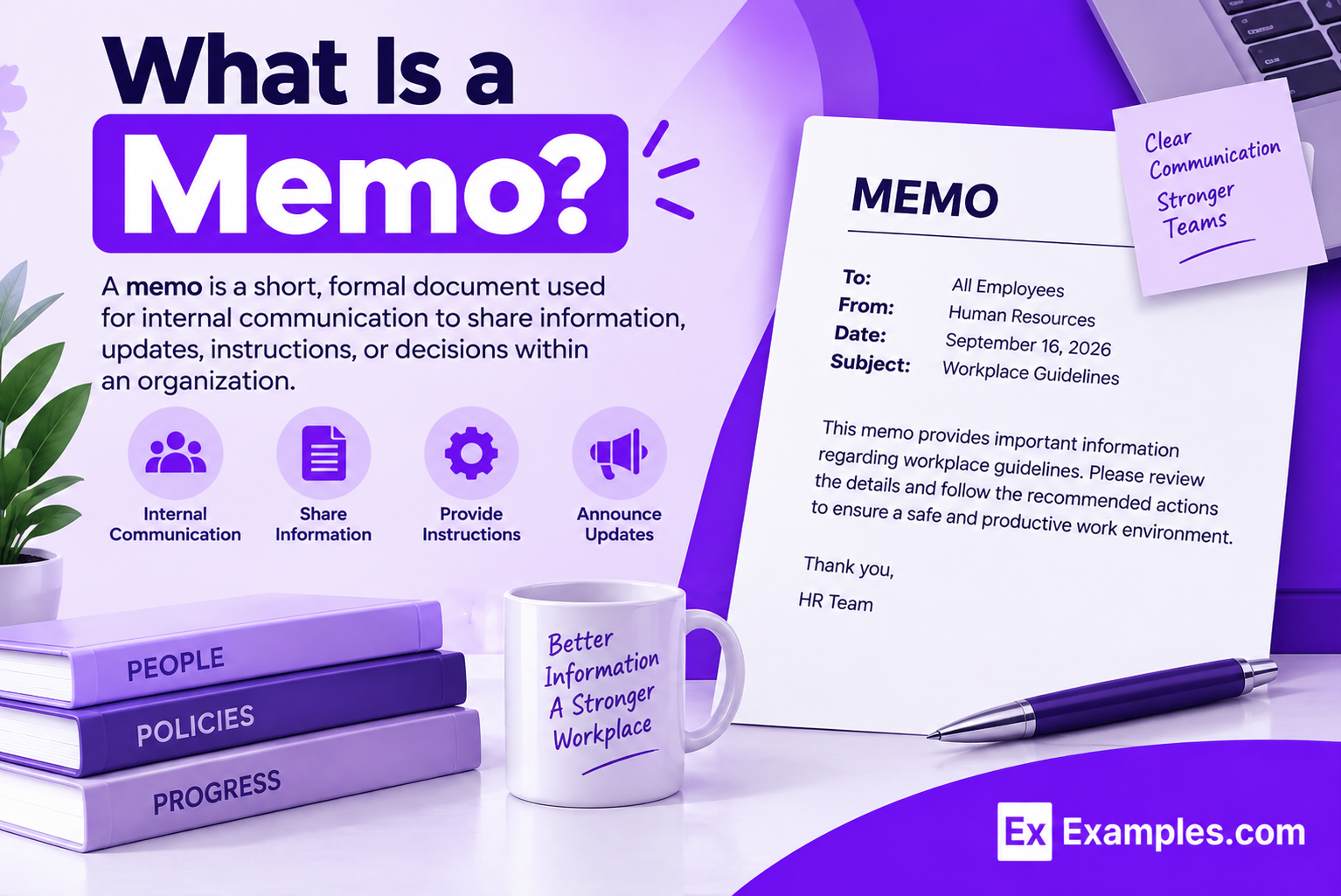
What Is a Memo?
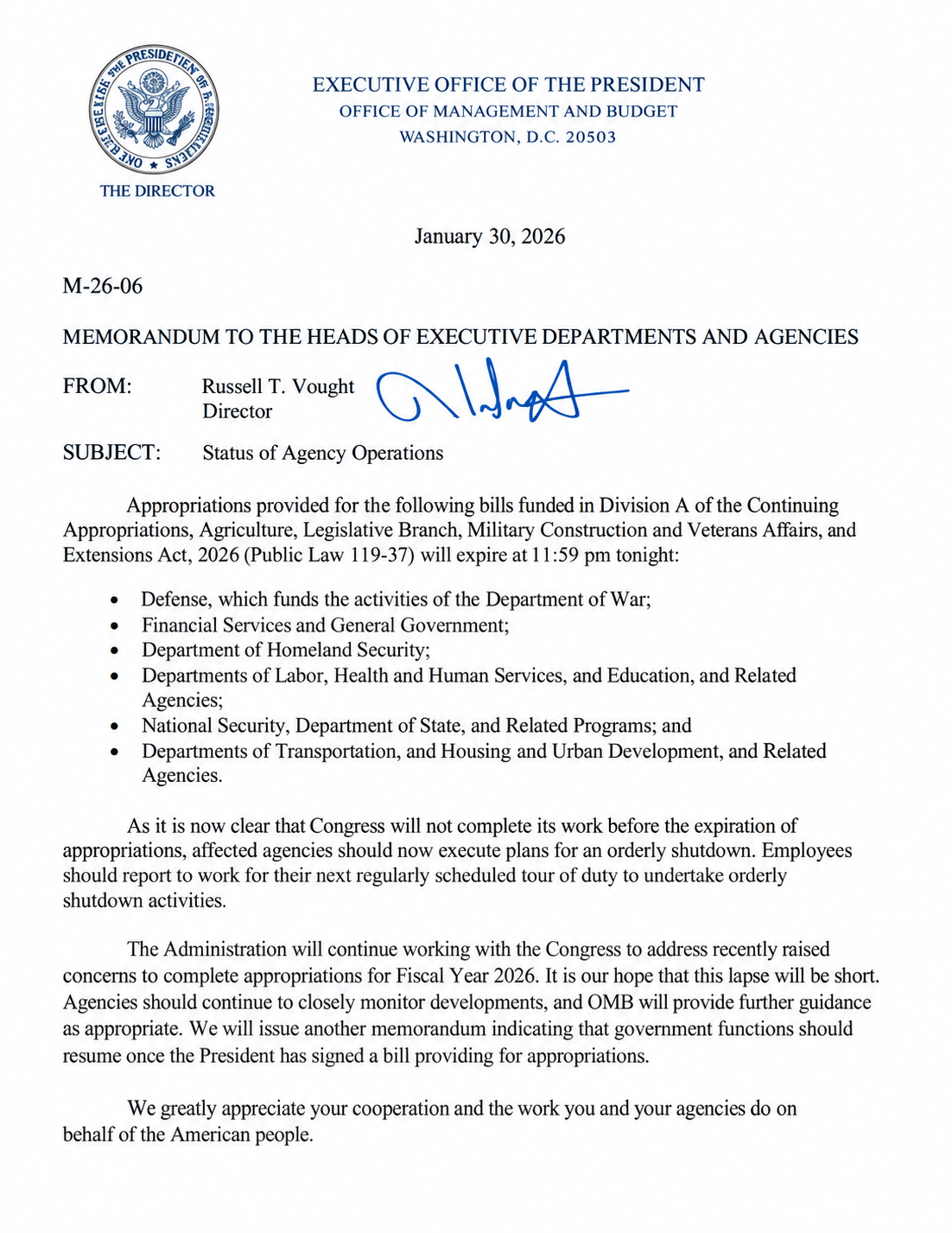
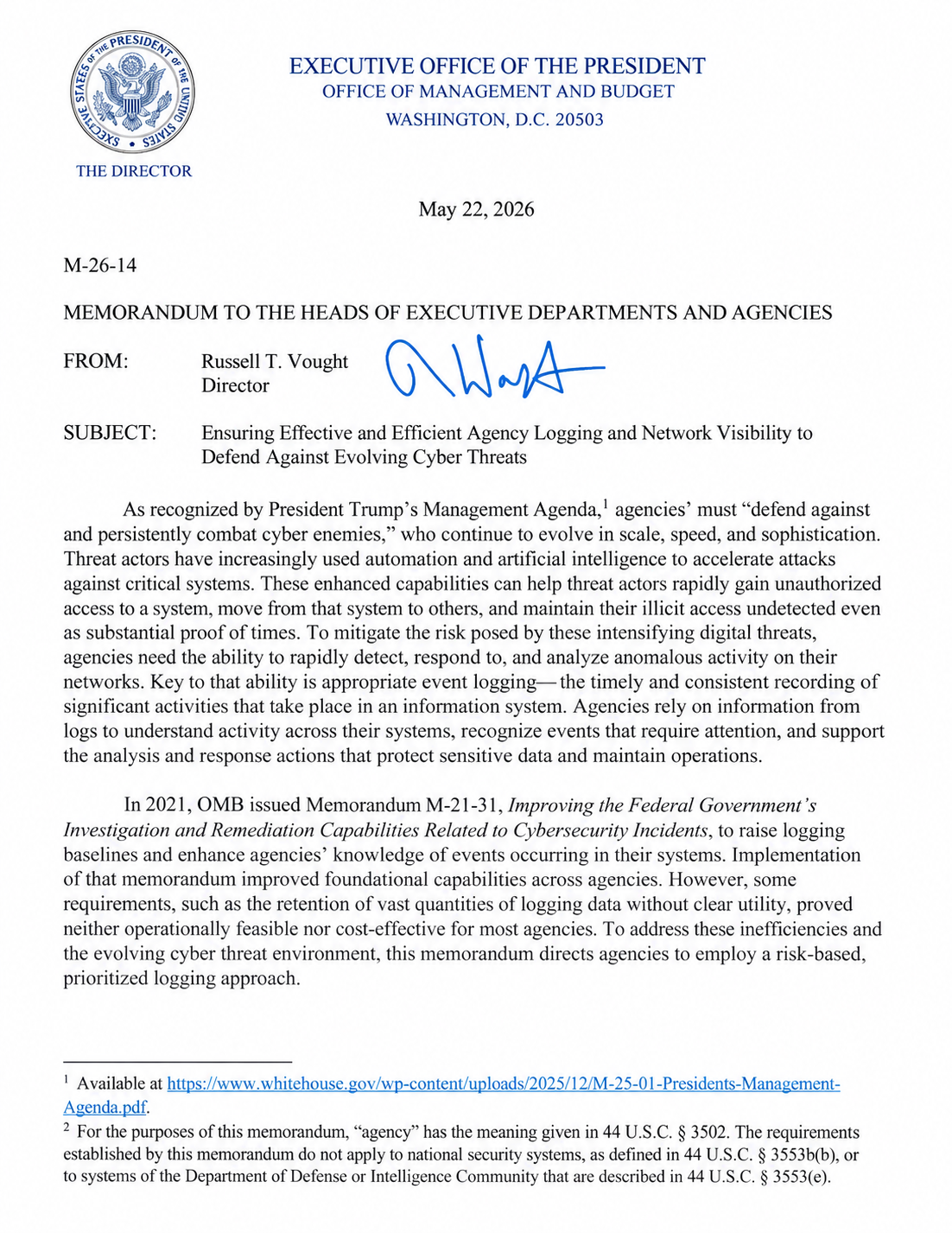
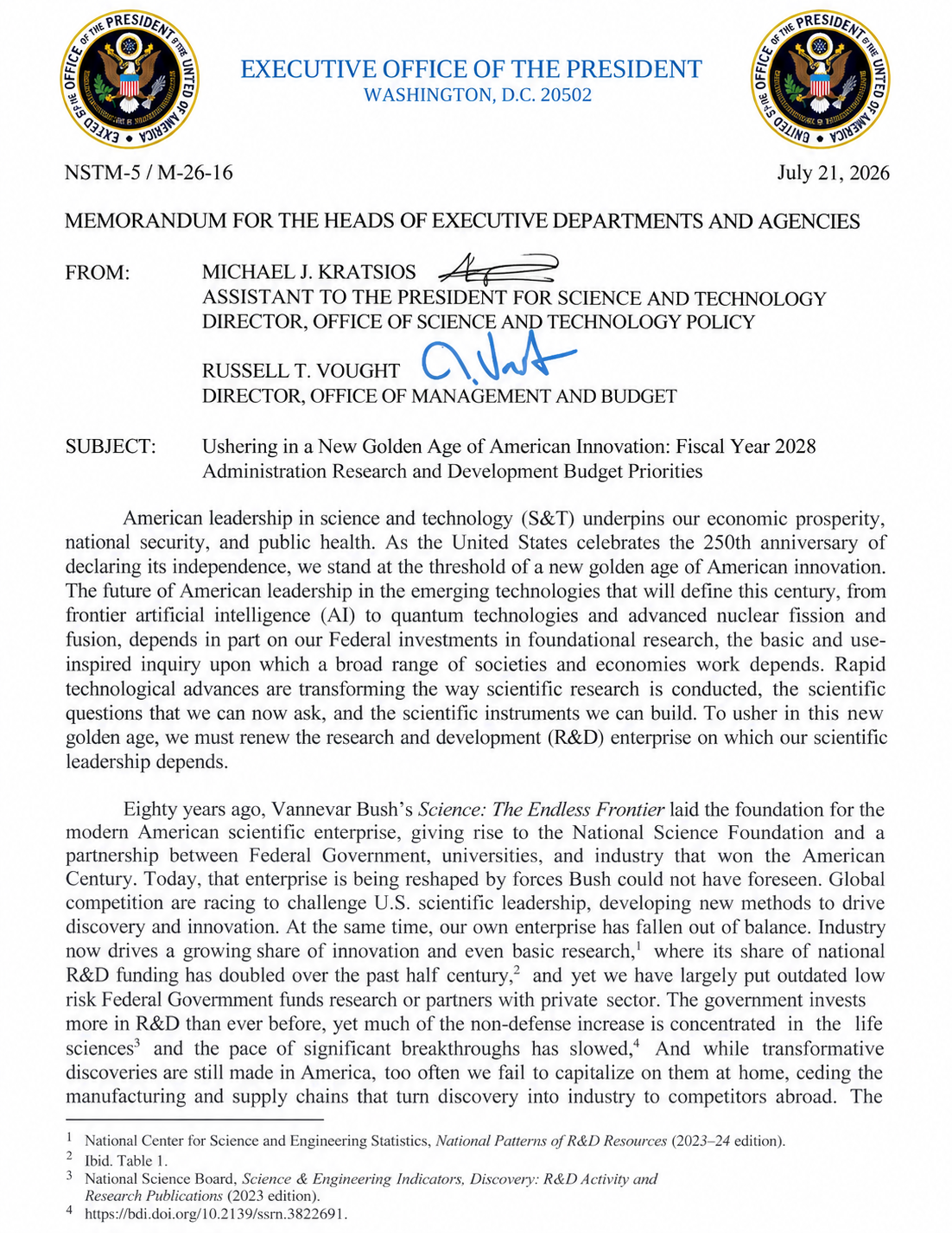
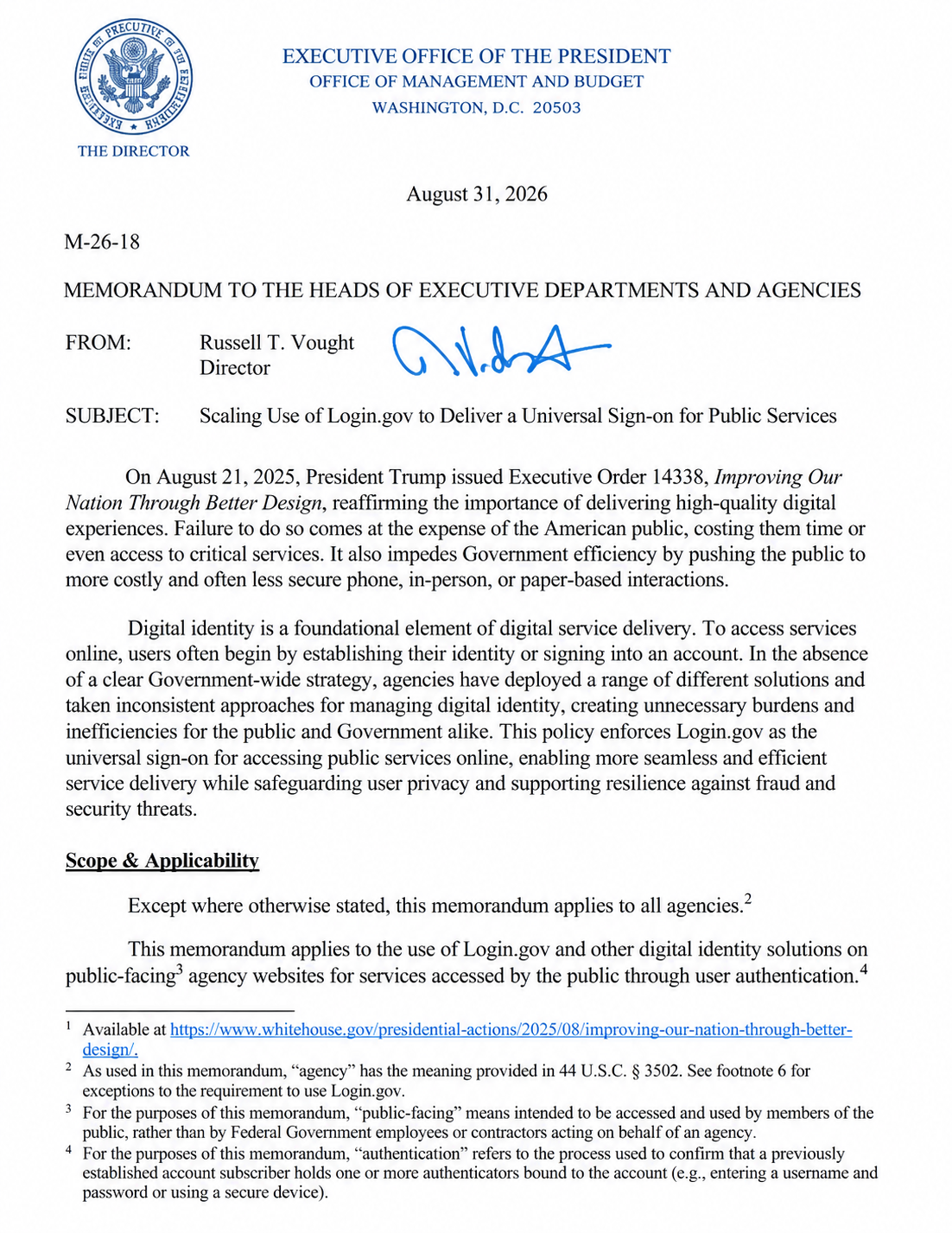
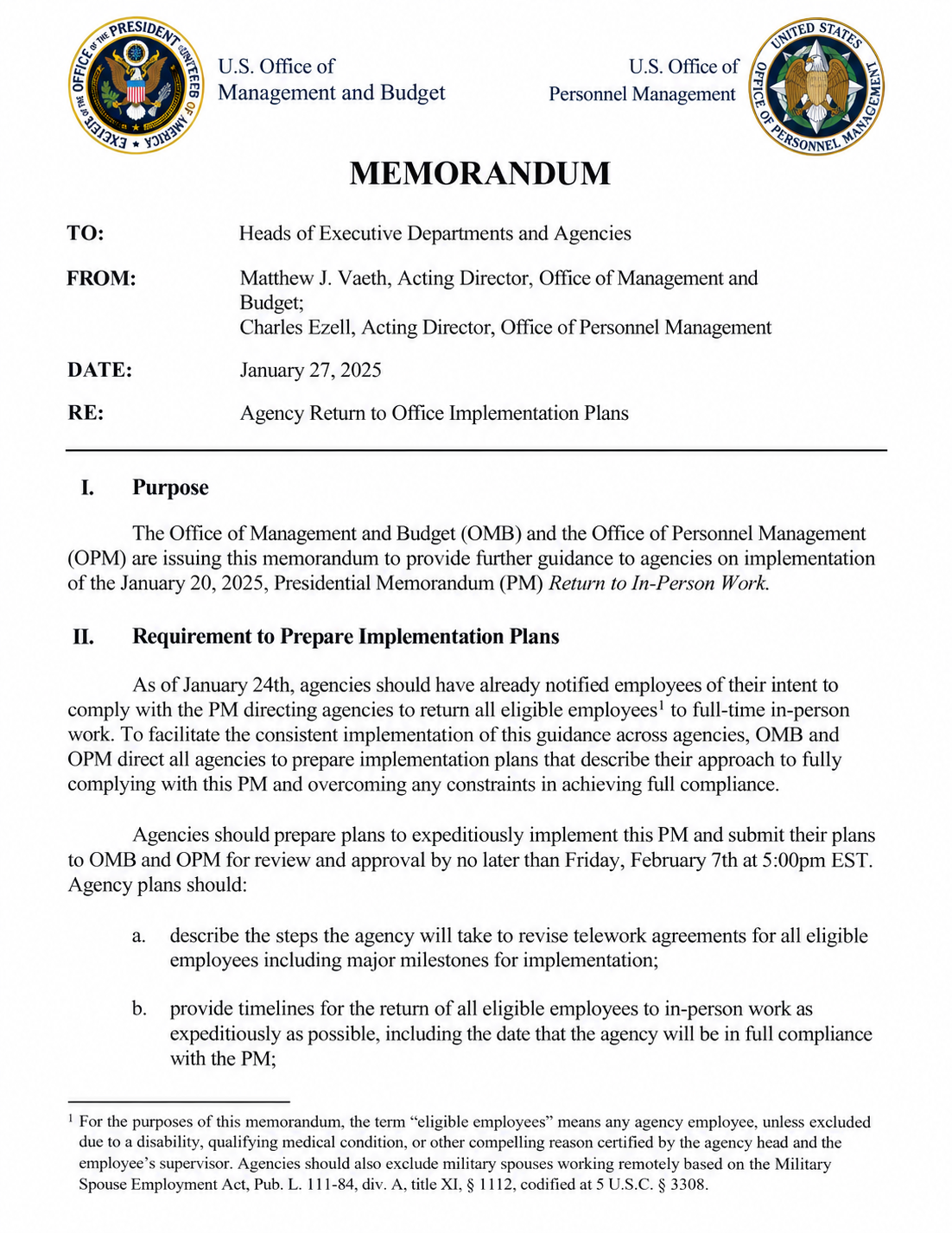
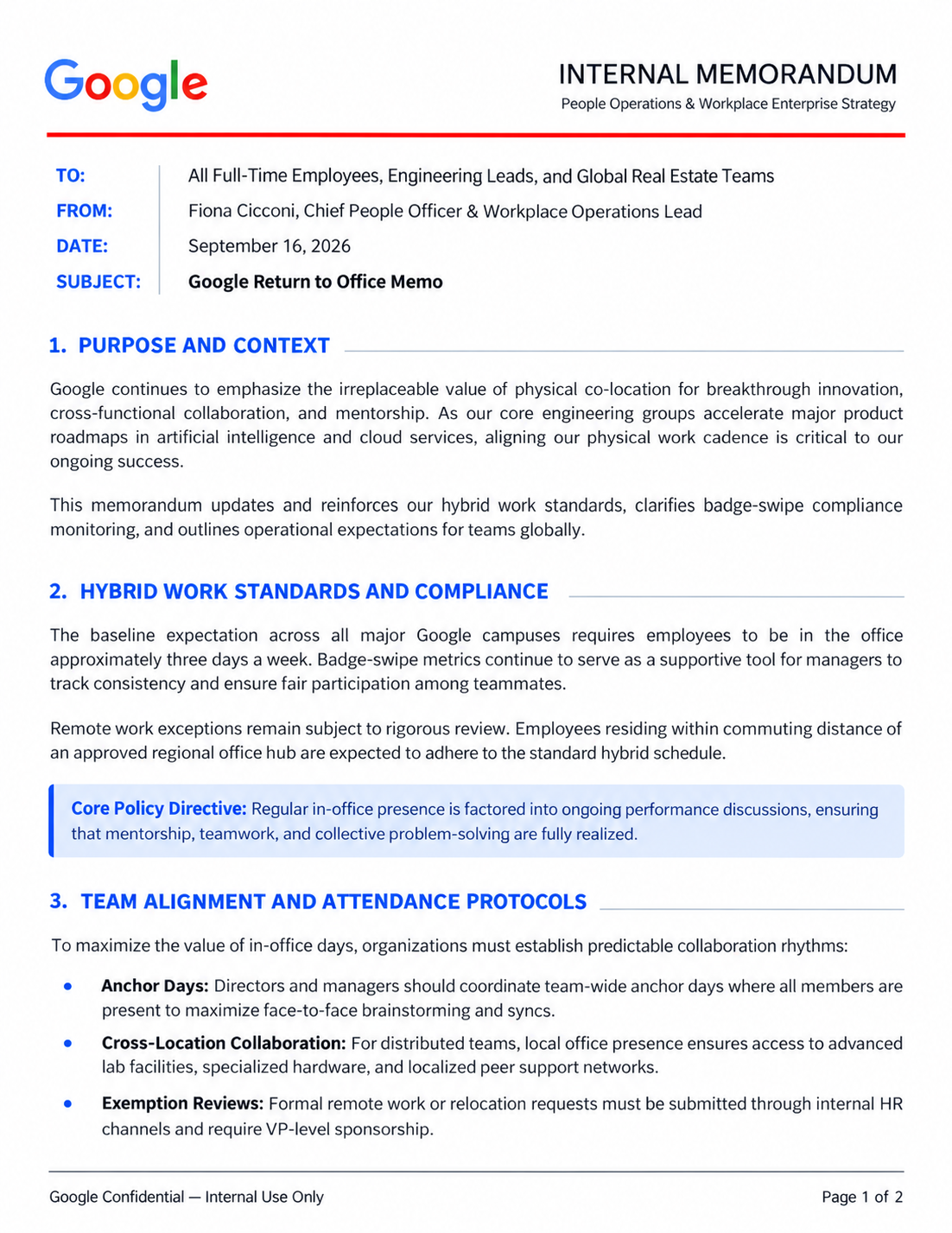
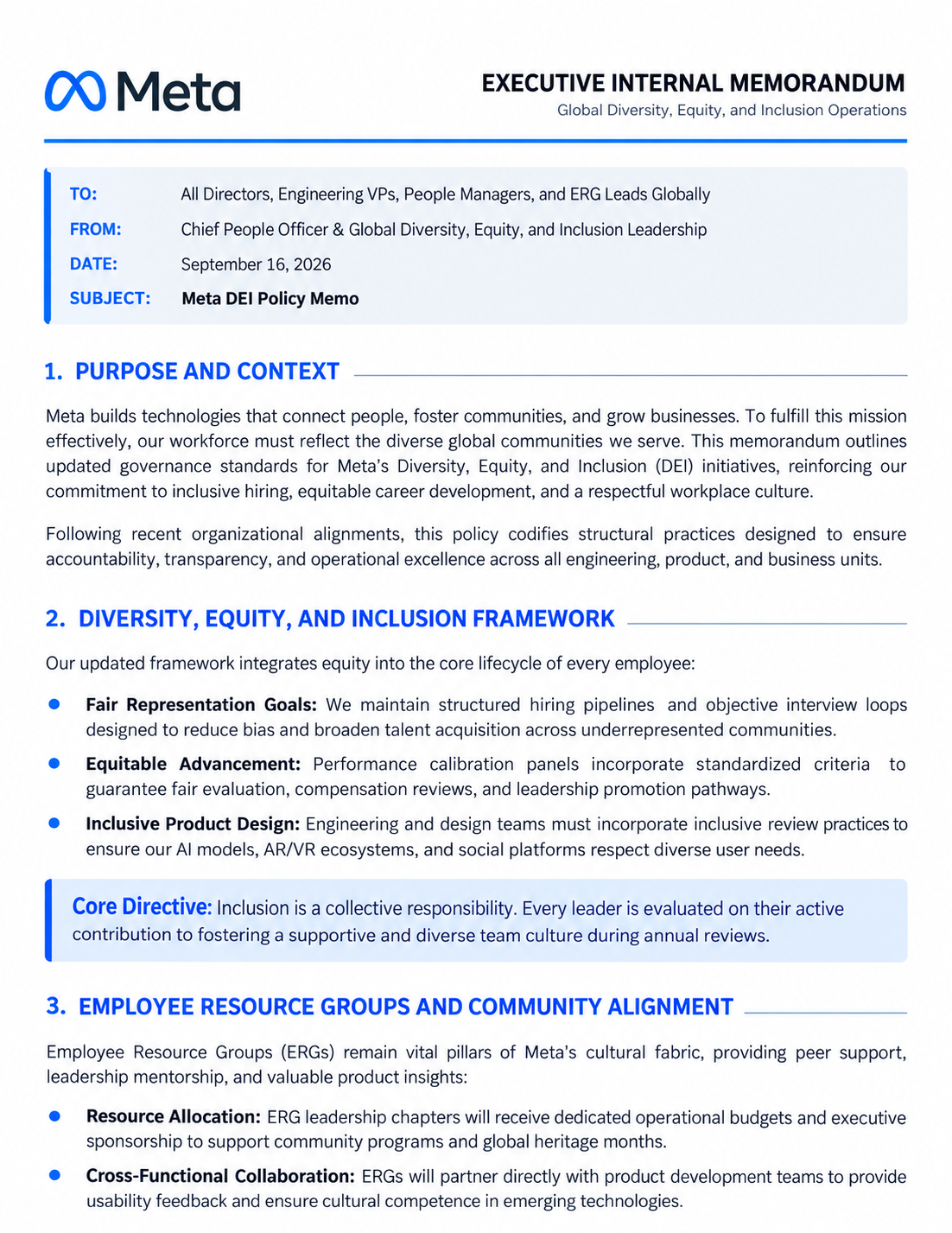
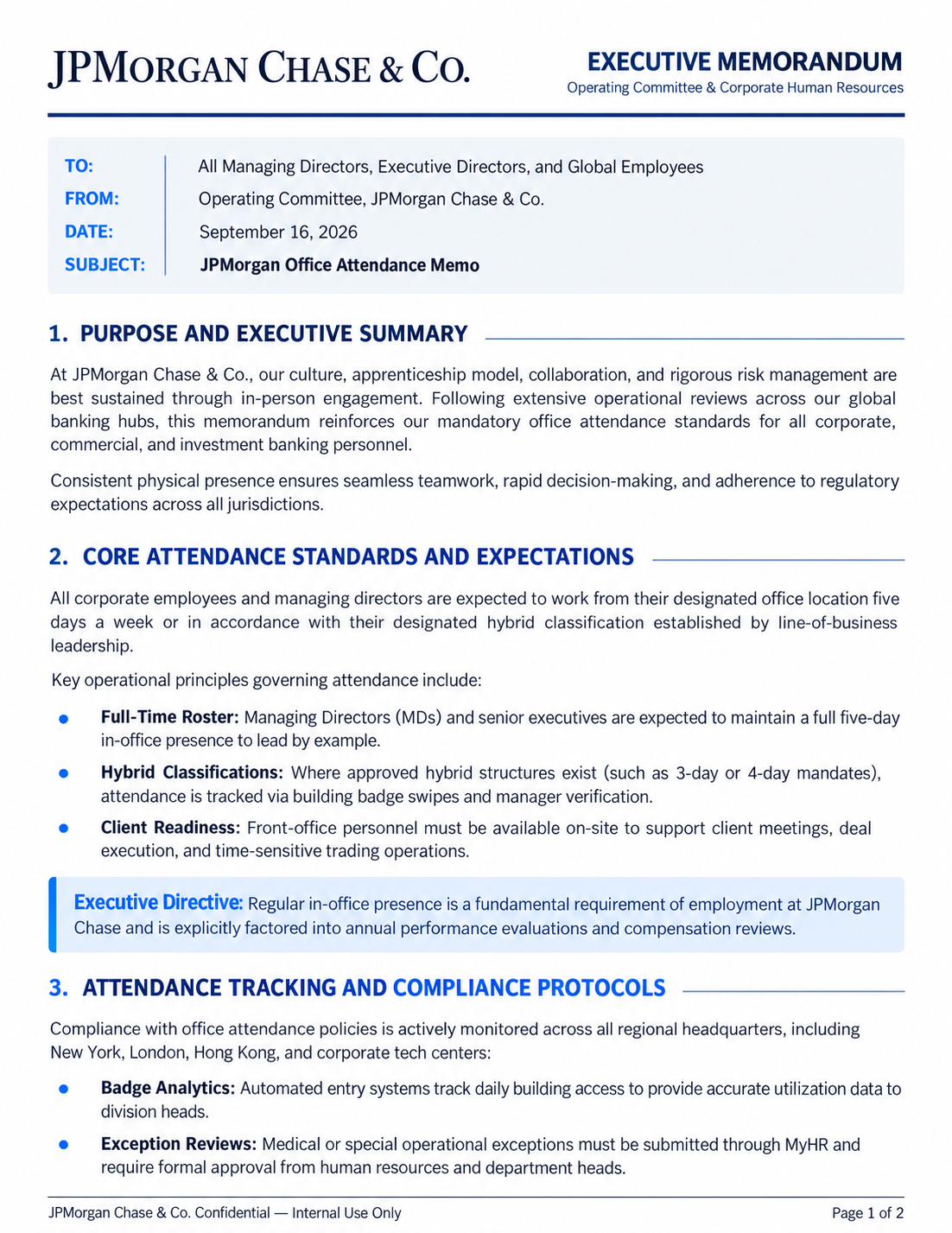
A memo is a short written message used for internal communication within a business or organization. It shares important updates, instructions, decisions, or project information in a clear, direct format, helping teams communicate quickly and keep a written record of key information.
What Are the Different Types of Memos?
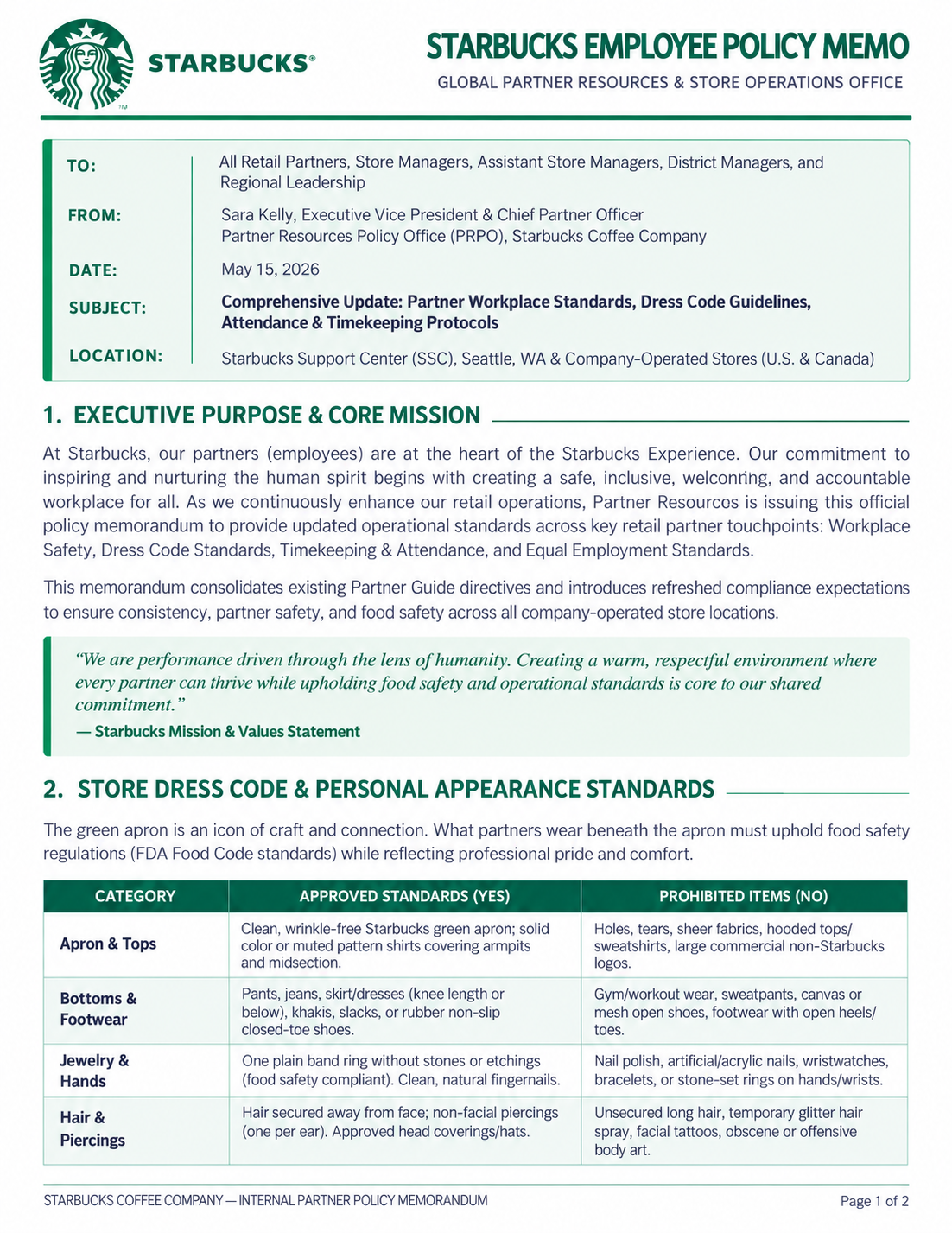
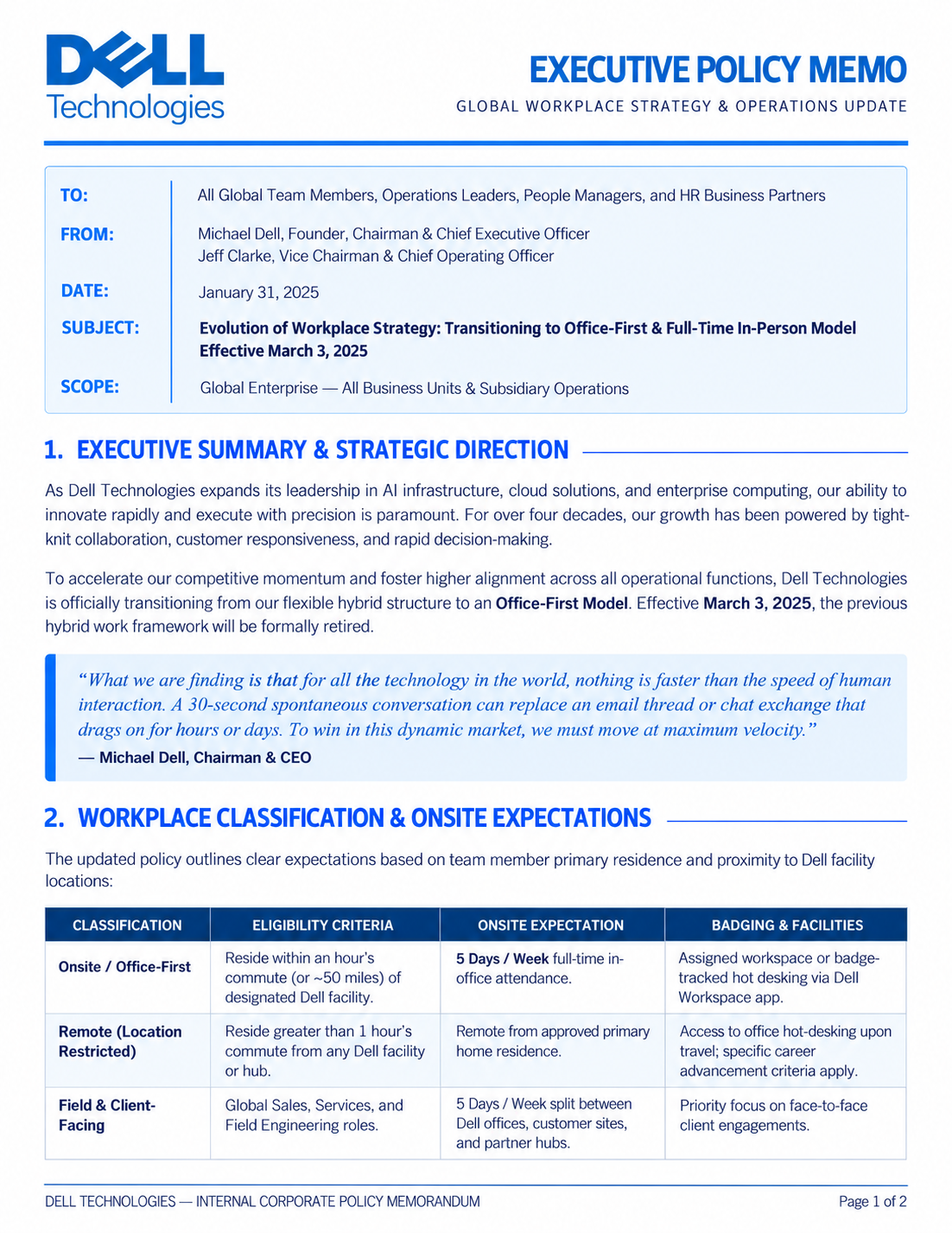
Policy Memo
A Policy Memo communicates new policies, rule changes, or important organizational requirements to employees or teams.
Informational Memo
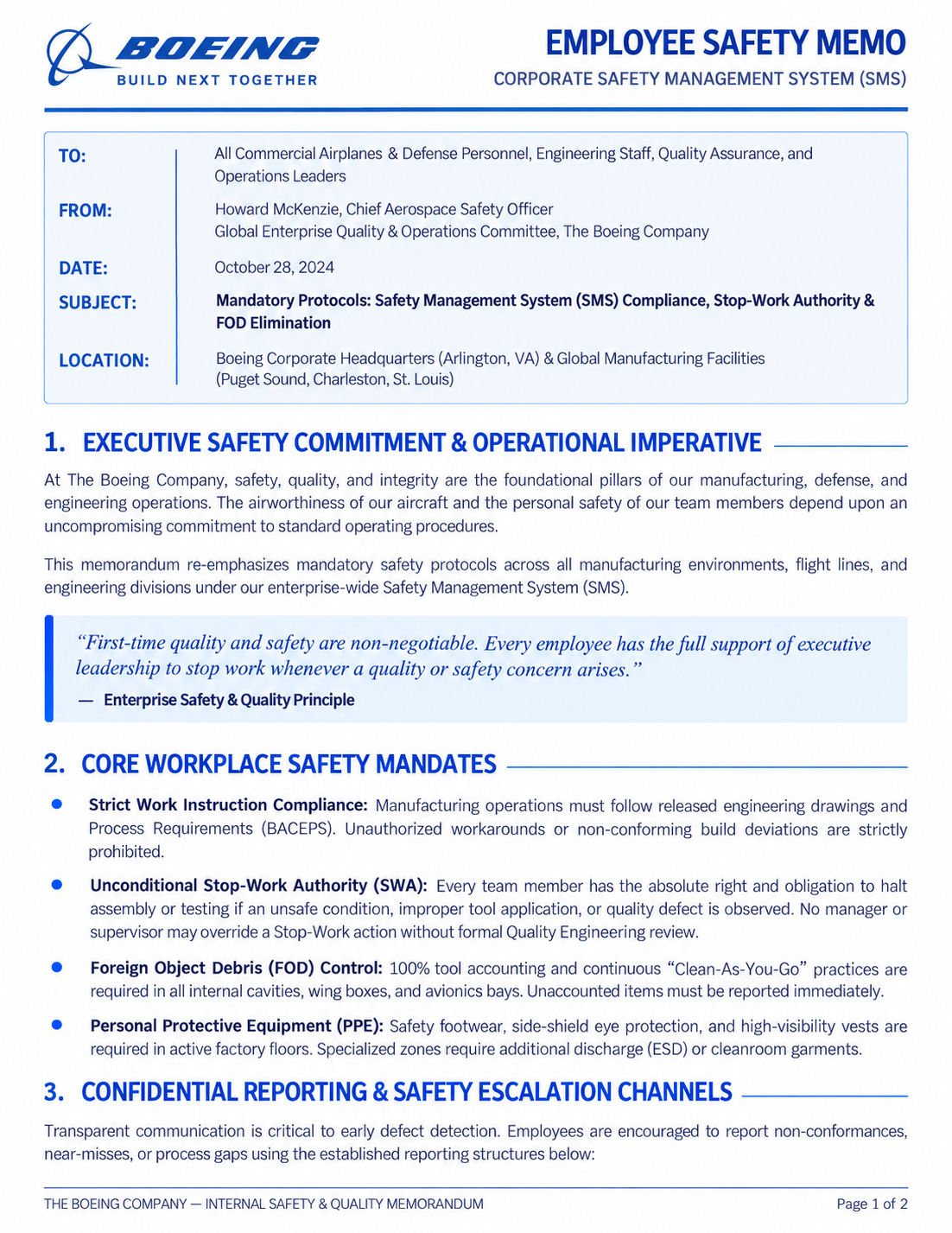
An Informational Memo shares important facts, updates, announcements, or background information with a specific group.
Instructional Memo
An Instructional Memo provides clear directions, procedures, or task requirements that employees or team members need to follow.
Progress Report Memo
A Progress Report Memo summarizes the current status of a project, including completed work, ongoing tasks, and next steps.
Decision Memo
A Decision Memo documents an important decision, explains the relevant considerations, and identifies the actions that follow.
Meeting Memo
A Meeting Memo records key meeting information, including decisions, responsibilities, deadlines, and follow-up actions.
Announcement Memo
An Announcement Memo communicates organizational news, changes, events, or other information that employees need to know.
Reminder Memo
A Reminder Memo reinforces an upcoming deadline, requirement, meeting, policy, or action that recipients need to remember.
Office Memo
An Office Memo communicates day-to-day workplace information, procedures, schedules, or operational updates within an organization.
Business Memo
A Business Memo communicates professional information, recommendations, decisions, or instructions between departments, teams, or organizational members.
How Do I Generate Memos Using Real Memo Examples?
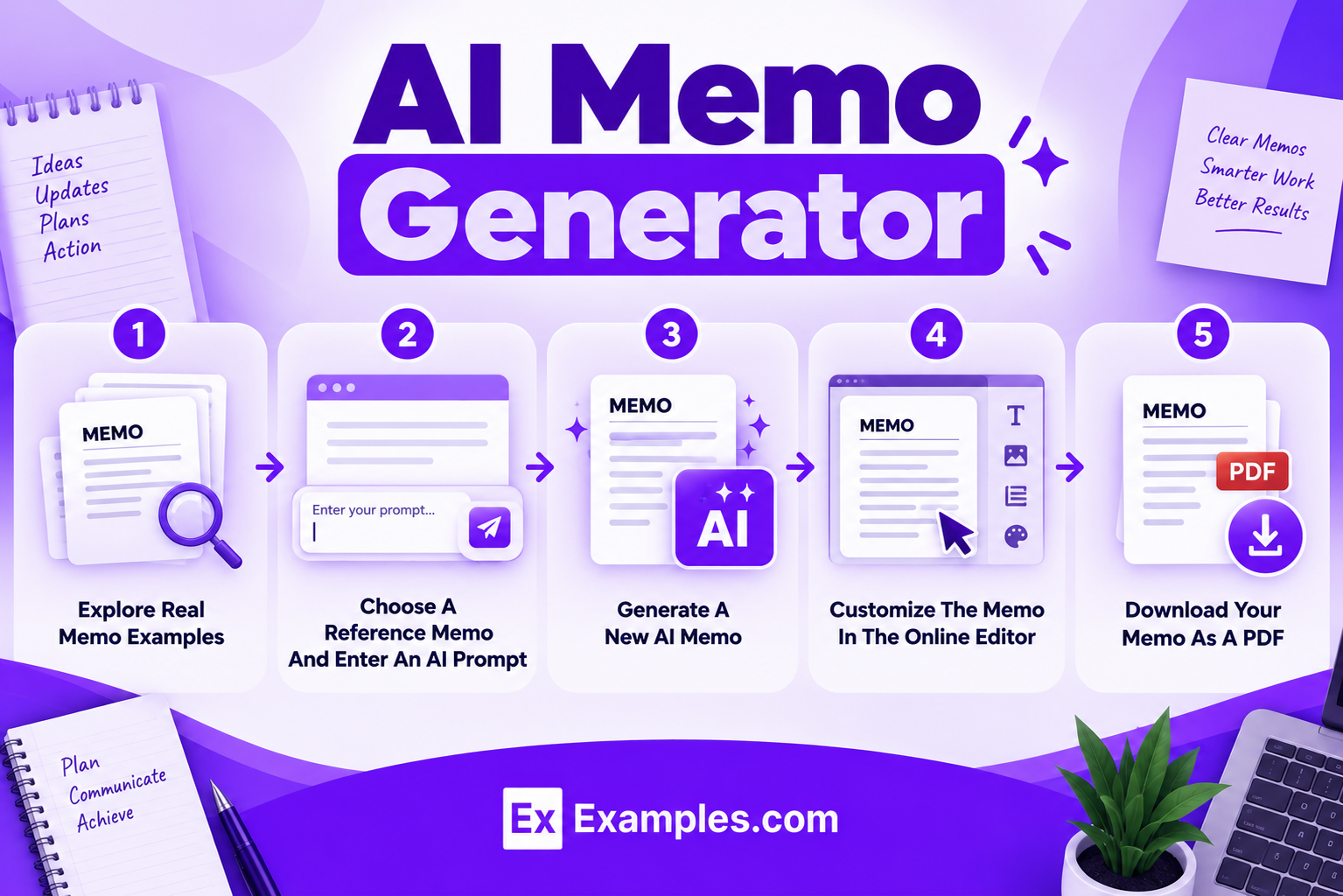
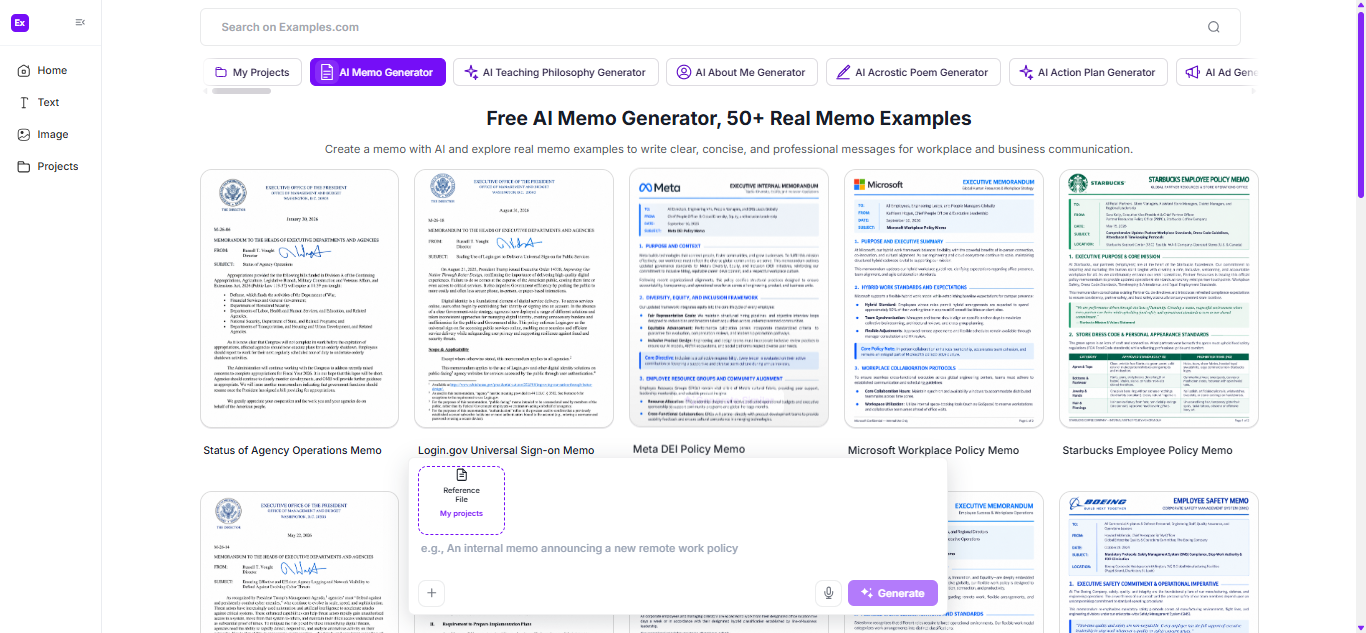
Explore Real Memo Examples
Browse professionally written memo examples to understand memo structure, formatting, tone, and essential sections. Reviewing real-world memos helps you create clear and professional documents for different workplace situations.
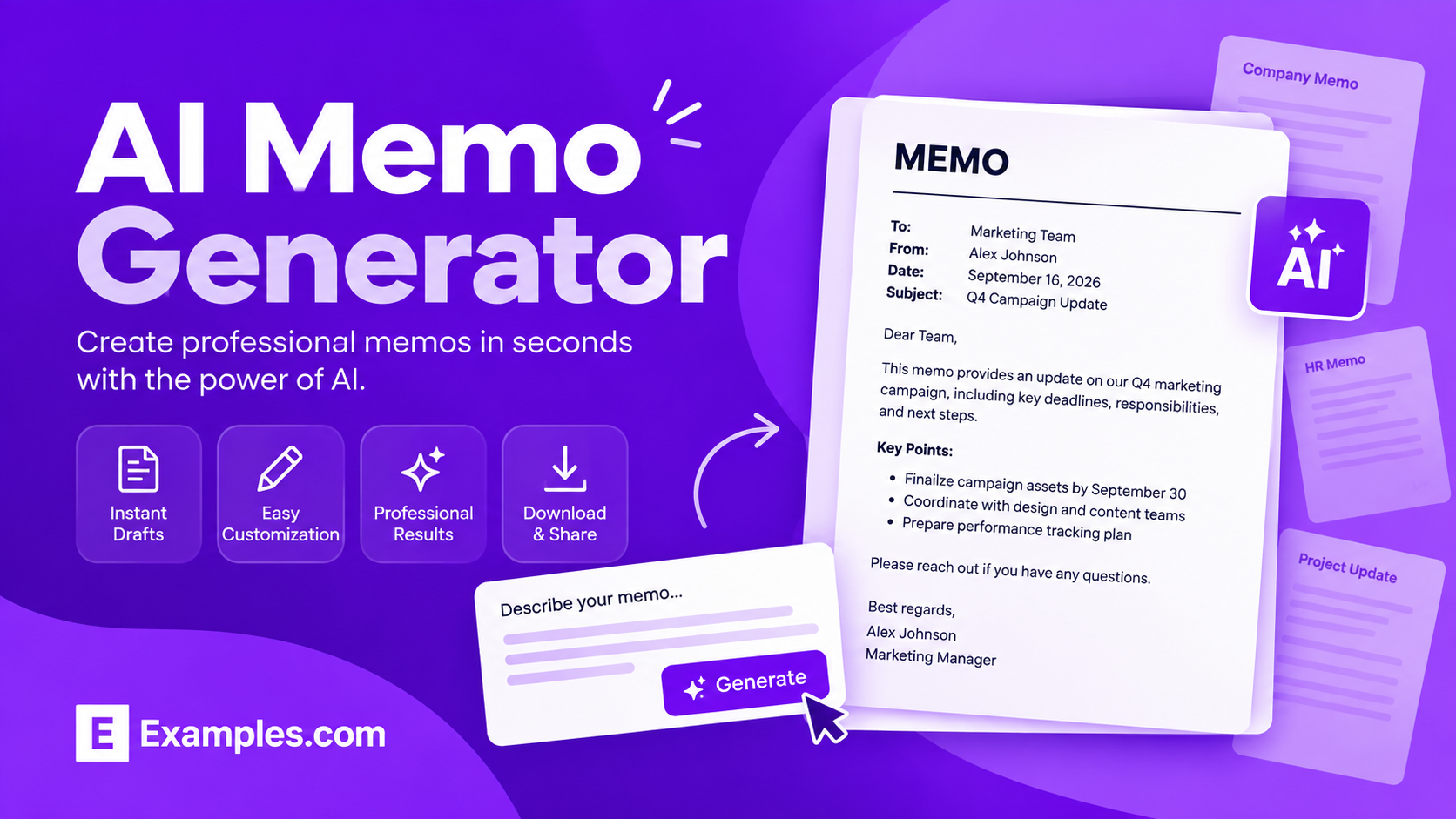
Choose A Reference Memo And Enter An AI Prompt
Select a reference memo and describe your requirements, including the purpose, recipients, key information, instructions, decisions, responsibilities, deadlines, and next steps.
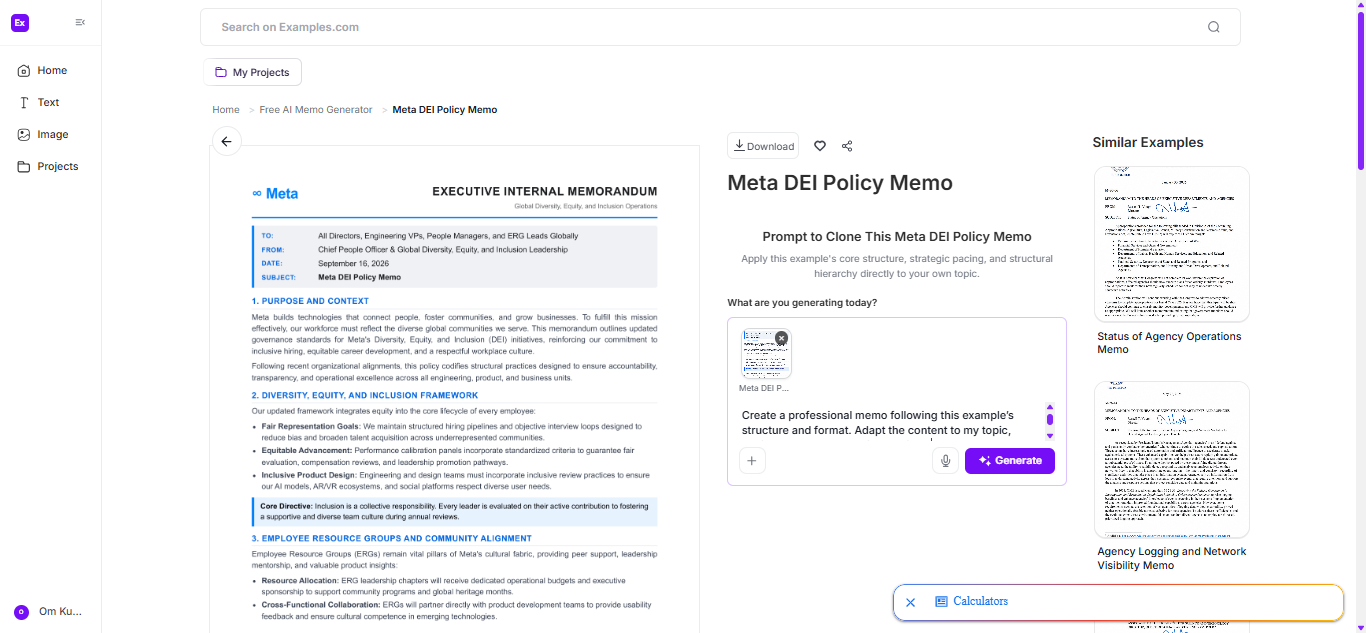
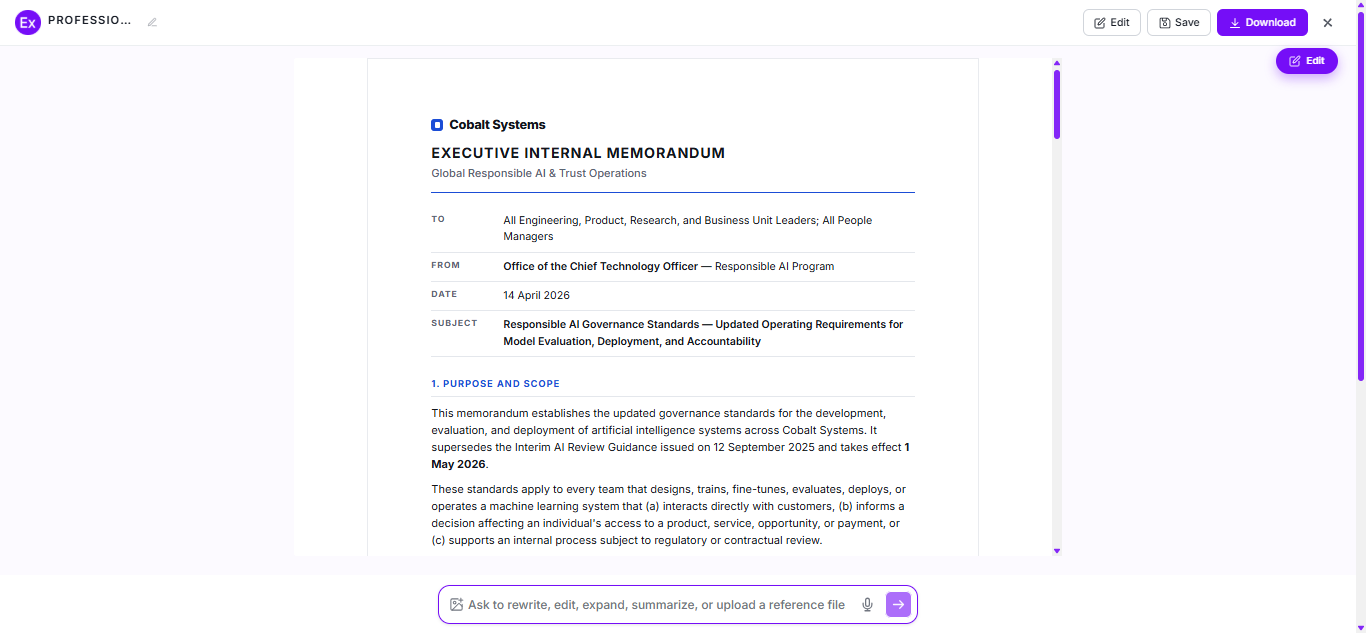
Generate A New AI Memo
The AI generates a customized memo based on your prompt, organizing the content with a clear heading, concise message, relevant details, and actionable next steps.
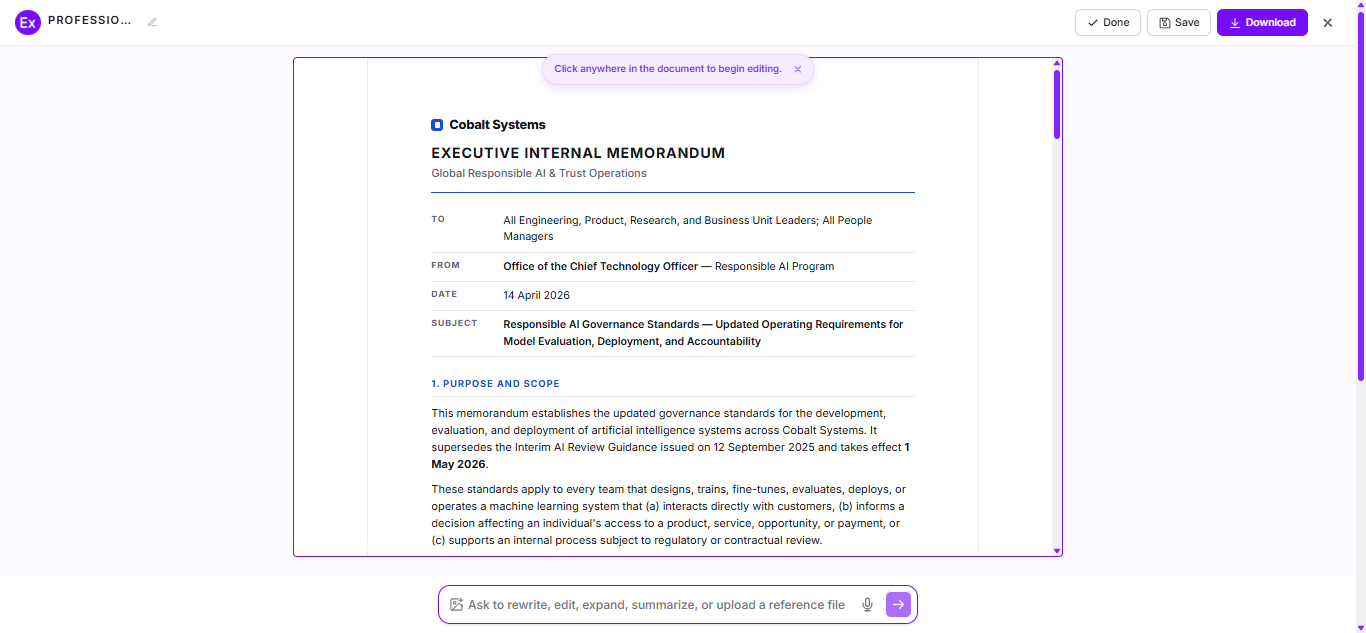
Customize The Memo In The Online Editor
Edit the recipient, sender, date, subject, message, instructions, responsibilities, deadlines, and other details to match your specific requirements.
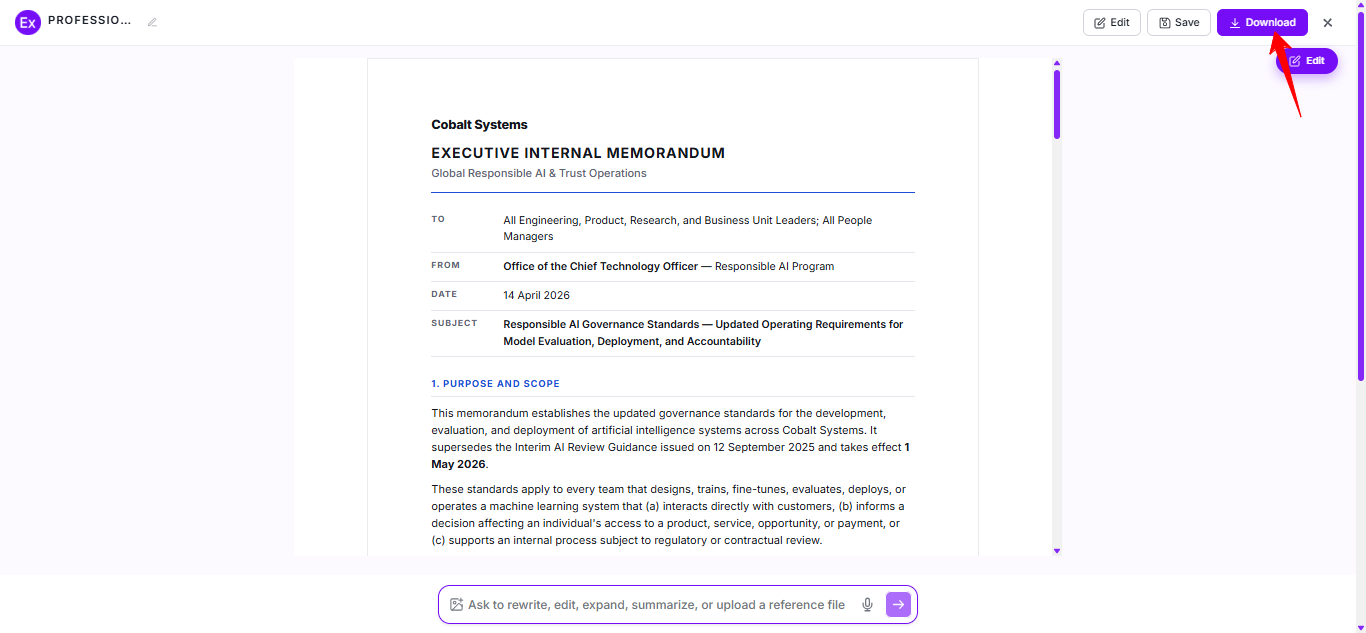
Download Your Memo As A PDF
Download your completed memo as a PDF for printing, record keeping, or future reference.
What Is the Purpose of a Memo?
A memo is used to communicate important information quickly and clearly within a business or organization. Its purpose is to share updates, announce policies, provide instructions, report project progress, confirm decisions, document agreements, and explain actions that employees or teams need to take. By presenting key information in a concise written format, a memo helps keep everyone informed and aligned.
AI Memo Editing Features
AI Content Generation
Generate professionally written memo content based on your purpose, audience, instructions, and requirements.
Memo Editing
Add, remove, or modify memo content, instructions, decisions, and other details to match your needs.
Auto Formatting
Automatically organize memo headings, sections, and content into a clear, professional, easy-to-read layout.
Memo Customization
Update the To, From, Date, Subject, responsibilities, deadlines, and other memo information with ease.
PDF Download
Download your completed memo as a PDF for printing, record-keeping, or future reference.
Which Essential Elements Should I Include in Every Memo?
- To: Identify the person, team, or department receiving the memo.
- From: Include the sender’s name and position.
- Date: Add the date the memo is issued.
- Subject: Use a clear, specific subject that summarizes the memo’s purpose.
- Opening: State the main purpose or key message in one or two sentences.
- Discussion: Provide the relevant facts, details, instructions, or background information.
- Action Required: Clearly explain what recipients need to do, if applicable.
- Responsibilities: Identify who is responsible for each required task or decision.
- Deadline: Include important dates or timelines when action is required.
- Closing: Summarize the next steps or any final information recipients need to know.
How Do I Write a Better Memo?
Start With the Main Point
Open your memo by clearly stating the purpose or most important information the reader needs to know.
Add Relevant Details
Provide the key facts, background information, instructions, or context needed to understand the message.
Organize the Information
Use short paragraphs, headings, bullet points, or numbered lists to make the memo easy to scan and understand.
State Required Actions
Clearly explain what the recipients need to do, who is responsible, and when the action should be completed.
End With Clear Next Steps
Close the memo by summarizing the expected action, deadline, or follow-up information so readers know what happens next.
Why Should I Use Real Memo Examples to Create My Own Memo?
- Real memo examples show how professional memos are structured and organized.
- They help you understand how to present the To, From, Date, and Subject fields clearly.
- Reviewing examples makes it easier to develop a concise and professional writing style.
- They provide practical references for writing different types of workplace memos.
- Examples help you identify essential information, instructions, responsibilities, and next steps.
- They can help you avoid common formatting and writing mistakes.
- Using examples as references can make the memo creation process faster and more straightforward.
- They give you a practical starting point while allowing you to customize the content for your specific purpose.
What Common Memo-Writing Mistakes Should I Avoid?
- Avoid an unclear purpose: State the main reason for writing the memo at the beginning.
- Avoid unnecessary details: Include only information that helps readers understand the message or take action.
- Avoid a vague subject line: Use a specific subject that immediately tells readers what the memo is about.
- Avoid poor organization: Arrange information logically with short paragraphs, headings, or bullet points.
- Avoid missing key details: Include relevant dates, responsibilities, instructions, deadlines, and next steps.
- Avoid overly complicated language: Use clear, direct, and professional wording.
- Avoid an unclear call to action: Tell recipients exactly what they need to do, if any action is required.
- Avoid inconsistent formatting: Keep headings, spacing, lists, and memo fields consistent throughout the document.
What Is the Difference Between a Memo and a Letter?
| Memo | Letter |
|---|---|
| Mainly used for internal communication. | Commonly used for external or formal communication. |
| Usually addressed to employees, teams, or departments. | Usually addressed to a specific person, organization, or recipient. |
| Uses a direct format with To, From, Date, and Subject. | Typically includes a greeting, body, closing, and signature. |
| Focuses on updates, instructions, decisions, or workplace information. | Often communicates requests, announcements, invitations, or formal messages. |
| Usually concise and easy to scan. | May use a more formal and detailed writing style. |
FAQs
What Is the Main Purpose of a Memo?
A memo communicates important internal information, including updates, instructions, decisions, policies, responsibilities, and required actions.
Who Can Write a Memo?
Employees, managers, executives, administrators, and other organizational members can write memos to communicate relevant workplace information.
What Should the Subject Line of a Memo Include?
A memo subject line should clearly and briefly identify the specific topic or purpose of the communication.
How Long Should a Memo Be?
A memo should be as concise as possible while providing enough information for recipients to understand the message.
Can a Memo Include Bullet Points?
Yes, bullet points can organize important details, instructions, responsibilities, deadlines, and other information for easier reading.
Is a Memo Formal or Informal?
A memo is generally professional and direct, but its level of formality can vary depending on the organization and purpose.
What Information Goes in the Opening of a Memo?
The opening should state the memo’s main purpose and summarize the most important information recipients need to know.
When Should I Send a Memo?
Send a memo when important information, decisions, instructions, or updates need to be communicated clearly to multiple recipients.
Should a Memo Have a Closing?
Yes, a memo can end with clear next steps, required actions, deadlines, or other information recipients should follow.
Can I Create a Memo as a PDF?
Yes, you can create a professionally formatted memo and download the completed document as a PDF.