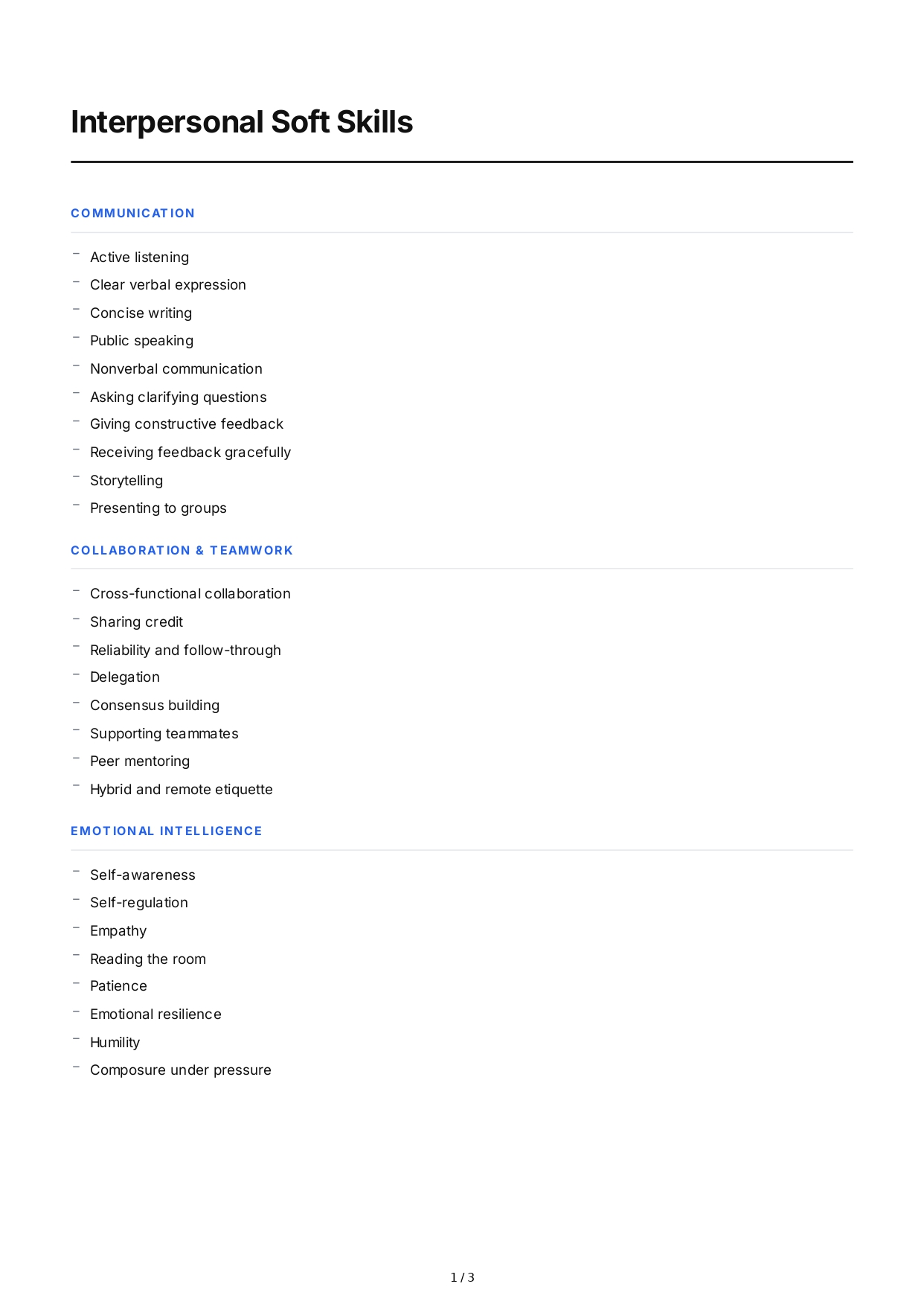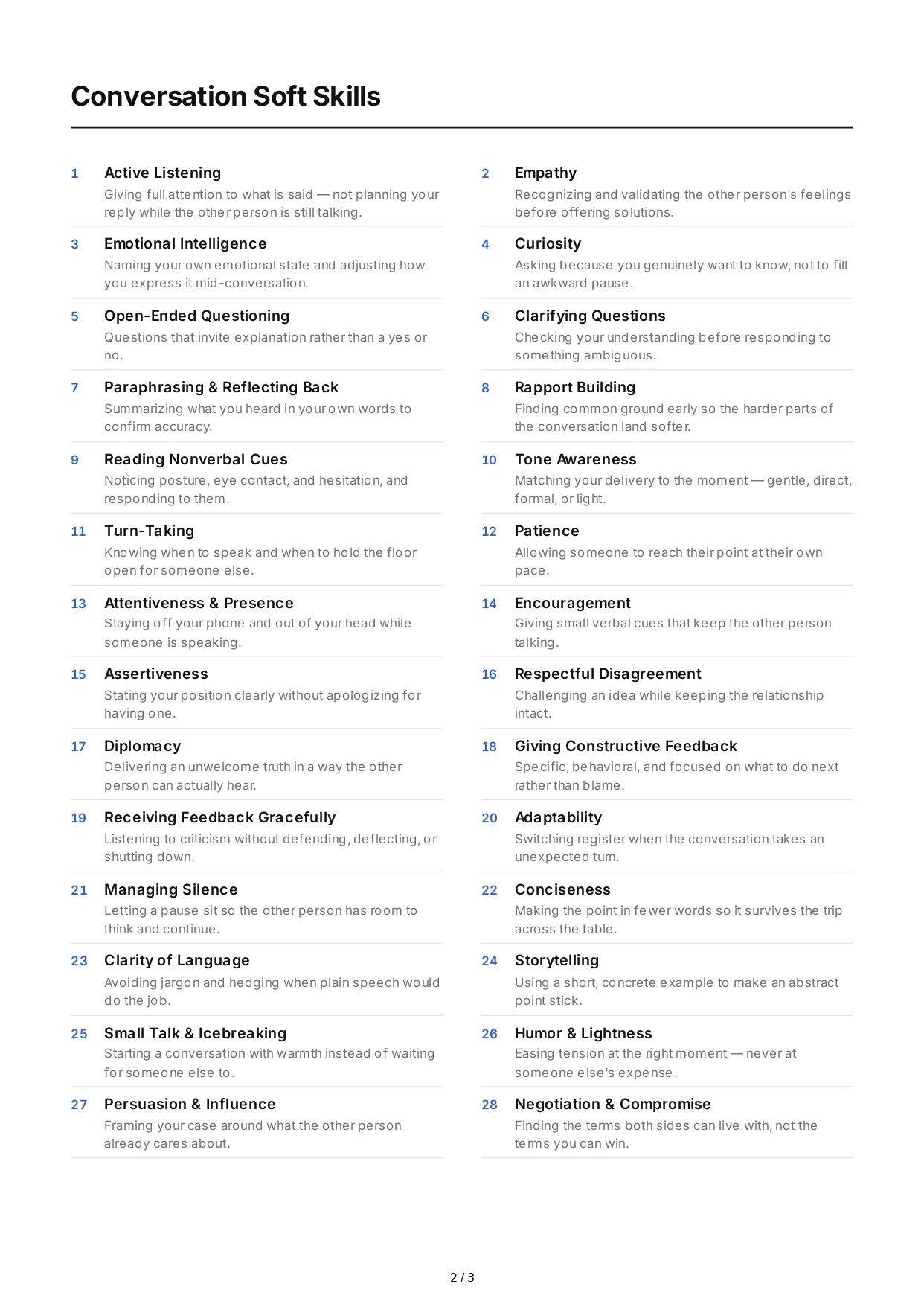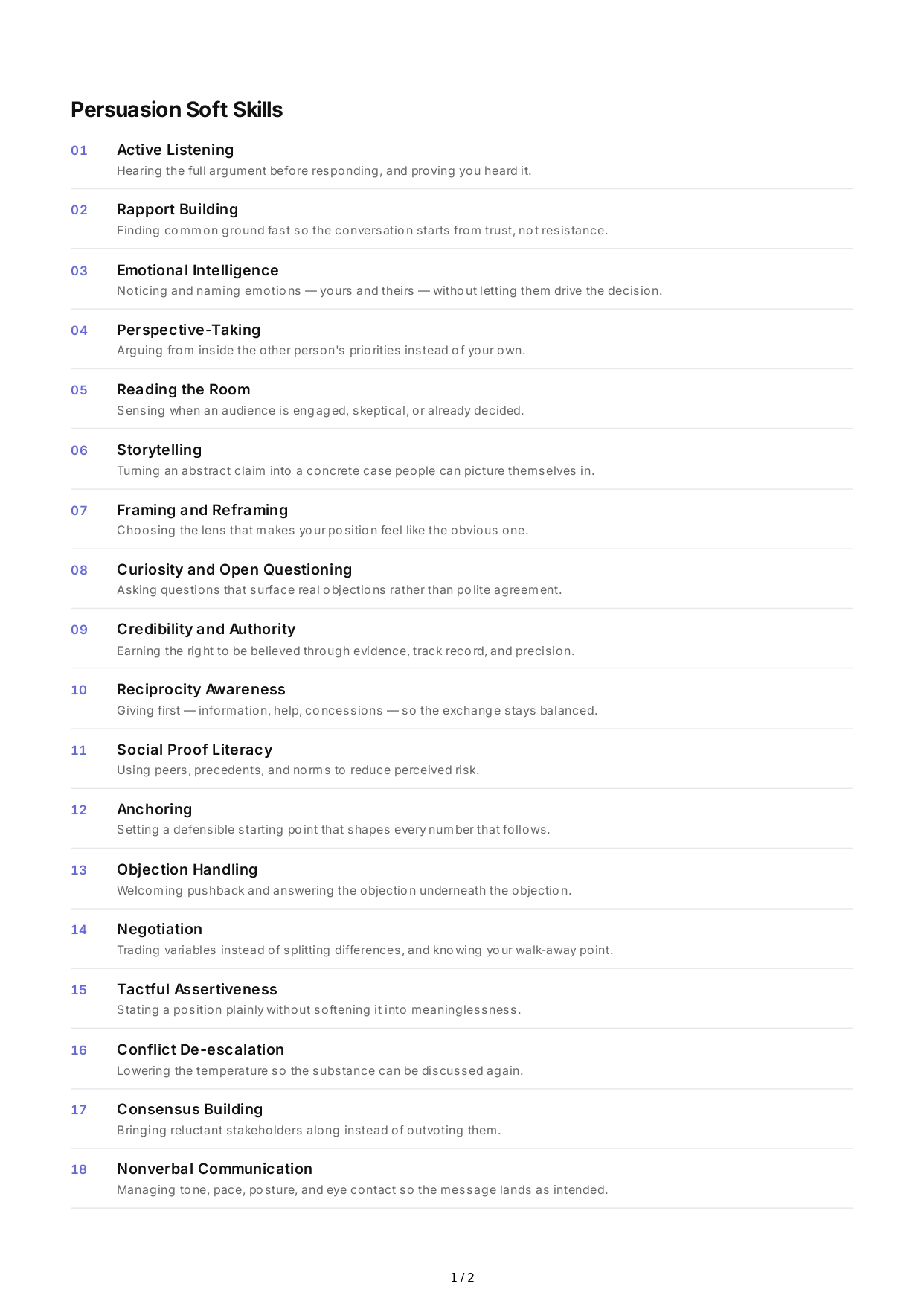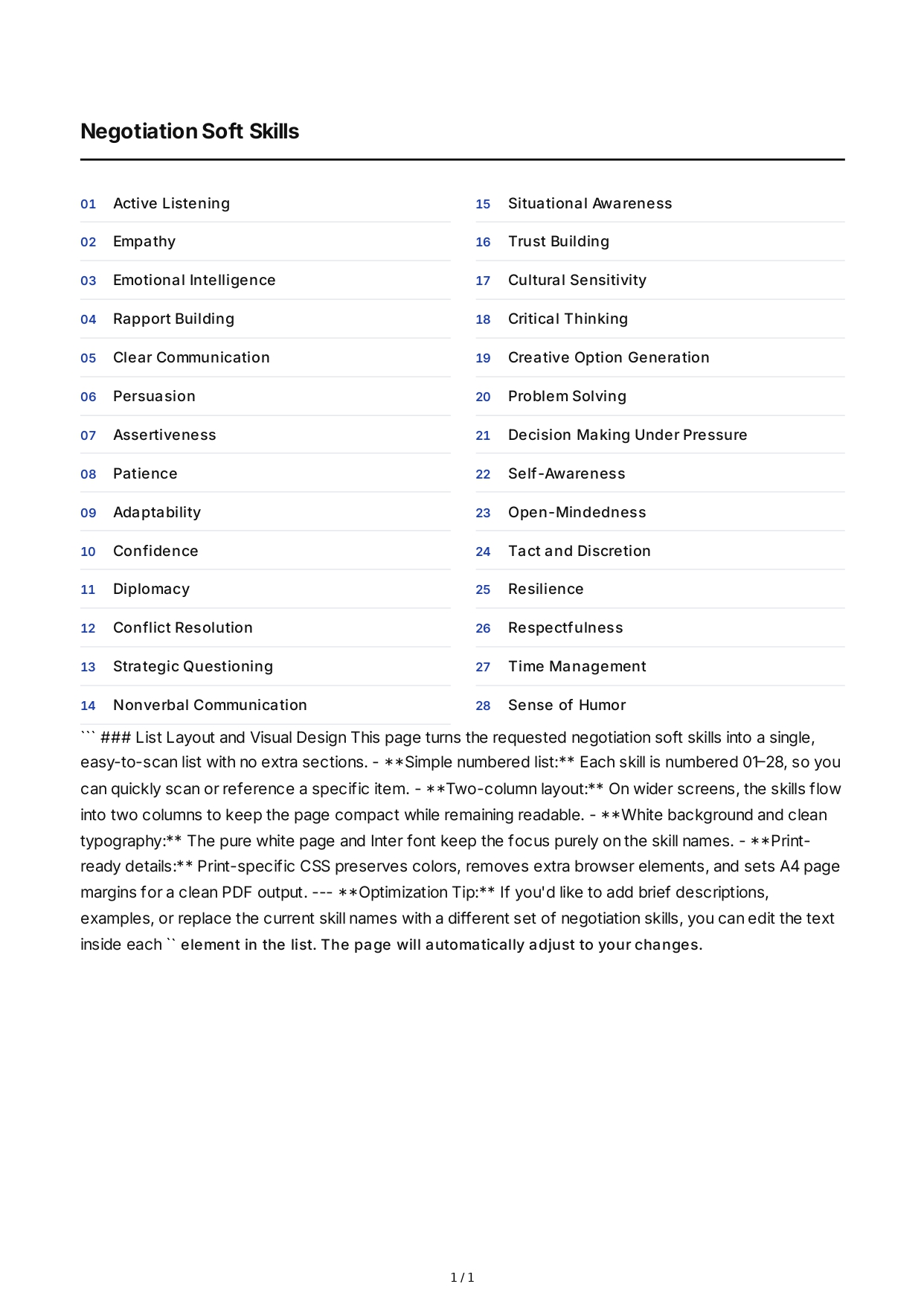
Active
Listening
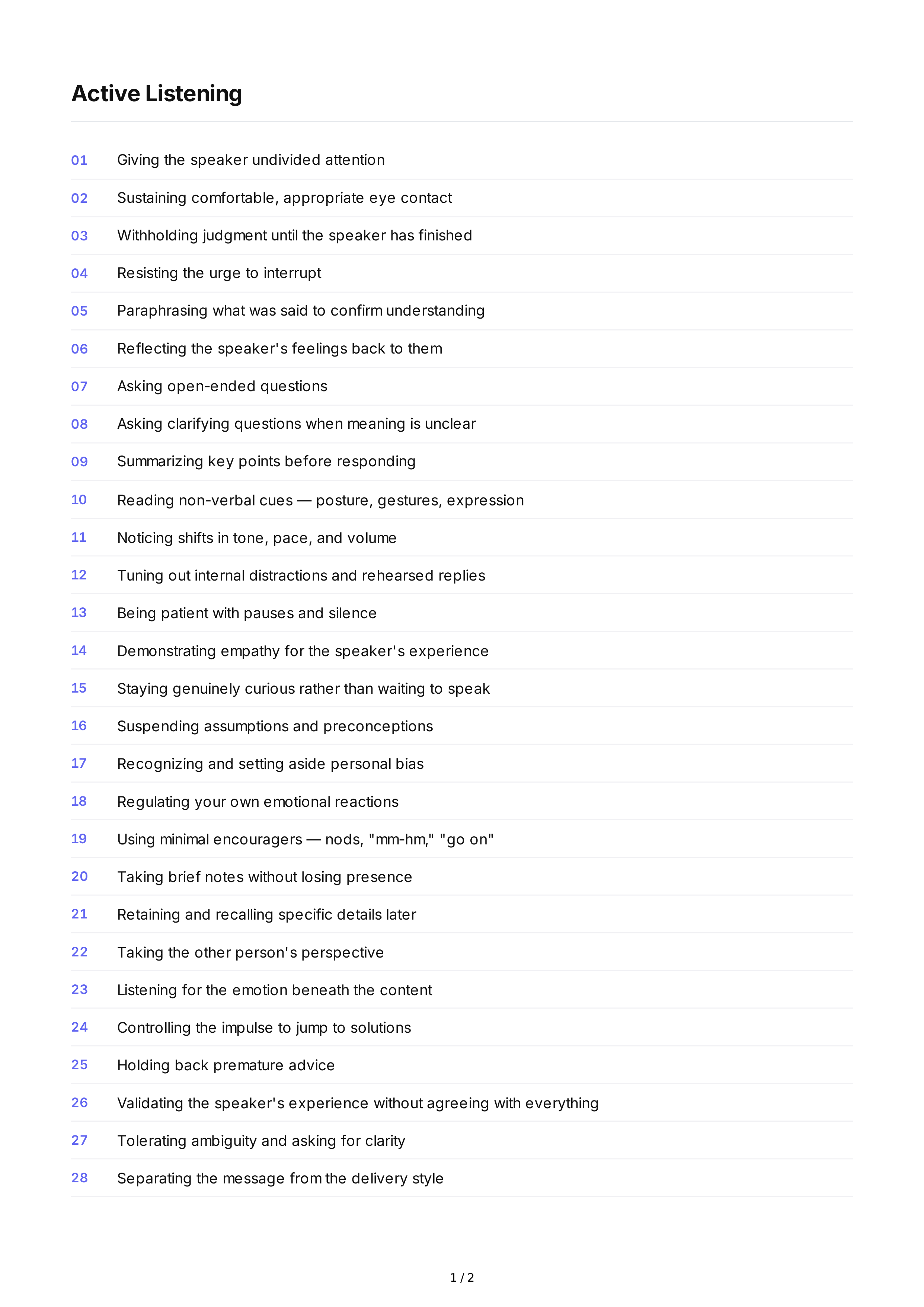
Giving
the
speaker
undivided
attention
Sustaining
comfortable
,
appropriate
eye
contact
Withholding
judgment
until
the
speaker
has
finished
Resisting
the
urge
to
interrupt
Paraphrasing
what
was
said
to
confirm
understanding
Reflecting
the
speaker
'
s
feelings
back
to
them
Asking
open
-
ended
questions
Asking
clarifying
questions
when
meaning
is
unclear
Summarizing
key
points
before
responding
Reading
non
-
verbal
cues
—
posture
,
gestures
,
expression
Noticing
shifts
in
tone
,
pace
,
and
volume
Tuning
out
internal
distractions
and
rehearsed
replies
Being
patient
with
pauses
and
silence
Demonstrating
empathy
for
the
speaker
'
s
experience
Staying
genuinely
curious
rather
than
waiting
to
speak
Suspending
assumptions
and
preconceptions
Recognizing
and
setting
aside
personal
bias
Regulating
your
own
emotional
reactions
Using
minimal
encouragers
—
nods
, "
mm
-
hm
," "
go
on
"
Taking
brief
notes
without
losing
presence
Retaining
and
recalling
specific
details
later
Taking
the
other
person
'
s
perspective
Listening
for
the
emotion
beneath
the
content
Controlling
the
impulse
to
jump
to
solutions
Holding
back
premature
advice
Validating
the
speaker
'
s
experience
without
agreeing
with
everything
Tolerating
ambiguity
and
asking
for
clarity
Separating
the
message
from
the
delivery
style
01
02
03
04
05
06
07
08
09
10
11
12
13
14
15
16
17
18
19
20
21
22
23
24
25
26
27
28
1 / 2

Checking
for
alignment
when
tension
or
conflict
arises
Confirming
next
steps
and
mutual
understanding
29
30
2 / 2