
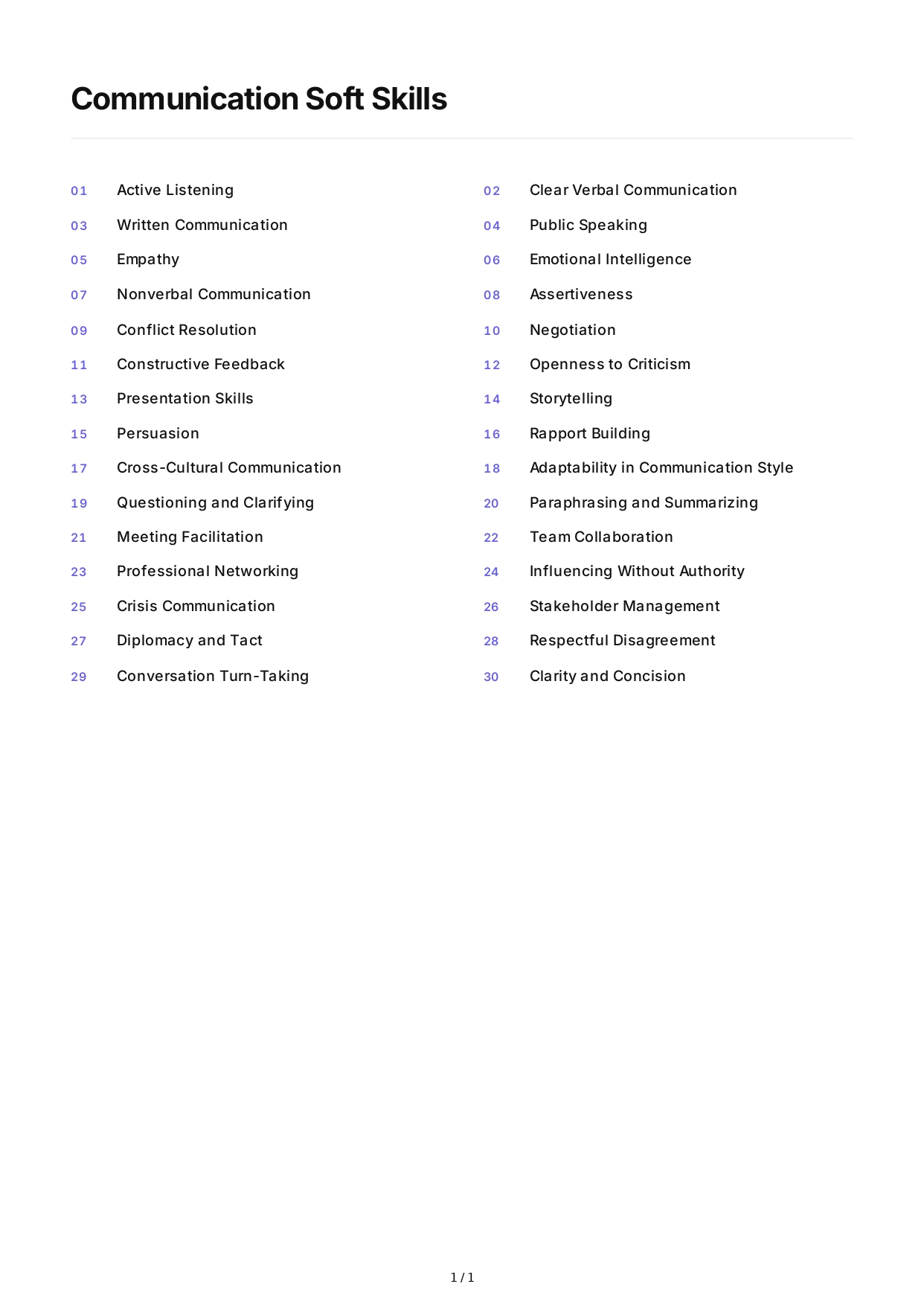
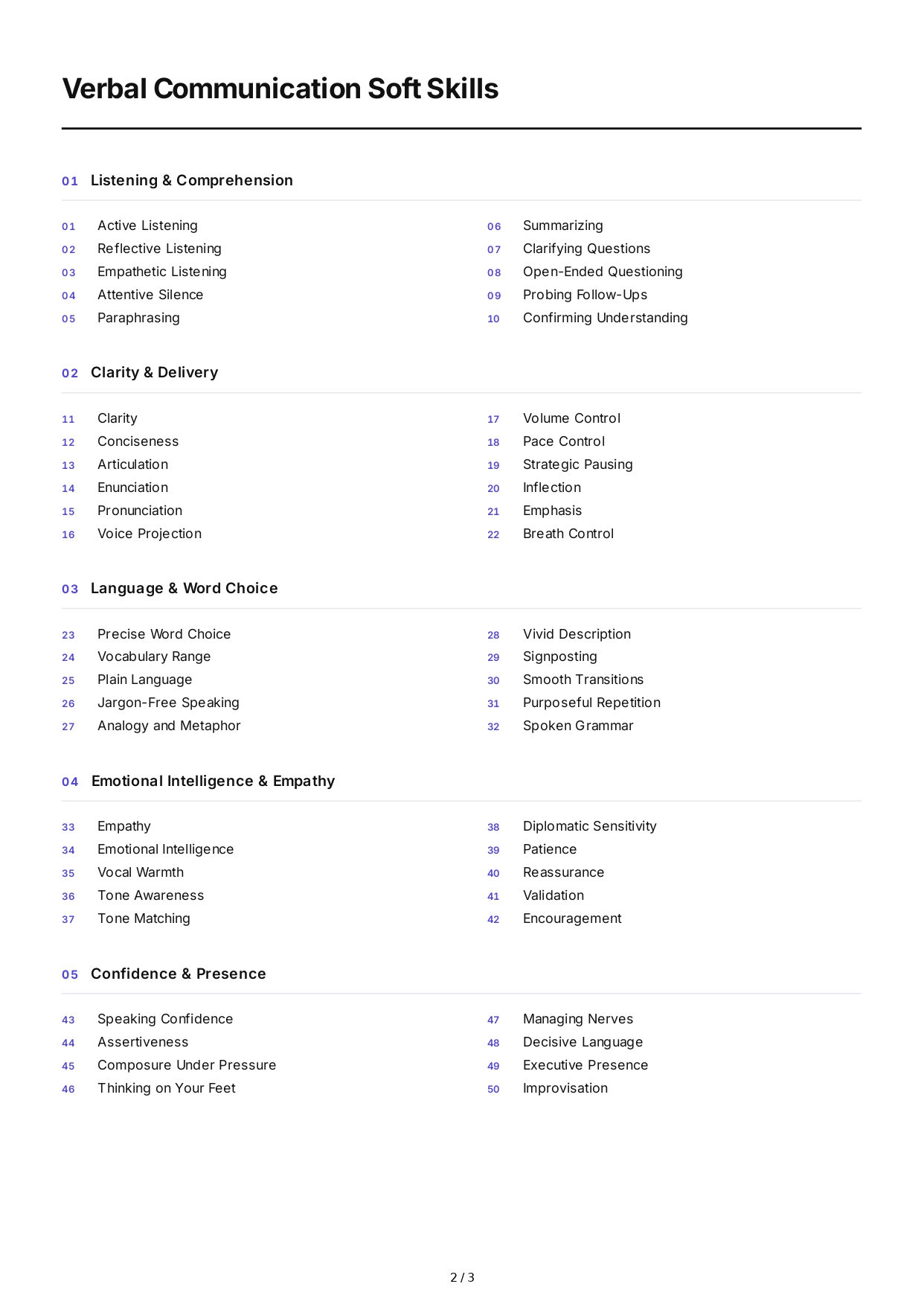
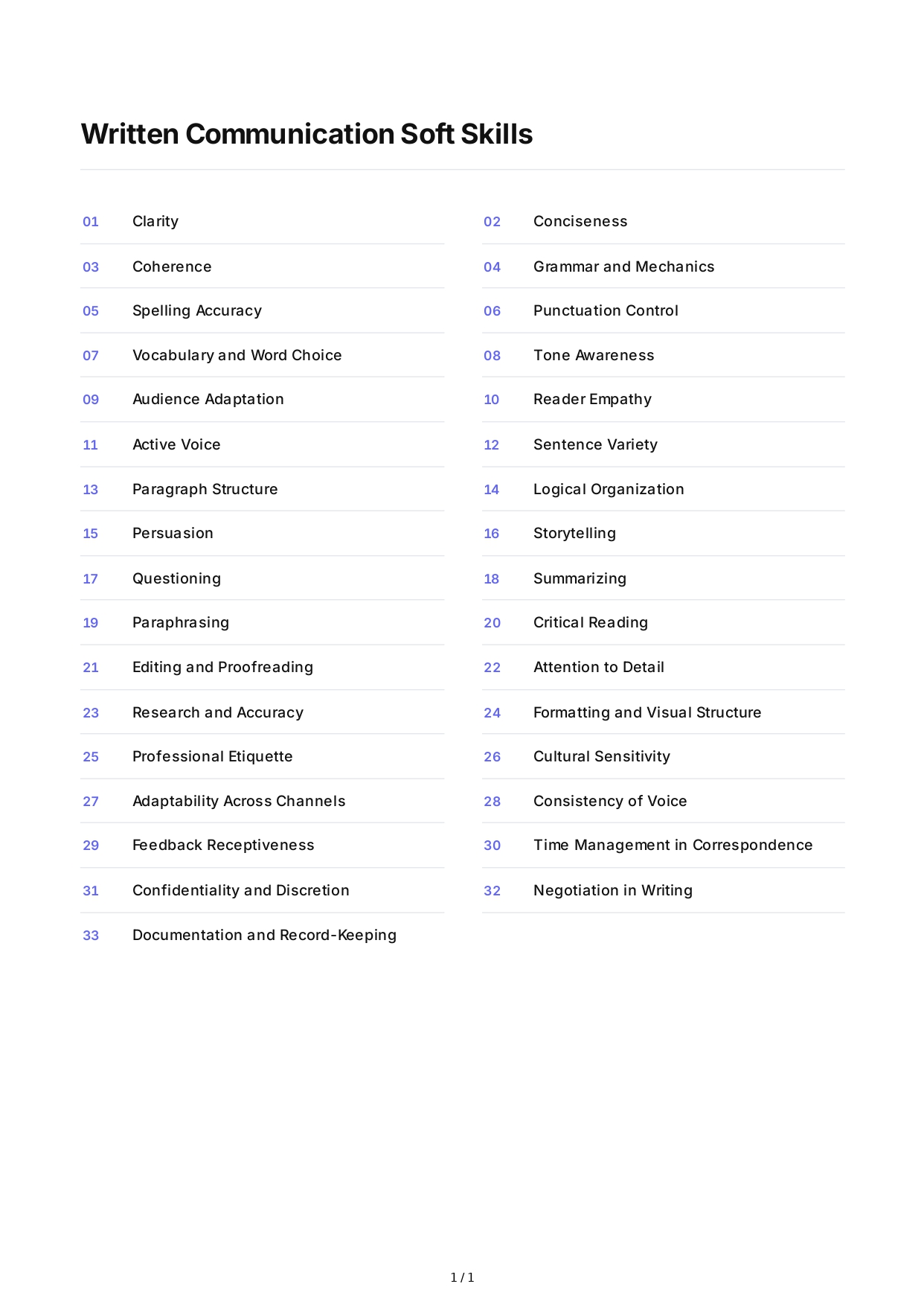
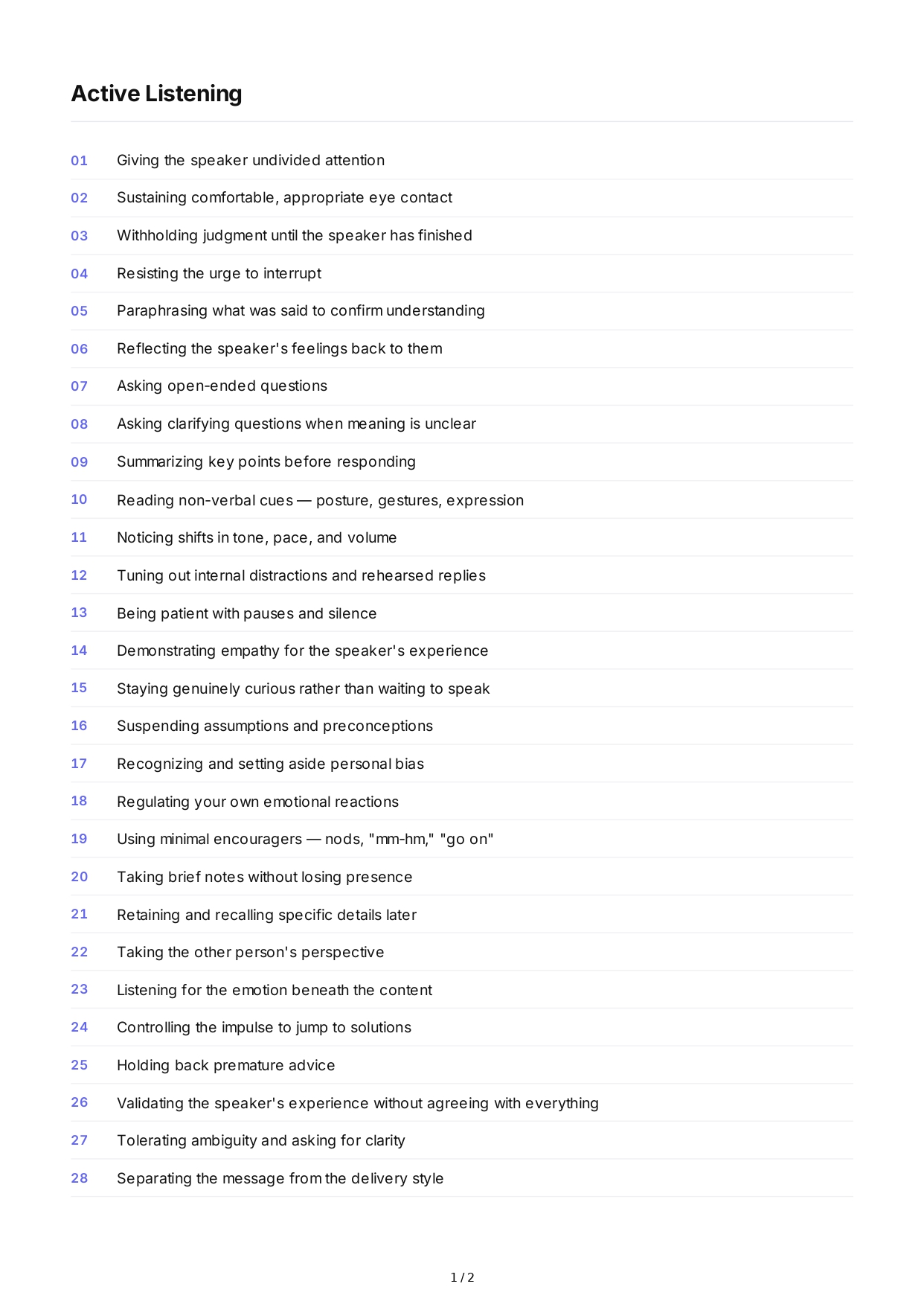
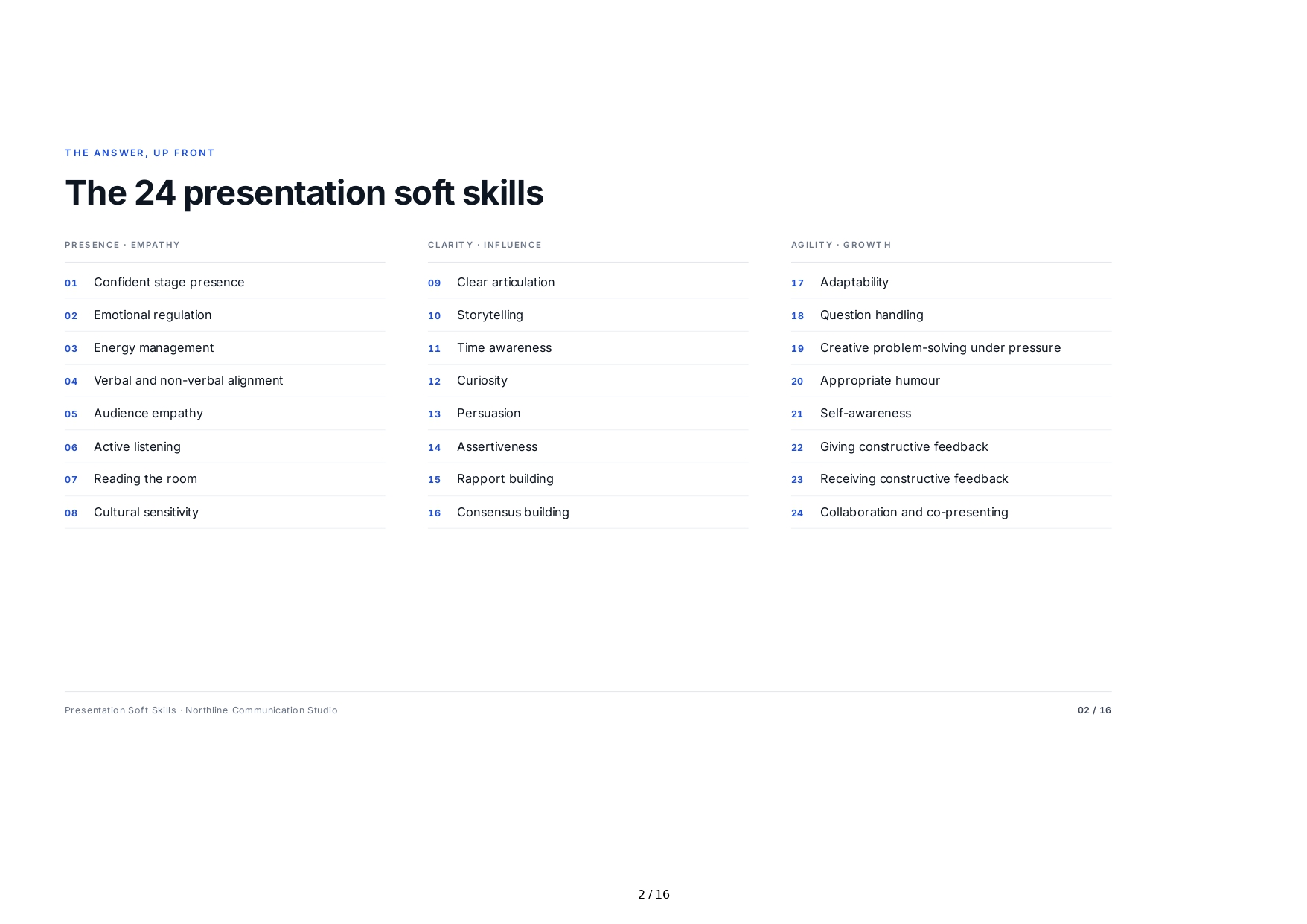
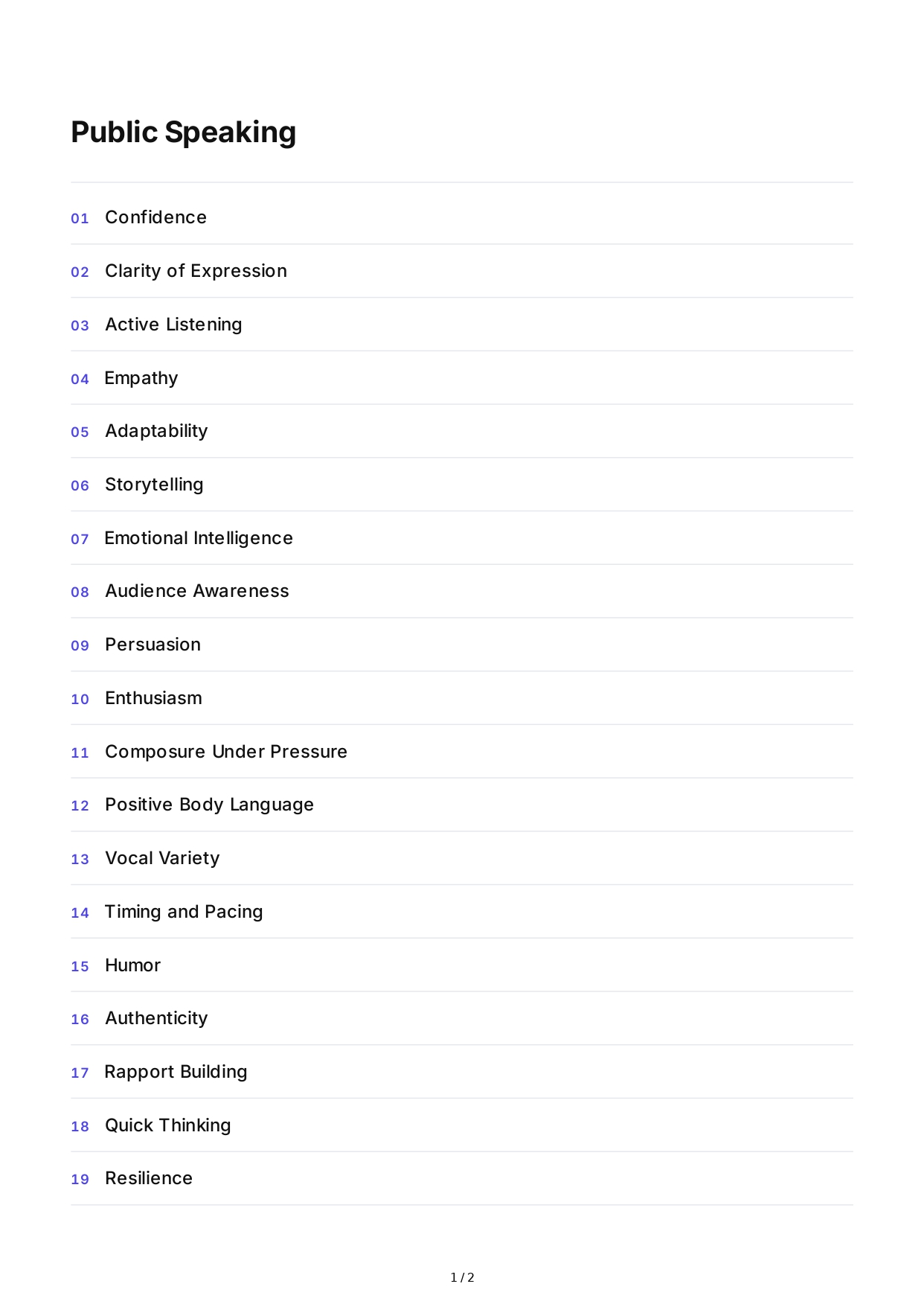
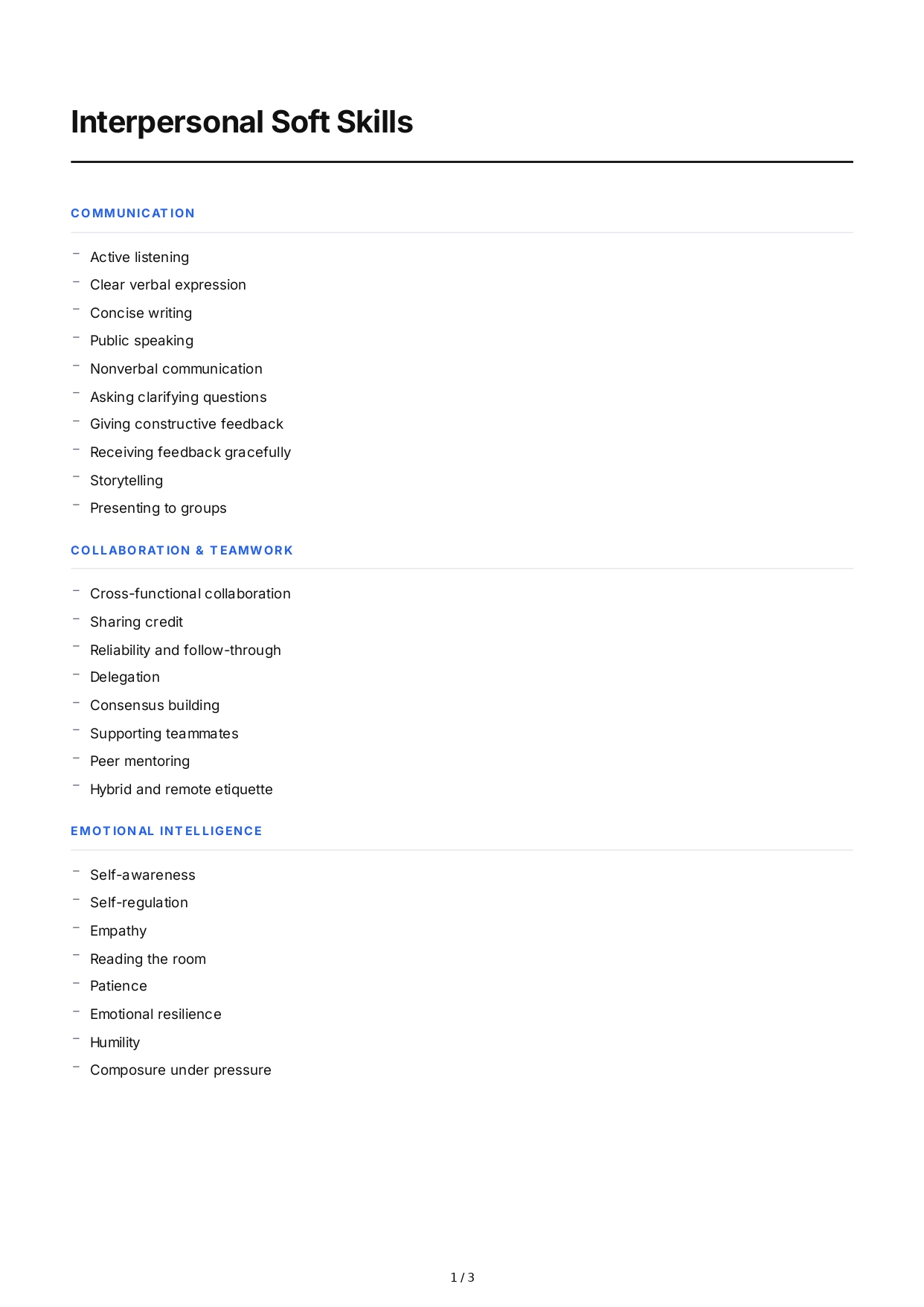
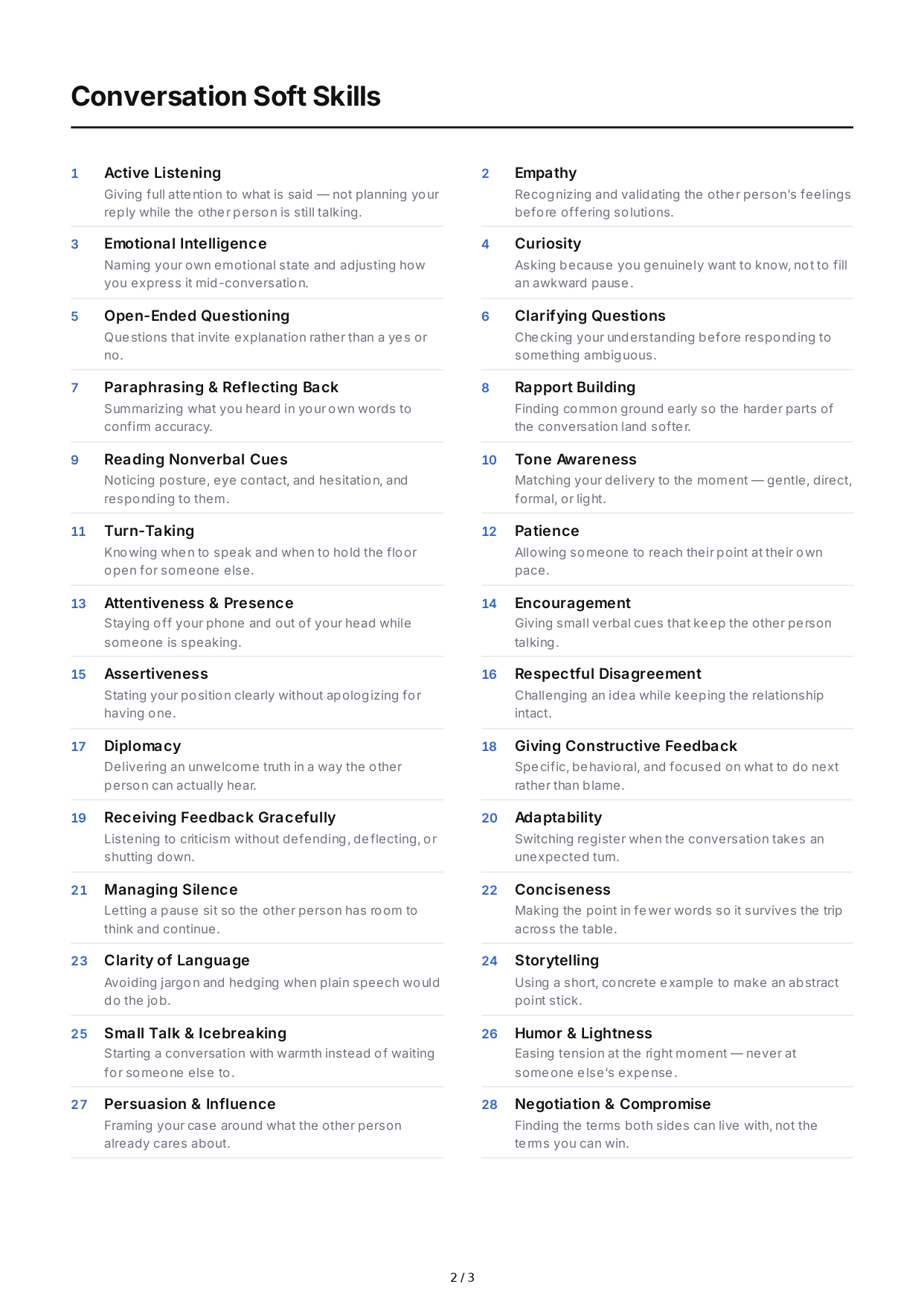
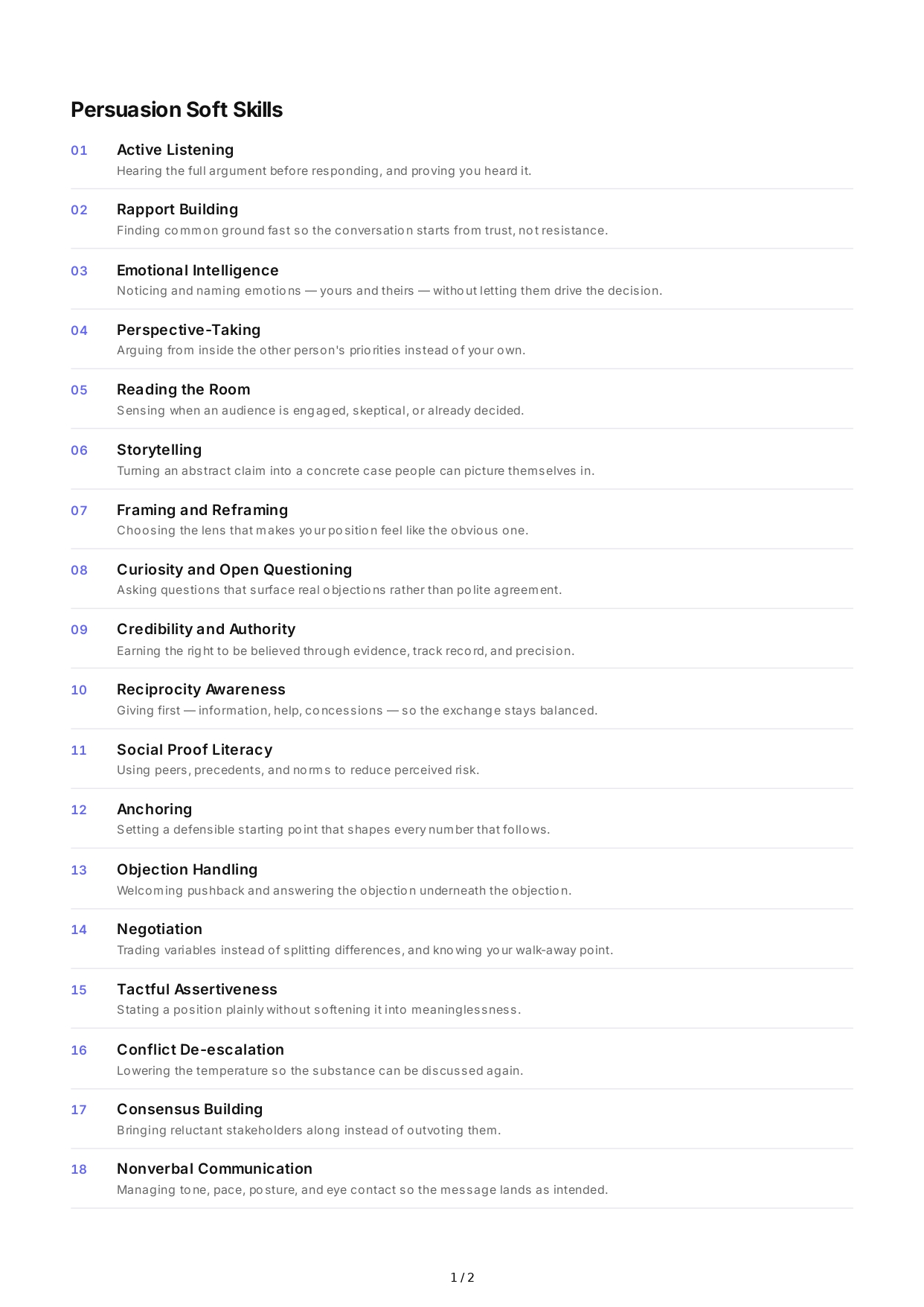
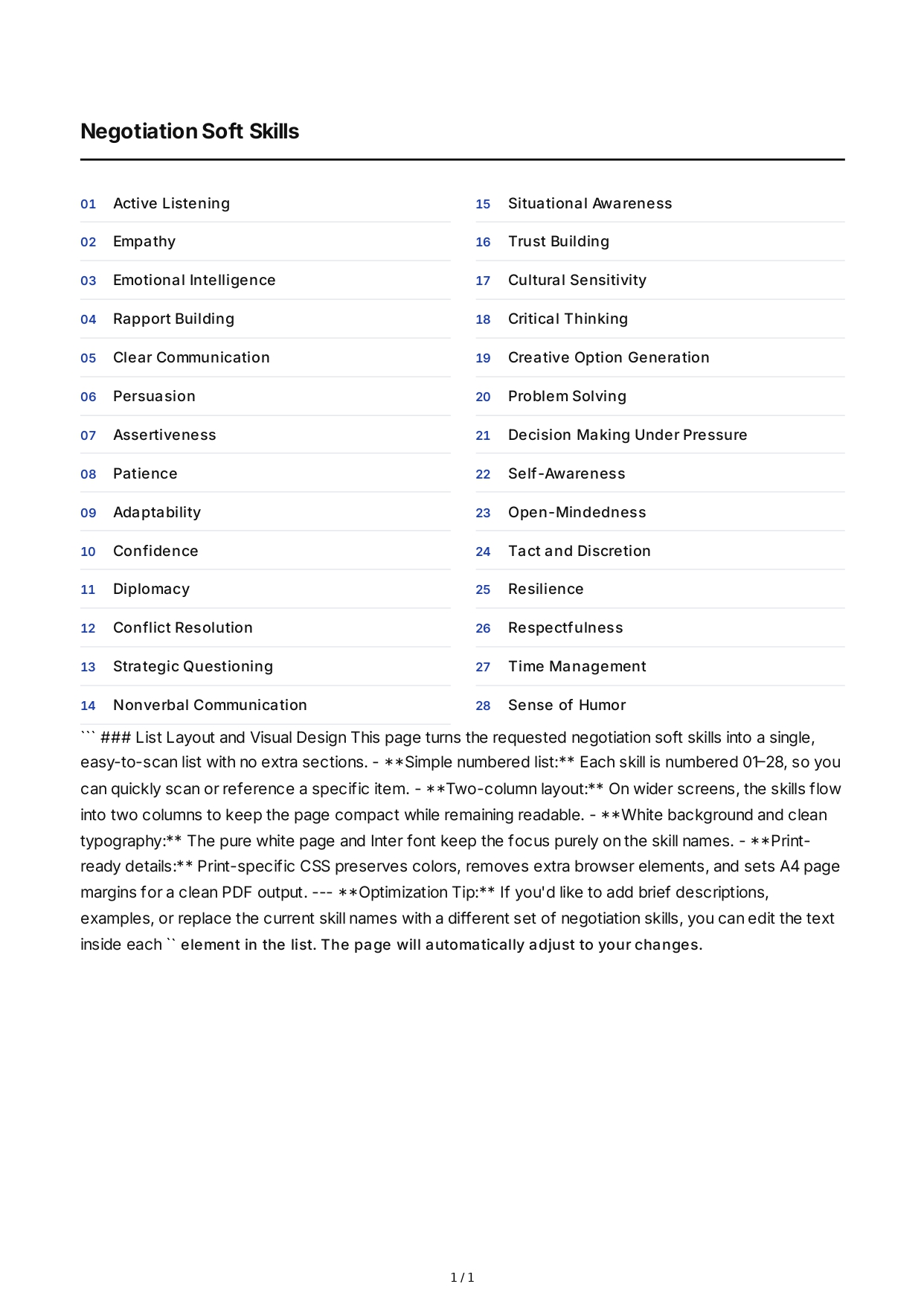
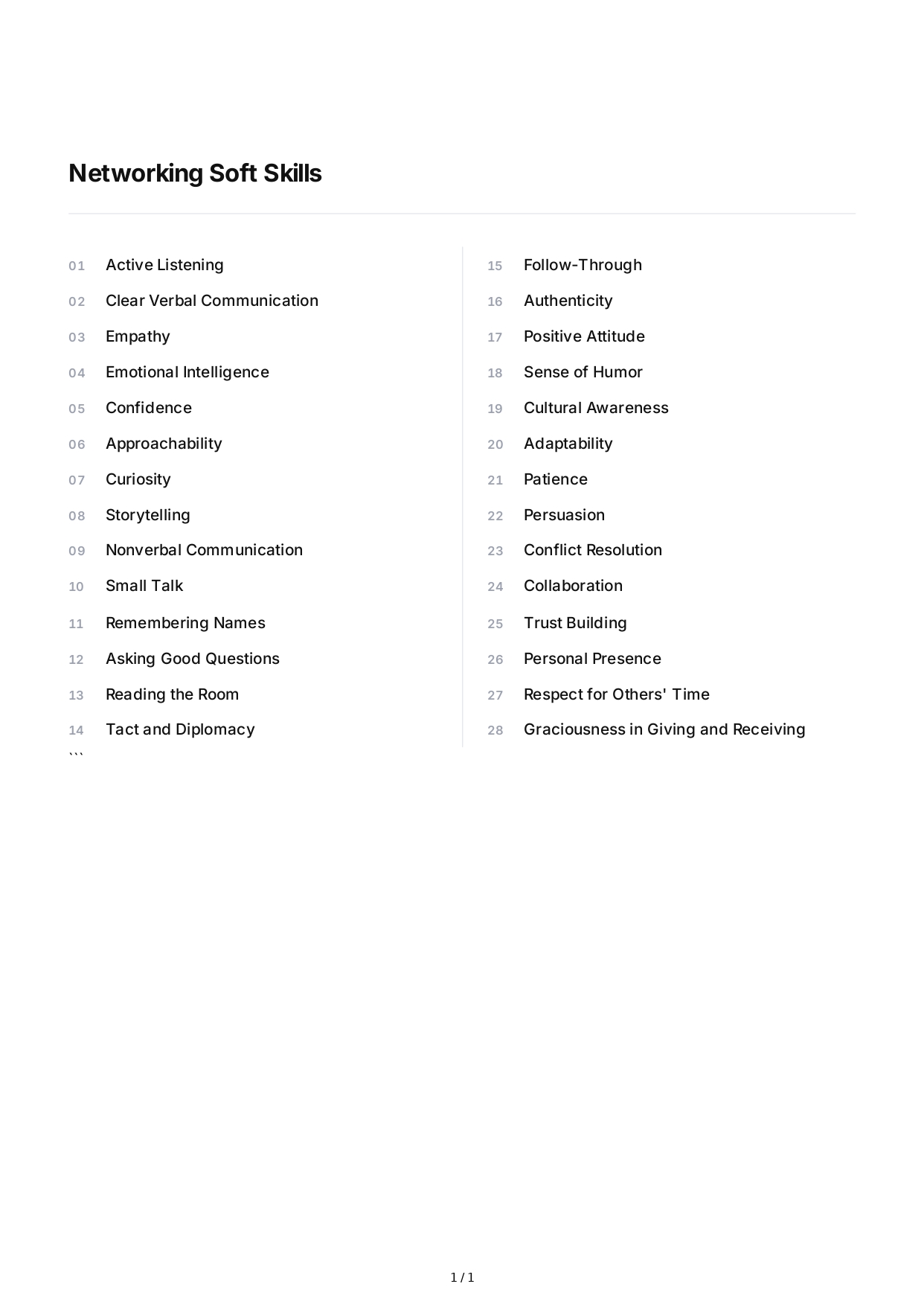
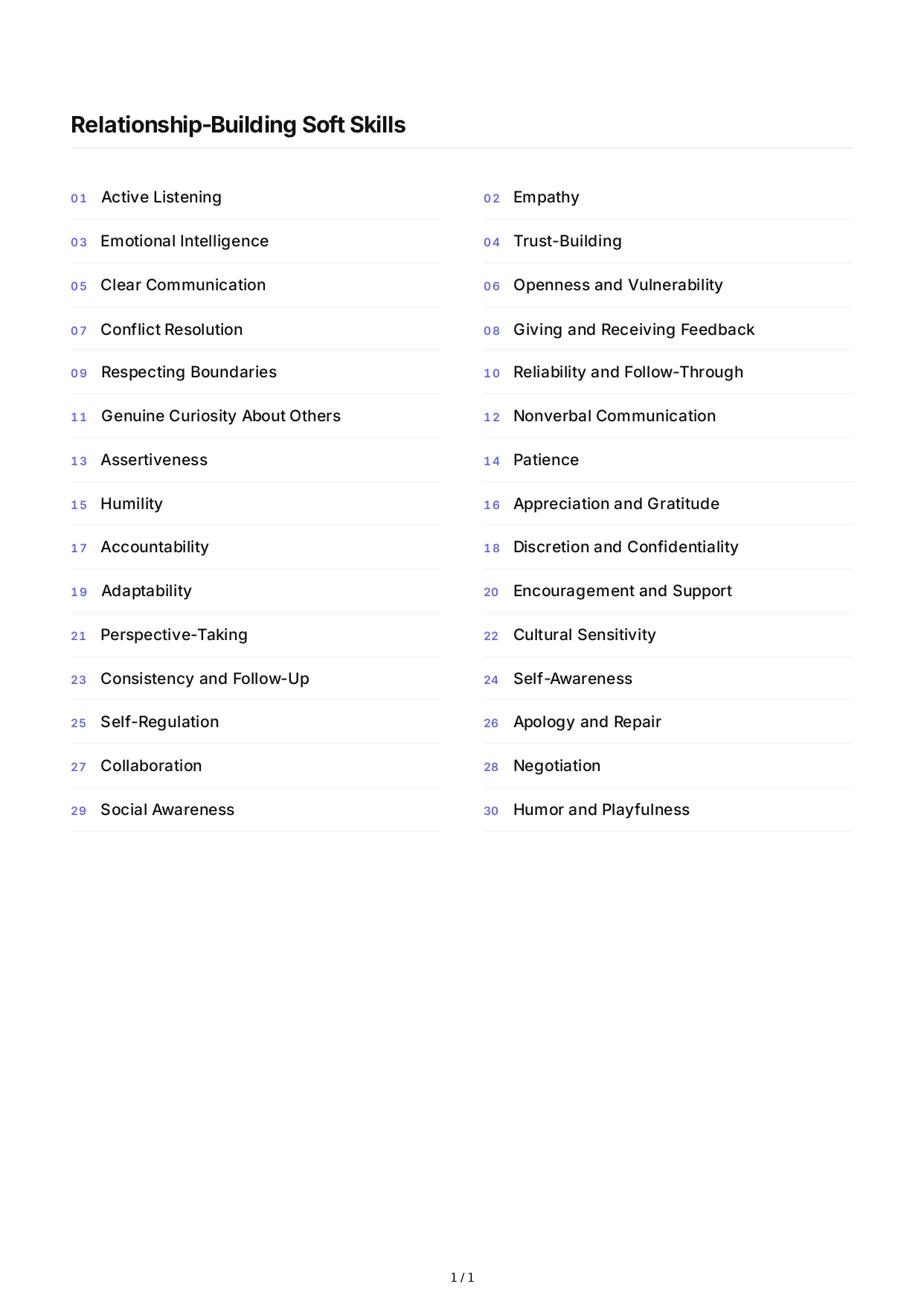
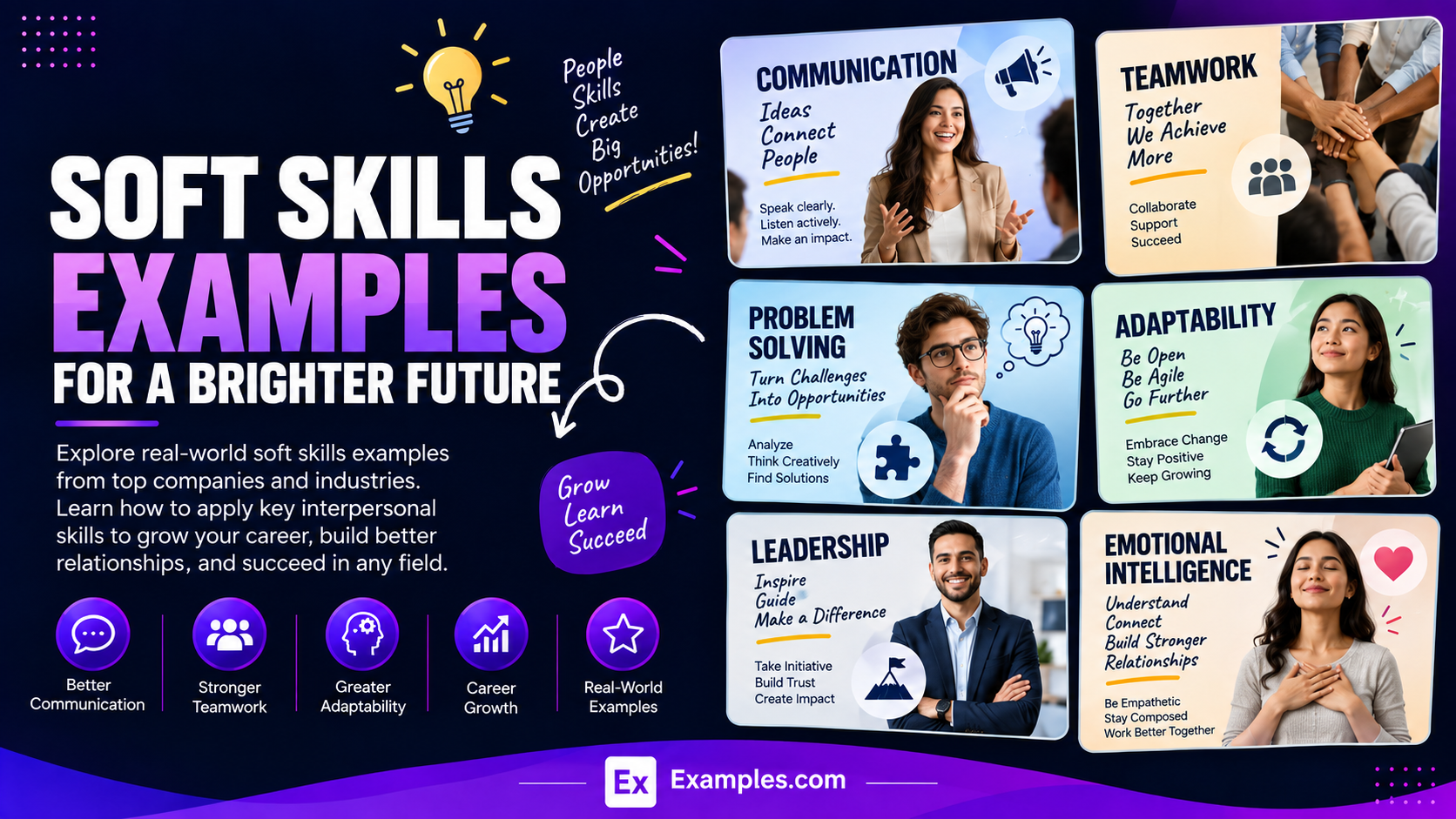
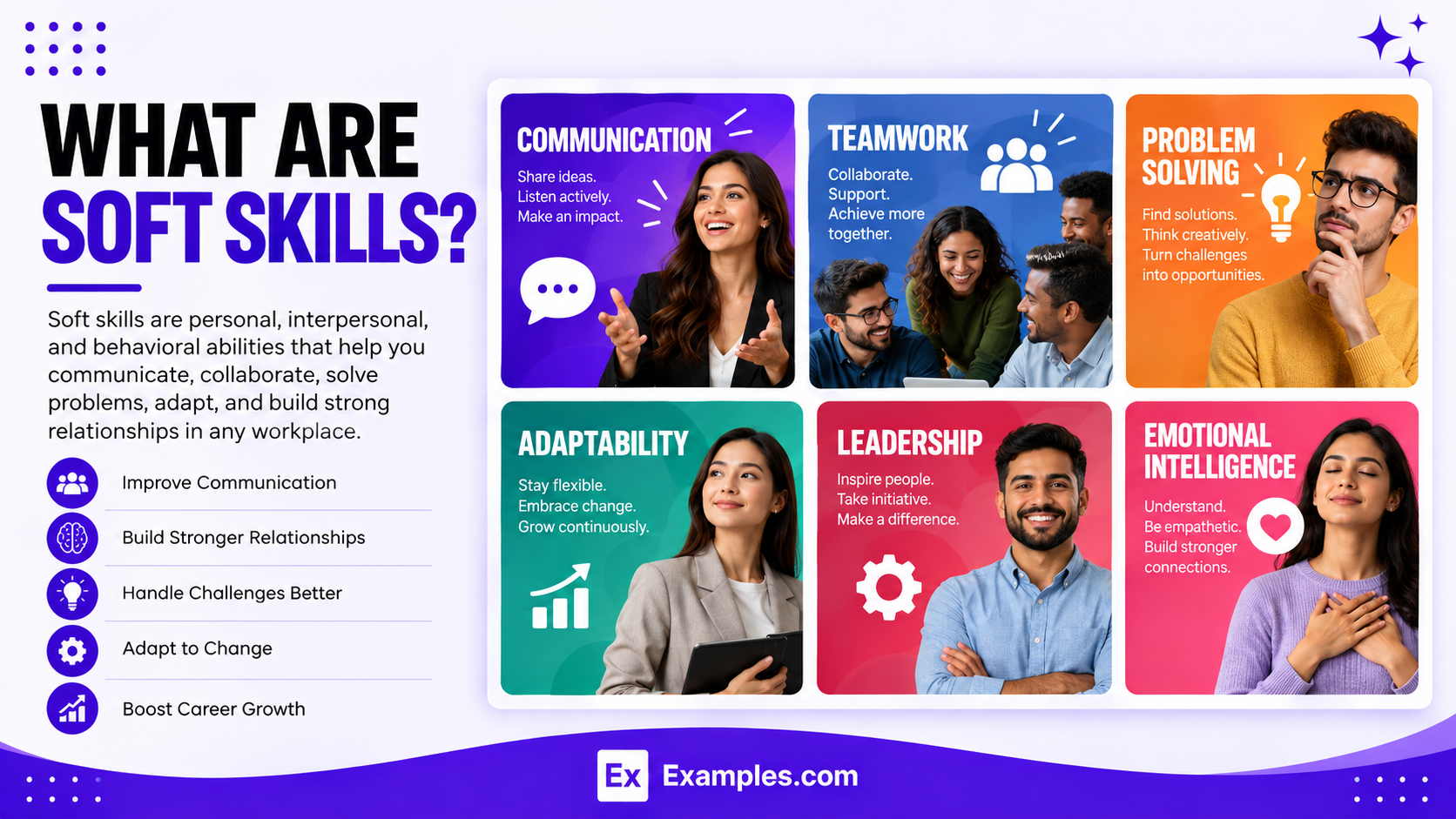
Soft skills are personal, interpersonal, and behavioral abilities that influence how effectively you communicate, collaborate, solve problems, manage responsibilities, and adapt to different situations. Common Soft Skills Examples include communication, teamwork, adaptability, problem-solving, leadership, emotional intelligence, time management, creativity, active listening, and conflict resolution.
Unlike technical skills, which are usually tied to a specific task or profession, soft skills can transfer across jobs and industries. They are useful when working with colleagues, customers, managers, teams, and other stakeholders.
What are Soft Skills?
Soft skills are behavioral and interpersonal abilities that affect how you work, communicate, respond to challenges, and interact with other people. They include communication habits, personal characteristics, collaboration abilities, and workplace behaviors.
For example, knowing how to use a particular software program is a technical skill. Explaining your work clearly to a colleague, listening to feedback, resolving a disagreement, and adapting when requirements change are soft skills.
Why Are Soft Skills Important?
Soft skills can help you:
- Communicate ideas clearly
- Work effectively with different people
- Handle workplace challenges
- Build professional relationships
- Manage priorities and deadlines
- Adapt to changing situations
- Resolve conflicts constructively
- Lead or support a team
- Make informed decisions
- Demonstrate professionalism
Employers commonly look for soft skills alongside technical qualifications because employees need both job-specific abilities and the ability to communicate, collaborate, and respond effectively to workplace situations.
Soft Skills vs Hard Skills
| Soft Skills | Hard Skills |
|---|---|
| Communication | Data analysis |
| Teamwork | Programming |
| Leadership | Accounting |
| Adaptability | Graphic design |
| Problem-solving | SEO |
| Time management | Project management software |
| Emotional intelligence | Database management |
| Creativity | Video editing |
A strong professional profile often combines technical expertise with the soft skills needed to apply that expertise effectively.
Popular Types Of Soft Skills
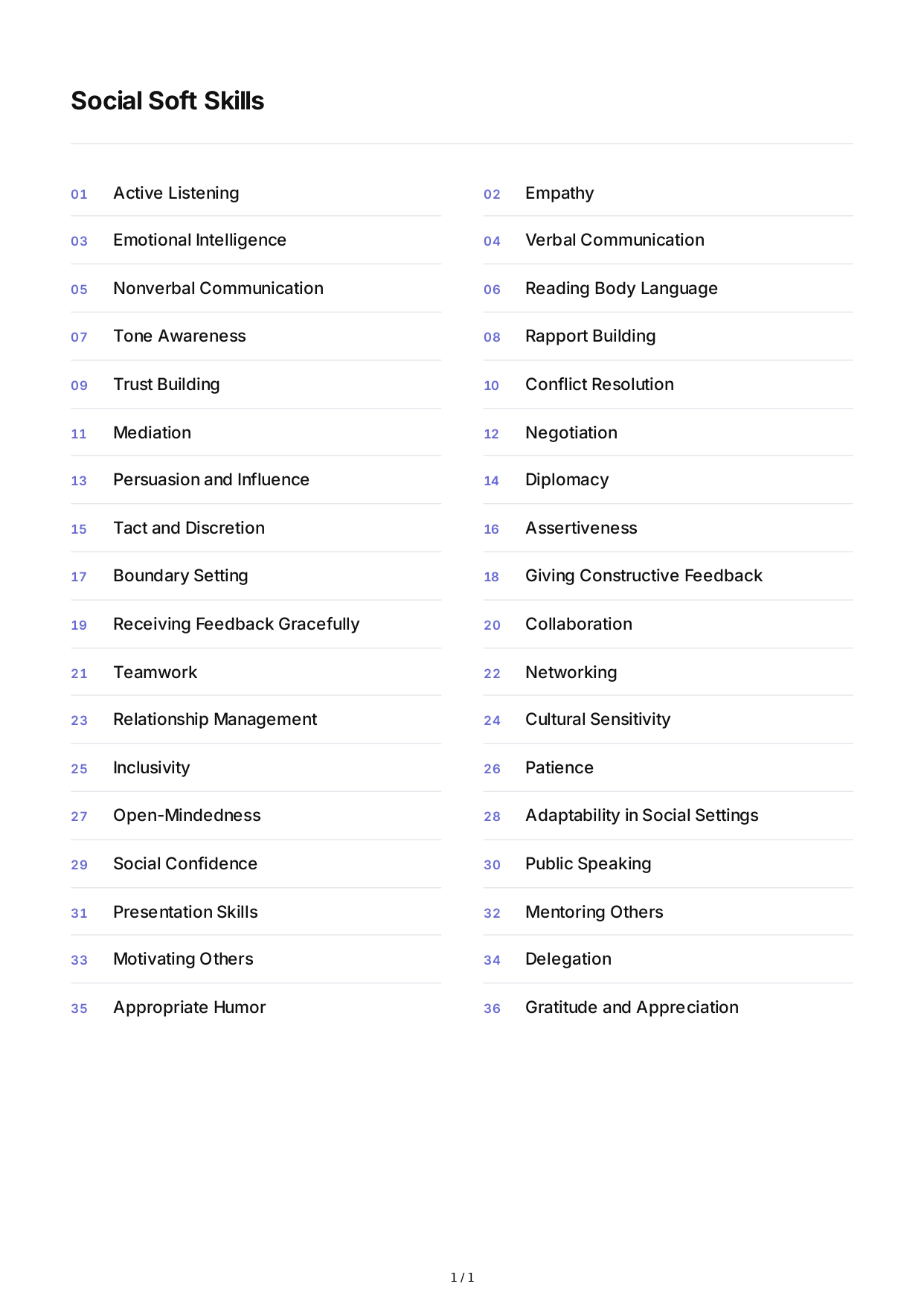
Soft skills cover a broad range of abilities. The most useful skills can vary by role, industry, experience level, and workplace situation.
Communication Skills
Communication involves expressing information clearly and understanding what others are saying.
Examples include:
- Verbal communication
- Written communication
- Presentation skills
- Professional communication
- Nonverbal communication
- Public speaking
Teamwork and Collaboration
Teamwork involves contributing to shared objectives while respecting different perspectives and responsibilities.
Examples include:
- Collaboration
- Cooperation
- Responsibility
- Active listening
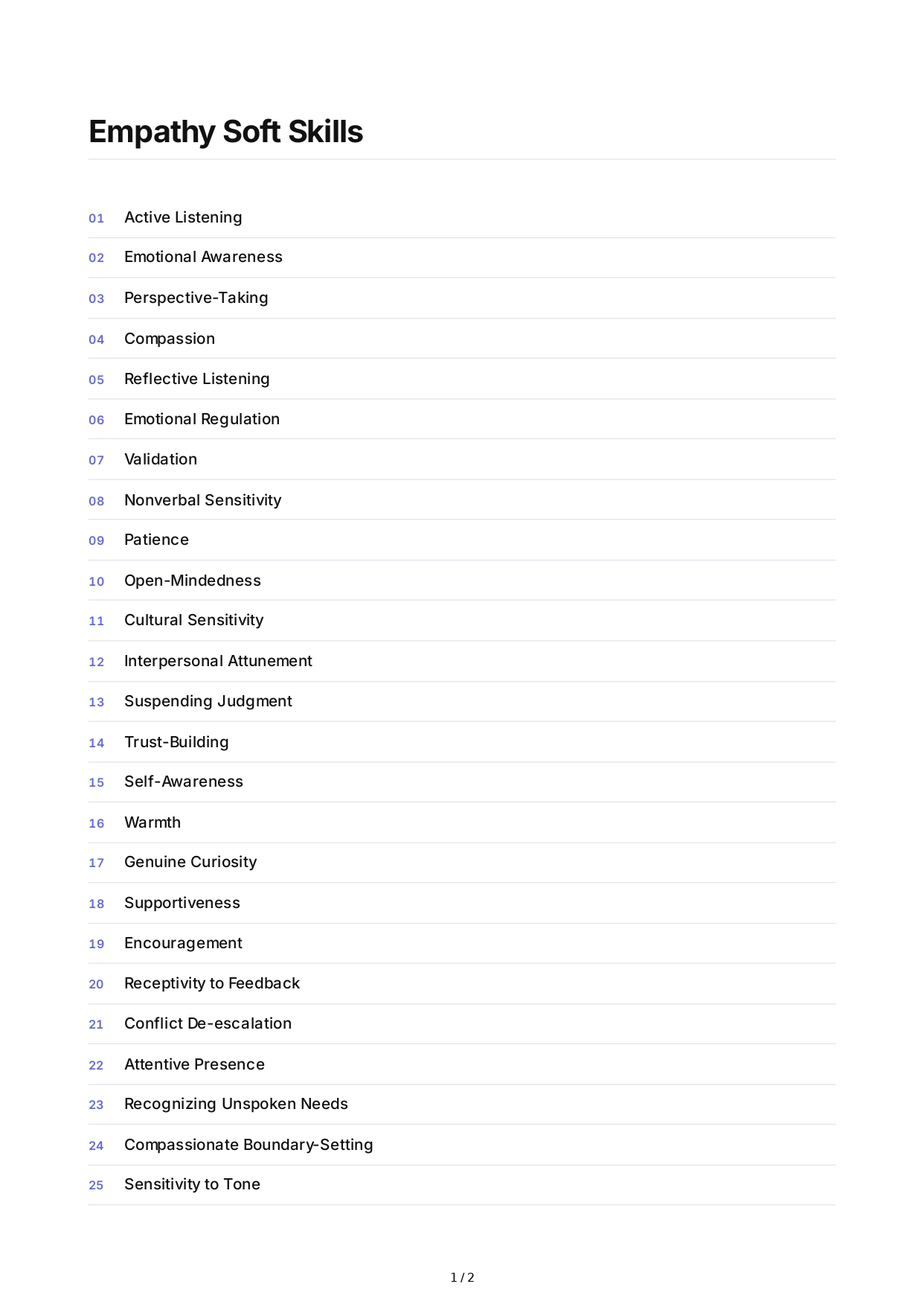
- Empathy
- Sharing information
- Supporting teammates
Problem-Solving Skills
Problem-solving involves identifying an issue, understanding its causes, considering possible solutions, and taking appropriate action.
Examples include:
- Root-cause analysis
- Critical thinking
- Decision-making
- Logical reasoning
- Resourcefulness
- Creative thinking
Adaptability
Adaptability is the ability to respond effectively when circumstances, priorities, technologies, processes, or responsibilities change.
Examples include:
- Flexibility
- Resilience
- Openness to learning
- Growth mindset
- Handling change
- Learning new processes
Leadership Skills
Leadership is not limited to people who manage teams. It can also involve taking responsibility, supporting colleagues, making decisions, and helping a project move forward.
Examples include:
- Delegation
- Motivation
- Accountability
- Decision-making
- Coaching
- Strategic thinking
- Conflict management
Emotional Intelligence
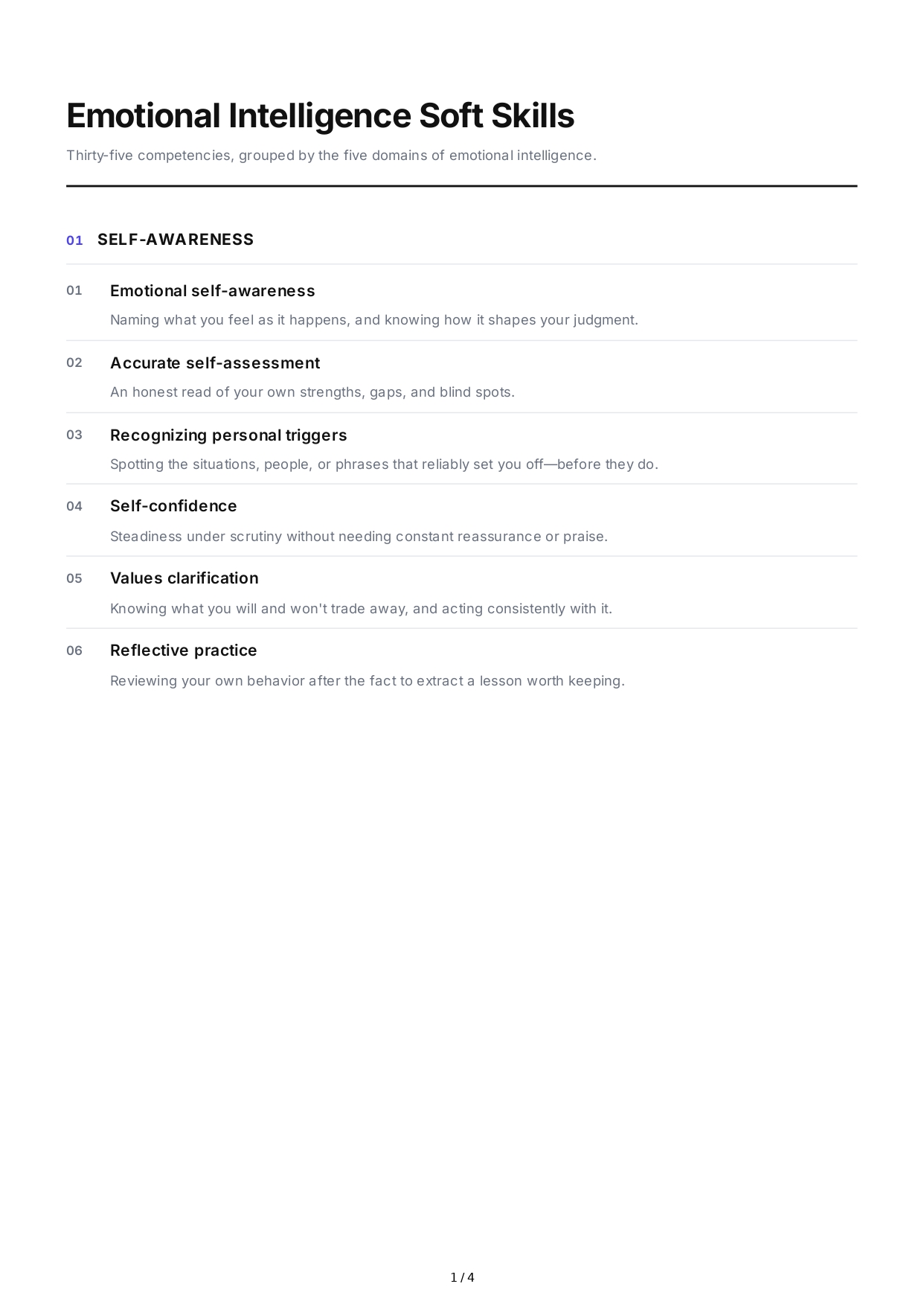
Emotional intelligence involves recognizing and managing your own emotions while understanding the emotions and perspectives of others.
Examples include:
- Empathy
- Self-awareness
- Self-regulation
- Social awareness
- Relationship management
Time Management
Time management involves organizing priorities and allocating time effectively.
Examples include:
- Planning
- Prioritization
- Scheduling
- Time blocking
- Meeting deadlines
- Delegation
Creativity
Creativity involves developing new ideas, exploring alternatives, and approaching challenges from different perspectives.
Examples include:
- Brainstorming
- Innovation
- Experimentation
- Curiosity
- Idea generation
Conflict Resolution
Conflict resolution involves addressing disagreements constructively and working toward a practical solution.
Examples include:
- Mediation
- Active listening
- Negotiation
- Empathy
- Compromise
- Clear communication
Work Ethic and Dependability
These skills reflect how consistently and responsibly a person approaches their work.
Examples include:
- Reliability
- Accountability
- Integrity
- Discipline
- Professionalism
- Consistency
Organization and Prioritization
Organizational skills help people manage information, responsibilities, deadlines, and competing priorities.
Examples include:
- Task management
- Planning
- Prioritization
- Attention to detail
- Record keeping
- Workflow organization
How Do I Generate Soft Skills Using Proven Examples from Top Companies?
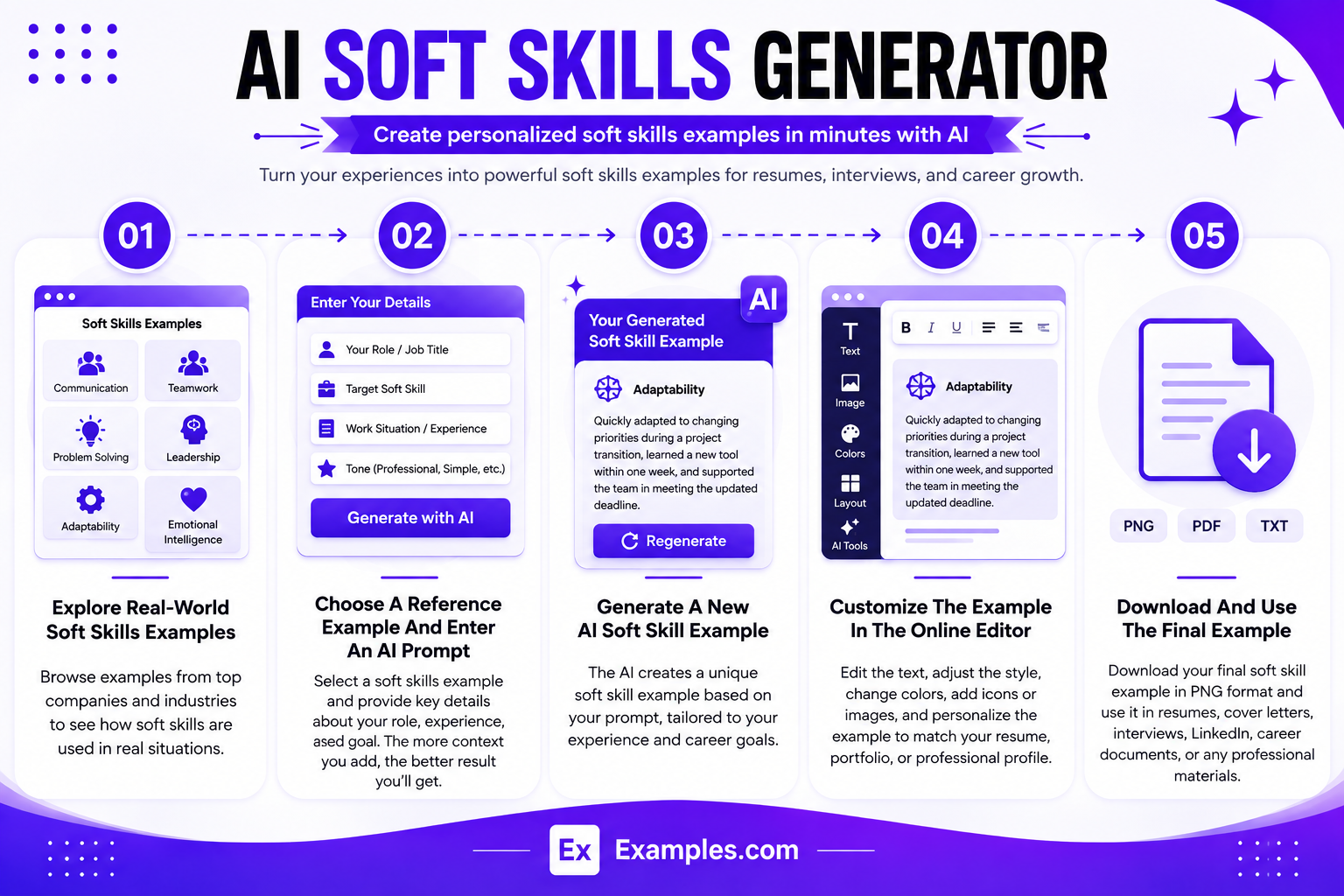
Creating personalized soft skills examples with AI helps users turn workplace abilities into clear, practical examples using reference content, prompts, and online editing tools.
Explore Real-World Soft Skills Examples
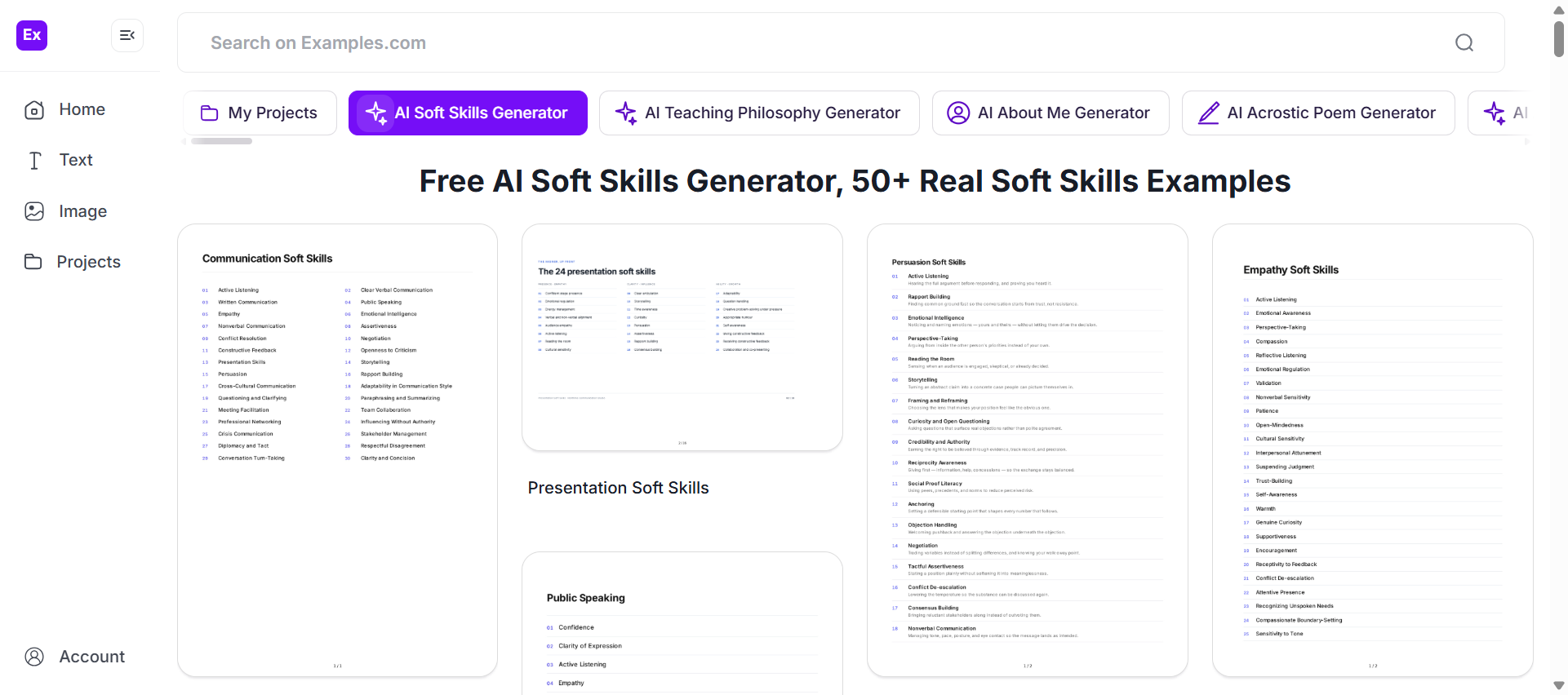
Browse real-world soft skills examples to explore communication, teamwork, leadership, adaptability, problem-solving, emotional intelligence, time management, creativity, and other workplace abilities. These examples can help you identify the skills that match your career goals, role, or professional situation.
Choose A Reference Skill And Enter An AI Prompt
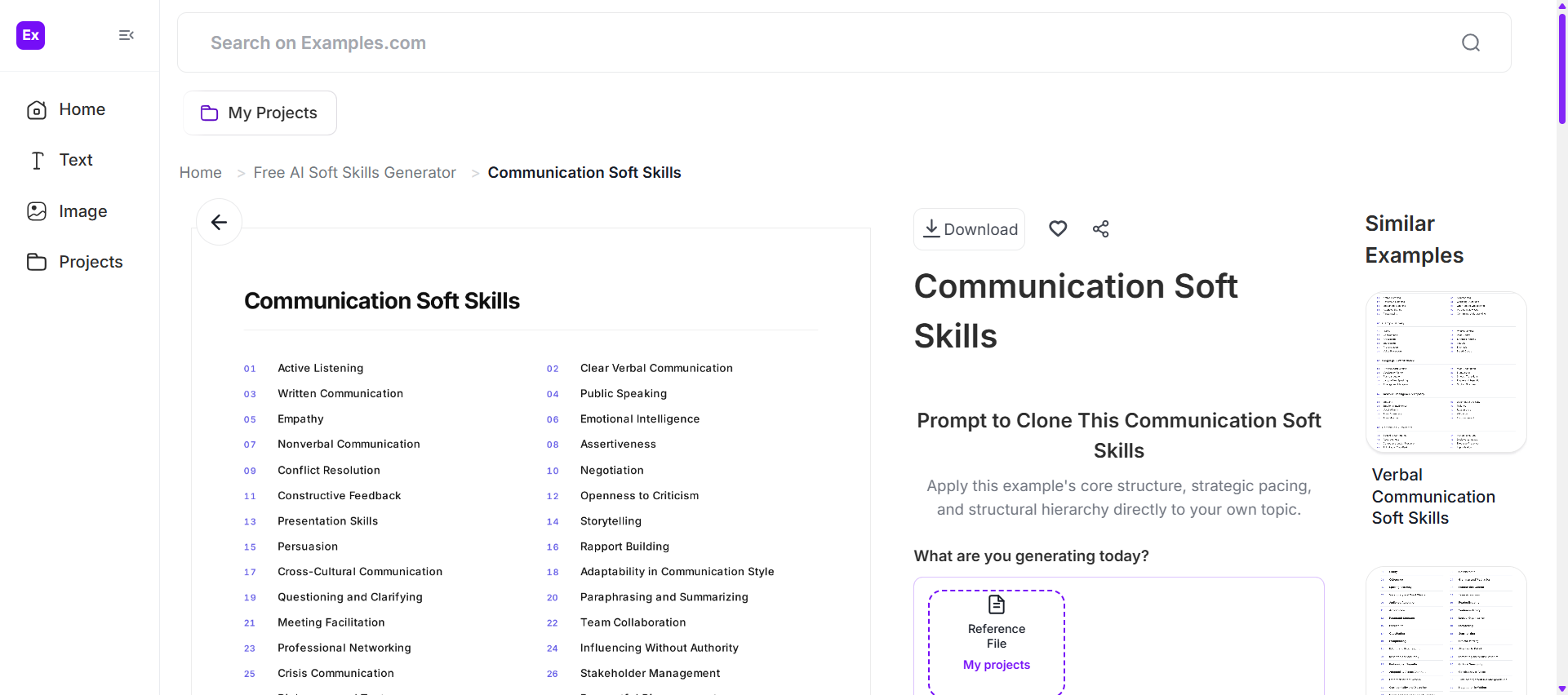
Select a soft skills example that matches the ability you want to describe. Then enter an AI prompt with details such as your role, workplace situation, responsibilities, target skill, career goals, experience level, and preferred writing style.
Generate A New AI Soft Skill Example
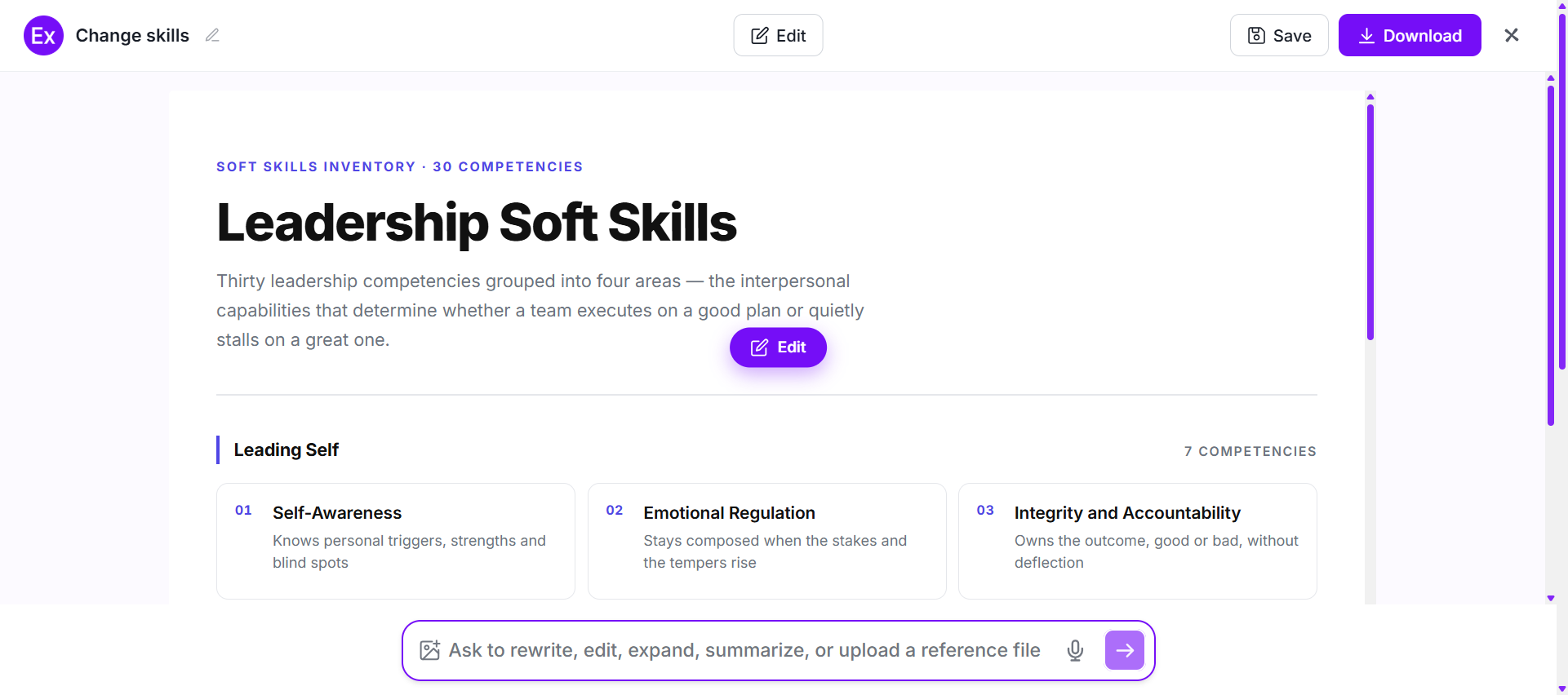
The AI generates a new soft skills example based on your prompt and selected reference. The result can be tailored to your professional background and show how a specific soft skill can be demonstrated in a realistic workplace situation.
Customize The Soft Skill In The Online Editor
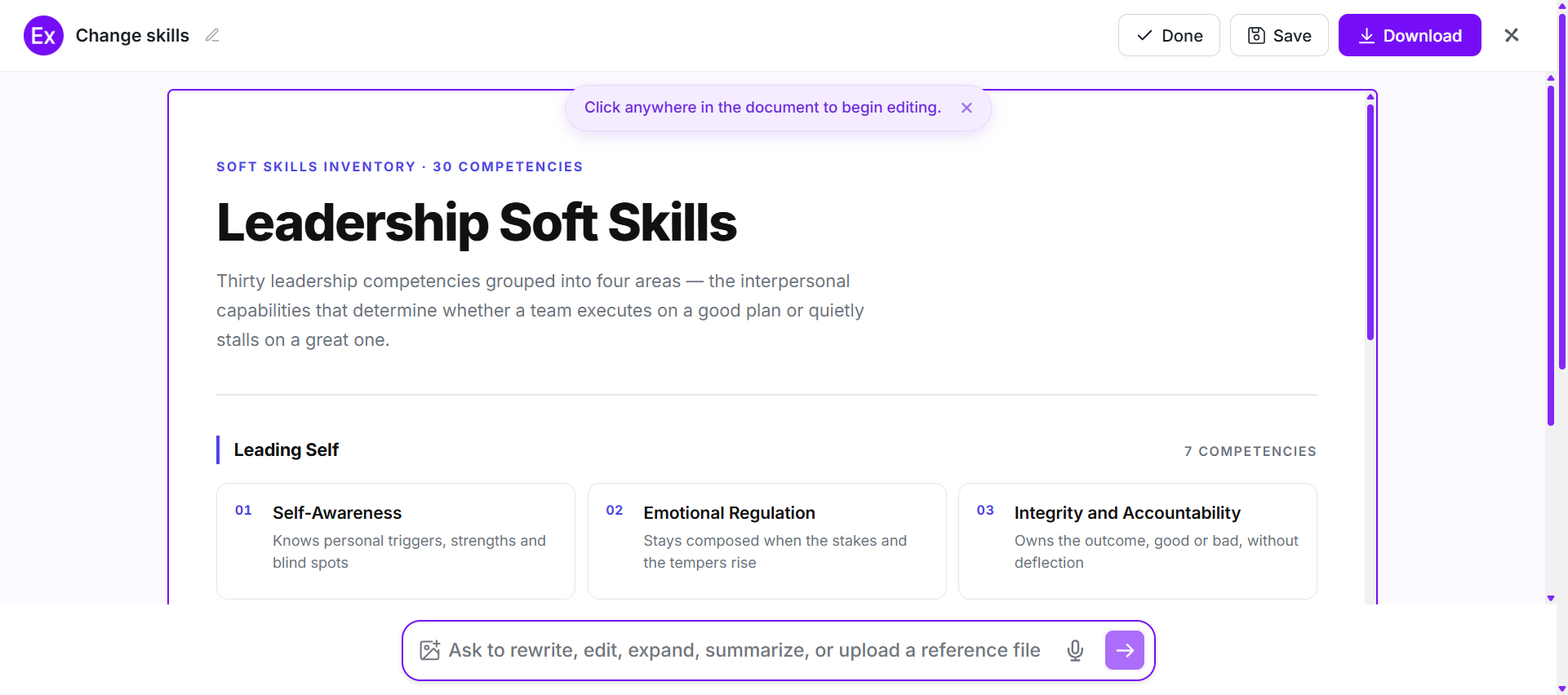
Open the generated soft skill example in the online editor to personalize the content. Adjust the wording, examples, formatting, layout, colors, graphics, and other elements to match your resume, portfolio, presentation, training material, or professional profile.
Download And Use The Final Soft Skill Example
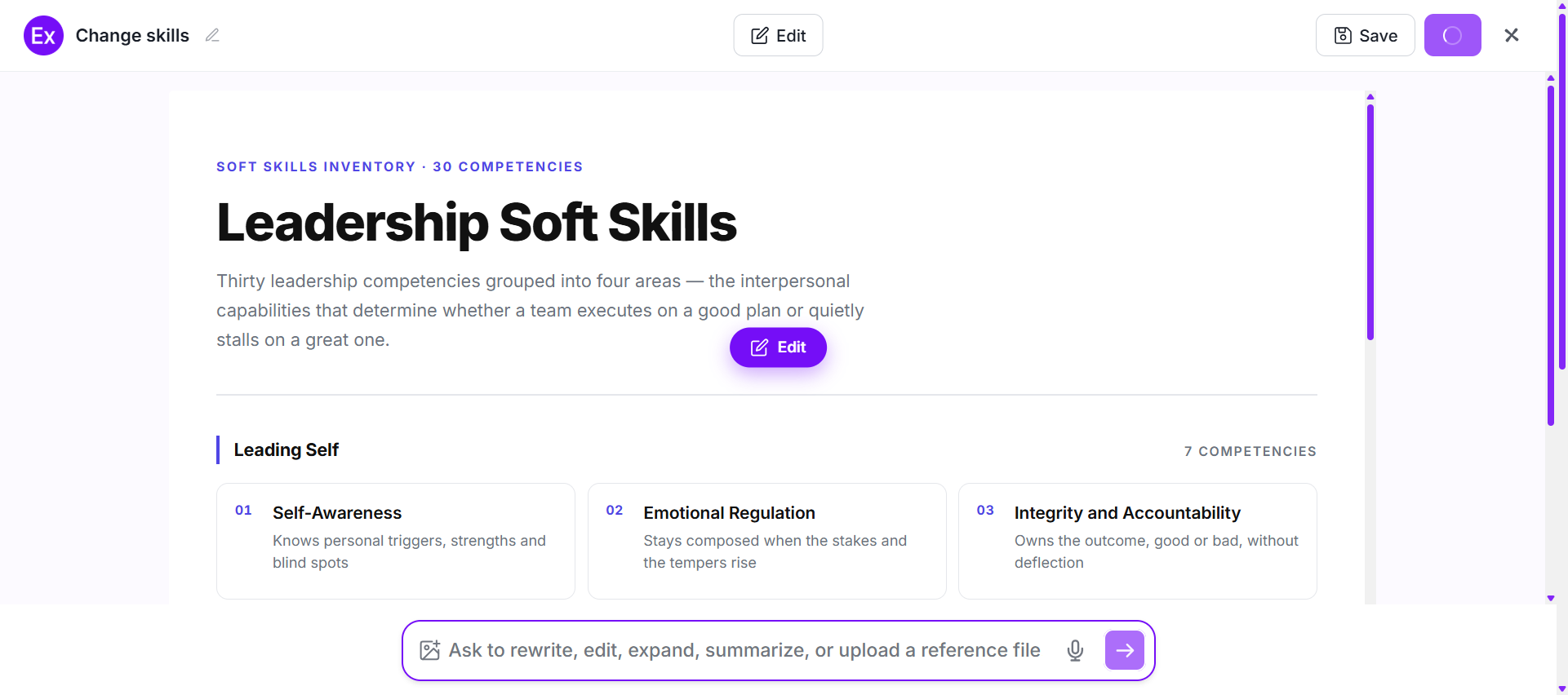
Once the content is finalized, download the finished soft skills example in PNG format and use it in resumes, presentations, career documents, training materials, portfolios, professional profiles, or other workplace resources.
Soft Skills Examples for the Workplace
The best way to understand soft skills is to see how they appear in real workplace situations.
Communication
- Explained a complex project update in simple language for a non-technical audience.
- Wrote concise project updates that kept team members informed.
- Presented project findings to stakeholders and answered follow-up questions.
- Adapted communication style for customers, colleagues, and senior managers.
Teamwork
- Coordinated responsibilities among team members to complete a shared project.
- Supported a colleague during a high-priority assignment.
- Shared useful resources with teammates to improve workflow.
- Encouraged different team members to contribute their ideas.
Problem-Solving
- Identified the cause of a recurring workflow issue and proposed a practical solution.
- Compared several options before selecting an approach for a project challenge.
- Investigated customer complaints to identify patterns and possible causes.
- Developed an alternative process when the original approach was not producing the expected result.
Adaptability
- Learned a new workplace system after a process change.
- Adjusted project priorities when deadlines changed.
- Took on a new responsibility during a period of increased workload.
- Modified a communication approach after receiving feedback.
Leadership
- Coordinated a team task and ensured responsibilities were clearly assigned.
- Helped a new colleague understand an unfamiliar workflow.
- Took responsibility for resolving an issue affecting project progress.
- Motivated team members to remain focused on a shared deadline.
Emotional Intelligence
- Recognized when a colleague needed additional clarification and adjusted the conversation accordingly.
- Responded calmly to difficult feedback.
- Considered different perspectives before making a team decision.
- Used empathy when handling a customer concern.
How to Showcase Soft Skills on a Resume
Simply writing “good communication skills” or “team player” may not fully demonstrate how you use the skill. A stronger approach is to connect the skill to an action or outcome.
Weak:
Good communication skills.
Stronger:
Communicated weekly project updates to cross-functional team members, helping keep tasks aligned with changing deadlines.
Weak:
Team player.
Stronger:
Collaborated with designers and developers to coordinate content requirements and complete project deliverables.
Use Evidence Instead of Empty Claims
When possible, show:
- What you did
- How you did it
- Who you worked with
- What problem you addressed
- What changed as a result
Soft skills can also be demonstrated during interviews through behavioral questions and examples of how you handled real situations. Employers may use interviews, work samples, group exercises, situational tests, and other methods to assess these abilities.
How to Improve Your Soft Skills
Soft skills can be strengthened through deliberate practice, feedback, training, and workplace experience.
Try these approaches:
- Ask colleagues or managers for specific feedback.
- Practice active listening during meetings.
- Volunteer for collaborative projects.
- Take communication or leadership workshops.
- Keep a record of challenging situations and how you handled them.
- Practice explaining complex ideas in simple language.
- Learn to prioritize tasks instead of treating everything as equally urgent.
- Reflect on feedback before responding defensively.
- Observe professionals who communicate and collaborate effectively.
- Set one skill-development objective at a time.
Soft Skills Examples for Students and Freshers
Students and entry-level professionals can demonstrate soft skills through academic projects, internships, volunteering, clubs, presentations, and group assignments.
Examples include:
- Communication: Presented a group project to classmates and answered questions.
- Teamwork: Divided responsibilities among team members to complete an assignment.
- Leadership: Coordinated a student project and managed task deadlines.
- Problem-solving: Found an alternative approach when a project encountered a technical or scheduling issue.
- Time management: Balanced coursework, assignments, and extracurricular activities.
- Adaptability: Learned a new tool or process to complete an academic project.
- Creativity: Developed an original concept for a presentation or project.
Frequently Asked Questions
What are the most common soft skills?
Common soft skills include communication, teamwork, adaptability, problem-solving, leadership, emotional intelligence, creativity, time management, organization, active listening, and conflict resolution.
What is a good example of a soft skill?
Communication is a common example. A practical demonstration would be explaining complex information clearly to different audiences, listening to feedback, and adjusting the message when necessary.
Why are soft skills important for jobs?
Soft skills influence how people communicate, collaborate, solve problems, respond to change, and build professional relationships. They are transferable across many roles and industries.
What soft skills should I put on my resume?
Choose soft skills that are relevant to the specific job and that you can support with real examples. Common options include communication, teamwork, problem-solving, adaptability, leadership, organization, and time management.
Are soft skills the same as interpersonal skills?
They overlap, but they are not always identical. Interpersonal skills primarily describe how you interact with other people, while soft skills can also include personal behaviors such as adaptability, organization, self-motivation, and time management.