Office of Chief Counsel
Division of Corporation Finance
December 20, 2024
Page 13
proposal sought to micromanage the company and thereby was excludable under Rule 14a-
8(i)(7).
See also
,
Amazon.com, Inc.
(avail. Apr. 1, 2024) (same). In
Phillips 66
(avail. Mar.
20, 2023), the Staff concurred that a proposal requesting a report on the undiscounted
expected value to settle the company’s asset retirement obligations (“AROs”) with
indeterminate settlement dates could be excluded because the proposal micromanaged the
company, where the company argued that the proposal prescribed a specific approach for
assessing the value of AROs with indeterminate settlement dates.
Likewise, the Staff has concurred in exclusion of proposals that seek to
micromanage a company’s decisions regarding specific aspects of their ordinary business
operations. For example, in
Tesla, Inc. (Michael R. Stephen)
(avail. Mar. 27, 2024), the
Staff concurred with the exclusion under Rule 14a-8(i)(7) of a proposal requesting the
company redesign its vehicle tires “to avoid pollution from harmful chemicals such as 6PPD-
Q,” noting that “[i]n our view, the [p]roposal seeks to micromanage the [c]ompany.” There,
the company argued that proposals “concern[ing] the design, product development or
product offerings of a company” are excludable, “even when the design, development or
product touches on a social issue.” Similarly, in
The Home Depot, Inc. (Green Century
Capital Management, Inc.)
(avail. Mar. 21, 2024), the Staff concurred with the exclusion of a
proposal on the basis of micromanagement where the company argued that the proposal
focused on decisions to sell a particular product containing particular materials, even though
the proposal, as described by the company, attempted to implicate significant social policy
issues “[b]y referring to the climate, regulatory and legal and reputational risks.” In
Deere &
Co.
(avail. Jan. 3, 2022), the Staff concurred with the exclusion under the
micromanagement prong of Rule 14a-8(i)(7) of a proposal requesting that the company’s
board publish “the written and oral content of any employee-training materials offered to any
subset of the company’s employees” where the supporting statement focused on the
company’s diversity, equity, and inclusion efforts. In its no-action request, the company
argued that the proposal “intend[ed] for shareholders to step into the shoes of management
and oversee the ‘reputational, legal and financial’ risks to the [c]ompany” and thus did not
“afford[] management sufficient flexibility or discretion to address and implement its policy
regarding the complex matter of diversity, equality, and inclusion.”
As in
Delta Air Lines
and the other precedents cited above, the Proposal would
require a report on complex issues that would require extensive information involving
granular and “intricate detail” on the Company’s oversight of customer accounts and
management of customer account information, as addressed under SLB 14L. The Proposal
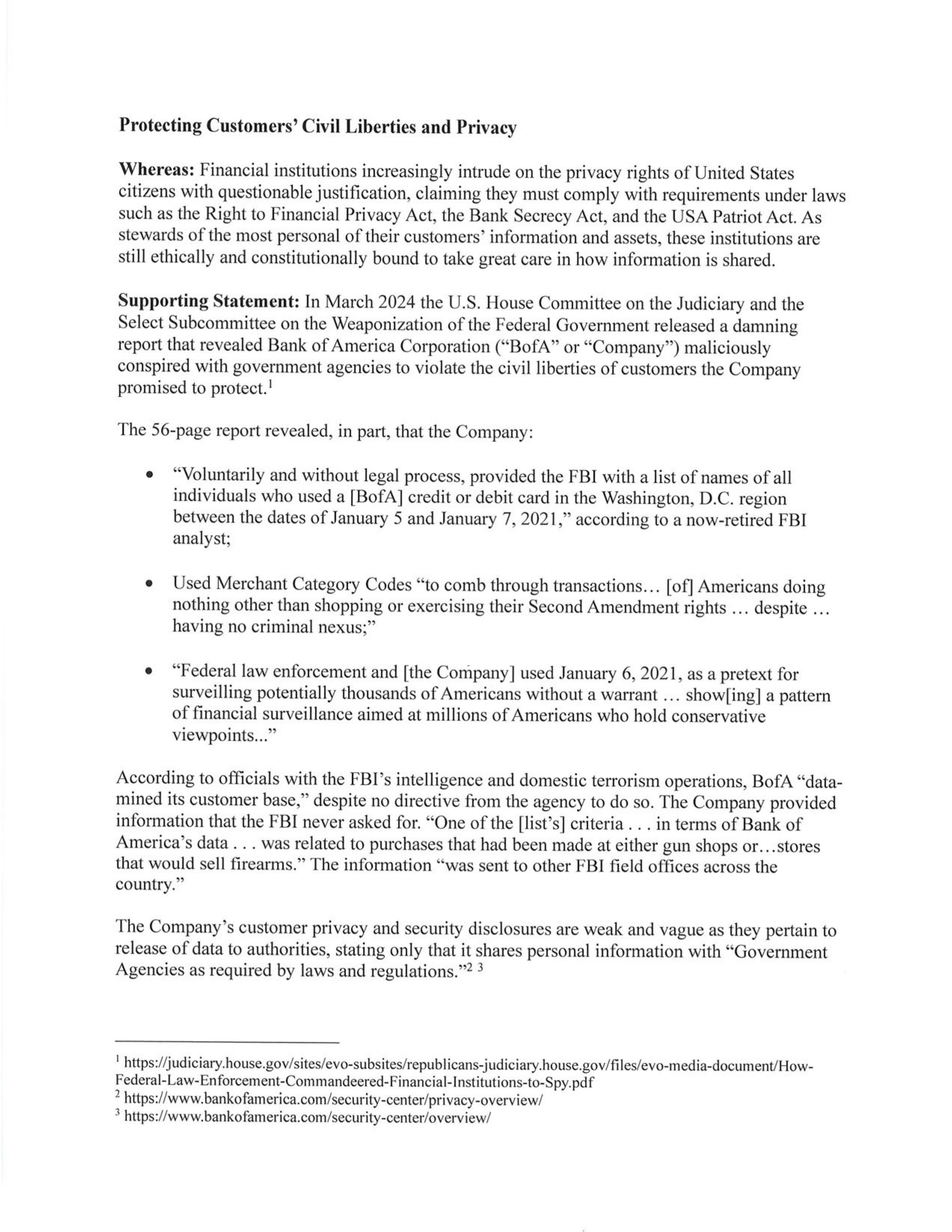
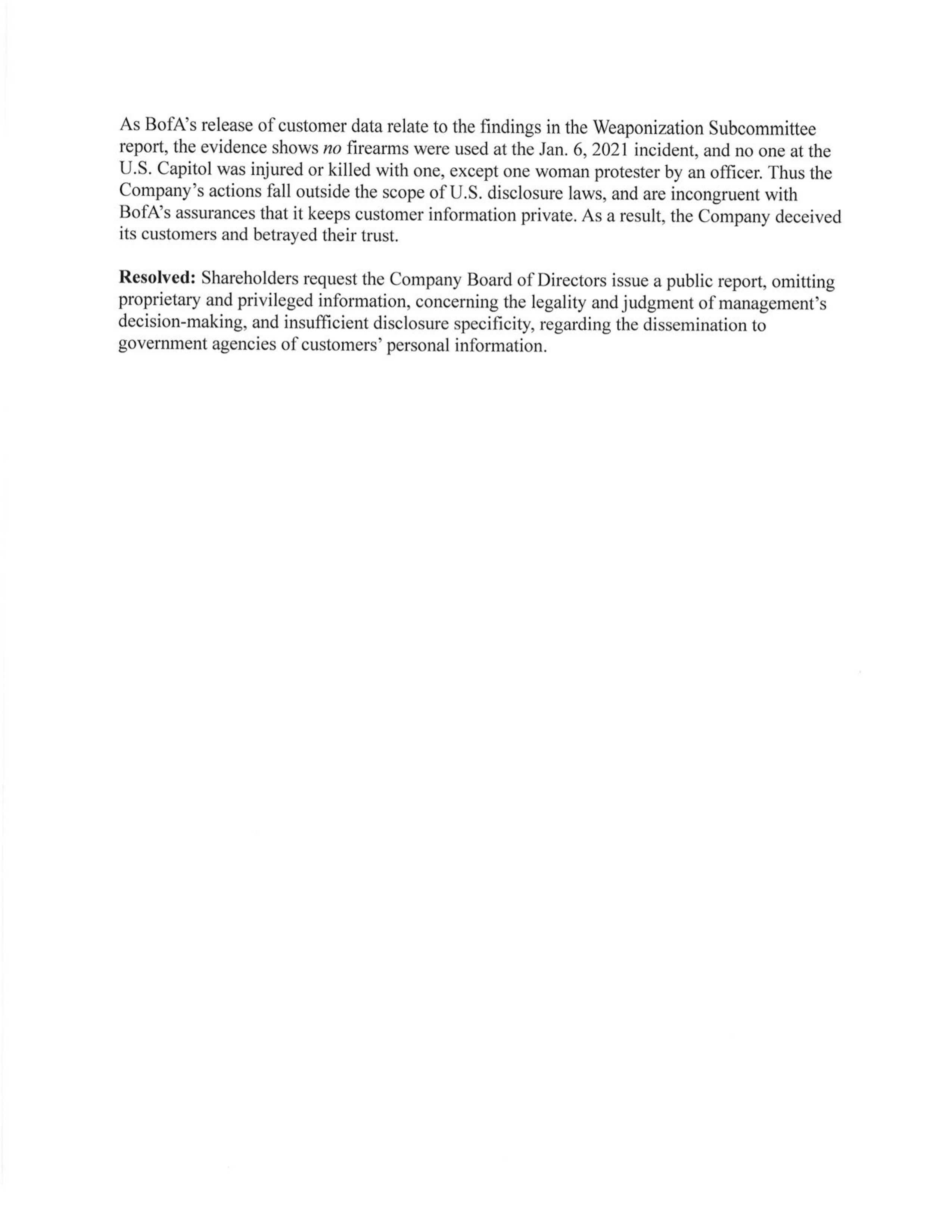
seeks disclosure “regarding dissemination to government agencies of customers’ personal
information.” If the Company were to publish the report requested by the Proposal, this
would require the Company to review
any
instance where the Company shared
any
information about
any
customer with
any
government agency, at the federal, state or local
level, which could implicate
any or all
of the Company’s approximately 70 million customer
accounts, then necessitate the Company’s Board of Directors undertake granular diligence
and analysis of management’s decision-making in each instance.