3
ensure that all of [the] company’s outstanding stock has an equal one-vote per share in each voting
situation”, where any amendment of the articles of incorporation that would limit the rights of the
holders of class B common stock or otherwise make any change in the rights of the class B common
stock adverse to such class required the affirmative vote of class B common stock, voting
separately as a class, and the beneficial owner with the power to control the vote of the class B
common stock informed the company that he would vote against any such proposed amendment
to the certificate of incorporation). As further detailed below, the Proposal is—and the relevant
circumstances are—essentially indistinguishable from the proposals and the circumstances
considered by the Staff in Comcast 2024, AMC 2019 and Comcast 2018.
The Proposal requests that the “Board of Directors take all necessary steps to adopt
and implement a sunset provision for the Nike’s dual-class share structure” pursuant to which all
outstanding shares of the Company’s Class A Common Stock, no par value (the “
Class A Common
Stock
”), will convert into Class B Common Stock, no par value (the “
Class B Common Stock
”
and, together with the Class A Common Stock, the “
Common Stock
”), within seven years. As in
the Comcast 2024, AMC 2019 and Comcast 2018 letters, neither the Company nor its Board of
Directors (the “
Board
”) has the power or authority to implement the Proposal without the consent
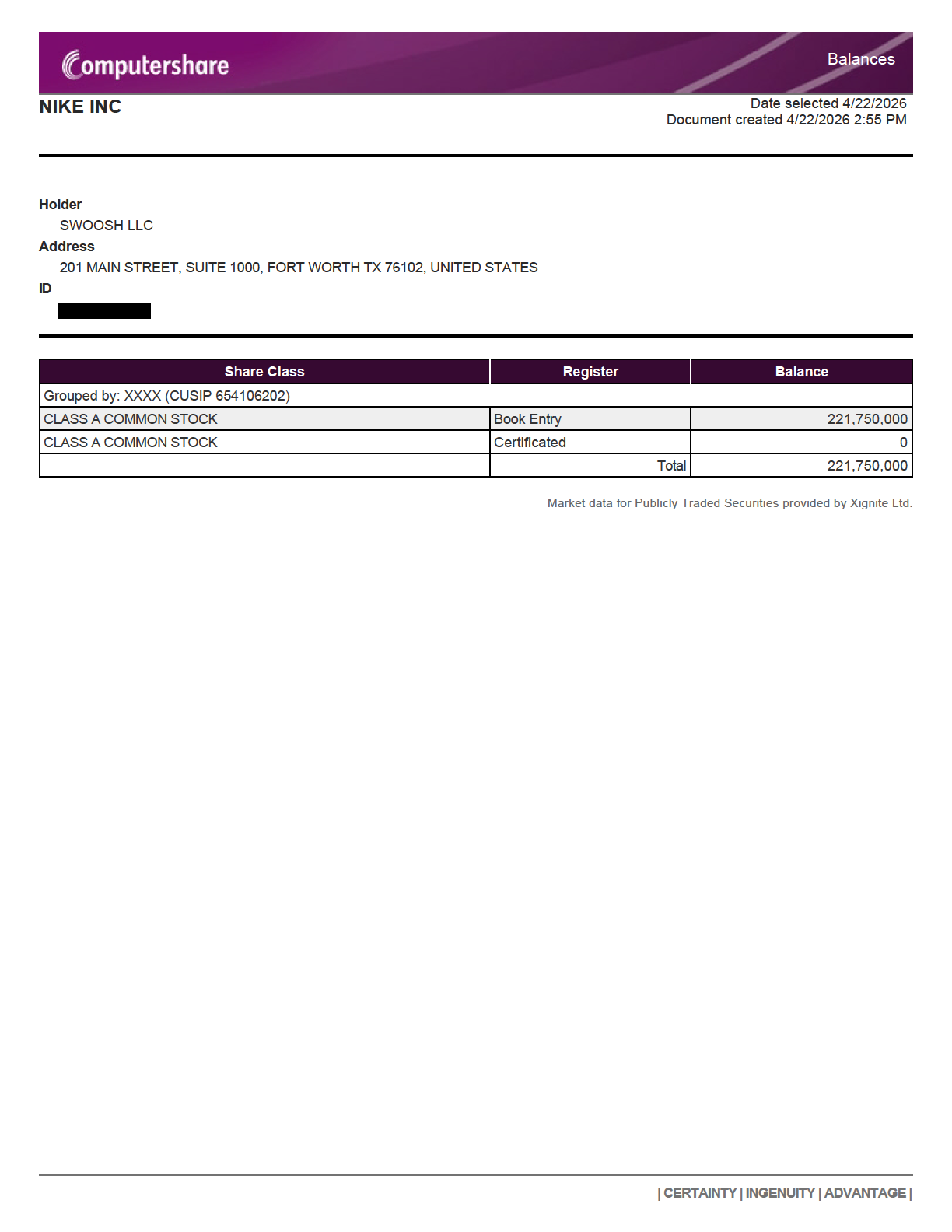
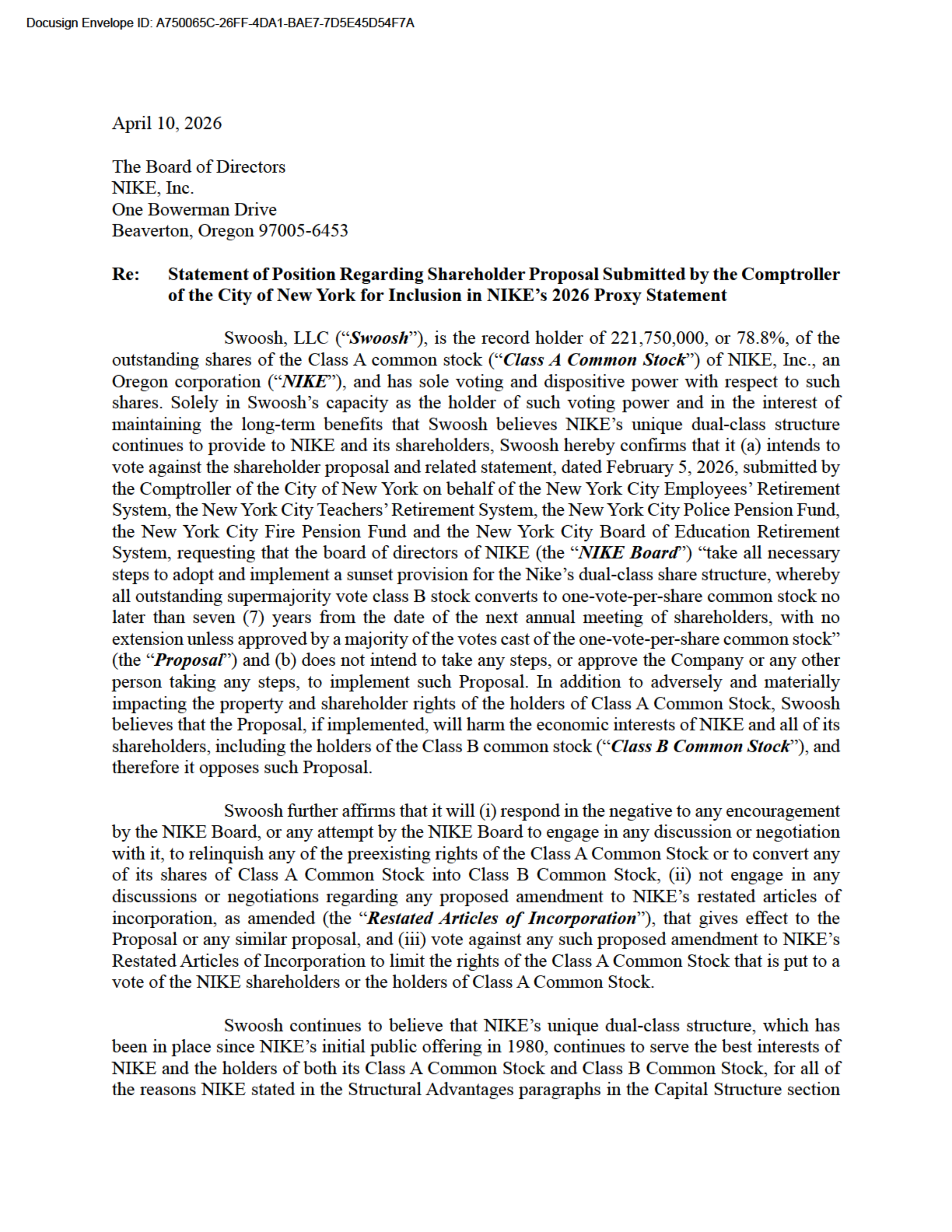
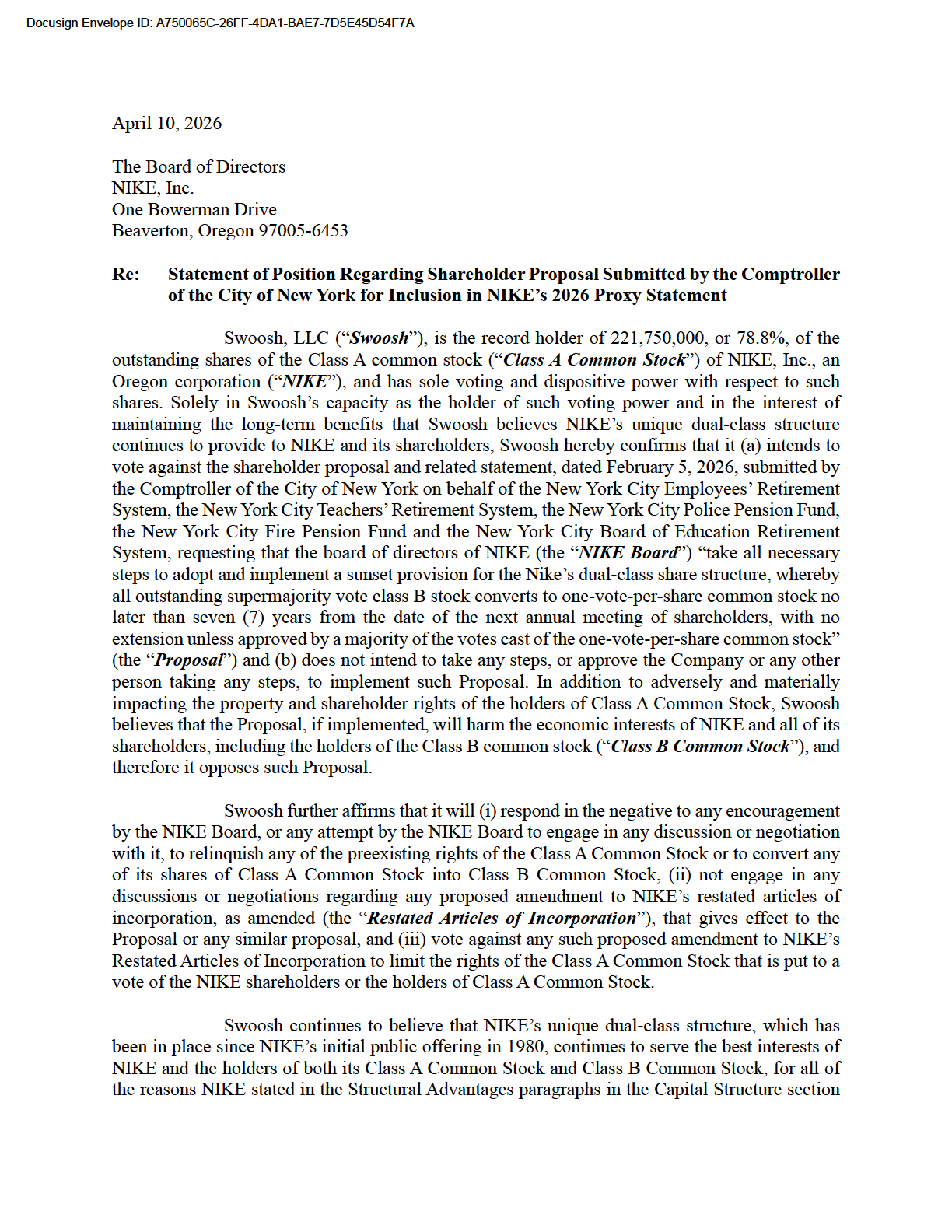
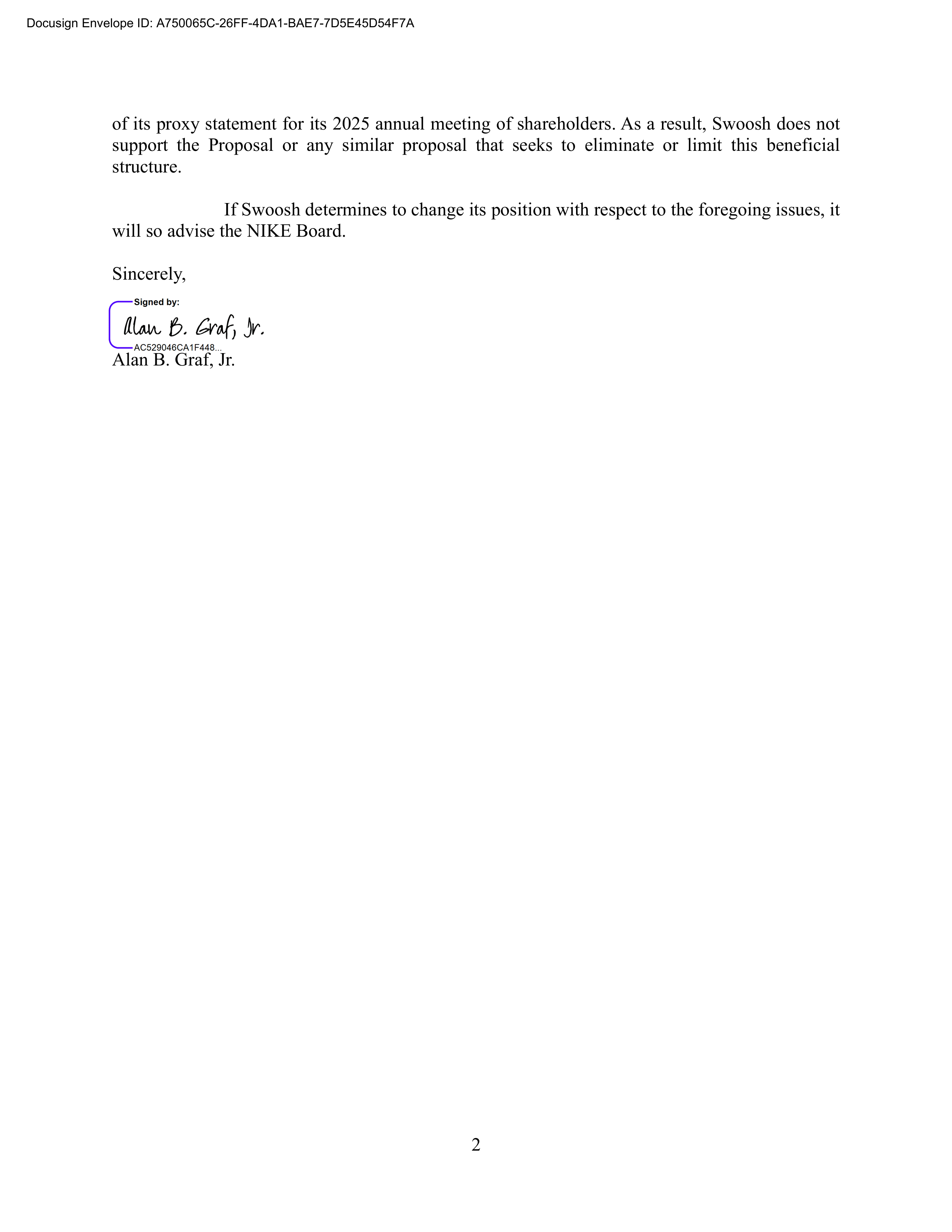
of the beneficial owners of a majority of the Company’s Class A Common Stock, which those
beneficial owners have expressly stated they will not provide.
By way of background, the Company has two classes of common stock: Class A
Common Stock and Class B Common Stock. As of March 25, 2026, Class A Common Stock
represented 19.0% of the Company’s total outstanding Common Stock, and Class B Common
Stock represented 81.0%.
2
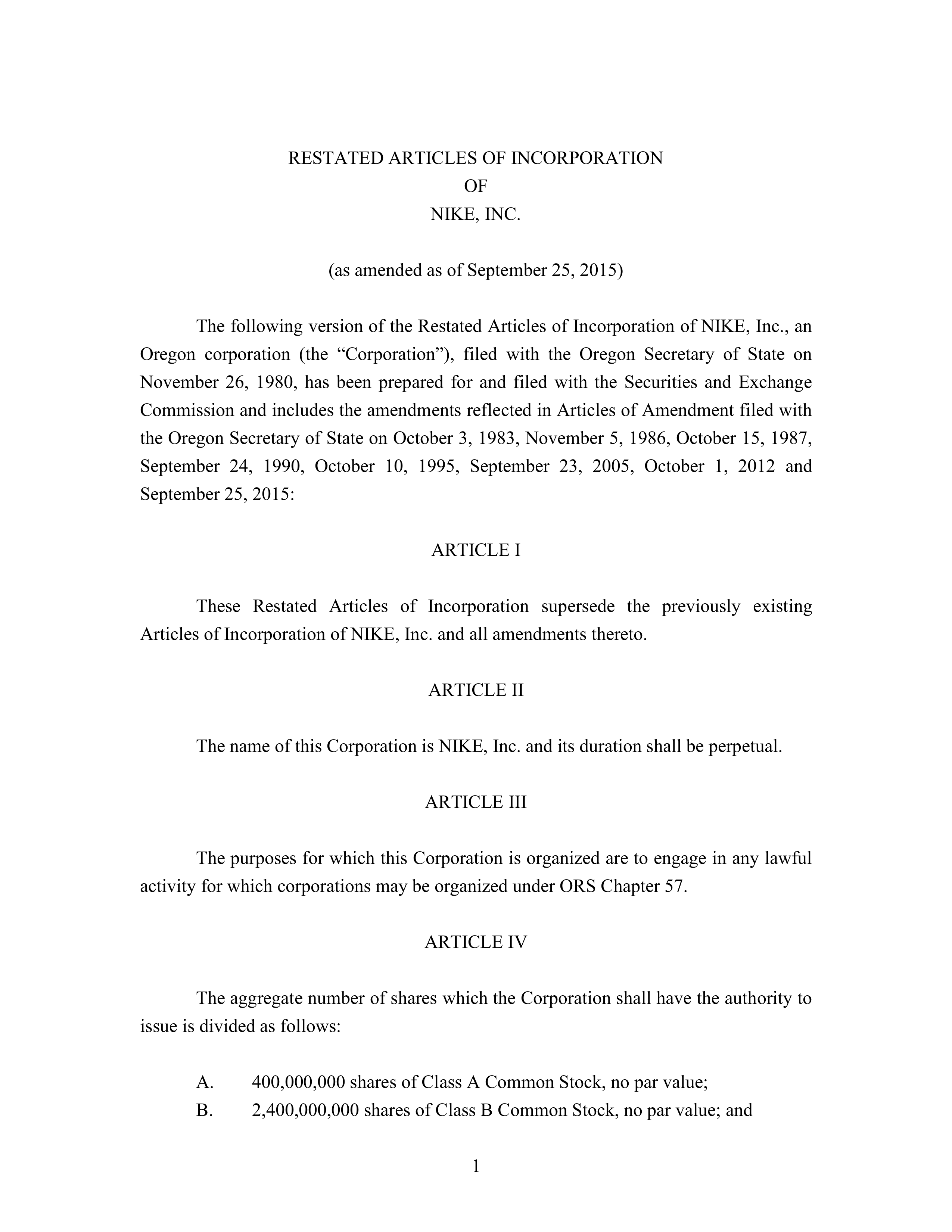
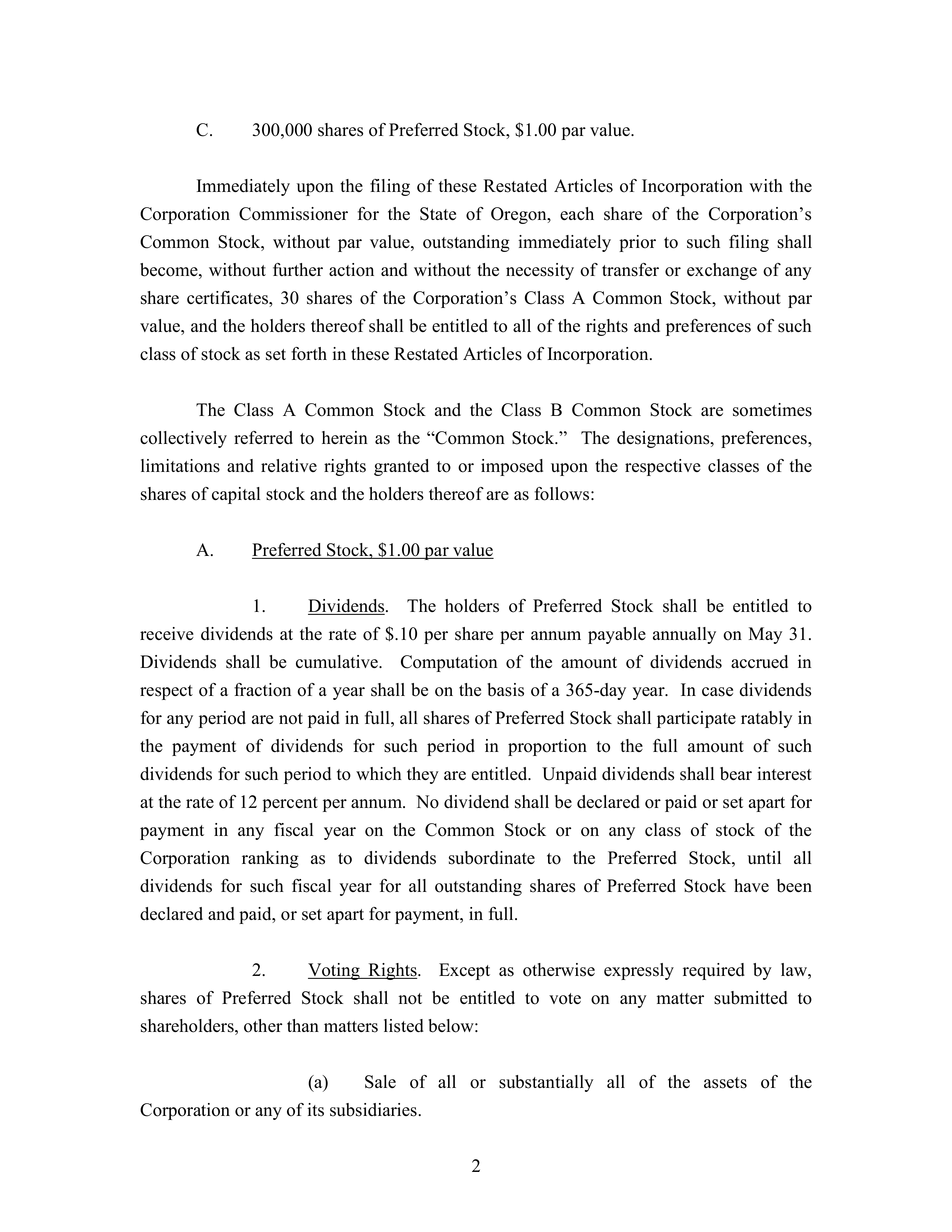
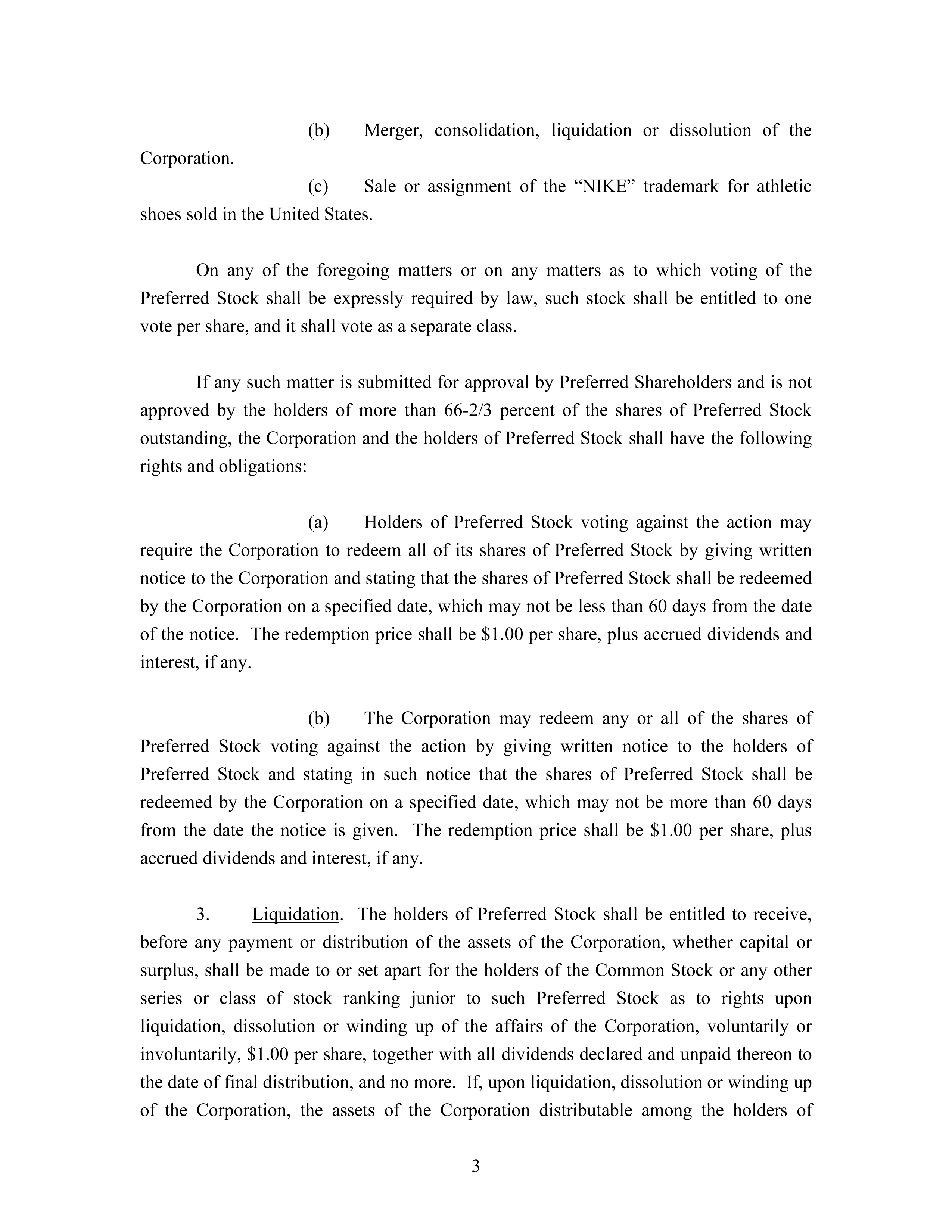
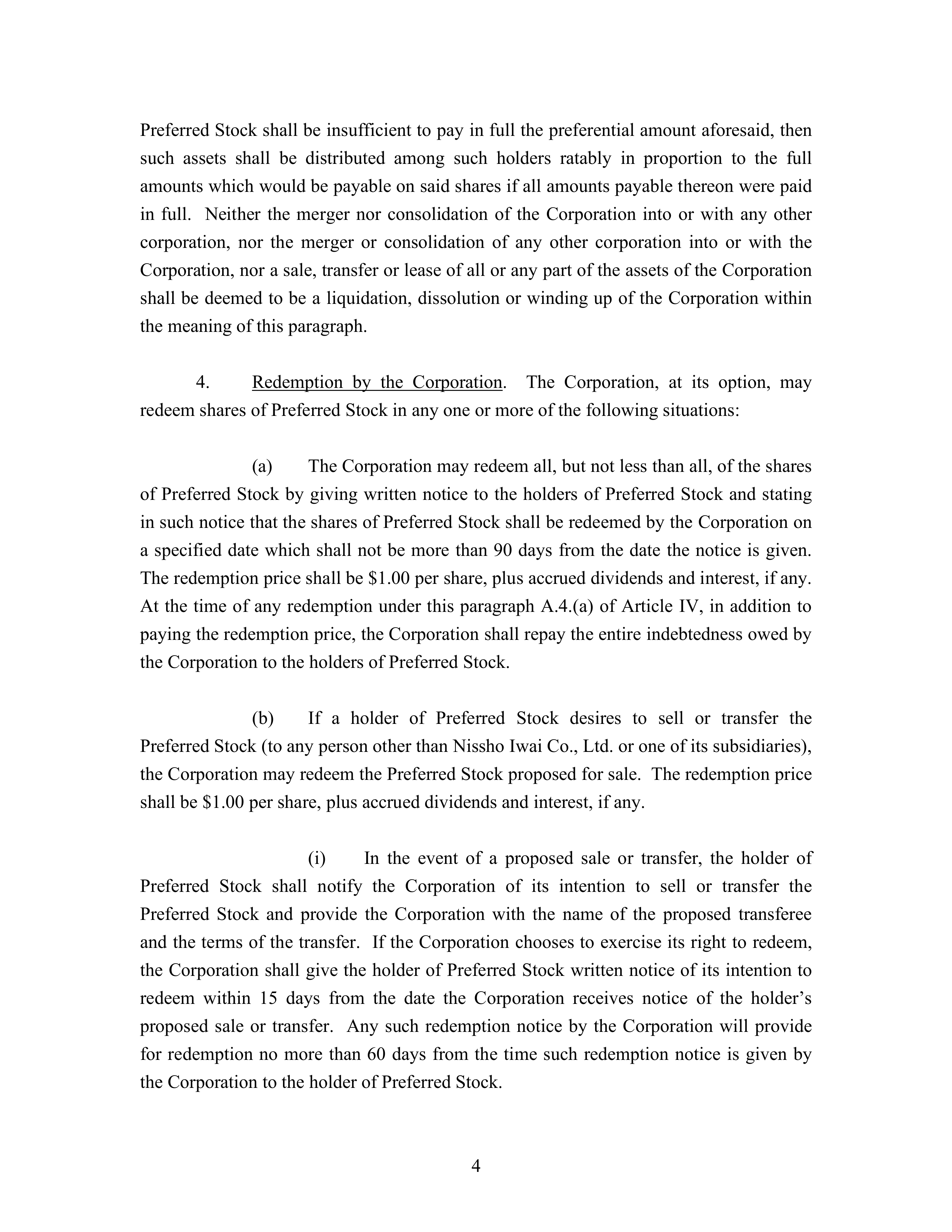
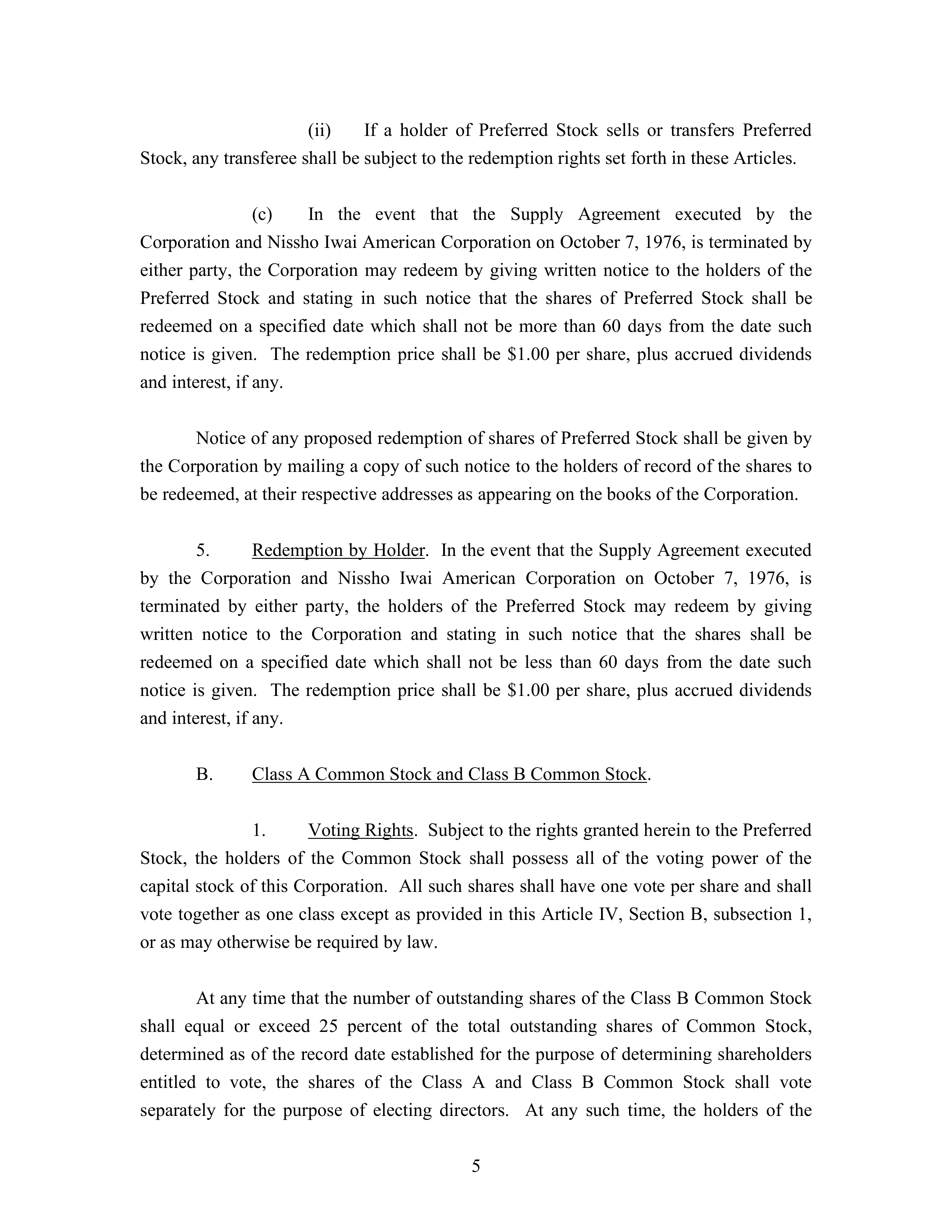
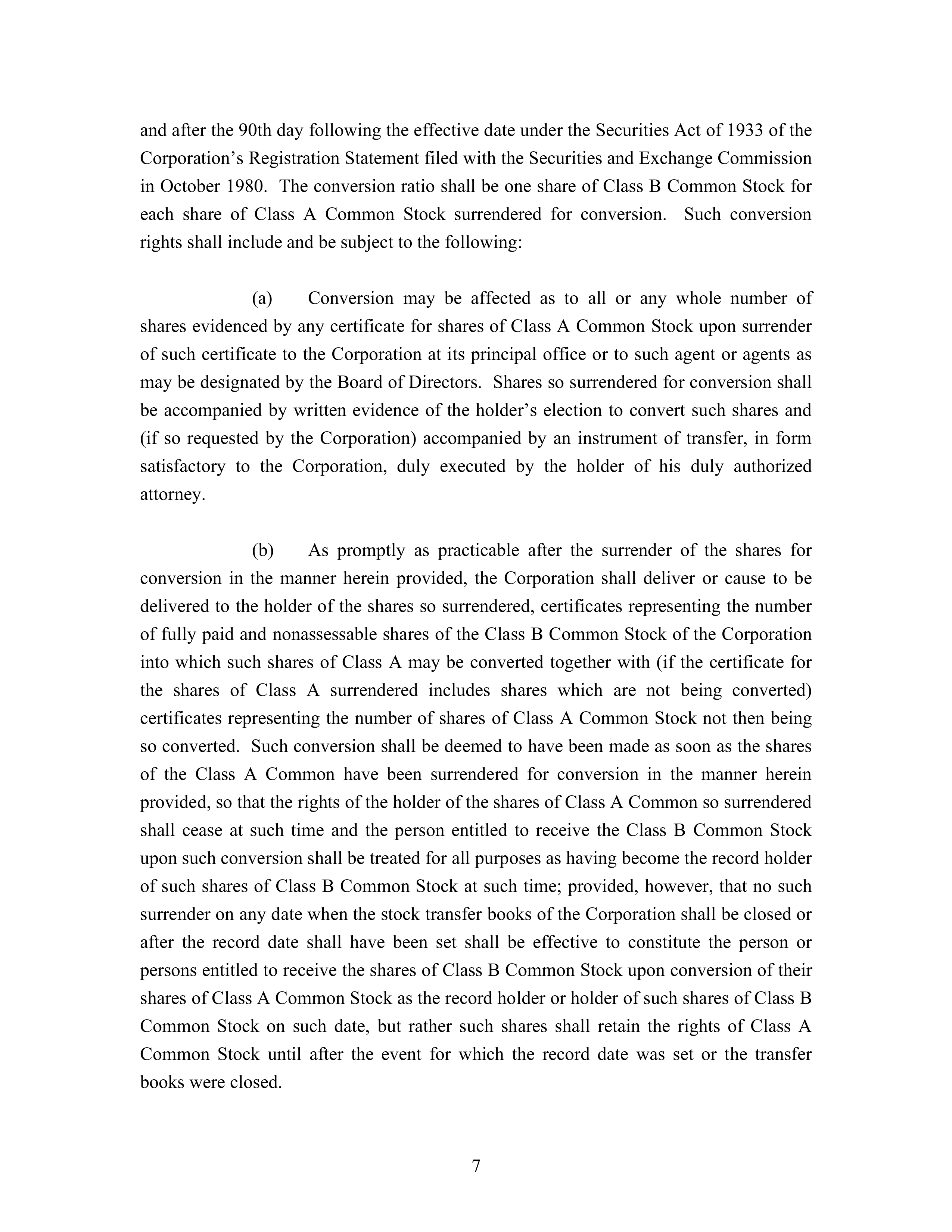
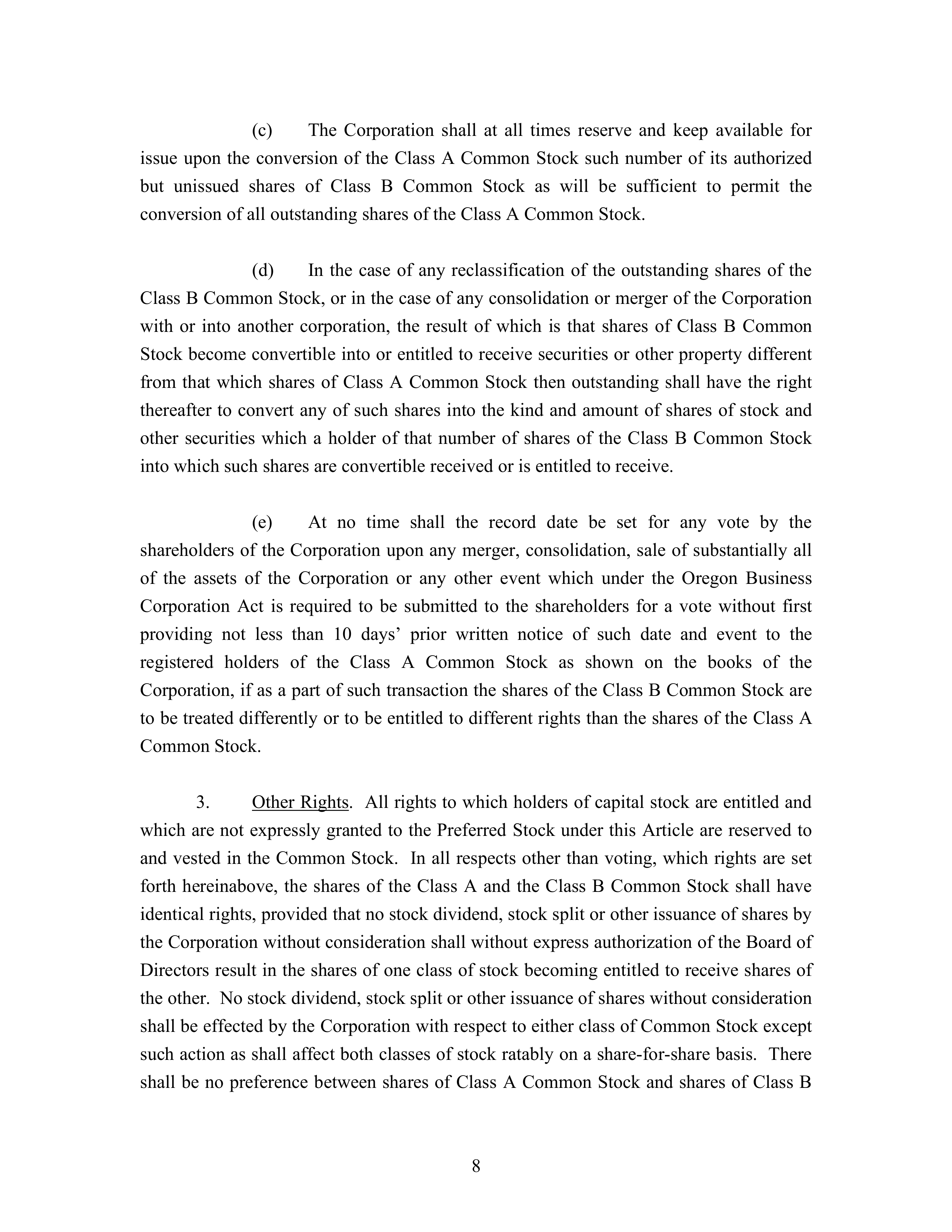
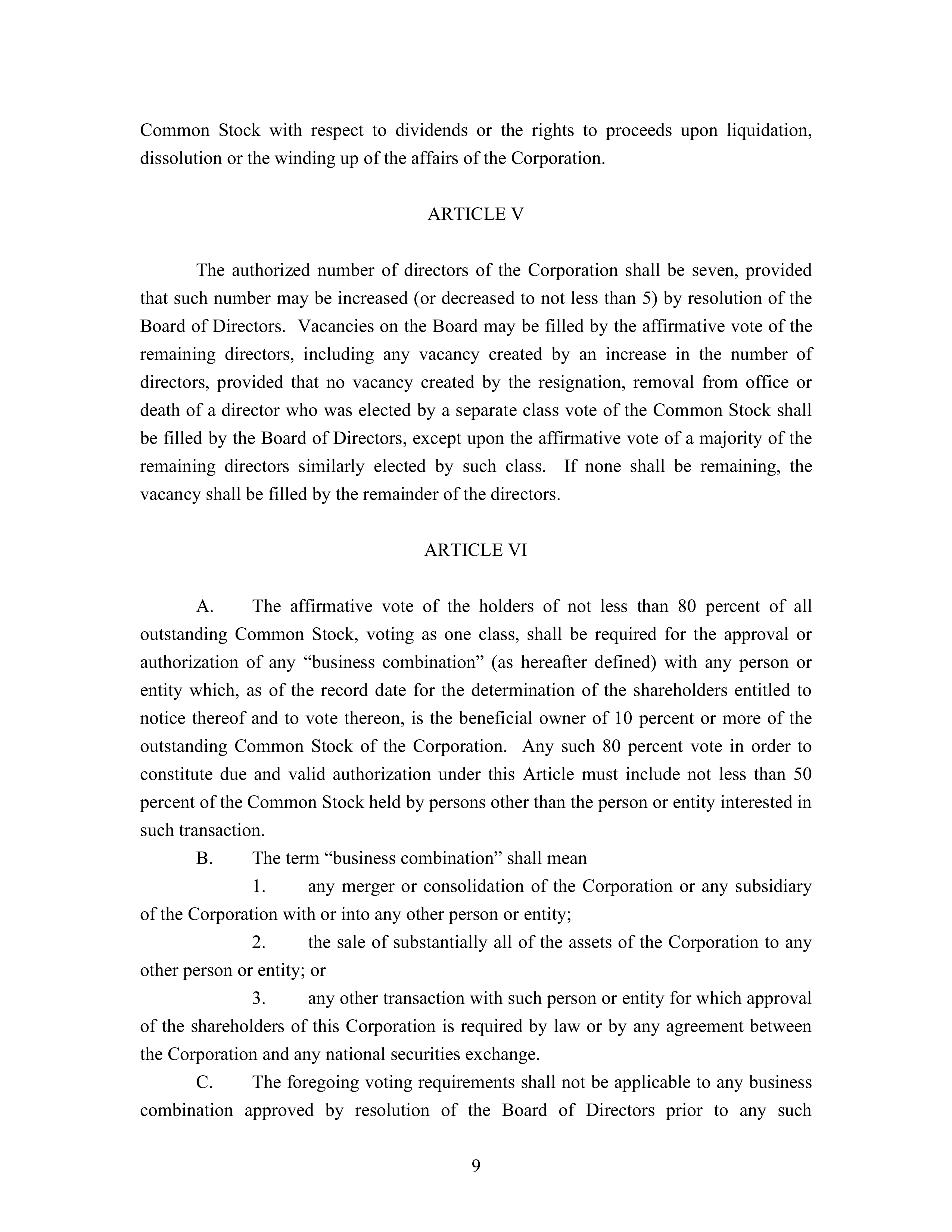
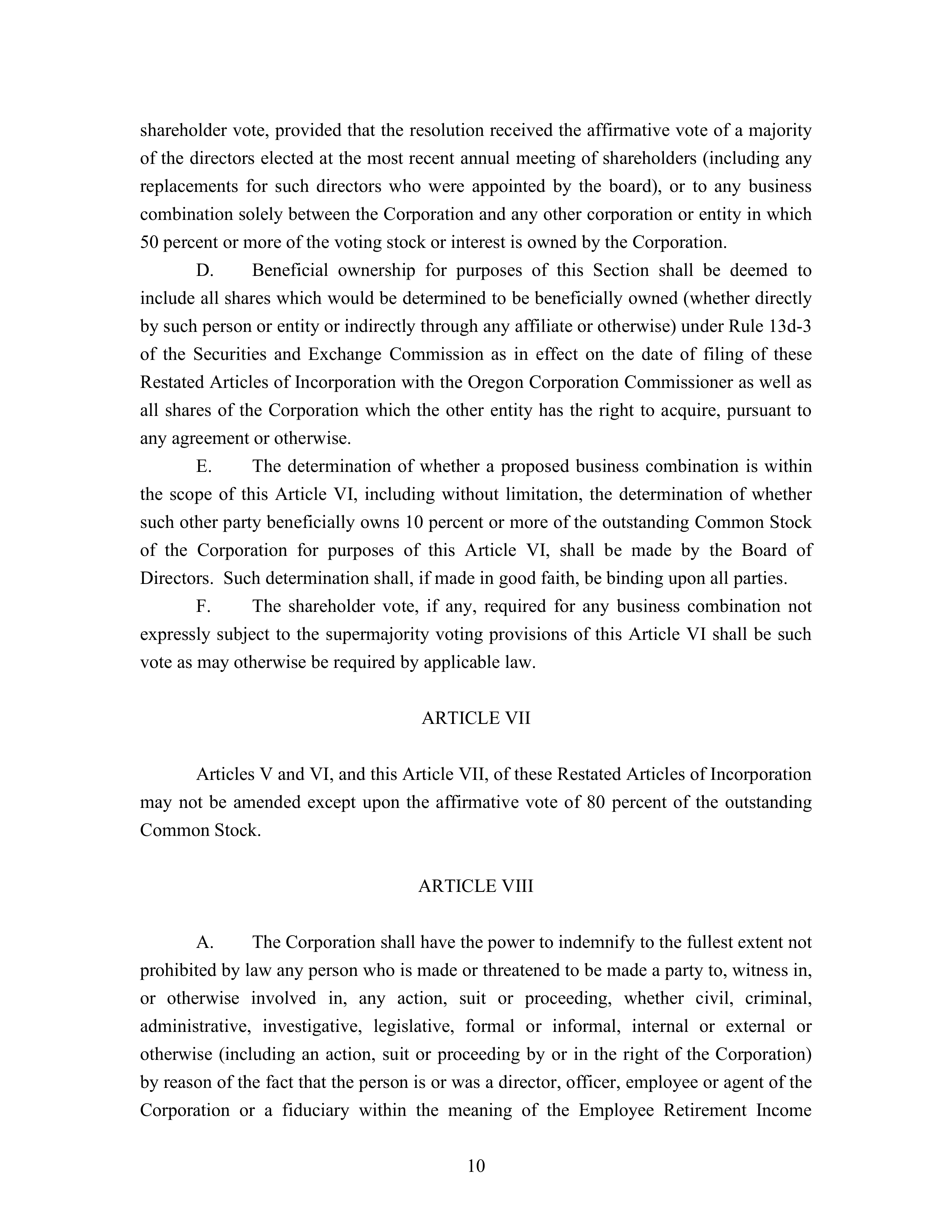
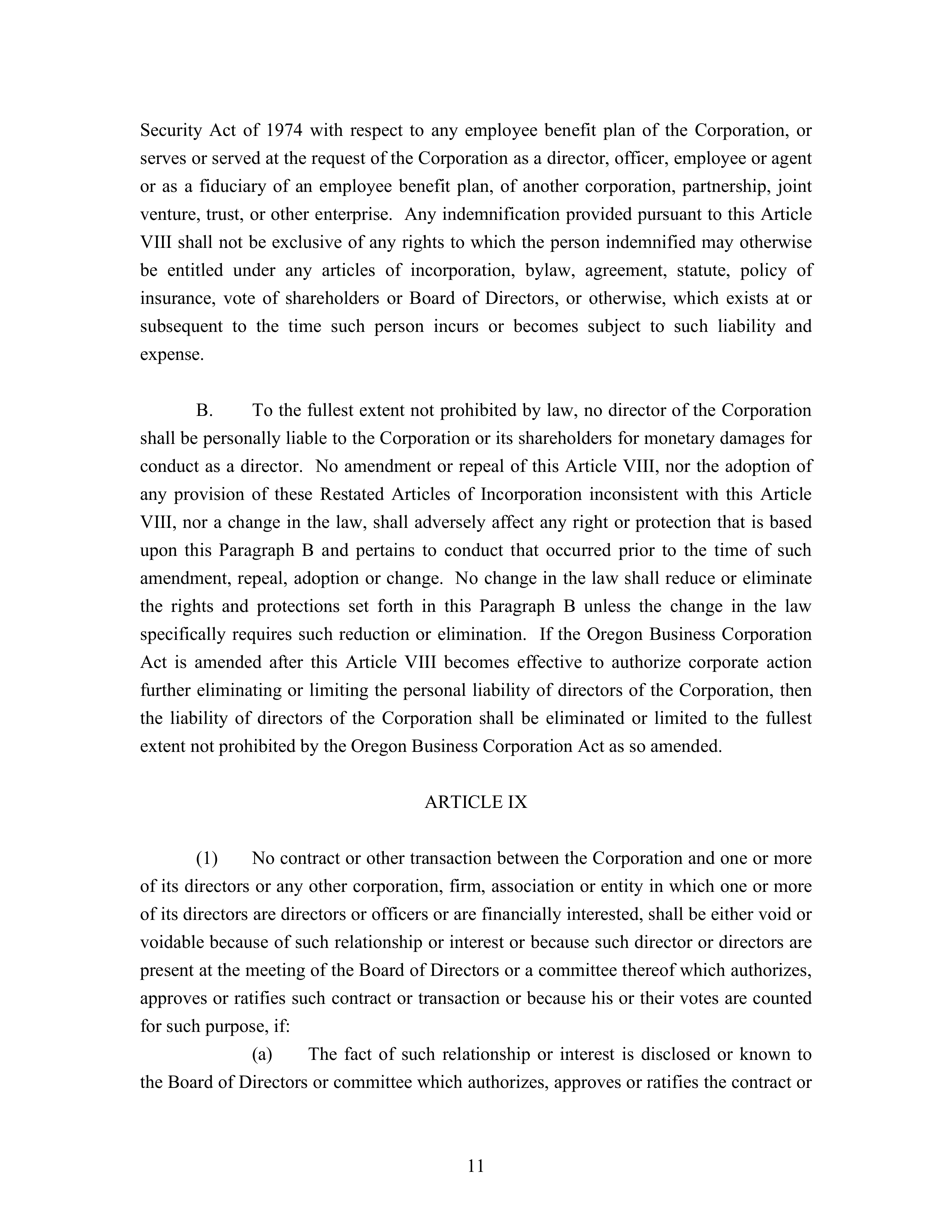
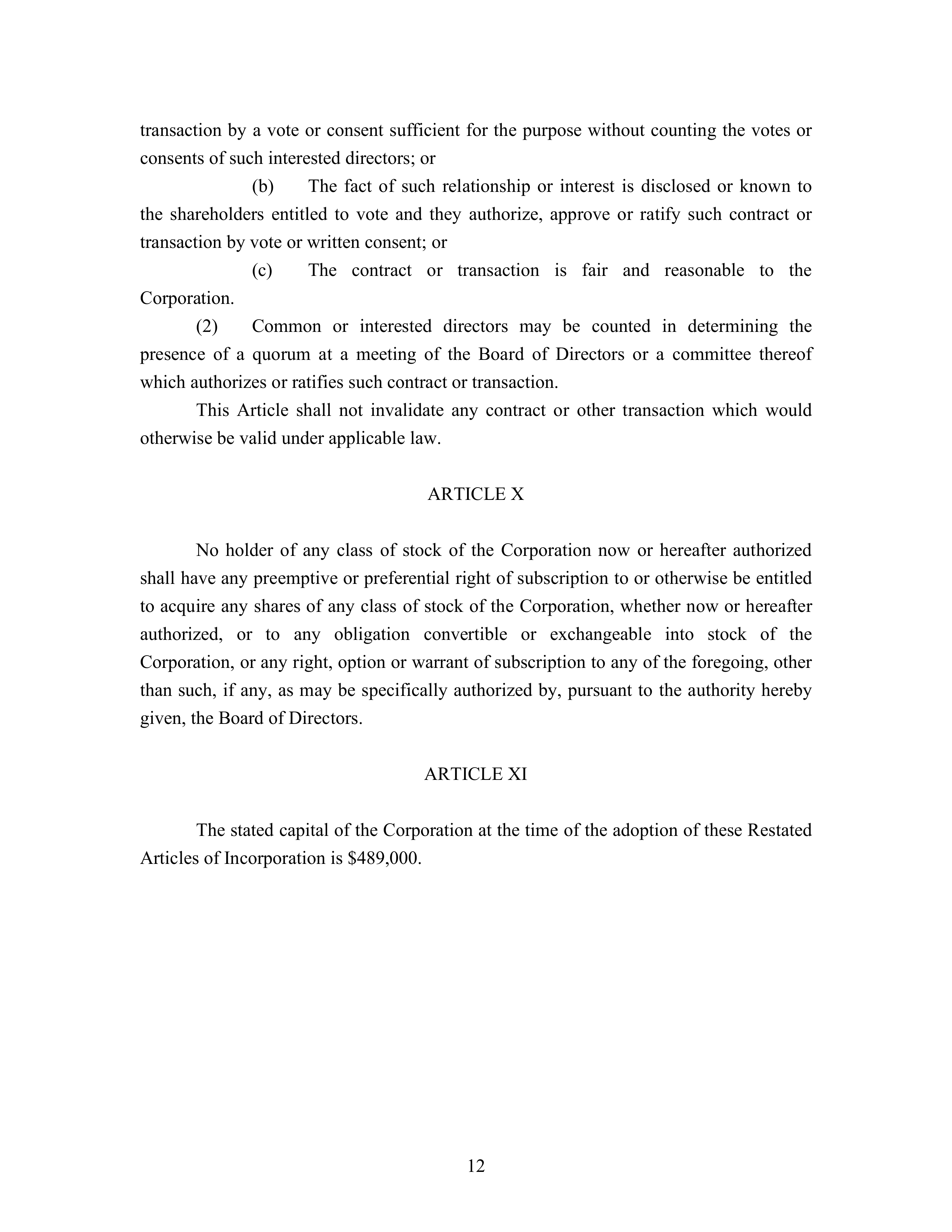
Article IV of the Company’s restated articles of incorporation (the
“
Articles of Incorporation
”), a copy of which is attached to this letter as Exhibit B, provides that
all shares of Class A Common Stock and Class B Common Stock have one vote per share and vote
together as a single class on all matters except the election of directors (where the classes vote
separately)
3
or as required by law. The Articles of Incorporation further provide that each share of
Class A Common Stock is only convertible into a share of Class B Common Stock at the holder’s
election.
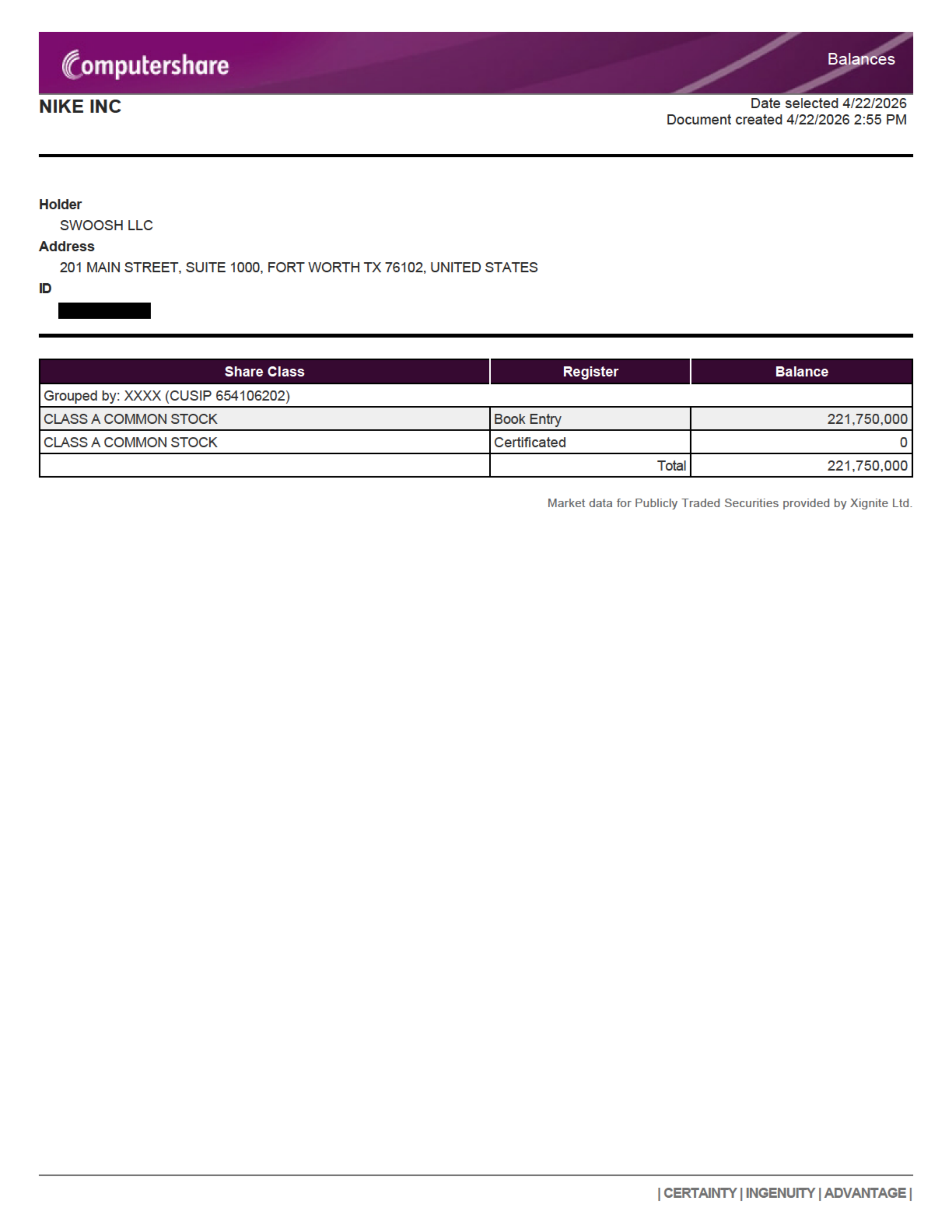
In order to implement the Proposal, all of the holders of the Company’s Class A
Common Stock would need to voluntarily agree to convert their Class A Common Stock shares or
the Articles of Incorporation would need to be amended to require the conversion of all outstanding
Class A Common Stock within seven years. Amending the Articles of Incorporation in such
manner would materially alter and adversely affect the rights of the Class A Common Stock, and,
2
According to the Company’s Form 10-Q, filed with the Commission on April 1, 2026.
3
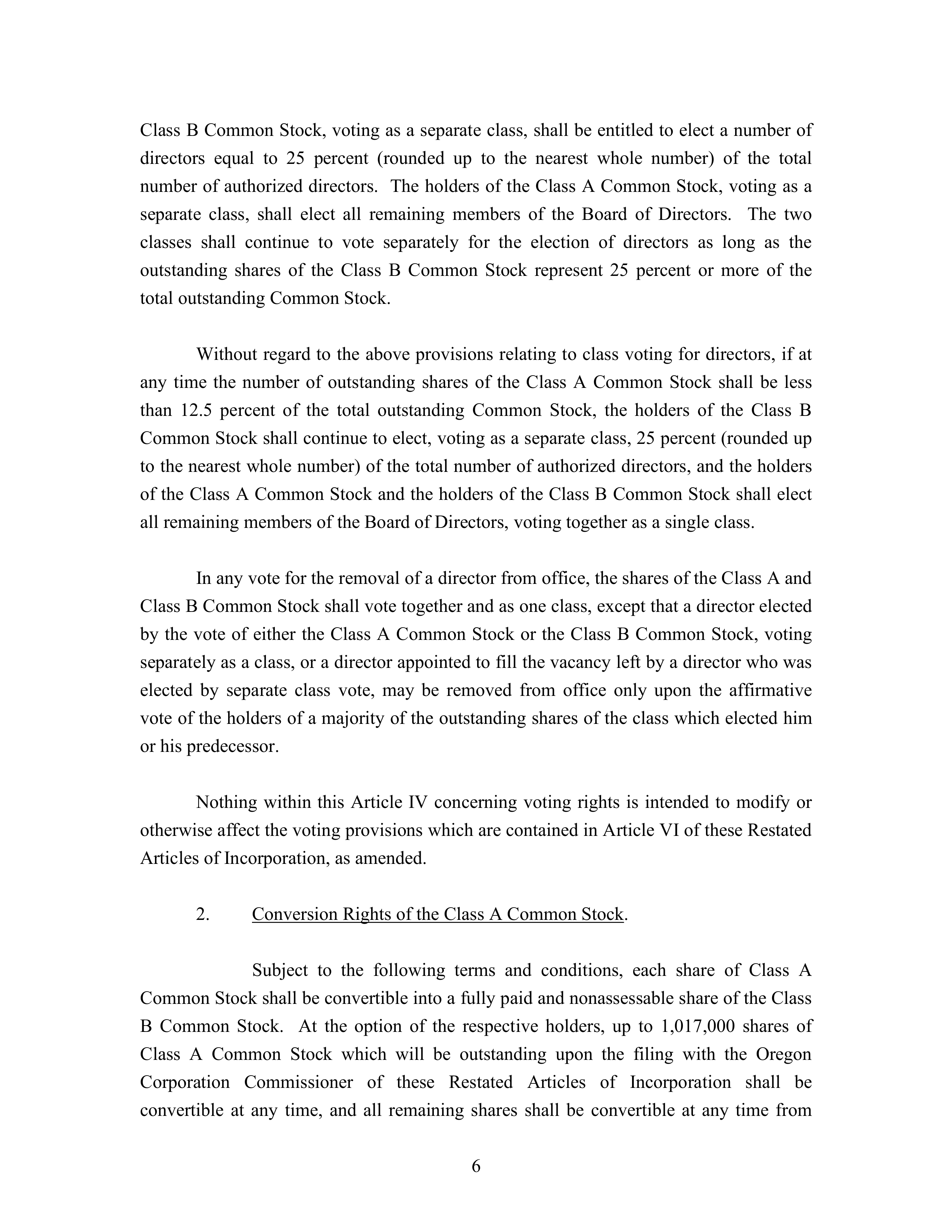
Article IV of the Articles of Incorporation provides that, for so long as the number of outstanding shares of the Class
B Common Stock equal or exceed 25% of the total outstanding shares of Common Stock, holders of the Class B
Common Stock are entitled to elect 25% of the authorized directors (rounded up to the nearest whole number), and
holders of Class A Common Stock, voting as a separate class, are entitled to elect the remaining directors.
Additionally, if at any time the number of outstanding shares of the Class A Common Stock shall be less than 12.5%
of the total outstanding Common Stock, the holders of the Class B Common Stock shall continue to elect, voting as
a separate class, 25% (rounded up to the nearest whole number) of the total number of authorized directors, and the
holders of the Class A Common Stock and the holders of the Class B Common Stock shall elect all remaining
members of the Board, voting together as a single class.