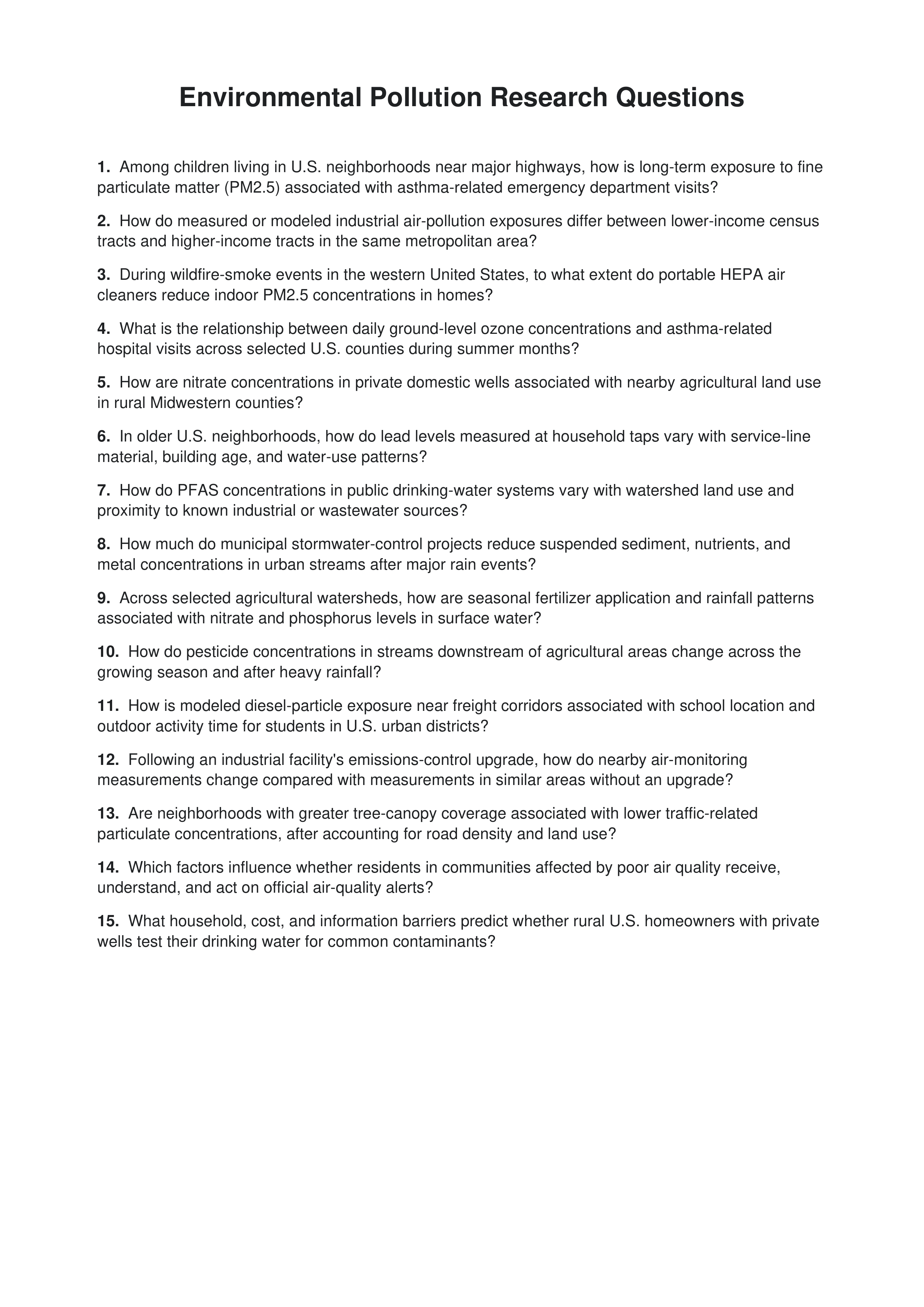
Environmental Pollution Research Questions
1.
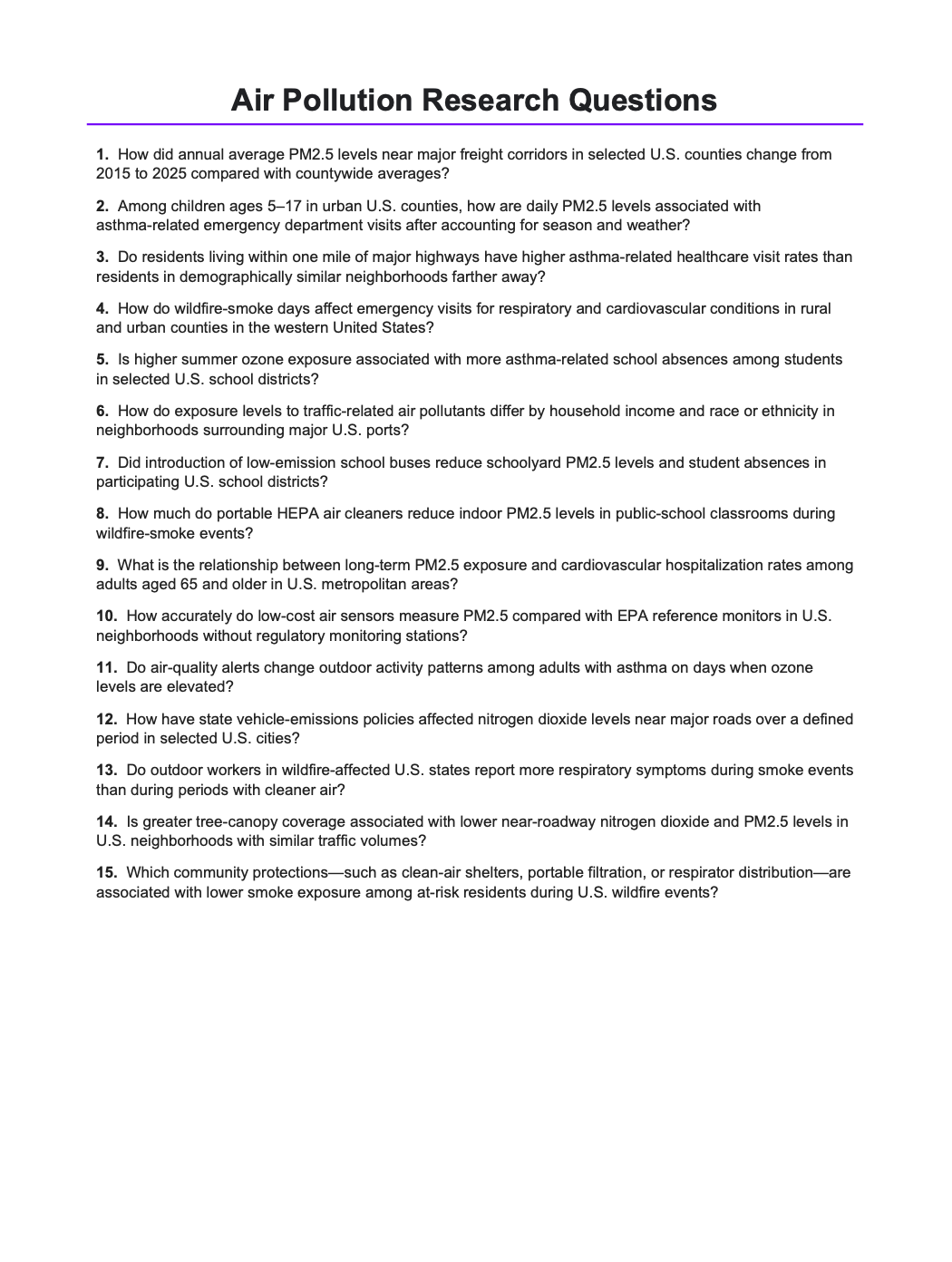
Among children living in U.S. neighborhoods near major highways, how is long-term exposure to fine
particulate matter (PM2.5) associated with asthma-related emergency department visits?
2.
How do measured or modeled industrial air-pollution exposures differ between lower-income census
tracts and higher-income tracts in the same metropolitan area?
3.
During wildfire-smoke events in the western United States, to what extent do portable HEPA air
cleaners reduce indoor PM2.5 concentrations in homes?
4.
What is the relationship between daily ground-level ozone concentrations and asthma-related
hospital visits across selected U.S. counties during summer months?
5.
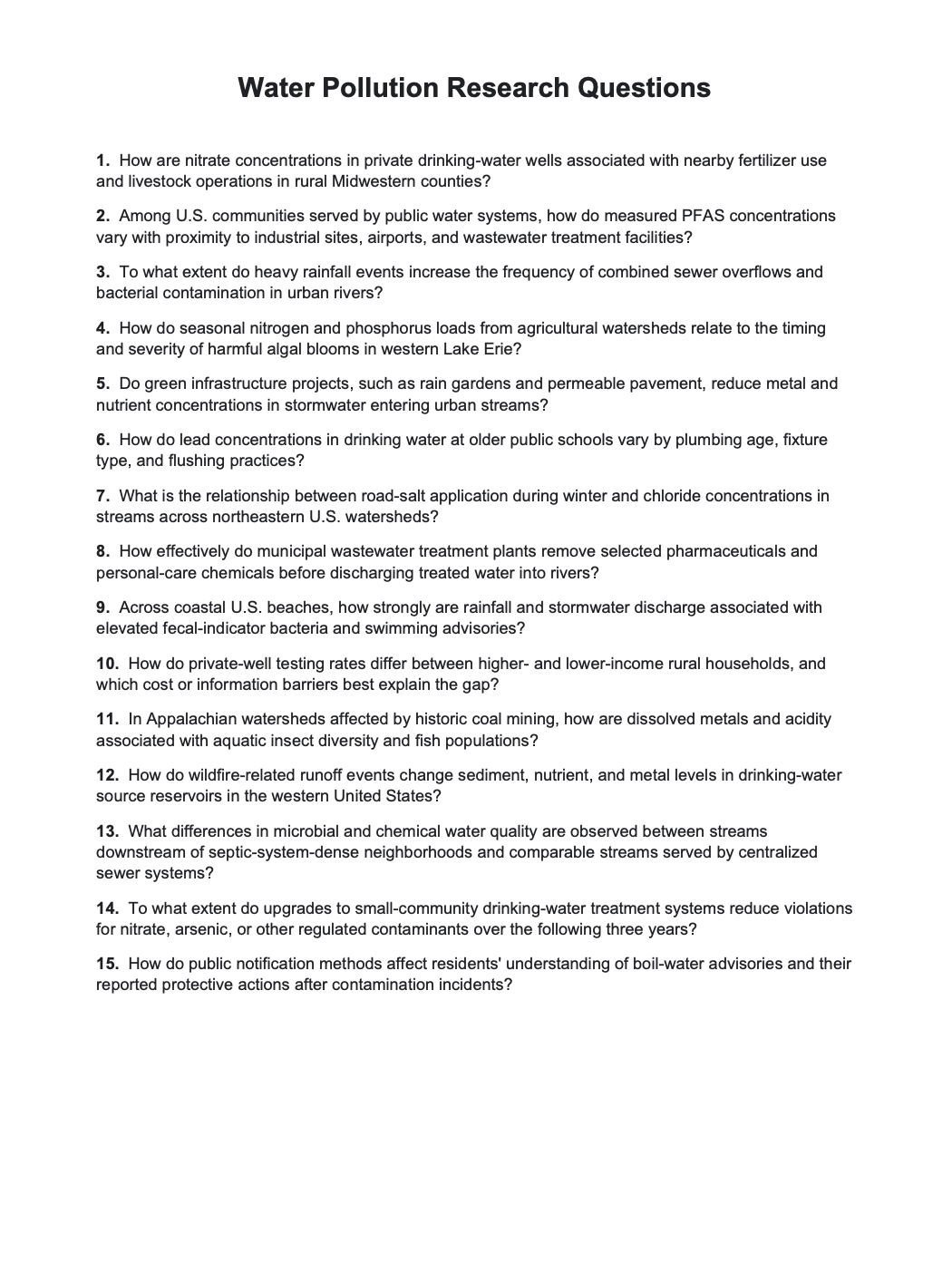
How are nitrate concentrations in private domestic wells associated with nearby agricultural land use
in rural Midwestern counties?
6.
In older U.S. neighborhoods, how do lead levels measured at household taps vary with service-line
material, building age, and water-use patterns?
7.
How do PFAS concentrations in public drinking-water systems vary with watershed land use and
proximity to known industrial or wastewater sources?
8.
How much do municipal stormwater-control projects reduce suspended sediment, nutrients, and
metal concentrations in urban streams after major rain events?
9.
Across selected agricultural watersheds, how are seasonal fertilizer application and rainfall patterns
associated with nitrate and phosphorus levels in surface water?
10.
How do pesticide concentrations in streams downstream of agricultural areas change across the
growing season and after heavy rainfall?
11.
How is modeled diesel-particle exposure near freight corridors associated with school location and
outdoor activity time for students in U.S. urban districts?
12.
Following an industrial facility's emissions-control upgrade, how do nearby air-monitoring
measurements change compared with measurements in similar areas without an upgrade?
13.
Are neighborhoods with greater tree-canopy coverage associated with lower traffic-related
particulate concentrations, after accounting for road density and land use?
14.
Which factors influence whether residents in communities affected by poor air quality receive,
understand, and act on official air-quality alerts?
15.
What household, cost, and information barriers predict whether rural U.S. homeowners with private
wells test their drinking water for common contaminants?