Work-Life Balance Research Questions
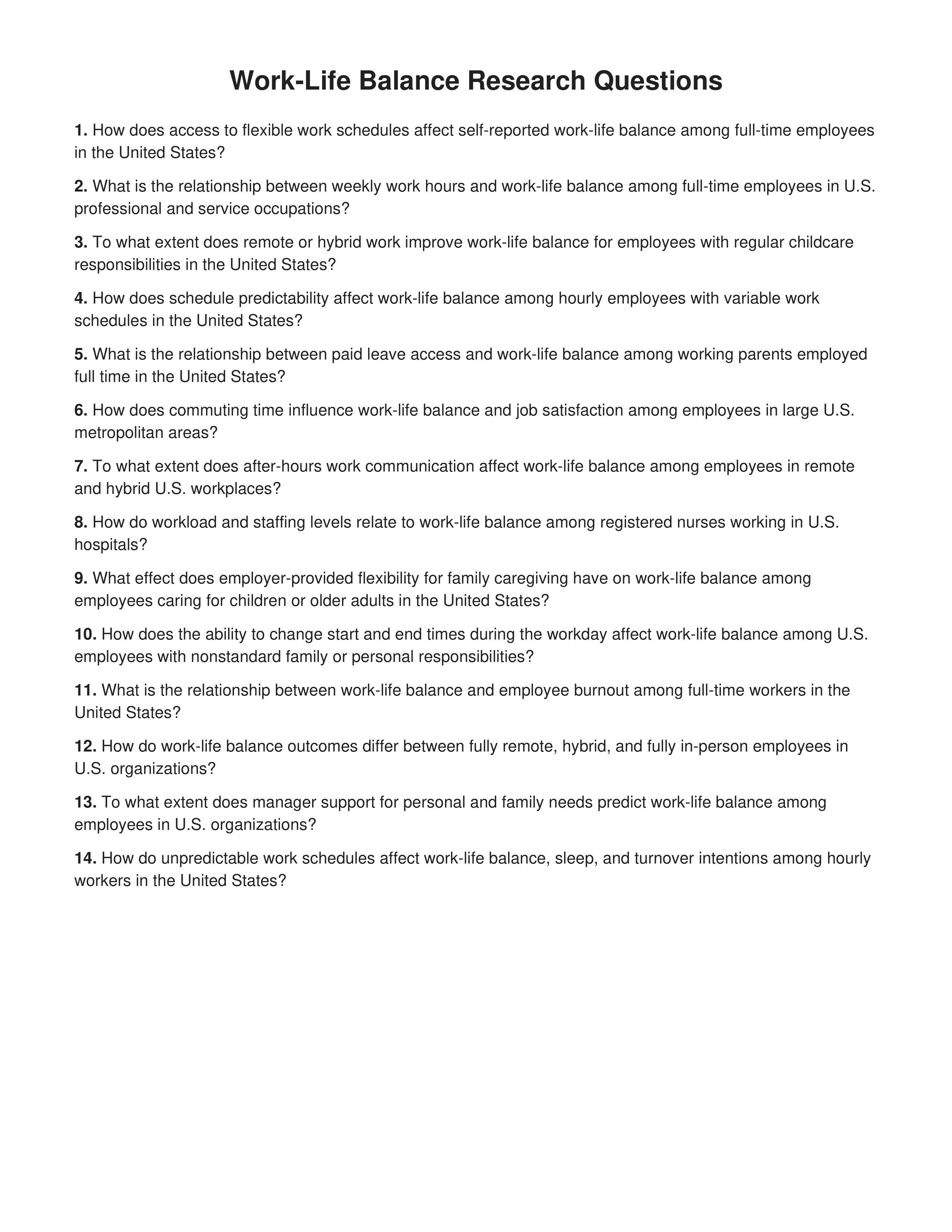
1.
How does access to flexible work schedules affect self-reported work-life balance among full-time employees
in the United States?
2.
What is the relationship between weekly work hours and work-life balance among full-time employees in U.S.
professional and service occupations?
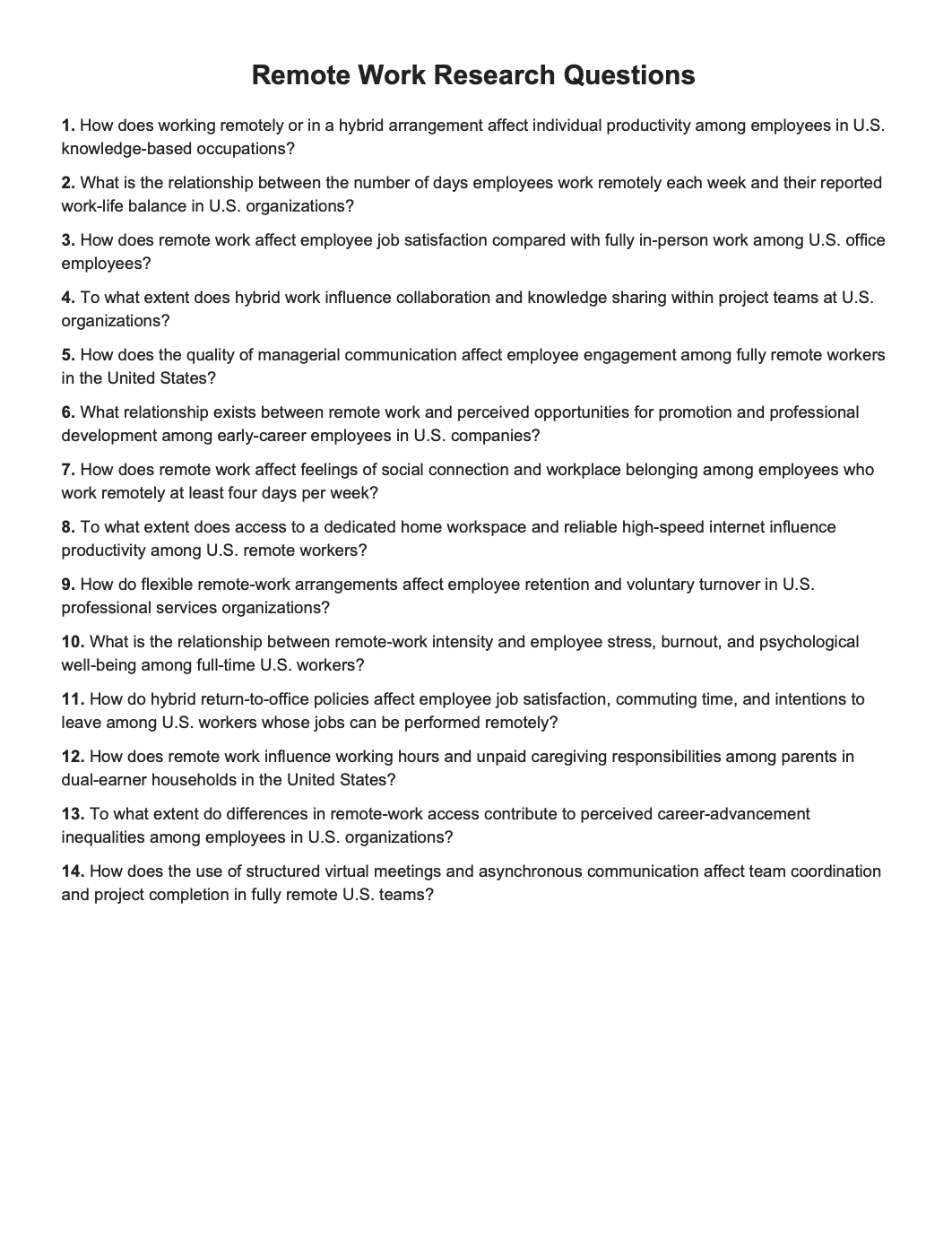
3.
To what extent does remote or hybrid work improve work-life balance for employees with regular childcare
responsibilities in the United States?
4.
How does schedule predictability affect work-life balance among hourly employees with variable work
schedules in the United States?
5.
What is the relationship between paid leave access and work-life balance among working parents employed
full time in the United States?
6.
How does commuting time influence work-life balance and job satisfaction among employees in large U.S.
metropolitan areas?
7.
To what extent does after-hours work communication affect work-life balance among employees in remote
and hybrid U.S. workplaces?
8.
How do workload and staffing levels relate to work-life balance among registered nurses working in U.S.
hospitals?
9.
What effect does employer-provided flexibility for family caregiving have on work-life balance among
employees caring for children or older adults in the United States?
10.
How does the ability to change start and end times during the workday affect work-life balance among U.S.
employees with nonstandard family or personal responsibilities?
11.
What is the relationship between work-life balance and employee burnout among full-time workers in the
United States?
12.
How do work-life balance outcomes differ between fully remote, hybrid, and fully in-person employees in
U.S. organizations?
13.
To what extent does manager support for personal and family needs predict work-life balance among
employees in U.S. organizations?
14.
How do unpredictable work schedules affect work-life balance, sleep, and turnover intentions among hourly
workers in the United States?