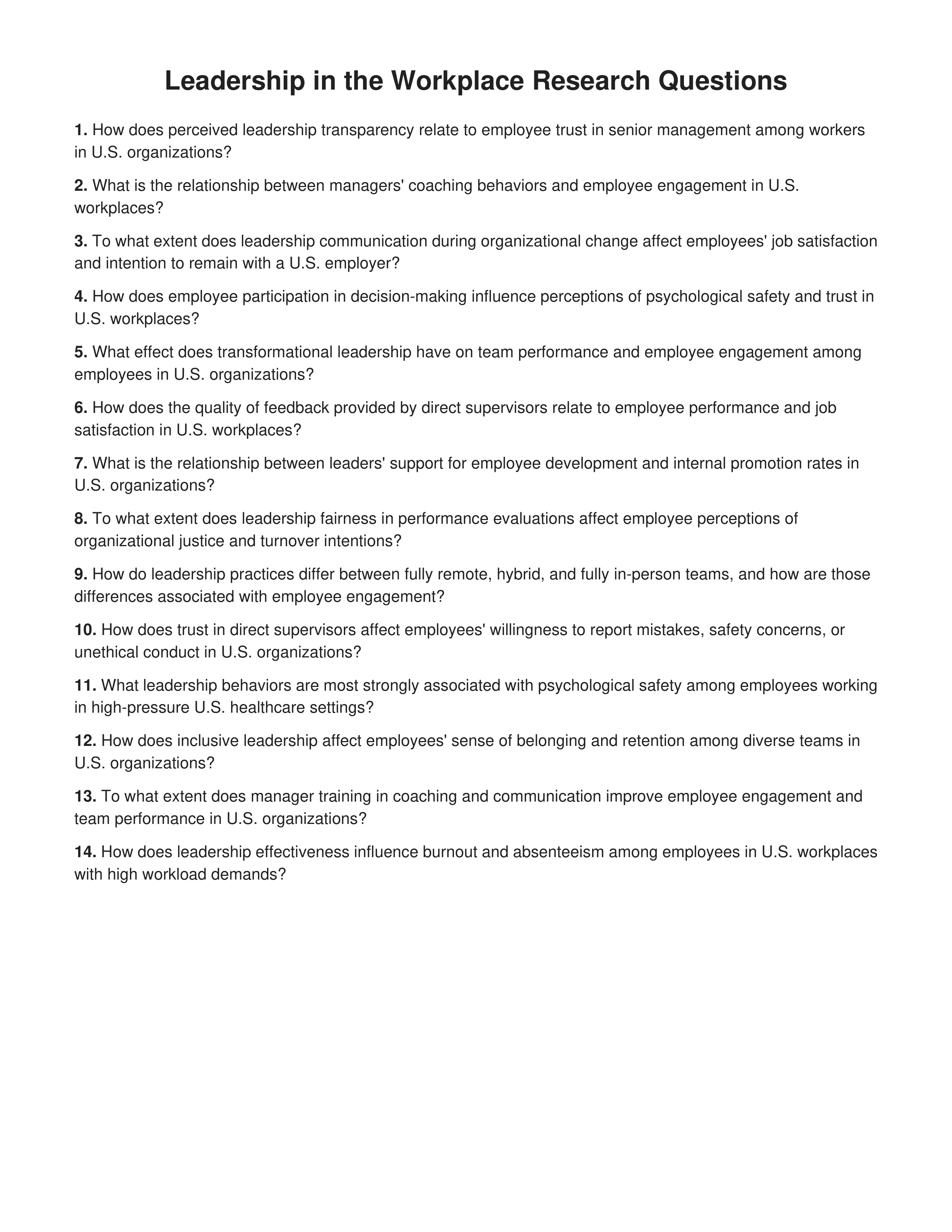
Leadership in the Workplace Research Questions
1.
How does perceived leadership transparency relate to employee trust in senior management among workers
in U.S. organizations?
2.
What is the relationship between managers' coaching behaviors and employee engagement in U.S.
workplaces?
3.
To what extent does leadership communication during organizational change affect employees' job satisfaction
and intention to remain with a U.S. employer?
4.
How does employee participation in decision-making influence perceptions of psychological safety and trust in
U.S. workplaces?
5.
What effect does transformational leadership have on team performance and employee engagement among
employees in U.S. organizations?
6.
How does the quality of feedback provided by direct supervisors relate to employee performance and job
satisfaction in U.S. workplaces?
7.
What is the relationship between leaders' support for employee development and internal promotion rates in
U.S. organizations?
8.
To what extent does leadership fairness in performance evaluations affect employee perceptions of
organizational justice and turnover intentions?
9.
How do leadership practices differ between fully remote, hybrid, and fully in-person teams, and how are those
differences associated with employee engagement?
10.
How does trust in direct supervisors affect employees' willingness to report mistakes, safety concerns, or
unethical conduct in U.S. organizations?
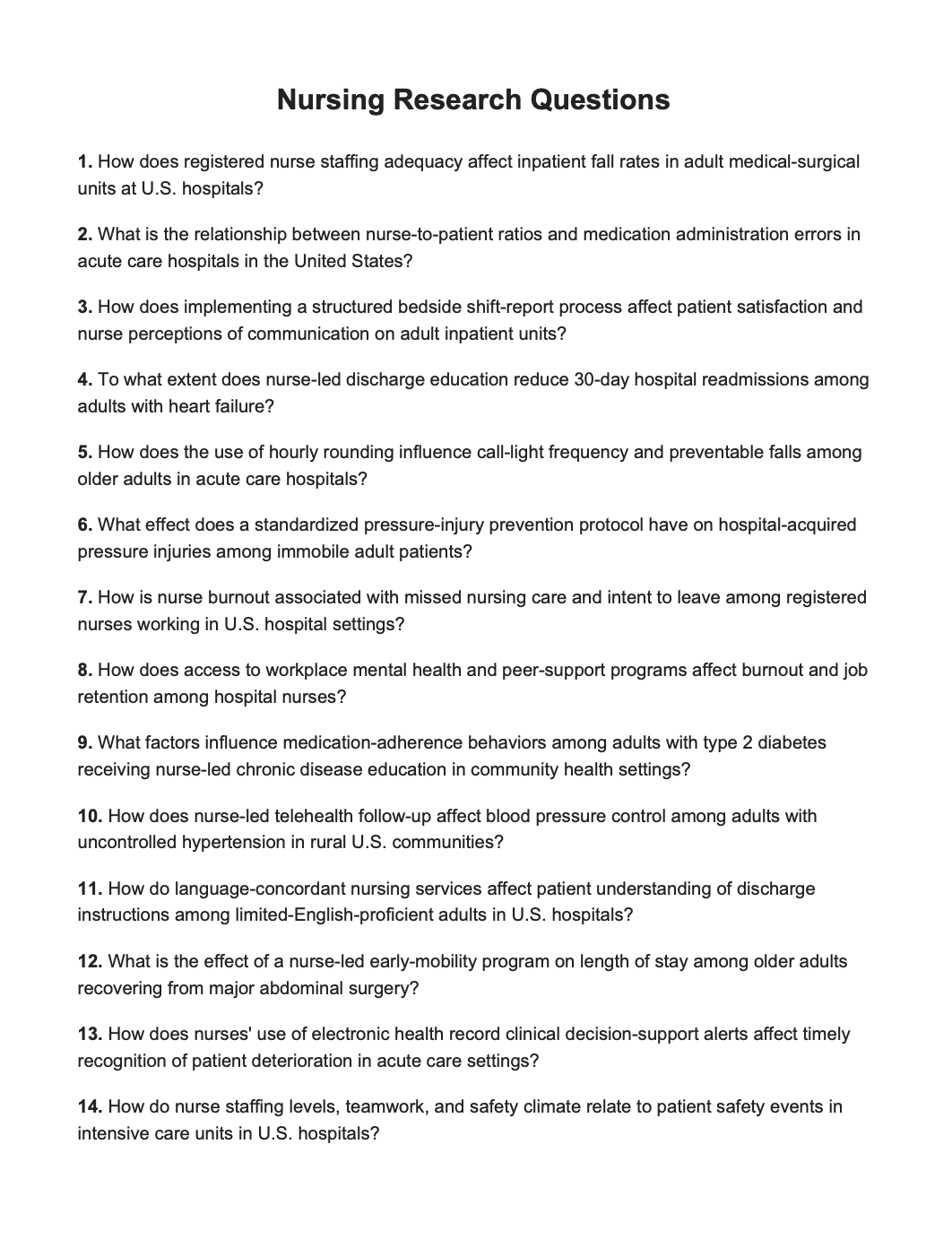
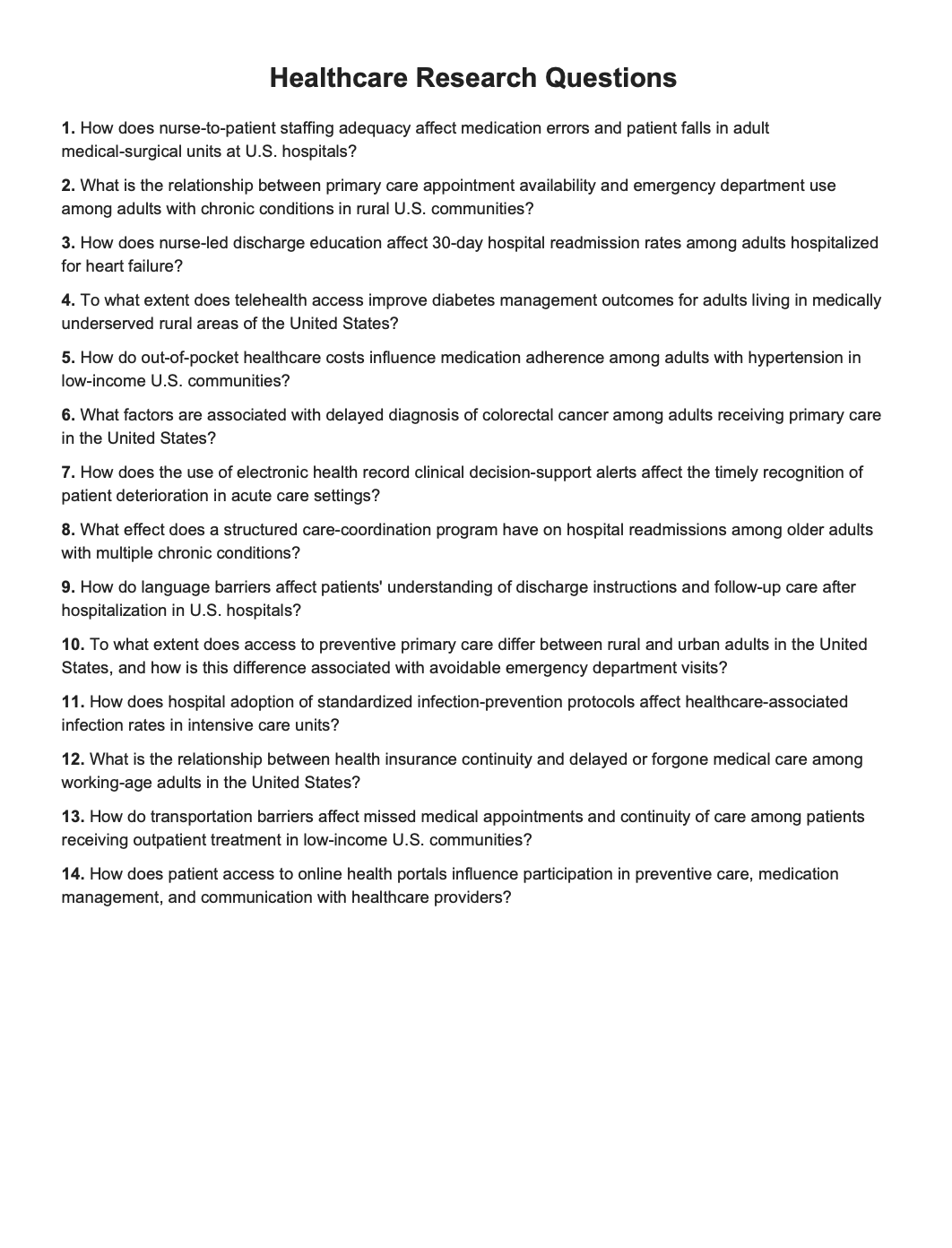
11.
What leadership behaviors are most strongly associated with psychological safety among employees working
in high-pressure U.S. healthcare settings?
12.
How does inclusive leadership affect employees' sense of belonging and retention among diverse teams in
U.S. organizations?
13.
To what extent does manager training in coaching and communication improve employee engagement and
team performance in U.S. organizations?
14.
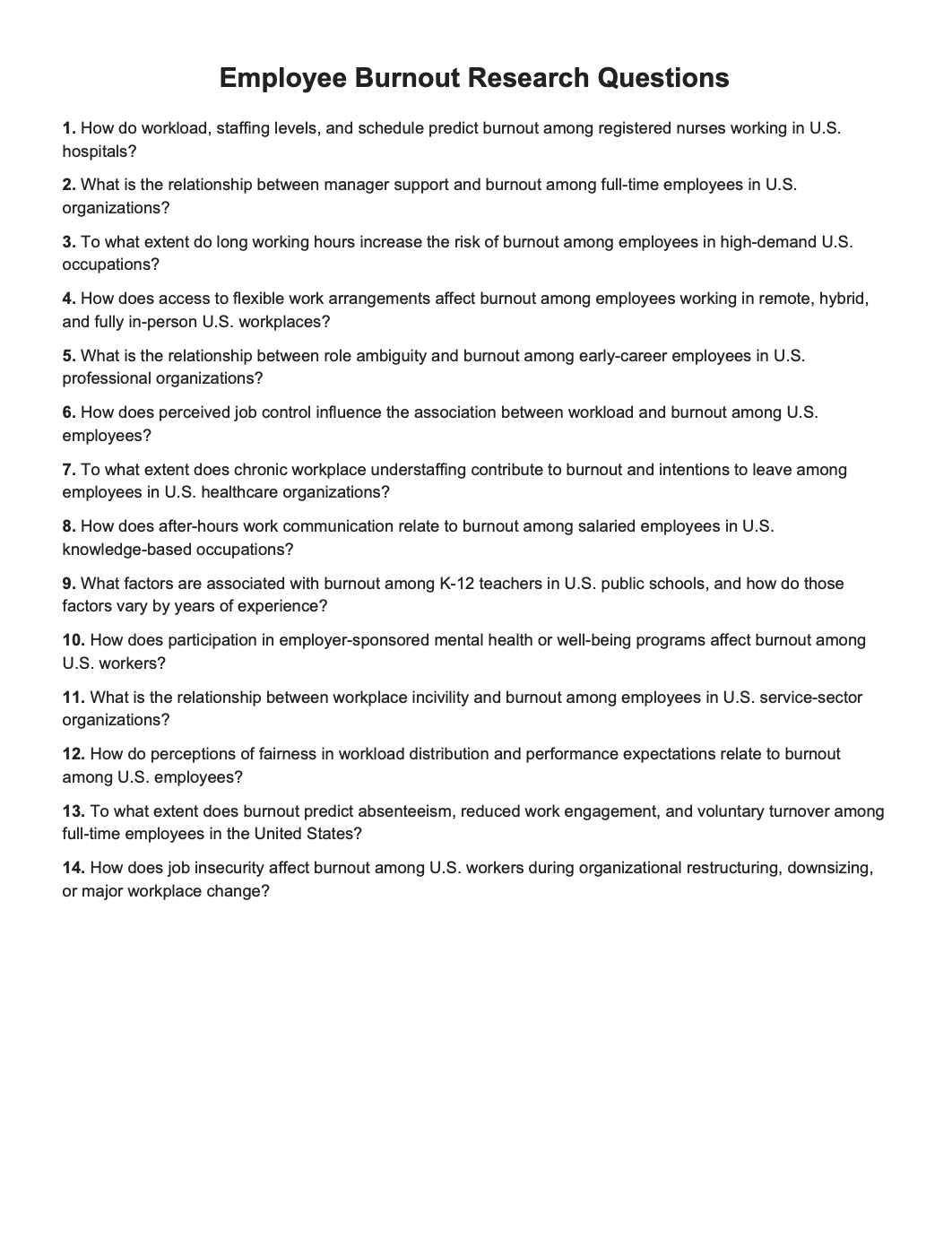
How does leadership effectiveness influence burnout and absenteeism among employees in U.S. workplaces
with high workload demands?