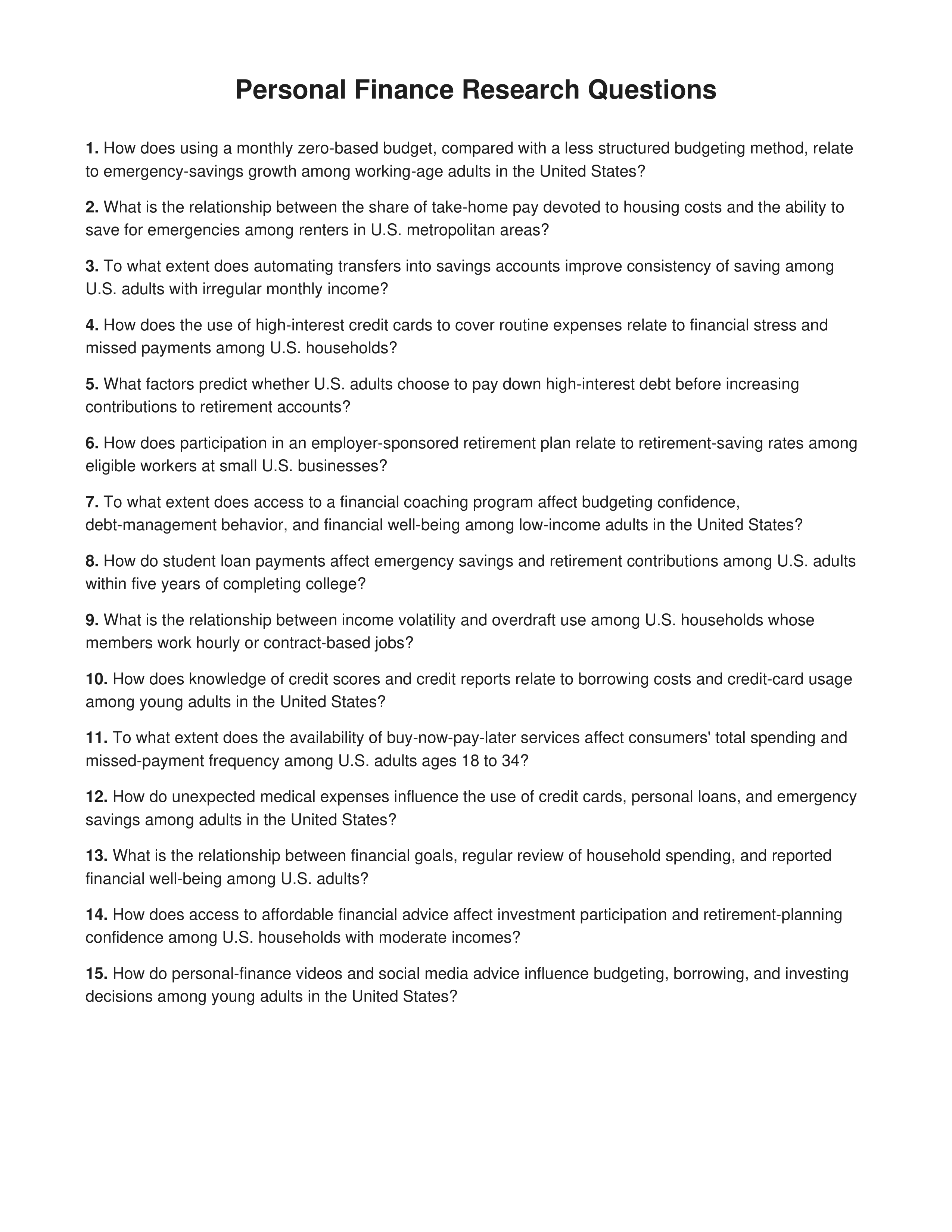
Personal Finance Research Questions
1.
How does using a monthly zero-based budget, compared with a less structured budgeting method, relate
to emergency-savings growth among working-age adults in the United States?
2.
What is the relationship between the share of take-home pay devoted to housing costs and the ability to
save for emergencies among renters in U.S. metropolitan areas?
3.
To what extent does automating transfers into savings accounts improve consistency of saving among
U.S. adults with irregular monthly income?
4.
How does the use of high-interest credit cards to cover routine expenses relate to financial stress and
missed payments among U.S. households?
5.
What factors predict whether U.S. adults choose to pay down high-interest debt before increasing
contributions to retirement accounts?
6.
How does participation in an employer-sponsored retirement plan relate to retirement-saving rates among
eligible workers at small U.S. businesses?
7.
To what extent does access to a financial coaching program affect budgeting confidence,
debt-management behavior, and financial well-being among low-income adults in the United States?
8.
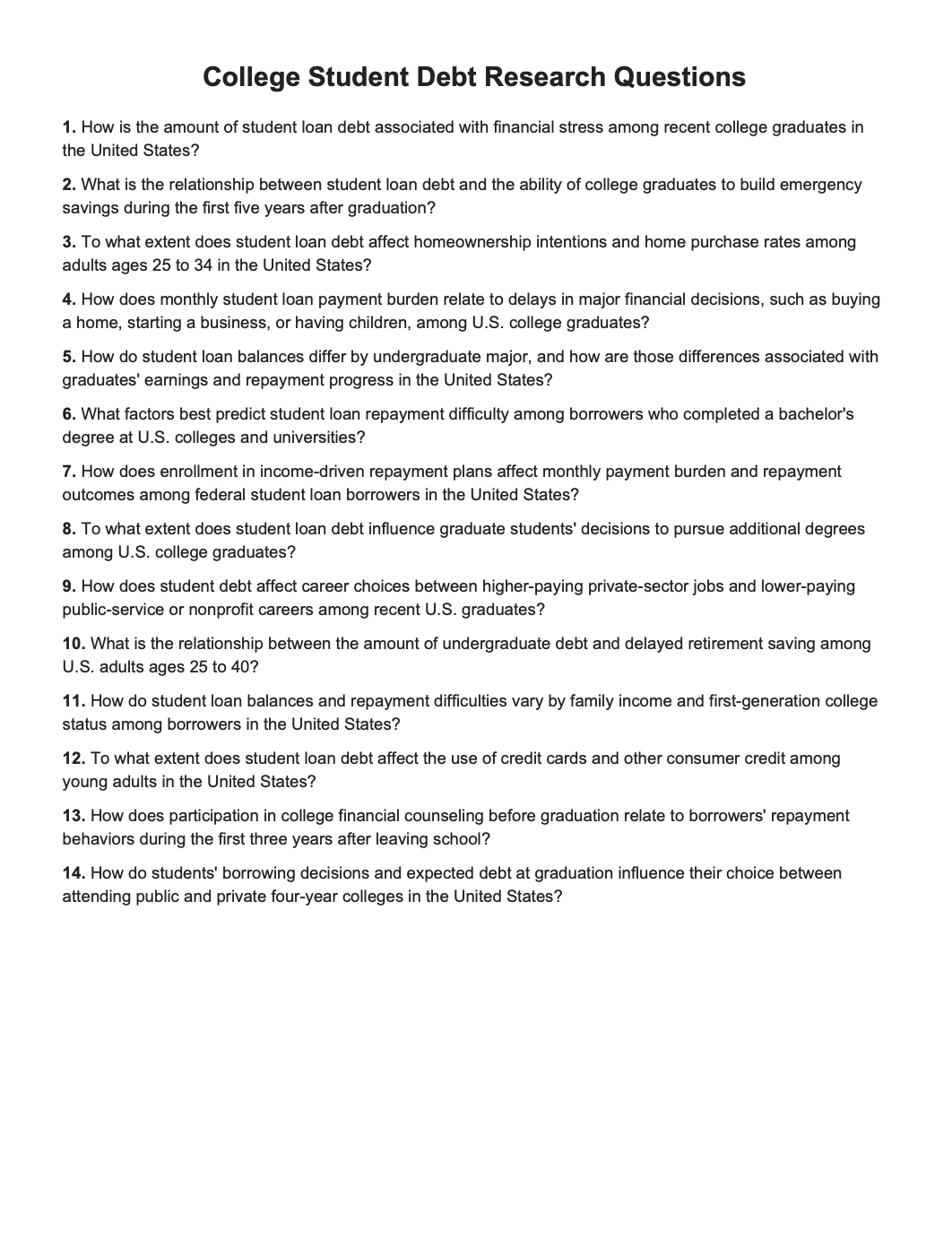
How do student loan payments affect emergency savings and retirement contributions among U.S. adults
within five years of completing college?
9.
What is the relationship between income volatility and overdraft use among U.S. households whose
members work hourly or contract-based jobs?
10.
How does knowledge of credit scores and credit reports relate to borrowing costs and credit-card usage
among young adults in the United States?
11.
To what extent does the availability of buy-now-pay-later services affect consumers' total spending and
missed-payment frequency among U.S. adults ages 18 to 34?
12.
How do unexpected medical expenses influence the use of credit cards, personal loans, and emergency
savings among adults in the United States?
13.
What is the relationship between financial goals, regular review of household spending, and reported
financial well-being among U.S. adults?
14.
How does access to affordable financial advice affect investment participation and retirement-planning
confidence among U.S. households with moderate incomes?
15.
How do personal-finance videos and social media advice influence budgeting, borrowing, and investing
decisions among young adults in the United States?