1
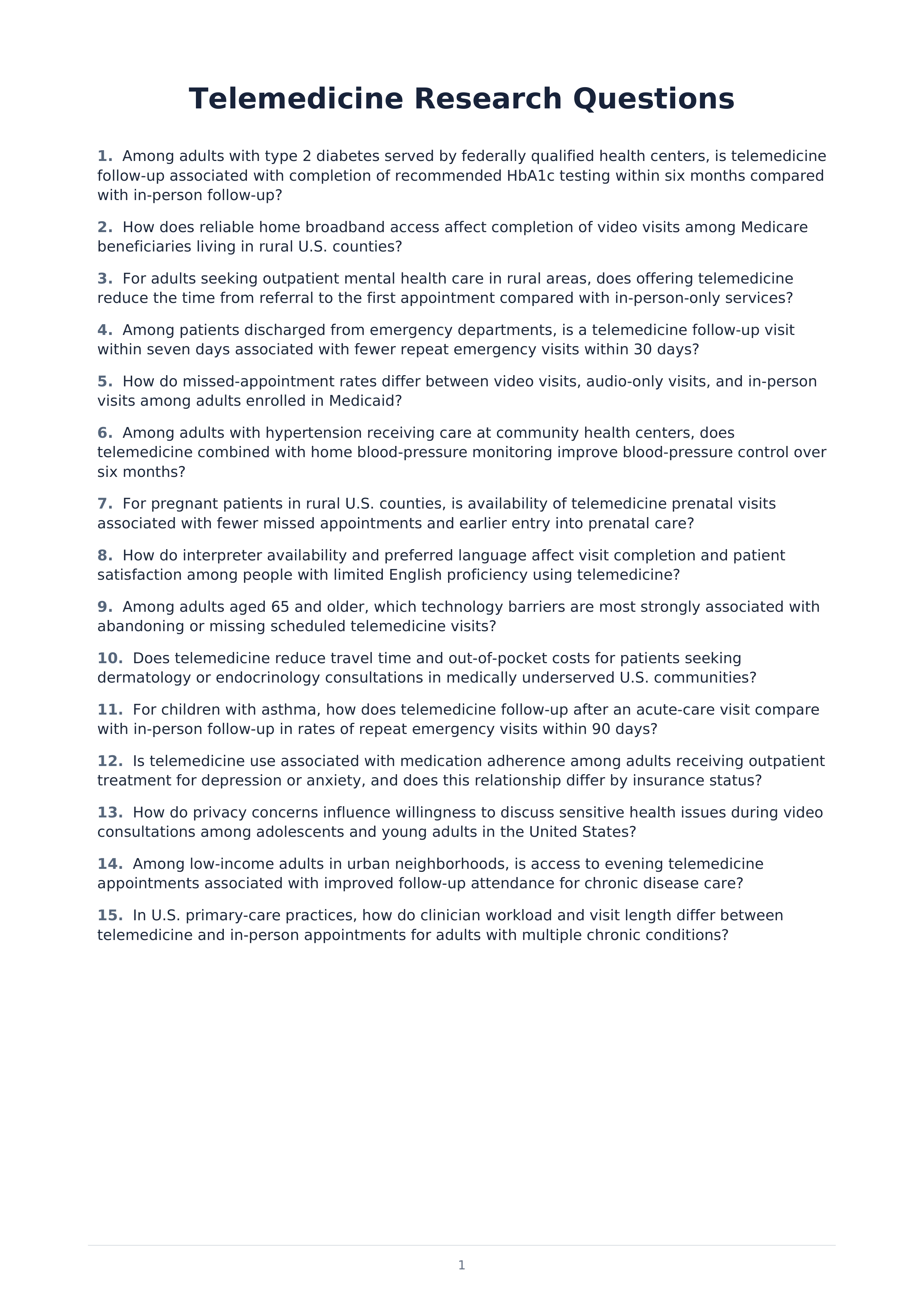
Telemedicine Research Questions
1.
Among adults with type 2 diabetes served by federally qualified health centers, is telemedicine
follow-up associated with completion of recommended HbA1c testing within six months compared
with in-person follow-up?
2.
How does reliable home broadband access affect completion of video visits among Medicare
beneficiaries living in rural U.S. counties?
3.
For adults seeking outpatient mental health care in rural areas, does offering telemedicine
reduce the time from referral to the first appointment compared with in-person-only services?
4.
Among patients discharged from emergency departments, is a telemedicine follow-up visit
within seven days associated with fewer repeat emergency visits within 30 days?
5.
How do missed-appointment rates differ between video visits, audio-only visits, and in-person
visits among adults enrolled in Medicaid?
6.
Among adults with hypertension receiving care at community health centers, does
telemedicine combined with home blood-pressure monitoring improve blood-pressure control over
six months?
7.
For pregnant patients in rural U.S. counties, is availability of telemedicine prenatal visits
associated with fewer missed appointments and earlier entry into prenatal care?
8.
How do interpreter availability and preferred language affect visit completion and patient
satisfaction among people with limited English proficiency using telemedicine?
9.
Among adults aged 65 and older, which technology barriers are most strongly associated with
abandoning or missing scheduled telemedicine visits?
10.
Does telemedicine reduce travel time and out-of-pocket costs for patients seeking
dermatology or endocrinology consultations in medically underserved U.S. communities?
11.
For children with asthma, how does telemedicine follow-up after an acute-care visit compare
with in-person follow-up in rates of repeat emergency visits within 90 days?
12.
Is telemedicine use associated with medication adherence among adults receiving outpatient
treatment for depression or anxiety, and does this relationship differ by insurance status?
13.
How do privacy concerns influence willingness to discuss sensitive health issues during video
consultations among adolescents and young adults in the United States?
14.
Among low-income adults in urban neighborhoods, is access to evening telemedicine
appointments associated with improved follow-up attendance for chronic disease care?
15.
In U.S. primary-care practices, how do clinician workload and visit length differ between
telemedicine and in-person appointments for adults with multiple chronic conditions?