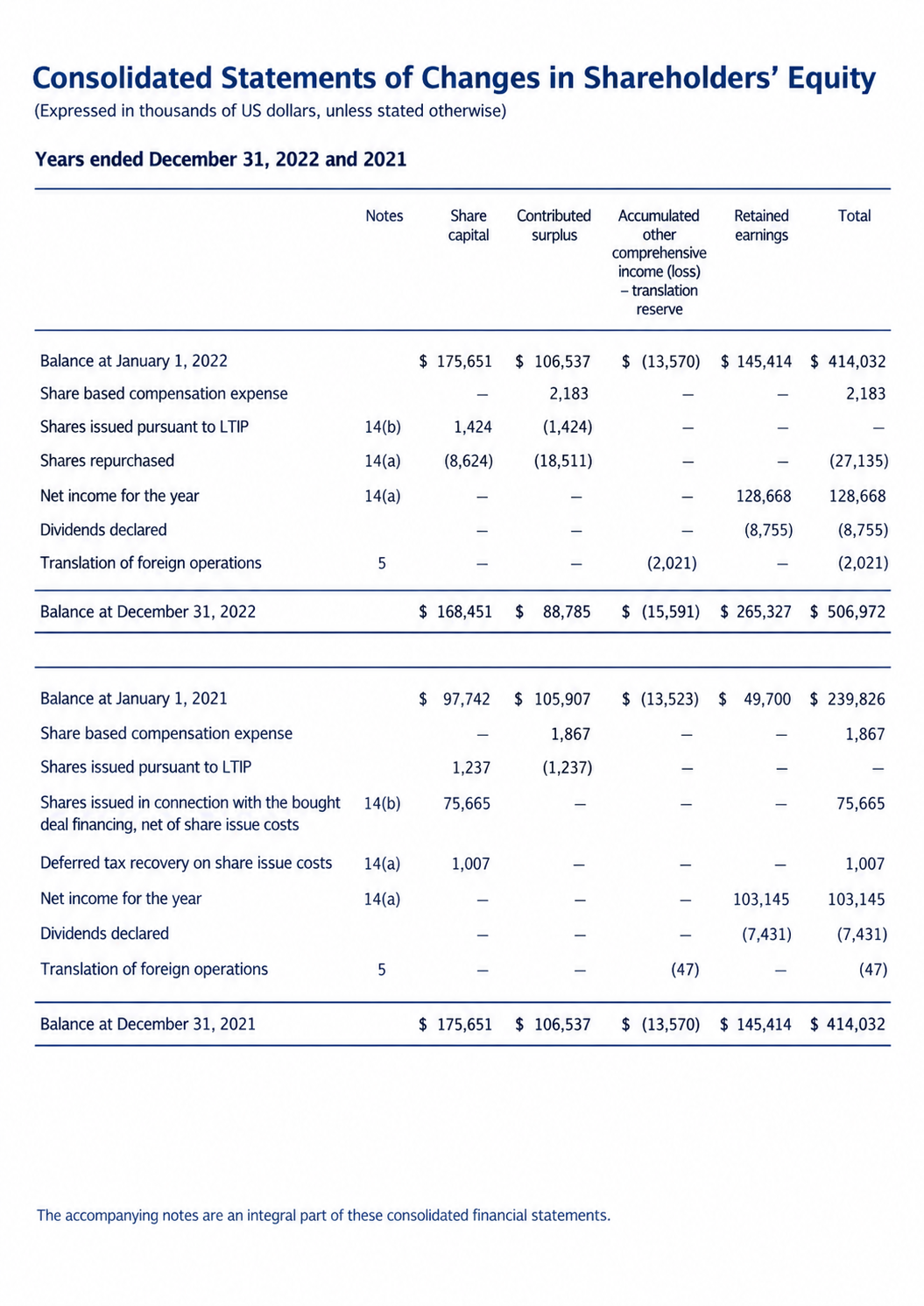


1
Director’s Statement
When I sit down to watch a movie for the first time, I want to get lost in the story that it is telling.
I want to cheer for the triumphs, groan at the losses, and become engrossed in the tales of all its
characters. Sometimes, as a bonus, I even come away feeling as if I’ve learned something valuable about
life itself. To be honest, most of the films I watch are purely for entertainment, whether it is the latest
summer blockbuster, or a black-and-white classic film from Hollywood’s Golden Age. I usually do not
watch movies intending to deconstruct its artistic choices and careful composition. I am no film critic, but
I am a lover of films.
A couple years ago, I took my love of films one step further by watching videos describing the
process of making many of the films I took for granted. I had watched interviews of cast members and
sometimes directors many times before, but rarely had I ever gone so far as to watch the technical process
of actually producing a film. The amount of artistry, innovation, manpower, and sheer computing it took
to produce even the most straightforward of films astonished me. Surely film production was not this
difficult and convoluted? I now looked with new eyes at the films which I had watched before with mere
enjoyment. It began to seem unjust to me that the film’s actors, directors, and producers reaped a
disproportionate amount of the their film’s success, both financially and socially, while countless visual
effects artists found themselves unemployed after their production houses closed up shop and moved on
to the next filming location.
1,2
And yet, despite the myriad problems plaguing the visual effects industry, I
could not help but be drawn into this new world of film production and visual effects that I had
unwittingly uncovered.
Visual effects refer to the process of combining imagery that
has been created off-camera with live-action film, most often in post-
production. The effects we have seen in film in the past thirty years
would not be possible without the aid of computers. Prior to this, more
traditional techniques such as miniature models, puppetry, matte
painting, and stop-motion animation took center-stage in movies such
as
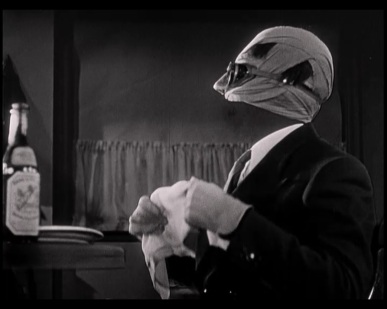
The Invisible Man
(1933) and
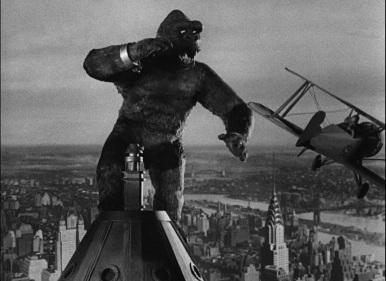
King Kong
(1933). A selection of
more recent films such as Jurassic Park (1993), Ghostbusters (1984),
and the Lord of the Rings trilogy (2001) have used such traditional
techniques. Today, even films which do not immediately seem to have
visual effects have been retouched in some way. These effects are
often integral to the movie’s success and appeal.
Transformers
(2007)
would not have been the same with mere puppet models of the titular
robots in place of the computer-generated models used in the film.
And although Robert Downey Jr. was the soul of
Iron Man
(2008),
audiences would not have been satisfied with merely watching him
strut around conventions for the entire film. Visual effects do not only
make films more appealing to watch – they also enable them, often for
a fraction of the cost. Obviously,
Star Wars
,
Avatar
,
Alice in
1
Verrier, Richard. "Generating Stunning Visual Effects, but Not Enough Revenue."
Los Angeles Times
. N.p., 24 Mar. 2013. Web. 1 May 2013.
2
Watercutter, Angela. "Green Scream: The Decay of the Hollywood Special Effects Industry."
Wired
. N.p., 01 Mar. 2013. Web. 01 May 2013.
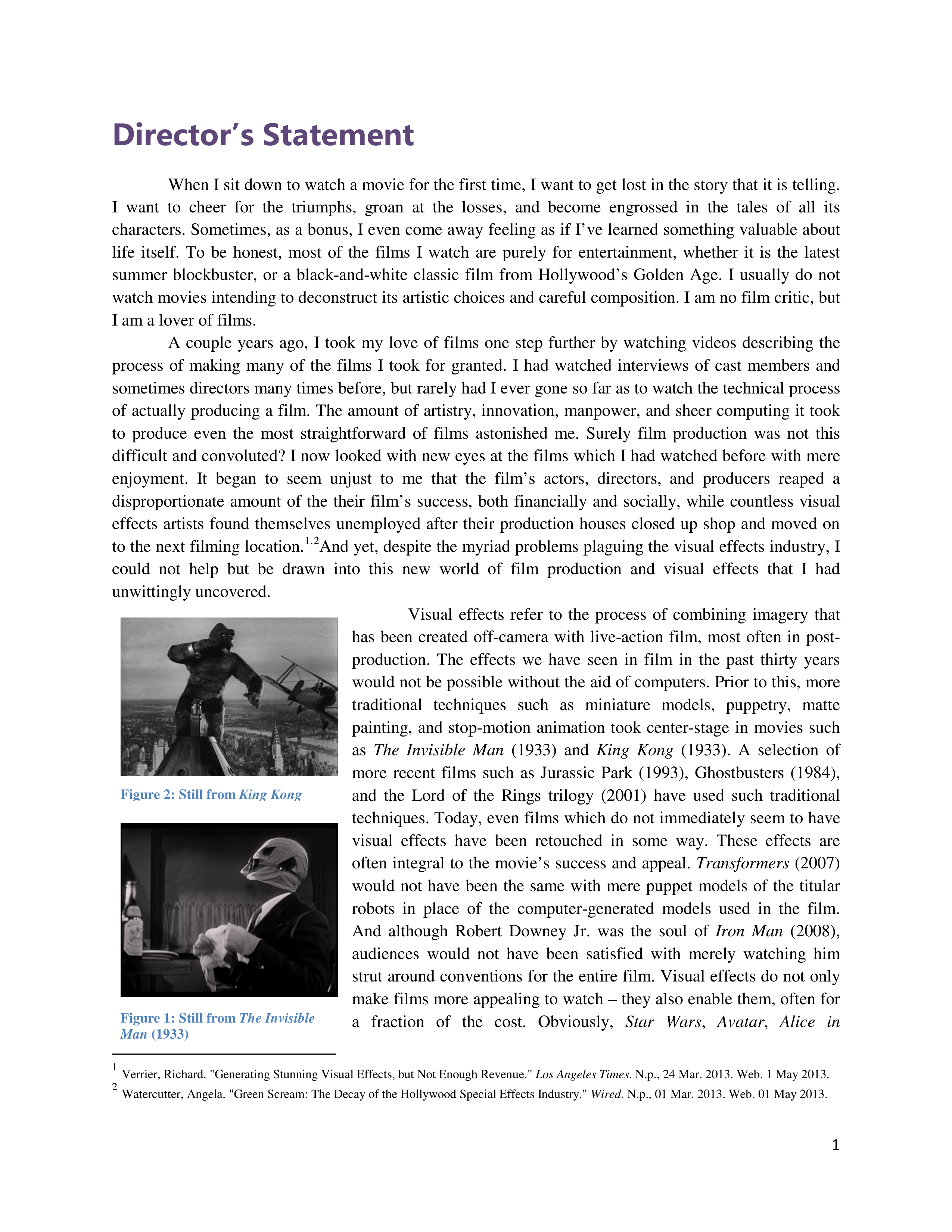
Figure 1: Still from
The Invisible
Man
(1933)
Figure 2: Still from
King Kong

2
Wonderland
, the
Lord of the Rings
trilogy, and countless other films could not have been filmed on-
location.
The technology that is available today to even the amateur filmmaker is leaps and bounds beyond
what was available to professional film studios thirty years ago. Sometimes the relative ease of creating
and integrating special effects can get in the way of telling a truly compelling story. Movie critics widely
panned
Transformers 2: Revenge of the Fallen
, dismissing it as “computer generated hash”
3
for its
gratuitous usage of flashy effects and large explosions rather than focusing on a coherent story.
4
Similarly,
Avatar
, which was widely praised for its groundbreaking use of motion capture technology and
3D pre-visualization techniques, was equally attacked for its derivative story.
5,6
Even today, in an age
where it is possible to simulate battles in outer space and enormous floating aircraft with a high degree of
realism, a film cannot succeed on the strength of its visuals alone.
I mentioned before that I loved films for their stories more than for their art. After I became
aware of the challenges of film production, I began to notice the art more and more. I could no longer
simply enjoy a film for the story it told. Instead, I challenged myself to think more about the movie while
watching it. Since a great number of people had carefully chosen the images and audio passing before my
senses in that moment, surely I could derive something more from the film experience than the story
alone. I still watched movies primarily for purposes of entertainment, but I began to take note of the
movies that were truly good, rather than merely enjoyable. In particular, I paid attention to movies that
were able to use current technology well, with “current technology” referring to visual effects. I loved
finding movies that, despite being filled with obvious special effects, were so enthralling that the
technology behind them just melted away. To me, those movies were magical. How could I forget the fact
that there are no such things as house-elves, or hobbits, or starships? There came a point when I could no
longer be satisfied with watching films. I had to start making them.
The Space Between
is my senior capstone project for my Arts,
Humanities, and Social Sciences concentration in Film & Animation.
It tells the story of Roger and Jane, a college-aged couple who find
themselves drifting apart in a time when virtual reality glasses have
become common-place. These glasses, called the Spectacle-
Projectors, (Spec-Tors for short) allow the user to see the world
around them as anything they desire, though the user is limited by his
or her physical surroundings. Roger and Jane start out with differing
attitudes towards technology, and the contrast between their attitudes
is only exacerbated with the arrival of the Spec-Tors Unlimited, which
allows users to upload their minds to an entirely digital virtual reality.
The concept of escapism is a major driving force behind the
entertainment and recreation industry. Whether it is achieved through
reading novels, watching television shows, playing video games, or
even adventuring into the great outdoors, people have displayed
3
Edelstein, David. "Review." Rev. of
Transformers: Revenge of the Fallen
.
New York Magazine
n.d.: n. pag.
New York Magazine
. 2009. Web.
01 May 2013.
4
Barnes, Brookes. "'Transformers' Sequel Scores Big Win."
New York Times
. N.p., 28 June 2009. Web. 14 Apr. 2013
5
Dargis, Manohla. "James Cameron Creates a New World, Both Cosmic and Cinematic."
New York Times
. N.p., 17 Dec. 2009. Web. 14
Apr.2013.
6
Itzkff, Dave. "Opening Pandora’s Box: The Arguments Over Avatar."
New York Times
. N.p., 22 Dec. 2009. Web. 14 Apr. 2013.
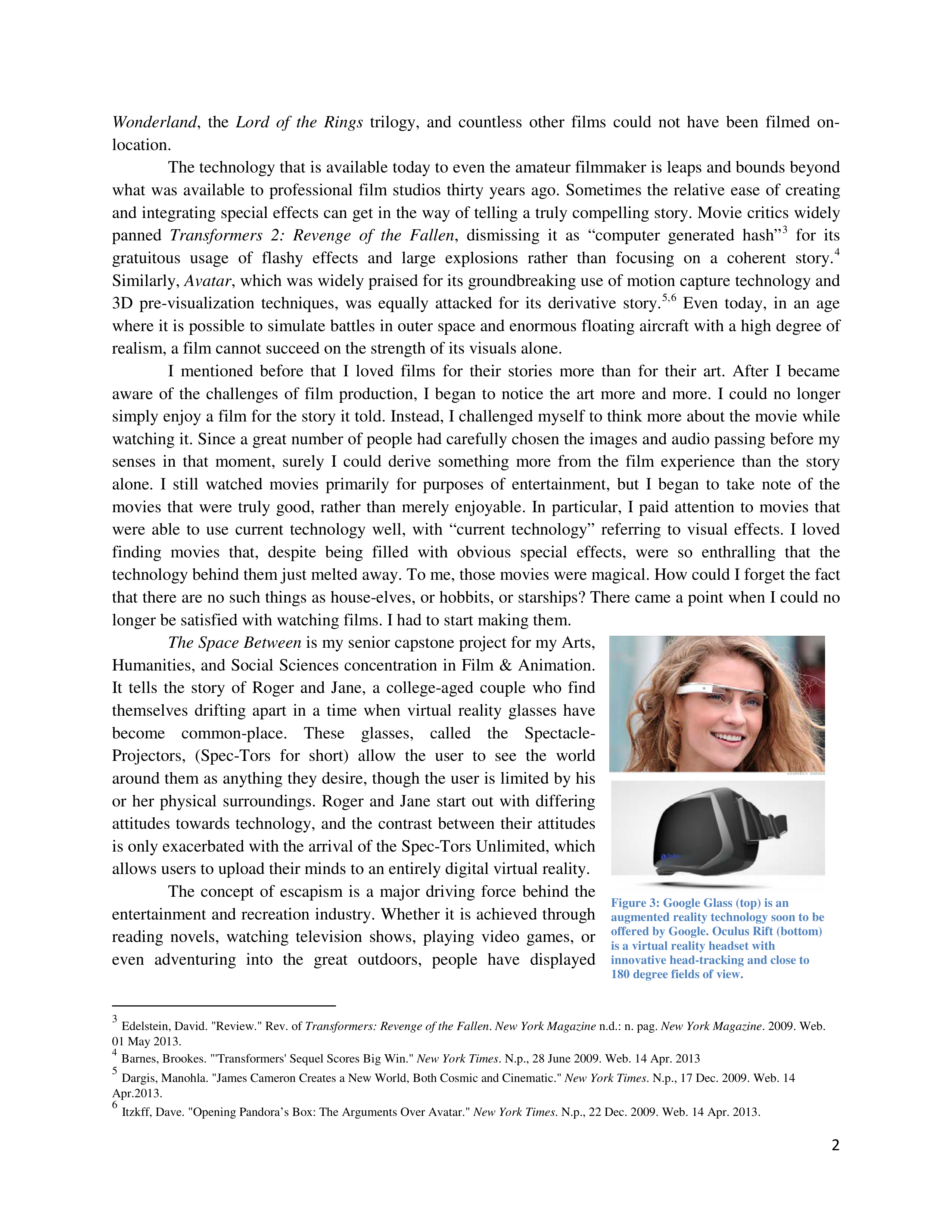
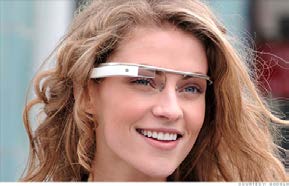
Figure 3: Google Glass (top) is an
augmented reality technology soon to be
offered by Google. Oculus Rift (bottom)
is a virtual reality headset with
innovative head-tracking and close to
180 degree fields of view.

3
tendencies towards wanting to escape their own lives, if only for a little while. The recent hype around
Google Glasses
7
and Oculus Rift
8
show that people cannot wait for the next Big Thing in technology. In
previous years, smartphones, tablets, and Web 2.0 were words on everyone’s lips. In the future, those
words may very well be VR glasses. Society today has already begun to show the effects of this new
technology. It is increasingly rare for young children in the first-world to be without a cellphone, iPod,
tablet, Facebook, Twitter, or the latest gaming console. Countless articles have been written bemoaning
the recession of face-to-face contact and the uptick in useless multi-tasking.
9
However, for every
perceived disadvantage of new technology, there are many benefits. Never before has the average person
been so able to share and receive news from someone completely geographically, culturally, and
socioeconomically removed from himself. Never before has the average person had such broad access to
freely available information. We live in an age when Twitter-enabled grassroots relief efforts can arrive
much more quickly than federal ones to disaster-stricken zones, a supercomputer can be surpassed three
years later by its predecessors, and anyone with an Internet connection can watch the Mars Rover landing
200 million miles away. In short, there is no right answer on whether technological innovation will be the
destruction or salvation of society.
An issue that does hit closer to home is the question of how human relationships will change in
the face of technological advancement. Previous media have explored this question in different ways. In
the novel
MetaGame
, society has essentially been “gamified” to the point where people refer to
themselves by their usernames and clan designations, earn points for their ability to kill other players, and
all the world’s a game.
Snow Crash
by Neal
Stephenson envisions a world where status in the
Metaverse, the successor to the Internet, is
determined by the sharpness of one’s avatar. The
Metaverse is alternately a grittier and sleeker version
of real life, depending on one’s technical acumen.
The Guild
, a web series revolving around the
interactions of people who meet each other after
playing an online Massively-Multiplayer Online
Role-Playing Game (MMORGP) takes a more
comedic stance on how the characters’ reliance on
technology has either made them more socially
dysfunctional or merely amplified their more
awkward personality traits.
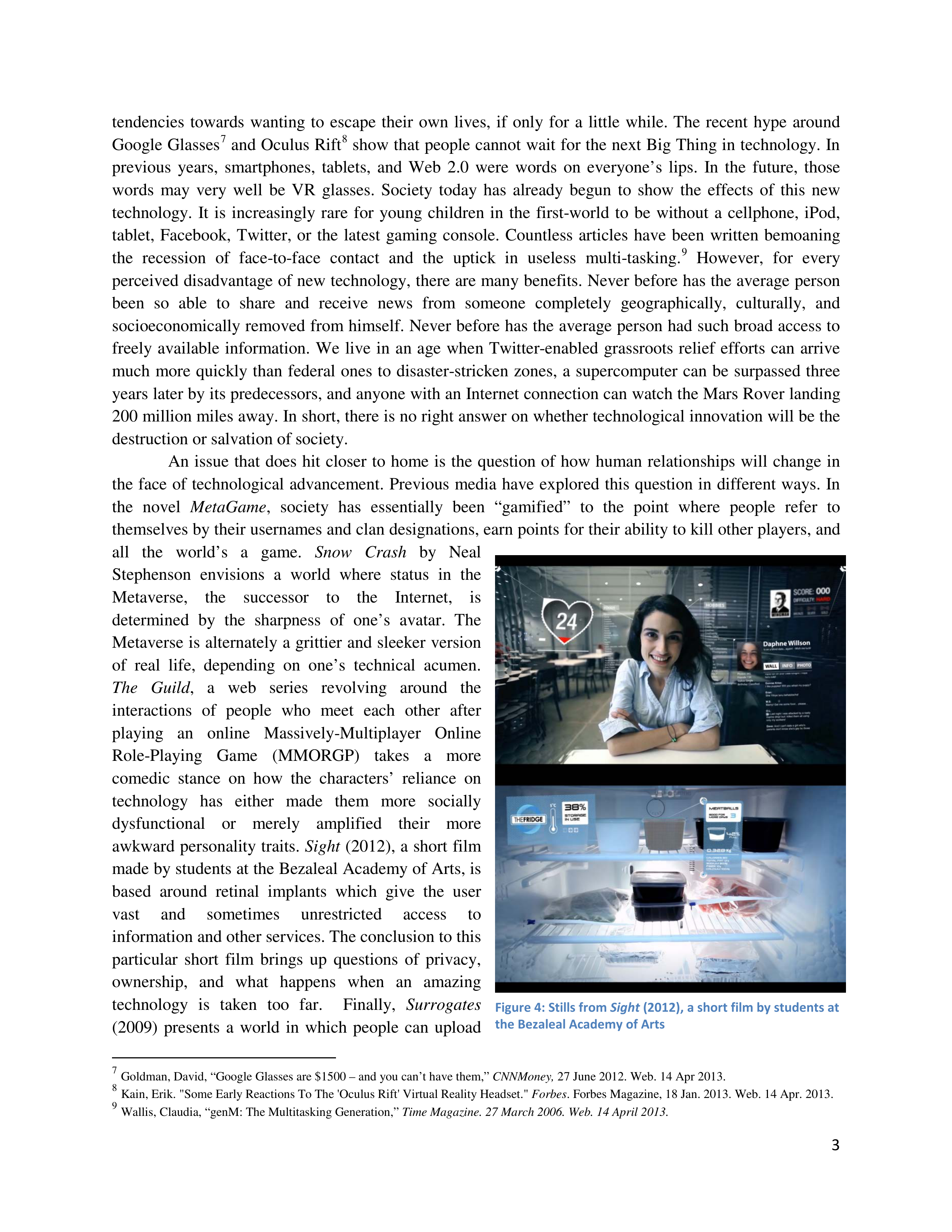
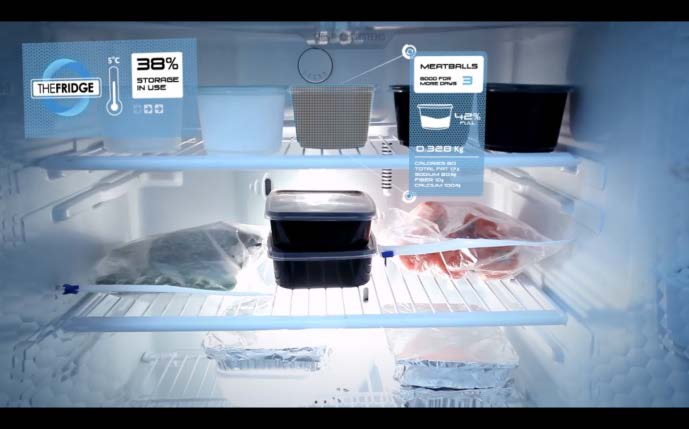
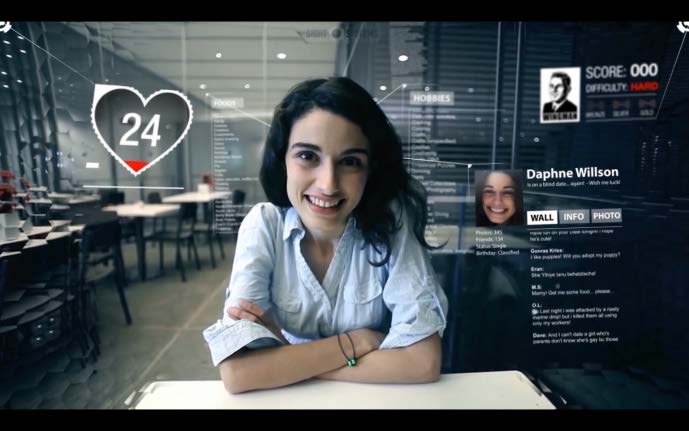
Sight
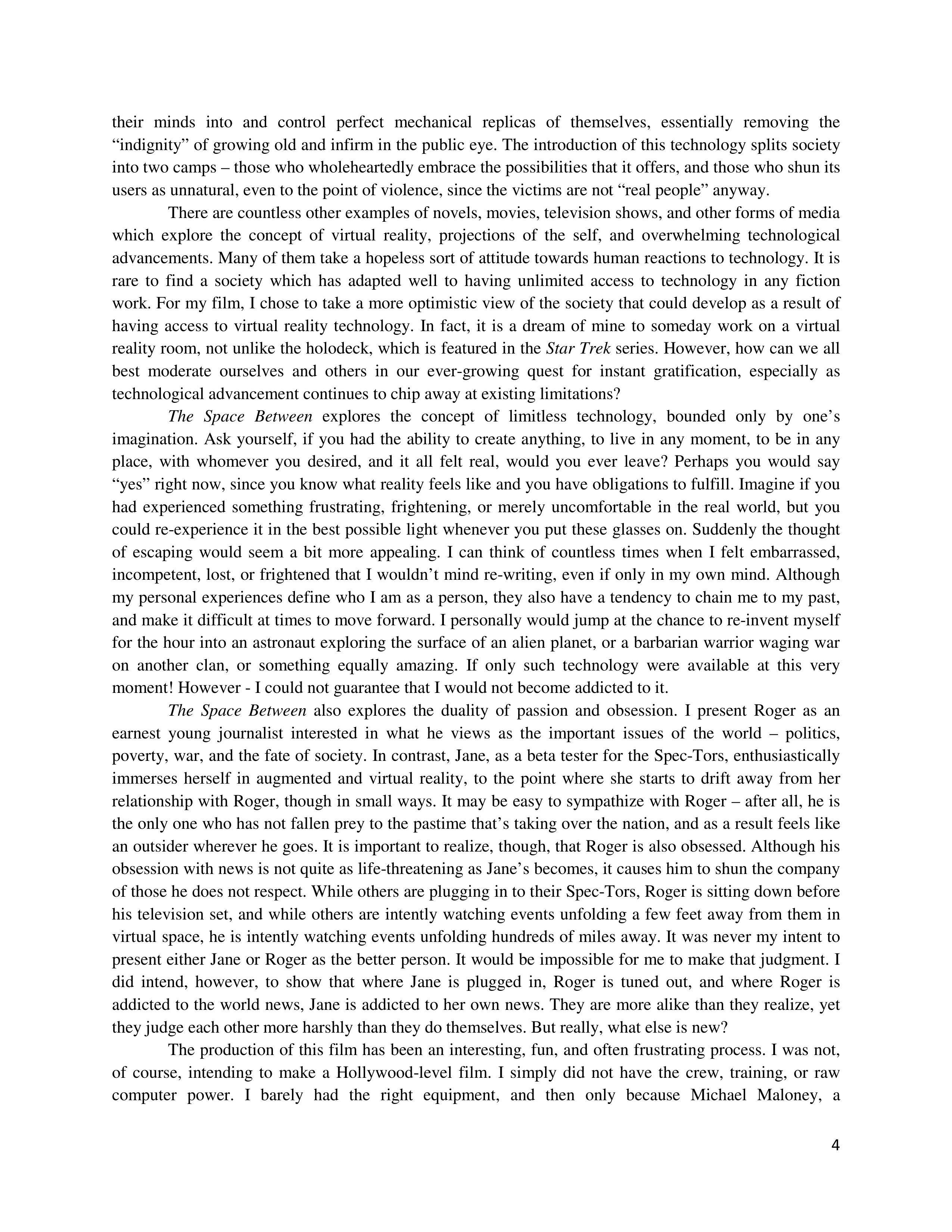
(2012), a short film
made by students at the Bezaleal Academy of Arts, is
based around retinal implants which give the user
vast
and
sometimes
unrestricted
access
to
information and other services. The conclusion to this
particular short film brings up questions of privacy,
ownership, and what happens when an amazing
technology is taken too far. Finally,
Surrogates
(2009) presents a world in which people can upload
7
Goldman, David, “Google Glasses are $1500 – and you can’t have them,”
CNNMoney,
27 June 2012. Web. 14 Apr 2013.
8
Kain, Erik. "Some Early Reactions To The 'Oculus Rift' Virtual Reality Headset."
Forbes
. Forbes Magazine, 18 Jan. 2013. Web. 14 Apr. 2013.
9
Wallis, Claudia, “genM: The Multitasking Generation,”
Time Magazine. 27 March 2006. Web. 14 April 2013.
Figure 4: Stills from
Sight
(2012), a short film by students at
the Bezaleal Academy of Arts
4
their minds into and control perfect mechanical replicas of themselves, essentially removing the
“indignity” of growing old and infirm in the public eye. The introduction of this technology splits society
into two camps – those who wholeheartedly embrace the possibilities that it offers, and those who shun its
users as unnatural, even to the point of violence, since the victims are not “real people” anyway.
There are countless other examples of novels, movies, television shows, and other forms of media
which explore the concept of virtual reality, projections of the self, and overwhelming technological
advancements. Many of them take a hopeless sort of attitude towards human reactions to technology. It is
rare to find a society which has adapted well to having unlimited access to technology in any fiction
work. For my film, I chose to take a more optimistic view of the society that could develop as a result of
having access to virtual reality technology. In fact, it is a dream of mine to someday work on a virtual
reality room, not unlike the holodeck, which is featured in the
Star Trek
series. However, how can we all
best moderate ourselves and others in our ever-growing quest for instant gratification, especially as
technological advancement continues to chip away at existing limitations?
The Space Between
explores the concept of limitless technology, bounded only by one’s
imagination. Ask yourself, if you had the ability to create anything, to live in any moment, to be in any
place, with whomever you desired, and it all felt real, would you ever leave? Perhaps you would say
“yes” right now, since you know what reality feels like and you have obligations to fulfill. Imagine if you
had experienced something frustrating, frightening, or merely uncomfortable in the real world, but you
could re-experience it in the best possible light whenever you put these glasses on. Suddenly the thought
of escaping would seem a bit more appealing. I can think of countless times when I felt embarrassed,
incompetent, lost, or frightened that I wouldn’t mind re-writing, even if only in my own mind. Although
my personal experiences define who I am as a person, they also have a tendency to chain me to my past,
and make it difficult at times to move forward. I personally would jump at the chance to re-invent myself
for the hour into an astronaut exploring the surface of an alien planet, or a barbarian warrior waging war
on another clan, or something equally amazing. If only such technology were available at this very
moment! However - I could not guarantee that I would not become addicted to it.
The Space Between
also explores the duality of passion and obsession. I present Roger as an
earnest young journalist interested in what he views as the important issues of the world – politics,
poverty, war, and the fate of society. In contrast, Jane, as a beta tester for the Spec-Tors, enthusiastically
immerses herself in augmented and virtual reality, to the point where she starts to drift away from her
relationship with Roger, though in small ways. It may be easy to sympathize with Roger – after all, he is
the only one who has not fallen prey to the pastime that’s taking over the nation, and as a result feels like
an outsider wherever he goes. It is important to realize, though, that Roger is also obsessed. Although his
obsession with news is not quite as life-threatening as Jane’s becomes, it causes him to shun the company
of those he does not respect. While others are plugging in to their Spec-Tors, Roger is sitting down before
his television set, and while others are intently watching events unfolding a few feet away from them in
virtual space, he is intently watching events unfolding hundreds of miles away. It was never my intent to
present either Jane or Roger as the better person. It would be impossible for me to make that judgment. I
did intend, however, to show that where Jane is plugged in, Roger is tuned out, and where Roger is
addicted to the world news, Jane is addicted to her own news. They are more alike than they realize, yet
they judge each other more harshly than they do themselves. But really, what else is new?
The production of this film has been an interesting, fun, and often frustrating process. I was not,
of course, intending to make a Hollywood-level film. I simply did not have the crew, training, or raw
computer power. I barely had the right equipment, and then only because Michael Maloney, a

5
professional photographer and videographer who works with Olin, was able to loan me his equipment,
studio, and time. The mentorship, advice, and training which I have received from him are most of the
reasons why the special effects sequences of my film are even possible. Despite these many limitations,
though, I wanted to see how far I could get on my own. Armed with a camera, tripod, sound recorder,
shotgun microphone, green screen, and a one-year subscription to Vue xStream, I set out to produce a 15-
minute short film about virtual reality.
Since my goal was to make a combined animated and live-action short film, I put some conscious
limitations on my filming style from the beginning. I decided to keep my shots mostly still, especially for
the scenes featuring the one animated character in the film, both to emphasize the stagnant nature of the
main characters’ relationship as well as to minimize the amount of camera tracking I would have to do in
post-production to match the animated sequences with the live-action footage. I favored quick cuts over
long clips in the editing process and filmed each scene from multiple angles to give myself as many
footage choices as possible. Finally, I chose to film all of the live action scenes at Olin in conventional
college settings – dorm rooms, libraries, lounges, parking lots, etc. – to minimize the amount of
transportation for myself, my actors, and my equipment.
A huge benefit of using visual effects in my film, however, is that I am able to place my story in
vastly different areas which would otherwise be inaccessible. When Roger first enters the Spec-Tor, he
begins to think about what it would be like to stand on the Presidential debate stage, and quickly finds it
materializing before his eyes. When Roger finds Jane in the Spec-Tors Unlimited, he realizes that he has
come upon a city once devastated by a nuclear strike. These environments would be impossible for me to
film in real life, to say the least, and yet through visual effects, I can create fairly good approximations to
use as backdrops for those scenes. They are not breathtakingly real, by any means, but I did not intend for
them to distract from the dialogue between Roger and Jane anyway. I intended to use visual effects as a
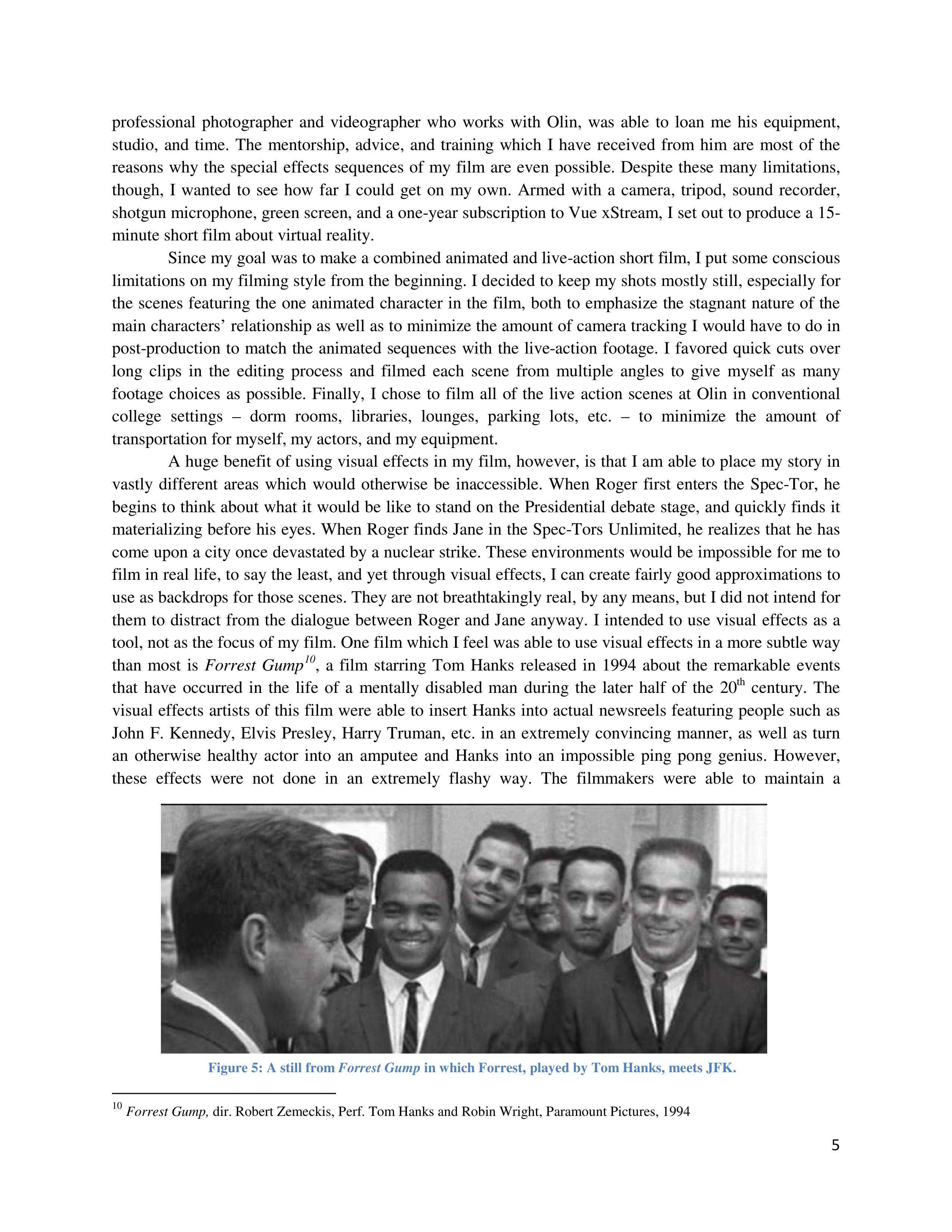
tool, not as the focus of my film. One film which I feel was able to use visual effects in a more subtle way
than most is
Forrest Gump
10
, a film starring Tom Hanks released in 1994 about the remarkable events
that have occurred in the life of a mentally disabled man during the later half of the 20
th
century. The
visual effects artists of this film were able to insert Hanks into actual newsreels featuring people such as
John F. Kennedy, Elvis Presley, Harry Truman, etc. in an extremely convincing manner, as well as turn
an otherwise healthy actor into an amputee and Hanks into an impossible ping pong genius. However,
these effects were not done in an extremely flashy way. The filmmakers were able to maintain a
10
Forrest Gump,
dir. Robert Zemeckis, Perf. Tom Hanks and Robin Wright, Paramount Pictures, 1994
Figure 5: A still from
Forrest Gump
in which Forrest, played by Tom Hanks, meets JFK.




6
Figure 8: EVE, one of the main
characters of
WALL-E
(2008), a 3D
animated Disney film.
consistent focus on the plotline and characters of
Forrest Gump
, even as they used visual effects to
achieve impossible scenarios
.
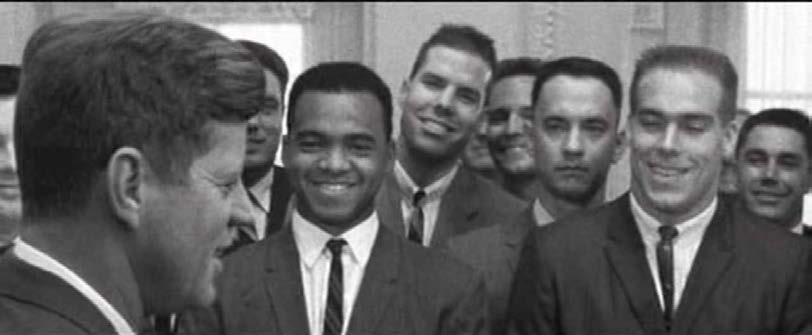
On the opposite end of the spectrum, in terms of
flashy visual effects, is the 1998 film
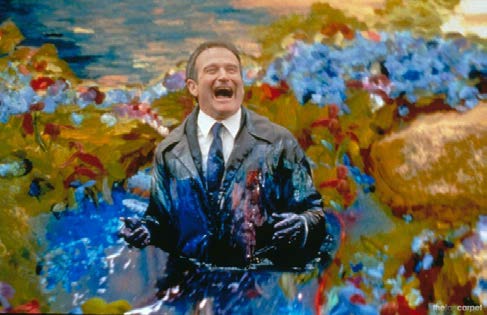
What Dreams
May Come
11
, starring Robin Williams, Cuba
Gooding Jr., and Annabella Sciorra.
What Dreams
May Come
tells the story of a man’s death – and
the afterlife that follows. It features gorgeous
scenery reminiscent of oil paintings of many styles,
obviously computer generated, but very fitting for
the subject material. The colors used are vibrant,
casting us into a surreal mood as soon as Williams’
character discovers himself in the afterlife – and its
limitless nature. Since the subject matter itself is
fantastic to begin with, it is somewhat easier to
suspend one’s disbelief of the visuals presented
and to follow along with the story.
The last piece of the visual effects in my short film has to do
with its smallest character. V.R.E.N. is the artificial intelligence who
“lives” in Jane’s computers and runs her Spec-Tor simulations. He takes
the form of a small, round robot with glowing blue eyes. I intentionally
kept his model simple so as not to distract from the rest of the film, as
well as to cut down on rendering time. As a result, he shows emotion
primarily through his eyes, voice, and movements. When designing
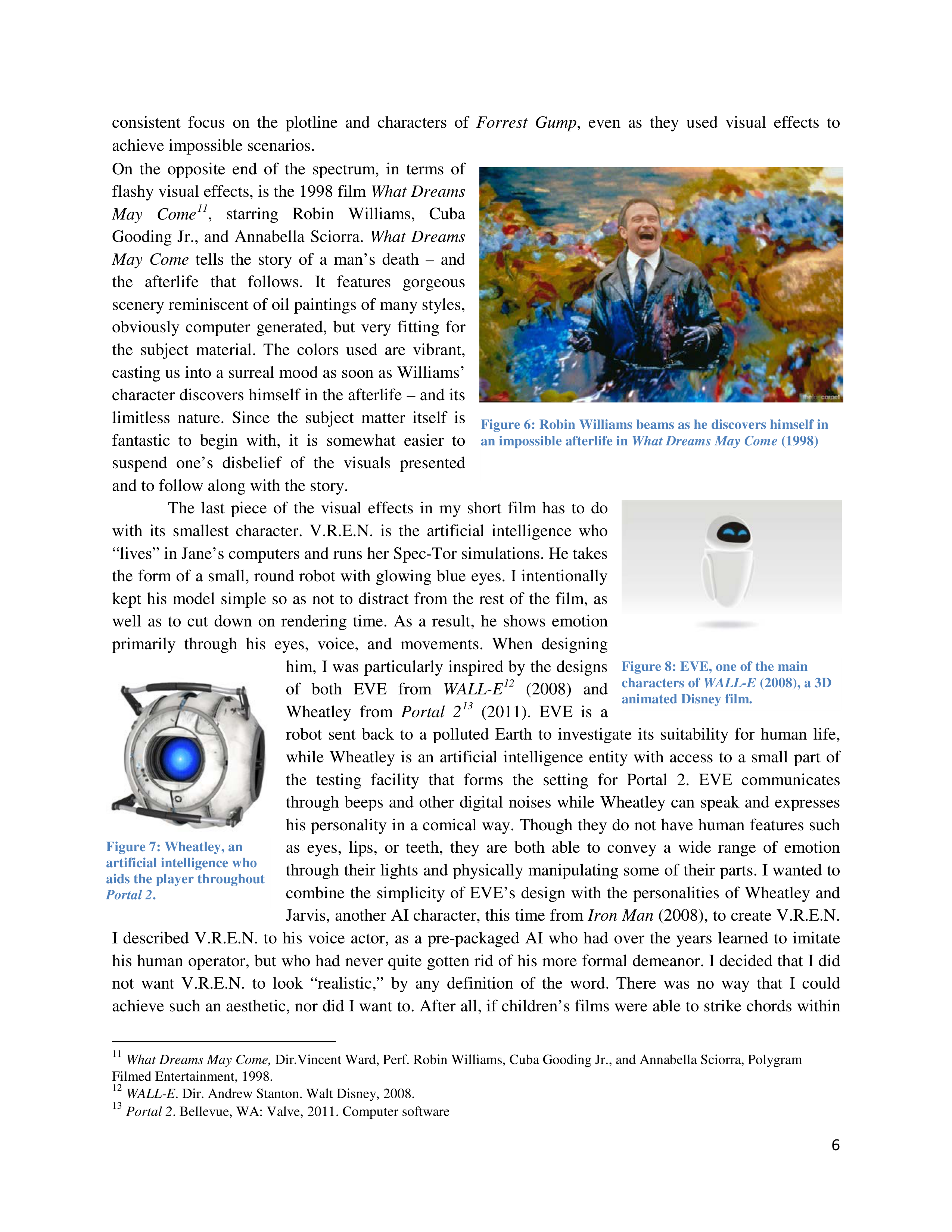
him, I was particularly inspired by the designs
of both EVE from
WALL-E
12
(2008) and
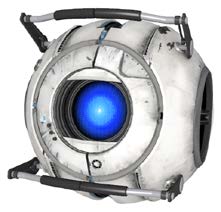
Wheatley from
Portal 2
13
(2011). EVE is a
robot sent back to a polluted Earth to investigate its suitability for human life,
while Wheatley is an artificial intelligence entity with access to a small part of
the testing facility that forms the setting for Portal 2. EVE communicates
through beeps and other digital noises while Wheatley can speak and expresses
his personality in a comical way. Though they do not have human features such
as eyes, lips, or teeth, they are both able to convey a wide range of emotion
through their lights and physically manipulating some of their parts. I wanted to
combine the simplicity of EVE’s design with the personalities of Wheatley and
Jarvis, another AI character, this time from
Iron Man
(2008), to create V.R.E.N.
I described V.R.E.N. to his voice actor, as a pre-packaged AI who had over the years learned to imitate
his human operator, but who had never quite gotten rid of his more formal demeanor. I decided that I did
not want V.R.E.N. to look “realistic,” by any definition of the word. There was no way that I could
achieve such an aesthetic, nor did I want to. After all, if children’s films were able to strike chords within
11
What Dreams May Come,
Dir.Vincent Ward, Perf. Robin Williams, Cuba Gooding Jr., and Annabella Sciorra, Polygram
Filmed Entertainment, 1998.
12
WALL-E
. Dir. Andrew Stanton. Walt Disney, 2008.
13
Portal 2
. Bellevue, WA: Valve, 2011. Computer software
Figure 7: Wheatley, an
artificial intelligence who
aids the player throughout
Portal 2
.
Figure 6: Robin Williams beams as he discovers himself in
an impossible afterlife in
What Dreams May Come
(1998)
7
their viewers with such non-humanoids as fish (
Finding Nemo,
2003), cars (
Cars
, 2006), and even
toasters, (
The Brave Little Toaster
, 1987), then surely that proved that audiences could relate to an
expressive robot such as V.R.E.N. Indeed, V.R.E.N. could provide a bit of silliness that the film otherwise
lacked. I could use V.R.E.N. to inject a touch of humor and levity into the situation, as Roger sat brooding
with his newspapers and Jane studiously ignored reality. I thought it would be funny if the artificial
intelligence, the only one without any grasp of what reality was, were the one to bring the two together
and heal their relationship even more than either of them was able.
After five long months of frantic writing, storyboarding, casting, filming, lighting, animating,
rigging, texturing, editing, and rendering, I am pleased to present my short film,
The Space Between
. I can
no longer watch any films, videos, or television episodes without attempting to dissect its motivation, and
I have fallen irrevocably in love with the process of telling a visual story. My film may not be the most
polished specimen of animation or live-action film, but it is my own, and it tells a story dear to my heart.
The Space Between
represents the life that I aspire towards – an existence free of judgment, a space
between extremes, and the area that exists between the lines defined for us by our surroundings. I hope
that it comes to mean something to you as well.
-
Lillian Tseng