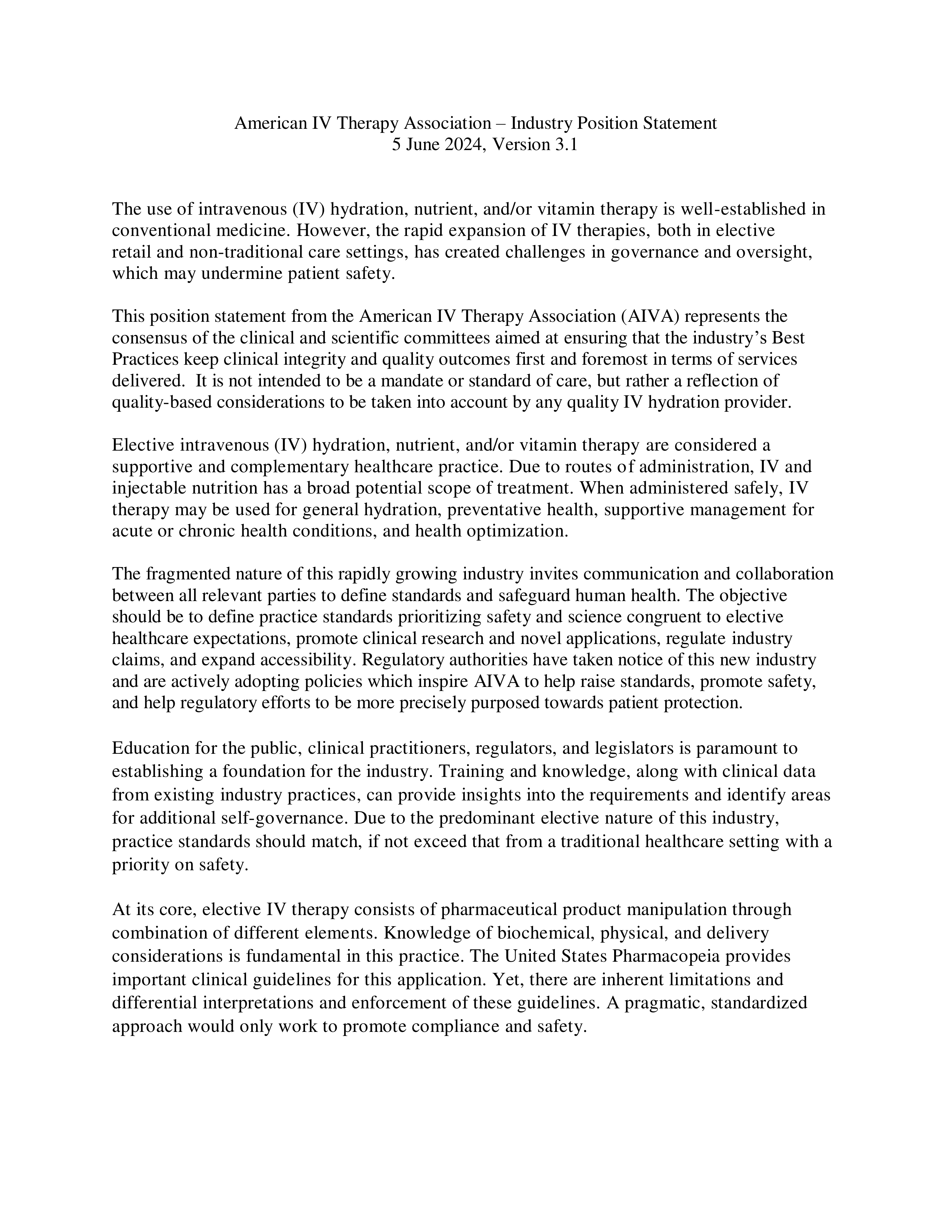
American IV Therapy Association – Industry Position Statement
5 June 2024, Version 3.1
The use of intravenous (IV) hydration, nutrient, and/or vitamin therapy is well-established in
conventional medicine. However, the rapid expansion of IV therapies, both in elective
retail and non-traditional care settings, has created challenges in governance and oversight,
which may undermine patient safety.
This position statement from the American IV Therapy Association (AIVA) represents the
consensus of the clinical and scientific committees aimed at ensuring that the industry’s Best
Practices keep clinical integrity and quality outcomes first and foremost in terms of services
delivered. It is not intended to be a mandate or standard of care, but rather a reflection of
quality-based considerations to be taken into account by any quality IV hydration provider.
Elective intravenous (IV) hydration, nutrient, and/or vitamin therapy are considered a
supportive and complementary healthcare practice. Due to routes of administration, IV and
injectable nutrition has a broad potential scope of treatment. When administered safely, IV
therapy may be used for general hydration, preventative health, supportive management for
acute or chronic health conditions, and health optimization.
The fragmented nature of this rapidly growing industry invites communication and collaboration
between all relevant parties to define standards and safeguard human health. The objective
should be to define practice standards prioritizing safety and science congruent to elective
healthcare expectations, promote clinical research and novel applications, regulate industry
claims, and expand accessibility. Regulatory authorities have taken notice of this new industry
and are actively adopting policies which inspire AIVA to help raise standards, promote safety,
and help regulatory efforts to be more precisely purposed towards patient protection.
Education for the public, clinical practitioners, regulators, and legislators is paramount to
establishing a foundation for the industry. Training and knowledge, along with clinical data
from existing industry practices, can provide insights into the requirements and identify areas
for additional self-governance. Due to the predominant elective nature of this industry,
practice standards should match, if not exceed that from a traditional healthcare setting with a
priority on safety.
At its core, elective IV therapy consists of pharmaceutical product manipulation through
combination of different elements. Knowledge of biochemical, physical, and delivery
considerations is fundamental in this practice. The United States Pharmacopeia provides
important clinical guidelines for this application. Yet, there are inherent limitations and
differential interpretations and enforcement of these guidelines. A pragmatic, standardized
approach would only work to promote compliance and safety.