
AI healthcare refers to the use of artificial intelligence technologies to support medical diagnosis, clinical decision-making, patient documentation, and healthcare data analysis. These systems help clinicians process large volumes of medical information, detect patterns in imaging and lab results, and automate time-consuming administrative tasks. In 2026, AI healthcare tools are widely used by hospitals, researchers, and healthcare organizations to improve diagnostic accuracy, streamline workflows, and enable more data-driven patient care.
What Are AI Healthcare Tools
AI healthcare tools are software systems that use artificial intelligence to support medical professionals in diagnosis, patient care, and healthcare operations. These tools analyze large amounts of medical data such as clinical records, medical images, laboratory results, and genomic information to generate useful insights.
Hospitals and clinics use AI healthcare tools to improve diagnostic accuracy, automate administrative tasks, and assist doctors in making evidence-based decisions. Common applications include medical imaging analysis, clinical documentation automation, disease prediction, and healthcare data analytics.
By processing complex medical data quickly, AI healthcare tools help healthcare organizations deliver more efficient, data-driven, and personalized patient care.
List of Best AI Healthcare Tools
The top AI healthcare tools used by hospitals, clinicians, and healthcare organizations include:
- AMBOSS LiSA AI
- Glass Health AI
- Tempus AI
- Aidoc AI
- Viz.ai AI
- PathAI
- Abridge AI
- Keragon AI
- Arcadia AI
- Azure Health Data Services AI
These platforms support different areas of healthcare including clinical diagnosis, imaging analysis, pathology, healthcare documentation, and hospital data infrastructure.
AI Healthcare Tools Comparison Table
The following comparison helps healthcare professionals evaluate the most important AI healthcare platforms based on their core capabilities, use cases, and pricing models.
| Tool | Best For | Key Features | Category | Pricing |
|---|---|---|---|---|
| AMBOSS LiSA AI | Medical knowledge & clinical questions | RAG-based medical assistant, evidence-based answers | Clinical decision support | Subscription |
| Glass Health AI | Clinical diagnosis planning | AI-generated differential diagnosis & treatment plans | Clinical decision support | Subscription |
| Tempus AI | Precision medicine & oncology | Genomics analysis, clinical data AI, treatment insights | Precision medicine | Enterprise |
| Aidoc AI | Radiology triage | Imaging AI, urgent case prioritization | Medical imaging | Enterprise |
| Viz.ai AI | Disease detection | Real-time imaging alerts, stroke detection | Imaging diagnostics | Enterprise |
| PathAI | Pathology diagnostics | Deep learning pathology analysis | Digital pathology | Enterprise |
| Abridge AI | Clinical documentation | AI scribe, conversation-to-notes | Medical documentation | Enterprise |
| Keragon AI | Healthcare workflow automation | No-code healthcare workflow automation | Operations automation | Subscription |
| Arcadia AI | Healthcare data analytics | Population health analytics | Healthcare analytics | Enterprise |
| Azure Health Data Services AI | Healthcare data infrastructure | Data standardization, AI integration | Healthcare cloud platform | Pay-as-you-go |
Healthcare organizations often combine multiple tools to support diagnostics, clinical documentation, operational automation, and medical data analytics.
Below is a detailed breakdown of how each AI healthcare platform works and where it fits into modern healthcare systems.
1. AMBOSS LiSA AI
What is AMBOSS LiSA AI
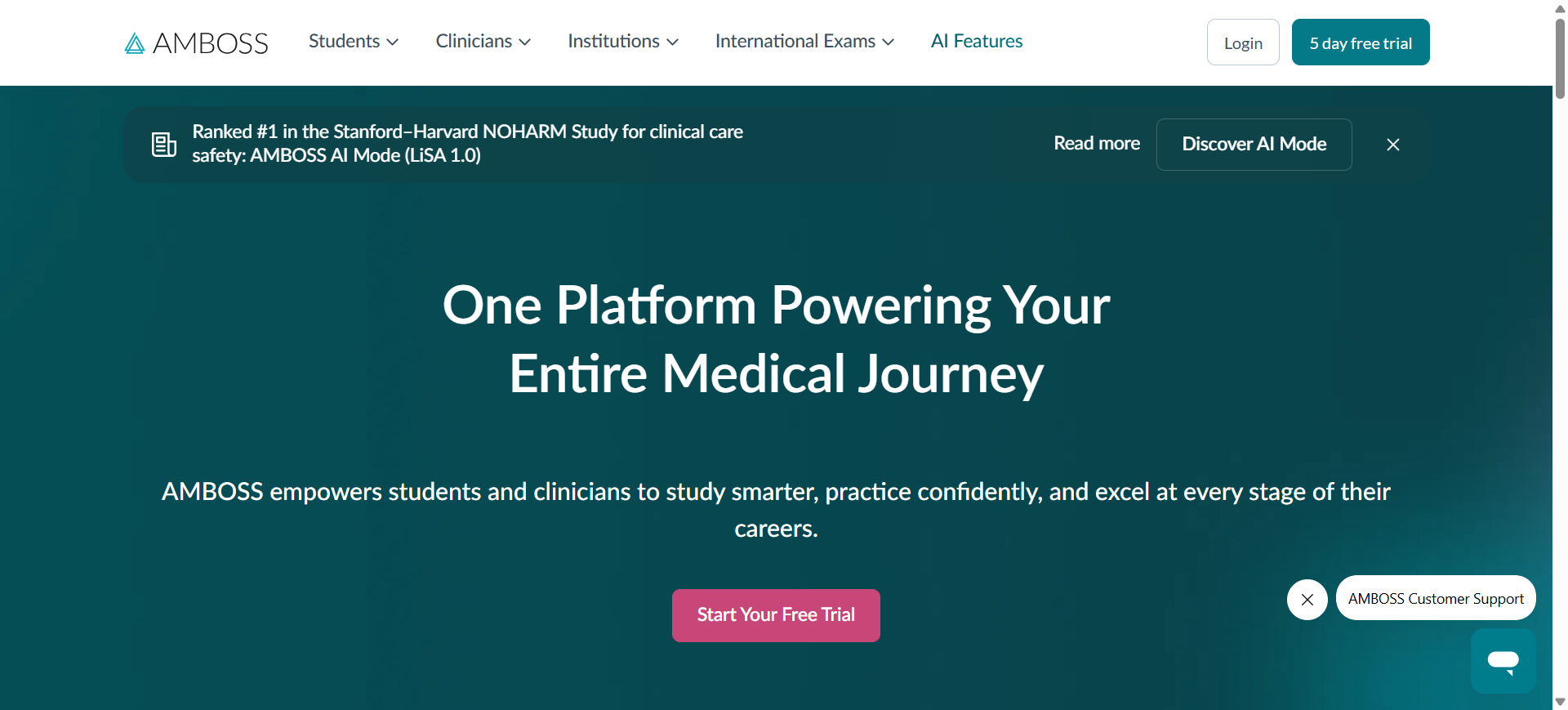
AMBOSS LiSA is a clinical AI assistant designed to help doctors quickly find evidence-based medical information. It allows clinicians to ask medical questions in natural language and receive answers grounded in trusted clinical sources. The system connects queries to curated medical guidelines, drug databases, and the AMBOSS medical knowledge base to support clinical decision-making.
LiSA is built specifically for healthcare professionals and helps them access relevant medical evidence at the point of care without searching multiple databases.
How to Use AMBOSS LiSA AI for Healthcare
- Enter a clinical question or medical topic in natural language.
- The AI analyzes the query and searches curated medical sources.
- Review the evidence-based answer with referenced guidelines and data.
- Use the insights to support diagnosis, treatment planning, or clinical learning.
Benefits of Using AMBOSS LiSA AI
- Provides evidence-based answers grounded in trusted medical sources
- Saves time when researching clinical guidelines and treatment options
- Helps clinicians verify diagnoses and treatment decisions quickly
- Reduces the need to search across multiple medical databases
- Supports continuous learning for doctors and medical students
Use Cases of AMBOSS LiSA AI for Healthcare
A physician evaluating a patient with complex symptoms can ask LiSA about possible diagnoses and treatment guidelines. The tool quickly summarizes relevant clinical evidence, helping the doctor review updated recommendations before making a treatment decision.
Who Should Use It
- Physicians and clinicians
- Medical students
- Hospital care teams
- Medical educators
- Healthcare researchers
Pros
- Uses curated medical knowledge sources
- Designed specifically for clinical environments
- Provides structured evidence-based answers
Cons
- Requires medical expertise to interpret results
- Access often limited to AMBOSS platform users
Pricing
AMBOSS LiSA AI is included within the AMBOSS medical platform subscription. Pricing varies by region and user type, typically offered through monthly or annual plans for clinicians, institutions, and medical students.
2. Glass Health AI
What is Glass Health AI
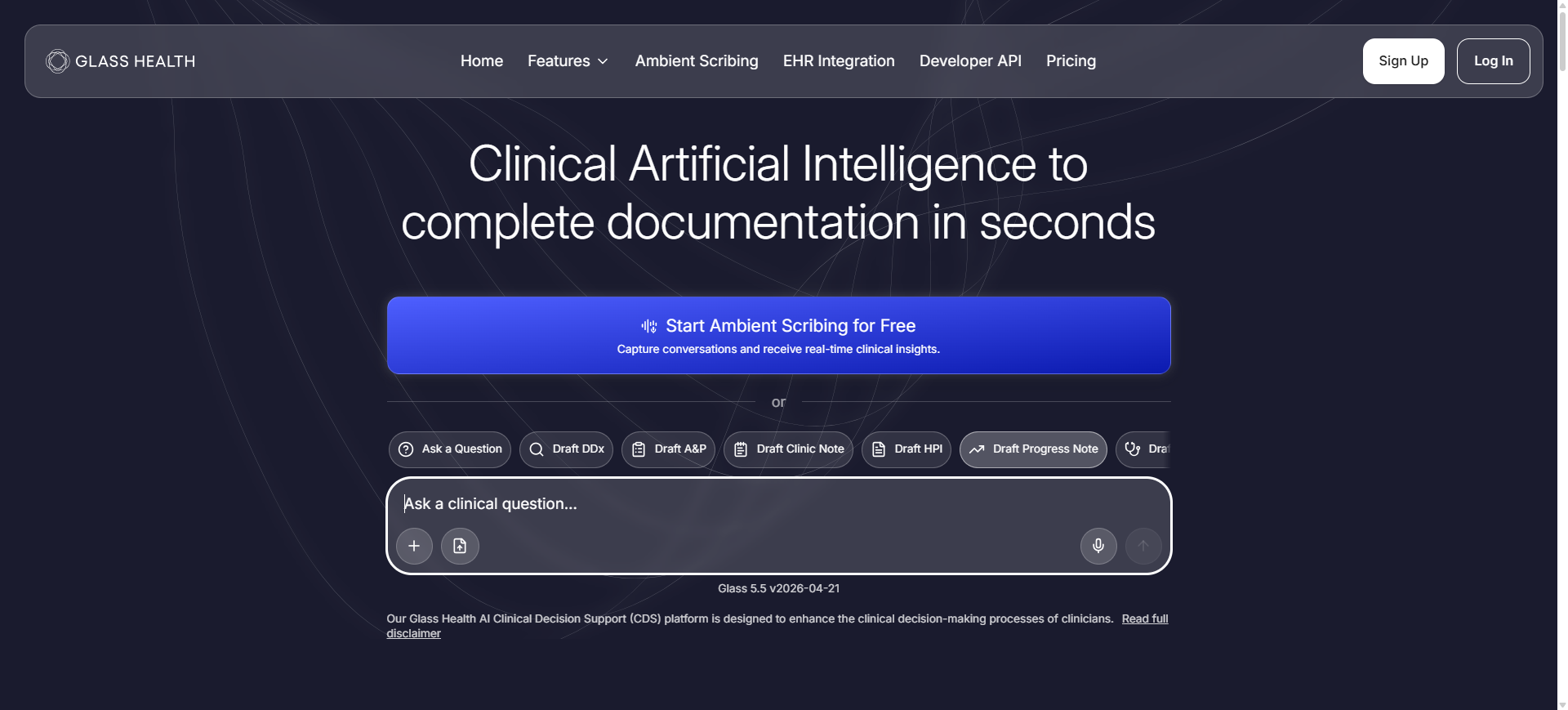
Glass Health is an AI-powered clinical decision support platform designed to help clinicians evaluate patient symptoms and develop possible diagnoses. It analyzes clinical queries and patient data to generate differential diagnoses and evidence-based treatment suggestions. The system acts as a clinical “copilot,” helping physicians review medical possibilities and plan next steps during patient care.
Glass Health AI focuses on improving diagnostic reasoning by combining medical knowledge retrieval with AI-powered analysis.
How to Use Glass Health AI for Healthcare
- Enter patient symptoms, medical history, or a clinical question into the platform.
- The AI analyzes the information and generates possible diagnoses.
- Review the suggested differential diagnoses and recommended next steps.
- Use the insights to support clinical reasoning and treatment planning.
Benefits of Using Glass Health AI
- Helps clinicians generate structured differential diagnoses quickly
- Supports evidence-based treatment planning
- Reduces time spent researching medical references
- Improves diagnostic reasoning in complex cases
- Assists clinicians in evaluating multiple possible conditions
Use Cases of Glass Health AI for Healthcare
A doctor evaluating a patient with unexplained symptoms can input the patient’s clinical data into Glass Health AI. The system generates a list of possible diagnoses and suggests relevant tests or treatments, helping the physician evaluate potential conditions more efficiently.
Who Should Use It
- Physicians and clinicians
- Emergency care providers
- Medical residents and trainees
- Hospital care teams
- Medical researchers
Pros
- Designed specifically for clinical diagnosis support
- Generates differential diagnoses quickly
- Provides evidence-based medical insights
Cons
- Requires clinician oversight for medical decisions
- May depend on accurate patient data input
Pricing
Glass Health AI offers a freemium access model with limited diagnostic queries per month. Professional plans with expanded features and unlimited use are typically offered through monthly or institutional subscriptions for healthcare organizations.
3. Tempus AI
What is Tempus AI
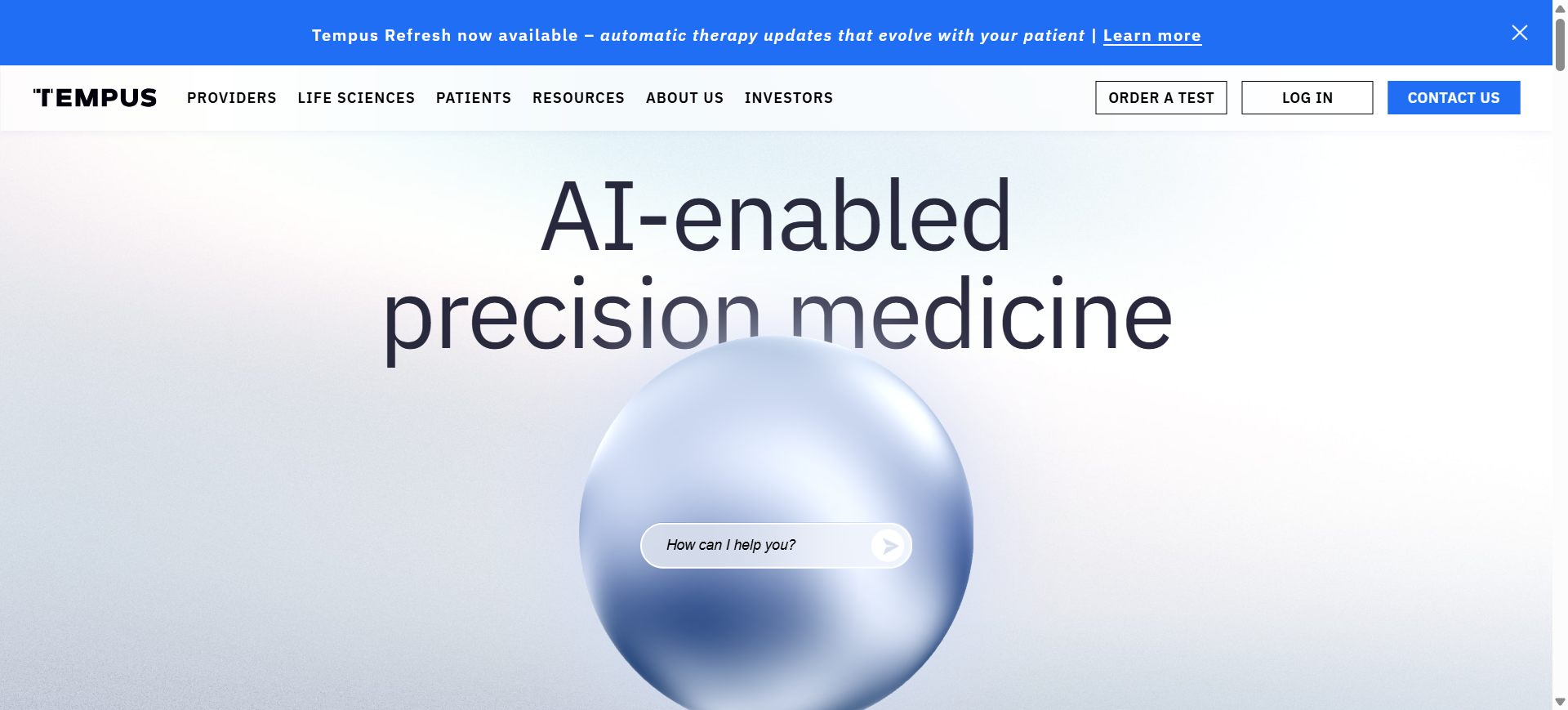
Tempus is a precision medicine platform that uses artificial intelligence to analyze clinical and molecular data to support personalized treatment decisions. The platform combines genomic sequencing, patient records, and AI models to identify patterns that help doctors select targeted therapies. It focuses heavily on oncology but also supports other medical fields such as cardiology and mental health.
Tempus has built one of the largest datasets of clinical and molecular health information, allowing physicians to make data-driven decisions for individual patients.
How to Use Tempus AI for Healthcare
- Physicians order genomic or molecular diagnostic tests through the Tempus platform.
- The system analyzes patient genetic data alongside clinical medical records.
- AI models identify patterns and potential treatment options.
- Clinicians receive insights that support personalized therapy decisions.
Benefits of Using Tempus AI
- Enables personalized treatment based on genetic and clinical data
- Helps physicians identify targeted therapies for cancer patients
- Supports clinical trial matching for eligible patients
- Provides faster analysis of complex medical datasets
- Improves research and drug development insights
Use Cases of Tempus AI for Healthcare
An oncologist treating a cancer patient can use Tempus AI to analyze the patient’s tumor DNA and clinical history. The platform identifies potential targeted therapies or relevant clinical trials, helping the doctor design a personalized treatment plan.
Who Should Use It
- Oncologists and cancer specialists
- Hospitals and health systems
- Genomics research teams
- Pharmaceutical companies
- Precision medicine programs
Pros
- Strong focus on precision oncology
- Uses large real-world medical datasets
- Supports clinical trial matching
Cons
- Primarily used by large healthcare systems
- Requires genomic testing infrastructure
Pricing
Tempus AI pricing is typically enterprise-based and tied to diagnostic testing or data platform usage. Costs vary depending on genomic testing services, clinical analytics tools, and partnerships with hospitals or pharmaceutical companies.
4. Aidoc AI
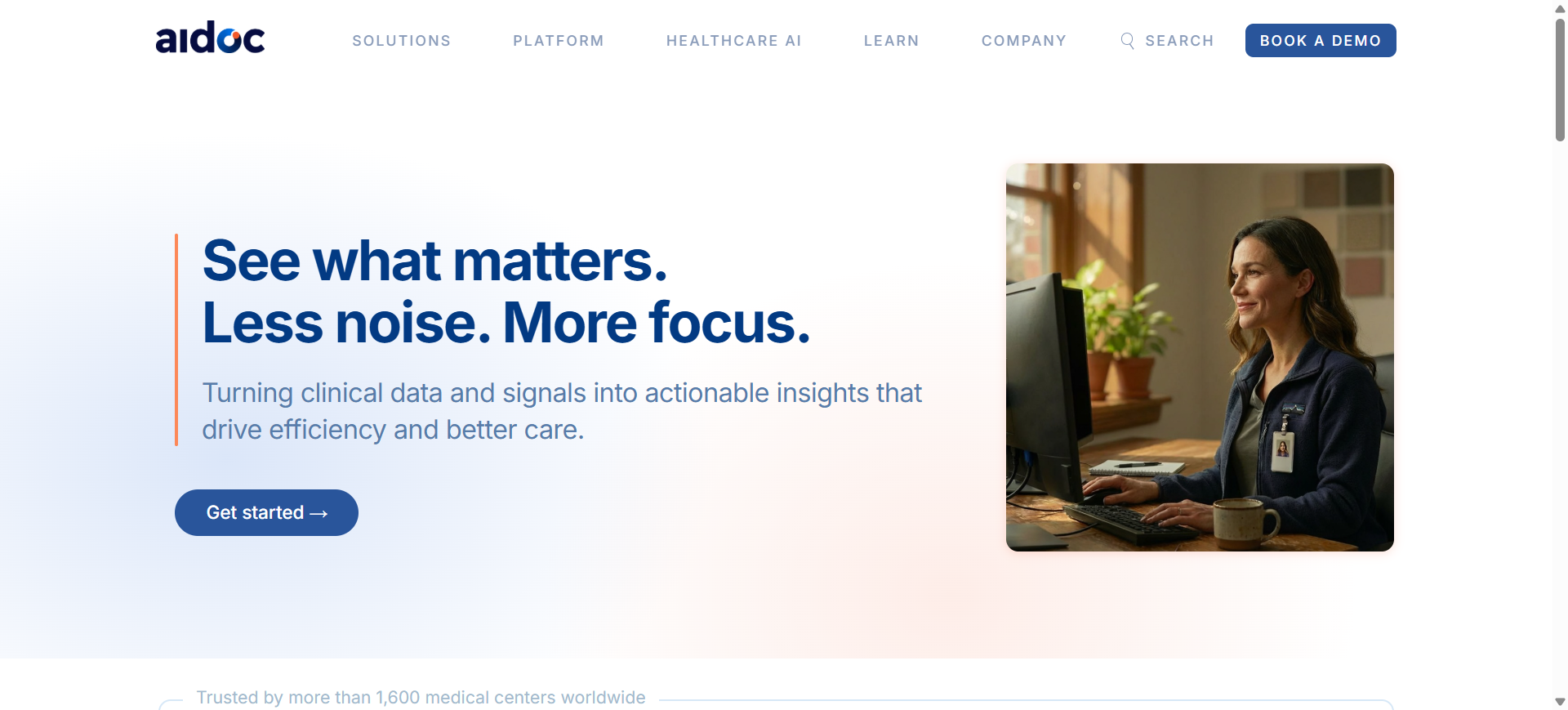
What is Aidoc AI
Aidoc is a clinical artificial intelligence platform that analyzes medical imaging to detect critical conditions faster. It uses deep learning algorithms to automatically review CT scans and other imaging data, helping radiologists identify urgent abnormalities such as strokes, pulmonary embolisms, or internal bleeding.
The platform runs continuously in the background and flags high-risk cases for immediate attention, allowing care teams to prioritize urgent patients and coordinate treatment quickly.
How to Use Aidoc AI for Healthcare
- Medical imaging scans (CT or other modalities) are uploaded to the hospital’s radiology system.
- Aidoc AI automatically analyzes the images using its AI algorithms.
- The system detects potential abnormalities and flags urgent findings.
- Radiologists and care teams receive alerts and prioritize critical cases.
Benefits of Using Aidoc AI
- Detects life-threatening conditions in medical imaging faster
- Helps radiologists prioritize urgent patient cases
- Reduces delays in diagnosis and treatment
- Improves coordination between medical care teams
- Supports faster decision-making in emergency departments
Use Cases of Aidoc AI for Healthcare
In an emergency department, a patient receives a CT scan after suspected stroke symptoms. Aidoc AI automatically analyzes the scan and alerts the medical team if it detects a possible stroke or hemorrhage, helping doctors begin treatment faster and improving patient outcomes.
Who Should Use It
- Radiologists
- Hospitals and health systems
- Emergency care departments
- Diagnostic imaging centers
- Stroke and trauma care teams
Pros
- Large portfolio of FDA-cleared imaging algorithms
- Integrates with hospital radiology systems
- Detects multiple medical conditions automatically
Cons
- Primarily designed for hospital imaging environments
- Requires integration with radiology infrastructure
Pricing
Aidoc AI pricing is typically enterprise-based and negotiated with hospitals or healthcare systems. Costs vary depending on the number of imaging algorithms deployed, integrations with hospital IT systems, and the scale of deployment across clinical departments.
5. Viz.ai AI
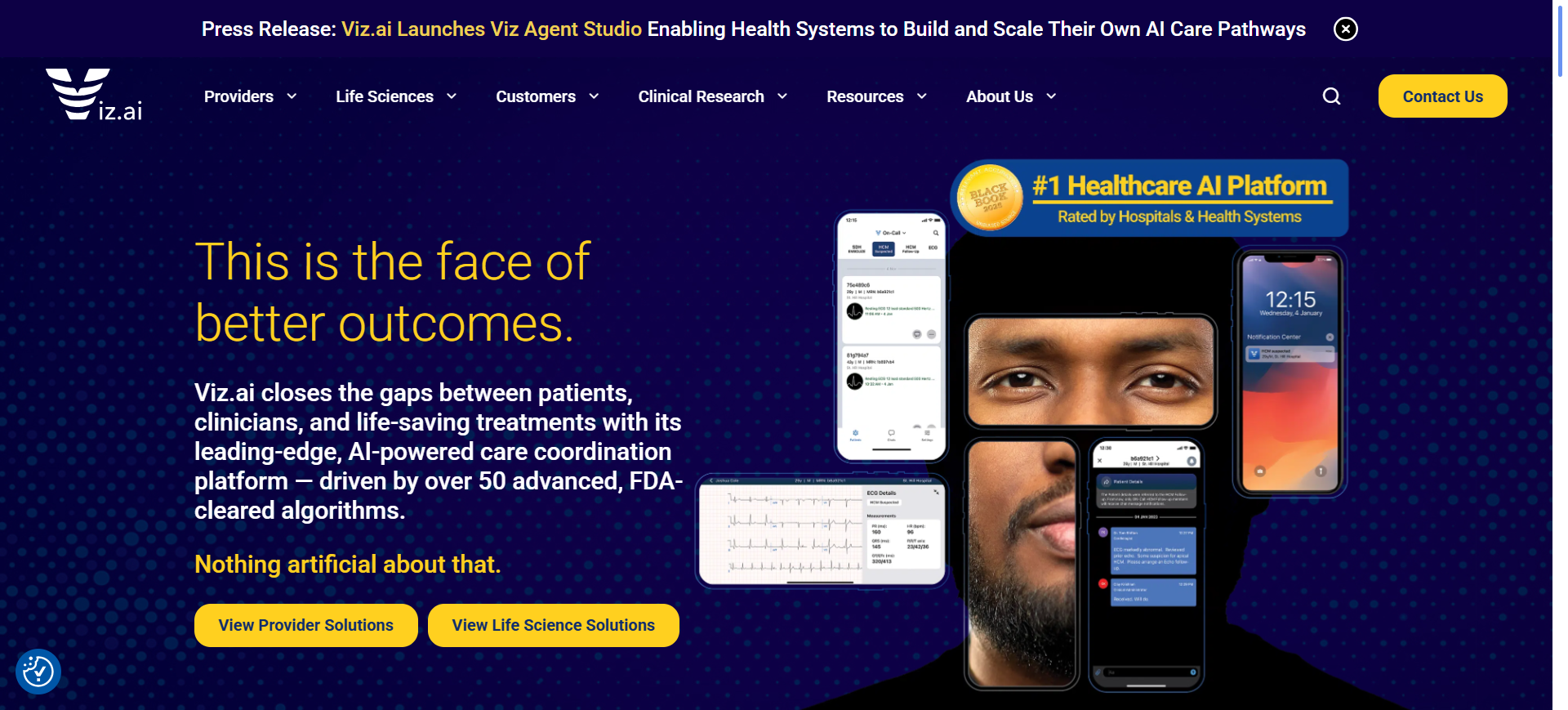
What is Viz.ai AI
Viz.ai is a healthcare artificial intelligence platform designed to detect diseases in medical imaging and coordinate care teams in real time. It analyzes CT scans and other clinical data to identify conditions such as stroke, hemorrhage, and cardiovascular disease earlier. The platform then alerts specialists and connects care teams so treatment decisions can happen faster.
Viz.ai is widely used in hospitals and health systems, with deployment across thousands of hospitals and millions of patients globally.
How to Use Viz.ai AI for Healthcare
- Medical imaging scans are uploaded to the hospital imaging system.
- Viz.ai AI analyzes the images using advanced AI algorithms.
- If the system detects a suspected condition, it automatically alerts the relevant care team.
- Clinicians collaborate through the platform to coordinate treatment quickly.
Benefits of Using Viz.ai AI
- Detects critical diseases such as stroke earlier from imaging data
- Alerts specialists instantly to speed up treatment decisions
- Improves coordination between care teams and hospitals
- Helps reduce delays in emergency diagnosis
- Supports better patient outcomes in time-sensitive conditions
Use Cases of Viz.ai AI for Healthcare
When a patient arrives at the emergency department with stroke symptoms, a CT scan is analyzed by Viz.ai. If the AI detects a possible large-vessel stroke, it immediately alerts neurologists and specialists so treatment can begin faster, potentially saving critical brain tissue.
Who Should Use It
- Hospitals and health systems
- Radiologists
- Neurologists and stroke specialists
- Emergency care teams
- Cardiovascular care programs
Pros
- Real-time AI disease detection from medical imaging
- Strong integration with hospital workflows
- Improves communication between care teams
Cons
- Requires hospital imaging infrastructure
- Enterprise deployment can be complex
Pricing
Viz.ai typically offers enterprise subscription pricing for hospitals and health systems. Depending on hospital size and the number of clinical modules used, costs can range from roughly $50,000 per year for smaller hospitals to over $1 million annually for large health systems.
6. PathAI
What is PathAI
PathAI is an artificial intelligence platform designed to improve pathology diagnostics by analyzing digital pathology images and tissue samples. It uses deep learning models to detect disease patterns, identify biomarkers, and assist pathologists in diagnosing conditions such as cancer. The platform helps laboratories process pathology slides more efficiently and improve diagnostic accuracy.
PathAI’s digital pathology system, including its AISight platform, enables labs to manage pathology images, run AI analysis, and support clinical research or diagnostic workflows.
How to Use PathAI for Healthcare
- Pathology slides are scanned into a digital pathology system.
- The images are uploaded to the PathAI platform.
- AI algorithms analyze tissue samples and detect patterns or biomarkers.
- Pathologists review AI insights to support diagnosis and treatment decisions.
Benefits of Using PathAI
- Improves accuracy in pathology diagnosis
- Detects biomarkers and disease patterns in tissue samples
- Speeds up analysis of digital pathology slides
- Supports research and drug development
- Enhances collaboration between laboratories and clinicians
Use Cases of PathAI for Healthcare
A pathology laboratory analyzing biopsy samples for cancer can use PathAI to automatically detect tumor regions and identify biomarkers. The AI system highlights important patterns in the tissue slide, helping pathologists confirm diagnoses faster and guide targeted treatment decisions.
Who Should Use It
- Pathologists
- Diagnostic laboratories
- Hospitals and cancer centers
- Pharmaceutical research teams
- Clinical trial organizations
Pros
- Strong AI capabilities for digital pathology analysis
- Improves diagnostic consistency and accuracy
- Supports biomarker discovery and research
Cons
- Requires digital pathology infrastructure
- Mostly used by large labs and research institutions
Pricing
PathAI pricing is typically enterprise-based and negotiated with healthcare organizations or research partners. Costs vary depending on the number of AI algorithms used, pathology workflows, and integration with laboratory systems.
7. Abridge AI
What is Abridge AI
Abridge is an AI-powered clinical documentation platform that converts doctor–patient conversations into structured medical notes. It uses ambient listening technology and generative AI to capture clinical conversations during patient visits and automatically generate documentation for electronic health records (EHRs). The system helps physicians reduce time spent on paperwork and focus more on patient care.
The platform integrates with major EHR systems and supports multiple languages while generating clinically useful and billable notes directly within healthcare workflows.
How to Use Abridge AI for Healthcare
- Start the Abridge system during a patient consultation.
- The platform listens to the doctor–patient conversation in real time.
- AI automatically generates structured clinical notes from the discussion.
- The notes are reviewed by the clinician and pushed into the EHR system.
Benefits of Using Abridge AI
- Reduces physician time spent on medical documentation
- Automatically generates structured clinical notes
- Improves clinician focus during patient consultations
- Integrates directly with major EHR systems
- Helps reduce administrative workload and burnout
Use Cases of Abridge AI for Healthcare
During a patient consultation, a physician can allow Abridge AI to record the conversation. The system automatically generates a structured medical note with symptoms, diagnoses, and treatment details, which the doctor reviews before saving to the electronic health record.
Who Should Use It
- Hospitals and health systems
- Physicians and clinicians
- Medical practices using EHR systems
- Healthcare administrators
- Clinical documentation teams
Pros
- Automatically generates clinical documentation
- Integrates with hospital EHR systems
- Reduces physician administrative workload
Cons
- Primarily designed for enterprise healthcare systems
- Requires integration with existing clinical infrastructure
Pricing
Abridge AI is typically offered through enterprise contracts with hospitals and healthcare organizations. Industry estimates suggest pricing around $200–$250 per clinician per month or roughly $2,500+ per year, depending on deployment scale and integrations.
8. Keragon AI
What is Keragon AI
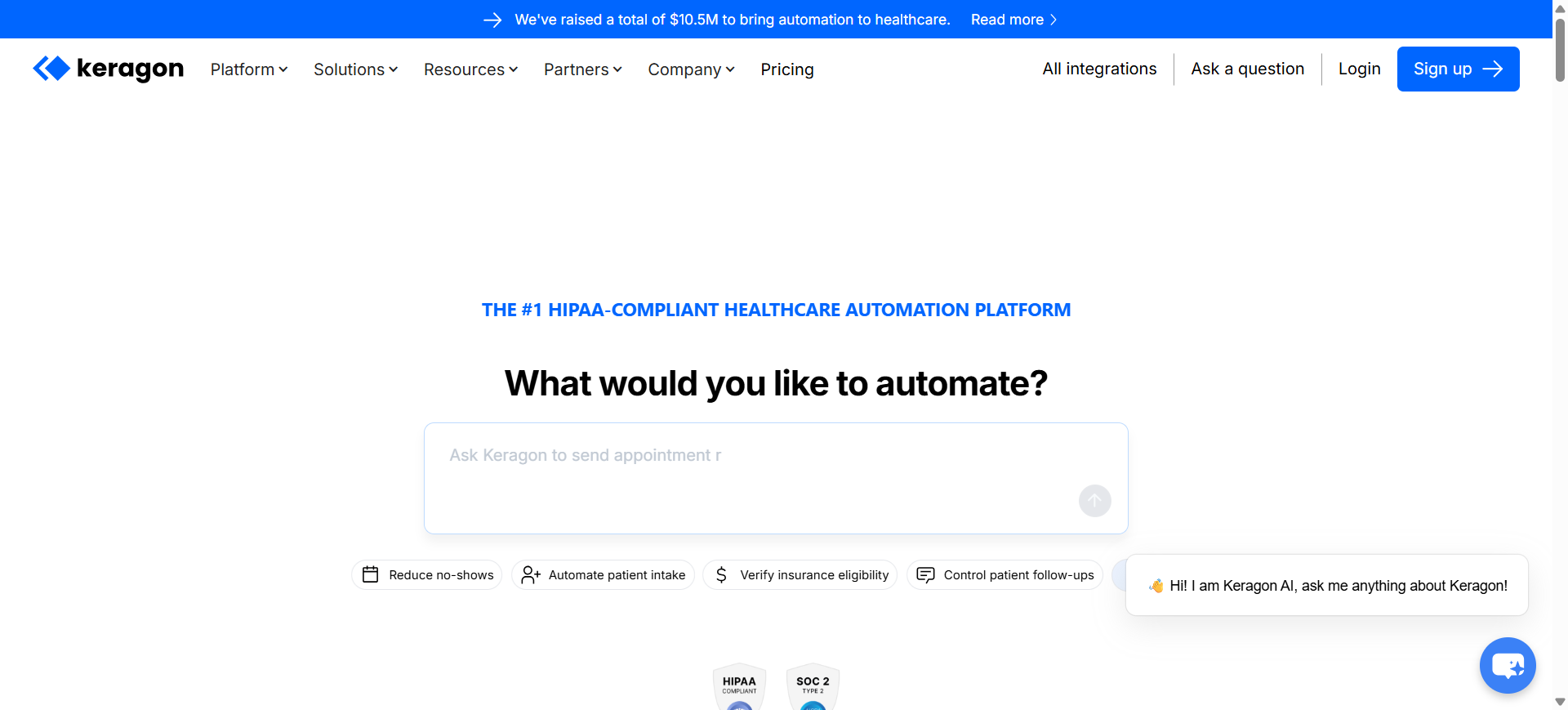
Keragon is a healthcare automation platform designed to connect different healthcare software systems and automate operational workflows. It allows clinics and healthcare organizations to build HIPAA-compliant integrations between tools such as EHRs, CRMs, billing platforms, and communication systems without writing code.
The platform uses AI and a no-code workflow builder to automate tasks like patient intake, scheduling, billing, and data syncing between systems. This helps healthcare teams reduce manual work and improve operational efficiency.
How to Use Keragon AI for Healthcare
- Connect your healthcare software such as EHRs, billing tools, and CRMs to Keragon.
- Create automated workflows using the no-code workflow builder.
- Define triggers such as new patient intake or appointment scheduling.
- The system automatically executes tasks across connected healthcare systems.
Benefits of Using Keragon AI
- Automates repetitive administrative healthcare workflows
- Reduces manual data entry across multiple healthcare systems
- Connects different healthcare tools in one automation platform
- Improves operational efficiency for clinics and hospitals
- Ensures HIPAA-compliant automation for patient data
Use Cases of Keragon AI for Healthcare
A clinic can use Keragon AI to automatically transfer patient intake form data into its electronic health record system and billing software. This eliminates manual data entry and ensures patient information is synced across systems instantly.
Who Should Use It
- Healthcare clinics and private practices
- Digital health companies
- Hospital operations teams
- Healthcare IT departments
- Practice management teams
Pros
- Built specifically for healthcare automation
- No-code workflow builder
- HIPAA-compliant integrations
Cons
- Requires integration with existing healthcare software
- Advanced workflows may require setup time
Pricing
Keragon AI offers subscription pricing starting at approximately $99 per month for small practices, with professional plans around $269–$399 per month depending on workflow limits and features.
Enterprise plans are available for larger healthcare organizations requiring higher workflow volumes and integrations.
9. Arcadia AI
What is Arcadia AI
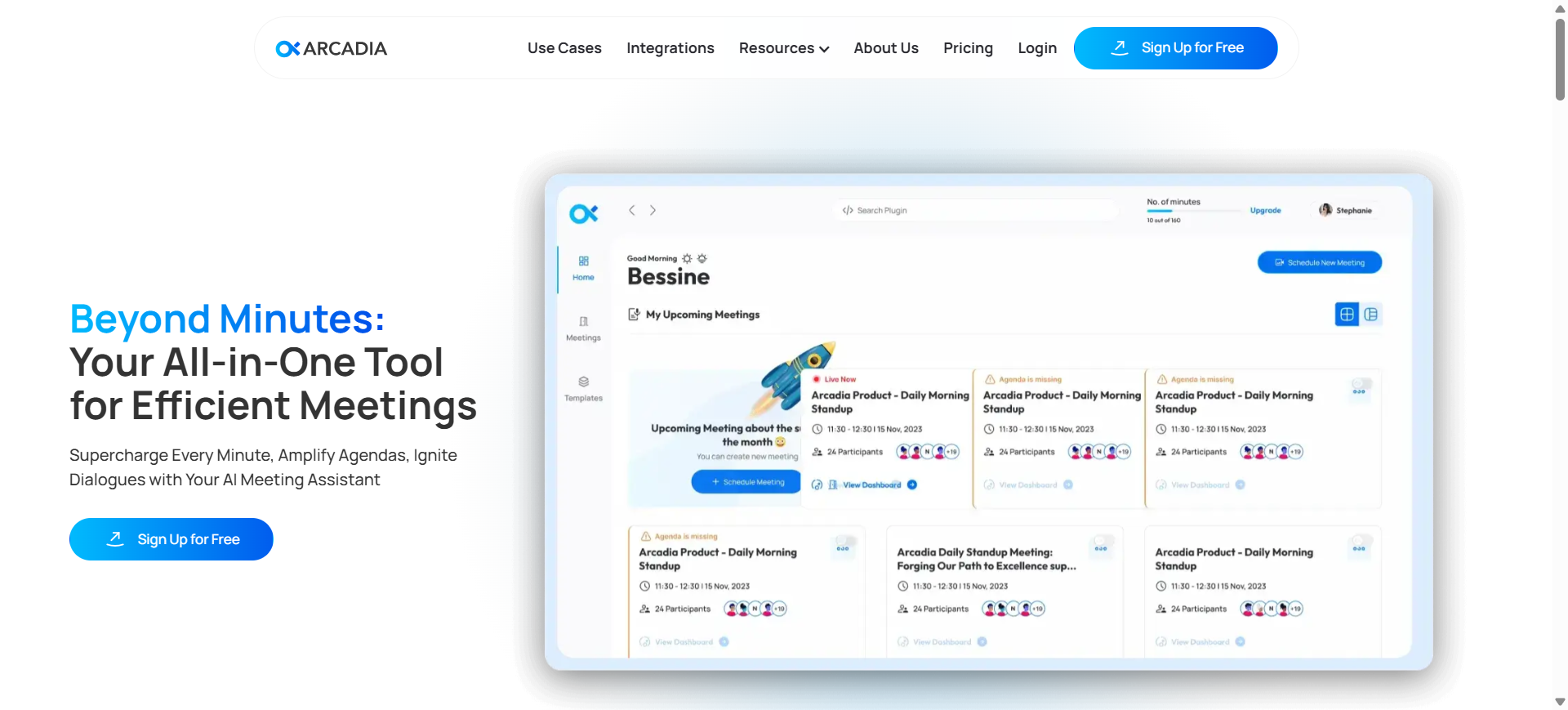
Arcadia is a healthcare data analytics platform that helps hospitals, health systems, and insurance providers analyze large volumes of medical and operational data. It aggregates information from sources such as electronic health records (EHRs), claims data, and clinical systems to create unified healthcare insights. The platform uses analytics and AI models to identify care gaps, monitor population health, and support data-driven decisions across healthcare organizations.
Healthcare providers use Arcadia to improve patient outcomes, reduce costs, and manage value-based care programs using real-time data insights.
How to Use Arcadia AI for Healthcare
- Connect healthcare data sources such as EHRs, claims systems, and clinical databases.
- The platform aggregates and standardizes the data into a unified patient record.
- Analytics dashboards and AI models analyze patient populations and performance metrics.
- Healthcare teams use insights to improve care quality, resource allocation, and operations.
Benefits of Using Arcadia AI
- Consolidates healthcare data from multiple systems
- Enables population health analytics and risk prediction
- Improves decision-making with real-time healthcare insights
- Helps healthcare organizations manage value-based care programs
- Supports quality reporting and performance monitoring
Use Cases of Arcadia AI for Healthcare
A hospital network can use Arcadia AI to analyze patient data across multiple clinics and hospitals. The platform identifies high-risk patients and care gaps, allowing care managers to intervene earlier and improve health outcomes.
Who Should Use It
- Hospitals and health systems
- Health insurance providers
- Population health teams
- Healthcare analytics departments
- Government healthcare programs
Pros
- Powerful healthcare data analytics platform
- Aggregates data from many healthcare systems
- Supports population health management
Cons
- Requires complex enterprise data integrations
- Mainly designed for large healthcare organizations
Pricing
Arcadia AI uses enterprise subscription pricing customized for healthcare organizations. Estimated costs typically range from $2,000–$5,000 per month for small deployments and can exceed $15,000+ per month for large enterprise systems, depending on users and data volume.
10. Azure Health Data Services AI
What is Azure Health Data Services AI
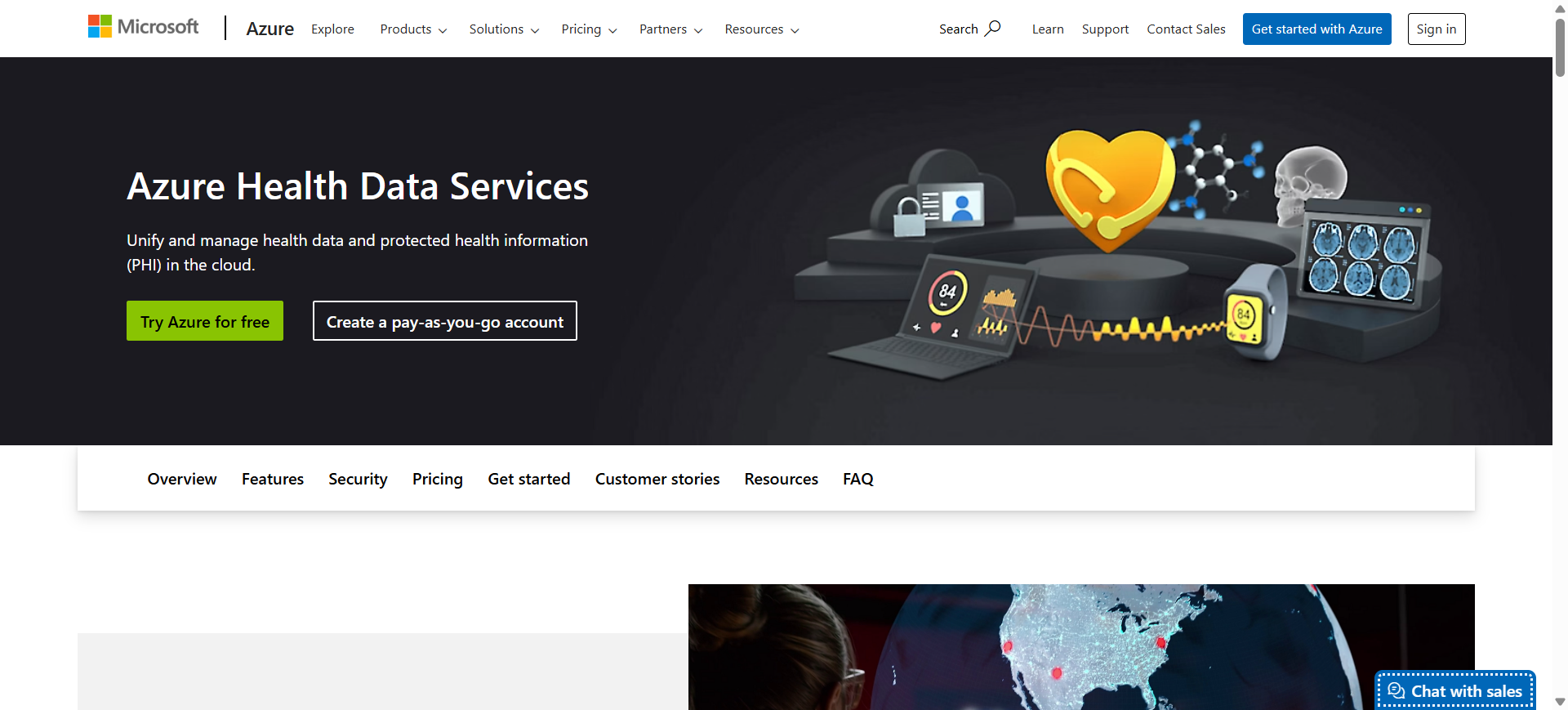
Azure Health Data Services is a cloud platform from Microsoft designed to manage and analyze healthcare data securely. It allows healthcare organizations to store, standardize, and exchange protected health information (PHI) using global healthcare data standards such as FHIR and DICOM.
The platform integrates with tools like Azure Machine Learning and Power BI, enabling hospitals and researchers to build AI applications, run analytics, and generate insights from clinical and medical imaging data.
How to Use Azure Health Data Services AI for Healthcare
- Connect healthcare data sources such as EHR systems, imaging data, and medical devices.
- Store and standardize the data using healthcare standards like FHIR and DICOM.
- Use Azure analytics and AI tools to analyze patient data and generate insights.
- Build AI healthcare applications or dashboards to support clinical and operational decisions.
Benefits of Using Azure Health Data Services AI
- Centralizes healthcare data from multiple systems
- Enables secure storage of protected health information
- Supports AI and analytics for healthcare insights
- Improves interoperability between healthcare systems
- Helps organizations build scalable healthcare applications
Use Cases of Azure Health Data Services AI for Healthcare
A hospital network can use Azure Health Data Services AI to combine data from EHR systems, imaging platforms, and medical devices into a single cloud platform. Researchers and clinicians can then analyze the unified dataset to identify disease trends, improve care delivery, and support medical research.
Who Should Use It
- Hospitals and health systems
- Healthcare IT teams
- Medical research organizations
- Health technology companies
- Public health agencies
Pros
- Built specifically for healthcare data management
- Supports global healthcare data standards
- Integrates with Microsoft AI and analytics tools
Cons
- Requires cloud infrastructure expertise
- Enterprise implementation can be complex
Pricing
Azure Health Data Services uses a pay-as-you-go pricing model, where organizations pay based on data storage, API usage, and computing resources.
Estimated costs can start around $0.39 per GB per month for stored healthcare data, with additional costs depending on analytics and AI workloads.
Try Azure Health Data Services AI
How Are AI Healthcare Tools Used in Hospitals and Clinics
AI healthcare tools support hospitals and clinics by improving diagnosis, automating administrative work, and helping medical teams analyze patient data more effectively. These systems are increasingly integrated into electronic health records (EHRs), imaging systems, and hospital management platforms to streamline clinical workflows. In 2026, healthcare providers rely on AI to reduce operational pressure while improving the quality and speed of patient care.
Clinical Decision Support
AI tools assist doctors in evaluating symptoms, reviewing medical literature, and identifying possible diagnoses. Platforms such as AMBOSS LiSA AI and Glass Health AI allow clinicians to ask clinical questions and generate evidence-based diagnostic suggestions. This helps physicians quickly review treatment guidelines and medical evidence during patient care.
Medical Imaging Analysis
Radiology departments use AI to analyze medical images and detect urgent conditions. Tools like Aidoc AI and Viz.ai AI automatically scan CT or MRI images to identify abnormalities such as stroke or internal bleeding. These systems alert specialists immediately, allowing hospitals to prioritize critical cases.
Pathology and Disease Detection
Digital pathology platforms use AI to examine tissue samples and identify disease markers. PathAI helps pathologists analyze biopsy slides and detect cancer patterns faster, improving diagnostic accuracy and supporting treatment decisions.
Clinical Documentation Automation
Physicians spend a significant amount of time writing medical notes. AI documentation platforms like Abridge AI automatically convert patient-doctor conversations into structured clinical records, reducing paperwork and saving time for clinicians.
Precision Medicine and Healthcare Data Analysis
AI is also used to analyze complex medical datasets. Tempus AI supports personalized treatment planning using genomic data, while Arcadia AI and Azure Health Data Services AI help healthcare organizations analyze population health data and manage large healthcare datasets.
By combining these capabilities, AI healthcare tools help hospitals improve efficiency, enhance diagnostics, and enable more data-driven healthcare decisions.
What Are the Key Benefits of Using AI in Healthcare
- Improved diagnostic accuracy – AI analyzes medical images, lab results, and patient data to help detect diseases earlier and more accurately.
- Faster clinical decision-making – Doctors can access insights quickly when evaluating symptoms or treatment options.
- Reduced administrative workload – AI automates tasks like documentation, scheduling, and data entry.
- Better patient outcomes – Early detection and personalized treatments improve overall care quality.
- Enhanced medical research – AI helps analyze large healthcare datasets for drug discovery and clinical studies.
- Operational efficiency – Hospitals can optimize resources, reduce delays, and streamline workflows.
- Personalized treatment planning – AI analyzes genetic and clinical data to support precision medicine.
How to Choose the Right AI Healthcare Tool
Choosing the right AI healthcare tool depends on the specific needs of a hospital, clinic, or healthcare organization. Consider the following factors before selecting a platform:
Define the healthcare problem
Identify whether you need AI for diagnostics, clinical documentation, medical imaging, data analytics, or workflow automation.
Check regulatory compliance
Ensure the tool follows healthcare regulations such as HIPAA, GDPR, and other patient data protection standards.
Evaluate system integration
The platform should integrate smoothly with existing systems like electronic health records (EHRs), billing systems, and clinical databases.
Review clinical accuracy and validation
Look for tools that have clinical testing, regulatory approvals, or strong medical datasets supporting their models.
Assess scalability and implementation
Choose a solution that can grow with your healthcare organization and support multiple departments if needed.
Compare cost and vendor support
Review pricing models, implementation costs, training resources, and technical support provided by the vendor.
Future of AI in Healthcare
The future of AI in healthcare will focus on improving medical accuracy, efficiency, and personalized care. As healthcare systems generate more clinical data, AI technologies will help doctors analyze information faster and support better treatment decisions.
One key trend is the growth of precision medicine, where AI analyzes genetic and clinical data to recommend personalized treatments for patients. AI will also continue improving medical diagnostics, helping clinicians detect diseases earlier through imaging, pathology, and lab data analysis.
Healthcare organizations will increasingly adopt automation tools that handle documentation, scheduling, and administrative workflows. This will reduce physician workload and improve operational efficiency.
Additionally, AI-powered healthcare analytics platforms will help hospitals monitor population health, predict disease trends, and support medical research.
Conclusion
AI healthcare tools are transforming how hospitals, clinics, and researchers analyze medical data and deliver patient care. From diagnostic imaging and pathology analysis to clinical documentation and healthcare analytics, these platforms help improve accuracy, efficiency, and decision-making. As AI technology continues to advance in 2026, healthcare organizations that adopt the right tools can streamline operations, support clinicians, and provide more personalized, data-driven patient care.
FAQs
What are some examples of AI healthcare tools?
Examples of AI healthcare tools include AMBOSS LiSA AI, Glass Health AI, Tempus AI, Aidoc AI, Viz.ai AI, PathAI, Abridge AI, Keragon AI, Arcadia AI, and Azure Health Data Services AI. These platforms help with clinical decision support, medical imaging analysis, clinical documentation, healthcare automation, and medical data analytics used by hospitals and healthcare organizations.
Can small clinics use AI healthcare tools?
Yes. Many AI healthcare tools are designed for both hospitals and smaller medical practices. Clinics can use AI tools for tasks such as documentation automation, appointment management, data analytics, and diagnostic support. Cloud-based AI platforms make it easier for smaller clinics to adopt AI without large infrastructure investments.
How do AI healthcare tools protect patient data?
AI healthcare tools protect patient data using encryption, secure cloud storage, and strict access controls. Many platforms follow healthcare compliance standards such as HIPAA, GDPR, and other regional healthcare data protection regulations to ensure patient information is handled securely and responsibly.
Are AI healthcare tools expensive?
The cost of AI healthcare tools varies depending on the platform and deployment size. Some tools offer subscription plans for individual clinics, while enterprise systems used by hospitals may require larger contracts. Many cloud-based AI tools provide flexible pricing based on usage, users, or data storage.
What problems can AI solve in healthcare?
AI helps solve several healthcare challenges, including delayed diagnosis, administrative workload, inefficient workflows, and limited access to medical insights. AI tools can analyze medical data quickly, automate documentation, improve disease detection, and support doctors in making more informed treatment decisions.
Which companies develop AI healthcare tools?
Many technology companies and healthcare startups develop AI healthcare tools. Examples include companies behind platforms like Tempus AI, Aidoc AI, Viz.ai, PathAI, Abridge AI, and Microsoft’s Azure Health Data Services, along with research organizations and health technology startups working on medical AI systems.
Do doctors trust AI healthcare tools?
Doctors increasingly use AI healthcare tools as decision-support systems. These tools assist clinicians by analyzing data and providing insights, but medical professionals still make the final clinical decisions. As AI models become more accurate and clinically validated, trust and adoption in healthcare settings continue to grow.