
AI metadata management tools help organizations automatically collect, organize, and govern metadata across complex data ecosystems. In 2026, AI metadata management platforms play a critical role in enabling data discovery, governance, lineage tracking, and AI-ready analytics. By using automation and machine learning to enrich metadata, these tools transform static data catalogs into active intelligence layers that help teams understand data context, maintain compliance, and build reliable analytics and AI systems at scale.
Organizations use these platforms to manage data catalogs, enforce governance policies, track data lineage, and prepare datasets for analytics and machine learning.
List of Best AI Metadata Management Tools
- Collibra AI
- Informatica Intelligent Data Management Cloud AI
- Ataccama ONE AI
- Erwin Data Catalog AI
- Atlan AI
- Alation AI
- Secoda AI
- Alex Augmented Data Catalog AI
- DataHub AI
- OpenMetadata AI
Comparison of the Best AI Metadata Management Tools
The following comparison table highlights how the leading AI metadata management platforms differ in use cases, capabilities, and deployment models.
| Tool | Best For | Key Features | Pricing | Category |
|---|---|---|---|---|
| Collibra AI | Enterprise governance | Policy management, data lineage, business glossary | Enterprise pricing | Enterprise metadata platform |
| Informatica Intelligent Data Management Cloud AI | Large-scale enterprise environments | Automated metadata discovery, governance, lineage | Enterprise pricing | Enterprise metadata platform |
| Ataccama ONE AI | Data quality + metadata management | Data quality monitoring, governance automation | Enterprise pricing | Enterprise metadata platform |
| Erwin Data Catalog AI | Governance-heavy environments | Impact analysis, lineage visualization | Enterprise pricing | Enterprise metadata platform |
| Atlan AI | Modern data teams | Active metadata, collaboration, API-first architecture | Custom pricing | Active metadata platform |
| Alation AI | Data discovery | Behavioral metadata, AI-assisted catalog, query analysis | Enterprise pricing | Active metadata platform |
| Secoda AI | Fast deployment | Natural language search, AI documentation, lineage tracking | Subscription pricing | Active metadata platform |
| Alex Augmented Data Catalog AI | Automated governance | AI classification, automated cataloging | Enterprise pricing | Active metadata platform |
| DataHub AI | Developer-focused teams | Event-driven metadata, graph-based model | Open source / SaaS | Open-source platform |
| OpenMetadata AI | Open ecosystem | Metadata ingestion, lineage tracking, APIs | Open source | Open-source platform |
Modern metadata tools increasingly focus on automation, AI-assisted discovery, and active metadata workflows rather than static documentation.
Below is a deeper breakdown of each platform and how organizations use them to manage metadata at scale.
Enterprise Metadata Platforms
1. Collibra AI
What is Collibra AI
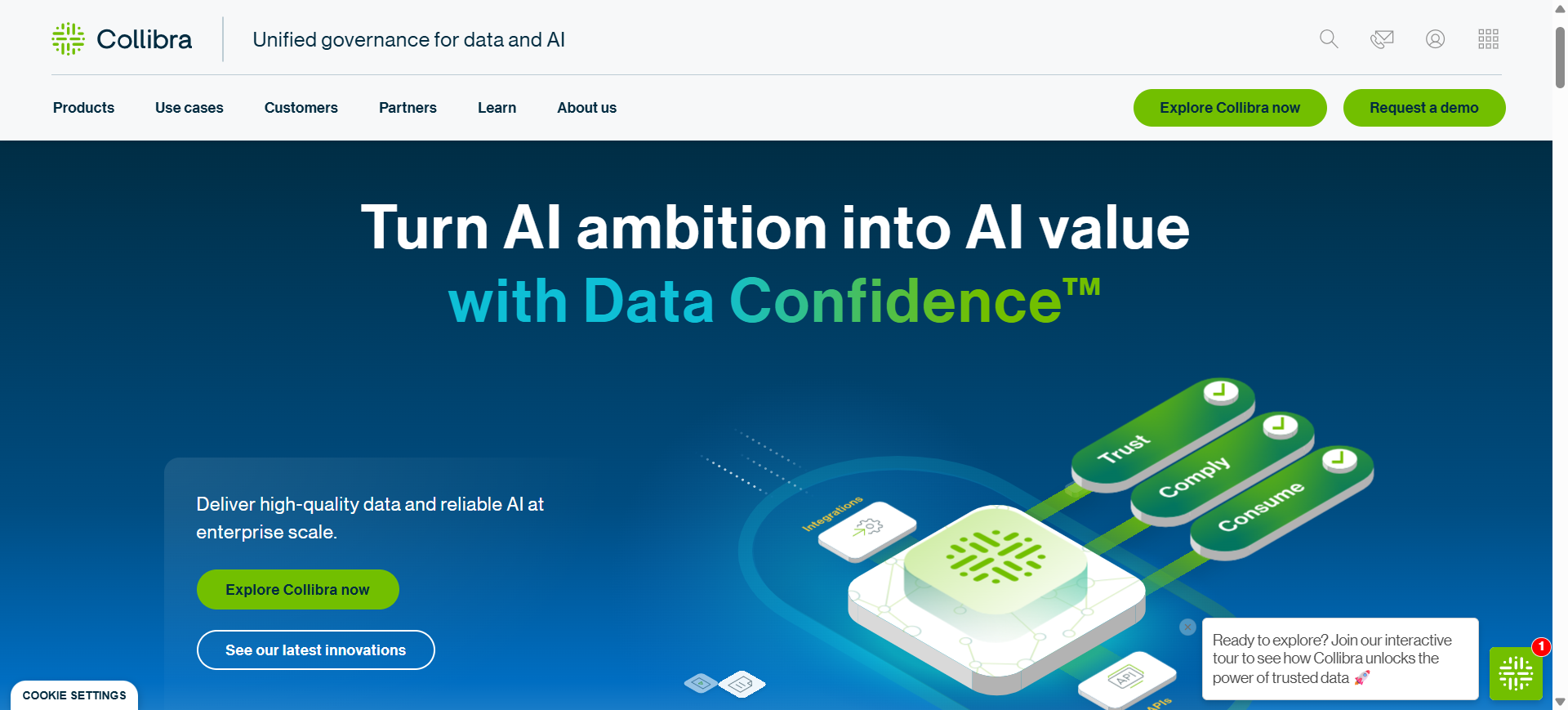
Collibra AI is an enterprise data intelligence and governance platform designed to help organizations manage metadata, enforce policies, and maintain trusted data across complex data ecosystems. It connects business and technical metadata, enabling teams to understand where data comes from, how it is used, and who owns it.
The platform centralizes governance workflows and provides automated lineage, discovery, and policy enforcement to ensure organizations can manage data responsibly and maintain regulatory compliance.
How to use Collibra AI for AI Metadata Management
- Connect enterprise data sources such as data warehouses, ETL pipelines, and BI platforms.
- Automatically harvest metadata including schemas, lineage, and ownership information.
- Define governance rules, policies, and data classifications.
- Use the metadata catalog to enable AI-ready data discovery and auditing.
Key Features
- Automated metadata harvesting across multiple systems
- Data lineage tracking and impact analysis
- Business glossary and governance workflows
- Data classification and policy enforcement
- Integration with enterprise analytics platforms
- Role-based access control and stewardship tools
Use Cases
- Enterprise data governance programs
- Regulatory compliance and auditing
- Data catalog and metadata discovery
- AI-ready data documentation
- Enterprise analytics environments
Who Should Use It
- Large enterprises managing complex data ecosystems
- Data governance teams
- Compliance and risk management teams
- Data architects and platform engineers
- Organizations operating in regulated industries
Pricing
Collibra typically offers enterprise subscription pricing, often starting around $170,000 per year, with additional modules for governance, quality, and AI governance capabilities.
Real-World Examples
- Financial institutions using Collibra to maintain regulatory compliance for data usage.
- Global enterprises using the platform to build centralized data catalogs across multiple cloud environments.
- Organizations implementing AI governance frameworks to ensure models use trusted datasets.
Pros
- Strong enterprise governance capabilities
- Robust lineage and compliance features
- Extensive integration ecosystem
- Suitable for regulated industries
Cons
- High implementation cost
- Requires governance maturity
- Setup and deployment can take months
2. IIDMC AI (Informatica Intelligent Data Management Cloud)
What is IIDMC AI
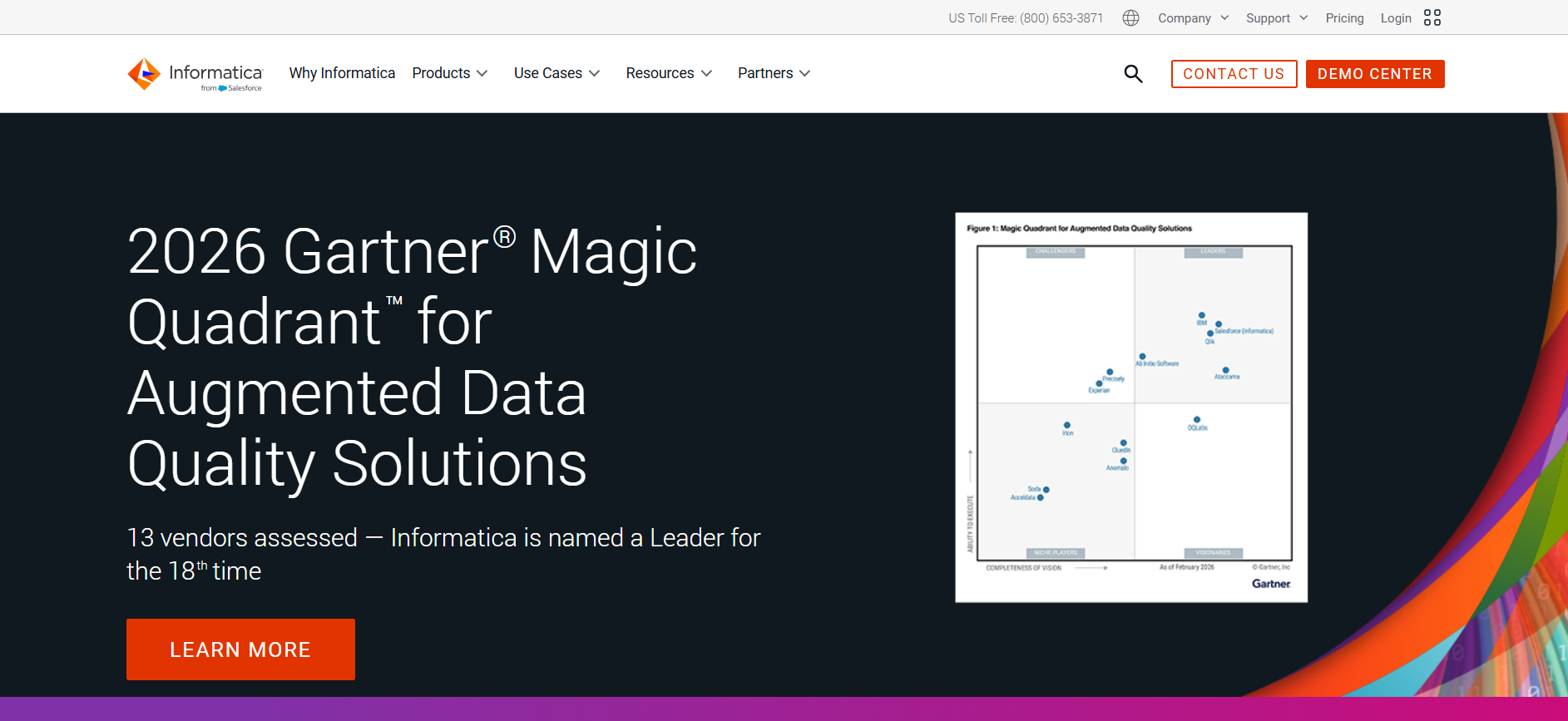
Informatica Intelligent Data Management Cloud (IDMC) AI is a cloud-native enterprise platform designed to manage, govern, and integrate data across hybrid and multi-cloud environments. It provides a unified environment for metadata management, data cataloging, data integration, governance, and data quality.
The platform is powered by CLAIRE AI, Informatica’s metadata-driven intelligence engine that analyzes metadata relationships and automates tasks such as data discovery, classification, lineage tracking, and governance workflows.
By combining metadata intelligence with AI automation, IDMC helps organizations maintain trusted data assets and build reliable analytics and AI systems at enterprise scale.
How to use IIDMC AI for AI Metadata Management
- Connect the platform to enterprise data sources such as cloud data warehouses, databases, and analytics tools.
- Use automated metadata scanners to collect technical and business metadata from connected systems.
- Allow the CLAIRE AI engine to analyze metadata relationships and automatically classify datasets.
- Apply governance policies, lineage tracking, and data quality rules to maintain trusted data for analytics and AI workflows.
Key Features
- AI-powered metadata discovery and cataloging
- Automated data classification and tagging
- End-to-end data lineage visualization
- Data governance and policy management
- Data quality monitoring and validation
- Integration across hybrid and multi-cloud environments
- Metadata intelligence powered by the CLAIRE AI engine
Use Cases
- Enterprise metadata management programs
- Data governance and regulatory compliance initiatives
- Data catalog and discovery across large data ecosystems
- AI-ready data pipelines and analytics platforms
- Data lineage tracking and impact analysis
Who Should Use It
- Large enterprises with complex data infrastructure
- Data governance and compliance teams
- Data engineers and data architects
- Organizations running multi-cloud or hybrid data platforms
- Companies building enterprise AI and analytics systems
Pricing
Informatica IDMC typically uses enterprise subscription pricing based on data volume, number of integrations, and modules deployed. Pricing is usually provided through vendor quotes for enterprise implementations.
Real-World Examples
- Global enterprises using IDMC to unify metadata across hybrid cloud environments.
- Financial institutions implementing governance and lineage tracking for regulatory compliance.
- Large organizations building AI pipelines that rely on trusted, well-documented data assets.
Pros
- Strong AI-driven metadata automation
- Comprehensive enterprise data management capabilities
- Scalable architecture for large data ecosystems
- Extensive integration with enterprise data platforms
Cons
- High cost for full enterprise deployment
- Complex implementation process
- Requires experienced data governance teams to manage effectively
3. Ataccama ONE AI
What is Ataccama ONE AI
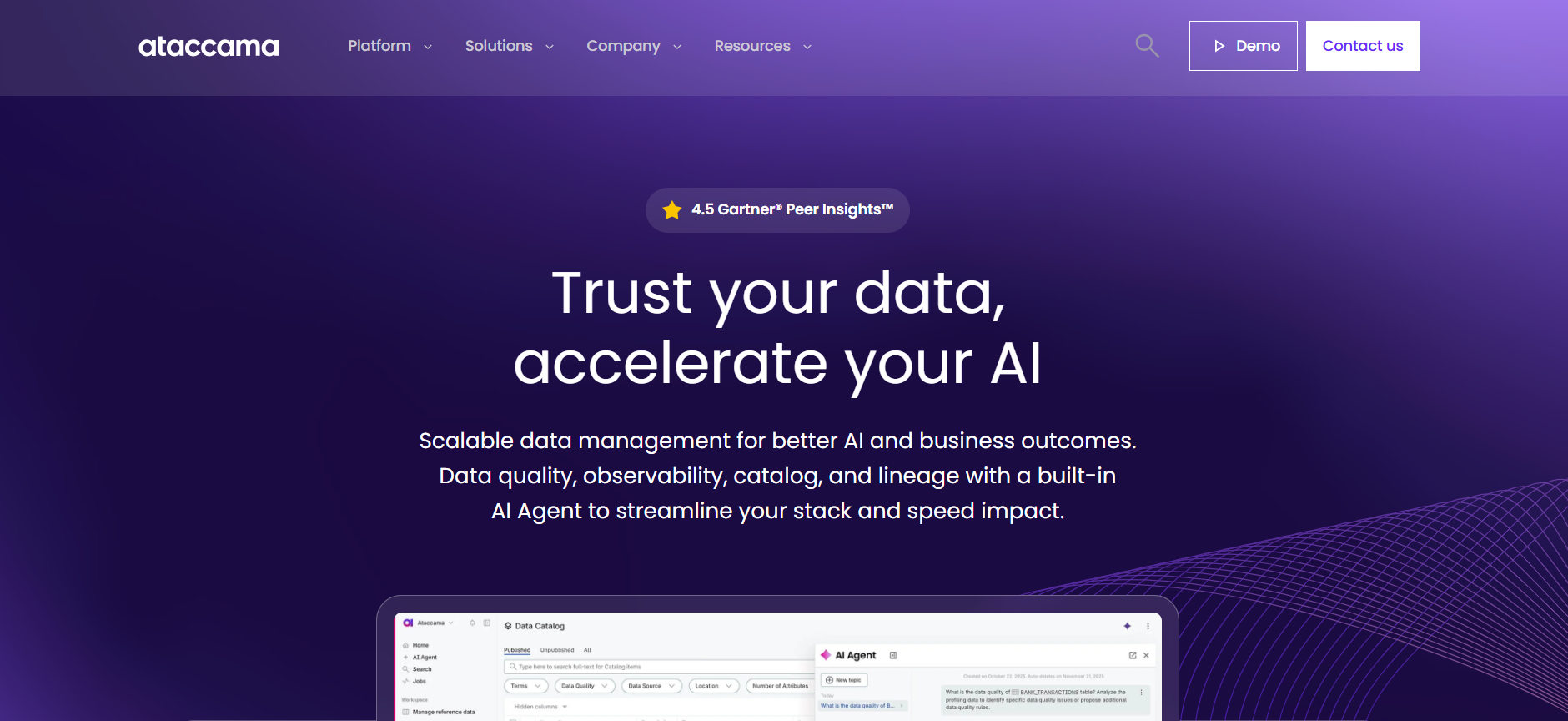
Ataccama ONE AI is a unified data management and metadata platform designed to help organizations manage data governance, metadata cataloging, and data quality across hybrid and multi-cloud environments. The platform combines data catalog, metadata management, data quality monitoring, and master data management into a single system that allows teams to discover, understand, and govern data assets at scale.
Ataccama ONE uses embedded AI and automation to analyze metadata, generate rules, and monitor data quality across connected systems. This helps organizations maintain trusted datasets for analytics, compliance, and AI applications.
Because the platform integrates governance, lineage tracking, and data quality management in one environment, it is commonly used by enterprises building reliable and scalable data ecosystems.
How to use Ataccama ONE AI for AI Metadata Management
- Connect the platform to enterprise data sources such as databases, data warehouses, and analytics tools.
- Automatically ingest and catalog metadata across data pipelines and systems.
- Use AI automation to detect relationships, classify data, and identify sensitive data such as PII.
- Apply governance policies, lineage tracking, and data quality rules to ensure trusted datasets for analytics and AI workflows.
Key Features
- Automated metadata discovery and cataloging
- AI-driven data classification and enrichment
- Data lineage visualization and impact analysis
- Integrated data quality monitoring and profiling
- Master data management and governance workflows
- Hybrid and multi-cloud deployment support
- Metadata model architecture for flexible data relationships
Use Cases
- Enterprise metadata catalog implementation
- Data governance and compliance initiatives
- Data quality monitoring across pipelines
- AI and analytics data preparation
- Master data management for business entities
Who Should Use It
- Large enterprises managing complex data ecosystems
- Data governance and compliance teams
- Data engineers and data architects
- Organizations operating hybrid or multi-cloud data environments
- Companies building AI and analytics platforms that require trusted data
Pricing
Ataccama ONE generally uses enterprise licensing and subscription pricing, with costs depending on deployment model, number of integrations, and data scale. Pricing is typically provided through vendor consultation.
Real-World Examples
- Financial institutions using Ataccama ONE to monitor data quality and maintain regulatory compliance.
- Retail companies implementing master data management to unify customer and product information.
- Large enterprises building AI analytics platforms that require trusted, well-documented datasets.
Pros
- Unified platform for governance, metadata, and data quality
- Strong AI-driven automation capabilities
- Scalable architecture for enterprise environments
- Supports hybrid and multi-cloud deployments
Cons
- Enterprise-level cost and licensing
- Implementation can require experienced data teams
- Full capabilities may take time to configure and deploy
4. Erwin Data Catalog AI
What is Erwin Data Catalog AI
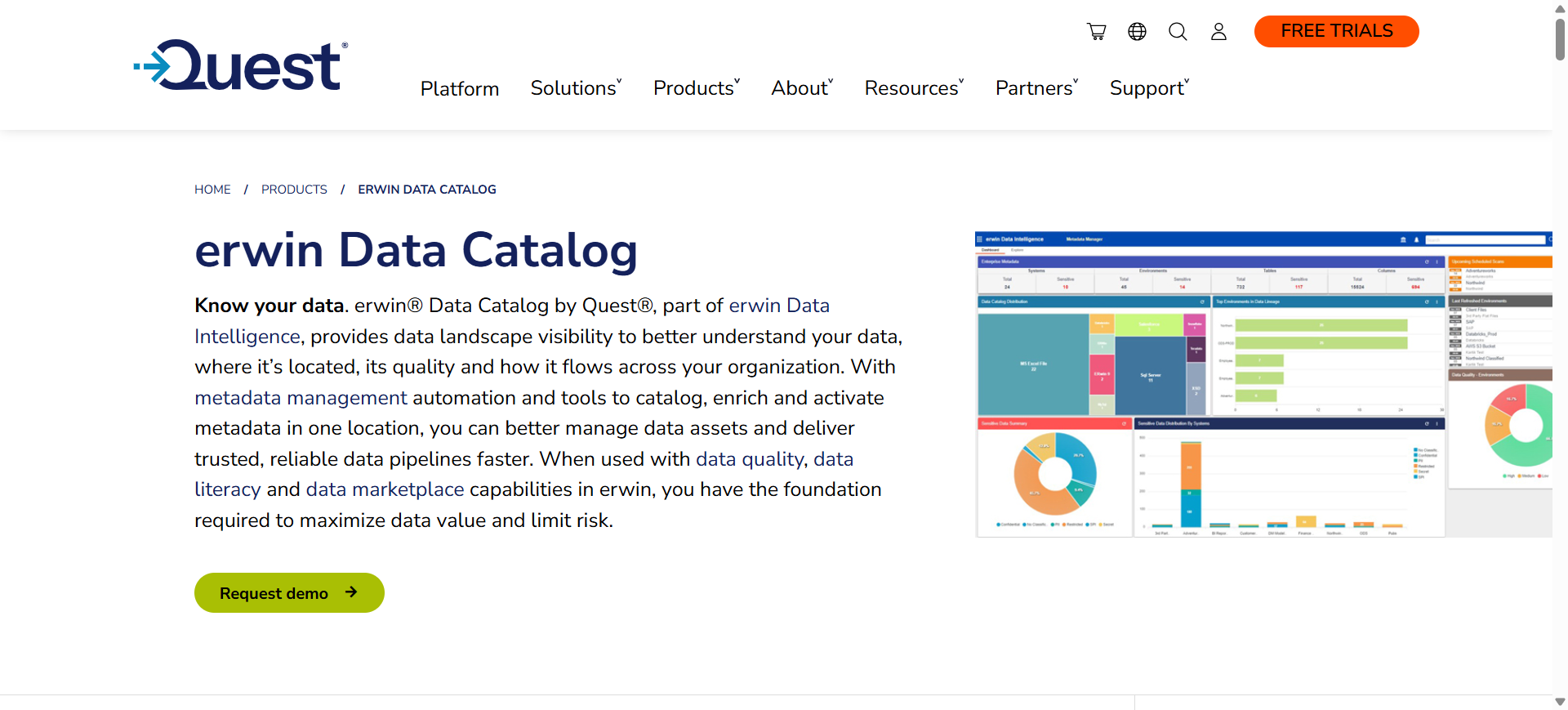
Erwin Data Catalog AI is an enterprise metadata management and data catalog platform designed to help organizations discover, document, and govern data assets across complex data ecosystems. The platform automates metadata harvesting, cataloging, and lineage analysis so organizations can understand where data resides and how it flows across systems.
Part of the erwin Data Intelligence Suite by Quest Software, the tool combines metadata management, governance, and data literacy features to provide a centralized view of enterprise data assets. It enables organizations to document metadata, track data lineage, and apply governance policies that ensure trusted analytics and AI workflows.
By automating metadata discovery and providing visualization tools for lineage and impact analysis, Erwin Data Catalog helps enterprises maintain accurate documentation of data pipelines and ensure compliance with governance standards.
How to use Erwin Data Catalog AI for AI Metadata Management
- Connect the platform to enterprise data sources such as databases, data warehouses, and BI tools.
- Automatically harvest technical metadata from connected systems.
- Use lineage visualization to track how data flows through pipelines and analytics platforms.
- Apply governance rules and business glossaries to maintain trusted datasets for analytics and AI systems.
Key Features
- Automated metadata discovery and harvesting
- Data catalog with centralized metadata repository
- End-to-end data lineage visualization
- Impact analysis for data pipeline changes
- Business glossary and governance workflows
- Metadata enrichment and documentation automation
- Integration with enterprise data platforms
Use Cases
- Enterprise metadata catalog implementation
- Data governance and compliance programs
- Data lineage tracking across pipelines
- AI and analytics data documentation
- Data migration and digital transformation projects
Who Should Use It
- Enterprise data governance teams
- Data architects and data engineers
- Organizations managing large hybrid data ecosystems
- Companies operating in regulated industries
- Businesses implementing enterprise data catalogs
Pricing
Pricing for Erwin Data Catalog typically depends on deployment size and licensing model. Some enterprise plans have been reported starting around $699 per month, though most enterprise deployments use custom vendor pricing based on integrations and data scale.
Real-World Examples
- Financial institutions using Erwin Data Catalog to track data lineage for regulatory reporting.
- Enterprises implementing centralized metadata catalogs across hybrid cloud environments.
- Organizations documenting data pipelines to support analytics and AI governance initiatives.
Pros
- Strong metadata harvesting and automation
- Comprehensive lineage and impact analysis tools
- Enterprise-grade governance capabilities
- Integration with broader data intelligence ecosystem
Cons
- Enterprise implementation complexity
- Requires dedicated governance teams
- Pricing and deployment can be expensive for smaller organizations
Modern Active Metadata Platforms
5. Atlan AI
What is Atlan AI
Atlan AI is a cloud-native metadata management and data catalog platform designed for modern data teams working with cloud data stacks. It helps organizations automatically discover, organize, and govern metadata across data warehouses, analytics tools, and data pipelines.
By using active metadata and automation, Atlan AI continuously updates metadata, tracks data lineage, and enriches dataset documentation. This enables teams to understand data context, improve data discovery, and maintain trusted datasets for analytics and AI-driven workflows.
How to use Atlan AI for AI Metadata Management
- Connect Atlan to cloud data platforms such as Snowflake, BigQuery, Redshift, or Databricks.
- Automatically ingest metadata from databases, ETL pipelines, and BI tools.
- Use AI-powered automation to generate dataset descriptions, tags, and classifications.
- Enable teams to search, discover, and document data assets through a centralized metadata catalog.
Key Features
- Active metadata automation
- Automated data lineage tracking
- AI-powered metadata enrichment
- Business glossary and dataset documentation
- Integration with modern data stacks and BI tools
- Collaboration features for data teams
Use Cases
- Metadata discovery and data catalog implementation
- Self-service analytics environments
- Data governance and compliance programs
- AI and machine learning data documentation
- Data mesh and decentralized data management architectures
Who Should Use It
- Data engineers managing modern data pipelines
- Analytics teams searching for trusted datasets
- Data governance teams implementing metadata frameworks
- Organizations adopting cloud data warehouses
- Companies building AI-driven analytics platforms
Pricing
Atlan typically offers enterprise subscription pricing based on the number of users, integrations, and metadata assets managed. Pricing is provided through vendor consultation for enterprise deployments.
Real-World Examples
- Companies using Atlan to centralize metadata across Snowflake, dbt, and BI tools.
- Data teams implementing self-service analytics with searchable metadata catalogs.
- Organizations documenting data pipelines to support AI and advanced analytics initiatives.
Pros
- Modern cloud-native architecture
- Strong collaboration and documentation features
- AI-powered metadata discovery and automation
- Integrates well with modern data stacks
Cons
- Enterprise pricing may be high for small teams
- Advanced governance features require configuration
- Learning curve for teams new to metadata management platforms
6. Alation AI
What is Alation AI
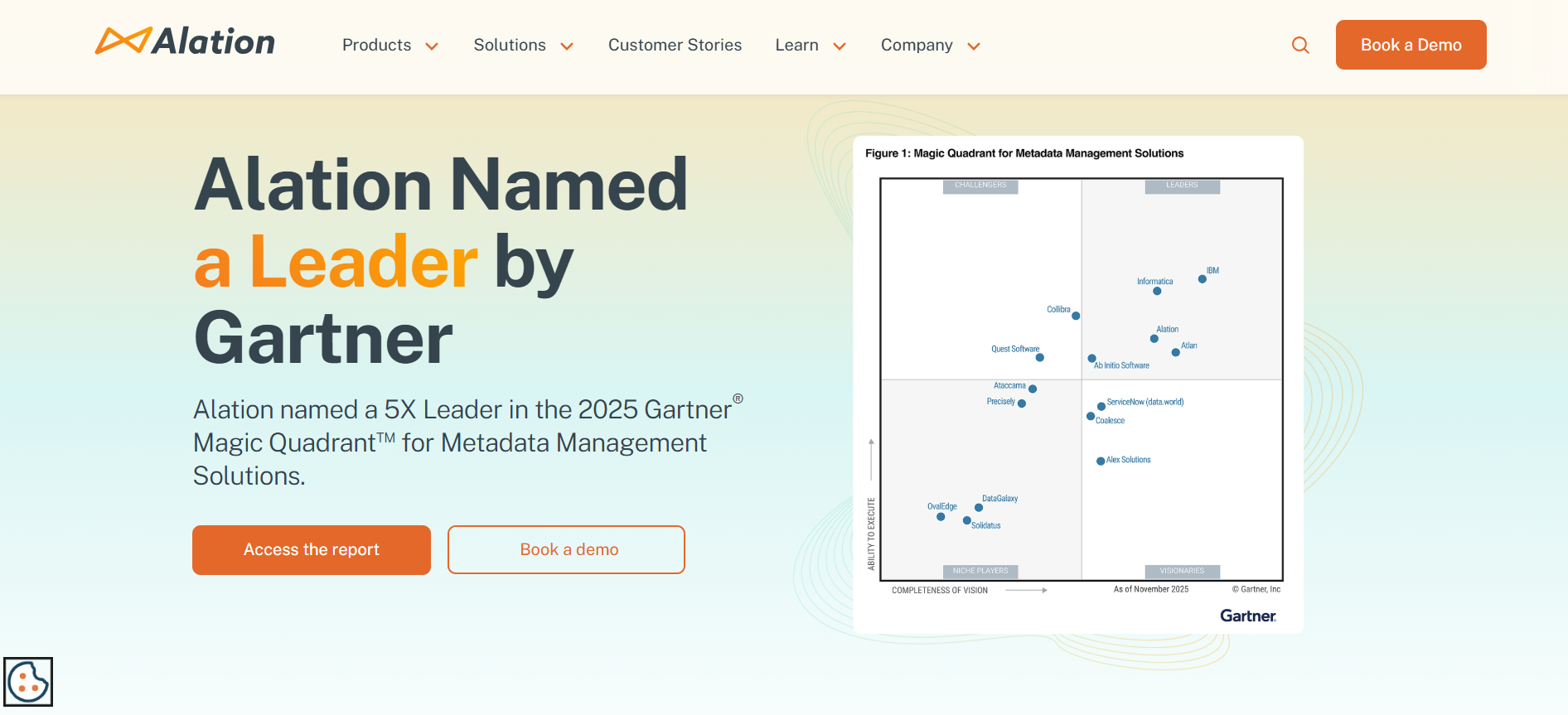
Alation AI is an enterprise data catalog and metadata management platform designed to help organizations discover, understand, and govern their data assets. It uses machine learning and behavioral analytics to analyze query patterns, automatically enrich metadata, and recommend trusted datasets.
By combining metadata cataloging, governance workflows, and AI-driven discovery, Alation AI enables teams to quickly find relevant data, understand lineage, and maintain consistent data definitions across analytics and AI systems.
How to use Alation AI for AI Metadata Management
- Connect Alation to enterprise data warehouses, databases, and analytics platforms.
- Automatically ingest technical metadata and analyze query logs from BI tools and SQL platforms.
- Use AI features to enrich metadata with documentation, tags, and dataset relationships.
- Enable teams to search and discover trusted datasets through the centralized data catalog.
Key Features
- AI-powered data discovery and recommendations
- Behavioral analysis of query usage patterns
- Automated metadata enrichment
- Data lineage tracking and visualization
- Business glossary and governance workflows
- Integration with enterprise analytics platforms
Use Cases
- Enterprise data catalog implementation
- Data discovery for analytics teams
- Business glossary and metric standardization
- Data governance and stewardship programs
- AI and machine learning data documentation
Who Should Use It
- Data analysts searching for trusted datasets
- Data governance and stewardship teams
- Enterprise analytics and BI teams
- Data engineers managing data pipelines
- Organizations building AI-driven analytics platforms
Pricing
Alation typically offers enterprise-based subscription pricing, with costs depending on the number of users, integrations, and metadata assets managed. Pricing details are usually provided through vendor consultation.
Real-World Examples
- Enterprises using Alation to centralize metadata catalogs across multiple cloud data platforms.
- Analytics teams improving dataset discovery through AI-powered search and recommendations.
- Organizations implementing governance frameworks to standardize business definitions and metrics.
Pros
- Strong AI-powered data discovery capabilities
- Behavioral metadata analysis based on query usage
- Comprehensive governance and stewardship features
- Mature enterprise data catalog platform
Cons
- Enterprise pricing may be high for smaller organizations
- Implementation can require governance planning
- Advanced features may require integration setup
7. Secoda AI
What is Secoda AI
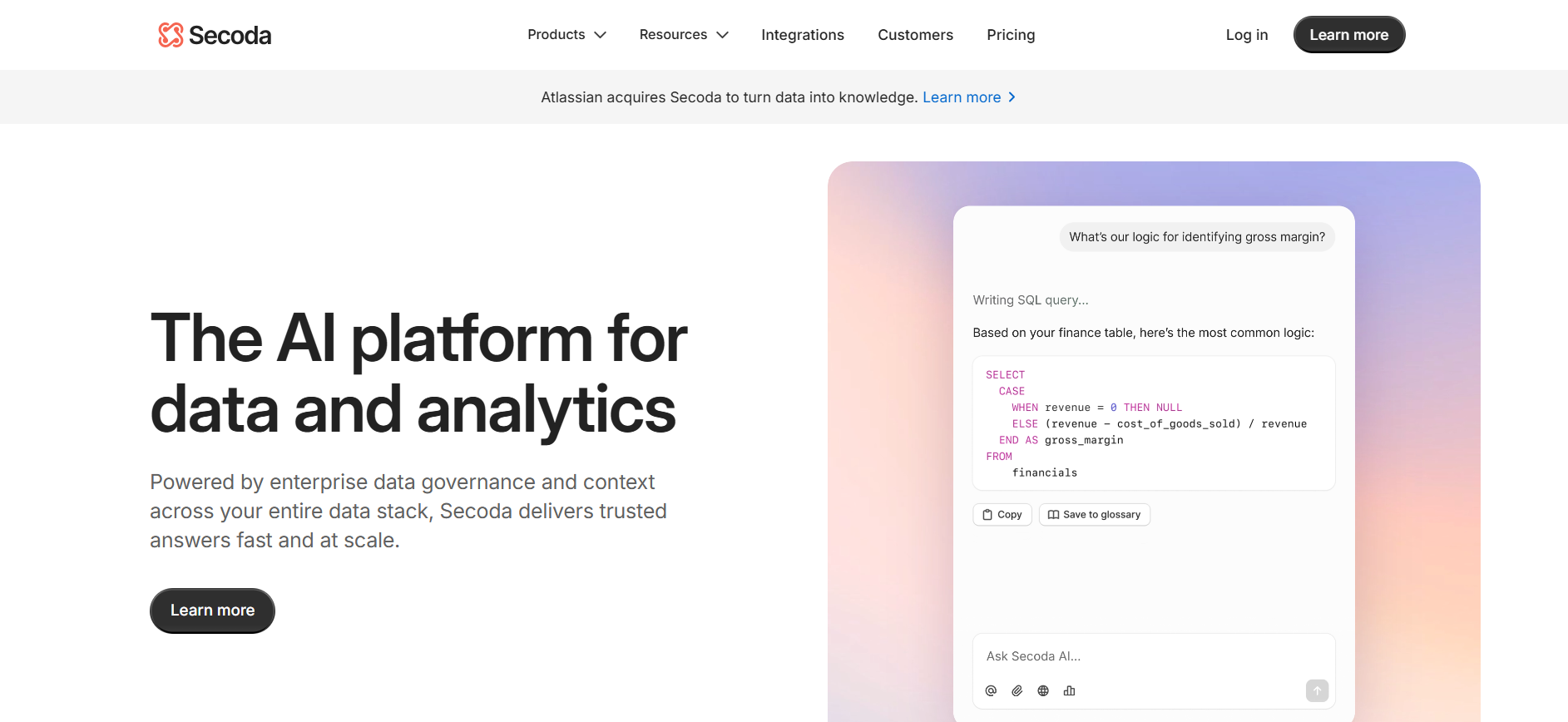
Secoda AI is an AI-powered metadata management and data catalog platform designed to help organizations discover, document, and govern data assets across their data stack. It automatically collects metadata from databases, warehouses, and analytics tools to create a centralized, searchable catalog of data assets.
By combining metadata management, lineage tracking, governance, and AI-assisted search, Secoda AI enables teams to understand how data is used across the organization and quickly find trusted datasets for analytics and AI workflows.
How to use Secoda AI for AI Metadata Management
- Connect Secoda to data warehouses, ETL tools, and BI platforms in the organization’s data stack.
- Automatically ingest and organize metadata from connected systems into a centralized catalog.
- Use AI-powered search and automated documentation to enrich metadata and generate dataset descriptions.
- Enable teams to search, explore, and govern datasets through the unified metadata platform.
Key Features
- AI-powered data catalog and metadata discovery
- Automated metadata ingestion from multiple data sources
- End-to-end data lineage visualization
- AI-assisted search and documentation generation
- Data governance policies and access controls
- Collaboration features for documentation and knowledge sharing
- Integration with modern cloud data platforms
Use Cases
- Data catalog implementation for analytics teams
- Metadata documentation and discovery
- Self-service analytics environments
- Data governance and compliance programs
- AI and machine learning data preparation
Who Should Use It
- Data engineers managing data pipelines
- Analytics teams searching for trusted datasets
- Data governance and compliance teams
- Organizations implementing self-service analytics
- Companies building AI-driven analytics platforms
Pricing
Secoda typically offers subscription-based pricing, which varies depending on the number of users, integrations, and data assets managed. Pricing details are generally available through vendor consultation or enterprise plans.
Real-World Examples
- Companies using Secoda to create centralized metadata catalogs across cloud data warehouses and BI tools.
- Data teams improving data discovery through AI-powered search across their analytics stack.
- Organizations documenting data lineage and governance policies to support AI and analytics initiatives.
Pros
- AI-powered search simplifies dataset discovery
- Automated metadata documentation reduces manual work
- Centralized catalog improves collaboration between data teams
- Integrates with modern cloud data platforms
Cons
- Advanced governance features may require configuration
- Enterprise pricing may not suit smaller teams
- Full implementation requires integration with multiple data systems
8. Alex Augmented Data Catalog AI
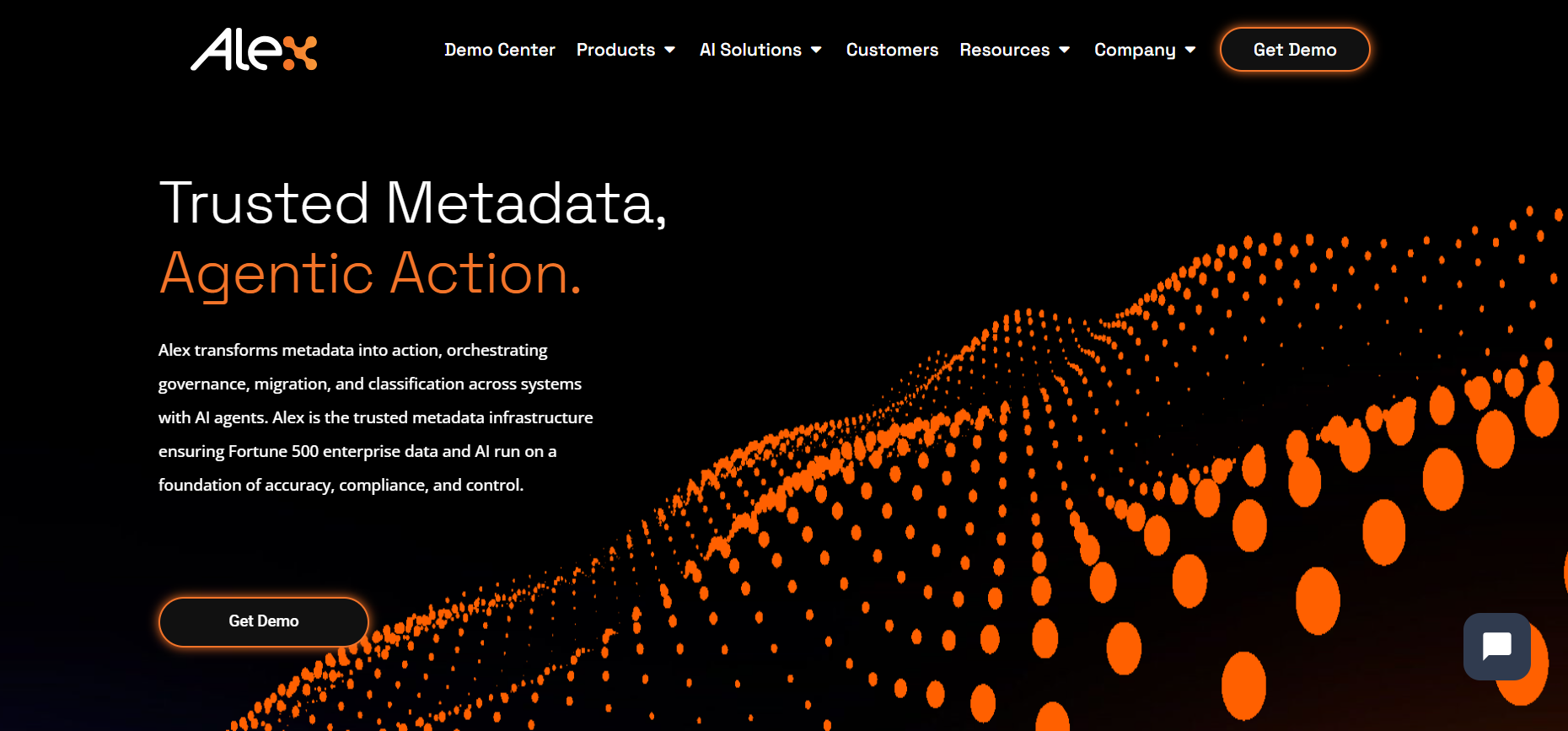
What is Alex Augmented Data Catalog AI
Alex Augmented Data Catalog AI is an AI-powered metadata management and data catalog platform designed to automate data discovery, classification, and governance across enterprise data environments. It uses machine learning to analyze datasets, detect patterns, and automatically generate metadata descriptions, tags, and relationships.
By augmenting traditional data catalogs with AI automation, Alex helps organizations improve metadata documentation, track data lineage, and identify sensitive or critical datasets. This enables teams to maintain trusted data assets for analytics, governance, and AI-driven workflows.
How to use Alex Augmented Data Catalog AI for AI Metadata Management
- Connect the platform to enterprise data sources such as databases, data warehouses, and analytics tools.
- Automatically scan systems to collect and analyze metadata across datasets and pipelines.
- Use AI models to classify data, detect sensitive information, and generate metadata documentation.
- Enable teams to search and understand datasets through the augmented data catalog.
Key Features
- AI-powered metadata classification and tagging
- Automated dataset documentation and enrichment
- Data lineage tracking and impact analysis
- Natural language search for data discovery
- Data governance and compliance workflows
- Integration with enterprise data platforms
Use Cases
- Automated data catalog implementation
- Metadata enrichment and dataset documentation
- Data governance and compliance management
- Sensitive data detection and classification
- AI and analytics data discovery
Who Should Use It
- Data governance teams implementing metadata frameworks
- Data engineers managing enterprise data pipelines
- Analytics teams searching for trusted datasets
- Organizations building AI and advanced analytics platforms
- Enterprises needing automated data classification
Pricing
Pricing for Alex Augmented Data Catalog is typically enterprise-based and customized depending on deployment size, integrations, and governance requirements. Organizations usually obtain pricing through vendor consultation.
Real-World Examples
- Enterprises implementing automated data catalogs to document large data ecosystems.
- Data governance teams using AI classification to identify sensitive or regulated data.
- Organizations enabling analysts to discover datasets using natural language search.
Pros
- AI-driven metadata enrichment and classification
- Automated dataset documentation
- Improves data discovery and governance workflows
- Supports enterprise data governance initiatives
Cons
- Limited market adoption compared with larger catalog platforms
- Enterprise implementation may require configuration and governance setup
- Integration ecosystem may be smaller than some competitors
Try Alex Augmented Data Catalog AI
Open Source Metadata Platforms
9. DataHub AI
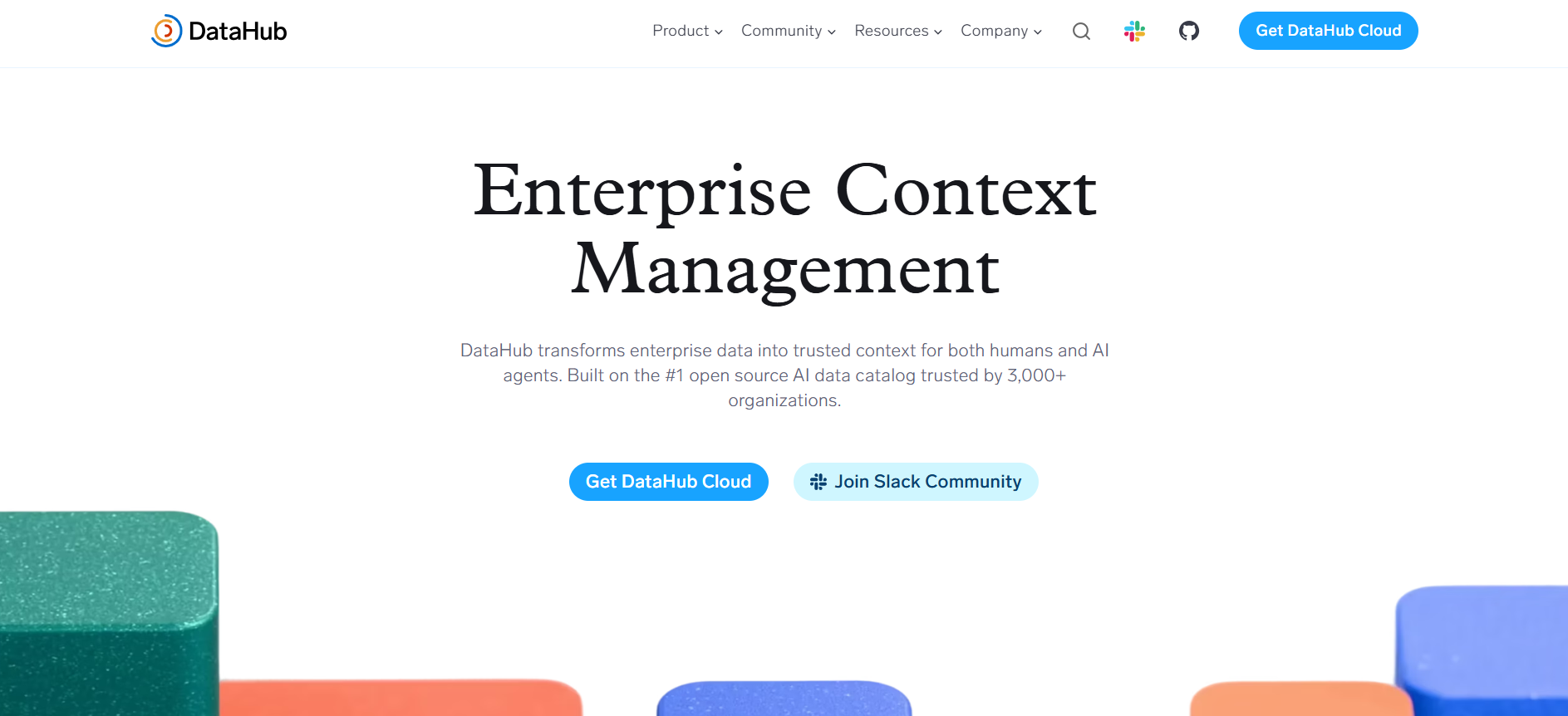
What is DataHub AI
DataHub AI is an open-source metadata management and data catalog platform originally developed at LinkedIn to help organizations discover, understand, and govern their data assets. It centralizes metadata from multiple systems—such as databases, data warehouses, pipelines, and BI tools—into a searchable catalog.
The platform uses a metadata graph architecture to connect datasets, dashboards, pipelines, and machine-learning assets, giving teams a complete view of how data is created and used. This helps organizations manage data lineage, improve data discovery, and maintain trusted data for analytics and AI systems.
How to use DataHub AI for AI Metadata Management
- Connect DataHub to data warehouses, databases, ETL pipelines, and BI tools in the data stack.
- Automatically ingest metadata such as schemas, lineage, ownership, and usage statistics.
- Use the metadata graph to analyze relationships between datasets, dashboards, and pipelines.
- Enable teams to search, explore, and govern datasets through the centralized metadata catalog.
Key Features
- Automated metadata ingestion from multiple data platforms
- Column-level and pipeline data lineage tracking
- Metadata graph architecture connecting datasets and pipelines
- Search and discovery for enterprise data assets
- Governance and compliance policy management
- Integration with modern data stack tools such as Snowflake, dbt, and BI platforms
- API-first architecture for extensibility and automation
Use Cases
- Implementing enterprise data catalogs
- Data discovery and documentation across data teams
- Tracking lineage across complex data pipelines
- Data governance and compliance programs
- AI and machine-learning data documentation
Who Should Use It
- Data engineers managing large data infrastructures
- Analytics teams searching for trusted datasets
- Organizations building modern data platforms
- Companies adopting open-source data governance tools
- Enterprises implementing AI and analytics pipelines
Pricing
DataHub is available as a free open-source platform, allowing organizations to deploy and customize the metadata platform internally. Many organizations also use managed SaaS versions provided by vendors that offer enterprise support and cloud deployment.
Real-World Examples
- Netflix uses DataHub to manage metadata and enable self-service data discovery across its data ecosystem.
- Visa adopted DataHub to scale governance and improve visibility across global data assets.
- Many technology companies use DataHub to document pipelines and track lineage across modern cloud data stacks.
Pros
- Powerful open-source metadata platform
- Highly customizable and extensible architecture
- Strong lineage tracking and metadata graph capabilities
- Large developer and open-source community
Cons
- Requires engineering resources to deploy and maintain
- Setup and configuration can be complex
- Enterprise features may require managed or commercial support
10. OpenMetadata AI
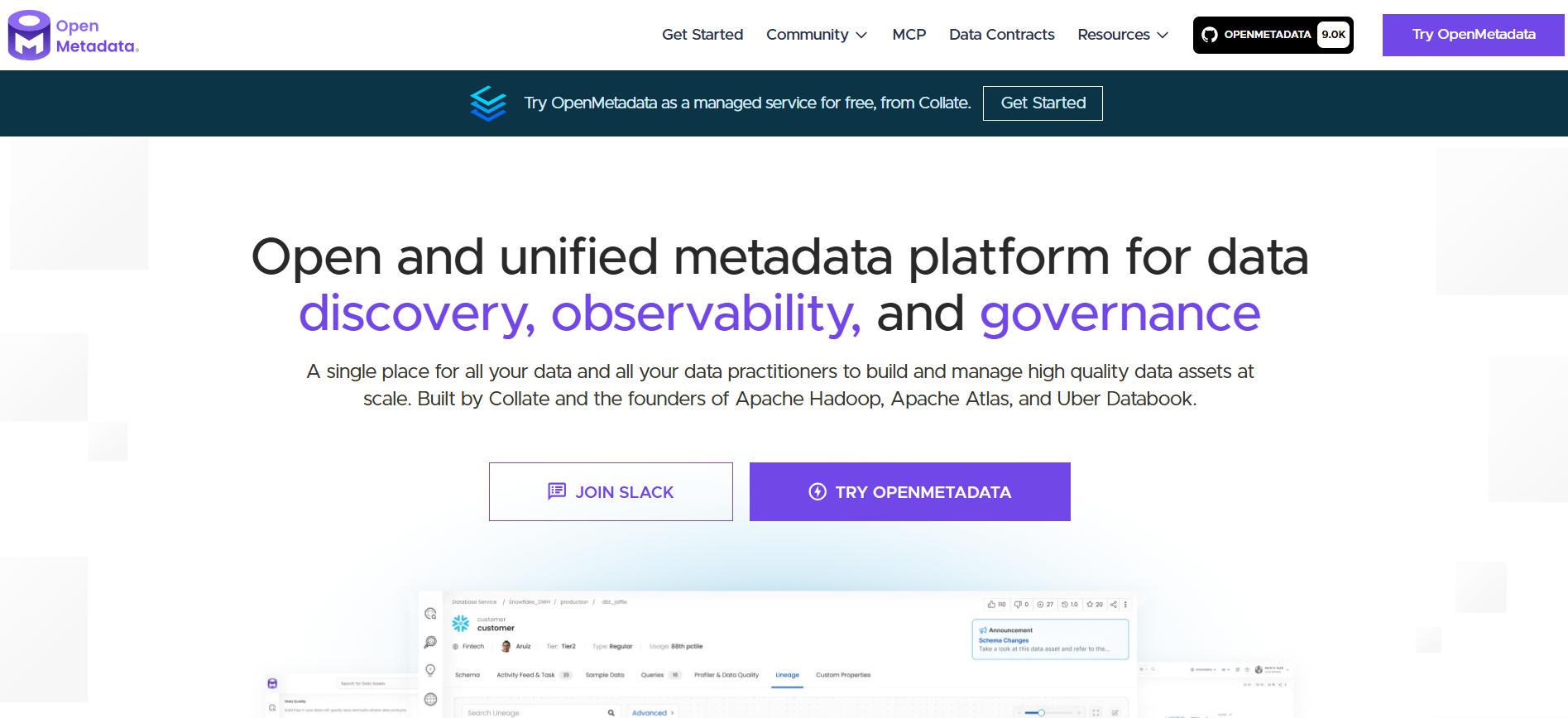
What is OpenMetadata AI
OpenMetadata AI is an open-source metadata management and data catalog platform designed to centralize and manage metadata across modern data ecosystems. It provides a unified platform for data discovery, governance, lineage tracking, and collaboration, allowing teams to understand how datasets, pipelines, dashboards, and ML assets are connected.
The platform uses a central metadata repository and unified metadata model to collect metadata from various systems such as data warehouses, data lakes, and analytics tools. This enables organizations to document data assets, track lineage, and ensure data quality for analytics and AI workflows.
How to use OpenMetadata AI for AI Metadata Management
- Connect OpenMetadata to databases, data warehouses, pipelines, dashboards, and ML platforms.
- Automatically ingest technical metadata from these systems using built-in connectors or APIs.
- Use the unified metadata graph to track relationships between datasets, dashboards, and pipelines.
- Enable teams to search, document, and govern data assets through the centralized metadata catalog.
Key Features
- Open-source metadata catalog and discovery platform
- Automated metadata ingestion from multiple data sources
- Data lineage tracking at table and column level
- Metadata repository for datasets, pipelines, dashboards, and ML models
- Data governance and role-based access controls
- Data quality monitoring and observability features
- API-first architecture with extensible metadata models
Use Cases
- Enterprise metadata catalog implementation
- Data discovery and documentation across analytics teams
- Data governance and compliance initiatives
- AI and machine learning dataset documentation
- Data lineage tracking across pipelines
Who Should Use It
- Data engineers managing large data platforms
- Organizations building open-source data stacks
- Analytics teams searching for trusted datasets
- Data governance teams implementing metadata frameworks
- Companies building AI and machine learning data pipelines
Pricing
OpenMetadata is free and open-source, released under the Apache 2.0 license. Organizations can deploy and customize the platform internally, while some vendors offer managed SaaS versions that provide hosting, enterprise support, and additional features.
Real-World Examples
- Technology companies using OpenMetadata to build centralized metadata catalogs across modern cloud data stacks.
- Data engineering teams documenting pipelines and datasets to support analytics and machine learning workflows.
- Organizations implementing open-source governance frameworks to manage metadata across hybrid data environments.
Pros
- Fully open-source and customizable platform
- Strong metadata ingestion and lineage capabilities
- Flexible API-first architecture for integrations
- Active open-source community and ecosystem
Cons
- Requires engineering resources to deploy and maintain
- Governance features may require additional configuration
- Non-technical users may need training to use the platform effectively
Where AI is Used in Metadata Management?
Artificial intelligence is increasingly embedded into metadata management platforms to automate tasks that previously required manual documentation and governance. AI helps organizations process large volumes of metadata, identify relationships between datasets, and maintain accurate data catalogs across complex environments.
Automated Metadata Discovery
AI algorithms automatically scan databases, data warehouses, and pipelines to collect technical metadata such as schemas, tables, columns, and relationships. This reduces manual cataloging work and keeps metadata continuously updated as new datasets are created.
Data Classification and Tagging
Machine learning models analyze datasets to identify patterns and classify data automatically. For example, AI can detect personally identifiable information (PII), financial data, or sensitive business data and apply appropriate tags or governance policies.
Data Lineage Detection
AI helps identify how data flows between systems by analyzing pipelines, transformations, and query logs. This enables automated lineage mapping that shows how data moves from source systems to dashboards or machine learning models.
Metadata Enrichment
AI tools can generate dataset descriptions, documentation, and business definitions automatically. This improves data literacy and makes it easier for analysts and business users to understand datasets.
Natural Language Data Discovery
Many modern metadata platforms use AI-powered search that allows users to query data catalogs using natural language. This makes it easier for non-technical users to find datasets without understanding technical schema structures.
Benefits of AI Metadata Management Tools
AI metadata management tools help organizations manage complex data ecosystems more efficiently by automating metadata discovery, documentation, and governance.
- Faster Data Discovery – AI-powered search helps teams quickly find trusted datasets.
- Automated Documentation – AI generates descriptions, tags, and metadata relationships automatically.
- Improved Data Governance – Automated classification and policy enforcement support compliance and data security.
- Better Data Quality – AI can detect inconsistencies, anomalies, and outdated datasets.
- AI-Ready Data Infrastructure – Well-organized metadata ensures datasets are reliable for analytics and machine learning.
How to Choose the Right AI Metadata Management Tool
Selecting the right metadata management platform depends on several technical and organizational factors.
Integration with Existing Data Stack
The tool should integrate with your organization’s databases, data warehouses, ETL tools, and BI platforms. Strong connector support ensures metadata can be collected across all systems.
Automation Capabilities
Look for platforms that automate metadata ingestion, classification, and documentation. Automation reduces manual work and keeps metadata accurate as data ecosystems evolve.
Data Governance Features
Organizations with compliance requirements should prioritize tools that provide governance workflows, data classification, policy management, and lineage tracking.
Scalability
The platform should support large volumes of metadata and scale with growing data infrastructure. Enterprise organizations often require platforms capable of managing millions of data assets.
Ease of Use
User-friendly interfaces and natural language search capabilities make metadata platforms accessible to both technical and non-technical users.
Deployment Model
Organizations should evaluate whether they prefer open-source tools, cloud-based SaaS platforms, or enterprise-managed solutions depending on their technical resources and governance requirements.
Future of AI Metadata Management
AI metadata management is evolving from static data catalogs into active intelligence systems that continuously analyze and govern data ecosystems. As organizations adopt advanced analytics and machine learning, metadata platforms will play a central role in managing data context and trust.
Future metadata platforms will increasingly use AI automation to generate documentation, detect data relationships, and monitor data quality in real time. Natural language interfaces will also allow users to search and interact with data catalogs using conversational queries.
As data environments grow more complex, AI-driven metadata systems will become essential for scalable governance, reliable analytics, and trustworthy AI applications.
Conclusion
AI metadata management tools help organizations automatically discover, organize, and govern data across complex data environments. By improving data discovery, documentation, and governance, these platforms ensure that analytics and AI systems rely on trusted datasets.
Tools like Collibra AI, Atlan AI, Alation AI, Informatica Intelligent Data Management Cloud AI, Ataccama ONE AI, DataHub AI, OpenMetadata AI, Secoda AI, Erwin Data Catalog AI, and Alex Augmented Data Catalog AI enable teams to build scalable, AI-ready data infrastructure and maintain reliable data ecosystems.
FAQs
What are AI metadata management tools?
AI metadata management tools are platforms that automatically collect, organize, and enrich metadata using machine learning and automation. They help organizations track data lineage, enforce governance policies, and improve data discovery across analytics systems.
What is the difference between a data catalog and metadata management tool?
A data catalog focuses primarily on organizing and searching data assets, while metadata management tools provide broader capabilities including governance, lineage tracking, metadata enrichment, and automation.
Are there open-source metadata management platforms?
Yes. Popular open-source metadata platforms include DataHub AI and OpenMetadata AI. These tools allow organizations to customize metadata workflows and integrate them with modern data stacks.
Why is metadata important for AI systems?
AI models rely on high-quality, well-documented data. Metadata helps provide context such as definitions, lineage, and ownership, ensuring that AI systems use trusted datasets.
What features should you look for in a metadata management tool?
Key features include automated metadata discovery, data lineage visualization, governance workflows, business glossary management, integrations with data platforms, and AI-powered discovery.