
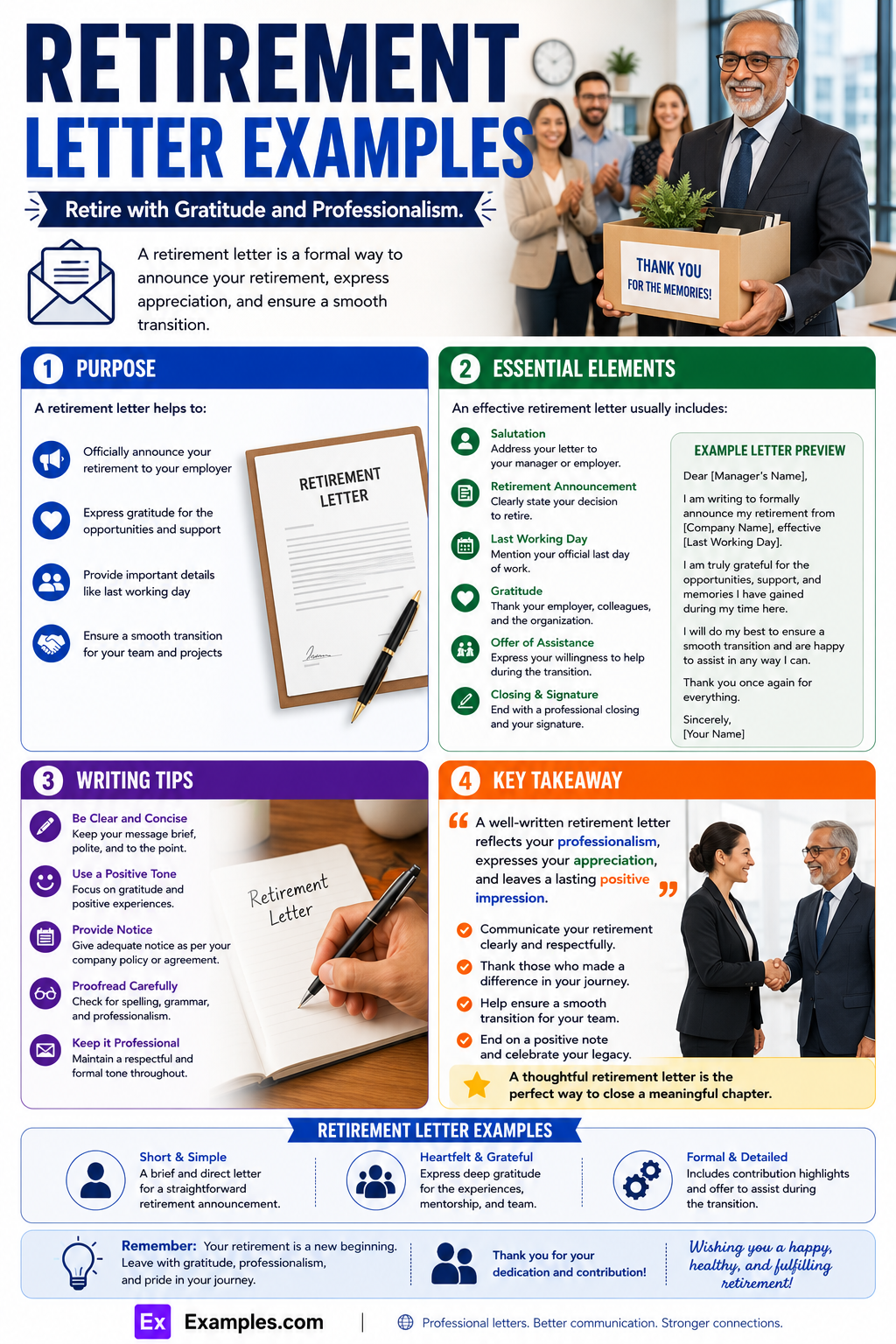
Retirement letters formally notify employers about an employee’s retirement plans. They ensure professionalism and a smooth transition.
22+ Retirement Letter Templates
Retirement Resignation Letter
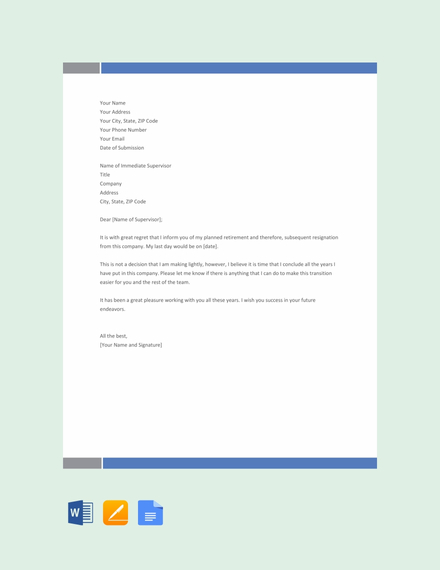
Retirement Letter Example
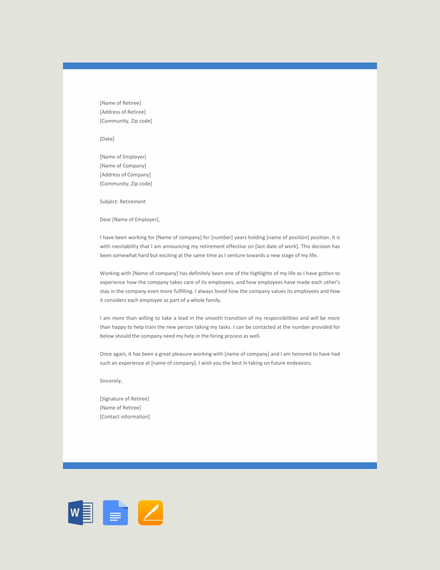
Retirement Letter Format
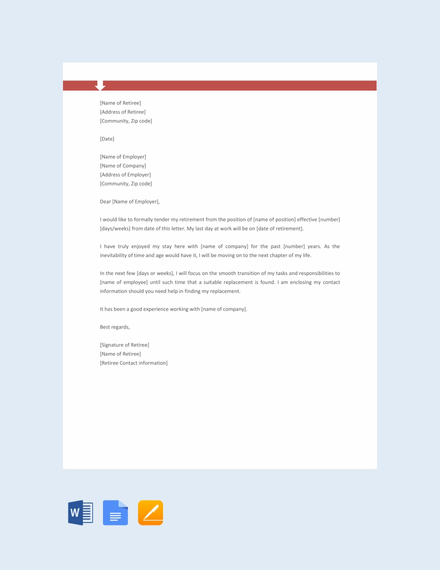
Retirement Letter to Employee Template
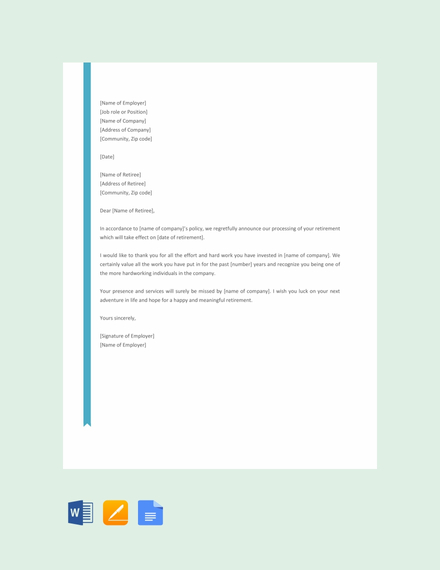
Retirement Letter to Employer Template
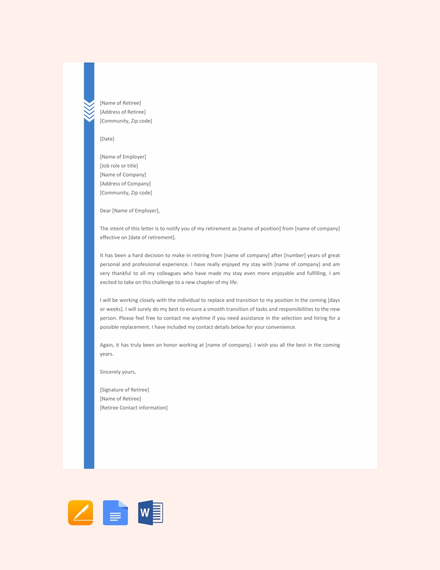
Sample Retirement Letter Template
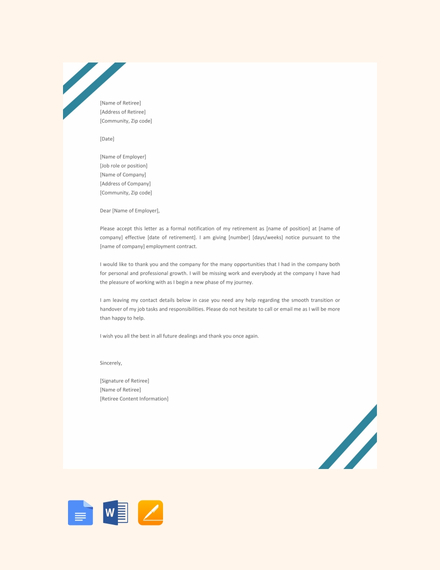
Simple Retirement Letter Template
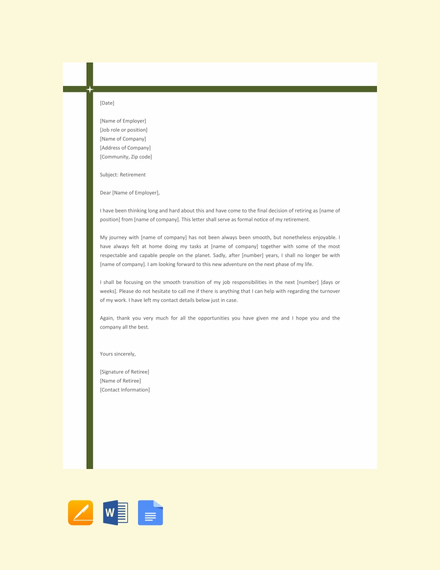
Free Retirement Letter to Employee From Employer Template
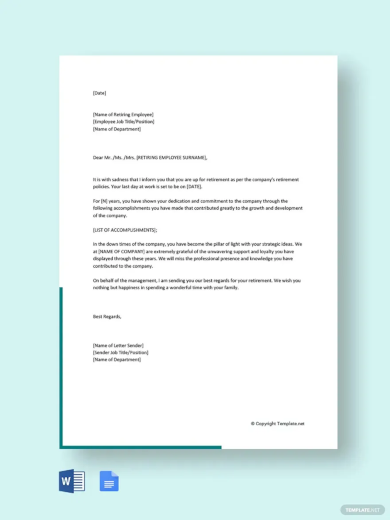
Notice of Retirement Letter to Employee Template
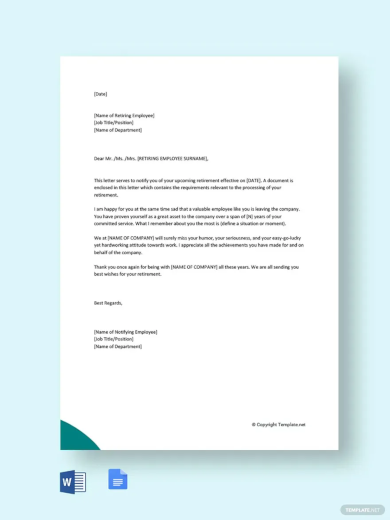
Free Confirmation of Retirement Letter to employee Template
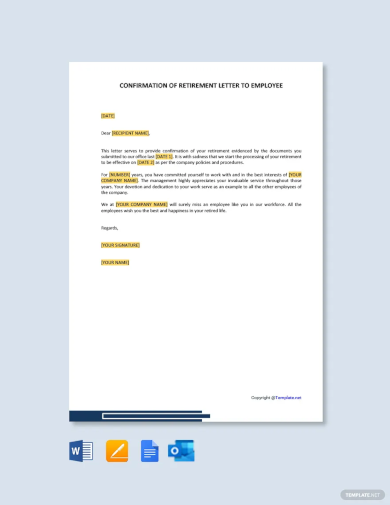
Retirement Farewell Letter Template
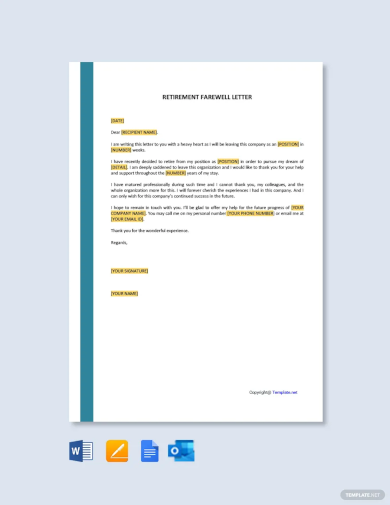
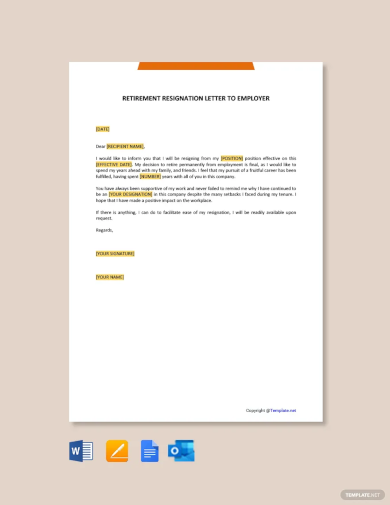
Free Retirement Resignation Letter to Employer Template
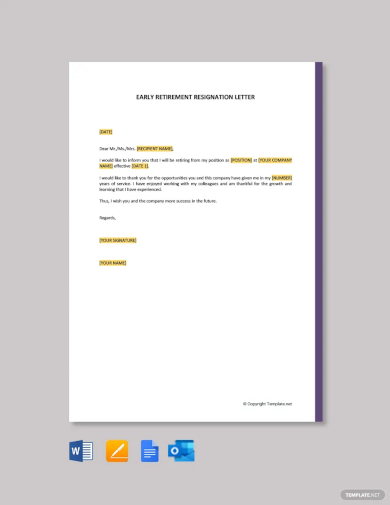
Early Retirement Resignation Letter Template
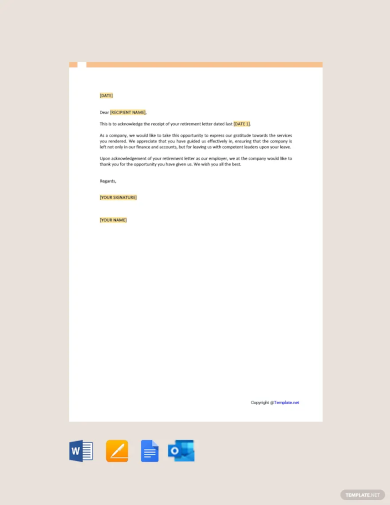
Free Employer Retirement Acknowledgement Letter Template
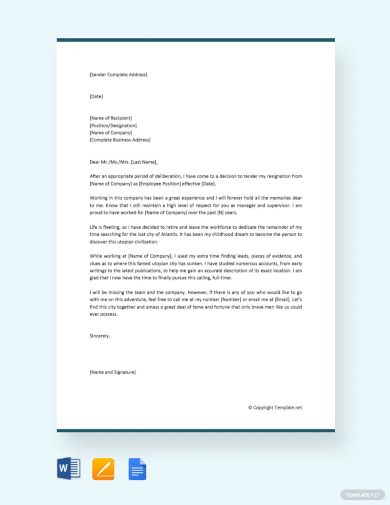
Free Funny Retirement Resignation Letter Template
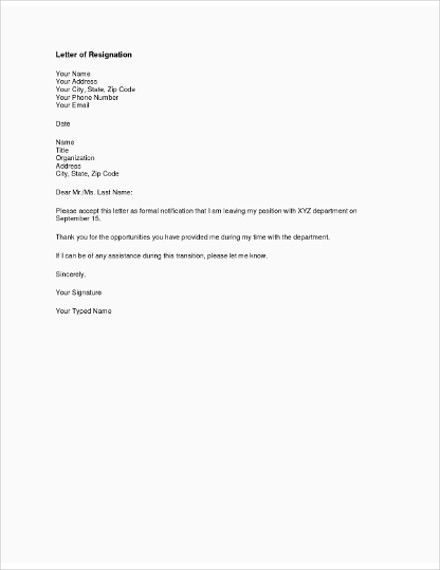
Letter of Resignation Template
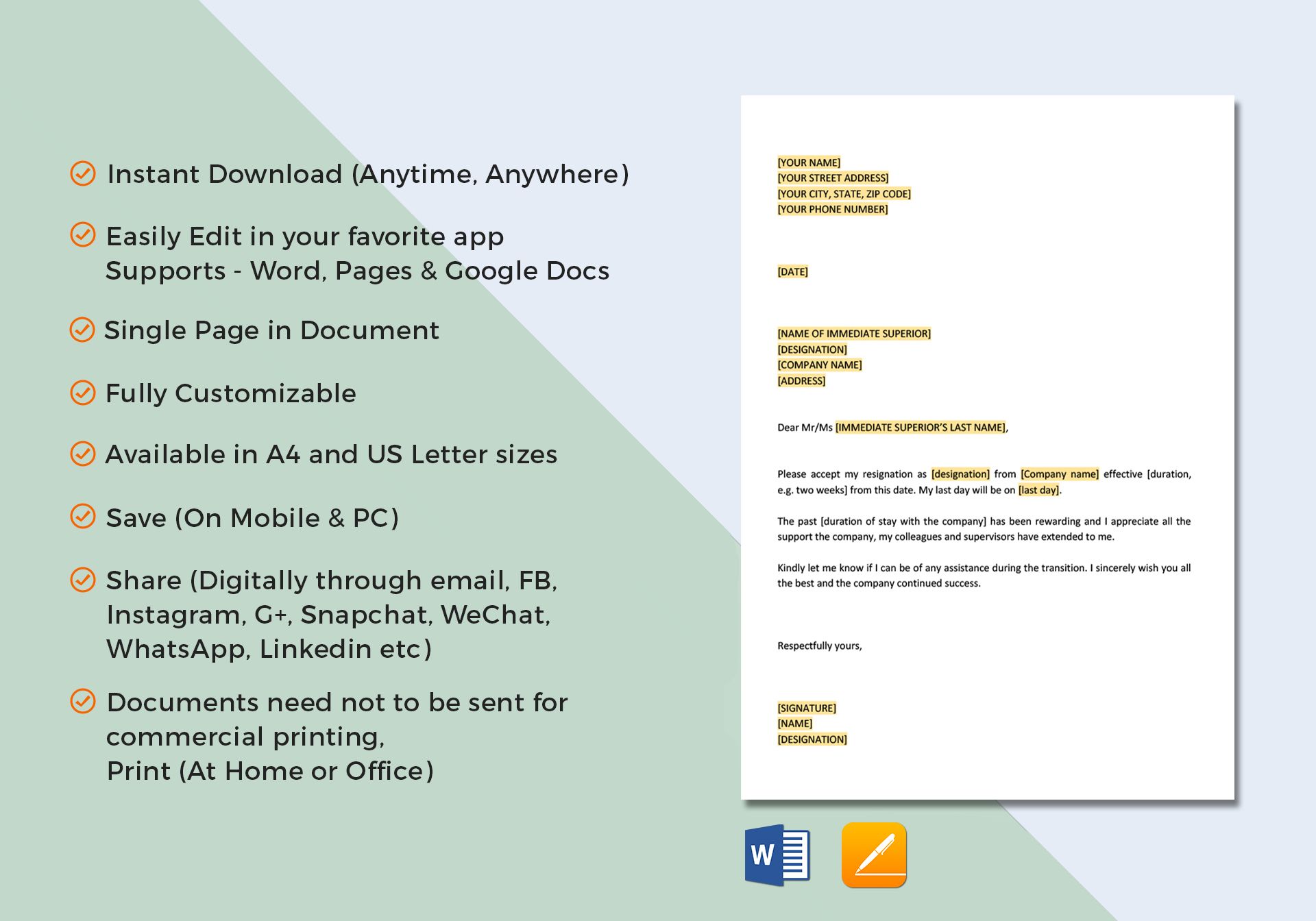
Acceptance of Resignation Letter Template
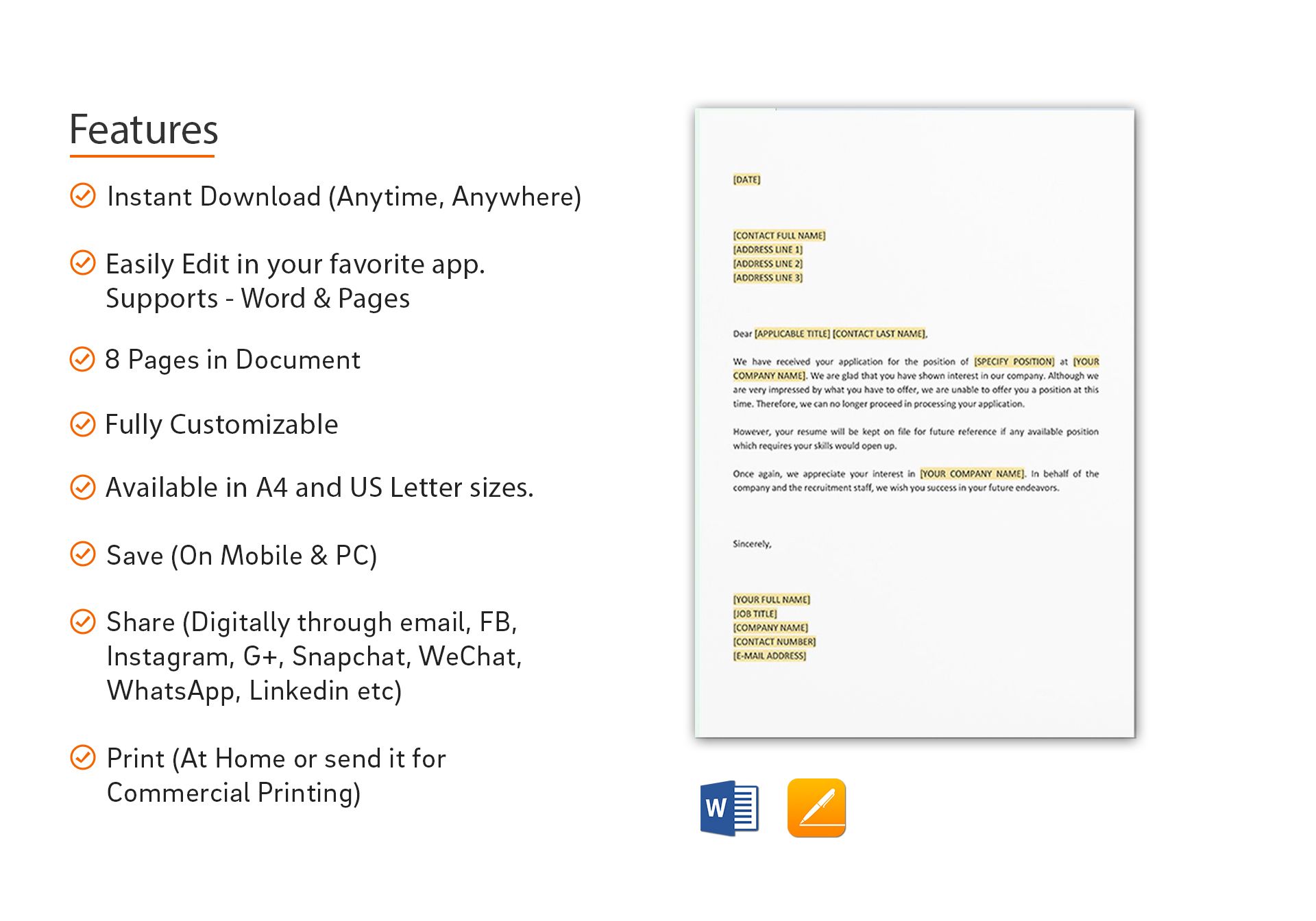
Letter of Notice for Retirement
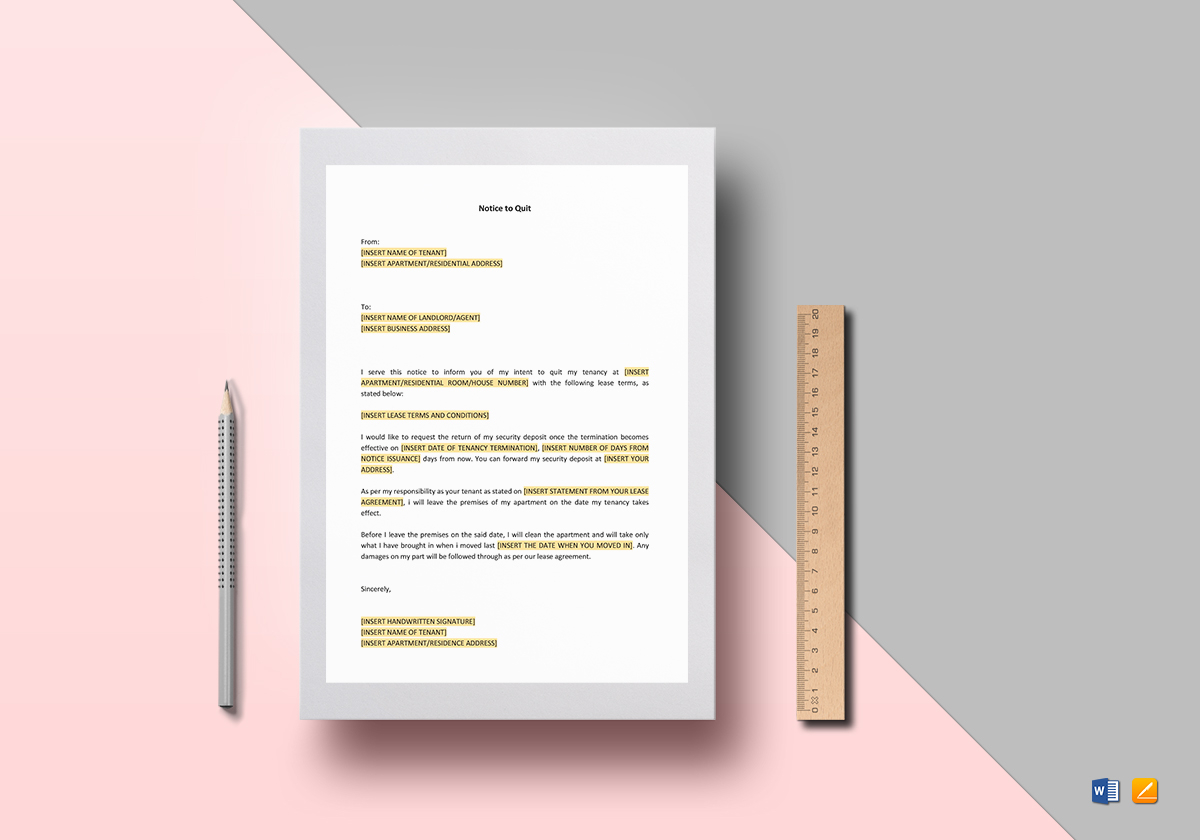
Retirement Resignation Letter Sample
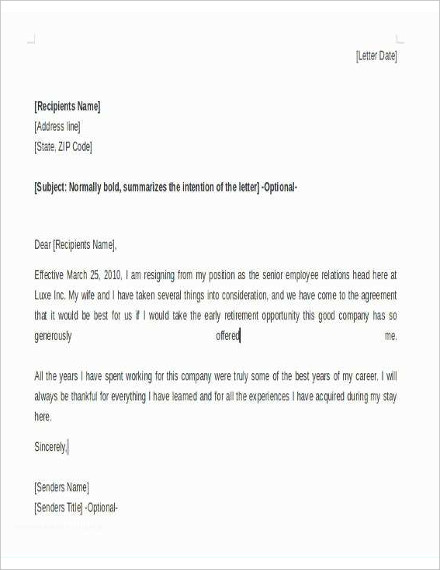
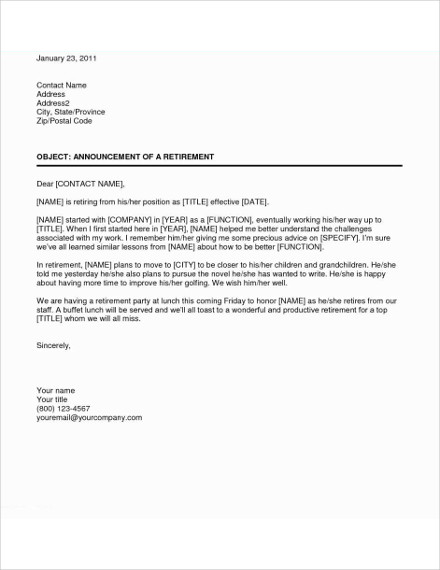
Letter Announcement of Retirement
Intention to Retire Letter
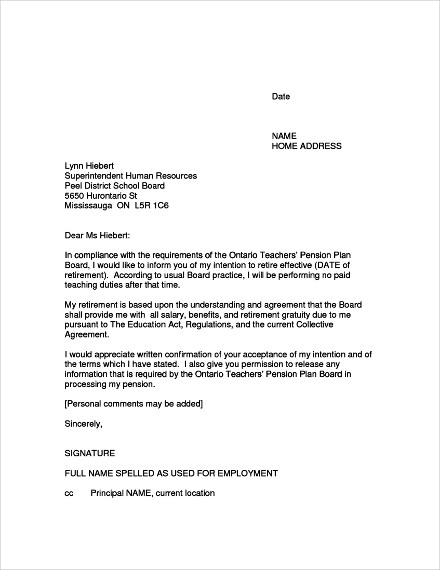
Letter of Intent to Retire
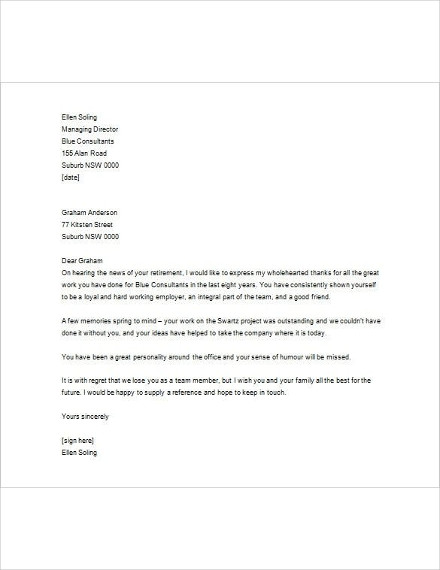
Teacher Retirement Letter Example
What Is a Retirement Letter?
A retirement letter often associated with a resignation letter is a formal document that an employee writes to inform their employer or manager of their intention to retire from their job or career. The letter typically includes information such as the employee’s name, the date of their intended retirement, and a brief statement indicating their reasons for retiring.
How to Write a Retirement Letter
Your resignation letter is probably the last formal correspondence you will have with your company, so make sure you do it right. Take note of these helpful tips:
Step 1: Start with the basics
There’s no need to sugarcoat or get creative at the beginning of your letter. If your draft feels too long, a Paragraph Shortener can help make it more concise. The introduction of your retirement letter would be mainly about stating the position you are resigning from and the effective date. While you probably shared with your boss your reasons for leaving, you don’t need to describe them here. Keeping it simple is the goal. If you need help writing a professional retirement message, use Paragraph Writer.
Step 2: Make Sure You Provide Enough Notice of Your Departure
While you probably don’t want to tell the management about your plans for retirement too many months in advance, you owe it to them to give them enough time to find a replacement for you. Offer to help during the transition. Organizations hiring your replacement can prepare employment documents with an AI Contract Generator. Employers can prepare a formal transition plan using an AI Proposal Generator. Your experience can be valuable in training your replacement. HR teams can summarize the transition process with an AI Report Generator. After all, this person will have big shoes to fill.
Step 3: The thank-you
It’s always a good idea to write a thank you letter or just thank your employer for the opportunity, describing some of the key things you’ve enjoyed and learned on the job. You can also improve the wording of your retirement message with a Paragraph Rewriter. (Yes, this is still true even if you’re thrilled to be leaving.) Remember, you may need these people for a reference letter down the line, and leaving things on a good note will leave a lasting positive impression.
Step 4: The Hand-off
Finally, state your willingness to help out with the transition. If additional documentation is required during the handover, an AI Agreement Generator can help create clear transition agreements. You don’t need to go into great detail, and definitely, don’t promise anything that you can’t deliver, but a couple of lines stating that you will ensure a smooth wrap-up of your duties. While you need to have a face to face discussion first, you must also give written notice to your supervisor and HR department.
FAQs
What are the elements of a retirement letter?
There are a few important things that you should never forget when writing a retirement letter. Let’s look at some examples of what to do: a professional greeting, stating your intention this includes the theme of your retirement letter, end date, gracious tone, and the end game.
What is the difference between resigning and retiring?
Resigning from your position simply implies a willful desire to abdicate your duties and terminate the working relationship with whatever agency employs you. Retirement, on the other hand, is often possible only when you have worked as a civil servant for a certain number of years. It implies your desire to resign permanently from government employment and start collecting retirement benefits you have accrued. If you plan to pursue consulting or part-time work after retirement, an AI Resume Builder can help you create an updated professional resume.
How much notice should you give?
Your employer must give you at least the statutory minimum period of notice. This period depends on how long you’ve worked there: continuously employed for between one month and two years, one week. Continuously employed for 2+ years, one week for each complete year. A Time Calculator can help you calculate your notice period and retirement timeline accurately.
Everything ends for a reason, even for employees who have worked for years. While it may look like a sad time to go or a good time to go, it is always best to write a retirement letter as a way to show your gratitude for the years of working. Gracefully leave the company and work, in general, with an effective retirement letter, and start enjoying your years as a free man.