
Journal of Science and Technology
ISSN: 2456-5660 Volume 06,Special Issue 01, August 2021,
www.jst.org.in
DOI:
https://doi.org/10.46243/jst.2021.v6.i04.pp442-451
Published by: Longman Publishers
www.jst.org.in 442 | Page
“An Insight Into Critical Thinking And Effective Communication
Skills Required For A Tax Professional: An Human Resource and
Management Approach”
Prof. Dr. Sanket L. Charkha
1
, Prof. Ankita Jeewankar
2
,
Mr. Pratik Bhaskar Hatkar
3
1
Savitribai Phule Pune University, Sinhgad Institute, MBA Dept, India
2
Savitribai Phule Pune University, Sinhgad Institute, MBA Dept, India
3
Savitribai Phule Pune University, Sinhgad Institute, MBA Dept, India
Corresponding Author:
charkha.sanket@gmail.com
To Cite this Article
S.Charkha, A. Jeewankar
“An Insight Into Critical Thinking And Effective Communication Skills Required For A
Tax Professional: An Human Resource and Management Approach”
” Journal of Science and Technology.
Vol. 06,
Special Issue 01, August 2021, pp442-451
Article Info
Received: 15.07.2021 Revised: 24.07.2021 Accepted:10.08.2021 Published: 16.08.2021
Abstract:
Performing as a tax advisor, bookkeeper, or auditors necessitates a diverse range of abilities, including
numerical thinking and problem-solving. Most people believe that tax professionals must be numerate and detail-
oriented. Even to the most gifted mathematical brains, however, would struggle in the field of taxation if they lack
soft skills such as good communicating and innovation. A career in taxation is varied, tough, and not quite as
mathematical as it may appear. It is appropriate for graduates from a variety of fields. So, are you the sort of person
that employers seek? Continue reading to learn how to get the abilities you'll need for your Tax job and how to be
an effective tax professional.
The universe revolves on money. What abilities are required to keep the wheels turning? This paper focuses on
human relational and skill development approach as to Effective Communication and the need for critical thinking
to be a successful tax professional in today’s competitive world..
Key Word
:
Taxation, Human Relations, Communication Skills, Critical Thinking
_____________________________________________________________________________________
I.
Introduction
Introduction:
Soft abilities like these are in high demand in a variety of fields. Tax professionals, on the other hand, may be
witnessing a faster-than-average shift in their industry's demands. According to a research by accounting company
Ernst & Young, organisations throughout the world are narrowing their searches for tax specialists to discover
people who are as excellent with words as they are with figures. According to Ernst & Young, the taxation
professional is rapidly changing, and potential employees must evolve with it.
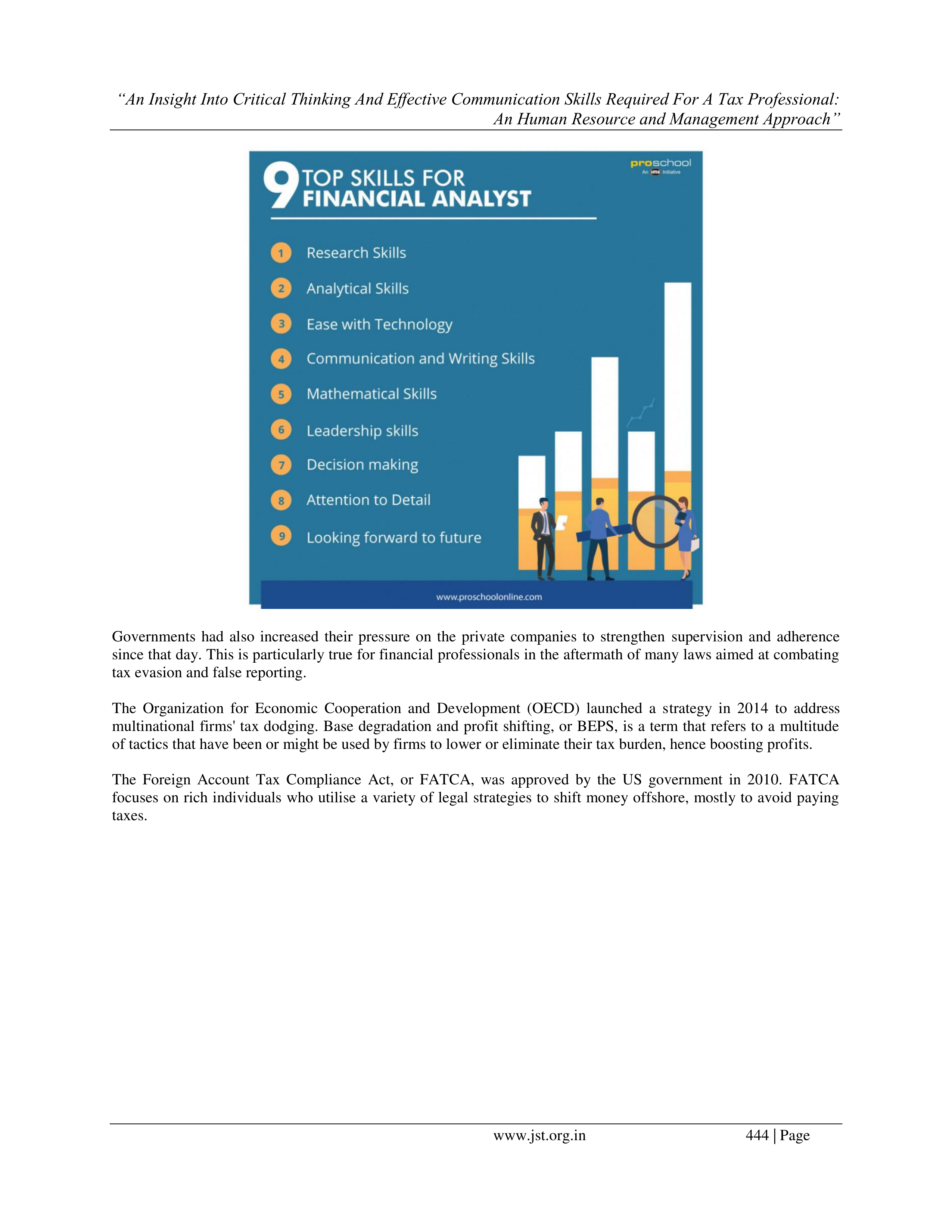
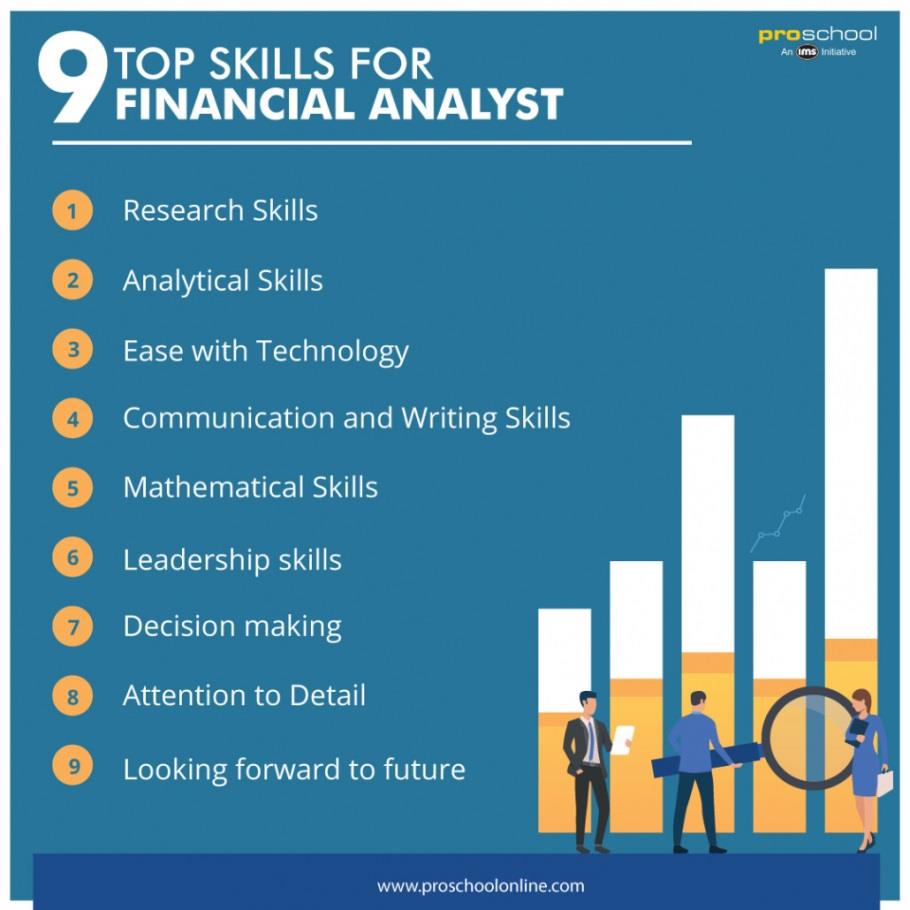
What precisely are businesses seeking for in the new accounting era? Recruiters specialised in hiring for tax practice
roles, according to Ernst and Young analysts, were seeking for people with a diverse range of skills:
“An Insight Into Critical Thinking And Effective Communication Skills Required For A Tax Professional:
An Human Resource and Management Approach”
www.jst.org.in 443 | Page
•
Strong technical knowledge of tax law and practise, and even the ability to comprehend the most
up-to-date digital tools for organising, compiling, and analysing tax data.
•
Knowledge of data science, with something like a focus on coming up with innovative, unique
solutions to difficult challenges.
•
Both in paper as well as in person, outstanding communication skills are necessary.
Objectives of Study:
1.
To Assess various skill sets that are required for an individual or finance professional
2.
To study about communication skills required for better communication.
3.
To find out for correlation between communication skill and human relations approach
4.
To asses management approach of management in human relations and skill sets.
Research Methodology:
The research methodology that is used for this study is descriptive research.
All secondary and already published data is being used for this research. Secondary data is used and based on this
the research has been undertaken.
Data Collection and Sampling:
Various data of already published sources is being undertaken for this research. There is no sample that has been
collected. Method of data collection is completely secondary source of information is undertaken for research study.
Transitions in Tax Procedure Needs Due to Trends
Numerous administrators and recruiters indicated a broadening scope of duties for people in tax practice, according
to professionals who spoke with Ernst & Young for a closer look into the developing role of the contemporary tax
professional.
However according to Ernst & Young, the 2008 financial meltdown and the broad changes that followed were a
crucial trigger for this development.
“An Insight Into Critical Thinking And Effective Communication Skills Required For A Tax Professional:
An Human Resource and Management Approach”
www.jst.org.in 444 | Page
Governments had also increased their pressure on the private companies to strengthen supervision and adherence
since that day. This is particularly true for financial professionals in the aftermath of many laws aimed at combating
tax evasion and false reporting.
The Organization for Economic Cooperation and Development (OECD) launched a strategy in 2014 to address
multinational firms' tax dodging. Base degradation and profit shifting, or BEPS, is a term that refers to a multitude
of tactics that have been or might be used by firms to lower or eliminate their tax burden, hence boosting profits.
The Foreign Account Tax Compliance Act, or FATCA, was approved by the US government in 2010. FATCA
focuses on rich individuals who utilise a variety of legal strategies to shift money offshore, mostly to avoid paying
taxes.
“An Insight Into Critical Thinking And Effective Communication Skills Required For A Tax Professional:
An Human Resource and Management Approach”
www.jst.org.in 445 | Page
To make tax reporting easier across international boundaries, the OECD launched the Common Reporting Standard.
This standard has global ramifications for both corporations and individuals.
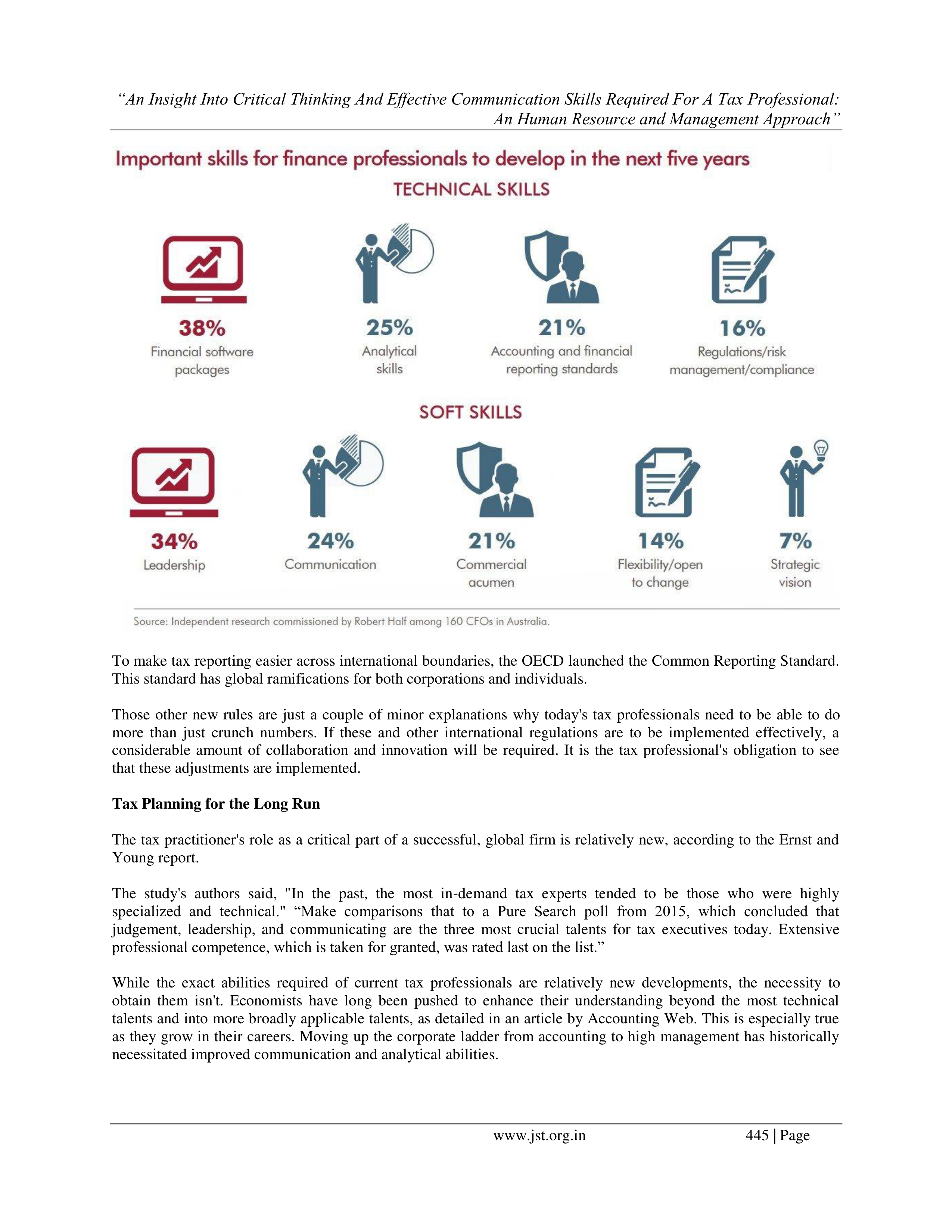
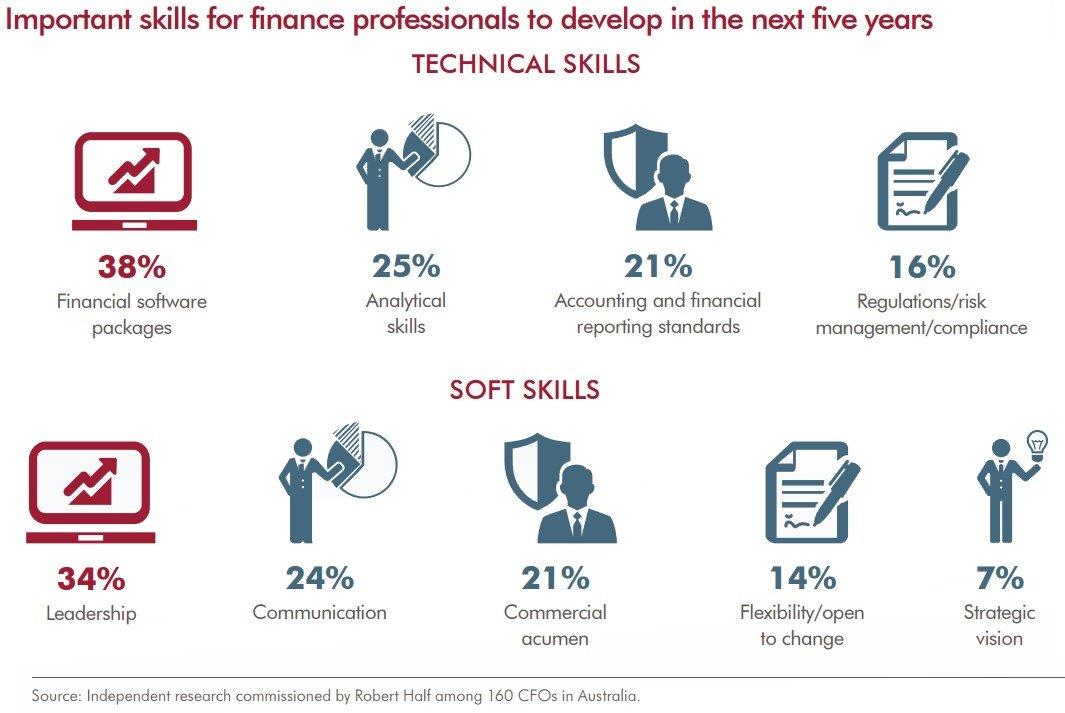
Those other new rules are just a couple of minor explanations why today's tax professionals need to be able to do
more than just crunch numbers. If these and other international regulations are to be implemented effectively, a
considerable amount of collaboration and innovation will be required. It is the tax professional's obligation to see
that these adjustments are implemented.
Tax Planning for the Long Run
The tax practitioner's role as a critical part of a successful, global firm is relatively new, according to the Ernst and
Young report.
The study's authors said, "In the past, the most in-demand tax experts tended to be those who were highly
specialized and technical." “Make comparisons that to a Pure Search poll from 2015, which concluded that
judgement, leadership, and communicating are the three most crucial talents for tax executives today. Extensive
professional competence, which is taken for granted, was rated last on the list.”
While the exact abilities required of current tax professionals are relatively new developments, the necessity to
obtain them isn't. Economists have long been pushed to enhance their understanding beyond the most technical
talents and into more broadly applicable talents, as detailed in an article by Accounting Web. This is especially true
as they grow in their careers. Moving up the corporate ladder from accounting to high management has historically
necessitated improved communication and analytical abilities.
“An Insight Into Critical Thinking And Effective Communication Skills Required For A Tax Professional:
An Human Resource and Management Approach”
www.jst.org.in 446 | Page
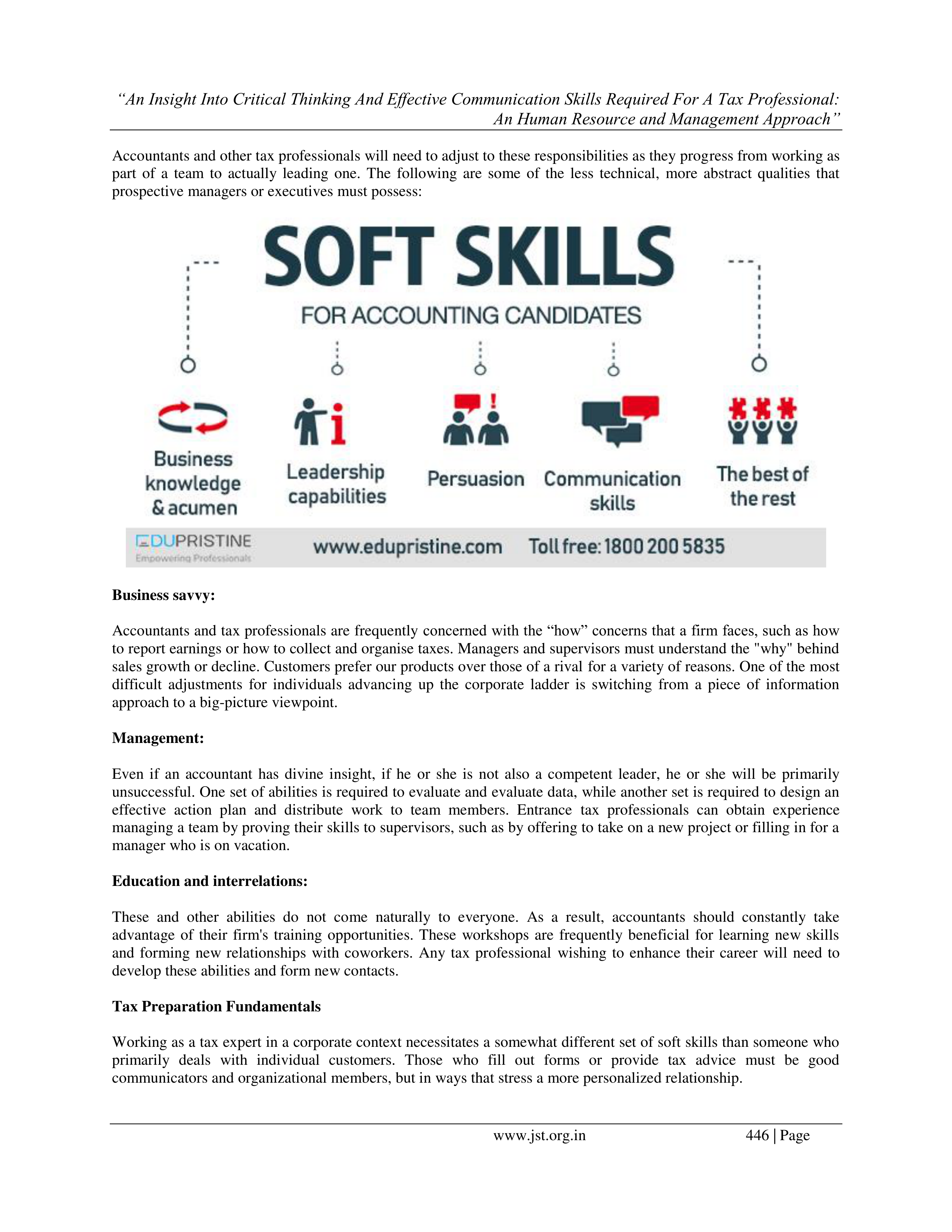
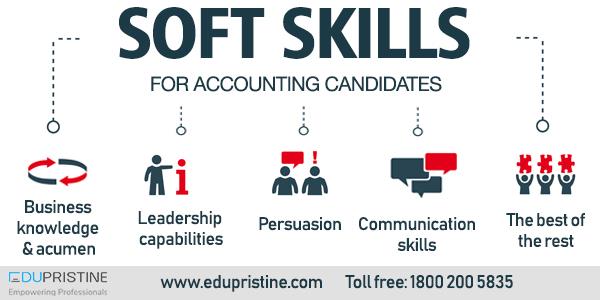
Accountants and other tax professionals will need to adjust to these responsibilities as they progress from working as
part of a team to actually leading one. The following are some of the less technical, more abstract qualities that
prospective managers or executives must possess:
Business savvy:
Accountants and tax professionals are frequently concerned with the “how” concerns that a firm faces, such as how
to report earnings or how to collect and organise taxes. Managers and supervisors must understand the "why" behind
sales growth or decline. Customers prefer our products over those of a rival for a variety of reasons. One of the most
difficult adjustments for individuals advancing up the corporate ladder is switching from a piece of information
approach to a big-picture viewpoint.
Management:
Even if an accountant has divine insight, if he or she is not also a competent leader, he or she will be primarily
unsuccessful. One set of abilities is required to evaluate and evaluate data, while another set is required to design an
effective action plan and distribute work to team members. Entrance tax professionals can obtain experience
managing a team by proving their skills to supervisors, such as by offering to take on a new project or filling in for a
manager who is on vacation.
Education and interrelations:
These and other abilities do not come naturally to everyone. As a result, accountants should constantly take
advantage of their firm's training opportunities. These workshops are frequently beneficial for learning new skills
and forming new relationships with coworkers. Any tax professional wishing to enhance their career will need to
develop these abilities and form new contacts.
Tax Preparation Fundamentals
Working as a tax expert in a corporate context necessitates a somewhat different set of soft skills than someone who
primarily deals with individual customers. Those who fill out forms or provide tax advice must be good
communicators and organizational members, but in ways that stress a more personalized relationship.
“An Insight Into Critical Thinking And Effective Communication Skills Required For A Tax Professional:
An Human Resource and Management Approach”
www.jst.org.in 447 | Page
Anyone else who performs tax advice or assistance for a charge is nearly always required to register with the IRS, as
well as several state organisations. Because tax preparers and advisers would be dealing with personal data or
information, the IRS has issued a set of guidelines to help clients including preparers appreciate what to anticipate.
Before engaging with anybody to file their taxes or obtain tax-related financial advice, the IRS advises individuals to
do their homework. At the very least, tax preparers should obtain an IRS Creditor Tax Identification Number. Many
are also certified by a variety of professional organisations, especially if they specialise in a certain area of taxation.
Tax preparers must be thorough and organised, and they must be willing to answer any questions or supply any
paperwork requested by their clients, within reason. This necessitates a good eye for organisation, the ability to stick
to plans and deadlines, and the ability to keep critical documents filed away and properly maintained.
Above everything, tax preparers and consultants must be curious and considerate. A skilled tax expert should be able
to explain the legal consequences of a client's position and ask the correct questions to do so. Simultaneously time,
they must gain the trust of their clients by being neutral and private.
Participating in programmes sponsored by the IRS and educational institutions is a wonderful approach that
accountants in training to polish these abilities. The Volunteer Income Tax Assistance Service is a well-known
programme (VITA).
VITA was created by the IRS in conjunction with a programme called Tax Counseling for the Elderly to help low-
income individuals who need guidance with filing annual returns. As a financial planner, cultivating soft skills is a
continuous process that might take a lifetime. Anyone studying tax practise via Northeastern University's D'Amore-
McKim School of Business's Master of Science in Taxation online programme will have a good start whenever their
career has taken them next by knowing how the field is changing and how to adapt to some of those developments.
“An Insight Into Critical Thinking And Effective Communication Skills Required For A Tax Professional:
An Human Resource and Management Approach”
www.jst.org.in 448 | Page
A.
Communication
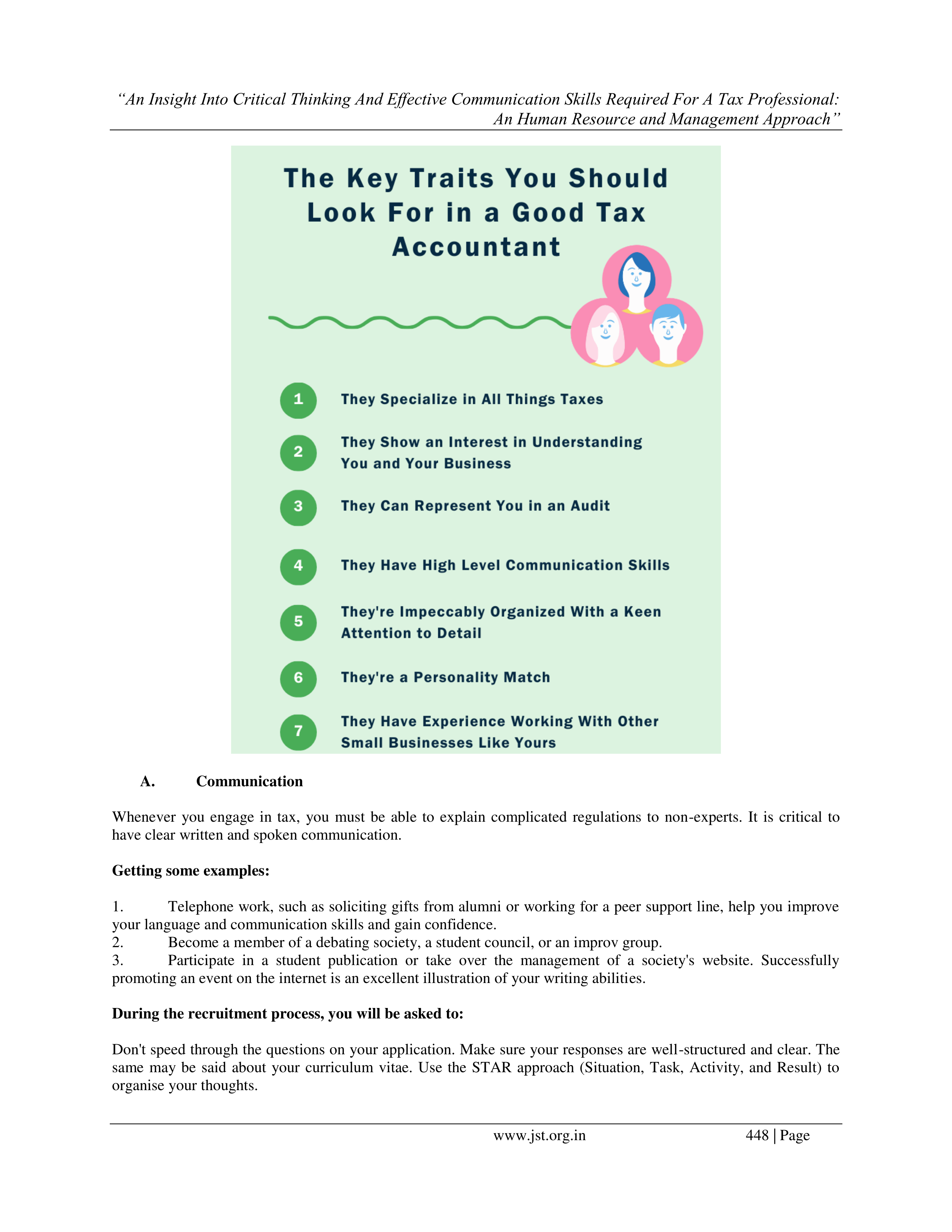
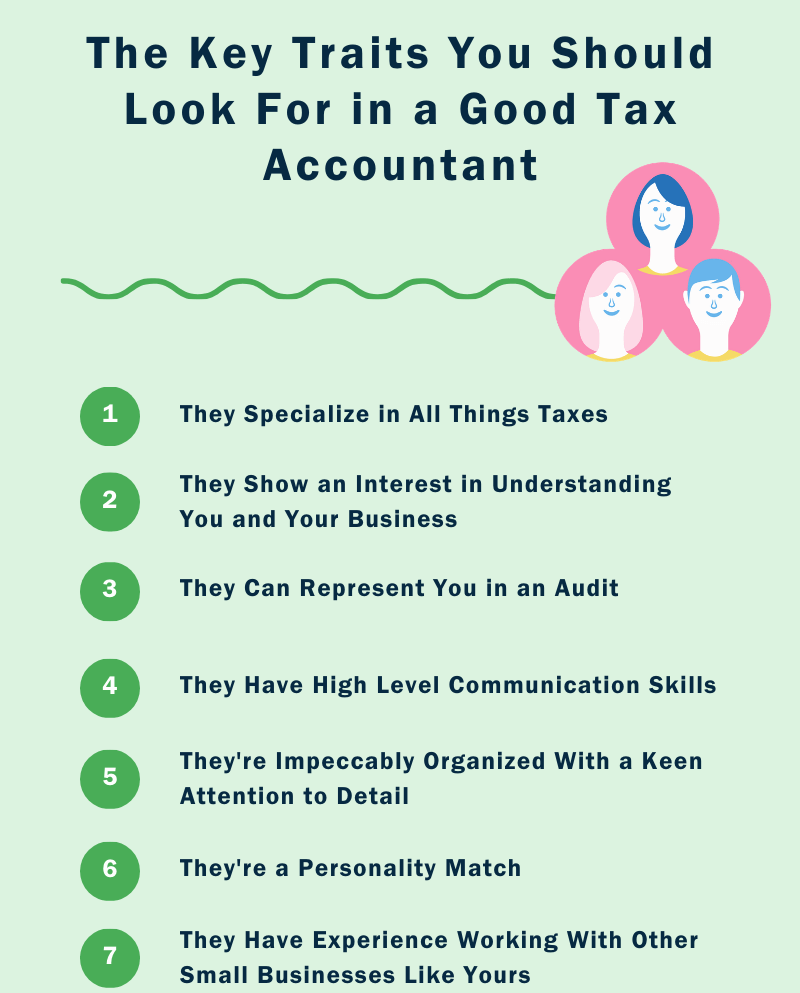
Whenever you engage in tax, you must be able to explain complicated regulations to non-experts. It is critical to
have clear written and spoken communication.
Getting some examples:
1.
Telephone work, such as soliciting gifts from alumni or working for a peer support line, help you improve
your language and communication skills and gain confidence.
2.
Become a member of a debating society, a student council, or an improv group.
3.
Participate in a student publication or take over the management of a society's website. Successfully
promoting an event on the internet is an excellent illustration of your writing abilities.
During the recruitment process, you will be asked to:
Don't speed through the questions on your application. Make sure your responses are well-structured and clear. The
same may be said about your curriculum vitae. Use the STAR approach (Situation, Task, Activity, and Result) to
organise your thoughts.
“An Insight Into Critical Thinking And Effective Communication Skills Required For A Tax Professional:
An Human Resource and Management Approach”
www.jst.org.in 449 | Page
In an interview, talk clearly and precisely, and use nonverbal and verbal contact to connect with your interviewer.
B.
Mathematical literacy
You don't have to be a math whiz to go into Tax; many humanities students do. However, you must be acquainted
with numbers.
Getting some examples:
1.
Fortunately, you employ numeracy on a regular basis.
2.
Budgeting food, rent, and bills is a major one for learners, especially if they're shared with other
housemates.
3.
You can also serve as the treasurer of a club or group as a volunteer.
During the application process, you will be asked to:
•
On your CV or during an interview, don't be hesitant to utilise everyday instances. That's plenty if you can
describe your excellent budgeting methods.
•
Before you go into a numerical question, take a big breath and think about how you'll approach it.
C.
Organize your time.
You'll need to prioritise things, fulfil deadlines, and take personal responsibility for a professional workload if you
want to be successful.
Getting some examples:
1.
Various separate pieces of work or revision for several units must be juggled through your degree. Consider
the methods you employ to effectively manage your time in these instances.
2.
You must also manage your schedule to accommodate other commitments such as chairing a student club
or working part-time.
Even during application process, you will be asked to:
•
Submit your application far ahead of the deadline.
•
Make sure you arrive on time for your interview.
•
Methodically complete in-tray exercises. Prepare ahead of time by taking practise exams available online.
D.
Business awareness is important.
Employers desire workers that are really enthused about their employment. Commercial awareness demonstrates
that you are interested in your field and that you will be able to stay up with changes as they occur. To keep
informed, sign up for Bright Network's weekly advertisement awareness update.
Getting some examples:
1.
Take the time to read. Compile a list of expert bloggers by reading any relevant periodicals.
2.
Keep an eye out for emerging trends. You should be able to talk about industry news and explain why
you're interested in it.
3.
Take action based on what you've learned. If you hear anything said, look into it more. Organize a debate
or lecture, or invite a guest speaker, if possible.
Even during application process, you will be asked to:
“An Insight Into Critical Thinking And Effective Communication Skills Required For A Tax Professional:
An Human Resource and Management Approach”
www.jst.org.in 450 | Page
•
Whenever you apply, do some research on the firm. What makes it unique? What draws you in? What are
the various options for graduates?
•
By the time you go to the interview stage, you should have a good understanding of the firm, including
significant rivals, recent triumphs, and the causes for any stock moves, among other things.
•
Don't ask your interviewer any questions about which you can find the answers online or in a book.
E.
Skills in problem-solving
In the field of taxation, you must frequently use your imagination. For example, if you want to help a customer save
money on taxes, you may suggest foundations and tax-free investments. It's up to what you want to come up with a
creative solution.
F.
Pay close attention to the details.
The regulations in tax law specify clearly what they mean, and you must interpret them in the same way. This
necessitates paying close attention to each and every word.
G.
Arrangements
Throughout your Tax career, you will be confronted with enormous, difficult jobs. You must be able to break them
down into manageable chunks that you can attack one at a time.
Conclusion:
As per the Bureau of Labor Statistics, human resource management has become one of the fastest-growing jobs
today, with employment expected to expand by 9% from 2014 to 2024, higher than the average across all
professions. The obligations and responsibilities of HR professionals have expanded in tandem with this career path.
If you want to work in this fast-growing profession, you're certainly curious about the crucial human resource
management skills you'll need to succeed. Our thorough HR skills list will provide you with the information you
want to determine whether or not this area is suited for you!
To capitalise on the significant key that management accountants have to deliver, accounting professionals must
hone their leadership, critical thinking, and communication skills, as well as develop a digital mindset. She adds that
the opportunities are plentiful; all it takes is honing additional skills with deliver that knowledge and information to
clients.
“An Insight Into Critical Thinking And Effective Communication Skills Required For A Tax Professional:
An Human Resource and Management Approach”
www.jst.org.in 451 | Page
References
[1].
Cynthia and Stu Westin, ‘VITA: A Comprehensive Review of the Literature and an Analysis of the Program in Accounting Education
in the US’ (2016) 31(1) Issues in Accounting Education51
[2].
Boley, Richard and Patrick Wilkie, ‘Practitioners’ Viewof the Common Body of Tax Knowledge for Persons Entering Public
Accounting’ (1986) 8(1) Journal of the American Taxation Association80
[3].
Department of Education, Employmentand Workplace Relations, Australian Government, Employability Skills Framework
Stage 1 —Final Report (2012)
[4].
Department of Employment, Education and Training, Australian Government, Accounting in Higher Education: Report of the Review
of the Accounting Discipline in Higher Education(1990) vol 1
[5].
Kenny, Paul, Helen McLaren, Michael Blissenden and Sylvia Villios, ‘Improvingthe Students’ Tax Experience: A Team-Based
Learning Approach for Undergraduate Accounting Students’ (2015) 10(1) Journal of the Australasian Tax Teachers
Association43
[6].
Knight, Peter and Mantz Yorke, Employability: Judging and Communicating Achievements(Higher Education Academy, 2004)
[7].
Willcoxson, Lesley, Monte Wynder and Gregory Laing, ‘A Whole-of-Program Approach to the Development of Generic and
Professional Skills in a University Accounting Program’ (2010) 19(1–2) Accounting Education65
[8].
Yorke, Mantz, Employability in Higher Education: What It Is —What It Is Not(Higher Education Academy, 2006)
[9].
Birkett, William, Competency Based Standards for Professional Accountants in Australia and New Zealand(Australian Society of
Certified Practising Accountants, Institute of Chartered Accountants in Australia and the New Zealand Society of Accountants, 1993)
Blanthorne
Website References:
[10].
https://www.pwc.com/gx/en/tax/publications/assets/pwc_tax_function_of_the_future_series_tax_professional_of_the_future_june_20
17.pdf
[11].
https://static1.squarespace.com/static/5e88791f0c333872e0b33272/t/5ee63c55fd12cf53ad4d3dbe/1592147033933/JATTA-2019-
Lin+Mei+Tan+and+Fawzi+Laswad.pdf
[12].
https://www.aicpa.org/content/dam/aicpa/interestareas/accountingeducation/resources/downloadabledocuments/aicpa-pre-
certification-core-compentency-framework.pdf
[13].
http://www.aqf.edu.au/wp-content/uploads/ 2013/ 05/AQF-2nd-Edition-January-2013.pdf
[14].
https://tax.thomsonreuters.com/blog/4-critical-skills-for-cpas-mansfield/
[15].
https://www.accounting.com/resources/top-skills-for-accountants/
[16].
https://online.champlain.edu/blog/human-resource-management-skills