Starbucks
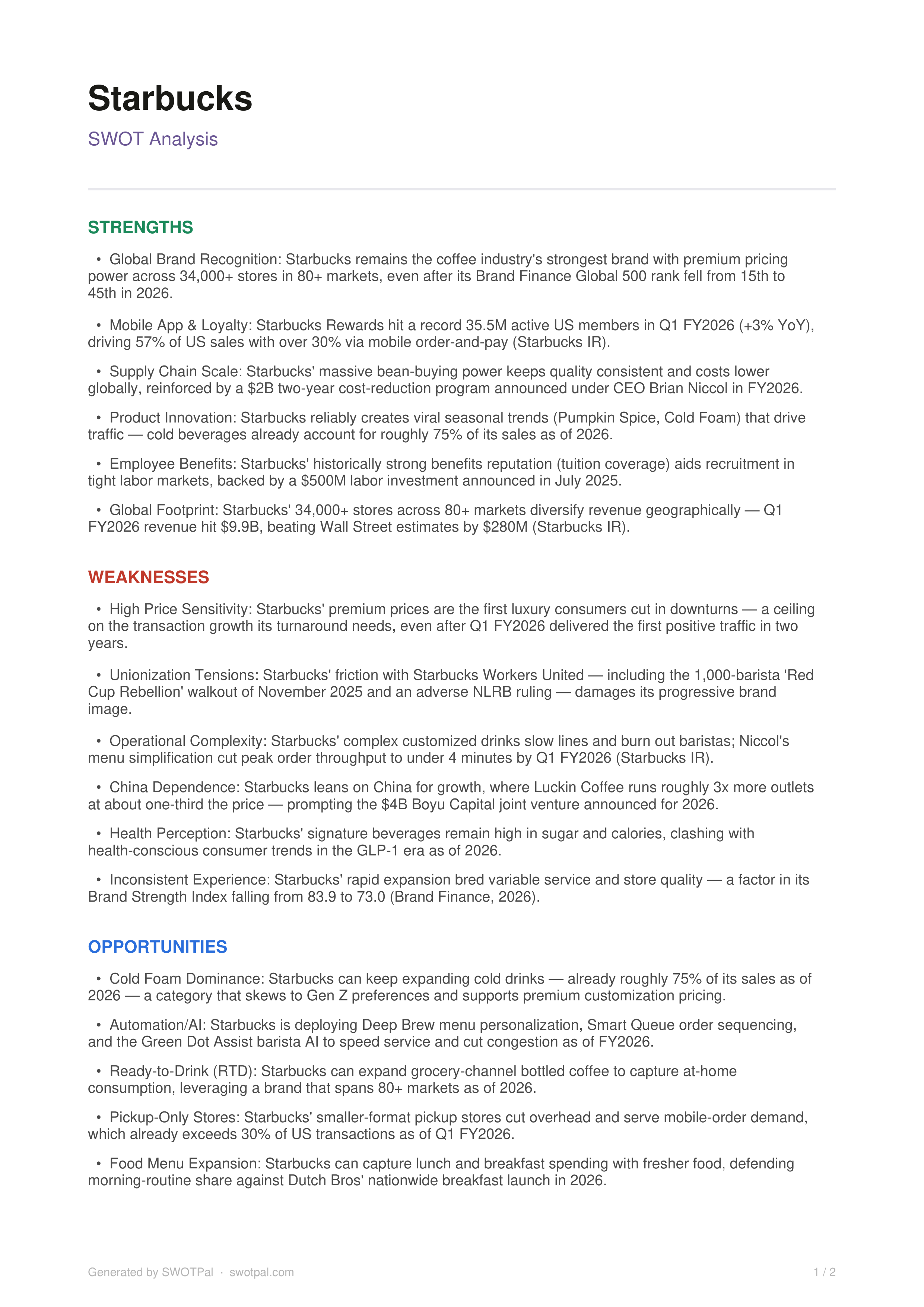
SWOT Analysis
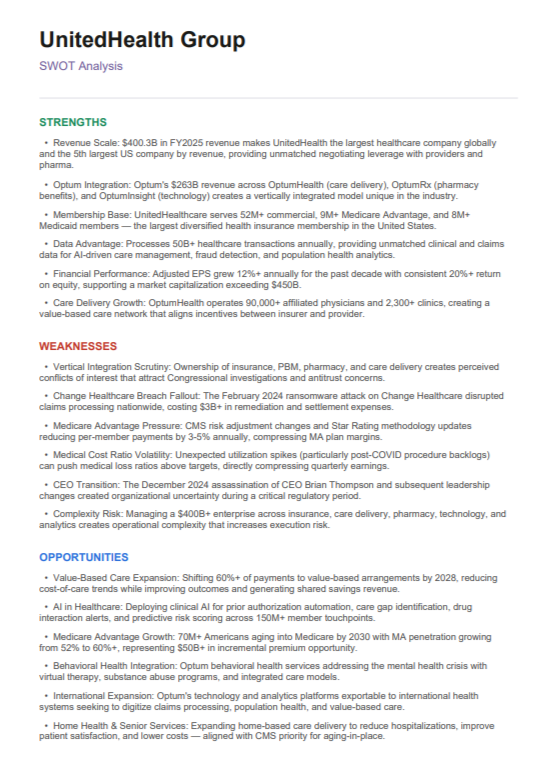
STRENGTHS
• Global Brand Recognition: Starbucks remains the coffee industry's strongest brand with premium pricing
power across 34,000+ stores in 80+ markets, even after its Brand Finance Global 500 rank fell from 15th to
45th in 2026.
• Mobile App & Loyalty: Starbucks Rewards hit a record 35.5M active US members in Q1 FY2026 (+3% YoY),
driving 57% of US sales with over 30% via mobile order-and-pay (Starbucks IR).
• Supply Chain Scale: Starbucks' massive bean-buying power keeps quality consistent and costs lower
globally, reinforced by a $2B two-year cost-reduction program announced under CEO Brian Niccol in FY2026.
• Product Innovation: Starbucks reliably creates viral seasonal trends (Pumpkin Spice, Cold Foam) that drive
traffic — cold beverages already account for roughly 75% of its sales as of 2026.
• Employee Benefits: Starbucks' historically strong benefits reputation (tuition coverage) aids recruitment in
tight labor markets, backed by a $500M labor investment announced in July 2025.
• Global Footprint: Starbucks' 34,000+ stores across 80+ markets diversify revenue geographically — Q1
FY2026 revenue hit $9.9B, beating Wall Street estimates by $280M (Starbucks IR).
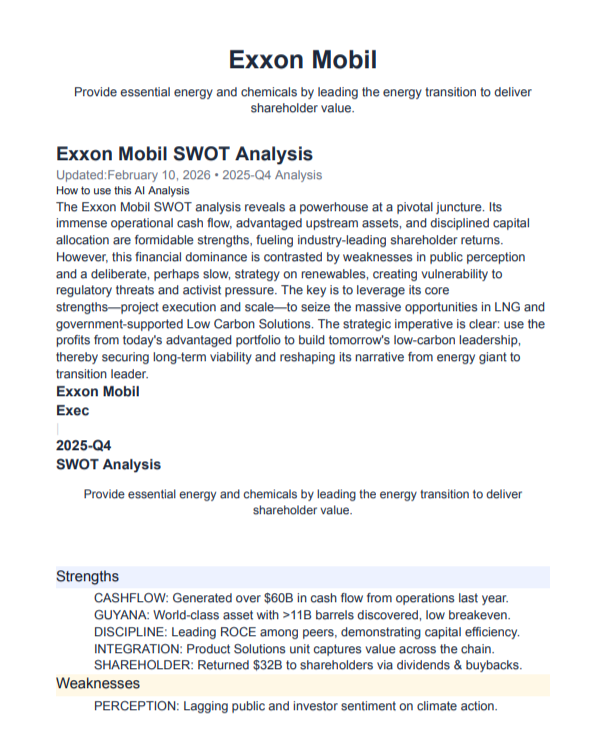
WEAKNESSES
• High Price Sensitivity: Starbucks' premium prices are the first luxury consumers cut in downturns — a ceiling
on the transaction growth its turnaround needs, even after Q1 FY2026 delivered the first positive traffic in two
years.
• Unionization Tensions: Starbucks' friction with Starbucks Workers United — including the 1,000-barista 'Red
Cup Rebellion' walkout of November 2025 and an adverse NLRB ruling — damages its progressive brand
image.
• Operational Complexity: Starbucks' complex customized drinks slow lines and burn out baristas; Niccol's
menu simplification cut peak order throughput to under 4 minutes by Q1 FY2026 (Starbucks IR).
• China Dependence: Starbucks leans on China for growth, where Luckin Coffee runs roughly 3x more outlets
at about one-third the price — prompting the $4B Boyu Capital joint venture announced for 2026.
• Health Perception: Starbucks' signature beverages remain high in sugar and calories, clashing with
health-conscious consumer trends in the GLP-1 era as of 2026.
• Inconsistent Experience: Starbucks' rapid expansion bred variable service and store quality — a factor in its
Brand Strength Index falling from 83.9 to 73.0 (Brand Finance, 2026).
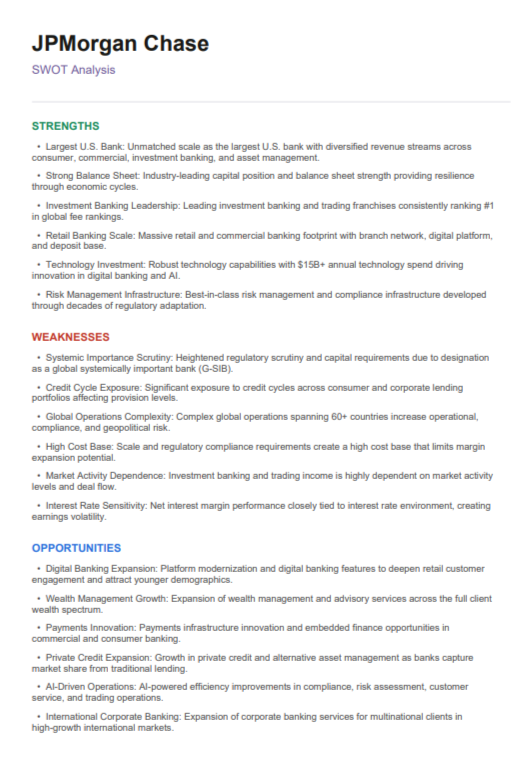
OPPORTUNITIES
• Cold Foam Dominance: Starbucks can keep expanding cold drinks — already roughly 75% of its sales as of
2026 — a category that skews to Gen Z preferences and supports premium customization pricing.
• Automation/AI: Starbucks is deploying Deep Brew menu personalization, Smart Queue order sequencing,
and the Green Dot Assist barista AI to speed service and cut congestion as of FY2026.
• Ready-to-Drink (RTD): Starbucks can expand grocery-channel bottled coffee to capture at-home
consumption, leveraging a brand that spans 80+ markets as of 2026.
• Pickup-Only Stores: Starbucks' smaller-format pickup stores cut overhead and serve mobile-order demand,
which already exceeds 30% of US transactions as of Q1 FY2026.
• Food Menu Expansion: Starbucks can capture lunch and breakfast spending with fresher food, defending
morning-routine share against Dutch Bros' nationwide breakfast launch in 2026.
Generated by SWOTPal · swotpal.com
1 / 2