SWOT Analysis of Target
8
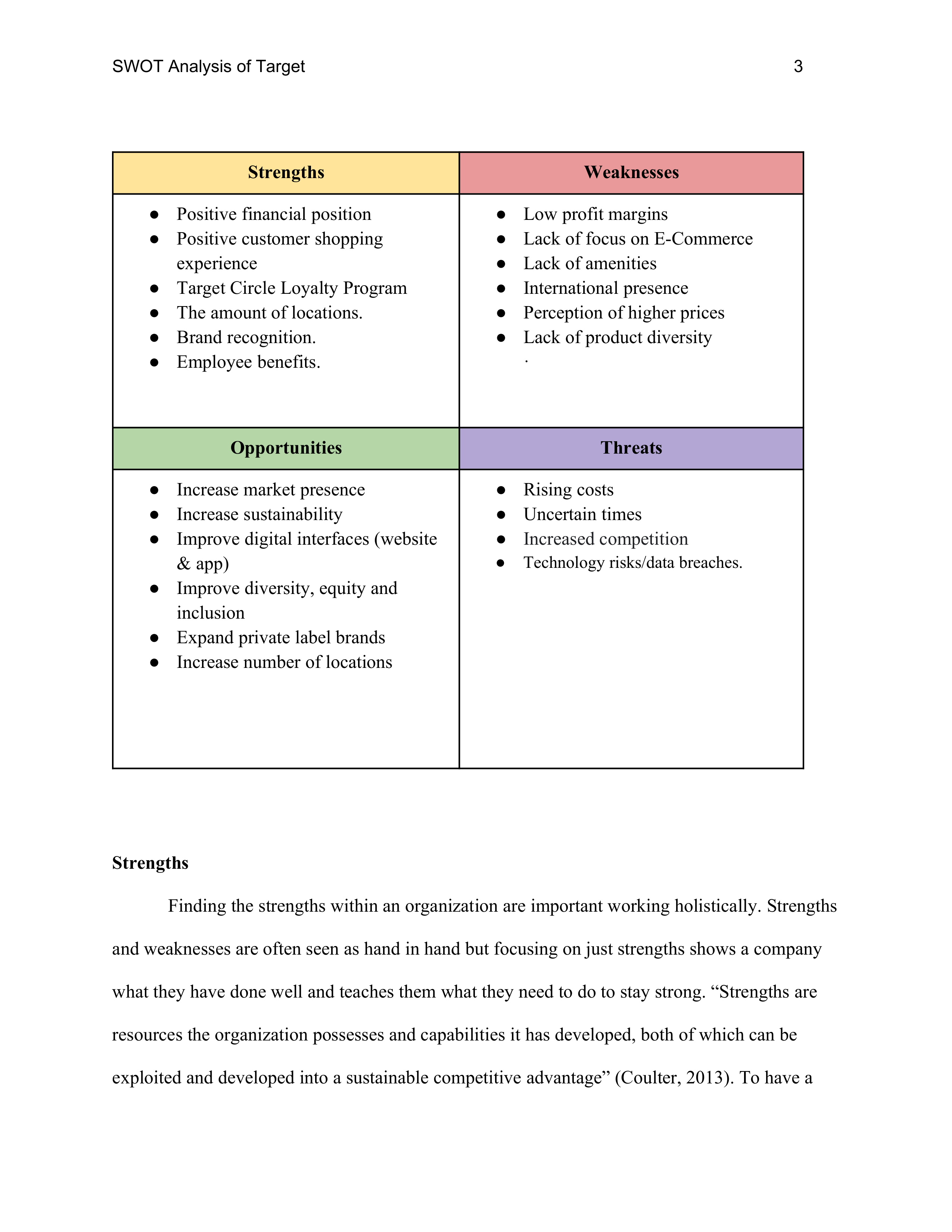
Increase Sustainability
With the ongoing issue of climate change and limited resources many companies,
including Target, have taken notice and are taking action towards more sustainable choices. To
help protect the planet and the success of its company, Target is working with its communities
and partners to be “Target Forward”. Through Target Forward, the company is working towards
more sustainable choices such as 100% renewable energy sources by 2030, the use of sustainably
sourced, 100% recycled or regenerative materials in their private labels by 2030, and net zero
emissions by 2040 (Target, n.d). While these efforts are great, there is still more that they could
be doing.
An opportunity for improvement with the Target Forward program would be more
transparency in the progress the corporation is making towards its sustainability goals. One of
Target’s competitors, Costco, is also working on tackling environmental and social issues, and
has its goals and progress available to view on its website (Costco Wholesale, 2022). Other
companies like Patagonia, an outdoor clothing and gear company, are taking their commitment
to the environment a step further. Patagonia fixes its customers Patagonia apparel for life, offers
credit for used Patagonia apparel, sells its own used apparel as well as new merchandise, and is
calculating an environmental profit and loss for each of its products. These environmental profit
and loss metrics show the carbon, water and waste impact of each item. With these metrics,
Patagonia is able to identify opportunities within its supply chain and products, and stop selling
items that do not meet its standards (Patagonia, n.d). While Patagonia is not a company that sells
items as diverse as Target, the company is taking more actions to lessen its impact on the
environment. As Target continues to develop its sustainability strategy, it should utilize
opportunities to implement sustainable strategies used by other companies to protect the planet.