


Paper2
Agent
:
Reimagining Research Papers As
Interactive and Reliable AI Agents
Jiacheng Miao
1,2
, Joe R. Davis
1
, Yaohui Zhang
3
, Jonathan K. Pritchard
1,4
, and James Zou
2,3,5
1
Department of Genetics, Stanford University
2
Department of Biomedical Data Science, Stanford University
3
Department of Electrical Engineering, Stanford University
4
Department of Biology, Stanford University
5
Department of Computer Science, Stanford University
Repository
Demo
Abstract
We
introduce
Paper2Agent,
an
automated
framework
that
converts
research
pa-
pers into AI agents.
Paper2Agent transforms research output from
passive artifacts
into
active
systems
that
can
accelerate
downstream
use,
adoption,
and
discovery.
Conven-
tional
research
papers
require
readers
to
invest
substantial
effort
to
understand
and
adapt
a
paper’s
code,
data,
and
methods
to
their
own
work,
creating
barriers
to
dis-
semination
and
reuse.
Paper2Agent
addresses
this
challenge
by
automatically
con-
verting a paper into an AI agent that acts as a knowledgeable research assistant.
It sys-
tematically
analyzes
the
paper
and
the
associated
codebase
using
multiple
agents
to
construct a Model Context Protocol (MCP) server, then iteratively generates and runs
tests to refine and robustify the resulting MCP. These paper MCPs can then be flexibly
connected
to
a
chat
agent
(e.g.
Claude
Code)
to
carry
out
complex
scientific
queries
through
natural
language
while
invoking
tools
and
workflows
from
the
original
pa-
per.
We demonstrate Paper2Agent’s effectiveness in creating reliable and capable pa-
per agents through in-depth case studies. Paper2Agent created an agent that leverages
AlphaGenome to interpret genomic variants and agents based on ScanPy and TISSUE
to
carry
out
single-cell
and
spatial
transcriptomics
analyses.
We
validate
that
these
paper
agents
can
reproduce
the
original
paper’s
results
and
can
correctly
carry
out
novel
user
queries.
Paper2Agent
automatically
created
AI
co-scientist
that
identified
new
splicing
variant
associated
with
ADHD
risk.
By
turning
static
papers
into
dy-
namic, interactive AI agents, Paper2Agent introduces a new paradigm for knowledge
dissemination and a foundation for the collaborative ecosystem of AI co-scientists.
1
Introduction
The
research
paper
is
the
traditional
unit
of
scientific
communication.
It
remains
the
norm
for
documenting methods,
results,
and
insights,
and
is the primary
way research is shared
with the
broader community.
However, papers are fundamentally passive objects:
a reader must discover
the
paper
(not
an
easy
task
given
the
flood
of
publications),
parse
its
contributions,
and
manu-
ally
determine
how
to
apply
them
to
their
own
work.
In
particular,
when
a
paper
describes
a
Email:
{jcmiao, jamesz}@stanford.edu
1
arXiv:2509.06917v2 [cs.AI] 16 Oct 2025















new computational method, significant technical barriers often remain before the method can be
used on new data [
1
].
A reader might need to locate the corresponding code repository, install de-
pendencies, configure environments, and interpret the correct inputs and outputs [
2
].
Even with
well-maintained repositories, this process is often non-trivial.
For instance, consider AlphaGenome, which provides a powerful framework for genome-scale
foundation
modeling
[
13
].
Despite
its
utility,
this
system
requires
substantial
technical
expertise
to set up and deploy,
limiting accessibility for biologists who could otherwise benefit.
Using Al-
phaGenome
in
code
involves
installing
the
environment,
importing
multiple
modules,
creating
client
objects
with
API
keys,
and
constructing
inputs
such
as
chromosomes,
variant
objects,
and
selecting
desired
output
modalities.
Users
must
understand
the
API
hierarchy
and
parameter
semantics, which imposes a learning curve for biologists unfamiliar with these abstractions.
This
illustrates
a
broader
challenge:
research
outputs
are
passively
siloed
behind
technical
barriers.
Paper2Agent re-imagines research dissemination by turning static papers into active
AI
agents.
Each
agent
serves
as
an
interactive
expert
on
the
corresponding
paper,
capable
of
demonstrating, applying, and adapting its methods to new projects.
Identify the
codebase
Remote server
A Paper2Agent automatically converts papers into AI agents
_mcp.py
Tool 1
Tool K
MCP resources
Manuscript
MCP prompts
MCP tools
Instructions for
scientific task 1
…
…
Input: papers
Code repository
link
Supplements
and data
Instructions for
reproducing figure
Instructions for
scientific task 2
Connect to any agent or
LLM without setup
Agent
User:
Apply this paper’s method to
my dataset
Paper2MCP
Chat with interactive and reliable paper agents
Enabling scientific discovery through paper agents
…
B Paper2Agent workflow
Input
Paper MCP servers
Codebase
Environment
agent
Extraction
agent
Test
Remote
server
Output
Paper
MCP server
python file
Configured
environment
Agent:
Absolutely! The analysis
results are presented below:
Connect with
AI agent
Paper Agent
Implemented tools
Testing
agent
Refine
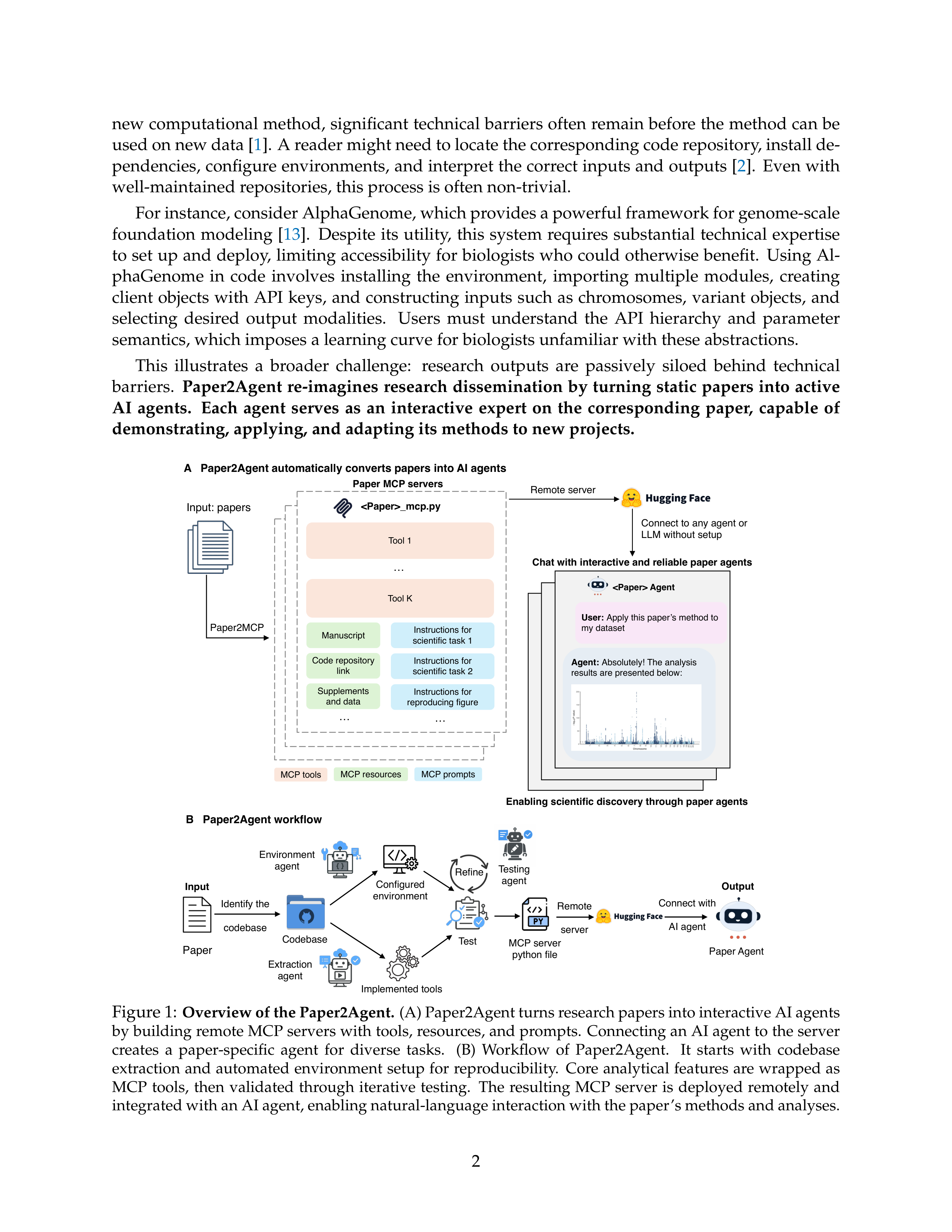
Figure 1:
Overview of the Paper2Agent.
(A) Paper2Agent turns research papers into interactive AI agents
by building remote MCP servers with tools, resources, and prompts.
Connecting an AI agent to the server
creates
a
paper-specific
agent
for
diverse
tasks.
(B)
Workflow
of
Paper2Agent.
It
starts
with
codebase
extraction and automated environment setup for reproducibility.
Core analytical features are wrapped as
MCP
tools,
then
validated
through
iterative
testing.
The
resulting
MCP
server
is
deployed
remotely
and
integrated with an AI agent, enabling natural-language interaction with the paper’s methods and analyses.
2
AI
agents
are
autonomous
systems
that
can
reason
about
tasks
and
act
to
achieve
goals
by
leveraging
external
tools
and
resources
[
12
].
Modern
AI
agents
are
typically
powered
by
large
language models (LLMs) connected to external tools or APIs.
They can perform reasoning, invoke
specialized
models,
and
adapt
based
on
feedback
[
21
].
Agents
differ
from
static
models
in
that
they
are
interactive
and
adaptive.
Rather
than
returning
fixed
outputs,
they
can
take
multi-step
actions,
integrate
context,
and
support
iterative
human–AI
collaboration.
Importantly,
because
agents are built on top of LLMs, users can interact with agents through human language, substan-
tially reducing usage barriers for scientists.
Recent advances
highlight
the promise of
agents for accelerating discovery.
For
example,
the
Virtual Lab framework organizes teams of AI scientist agents that collaboratively design and exe-
cute research projects across biology and chemistry [
14
].
Similarly, Google’s AI co-scientist serves
as a virtual collaborator, assisting with hypothesis generation and research proposal development
[
16
].
Sakana AI’s co-scientist aims for automation of the research lifecycle—from ideation to pub-
lication [
23
].
FutureHouse provides an AI scientist platform designed for diverse scientific tasks
[
17
].
Alongside these general-purpose platforms, specialized agents are also emerging for specific
domains
[
18
].
For
example,
CellVoyager
introduces
an
agentic
system
for
autonomous
analysis
of
single-cell
omics
data
[
19
].
Biomni
is
an
AI
agent
for
diverse
biological
tasks
[
20
].
These
sys-
tems
demonstrate
that
agents
can
not
only
execute
code,
but
also
generate
hypotheses,
evaluate
uncertainty,
and adapt methods to new datasets.
Recent work has also explored automatic code
generation
from
scientific
text
[
26
,
27
].
Paper2Agent
complements
this
emerging
paradigm
by
generalizing
the
concept:
any
research
paper
can
be
converted
into
an
agent
that
embodies
the
knowledge and methods described in the publication.
Paper2Agent provides an automated workflow for converting a scientific paper into an agent.
The core idea is to represent the paper as a Model Context Protocol (MCP) server [
15
].
MCP is a
standardized protocol that allows structured APIs and tools to be exposed in a way that is directly
accessible to LLMs and agent frameworks. The conversion process involves: (i) identifying the key
contributions of the paper (datasets, methods, models, or workflows); (ii) encapsulating these con-
tributions through an MCP server, defining the inputs, outputs, and usage instructions; (iii) link-
ing
the
MCP
server
to
LLM-based
agents,
enabling
natural
language
querying
and
autonomous
execution. Users can then interact with the paper by asking questions, requesting demonstrations,
or applying the method to new data.
As an illustration, applying Paper2Agent to AlphaGenome would expose its genome founda-
tion model as an MCP. Instead of requiring users to clone repositories and configure dependencies,
they could simply ask:
“
Generate AlphaGenome predictions for these variants.
”, "
Interpret the expected
effect
of
this
variant
on
chromatin
accessibility
in
muscle
cells.
"
or
“
Visually
compare
the
AlphaGenome
predicted expression changes for a splicing variant in cell types of interest.
” The Paper2Agent-generated
agent would handle the setup, execution, and presentation of results, making the method accessi-
ble to both computational experts and experimental biologists.
Efforts to make research outputs more executable and accessible have been ongoing for years.
Executable
papers—such
as
those
proposed
in
Elsevier’s
Executable
Paper
Grand
Challenge
[
8
]
and more recent Jupyter Notebook–backed publications [
4
]—sought to merge narrative text with
runnable code.
These approaches increased reproducibility but still required substantial technical
familiarity
to
engage
with
fully.
The
Papers
with
Code
initiative
[
25
]
similarly
aimed
to
bridge
papers
and
implementations
by
linking
publications
to
open-source
repositories.
While
this
im-
proved discoverability, the barrier of installing and executing the code remained.
Paper2Agent substantially extends this trajectory by providing a new framework:
a paper can
3
be transformed into a capable agent accessible via natural language. In contrast to previous efforts,
Paper2Agent
shifts
the
research
output
from
a
document
or
codebase
encoding
knowledge
to
a
knowledgeable entity capable of execution and dialogue.
This represents a new mode of scientific
communication, moving beyond static dissemination to interactive collaboration. This framework
lowers barriers to adoption, democratizes access to advanced methods, and accelerates the trans-
lation of research into practice.
2
Results
Overview of Paper2Agent
Paper2Agent is a multi-agent AI system that automatically transforms research papers into inter-
active AI agents with minimal human input.
The paper agents created via this framework are:
1.
Interactive and easy to use
:
Users can execute complex scientific analyses through natural
language prompts, eliminating the need for programming expertise.
2.
Reliable and reproducible
:
Each tool used by a paper agent is validated against the refer-
ence codebase’s reported results and figures using example datasets, then locked to ensure
reproducibility.
This design mitigates the risk of “code hallucination”,
where executing in-
accurate
LLM-generated
code
could
lead
to
incorrect
scientific
results.
It
also
minimizes
randomness
in
code
generation,
further
strengthening
reproducibility.
Finally,
every
tool
includes a code reference from the original paper to provide transparency and traceability.
MCP has recently become an industry standard for connecting LLM-based agents with external
resources,
providing a unified interface for accessing datasets and tools without custom integra-
tion
[
15
].
Paper2Agent
builds
on
this
ecosystem
with
two
components:
(i)
Paper2MCP,
which
extracts
information
from
papers
and
their
codebases
to
build
remote
MCP
servers;
and
(ii)
an
agent
layer,
which
wraps
each
MCP
server
as
a
context
provider
to
instantiate
paper-specific
AI
agents (Figure
1
A). Any LLM or external agent can invoke the servers’ tools through MCP with-
out extra setup.
For presentation clarity, we assign one MCP server and one paper agent to each
paper.
The same approach can create MCPs and agents for a group of related papers.
Each MCP
server includes three core components:
1.
MCP
Tools
are
executable
functions
that
encapsulate
a
paper’s
methodological
contribu-
tions.
For example, one AlphaGenome MCP tool takes a genetic variant as input and gener-
ates predictions and visualizations of its effects on gene expression, chromatin accessibility,
and
other
modalities.
These
tools
come
with
a
pre-configured
environment
for
seamless
execution.
2.
MCP
Resources
serve
as
a
repository
of
static
assets,
including
the
manuscript
text,
the
associated codebase, and supplementary materials such as datasets, tables, and figures.
As
an
illustration,
the
AlphaGenome
MCP
resources
include
links
to
the
training
data
used
to
train
the
model.
All
resources
are
stored
in
accessible,
standardized
formats
to
enable
efficient querying and integration by AI agents.
3.
MCP
Prompts
contain
concise
instructions
that
guide
AI
agents
through
complex,
multi-
step
scientific
workflows
derived
from
a
paper’s
text
or
codebase.
For
example,
a
Scanpy
MCP Prompt encodes the sequence of steps for preprocessing and clustering single-cell data,
which we present later in the manuscript. These templates orchestrate tools and resources to
ensure reproducible, systematic analyses while reducing the barrier to effective prompting.
The paper MCP servers can be hosted remotely on platforms like Hugging Face Spaces, elimi-
4
nating local dependency issues.
MCP standardizes communication, enabling secure and scalable
integration with AI agents.
The agent layer wraps each Paper2MCP server as a context provider,
creating paper-specific conversational agents.
Any compatible LLM or agent can connect to these
servers
to
perform
tasks
such
as
reproducibility
checks,
new
data
analyses,
or
figure
regenera-
tion.
For example, a user might ask, “
Apply the method in this paper to the newly generated dataset
”,
and the agent will automatically run the pipeline, produce results, and present interpretable out-
puts.
By abstracting away technical details, the agent lowers barriers to method adoption, ensures
reproducibility, and helps researchers focus on insights rather than implementation.
We implemented Paper2Agent with Claude Code [
24
], an AI coding agent specialized in man-
aging complex coding tasks and real-time iterative debugging (Extended Methods). The workflow
begins
by
identifying
the
codebase
associated
with
a
paper
(Figure
1
B).
Two
specialized
agents
are then invoked:
the environment agent, which configures the necessary software environment,
and the extraction agent,
which translates core methods into implemented tools.
These tools are
validated
through
a
testing
agent
that
runs
automated
checks,
refining
both
the
code
and
envi-
ronment until results match the reference outputs.
Once validated, the tools and environment are
packaged into an MCP Python file that can be deployed on a remote server such as Hugging Face.
Finally,
the
paper
MCP
server
is
connected
with
an
AI
agent
to
create
a
fully
functional
Paper
Agent, enabling interactive access to the paper’s methods through natural language queries.
We
use Claude Code as the downstream AI agent in our case studies, though the paper MCPs can be
flexibly integrated with different chat agents.
Because MCPs are modular, multiple MCPs can be
connected to the same chat agent,
enabling users to leverage tools and resources across multiple
papers simultaneously.
Next,
we
present
three
case
studies
demonstrating
Paper2Agent’s
ability
to
convert
diverse
research papers into reliable, interactive AI agents for different scientific tasks.
These case studies
include AlphaGenome [
13
] for genomics, TISSUE [
10
] for spatial transcriptomics, and Scanpy [
9
]
for single-cell analysis.
AlphaGenome Agent for Genomic Data Interpretation
The
first
case
study
showcases
AlphaGenome
agent.
AlphaGenome
is
an
AI
model
designed
to
predict the impact of single-nucleotide variants or mutations in human DNA sequences on a wide
range of regulatory processes.
Paper2Agent transforms the AlphaGenome paper into an interac-
tive AlphaGenome agent, enabling automated interpretation of genomics data.
Through natural
language
queries,
users
can
leverage
this
agent
to
prioritize
causal
genes
for
disease-associated
variants,
clarify the regulatory impact of individual variants,
and inform the design of synthetic
DNA with specific regulatory functions.
Paper2Agent
generated
22
AlphaGenome
MCP
tools
in
around
3
hours
on
a
personal
laptop
without human intervention, comprehensively covering its methodological innovations. This one-
time
process
produces
reusable
tools
for
future
applications.
These
MCP
tools
span
single-
and
batch-variant
scoring
across
functional
assays,
sequence-level
prediction,
tissue
ontology
explo-
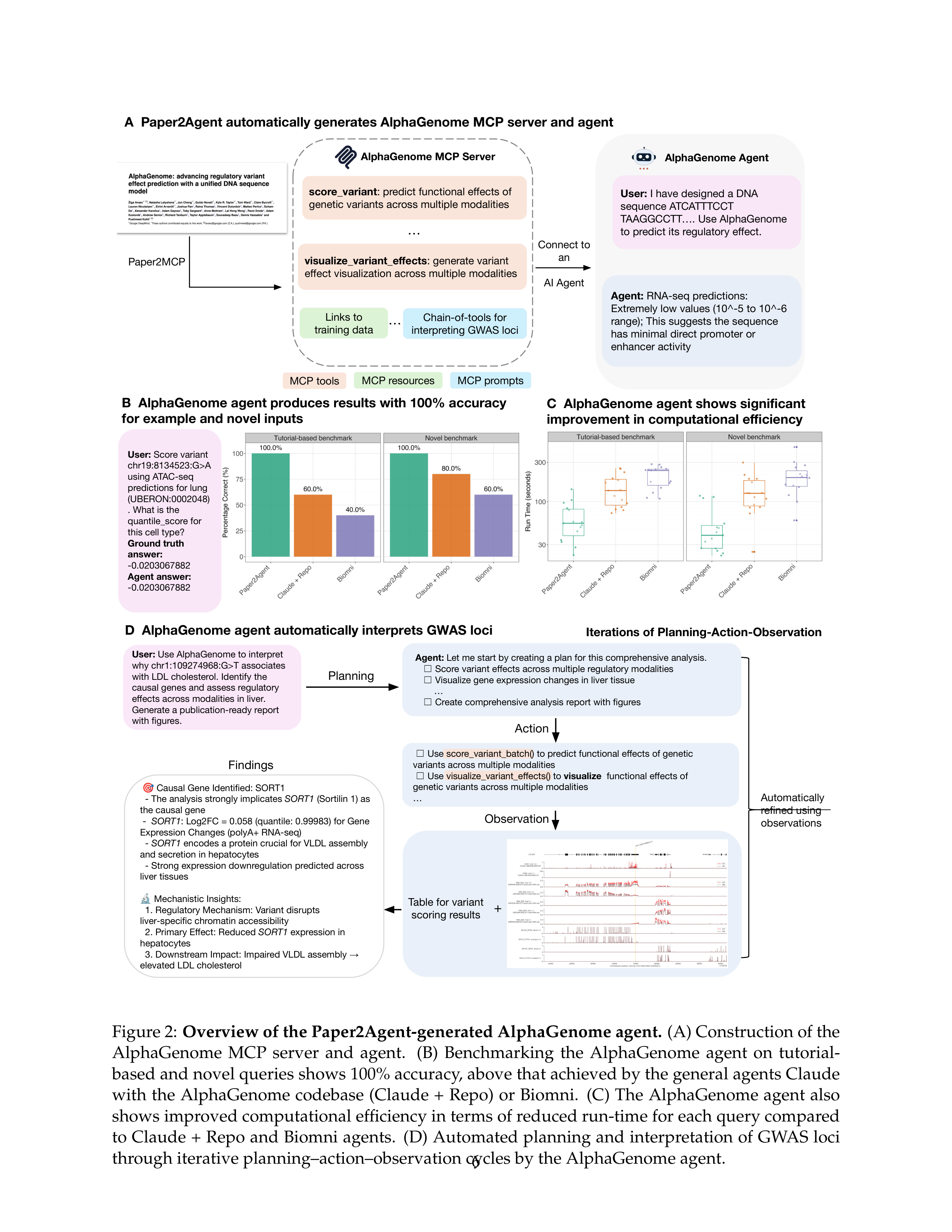
ration, and an extensive visualization suite (Figure
2
A). For example,
score_variant_effect()
is
an MCP tool that predicts the functional consequences of genetic variants across multiple modal-
ities—such as gene expression, splicing, and chromatin accessibility—within a wide range of tis-
sues
and
cell
types.
Complementing
this,
visualize_variant_effects()
generates
modality-
specific visualizations that simplify the interpretation of regulatory impact.
5





☐
Use score_variant_batch() to
predict functional effects of genetic
variants across multiple modalities
☐
Use visualize_variant_effects() to
visualize
functional effects of
genetic variants across multiple modalities
…
Connect to
an
AI Agent
A Paper2Agent automatically generates AlphaGenome MCP server and agent
B AlphaGenome agent produces results with 100% accuracy
for example and novel inputs
AlphaGenome MCP Server
score_variant
: predict functional effects of
genetic variants across multiple modalities
visualize_variant_effects
: generate variant
effect visualization across multiple modalities
AlphaGenome Agent
MCP resources
Links to
training data
MCP prompts
MCP tools
Chain-of-tools for
interpreting GWAS loci
Agent:
RNA-seq predictions:
Extremely low values (10^-5 to 10^-6
range); This suggests the sequence
has minimal direct promoter or
enhancer activity
…
…
C AlphaGenome agent shows significant
improvement in computational efficiency
User:
Score variant
chr19:8134523:G>A
using ATAC-seq
predictions for lung
(UBERON:0002048)
. What is the
quantile_score for
this cell type?
Ground truth
answer:
-0.0203067882
Agent answer:
-0.0203067882
Paper2MCP
D AlphaGenome agent automatically interprets GWAS loci
Planning
User:
I have designed a DNA
sequence ATCATTTCCT
TAAGGCCTT…. Use AlphaGenome
to predict its regulatory effect.
Agent:
Let me start by creating a plan for this comprehensive analysis.
☐
Score variant effects across multiple regulatory modalities
☐
Visualize gene expression changes in liver tissue
…
☐
Create comprehensive analysis report with figures
Findings
User:
Use AlphaGenome to interpret
why chr1:109274968:G>T associates
with LDL cholesterol. Identify the
causal genes and assess regulatory
effects across modalities in liver.
Generate a publication-ready report
with figures.
Observation
Action
Automatically
refined using
observations
Iterations of Planning-Action-Observation
Table for variant
scoring results
+
🎯
Causal Gene Identified: SORT1
- The analysis strongly implicates
SORT1
(Sortilin 1) as
the causal gene
-
SORT1
: Log2FC = 0.058 (quantile: 0.99983) for Gene
Expression Changes (polyA+ RNA-seq)
-
SORT1
encodes a protein crucial for VLDL assembly
and secretion in hepatocytes
- Strong expression downregulation predicted across
liver tissues
🔬
Mechanistic Insights:
1. Regulatory Mechanism: Variant disrupts
liver-specific chromatin accessibility
2. Primary Effect: Reduced
SORT1
expression in
hepatocytes
3. Downstream Impact: Impaired VLDL assembly
→
elevated LDL cholesterol
Figure 2:
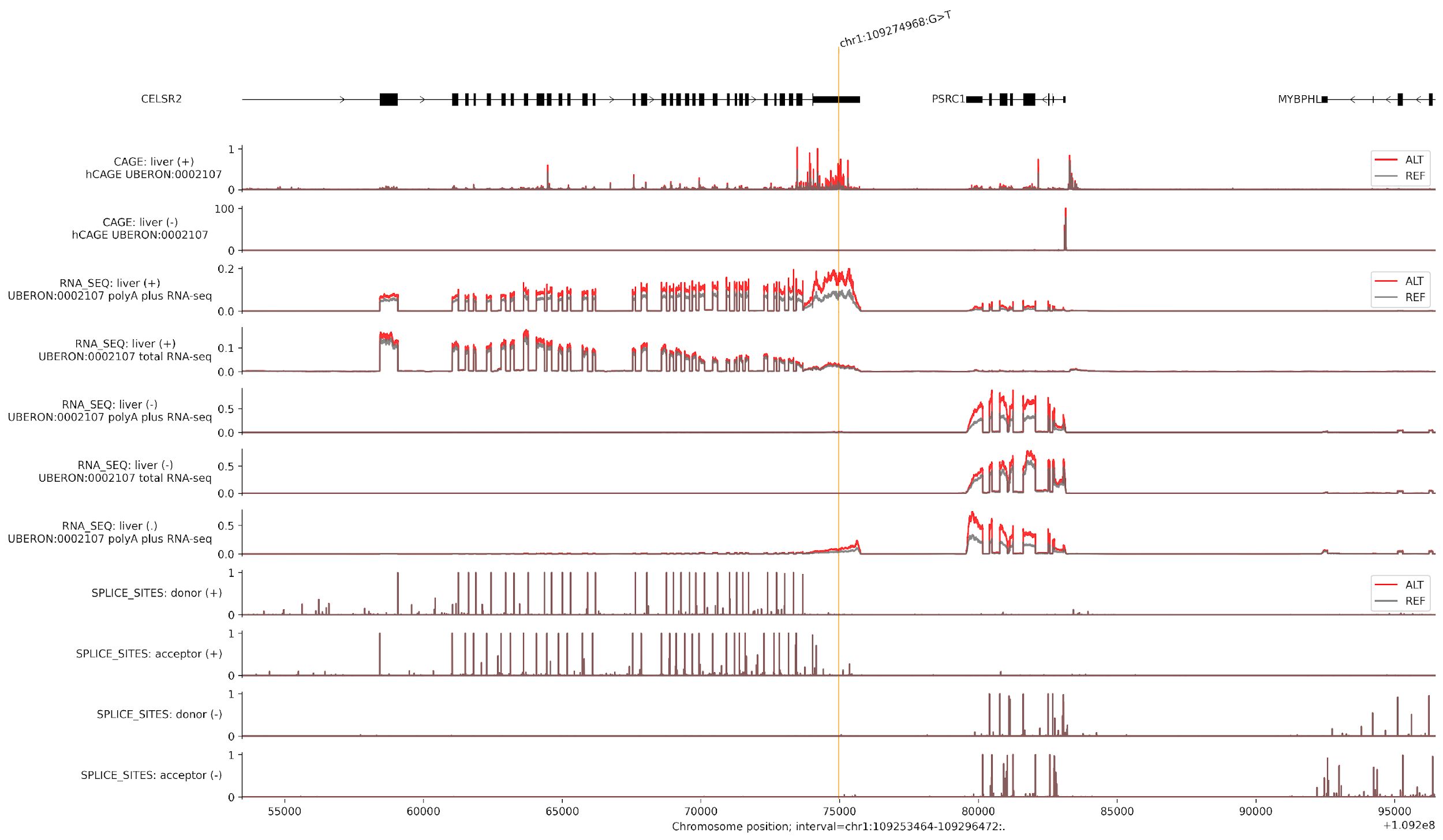
Overview of the Paper2Agent-generated AlphaGenome agent.
(A) Construction of the
AlphaGenome
MCP
server
and
agent.
(B)
Benchmarking
the
AlphaGenome
agent
on
tutorial-
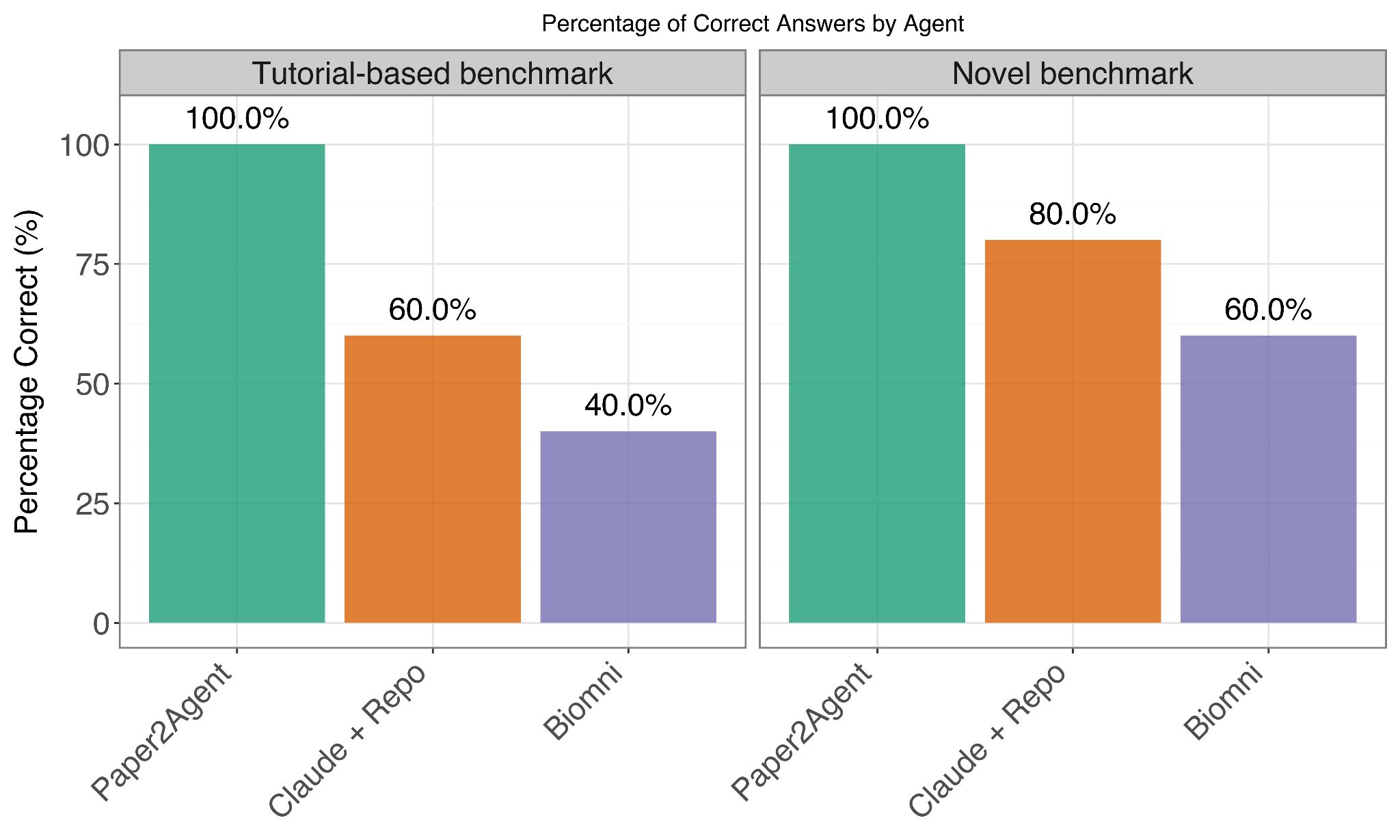
based and novel queries shows 100% accuracy, above that achieved by the general agents Claude
with
the AlphaGenome
codebase
(Claude
+
Repo)
or
Biomni.
(C)
The
AlphaGenome
agent
also
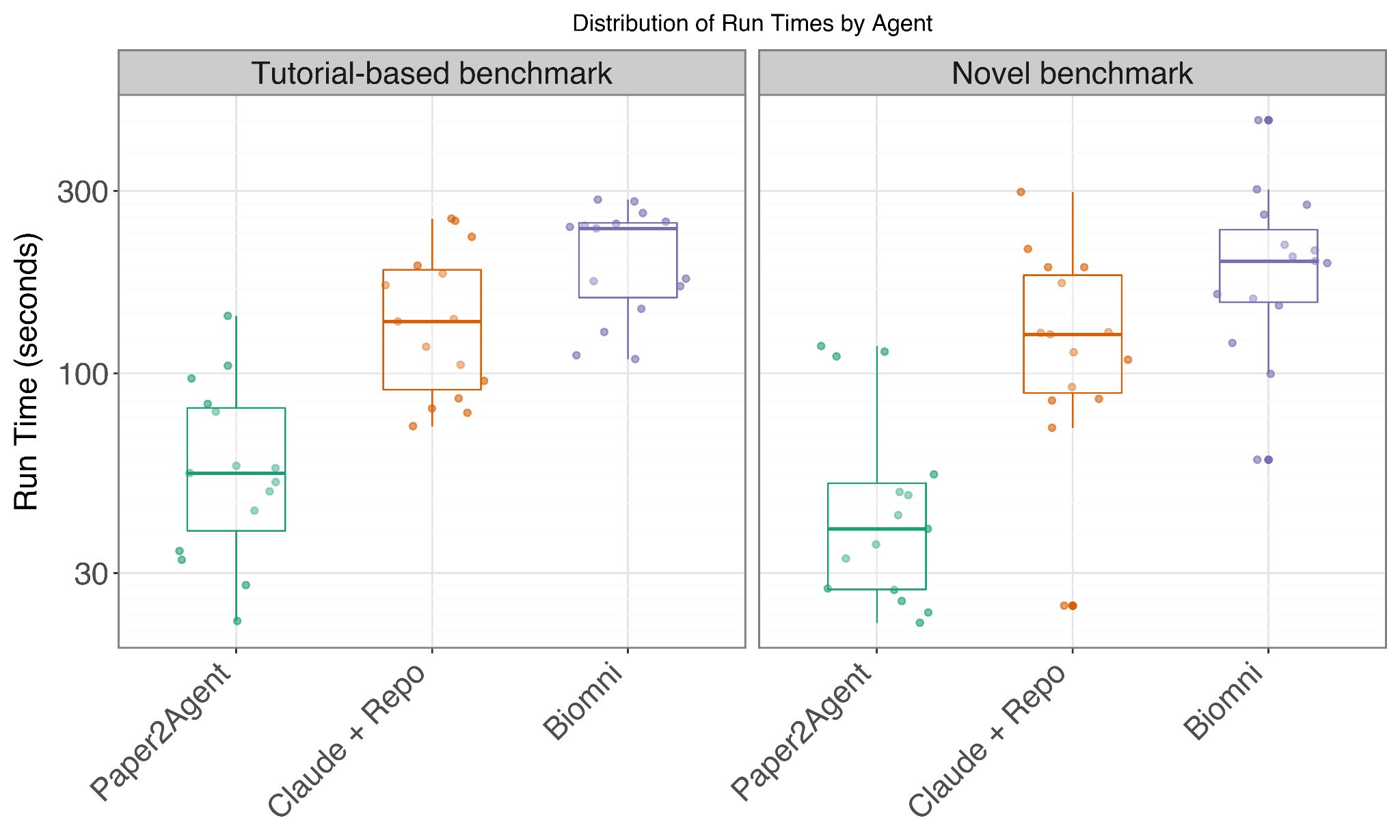
shows improved computational efficiency in terms of reduced run-time for each query compared
to Claude + Repo and Biomni agents.
(D) Automated planning and interpretation of GWAS loci
through iterative planning–action–observation cycles by the AlphaGenome agent.
6
Importantly,
the
tools
generated
by
Paper2Agent
are
designed
with
flexible,
well-annotated
input parameters.
For example, the
visualize_variant_effects()
tool exposes a rich set of op-
tions that make it adaptable to diverse use cases (Supplementary Figure 1). Given an input genetic
variant, the AlphaGenome agent can select the organism to analyze (human or mouse), adjust the
sequence context length around the variant, toggle different modalities—such as RNA-seq, ATAC-
seq, or ChIP-seq histone tracks.
Moreover, each MCP tool embeds a traceable link to the original
GitHub source code, ensuring transparency and reproducibility.
By connecting an AI agent with
the AlphaGenome MCP, the system creates the AlphaGenome agent.
Next, we benchmarked the Paper2Agent-generated AlphaGenome agent in producing numeri-
cal and qualitative results and figures relative to human experts configuring and running the code
manually (Figure
2
B). We also compared the AlphaGenome agent to two other agentic systems: 1)
Claude Code with access to the AlphaGenome repo (referred to as Claude + Repo) and 2) Biomni.
We manually curated 15 example queries directly from the AlphaGenome tutorial, such as "
Score
variant chr3:58394738:A>T using ATAC-seq predictions for motor neuron cells (CL:0000100).
What is the
quantile_score for this cell type?
", "
Make DNase-seq predictions for sequence ’GATTACA’ (padded to 2048
length) for lung tissue (UBERON:0002048).
What is the nonzero_mean value in the dnase metadata
".
The
AlphaGenome
agent
achieved
100.0%
(15/15)
accuracy
on
these
queries,
higher
than
Claude
+
Repo at 60.0% (9/15), and Biomni at 40.0% (6/15).
To assess generalizability and guard against potential overfitting to the original examples, we
also manually curated a set of novel queries that were not present in either the paper or its code-
base.
These
included
previously
untested
variant
positions,
allelic
substitutions,
and
tissue–cell
type
contexts,
such
as
"
Analyze
variant
chr9:98765432:T>C
with
DNASE
predictions
for
muscle
cells
(CL:0000187).
What is the quantile_score for muscle tissue?" and "Analyze histone ChIP-seq metadata for
neuronal stem cells.
What is the nonzero_mean value for H3K4me3 in neuronal stem cells (CL:0000100)
?"
The AlphaGenome agent again achieved 100.0% (15/15) accuracy, as verified by manual execution
of
the
original
AlphaGenome
code.
Claude
+
Repo
achieved
the
next
highest
accuracy
at
80.0%
(12/15) and Biomni solved 60.0% (9/15) of the queries correctly.
The AlphaGenome agent also consistently outperformed both agent systems in terms of com-
pute
efficiency,
showing
a
median
decrease
in
run
time
for
the
tutorial-based
benchmark
of
1.8x
and 3.1x compared to Claude + Repo and Biomni, respectively (Figure
2
C). For the novel bench-
mark,
we observed a median run time improvement of 3.2x and 4.6x,
respectively.
These results
highlight the improved reliability and efficiency achieved by Paper2Agent-generated agents com-
pared to other agentic systems.
Finally,
we
demonstrated
that
the
AlphaGenome
agent
enables
automatic
interpretation
of
Genome-Wide Association Study (GWAS) loci and validation of the analysis in the original paper.
We
considered
the
example
of
interpreting
why
the
genetic
variant
chr1:109274968:G>T
is
asso-
ciated with low-density lipoprotein cholesterol that was presented in the original AlphaGenome
paper (Figure
2
D). Based on the tools available, the AlphaGenome agent constructs a step-by-step
plan
to
solve
this
task.
This
plan
includes
generating
input
files,
scoring
variants
across
multi-
ple modalities, filtering results for trait-relevant tissues, creating modality-specific visualizations
(chromatin accessibility, histone marks, transcription factor binding, and splicing), and assembling
a comprehensive interpretation report.
The agent then executes these actions using implemented
tools, such as
score_variant()
and
visualize_tf_binding()
, automatically refining its strategy
through iterative observation and feedback.
A final report is then presented to provide a unified
interpretation of the regulatory impact of the variant, integrating evidence across modalities and
tissues.
7
Interestingly, the AlphaGenome agent prioritizes
SORT1
as the most likely causal gene, whereas
the original paper emphasized
CELSR2
and
PSRC1
.
The agent favors
SORT1
for two reasons:
1)
a high quantile score (0.99982) indicating a strong predicted impact on
SORT1
expression in liver
tissue.
Here, the quantile score reflects how extreme the variant’s predicted effect relative to other
variants
2)
SORT1
encodes
sortilin,
directly
involved
in
LDL/VLDL
secretion
[
5
].
We
manually
queried the GTEx [
6
] eQTL data and confirmed that this variant is a significant eQTL for
SORT1
(p
=
1.1e-65)
in
liver.
However,
both
CELSR2
and
PSRC1
also
exhibit
high
AlphaGenome
quan-
tile scores (0.99998 each) and significant eQTL associations in GTEx liver (p = 4.7e-46 and 8.5e-50,
respectively).
This
result
shows
the
inherent
difficulty
in
confidently
assigning
causal
genes
at
complex GWAS loci where the variants are eQTLs for multiple nearby genes [
7
,
11
].
This discrepancy highlights a key strength of Paper2Agent:
with a single prompt, users can re-
evaluate
published
conclusions
using
independent
model-based
evidence.
Rather
than
treating
the
original
interpretation
as
fixed,
the
agent
enables
dynamic
hypothesis
re-assessment
and,
at
scale, provides a systematic way to revisit conclusions across many studies.
TISSUE Agent for Uncertainty-Aware Single-Cell Spatial Transcriptomics Analysis
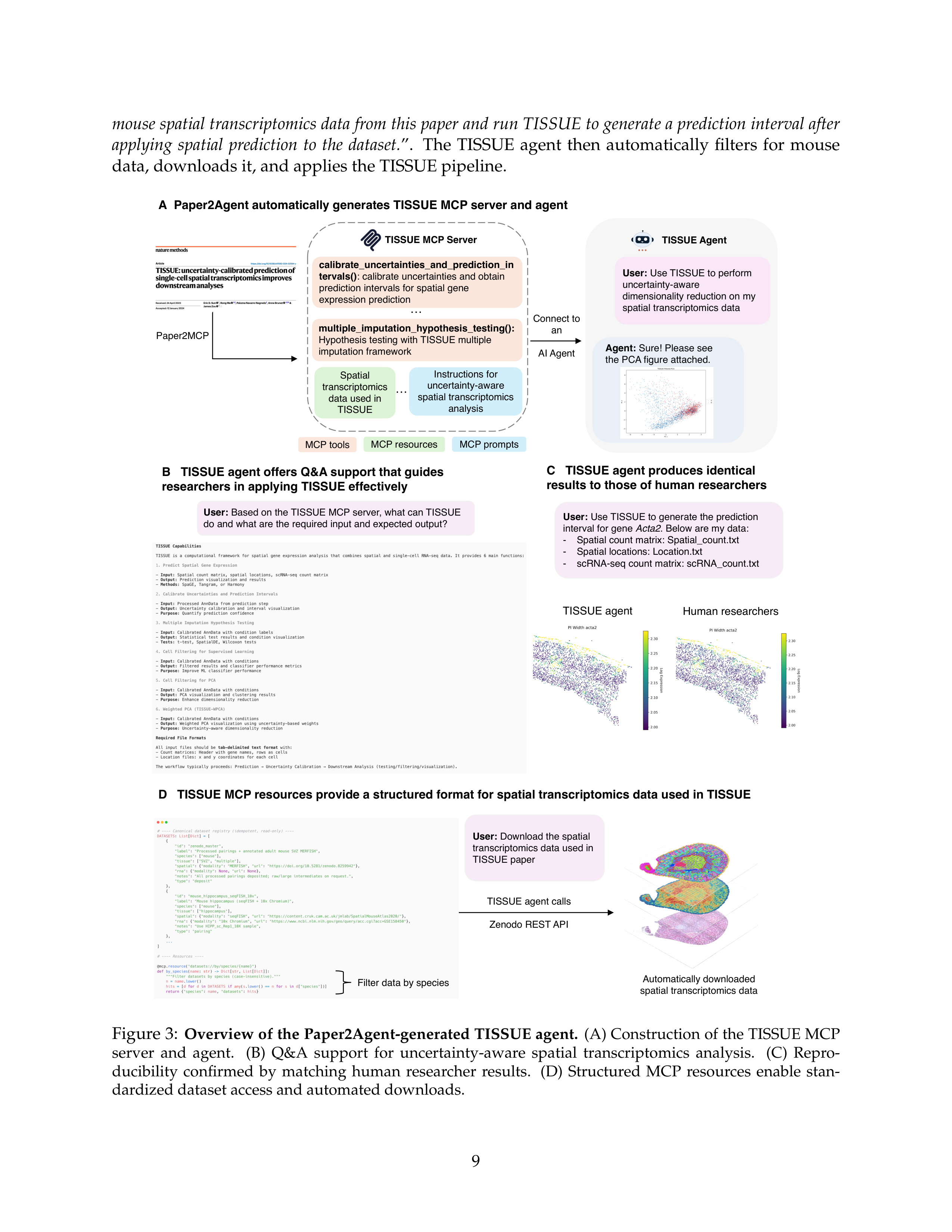
We next present the Paper2Agent-generated agent for TISSUE [
10
], a recent paper that developed
a new method for uncertainty-aware single-cell spatial transcriptomics analysis (Figure
3
A). This
case
study
reflects
a
common
scenario:
a
new
methodology
paper
is
published,
and
researchers
want
to
apply
the
method
to
their
own
data
but
lack
the
time
to
navigate
the
codebase,
config-
ure the environment, and grasp the method’s features and input requirements.
Paper2Agent ad-
dresses these challenges by automatically generating ready-to-use agents for diverse papers and
providing Q&A support to guide input preparation and clarify what the method can do.
Paper2Agent
generated
6
tools
for
the
TISSUE
MCP
server,
covering
spatial
gene
expression
prediction, prediction interval construction, and uncertainty-aware downstream analysis such as
hypothesis
testing,
prediction,
and
dimensionality
reduction
(Figure
3
A).
Importantly,
the
TIS-
SUE agent can also serve as an interactive guide (Figure
3
B). For example,
when prompted with
“
Based
on
the
TISSUE
MCP
server,
what
are
the
required
inputs
for
TISSUE?
”,
the
agent
returns
a
structured
and
comprehensive
explanation
of
the
method’s
required
inputs,
expected
outputs,
and available features.
This transforms the TISSUE paper into an interactive AI agent:
instead of
manually searching through documentation or code,
users can directly ask the agent about how
to use TISSUE and receive precise, actionable instructions.
Next, we evaluate the TISSUE agent’s ability to construct prediction intervals for spatial tran-
scriptomic
(ST)
prediction.
We
prompt
the
agent
"C
alculate
the
prediction
interval
for
the
spatial
gene
expression
prediction
of
gene
Acta2
using
TISSUE.
This
is
my
data:
Spatial
count
matrix:
Spa-
tial_count.txt
Spatial
locations:
Locations.txt
scRNA-seq
count
matrix:
scRNA_count.txt
".
The
agent
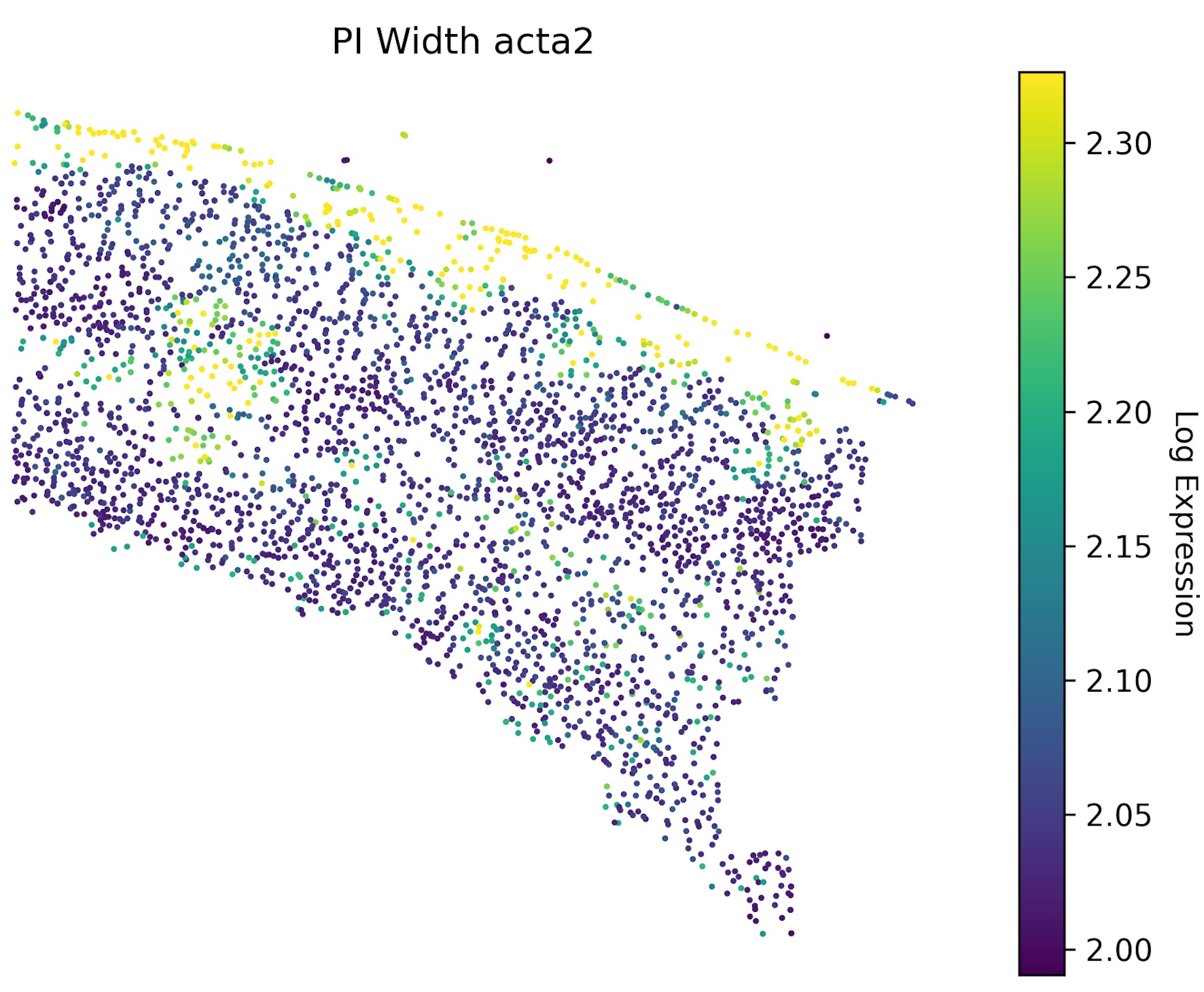
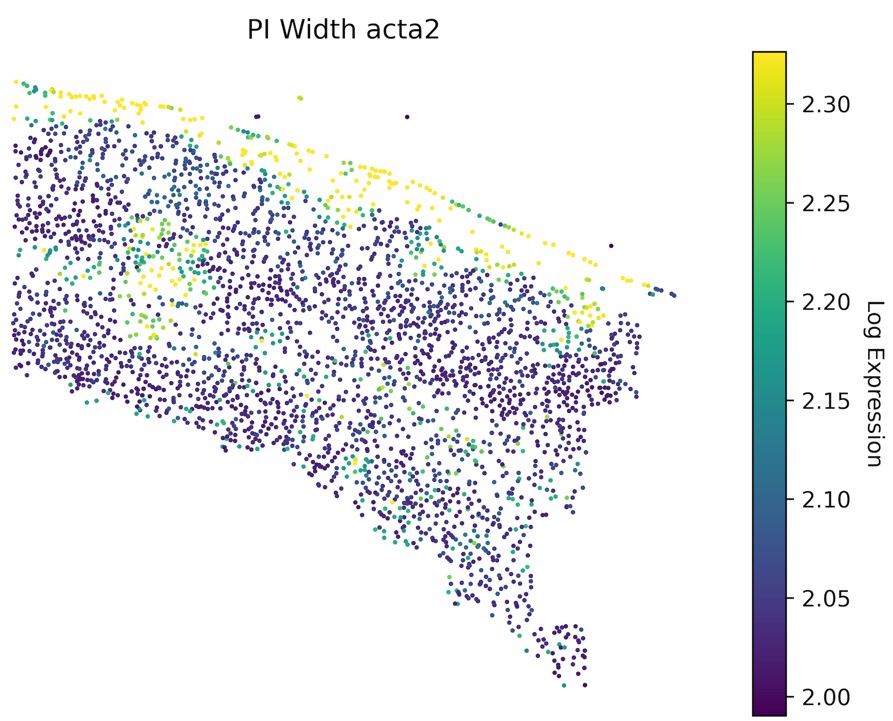
automatically executes the TISSUE pipeline, without additional user intervention (Figure
3
C). The
output matches the results obtained by human experts running the pipeline manually.
This illus-
trates
the
paper
agent’s
ability
to
run
entire
analysis
workflows
(in
this
case,
from
data
loading
and preprocessing through imputation and uncertainty estimation), not just individual tools.
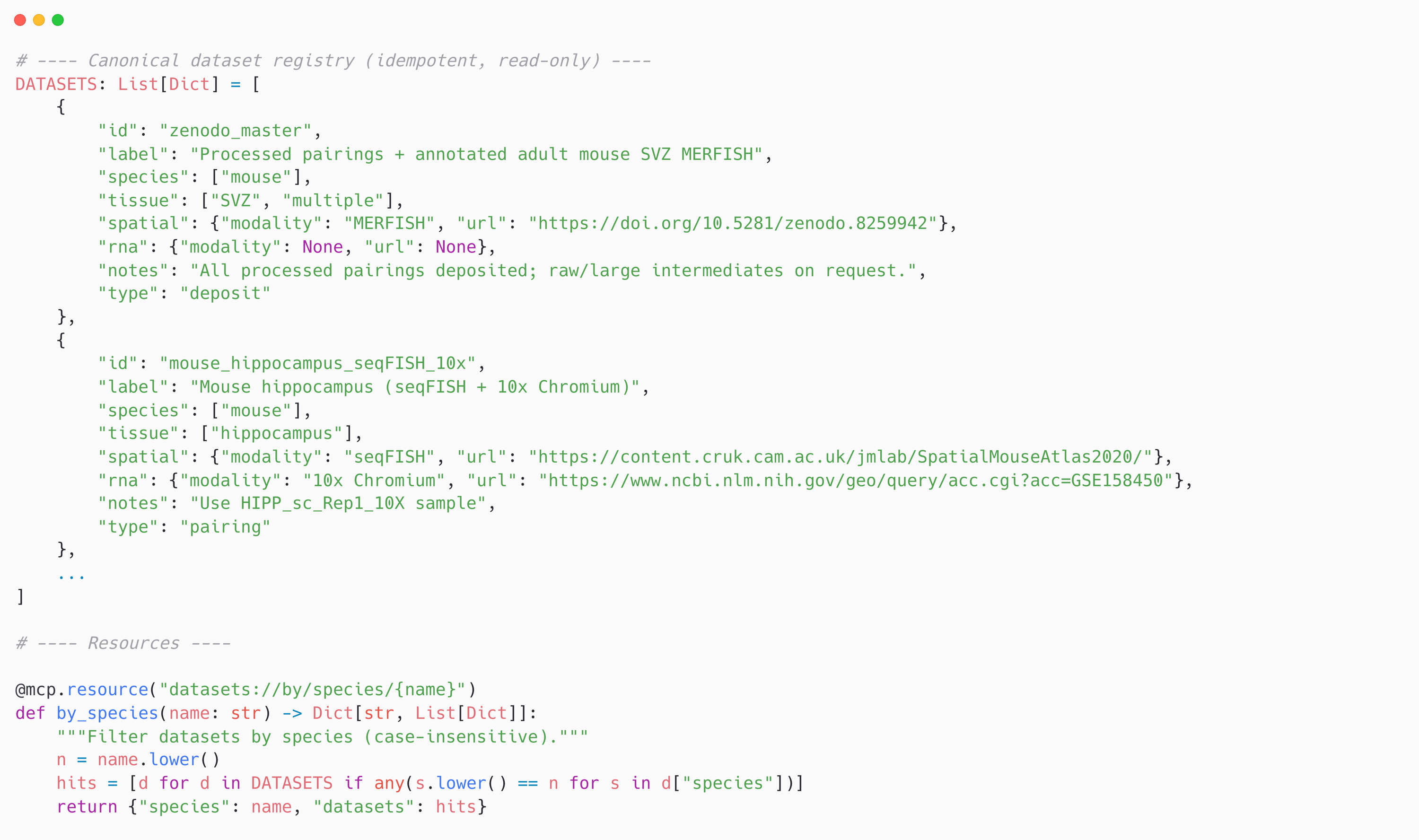
Finally, we showcase the use of MCP resources by translating the data availability section of the
TISSUE paper into a structured registry.
This registry harmonizes ST datasets with standardized
metadata
(species,
tissue
type,
modality,
and
data
URL)
and
makes
them
directly
accessible
to
the TISSUE agent through data repository APIs such as the Zenodo REST API (Figure
3
D). Users
can
query
and
filter
datasets,
for
example,
by
species—without
manually
navigating
multiple
repositories.
Combined
with
the
TISSUE
MCP
tools,
a
user’s
query
might
be:
“
Download
the
8


mouse spatial transcriptomics data from this paper and run TISSUE to generate a prediction interval after
applying
spatial
prediction
to
the
dataset.
”.
The
TISSUE
agent
then
automatically
filters
for
mouse
data, downloads it, and applies the TISSUE pipeline.
Connect to
an
AI Agent
A
Paper2Agent automatically generates TISSUE MCP server and agent
TISSUE MCP Server
calibrate_uncertainties_and_prediction_in
tervals()
: calibrate uncertainties and obtain
prediction intervals for spatial gene
expression prediction
multiple_imputation_hypothesis_testing():
Hypothesis testing with TISSUE multiple
imputation framework
TISSUE Agent
MCP resources
Spatial
transcriptomics
data used in
TISSUE
MCP prompts
MCP tools
Instructions for
uncertainty-aware
spatial transcriptomics
analysis
…
…
B
TISSUE agent offers Q&A support that guides
researchers in applying TISSUE effectively
Paper2MCP
User:
Use TISSUE to perform
uncertainty-aware
dimensionality reduction on my
spatial transcriptomics data
User:
Based on the TISSUE MCP server, what can TISSUE
do and what are the required input and expected output?
Agent:
Sure! Please see
the PCA figure attached.
C
TISSUE agent produces identical
results to those of human researchers
User:
Use TISSUE to generate the prediction
interval for gene
Acta2
. Below are my data:
-
Spatial count matrix: Spatial_count.txt
-
Spatial locations: Location.txt
-
scRNA-seq count matrix: scRNA_count.txt
TISSUE agent
Human researchers
D
TISSUE MCP resources provide a structured format for spatial transcriptomics data used in TISSUE
TISSUE agent calls
Zenodo REST API
Automatically downloaded
spatial transcriptomics data
User:
Download the spatial
transcriptomics data used in
TISSUE paper
Filter data by species
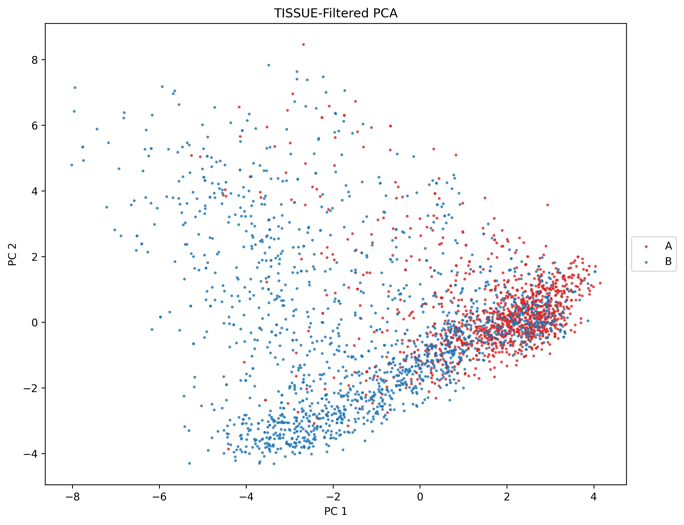
Figure 3:
Overview of the Paper2Agent-generated TISSUE agent.
(A) Construction of the TISSUE MCP
server
and
agent.
(B)
Q&A
support
for
uncertainty-aware
spatial
transcriptomics
analysis.
(C)
Repro-
ducibility
confirmed
by
matching
human
researcher
results.
(D)
Structured
MCP
resources
enable
stan-
dardized dataset access and automated downloads.
9


Connect to
an
AI Agent
A
Paper2Agent automatically generates Scanpy MCP server and agent
B
Scanpy
MCP prompts for single-cell preprocessing and clustering pipeline
Scanpy MCP Server
quality_control_basic_filtering()
: calculate
quality control metrics and apply basic filtering
clustering_analysis()
: perform Leiden
clustering at multiple resolutions
Scanpy Agent
MCP resources
Scanpy
documents link
MCP prompts
MCP tools
Instructions for
preprocessing and
clustering
…
…
Paper2MCP
User:
Perform standard quality
control on my single-cell data:
data.h5ad
C Scanpy agent produces the same results as human researchers with identical inputs
Human researcher produced results
Agent:
Quality control completed
successfully! The analysis filtered
your data to 17,041 cells and
23,424 genes.
User:
Perform standard single-cell preprocessing and clustering pipeline on this single cell data: data.h5ad
Scanpy agent produced results
Connect to
an agent
Output
Highly
variable
gene
Cell type annotation
using differentially
expressed genes
UMAP
Chain-of-tools
User:
My data is
data.h5ad
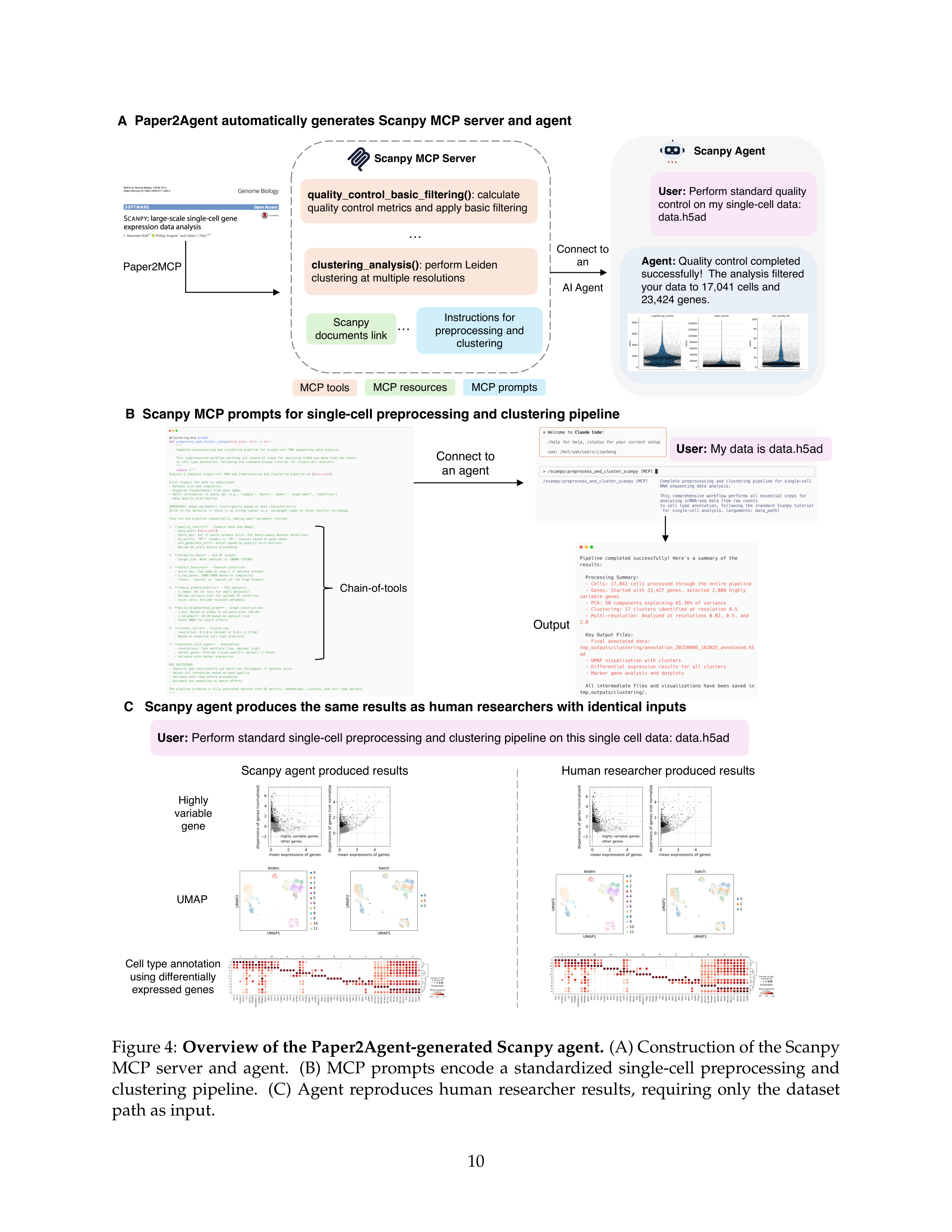
Figure 4:
Overview of the Paper2Agent-generated Scanpy agent.
(A) Construction of the Scanpy
MCP
server
and
agent.
(B)
MCP
prompts
encode
a
standardized
single-cell
preprocessing
and
clustering
pipeline.
(C)
Agent
reproduces
human
researcher
results,
requiring
only
the
dataset
path as input.
10
Scanpy Agent for Single-Cell Data Preprocessing
Next, we demonstrate the application of the Paper2Agent-generated Scanpy agent for preprocess-
ing
and
clustering
for
single-cell
data
analysis.
Scanpy
is
a
widely
used,
comprehensive
pack-
age
for
analyzing
large-scale
single-cell
transcriptomic
data
[
9
].
In
practice,
many
workflows
in
single-cell data analysis may rely on only a subset of Scanpy’s features.
To accommodate this, Pa-
per2Agent supports converting not only entire methods but also specific parts of a paper’s method
into tools, enabling the AI agent to expose only the features most relevant for a given analysis.
We
focus
on
Scanpy’s
most
common
use
case:
preprocessing
and
clustering
single-cell
data.
Paper2Agent generates 7 tools for this feature in around 45 minutes on a personal laptop – tools
such as
quality_control()
for calculating and visualizing QC metrics,
filtering cells and genes,
and
detecting
doublets,
and
normalize_data()
for
normalizing
count
data
(Figure
4
A).
This
al-
lows users to prompt the Scanpy agent to perform quality control on their single-cell data.
In practice, many users prefer an end-to-end workflow for preprocessing and clustering, where
the implemented tools are executed sequentially in the correct order.
This type of analysis work-
flow is not unique to single-cell analysis but is common across many scientific domains. However,
executing such workflows can be challenging: the AI agent must either already “know” the correct
order
of
actions,
or
the
user
must
provide
a
carefully
structured
prompt
that
explicitly
specifies
the sequence. To overcome this limitation, we use MCP prompts to guide the agent. MCP prompts
offer a standardized way to encode workflows, ensuring that tools are executed in the proper or-
der
and
relieving
users
from
the
burden
of
manually
instructing
the
agent.
Importantly,
these
MCP
prompts
are
inferred
directly
from
the
paper
and
codebase
by
Paper2Agent,
without
the
need
for
manual
curation.
This
design
improves
both
reproducibility
and
usability,
particularly
for complex analyses such as single-cell data processing.
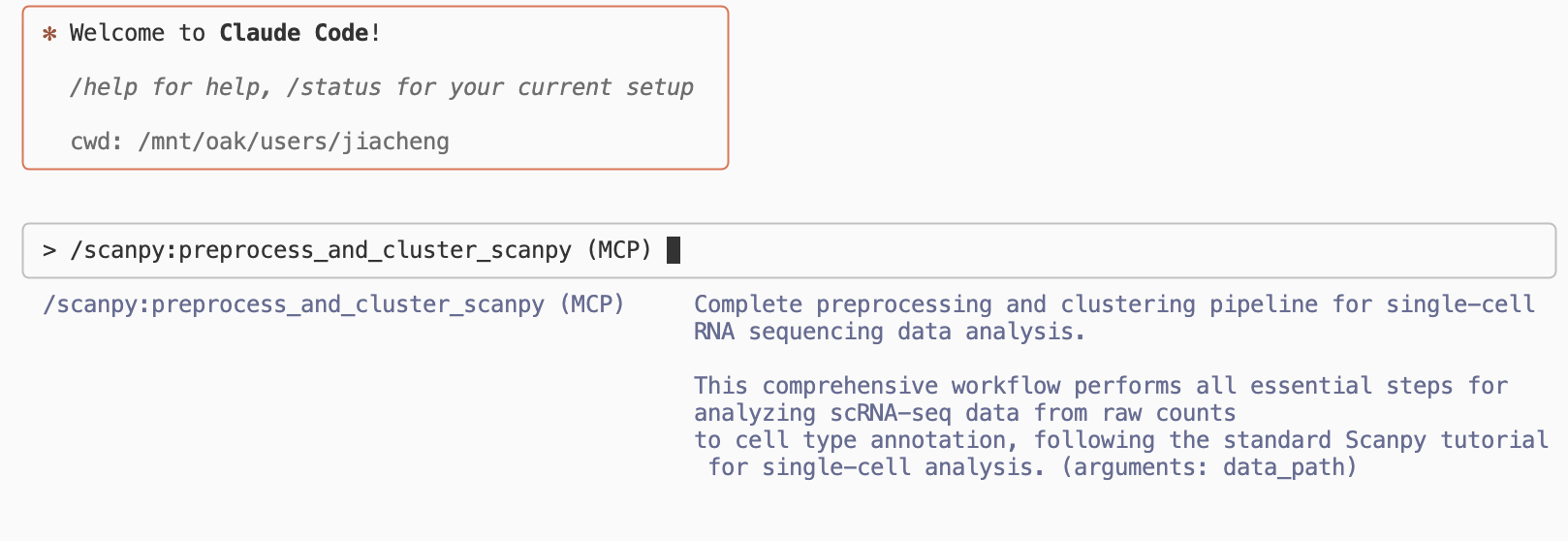
For example, the Paper2Agent-generated Scanpy MCP prompts encode a standard preprocess-
ing
and
clustering
pipeline,
including
quality
control,
normalization,
feature
selection,
dimen-
sionality
reduction,
graph
construction,
clustering,
and
cell-type
annotation
in
the
correct
order
(Figure
4
B). The prompt also instructs the Scanpy agent to inspect the data before analysis to se-
lect
appropriate
parameters.
Users
only
need
to
provide
the
data
path
(e.g.,
data.h5ad),
and
the
Scanpy agent automatically runs the workflow and provides a summary of the analysis results.
To evaluate the Scanpy agent’s performance, we applied it to preprocess and cluster three pub-
licly available single-cell datasets
from 10x Genomics (Data availability) that
are not included in
the Scanpy codebase.
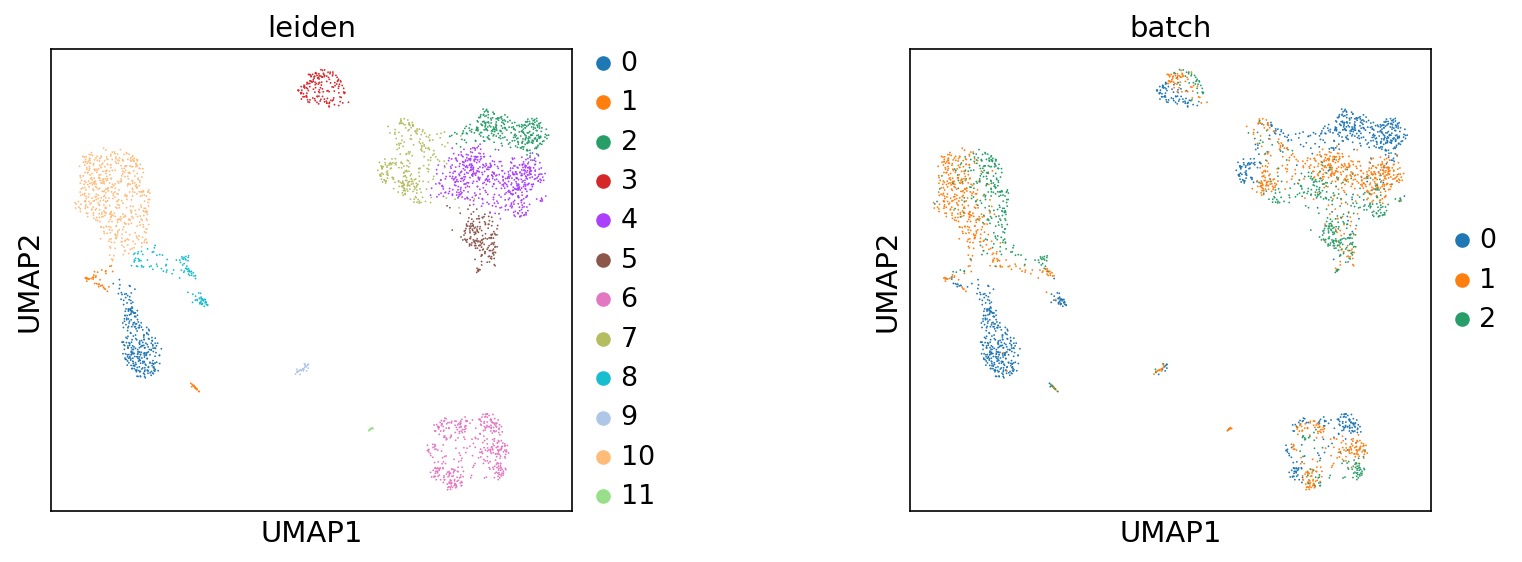
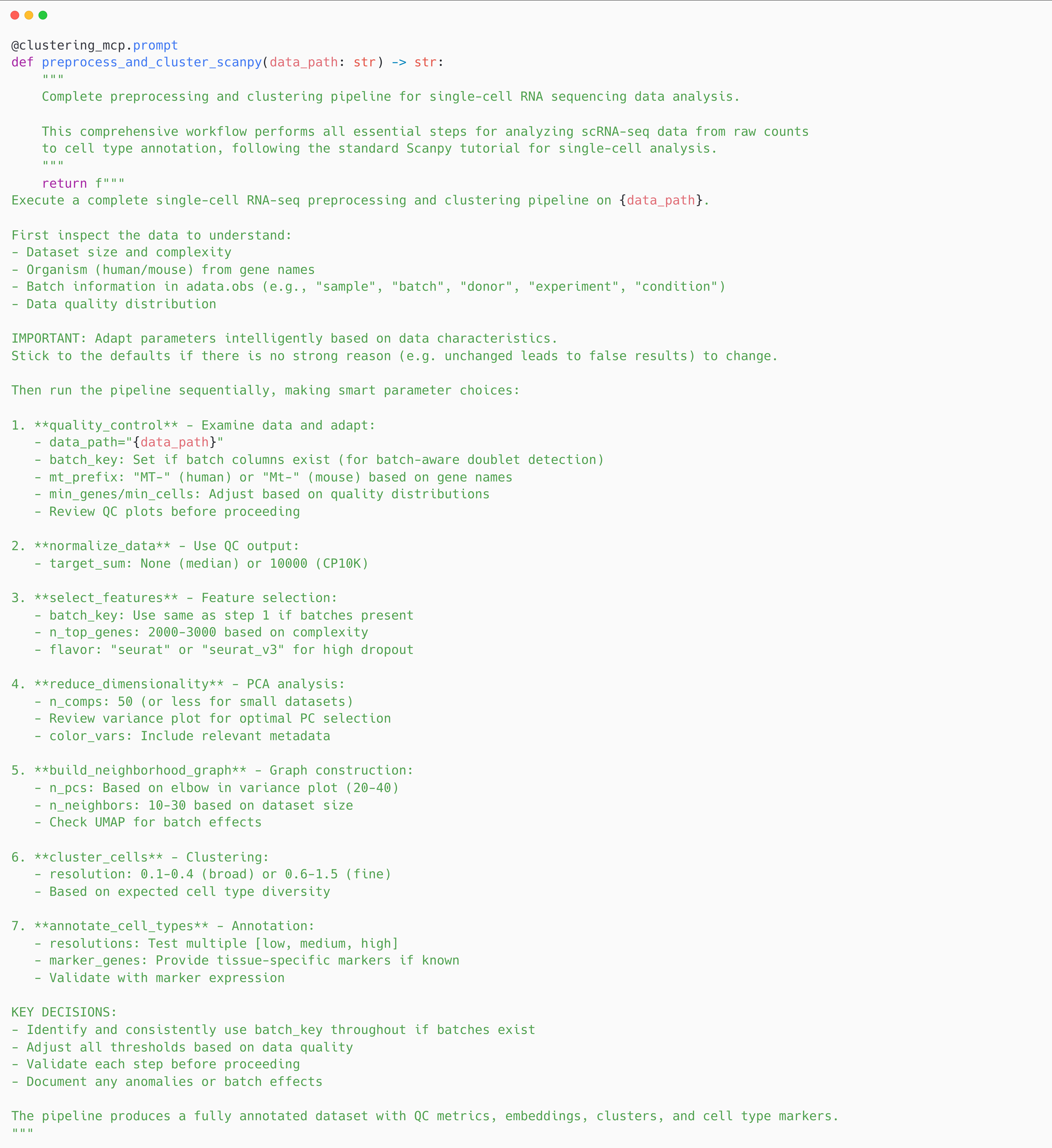
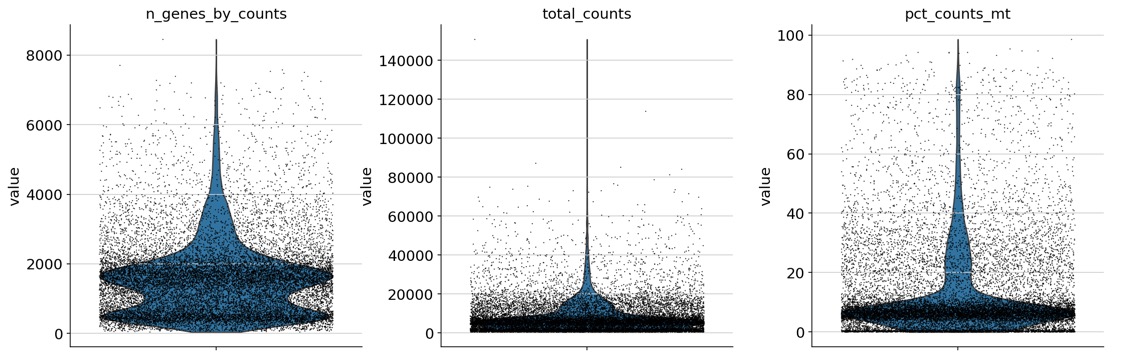
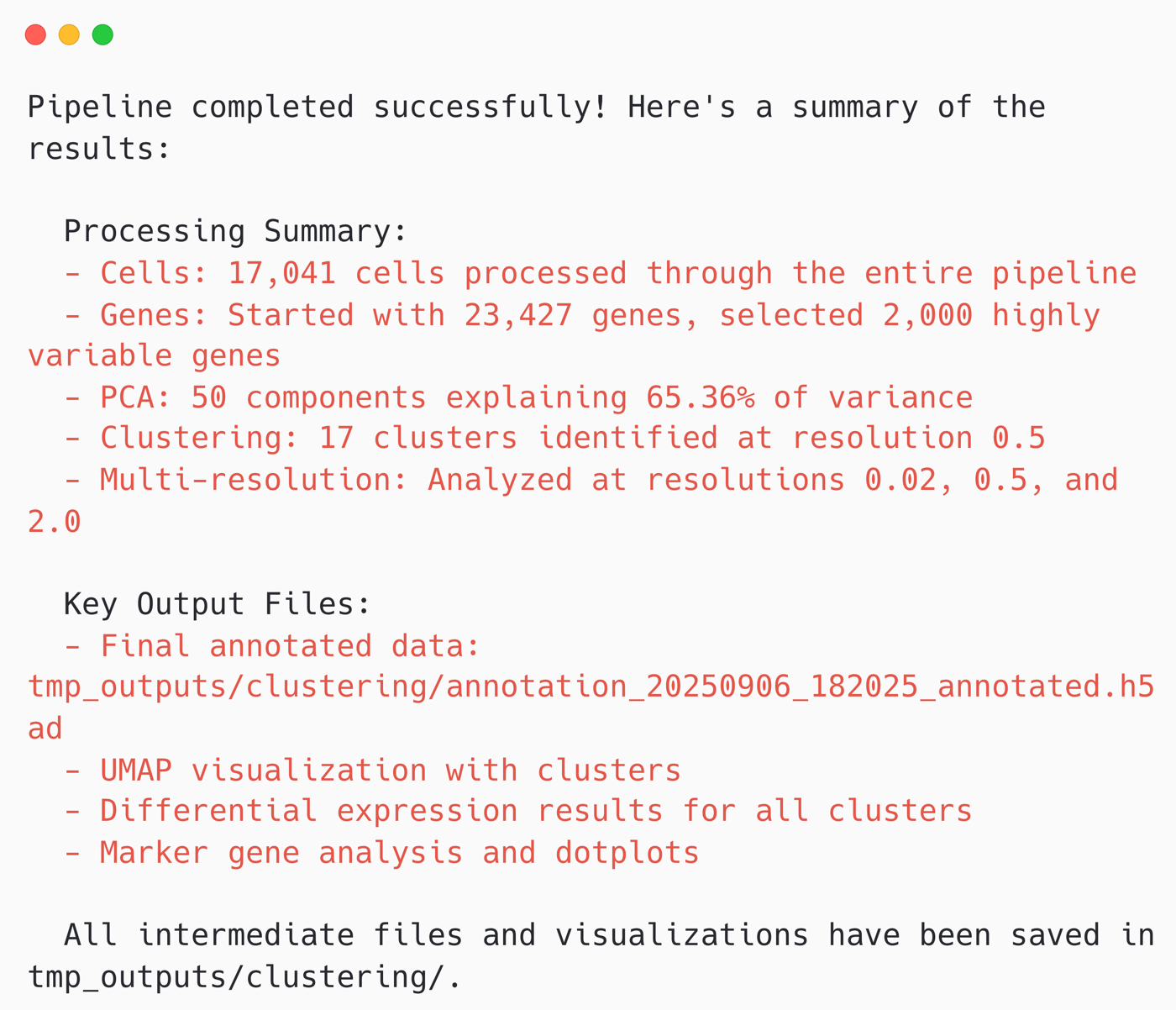
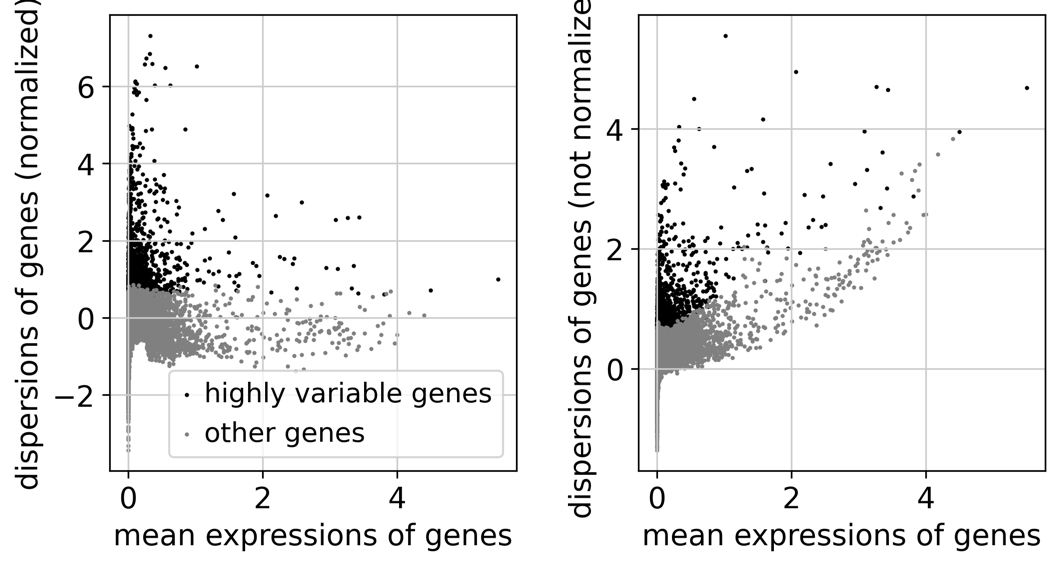
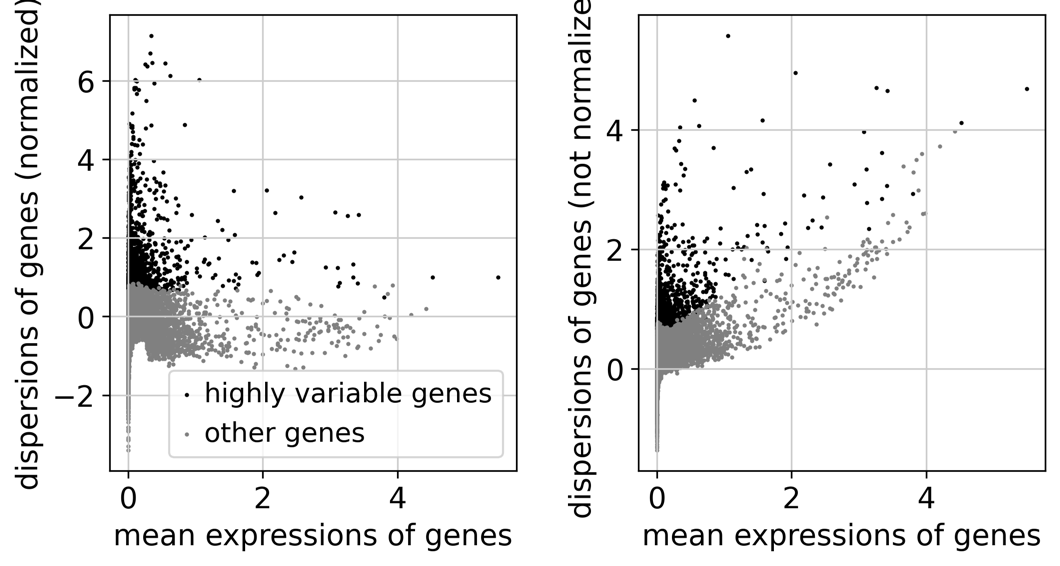
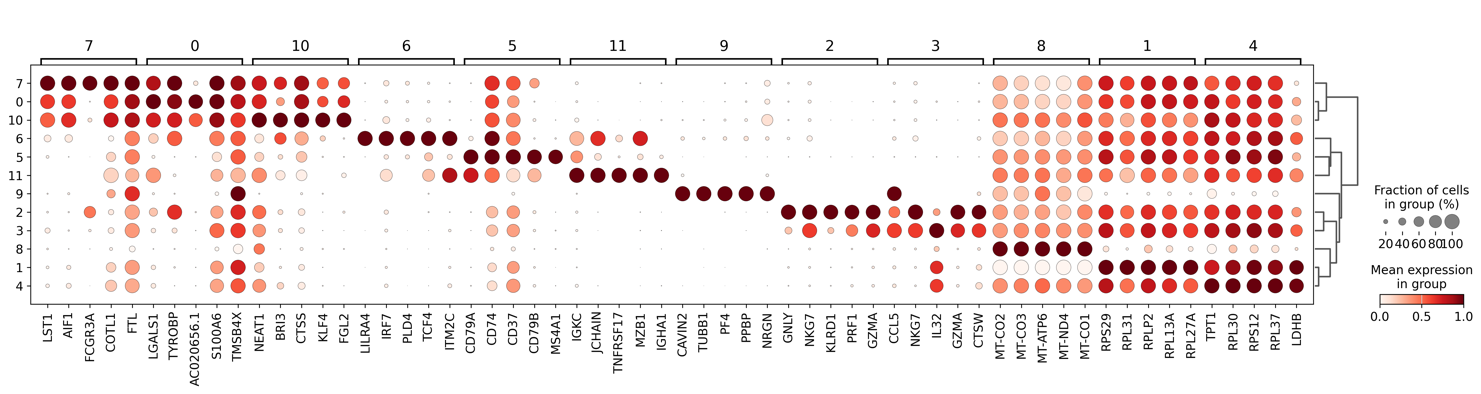
We invoke the Scanpy MCP prompts and query the Scanpy agent "
Perform
standard single-cell preprocessing and clustering pipeline on this single-cell data:
data.h5ad
".
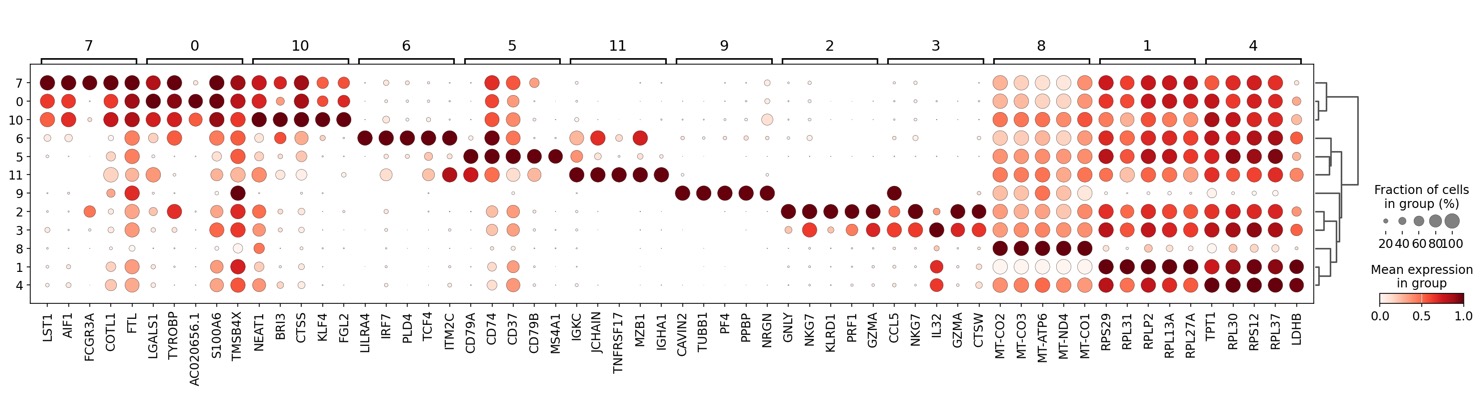
As shown
in Figure
4
C, the agent produces outputs that match those produced by human researchers when
processing the same data.
This demonstrates how MCP-prompt–powered Scanpy agents stream-
line workflow execution, making advanced single-cell analysis both accessible and reproducible.
Paper2Agent enables autonomous AI-driven collaboration and discovery
Human
scientific
collaboration
often
advances
by
combining
insights
from
multiple,
disparate
papers—for instance, when a newly developed method is applied to a recently published dataset
to
generate
fresh
discoveries.
However,
this
process
is
typically
slow
and
labor-intensive.
Pa-
per2Agent enables a new mode of AI-driven collaboration in which AI paper agents can interact
directly
with
each
other.
The
agent
of
a
new
method
paper
can
autonomously
collaborate
with
the agent of a new data paper to perform analyses, test hypotheses, and generate new insights.
As
an
illustrative
case
study,
we
consider
the
AlphaGenome
method
paper
[
13
]
and
a
recent
11
GWAS of Attention-Deficit/Hyperactivity Disorder (ADHD) data and discovery paper [
28
], repre-
senting a common scenario where a new method and a new dataset/discovery become available.
Researchers may want to collaborate to integrate AlphaGenome with the data and insights from
the GWAS study, but doing this manually can take weeks.
Paper2Agent automatically creates MCPs for AlphaGenome and the ADHD GWAS data.
The
data agent in Paper2Agent automatically converts the paper-associated datasets—such as released
GWAS
summary
statistics
and
supplementary
tables
reporting
genetic
discoveries—into
stan-
dardized
MCP
resources,
enabling
seamless
integration
with
analytical
agents
for
downstream
analyses.
These MCPs are then automatically connected with a downstream AI co-scientist.
Here we use
Claude
Code
as
our
agentic
system.
This
Paper2Agent-generated
AI
co-scientist
autonomously
generates new hypotheses, and designs and implements analyses to explore each hypothesis.
The
AI co-scientist proposed several interesting hypotheses to explore, including:
1) ADHD risk vari-
ants alter regulatory activity in brain-specific cell types.
2) AlphaGenome prioritizes causal vari-
ants within ADHD fine-mapping credible sets. 3) ADHD-associated variants disrupt transcription
factor
binding
at
FOXP
family
gene
loci.
Users
can
interact
with
the
AI
co-scientist
in
real-time,
guiding
it
to
execute
the
research
plan
for
hypothesis
(2)
and
to
explore
the
mechanisms
of
the
identified causal variant.
Combining insights from the AlphaGenome and ADHD GWAS papers,
the
AI
co-scientist
prioritizes
a
single
causal
variant
from
209
candidates
identified
in
the
fine-
mapping credible sets and elucidates its molecular mechanisms contributing to ADHD risk.
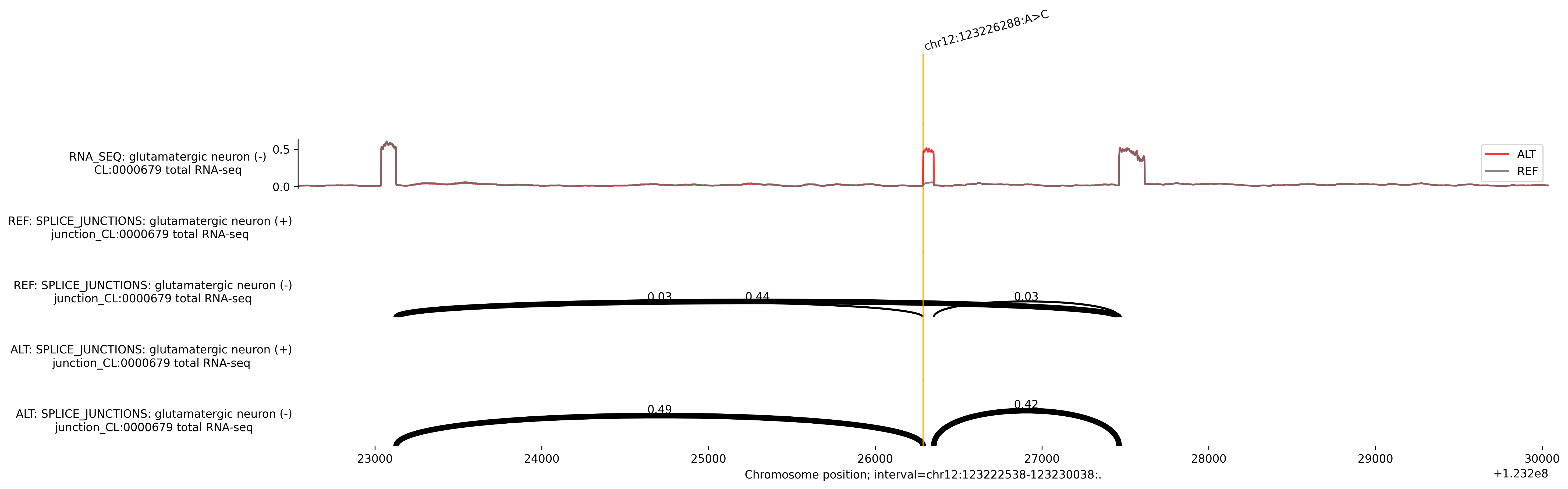
The
agent
showed
that
the
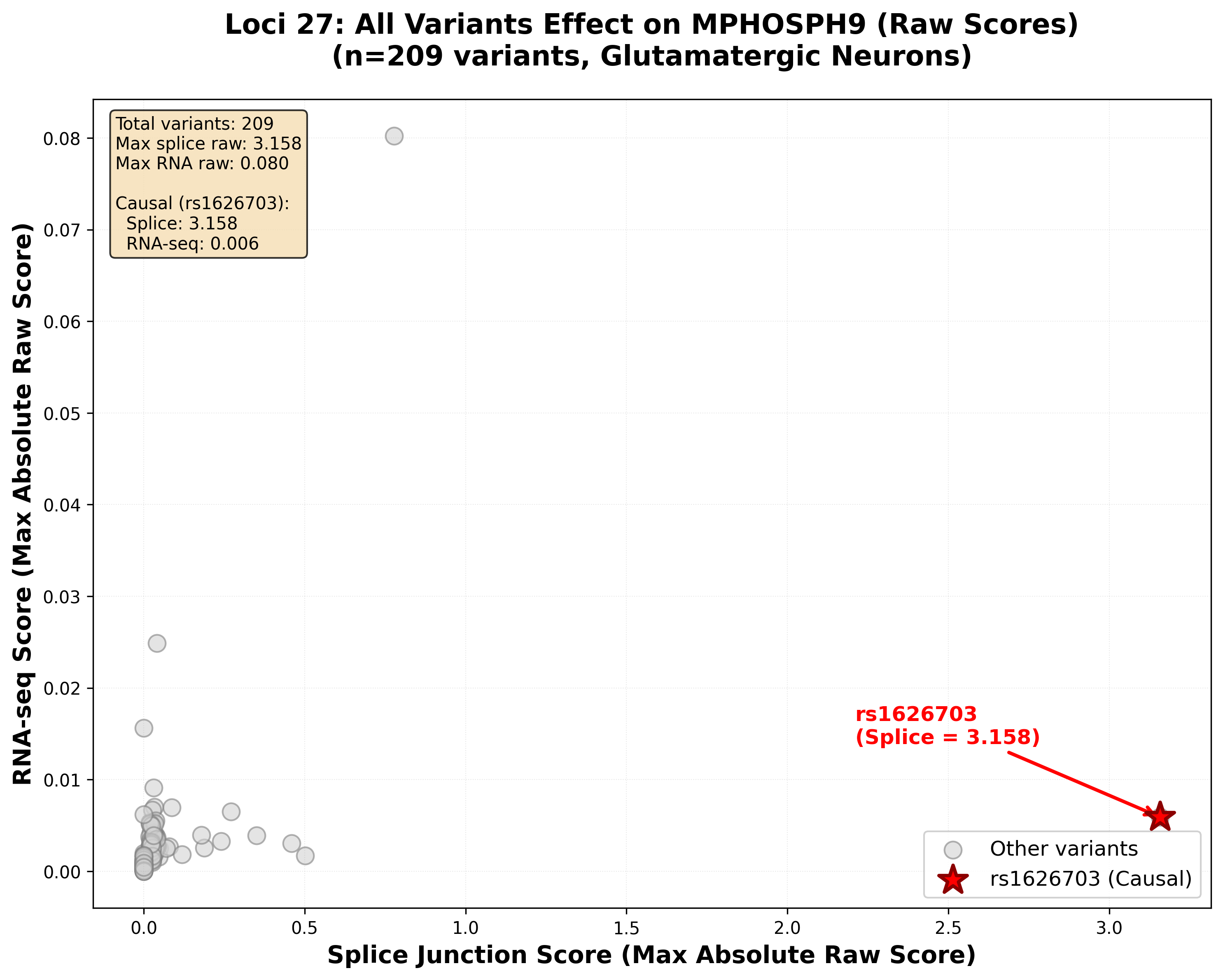
intronic
variant
rs1626703
is
predicted
to
alter
MPHOSPH9
splicing
and
expression
specifically
in
glutamatergic
neurons
(AlphaGenome
quantile
scores:
splice
junction
=
1.000;
RNA-seq
=
0.963).
AlphaGenome
indicates
that
rs1626703
promotes
exon
inclusion,
as
evidenced
by
increased
read
coverage
and
strengthened
splice
junctions
in
the
alternate
allele,
resulting in elevated
MPHOSPH9
expression.
MPHOSPH9
encodes an M-phase–associated phos-
phoprotein that localizes to centrosomes/centrioles and has been implicated in the recruitment of
the CP110-CEP97 complex during cell division and ciliogenesis.
[
3
].
Furthermore, the AI co-scientist autonomously uses AlphaGenome to prioritize causal variants
across all 39 loci, completing the analysis within two hours.
It automatically constructs a system-
atic
workflow
that
extracts
credible-set
variants,
performs
AlphaGenome
functional
scoring
for
those
variants
in
glutamatergic
neurons,
filters
for
protein-coding
genes,
and
ranks
variants
by
their maximum quantile impact scores across different functional modalities.
For each locus, the
AI
co-scientist
identifies
the
top
variant,
maps
it
to
its
target
gene,
summarizes
its
molecular
ef-
fects, and compiles a comprehensive markdown report detailing the functional consequences and
biological significance of the prioritized gene. The AI-generated reports for the causal variants and
their mechanisms aross all 39 loci are provided in Supplementary Table 1.
This workflow enables
scalable hypothesis generation and mechanistic interpretation of GWAS loci in hours rather than
weeks of manual review.
While these hypotheses benefit from subsequent human evaluation, the
workflow
shifts
scientific
effort
from
manual
execution
to
the
synthesis
of
actionable
biological
insights.
Together, these results exemplify a new collaborative paradigm in which human scientists use
Paper2Agent
to
design
their
own
AI
co-scientists
and
jointly
formulate
high-level
scientific
hy-
potheses, while the AI co-scientists autonomously execute and interpret complex analytical tasks.
12
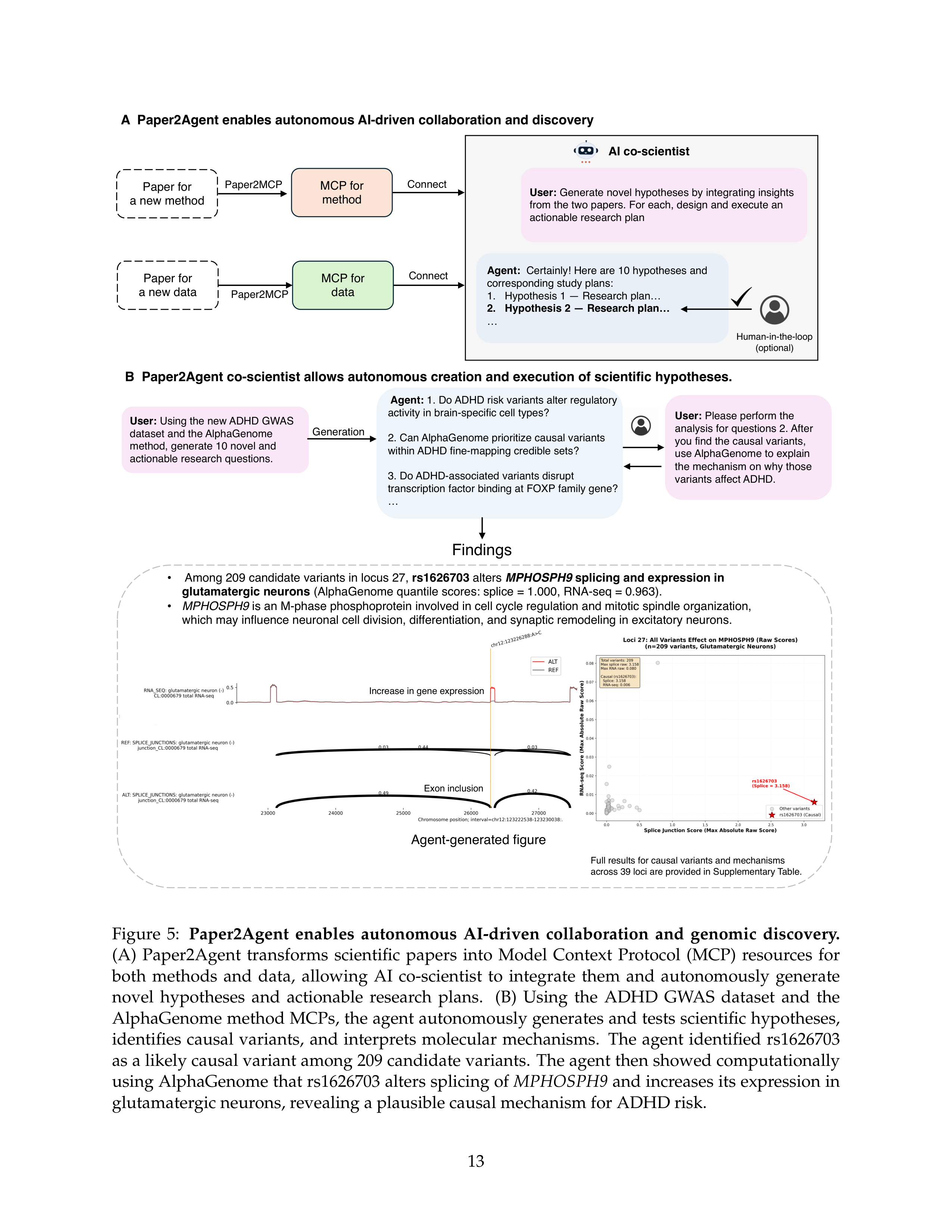




A Paper2Agent enables autonomous AI-driven collaboration and discovery
MCP for
method
MCP for
data
Paper for
a new method
Paper for
a new data
AI co-scientist
User:
Generate novel hypotheses by integrating insights
from the two papers. For each, design and execute an
actionable research plan
Agent:
Certainly! Here are 10 hypotheses and
corresponding study plans:
1.
Hypothesis 1 — Research plan…
2.
Hypothesis 2 — Research plan…
…
Paper2MCP
Paper2MCP
Connect
Connect
B Paper2Agent co-scientist allows autonomous creation and execution of scientific hypotheses.
User:
Using the new ADHD GWAS
dataset and the AlphaGenome
method, generate 10 novel and
actionable research questions.
Generation
Agent:
1. Do ADHD risk variants alter regulatory
activity in brain-specific cell types?
2. Can AlphaGenome prioritize causal variants
within ADHD fine-mapping credible sets?
3. Do ADHD-associated variants disrupt
transcription factor binding at FOXP family gene?
…
Findings
Human-in-the-loop
(optional)
User:
Please perform the
analysis for questions 2. After
you find the causal variants,
use AlphaGenome to explain
the mechanism on why those
variants affect ADHD.
•
Among 209 candidate variants in locus 27,
rs1626703
alters
MPHOSPH9
splicing and expression in
glutamatergic neurons
(AlphaGenome quantile scores: splice = 1.000, RNA-seq = 0.963).
•
MPHOSPH9
is an M-phase phosphoprotein involved in cell cycle regulation and mitotic spindle organization,
which may influence neuronal cell division, differentiation, and synaptic remodeling in excitatory neurons.
Agent-generated figure
Exon inclusion
Full results for causal variants and mechanisms
across 39 loci are provided in Supplementary Table.
Increase in gene expression
Figure
5:
Paper2Agent
enables
autonomous
AI-driven
collaboration
and
genomic
discovery.
(A)
Paper2Agent
transforms
scientific
papers
into
Model
Context
Protocol
(MCP)
resources
for
both
methods
and
data,
allowing
AI
co-scientist
to
integrate
them
and
autonomously
generate
novel
hypotheses
and
actionable
research
plans.
(B)
Using
the
ADHD
GWAS
dataset
and
the
AlphaGenome method MCPs, the agent autonomously generates and tests scientific hypotheses,
identifies
causal
variants,
and
interprets
molecular
mechanisms.
The
agent
identified
rs1626703
as a likely causal variant among 209 candidate variants.
The agent then showed computationally
using AlphaGenome that rs1626703 alters splicing of
MPHOSPH9
and increases its expression in
glutamatergic neurons, revealing a plausible causal mechanism for ADHD risk.
13
3
Discussion
In
this
work,
we
introduce
Paper2Agent,
a
framework
that
transforms
a
research
paper
from
a
passive
publication
into
an
interactive
AI
agent.
We
demonstrate
this
approach
by
creating
Pa-
per2Agent instances for several methodological advances, including AlphaGenome for genomics,
Scanpy for single-cell analysis, and TISSUE for spatial transcriptomics.
These examples illustrate
how
a
paper
agent
can
embody
the
research
contribution,
making
it
directly
accessible
through
natural language interaction.
The generated paper MCPs are modular units that can be connected
to diverse user-facing agents, enabling broad adoption.
By lowering the barrier between publica-
tion and practical application,
Paper2Agent helps bridge the gap between how scientific discov-
eries are disseminated and how they are used in practice.
Our initial focus has been on methodological papers, since they offer the clearest use case. Such
papers typically describe algorithms, models, or computational workflows that other researchers
seek
to
adopt,
but
whose
deployment
often
requires
substantial
technical
expertise.
Converting
them into agents allows the methods to be applied to new problems without the overhead of mas-
tering complex software ecosystems.
In future work,
we plan to further expand Paper2Agent to
other forms of research output, including data resources and discovery papers.
In those contexts,
the
agent’s
role
may
shift
from
computation
to
interpretation,
curation,
or
explanation,
guiding
users through datasets or contextualizing new insights for diverse scientific communities.
Not
every
paper
can
be
seamlessly
turned
into
a
robust
agent.
If
the
original
codebase
is
in-
complete, poorly documented, or contains unresolved errors, Paper2Agent cannot reliably expose
it
as
a
functioning
tool.
Yet
this
limitation
is
itself
informative:
the
ease
with
which
a
paper
can
be
transformed
into
an
agent
can
serve
as
a
practical
measure
of
reproducibility
and
rigor.
Just
as the scientific community has come to expect clear data and code availability, we envision that
a
natural
extension
will
be
to
expect
contributions
to
be
structured
in
ways
that
facilitate
their
translation
into
agents.
Well-documented,
modular,
and
transparent
papers
will
naturally
lend
themselves to this new standard.
To
better
quantify
this
ease
of
reproducibility
and
agentification,
we
used
a
benchmarking
approach
based
on
human
expert-evaluated
examples
from
the
paper
as
well
as
novel
exam-
ples
meant
to
test
generalizability.
With
this
approach,
we
showed,
for
example,
that
the
Al-
phaGenome
agent
was
able
to
execute
both
tutorial-based
and
novel
queries
with
100.0%
ac-
curacy,
much
higher
than
the
accuracy
achieved
by
other
agents
like
Claude
Code
and
Biomni.
Moreover, the agent created by Paper2Agent is substantially more efficient, achieving median run
time
speedups
of
over
1.7x
compared
to
Biomni
or
using
Claude
Code
direct
on
the
repo.
Our
benchmarking approach, however, is limited by expert knowledge of the paper and method and
manual implementation and review.
A future direction is to further streamline this process with
additional agentic frameworks, e.g.
with LLM-as-judge evaluations [
22
].
Another consideration is the scope of agentification.
While the paper is the conventional unit
of scientific communication, it is not always the best unit for agentification. In many fields, an idea
evolves across a sequence of publications, each adding refinements, benchmarks, or applications.
In
such
cases,
the
most
useful
agent
may
not
represent
a
single
paper
but
rather
a
collection
of
related works aggregated into a coherent interface. A single MCP can encapsulate multiple related
papers.
We plan to extend Paper2Agent to flexibly accommodate this broader scope.
Looking
forward,
just
as
many
journals
now
require
data
and
code
availability
sections,
we
anticipate
the
emergence
of
an
“agent
availability”
section
that
specifies
whether
and
how
the
contribution
has
been
embodied
as
an
interactive
agent.
This
would
not
only
provide
immedi-
14
ate
utility
to
readers
but
also
incentivize
authors
to
present
their
work
in
a
form
conducive
to
agentification.
Finally, once scientific knowledge is encoded in active agents rather than static artifacts, the po-
tential extends beyond individual use. Agents could interact with one another, linking methods to
datasets or combining insights from different domains, as illustrated in our AlphaGenome-ADHD
case
study.
Communities
of
such
agents
could
form
a
dynamic
layer
of
scientific
intelligence,
accelerating
connections
across
disciplines
and
enabling
a
new
form
of
AI-driven
collaboration.
Paper2Agent thus points toward a future in which scientific communication is not only about de-
scribing results, but also about creating interactive, collaborative entities that embody and extend
the research.
Data availability
This paper utilized publicly available data for analysis:
10x Genomics PBMC single-cell RNA-seq datasets:
http://cf.10xgenomics.com/samples/cell-exp/
3.0.0/pbmc_1k_v2/pbmc_1k_v2_filtered_feature_bc_matrix.h5
,
http://cf.10xgenomics.
com/samples/cell-exp/3.0.0/pbmc_1k_v3/pbmc_1k_v3_filtered_feature_bc_matrix.h5
,
http://cf.10xgenomics.com/samples/cell-exp/3.0.0/pbmc_1k_protein_v3/pbmc_1k_protein_
v3_filtered_feature_bc_matrix.h5
.
Mouse
somatosensory
cortex
spatial
transcriptomic
data:
Dataset15
in
https://zenodo.org/
records/8259942
GTEx portal:
https://gtexportal.org/home/
AlphaGenome Github repository:
https://github.com/google-deepmind/alphagenome
TISSUE Github repository:
https://github.com/sunericd/TISSUE
Scanpy Github repository:
https://github.com/scverse/scanpy
Code availability
Paper2Agent is publicly available at
https://github.com/jmiao24/Paper2Agent
.
AlphaGenome MCP server:
https://huggingface.co/spaces/Paper2Agent/alphagenome_mcp
.
Scanpy MCP server:
https://huggingface.co/spaces/Paper2Agent/scanpy_mcp
.
TISSUE MCP server:
https://huggingface.co/spaces/Paper2Agent/tissue_mcp
.
Agent availability
Paper2Agent-generated
AlphaGenome
agent
is
publicly
available
at
https://huggingface.co/
spaces/Paper2Agent/alphagenome_agent
.
Acknowledgments
We thank Abubakar Abid, Eric Sun, Emma Dann, lab members from the Zou lab and the Pritchard
lab for helpful feedback during the project. J.Z. is supported by funding from the Chan-Zuckerberg
Biohub.
15
References
[1]
Ana Trisovic, Matthew K. Lau, Thomas Pasquier, and Mercè Crosas.
A large-scale study on
research code quality and execution.
Scientific Data
, 9(1):60, 2022.
[2]
Dylan G. E. Gomes, Patrice Pottier, Robert Crystal-Ornelas, Emma J. Hudgins, Vivienne For-
oughirad,
Luna
L.
Sánchez-Reyes,
Rachel
Turba,
Paula
Andrea
Martinez,
David
Moreau,
Michael G. Bertram, et al.
Why don’t we share data and code?
perceived barriers and bene-
fits to public archiving practices.
Proceedings of the Royal Society B
, 289(1987):20221113, 2022.
[3]
Ning
Huang,
Donghui
Zhang,
Fangyuan
Li,
Peiyuan
Chai,
Song
Wang,
Junlin
Teng,
and
Jianguo Chen.
M-phase phosphoprotein 9 regulates ciliogenesis by modulating cp110-cep97
complex localization at the mother centriole.
Nature Communications
, 9(1):4511, 2018.
[4]
Adam
Rule,
Amanda
Birmingham,
Cristal
Zuniga,
Ilkay
Altintas,
Shih-Cheng
Huang,
Rob
Knight,
Niema
Moshiri,
Mai
H.
Nguyen,
Sara
Brin
Rosenthal,
Fernando
Pérez,
et
al.
Ten
simple
rules
for
writing
and
sharing
computational
analyses
in
jupyter
notebooks.
PLoS
Computational Biology
, 15(7):e1007007, 2019.
[5]
Mads Kjolby, Morten Schallburg Nielsen, and Claus Munck Petersen. Sortilin, encoded by the
cardiovascular risk gene sort1, and its suggested functions in cardiovascular disease.
Current
Atherosclerosis Reports
, 17(4):18, 2015.
[6]
GTEx
Consortium.
The
gtex
consortium
atlas
of
genetic
regulatory
effects
across
human
tissues.
Science
, 369(6509):1318–1330, 2020.
[7]
Michael
Wainberg,
Nasa
Sinnott-Armstrong,
Nicholas
Mancuso,
Alvaro
N.
Barbeira,
David
A.
Knowles,
David
Golan,
Raili
Ermel,
Arno
Ruusalepp,
Thomas
Quertermous,
Ke Hao, et al.
Opportunities and challenges for transcriptome-wide association studies.
Na-
ture Genetics
, 51(4):592–599, 2019.
[8]
Piotr Nowakowski, Eryk Ciepiela, Daniel Har˛e˙zlak, Joanna Kocot, Marek Kasztelnik, Tomasz
Barty´nski, Jan Meizner, Grzegorz Dyk, and Maciej Malawski.
The collage authoring environ-
ment.
Procedia Computer Science
, 4:608–617, 2011.
[9]
F. Alexander Wolf, Philipp Angerer, and Fabian J. Theis.
Scanpy:
large-scale single-cell gene
expression data analysis.
Genome Biology
, 19(1):15, 2018.
[10]
Eric
D.
Sun,
Rong
Ma,
Paloma
Navarro
Negredo,
Anne
Brunet,
and
James
Zou.
Tissue:
uncertainty-calibrated prediction of single-cell spatial transcriptomics improves downstream
analyses.
Nature Methods
, 21(3):444–454, 2024.
[11]
Hakhamanesh Mostafavi, Jeffrey P. Spence, Sahin Naqvi, and Jonathan K. Pritchard.
System-
atic differences in discovery of genetic effects on gene expression and complex traits.
Nature
Genetics
, 55(11):1866–1875, 2023.
[12]
Shunyu Yao, Jeffrey Zhao, Dian Yu, Nan Du, Izhak Shafran, Karthik Narasimhan, and Yuan
Cao.
React:
synergizing reasoning and acting in language models.
In
International Conference
on Learning Representations (ICLR)
, 2023.
[13]
Ziga Avsec, Natasha Latysheva, Jun Cheng, Guido Novati, Kyle R. Taylor, Tom Ward, Clare
Bycroft, Lauren Nicolaisen, Eirini Arvaniti, Joshua Pan, et al.
Alphagenome:
advancing reg-
ulatory variant effect prediction with a unified dna sequence model.
bioRxiv
, pages 2025–06,
2025.
16
[14]
Kyle Swanson, Wesley Wu, Nash L. Bulaong, John E. Pak, and James Zou.
The virtual lab of
ai agents designs new sars-cov-2 nanobodies.
Nature
, pages 1–3, 2025.
[15]
Xinyi
Hou,
Yanjie
Zhao,
Shenao
Wang,
and
Haoyu
Wang.
Model
context
protocol
(mcp):
landscape,
security
threats,
and
future
research
directions.
arXiv
preprint
arXiv:2503.23278
,
2025.
[16]
Juraj Gottweis, Wei-Hung Weng, Alexander Daryin, Tao Tu, Anil Palepu, Petar Sirkovic, Ar-
tiom
Myaskovsky,
Felix
Weissenberger,
Keran
Rong,
Ryutaro
Tanno,
et
al.
Towards
an
ai
co-scientist.
arXiv preprint arXiv:2502.18864
, 2025.
[17]
Ali
Essam
Ghareeb,
Benjamin
Chang,
Ludovico
Mitchener,
Angela
Yiu,
Caralyn
J.
Szostkiewicz, Jon M. Laurent, Muhammed T. Razzak, Andrew D. White, Michaela M. Hinks,
and Samuel G. Rodriques.
Robin:
a multi-agent system for automating scientific discovery.
arXiv preprint arXiv:2505.13400
, 2025.
[18]
Yuanhao
Qu,
Kaixuan
Huang,
Ming
Yin,
Kanghong
Zhan,
Dyllan
Liu,
Di
Yin,
Henry
C.
Cousins,
William
A.
Johnson,
Xiaotong
Wang,
Mihir
Shah,
et
al.
Crispr-gpt
for
agentic
au-
tomation of gene-editing experiments.
Nature Biomedical Engineering
, pages 1–14, 2025.
[19]
Samuel Alber, Bowen Chen, Eric Sun, Alina Isakova, Aaron J. Wilk, and James Zou.
Cellvoy-
ager:
ai
compbio
agent
generates
new
insights
by
autonomously
analyzing
biological
data.
bioRxiv
, pages 2025–06, 2025.
[20]
Kexin
Huang,
Serena
Zhang,
Hanchen
Wang,
Yuanhao
Qu,
Yingzhou
Lu,
Yusuf
Roohani,
Ryan
Li,
Lin
Qiu,
Gavin
Li,
Junze
Zhang,
et
al.
Biomni:
a
general-purpose
biomedical
ai
agent.
bioRxiv
, pages 2025–05, 2025.
[21]
Chunqiu Steven Xia, Yinlin Deng, Soren Dunn, and Lingming Zhang.
Agentless:
demystify-
ing llm-based software engineering agents.
arXiv preprint arXiv:2407.01489
, 2024.
[22]
Jiawei Gu, Xuhui Jiang, Zhichao Shi, Hexiang Tan, Xuehao Zhai, Chengjin Xu, Wei Li, Ying-
han
Shen,
Shengjie
Ma,
Honghao
Liu,
et
al.
A
survey
on
llm-as-a-judge.
arXiv
preprint
arXiv:2411.15594
, 2024.
[23]
Sakana.AI.
Sakana “ai scientist”.
Sakana.ai Website
, 2024.
[24]
Anthropic.
Claude code:
deep coding at terminal velocity.
Accessed via Anthropic website,
2025.
[25]
Robert
Stojnic
and
Ross
Taylor.
Papers
with
code
is
joining
facebook
ai.
Medium
article,
December 2019.
[26]
Cameron
S.
Movassaghi,
Amanda
Momenzadeh,
and
Jesse
G.
Meyer.
From
articles
to
code:
on-demand
generation
of
core
algorithms
from
scientific
publications.
arXiv
preprint
arXiv:2507.22324
, 2025.
[27]
Minju Seo, Jinheon Baek, Seongyun Lee, and Sung Ju Hwang.
Paper2code:
automating code
generation from scientific papers in machine learning.
arXiv preprint arXiv:2504.17192
, 2025.
[28]
Camiel M. van der Laan, Hill F. Ip, Marijn Schipper, Jouke-Jan Hottenga, Beate St Pourcain,
Tetyana
Zayats,
René
Pool,
Eva
M.
L.
Krapohl,
Isabell
Brikell,
María
Soler
Artigas,
et
al.
Genome-wide association meta-analysis of childhood adhd symptoms and diagnosis identi-
fies new loci and potential effector genes.
Nature Genetics
, pages 1–9, 2025.
17
Extended Methods
Details on implementing Paper2Agent
Paper2Agent
converts
a
research
paper
and
its
public
codebase
into
a
production-ready
MCP
server
and
then
exposes
that
server
to
an
AI
agent
interface.
The
process
has
four
stages:
(i)
codebase identification and extraction, (ii) environment configuration, (iii) tool synthesis and MCP
server generation, and (iv) testing, refinement, and deployment, followed by agent connection. We
implemented
this
multi-agent
AI
system
in
Claude
Code.
We
design
an
orchestrator
agent
that
coordinates four sub-agents:
•
Environment-manager
:
a specialized agent responsible for creating clean, reproducible en-
vironments
for
research
codebases.
It
analyzes
project
setup
requirements,
provisions
an
isolated workspace, installs all necessary dependencies, and ensures the code runs without
conflicts.
Standardizing
environment
setup
enables
reliable
execution
and
reproducibility
across different systems.
•
Tutorial-scanner
:
a
specialized
agent
for
reviewing
the
public
codebases
to
identify
and
organize
educational
resources.
It
systematically
scans
available
materials,
distinguishes
genuine tutorials from other files, and highlights those most useful for reuse.
The agent then
produces clear summaries and reports, providing a structured view of which resources are
worth keeping and which can be set aside.
•
Tutorial-tool-extractor-implementor
: a specialized agent that converts tutorials into reusable
tools.
It reviews selected tutorials, identifies tasks that generalize beyond the example data,
and implements each as a clean, single-purpose function with clear inputs, outputs, and de-
faults. The agent parameterizes hardcoded values, enforces file-based inputs, saves essential
results and figures, and returns a standardized summary of produced artifacts.
Its goal is to
create a practical function library that reproduces tutorial results on the original data while
remaining ready to run on new datasets.
•
Test-verifier-improver
:
a
specialized
agent
that
creates,
runs,
and
refines
tests
for
tutorial
implementations.
It uses only the tutorial’s own examples to ensure complete coverage and
faithful
reproduction
of
numerical
and
visualization
results.
The
agent
runs
in
a
loop
of
generating
tests,
executing
them,
diagnosing
failures,
and
applying
fixes.
If
functions
re-
peatedly fail, their MCP decorators are removed, and they will not be included in the MCP
server.
All results and logs are recorded for transparency.
Paper2Agent contains six steps:
1.
Locate and download the codebase.
Identify the official repository linked to the paper, clone
or
download
it,
and
gather
associated
resources
such
as
supplementary
data
or
configura-
tion files.
2.
Environment setup.
Provision a clean, reproducible workspace using an environment man-
ager,
pin
dependencies,
and
verify
imports
so
the
codebase
runs
consistently
across
ma-
chines.
3.
Tutorial discovery.
Scan the repository to locate useful reference and educational materials
and produce an index of candidate tutorials for tooling.
4.
Tutorial execution and audit.
Run the selected tutorials end-to-end with their example data,
capture inputs,
outputs,
figures,
and runtime constraints,
and record any implicit assump-
tions that must be made explicit.
5.
Tool
extraction
and
implementation.
Convert
tutorial
logic
into
reusable,
single-purpose
18
functions with clear inputs and outputs, parameterize hardcoded values, and save essential
artifacts while preserving tutorial fidelity.
6.
MCP server assembly.
Integrate the implemented tools, resources, and prompts into a single
MCP server with a manifest, versioning, and basic security defaults, ready to be used by an
orchestrator or co-scientist agent.
The
orchestrator
agent
invokes
sub-agents
as
needed
at
different
stages
of
the
process.
As
the
Paper2Agent
workflow
progresses,
the
results
are
automatically
recorded
for
each
step
for
traceability and reproducibility.
The detailed setup and prompt are available in the
Paper2Agent
GitHub repository.
Generation and analysis of AlphaGenome agent
We applied the Paper2Agent framework to the AlphaGenome paper to generate an AlphaGenome
MCP and connected the MCP with Claude Code to create the AlphaGenome agent. The generated
AlphaGenome
MCP
server
is
remotely
hosted
on
Hugging
Face
Spaces
(Code
availability).
To
verify
reproducibility,
the
AlphaGenome
agent
was
evaluated
using
15
original
tutorial-based
and 15 novel queries.
We prompted the agent with the queries and compared the agent’s response
with the ground truth answer.
The prompt used to query the AlphaGenome agent on interpreting
LDL genetic associations is:
"
Use AlphaGenome to interpret why chr1:109274968:G>T associates with
LDL cholesterol.
Identify the causal genes and assess regulatory effects across modalities in liver.
Generate
a publication-ready report with figures.
My AlphaGenome API key is:
.
Reason step by step.
".
The detailed benchmark queries are available in the
Paper2Agent repository
.
Benchmarking the AlphaGenome agent against Claude + Repo and Biomni
For
both
the
tutorial-based
and
novel
benchmarks
described
above,
we
followed
these
general
evaluation steps:
1.
Generate ground truth answers for each query using manually curated and executed code.
2.
Generate and capture the agent’s response to the query, as well as performance metrics like
run time and cost.
3.
Manually review and grade the agent’s response relative to the ground truth.
4.
Summarize the agent’s performance across all queries for the benchmark dataset.
For all agent evaluations, we used claude-sonnet-4-20250514 as the underlying LLM. All evalua-
tions were run locally on a MacBook Air (M2 chip), using model APIs as needed.
Each query was
run in non-interactive mode from the command line, and all output was captured in JSON format,
e.g.:
bash$
claude
--model
"claude-sonnet-4-20250514"
--print
--output-format
"json"
Our benchmarking tools and analysis is available in the
Paper2Agent repository
.
AlphaGenome agent details
For the AlphaGenome agent, we used the following context for each query:
You
are
an
expert
in
genomics
and
bioinformatics.
Please
answer
the
following
question
using
the
AlphaGenome
MCP
tools
available
to
you.
Question:
{question}
19
Please
provide
a
clear,
accurate
answer
based
on
the
AlphaGenome
tools.
If
you
need
to
perform
calculations
or
analysis,
use
the
appropriate
MCP
tools.
You
will
find
the
AlphaGenome
API
key
in
the
.env
file
in
this
project.
IMPORTANT:
You
final
response
must
be
a
valid
JSON
object
containing
exactly
two
fields:
1.
"final_answer":
A
concise
answer
containing
just
the
requested
value
(e.g.,
a
number,
gene
name,
or
specific
result)
2.
"reasoning":
Your
step-by-step
reasoning
and
any
calculations
you
performed
Example
response
format:
{{
"final_answer":
"GENE_NAME",
"reasoning":
"I
used
the
AlphaGenome
variant
scoring
tool
to
analyze
the
variant
chr1:1234567:A>C
for
RNA-seq
predictions
in
Colon
-
Transverse
tissue.
The
tool
returned
scores
for
multiple
genes,
and
I
identified
GENE_NAME
as
having
the
highest
absolute
quantile
score
of
0.987."
}}
Please
ensure
your
response
is
valid
JSON
and
the
final_answer
field
contains
only
the
requested
value.
Do
NOT
provide
any
other
text
or
formatting.
Claude + Repo agent details
For the Claude + Repo agent, we used Claude Code with access to a local copy of the
AlphaGenome
repository
.
We used the following context for each query:
You
are
an
expert
in
genomics
and
bioinformatics
with
access
to
the
AlphaGenome
codebase
and
API.
Repository:
{repo}
File:
{path}
Question:
{question}
IMPORTANT:
You
must
write
and
execute
Python
code
using
the
AlphaGenome
library
to
answer
this
question.
Do
NOT
simply
provide
answers
based
on
documentation
or
examples.
Do
NOT
provide
answers
from
tutorial
notebooks
or
the
executed
cells
of
ipython
notebooks.
You
must:
1.
**Write
Python
code**
that
uses
the
AlphaGenome
API
to
solve
the
specific
question
2.
**Execute
the
code**
and
show
the
results
3.
**Extract
the
exact
answer**
from
the
code
execution
results
4.
**Provide
the
numerical/quantitative
answer**
that
the
question
is
asking
for
Key
requirements:
-
Use
‘from
alphagenome.data
import
genome‘
and
‘from
alphagenome.models
import
dna_client‘
-
Load
the
API
key
from
the
.env
file
using
‘from
dotenv
import
load_dotenv‘
and
‘load_dotenv()‘
20
-
Create
the
DNA
model
with
‘dna_model
=
dna_client.create(os.getenv(’ALPHAGENOME_API_KEY’))‘
-
Write
complete,
executable
code
that
addresses
the
specific
question
-
Show
the
code
execution
results
and
extract
the
final
answer
-
If
the
question
asks
for
a
specific
value
(like
quantile_score,
nonzero_mean,
etc.),
provide
that
exact
value
Example
approach:
‘‘‘python
import
os
from
dotenv
import
load_dotenv
from
alphagenome.data
import
genome
from
alphagenome.models
import
dna_client
load_dotenv()
dna_model
=
dna_client.create(os.getenv(’ALPHAGENOME_API_KEY’))
#
Write
code
specific
to
the
question
here
#
Execute
the
code
and
show
results
#
Extract
and
provide
the
final
answer
‘‘‘
IMPORTANT:
You
final
response
must
be
a
valid
JSON
object
containing
exactly
two
fields:
1.
"final_answer":
A
concise
answer
containing
just
the
requested
value
(e.g.,
a
number,
gene
name,
or
specific
result)
2.
"reasoning":
Your
step-by-step
reasoning,
the
Python
code
you
wrote,
execution
results,
and
any
calculations
you
performed
Example
response
format:
{{
"final_answer":
"GENE_NAME",
"reasoning":
"I
wrote
Python
code
to
analyze
the
variant
chr1:1234567:A>C
for
RNA-seq
predictions
in
Colon
-
Transverse
tissue.
The
code
used
the
AlphaGenome
API
to
score
the
variant
and
identified
GENE_NAME
as
having
the
highest
absolute
quantile
score
of
0.987.
Here’s
the
code
I
executed:
[code
here]
and
the
results:
[results
here]."
}}
Please
ensure
your
response
is
valid
JSON
and
the
final_answer
field
contains
only
the
requested
value.
Do
NOT
provide
any
other
text
or
formatting.
Biomni agent details
We utilized the API-based version of Biomni as provided by
the repository
. We used the following
context for each query:
Use
AlphaGenome
(https://github.com/google-deepmind/alphagenome)
to
answer
the
following
question.
You
can
find
the
ALPHAGENOME_API_KEY
in
the
.env
file
for
this
project.
Question:
{question}
21
IMPORTANT:
You
final
response
must
be
a
valid
JSON
object
containing
exactly
two
fields:
1.
"final_answer":
A
concise
answer
containing
just
the
requested
value
(e.g.,
a
number,
gene
name,
or
specific
result)
2.
"reasoning":
Your
step-by-step
reasoning
and
any
calculations
you
performed
Example
response
format:
{{
"final_answer":
"GENE_NAME",
"reasoning":
"I
used
the
AlphaGenome
variant
scoring
tool
to
analyze
the
variant
chr1:1234567:A>C
for
RNA-seq
predictions
in
Colon
-
Transverse
tissue.
The
tool
returned
scores
for
multiple
genes,
and
I
identified
GENE_NAME
as
having
the
highest
absolute
quantile
score
of
0.987."
}}
Please
ensure
your
response
is
valid
JSON
and
the
final_answer
field
contains
only
the
requested
value.
Do
NOT
provide
any
other
text
or
formatting.
Generation and analysis of TISSUE agent
We applied the Paper2Agent framework to the TISSUE paper to generate a TISSUE MCP and con-
nect it with the Claude Code to create the TISSUE agent.
To assess reproducibility, we compared
the TISSUE agent’s outputs against those generated by human researchers using identical Mouse
somatosensory
cortex
ST
data.
Human
researchers
performed
the
analysis
based
on
the
tutorial
of the TISSUE Github.
Generation and analysis of Scanpy agent
The
Paper2Agent
framework
was
applied
to
the
Scanpy
software
package
to
generate
a
Scanpy
agent.
This
agent
was
restricted
to
the
preprocessing
and
clustering
workflows
within
Scanpy,
providing
a
focused
and
reproducible
pipeline
for
single-cell
RNA-seq
analysis.
The
resulting
agent was deployed as an MCP server and integrated with Claude Code, enabling natural-language
interaction.
To
construct
the
workflow
in
MCP
prompts,
we
prompted
Paper2Agent
with:
“
Based
on
the
tools
you
have,
construct
an
MCP
prompt
to
replicate
the
tutorial
in
the
correct
order.
Always
inspect
the data first, and only deviate from the default settings if adhering to them would yield incorrect results.
”
This
ensured
that
the
generated
MCP
prompts
encoded
the
standard
Scanpy
preprocessing
and
clustering pipeline in a reproducible and interpretable manner.
Reproducibility
was
evaluated
by
benchmarking
the
agent’s
outputs
against
results
obtained
by
human
researchers
following
the
official
Scanpy
reference
tutorials.
Three
publicly
available
10x
Genomics
PBMC
single-cell
RNA-seq
datasets
were
used
as
test
cases
(Data
availability).
Across
datasets,
the
agent
faithfully
reproduced
all
key
workflow
steps—including
gene
filter-
ing, normalization, principal component analysis, neighborhood graph construction, and cluster-
ing—yielding outputs consistent with human-executed analyses.
22
Analysis for AI co-scientists linking with AlphaGenome and ADHD GWAS data MCP
We
used
the
AlphaGenome
MCP
and
the
ADHD
GWAS
data
MCP
generated
by
Paper2Agent
for this analysis.
For the ADHD GWAS data,
Paper2Agent automatically extracts relevant infor-
mation
from
the
main
text
and
supplementary
materials
of
the
publication.
It
parses
the
sup-
plementary
Excel
files,
cleans
the
data
tables,
and
converts
them
into
standardized
Model
Con-
text
Protocol
(MCP)
resources.
During
this
process,
descriptive
metadata
are
consolidated
into
a
unified
metadata
file,
ensuring
that
both
data
and
contextual
information
are
preserved
in
an
agent-readable and reproducible format.
Below is the prompt for scientific hypothesis/question generation.
You
are
a
expert
in
scientific
hypothesis
generation
and
your
job
is
to
propose
10
actionable
scientific
questions
that
use
the
tools
to
explore
the
data.
You
have
access
to
two
Model
Context
Protocol
(MCP)
servers
representing
two
research
artifacts
(“papers”):
MCP
A:
AlphaGenome
and
MCP
B:
ADHD
GWAS
data.
Constraints
-
Use
only
resources
exposed
by
AlphaGenome
and
ADHD
GWAS
data
unless
instructed
otherwise
-
No
fabricated
citations
or
tool
outputs;
label
missing
evidence
as
"Unknown"
and
propose
how
to
obtain
it
-
If
an
MCP
tool
call
fails
or
returns
unexpected
data,
propose
alternative
approaches
or
fallback
strategies
-
You
may
show
reasoning/chain-of-thought
separately,
but
the
final
output
must
be
valid
JSON
matching
the
schema
below.
Scoring
rubric
(0–5
each)
-
Novelty:
originality
vs.
typical
analyses
in
this
domain
-
Feasibility:
executable
with
the
available
MCP
tools/resources
-
Impact:
potential
to
advance
understanding
in
the
target
domain
-
Validation
clarity:
measurable
success
criterion
with
an
objective
metric
-
Resource
fit:
leverage
and
synergy
of
both
MCPs’
specific
capabilities
For
each
of
the
five
questions,
include
-
Title
-
One-sentence
summary
-
Why
this
combination
is
promising
(3–5
sentences
with
MCP
pointers)
-
Integration
sketch:
how
components
connect,
key
inputs/outputs,
and
any
adapter
steps
-
Minimal
experiment
plan:
dataset,
protocol,
primary
metric,
success
threshold,
ablations
-
Risks
and
mitigations
(explicitly
call
out
data/analysis
limitations)
-
Resource
checklist:
which
MCP
tools/resources
you
will
call
and
in
what
order
(specify
server
as
“AlphaGenome”
or
“ADHD
GWAS
data”)
-
Individual
scores
and
total
score
Output
format
(strict
JSON)
23
{
"questions":
[
{
"title":
"",
"summary_one_sentence":
"",
"rationale":
"",
"integration_sketch":
"",
"experiment_plan":
{
"dataset":
"",
"protocol":
"",
"primary_metric":
"",
"success_threshold":
"",
"ablations":
""
},
"risks_and_mitigations":
"",
"resource_checklist":
[
{"server":
"AlphaGenome|ADHD
GWAS
data",
"tool_or_resource":
"",
"purpose":
""}
],
"scores":
{
"novelty":
0,
"feasibility":
0,
"impact":
0,
"validation_clarity":
0,
"resource_fit":
0,
"total":
0
}
},
{},
{},
{},
{}
],
"ranking_notes":
""
}
24
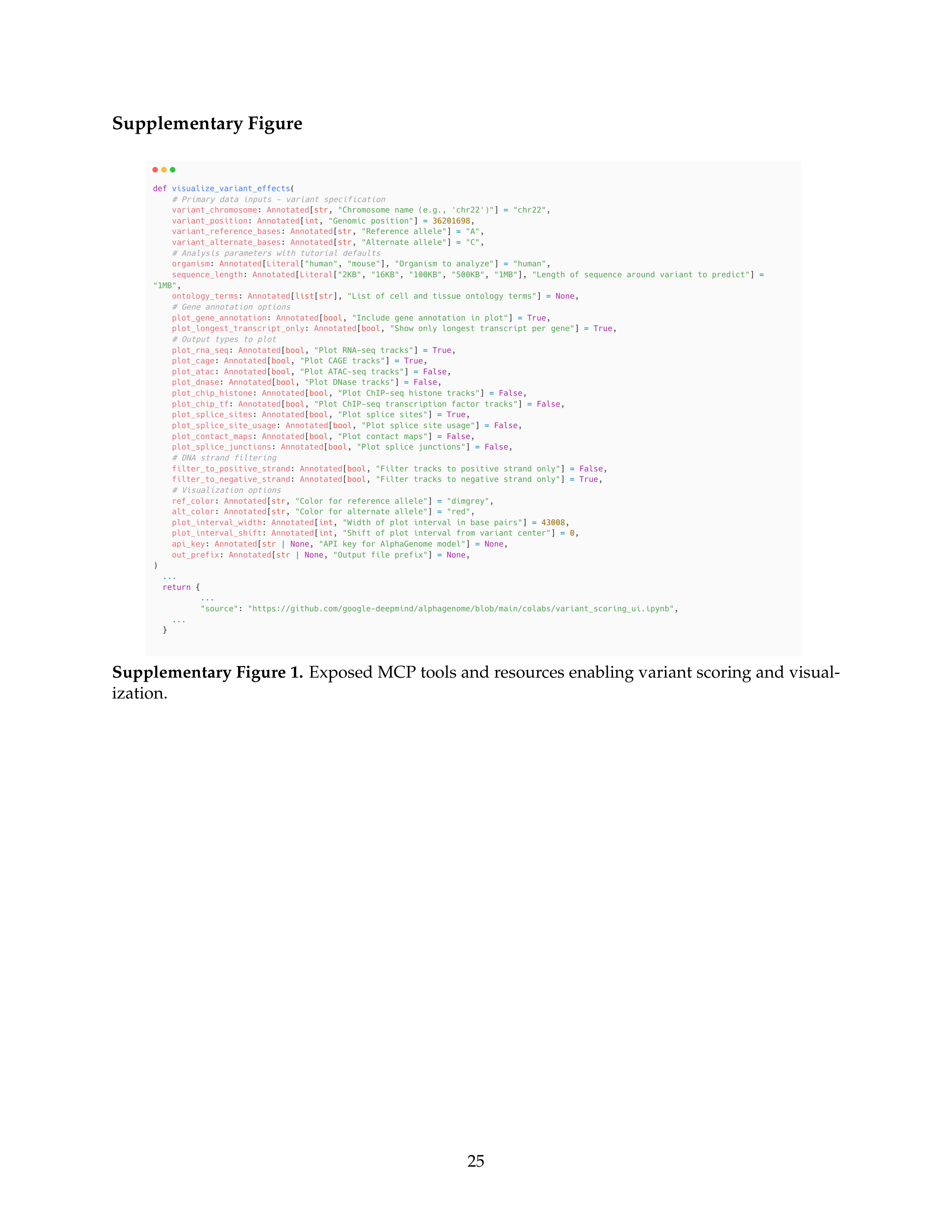
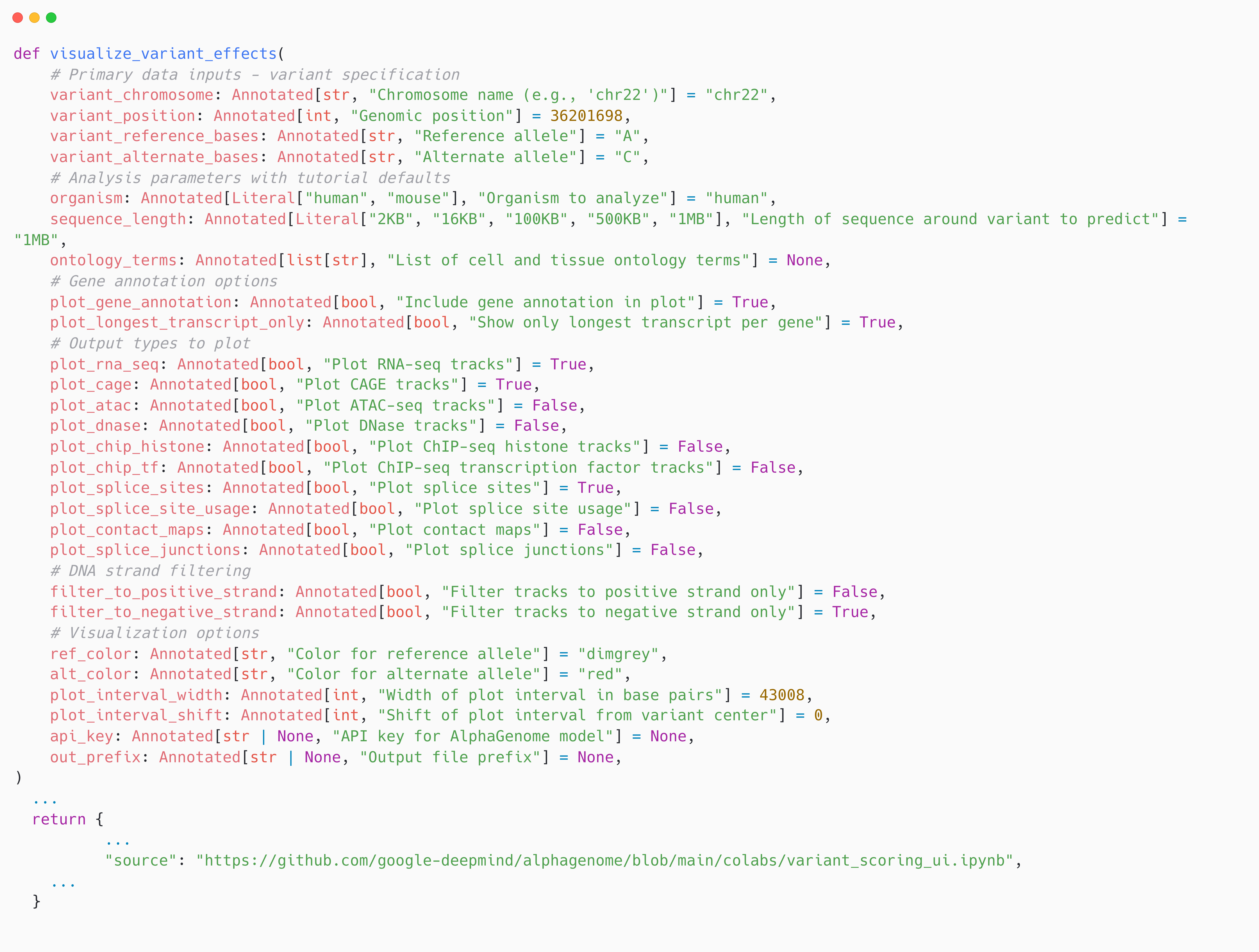
Supplementary Figure
Supplementary Figure 1.
Exposed MCP tools and resources enabling variant scoring and visual-
ization.
25