
Journal of Commercial Biotechnology
http://www.CommercialBiotechnology.com
62
Introduction
O
ur core thesis is that healthcare is driven
by spoken conversations. There are 883.7M [1]
spoken doctor-patient conversations every year
in the United States. And there are over 2 billion con-
versations when also accounting for conversations that
people have with nurses, pharmacists, care managers,
and other healthcare professionals. We believe that the
highest leverage care for those with chronic diseases such
as diabetes, cardiac disease, and cancer, is delivered via
these spoken conversations as opposed to an asynchro-
nous text message or chatbot. In addition, we know that
these spoken conversations are actually upstream and
less dependent on hegemonic healthcare IT systems such
as the Electronic Medical Record.
We founded Abridge with a mission to help people
better understand and follow through on those conversa-
tions. In addition, and using the same underlying tech-
nology, Abridge helps healthcare professionals across
Payers, Providers, and Pharma save time in their own
professional workflows. That professional value maps
to large markets in and of themselves — for example,
provider documentation itself is a $4-10B market [2] in
the United States. At a broader and more systemic level,
technology that can improve the quality of healthcare
conversations can address many of the efficiencies and
Article
Abridge: A Mission Driven Approach
to Machine Learning for Healthcare
Conversation
Sandeep Konam
Abridge AI Inc., Pittsburgh, PA 15219
Shivdev Rao
Abridge AI Inc., Pittsburgh, PA 15219
Abstract
In this brief case study, we describe an approach to structuring and summarizing information from one of the
largest untapped sources of data in healthcare delivery — spoken conversations. Abridge’s mission is to shift
agency to the people and families at the center of those spoken conversations, using bleeding-edge machine
learning and human-centered design. The space of conversation understanding is largely untapped and we will
discuss our scientific approaches to business challenges that map to the company’s mission of helping everyone
better understand and follow through on their healthcare conversations.
Journal of Commercial Biotechnology (2021) 26(2), 62–66. doi: 10.5912/jcb994
waste in the US healthcare system. That waste on aggre-
gate represents costs of $760–$930B, representing 25% of
total healthcare expenditures [3].
In this case study, we offer a high level description of
the end user pain point and solution that we are focused
on, and also highlight aspects of the machine learn-
ing research that underpin the end user experience we
deliver to our users.
Problem and Solution
People forget up to 80% of what they hear in medical con-
versations [4]. In fact, studies show that half of all patients
walk away from medical conversations unclear on what
they were just told, unless they took notes or had some-
one accompany them. Poor recall, understanding, and
follow-through leads to poor outcomes, especially given
that healthcare is powered in large part by these spoken
conversations. For example, adherence to care plans can
be as low as 50% for chronic disease patients, and poor
adherence in diabetes alone costs $25B annually.
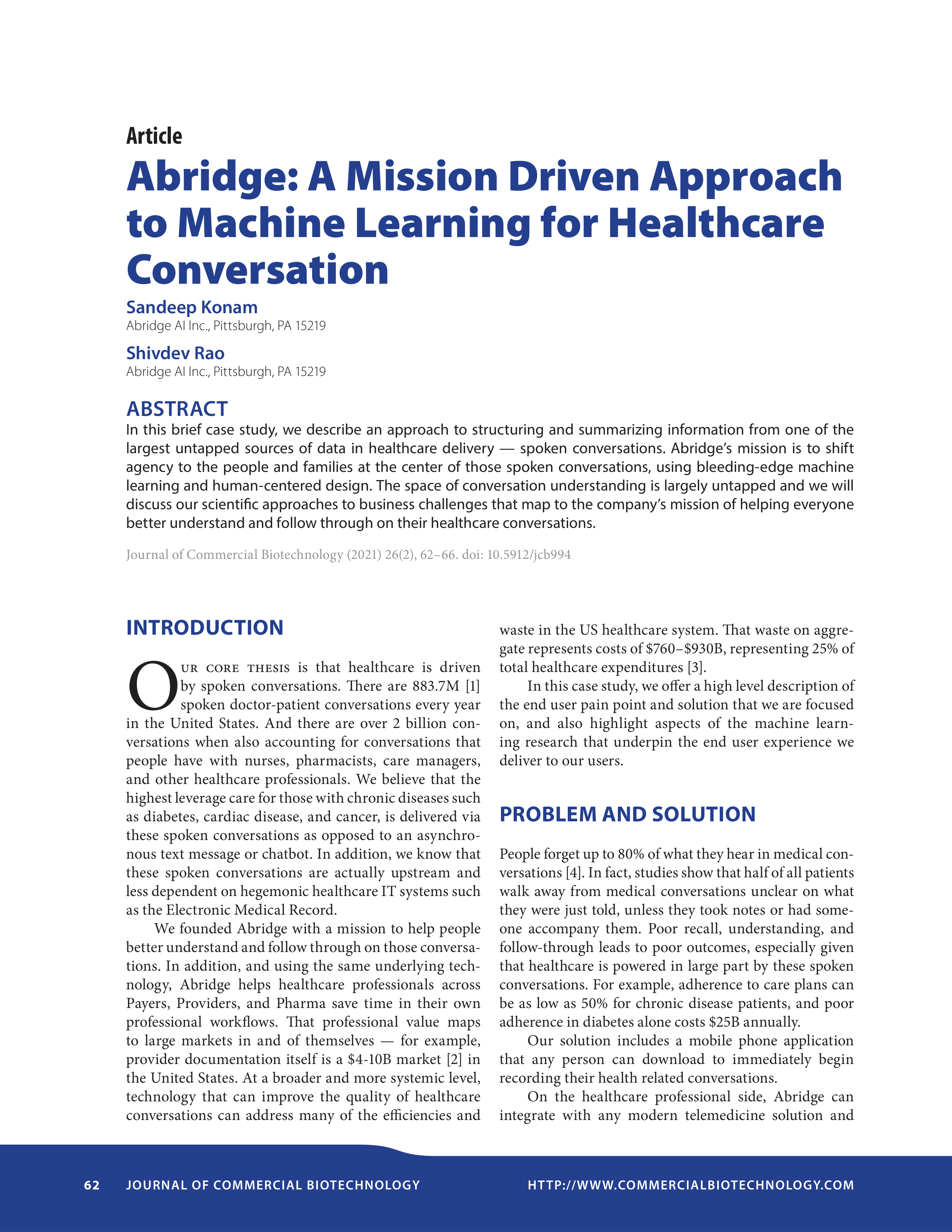
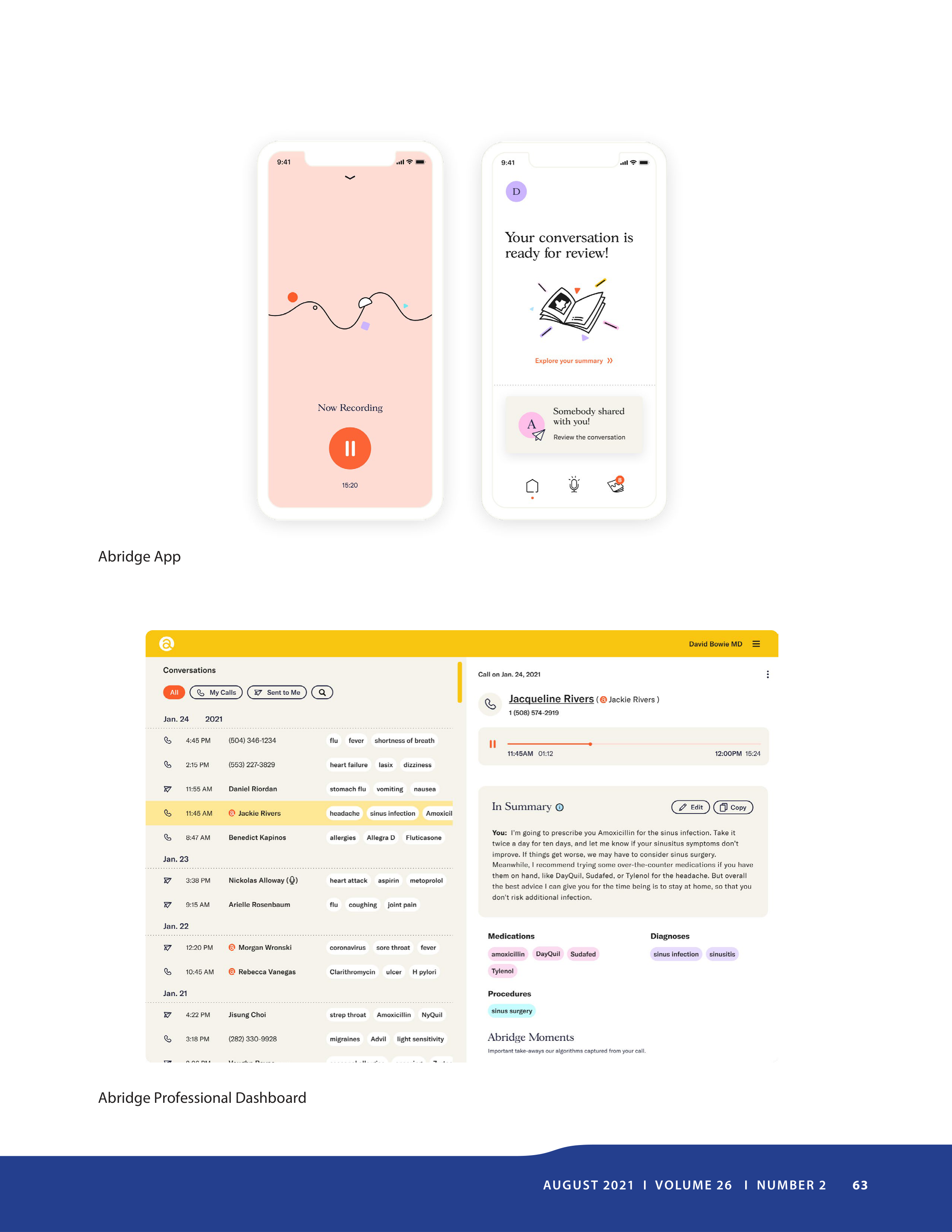
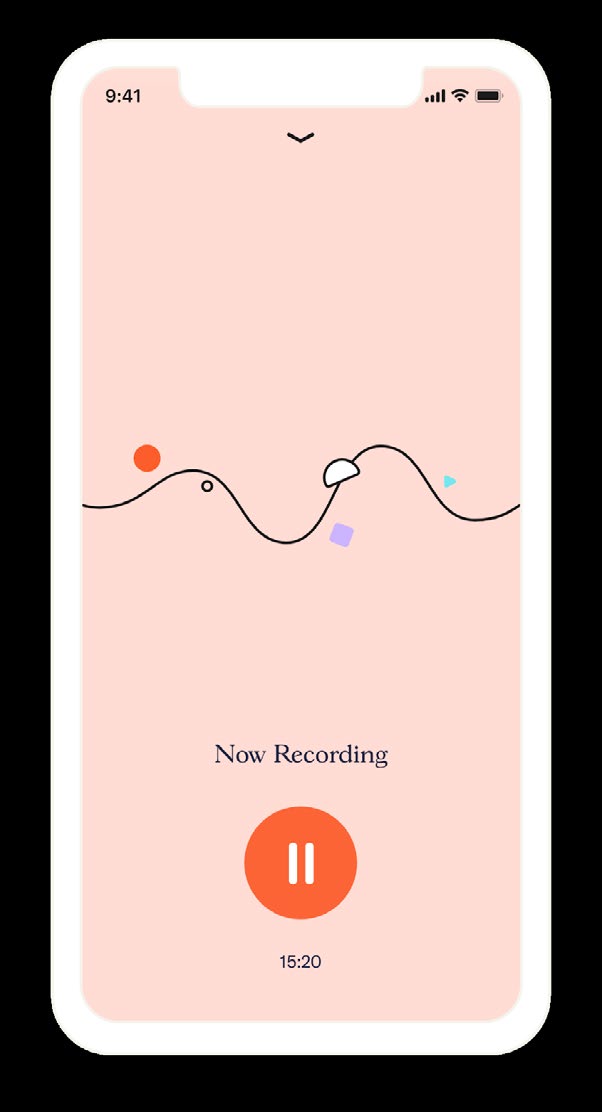
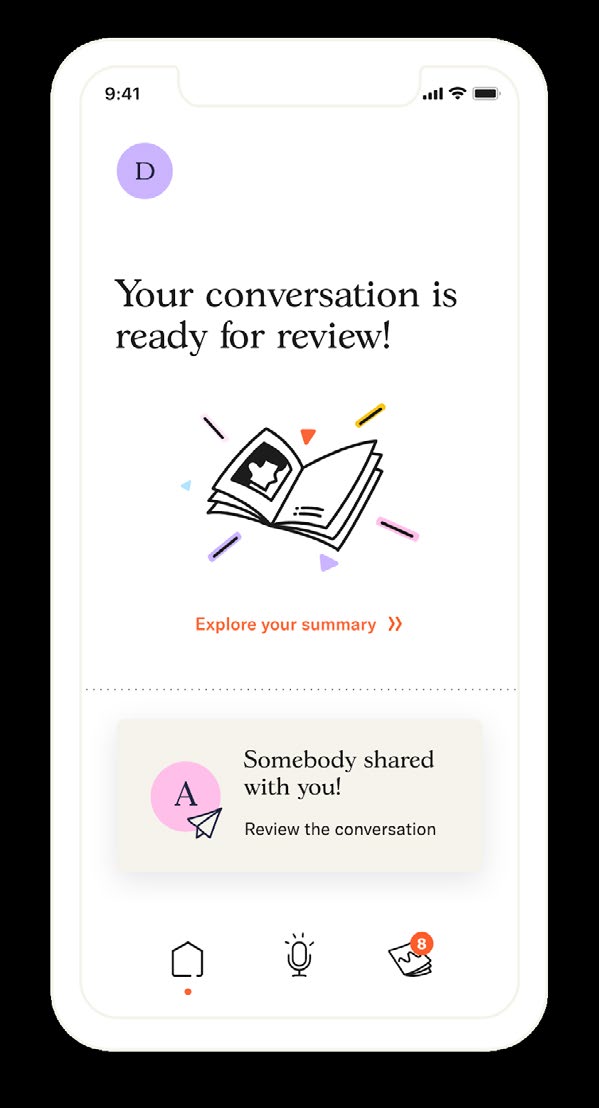
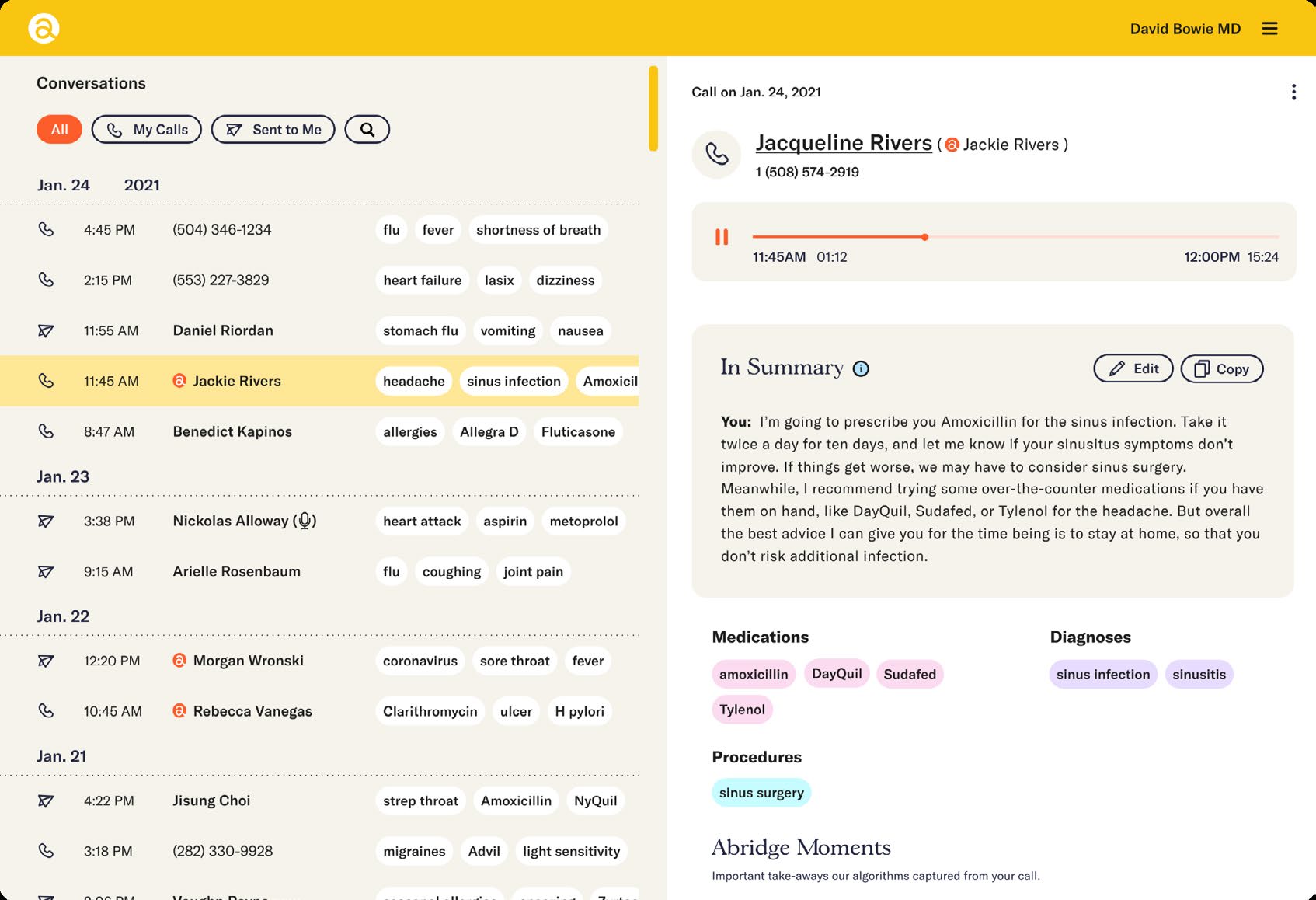
Our solution includes a mobile phone application
that any person can download to immediately begin
recording their health related conversations.
On the healthcare professional side, Abridge can
integrate with any modern telemedicine solution and
August 2021 I Volume 26 I Number 2
63
Abridge App
Abridge Professional Dashboard
Journal of Commercial Biotechnology
http://www.CommercialBiotechnology.com
64
also offers a full stack solution for telephone and video
calls. Patients can access those professional – initiated
Abridge conversations via the consumer mobile applica-
tion as above. In this way, when Abridge is a part of the
conversation, patients as well as healthcare professionals
and their associated enterprise systems can benefit.
Powered by Artificial
Intelligence
Machine learning powers many of the key features that
help patients and healthcare professionals alike derive
more value from their conversations. Since inception, the
company has invested heavily into Artificial Intelligence
challenges that map to the mission of helping people
better understand and follow through on their medical
conversations. At this time, the company has published
10 papers [5] on spoken medical conversation AI. These
papers are centered on challenges around transcribing,
summarizing, classifying, and extracting relevant infor-
mation from medical conversations. In the following
sections, we present an overview of some key mission-
driven machine learning challenges.
1. B
etter
U
nderstanding
:
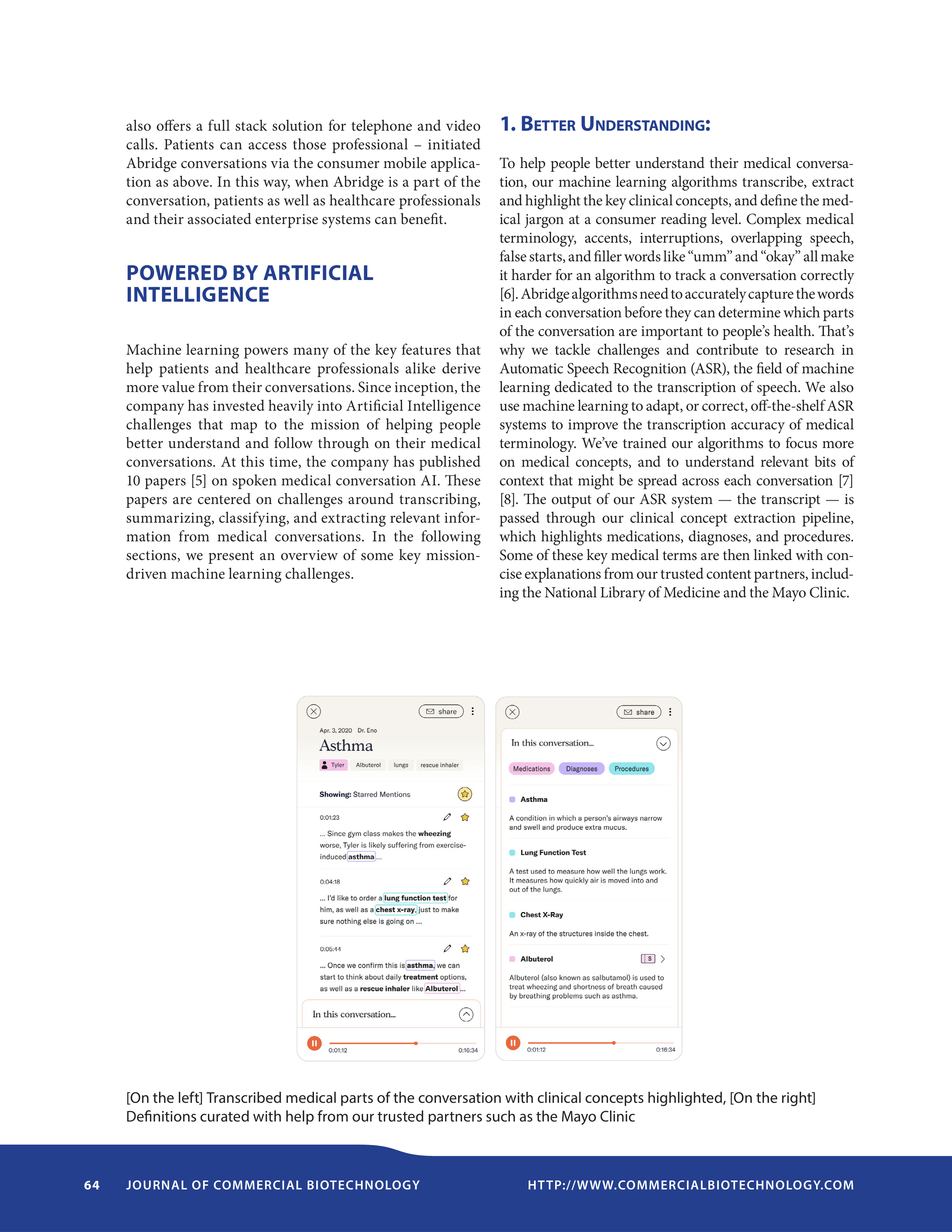
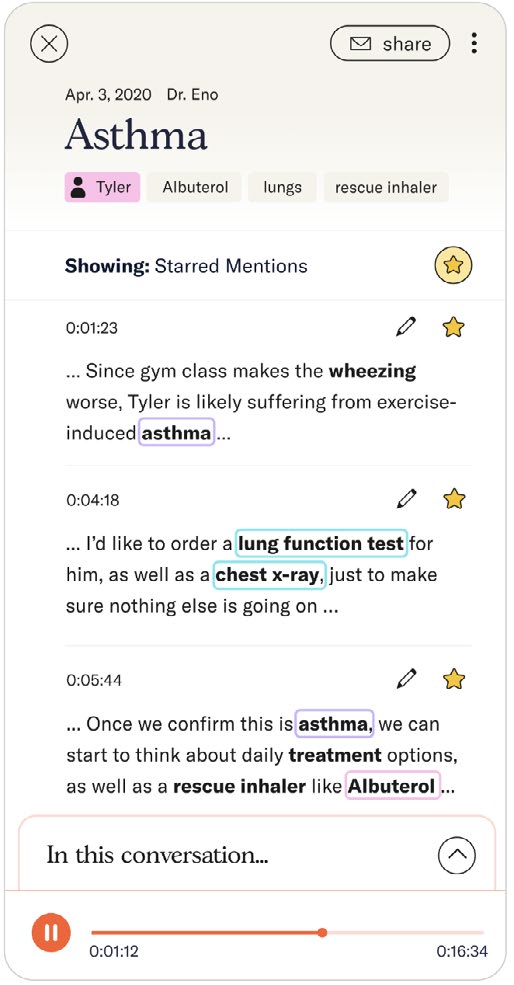
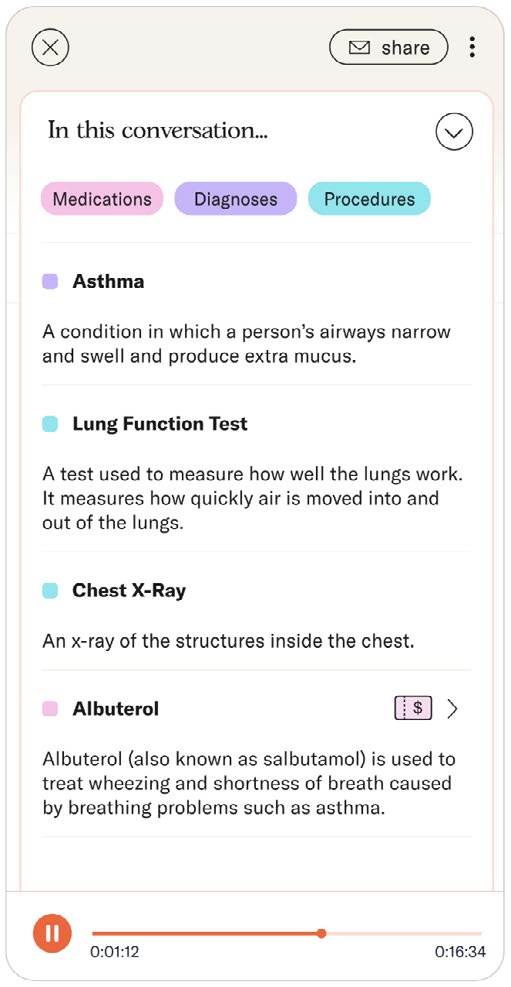
To help people better understand their medical conversa-
tion, our machine learning algorithms transcribe, extract
and highlight the key clinical concepts, and define the med-
ical jargon at a consumer reading level. Complex medical
terminology, accents, interruptions, overlapping speech,
false starts, and filler words like “umm” and “okay” all make
it harder for an algorithm to track a conversation correctly
[6]. Abridge algorithms need to accurately capture the words
in each conversation before they can determine which parts
of the conversation are important to people’s health. That’s
why we tackle challenges and contribute to research in
Automatic Speech Recognition (ASR), the field of machine
learning dedicated to the transcription of speech. We also
use machine learning to adapt, or correct, off-the-shelf ASR
systems to improve the transcription accuracy of medical
terminology. We’ve trained our algorithms to focus more
on medical concepts, and to understand relevant bits of
context that might be spread across each conversation [7]
[8]. The output of our ASR system — the transcript — is
passed through our clinical concept extraction pipeline,
which highlights medications, diagnoses, and procedures.
Some of these key medical terms are then linked with con-
cise explanations from our trusted content partners, includ-
ing the National Library of Medicine and the Mayo Clinic.
[On the left] Transcribed medical parts of the conversation with clinical concepts highlighted, [On the right]
Definitions curated with help from our trusted partners such as the Mayo Clinic
August 2021 I Volume 26 I Number 2
65
2. B
etter
F
ollow
through
:
To help people better follow through on their care plan,
we built a machine learning model [9][10] that can clas-
sify utterances from medical conversations according to
(i) whether they were more likely spoken by a doctor or
patient, and (ii) where they might be classified into spe-
cific sections of a doctor’s note that a patient would ben-
efit from understanding. We adopted a widely-accepted
SOAP Note template that contains:
•
Subjective:
The “story” from the patient
about why they are visiting.
•
Objective
: The objective record of the
doctor’s physical examination and review
of diagnostic results.
•
Assessment
: A summary of the doctor’s
decision-making process and diagnoses.
•
Plan
: The doctor’s next steps for the
patient based upon their Assessment.
Using the above four classes, we formulated a multi-label
classification problem and built a classifier that can iden-
tify clinically relevant parts of the conversation. For this
classifier to perform well on ASR transcripts as input, we
also developed a method for mapping human annota-
tions from a clear, high-quality signal (the human tran-
script) to a noisier signal (the ASR transcript). Training
our models on the ASR dataset made our systems more
robust to the types of noise injected by ASR systems.
In addition to the above classification work, we also
tackled research challenges around extracting struc-
tured information from the conversations. We focused
primarily on two information extraction challenges so
far: 1) Medication Regimen extraction [11] [12] and 2)
Appointment extraction [13]. These systems can help
our users in medication adherence and in keeping their
appointments.
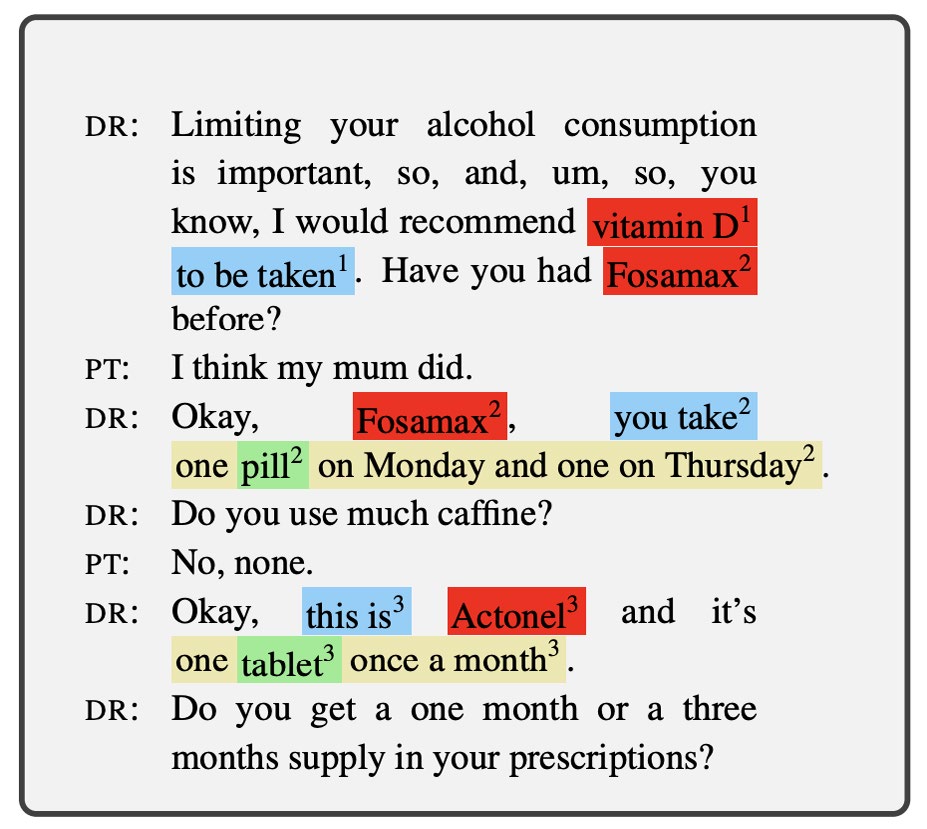
In the medication regimen extraction work, we spe-
cifically focus on frequency, route of the medication and
any change in the medication’s dosage or frequency. For
example, given the conversation excerpt and the medica-
tion “Fosamax” as shown in the figure below, the model
needs to extract the spans “one pill on Monday and one
on Thursday”, “pill” and “you take” for attributes fre-
quency, route and change, respectively.
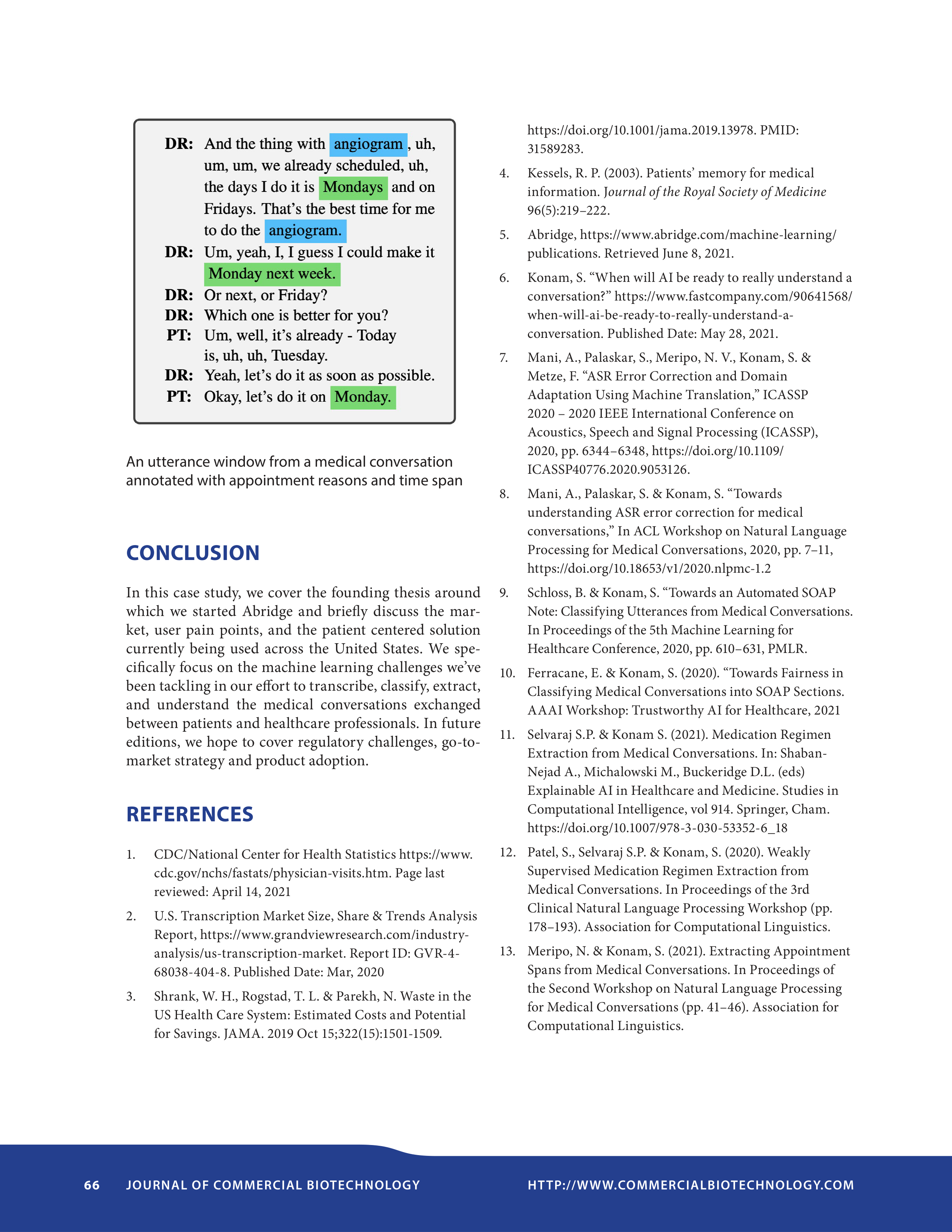
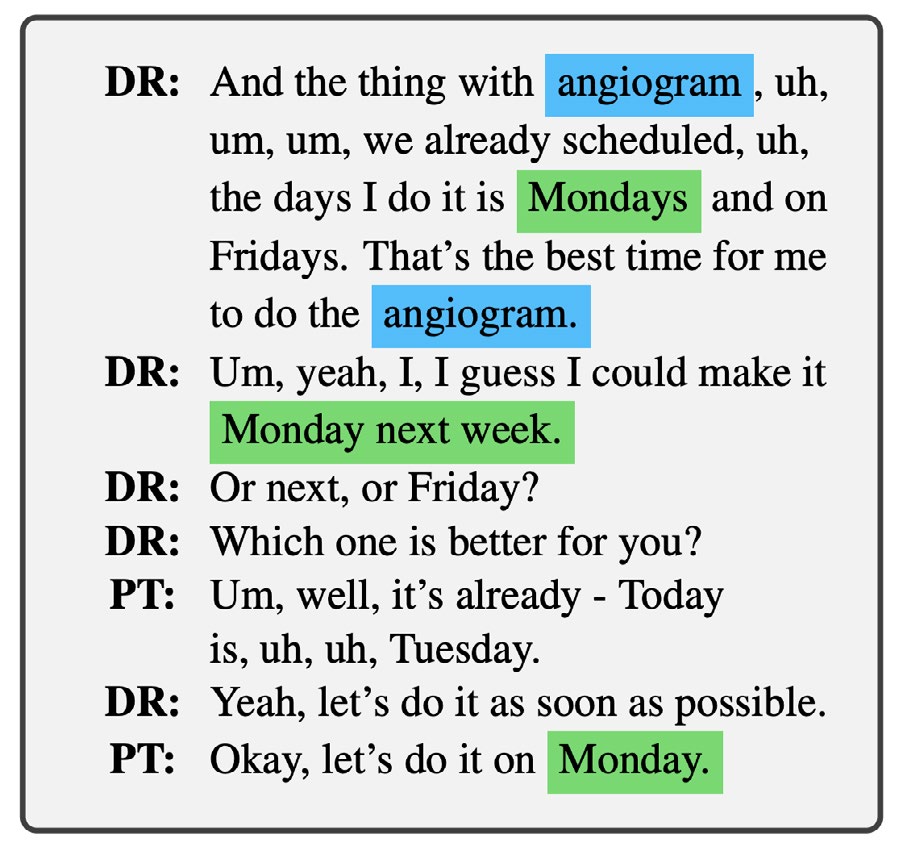
In the appointment extraction work, we focus on
extracting the appointment reason and time spans from
medical conversations as shown in the figure below. The
reason span refers to a phrase that corresponds to diag-
nostics, procedures, follow-ups, and referrals. The time
span refers to a phrase that corresponds to the time of
the appointment.
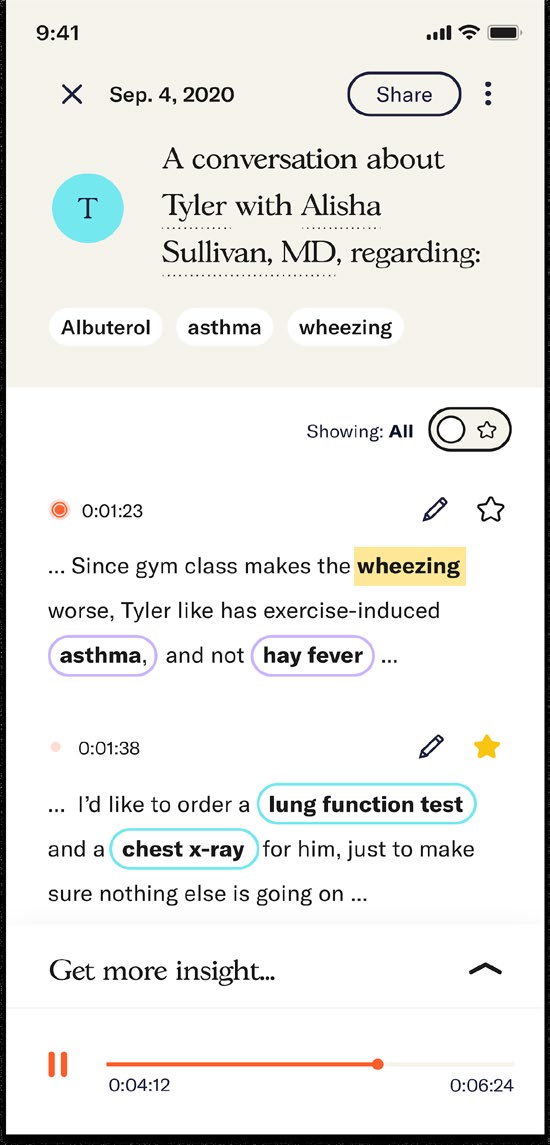
Care plan
“starred” by our machine learning classifier
An utterance window from a medical conversation
annotated with medications and associated
attributes: change, route and frequency
Journal of Commercial Biotechnology
http://www.CommercialBiotechnology.com
66
Conclusion
In this case study, we cover the founding thesis around
which we started Abridge and briefly discuss the mar-
ket, user pain points, and the patient centered solution
currently being used across the United States. We spe-
cifically focus on the machine learning challenges we’ve
been tackling in our effort to transcribe, classify, extract,
and understand the medical conversations exchanged
between patients and healthcare professionals. In future
editions, we hope to cover regulatory challenges, go-to-
market strategy and product adoption.
References
1.
CDC/National Center for Health Statistics https://www.
cdc.gov/nchs/fastats/physician-visits.htm. Page last
reviewed: April 14, 2021
2.
U.S. Transcription Market Size, Share & Trends Analysis
Report, https://www.grandviewresearch.com/industry-
analysis/us-transcription-market. Report ID: GVR-4-
68038-404-8. Published Date: Mar, 2020
3.
Shrank, W. H., Rogstad, T. L. & Parekh, N. Waste in the
US Health Care System: Estimated Costs and Potential
for Savings. JAMA. 2019 Oct 15;322(15):1501-1509.
https://doi.org/10.1001/jama.2019.13978. PMID:
31589283.
4.
Kessels, R. P. (2003). Patients’ memory for medical
information. J
ournal of the Royal Society of Medicine
96(5):219–222.
5.
Abridge, https://www.abridge.com/machine-learning/
publications. Retrieved June 8, 2021.
6.
Konam, S. “When will AI be ready to really understand a
conversation?” https://www.fastcompany.com/90641568/
when-will-ai-be-ready-to-really-understand-a-
conversation. Published Date: May 28, 2021.
7.
Mani, A., Palaskar, S., Meripo, N. V., Konam, S. &
Metze, F. “ASR Error Correction and Domain
Adaptation Using Machine Translation,” ICASSP
2020 – 2020 IEEE International Conference on
Acoustics, Speech and Signal Processing (ICASSP),
2020, pp. 6344–6348, https://doi.org/10.1109/
ICASSP40776.2020.9053126.
8.
Mani, A., Palaskar, S. & Konam, S. “Towards
understanding ASR error correction for medical
conversations,” In ACL Workshop on Natural Language
Processing for Medical Conversations, 2020, pp. 7–11,
https://doi.org/10.18653/v1/2020.nlpmc-1.2
9.
Schloss, B. & Konam, S. “Towards an Automated SOAP
Note: Classifying Utterances from Medical Conversations.
In Proceedings of the 5th Machine Learning for
Healthcare Conference, 2020, pp. 610–631, PMLR.
10.
Ferracane, E. & Konam, S. (2020). “Towards Fairness in
Classifying Medical Conversations into SOAP Sections.
AAAI Workshop: Trustworthy AI for Healthcare, 2021
11.
Selvaraj S.P. & Konam S. (2021). Medication Regimen
Extraction from Medical Conversations. In: Shaban-
Nejad A., Michalowski M., Buckeridge D.L. (eds)
Explainable AI in Healthcare and Medicine. Studies in
Computational Intelligence, vol 914. Springer, Cham.
https://doi.org/10.1007/978-3-030-53352-6_18
12.
Patel, S., Selvaraj S.P. & Konam, S. (2020). Weakly
Supervised Medication Regimen Extraction from
Medical Conversations. In Proceedings of the 3rd
Clinical Natural Language Processing Workshop (pp.
178–193). Association for Computational Linguistics.
13.
Meripo, N. & Konam, S. (2021). Extracting Appointment
Spans from Medical Conversations. In Proceedings of
the Second Workshop on Natural Language Processing
for Medical Conversations (pp. 41–46). Association for
Computational Linguistics.
An utterance window from a medical conversation
annotated with appointment reasons and time span