


A single instance of
PDF Print Engine can spawn
multiple threads to perform
actions in parallel: color
conversions, transparency
blending, rendering,
compression. The threads can
take advantage of multiple
cores, running on multiple
processors on the system.
When graphic objects in a PDF
job file are tagged with custom
metadata, PDF Print Engine can
execute conditional instructions.
Discrete element-based actions
enable solutions to treat content
on an element-by-element basis.
Possible actions include applying
object-specific screening,
color conversions, and image
processing.
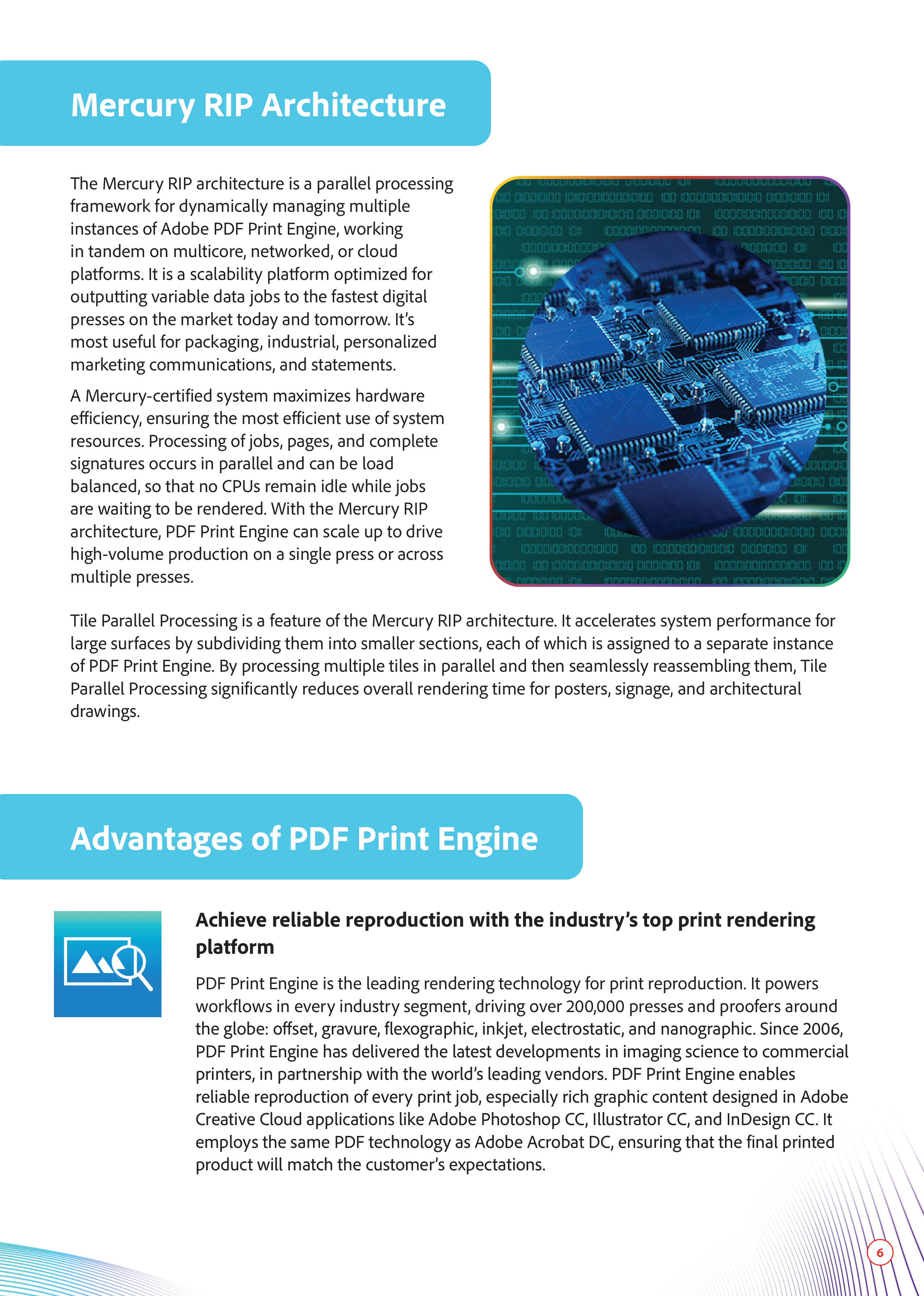
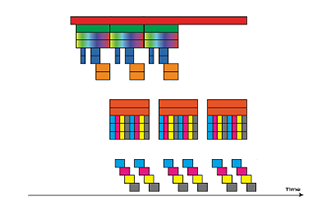
Mercury is a scalability
framework for processing VDP
& variable lot & item
print-streams to drive the fastest
digital presses at full speed.
The Mercury RIP Architecture
dynamically allocates jobs
and surfaces across multiple
instances of APPE running on
multiple-cores, and across
multiple servers.
PDF Print Engine analyzes
pages containing transparent
elements, and automatically
selects the optimal transparency
rendering algorithm to
maximize performance and
graphic fidelity.
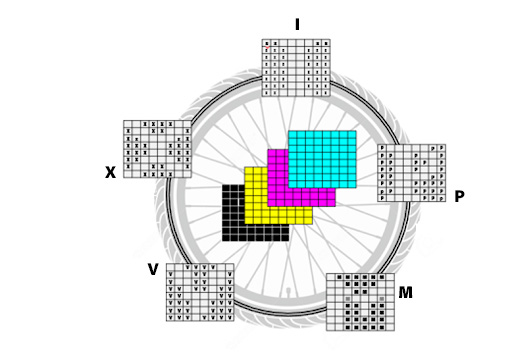
PDF Print Engine augments
ink-channel values with 5
dimensions of metadata for
each pixel. The metadata
conveys information about the
origin of each graphic, which
can be harnessed to enhance
color management, optimize
compression, caching and other
purposes.
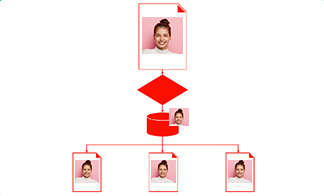
PDF Print Engine recognizes
and honors hints in PDF/VT files
to cache and retrieve recurring
elements for optimal rendering
of Variable Data Print.
PDF Print Engine will also detect
undeclared repeating elements
in multi-page PDF files, and
automatically cache them for
rapid retrieval.
Multi-threaded parallel
processing
Element-based actions
Mercury RIP Architecture
Transparency decision engine
Automated caching of recurring
elements in variable print
Smart pixels
Performance – Maximum efficiency
Content Aware – Print-time decisions, based on job intelligence
3