Gas
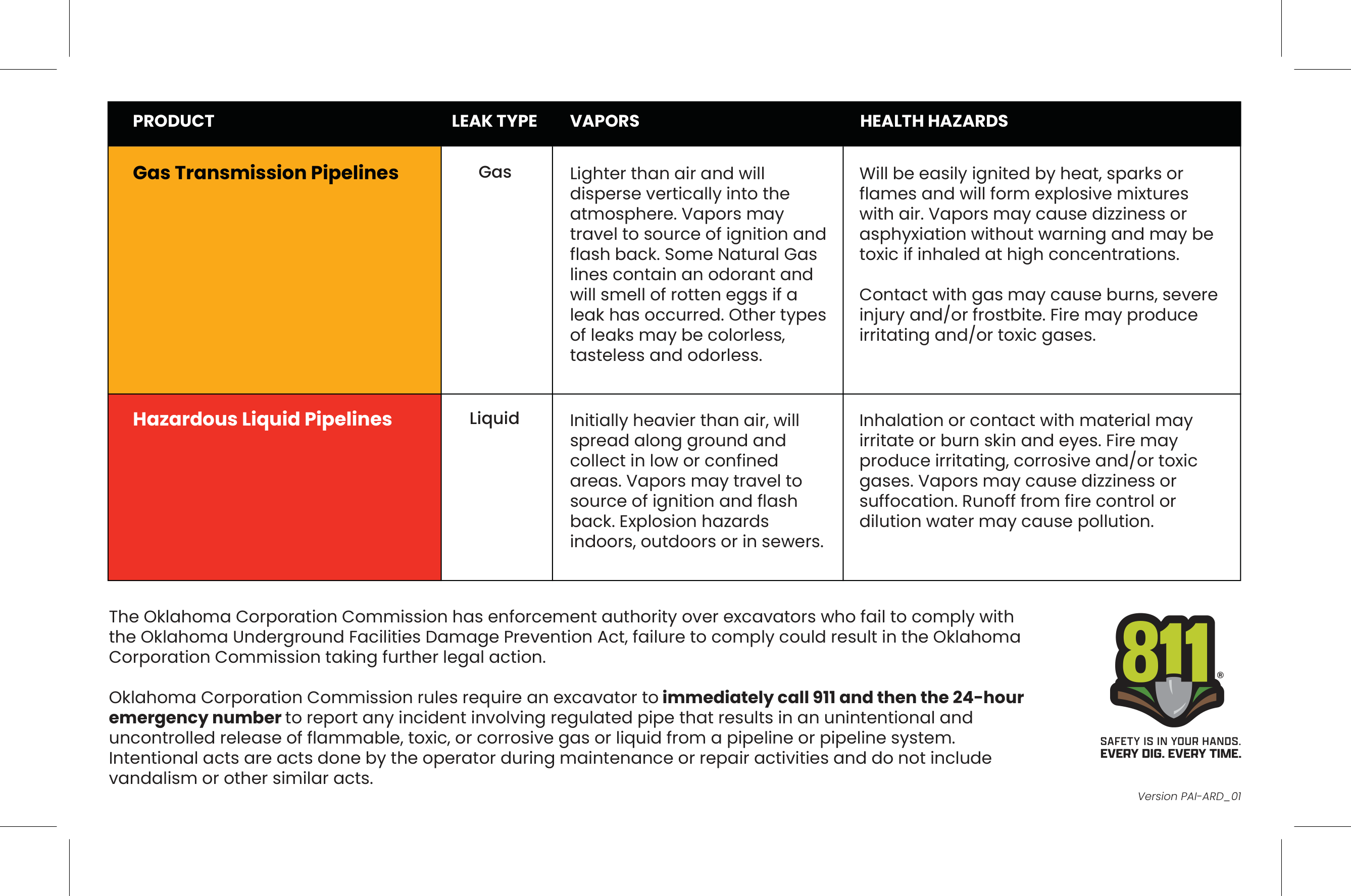
PRODUCT
LEAK TYPE
VAPORS
HEALTH HAZARDS
Will be easily ignited by heat, sparks or
flames and will form explosive mixtures
with air. Vapors may cause dizziness or
asphyxiation without warning and may be
toxic if inhaled at high concentrations.
Contact with gas may cause burns, severe
injury and/or frostbite. Fire may produce
irritating and/or toxic gases.
Lighter than air and will
disperse vertically into the
atmosphere. Vapors may
travel to source of ignition and
flash back. Some Natural Gas
lines contain an odorant and
will smell of rotten eggs if a
leak has occurred. Other types
of leaks may be colorless,
tasteless and odorless.
Gas Transmission Pipelines
Liquid
Inhalation or contact with material may
irritate or burn skin and eyes. Fire may
produce irritating, corrosive and/or toxic
gases. Vapors may cause dizziness or
suffocation. Runoff from fire control or
dilution water may cause pollution.
Initially heavier than air, will
spread along ground and
collect in low or confined
areas. Vapors may travel to
source of ignition and flash
back. Explosion hazards
indoors, outdoors or in sewers.
Hazardous Liquid Pipelines
The Oklahoma Corporation Commission has enforcement authority over excavators who fail to comply with
the Oklahoma Underground Facilities Damage Prevention Act, failure to comply could result in the Oklahoma
Corporation Commission taking further legal action.
Oklahoma Corporation Commission rules require an excavator to
immediately call 911 and then the 24-hour
emergency number
to report any incident involving regulated pipe that results in an unintentional and
uncontrolled release of flammable, toxic, or corrosive gas or liquid from a pipeline or pipeline system.
Intentional acts are acts done by the operator during maintenance or repair activities and do not include
vandalism or other similar acts.
Version PAI-ARD_01