Alliteration
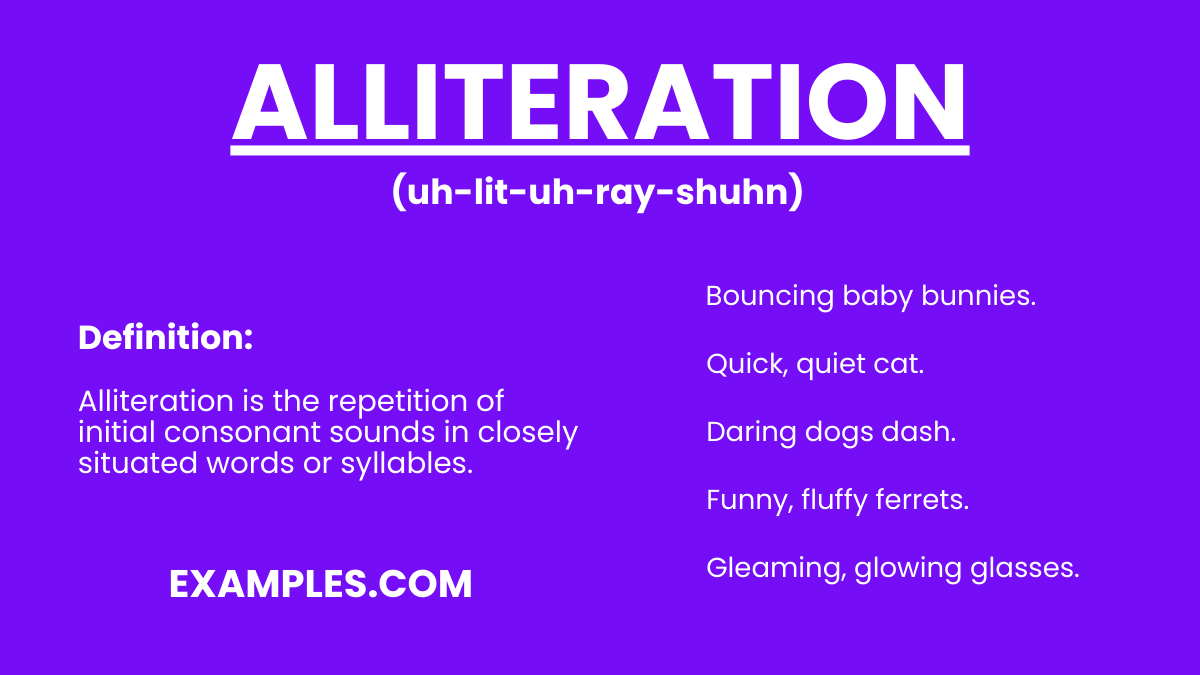
What is Alliteration? – Definition
Alliteration is the repetition of the same initial consonant sounds in a sequence of words that are close together, used to create rhythm, mood, or emphasize certain phrases in writing.
Generated Alliteration Examples
Download Alliteration Examples
Enhance your understanding with our comprehensive PDF guide.
Download PDFExamples of Alliteration
- Sally sells seashells by the seashore.
- Peter Piper picked a peck of pickled peppers.
- Whispering winds whirled wildly.
- Big brown bears bought blueberries.
- Crazy cats cuddle quietly.
- Friendly foxes frolic in the forest.
- Perfectly polished pearls pressed together.
- Giggling geese glide gracefully.
- Happy hamsters hide in hats.
- Mighty mountains meet the mist.
- Shy sharks swim silently.
- Bright blue butterflies bring beauty.
- Fearless firefighters fight flames.
- Clever crickets chirp cheerfully in chorus.
- Bouncing bunnies break into burrows.
- Dusty deserts danced dreamily.
- Gentle giraffes gracefully gallop.
- Sneaky spiders spin silky webs.
- Fierce falcons fly fearlessly.
- Red roses radiate rich fragrance.
- Sweet songs soothe sleepy souls.
- Rapid rabbits race restlessly.
- Hungry hawks hunt hastily.
- Busy bees buzz briskly.
- Cold clouds cover the cliffs.
- Tiny turtles tread timidly.
- Bright bells bring beautiful sounds.
- King kangaroos kick keenly.
- Silver snakes slither smoothly.
- Wild wolves wander widely.
Types of Alliteration
Consonantal Alliteration
The repetition of consonant sounds at the beginning of words, typically used to create a rhythmic or emphatic effect.
- Dunkin’ Donuts
- Coca-Cola
- Best Buy
- PayPal
- Krispy Kreme
Vowel Alliteration
The repetition of vowel sounds within words, contributing to the musicality and flow of a phrase.
- Amy aims at amazing art
- Every elephant enjoys eating
- Ivan is idle in ivory igloos
- Eric enjoys eating eggs.
- Under umbrellas, unicorns unite.
Sibilance
The repetition of the ‘s’ sound, creating a hissing or whispering effect, often used for dramatic or soothing purposes.
- Sailing ships slice silently.
- Softly singing songs of summer
- Seven slippery seals swim
- Shining stars sparkle silently
- Sea shells she sells surely shine
Fricative Alliteration
The repetition of ‘f’ or ‘v’ sounds, which can give a soft or harsh auditory experience depending on the tone.
- Frank fried fresh fish
- Valiant visitors viewed vineyards
- Fearful faces faced fate
- Friendly fish flash fins.
- Velvet violets vividly vibrate
Plosive Alliteration
The repetition of strong, explosive sounds such as ‘p’ or ‘b,’ often used to grab attention or convey energy.
- Peter panicked and pushed past
- Big bears bounce boldly
- Puffy pillows provide pleasure
- Perfect pancakes please people.
- Perfectly polished pearls
Liquid Alliteration
The repetition of ‘l’ or ‘r’ sounds, which can create a flowing and melodious effect in writing.
- Lovely lilies line the lake
- Rolling rivers run rapidly
- Lively lambs leap lightly
- Royal roses radiate red
- Raging rain roars relentlessly.
How to Identify/Find Alliteration?
To identify alliteration, look for the repetition of the same consonant sound at the beginning of closely connected words in a sentence or phrase. It often emphasizes rhythm, mood, or thematic elements, making the text more engaging and memorable.
- Look for repetition of initial consonant sounds in adjacent words.
- Identify sequences that add rhythm or emphasis to the writing.
- Check if the repeated sound enhances the tone or imagery of the piece.
- Notice if the sound repetition draws attention or makes the text memorable.
- Look for alliteration that contributes meaningfully to the theme or message.
How to Use Alliteration?
Use alliteration to add musicality and emphasis to your writing. This technique can enhance descriptions, set a specific tone, or make phrases catchy. Ensure your alliteration is purposeful, clear, and relevant to the context, avoiding forced or overly repetitive sounds that may distract readers.
- Choose sounds that highlight the mood or theme you want to convey.
- Use alliteration sparingly to make the phrases impactful.
- Incorporate alliteration smoothly to avoid disrupting the narrative flow.
- Ensure the repeated sound enhances the reader’s enjoyment or understanding.
- Avoid overusing alliteration to prevent the writing from sounding repetitive.
Other Alliteration Examples
Famous Alliteration Examples
These are well-known phrases or expressions that use alliteration to create memorable, catchy lines.
- Mickey Mouse
- Dunkin’ Donuts
- Ted talks tirelessly.
- SpongeBob SquarePant
- Tasty tacos tempt taste buds.
Alliteration Examples About Life
Alliteration can be used to capture the essence and beauty of life experiences, making expressions more poetic.
- Live life lovingly.
- Brave beginnings bring bright blessings.
- Peaceful places promote personal growth.
- Wandering wisdom weaves wonderful ways.
- Happiness happens here.
Funny Alliteration Examples
Humorous alliterations can add a playful tone and bring laughter to the audience.
- Silly snakes slurp soup sideways.
- Chubby chipmunks chase chocolate chips.
- Funny flamingos flail their feathers foolishly.
- Lazy llamas lounge like lords.
- Peculiar penguins prance proudly.
Examples of Alliteration in Literature
Alliteration is a commonly used literary device to enhance the beauty of text and emphasize specific ideas.
- The fair breeze blew, the white foam flew.
- From forth the fatal loins of these two foes.
- The soul selects her own society.
- So we beat on, boats against the current.
- Golden grass gleamed gracefully.
Alliteration Examples for Middle School
Alliterations that engage middle school students with more descriptive and imaginative language.
- Brave birds build big, beautiful nests.
- Giant giraffes gracefully gallop.
- Sly serpents slither silently.
- Peaceful pandas play patiently.
- Mighty mountains meet morning mist.
Alliteration Examples for High School
Complex and sophisticated alliterations that can be used to inspire high school students in writing.
- The midnight moonlight made the meadow magical.
- Wild winds whip through the willows.
- Silent shadows sneak slowly.
- Fierce flames flicker and flare furiously.
- Love is a garden that needs care.