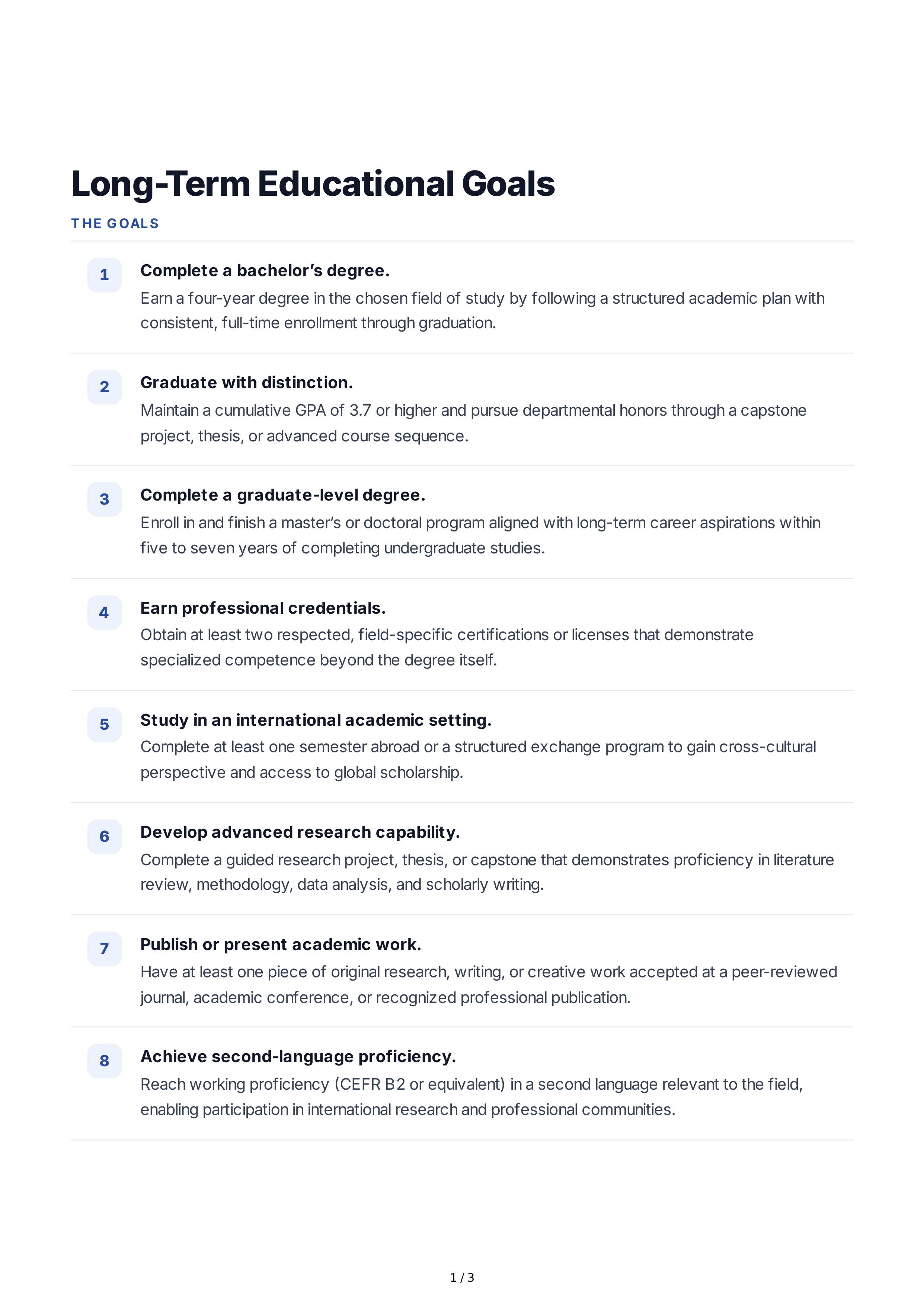
Long
-
Term
Educational
Goals
T HE
G OALS
Complete
a
bachelor
’
s
degree
.
Earn
a
four
-
year
degree
in
the
chosen
field
of
study
by
following
a
structured
academic
plan
with
consistent
,
full
-
time
enrollment
through
graduation
.
1
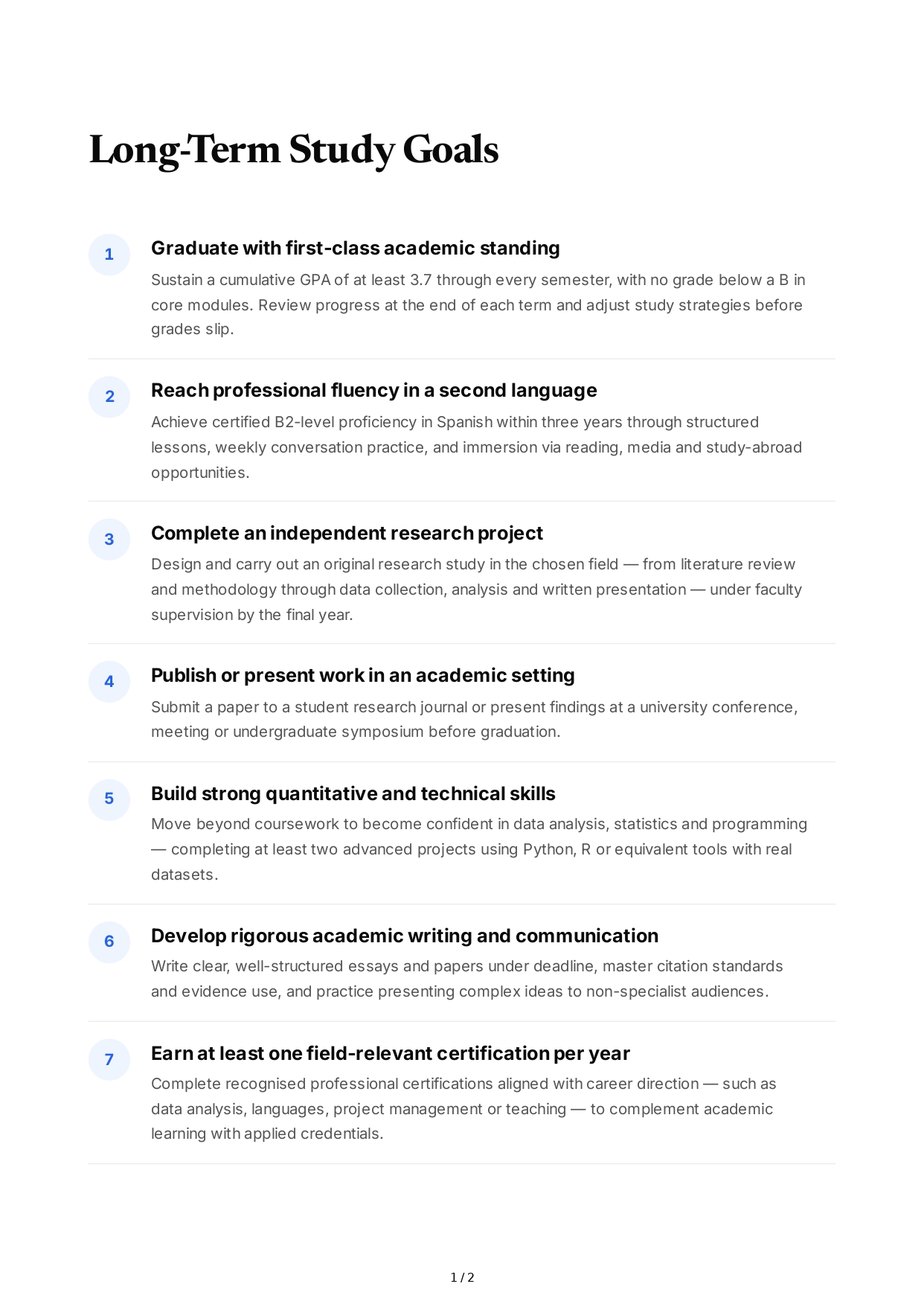
Graduate
with
distinction
.
Maintain
a
cumulative
GPA
of
3.7
or
higher
and
pursue
departmental
honors
through
a
capstone
project
,
thesis
,
or
advanced
course
sequence
.
2
Complete
a
graduate
-
level
degree
.
Enroll
in
and
finish
a
master
’
s
or
doctoral
program
aligned
with
long
-
term
career
aspirations
within
five
to
seven
years
of
completing
undergraduate
studies
.
3
Earn
professional
credentials
.
Obtain
at
least
two
respected
,
field
-
specific
certifications
or
licenses
that
demonstrate
specialized
competence
beyond
the
degree
itself
.
4
Study
in
an
international
academic
setting
.
Complete
at
least
one
semester
abroad
or
a
structured
exchange
program
to
gain
cross
-
cultural
perspective
and
access
to
global
scholarship
.
5
Develop
advanced
research
capability
.
Complete
a
guided
research
project
,
thesis
,
or
capstone
that
demonstrates
proficiency
in
literature
review
,
methodology
,
data
analysis
,
and
scholarly
writing
.
6
Publish
or
present
academic
work
.
Have
at
least
one
piece
of
original
research
,
writing
,
or
creative
work
accepted
at
a
peer
-
reviewed
journal
,
academic
conference
,
or
recognized
professional
publication
.
7
Achieve
second
-
language
proficiency
.
Reach
working
proficiency
(
CEFR
B
2
or
equivalent
)
in
a
second
language
relevant
to
the
field
,
enabling
participation
in
international
research
and
professional
communities
.
8
1 / 3
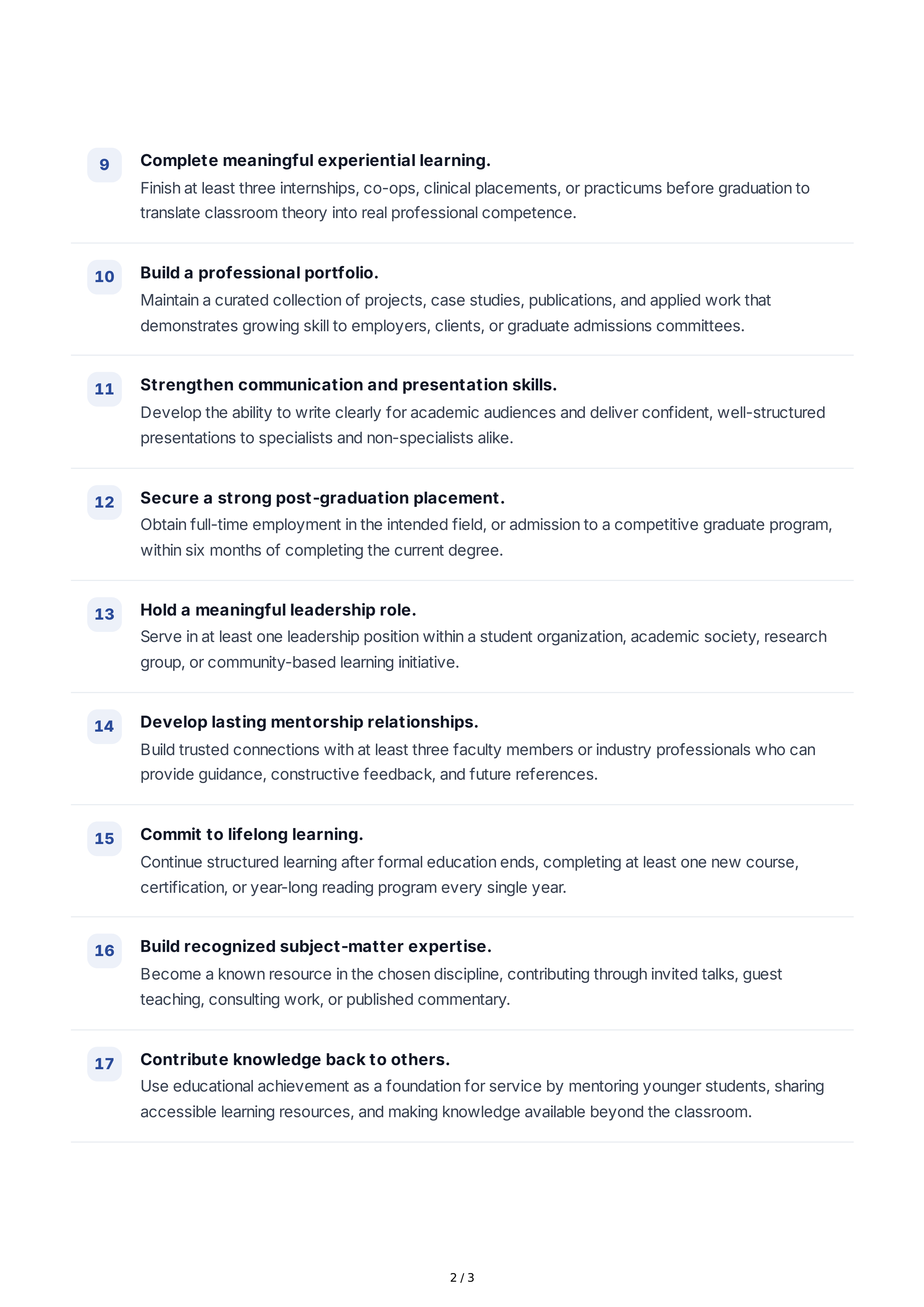
Complete
meaningful
experiential
learning
.
Finish
at
least
three
internships
,
co
-
ops
,
clinical
placements
,
or
practicums
before
graduation
to
translate
classroom
theory
into
real
professional
competence
.
9
Build
a
professional
portfolio
.
Maintain
a
curated
collection
of
projects
,
case
studies
,
publications
,
and
applied
work
that
demonstrates
growing
skill
to
employers
,
clients
,
or
graduate
admissions
committees
.
10
Strengthen
communication
and
presentation
skills
.
Develop
the
ability
to
write
clearly
for
academic
audiences
and
deliver
confident
,
well
-
structured
presentations
to
specialists
and
non
-
specialists
alike
.
11
Secure
a
strong
post
-
graduation
placement
.
Obtain
full
-
time
employment
in
the
intended
field
,
or
admission
to
a
competitive
graduate
program
,
within
six
months
of
completing
the
current
degree
.
12
Hold
a
meaningful
leadership
role
.
Serve
in
at
least
one
leadership
position
within
a
student
organization
,
academic
society
,
research
group
,
or
community
-
based
learning
initiative
.
13
Develop
lasting
mentorship
relationships
.
Build
trusted
connections
with
at
least
three
faculty
members
or
industry
professionals
who
can
provide
guidance
,
constructive
feedback
,
and
future
references
.
14
Commit
to
lifelong
learning
.
Continue
structured
learning
after
formal
education
ends
,
completing
at
least
one
new
course
,
certification
,
or
year
-
long
reading
program
every
single
year
.
15
Build
recognized
subject
-
matter
expertise
.
Become
a
known
resource
in
the
chosen
discipline
,
contributing
through
invited
talks
,
guest
teaching
,
consulting
work
,
or
published
commentary
.
16
Contribute
knowledge
back
to
others
.
Use
educational
achievement
as
a
foundation
for
service
by
mentoring
younger
students
,
sharing
accessible
learning
resources
,
and
making
knowledge
available
beyond
the
classroom
.
17
2 / 3
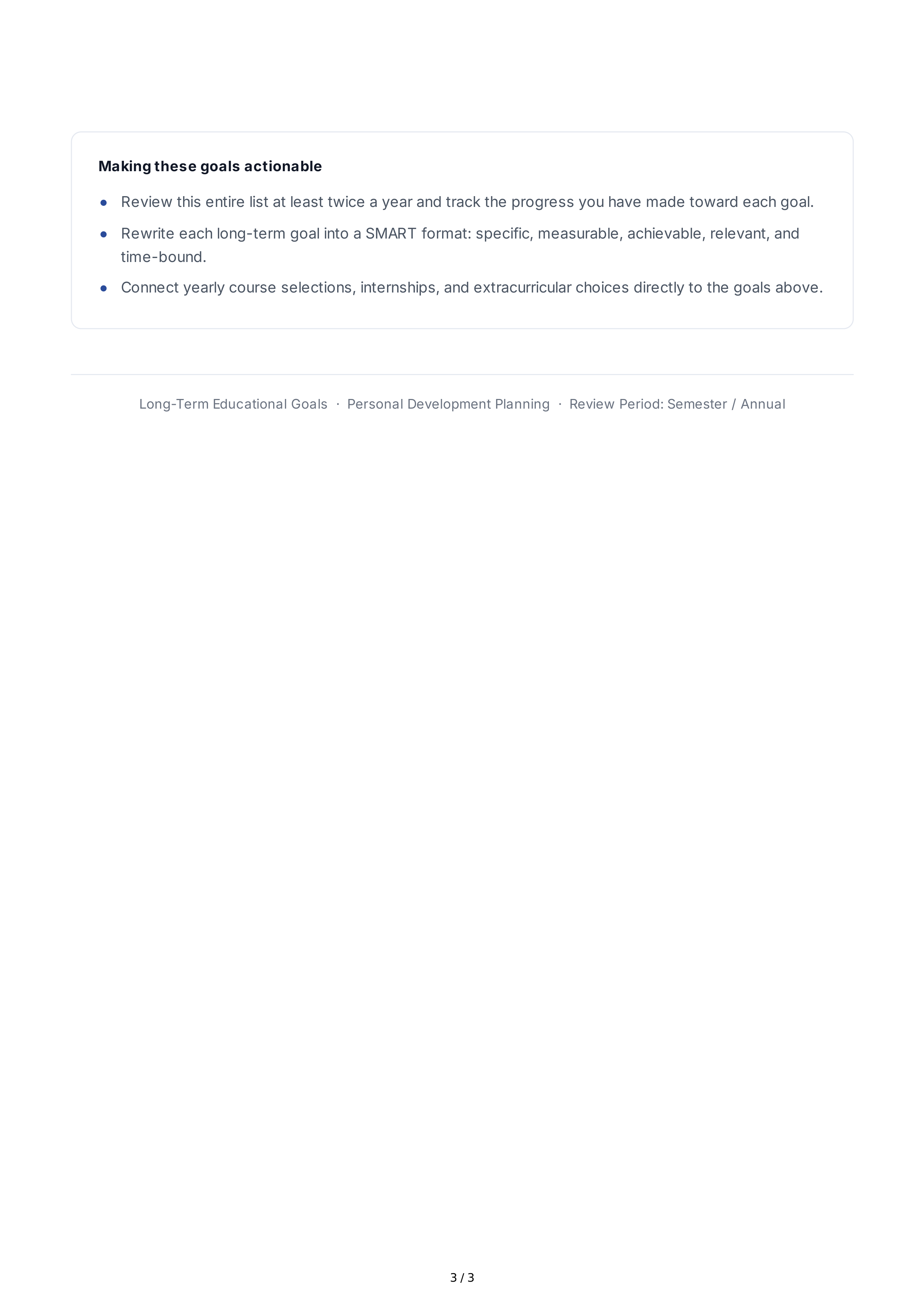
Making
these
goals
actionable
Long
-
Term
Educational
Goals
·
Personal
Development
Planning
·
Review
Period
:
Semester
/
Annual
Review
this
entire
list
at
least
twice
a
year
and
track
the
progress
you
have
made
toward
each
goal
.
Rewrite
each
long
-
term
goal
into
a
SMART
format
:
specific
,
measurable
,
achievable
,
relevant
,
and
time
-
bound
.
Connect
yearly
course
selections
,
internships
,
and
extracurricular
choices
directly
to
the
goals
above
.
3 / 3