
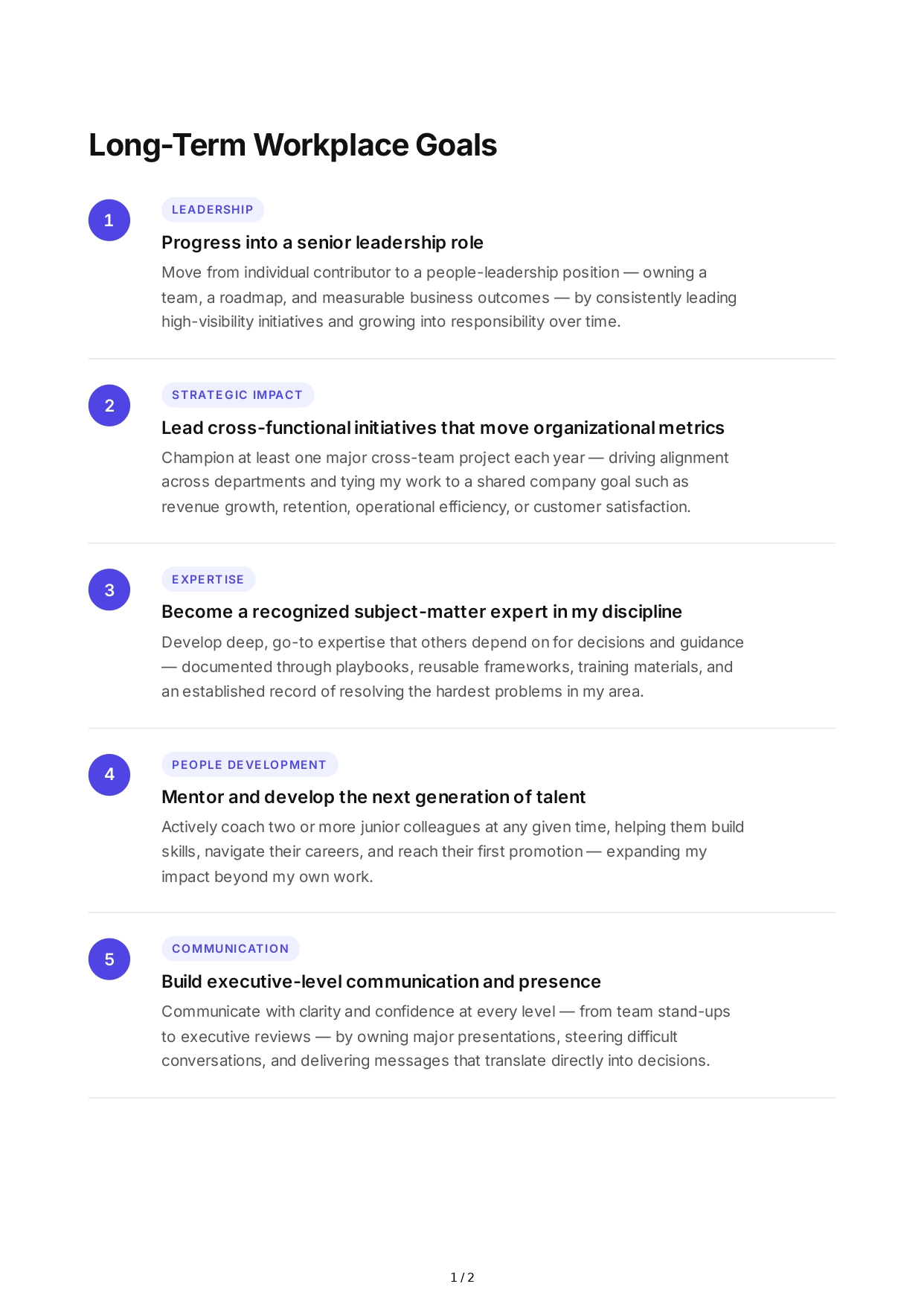
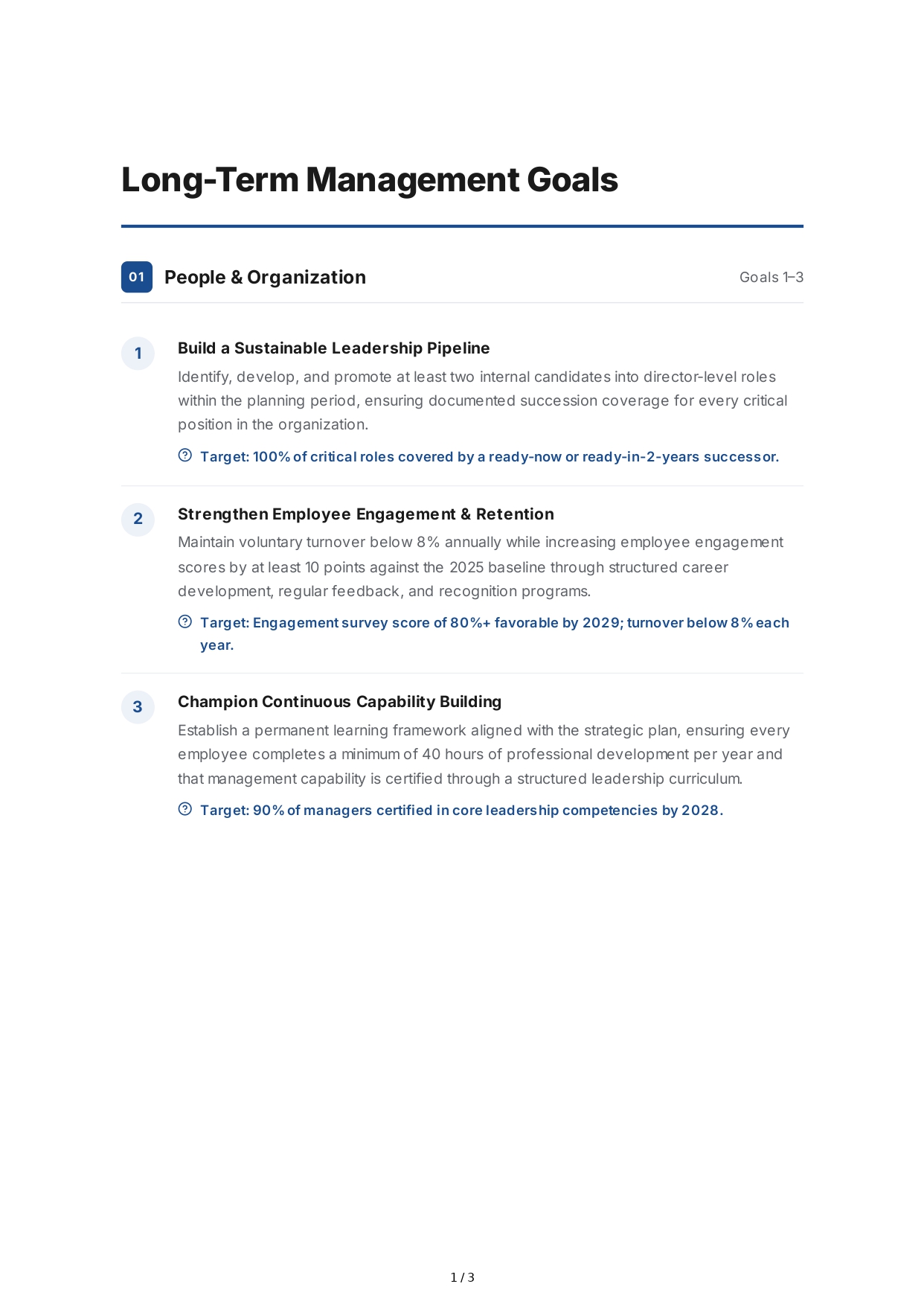
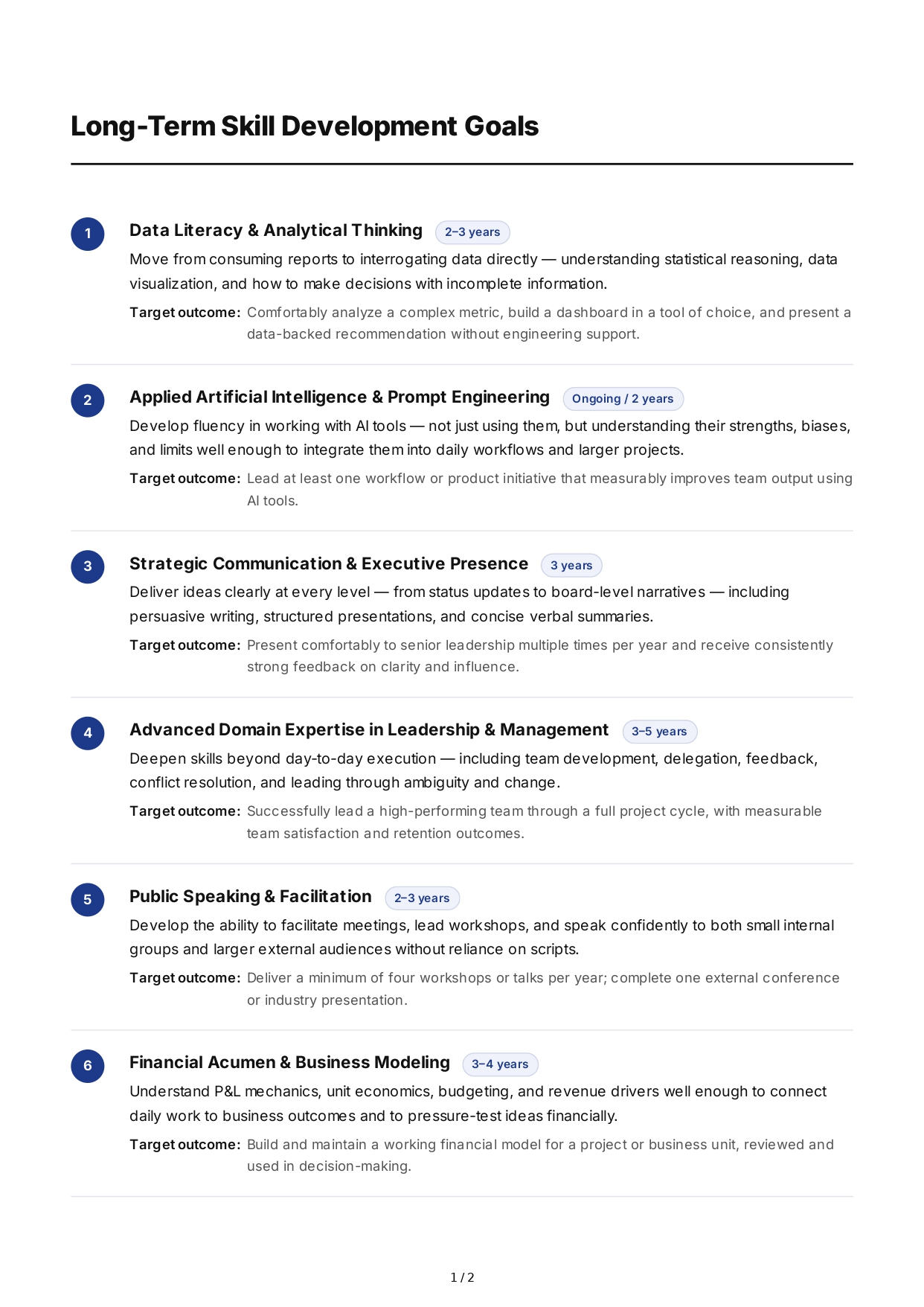
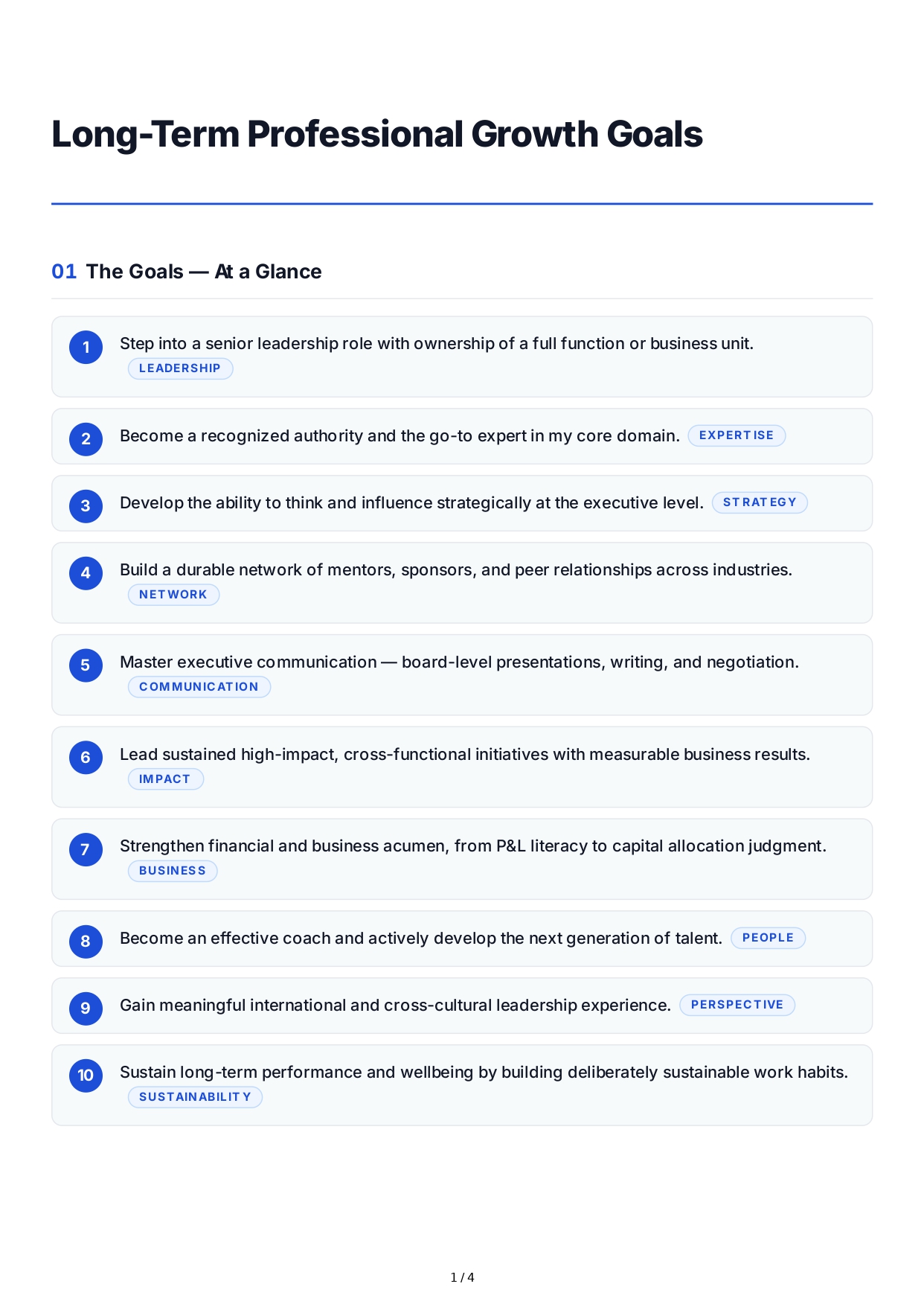
Long-term goals are meaningful objectives that usually take a year or more to accomplish and often require smaller milestones, consistent effort, and regular review. They can focus on career growth, education, finances, health, relationships, personal development, business, or other major life priorities.
The best long-term goals are specific enough to guide action but flexible enough to adapt when circumstances change. Using the SMART framework—Specific, Measurable, Achievable, Relevant, and Time-bound—can make long-term goals easier to plan and track.
What are Long Term Goals?
Long-term goals are objectives that you want to achieve over an extended period, usually one year or longer. They describe a desired future outcome and provide direction for the smaller actions and short-term goals needed to reach it.
For example:
- Earn a master’s degree within three years.
- Become a manager within five years.
- Build enough savings to achieve financial independence.
- Start and grow a profitable business.
- Develop advanced expertise in a chosen profession.
- Write and publish a book within two years.
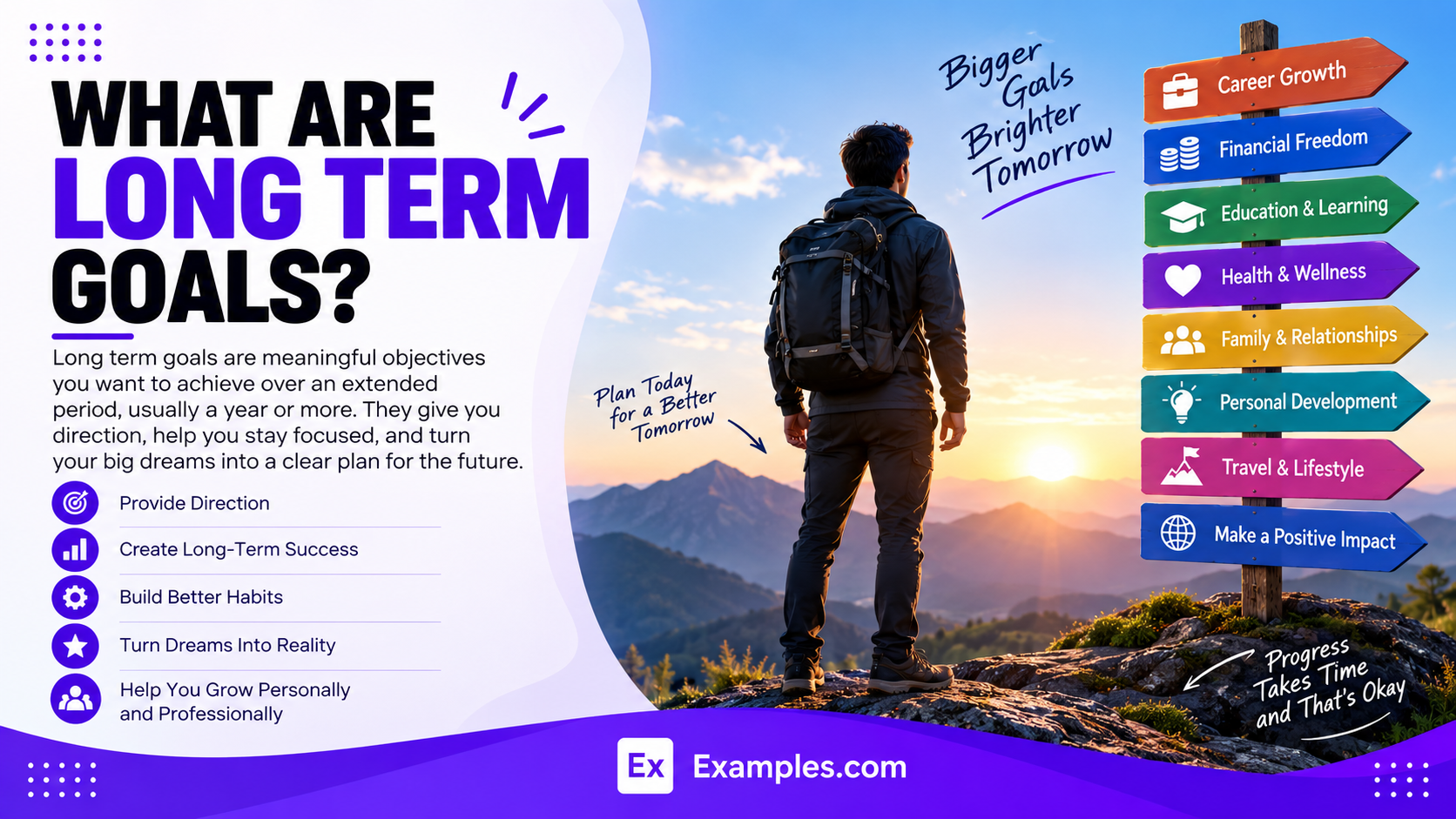
Popular Types Of Long Term Goals
Long-term goals can be grouped according to the area of life or work they address.
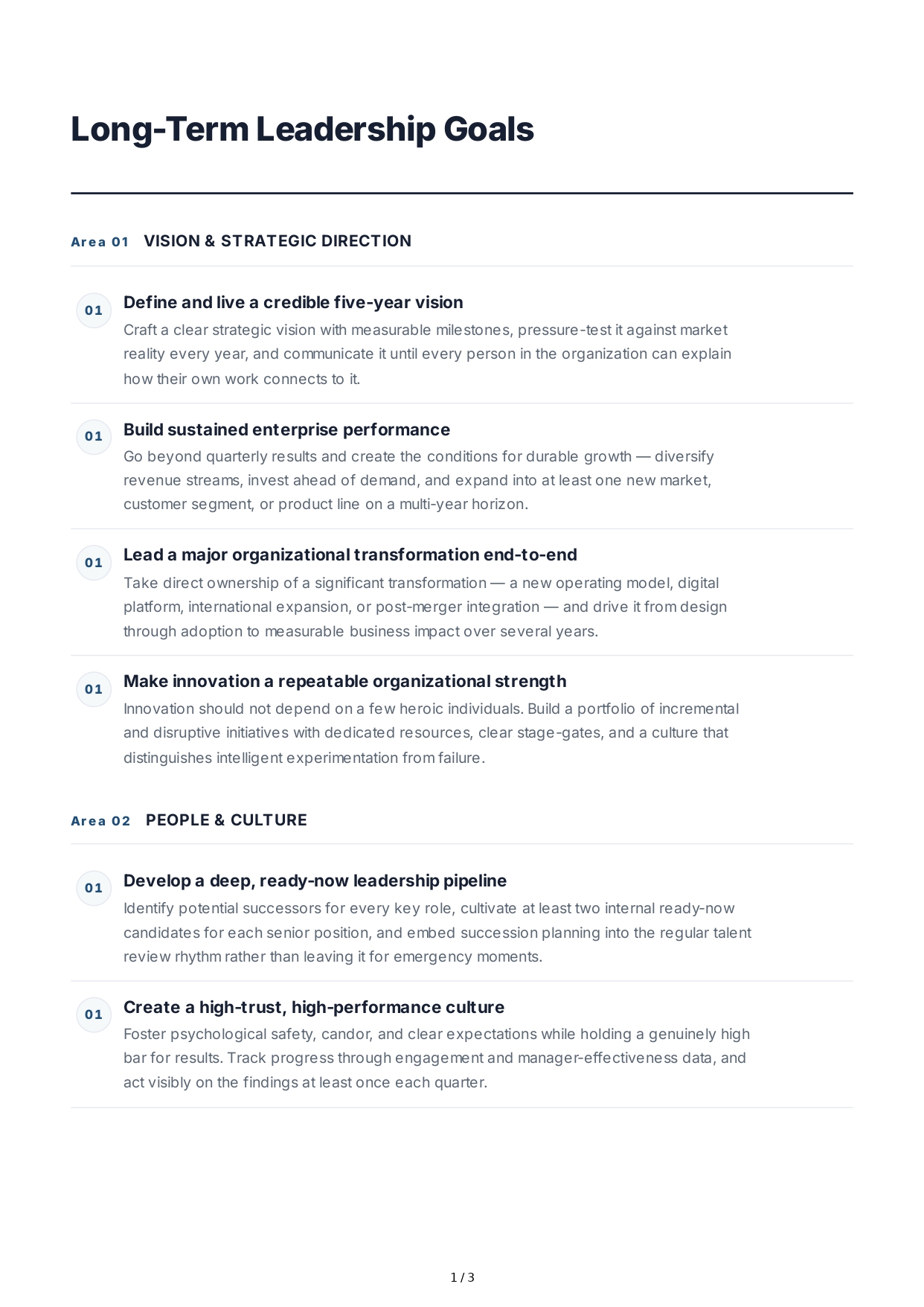
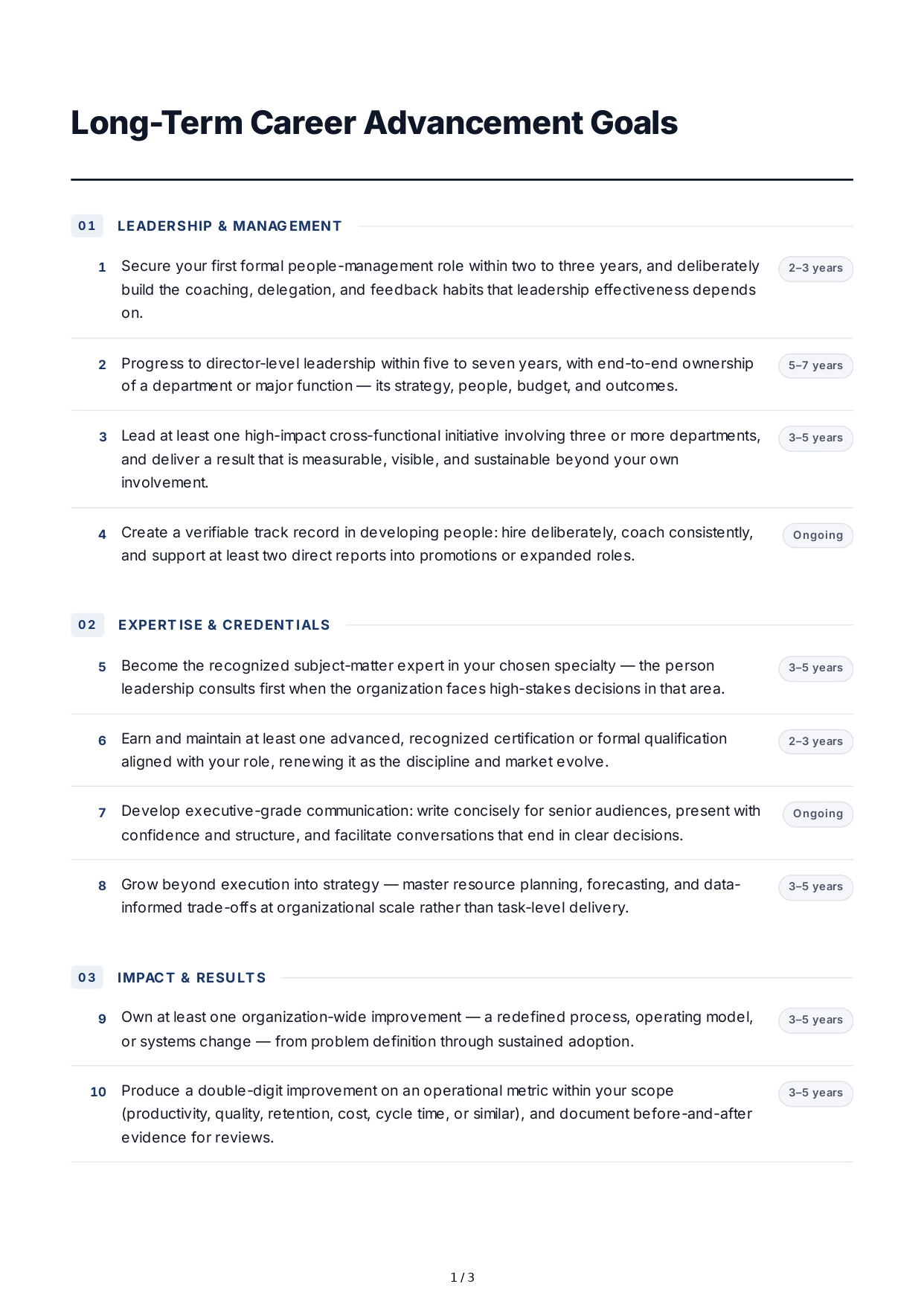
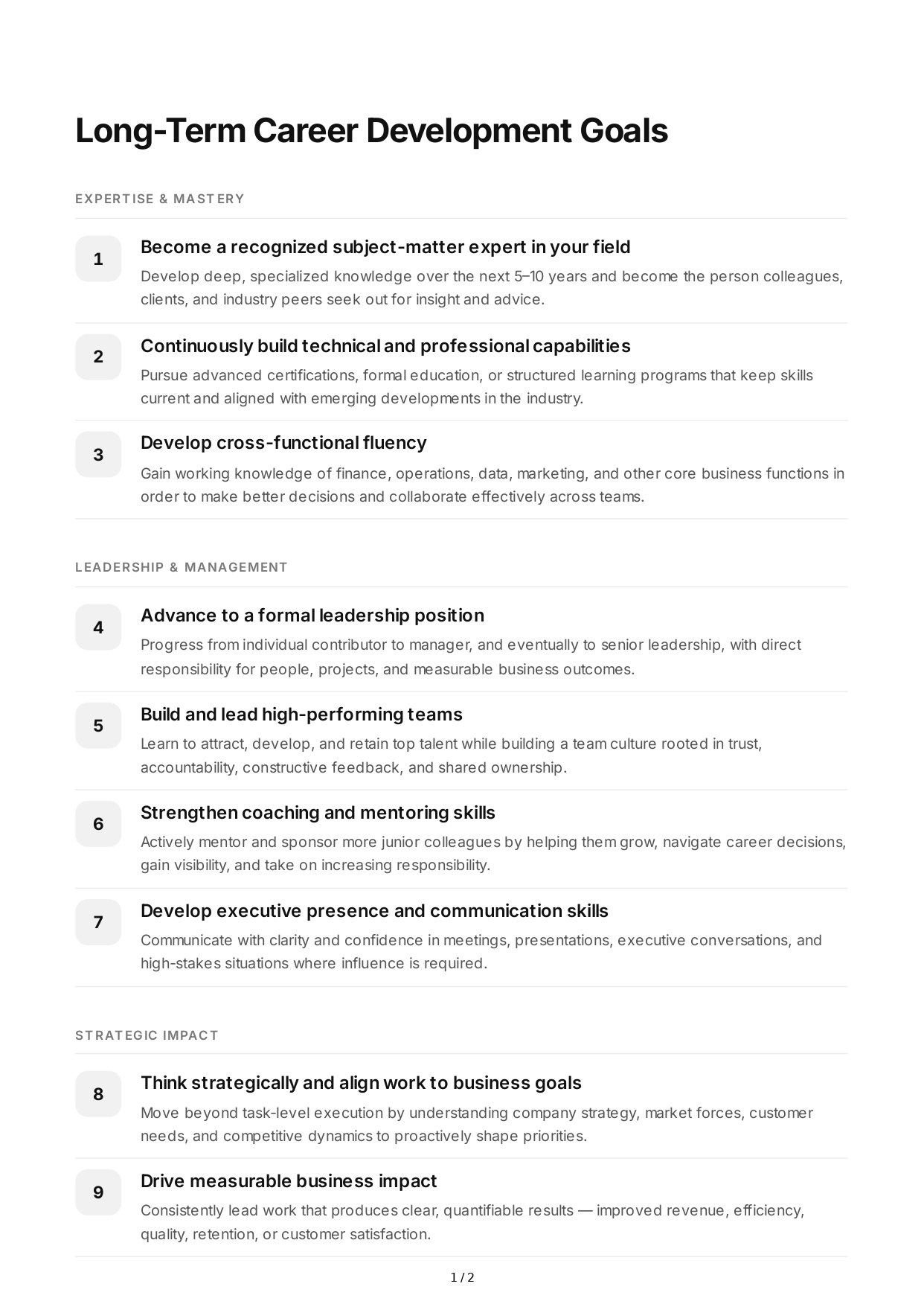
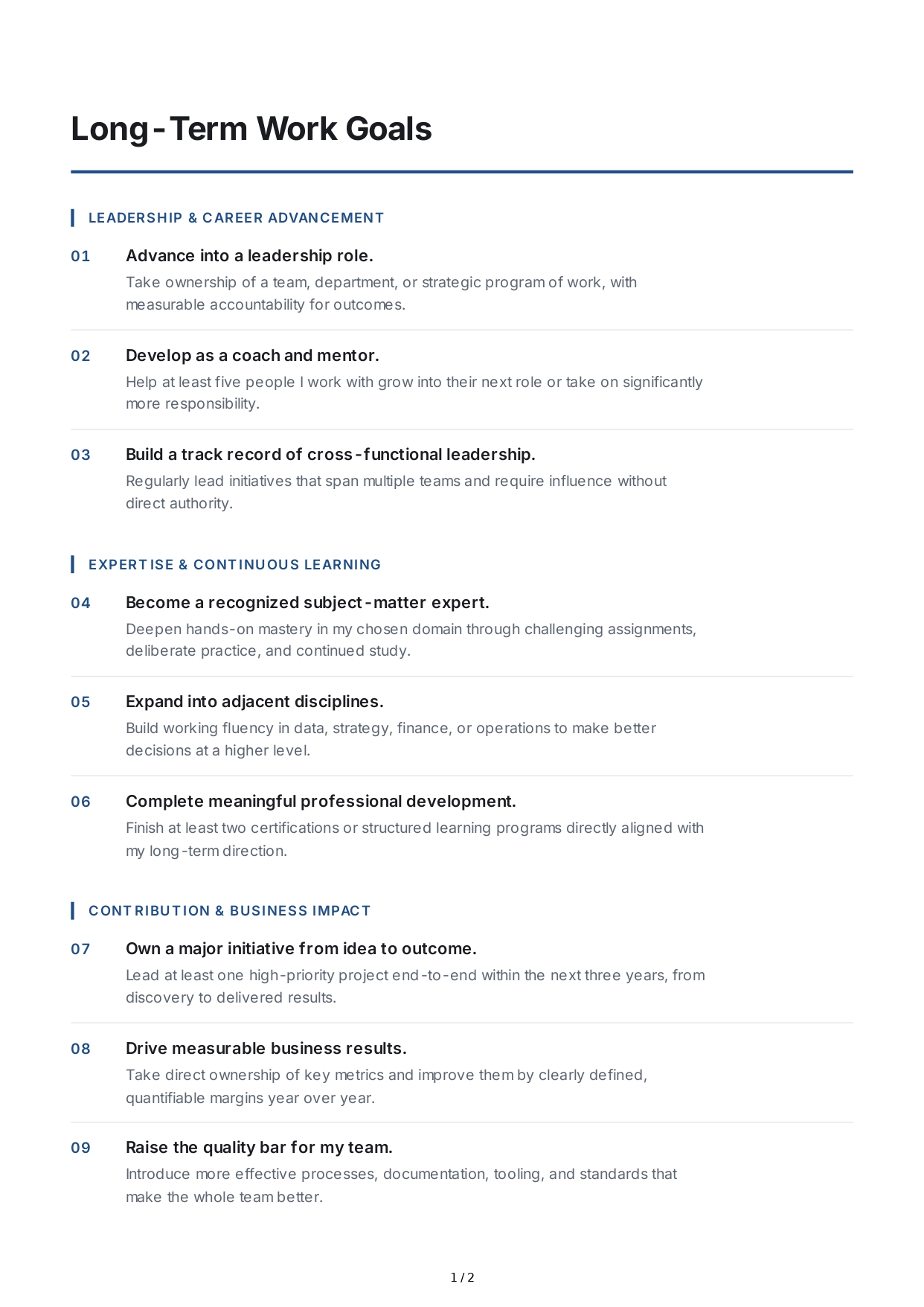
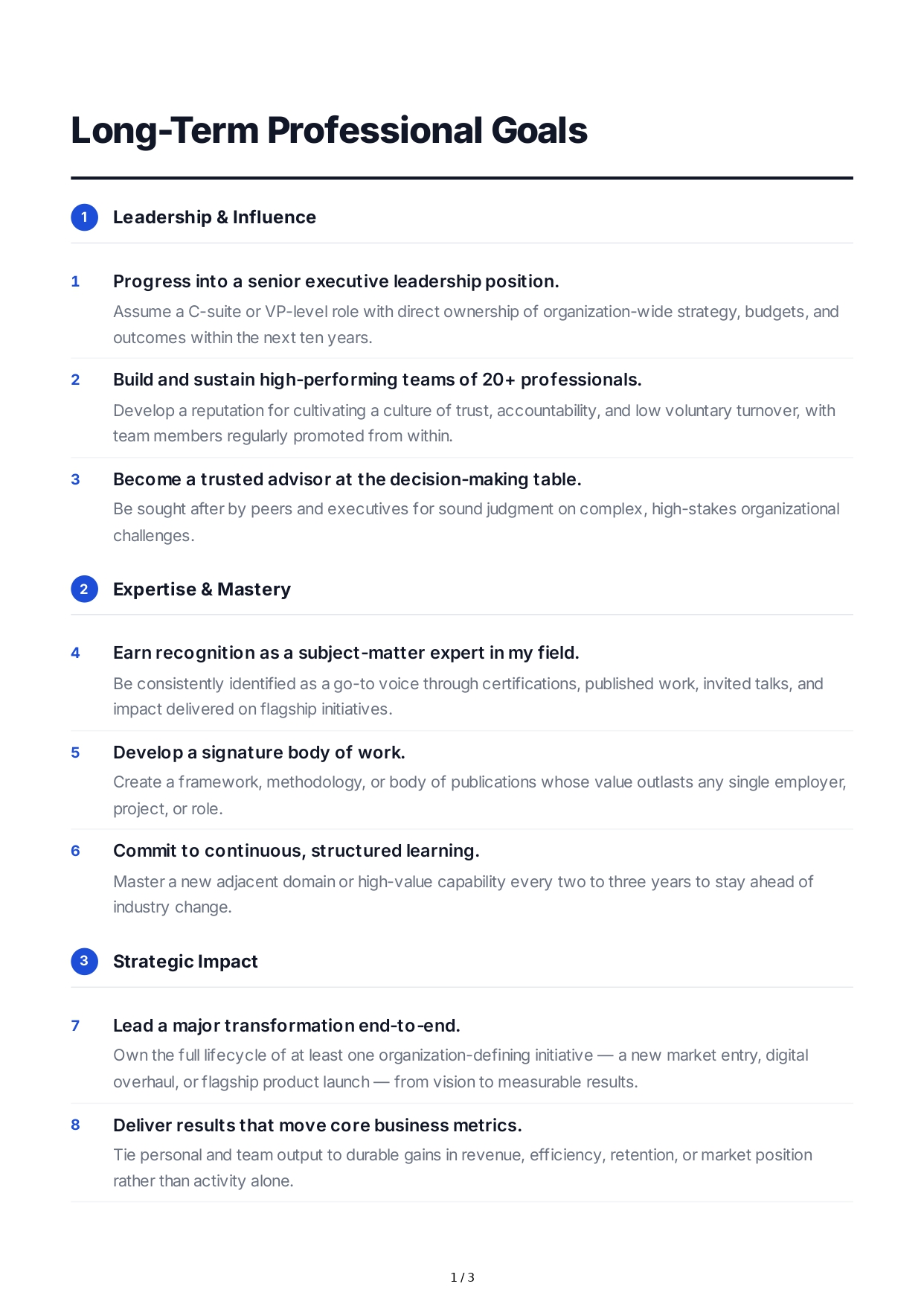
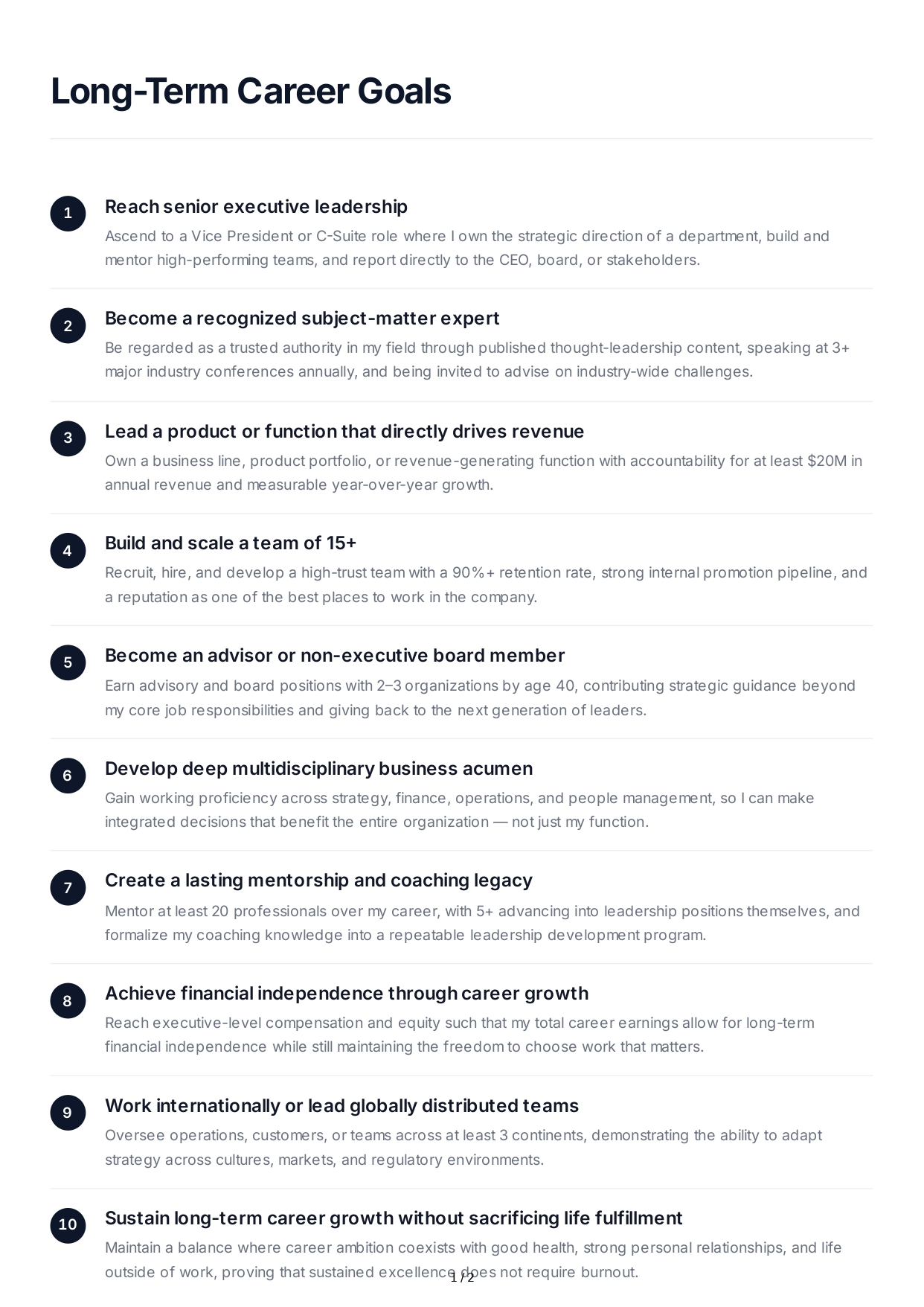
Career Goals
Career goals focus on professional advancement, expertise, leadership, and long-term work satisfaction.
Examples:
- Become a senior manager or director.
- Transition into a new career field.
- Become a recognized subject-matter expert.
- Lead a major organization-wide project.
- Build a strong professional network.
- Develop leadership and mentoring skills.
- Work internationally or lead global teams.
- Establish a reputation in your industry.
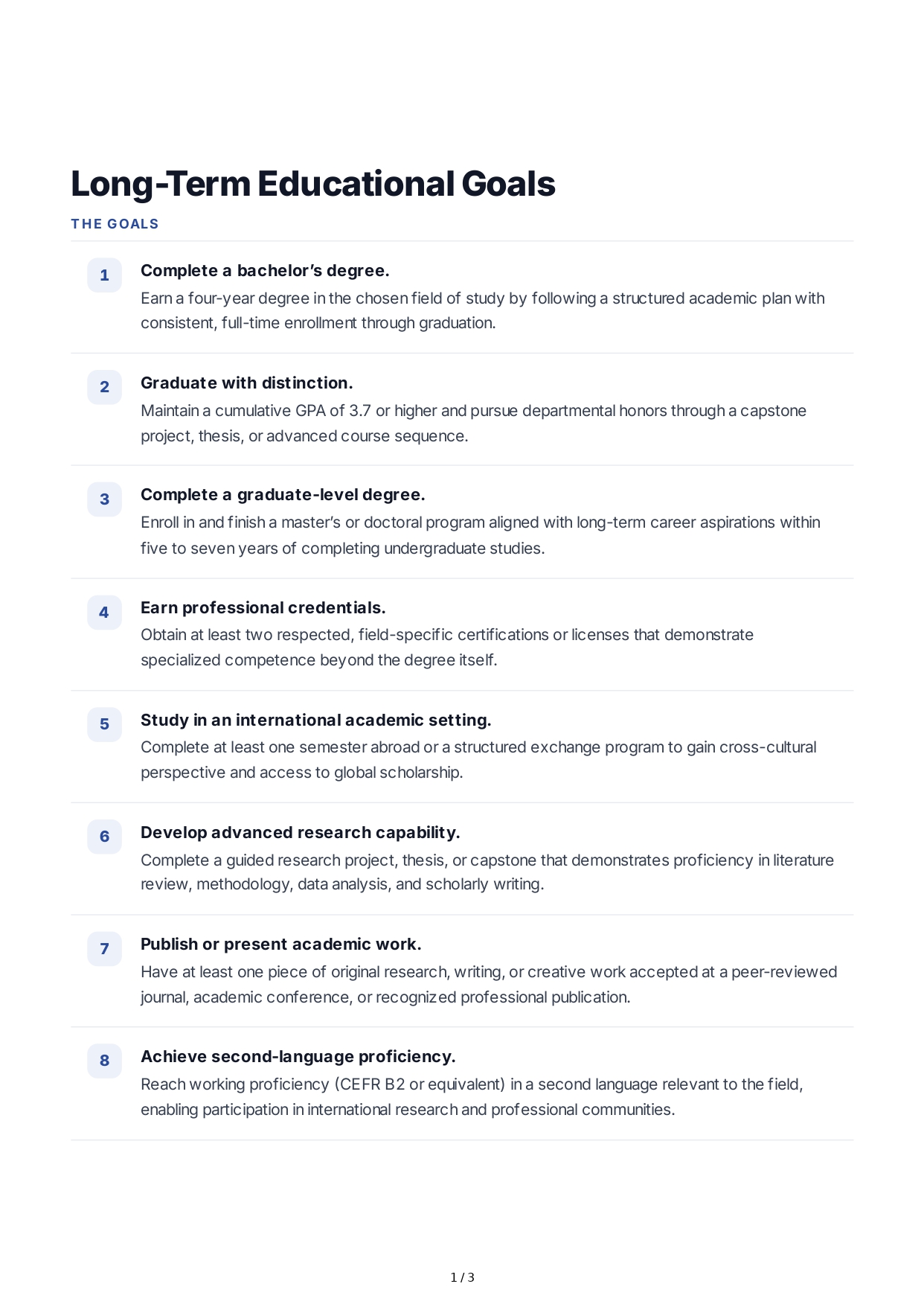
Educational Goals
Educational goals focus on degrees, qualifications, academic achievement, and continued learning.
Examples:
- Earn a bachelor’s, master’s, or doctoral degree.
- Complete a professional certification.
- Publish academic or research work.
- Develop expertise in a chosen subject.
- Complete a thesis or major research project.
- Learn a new language to an advanced level.
- Attend specialized training programs.
Financial Goals
Financial goals focus on building long-term financial security.
Examples:
- Build a substantial emergency fund.
- Pay off major debt.
- Buy a home.
- Build a diversified investment portfolio.
- Save for retirement.
- Achieve financial independence.
- Start a business that generates sustainable income.
- Create multiple sources of income.
Personal Development Goals
Personal development goals focus on becoming more capable, confident, disciplined, and fulfilled.
Examples:
- Develop stronger communication skills.
- Become more confident in public speaking.
- Read a certain number of meaningful books each year.
- Develop better time-management habits.
- Learn a valuable new skill.
- Become more emotionally resilient.
- Build healthier daily routines.
Health and Wellness Goals
Health goals can involve long-term lifestyle improvements rather than quick results.
Examples:
- Maintain a consistent exercise routine.
- Build sustainable healthy eating habits.
- Improve overall fitness.
- Complete a major fitness challenge.
- Maintain a healthy work-life balance.
- Develop a sustainable sleep routine.
Business Goals
Business goals focus on growth, sustainability, customers, operations, and long-term impact.
Examples:
- Launch a profitable company.
- Expand into new markets.
- Open additional locations.
- Build a strong customer base.
- Develop new products or services.
- Create a scalable business model.
- Build a capable leadership team.
- Establish a recognizable brand.
How Do I Generate Long Term Goals Using Proven Examples from Top Companies?
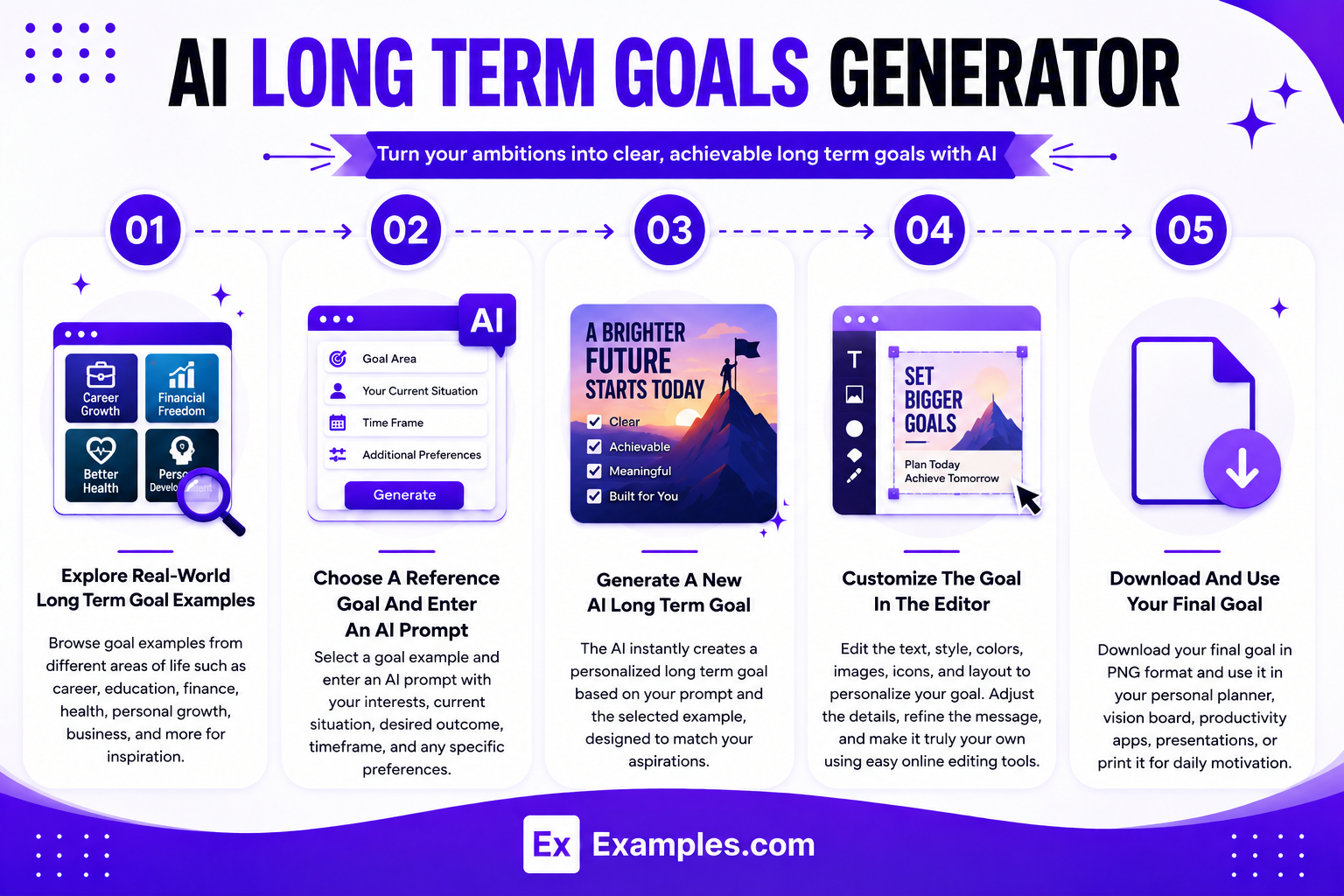
Creating long-term goals with AI helps users turn broad ambitions into clear, practical objectives using proven examples, personal prompts, and structured goal-setting ideas.
Explore Real-World Long Term Goal Examples
Browse real-world long-term goal examples to discover practical ideas across career, education, personal development, business, financial, academic, and other areas. Reviewing examples can help you identify goals that match your priorities and provide inspiration for creating your own long-term objectives.
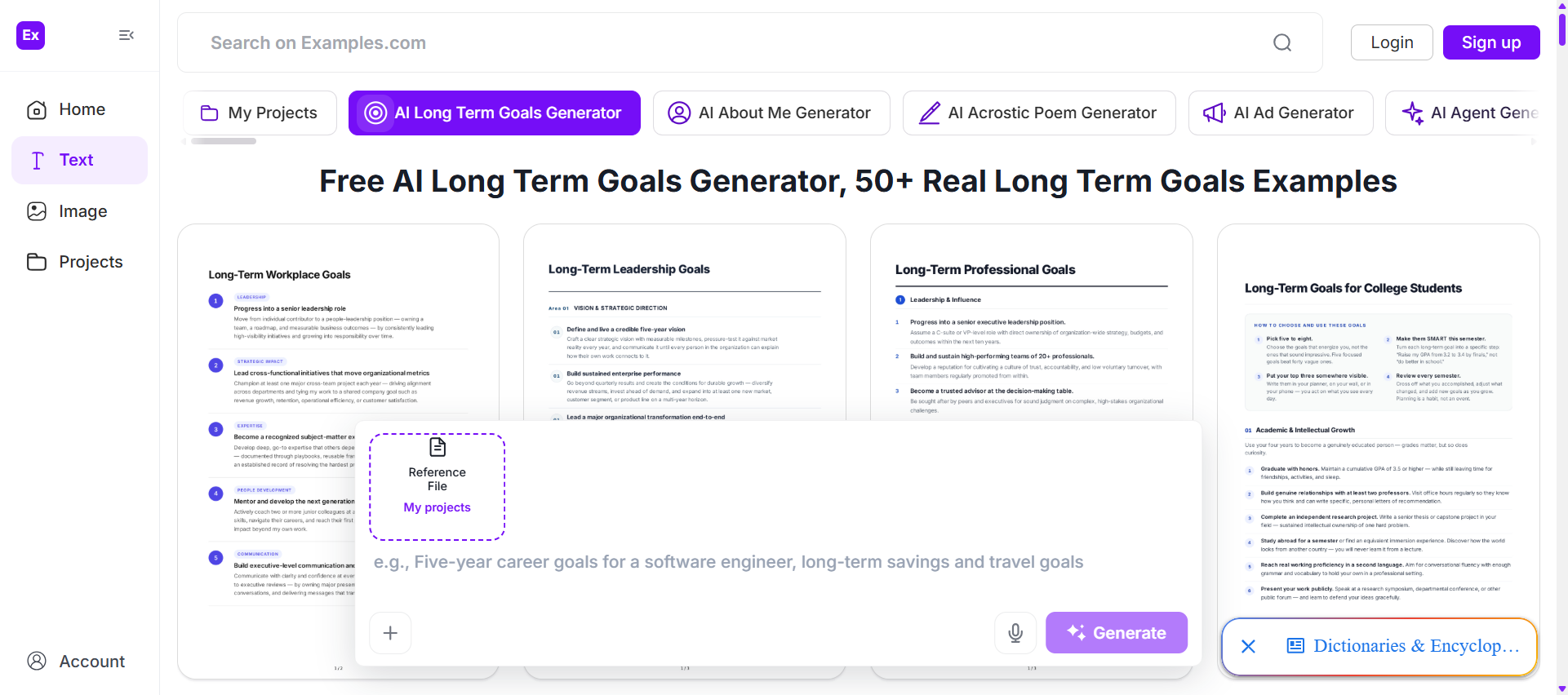
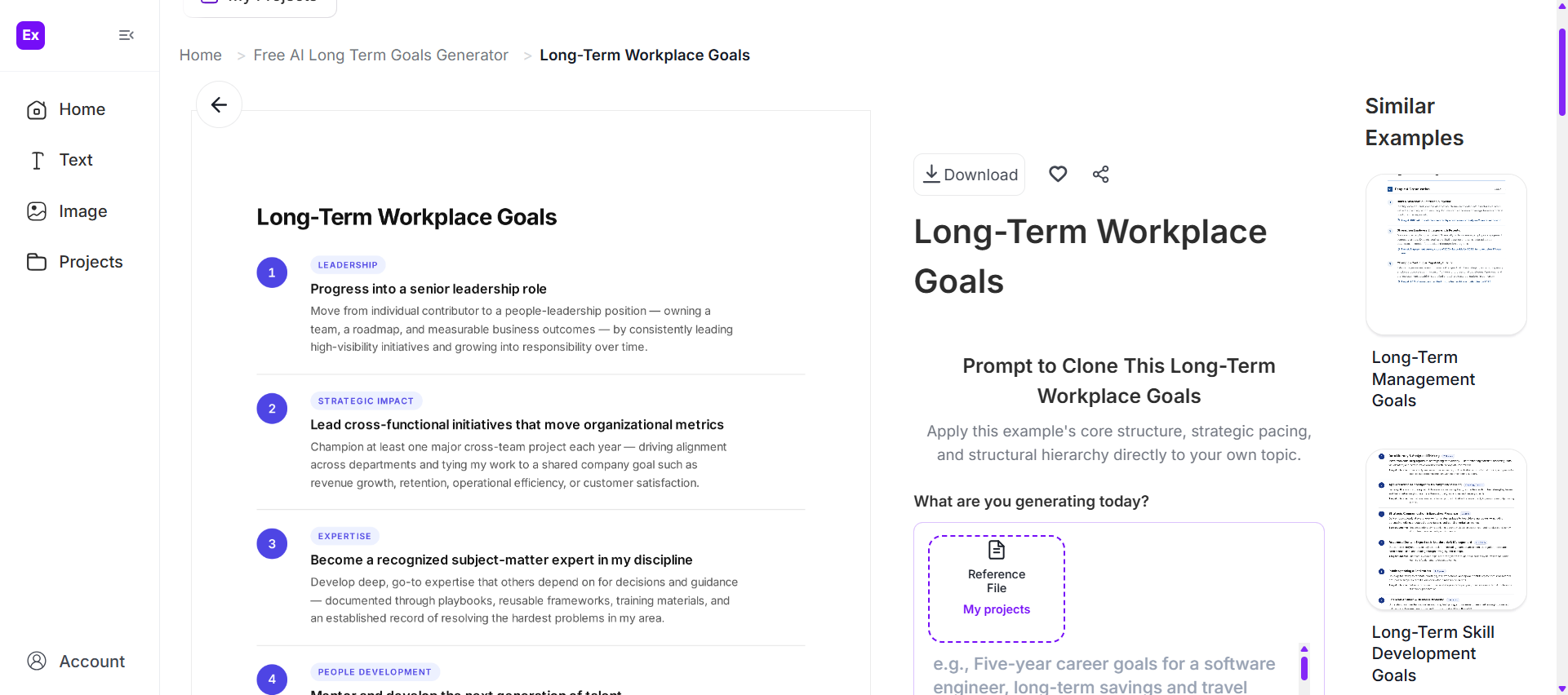
Choose A Reference Goal And Enter An AI Prompt
Select a long-term goal example that closely matches the outcome you want to achieve. Then enter an AI prompt describing your desired result, timeframe, current situation, priorities, skills, resources, challenges, and personal or professional preferences.
Generate A New AI Long Term Goal
The AI generates a new long-term goal based on your selected reference and prompt. The result can turn a broad ambition into a clearer objective with a defined direction, measurable outcome, and realistic timeframe.
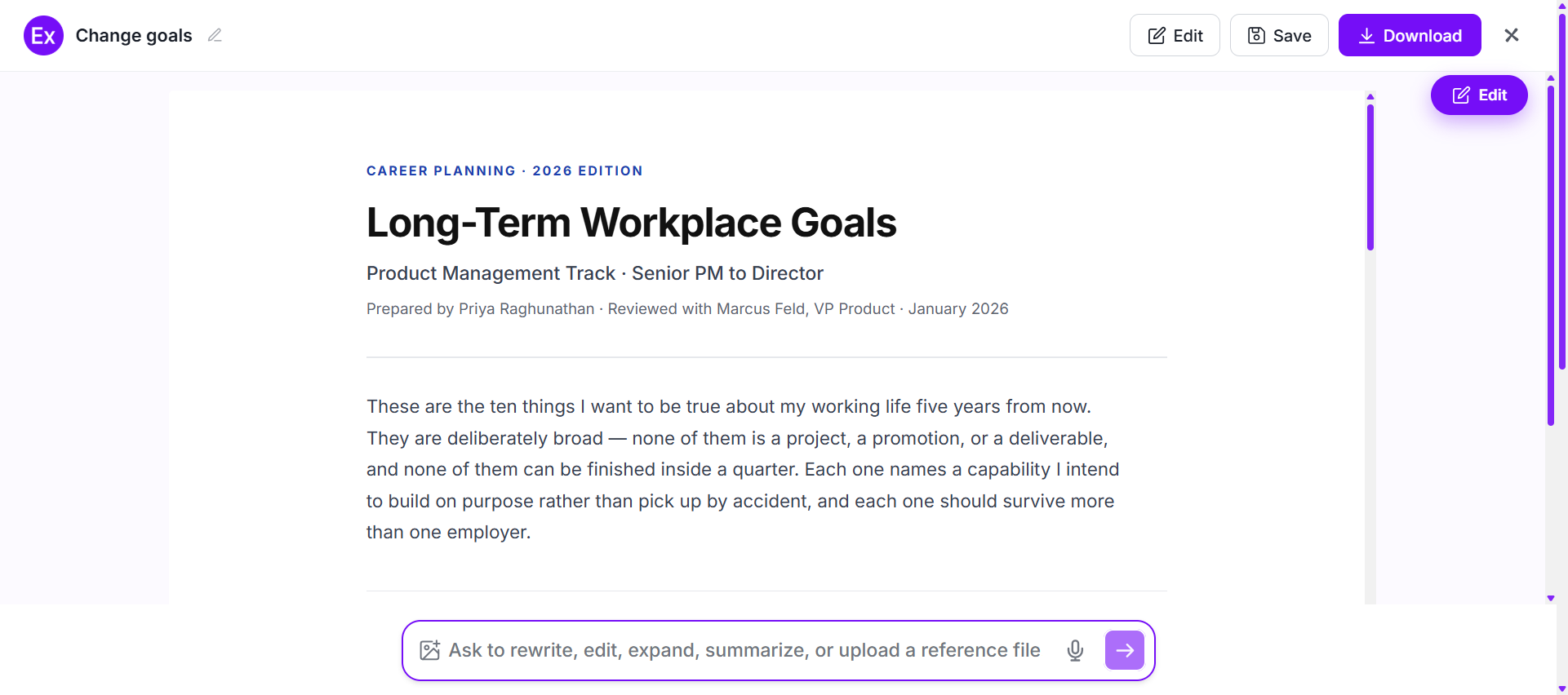
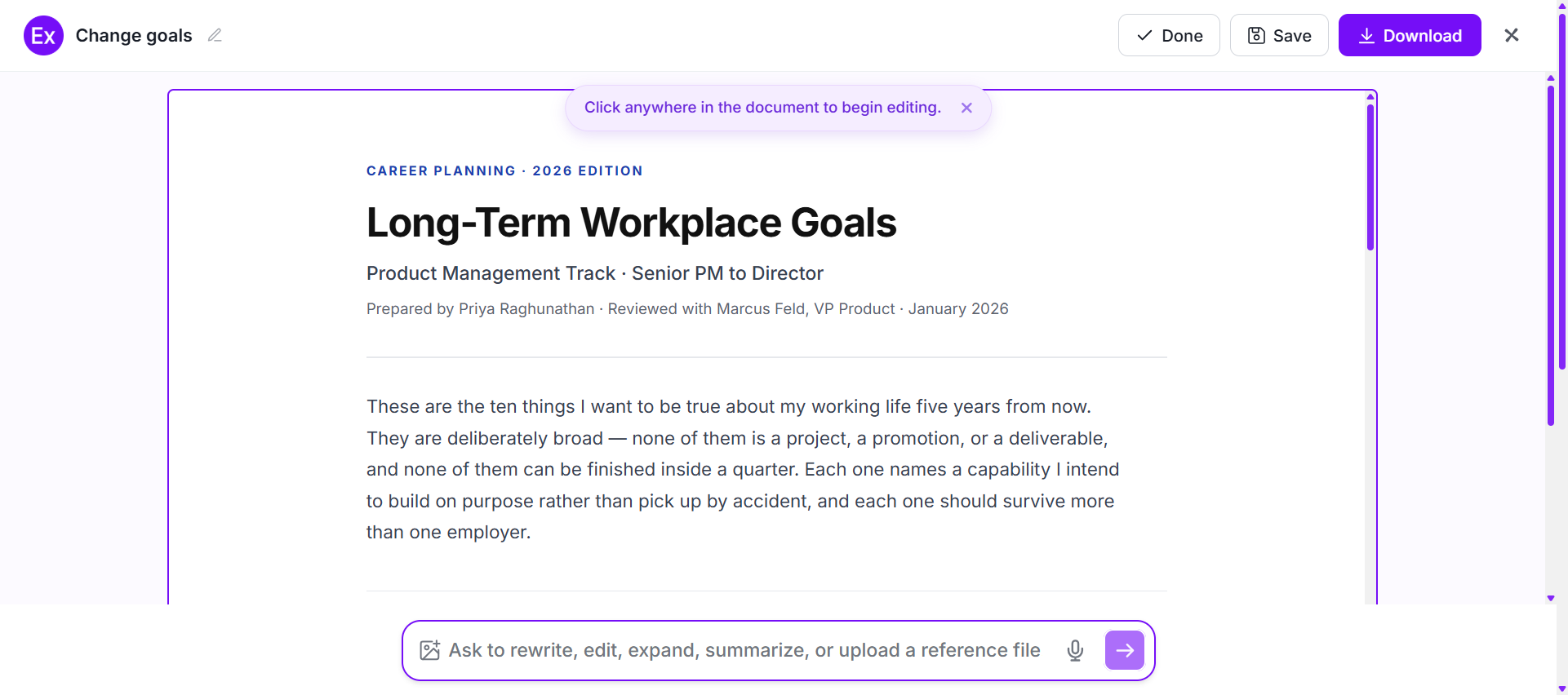
Customize The Long Term Goal In The Online Editor
Customize the generated goal to make it relevant to your situation. Adjust the target, timeframe, milestones, measurements, priorities, and supporting actions so the goal reflects what you actually want to accomplish.
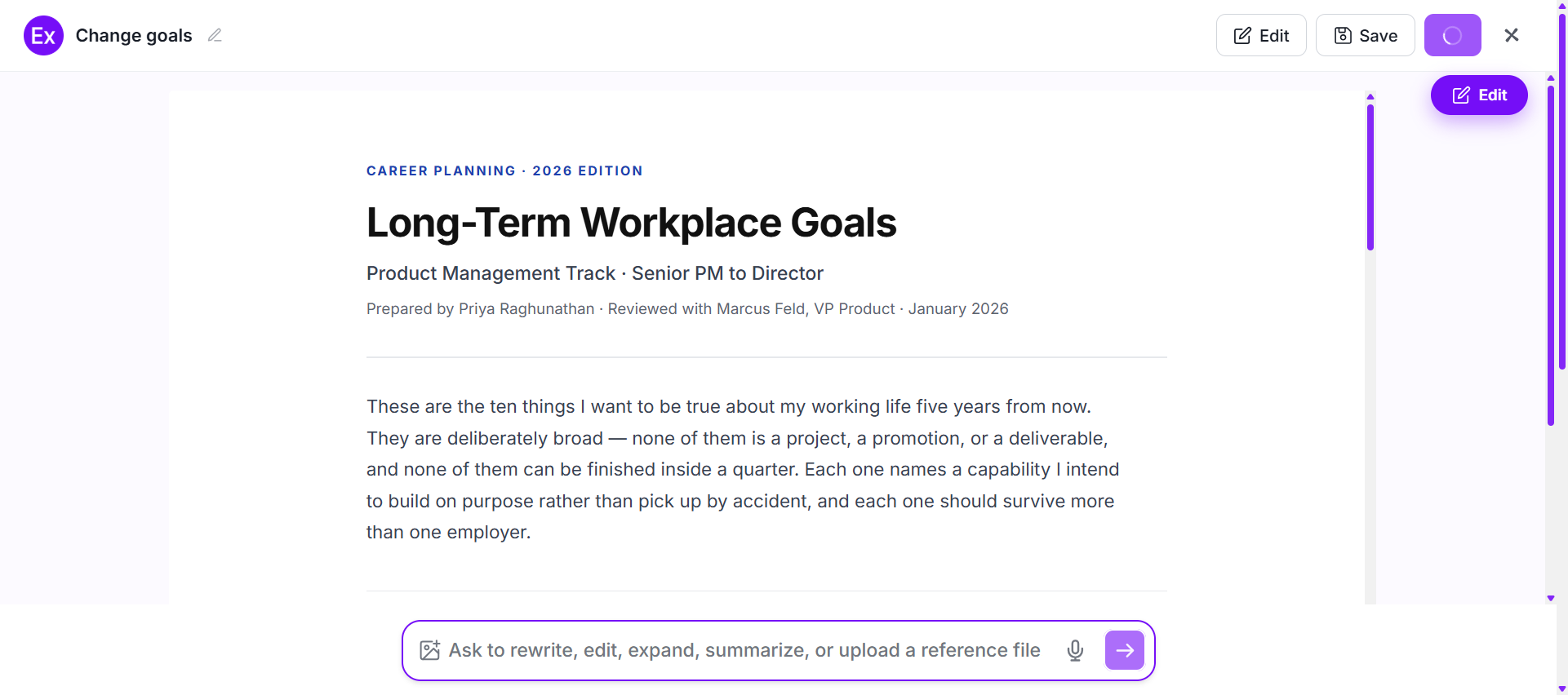
Download And Use The Final Long Term Goal
Save or download the final goal and use it as part of your personal development plan, career plan, academic plan, business strategy, performance review, or goal-tracking system. Review it regularly and update it when your priorities change.
50 Long Term Goals Examples
Here are practical long-term goals for different areas of life:
Career and Professional Goals
- Become a senior leader in your organization.
- Become a recognized expert in your field.
- Transition into a new career.
- Build a strong professional network.
- Lead a major strategic project.
- Start your own business.
- Work internationally.
- Become a mentor to younger professionals.
- Earn an advanced professional certification.
- Develop strong executive communication skills.
Education and Learning Goals
- Earn a master’s degree.
- Earn a doctoral degree.
- Complete a professional certification.
- Publish a research paper.
- Become highly skilled in a specialized subject.
- Learn a new language.
- Complete a major academic research project.
- Build a professional portfolio.
- Develop advanced technology skills.
- Commit to continuous professional learning.
Financial Goals
- Pay off major debt.
- Build a six-month emergency fund.
- Buy a home.
- Save for retirement.
- Achieve financial independence.
- Build a long-term investment portfolio.
- Create a second source of income.
- Start a profitable side business.
- Save for a child’s education.
- Reach a specific net-worth target.
Personal Development Goals
- Become a confident public speaker.
- Improve communication skills.
- Develop stronger leadership abilities.
- Build consistent time-management habits.
- Become more organized.
- Read and apply knowledge from important books.
- Develop greater emotional resilience.
- Learn a valuable creative skill.
- Build stronger relationships.
- Develop a sustainable work-life balance.
Health and Lifestyle Goals
- Maintain a consistent exercise routine.
- Build sustainable nutrition habits.
- Complete a major fitness challenge.
- Improve sleep habits.
- Maintain long-term physical fitness.
- Spend more quality time with family.
- Travel to meaningful destinations.
- Create a healthier daily routine.
- Make time for hobbies and personal interests.
- Build a lifestyle that supports long-term well-being.
How to Turn Long Term Goals Into Achievable Goals
A long-term goal can feel overwhelming when it is treated as one large task. Breaking it into smaller milestones makes the process easier to manage. This approach is recommended across modern goal-setting guidance.
1. Define the End Result
Start by describing exactly what you want to accomplish.
Instead of:
“I want to advance my career.”
Try:
“I want to move into a senior management position within five years.”
2. Make the Goal SMART
A SMART goal should be:
- Specific — clearly defined
- Measurable — progress can be tracked
- Achievable — realistic with available resources
- Relevant — connected to your priorities
- Time-bound — has a target timeframe
SMART planning helps turn broad ambitions into objectives that can be monitored and reviewed.
3. Break It Into Milestones
Divide the large goal into annual, quarterly, monthly, and weekly actions.
For example:
Long-term goal: Become a senior manager within five years.
Milestones:
- Year 1: Develop core leadership skills.
- Year 2: Lead larger projects.
- Year 3: Manage a small team.
- Year 4: Take responsibility for strategic initiatives.
- Year 5: Pursue a senior management position.
4. Track Measurable Progress
Decide how you will know whether you are moving forward. Depending on the goal, measurements may include certifications earned, money saved, projects completed, revenue generated, skills developed, or responsibilities gained.
5. Review and Adjust
Long-term plans should not be treated as permanent contracts. Your priorities, circumstances, industry, and interests can change. Regular reviews allow you to keep the goal relevant without losing sight of the larger outcome. Examples.com’s current long-term goal resources similarly recommend periodic reviews and adjusting goals as circumstances evolve.
Long Term Goals vs. Short Term Goals
The main difference is the time horizon and scope.
| Long-Term Goals | Short-Term Goals |
|---|---|
| Usually take a year or more | Often completed within days, weeks, or months |
| Focus on major outcomes | Focus on immediate actions |
| Require multiple milestones | Usually require fewer steps |
| Provide long-term direction | Help create immediate progress |
| May contain several smaller goals | Can support a larger long-term goal |
For example, earning a master’s degree can be a long-term goal, while completing this semester’s required courses can be a short-term goal that supports it.
Common Mistakes When Setting Long Term Goals
Avoid these common problems:
- Choosing too many goals at once
- Making goals vague or unrealistic
- Focusing only on the final result
- Setting goals without deadlines
- Failing to measure progress
- Ignoring available time and resources
- Never reviewing the original plan
- Refusing to adapt when circumstances change
A useful approach is to select only a few priorities and convert each one into measurable milestones and near-term actions.
Frequently Asked Questions
What is a good example of a long-term goal?
A good long-term goal is specific, meaningful, measurable, and supported by smaller milestones. For example, “Earn a master’s degree within three years while maintaining a defined academic performance target” is stronger than simply saying “get more education.”
How long is a long-term goal?
There is no universal timeframe. Many goal-setting resources describe long-term goals as taking a year or more, while some define them as goals spanning several years. The appropriate timeframe depends on the objective.
What are the five SMART goals?
SMART stands for Specific, Measurable, Achievable, Relevant, and Time-bound. These characteristics help make goals clearer and easier to track.
How many long-term goals should I have?
There is no fixed number, but focusing on a small number of high-priority goals is usually more practical than trying to pursue dozens simultaneously. You can keep a larger list of possibilities and prioritize a few for the current planning period.
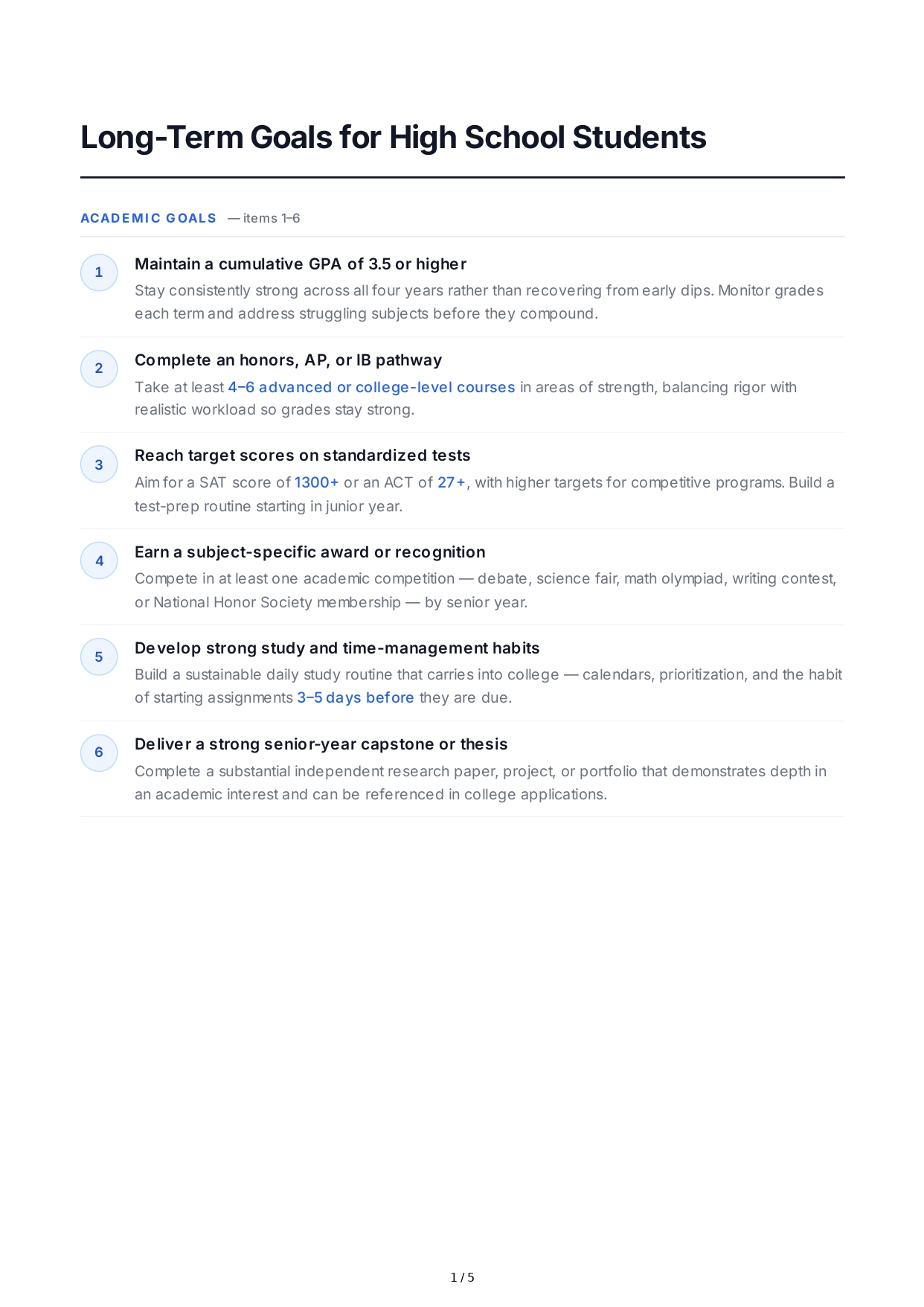
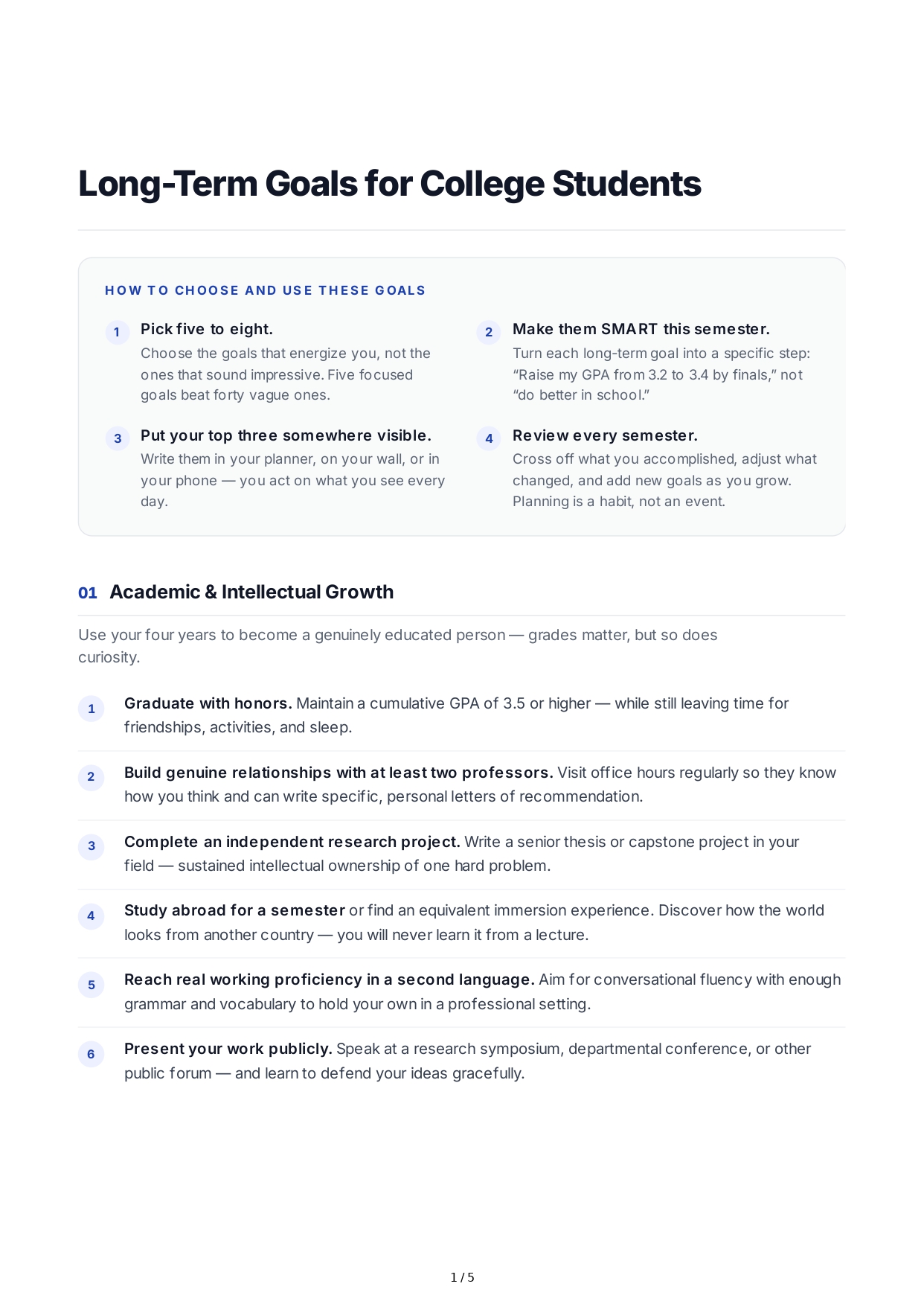
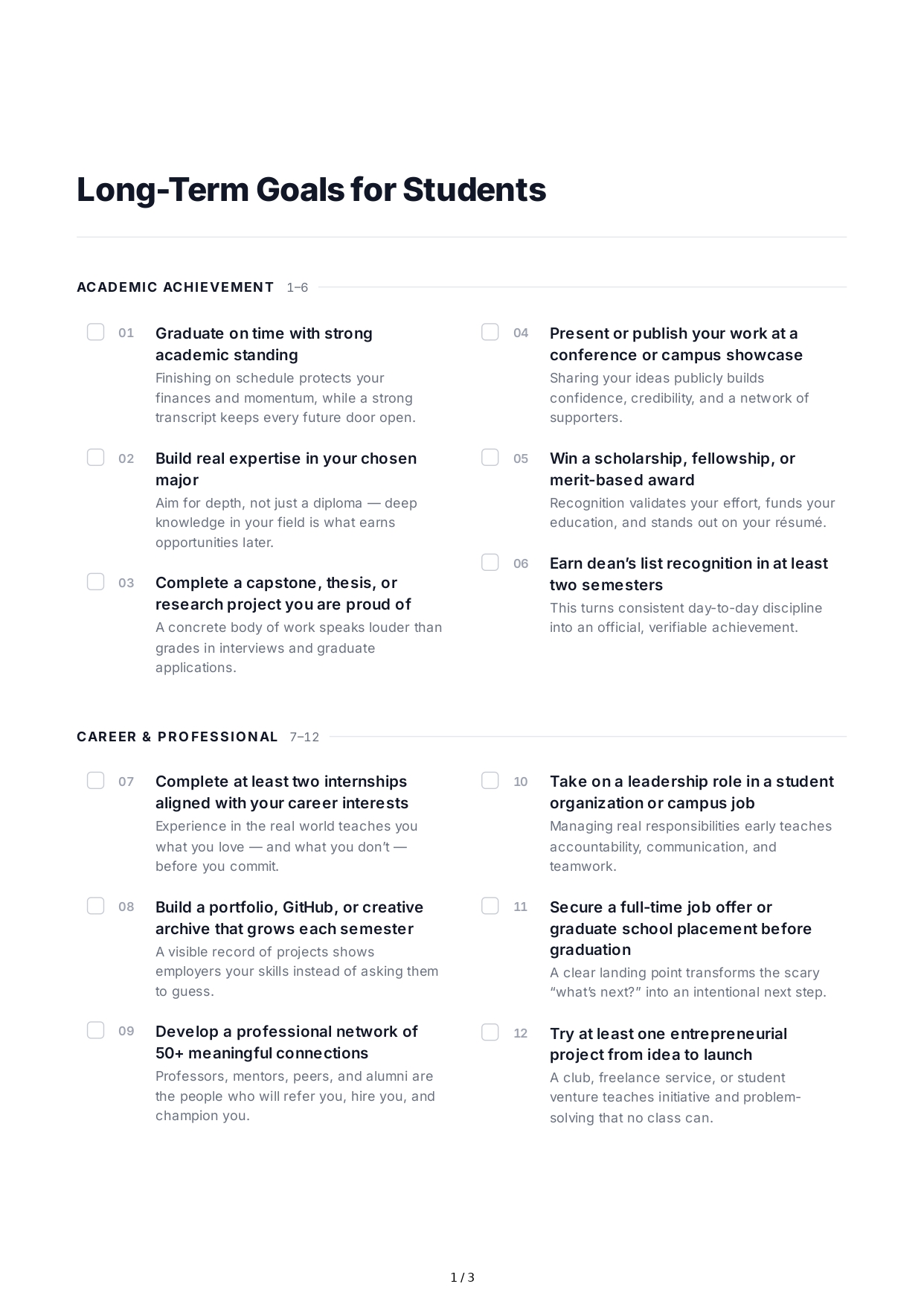
What are some long-term goals for students?
Examples include earning a degree, graduating on time, developing expertise in a chosen field, completing a research project, earning a scholarship, building a professional network, and preparing for financial independence.
How can I stay motivated to achieve a long-term goal?
Break the goal into smaller milestones, schedule regular actions, track visible progress, celebrate meaningful achievements, and review the goal regularly. Smaller wins can make a large objective feel more manageable.
Can long-term goals change?
Yes. A long-term goal can be revised when your priorities, circumstances, resources, or opportunities change. The objective is to maintain useful direction rather than follow an outdated plan simply because it was written earlier.