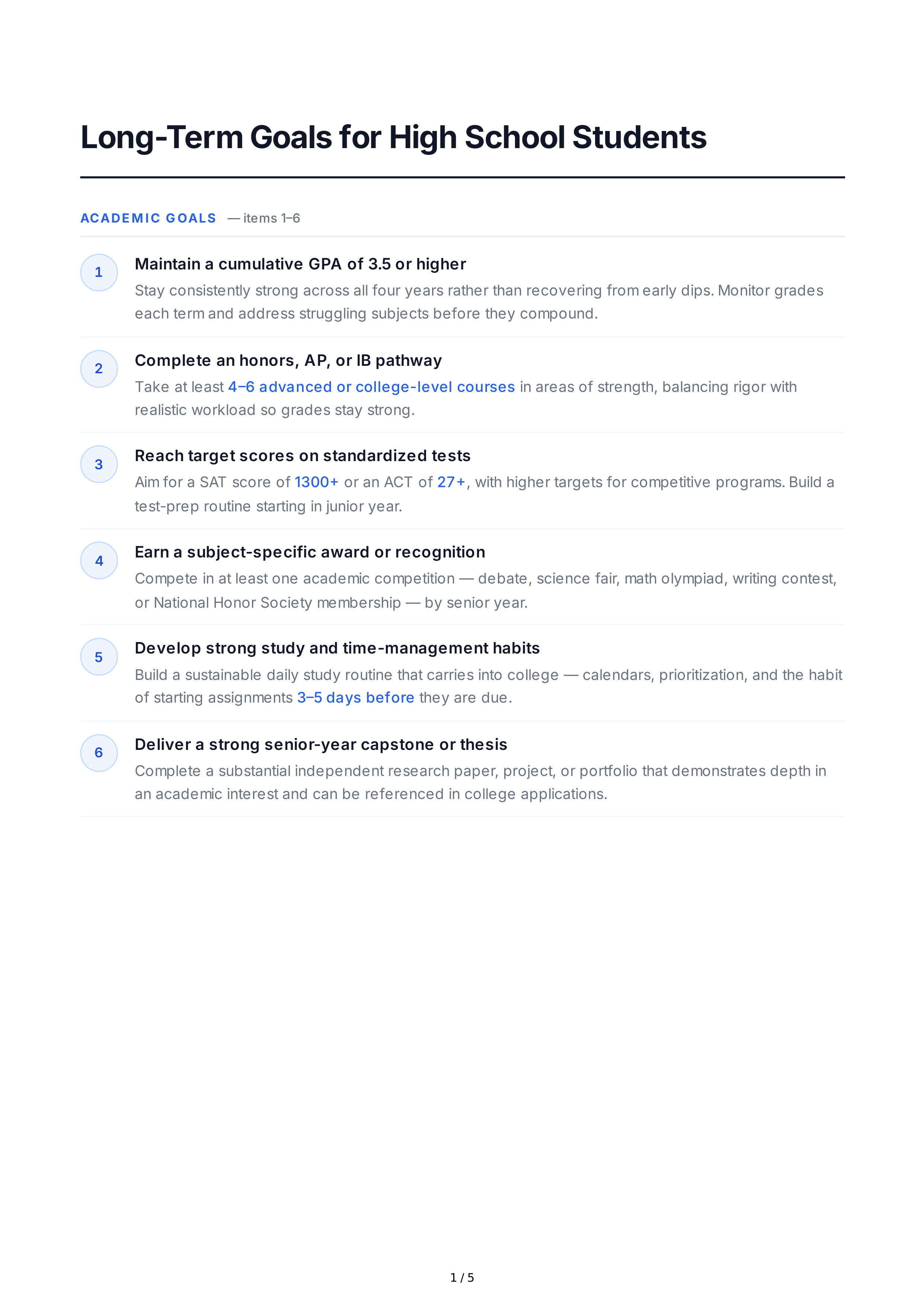
Long
-
Term
Goals
for
High
School
Students
ACADE M I C
G OALS
—
items
1–6
Maintain
a
cumulative
GPA
of
3.5
or
higher
Stay
consistently
strong
across
all
four
years
rather
than
recovering
from
early
dips
.
Monitor
grades
each
term
and
address
struggling
subjects
before
they
compound
.
1
Complete
an
honors
,
AP
,
or
IB
pathway
Take
at
least
4–6
advanced
or
college
-
level
courses
in
areas
of
strength
,
balancing
rigor
with
realistic
workload
so
grades
stay
strong
.
2
Reach
target
scores
on
standardized
tests
Aim
for
a
SAT
score
of
1300+
or
an
ACT
of
27+
,
with
higher
targets
for
competitive
programs
.
Build
a
test
-
prep
routine
starting
in
junior
year
.
3
Earn
a
subject
-
specific
award
or
recognition
Compete
in
at
least
one
academic
competition
—
debate
,
science
fair
,
math
olympiad
,
writing
contest
,
or
National
Honor
Society
membership
—
by
senior
year
.
4
Develop
strong
study
and
time
-
management
habits
Build
a
sustainable
daily
study
routine
that
carries
into
college
—
calendars
,
prioritization
,
and
the
habit
of
starting
assignments
3–5
days
before
they
are
due
.
5
Deliver
a
strong
senior
-
year
capstone
or
thesis
Complete
a
substantial
independent
research
paper
,
project
,
or
portfolio
that
demonstrates
depth
in
an
academic
interest
and
can
be
referenced
in
college
applications
.
6
1 / 5
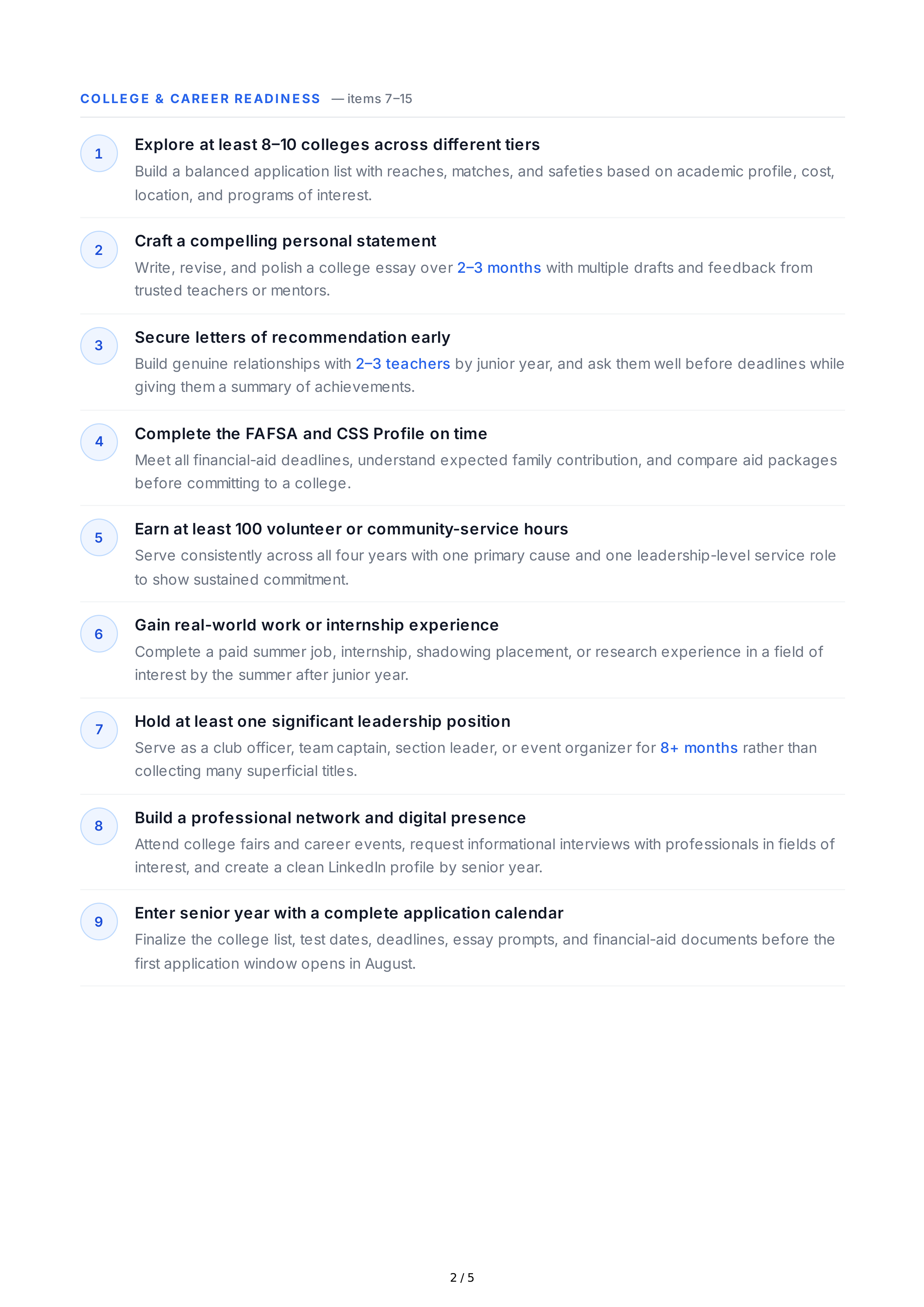
CO LLE G E
&
CARE E R
RE ADI N E SS
—
items
7–15
Explore
at
least
8–10
colleges
across
different
tiers
Build
a
balanced
application
list
with
reaches
,
matches
,
and
safeties
based
on
academic
profile
,
cost
,
location
,
and
programs
of
interest
.
1
Craft
a
compelling
personal
statement
Write
,
revise
,
and
polish
a
college
essay
over
2–3
months
with
multiple
drafts
and
feedback
from
trusted
teachers
or
mentors
.
2
Secure
letters
of
recommendation
early
Build
genuine
relationships
with
2–3
teachers
by
junior
year
,
and
ask
them
well
before
deadlines
while
giving
them
a
summary
of
achievements
.
3
Complete
the
FAFSA
and
CSS
Profile
on
time
Meet
all
financial
-
aid
deadlines
,
understand
expected
family
contribution
,
and
compare
aid
packages
before
committing
to
a
college
.
4
Earn
at
least
100
volunteer
or
community
-
service
hours
Serve
consistently
across
all
four
years
with
one
primary
cause
and
one
leadership
-
level
service
role
to
show
sustained
commitment
.
5
Gain
real
-
world
work
or
internship
experience
Complete
a
paid
summer
job
,
internship
,
shadowing
placement
,
or
research
experience
in
a
field
of
interest
by
the
summer
after
junior
year
.
6
Hold
at
least
one
significant
leadership
position
Serve
as
a
club
officer
,
team
captain
,
section
leader
,
or
event
organizer
for
8+
months
rather
than
collecting
many
superficial
titles
.
7
Build
a
professional
network
and
digital
presence
Attend
college
fairs
and
career
events
,
request
informational
interviews
with
professionals
in
fields
of
interest
,
and
create
a
clean
LinkedIn
profile
by
senior
year
.
8
Enter
senior
year
with
a
complete
application
calendar
Finalize
the
college
list
,
test
dates
,
deadlines
,
essay
prompts
,
and
financial
-
aid
documents
before
the
first
application
window
opens
in
August
.
9
2 / 5
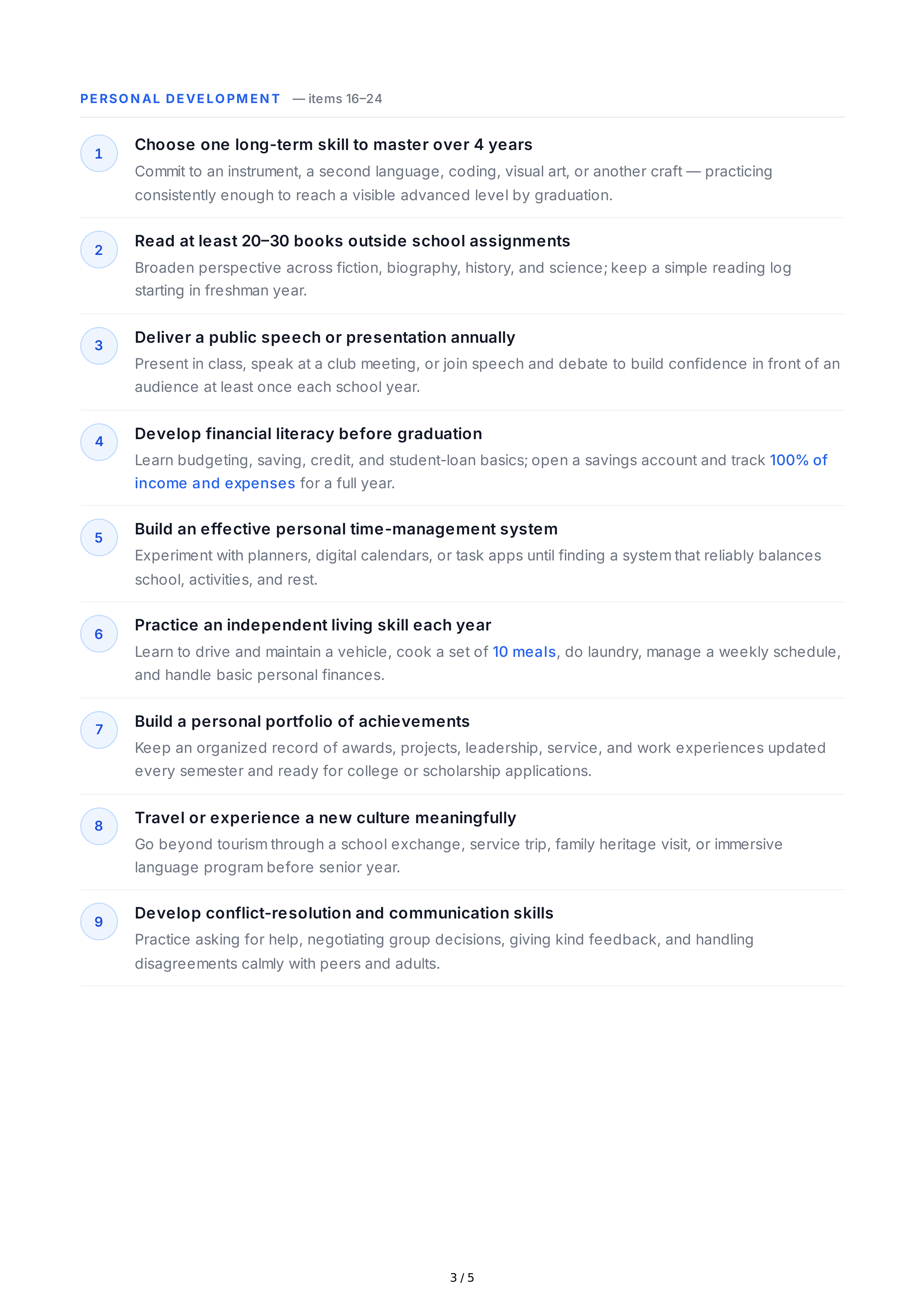
PE RSO N AL
DE VE LO PM E N T
—
items
16–24
Choose
one
long
-
term
skill
to
master
over
4
years
Commit
to
an
instrument
,
a
second
language
,
coding
,
visual
art
,
or
another
craft
—
practicing
consistently
enough
to
reach
a
visible
advanced
level
by
graduation
.
1
Read
at
least
20–30
books
outside
school
assignments
Broaden
perspective
across
fiction
,
biography
,
history
,
and
science
;
keep
a
simple
reading
log
starting
in
freshman
year
.
2
Deliver
a
public
speech
or
presentation
annually
Present
in
class
,
speak
at
a
club
meeting
,
or
join
speech
and
debate
to
build
confidence
in
front
of
an
audience
at
least
once
each
school
year
.
3
Develop
financial
literacy
before
graduation
Learn
budgeting
,
saving
,
credit
,
and
student
-
loan
basics
;
open
a
savings
account
and
track
100%
of
income
and
expenses
for
a
full
year
.
4
Build
an
effective
personal
time
-
management
system
Experiment
with
planners
,
digital
calendars
,
or
task
apps
until
finding
a
system
that
reliably
balances
school
,
activities
,
and
rest
.
5
Practice
an
independent
living
skill
each
year
Learn
to
drive
and
maintain
a
vehicle
,
cook
a
set
of
10
meals
,
do
laundry
,
manage
a
weekly
schedule
,
and
handle
basic
personal
finances
.
6
Build
a
personal
portfolio
of
achievements
Keep
an
organized
record
of
awards
,
projects
,
leadership
,
service
,
and
work
experiences
updated
every
semester
and
ready
for
college
or
scholarship
applications
.
7
Travel
or
experience
a
new
culture
meaningfully
Go
beyond
tourism
through
a
school
exchange
,
service
trip
,
family
heritage
visit
,
or
immersive
language
program
before
senior
year
.
8
Develop
conflict
-
resolution
and
communication
skills
Practice
asking
for
help
,
negotiating
group
decisions
,
giving
kind
feedback
,
and
handling
disagreements
calmly
with
peers
and
adults
.
9
3 / 5
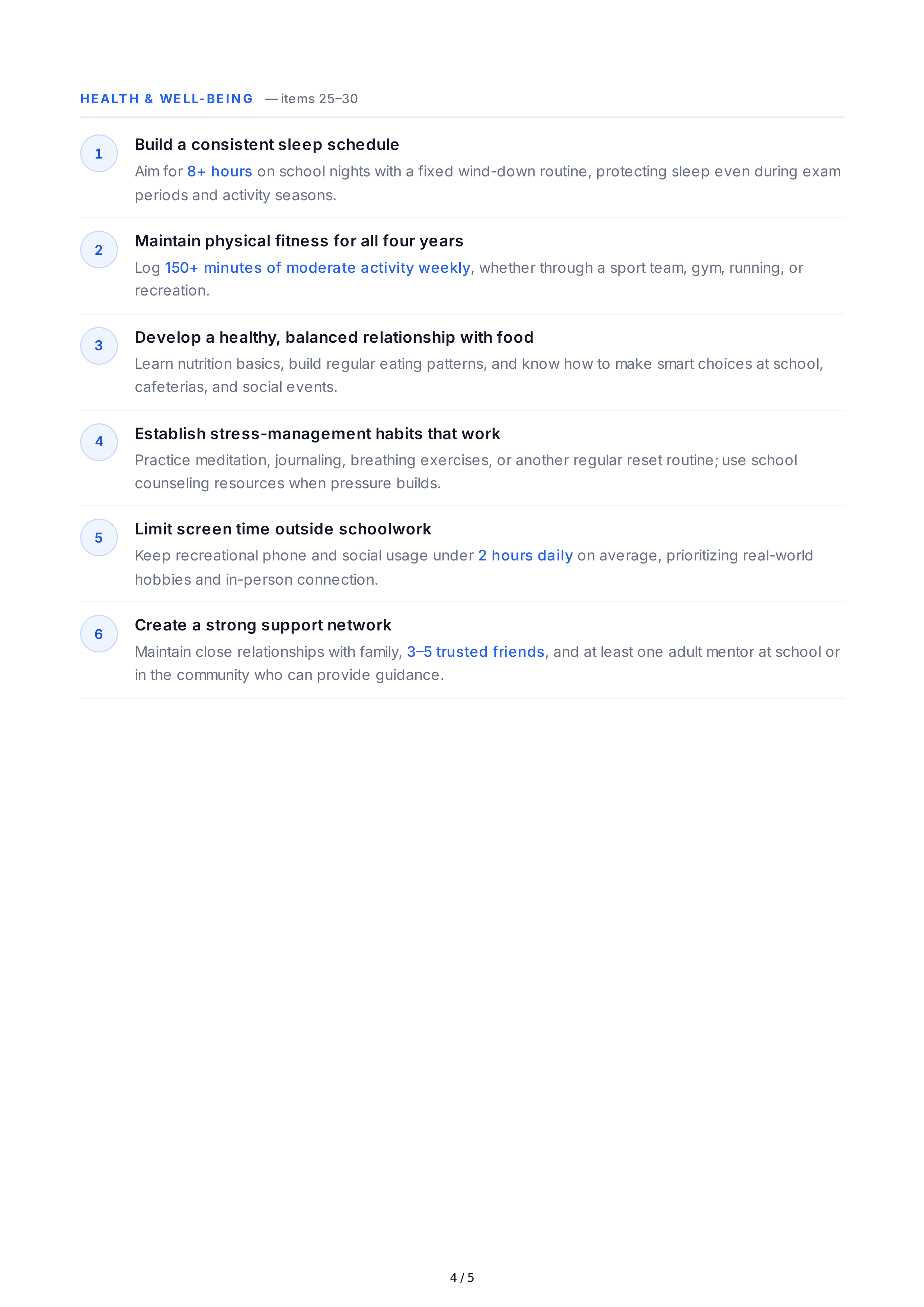
HE ALT H
&
WE LL
-
BE I N G
—
items
25–30
Build
a
consistent
sleep
schedule
Aim
for
8+
hours
on
school
nights
with
a
fixed
wind
-
down
routine
,
protecting
sleep
even
during
exam
periods
and
activity
seasons
.
1
Maintain
physical
fitness
for
all
four
years
Log
150+
minutes
of
moderate
activity
weekly
,
whether
through
a
sport
team
,
gym
,
running
,
or
recreation
.
2
Develop
a
healthy
,
balanced
relationship
with
food
Learn
nutrition
basics
,
build
regular
eating
patterns
,
and
know
how
to
make
smart
choices
at
school
,
cafeterias
,
and
social
events
.
3
Establish
stress
-
management
habits
that
work
Practice
meditation
,
journaling
,
breathing
exercises
,
or
another
regular
reset
routine
;
use
school
counseling
resources
when
pressure
builds
.
4
Limit
screen
time
outside
schoolwork
Keep
recreational
phone
and
social
usage
under
2
hours
daily
on
average
,
prioritizing
real
-
world
hobbies
and
in
-
person
connection
.
5
Create
a
strong
support
network
Maintain
close
relationships
with
family
,
3–5
trusted
friends
,
and
at
least
one
adult
mentor
at
school
or
in
the
community
who
can
provide
guidance
.
6
4 / 5
CO M M UN I T Y
&
CO N T RI BUT I O N
—
items
31–36
Long
-
Term
Goals
for
High
School
Students
36
goals
across
6
areas
·
Build
a
plan
you
can
still
adjust
at
every
grade
level
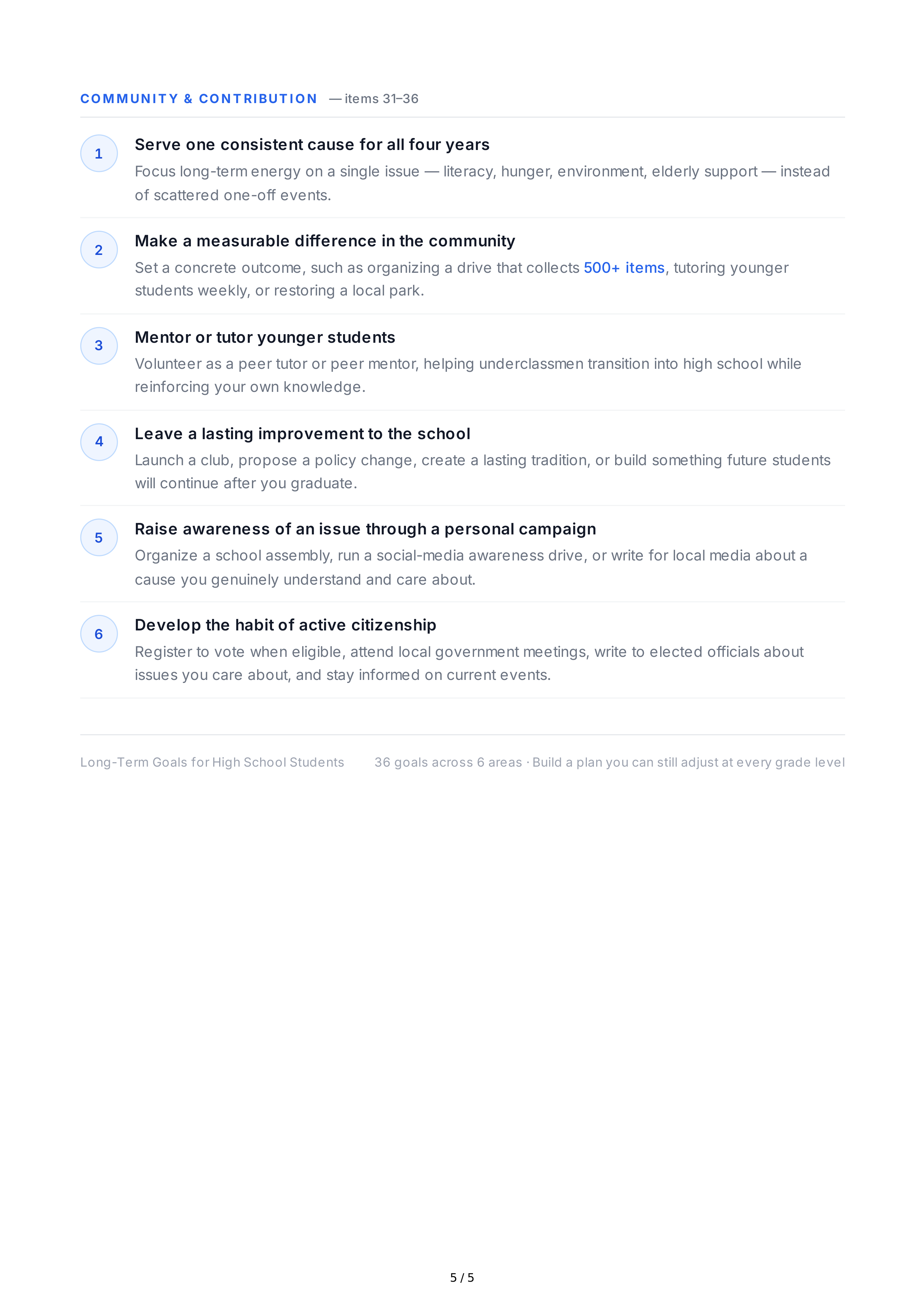
Serve
one
consistent
cause
for
all
four
years
Focus
long
-
term
energy
on
a
single
issue
—
literacy
,
hunger
,
environment
,
elderly
support
—
instead
of
scattered
one
-
off
events
.
1
Make
a
measurable
difference
in
the
community
Set
a
concrete
outcome
,
such
as
organizing
a
drive
that
collects
500+
items
,
tutoring
younger
students
weekly
,
or
restoring
a
local
park
.
2
Mentor
or
tutor
younger
students
Volunteer
as
a
peer
tutor
or
peer
mentor
,
helping
underclassmen
transition
into
high
school
while
reinforcing
your
own
knowledge
.
3
Leave
a
lasting
improvement
to
the
school
Launch
a
club
,
propose
a
policy
change
,
create
a
lasting
tradition
,
or
build
something
future
students
will
continue
after
you
graduate
.
4
Raise
awareness
of
an
issue
through
a
personal
campaign
Organize
a
school
assembly
,
run
a
social
-
media
awareness
drive
,
or
write
for
local
media
about
a
cause
you
genuinely
understand
and
care
about
.
5
Develop
the
habit
of
active
citizenship
Register
to
vote
when
eligible
,
attend
local
government
meetings
,
write
to
elected
officials
about
issues
you
care
about
,
and
stay
informed
on
current
events
.
6
5 / 5