Fall Prevention Training Guide:
A Lesson Plan for Employers
11
z
z
Train workers in hazard recognition and the
OSHA Fall Protection standard to properly
identify and understand the severity of fall
hazards and certify through a written record.
z
z
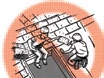
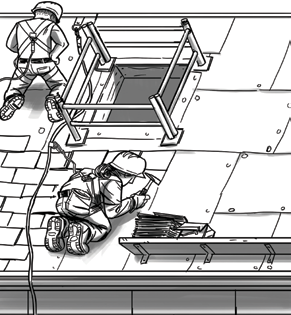
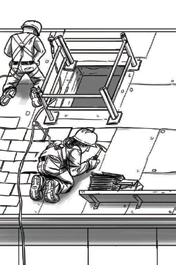
Guard or secure covers over holes with
materials of sufficient strength, and write
“Hole” over the cover upon observing the
fall hazard.
z
z
Provide and use safety monitor systems,
warning line systems, or controlled access
zones, in accord with the OSHA Fall
Protection standard.
Personal fall arrest systems
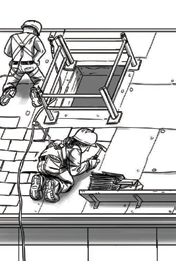
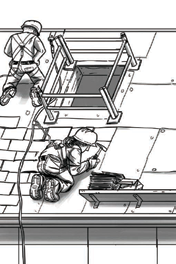
When conducting roofing work, there are
many ways to prevent fall hazards. If workers
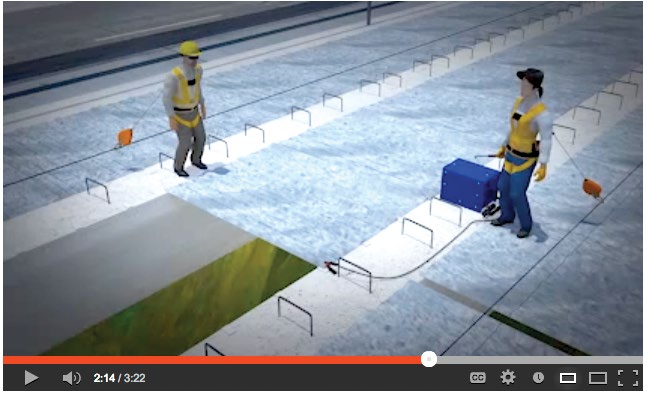
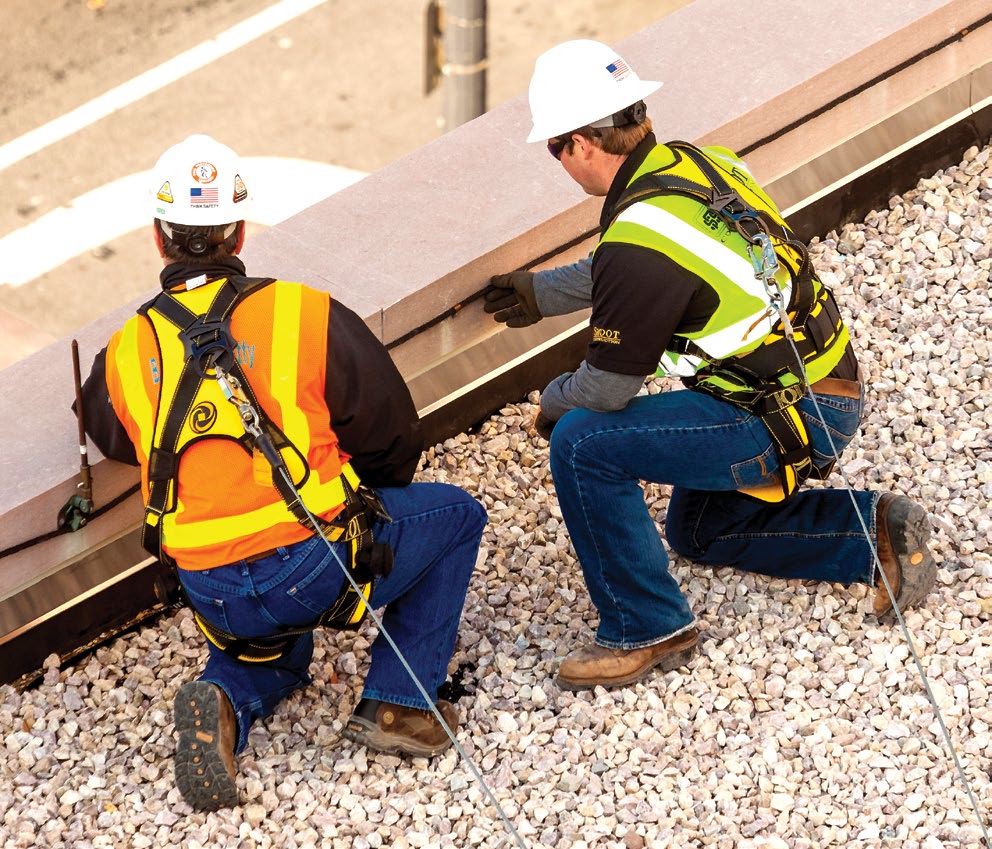
use a Personal Fall Arrest System (PFAS), the
employer must provide a full body harness,
lanyard and/or lifeline, for each worker, and
an anchorage point independent of supporting
any other platforms, but capable of supporting
5,000 lbs (22.2kN), per each attached worker.
Make sure the PFAS fits the worker, and
regularly inspect all fall protection equipment
to ensure that it’s still in good condition. If
workers do not routinely use their PFAS, they
may neglect routine daily inspection of their
equipment — and when required to use their
PFAS, a component part may fail!
Falls are the leading cause of death in the
construction industry, and even experienced
workers can be hurt and killed in falls. Regularly
wear your PFAS, stay connected and tie-off to a
proper anchorage point at the job site.
Safety monitor
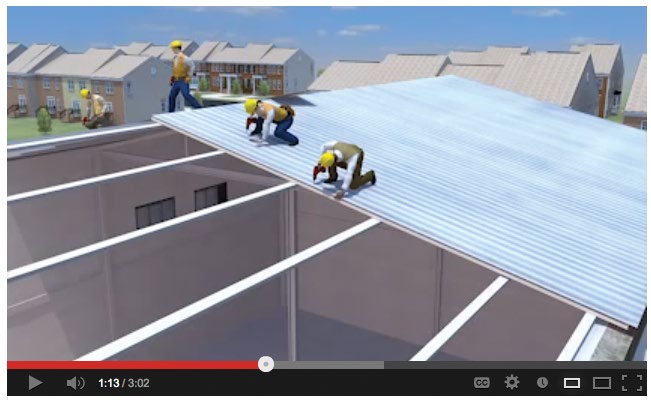
Workers can use a safety monitor system in
conjunction with a warning line system with
a low slope roof (4:12 vertical to horizontal, or
less),
under 50 feet or less in width
. The safety
monitor must be a competent person and have
no other duties that could interfere with their
responsibility. They are required to work on the
same level as the work being performed, and
close enough to workers for direct monitoring
(visual) and for verbal communication.
Let’s discuss fall protection!
1.
Have you received training in OSHA’s
Fall Protection standard?
2.
Construction work at what level(s)
require fall protection?
3.
What conditions may lead to falls
through a skylight, hole or over a
ramp?
4.
Is there a need to use fall protection at
your job site?
5.
What should the employer do to
ensure that your job sites are free of
unidentified fall hazards?
6.
What OSHA standard applies?
Suggested Questions for your
Toolbox Talks
z
z
How could John’s fall been prevented?
z
z
What is the leading cause of death in the
construction industry?
z
z
What fall protection systems are we using on
this job site?