A guide to payment methods
6
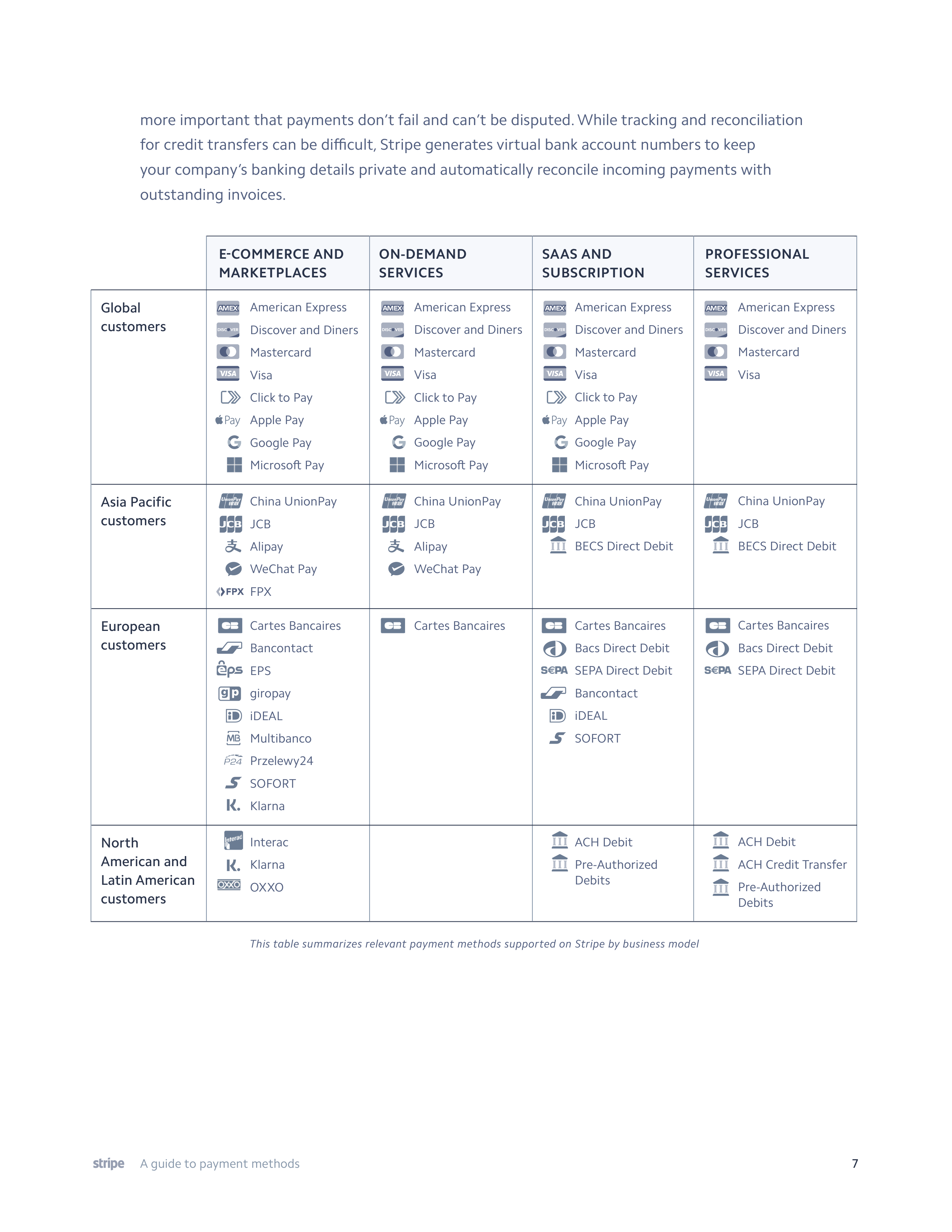
For SaaS and subscription businesses
Recommended:
Cards, digital wallets, bank debits
If you manage recurring revenue and want to optimize your checkout experience for ongoing
transactions, it’s important to consider whether or not payment details can be stored on file and
reused. The ability to reuse a customer’s payment credentials allows you to initiate payments
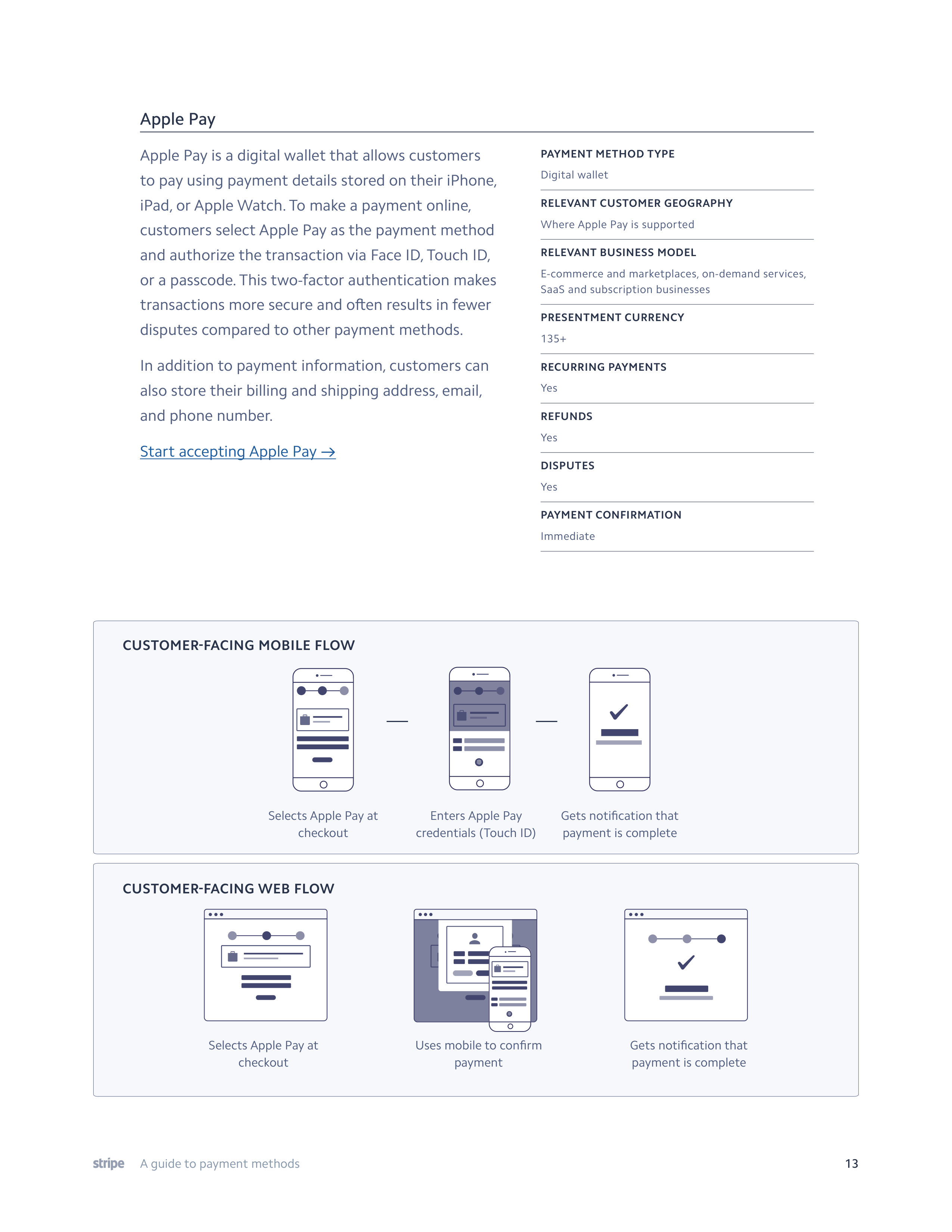
on a custom schedule, without requiring any action by your customers. Cards, digital wallet, and
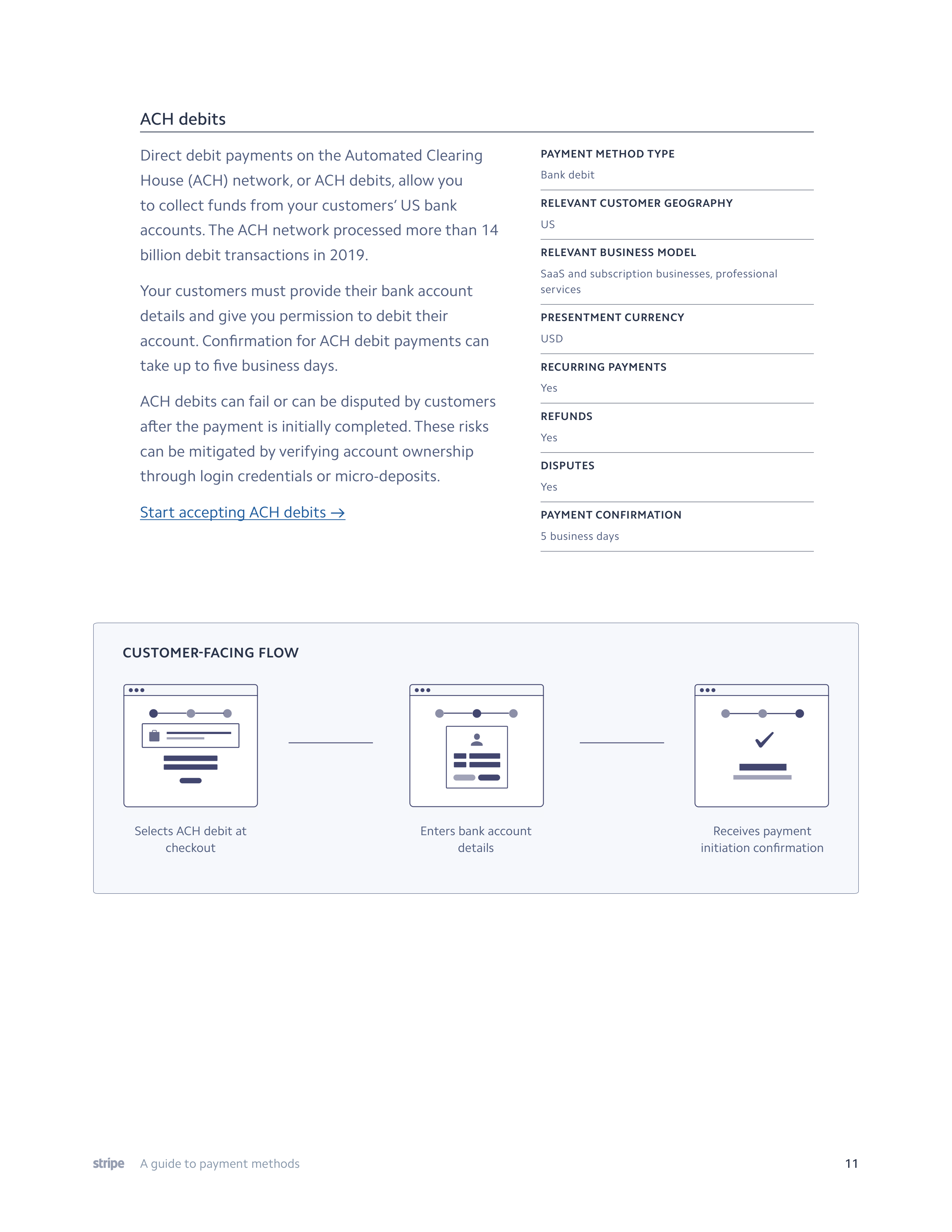
bank debit payments are all reusable—customers only need to provide their card number or
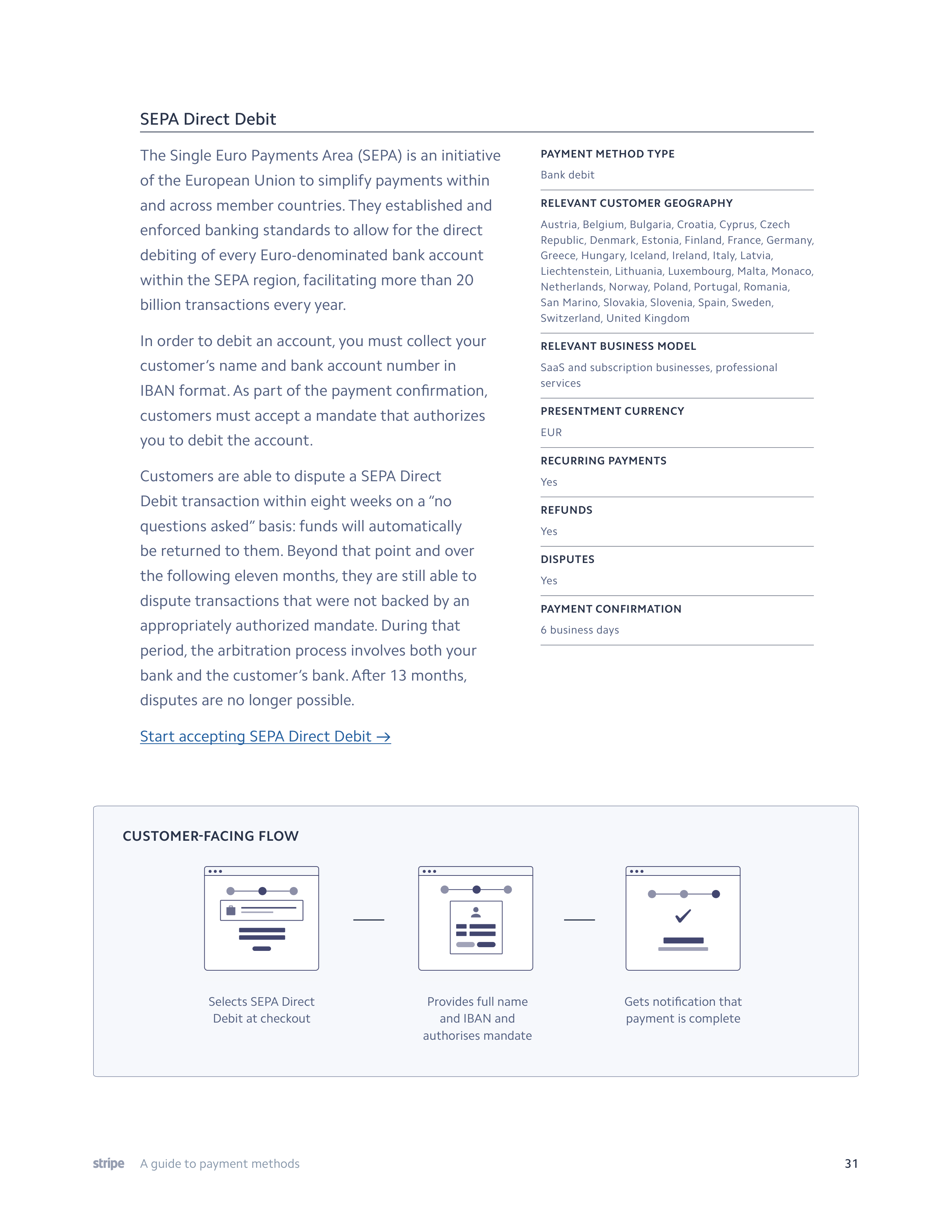
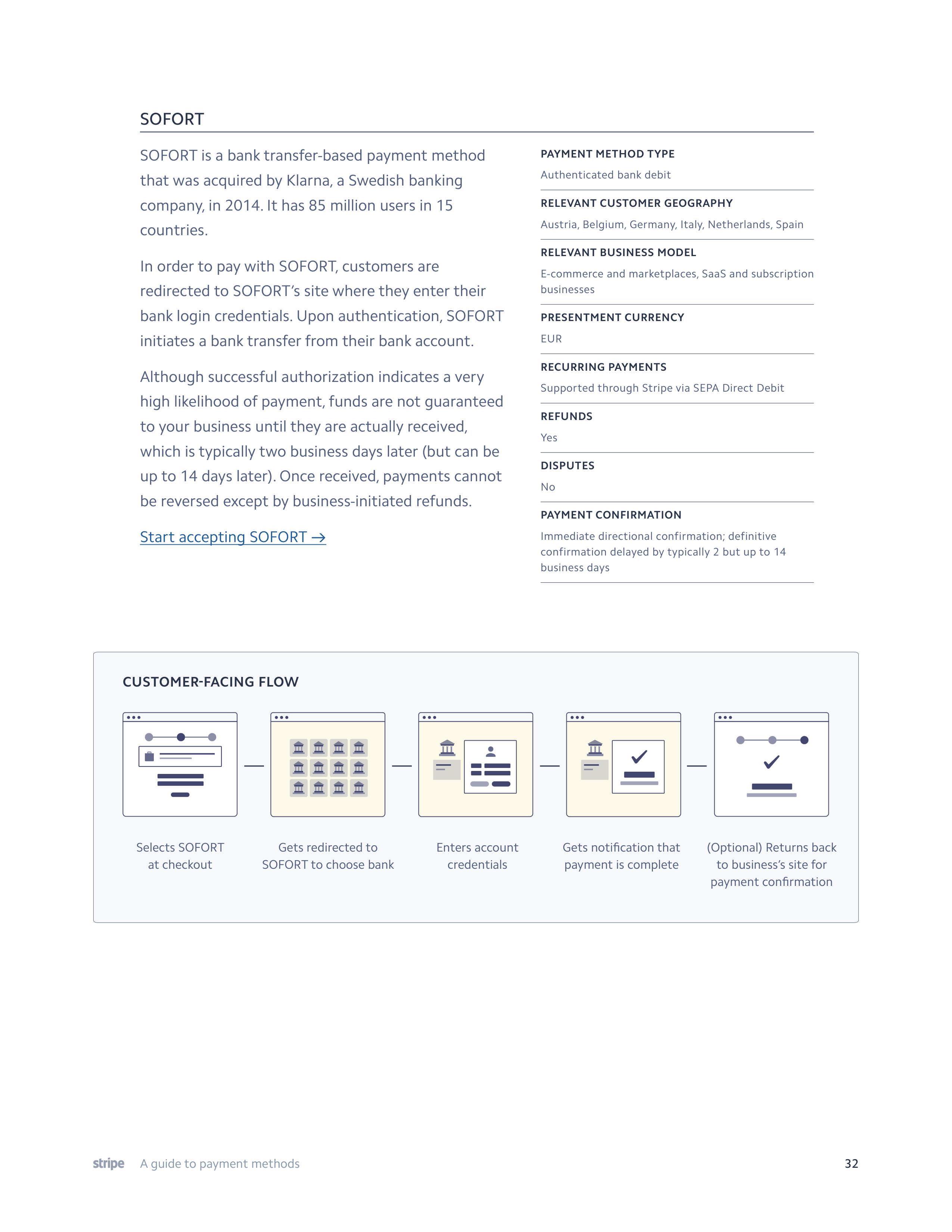
bank account details once. And, for customers who prefer to use authenticated bank debits such
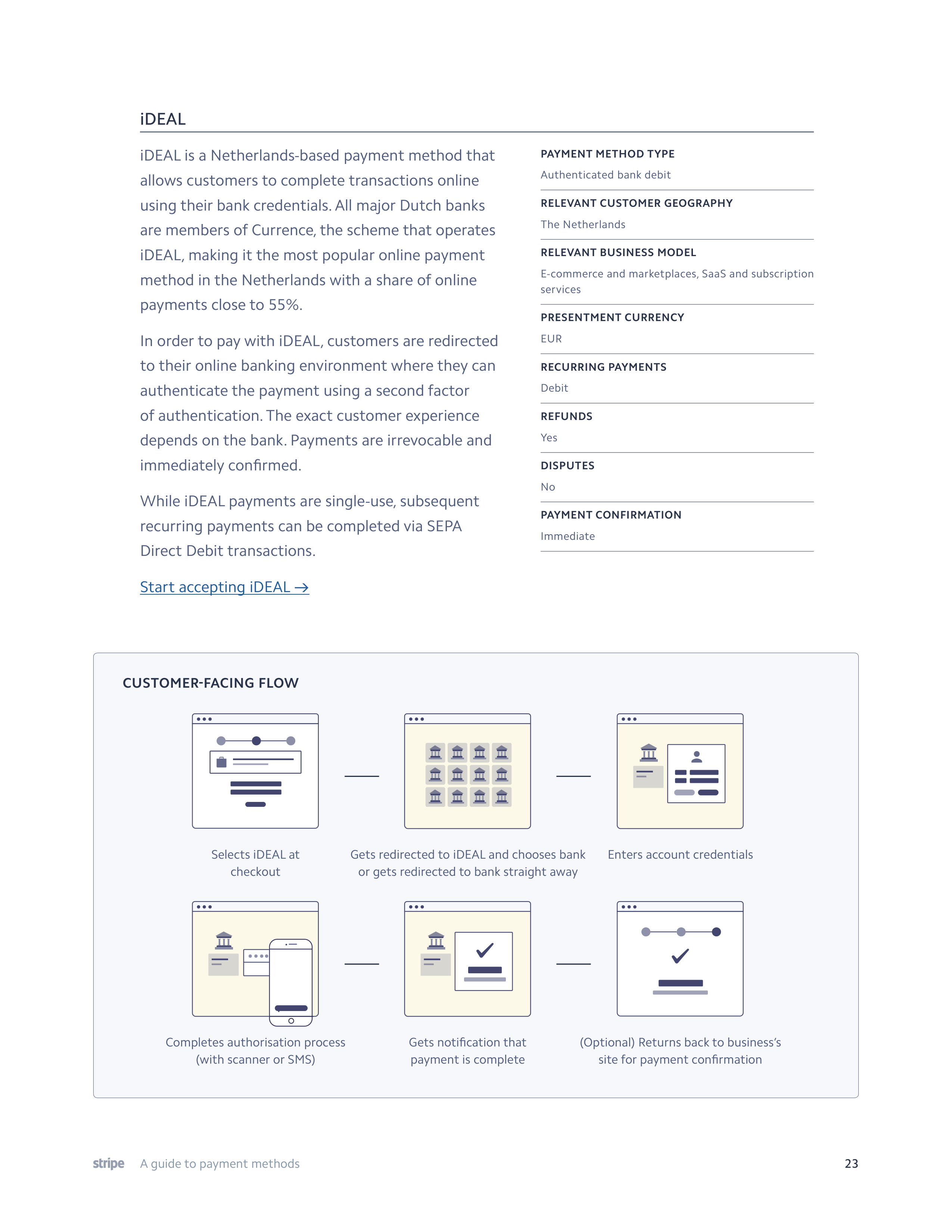
as iDEAL, SOFORT, or Bancontact, Stripe makes it possible to use these methods for recurring
payments by converting them into direct debits.
In addition, many SaaS and subscription companies face involuntary churn issues, where
customers intend to pay for a product but their payment attempt fails due to expired cards,
insufficient funds, or incorrect card details. In fact, 9% of subscription invoices fail on the first
charge attempt due to involuntary churn. Stripe Billing can help manage recurring declines for
cards, in addition to supporting many of the most relevant payment methods for increasing
recurring payment conversion (for example, because bank account information doesn’t expire,
accepting bank debits can increase retention).
While accepting reusable payment methods is beneficial to the business, it’s also important to
consider local expectations regarding recurring billing. For example, in markets like Brazil and
Indonesia, it’s common to send recurring invoices or reminders for customers to initiate each
payment. Stripe Billing makes it easy to accommodate both recurring charges and invoicing.
For professional services
Recommended:
Cards, bank debits, bank credit transfers
If you offer professional services or wholesale products, even a single payment failure or dispute
could result in significant revenue loss. The ability to securely and successfully accept large
payments can protect your business and can be solved, in part, by invoicing your customers so
they have more flexibility to initiate payment when funds are available. Historically this has often
meant asking customers to send checks. You can also send a hosted invoice with built-in support
for cards and bank methods to minimize payment failure and automate payment tracking and
reconciliation.
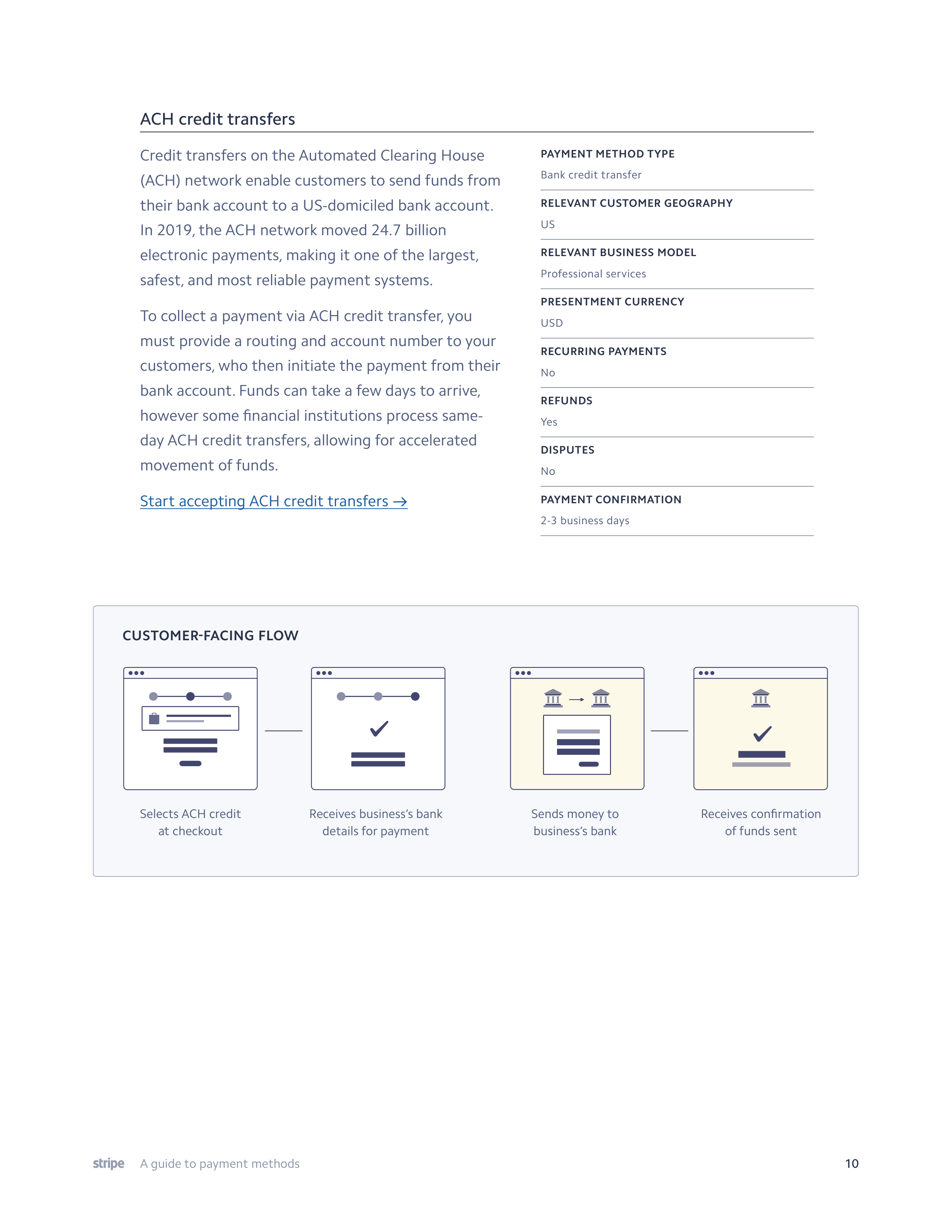
In addition, bank credit transfers are a secure, non-disputable payment option that is often
preferred for very large payments. Credit transfer funds are deposited directly into your account
once the payment has been confirmed. Credit transfers also require your customers to initiate
the payment, adding an extra level of authentication and security. And, because contracts are
typically in place before payment, it’s less important that your business initiates the payment and