Short
-
Term
Goals
for
College
Freshmen
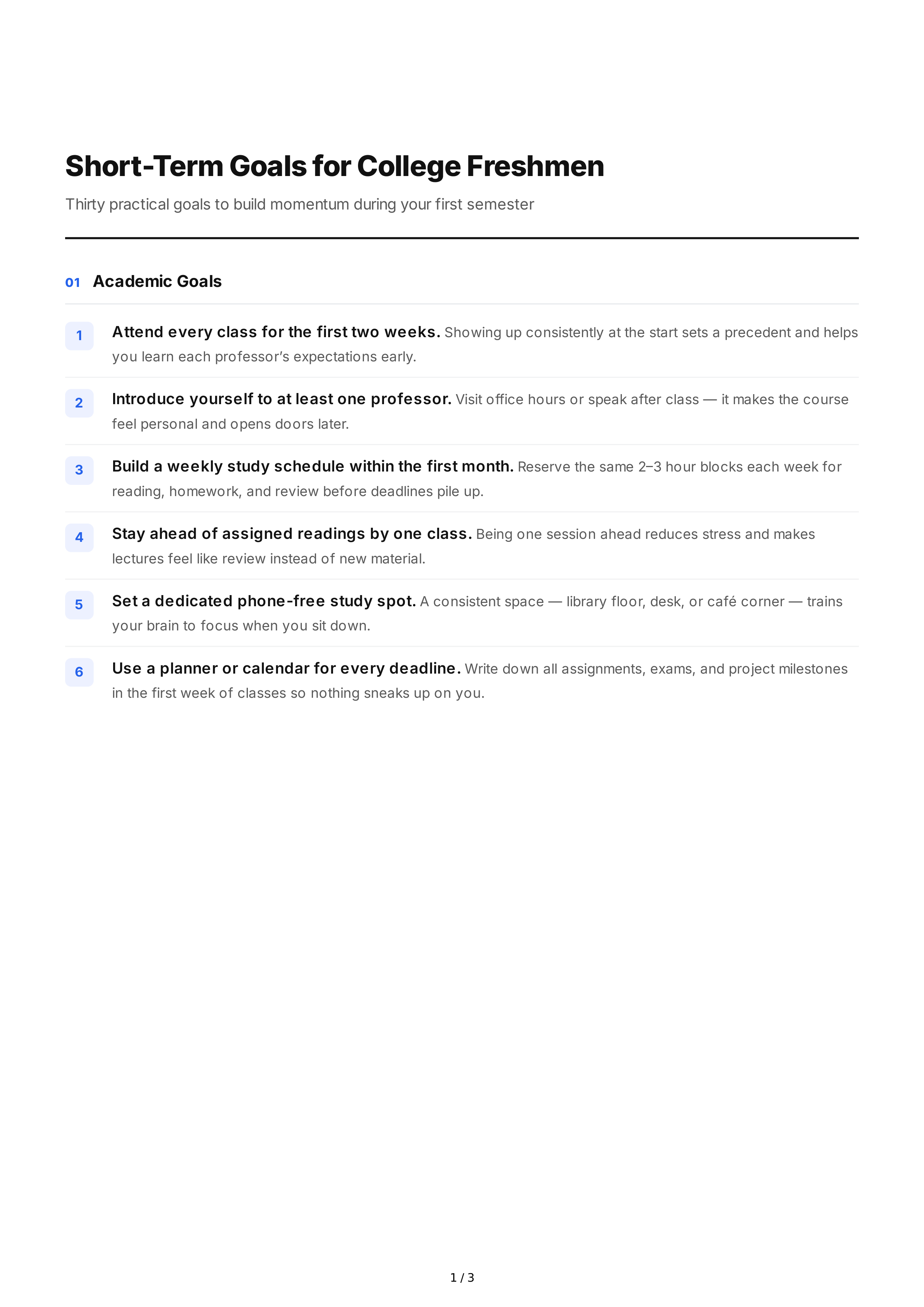
Thirty
practical
goals
to
build
momentum
during
your
first
semester
01
Academic
Goals
Attend
every
class
for
the
first
two
weeks
.
Showing
up
consistently
at
the
start
sets
a
precedent
and
helps
you
learn
each
professor
’
s
expectations
early
.
1
Introduce
yourself
to
at
least
one
professor
.
Visit
office
hours
or
speak
after
class
—
it
makes
the
course
feel
personal
and
opens
doors
later
.
2
Build
a
weekly
study
schedule
within
the
first
month
.
Reserve
the
same
2–3
hour
blocks
each
week
for
reading
,
homework
,
and
review
before
deadlines
pile
up
.
3
Stay
ahead
of
assigned
readings
by
one
class
.
Being
one
session
ahead
reduces
stress
and
makes
lectures
feel
like
review
instead
of
new
material
.
4
Set
a
dedicated
phone
-
free
study
spot
.
A
consistent
space
—
library
floor
,
desk
,
or
café
corner
—
trains
your
brain
to
focus
when
you
sit
down
.
5
Use
a
planner
or
calendar
for
every
deadline
.
Write
down
all
assignments
,
exams
,
and
project
milestones
in
the
first
week
of
classes
so
nothing
sneaks
up
on
you
.
6
1 / 3
02
Social
&
Campus
Life
Goals
03
Health
&
Wellness
Goals
Join
one
or
two
student
organizations
.
Depth
beats
breadth
—
being
active
in
one
club
creates
real
friendships
faster
than
signing
up
for
five
.
1
Attend
at
least
two
campus
events
per
month
.
Guest
speakers
,
game
nights
,
and
club
fairs
are
low
-
pressure
ways
to
meet
people
and
feel
connected
.
2
Learn
the
names
of
five
new
classmates
.
A
simple
goal
that
makes
lecture
halls
feel
smaller
and
study
groups
easier
to
form
.
3
Eat
a
meal
with
someone
new
each
week
.
Dining
halls
are
the
easiest
place
on
campus
to
grow
your
circle
—
sit
with
a
hallmate
or
classmate
.
4
Walk
around
campus
until
you
can
find
every
building
.
Knowing
where
your
classes
,
the
gym
,
the
library
,
and
the
health
center
are
removes
daily
friction
and
stress
.
5
Exchange
contact
info
with
one
person
in
each
class
.
You
will
need
a
classmate
for
missed
notes
,
group
work
,
and
quick
questions
.
6
Sleep
7–9
hours
most
nights
.
Consistent
sleep
is
the
single
highest
-
impact
habit
for
grades
,
mood
,
and
immunity
.
1
Exercise
three
times
per
week
.
Use
the
campus
gym
,
join
an
intramural
team
,
or
simply
walk
30
minutes
—
movement
protects
your
focus
.
2
Establish
a
regular
eating
routine
.
Plan
for
three
meals
(
or
steady
snacks
)
per
day
so
energy
and
concentration
stay
stable
through
classes
.
3
Stay
hydrated
throughout
the
day
.
Carry
a
refillable
bottle
—
even
mild
dehydration
causes
fatigue
and
headaches
.
4
Schedule
one
screen
-
free
hour
before
bed
.
Reducing
late
-
night
scrolling
improves
sleep
quality
and
reduces
comparison
anxiety
.
5
Find
the
campus
counseling
or
wellness
center
.
Knowing
what
support
exists
before
you
need
it
makes
reaching
out
far
easier
.
6
2 / 3
04
Personal
Growth
&
Life
Skills
Goals
05
Career
&
Exploration
Goals
How
to
use
this
list
:
Pick
one
goal
from
each
category
for
the
first
month
.
Check
them
off
as
you
go
,
then
choose
the
next
ones
.
Trying
to
do
all
thirty
at
once
in
week
one
will
burn
you
out
—
short
-
term
goals
work
best
when
they
are
specific
,
realistic
,
and
reviewed
weekly
.
Create
a
simple
monthly
budget
.
Track
what
comes
in
and
what
goes
out
;
knowing
your
spending
limits
prevents
end
-
of
-
semester
money
stress
.
1
Handle
your
own
laundry
and
room
cleaning
on
a
set
schedule
.
Small
weekly
routines
keep
your
space
livable
and
your
mind
clear
.
2
Say
“
yes
”
to
one
thing
that
feels
slightly
uncomfortable
.
Try
out
for
the
play
,
join
the
pickup
game
,
raise
your
hand
—
growth
lives
just
outside
your
comfort
zone
.
3
Write
down
one
win
and
one
lesson
each
week
.
A
short
reflection
journal
builds
self
-
awareness
and
helps
you
see
how
much
you
are
growing
.
4
Call
home
regularly
on
a
set
day
.
A
consistent
Sunday
call
keeps
relationships
strong
without
letting
homesickness
build
up
.
5
Try
one
hobby
that
isn
’
t
academics
or
screens
.
The
gym
,
an
art
class
,
or
a
hiking
club
gives
your
brain
a
break
and
helps
you
meet
different
people
.
6
Visit
the
career
center
before
midterms
.
They
can
help
with
resumes
,
internships
,
and
major
exploration
before
application
season
arrives
.
1
Create
or
update
your
LinkedIn
profile
.
A
simple
profile
with
a
professional
photo
,
major
,
and
campus
involvement
is
enough
for
now
.
2
Attend
one
career
fair
or
networking
event
.
Practice
introducing
yourself
—
recruiters
expect
freshmen
to
be
exploring
.
3
Explore
one
major
you
know
nothing
about
.
Sit
in
on
a
class
or
read
the
department
page
;
curiosity
now
prevents
a
costly
major
change
later
.
4
Shadow
or
interview
one
professional
in
a
field
you
like
.
A
15-
minute
informational
interview
tells
you
more
than
a
semester
of
guessing
.
5
Review
your
academic
plan
with
an
advisor
.
Confirm
degree
requirements
and
general
education
credits
so
you
start
on
the
right
track
.
6
3 / 3