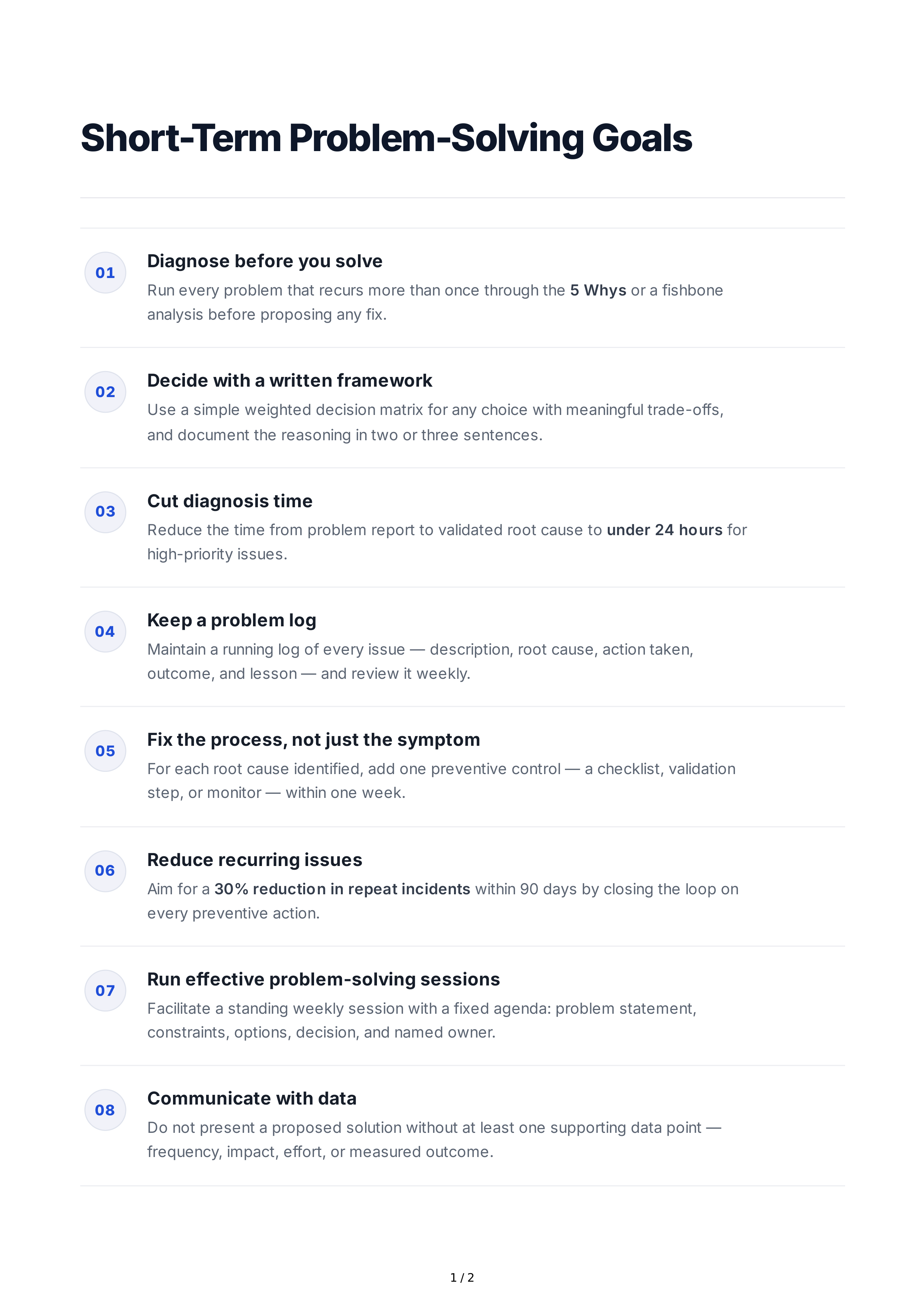
Short
-
Term
Problem
-
Solving
Goals
01
Diagnose
before
you
solve
Run
every
problem
that
recurs
more
than
once
through
the
5
Whys
or
a
fishbone
analysis
before
proposing
any
fix
.
02
Decide
with
a
written
framework
Use
a
simple
weighted
decision
matrix
for
any
choice
with
meaningful
trade
-
offs
,
and
document
the
reasoning
in
two
or
three
sentences
.
03
Cut
diagnosis
time
Reduce
the
time
from
problem
report
to
validated
root
cause
to
under
24
hours
for
high
-
priority
issues
.
04
Keep
a
problem
log
Maintain
a
running
log
of
every
issue
—
description
,
root
cause
,
action
taken
,
outcome
,
and
lesson
—
and
review
it
weekly
.
05
Fix
the
process
,
not
just
the
symptom
For
each
root
cause
identified
,
add
one
preventive
control
—
a
checklist
,
validation
step
,
or
monitor
—
within
one
week
.
06
Reduce
recurring
issues
Aim
for
a
30%
reduction
in
repeat
incidents
within
90
days
by
closing
the
loop
on
every
preventive
action
.
07
Run
effective
problem
-
solving
sessions
Facilitate
a
standing
weekly
session
with
a
fixed
agenda
:
problem
statement
,
constraints
,
options
,
decision
,
and
named
owner
.
08
Communicate
with
data
Do
not
present
a
proposed
solution
without
at
least
one
supporting
data
point
—
frequency
,
impact
,
effort
,
or
measured
outcome
.
1 / 2
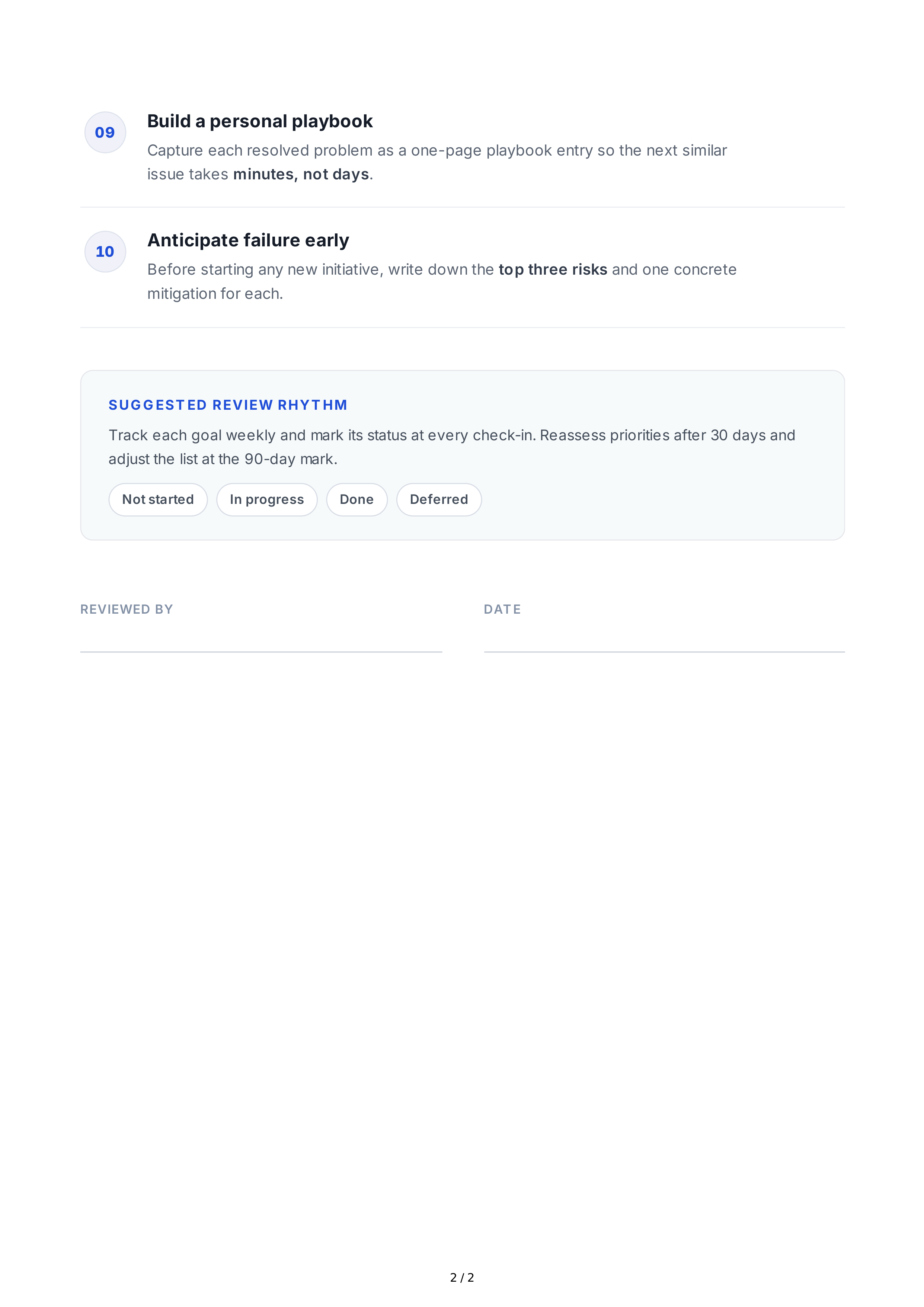
09
Build
a
personal
playbook
Capture
each
resolved
problem
as
a
one
-
page
playbook
entry
so
the
next
similar
issue
takes
minutes
,
not
days
.
10
Anticipate
failure
early
Before
starting
any
new
initiative
,
write
down
the
top
three
risks
and
one
concrete
mitigation
for
each
.
SUG G EST ED
REVIEW
RHYT HM
Track
each
goal
weekly
and
mark
its
status
at
every
check
-
in
.
Reassess
priorities
after
30
days
and
adjust
the
list
at
the
90-
day
mark
.
Not
started
In
progress
Done
Deferred
REVIEWED
BY
DATE
2 / 2