
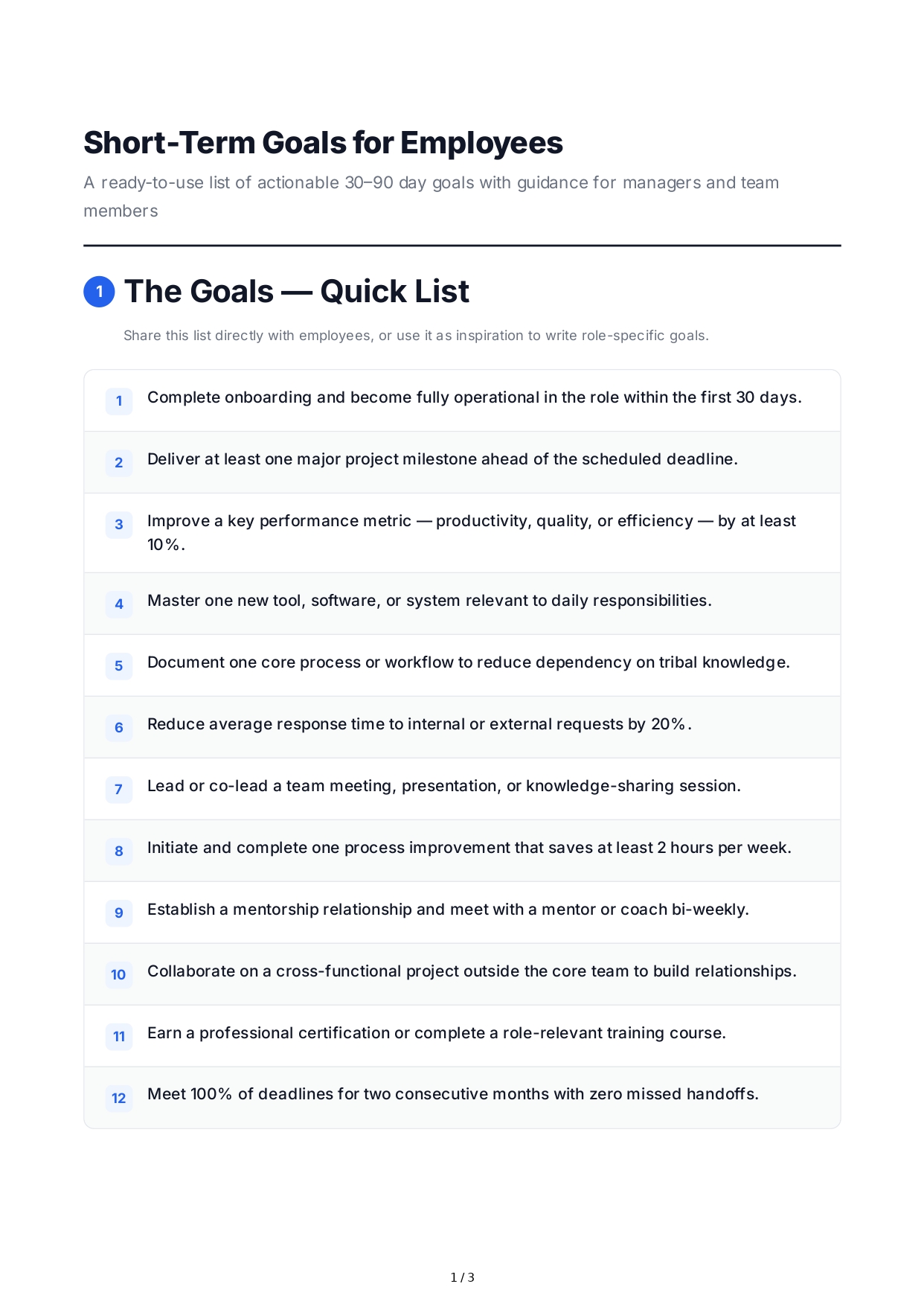
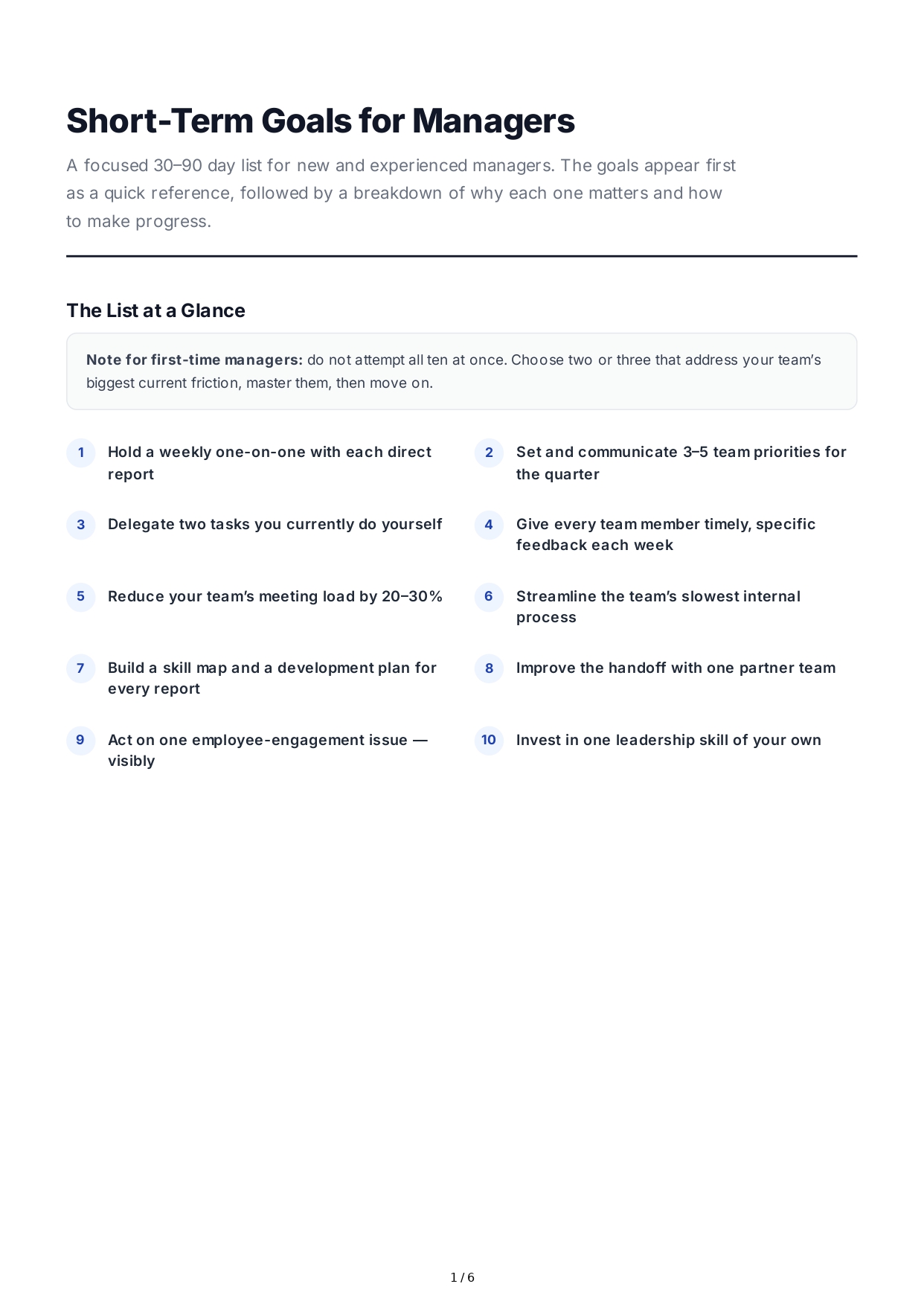
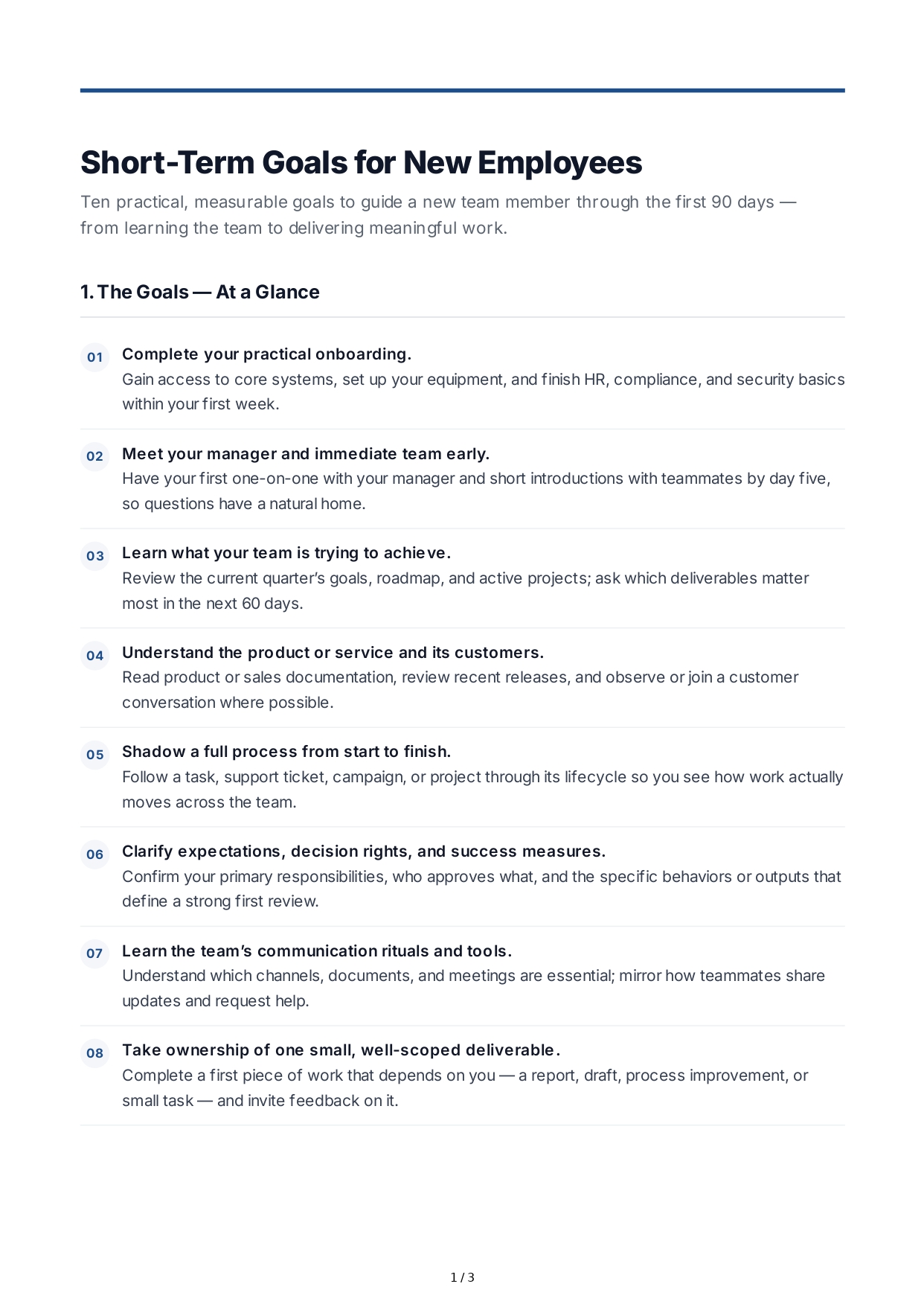
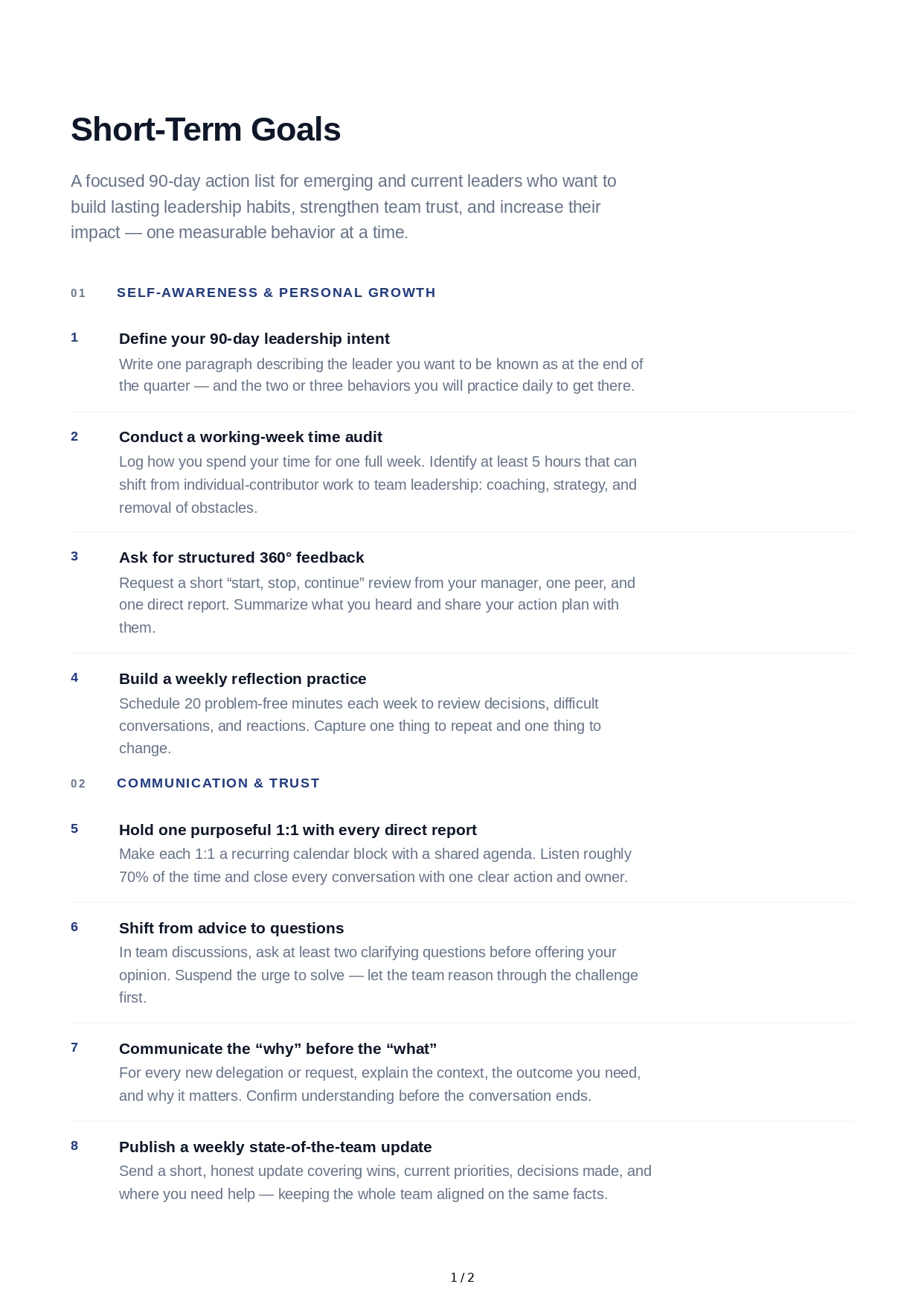
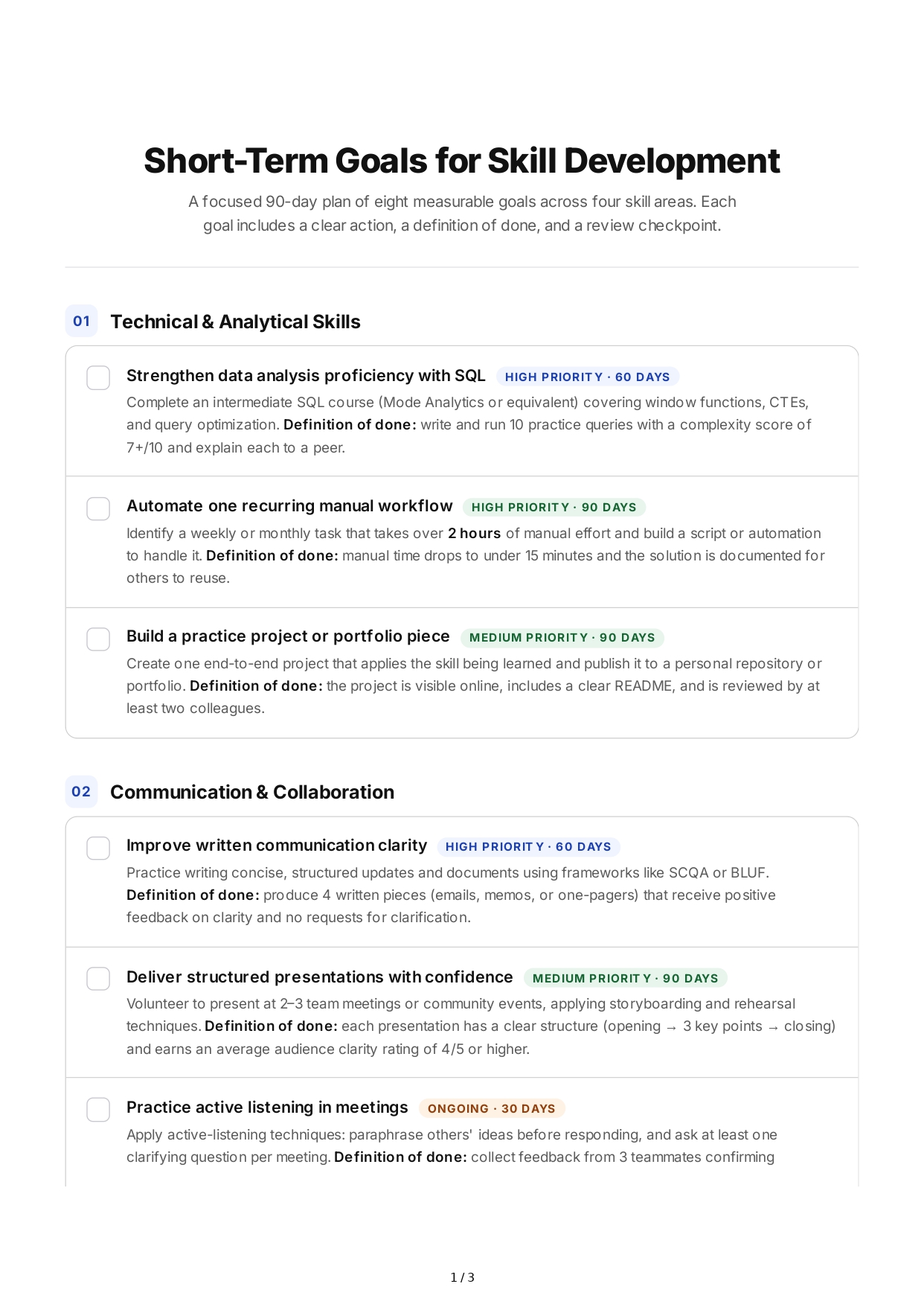
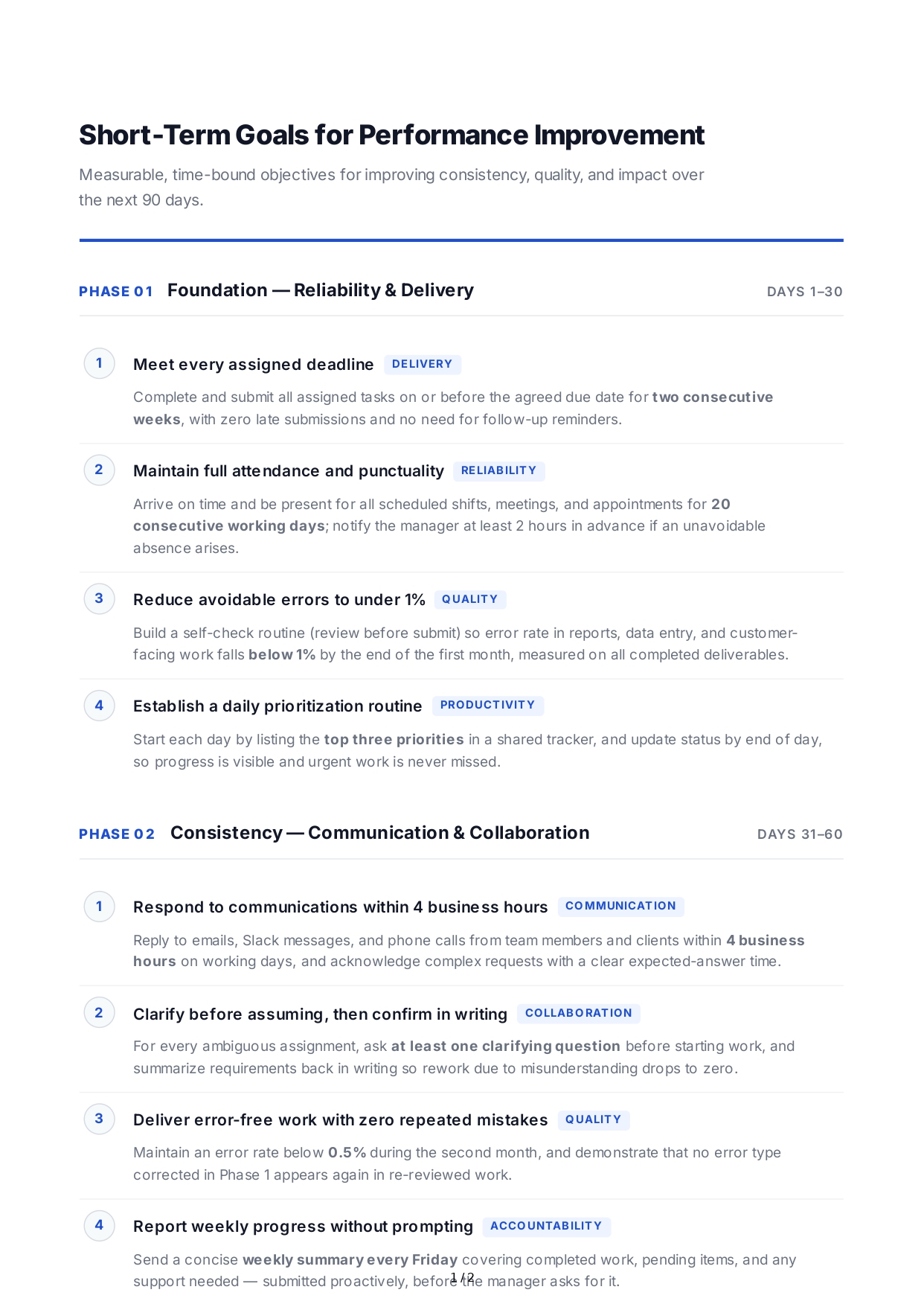
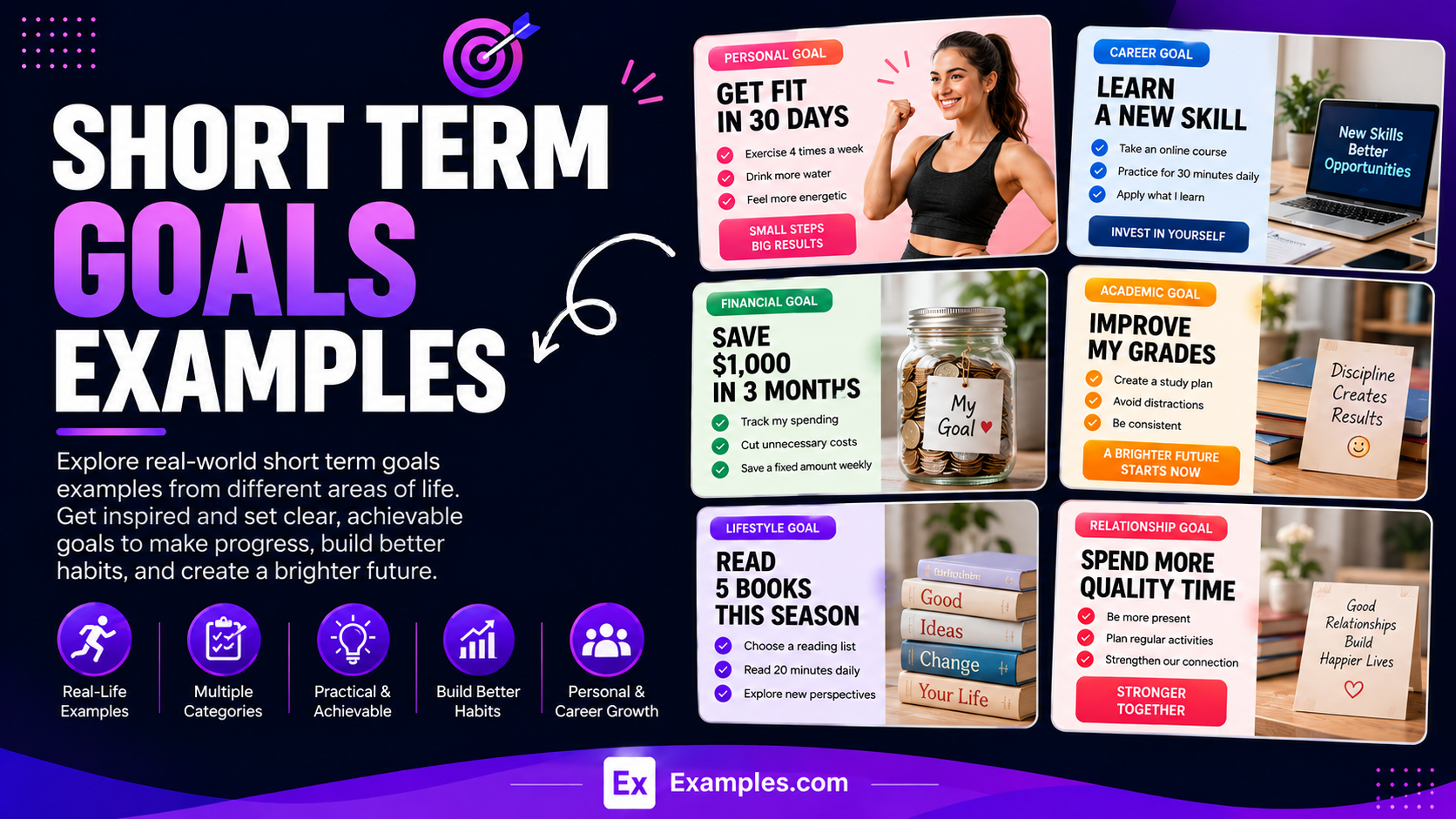
Short-term goals are specific targets you can achieve in the near future, often within days, weeks, or a few months. They help turn larger ambitions into smaller, manageable steps that are easier to track and complete. For example, instead of setting a broad goal such as “improve my career,” a short-term goal could be “complete one professional certification course within the next 30 days.”
What is a Short Term Goals?
A short-term goal is an objective designed to be achieved within a relatively short period. The exact timeframe depends on the situation. For some goals, it may mean a few days or weeks; for others, it may mean several months.
A short-term goal may involve:
- Completing a task
- Learning a skill
- Improving a habit
- Reaching a measurable target
- Finishing a project
- Preparing for an upcoming event
- Taking the next step toward a long-term goal

Popular Types Of Short Term Goals
Short-term goals can apply to nearly every area of life, including work, education, finances, health, relationships, and personal development.
Academic Short-Term Goals
These goals help students make measurable progress in school or college.
Examples:
- Complete all assignments due this week.
- Study for one hour each weekday.
- Improve a test score by 10% on the next exam.
- Complete a research paper before its deadline.
- Read one chapter of a textbook each day.
- Meet with a teacher to discuss a difficult subject.
- Create a study schedule for the next four weeks.
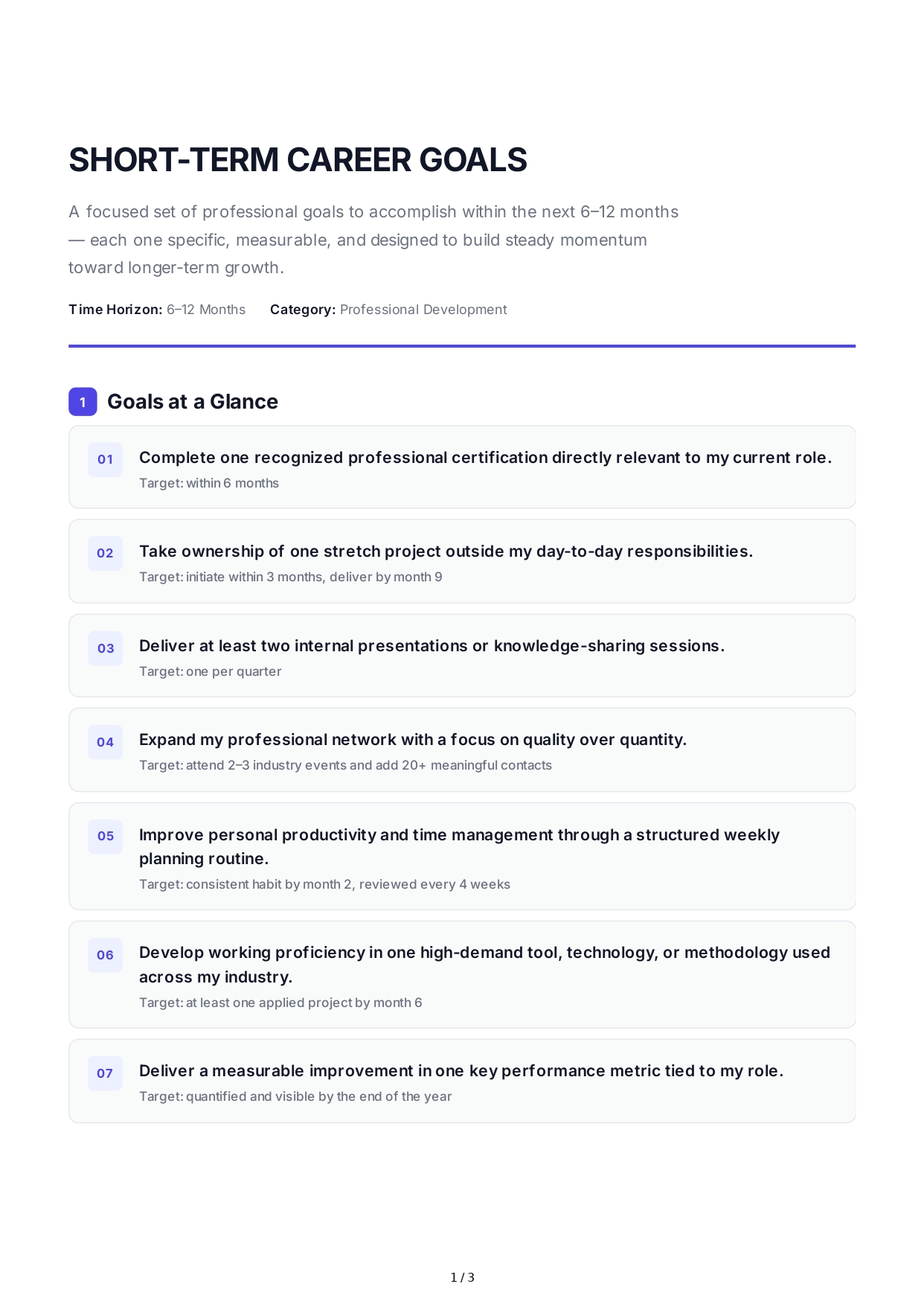
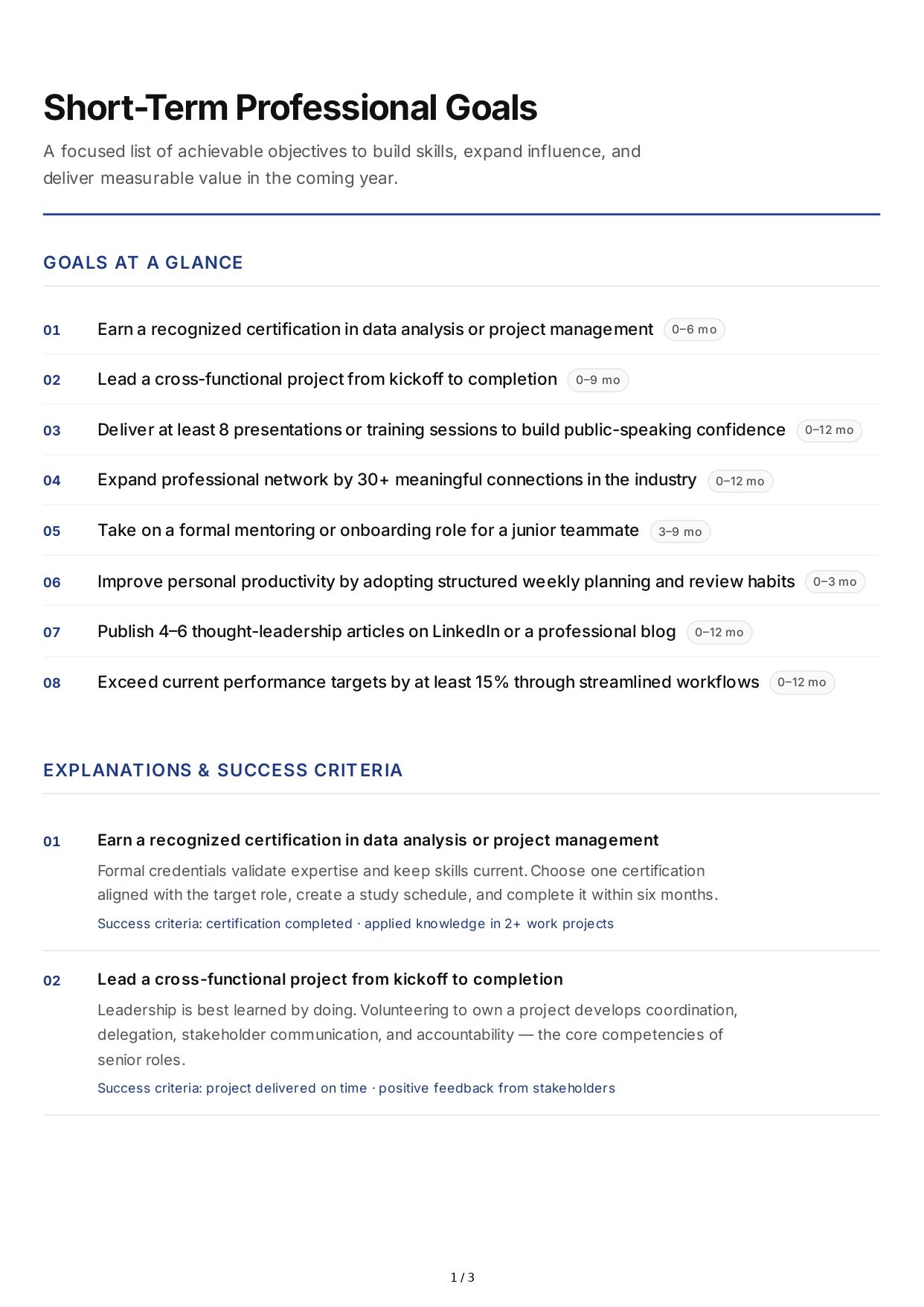
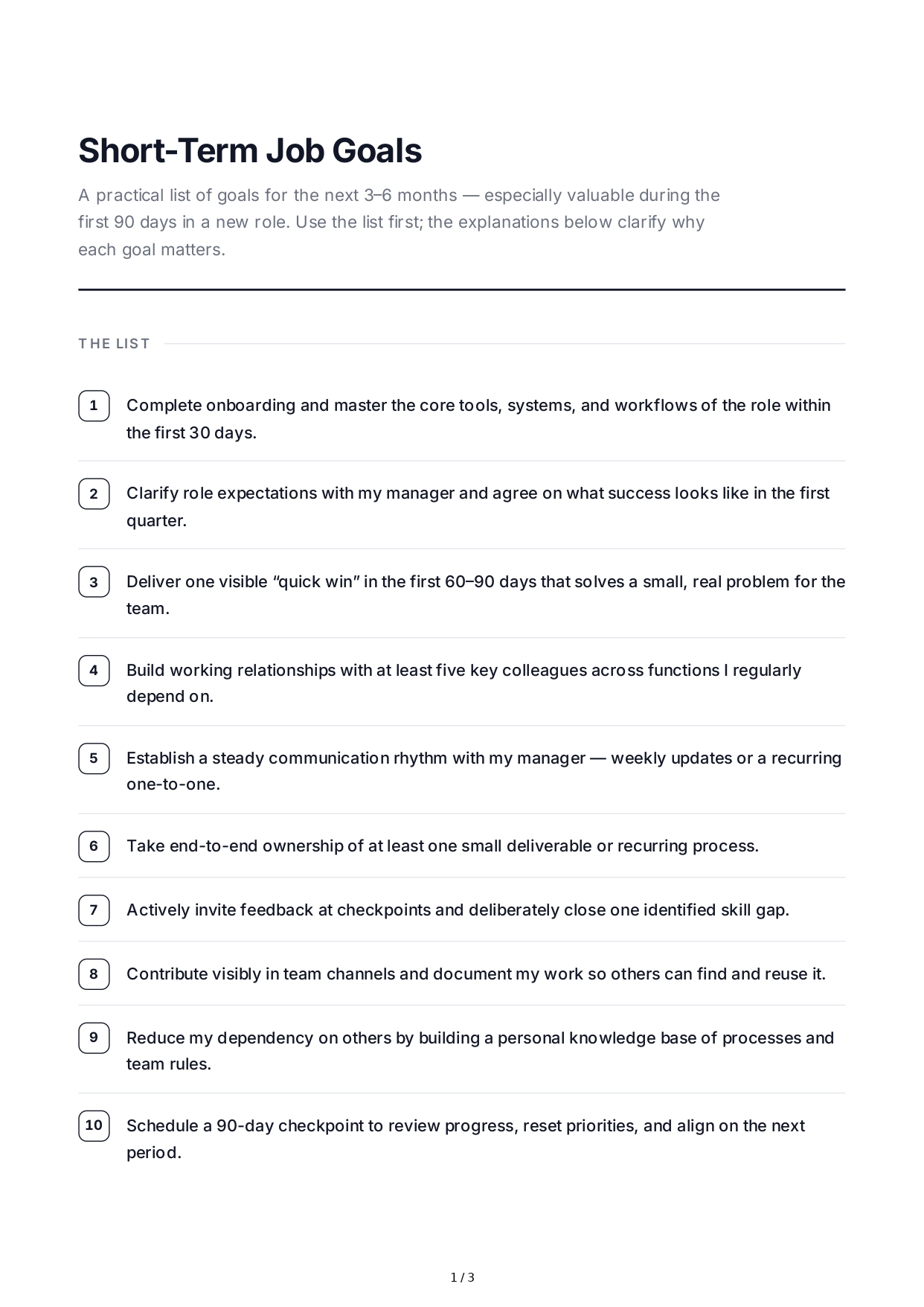
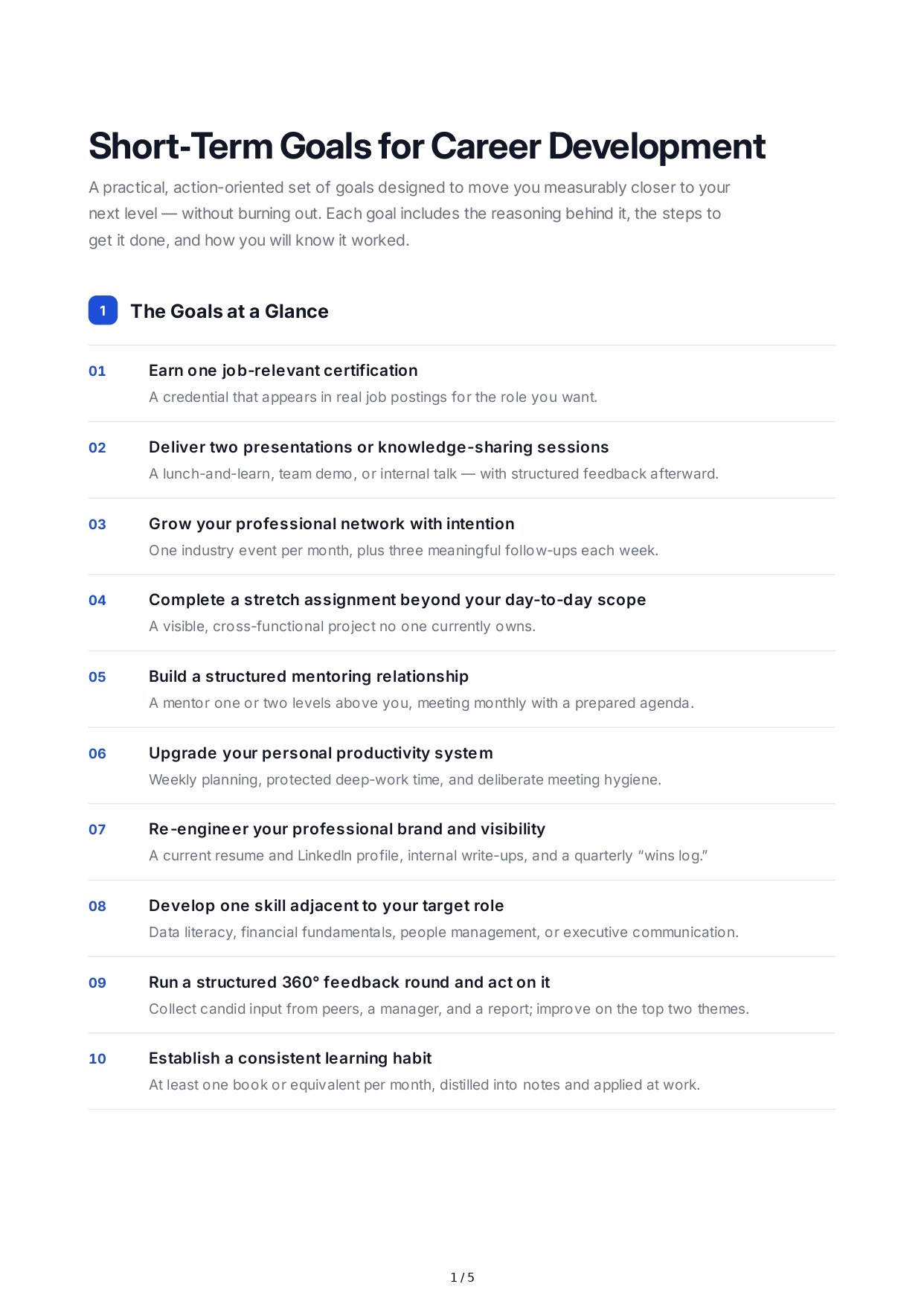
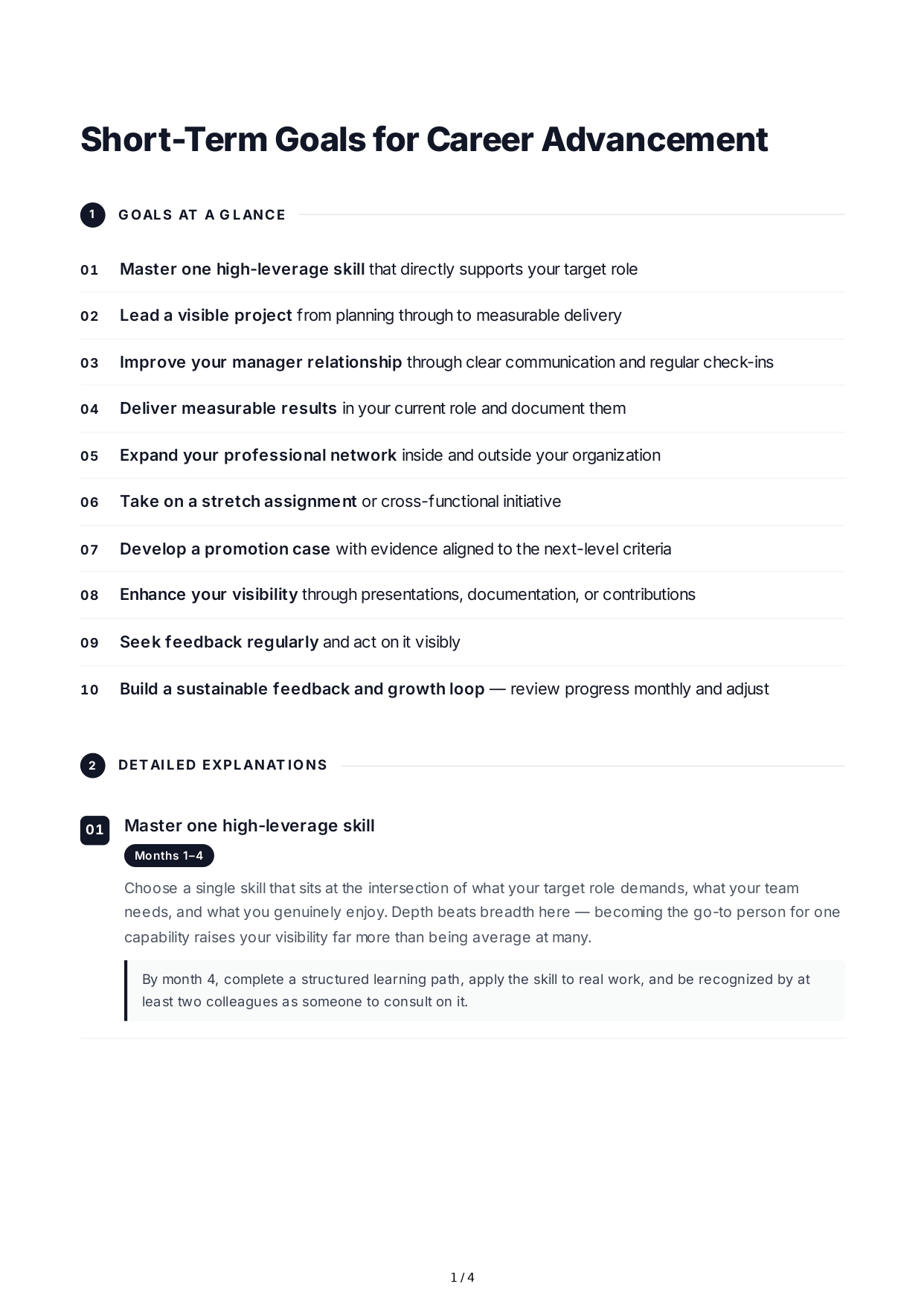
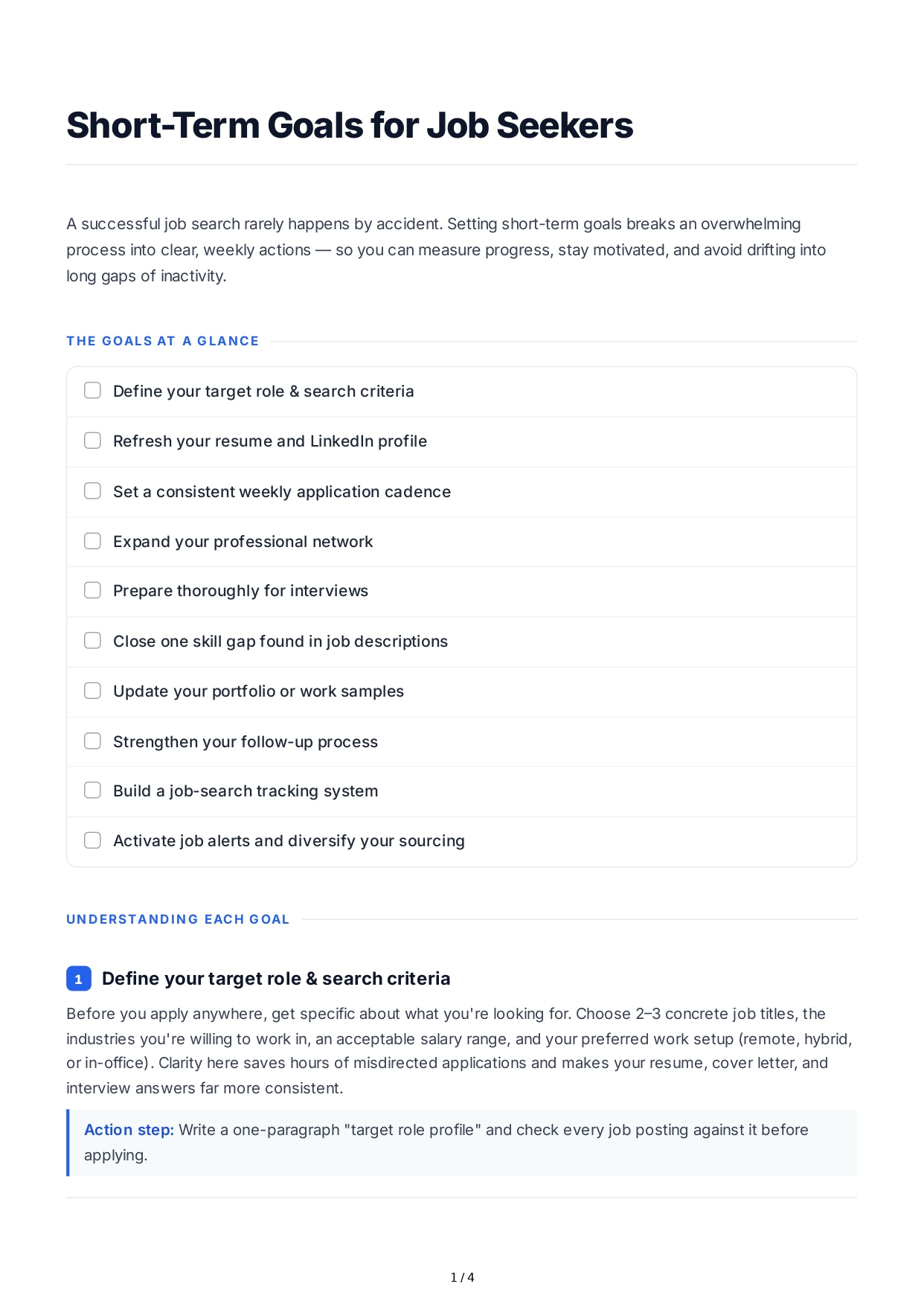
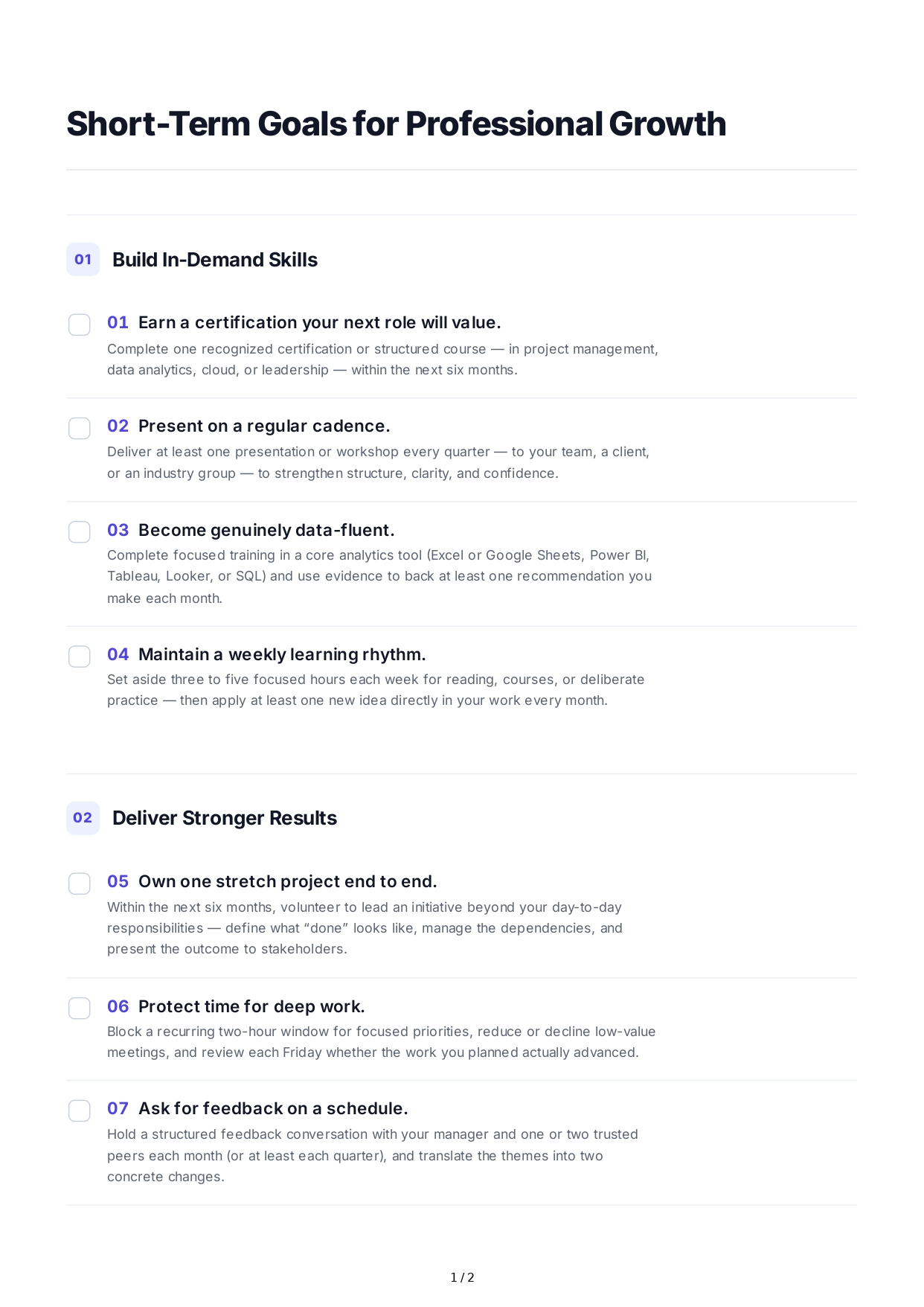
Career Short-Term Goals
Career goals focus on immediate actions that can support professional development.
Examples:
- Update your resume this week.
- Complete a professional course within 30 days.
- Attend one networking event this month.
- Connect with five professionals in your industry.
- Improve one workplace skill.
- Ask your manager for feedback.
- Apply for five relevant job opportunities.
Short-term career goals can act as milestones toward larger professional objectives such as changing careers, earning a promotion, or developing a new specialization.
Personal Development Goals
These goals focus on improving knowledge, habits, confidence, or daily routines.
Examples:
- Read for 20 minutes every day.
- Practice public speaking three times a week.
- Learn 20 new vocabulary words this month.
- Complete an online course.
- Journal five days a week.
- Reduce daily screen time.
- Develop a consistent morning routine.
Financial Short-Term Goals
Financial goals can help you develop better money habits and prepare for larger financial objectives.
Examples:
- Create a monthly budget.
- Save $200 this month.
- Track every expense for 30 days.
- Reduce unnecessary spending for four weeks.
- Pay an additional amount toward a debt.
- Open a savings account.
- Build a small emergency fund.
Health and Fitness Goals
Short-term health goals should be realistic and appropriate for your individual circumstances.
Examples:
- Walk for 30 minutes five days this week.
- Exercise three times a week.
- Prepare meals at home four days a week.
- Establish a consistent sleep schedule.
- Drink more water each day.
- Complete a beginner fitness program.
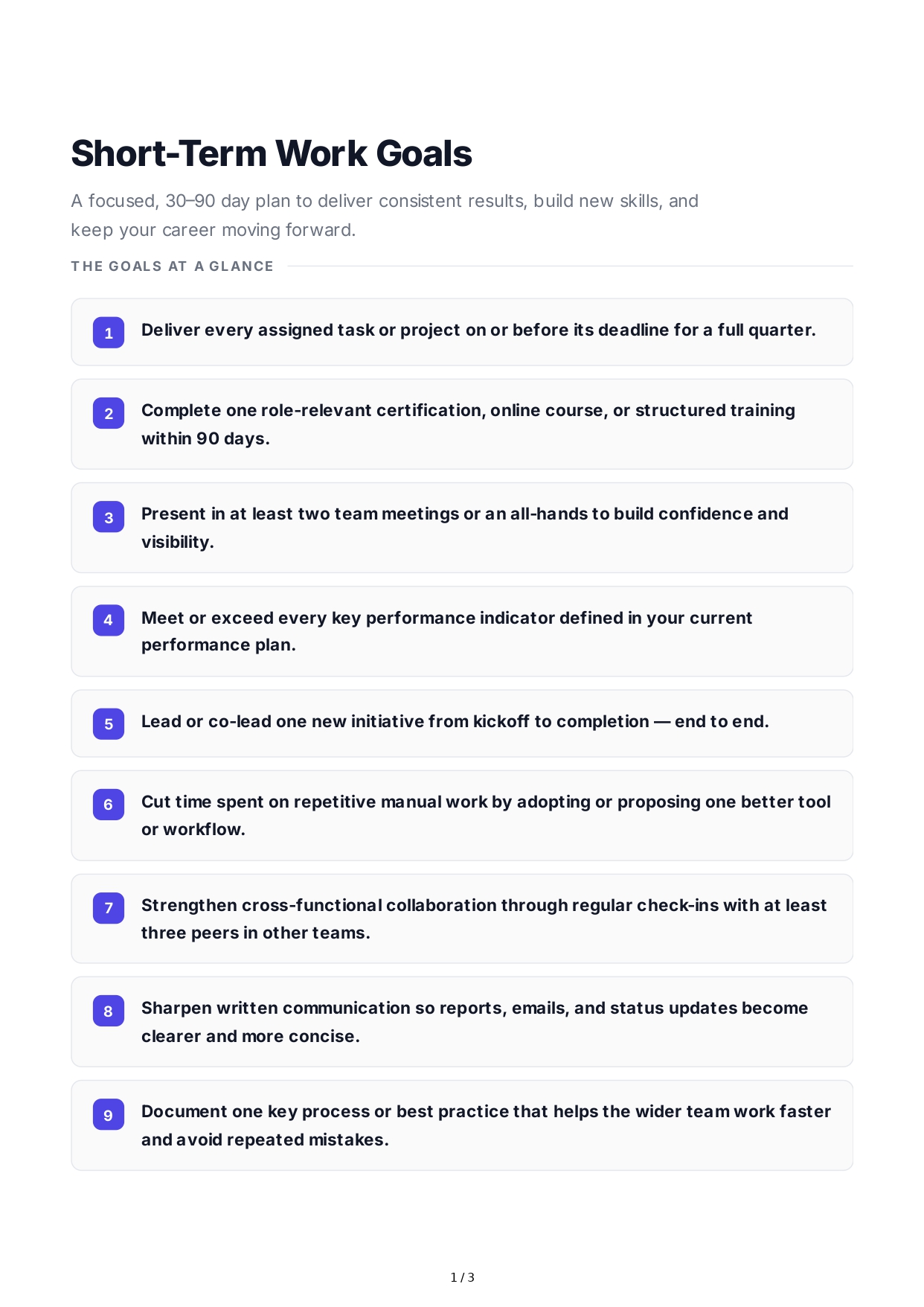
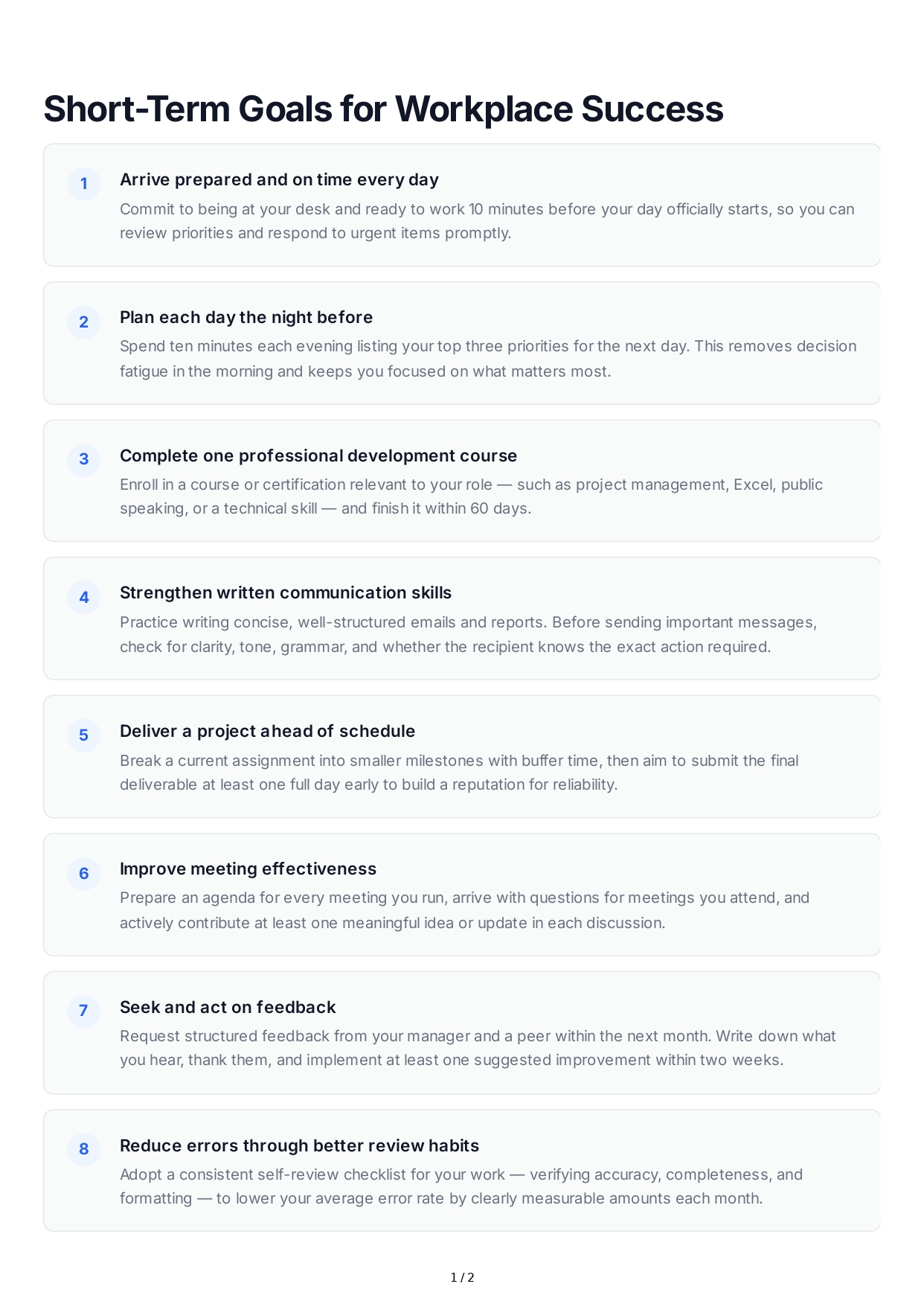
Workplace Goals
Work-related short-term goals can improve productivity and performance.
Examples:
- Finish a project before its deadline.
- Organize your weekly priorities every Monday.
- Reduce errors in a recurring task.
- Complete required workplace training.
- Improve response time to customer requests.
- Learn a new software feature.
- Schedule a feedback meeting with your manager.
How Do I Generate Short Term Goals Using Proven Examples from Top Companies?

Creating short-term goals with AI can help users turn broad objectives into specific, measurable, and time-bound actions using proven examples, prompts, and structured goal-setting ideas.
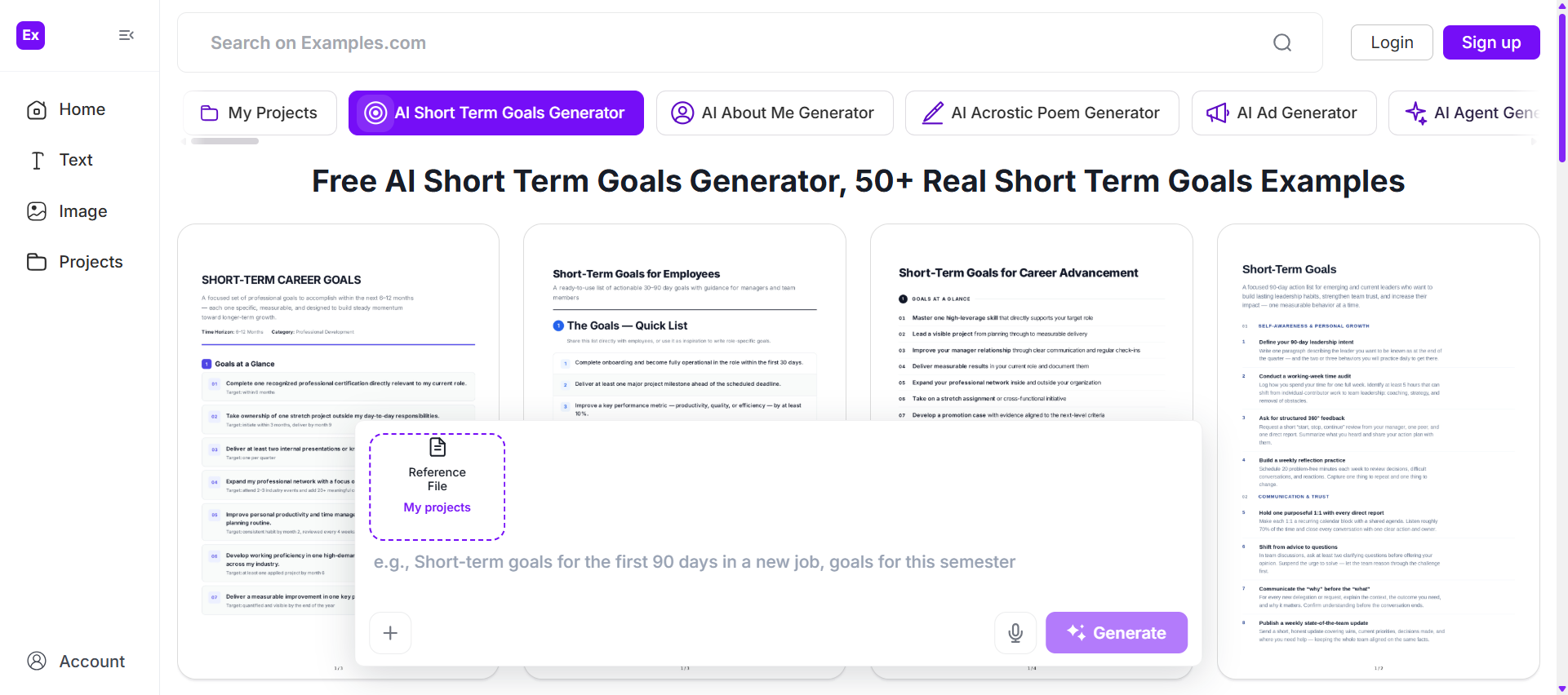
Explore Real-World Short Term Goal Examples
Browse real-world short-term goal examples to discover practical goals for education, career development, personal growth, finances, health, productivity, and other areas. These examples can help you identify realistic targets and understand how larger objectives can be divided into smaller milestones.
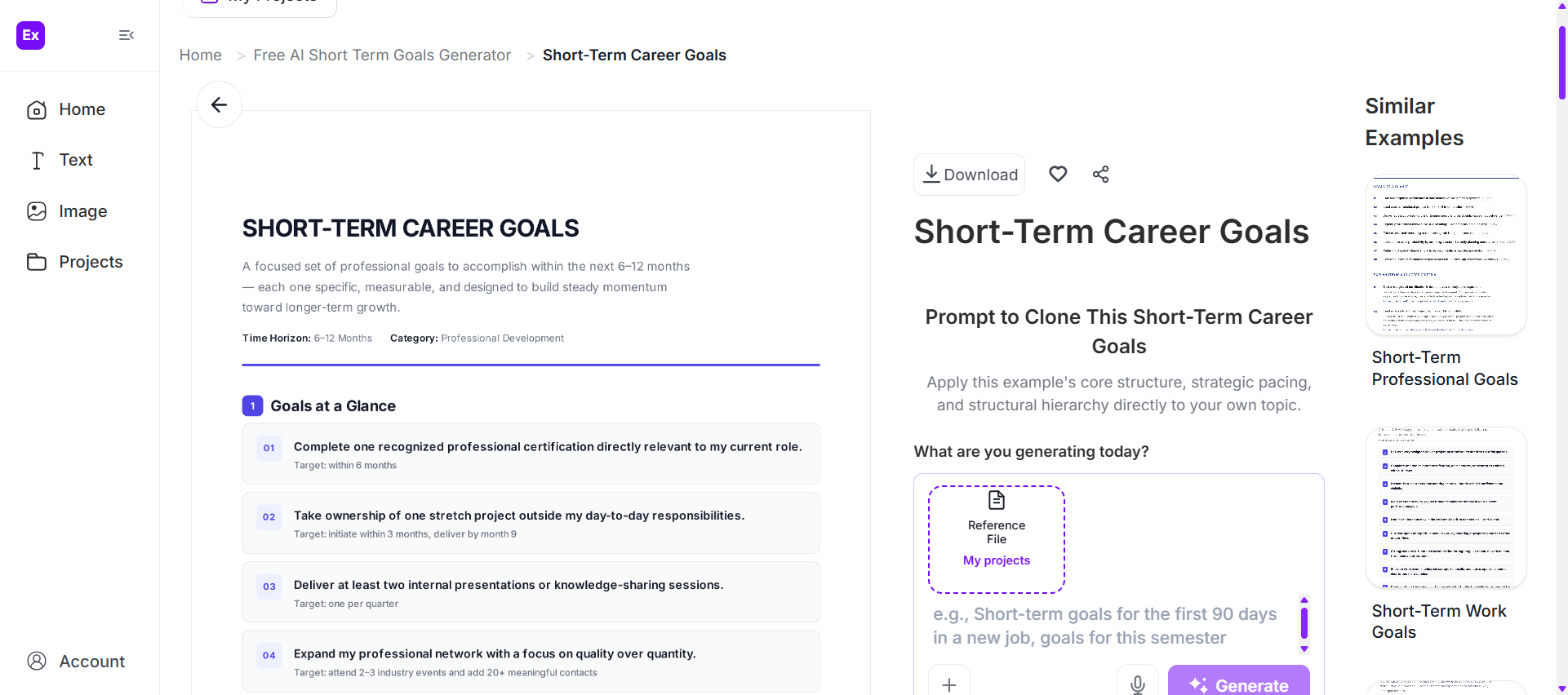
Choose A Reference Goal And Enter An AI Prompt
Select a short-term goal example that matches your objective and enter an AI prompt describing what you want to accomplish. Include your target, current situation, available time, deadline, skill level, priorities, and the larger goal you want to support.
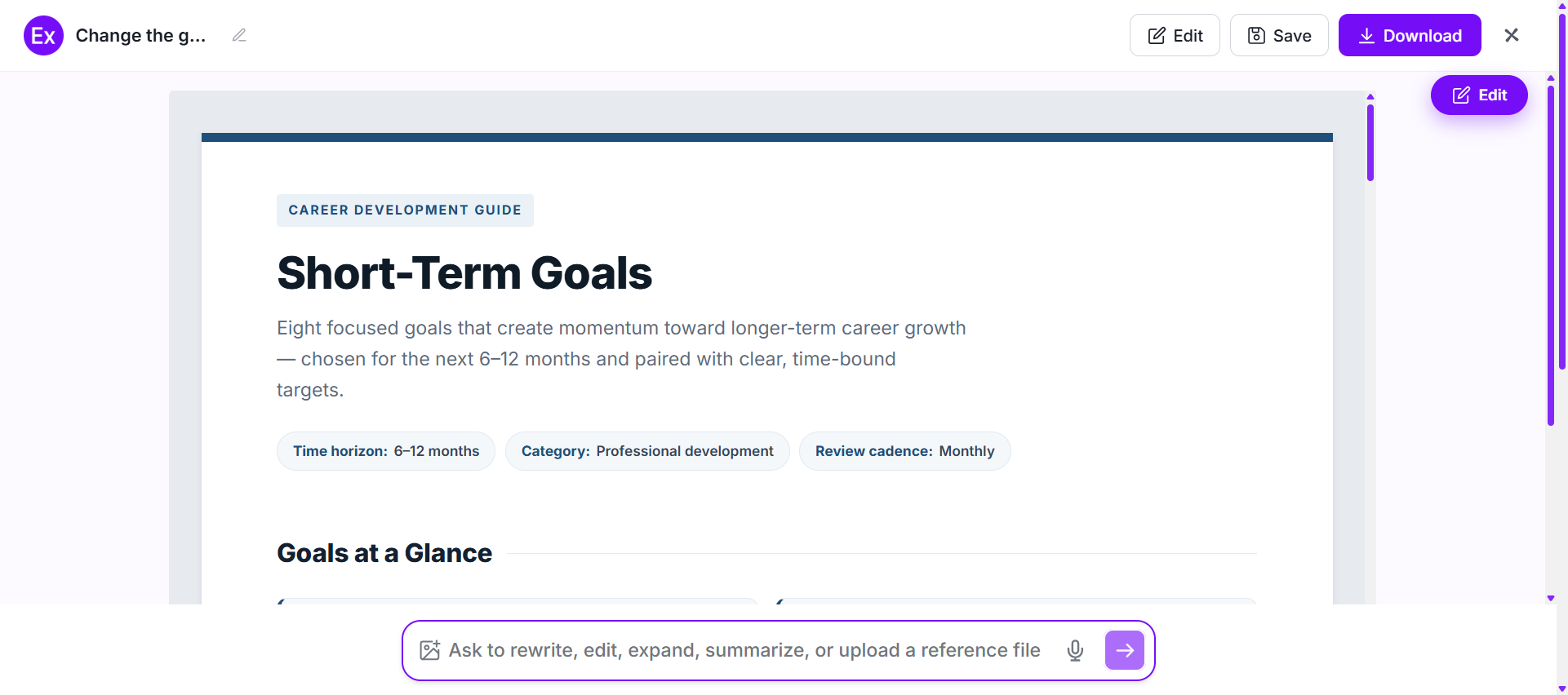
Generate A New AI Short Term Goal
The AI creates a new short-term goal based on your objective and prompt. A useful result should turn a broad intention into a specific action with a clear measurement and realistic timeframe.
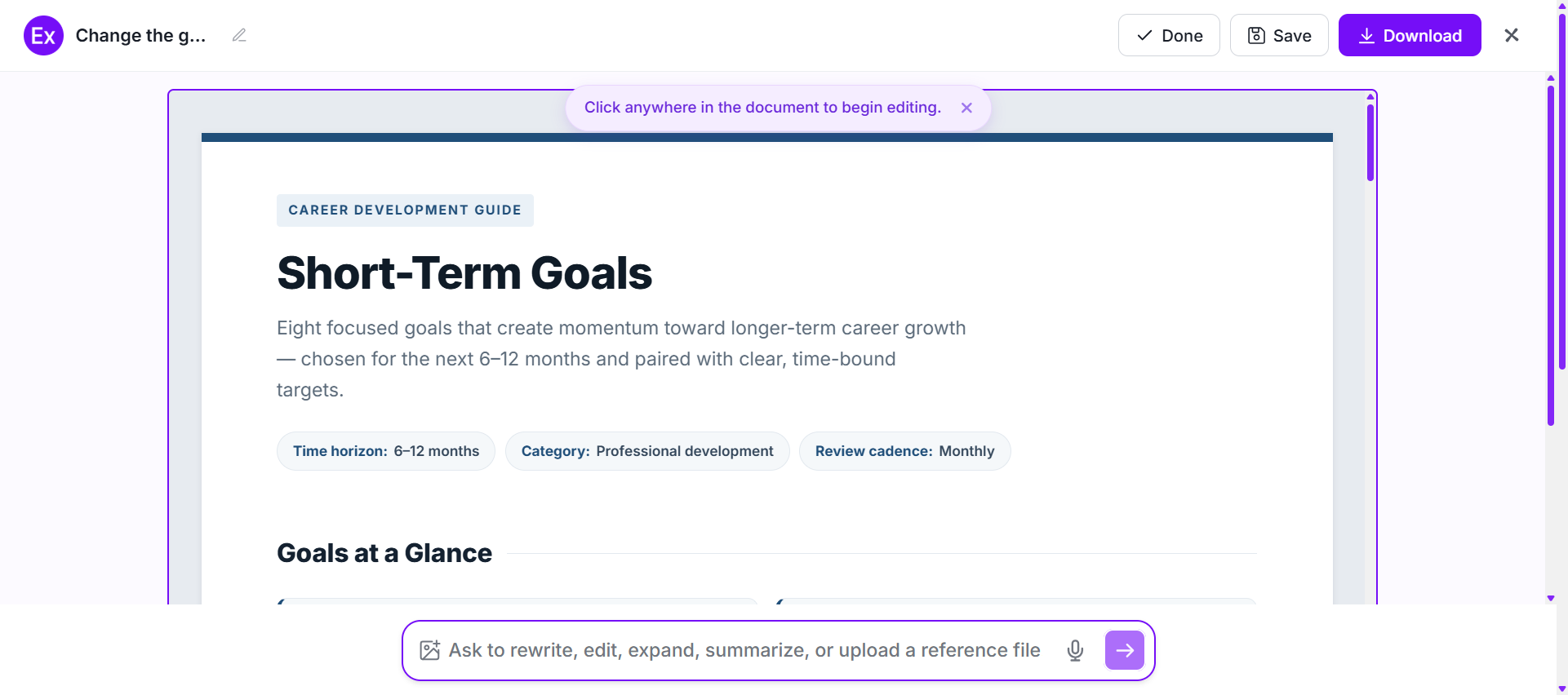
Customize The Goal In The Online Editor
Review the generated goal and adjust the target, deadline, measurement, difficulty, or action steps. Personalize the goal so that it fits your actual schedule, resources, responsibilities, and long-term priorities.
Download And Use The Final Goal
Once your goal is finalized, save it and use it as a practical action plan. Track your progress regularly and mark the goal complete when the defined result has been achieved.
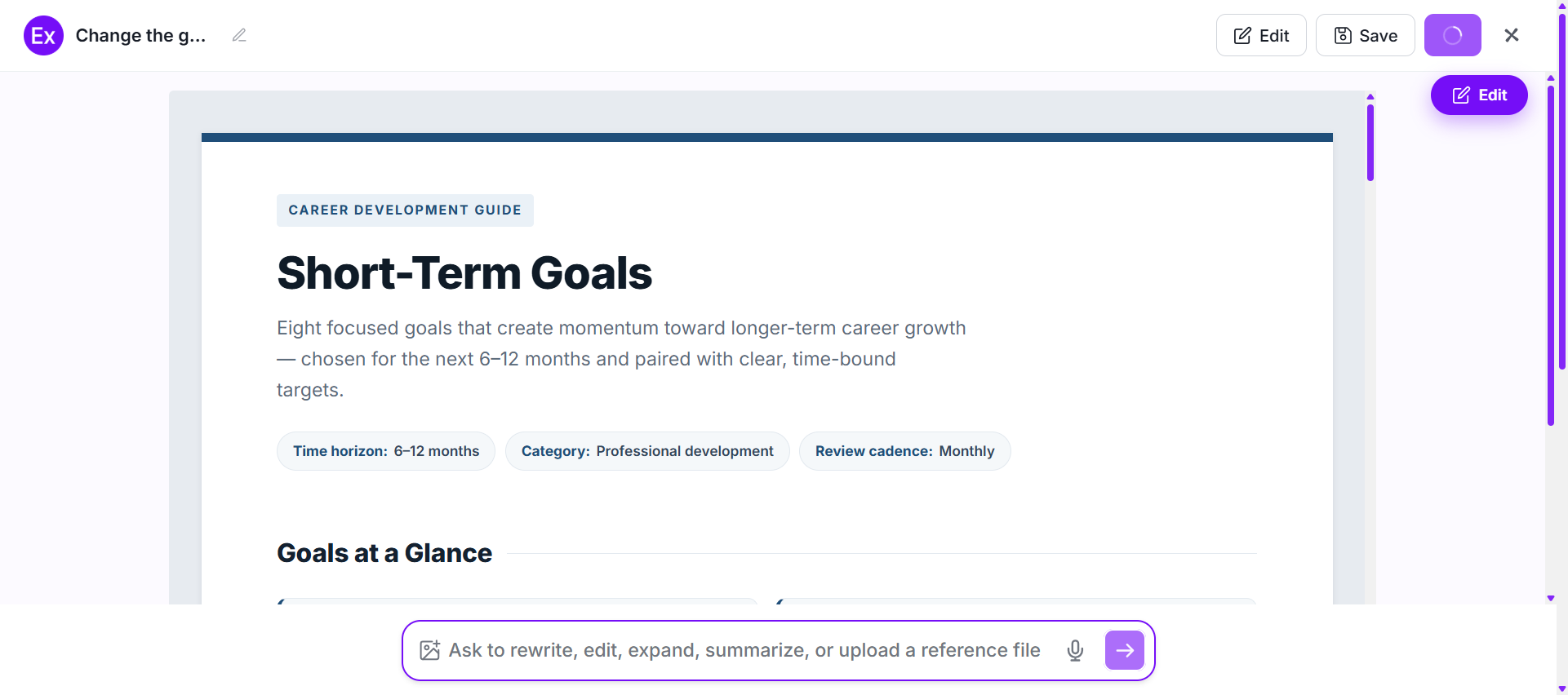
50 Short Term Goals Examples
Here are practical short-term goal examples across different areas of life.
Short-Term Learning Goals
- Read one book within 30 days.
- Complete an online course this month.
- Learn 50 new vocabulary words.
- Practice a new skill for 20 minutes each day.
- Finish a certification module this week.
- Watch three educational lectures.
- Complete one practical project.
- Take notes after every study session.
- Learn the basics of a new software tool.
- Review one difficult topic each evening.
Short-Term Career Goals
- Update your resume this week.
- Improve your LinkedIn profile.
- Apply for five suitable jobs.
- Attend one professional networking event.
- Contact three industry professionals.
- Complete a career-related certification.
- Learn one new workplace skill.
- Request feedback from your manager.
- Prepare answers for common interview questions.
- Create a professional portfolio.
Short-Term Personal Goals
- Establish a morning routine.
- Keep a daily journal for 30 days.
- Read for 20 minutes every evening.
- Reduce unnecessary screen time.
- Declutter one room this weekend.
- Learn a new hobby.
- Practice mindfulness for 10 minutes daily.
- Organize your weekly schedule.
- Spend more intentional time with family.
- Complete one personal project.
Short-Term Financial Goals
- Create a monthly budget.
- Track expenses for 30 days.
- Save a fixed amount every week.
- Cancel unused subscriptions.
- Reduce unnecessary purchases.
- Build a basic emergency fund.
- Review recurring expenses.
- Set a weekly spending limit.
- Create a debt repayment plan.
- Compare prices before major purchases.
Short-Term Productivity Goals
- Create a daily priority list.
- Finish one important task before checking social media.
- Clean and organize your workspace.
- Use a calendar to track deadlines.
- Complete a project before its due date.
- Spend 30 minutes planning each week.
- Reduce distractions during focused work.
- Break a large project into smaller tasks.
- Review your progress every Friday.
- Complete three priority tasks each workday.
How to Write a Good Short-Term Goal
The most effective approach is to make the goal SMART: Specific, Measurable, Achievable, Relevant, and Time-bound. This framework is widely used for creating goals that are clear and trackable.
For example:
Weak goal:
I want to study more.
Better short-term goal:
I will study mathematics for 45 minutes every weekday for the next four weeks and complete at least two practice tests each week.
The second version tells you exactly what to do, how often to do it, and when to evaluate the result.
Specific
Clearly state what you want to accomplish.
Measurable
Use numbers, milestones, completion criteria, or another way to track progress.
Achievable
Choose a target that is challenging but realistic given your available time and resources.
Relevant
Make sure the goal supports something that matters to you or contributes to a larger objective.
Time-Bound
Give yourself a clear deadline or timeframe.
Short-Term vs. Long-Term Goals
Short-term and long-term goals work together rather than competing with each other. A long-term goal provides the broader destination, while short-term goals create the steps needed to get there.
| Short-Term Goal | Long-Term Goal |
|---|---|
| Complete a certification course | Become qualified for a new career |
| Save $500 | Build financial security |
| Exercise three times a week | Improve long-term fitness |
| Apply for five jobs | Change careers |
| Study for an hour daily | Earn a degree |
| Read two books this month | Develop deeper expertise |
For example, someone who wants to change careers might first learn a relevant skill, then complete a certification, then build a portfolio, and finally apply for positions. Each short-term goal becomes a milestone toward the larger objective.
Benefits of Setting Short-Term Goals
Short-term goals can make large ambitions feel more manageable.
Key benefits include:
- Better focus: You know what needs attention now.
- Easier tracking: Progress can be measured more frequently.
- Greater motivation: Completing smaller goals creates momentum.
- Less procrastination: A specific next step is easier to start.
- Better planning: Large objectives can be divided into manageable actions.
- Quick feedback: You can identify what is working and adjust your approach.
- Stronger consistency: Repeated small actions can support larger outcomes.
Breaking larger objectives into smaller milestones is particularly useful because it can make complex goals feel more achievable and help maintain motivation.
Tips for Achieving Your Short-Term Goals
Start With One or Two Priorities
Avoid creating a long list of goals that compete for your attention. Choose the goals that matter most right now.
Put a Deadline on Every Goal
A deadline creates a clear finish line and makes it easier to organize your time.
Break Goals Into Actions
If your goal is to complete a course, list the individual lessons, assignments, and study sessions required to finish it.
Track Progress
Use a checklist, calendar, spreadsheet, journal, or goal-tracking application.
Review Your Goals Regularly
At the end of each week, ask:
- What did I complete?
- What is still unfinished?
- What prevented progress?
- Does the deadline need adjustment?
- What should I do next?
Frequently Asked Questions
What are short-term goals?
Short-term goals are targets intended to be achieved in the near future. They may take days, weeks, or months depending on the goal and context. They are generally smaller and more immediate than long-term objectives.
What is a good example of a short-term goal?
A good example is: “I will complete an online professional course within the next 30 days.” It identifies a specific result and provides a clear timeframe.
How long should a short-term goal take?
There is no universal timeframe. Depending on the context, short-term goals can range from a few days to several months. Some frameworks define them as one to six months, while others use shorter periods such as days or weeks.
What are short-term goals for students?
Student short-term goals can include completing assignments, improving a test score, studying consistently, finishing a course module, joining an organization, or preparing for an upcoming exam.
What are short-term career goals?
Short-term career goals are immediate professional objectives that support larger career plans. Examples include learning a skill, earning a certification, networking with professionals, improving work performance, updating a resume, or applying for jobs.
Should short-term goals be SMART?
Yes. Using the SMART framework can make goals easier to understand, measure, and track because it encourages you to define the desired result, measurement, feasibility, relevance, and timeframe.
How many short-term goals should I have?
There is no fixed number, but focusing on a small number of important goals at once can make them easier to manage. Choose goals that fit your available time and directly support your current priorities.