CITI | INTEGRATED CLIENT GROWTH & CROSS-BUSINESS SALES PLAN
PUBLIC-SOURCE SYNTHESIS • SEPTEMBER 2026
7
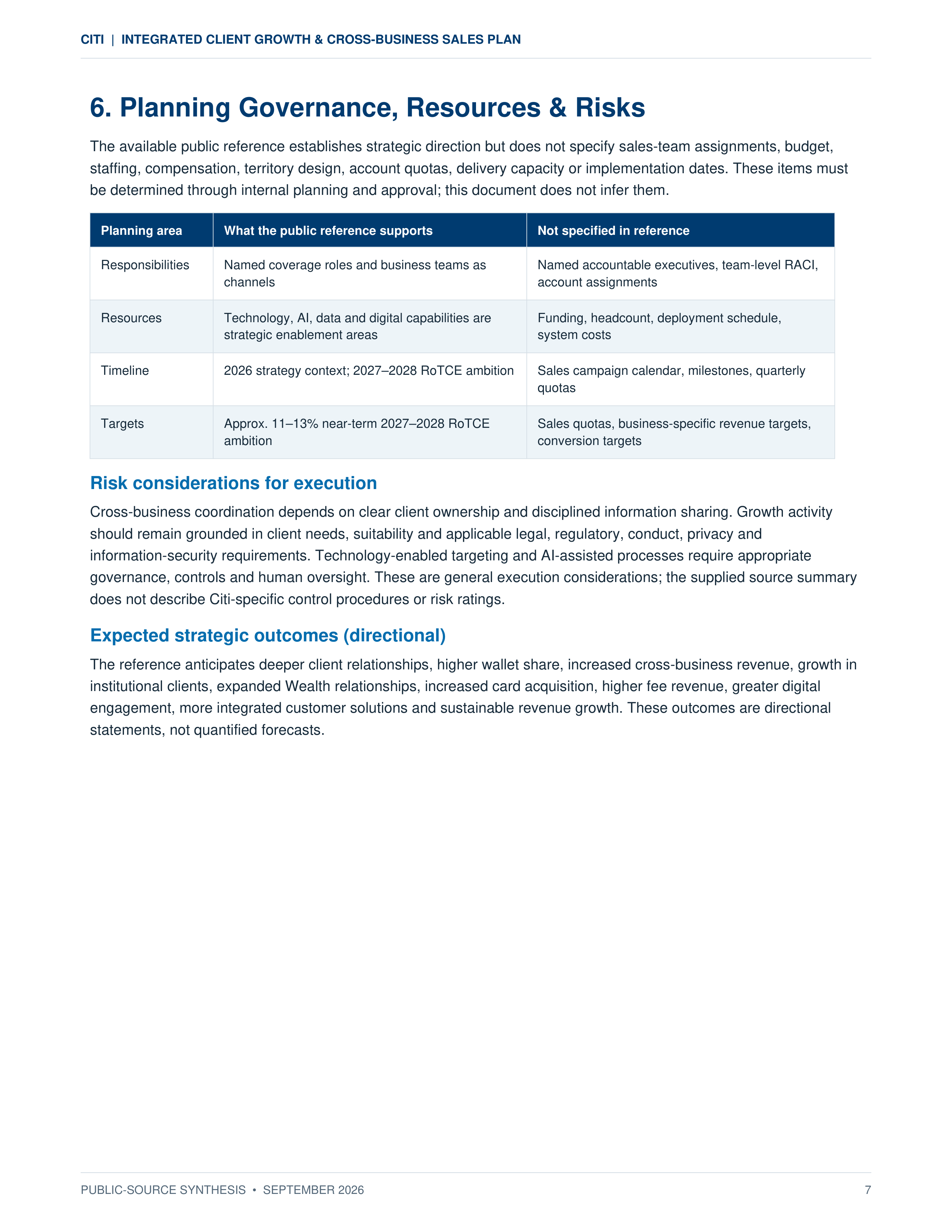
6. Planning Governance, Resources & Risks
The available public reference establishes strategic direction but does not specify sales-team assignments, budget,
staffing, compensation, territory design, account quotas, delivery capacity or implementation dates. These items must
be determined through internal planning and approval; this document does not infer them.
Planning area
What the public reference supports
Not specified in reference
Responsibilities
Named coverage roles and business teams as
channels
Named accountable executives, team-level RACI,
account assignments
Resources
Technology, AI, data and digital capabilities are
strategic enablement areas
Funding, headcount, deployment schedule,
system costs
Timeline
2026 strategy context; 2027–2028 RoTCE ambition
Sales campaign calendar, milestones, quarterly
quotas
Targets
Approx. 11–13% near-term 2027–2028 RoTCE
ambition
Sales quotas, business-specific revenue targets,
conversion targets
Risk considerations for execution
Cross-business coordination depends on clear client ownership and disciplined information sharing. Growth activity
should remain grounded in client needs, suitability and applicable legal, regulatory, conduct, privacy and
information-security requirements. Technology-enabled targeting and AI-assisted processes require appropriate
governance, controls and human oversight. These are general execution considerations; the supplied source summary
does not describe Citi-specific control procedures or risk ratings.
Expected strategic outcomes (directional)
The reference anticipates deeper client relationships, higher wallet share, increased cross-business revenue, growth in
institutional clients, expanded Wealth relationships, increased card acquisition, higher fee revenue, greater digital
engagement, more integrated customer solutions and sustainable revenue growth. These outcomes are directional
statements, not quantified forecasts.