STANFORD UNIVERSITY | TECHNOLOGY LICENSING & INNOVATION COMMERCIALIZATION
Office of Technology Licensing (OTL)
2
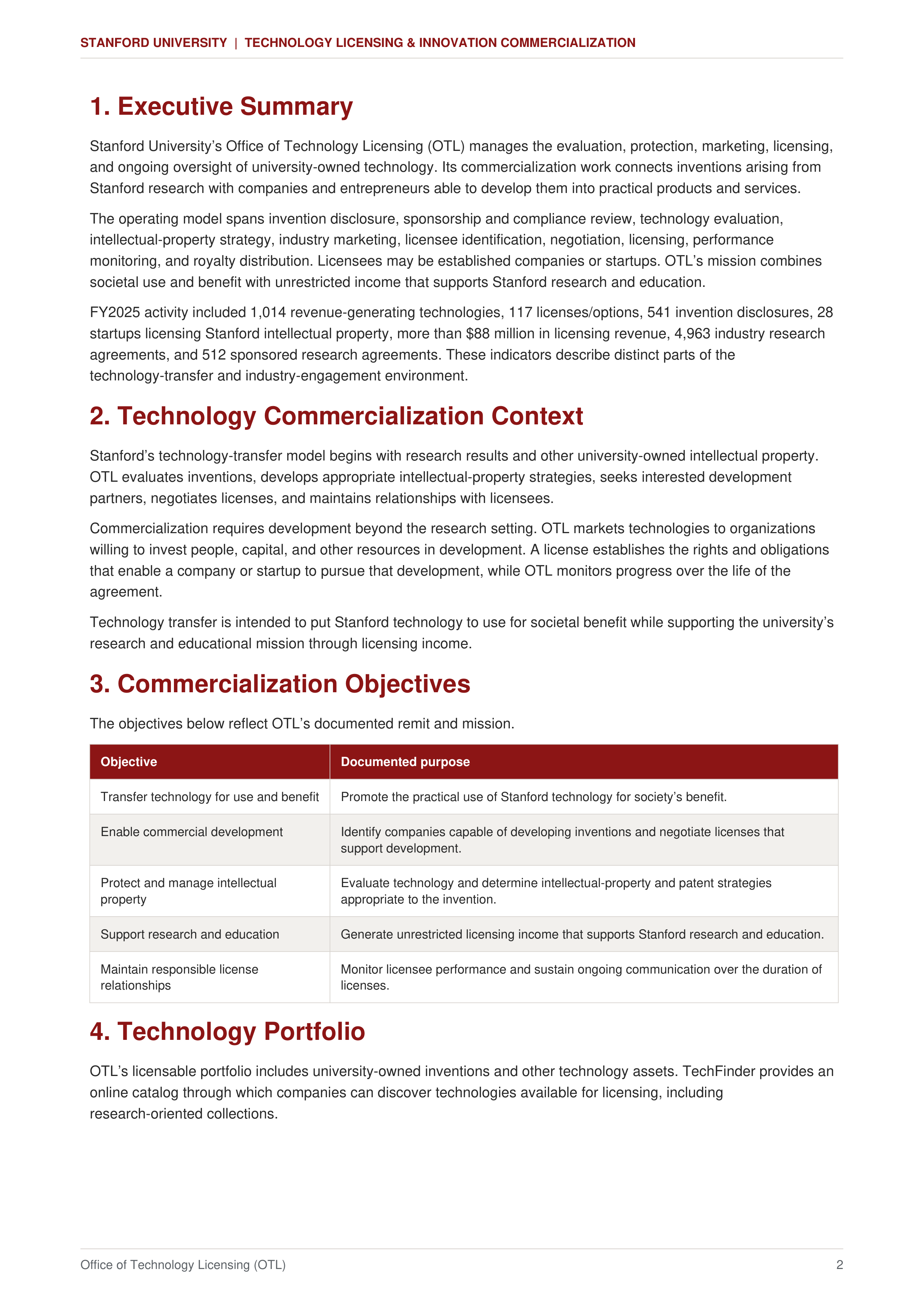
1. Executive Summary
Stanford University’s Office of Technology Licensing (OTL) manages the evaluation, protection, marketing, licensing,
and ongoing oversight of university-owned technology. Its commercialization work connects inventions arising from
Stanford research with companies and entrepreneurs able to develop them into practical products and services.
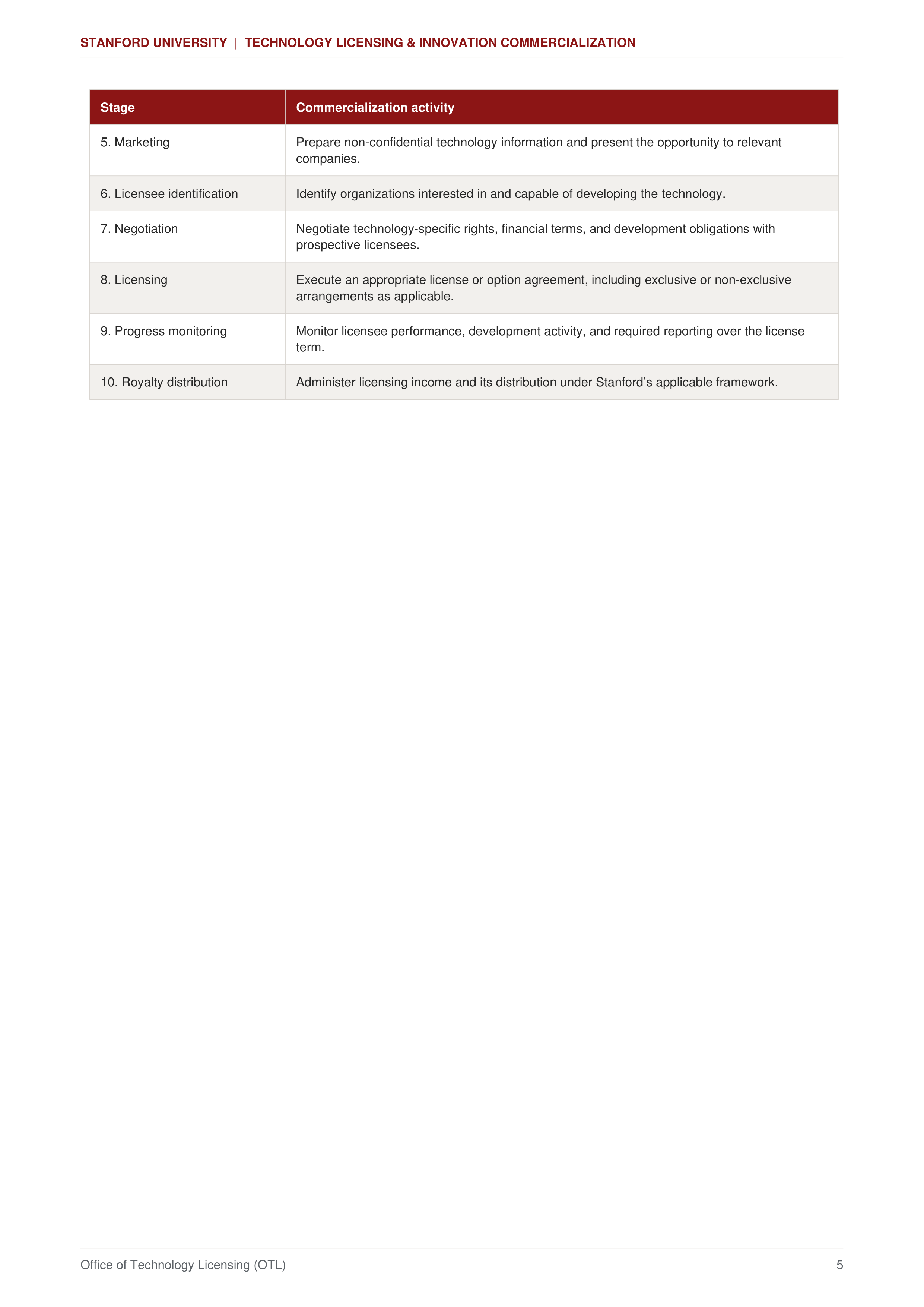
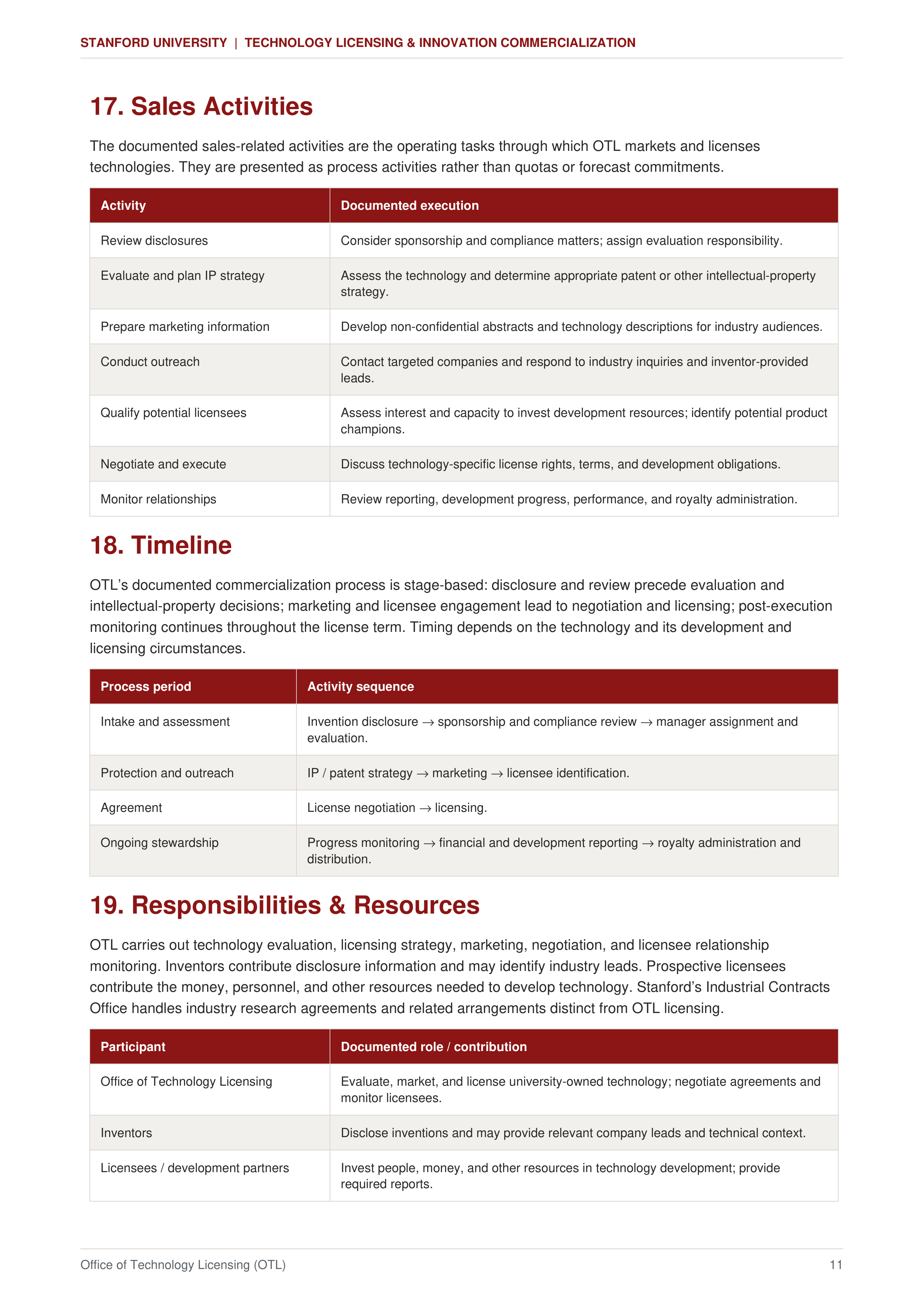
The operating model spans invention disclosure, sponsorship and compliance review, technology evaluation,
intellectual-property strategy, industry marketing, licensee identification, negotiation, licensing, performance
monitoring, and royalty distribution. Licensees may be established companies or startups. OTL’s mission combines
societal use and benefit with unrestricted income that supports Stanford research and education.
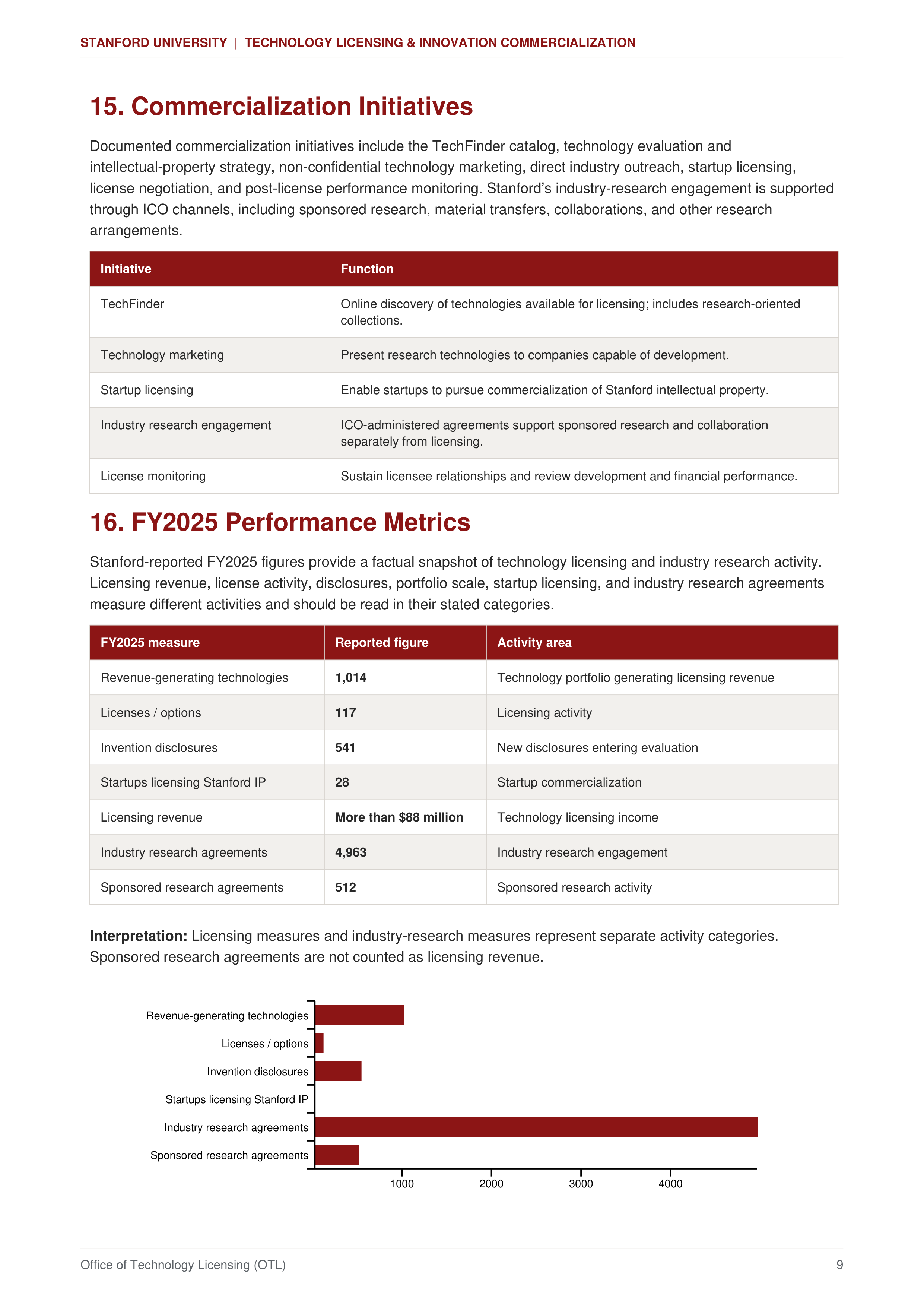
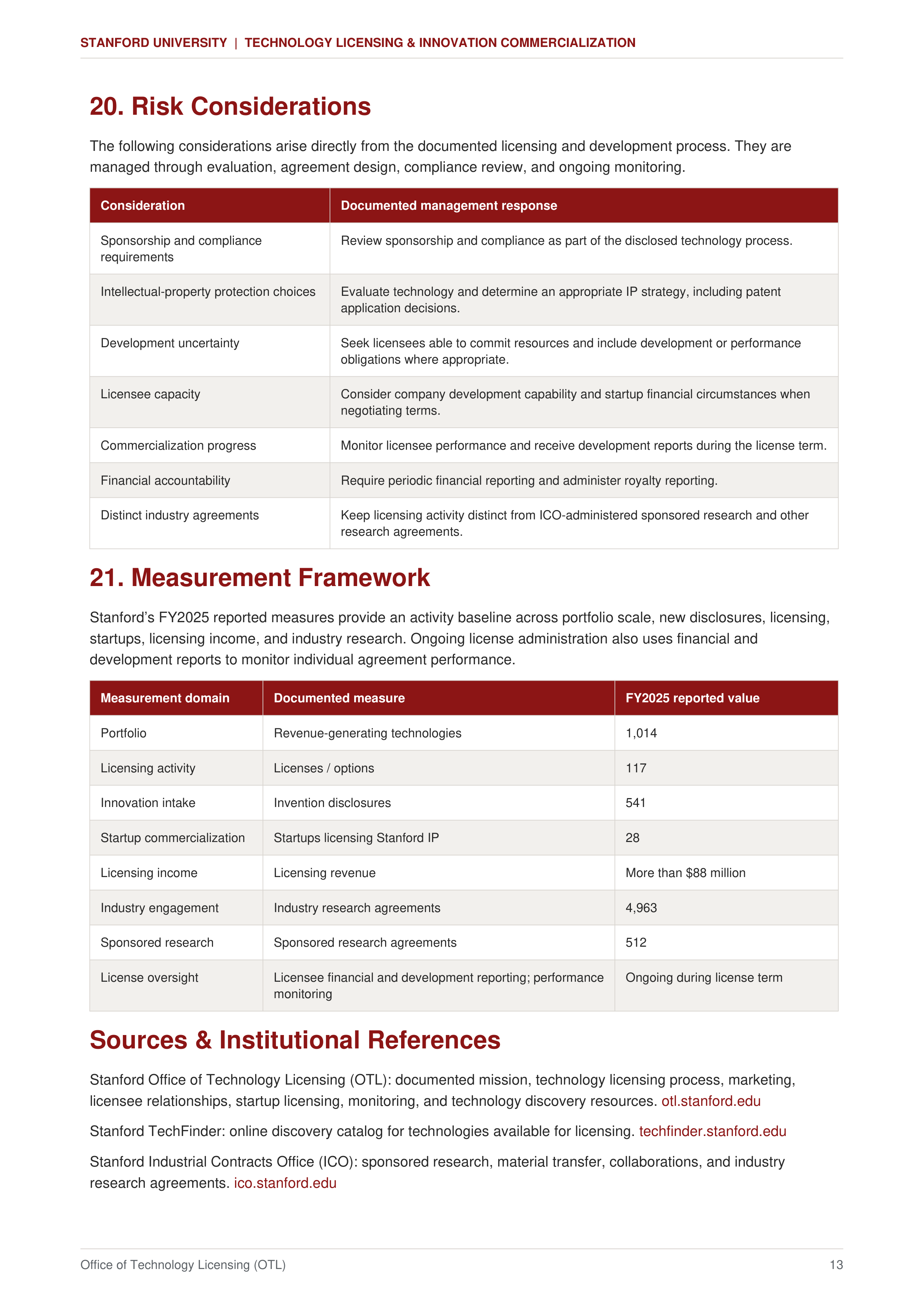
FY2025 activity included 1,014 revenue-generating technologies, 117 licenses/options, 541 invention disclosures, 28
startups licensing Stanford intellectual property, more than $88 million in licensing revenue, 4,963 industry research
agreements, and 512 sponsored research agreements. These indicators describe distinct parts of the
technology-transfer and industry-engagement environment.
2. Technology Commercialization Context
Stanford’s technology-transfer model begins with research results and other university-owned intellectual property.
OTL evaluates inventions, develops appropriate intellectual-property strategies, seeks interested development
partners, negotiates licenses, and maintains relationships with licensees.
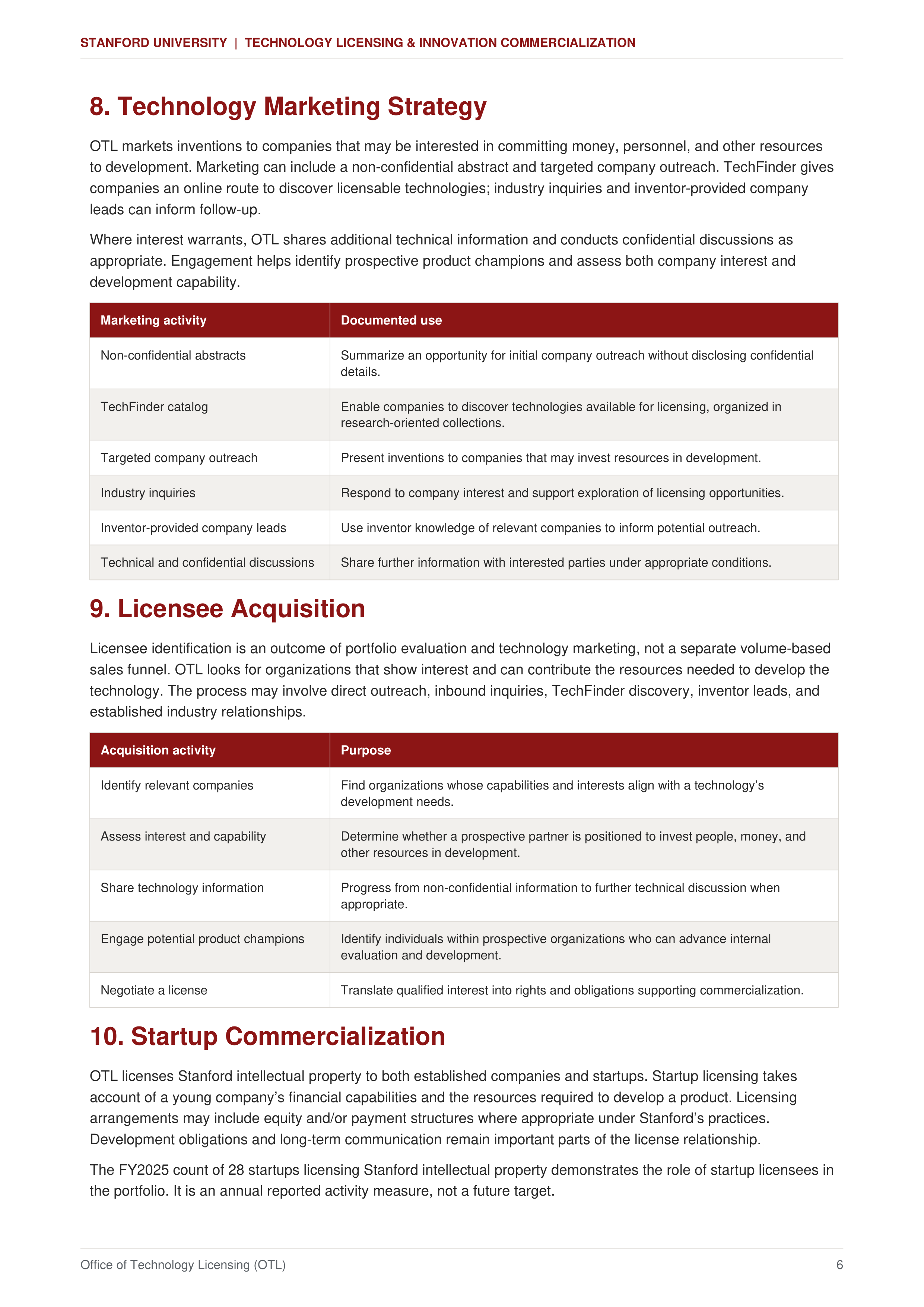
Commercialization requires development beyond the research setting. OTL markets technologies to organizations
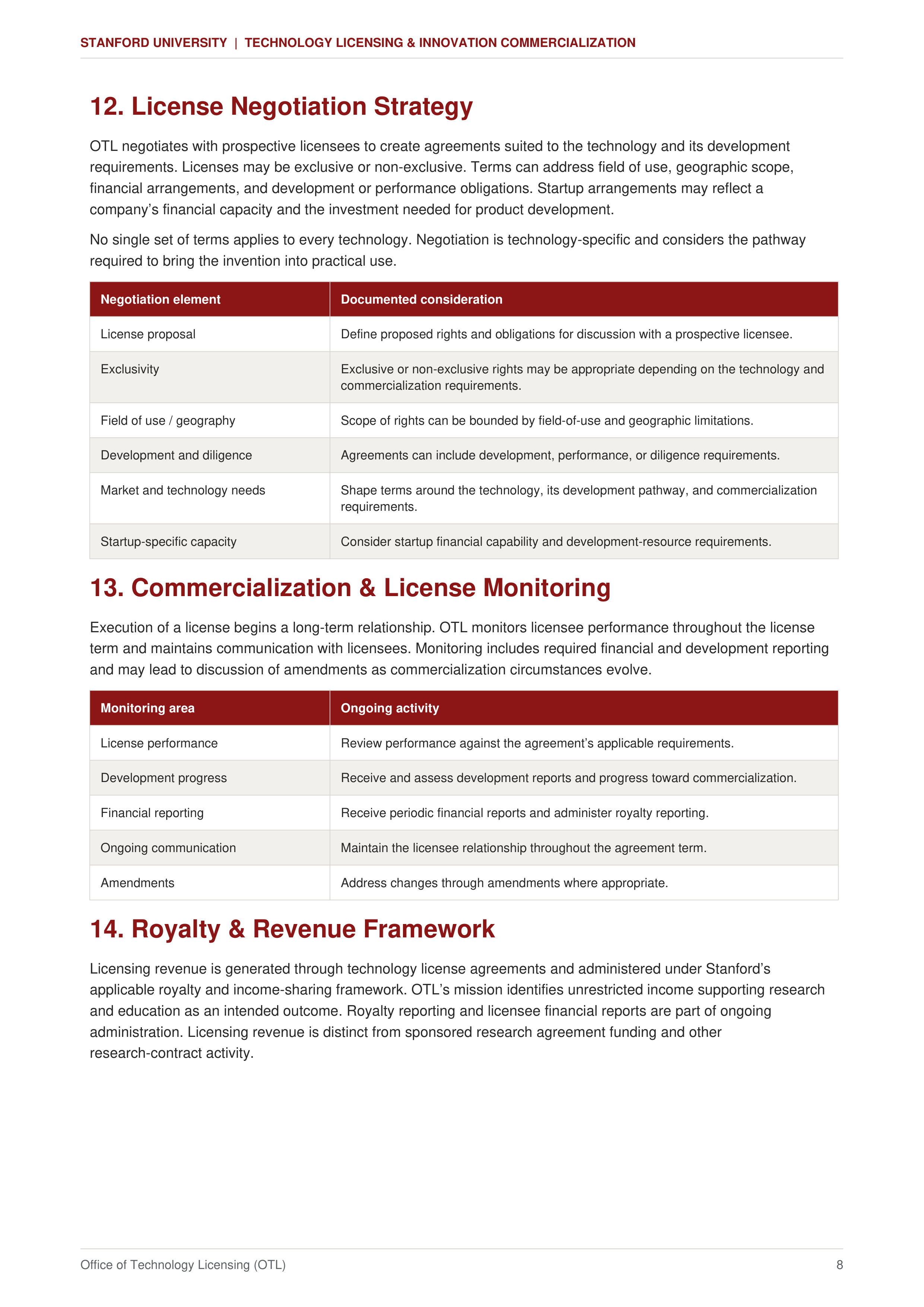
willing to invest people, capital, and other resources in development. A license establishes the rights and obligations
that enable a company or startup to pursue that development, while OTL monitors progress over the life of the
agreement.
Technology transfer is intended to put Stanford technology to use for societal benefit while supporting the university’s
research and educational mission through licensing income.
3. Commercialization Objectives
The objectives below reflect OTL’s documented remit and mission.
Objective
Documented purpose
Transfer technology for use and benefit
Promote the practical use of Stanford technology for society’s benefit.
Enable commercial development
Identify companies capable of developing inventions and negotiate licenses that
support development.
Protect and manage intellectual
property
Evaluate technology and determine intellectual-property and patent strategies
appropriate to the invention.
Support research and education
Generate unrestricted licensing income that supports Stanford research and education.
Maintain responsible license
relationships
Monitor licensee performance and sustain ongoing communication over the duration of
licenses.
4. Technology Portfolio
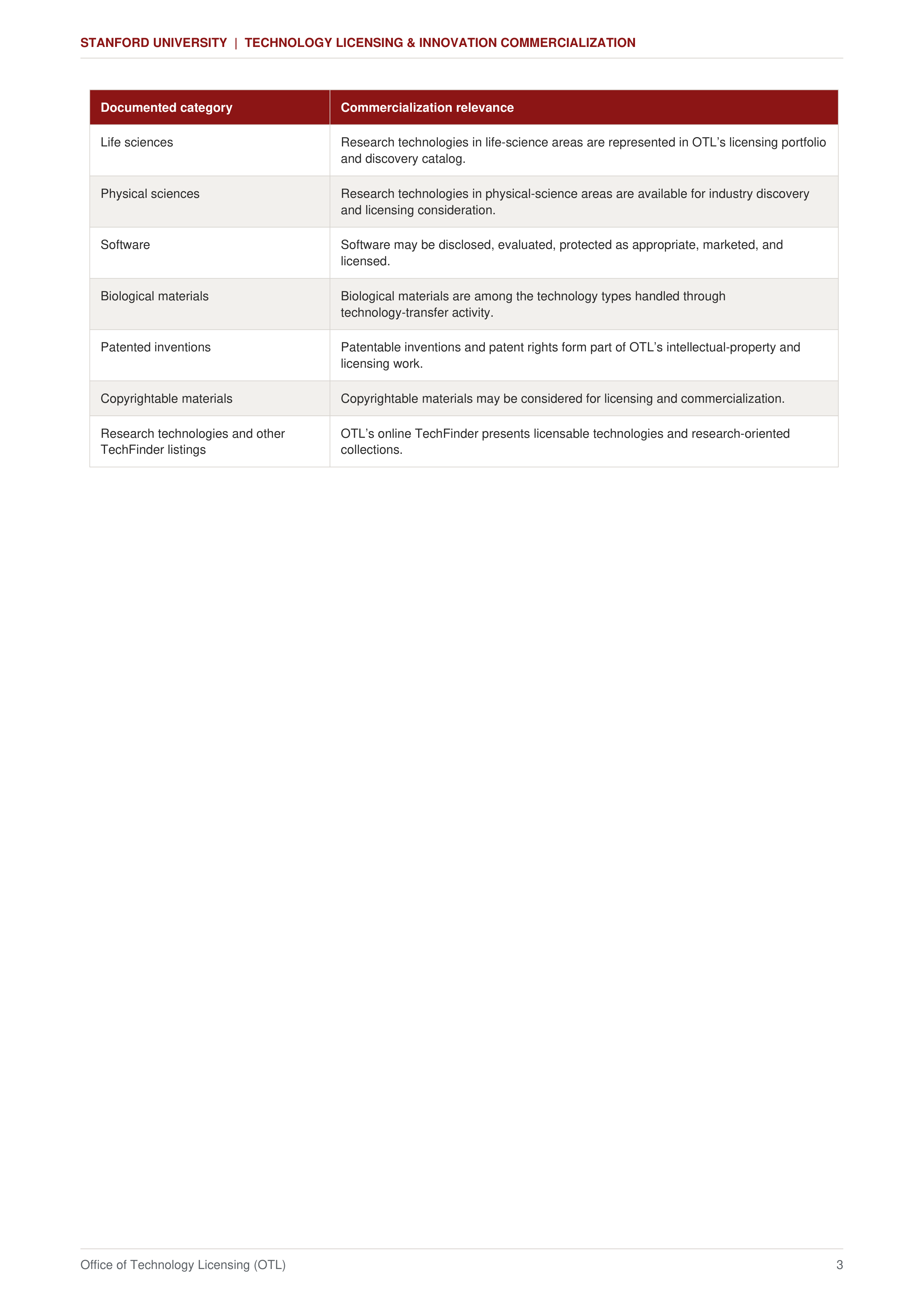
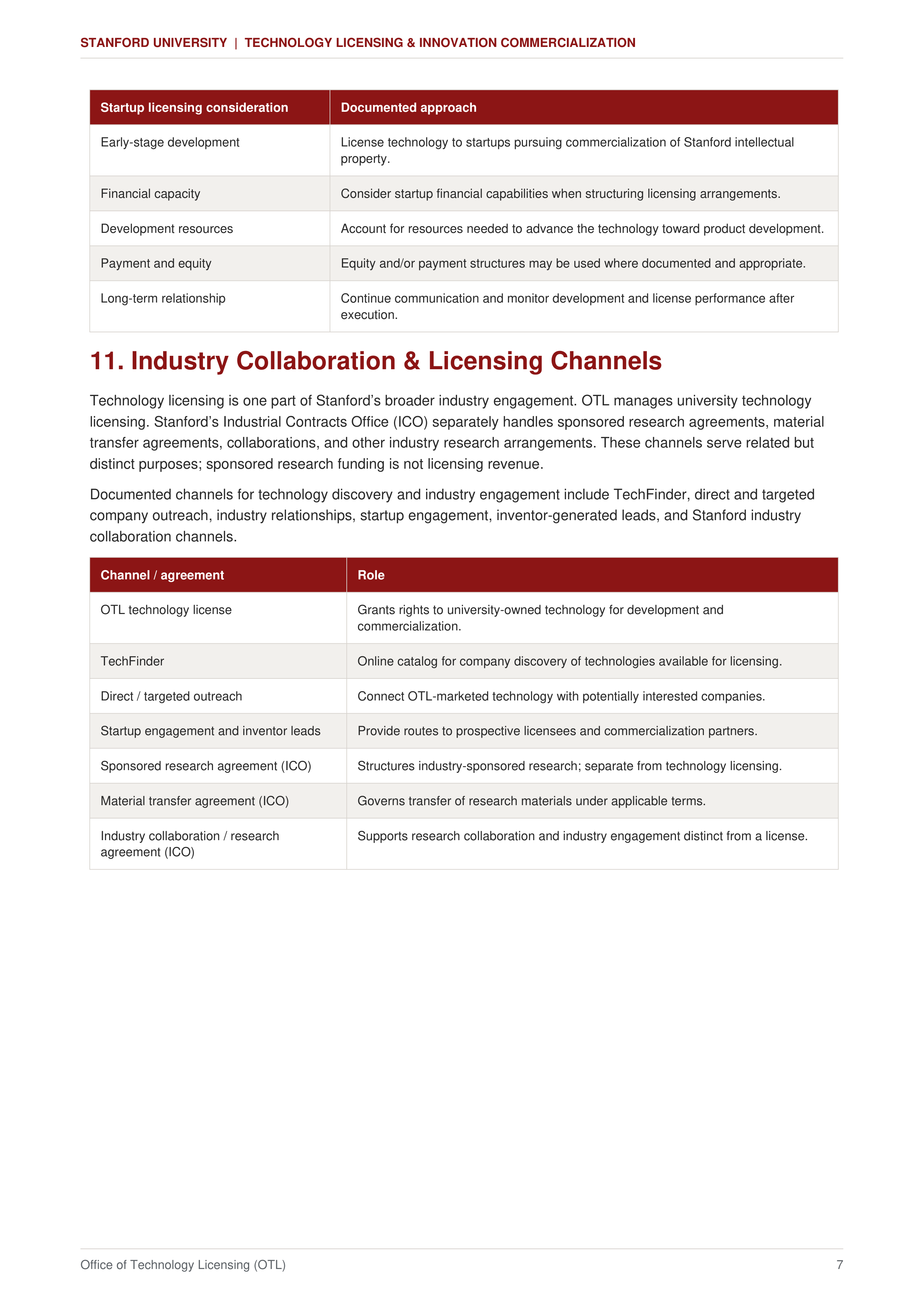
OTL’s licensable portfolio includes university-owned inventions and other technology assets. TechFinder provides an
online catalog through which companies can discover technologies available for licensing, including
research-oriented collections.