LI T E R A R Y
A G E N T S
·
WY LI E
&
H U G H E S
T H E
C LI E N T
E M P I R E
C
H
A
P
T
E
R
V
I
I
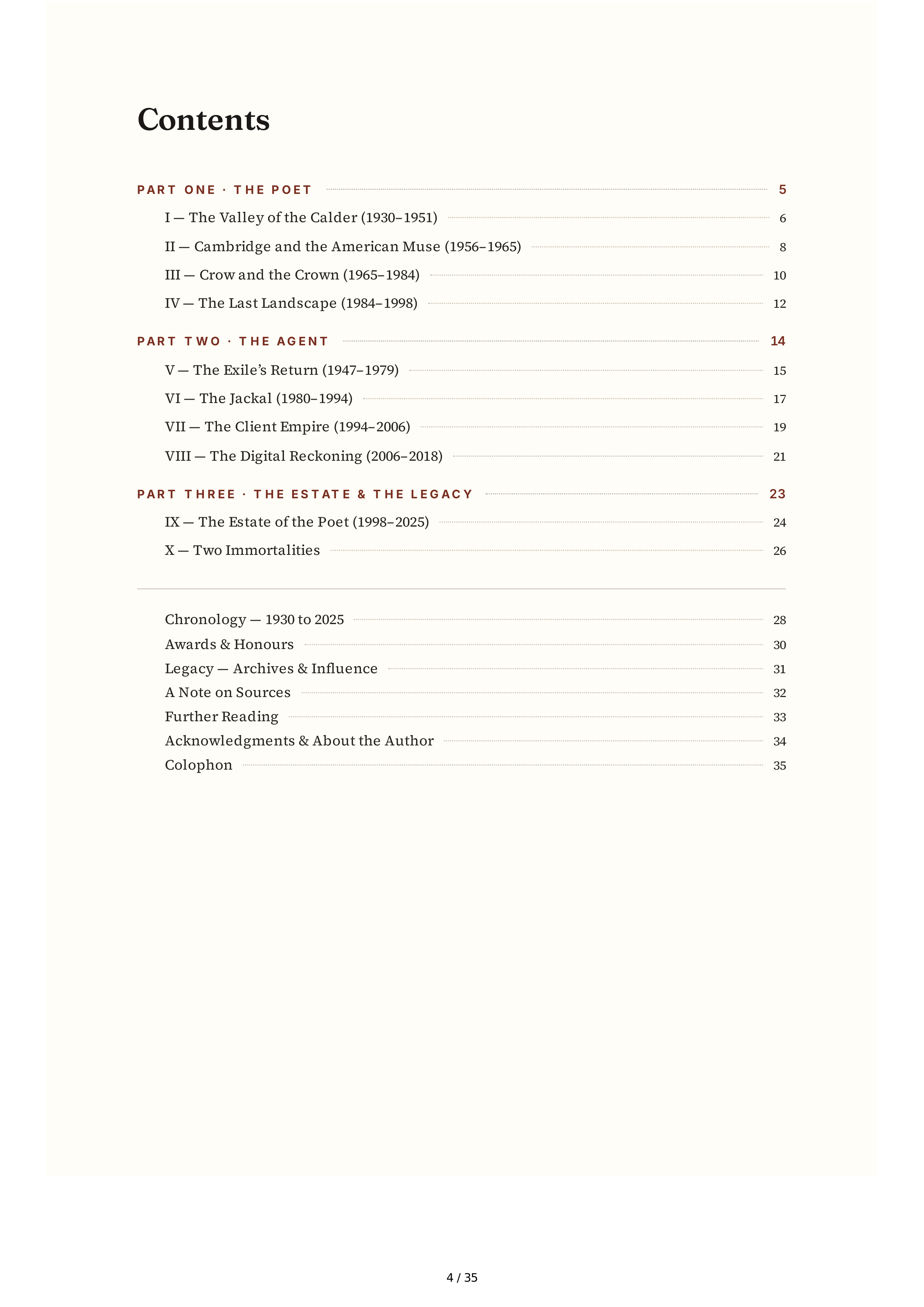
The Client Empire
1 9 9 4 –2 0 0 6
I
n 1995 Martin Amis’s move to Wylie made headlines in London, and the furore over the
size of the advance for his novel The Information became a story in itself — the rare lit-
erary spat that reached the front pages. Amis stood by his decision; Wylie serenely noted
that an agent’s job was to serve the author, not the literary gossip columns. The effect was
to advertise, across the Atlantic, that this New York agent was willing to treat Britain’s most
cherished literary property as a global brand.
The client list in these years acquired the weight of a syllabus. Philip Roth, returning
again and again to Wylie for his late, great run; John Updike, who is said to have drawn on
Wylie for a short story about an all-powerful agent; Salman Rushdie, still; Paul Auster,
Oliver Sacks, Annie Proulx, and an expanding European orbit that included the Turkish
novelist Orhan Pamuk. Wylie’s speciality became the international author: the writer
whose books travelled through translation, whose foreign rights were worth more than
his domestic ones, and who needed an agency that thought in continents.
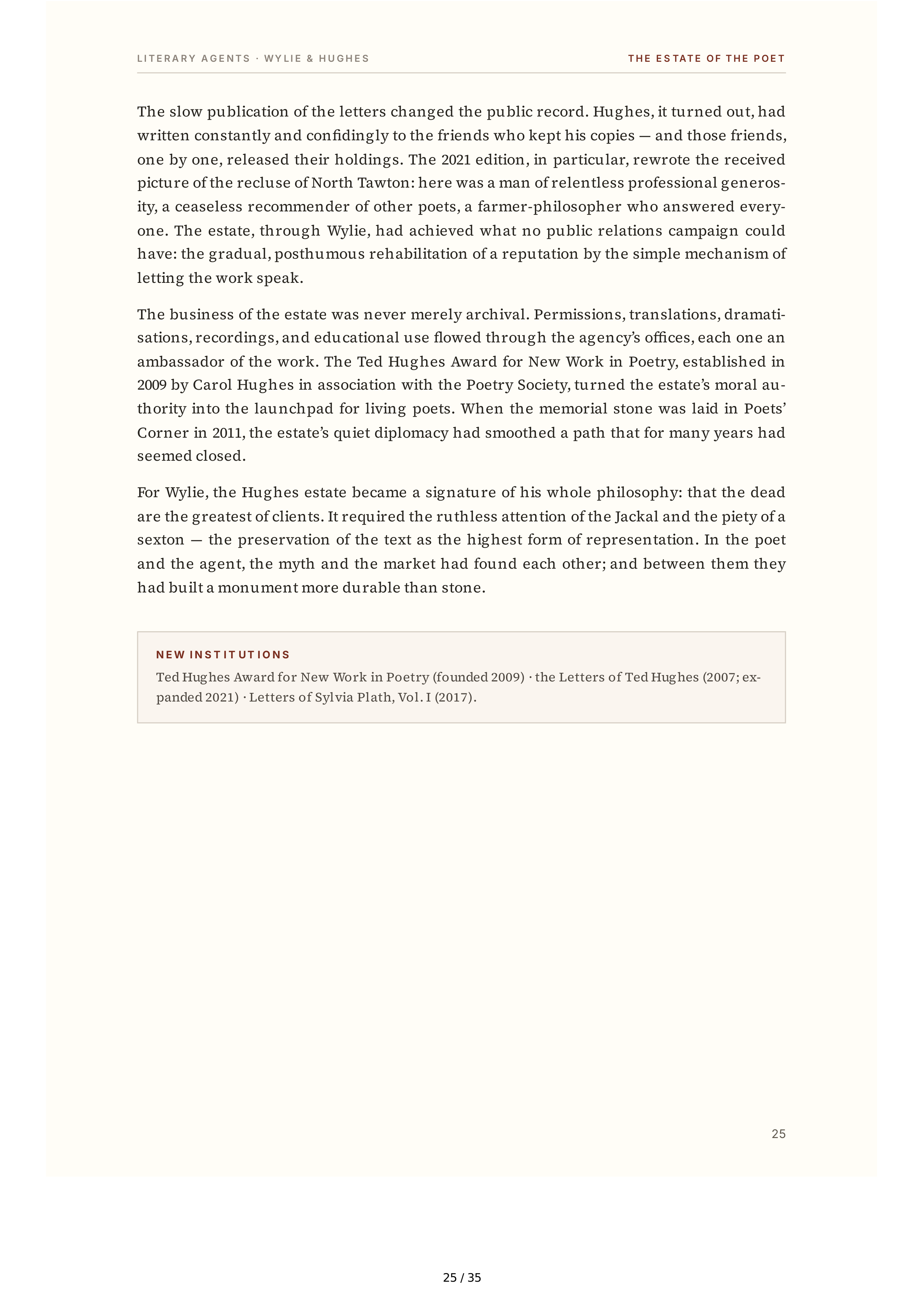
The agency also began acquiring the dead. One by one, the most important estates of the
twentieth century came under Wylie’s care: Jorge Luis Borges, Italo Calvino, Vladimir
Nabokov, Saul Bellow, W. G. Sebald, Roberto Bolaño, Norman Mailer. Each estate was a
small library; each required curatorship, permissions, translation strategy, and an admin-
istration more demanding than any living client’s.
T
H E
C O N S T
E L L AT
I O N
Clients & estates, past and present: Rushdie, Roth, Updike, Amis, Pamuk, Auster, Sacks, Proulx,
Knausgård — and the estates of Borges, Calvino, Nabokov, Bellow, Sebald, Bolaño, Mailer, and
Hughes.
19
19 / 35