M
C H A P T
E R
O N E
· 1 9
3 0
– 1 9
5 2
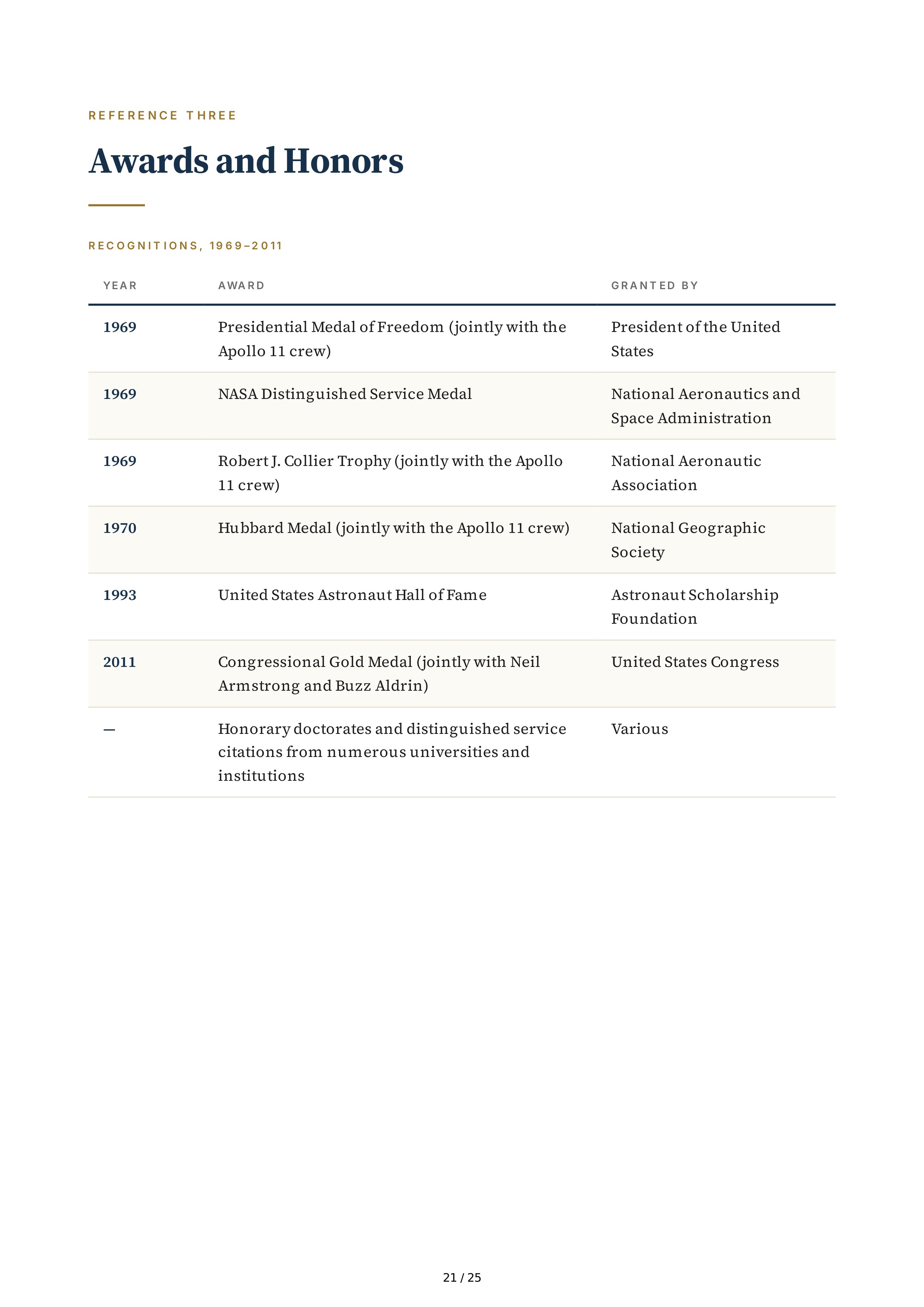
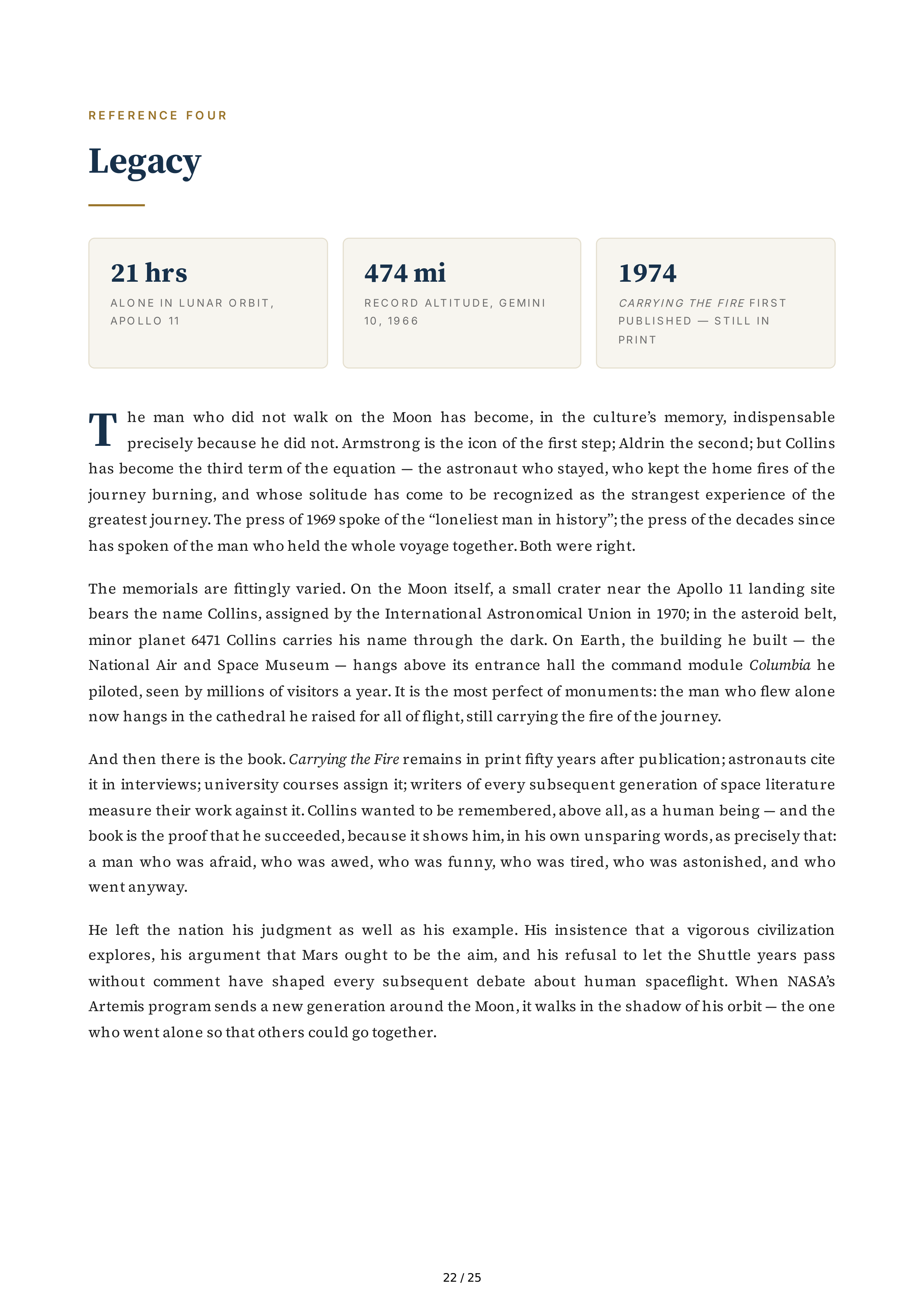
The General’s Son
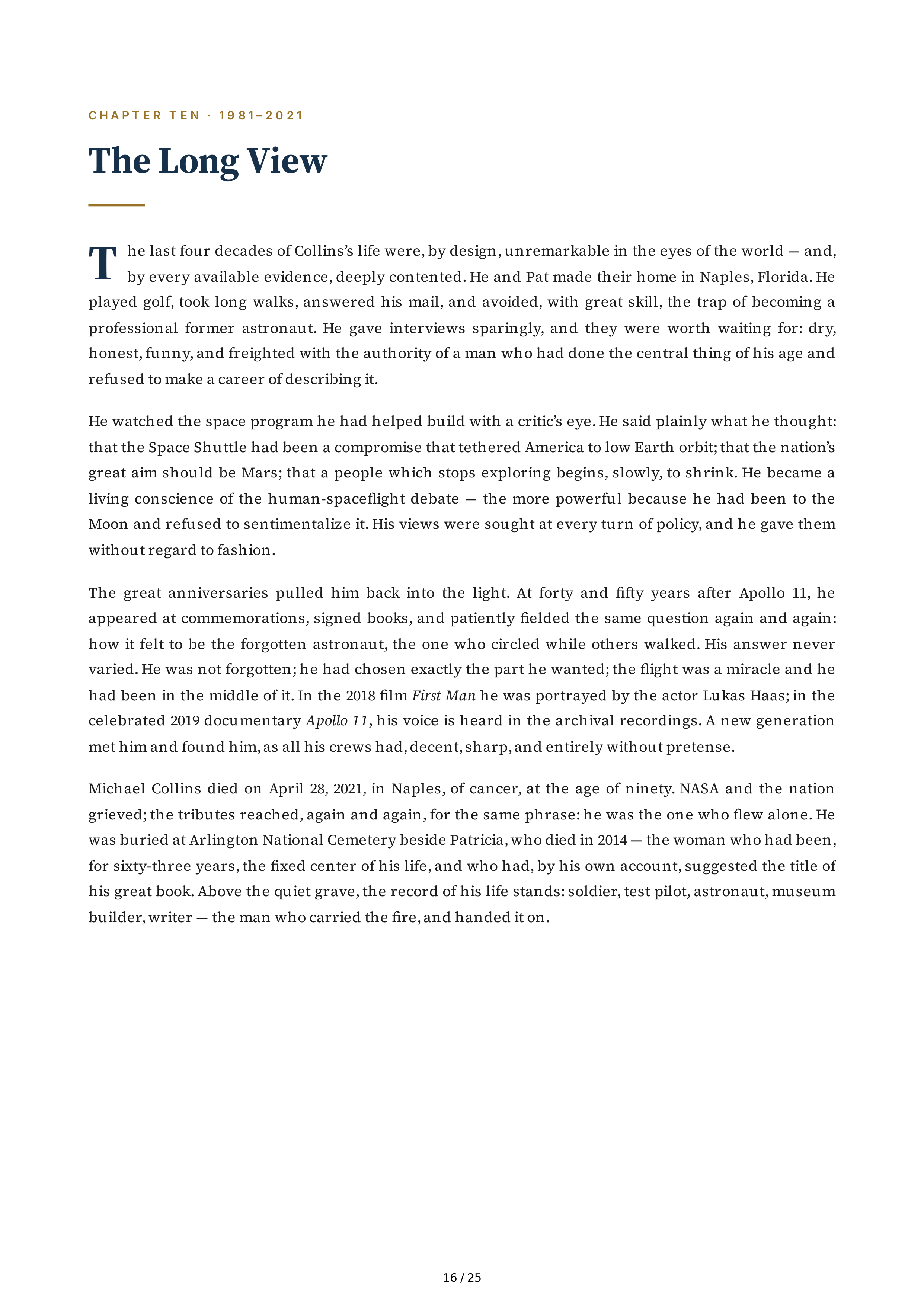
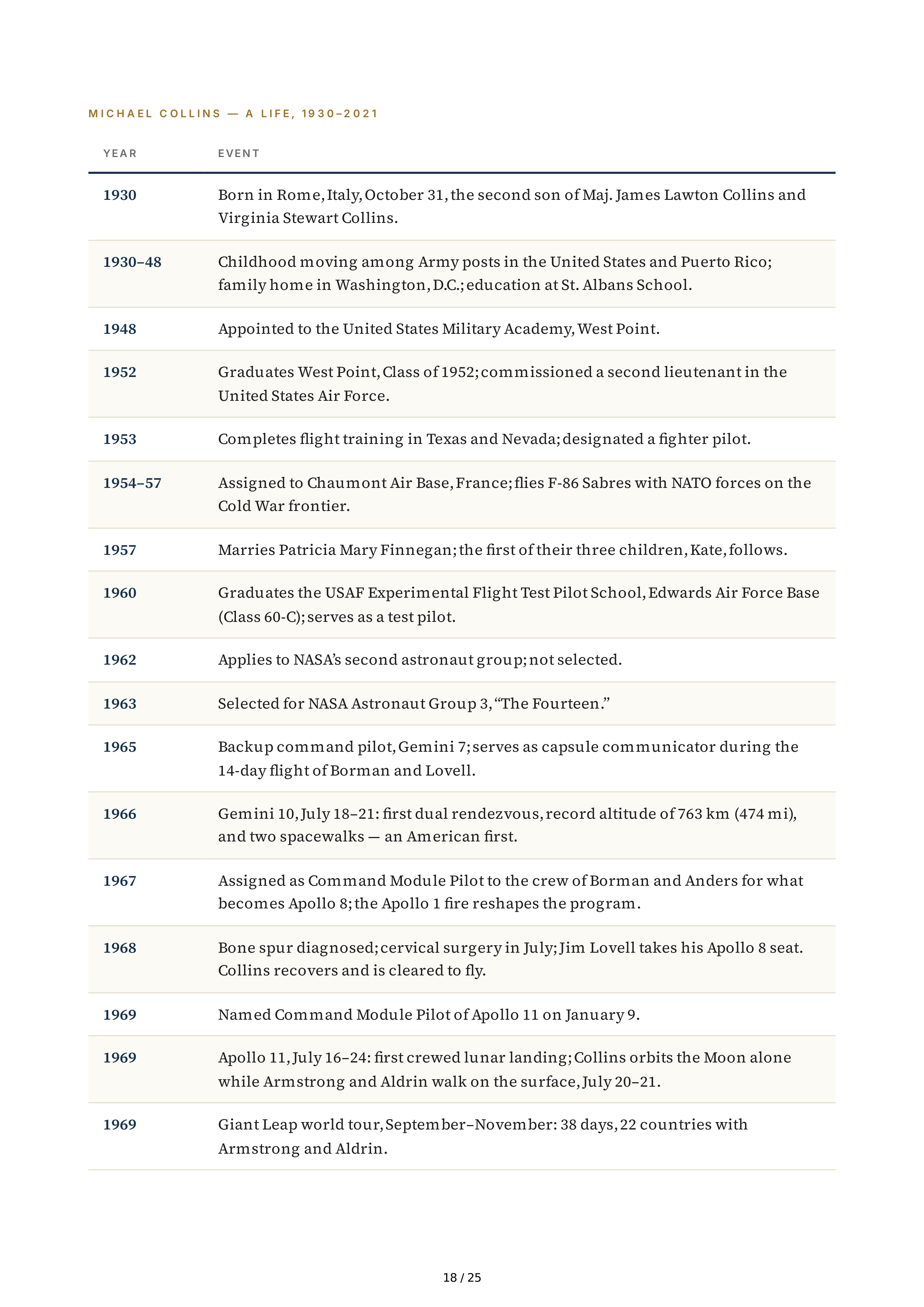
ichael Collins was born on October 31, 1930, in Rome, Italy, where his father, a United States Army
officer, was serving as a military attaché. He arrived into a family whose loyalties were woven into
the fabric of the service: his father, James Lawton Collins, was a West Point graduate of the class of 1917, a
veteran of the First World War, and an officer who would rise to become the Inspector General of the
United States Army. His older brother, James, would follow the same path to the Point and, eventually, to
a general’s own stars. The Army was not a profession in this family; it was an inheritance.
The military life is a life of motion, and Michael’s childhood was a sequence of postings — to Washington,
where the family had firm roots, to garrisons across the United States, and for a time to Puerto Rico. He
learned early the first lesson of the service child: that home is not a place but a family, and that the
world is a series of temporary horizons, each to be met with manners, resourcefulness, and a certain
inner steadiness. By every account he was a bright, easygoing boy — competent without being
conspicuous, liked without courting popularity — who carried into adulthood the soldier’s son’s instinct
for order, courtesy, and self-containment.
The age itself supplied the romance of flight. Michael grew up in the 1930s and 1940s, when aviation was
visibly transforming the world at a pace that seemed almost impossible. Lindbergh’s generation was his
parents’ generation; the generation of the Flying Fortress and the carrier pilot was his own. He was
drawn early to the shapes of airplanes and to the sense that mastery of the air was the coming form of
greatness — a conviction the next twenty years of history would thoroughly vindicate.
He was educated at St. Albans School in Washington and, in 1948, entered the United States Military
Academy at West Point — the family institution, though by his own telling the choice was genuinely his.
The Academy suited a temperament like his: it demanded precisely the mixture of discipline, physical
endurance, and quiet competence that he had been raised to value, and it gave him the companionship
of young men who would spend their lives in the same exacting trade. He graduated in June 1952,
ranked one hundred eighty-fifth in a class of 527, in the solid upper-middle of a generation that would
supply the nation’s military leadership for three decades.
The question at graduation was which service would claim him. His father’s Army was the natural
expectation, and Michael had grown up inside it. But flying had taken hold of him, and in the summer of
1952 — the U.S. Air Force had existed barely five years — he chose the new service, the one that seemed to
him, at twenty-one, to belong entirely to the future.
6 / 25