B
C
H A
P
T
E R O
N E
Baltimore
Genesis
1985
–
2003
altimore was built by water. The Patapsco River bends around the harbor that gave
the city its reason to exist, carrying in tobacco, grain, iron, and the ships of
commerce; carrying out the fortunes of merchants and the labor of the enslaved. Every
American city keeps a hidden ledger of who built it. Baltimore's ledger is written in brick —
the long rowhouses of Northwest Baltimore, raised in the decades after the Civil War for
white migrants and Black migrants alike, and by the 1980s the landscape of a Black middle
and working class holding its ground.
A C I T
Y O F I R O N A N D WAT
E R
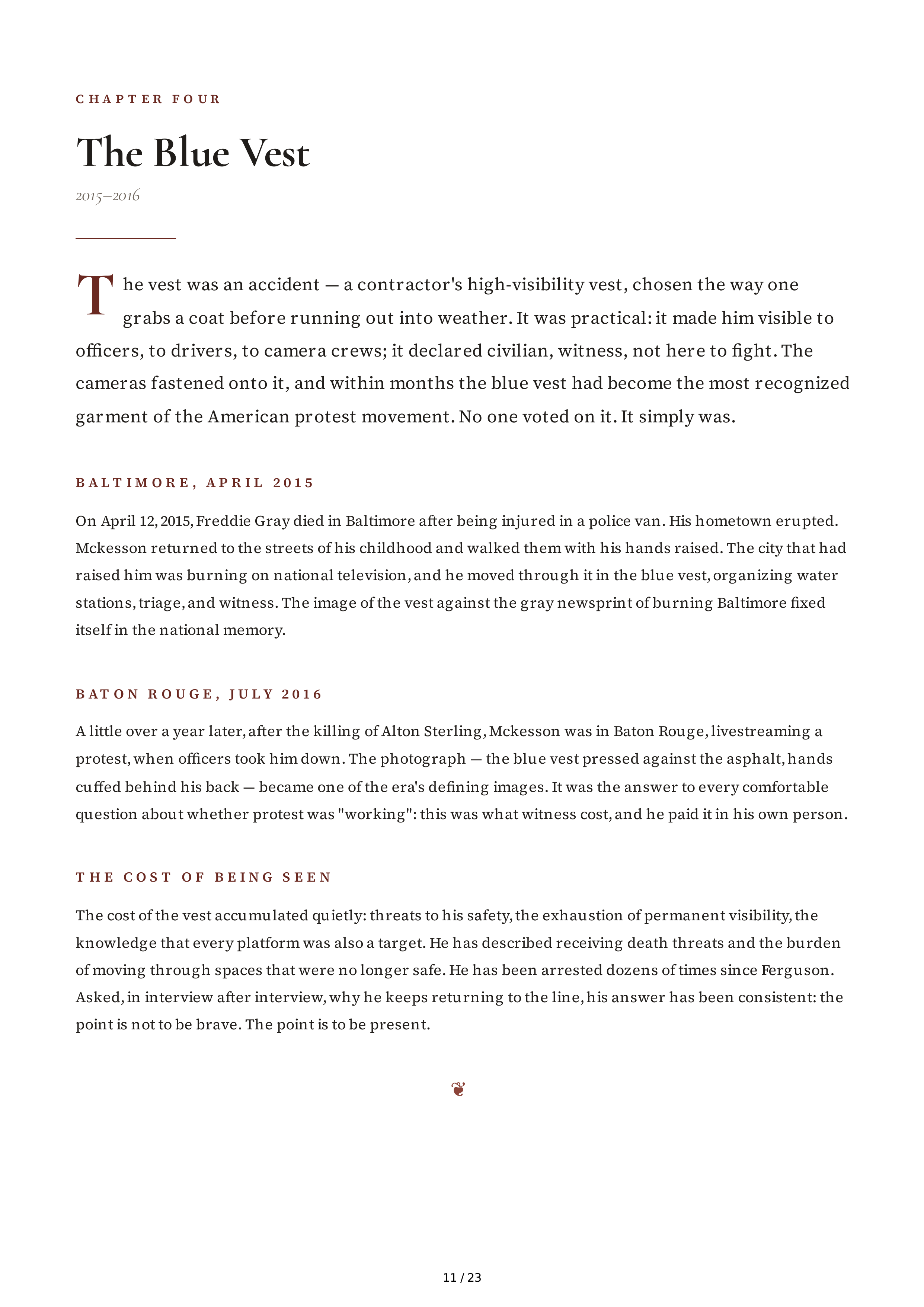
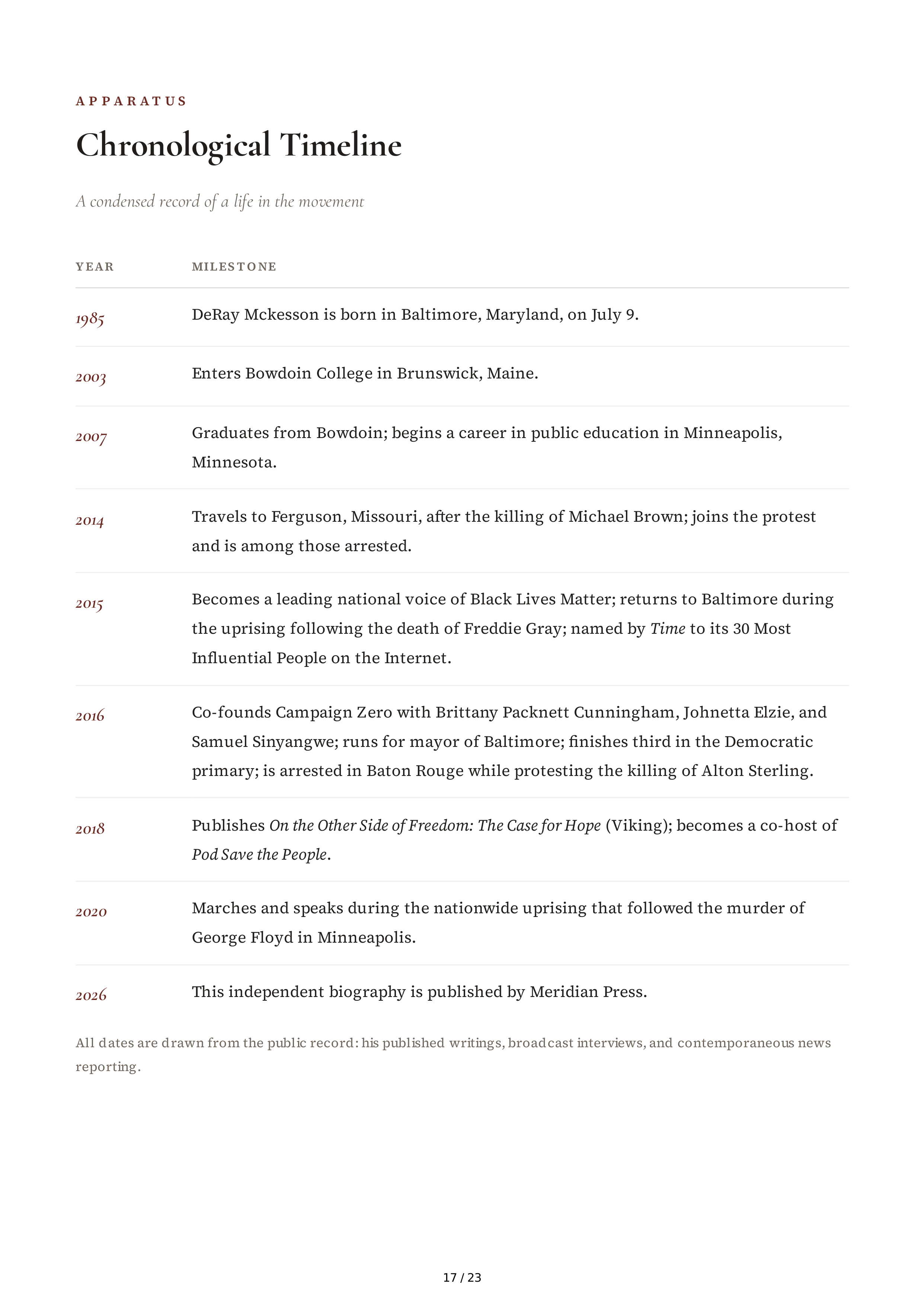
Into that city, on July 9, 1985, DeRay Mckesson was born. He was raised, for all practical purposes, by his
mother — a woman of formidable discipline and quiet faith, who emerges from his own accounts as the
emotional center of his childhood. She demanded excellence and gave enormous love in equal measure.
There was never quite enough money, but there was never any doubt about expectations: that he was as
good as anyone else in the country, and that he would be judged by what he built.
The schools he attended were ordinary Baltimore public schools — underfunded, overcrowded, and staffed
by teachers who had decided to stay. School was where the future was supposed to come from, and a
generation of children walked there past the evidence that the future did not always arrive. The drug war
was at its height; the city was losing hundreds of young lives a year to murder; houses stood boarded along
the routes he walked.
T
H E B O O K S A N D T
H E S T
R E E T
S
He read the way a castaway reads — anything, everything, to keep the mind alive. The streets taught a
second curriculum: how to read a room, how to stand in a line, how to know who was watching. It was an
education in the grammar of survival, and he would later carry that grammar into protests, campaigns, and
the hearing rooms of power.
When, in the autumn of 2003, a letter arrived from Bowdoin College in Brunswick, Maine, it was the
summons of the wider world. He left Baltimore carrying the city in his posture the way a wound carries
weather. He could not yet know that the city — and the country — would call him back.
❦
7 / 23