F
C
H
A
P
T
E
R
S
E
V
E
N
The Judgment
“The verdict was read in Spanish, in a concrete room, in a town
that smelled of oil.”
F R O M
T
H E
A U T
H O R
’
S
N O T
E B O O K S
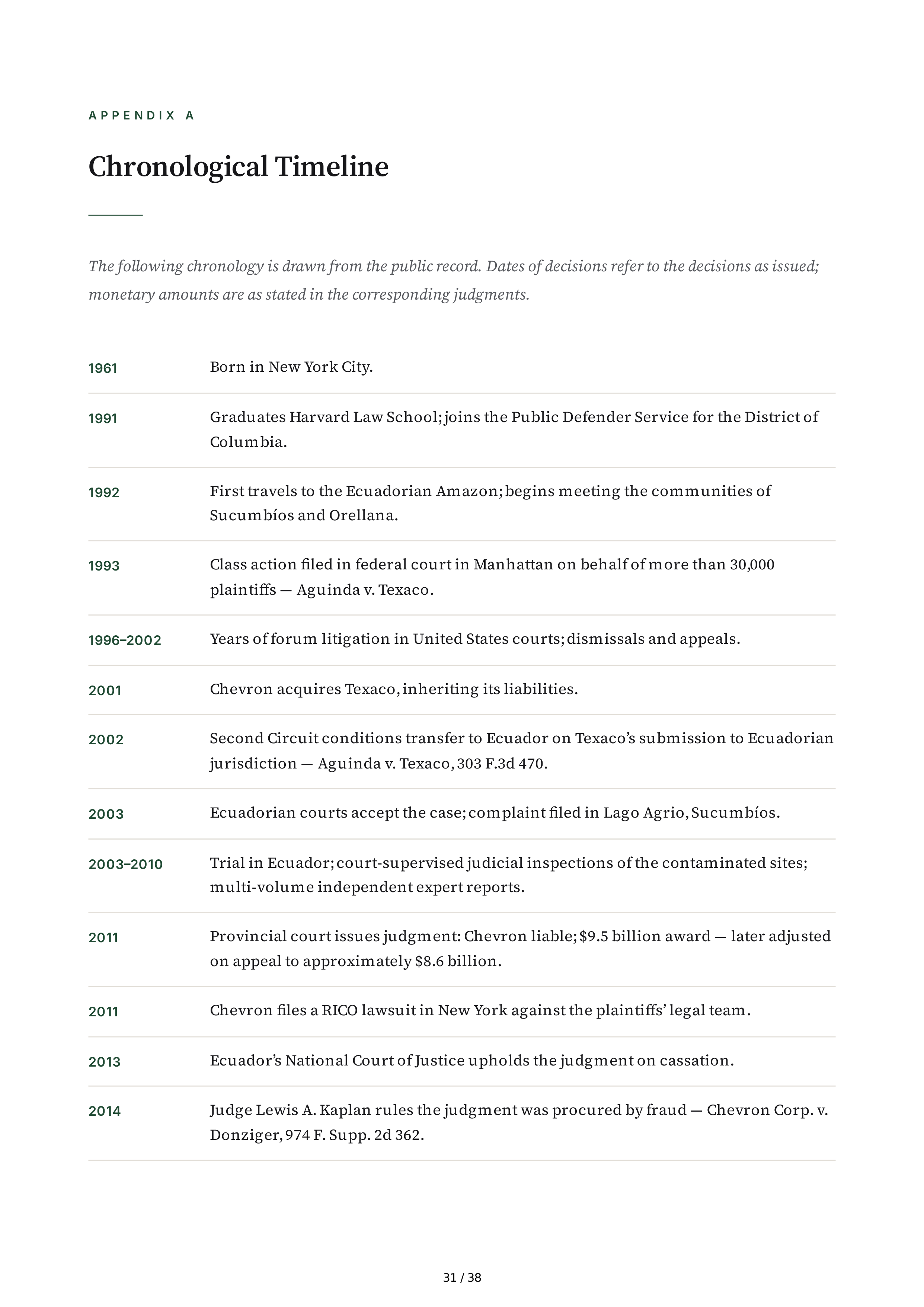
ebruary 14, 2011. Valentine’s Day. The provincial court of Sucumbíos in Lago Agrio was a
modest concrete building, and the room was full to the walls with plaintiffs, lawyers,
journalists, and officials. The judgment, when it came, took nearly three hours to read.
Sentence by sentence, the court reconstructed the history of the concession, the pattern of
disposal, the knowledge of the company, and the injury to the people. Then, at the end, the
operative part: Chevron was liable. It had committed the harm. It would pay.
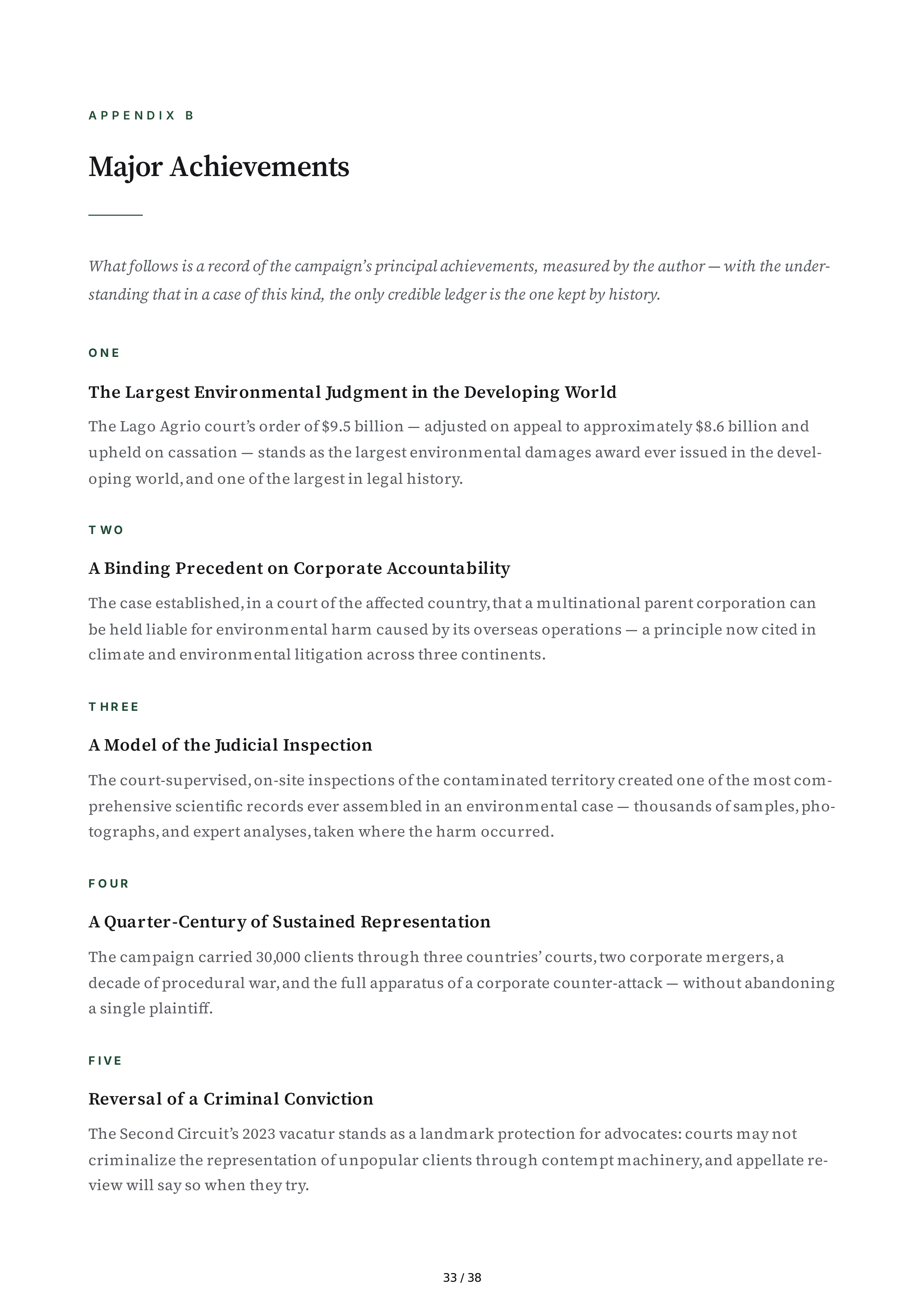
The figure was
$
9.5 billion — at the time the largest environmental damages award in history,
issued by a court in a country that most of the world’s business press had written off as juris-
dictionally exotic. On appeal, an intermediate court would adjust the amount to approxi-
mately
$
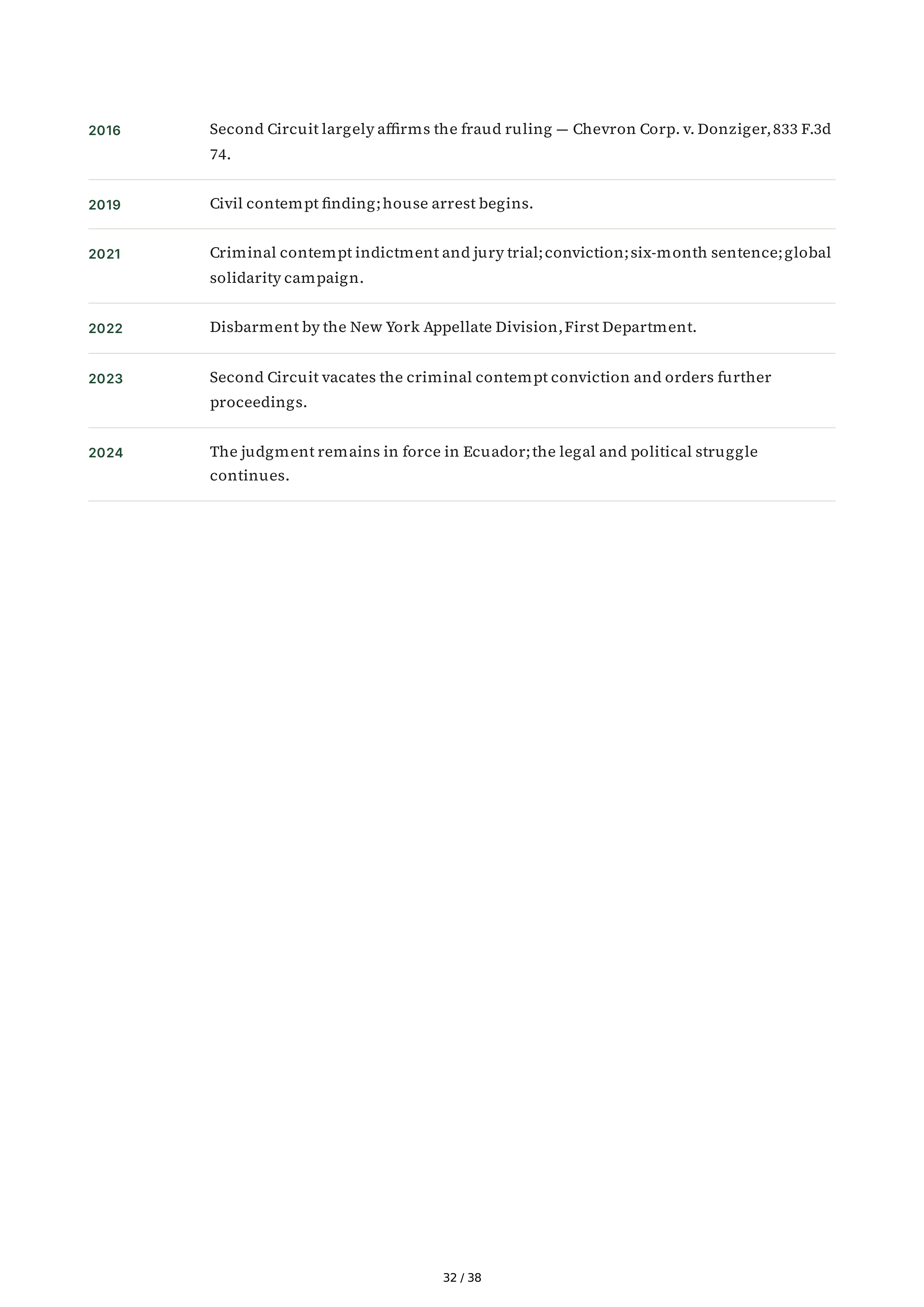
8.6 billion, but the core holding survived, and in 2013 Ecuador’s highest court upheld
it on cassation. The judgment ordered the company to finance the remediation of the land it
had poisoned and to pay compensation to the communities whose lives it had damaged.
Outside the courthouse, the plaza filled with people. Old women who had waited nineteen
years wept; the elders of the Quichua sang; the lawyers stood in a circle and did not know
what to say. I remember feeling the ground move under me — a strange, almost embarrass-
ing intensity of joy and fear. I had won the case of my life. The case, I already knew, was not
over. The company had other courts, other countries, and other weapons.
I did not know, standing in that plaza, that the judgment would never be paid. I did not know
that the company would spend the next decade and more than a billion dollars trying to
erase it, or that it would come close to erasing me. But I knew, with a clarity that has never
dimmed, that we had done something real: we had taken the largest corporation in the world
into a courtroom of the people it had harmed, before judges of the country it had treated as
disposable, and we had made the law say what the law was supposed to say. That is called
winning. The definitions that follow are harder.
19 / 38