

THE ANNUAL MAGAZINE OF THE
ATLAS COPCO GROUP |
2021-2022
for a sustainable future
No waste, low emissions
What if machines could adapt
their speed to the current need to
save energy?
Perfect vision
Fully autonomous production
is no longer an illusion.
Powered up and ready to go
For companies who want to curb or
even eliminate their CO
2
emissions,
going electric is the obvious choice.
INNOVATING




2
Industrial Ideas magazine 2021
Smarter manufacturing
Imagine a factory where smart machines operate
autonomously and transfer data without any delay.
Powered up and ready to work
Going electric is an important step toward a
carbon-neutral future.
No waste, low emissions
What if industrial machines could use much less energy by
adapting to the current production need?
Tapping into the green energy market
Market Manager Rasmus Rubycz is ready to grasp new
opportunities.
Smart tools for modern life
Tight for takeoff
Assembling airplanes, the smart way.
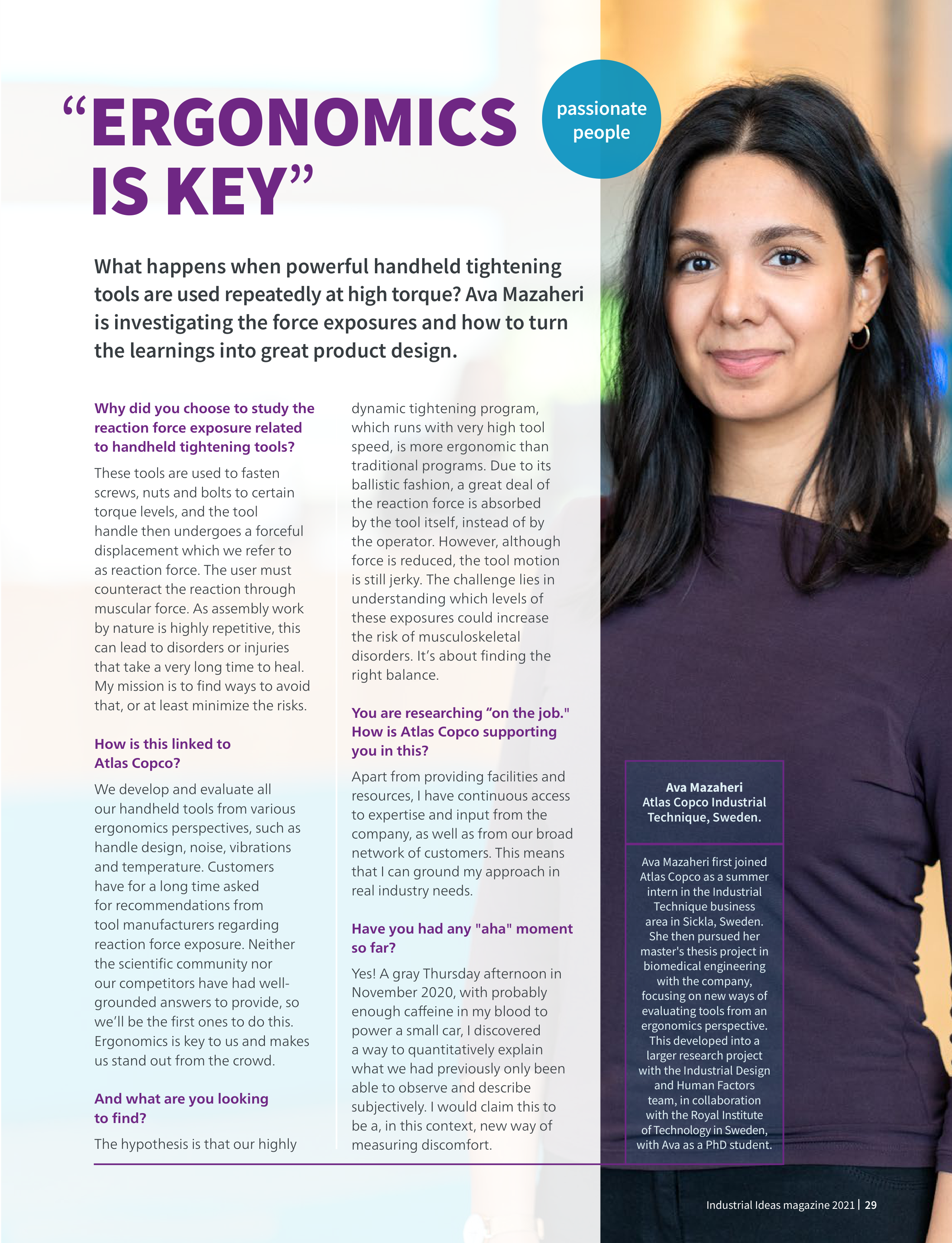
"Ergonomics is key"
Ava Mazaheri is investigating force exposures on tool
users and how to turn the learnings into great product design.
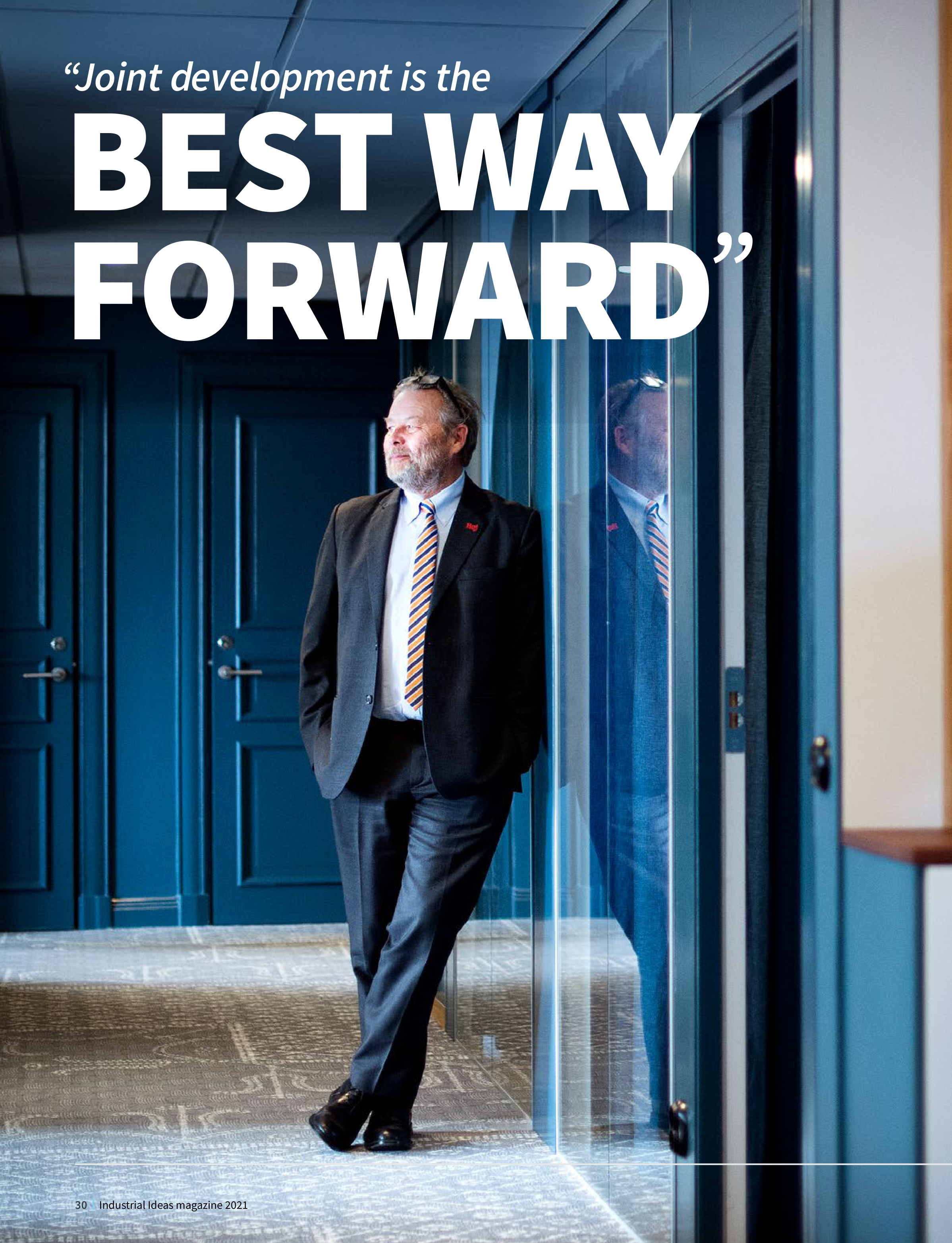
Joint development is the best way forward"
Atlas Copco is part of the “Wallenberg Ecosystem”,
set up to push scientific boundaries.
11
12
16
22
24
26
29
30
Publisher:
Gisela Lindstrand
Editor-in-Chief:
Anna-Karin Rabe
Content production:
Atlas Copco and Appelberg
Layout:
Atlas Copco Brand Studio
Published:
June, 2021
A MAGAZINE FROM
THE ATLAS COPCO GROUP
08
PERFECT
VISION
40
A RENTAL STATE
OF MIND
46
THE GATEWAY
TO GROWTH
54
WHEN TRAIN
BEATS THE PLANE
04
MAKING A
DIFFERENCE
36
38
43
52
57
64
59
60
44
58
53
Keeping it dry
A 10-year development process resulted in an
innovation that changes everything.
Recipe for success
At your service
Service Specialist Tomasz Bugaj knows how to keep
business and society running, at all times.
Experts in the field
Setting the tone
Did you know that even Jimi Hendrix's performance
relied on vacuum?
Clearly superior
Choosing the most efficient vacuum solutions will
make all the difference.
Making the connection
Logistics Manager Katey Kim supports the world’s
semiconductor manufacturers on a daily basis.
Chipping in for safety
After two explosions, this South Korean education center
decided to shift to on-site nitrogen supply from Atlas Copco.
Turning apples into apple sauce
Compressed air is needed everywhere, even when making
baby food.
Clean water changes lives
Our Water for All initiative supports communities
with limited access to clean water.
Enabling the shift
Industrial assembly solutions are at the heart of
the electric car revolution.
IN THIS ISSUE
Industrial Ideas magazine 2021
3
U
nlike many other technology
drivers, Atlas Copco is
characterized by a very hands-
on approach to innovation. We never
innovate just for the sake of it, but
because we see an opportunity to make
a difference. Everything we do is spurred
by real challenges. This helps us develop
highly efficient and sustainable products
that benefit our customers, society and
the world.
Our expertise covers many different
technologies, and our solutions are used in
almost all kinds of industries. Everywhere
you look, our products probably had
something to do with it. The phone you
use was made with our tools and vacuum
solutions, the food, clothes or medicine
you need were made with the help of our
compressors, and the house you sit in may
have been built with our power solutions.
When we develop a new product, we
always start by looking at a present or
future problem that needs to be solved.
Our current focus on smart connectivity
and remote control is an excellent example
of this, as it brings both productivity, safety
and environmental benefits. Developing
battery-powered machines is another.
We do it together with our customers,
who often are leading players in their
fields, and we have reached many
milestones together. Ergonomics, safety,
quality and energy-efficiency are just
some areas where we have set new
standards throughout the years, and
still do. To continuously invest in R&D is
a fundamental part of our innovation
strategy. We know that this is the best way
to remain an industry leader over time.
This publication is a tribute to our spirit of
innovation. But having the right ideas is
not enough. As you can see, it all comes
down to our talented and dedicated
people. Here you will meet a few of them,
but thousands of colleagues all over the
world share the same passion. We believe
in giving people a clear responsibility and
plenty of freedom to act. Mostly because
we know it’s the fastest way to great
results, but also because it’s much more
fun to work that way, and when you have
fun you become bolder and more creative.
This way, we develop industrial ideas
that empower our customers to grow
and drive society forward. Together, we
help create a better tomorrow.
n
Mats Rahmström
President and CEO
OUR IDEAS DRIVE
“
society forward
”
Industrial Ideas magazine 2021
3



MAKING A
DIFFEREN
The demand for renewable energy solutions is growing. When making
wind turbines, our industrial grinders give the pillars and rotor blades
the optimal angle and surface. Our powerful wrenches and tensioners
ensure that every bolt is tightened properly to withstand the enormous
powers at play. During installation, our generators are used to safely
start up the turbines, at land or offshore. And did you know that solar
power technology depends on vacuum pumps? They are needed when
making the silicon wafers and photovoltaic cells that will capture the
sunlight and convert it into energy.



A
NCE
Modern society depends on
industrial ideas. Our tools, machines
and software solutions are involved
in making almost everything you see
and use in your daily life.
Industrial Ideas magazine 2021
5


6
Industrial Ideas magazine 2021
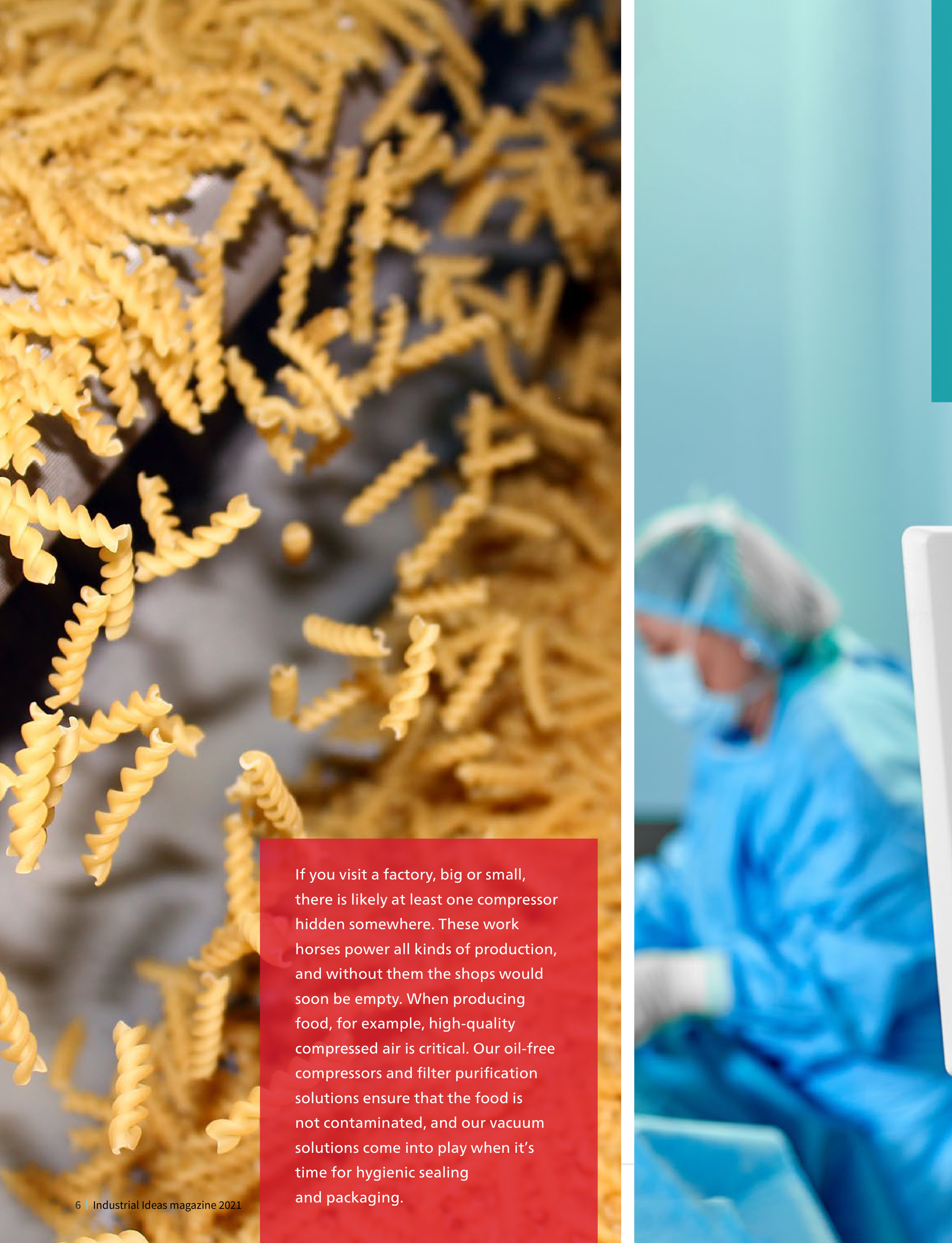
If you visit a factory, big or small,
there is likely at least one compressor
hidden somewhere. These work
horses power all kinds of production,
and without them the shops would
soon be empty. When producing
food, for example, high-quality
compressed air is critical. Our oil-free
compressors and filter purification
solutions ensure that the food is
not contaminated, and our vacuum
solutions come into play when it’s
time for hygienic sealing
and packaging.
6
Industrial Ideas magazine 2021


Industrial Ideas magazine 2021
7
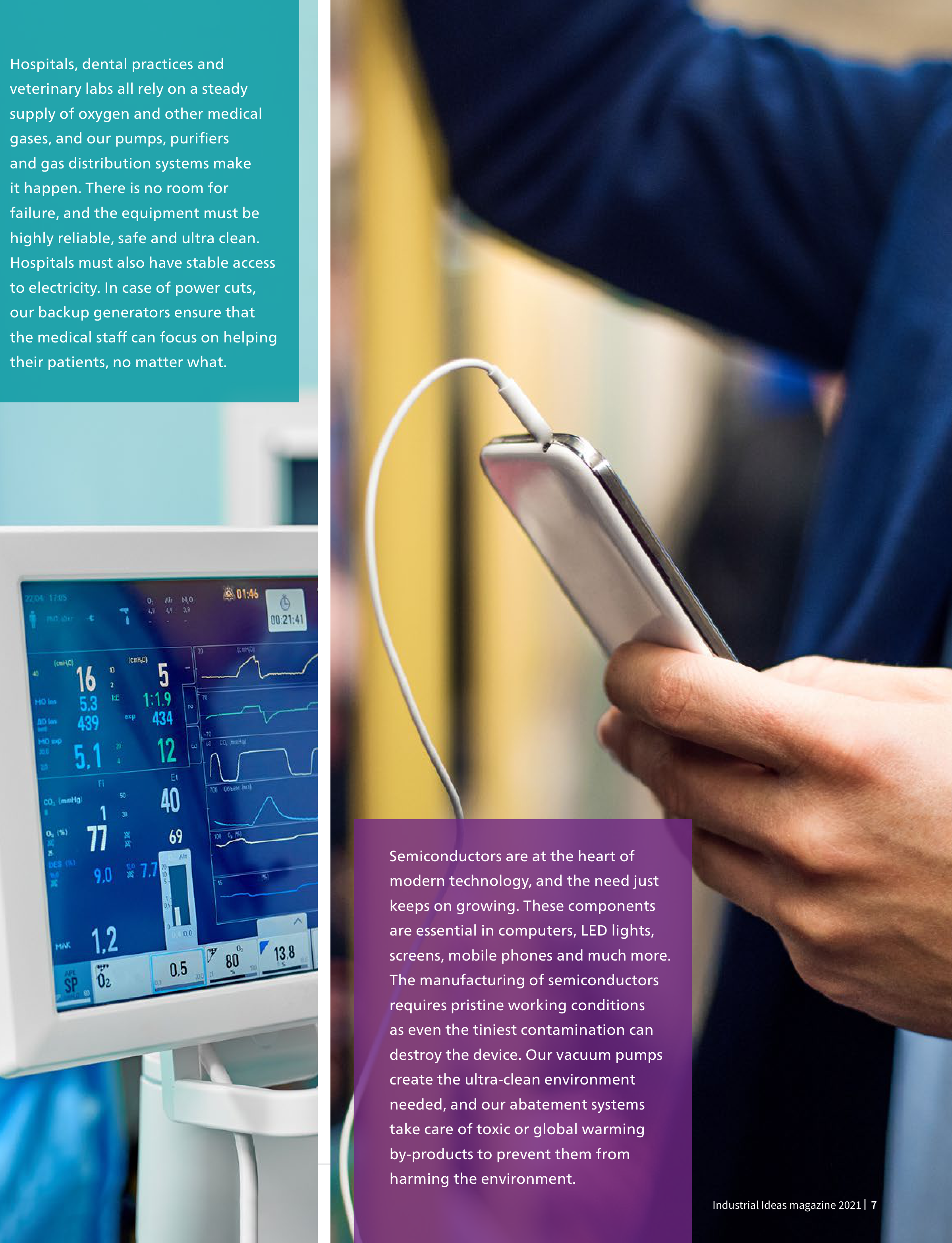
Hospitals, dental practices and
veterinary labs all rely on a steady
supply of oxygen and other medical
gases, and our pumps, purifiers
and gas distribution systems make
it happen. There is no room for
failure, and the equipment must be
highly reliable, safe and ultra clean.
Hospitals must also have stable access
to electricity. In case of power cuts,
our backup generators ensure that
the medical staff can focus on helping
their patients, no matter what.
Semiconductors are at the heart of
modern technology, and the need just
keeps on growing. These components
are essential in computers, LED lights,
screens, mobile phones and much more.
The manufacturing of semiconductors
requires pristine working conditions
as even the tiniest contamination can
destroy the device. Our vacuum pumps
create the ultra-clean environment
needed, and our abatement systems
take care of toxic or global warming
by-products to prevent them from
harming the environment.
Industrial Ideas magazine 2021
7
8
Industrial Ideas magazine 2021
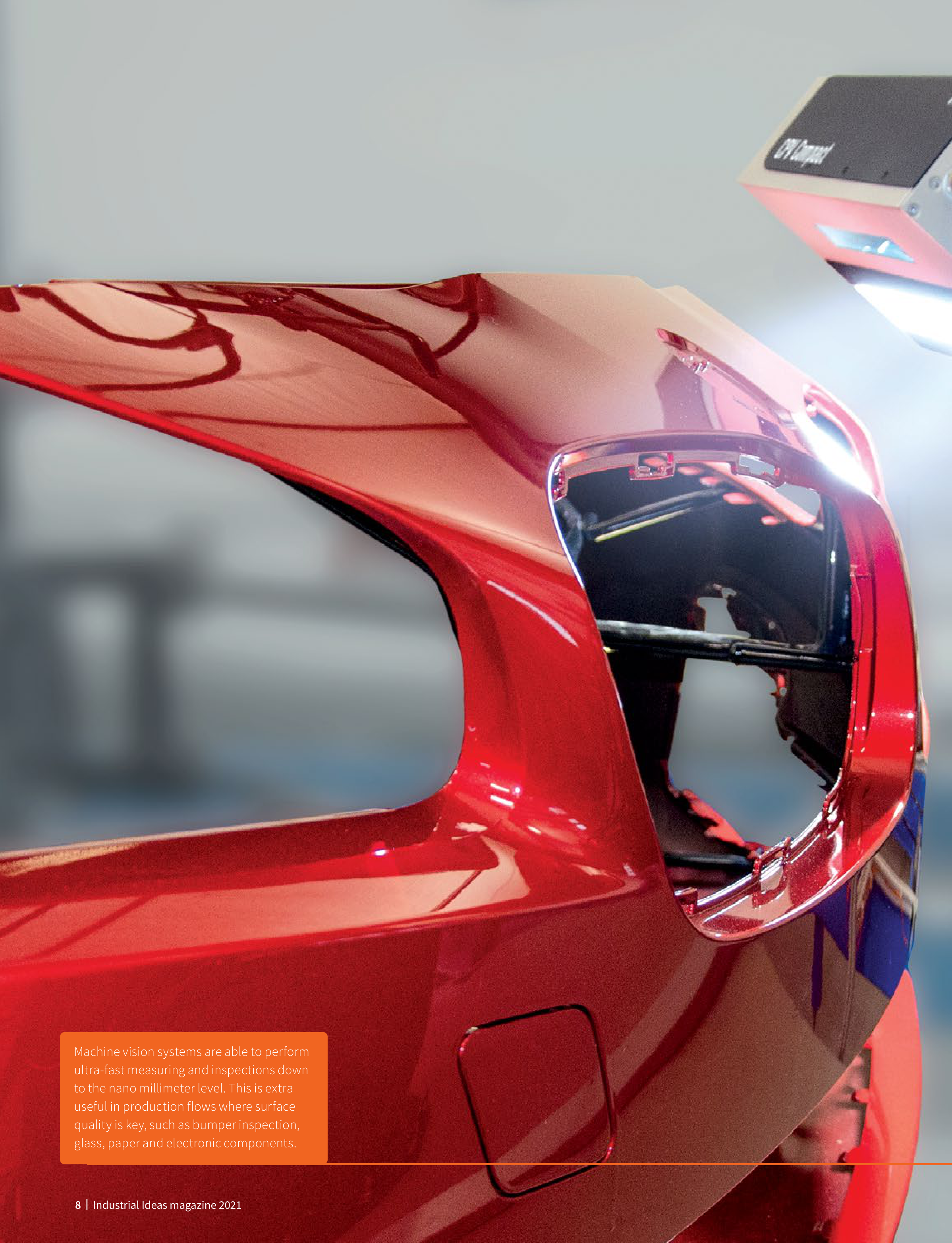
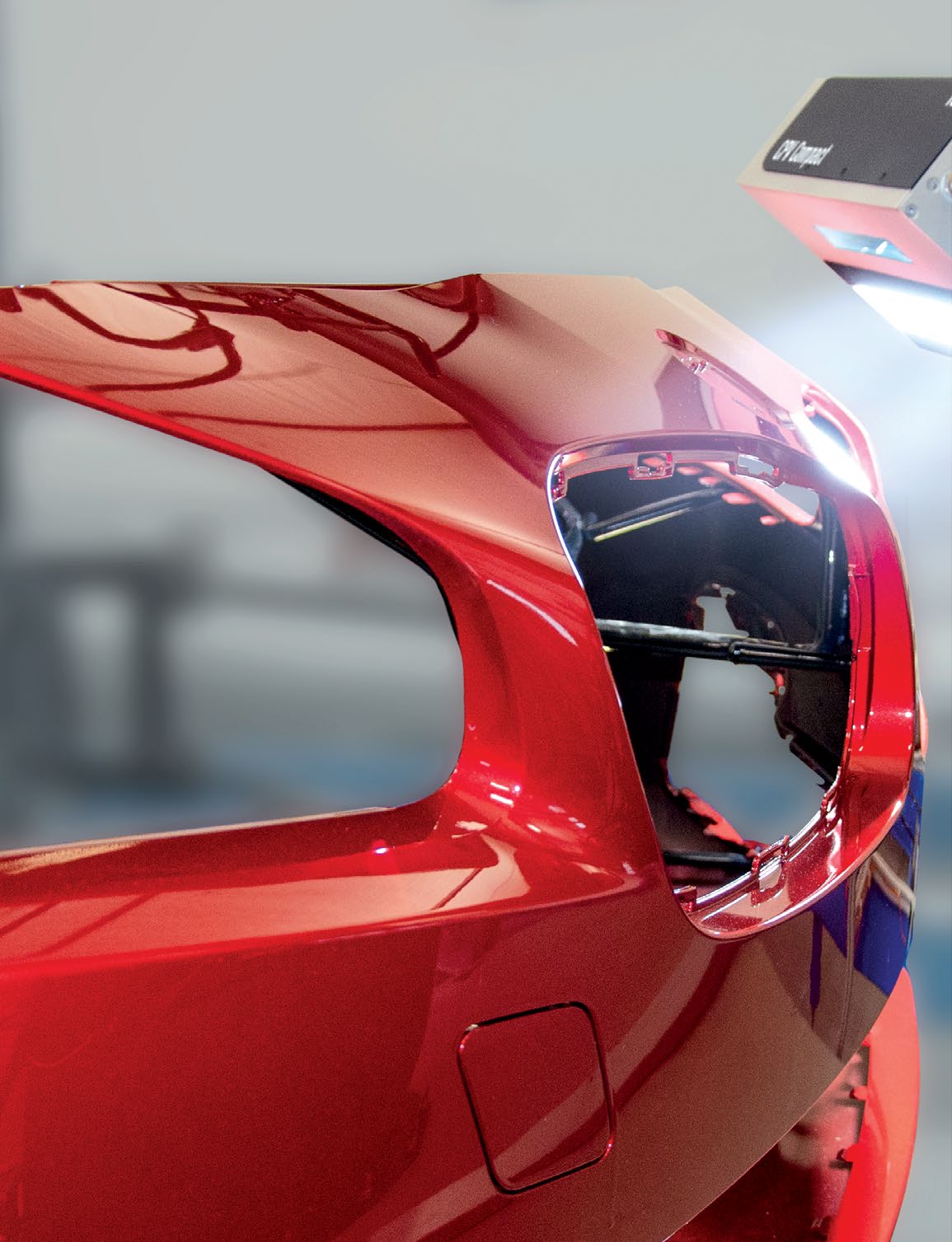
Machine vision systems are able to perform
ultra-fast measuring and inspections down
to the nano millimeter level. This is extra
useful in production flows where surface
quality is key, such as bumper inspection,
glass, paper and electronic components.
8
Industrial Ideas magazine 2021
Industrial Ideas magazine 2021
9
PERFECT VISION
Fully autonomous production is no longer an illusion. Thanks to extremely
precise optical sensors boosted by embedded computing power, machines
are now able to produce top quality at record speed.
I
ndustrial production is becoming ever faster,
more flexible and self-governing. This puts very
high demands on reliable item identification
and quality inspection. As these tasks must be
performed in a split second, it all comes down to
smart machines. The human eye is simply not fast or
focused enough. Luckily, industrial robots equipped
with smart and precise computer vision are ready to
take up the challenge.
When quality is key
Machine vision technology has been around for
decades, ever since robots and other machines were
equipped with cameras. Today, machine vision systems
are frequently used in assembly processes, autonomous
vehicles, food production, item packaging and logistics
– even to enhance medical examinations.
The systems are nowadays digitally advanced with high-
resolution lenses, extremely sensitive sensors and fast-
switching LED lights. With the help of 3D technology, they
can perceive the depth and different angles of an item
and detect deviations down to the nano millimeter level.
When equipped with infrared radiation functionality,
the systems are able to create thermal “heat maps” to
scan and identify items. The cameras and sensors are
complemented by software solutions that capture data
and use it to make decisions and instruct the hardware.
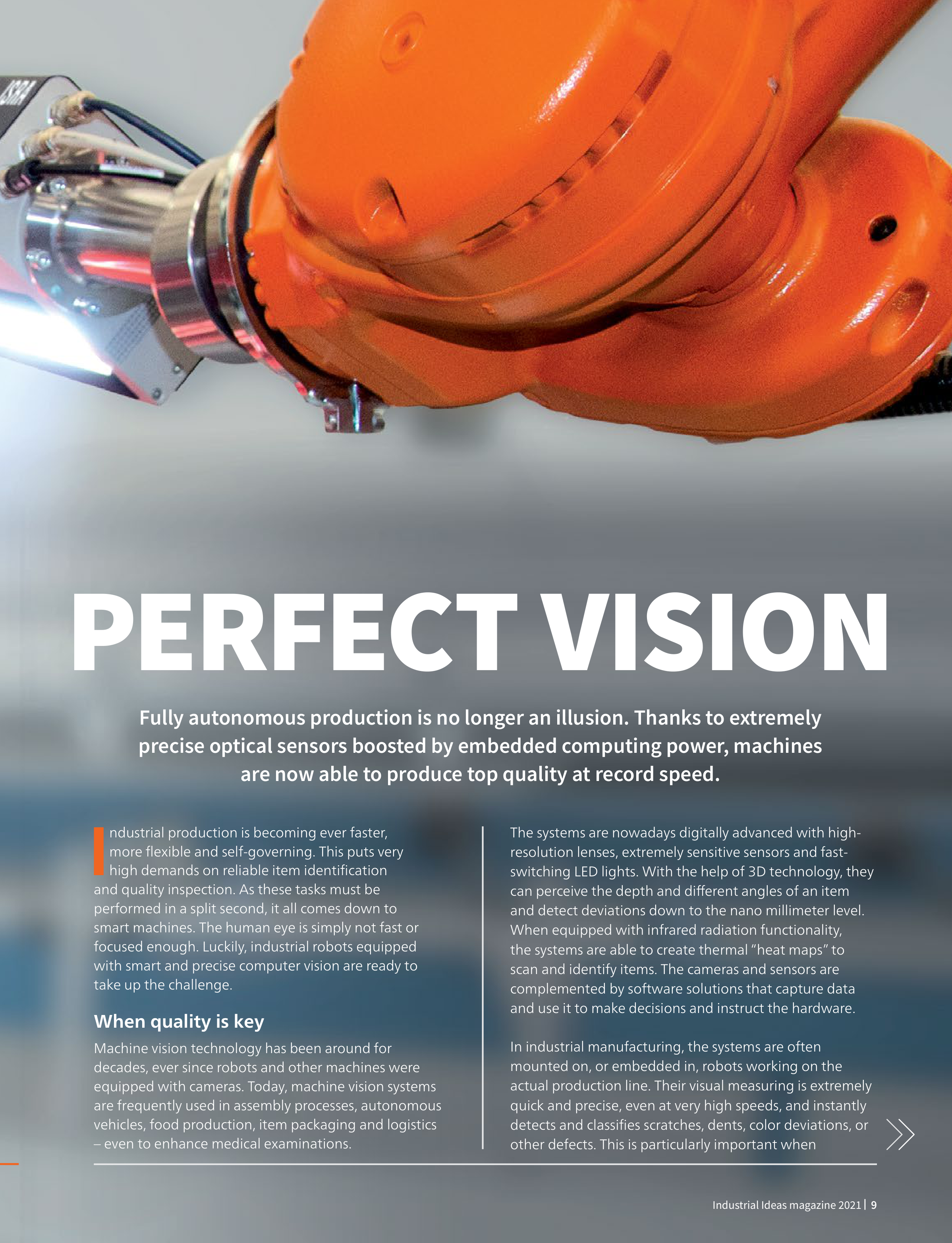
In industrial manufacturing, the systems are often
mounted on, or embedded in, robots working on the
actual production line. Their visual measuring is extremely
quick and precise, even at very high speeds, and instantly
detects and classifies scratches, dents, color deviations, or
other defects. This is particularly important when
Industrial Ideas magazine 2021
9
10
Industrial Ideas magazine 2021
surface quality is key, like in the
production of sheet metal, glass, paper,
and critical electronic components such as
semiconductors.
Besides material inspection, machine
vision systems can be used to ensure that
pieces are picked and placed correctly
and sorted in the right order. This saves
time and improves overall production
efficiency. The system software also
enables self-teaching, and machines
can learn how to recognize defects or
patterns common for a specific product
model, for example, to further improve
the production process.
Entering a new field
In 2020, Atlas Copco moved into the
field of machine vision to strengthen its
industrial assembly expertise and support
customers on their journey towards smart
productivity. By acquiring Germany-
based ISRA VISION, a global leader in
machine vision solutions, and Perceptron,
a U.S. company with almost 40 years of
experience in 3D measurement, a new
technology division was established,
fully focused on machine vision. The two
brands are complemented by QUISS, a
technology driver in bead inspection and
part of the Atlas Copco Group since 2018.
“Machine vision is a very exciting field
for Atlas Copco as it complements our
automation and robotic solutions for
manufacturing. It is also highly innovative
and combines advanced software and
hardware technology, which is right up
our alley,” says Tomas Lundin, President
of the new Machine Vision Solutions
division. “By acquiring this expertise, we
can now provide industrial assembly
technologies and machine vision
solutions for the same applications,
like car manufacturing, and help our
customers set up smooth and smart
production flows.”
Eyes set on renewables
One important customer segment is
renewable energy, and solar power
in particular. Solar panels must have a
flawless surface in order to capture the
energy efficiently.
Through ISRA, Atlas Copco develops
optical inspection systems for complete
quality control of solar panels, from
glass production to solar cells and entire
modules. The highly precise solutions
help producers improve efficiency,
performance and throughput – all
important steps towards making solar
technology more affordable.
n
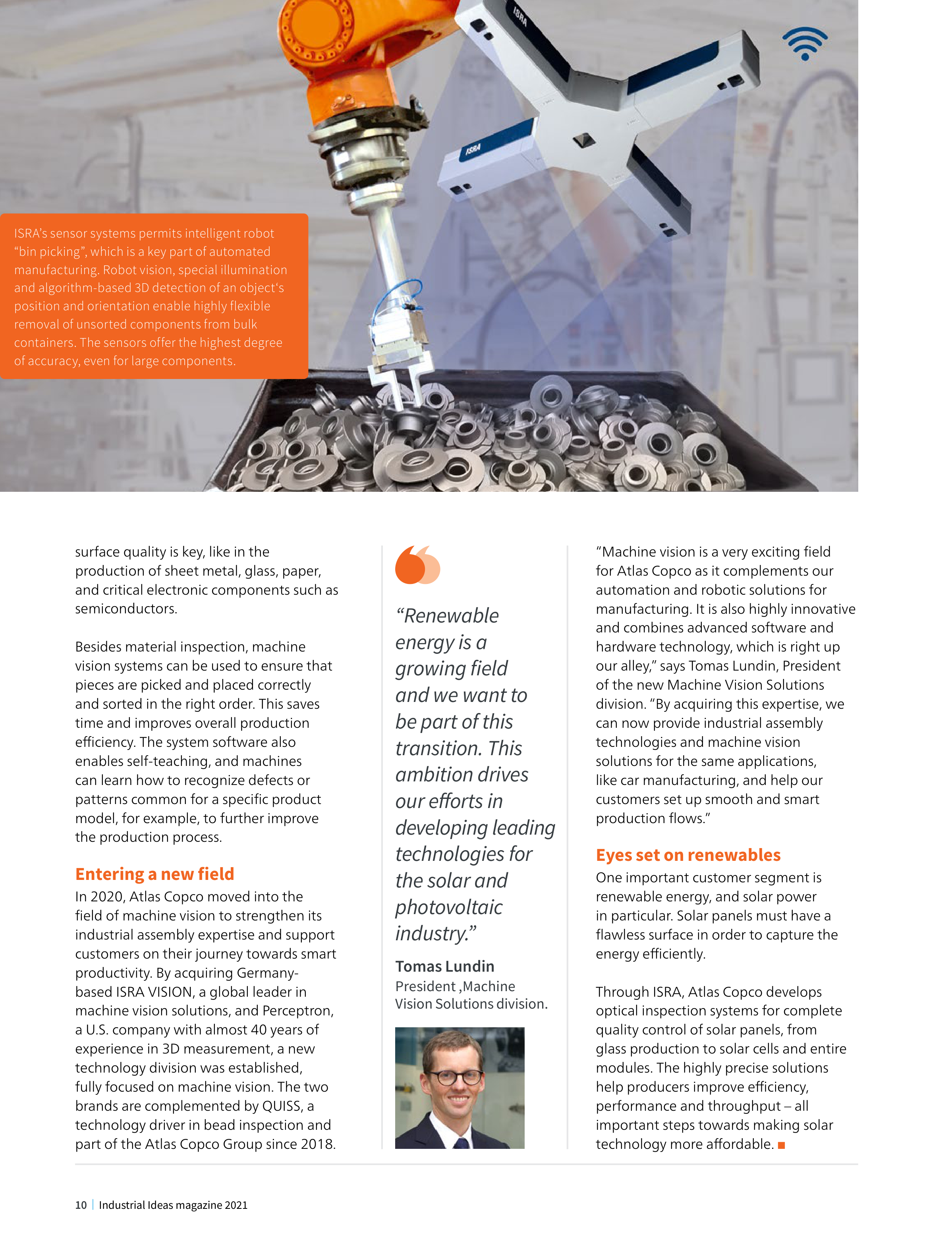
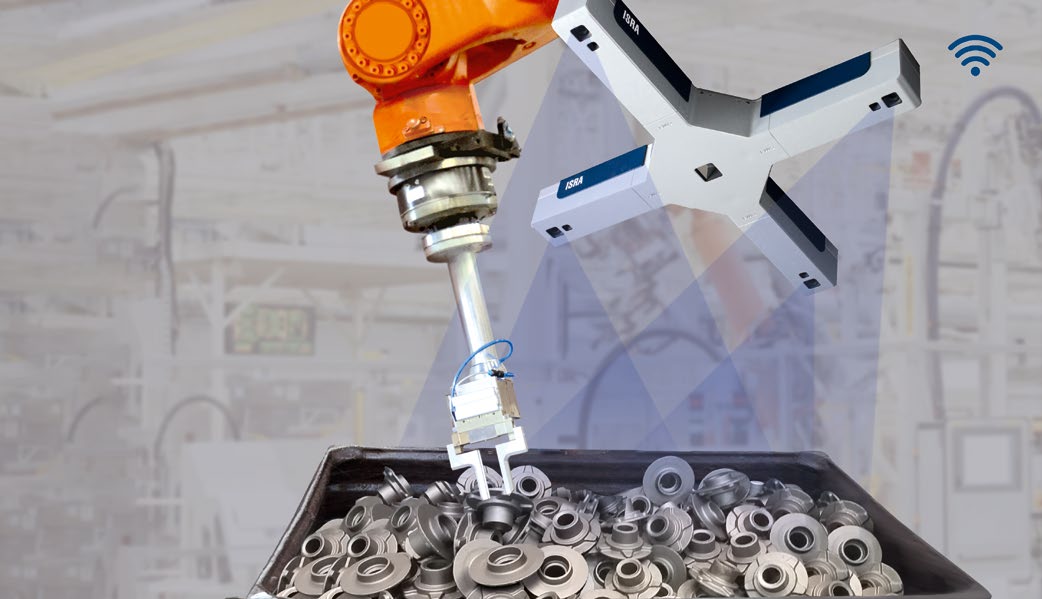
ISRA’s sensor systems permits intelligent robot
“bin picking”, which is a key part of automated
manufacturing. Robot vision, special illumination
and algorithm-based 3D detection of an object‘s
position and orientation enable highly flexible
removal of unsorted components from bulk
containers. The sensors offer the highest degree
of accuracy, even for large components.
“Renewable
energy is a
growing field
and we want to
be part of this
transition. This
ambition drives
our efforts in
developing leading
technologies for
the solar and
photovoltaic
industry.”
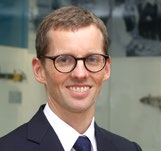
Tomas Lundin
President ,Machine
Vision Solutions division.

Industrial Ideas magazine 2021
11
SMARTER
manufacturing
Imagine a factory where smart machines operate
autonomously and transfer data without any delay.
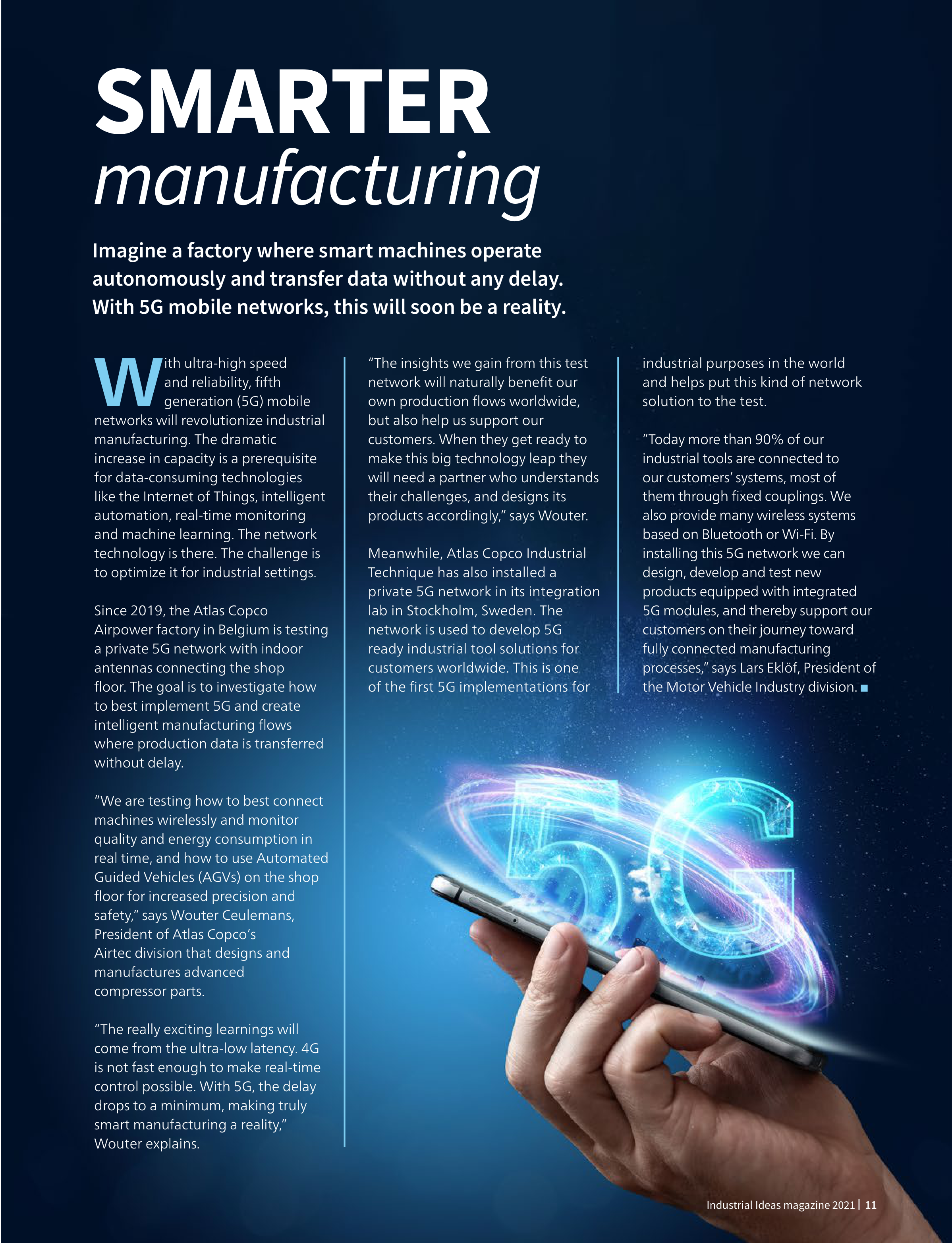
With 5G mobile networks, this will soon be a reality.
W
ith ultra-high speed
and reliability, fifth
generation (5G) mobile
networks will revolutionize industrial
manufacturing. The dramatic
increase in capacity is a prerequisite
for data-consuming technologies
like the Internet of Things, intelligent
automation, real-time monitoring
and machine learning. The network
technology is there. The challenge is
to optimize it for industrial settings.
Since 2019, the Atlas Copco
Airpower factory in Belgium is testing
a private 5G network with indoor
antennas connecting the shop
floor. The goal is to investigate how
to best implement 5G and create
intelligent manufacturing flows
where production data is transferred
without delay.
“We are testing how to best connect
machines wirelessly and monitor
quality and energy consumption in
real time, and how to use Automated
Guided Vehicles (AGVs) on the shop
floor for increased precision and
safety,” says Wouter Ceulemans,
President of Atlas Copco’s
Airtec division that designs and
manufactures advanced
compressor parts.
“The really exciting learnings will
come from the ultra-low latency. 4G
is not fast enough to make real-time
control possible. With 5G, the delay
drops to a minimum, making truly
smart manufacturing a reality,”
Wouter explains.
“The insights we gain from this test
network will naturally benefit our
own production flows worldwide,
but also help us support our
customers. When they get ready to
make this big technology leap they
will need a partner who understands
their challenges, and designs its
products accordingly,” says Wouter.
Meanwhile, Atlas Copco Industrial
Technique has also installed a
private 5G network in its integration
lab in Stockholm, Sweden. The
network is used to develop 5G
ready industrial tool solutions for
customers worldwide. This is one
of the first 5G implementations for
industrial purposes in the world
and helps put this kind of network
solution to the test.
”Today more than 90% of our
industrial tools are connected to
our customers’ systems, most of
them through fixed couplings. We
also provide many wireless systems
based on Bluetooth or Wi-Fi. By
installing this 5G network we can
design, develop and test new
products equipped with integrated
5G modules, and thereby support our
customers on their journey toward
fully connected manufacturing
processes,” says Lars Eklöf, President of
the Motor Vehicle Industry division.
n
Industrial Ideas magazine 2021
11

12
Industrial Ideas magazine 2021
I
magine a metropolitan construction site free from
noise, harmful fumes, particles and carbon emissions.
And imagine being able to store energy in a zero-
emission way and supply power to off-grid applications,
or to complement a peak in demand. With its electric-
powered solutions, Atlas Copco has come a long way
toward realizing this vision.
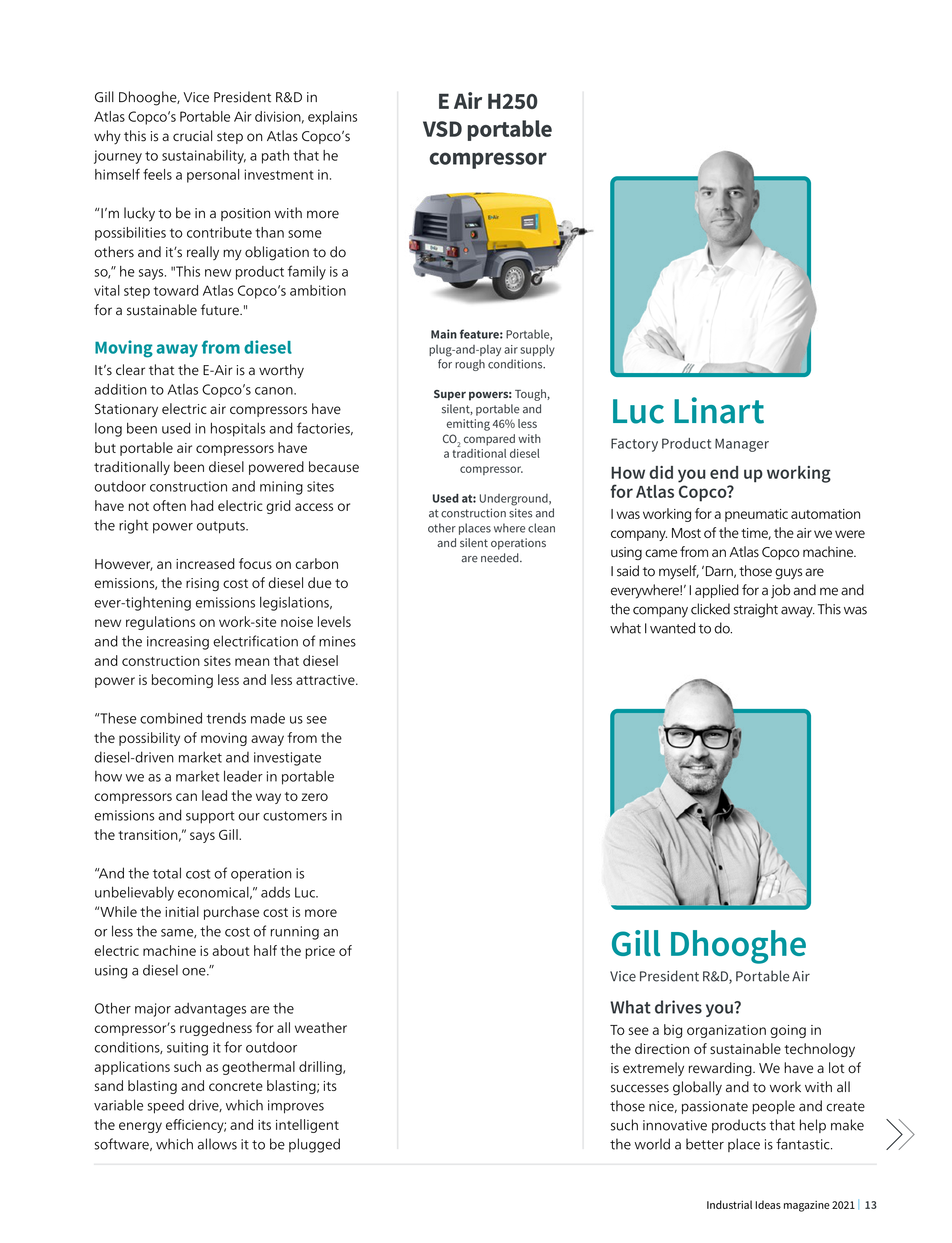
A prime example is the electric-powered E-Air VSD
compressor family, designed to be used in the same
applications as a standard diesel compressor, but with
significantly lower emissions. A prominent member is
the plug-and-play, robust H250 VSD compressor that
withstands heat, dust, humidity, vibrations and other
heavy-duty conditions. Luc Linart and Gill Dhooghe
were both part of the development process and know this
yellow machine by heart.
“This compressor gives construction companies access to
a much broader range of applications. Because it’s electric
it can be used in low-emission zones and at indoor sites,”
says Luc Linart, Product Manager at Atlas Copco’s Portable
Air factory in Antwerp, Belgium. “It also offers a bigger
performance in a smaller canopy. And it’s easy to move.”
“On top of that it’s so quiet that the first time we
showed it to a customer they said: ‘What? Did you turn
it on already? Is it running?’ You can have a normal
conversation right next to it when it’s on, unlike old
diesel-powered compressors.”
and ready to work
POWERED
up
One important step toward a carbon-neutral future is power
and air supply solutions that curb or even eliminate CO
2
emissions. Going electric is the obvious choice.
12
Industrial Ideas magazine 2021


Industrial Ideas magazine 2021
13
How did you end up working
for Atlas Copco?
I was working for a pneumatic automation
company. Most of the time, the air we were
using came from an Atlas Copco machine.
I said to myself, ‘Darn, those guys are
everywhere!’ I applied for a job and me and
the company clicked straight away. This was
what I wanted to do.
Factory Product Manager
Luc Linart
What drives you?
To see a big organization going in
the direction of sustainable technology
is extremely rewarding. We have a lot of
successes globally and to work with all
those nice, passionate people and create
such innovative products that help make
the world a better place is fantastic.
Vice President R&D, Portable Air
Gill Dhooghe
Gill Dhooghe, Vice President R&D in
Atlas Copco’s Portable Air division, explains
why this is a crucial step on Atlas Copco’s
journey to sustainability, a path that he
himself feels a personal investment in.
“I’m lucky to be in a position with more
possibilities to contribute than some
others and it’s really my obligation to do
so,” he says. "This new product family is a
vital step toward Atlas Copco’s ambition
for a sustainable future."
Moving away from diesel
It’s clear that the E-Air is a worthy
addition to Atlas Copco’s canon.
Stationary electric air compressors have
long been used in hospitals and factories,
but portable air compressors have
traditionally been diesel powered because
outdoor construction and mining sites
have not often had electric grid access or
the right power outputs.
However, an increased focus on carbon
emissions, the rising cost of diesel due to
ever-tightening emissions legislations,
new regulations on work-site noise levels
and the increasing electrification of mines
and construction sites mean that diesel
power is becoming less and less attractive.
“These combined trends made us see
the possibility of moving away from the
diesel-driven market and investigate
how we as a market leader in portable
compressors can lead the way to zero
emissions and support our customers in
the transition,” says Gill.
“And the total cost of operation is
unbelievably economical,” adds Luc.
“While the initial purchase cost is more
or less the same, the cost of running an
electric machine is about half the price of
using a diesel one.”
Other major advantages are the
compressor’s ruggedness for all weather
conditions, suiting it for outdoor
applications such as geothermal drilling,
sand blasting and concrete blasting; its
variable speed drive, which improves
the energy efficiency; and its intelligent
software, which allows it to be plugged
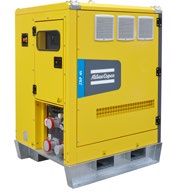
E Air H250
VSD portable
compressor
Main feature:
Portable,
plug-and-play air supply
for rough conditions.
Super powers:
Tough,
silent, portable and
emitting 46% less
CO
2
compared with
a traditional diesel
compressor.
Used at:
Underground,
at construction sites and
other places where clean
and silent operations
are needed.


14
Industrial Ideas magazine 2021
What motivates you?
Sustainability is very important to me and
it made me so happy that Atlas Copco has
placed its bet on this idea, which seemed
a little crazy at the beginning. It was a new
technology, customers didn’t know about
it, but it was the support of our managers
that pushed this idea.
Product Marketing Manager
Bárbara Gregorio
Why did you join Atlas Copco?
I started in 2019, after working for
17 years with another multinational
company. It was a difficult decision to
change companies, but one of the things
that was important to me was Atlas
Copco’s values, mission and commitment
with regard to sustainability. In each
engineering department we have a KPI
to improve our emissions and carbon
footprint in every machine.
Design & Development Manager
Rubén Trevejo
into any power output and
automatically adjust to the grid and
socket available.
Batteries do the work
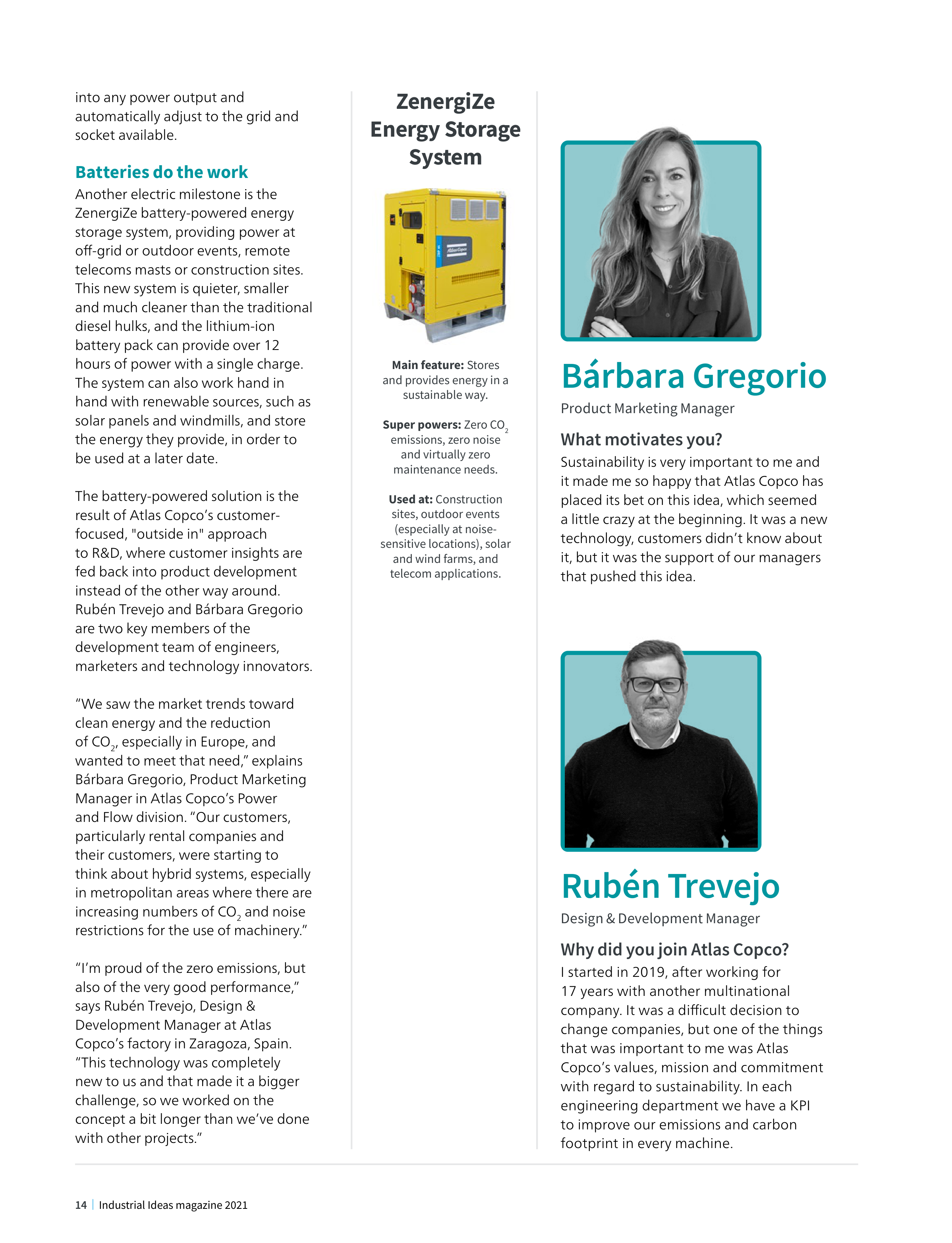
Another electric milestone is the
ZenergiZe battery-powered energy
storage system, providing power at
off-grid or outdoor events, remote
telecoms masts or construction sites.
This new system is quieter, smaller
and much cleaner than the traditional
diesel hulks, and the lithium-ion
battery pack can provide over 12
hours of power with a single charge.
The system can also work hand in
hand with renewable sources, such as
solar panels and windmills, and store
the energy they provide, in order to
be used at a later date.
The battery-powered solution is the
result of Atlas Copco’s customer-
focused, "outside in" approach
to R&D, where customer insights are
fed back into product development
instead of the other way around.
Rubén Trevejo and Bárbara Gregorio
are two key members of the
development team of engineers,
marketers and technology innovators.
“We saw the market trends toward
clean energy and the reduction
of CO
2
, especially in Europe, and
wanted to meet that need,” explains
Bárbara Gregorio, Product Marketing
Manager in Atlas Copco’s Power
and Flow division. “Our customers,
particularly rental companies and
their customers, were starting to
think about hybrid systems, especially
in metropolitan areas where there are
increasing numbers of CO
2
and noise
restrictions for the use of machinery.”
“I’m proud of the zero emissions, but
also of the very good performance,”
says Rubén Trevejo, Design &
Development Manager at Atlas
Copco’s factory in Zaragoza, Spain.
“This technology was completely
new to us and that made it a bigger
challenge, so we worked on the
concept a bit longer than we’ve done
with other projects.”
ZenergiZe
Energy Storage
System
Main feature:
Stores
and provides energy in a
sustainable way.
Super powers:
Zero CO
2
emissions, zero noise
and virtually zero
maintenance needs.
Used at:
Construction
sites, outdoor events
(especially at noise-
sensitive locations), solar
and wind farms, and
telecom applications.
Industrial Ideas magazine 2021
15
“We knew that we needed to create something
that could be better for both the environment
and cost efficiency,” adds Bárbara. “Customers
obviously have to take care of their investment
in terms of the total cost of operation as well.
So, we wanted to combine these things, and we
came up with fantastic savings in terms of fuel
consumption and noise reduction.”
Worth the wait
Since its launch in 2020, the initial customer
reactions to ZenergiZe have been worth the
longer, more challenging development process.
“We knew that we needed a zero emissions
portfolio but we didn’t know if the market was
ready to embrace this,” says Bárbara. “However,
one of our biggest customers is using it in
telecom applications, with fantastic results.”
But just because ZenergiZe is out on the
market, the product development process is
not over, as Rubén explains. “We are learning
so much from the customers, who come up
with all sorts of ideas for the technology’s
application. Battery technology will also keep
evolving, and that’s exciting.”
“This is just the beginning,” adds Bárbara.
“There’s the promise of real progress in the
future, and everyone in the team was very happy
to develop something so new and different. I
think we are brave to do so.”
Eyes on a sustainable future
The E-Air H250 VSD compressor was also
many years in the making, but this gave
marketing and R&D time to inspire each
other to new heights.
For Gill Dhooghe, one of the most exciting
aspects is the sustainable possibilities it opens
up for the future. He mentions hybrid solutions,
battery power and even hydrogen
as being on the horizon for compressors with
VSD technology.
“We are certain of the steps we want to follow,”
he says, “and they’re all connected to each
other so that we can have the best machines
at the end of the process. Our aim is to have an
emission-free product for every application that
we serve out there.”
“We’re always thinking ahead,” adds Luc. “We
want to stay innovative, supplying sustainable
solutions and staying ahead of the competition.
That’s who we are.”
n
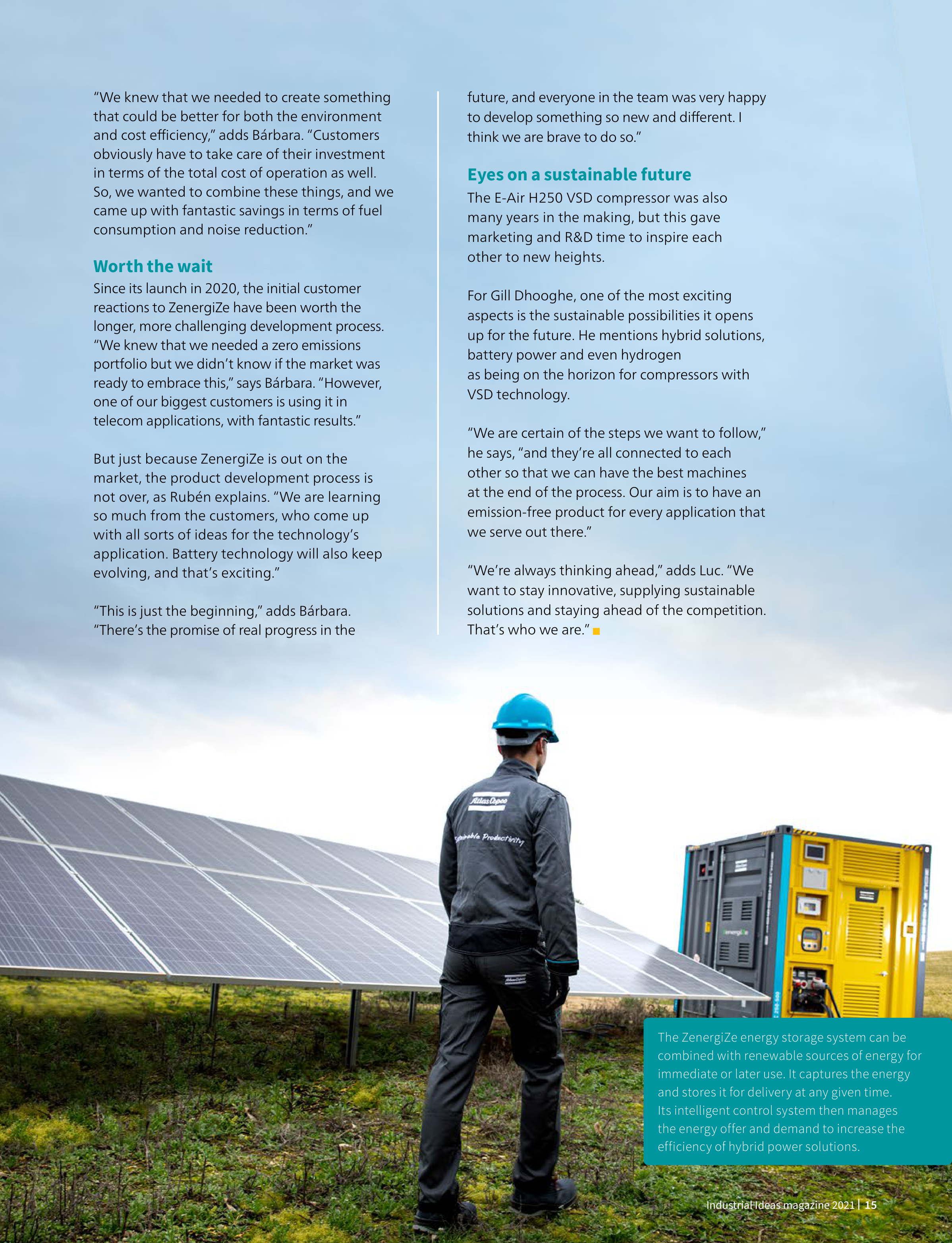
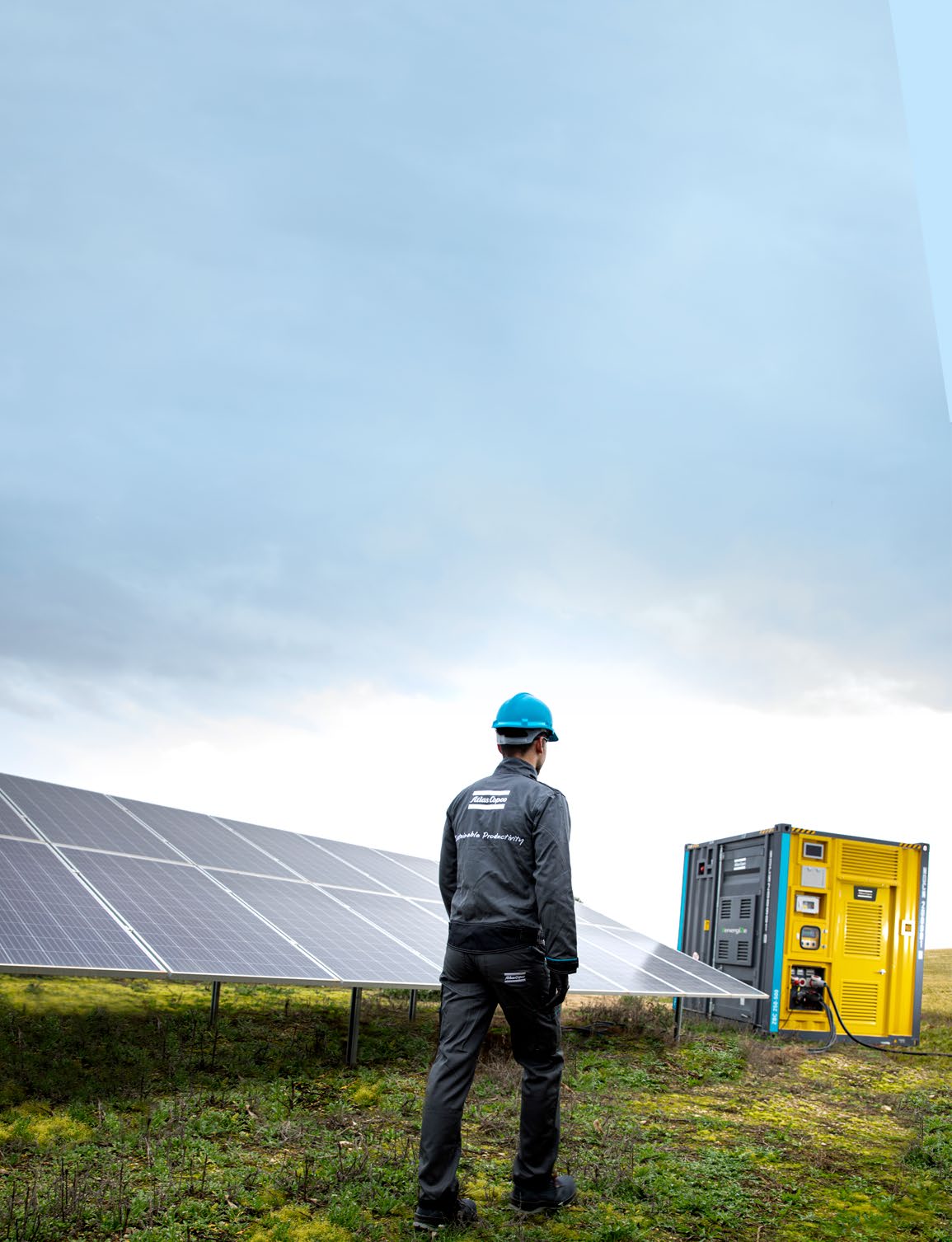
The ZenergiZe energy storage system can be
combined with renewable sources of energy for
immediate or later use. It captures the energy
and stores it for delivery at any given time.
Its intelligent control system then manages
the energy offer and demand to increase the
efficiency of hybrid power solutions.
Industrial Ideas magazine 2021
15
16
Industrial Ideas magazine 2021
Industrial compressors and vacuum pumps consume a lot of power.
But what if there was a way to make them use much less energy by
adapting their speed to the current production need? This innovative
idea has put Atlas Copco at the forefront of energy efficiency.
NO WASTE
LOW EMISSIONS
16
Industrial Ideas magazine 2021


Industrial Ideas magazine 2021
17
M
ost industrial manufacturing
processes rely on a steady supply
of compressed air to power
the tools or robots, or to separate gases
and fluids, and more. The compressors
producing this air are often hidden at the
back of the factory but carry the entire
production flow. They are powerful
workhorses that keep on going, day in
and day out. Consequently, they consume
a lot of power, and power use translates
into emissions and costs. Industrial
companies are therefore constantly
looking to maximize their energy
efficiency, or put more simply, ways to use
less energy to perform the same tasks.
Machines that are constantly running will
also sooner or later wear out.
Thanks to continuous innovation,
Atlas Copco is an industry leader in both
performance and energy efficiency. The
key enabler of the high energy efficiency
is the variable speed drive (VSD)
technology. Instead of running at the
same speed all the time, this technology
enables the motor to adjust and adapt to
the current demand.
In 1994, Atlas Copco was the first
supplier to integrate this technology into
compressors, a game-changing idea that
revolutionized the market. About 20 years
later, a new industry standard was set with
the in-house innovation of VSD
+
, bringing
energy consumption to a record low.
A breath of fresh air
The ZR VSD
+
oil-free rotary screw air
compressor is one recent example of
Atlas Copco’s efforts to excel in energy
efficiency and performance. This machine
provides oil-free air in environments
where even the slightest contamination
would ruin the product, such as
pharmaceutical or electronic component
manufacturing. This level of cleanness
is also vital in food and beverage
production, the textile industry and in car
painting processes.
“Reliability and energy efficiency are
very important factors for a customer
since electric costs represent 75 to 80%
of the total cost of ownership over a
10-year period,” says Jeroen Hoen, Global
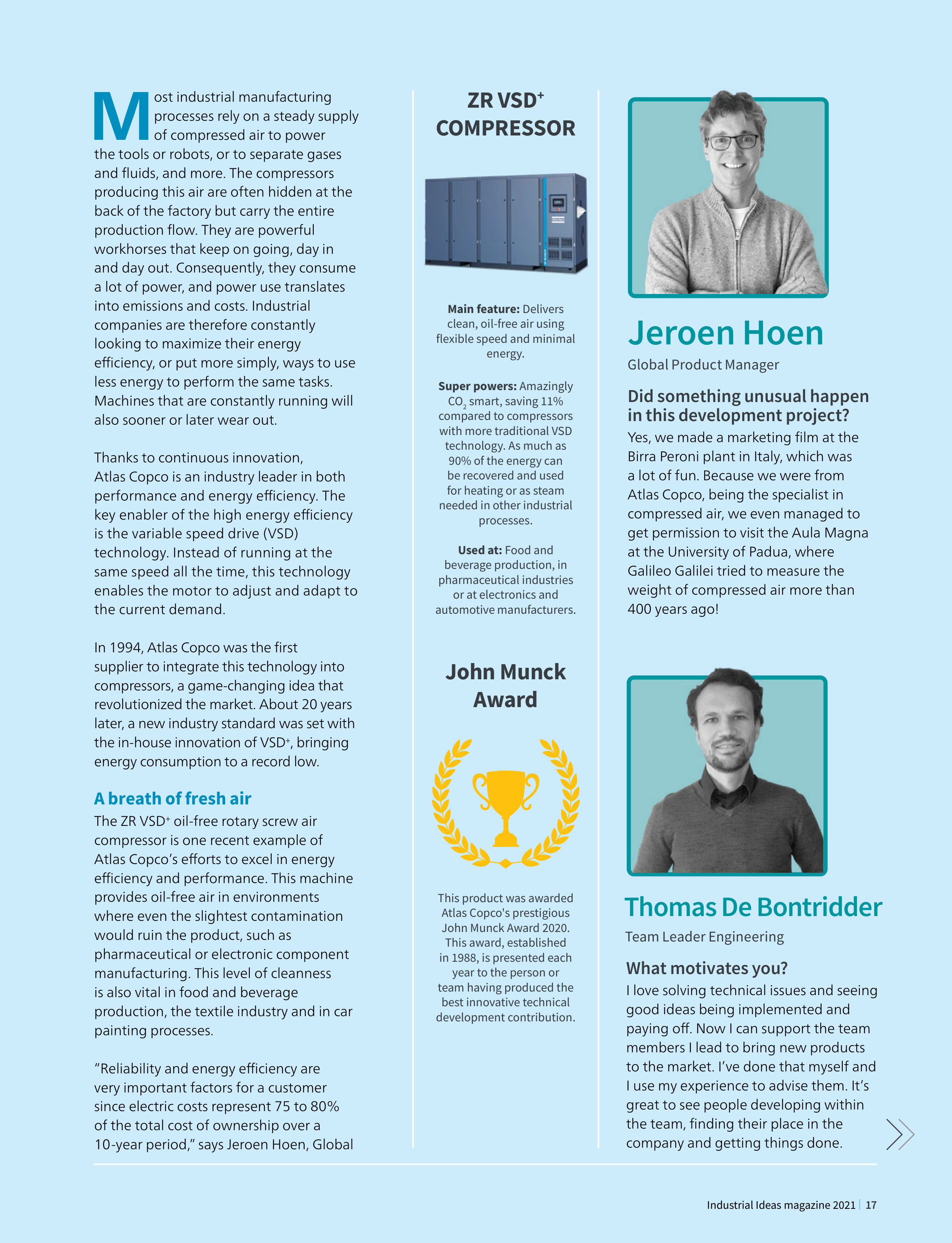
ZR VSD
+
COMPRESSOR
Main feature:
Delivers
clean, oil-free air using
flexible speed and minimal
energy.
Super powers:
Amazingly
CO
2
smart, saving 11%
compared to compressors
with more traditional VSD
technology. As much as
90% of the energy can
be recovered and used
for heating or as steam
needed in other industrial
processes.
Used at:
Food and
beverage production, in
pharmaceutical industries
or at electronics and
automotive manufacturers.
Did something unusual happen
in this development project?
Yes, we made a marketing film at the
Birra Peroni plant in Italy, which was
a lot of fun. Because we were from
Atlas Copco, being the specialist in
compressed air, we even managed to
get permission to visit the Aula Magna
at the University of Padua, where
Galileo Galilei tried to measure the
weight of compressed air more than
400 years ago!
Global Product Manager
Jeroen Hoen
What motivates you?
I love solving technical issues and seeing
good ideas being implemented and
paying off. Now I can support the team
members I lead to bring new products
to the market. I’ve done that myself and
I use my experience to advise them. It’s
great to see people developing within
the team, finding their place in the
company and getting things done.
Team Leader Engineering
Thomas De Bontridder
This product was awarded
Atlas Copco's prestigious
John Munck Award 2020.
This award, established
in 1988, is presented each
year to the person or
team having produced the
best innovative technical
development contribution.
John Munck
Award
Industrial Ideas magazine 2021
17

18
Industrial Ideas magazine 2021
Product Manager for oil-free screw compressors, and a
25-year veteran of the company. However, the road to the
product’s launch was a long one.
“The idea behind it had been with us for quite a long time.
It actually goes back to 2006. My first job at Atlas Copco
was to test the motors that were meant for this product,
but there were technical challenges and it was hard to
make it cost-effective, so it was put on hold,” says Thomas
De Bontridder, previously R&D program leader for the ZR
VSD
+
, and now Team Leader Engineering for oil-free screw
compressors.
It wasn’t until 2014 that the innovation process started
up again. “By that time there’d been new technical
developments, so we sat together with people from
engineering and brainstormed ideas saying, 'Now we
have everything available to make a product that will
bring a real benefit to the market,' "says Thomas.
Later, colleagues from various customer centers joined
service technicians, production, engineers and marketing
as the product was developed. The first units were tested
at 10 pilot customer sites, including producers of beer,
baby food and medical equipment. The feedback from
these initial customers was vital to the refinement of the
final product.
“We took a quantum leap with this product,” says Jeroen,
who remembers the launch as if it was yesterday. “When
I was standing there on the stage in front of all the
people, that was an enormous thrill. We managed
to bring customers a 10% saving on our previous
compressor, which for example means savings of almost
10 000 euros a year on a 160 kW compressor.”
Money talks all right, but so does sustainability. “Since the
launch, we have installed more than 300 units, and every
unit saves 40 to 60 tons of CO
2
a year depending on the
air demand profile,” says Jeroen.
The customer reactions have surpassed expectations,
and Jeroen Hoen’s and Thomas De Bontridder’s work
was recognized in 2020 with the prestigious John Munck
Award for technical innovation. Their Compressor
Technique colleague Dieter Bertels also shares the prize
for his vital contribution.
“It is great to receive this award. I’m really proud because
we worked so hard to bring it to market,” says Thomas.
And for Jeroen, the development of the ZR VSD
+
still
ranks high in his long career. “It makes you proud to work
for a company that has the best product in the world.
Even now, I still feel very enthusiastic about the product.
It’s my baby.”
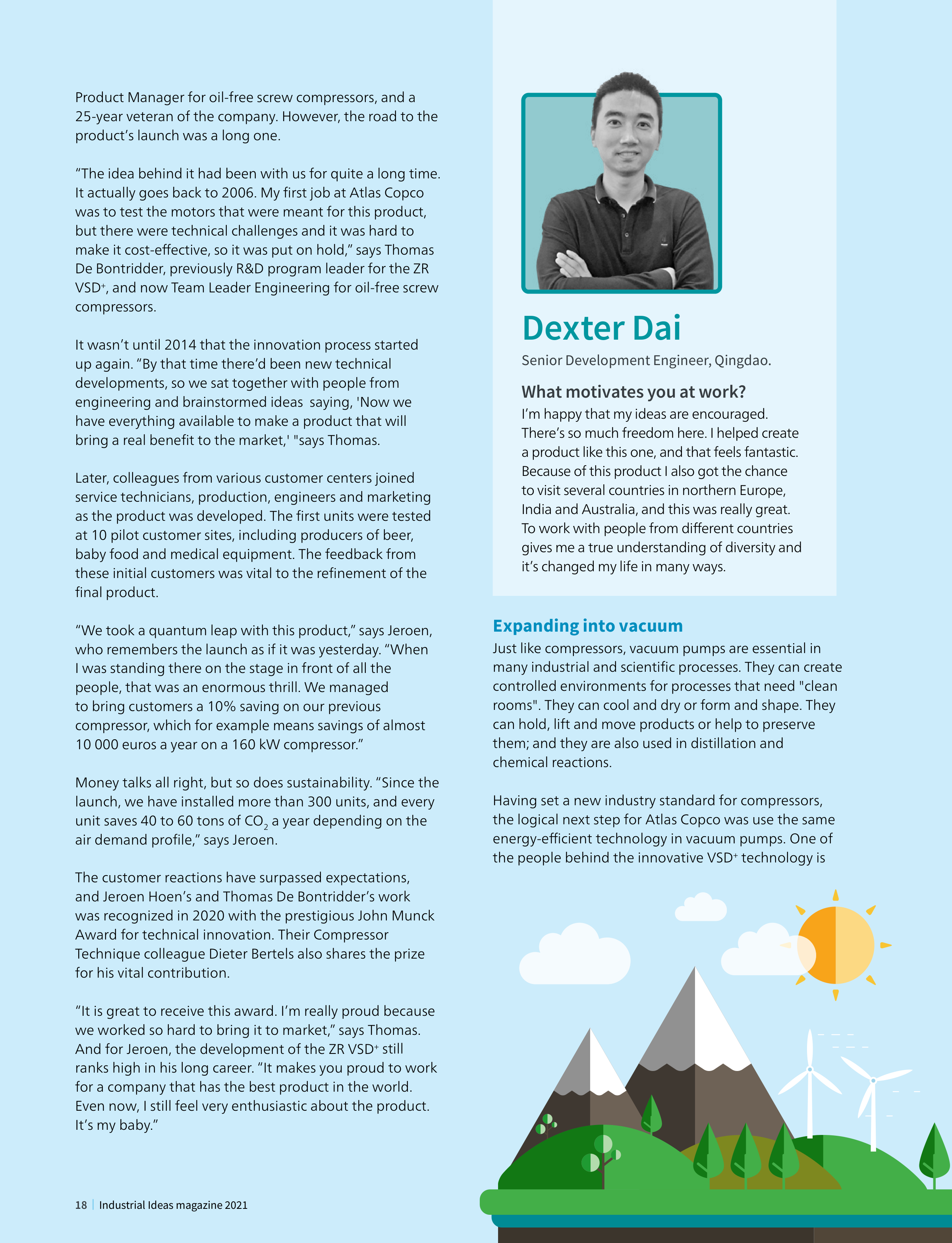
Expanding into vacuum
Just like compressors, vacuum pumps are essential in
many industrial and scientific processes. They can create
controlled environments for processes that need "clean
rooms". They can cool and dry or form and shape. They
can hold, lift and move products or help to preserve
them; and they are also used in distillation and
chemical reactions.
Having set a new industry standard for compressors,
the logical next step for Atlas Copco was use the same
energy-efficient technology in vacuum pumps. One of
the people behind the innovative VSD
+
technology is
What motivates you at work?
I’m happy that my ideas are encouraged.
There’s so much freedom here. I helped create
a product like this one, and that feels fantastic.
Because of this product I also got the chance
to visit several countries in northern Europe,
India and Australia, and this was really great.
To work with people from different countries
gives me a true understanding of diversity and
it’s changed my life in many ways.
Senior Development Engineer, Qingdao.
Dexter Dai
18
Industrial Ideas magazine 2021


Industrial Ideas magazine 2021
19
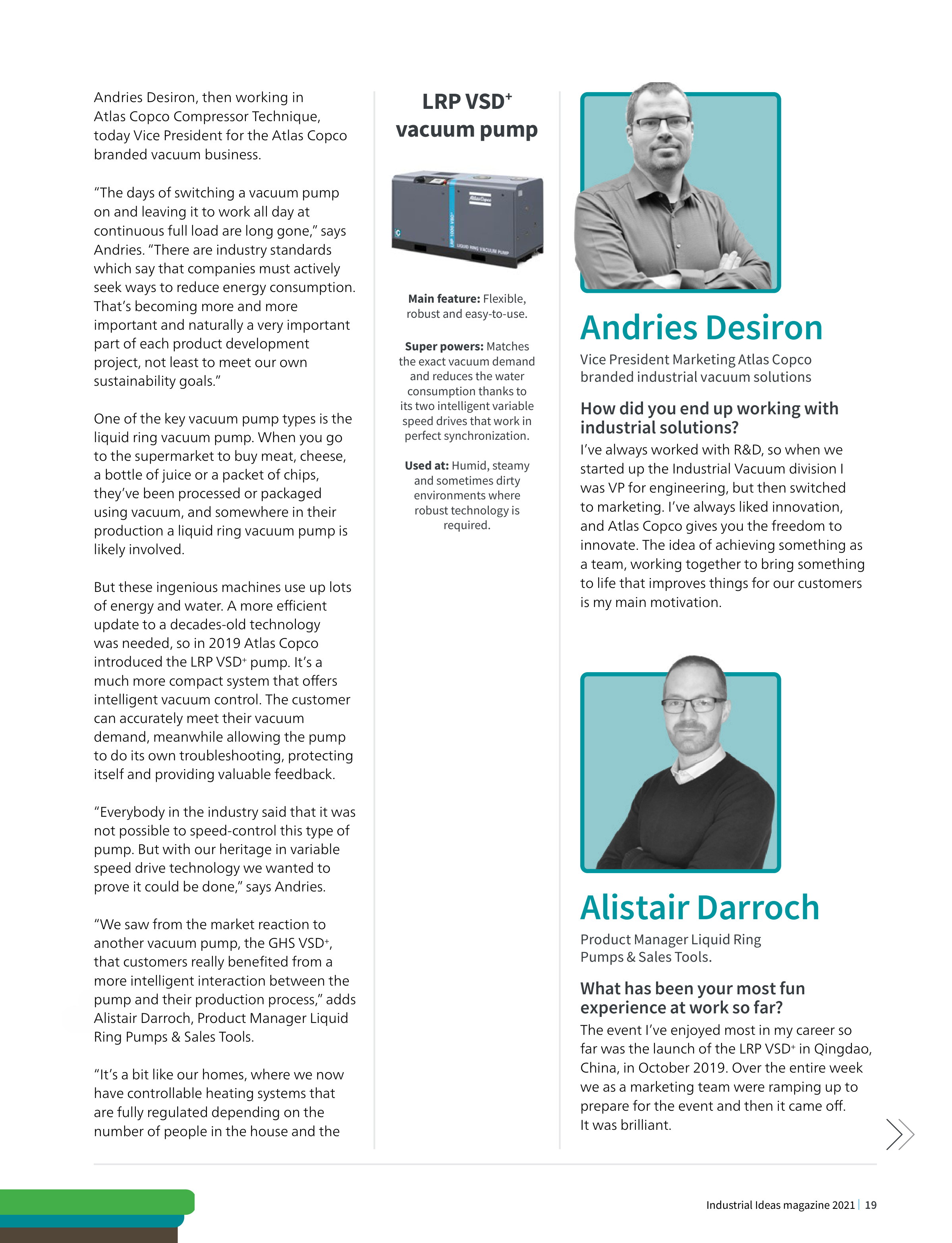
LRP VSD
+
vacuum pump
Super powers:
Matches
the exact vacuum demand
and reduces the water
consumption thanks to
its two intelligent variable
speed drives that work in
perfect synchronization.
Used at:
Humid, steamy
and sometimes dirty
environments where
robust technology is
required.
Main feature:
Flexible,
robust and easy-to-use.
How did you end up working with
industrial solutions?
I’ve always worked with R&D, so when we
started up the Industrial Vacuum division I
was VP for engineering, but then switched
to marketing. I’ve always liked innovation,
and Atlas Copco gives you the freedom to
innovate. The idea of achieving something as
a team, working together to bring something
to life that improves things for our customers
is my main motivation.
Vice President Marketing Atlas Copco
branded industrial vacuum solutions
Andries Desiron
What has been your most fun
experience at work so far?
The event I’ve enjoyed most in my career so
far was the launch of the LRP VSD
+
in Qingdao,
China, in October 2019. Over the entire week
we as a marketing team were ramping up to
prepare for the event and then it came off.
It was brilliant.
Product Manager Liquid Ring
Pumps & Sales Tools.
Alistair Darroch
Andries Desiron, then working in
Atlas Copco Compressor Technique,
today Vice President for the Atlas Copco
branded vacuum business.
“The days of switching a vacuum pump
on and leaving it to work all day at
continuous full load are long gone,” says
Andries. “There are industry standards
which say that companies must actively
seek ways to reduce energy consumption.
That’s becoming more and more
important and naturally a very important
part of each product development
project, not least to meet our own
sustainability goals.”
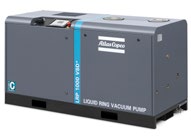
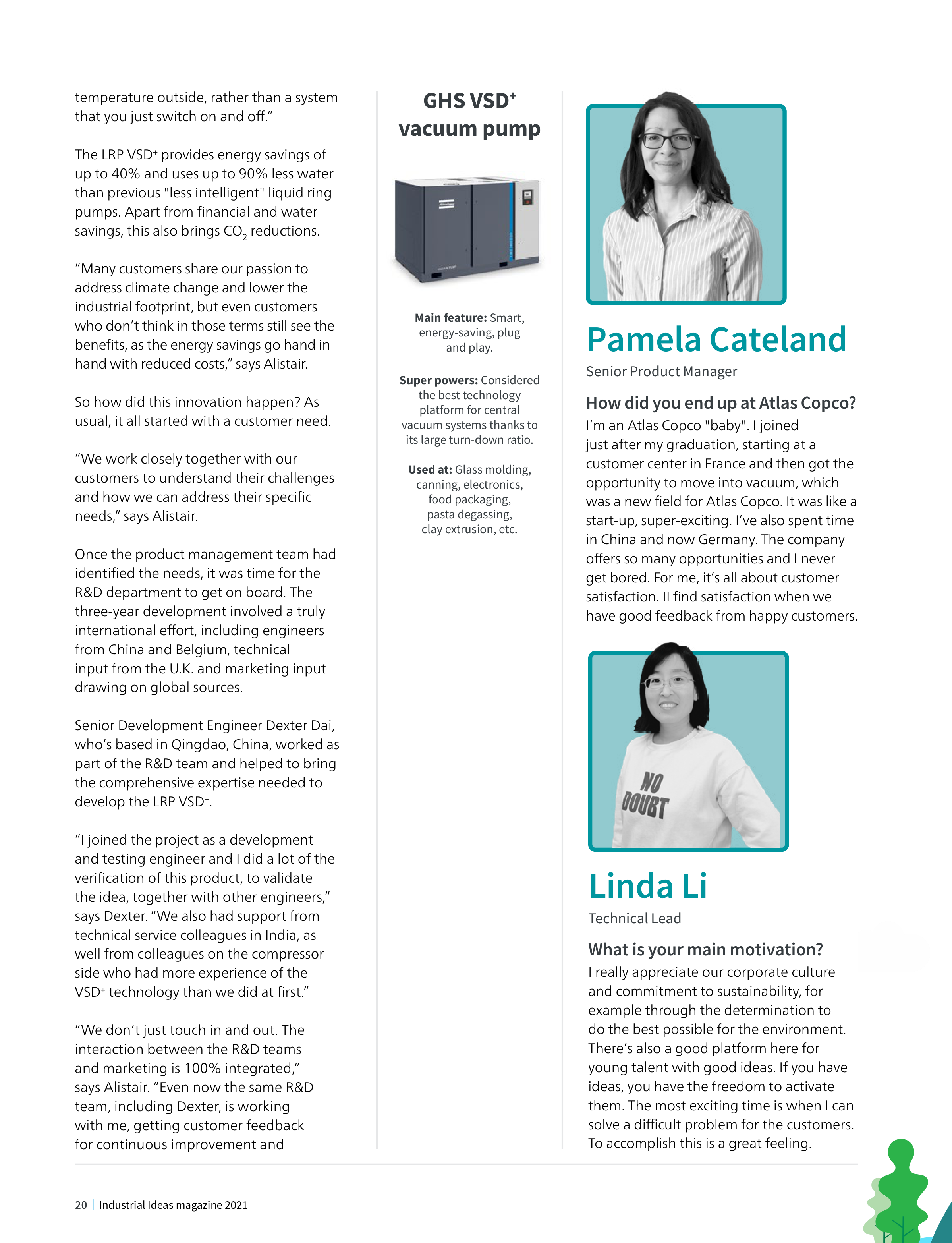
One of the key vacuum pump types is the
liquid ring vacuum pump. When you go
to the supermarket to buy meat, cheese,
a bottle of juice or a packet of chips,
they’ve been processed or packaged
using vacuum, and somewhere in their
production a liquid ring vacuum pump is
likely involved.
But these ingenious machines use up lots
of energy and water. A more efficient
update to a decades-old technology
was needed, so in 2019 Atlas Copco
introduced the LRP VSD
+
pump. It’s a
much more compact system that offers
intelligent vacuum control. The customer
can accurately meet their vacuum
demand, meanwhile allowing the pump
to do its own troubleshooting, protecting
itself and providing valuable feedback.
“Everybody in the industry said that it was
not possible to speed-control this type of
pump. But with our heritage in variable
speed drive technology we wanted to
prove it could be done,” says Andries.
“We saw from the market reaction to
another vacuum pump, the GHS VSD
+
,
that customers really benefited from a
more intelligent interaction between the
pump and their production process,” adds
Alistair Darroch, Product Manager Liquid
Ring Pumps & Sales Tools.
“It’s a bit like our homes, where we now
have controllable heating systems that
are fully regulated depending on the
number of people in the house and the


20
Industrial Ideas magazine 2021
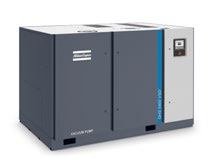
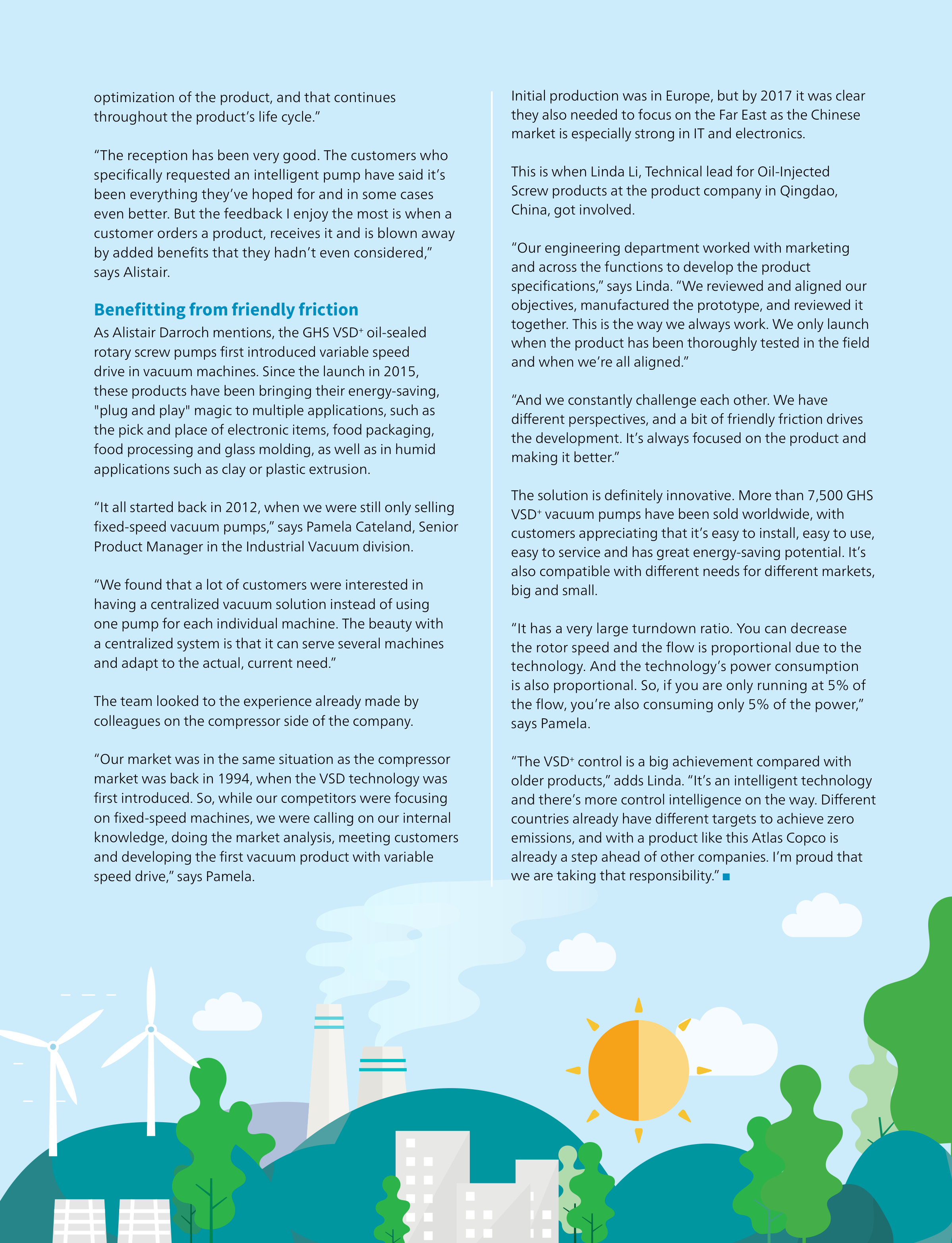
GHS VSD
+
vacuum pump
Super powers:
Considered
the best technology
platform for central
vacuum systems thanks to
its large turn-down ratio.
Used at:
Glass molding,
canning, electronics,
food packaging,
pasta degassing,
clay extrusion, etc.
Main feature:
Smart,
energy-saving, plug
and play.
temperature outside, rather than a system
that you just switch on and off.”
The LRP VSD
+
provides energy savings of
up to 40% and uses up to 90% less water
than previous "less intelligent" liquid ring
pumps. Apart from financial and water
savings, this also brings CO
2
reductions.
“Many customers share our passion to
address climate change and lower the
industrial footprint, but even customers
who don’t think in those terms still see the
benefits, as the energy savings go hand in
hand with reduced costs,” says Alistair.
So how did this innovation happen? As
usual, it all started with a customer need.
“We work closely together with our
customers to understand their challenges
and how we can address their specific
needs,” says Alistair.
Once the product management team had
identified the needs, it was time for the
R&D department to get on board. The
three-year development involved a truly
international effort, including engineers
from China and Belgium, technical
input from the U.K. and marketing input
drawing on global sources.
Senior Development Engineer Dexter Dai,
who’s based in Qingdao, China, worked as
part of the R&D team and helped to bring
the comprehensive expertise needed to
develop the LRP VSD
+
.
“I joined the project as a development
and testing engineer and I did a lot of the
verification of this product, to validate
the idea, together with other engineers,”
says Dexter. “We also had support from
technical service colleagues in India, as
well from colleagues on the compressor
side who had more experience of the
VSD
+
technology than we did at first.”
“We don’t just touch in and out. The
interaction between the R&D teams
and marketing is 100% integrated,”
says Alistair. “Even now the same R&D
team, including Dexter, is working
with me, getting customer feedback
for continuous improvement and
How did you end up at Atlas Copco?
I’m an Atlas Copco "baby". I joined
just after my graduation, starting at a
customer center in France and then got the
opportunity to move into vacuum, which
was a new field for Atlas Copco. It was like a
start-up, super-exciting. I’ve also spent time
in China and now Germany. The company
offers so many opportunities and I never
get bored. For me, it’s all about customer
satisfaction. II find satisfaction when we
have good feedback from happy customers.
Senior Product Manager
Pamela Cateland
Technical Lead
Linda Li
What is your main motivation?
I really appreciate our corporate culture
and commitment to sustainability, for
example through the determination to
do the best possible for the environment.
There’s also a good platform here for
young talent with good ideas. If you have
ideas, you have the freedom to activate
them. The most exciting time is when I can
solve a difficult problem for the customers.
To accomplish this is a great feeling.
Industrial Ideas magazine 2021
21
optimization of the product, and that continues
throughout the product’s life cycle.”
“The reception has been very good. The customers who
specifically requested an intelligent pump have said it’s
been everything they’ve hoped for and in some cases
even better. But the feedback I enjoy the most is when a
customer orders a product, receives it and is blown away
by added benefits that they hadn’t even considered,”
says Alistair.
Benefitting from friendly friction
As Alistair Darroch mentions, the GHS VSD
+
oil-sealed
rotary screw pumps first introduced variable speed
drive in vacuum machines. Since the launch in 2015,
these products have been bringing their energy-saving,
"plug and play" magic to multiple applications, such as
the pick and place of electronic items, food packaging,
food processing and glass molding, as well as in humid
applications such as clay or plastic extrusion.
“It all started back in 2012, when we were still only selling
fixed-speed vacuum pumps,” says Pamela Cateland, Senior
Product Manager in the Industrial Vacuum division.
“We found that a lot of customers were interested in
having a centralized vacuum solution instead of using
one pump for each individual machine. The beauty with
a centralized system is that it can serve several machines
and adapt to the actual, current need.”
The team looked to the experience already made by
colleagues on the compressor side of the company.
“Our market was in the same situation as the compressor
market was back in 1994, when the VSD technology was
first introduced. So, while our competitors were focusing
on fixed-speed machines, we were calling on our internal
knowledge, doing the market analysis, meeting customers
and developing the first vacuum product with variable
speed drive,” says Pamela.
Initial production was in Europe, but by 2017 it was clear
they also needed to focus on the Far East as the Chinese
market is especially strong in IT and electronics.
This is when Linda Li, Technical lead for Oil-Injected
Screw products at the product company in Qingdao,
China, got involved.
“Our engineering department worked with marketing
and across the functions to develop the product
specifications,” says Linda. “We reviewed and aligned our
objectives, manufactured the prototype, and reviewed it
together. This is the way we always work. We only launch
when the product has been thoroughly tested in the field
and when we’re all aligned.”
“And we constantly challenge each other. We have
different perspectives, and a bit of friendly friction drives
the development. It’s always focused on the product and
making it better.”
The solution is definitely innovative. More than 7,500 GHS
VSD
+
vacuum pumps have been sold worldwide, with
customers appreciating that it’s easy to install, easy to use,
easy to service and has great energy-saving potential. It’s
also compatible with different needs for different markets,
big and small.
“It has a very large turndown ratio. You can decrease
the rotor speed and the flow is proportional due to the
technology. And the technology’s power consumption
is also proportional. So, if you are only running at 5% of
the flow, you’re also consuming only 5% of the power,”
says Pamela.
“The VSD
+
control is a big achievement compared with
older products,” adds Linda. “It’s an intelligent technology
and there’s more control intelligence on the way. Different
countries already have different targets to achieve zero
emissions, and with a product like this Atlas Copco is
already a step ahead of other companies. I’m proud that
we are taking that responsibility.”
n
22
Industrial Ideas magazine 2021
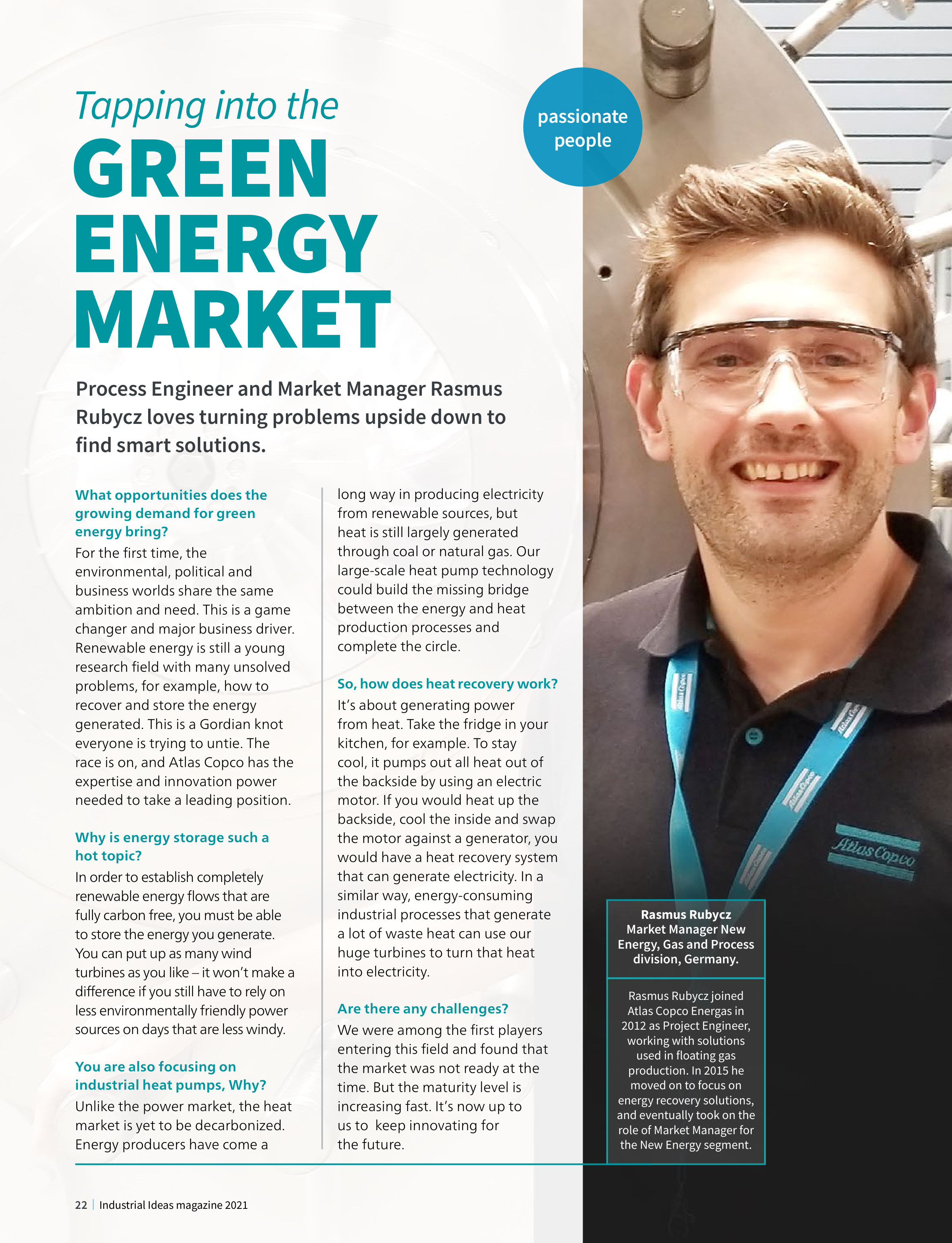
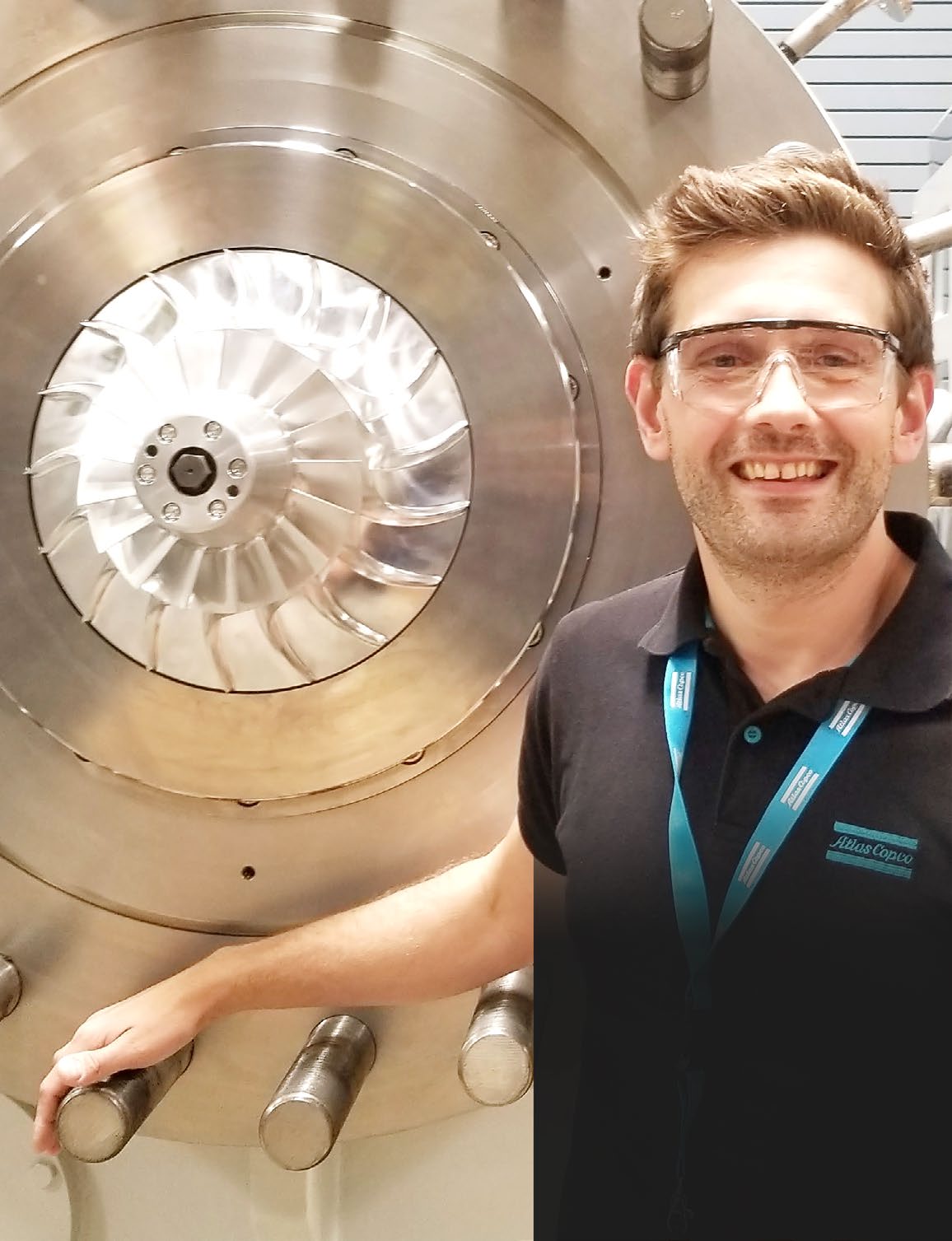
Rasmus Rubycz
Market Manager New
Energy, Gas and Process
division, Germany.
Rasmus Rubycz joined
Atlas Copco Energas in
2012 as Project Engineer,
working with solutions
used in floating gas
production. In 2015 he
moved on to focus on
energy recovery solutions,
and eventually took on the
role of Market Manager for
the New Energy segment.
long way in producing electricity
from renewable sources, but
heat is still largely generated
through coal or natural gas. Our
large-scale heat pump technology
could build the missing bridge
between the energy and heat
production processes and
complete the circle.
So, how does heat recovery work?
It’s about generating power
from heat. Take the fridge in your
kitchen, for example. To stay
cool, it pumps out all heat out of
the backside by using an electric
motor. If you would heat up the
backside, cool the inside and swap
the motor against a generator, you
would have a heat recovery system
that can generate electricity. In a
similar way, energy-consuming
industrial processes that generate
a lot of waste heat can use our
huge turbines to turn that heat
into electricity.
Are there any challenges?
We were among the first players
entering this field and found that
the market was not ready at the
time. But the maturity level is
increasing fast. It’s now up to
us to keep innovating for
the future.
What opportunities does the
growing demand for green
energy bring?
For the first time, the
environmental, political and
business worlds share the same
ambition and need. This is a game
changer and major business driver.
Renewable energy is still a young
research field with many unsolved
problems, for example, how to
recover and store the energy
generated. This is a Gordian knot
everyone is trying to untie. The
race is on, and Atlas Copco has the
expertise and innovation power
needed to take a leading position.
Why is energy storage such a
hot topic?
In order to establish completely
renewable energy flows that are
fully carbon free, you must be able
to store the energy you generate.
You can put up as many wind
turbines as you like – it won’t make a
difference if you still have to rely on
less environmentally friendly power
sources on days that are less windy.
You are also focusing on
industrial heat pumps, Why?
Unlike the power market, the heat
market is yet to be decarbonized.
Energy producers have come a
passionate
people
22
Industrial Ideas magazine 2021
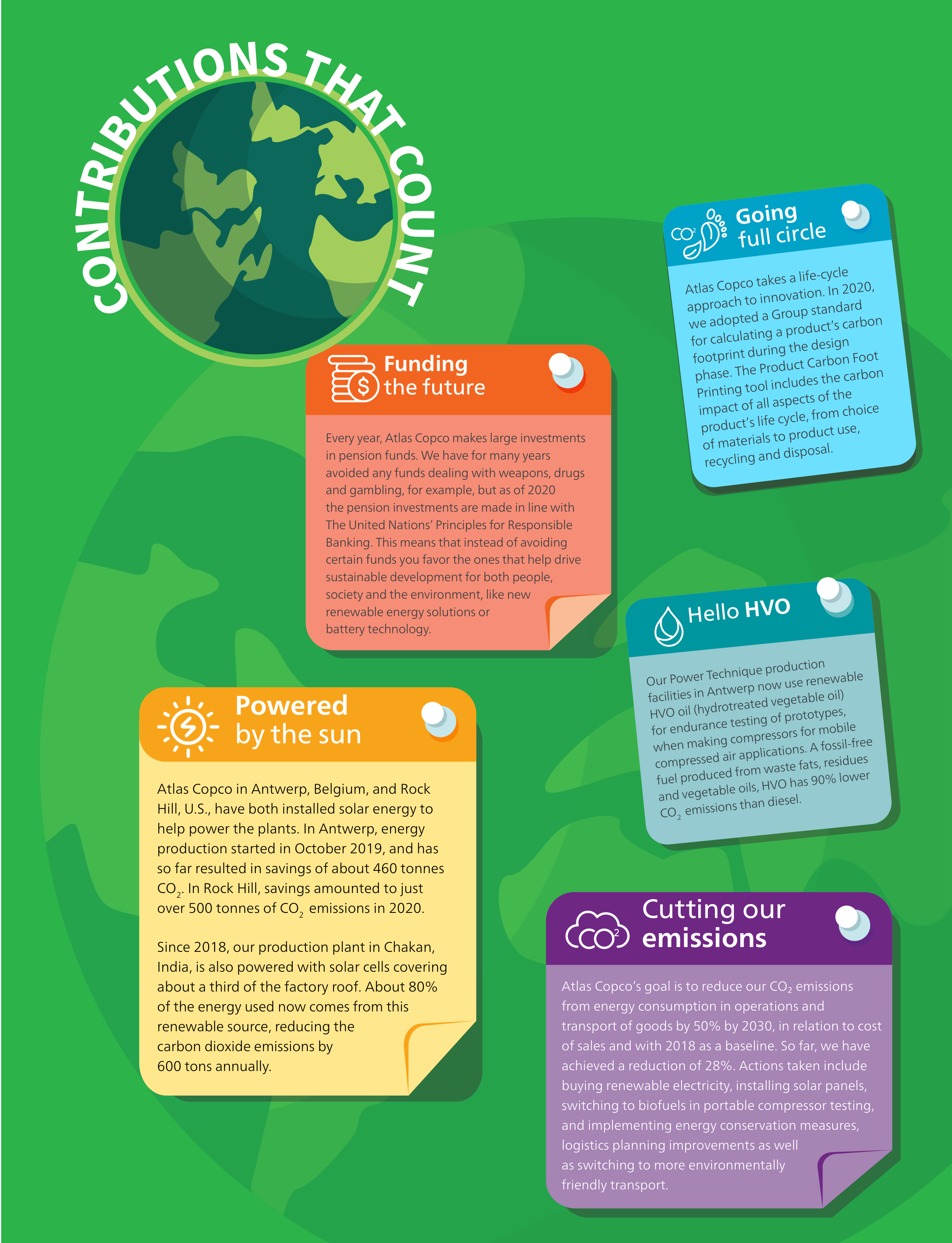
Process Engineer and Market Manager Rasmus
Rubycz loves turning problems upside down to
find smart solutions.
GREEN
ENERGY
MARKET
Tapping into the
Industrial Ideas magazine 2021
23
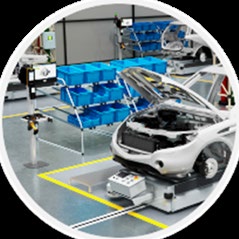
Every year, Atlas Copco makes large investments
in pension funds. We have for many years
avoided any funds dealing with weapons, drugs
and gambling, for example, but as of 2020
the pension investments are made in line with
The United Nations’ Principles for Responsible
Banking. This means that instead of avoiding
certain funds you favor the ones that help drive
sustainable development for both people,
society and the environment, like new
renewable energy solutions or
battery technology.
Atlas Copco in Antwerp, Belgium, and Rock
Hill, U.S., have both installed solar energy to
help power the plants. In Antwerp, energy
production started in October 2019, and has
so far resulted in savings of about 460 tonnes
CO
2
. In Rock Hill, savings amounted to just
over 500 tonnes of CO
2
emissions in 2020.
Since 2018, our production plant in Chakan,
India, is also powered with solar cells covering
about a third of the factory roof. About 80%
of the energy used now comes from this
renewable source, reducing the
carbon dioxide emissions by
600 tons annually.
Atlas Copco takes a life-cycle
approach to innovation. In 2020,
we adopted a Group standard
for calculating a product’s carbon
footprint during the design
phase. The Product Carbon Foot
Printing tool includes the carbon
impact of all aspects of the
product’s life cycle, from choice
of materials to product use,
recycling and disposal.
Atlas Copco’s goal is to reduce our CO₂ emissions
from energy consumption in operations and
transport of goods by 50% by 2030, in relation to cost
of sales and with 2018 as a baseline. So far, we have
achieved a reduction of 28%. Actions taken include
buying renewable electricity, installing solar panels,
switching to biofuels in portable compressor testing,
and implementing energy conservation measures,
logistics planning improvements as well
as switching to more environmentally
friendly transport.
Our Power Technique production
facilities in Antwerp now use renewable
HVO oil (hydrotreated vegetable oil)
for endurance testing of prototypes,
when making compressors for mobile
compressed air applications. A fossil-free
fuel produced from waste fats, residues
and vegetable oils, HVO has 90% lower
CO
2
emissions than diesel.
Funding
the future
Hello
HVO
Powered
by the sun
Cutting our
emissions
Going
full circle



24
Industrial Ideas magazine 2021
SMART TOOLS
FOR MODERN LIFE
Industrial tools transform the world. Without them, daily life
would not be the same.
24
Industrial Ideas magazine 2021




Industrial Ideas magazine 2021
25
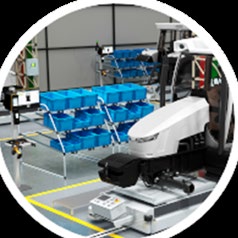
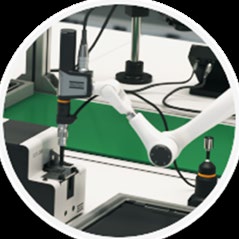
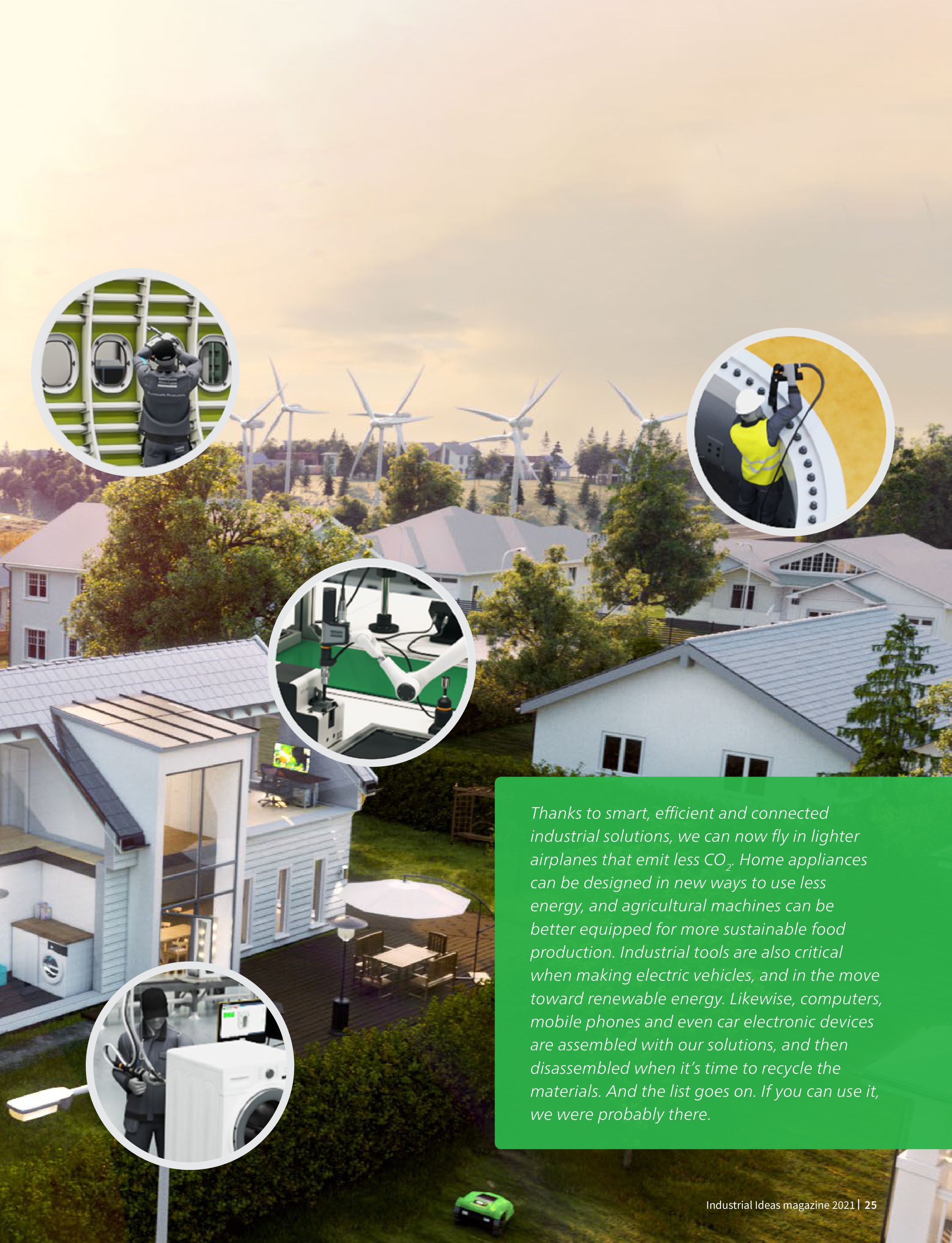
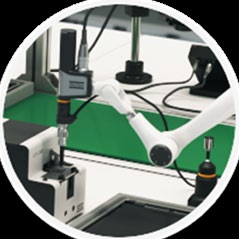
Thanks to smart, efficient and connected
industrial solutions, we can now fly in lighter
airplanes that emit less CO
2
. Home appliances
can be designed in new ways to use less
energy, and agricultural machines can be
better equipped for more sustainable food
production. Industrial tools are also critical
when making electric vehicles, and in the move
toward renewable energy. Likewise, computers,
mobile phones and even car electronic devices
are assembled with our solutions, and then
disassembled when it’s time to recycle the
materials. And the list goes on. If you can use it,
we were probably there.
Industrial Ideas magazine 2021
25

26
Industrial Ideas magazine 2021
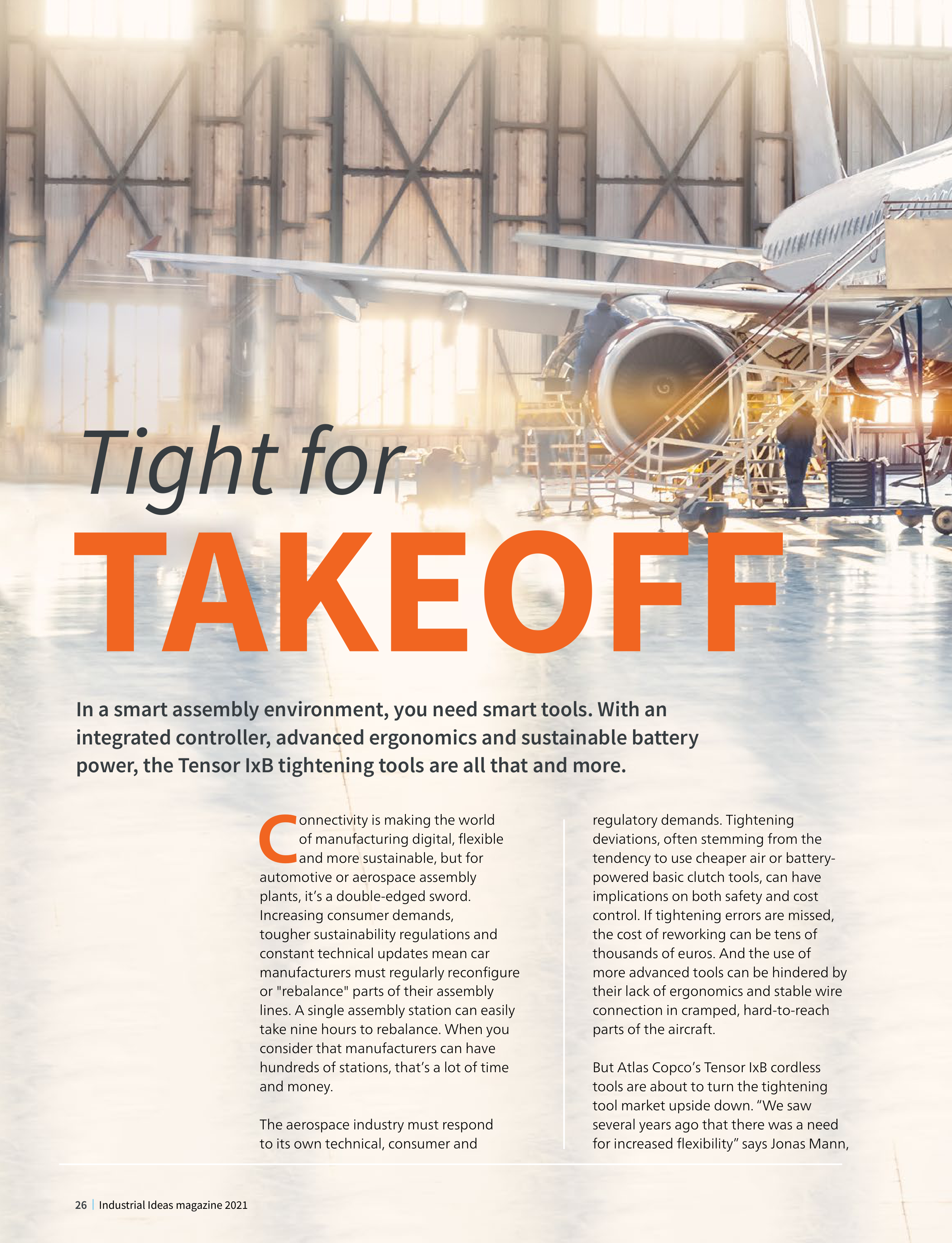
In a smart assembly environment, you need smart tools. With an
integrated controller, advanced ergonomics and sustainable battery
power, the Tensor IxB tightening tools are all that and more.
Tight for
TAKEOFF
C
onnectivity is making the world
of manufacturing digital, flexible
and more sustainable, but for
automotive or aerospace assembly
plants, it’s a double-edged sword.
Increasing consumer demands,
tougher sustainability regulations and
constant technical updates mean car
manufacturers must regularly reconfigure
or "rebalance" parts of their assembly
lines. A single assembly station can easily
take nine hours to rebalance. When you
consider that manufacturers can have
hundreds of stations, that’s a lot of time
and money.
The aerospace industry must respond
to its own technical, consumer and
regulatory demands. Tightening
deviations, often stemming from the
tendency to use cheaper air or battery-
powered basic clutch tools, can have
implications on both safety and cost
control. If tightening errors are missed,
the cost of reworking can be tens of
thousands of euros. And the use of
more advanced tools can be hindered by
their lack of ergonomics and stable wire
connection in cramped, hard-to-reach
parts of the aircraft.
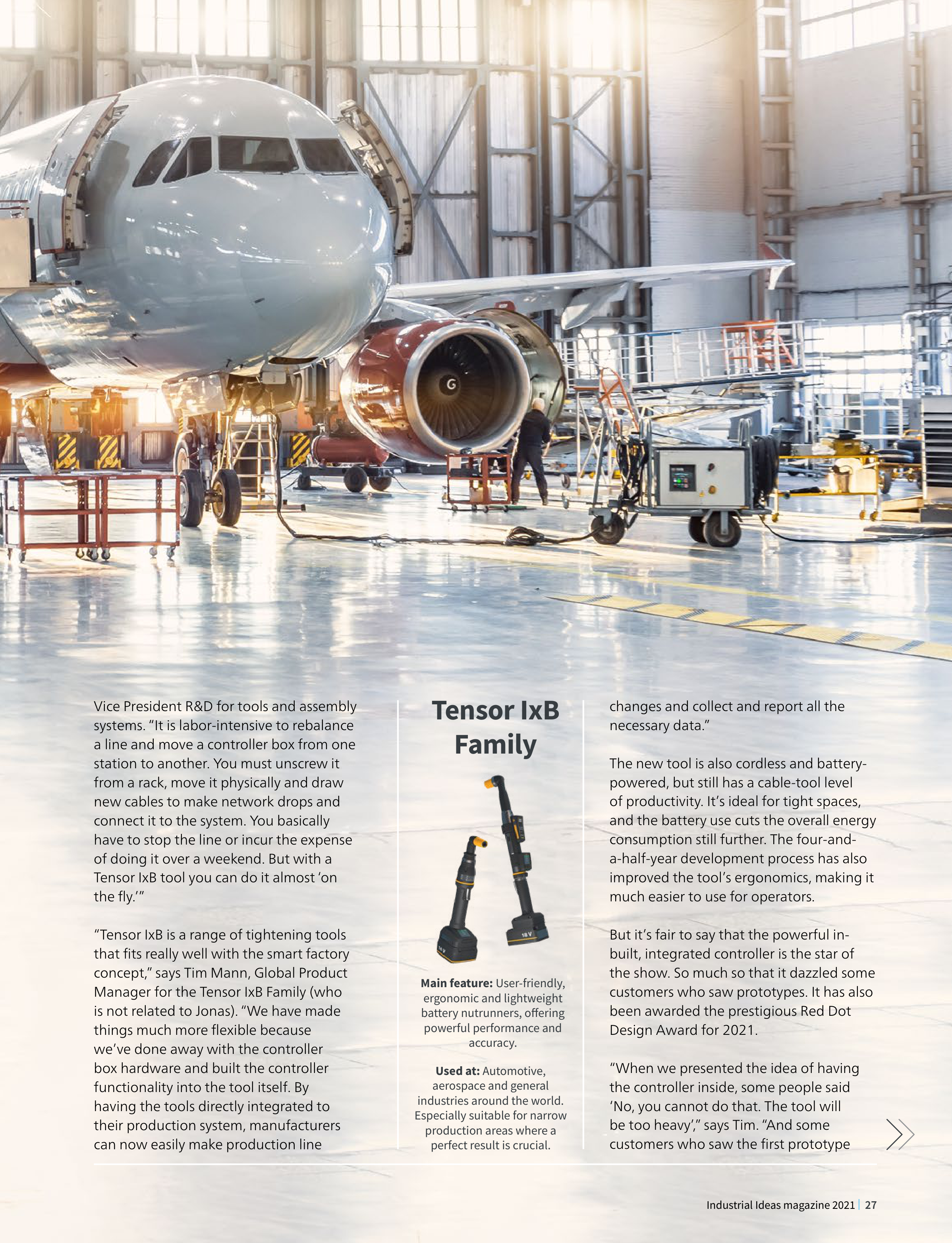
But Atlas Copco’s Tensor IxB cordless
tools are about to turn the tightening
tool market upside down. “We saw
several years ago that there was a need
for increased flexibility” says Jonas Mann,
26
Industrial Ideas magazine 2021

Industrial Ideas magazine 2021
27
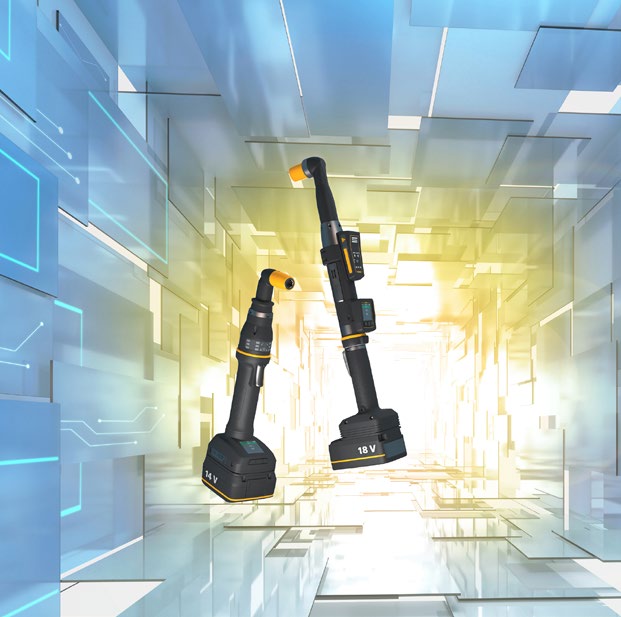
Tensor IxB
Family
Vice President R&D for tools and assembly
systems. “It is labor-intensive to rebalance
a line and move a controller box from one
station to another. You must unscrew it
from a rack, move it physically and draw
new cables to make network drops and
connect it to the system. You basically
have to stop the line or incur the expense
of doing it over a weekend. But with a
Tensor IxB tool you can do it almost ‘on
the fly.’”
“Tensor IxB is a range of tightening tools
that fits really well with the smart factory
concept,” says Tim Mann, Global Product
Manager for the Tensor IxB Family (who
is not related to Jonas). “We have made
things much more flexible because
we’ve done away with the controller
box hardware and built the controller
functionality into the tool itself. By
having the tools directly integrated to
their production system, manufacturers
can now easily make production line
changes and collect and report all the
necessary data.”
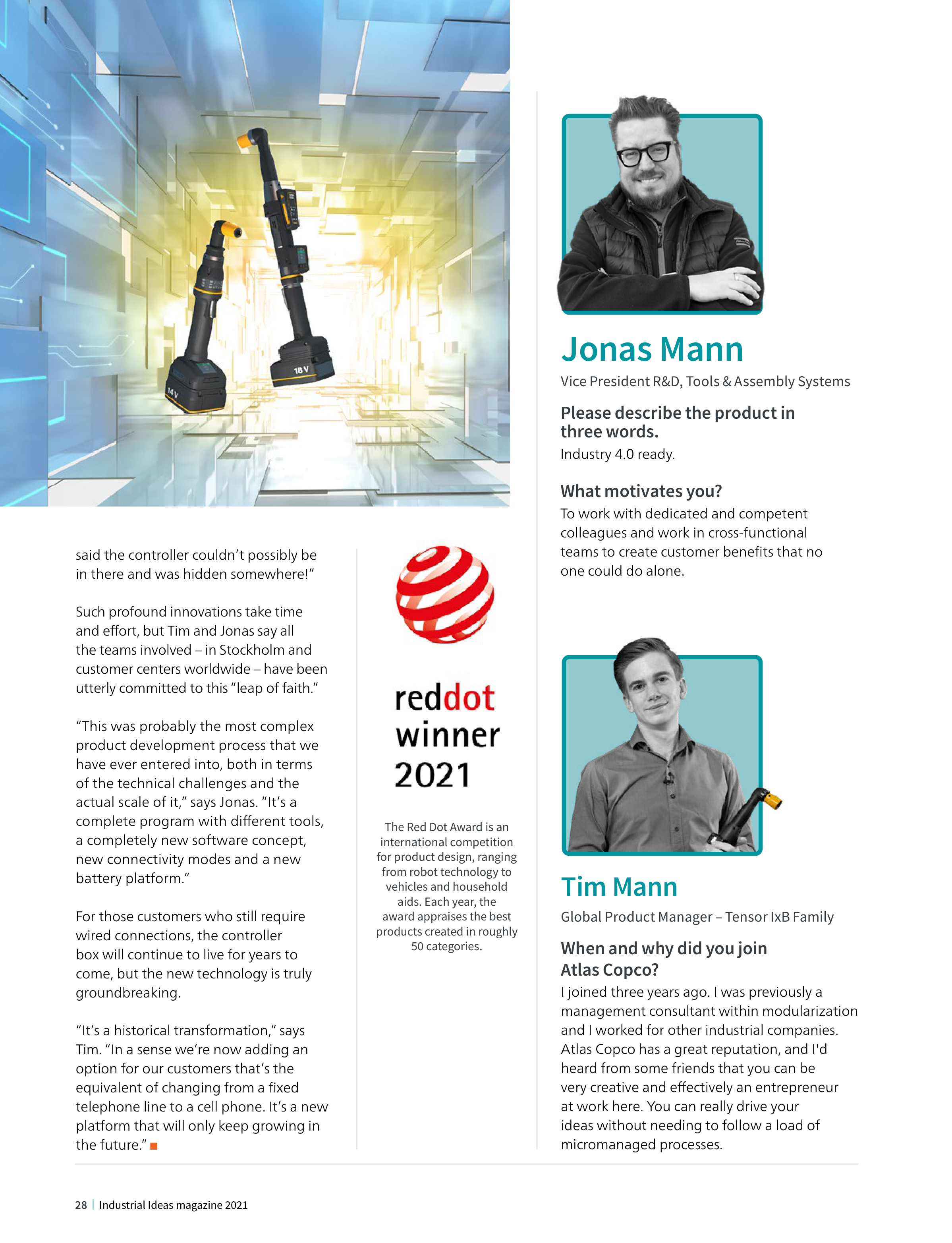
The new tool is also cordless and battery-
powered, but still has a cable-tool level
of productivity. It’s ideal for tight spaces,
and the battery use cuts the overall energy
consumption still further. The four-and-
a-half-year development process has also
improved the tool’s ergonomics, making it
much easier to use for operators.
But it’s fair to say that the powerful in-
built, integrated controller is the star of
the show. So much so that it dazzled some
customers who saw prototypes. It has also
been awarded the prestigious Red Dot
Design Award for 2021.
“When we presented the idea of having
the controller inside, some people said
‘No, you cannot do that. The tool will
be too heavy’,” says Tim. “And some
customers who saw the first prototype
Main feature:
User-friendly,
ergonomic and lightweight
battery nutrunners, offering
powerful performance and
accuracy.
Used at:
Automotive,
aerospace and general
industries around the world.
Especially suitable for narrow
production areas where a
perfect result is crucial.
Industrial Ideas magazine 2021
27




28
Industrial Ideas magazine 2021
Please describe the product in
three words.
Industry 4.0 ready.
What motivates you?
To work with dedicated and competent
colleagues and work in cross-functional
teams to create customer benefits that no
one could do alone.
Vice President R&D, Tools & Assembly Systems
Jonas Mann
When and why did you join
Atlas Copco?
I joined three years ago. I was previously a
management consultant within modularization
and I worked for other industrial companies.
Atlas Copco has a great reputation, and I'd
heard from some friends that you can be
very creative and effectively an entrepreneur
at work here. You can really drive your
ideas without needing to follow a load of
micromanaged processes.
Global Product Manager – Tensor IxB Family
Tim Mann
said the controller couldn’t possibly be
in there and was hidden somewhere!”
Such profound innovations take time
and effort, but Tim and Jonas say all
the teams involved – in Stockholm and
customer centers worldwide – have been
utterly committed to this “leap of faith.”
“This was probably the most complex
product development process that we
have ever entered into, both in terms
of the technical challenges and the
actual scale of it,” says Jonas. “It’s a
complete program with different tools,
a completely new software concept,
new connectivity modes and a new
battery platform.”
For those customers who still require
wired connections, the controller
box will continue to live for years to
come, but the new technology is truly
groundbreaking.
“It’s a historical transformation,” says
Tim. “In a sense we’re now adding an
option for our customers that’s the
equivalent of changing from a fixed
telephone line to a cell phone. It’s a new
platform that will only keep growing in
the future.”
n
The Red Dot Award is an
international competition
for product design, ranging
from robot technology to
vehicles and household
aids. Each year, the
award appraises the best
products created in roughly
50 categories.

Industrial Ideas magazine 2021
29
dynamic tightening program,
which runs with very high tool
speed, is more ergonomic than
traditional programs. Due to its
ballistic fashion, a great deal of
the reaction force is absorbed
by the tool itself, instead of by
the operator. However, although
force is reduced, the tool motion
is still jerky. The challenge lies in
understanding which levels of
these exposures could increase
the risk of musculoskeletal
disorders. It’s about finding the
right balance.
You are researching “on the job."
How is Atlas Copco supporting
you in this?
Apart from providing facilities and
resources, I have continuous access
to expertise and input from the
company, as well as from our broad
network of customers. This means
that I can ground my approach in
real industry needs.
Have you had any "aha" moment
so far?
Yes! A gray Thursday afternoon in
November 2020, with probably
enough caffeine in my blood to
power a small car, I discovered
a way to quantitatively explain
what we had previously only been
able to observe and describe
subjectively. I would claim this to
be a, in this context, new way of
measuring discomfort.
Why did you choose to study the
reaction force exposure related
to handheld tightening tools?
These tools are used to fasten
screws, nuts and bolts to certain
torque levels, and the tool
handle then undergoes a forceful
displacement which we refer to
as reaction force. The user must
counteract the reaction through
muscular force. As assembly work
by nature is highly repetitive, this
can lead to disorders or injuries
that take a very long time to heal.
My mission is to find ways to avoid
that, or at least minimize the risks.
How is this linked to
Atlas Copco?
We develop and evaluate all
our handheld tools from various
ergonomics perspectives, such as
handle design, noise, vibrations
and temperature. Customers
have for a long time asked
for recommendations from
tool manufacturers regarding
reaction force exposure. Neither
the scientific community nor
our competitors have had well-
grounded answers to provide, so
we’ll be the first ones to do this.
Ergonomics is key to us and makes
us stand out from the crowd.
And what are you looking
to find?
The hypothesis is that our highly
What happens when powerful handheld tightening
tools are used repeatedly at high torque? Ava Mazaheri
is investigating the force exposures and how to turn
the learnings into great product design.
“
ERGONOMICS
IS KEY
”
passionate
people
Ava Mazaheri first joined
Atlas Copco as a summer
intern in the Industrial
Technique business
area in Sickla, Sweden.
She then pursued her
master's thesis project in
biomedical engineering
with the company,
focusing on new ways of
evaluating tools from an
ergonomics perspective.
This developed into a
larger research project
with the Industrial Design
and Human Factors
team, in collaboration
with the Royal Institute
of Technology in Sweden,
with Ava as a PhD student.
Ava Mazaheri
Atlas Copco Industrial
Technique, Sweden.
Industrial Ideas magazine 2021
29
30
Industrial Ideas magazine 2021
“Joint development is the
BEST WAY
FORWARD
“
30
Industrial Ideas magazine 2021

Industrial Ideas magazine 2021
31
Atlas Copco is part of the “Wallenberg Ecosystem," set up
to push scientific boundaries. The dividends we generate
contribute to a flow where billions of SEK are granted
to research and education, resulting in new insights for
the benefit of people and industrial development. In this
interview, Peter Wallenberg Jr. explains how it all works.
S
ince Atlas Copco was first
founded in the early 1870s, our
development has been tightly linked
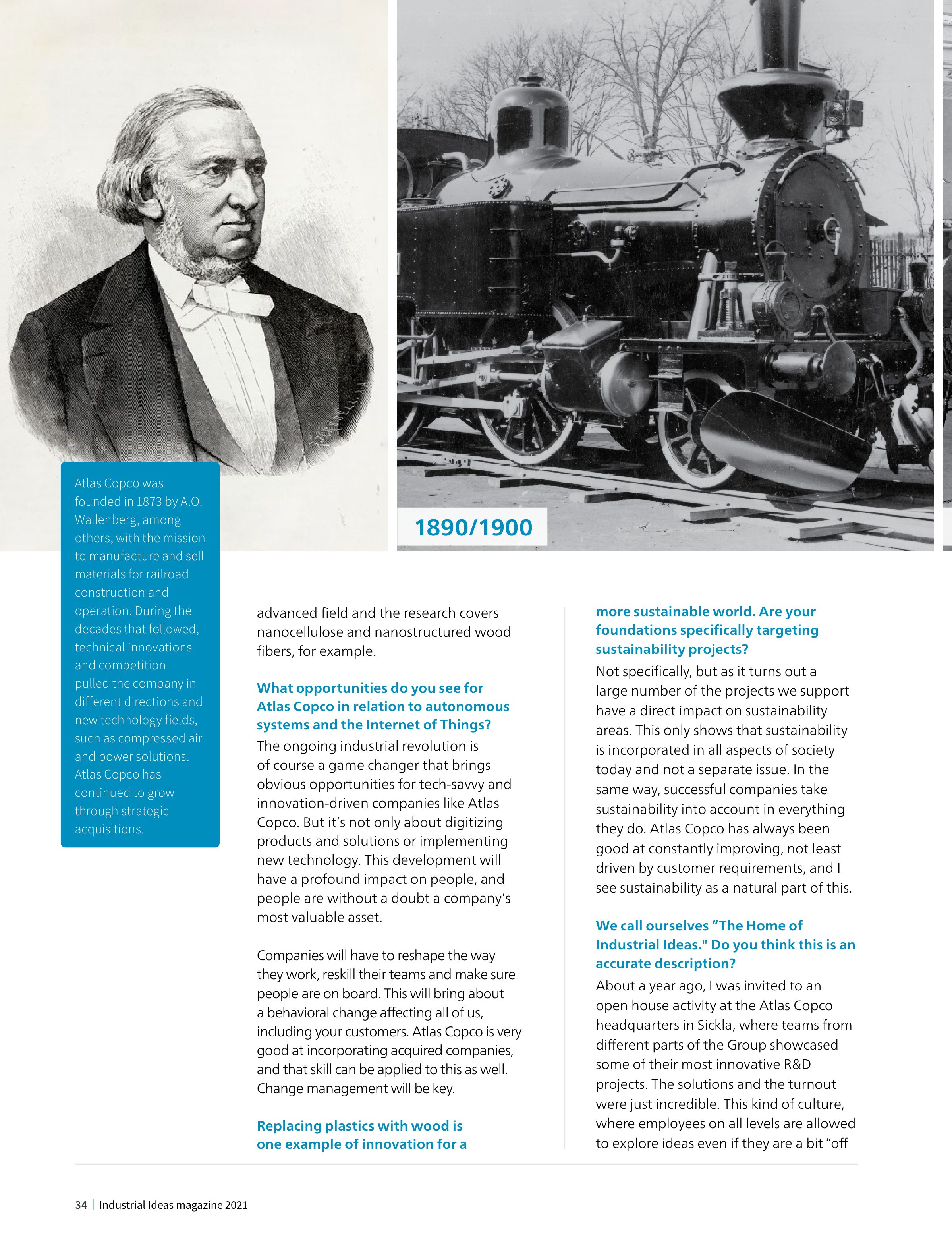
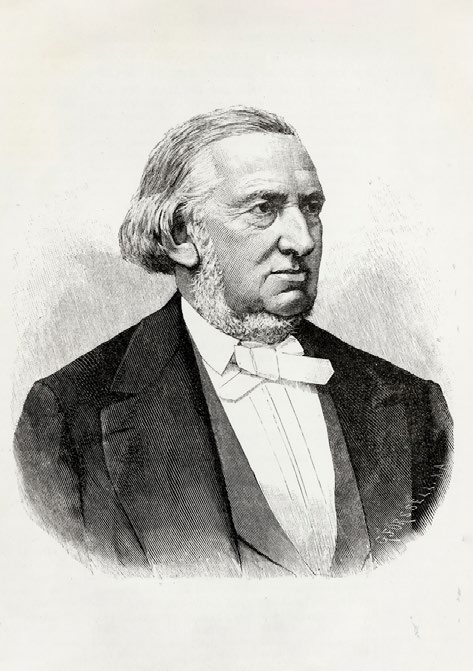
to the Wallenberg family. André Oscar
Wallenberg was one of our founding
fathers, and the family foundations
remain our largest shareholder through
their holding in Investor AB.
The Wallenberg family has held a prominent
place in Swedish business and industrial
development since the establishment of the
country’s first private branch bank in 1856.
The bank supported companies emerging
during the first and second industrial
revolutions – many of them becoming
global industry leaders in their respective
fields. By making long-term investments
in these companies and then granting a
majority of the dividends to research and
education, an ecosystem of innovation was
created, built to last for generations. This
system, and the successes of each company
contributing to it, now enables annual
research and education grants of around
SEK 2.4 billion (2020).
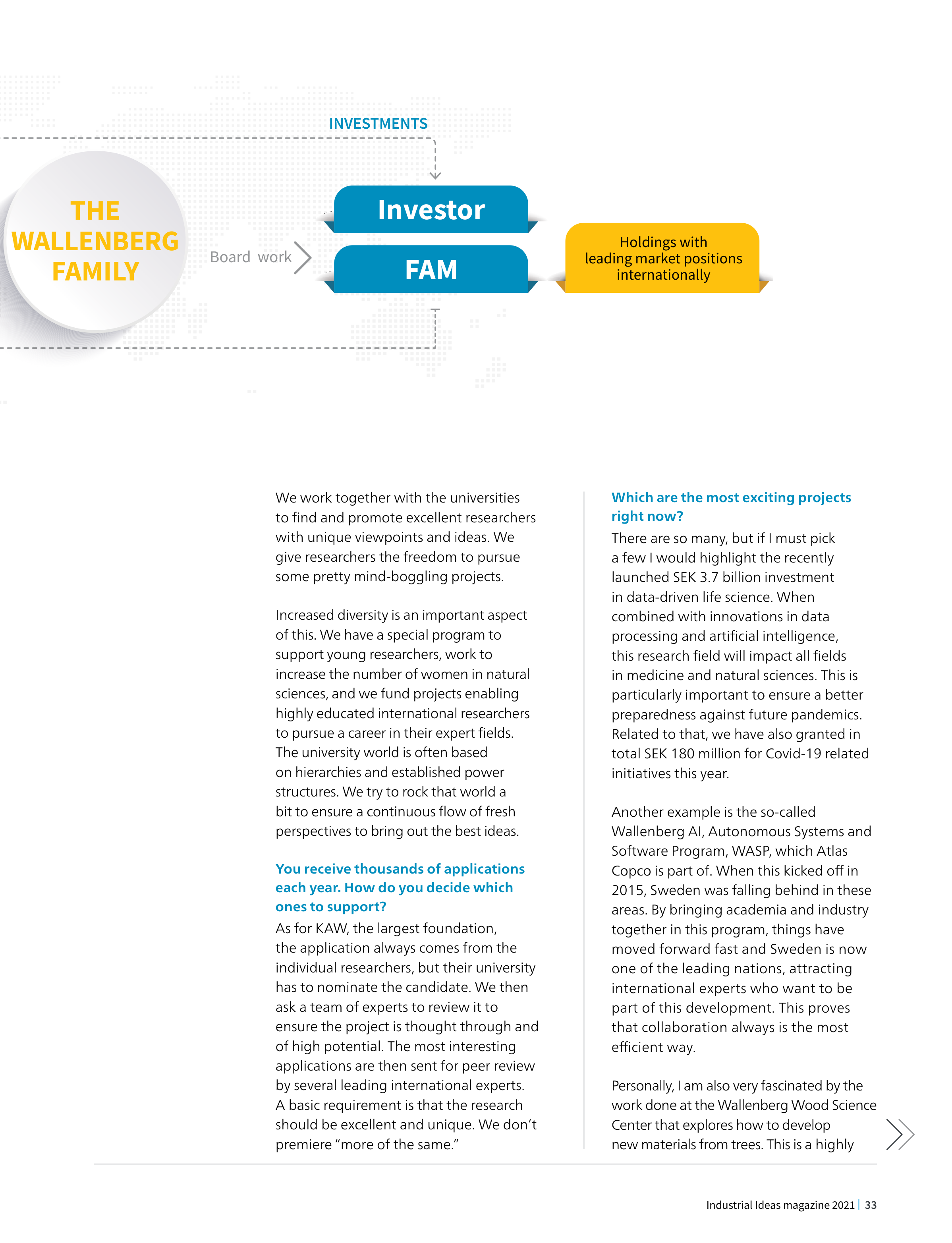
The system is based on a group of private,
nonprofit foundations that are sole
owners of the holding company FAM
and majority owner of the industrial
holding company Investor AB, who
in turn are lead shareholders of many
successful companies. The oldest and
largest foundation is the Knut and Alice
Wallenberg Foundation, KAW,
established in 1917. It is one of the
largest private funders of scientific
research in Europe and primarily supports
research in medicine, technology and the
natural sciences.
We asked Peter Wallenberg Jr., Chair of
KAW, Member of Atlas Copco’s Board
of Directors and one of the senior
representatives of the fifth generation
of
Industrial Ideas 2021
31
32
Industrial Ideas magazine 2021
a head start, but it’s really about global
collaboration for the greater good.
So how does the ecosystem work?
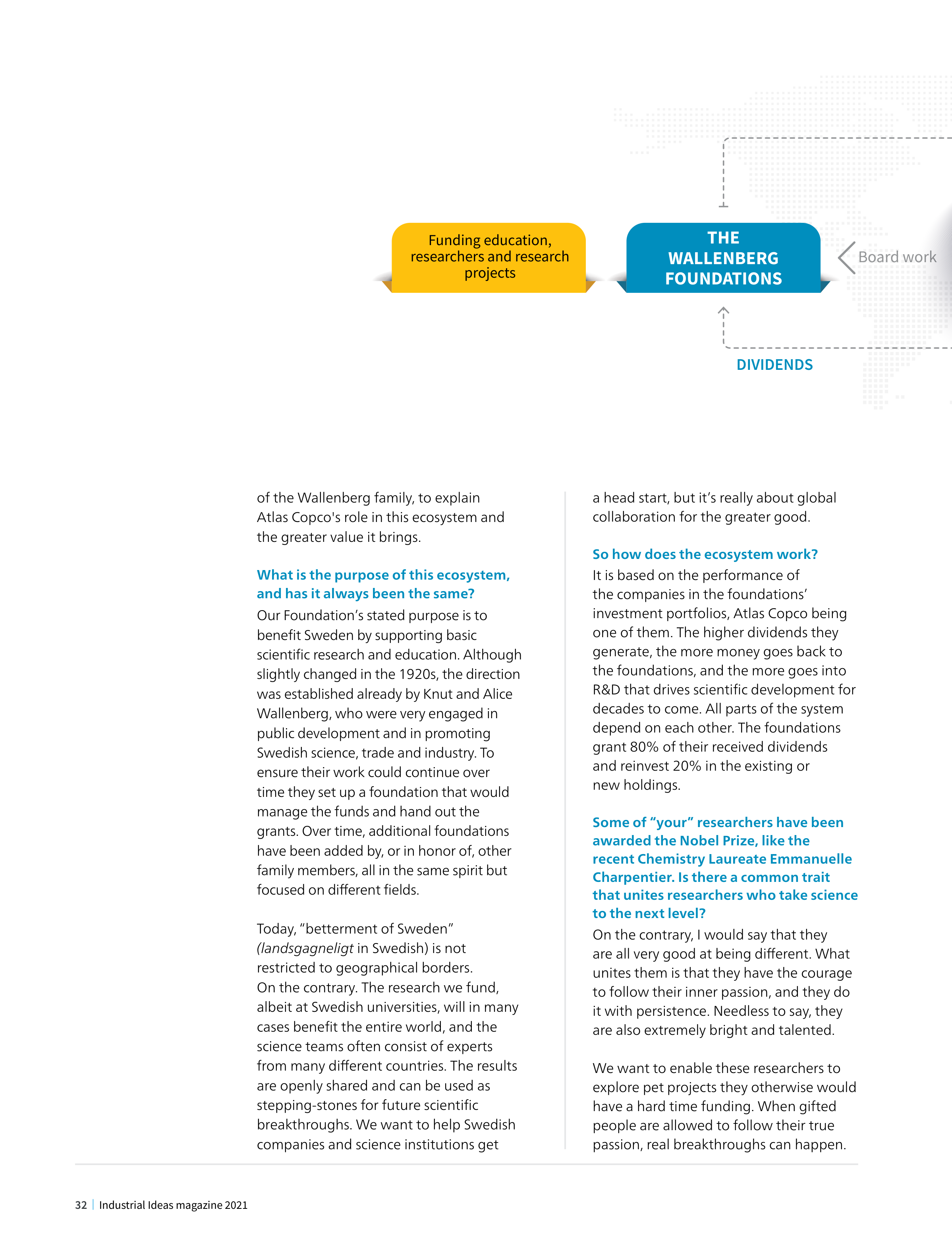
It is based on the performance of
the companies in the foundations’
investment portfolios, Atlas Copco being
one of them. The higher dividends they
generate, the more money goes back to
the foundations, and the more goes into
R&D that drives scientific development for
decades to come. All parts of the system
depend on each other. The foundations
grant 80% of their received dividends
and reinvest 20% in the existing or
new holdings.
Some of “your” researchers have been
awarded the Nobel Prize, like the
recent Chemistry Laureate Emmanuelle
Charpentier. Is there a common trait
that unites researchers who take science
to the next level?
On the contrary, I would say that they
are all very good at being different. What
unites them is that they have the courage
to follow their inner passion, and they do
it with persistence. Needless to say, they
are also extremely bright and talented.
We want to enable these researchers to
explore pet projects they otherwise would
have a hard time funding. When gifted
people are allowed to follow their true
passion, real breakthroughs can happen.
of the Wallenberg family, to explain
Atlas Copco's role in this ecosystem and
the greater value it brings.
What is the purpose of this ecosystem,
and has it always been the same?
Our Foundation’s stated purpose is to
benefit Sweden by supporting basic
scientific research and education. Although
slightly changed in the 1920s, the direction
was established already by Knut and Alice
Wallenberg, who were very engaged in
public development and in promoting
Swedish science, trade and industry. To
ensure their work could continue over
time they set up a foundation that would
manage the funds and hand out the
grants. Over time, additional foundations
have been added by, or in honor of, other
family members, all in the same spirit but
focused on different fields.
Today, “betterment of Sweden”
(landsgagneligt
in Swedish) is not
restricted to geographical borders.
On the contrary. The research we fund,
albeit at Swedish universities, will in many
cases benefit the entire world, and the
science teams often consist of experts
from many different countries. The results
are openly shared and can be used as
stepping-stones for future scientific
breakthroughs. We want to help Swedish
companies and science institutions get
Board work
DIVIDENDS
Funding education,
researchers and research
projects
THE
WALLENBERG
FOUNDATIONS
Industrial Ideas magazine 2021
33
INVESTMENTS
Board work
Holdings with
leading market positions
internationally
THE
WALLENBERG
FAMILY
Investor
FAM
Which are the most exciting projects
right now?
There are so many, but if I must pick
a few I would highlight the recently
launched SEK 3.7 billion investment
in data-driven life science. When
combined with innovations in data
processing and artificial intelligence,
this research field will impact all fields
in medicine and natural sciences. This is
particularly important to ensure a better
preparedness against future pandemics.
Related to that, we have also granted in
total SEK 180 million for Covid-19 related
initiatives this year.
Another example is the so-called
Wallenberg AI, Autonomous Systems and
Software Program, WASP, which Atlas
Copco is part of. When this kicked off in
2015, Sweden was falling behind in these
areas. By bringing academia and industry
together in this program, things have
moved forward fast and Sweden is now
one of the leading nations, attracting
international experts who want to be
part of this development. This proves
that collaboration always is the most
efficient way.
Personally, I am also very fascinated by the
work done at the Wallenberg Wood Science
Center that explores how to develop
new materials from trees. This is a highly
We work together with the universities
to find and promote excellent researchers
with unique viewpoints and ideas. We
give researchers the freedom to pursue
some pretty mind-boggling projects.
Increased diversity is an important aspect
of this. We have a special program to
support young researchers, work to
increase the number of women in natural
sciences, and we fund projects enabling
highly educated international researchers
to pursue a career in their expert fields.
The university world is often based
on hierarchies and established power
structures. We try to rock that world a
bit to ensure a continuous flow of fresh
perspectives to bring out the best ideas.
You receive thousands of applications
each year. How do you decide which
ones to support?
As for KAW, the largest foundation,
the application always comes from the
individual researchers, but their university
has to nominate the candidate. We then
ask a team of experts to review it to
ensure the project is thought through and
of high potential. The most interesting
applications are then sent for peer review
by several leading international experts.
A basic requirement is that the research
should be excellent and unique. We don’t
premiere “more of the same.”

34
Industrial Ideas magazine 2021
more sustainable world. Are your
foundations specifically targeting
sustainability projects?
Not specifically, but as it turns out a
large number of the projects we support
have a direct impact on sustainability
areas. This only shows that sustainability
is incorporated in all aspects of society
today and not a separate issue. In the
same way, successful companies take
sustainability into account in everything
they do. Atlas Copco has always been
good at constantly improving, not least
driven by customer requirements, and I
see sustainability as a natural part of this.
We call ourselves “The Home of
Industrial Ideas." Do you think this is an
accurate description?
About a year ago, I was invited to an
open house activity at the Atlas Copco
headquarters in Sickla, where teams from
different parts of the Group showcased
some of their most innovative R&D
projects. The solutions and the turnout
were just incredible. This kind of culture,
where employees on all levels are allowed
to explore ideas even if they are a bit “off
advanced field and the research covers
nanocellulose and nanostructured wood
fibers, for example.
What opportunities do you see for
Atlas Copco in relation to autonomous
systems and the Internet of Things?
The ongoing industrial revolution is
of course a game changer that brings
obvious opportunities for tech-savvy and
innovation-driven companies like Atlas
Copco. But it’s not only about digitizing
products and solutions or implementing
new technology. This development will
have a profound impact on people, and
people are without a doubt a company’s
most valuable asset.
Companies will have to reshape the way
they work, reskill their teams and make sure
people are on board. This will bring about
a behavioral change affecting all of us,
including your customers. Atlas Copco is very
good at incorporating acquired companies,
and that skill can be applied to this as well.
Change management will be key.
Replacing plastics with wood is
one example of innovation for a
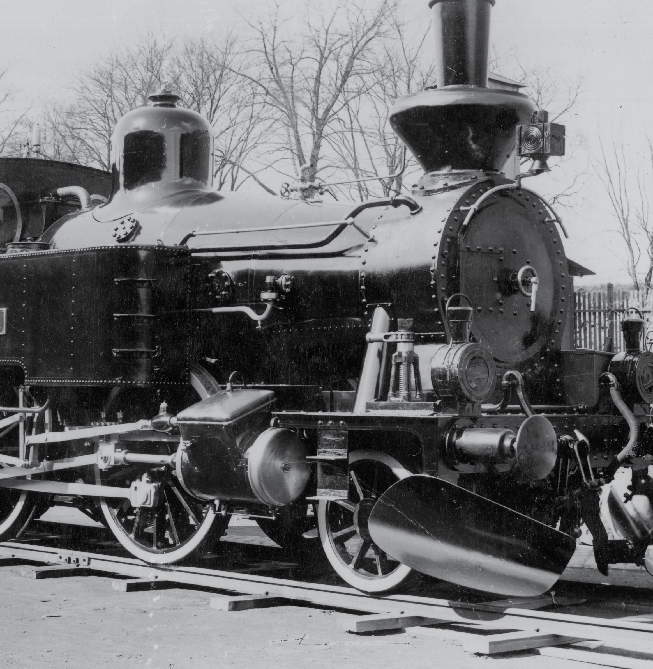
Atlas Copco was
founded in 1873 by A.O.
Wallenberg, among
others, with the mission
to manufacture and sell
materials for railroad
construction and
operation. During the
decades that followed,
technical innovations
and competition
pulled the company in
different directions and
new technology fields,
such as compressed air
and power solutions.
Atlas Copco has
continued to grow
through strategic
acquisitions.
1890/1900


Industrial Ideas magazine 2021
35
for senior positions you automatically
exclude talents who joined later in life
or chose to follow different career paths.
Also, younger generations expect to move
forward fast and they are not likely to stay
in the company if they first have to put
in 20 years before being considered for
higher positions. Hiring and promotion
processes could be more flexible and offer
multiple ways to develop the individual.
This will also help you increase the level
of diversity.
What would be your wish for
the future?
The most fun part of this job is when I
get the chance to visit all the smart and
passionate researchers, to hear their
thoughts and learn about what they
have found so far. Being able to support
them in their quest for innovation is
extremely inspiring and rewarding. From
the foundations’ perspective, it’s about
unlocking the potential of tomorrow.
My wish would be that the entire world
unites in respecting and understanding
the long-term value of research. Joint
development is the best way forward.
n
the charts” and not linked to existing
product portfolios, is extremely valuable
and something I would like to see in many
other companies. It’s also much more fun
to work like that and this makes you more
attractive as an employer.
Atlas Copco is in many ways a classic,
traditional engineering company but
the key to your success is your ability to
keep up with the times and continuously
develop what you do and how you do it.
A current example is the move from diesel
to electric. Since I visit different parts of
the organization, I know that this is the
case wherever you go. It is a profound
part of who you are.
Do you see any room for improvement?
Like all large organizations you are
struggling with speed, and that challenge
will only grow with the technology
revolution mentioned earlier. Linked to
this, I would say that it’s very important
that you establish alternative career
paths to provide a steady inflow of new
perspectives. If years of employment or
certain job titles are basic requirements
1920s
1950s
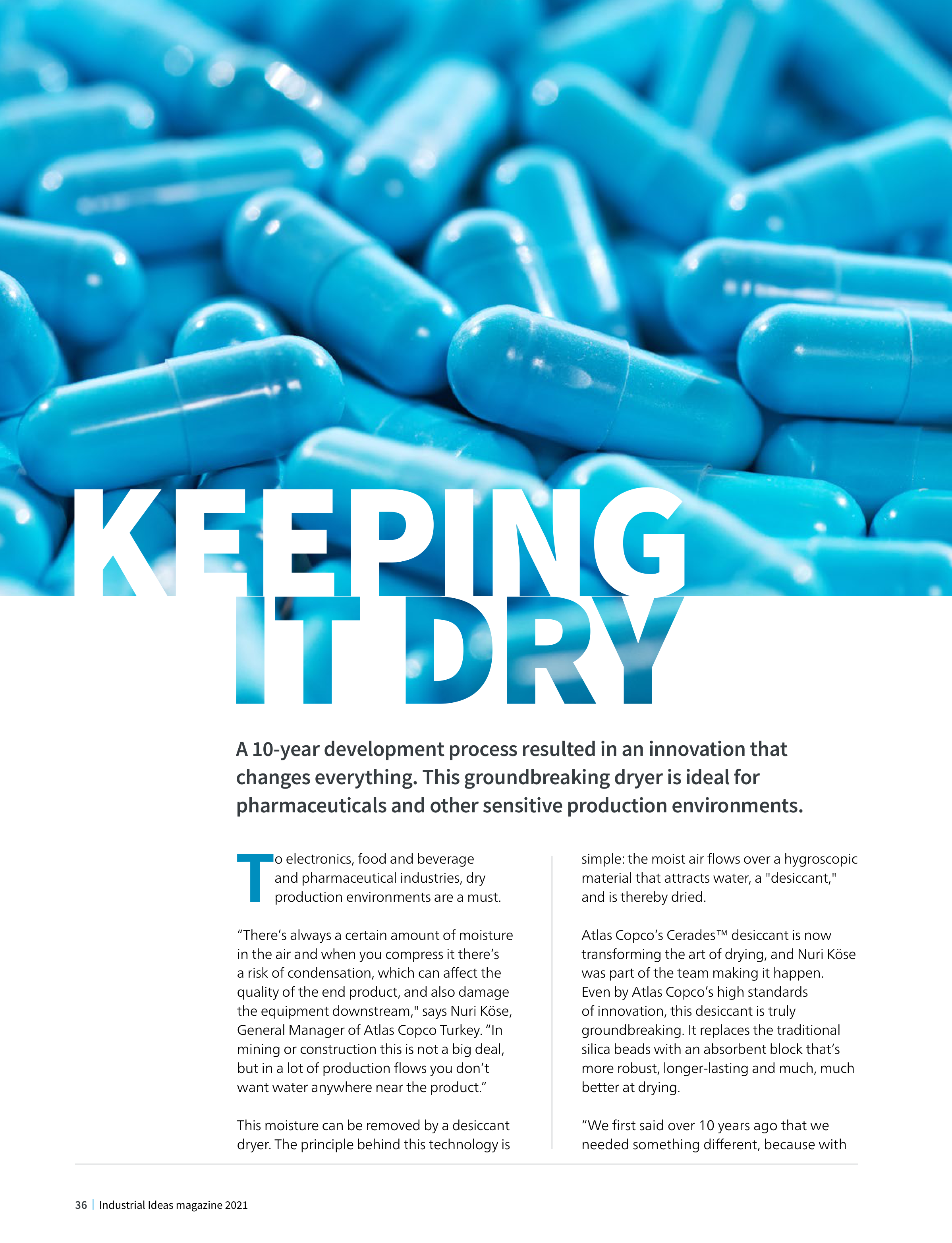


36
Industrial Ideas magazine 2021
A 10-year development process resulted in an innovation that
changes everything. This groundbreaking dryer is ideal for
pharmaceuticals and other sensitive production environments.
simple: the moist air flows over a hygroscopic
material that attracts water, a "desiccant,"
and is thereby dried.
Atlas Copco’s Cerades™ desiccant is now
transforming the art of drying, and Nuri Köse
was part of the team making it happen.
Even by Atlas Copco’s high standards
of innovation, this desiccant is truly
groundbreaking. It replaces the traditional
silica beads with an absorbent block that’s
more robust, longer-lasting and much, much
better at drying.
“We first said over 10 years ago that we
needed something different, because with
T
o electronics, food and beverage
and pharmaceutical industries, dry
production environments are a must.
“There’s always a certain amount of moisture
in the air and when you compress it there’s
a risk of condensation, which can affect the
quality of the end product, and also damage
the equipment downstream," says Nuri Köse,
General Manager of Atlas Copco Turkey. “In
mining or construction this is not a big deal,
but in a lot of production flows you don’t
want water anywhere near the product.”
This moisture can be removed by a desiccant
dryer. The principle behind this technology is
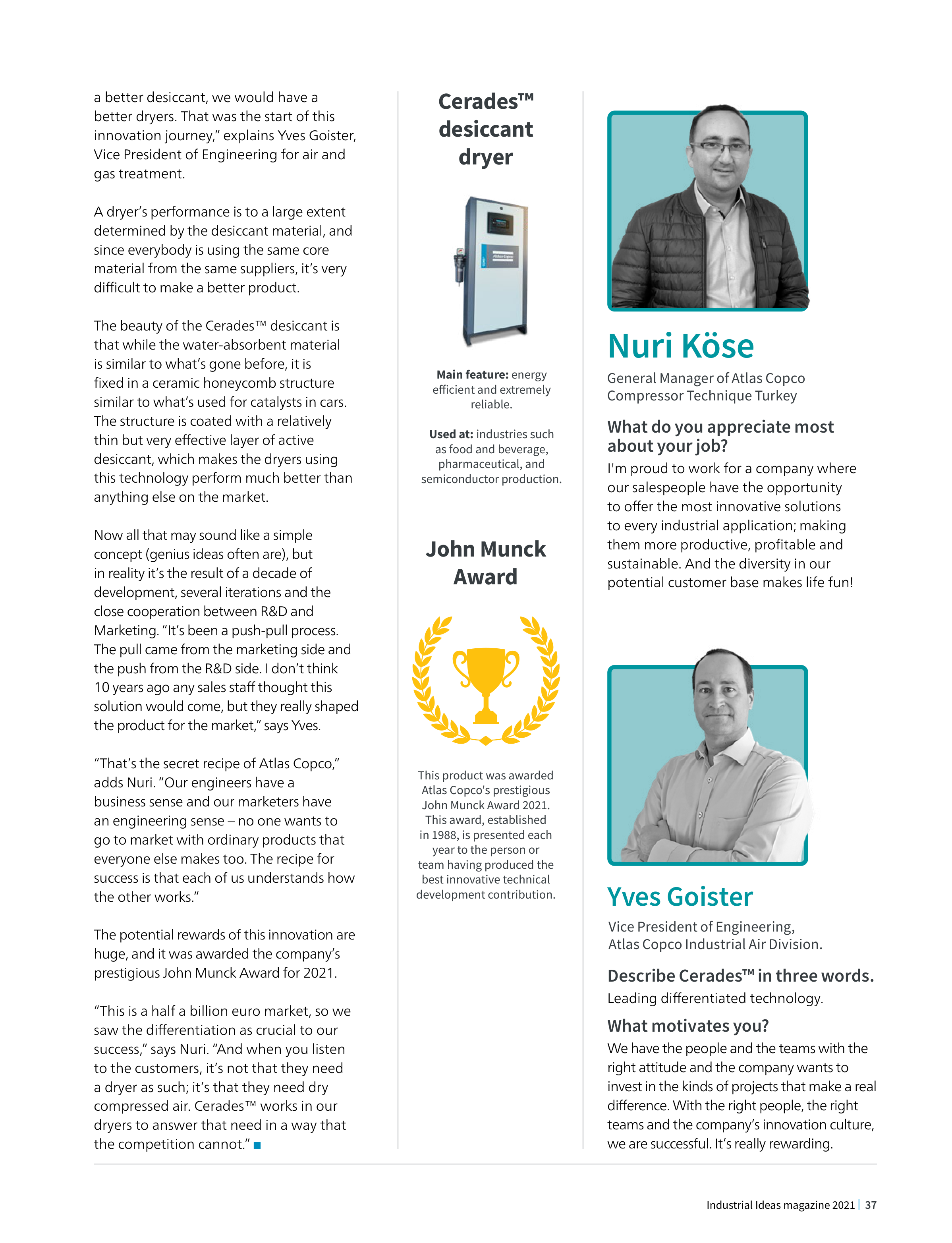



Industrial Ideas magazine 2021
37
a better desiccant, we would have a
better dryers. That was the start of this
innovation journey,” explains Yves Goister,
Vice President of Engineering for air and
gas treatment.
A dryer’s performance is to a large extent
determined by the desiccant material, and
since everybody is using the same core
material from the same suppliers, it’s very
difficult to make a better product.
The beauty of the Cerades™ desiccant is
that while the water-absorbent material
is similar to what’s gone before, it is
fixed in a ceramic honeycomb structure
similar to what’s used for catalysts in cars.
The structure is coated with a relatively
thin but very effective layer of active
desiccant, which makes the dryers using
this technology perform much better than
anything else on the market.
Now all that may sound like a simple
concept (genius ideas often are), but
in reality it’s the result of a decade of
development, several iterations and the
close cooperation between R&D and
Marketing. “It’s been a push-pull process.
The pull came from the marketing side and
the push from the R&D side. I don’t think
10 years ago any sales staff thought this
solution would come, but they really shaped
the product for the market,” says Yves.
“That’s the secret recipe of Atlas Copco,”
adds Nuri. “Our engineers have a
business sense and our marketers have
an engineering sense – no one wants to
go to market with ordinary products that
everyone else makes too. The recipe for
success is that each of us understands how
the other works.”
The potential rewards of this innovation are
huge, and it was awarded the company’s
prestigious John Munck Award for 2021.
“This is a half a billion euro market, so we
saw the differentiation as crucial to our
success,” says Nuri. “And when you listen
to the customers, it’s not that they need
a dryer as such; it’s that they need dry
compressed air. Cerades™ works in our
dryers to answer that need in a way that
the competition cannot.”
n
What do you appreciate most
about your job?
I'm proud to work for a company where
our salespeople have the opportunity
to offer the most innovative solutions
to every industrial application; making
them more productive, profitable and
sustainable. And the diversity in our
potential customer base makes life fun!
General Manager of Atlas Copco
Compressor Technique Turkey
Nuri Köse
Describe Cerades™ in three words.
Leading differentiated technology.
What motivates you?
We have the people and the teams with the
right attitude and the company wants to
invest in the kinds of projects that make a real
difference. With the right people, the right
teams and the company’s innovation culture,
we are successful. It’s really rewarding.
Vice President of Engineering,
Atlas Copco Industrial Air Division.
Yves Goister
Cerades™
desiccant
dryer
This product was awarded
Atlas Copco's prestigious
John Munck Award 2021.
This award, established
in 1988, is presented each
year to the person or
team having produced the
best innovative technical
development contribution.
John Munck
Award
Main feature:
energy
efficient and extremely
reliable.
Used at:
industries such
as food and beverage,
pharmaceutical, and
semiconductor production.
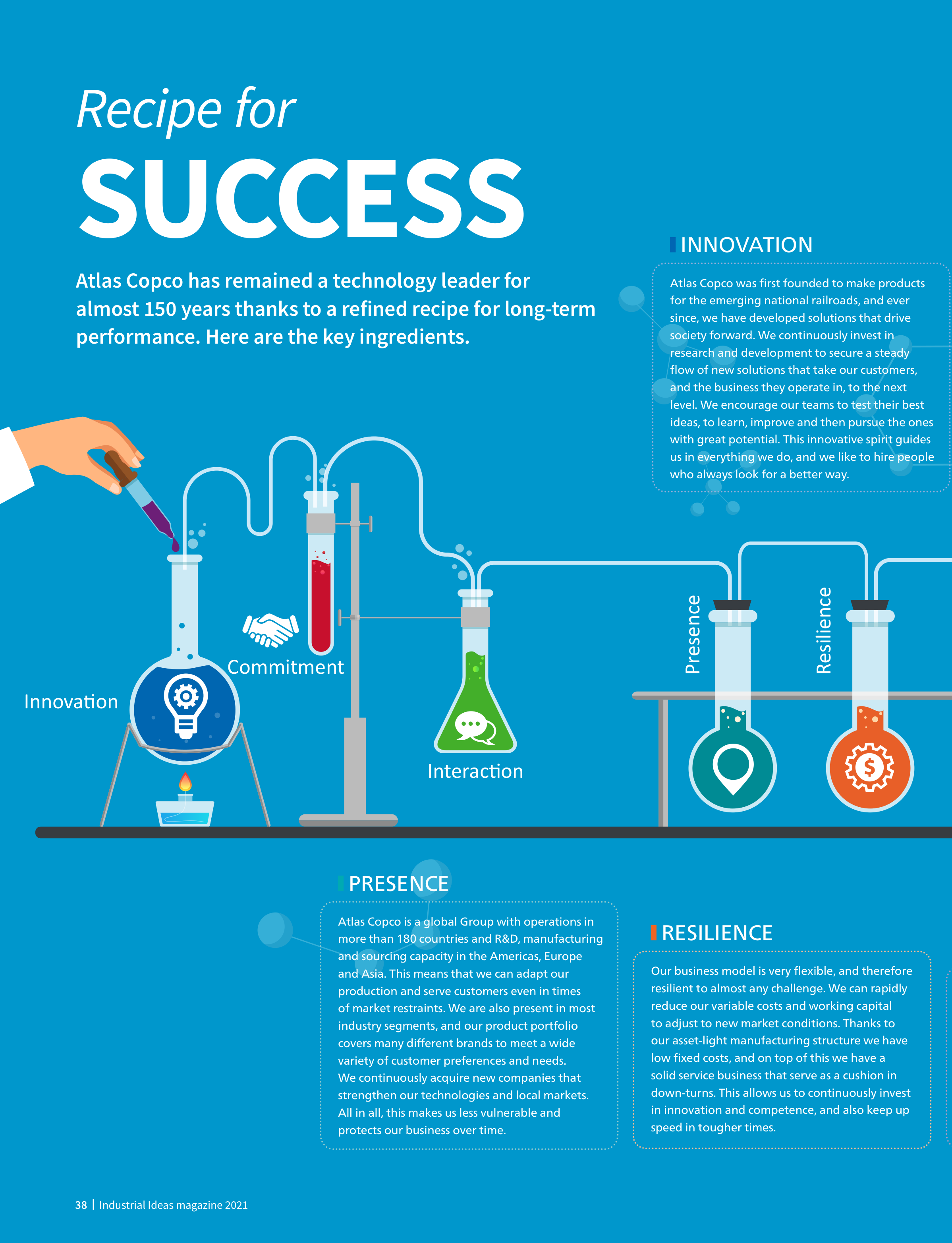
38
Industrial Ideas magazine 2021
Innova
Ɵon
Commitment
Interac
Ɵon
Resilience
Presence
Atlas Copco was first founded to make products
for the emerging national railroads, and ever
since, we have developed solutions that drive
society forward. We continuously invest in
research and development to secure a steady
flow of new solutions that take our customers,
and the business they operate in, to the next
level. We encourage our teams to test their best
ideas, to learn, improve and then pursue the ones
with great potential. This innovative spirit guides
us in everything we do, and we like to hire people
who always look for a better way.
INNOVATION
Our business model is very flexible, and therefore
resilient to almost any challenge. We can rapidly
reduce our variable costs and working capital
to adjust to new market conditions. Thanks to
our asset-light manufacturing structure we have
low fixed costs, and on top of this we have a
solid service business that serve as a cushion in
down-turns. This allows us to continuously invest
in innovation and competence, and also keep up
speed in tougher times.
RESILIENCE
Atlas Copco is a global Group with operations in
more than 180 countries and R&D, manufacturing
and sourcing capacity in the Americas, Europe
and Asia. This means that we can adapt our
production and serve customers even in times
of market restraints. We are also present in most
industry segments, and our product portfolio
covers many different brands to meet a wide
variety of customer preferences and needs.
We continuously acquire new companies that
strengthen our technologies and local markets.
All in all, this makes us less vulnerable and
protects our business over time.
PRESENCE
Recipe for
SUCCESS
Atlas Copco has remained a technology leader for
almost 150 years thanks to a refined recipe for long-term
performance. Here are the key ingredients.
38
Industrial Ideas magazine 2021
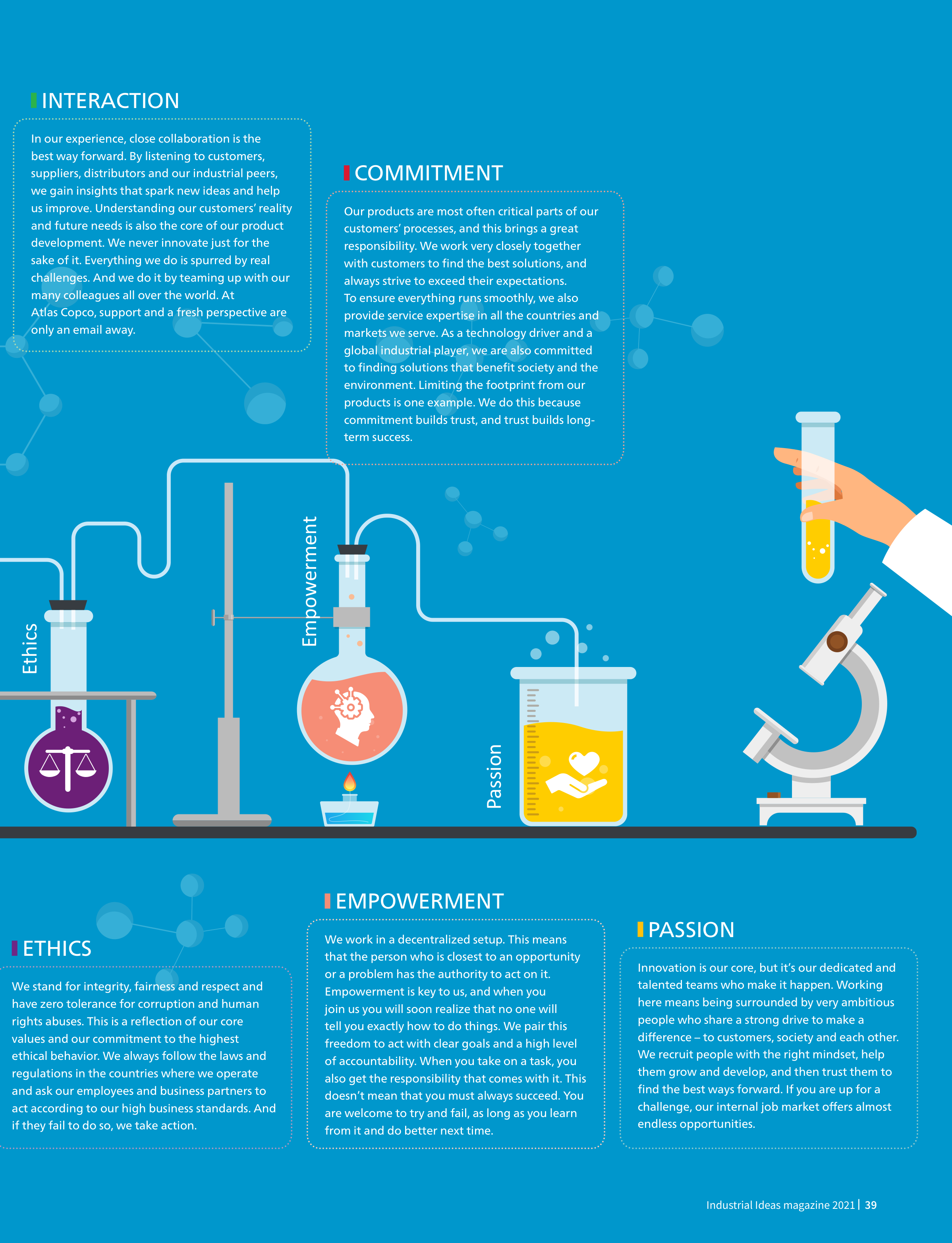
Industrial Ideas magazine 2021
39
Ethics
Passion
Empowerment
We stand for integrity, fairness and respect and
have zero tolerance for corruption and human
rights abuses. This is a reflection of our core
values and our commitment to the highest
ethical behavior. We always follow the laws and
regulations in the countries where we operate
and ask our employees and business partners to
act according to our high business standards. And
if they fail to do so, we take action.
ETHICS
We work in a decentralized setup. This means
that the person who is closest to an opportunity
or a problem has the authority to act on it.
Empowerment is key to us, and when you
join us you will soon realize that no one will
tell you exactly how to do things. We pair this
freedom to act with clear goals and a high level
of accountability. When you take on a task, you
also get the responsibility that comes with it. This
doesn’t mean that you must always succeed. You
are welcome to try and fail, as long as you learn
from it and do better next time.
EMPOWERMENT
In our experience, close collaboration is the
best way forward. By listening to customers,
suppliers, distributors and our industrial peers,
we gain insights that spark new ideas and help
us improve. Understanding our customers’ reality
and future needs is also the core of our product
development. We never innovate just for the
sake of it. Everything we do is spurred by real
challenges. And we do it by teaming up with our
many colleagues all over the world. At
Atlas Copco, support and a fresh perspective are
only an email away.
INTERACTION
Our products are most often critical parts of our
customers’ processes, and this brings a great
responsibility. We work very closely together
with customers to find the best solutions, and
always strive to exceed their expectations.
To ensure everything runs smoothly, we also
provide service expertise in all the countries and
markets we serve. As a technology driver and a
global industrial player, we are also committed
to finding solutions that benefit society and the
environment. Limiting the footprint from our
products is one example. We do this because
commitment builds trust, and trust builds long-
term success.
COMMITMENT
Innovation is our core, but it’s our dedicated and
talented teams who make it happen. Working
here means being surrounded by very ambitious
people who share a strong drive to make a
difference – to customers, society and each other.
We recruit people with the right mindset, help
them grow and develop, and then trust them to
find the best ways forward. If you are up for a
challenge, our internal job market offers almost
endless opportunities.
PASSION
Industrial Ideas magazine 2021
39
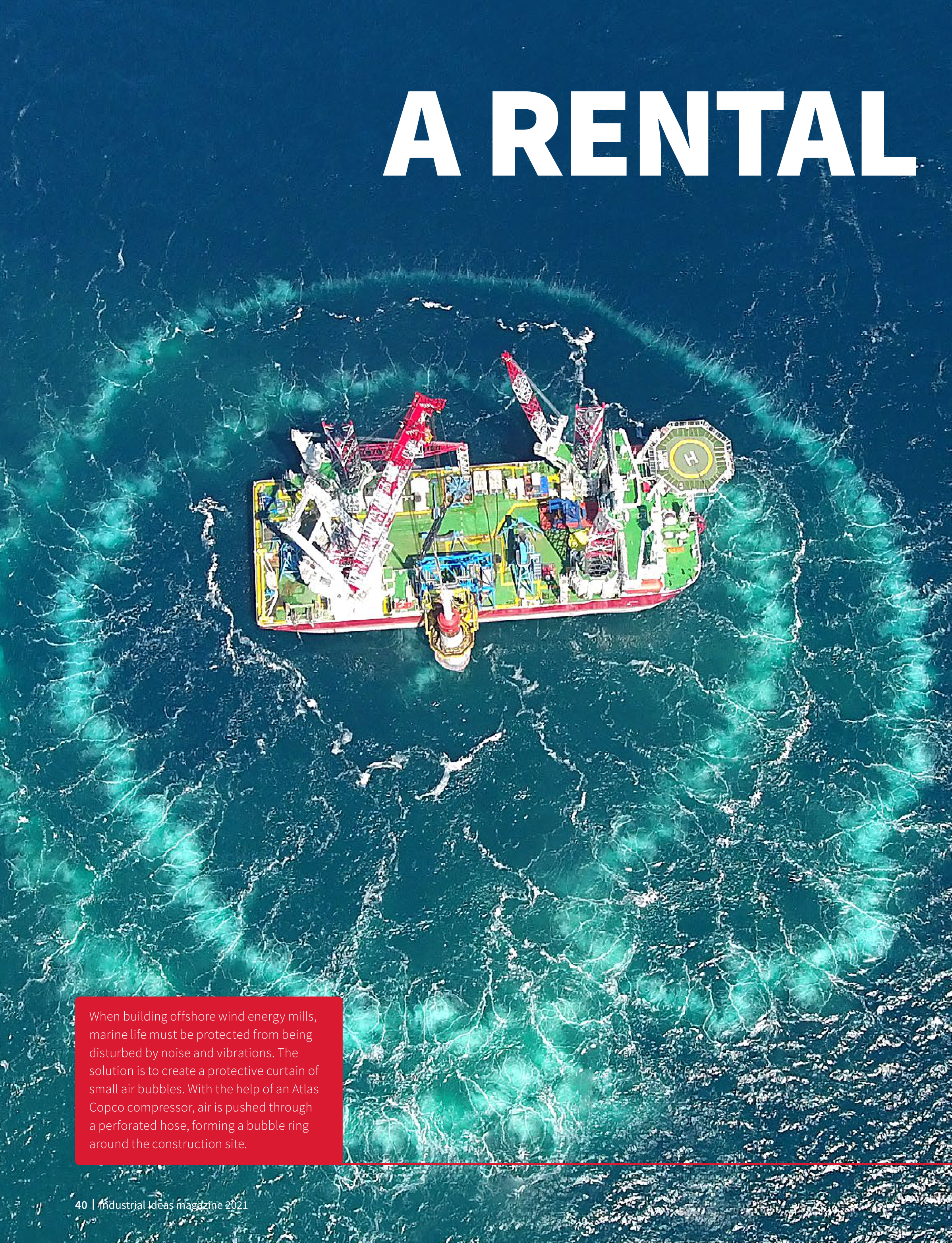
40
Industrial Ideas magazine 2021
When building offshore wind energy mills,
marine life must be protected from being
disturbed by noise and vibrations. The
solution is to create a protective curtain of
small air bubbles. With the help of an Atlas
Copco compressor, air is pushed through
a perforated hose, forming a bubble ring
around the construction site.
40
Industrial Ideas magazine 2021

Industrial Ideas magazine 2021
41
How can a power plant quickly handle
a machine breakdown that could
shut down the electricity supply to an
entire city? How can a brewery speed
up production during seasonal peaks?
And how can a contractor manage
construction projects in remote locations
with no access to a power grid? The
answer is quite simple: rental solutions.
“Our rental solutions are designed to
help our customers excel through agility.
We are here to provide them with what
they need, when they need it, in a
quick and hassle-free way,” says Janne
Scheepmans, Sales Excellence Manager
in Atlas Copco’s Specialty Rental division.
“We team up with our customers to
provide a total solution that suits their
particular industry. Our experts know
exactly how to best unburden any
given situation, and how to set up the
equipment in the best way. That means
our customers can relax and concentrate
on their core business,” she adds.
A flexible complement
Atlas Copco’s Specialty Rental division
typically provides mobile air compressors
and dryers, light towers and generators.
Recently, nitrogen generators, boosters,
steam boilers, pumps and battery packs
were added to the equipment range.
Most of the division’s customers operate
in the manufacturing industry (including
aviation), oil and gas, mining and drilling
or power and energy.
“Rental services are a complement to
the customer’s existing machine park
or fleet,” says Janne. “In some cases,
ownership is the better option, but in
other cases rental makes most sense. It’s
not an either/or situation. Our customers
often buy machinery to cover a certain
baseload and then rent equipment for
more temporary needs.”
One example of this flexible approach
is when two 180-meter offshore wind
turbines were built near the U.S. city
of Virginia Beach in July 2020. Clean
energy projects like this one are
increasing around the world, but the
construction phase can harm marine
life. The solution here was to bring in an
Atlas Copco compressor that produced
a temporary bubble curtain around the
site to protect the sea mammals. The
compressor released small air bubbles
from a perforated hose, creating a noise-
reducing screen.
This kind of bubble curtain, from the
seabed to the surface, can reduce noise
levels by more than 90%, and thus
prevent sea mammals from experiencing
sonic disturbances that can result in them
becoming disoriented or even deaf.
Scaling up solutions
Rental solutions often also come into
play when a customer identifies the
need for a higher level of capacity and
wants to quickly scale up production
without expanding their regular machine
park. When a Russian company making
glass containers for food and beverages
experienced an unexpected peak
demand one summer, an electric, 100%
oil-free air solution was brought in to
In an uncertain world where needs can change overnight,
renting equipment is a safe bet. Flexible air, nitrogen, power
and flow solutions will get the job done in all conditions.
"We team up with
our customers to
provide a total
solution that suits
their particular
industry. Our
experts know
exactly how to
best unburden
any given
situation, and
how to set up the
equipment in the
best way."
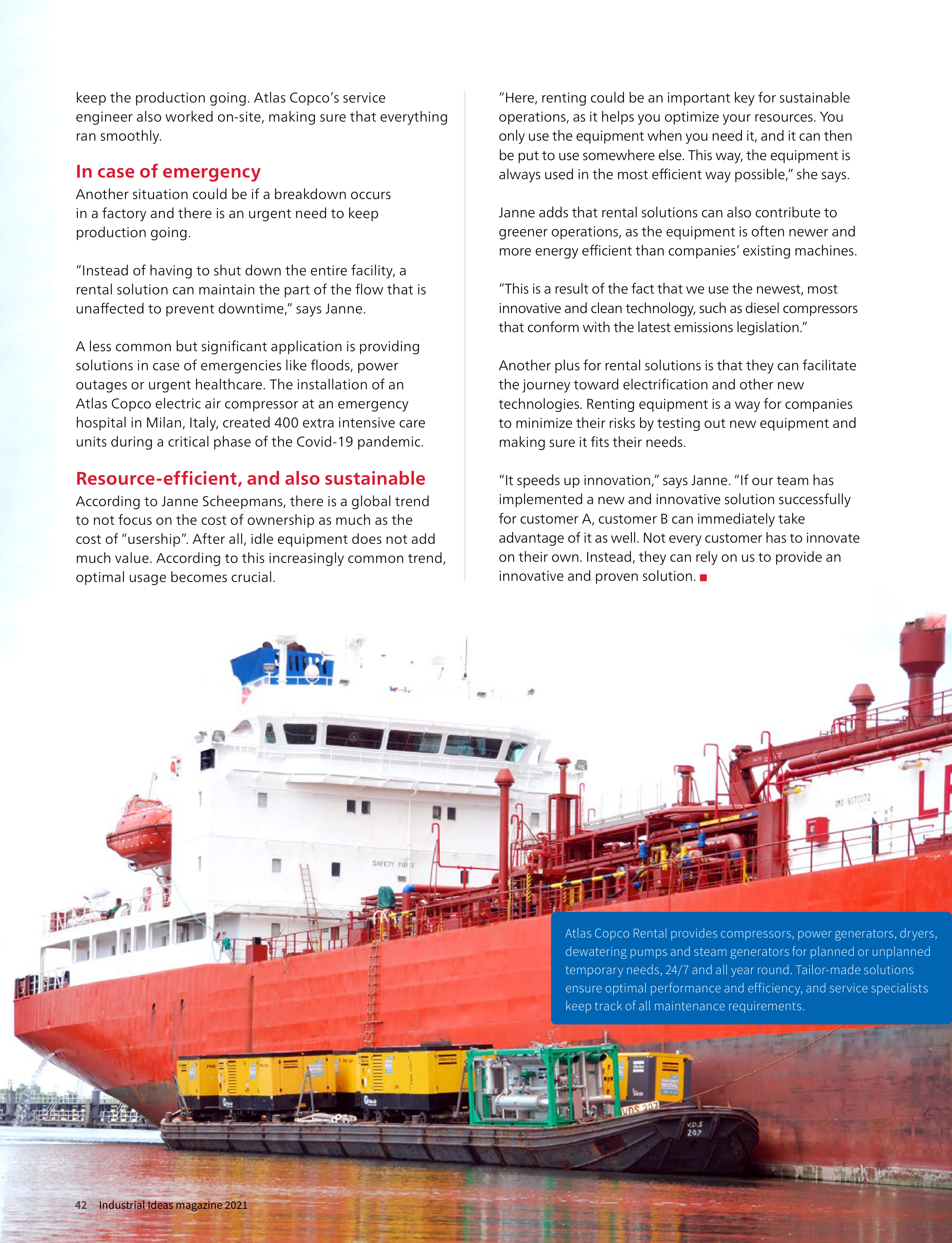

42
Industrial Ideas magazine 2021
keep the production going. Atlas Copco’s service
engineer also worked on-site, making sure that everything
ran smoothly.
In case of emergency
Another situation could be if a breakdown occurs
in a factory and there is an urgent need to keep
production going.
“Instead of having to shut down the entire facility, a
rental solution can maintain the part of the flow that is
unaffected to prevent downtime,” says Janne.
A less common but significant application is providing
solutions in case of emergencies like floods, power
outages or urgent healthcare. The installation of an
Atlas Copco electric air compressor at an emergency
hospital in Milan, Italy, created 400 extra intensive care
units during a critical phase of the Covid-19 pandemic.
Resource-efficient, and also sustainable
According to Janne Scheepmans, there is a global trend
to not focus on the cost of ownership as much as the
cost of “usership”. After all, idle equipment does not add
much value. According to this increasingly common trend,
optimal usage becomes crucial.
“Here, renting could be an important key for sustainable
operations, as it helps you optimize your resources. You
only use the equipment when you need it, and it can then
be put to use somewhere else. This way, the equipment is
always used in the most efficient way possible,” she says.
Janne adds that rental solutions can also contribute to
greener operations, as the equipment is often newer and
more energy efficient than companies’ existing machines.
“This is a result of the fact that we use the newest, most
innovative and clean technology, such as diesel compressors
that conform with the latest emissions legislation.”
Another plus for rental solutions is that they can facilitate
the journey toward electrification and other new
technologies. Renting equipment is a way for companies
to minimize their risks by testing out new equipment and
making sure it fits their needs.
“It speeds up innovation,” says Janne. “If our team has
implemented a new and innovative solution successfully
for customer A, customer B can immediately take
advantage of it as well. Not every customer has to innovate
on their own. Instead, they can rely on us to provide an
innovative and proven solution.
n
Atlas Copco Rental provides compressors, power generators, dryers,
dewatering pumps and steam generators for planned or unplanned
temporary needs, 24/7 and all year round. Tailor-made solutions
ensure optimal performance and efficiency, and service specialists
keep track of all maintenance requirements.
42
Industrial Ideas magazine 2021
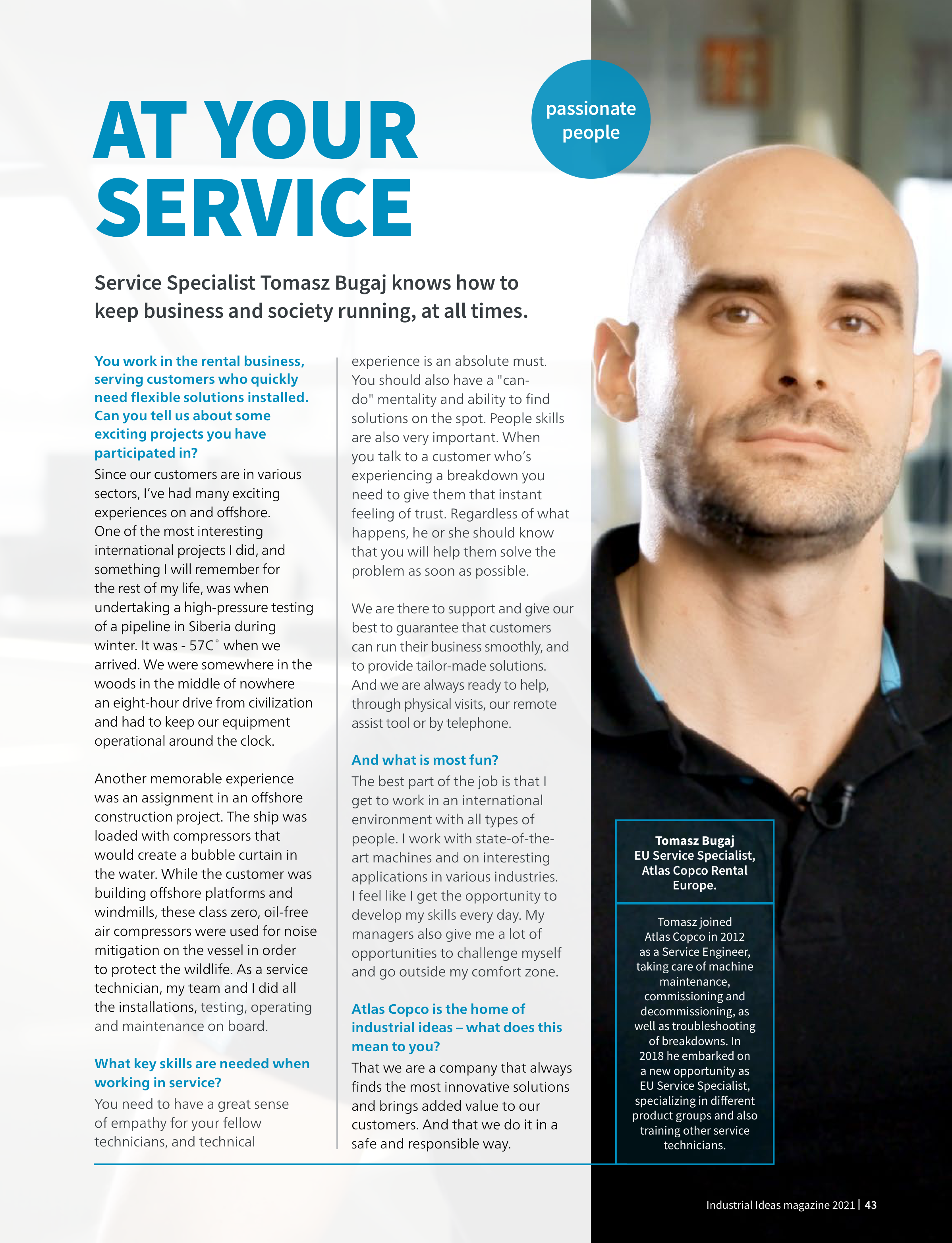
Industrial Ideas magazine 2021
43
experience is an absolute must.
You should also have a "can-
do" mentality and ability to find
solutions on the spot. People skills
are also very important. When
you talk to a customer who’s
experiencing a breakdown you
need to give them that instant
feeling of trust. Regardless of what
happens, he or she should know
that you will help them solve the
problem as soon as possible.
We are there to support and give our
best to guarantee that customers
can run their business smoothly, and
to provide tailor-made solutions.
And we are always ready to help,
through physical visits, our remote
assist tool or by telephone.
And what is most fun?
The best part of the job is that I
get to work in an international
environment with all types of
people. I work with state-of-the-
art machines and on interesting
applications in various industries.
I feel like I get the opportunity to
develop my skills every day. My
managers also give me a lot of
opportunities to challenge myself
and go outside my comfort zone.
Atlas Copco is the home of
industrial ideas – what does this
mean to you?
That we are a company that always
finds the most innovative solutions
and brings added value to our
customers. And that we do it in a
safe and responsible way.
You work in the rental business,
serving customers who quickly
need flexible solutions installed.
Can you tell us about some
exciting projects you have
participated in?
Since our customers are in various
sectors, I’ve had many exciting
experiences on and offshore.
One of the most interesting
international projects I did, and
something I will remember for
the rest of my life, was when
undertaking a high-pressure testing
of a pipeline in Siberia during
winter. It was - 57C ̊ when we
arrived. We were somewhere in the
woods in the middle of nowhere
an eight-hour drive from civilization
and had to keep our equipment
operational around the clock.
Another memorable experience
was an assignment in an offshore
construction project. The ship was
loaded with compressors that
would create a bubble curtain in
the water. While the customer was
building offshore platforms and
windmills, these class zero, oil-free
air compressors were used for noise
mitigation on the vessel in order
to protect the wildlife. As a service
technician, my team and I did all
the installations,
testing, operating
and maintenance on board.
What key skills are needed when
working in service?
You need to have a great sense
of empathy for your fellow
technicians, and technical
Service Specialist Tomasz Bugaj knows how to
keep business and society running, at all times.
AT YOUR
SERVICE
passionate
people
Tomasz Bugaj
EU Service Specialist,
Atlas Copco Rental
Europe.
Tomasz joined
Atlas Copco in 2012
as a Service Engineer,
taking care of machine
maintenance,
commissioning and
decommissioning, as
well as troubleshooting
of breakdowns. In
2018 he embarked on
a new opportunity as
EU Service Specialist,
specializing in different
product groups and also
training other service
technicians.
Industrial Ideas magazine 2021
43
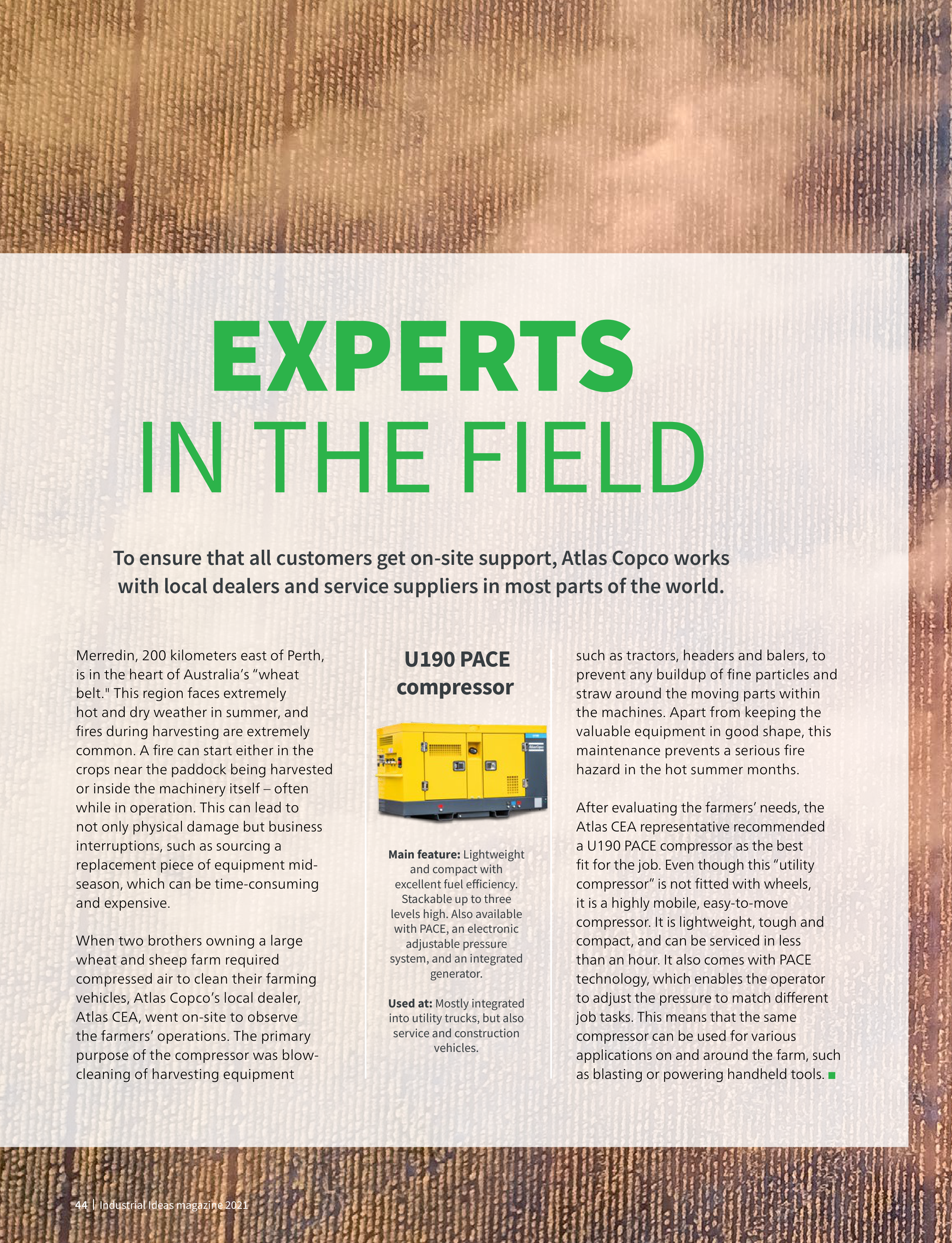

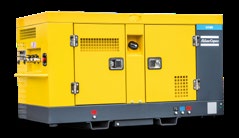
44
Industrial Ideas magazine 2021
To ensure that all customers get on-site support, Atlas Copco works
with local dealers and service suppliers in most parts of the world.
EXPERTS
IN THE FIELD
Merredin, 200 kilometers east of Perth,
is in the heart of Australia’s “wheat
belt." This region faces extremely
hot and dry weather in summer, and
fires during harvesting are extremely
common. A fire can start either in the
crops near the paddock being harvested
or inside the machinery itself – often
while in operation. This can lead to
not only physical damage but business
interruptions, such as sourcing a
replacement piece of equipment mid-
season, which can be time-consuming
and expensive.
When two brothers owning a large
wheat and sheep farm required
compressed air to clean their farming
vehicles, Atlas Copco’s local dealer,
Atlas CEA, went on-site to observe
the farmers’ operations. The primary
purpose of the compressor was blow-
cleaning of harvesting equipment
such as tractors, headers and balers, to
prevent any buildup of fine particles and
straw around the moving parts within
the machines. Apart from keeping the
valuable equipment in good shape, this
maintenance prevents a serious fire
hazard in the hot summer months.
After evaluating the farmers’ needs, the
Atlas CEA representative recommended
a U190 PACE compressor as the best
fit for the job. Even though this “utility
compressor” is not fitted with wheels,
it is a highly mobile, easy-to-move
compressor. It is lightweight, tough and
compact, and can be serviced in less
than an hour. It also comes with PACE
technology, which enables the operator
to adjust the pressure to match different
job tasks. This means that the same
compressor can be used for various
applications on and around the farm, such
as blasting or powering handheld tools.
n
U190 PACE
compressor
Main feature:
Lightweight
and compact with
excellent fuel efficiency.
Stackable up to three
levels high. Also available
with PACE, an electronic
adjustable pressure
system, and an integrated
generator.
Used at:
Mostly integrated
into utility trucks, but also
service and construction
vehicles.
44
Industrial Ideas magazine 2021


Industrial Ideas magazine 2021
45
Industrial Ideas magazine 2021
45
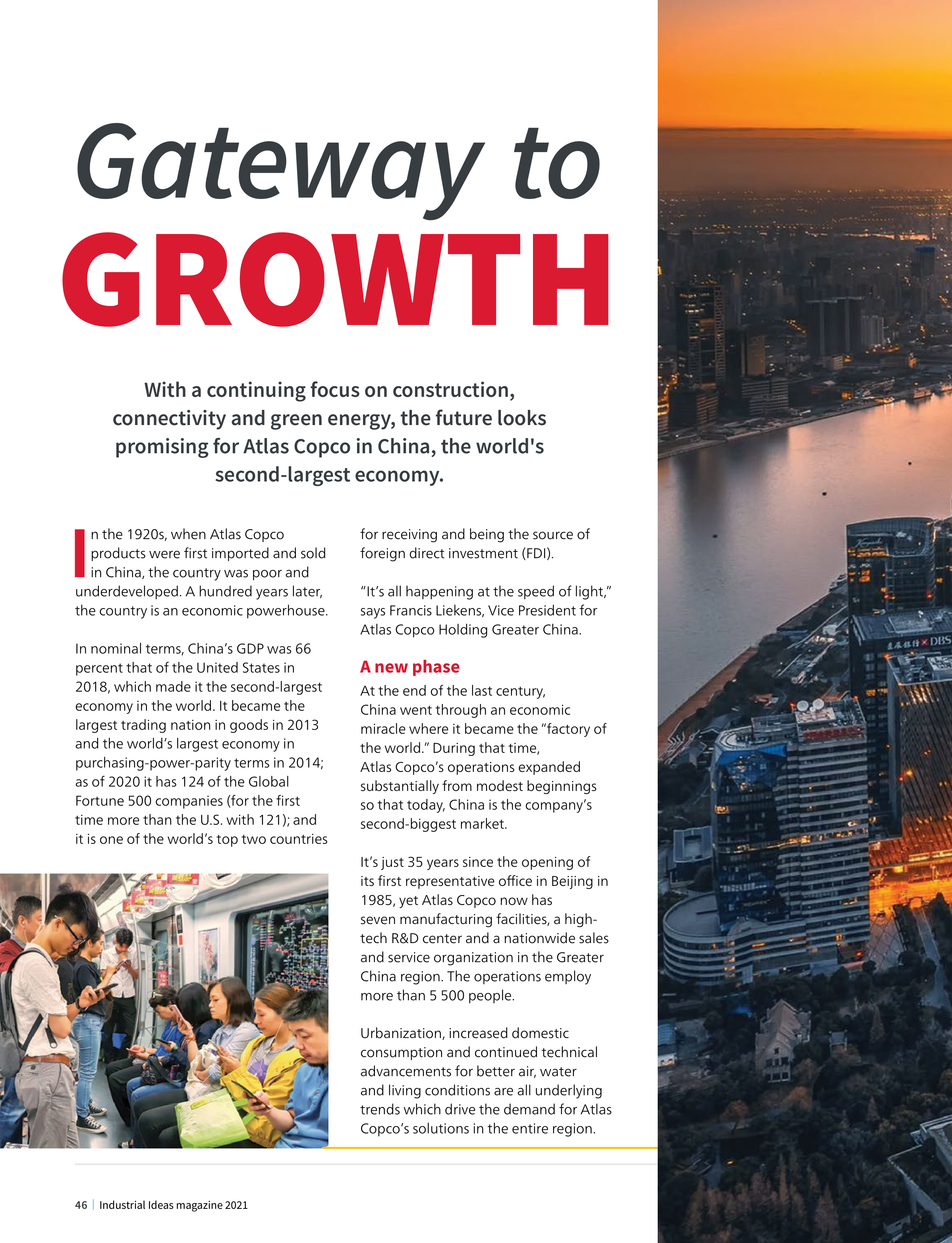


46
Industrial Ideas magazine 2021
With a continuing focus on construction,
connectivity and green energy, the future looks
promising for Atlas Copco in China, the world's
second-largest economy.
I
n the 1920s, when Atlas Copco
products were first imported and sold
in China, the country was poor and
underdeveloped. A hundred years later,
the country is an economic powerhouse.
In nominal terms, China’s GDP was 66
percent that of the United States in
2018, which made it the second-largest
economy in the world. It became the
largest trading nation in goods in 2013
and the world’s largest economy in
purchasing-power-parity terms in 2014;
as of 2020 it has 124 of the Global
Fortune 500 companies (for the first
time more than the U.S. with 121); and
it is one of the world’s top two countries
for receiving and being the source of
foreign direct investment (FDI).
“It’s all happening at the speed of light,”
says Francis Liekens, Vice President for
Atlas Copco Holding Greater China.
A new phase
At the end of the last century,
China went through an economic
miracle where it became the “factory of
the world.” During that time,
Atlas Copco’s operations expanded
substantially from modest beginnings
so that today, China is the company’s
second-biggest market.
It’s just 35 years since the opening of
its first representative office in Beijing in
1985, yet Atlas Copco now has
seven manufacturing facilities, a high-
tech R&D center and a nationwide sales
and service organization in the Greater
China region. The operations employ
more than 5 500 people.
Urbanization, increased domestic
consumption and continued technical
advancements for better air, water
and living conditions are all underlying
trends which drive the demand for Atlas
Copco’s solutions in the entire region.
Gateway
to
GROWTH
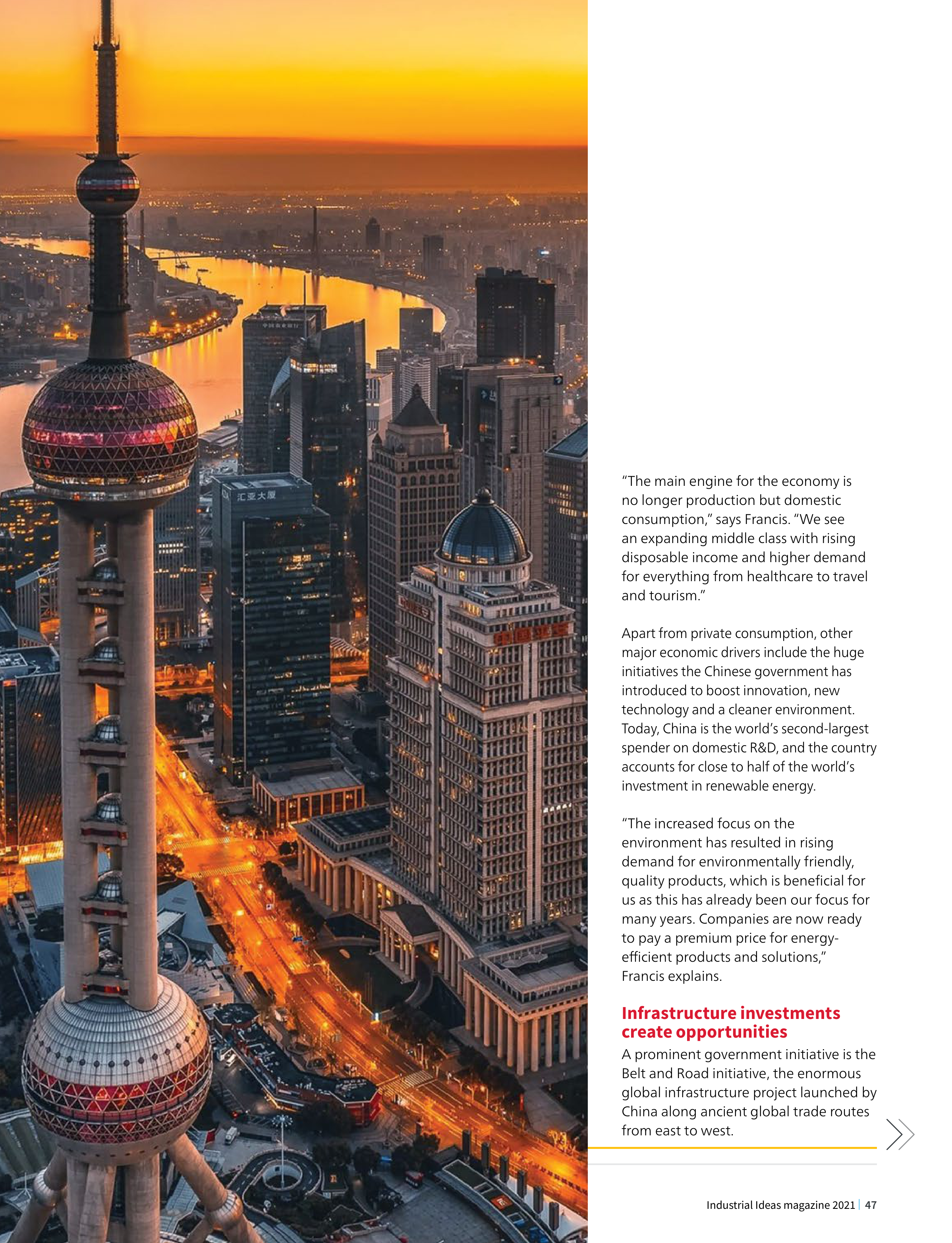

Industrial Ideas magazine 2021
47
“The main engine for the economy is
no longer production but domestic
consumption,” says Francis. “We see
an expanding middle class with rising
disposable income and higher demand
for everything from healthcare to travel
and tourism.”
Apart from private consumption, other
major economic drivers include the huge
initiatives the Chinese government has
introduced to boost innovation, new
technology and a cleaner environment.
Today, China is the world’s second-largest
spender on domestic R&D, and the country
accounts for close to half of the world’s
investment in renewable energy.
“The increased focus on the
environment has resulted in rising
demand for environmentally friendly,
quality products, which is beneficial for
us as this has already been our focus for
many years. Companies are now ready
to pay a premium price for energy-
efficient products and solutions,”
Francis explains.
Infrastructure investments
create opportunities
A prominent government initiative is the
Belt and Road initiative, the enormous
global infrastructure project launched by
China along ancient global trade routes
from east to west.
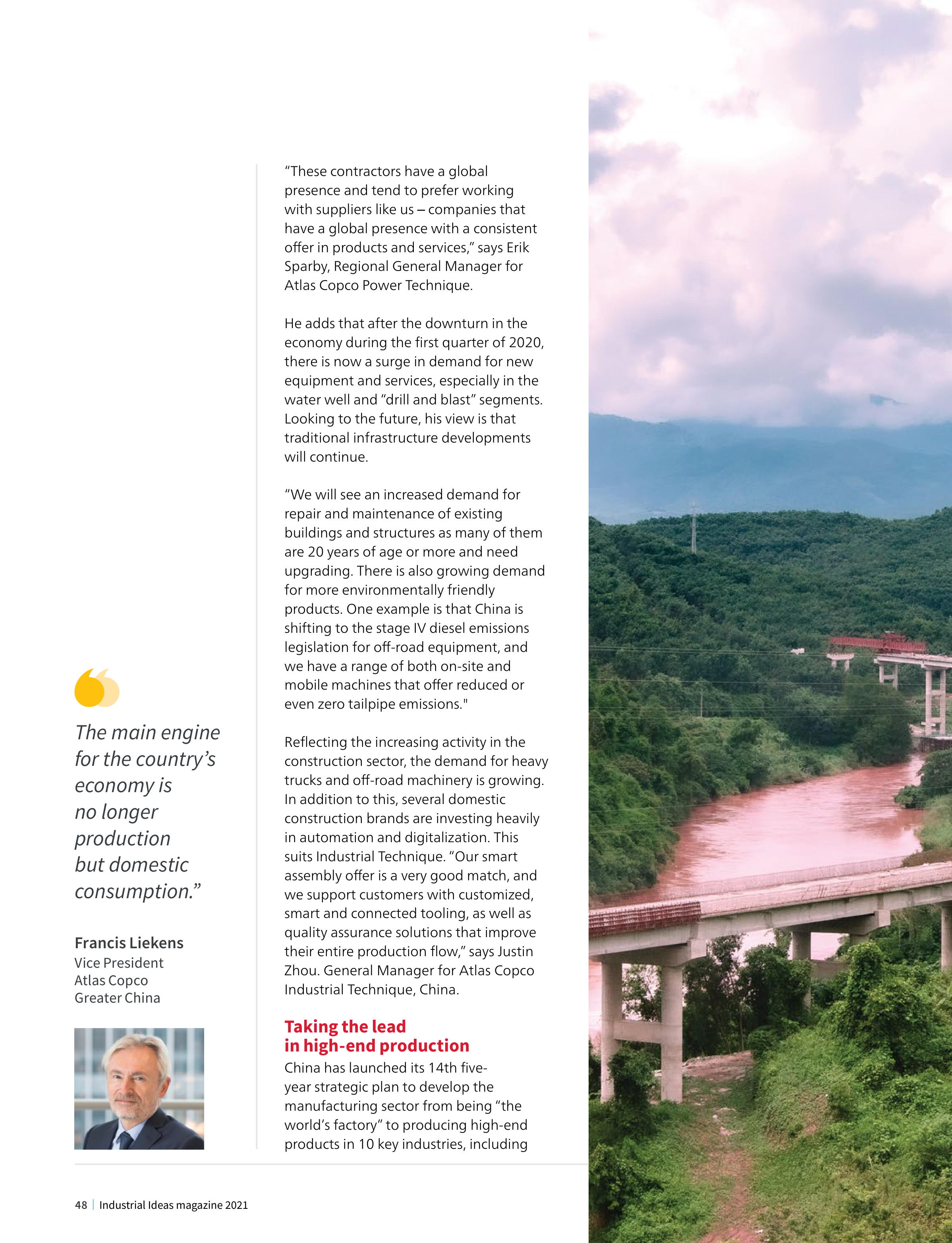


48
Industrial Ideas magazine 2021
“These contractors have a global
presence and tend to prefer working
with suppliers like us
–
companies that
have a global presence with a consistent
offer in products and services,” says Erik
Sparby, Regional General Manager for
Atlas Copco Power Technique.
He adds that after the downturn in the
economy during the first quarter of 2020,
there is now a surge in demand for new
equipment and services, especially in the
water well and “drill and blast” segments.
Looking to the future, his view is that
traditional infrastructure developments
will continue.
“We will see an increased demand for
repair and maintenance of existing
buildings and structures as many of them
are 20 years of age or more and need
upgrading. There is also growing demand
for more environmentally friendly
products. One example is that China is
shifting to the stage IV diesel emissions
legislation for off-road equipment, and
we have a range of both on-site and
mobile machines that offer reduced or
even zero tailpipe emissions."
Reflecting the increasing activity in the
construction sector, the demand for heavy
trucks and off-road machinery is growing.
In addition to this, several domestic
construction brands are investing heavily
in automation and digitalization. This
suits Industrial Technique. “Our smart
assembly offer is a very good match, and
we support customers with customized,
smart and connected tooling, as well as
quality assurance solutions that improve
their entire production flow,” says Justin
Zhou. General Manager for Atlas Copco
Industrial Technique, China.
Taking the lead
in high-end production
China has launched its 14th five-
year strategic plan to develop the
manufacturing sector from being “the
world’s factory” to producing high-end
products in 10 key industries, including
Francis Liekens
Vice President
Atlas Copco
Greater China
The main engine
for the country’s
economy is
no longer
production
but domestic
consumption.”
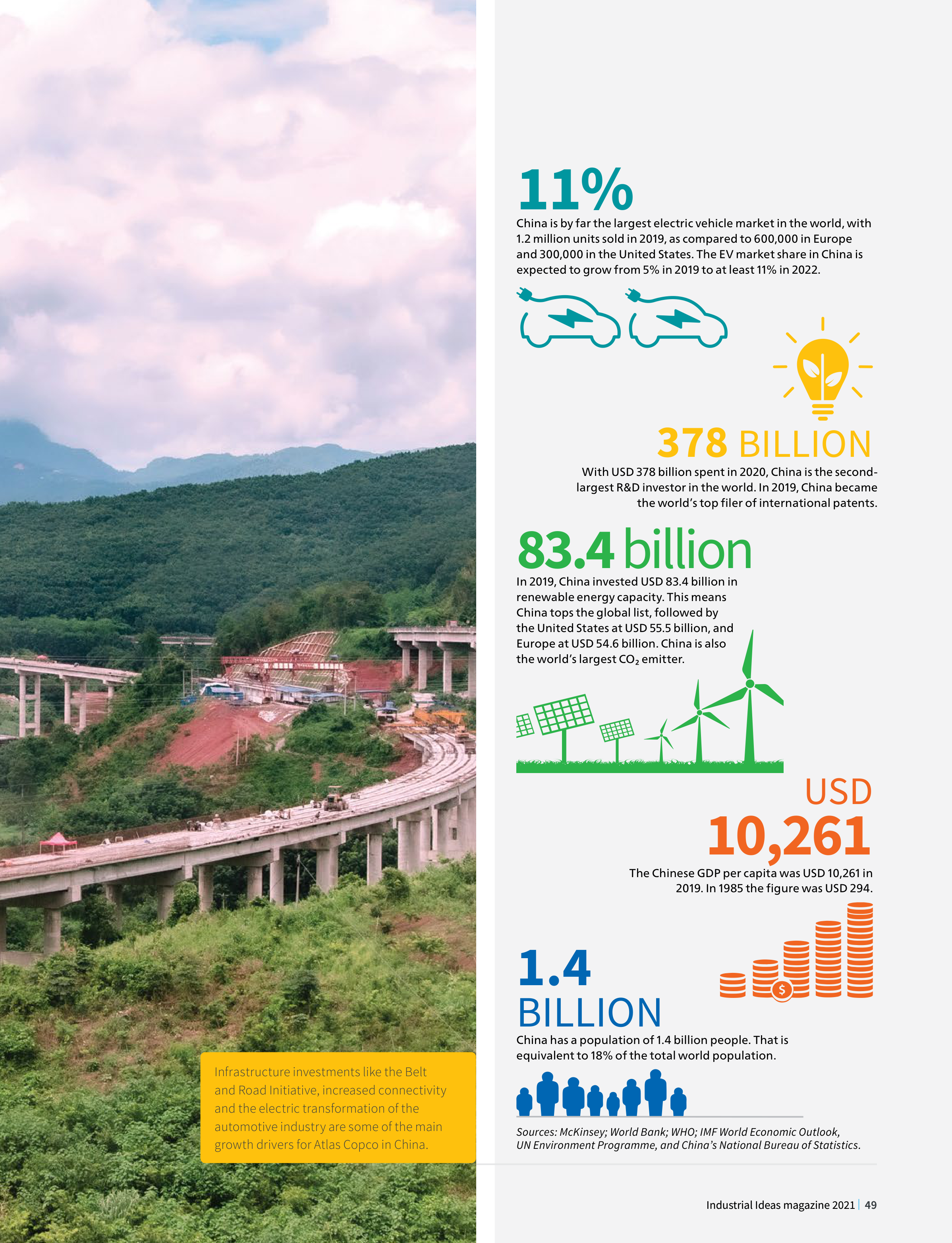

Industrial Ideas magazine 2021
49
Sources: McKinsey; World Bank; WHO; IMF World Economic Outlook,
UN Environment Programme, and China’s National Bureau of Statistics.
1.4
BILLION
China has a population of 1.4 billion people. That is
equivalent to 18% of the total world population.
China is by far the largest electric vehicle market in the world, with
1.2 million units sold in 2019, as compared to 600,000 in Europe
and 300,000 in the United States. The EV market share in China is
expected to grow from 5% in 2019 to at least 11% in 2022.
11%
In 2019, China invested USD 83.4 billion in
renewable energy capacity. This means
China tops the global list, followed by
the United States at USD 55.5 billion, and
Europe at USD 54.6 billion. China is also
the world’s largest CO₂ emitter.
83.4
billion
378
BILLION
With USD 378 billion spent in 2020, China is the second-
largest R&D investor in the world. In 2019, China became
the world’s top filer of international patents.
USD
10,261
The Chinese GDP per capita was USD 10,261 in
2019. In 1985 the figure was USD 294.
Infrastructure investments like the Belt
and Road Initiative, increased connectivity
and the electric transformation of the
automotive industry are some of the main
growth drivers for Atlas Copco in China.
Industrial Ideas magazine 2021
49
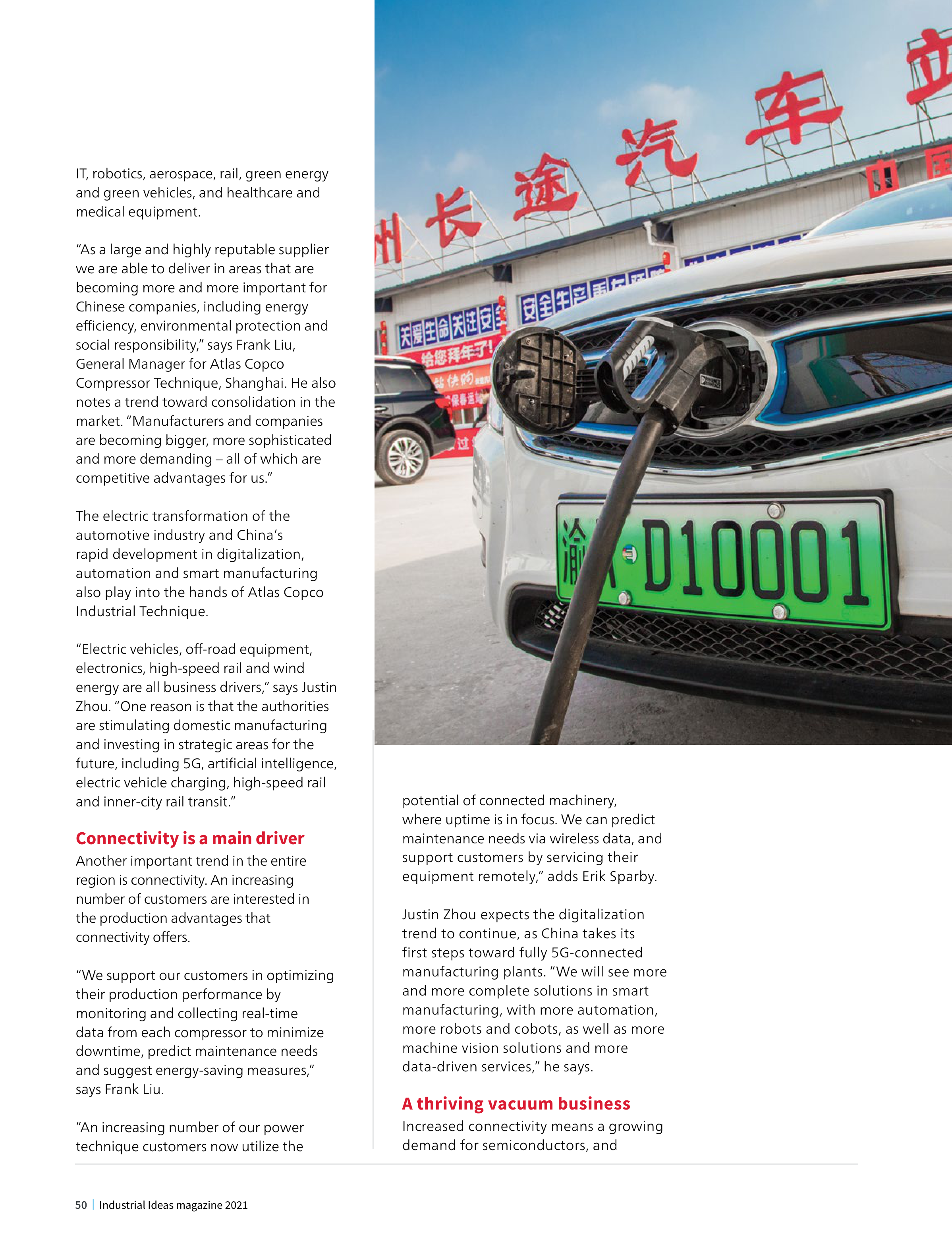
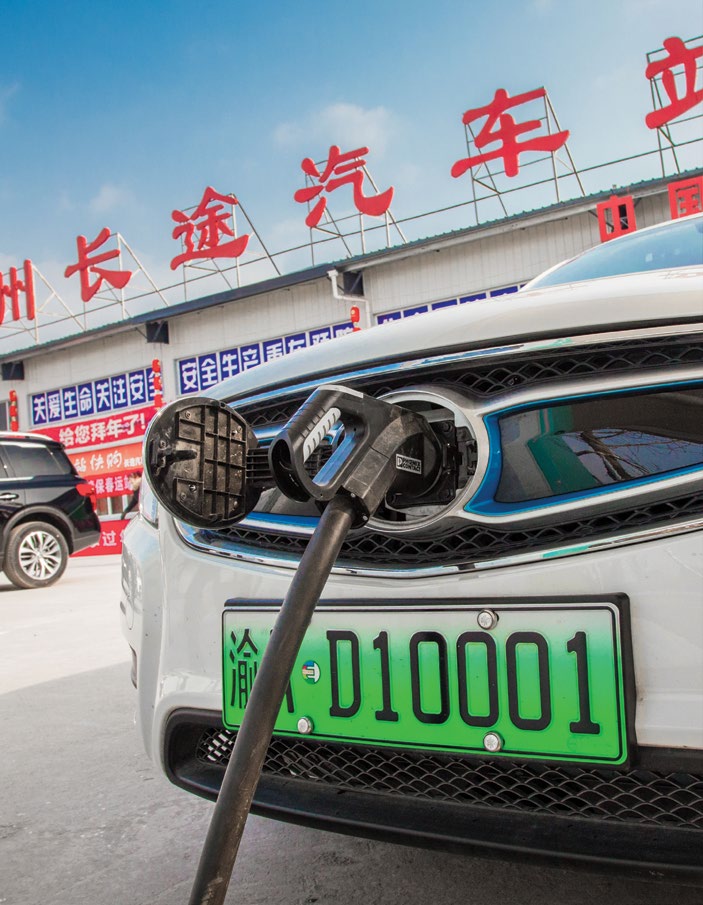
50
Industrial Ideas magazine 2021
IT, robotics, aerospace, rail, green energy
and green vehicles, and healthcare and
medical equipment.
“As a large and highly reputable supplier
we are able to deliver in areas that are
becoming more and more important for
Chinese companies, including energy
efficiency, environmental protection and
social responsibility,” says Frank Liu,
General Manager for Atlas Copco
Compressor Technique, Shanghai. He also
notes a trend toward consolidation in the
market. “Manufacturers and companies
are becoming bigger, more sophisticated
and more demanding – all of which are
competitive advantages for us.”
The electric transformation of the
automotive industry and China’s
rapid development in digitalization,
automation and smart manufacturing
also play into the hands of Atlas Copco
Industrial Technique.
“Electric vehicles, off-road equipment,
electronics, high-speed rail and wind
energy are all business drivers,” says Justin
Zhou. “One reason is that the authorities
are stimulating domestic manufacturing
and investing in strategic areas for the
future, including 5G, artificial intelligence,
electric vehicle charging, high-speed rail
and inner-city rail transit.”
Connectivity is a main driver
Another important trend in the entire
region is connectivity. An increasing
number of customers are interested in
the production advantages that
connectivity offers.
“We support our customers in optimizing
their production performance by
monitoring and collecting real-time
data from each compressor to minimize
downtime, predict maintenance needs
and suggest energy-saving measures,”
says Frank Liu.
”An increasing number of our power
technique customers now utilize the
potential of connected machinery,
where uptime is in focus. We can predict
maintenance needs via wireless data, and
support customers by servicing their
equipment remotely,” adds Erik Sparby.
Justin Zhou expects the digitalization
trend to continue, as China takes its
first steps toward fully 5G-connected
manufacturing plants. “We will see more
and more complete solutions in smart
manufacturing, with more automation,
more robots and cobots, as well as more
machine vision solutions and more
data-driven services,” he says.
A thriving vacuum business
Increased connectivity means a growing
demand for semiconductors, and
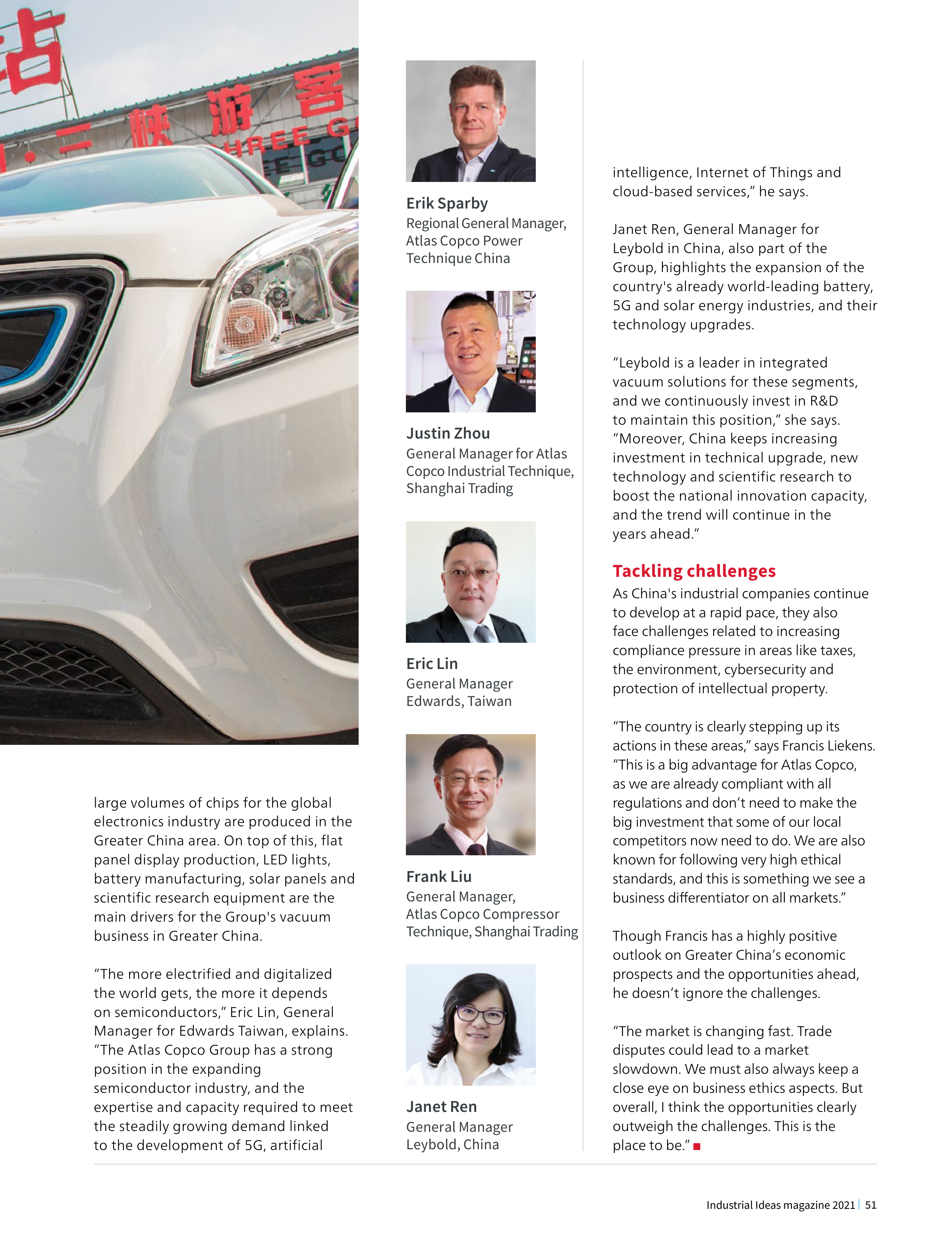
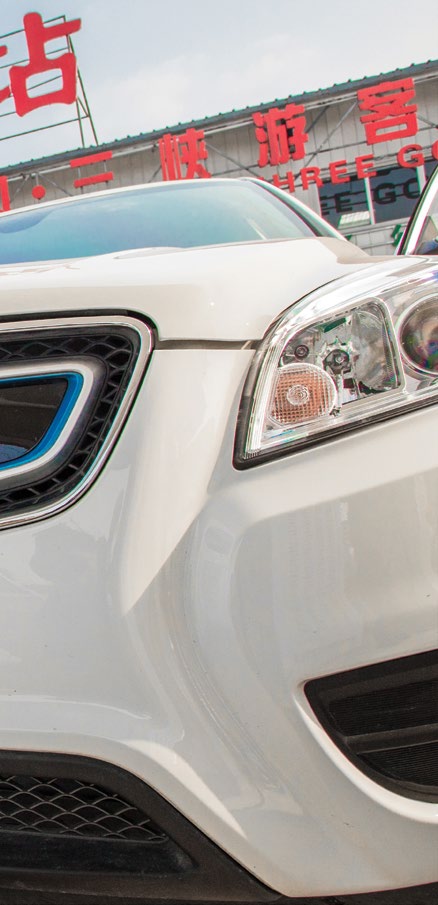


Industrial Ideas magazine 2021
51
Erik Sparby
Regional General Manager,
Atlas Copco Power
Technique China
Justin Zhou
General Manager for Atlas
Copco Industrial Technique,
Shanghai Trading
Frank Liu
General Manager,
Atlas Copco Compressor
Technique, Shanghai Trading
Eric Lin
General Manager
Edwards, Taiwan
Janet Ren
General Manager
Leybold, China
large volumes of chips for the global
electronics industry are produced in the
Greater China area. On top of this, flat
panel display production, LED lights,
battery manufacturing, solar panels and
scientific research equipment are the
main drivers for the Group's vacuum
business in Greater China.
“The more electrified and digitalized
the world gets, the more it depends
on semiconductors,” Eric Lin, General
Manager for Edwards Taiwan, explains.
“The Atlas Copco Group has a strong
position in the expanding
semiconductor industry, and the
expertise and capacity required to meet
the steadily growing demand linked
to the development of 5G, artificial
intelligence, Internet of Things and
cloud-based services,” he says
.
Janet Ren, General Manager for
Leybold in China, also part of the
Group, highlights the expansion of the
country's already world-leading battery,
5G and solar energy industries, and their
technology upgrades.
“Leybold is a leader in integrated
vacuum solutions for these segments,
and we continuously invest in R&D
to maintain this position,” she says.
“Moreover, China keeps increasing
investment in technical upgrade, new
technology and scientific research to
boost the national innovation capacity,
and the trend will continue in the
years ahead.”
Tackling challenges
As China's industrial companies continue
to develop at a rapid pace, they also
face challenges related to increasing
compliance pressure in areas like taxes,
the environment, cybersecurity and
protection of intellectual property.
“The country is clearly stepping up its
actions in these areas,” says Francis Liekens.
“This is a big advantage for Atlas Copco,
as we are already compliant with all
regulations and don’t need to make the
big investment that some of our local
competitors now need to do. We are also
known for following very high ethical
standards, and this is something we see a
business differentiator on all markets.”
Though Francis has a highly positive
outlook on Greater China’s economic
prospects and the opportunities ahead,
he doesn’t ignore the challenges.
“The market is changing fast. Trade
disputes could lead to a market
slowdown. We must also always keep a
close eye on business ethics aspects. But
overall, I think the opportunities clearly
outweigh the challenges. This is the
place to be.”
n


52
Industrial Ideas magazine 2021
I
n fact, the progression of rock music as a whole was
enabled by production of the valve amp, and Edwards,
now part of the Atlas Copco Group, was already involved
in producing valves in the 1930s. Valves, or vacuum tubes,
were by far the dominant active electronic component in
most instrument amplifier applications until the 1970s,
when solid-state semiconductors (transistors) started
taking over.
Jimi Hendrix loved the depth and warmth that transistor-
based amps couldn’t deliver. In fact, nothing screams
audiophile authority like a valve (or tube) amp, and even
today there is a niche of purists who continue to specialize
in building them.
Jimi Hendrix, iconic rock figure of the
60s, was one of the most renowned
and innovative guitarists of his day. His
innovation was made possible by the
development of the guitar amp.
Setting
THE TONE
52
Industrial Ideas magazine 2021
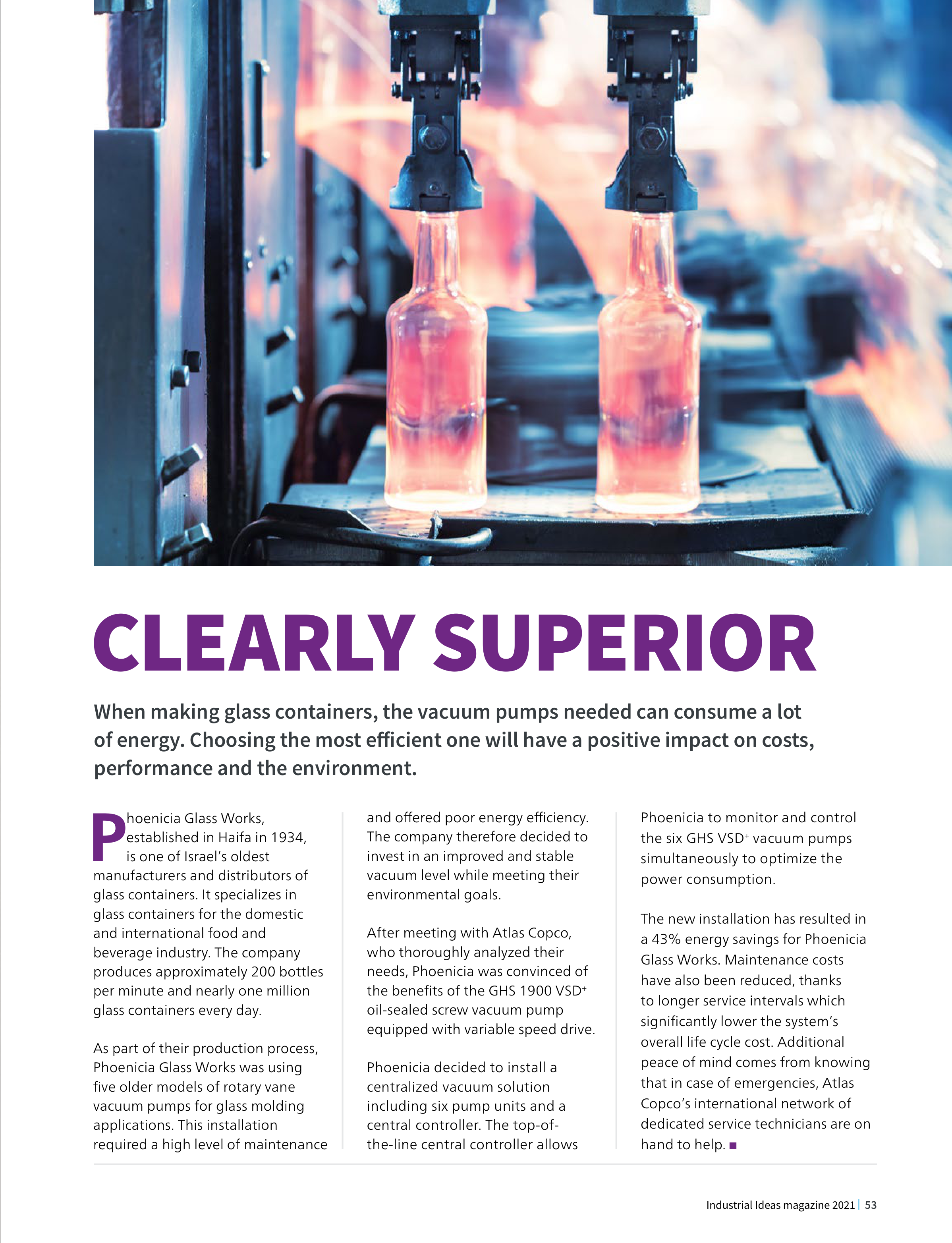

Industrial Ideas magazine 2021
53
P
hoenicia Glass Works,
established in Haifa in 1934,
is one of Israel’s oldest
manufacturers and distributors of
glass containers. It specializes in
glass containers for the domestic
and international food and
beverage industry. The company
produces approximately 200 bottles
per minute and nearly one million
glass containers every day.
As part of their production process,
Phoenicia Glass Works was using
five older models of rotary vane
vacuum pumps for glass molding
applications. This installation
required a high level of maintenance
and offered poor energy efficiency.
The company therefore decided to
invest in an improved and stable
vacuum level while meeting their
environmental goals.
After meeting with Atlas Copco,
who thoroughly analyzed their
needs, Phoenicia was convinced of
the benefits of the GHS 1900 VSD
+
oil-sealed screw vacuum pump
equipped with variable speed drive.
Phoenicia decided to install a
centralized vacuum solution
including six pump units and a
central controller. The top-of-
the-line central controller allows
CLEARLY SUPERIOR
When making glass containers, the vacuum pumps needed can consume a lot
of energy. Choosing the most efficient one will have a positive impact on costs,
performance and the environment.
Phoenicia to monitor and control
the six GHS VSD
+
vacuum pumps
simultaneously to optimize the
power consumption.
The new installation has resulted in
a 43% energy savings for Phoenicia
Glass Works. Maintenance costs
have also been reduced, thanks
to longer service intervals which
significantly lower the system’s
overall life cycle cost. Additional
peace of mind comes from knowing
that in case of emergencies, Atlas
Copco’s international network of
dedicated service technicians are on
hand to help.
n


54
Industrial Ideas magazine 2021
A pilot project for rail freight between Atlas Copco’s
industrial vacuum production facility in Germany and its
counterpart in China shows that rail transport
can balance costs, speed and sustainability better
than air and ocean freight.
54
Industrial Ideas magazine 2021


Industrial Ideas magazine 2021
55
Atlas Copco’s commitment to growing in the
right way underpins the green logistics strategy
of the Group’s Industrial Vacuum division.
But there’s always a challenge to balance fast
deliveries, transportation costs and minimal
environmental impact.
Leybold, a leading vacuum producer based in
Cologne, Germany, sends heavy pumps weighing
more than 150 kilograms, plus semi-finished parts
such as components and rotors, to Tianjin, China,
for local production and distribution. Although
air cargo transports are quickest, at 10 days or
less, the growing volumes to the Far East meant
planes had become unsustainable, as Alexander
Irchin, Logistics Manager, Atlas Copco Vacuum
Technique, explains.
“We wanted to move away from using air freight
as rail transportation is more economical. We
were also concerned about the high levels of CO
2
emissions produced through air transportation.”
Finding a new way
China’s heavy investment in the Belt and
Road infrastructure project across Asia, and
in the German port of Duisburg, has been a
game changer for rail travel between China and
Europe. Leybold therefore decided to make a rail
freight pilot.
The "Lighthouse project" began in mid-2019,
when 20 full container loads were sent by
rail nearly 8 000 kilometers from Germany to
China. In 2020, Leybold sent 74 containers of
Rail cargo to Shanghai and Tianjin. The flow
is arranged so that the full container load first
Industrial Ideas magazine 2021
55
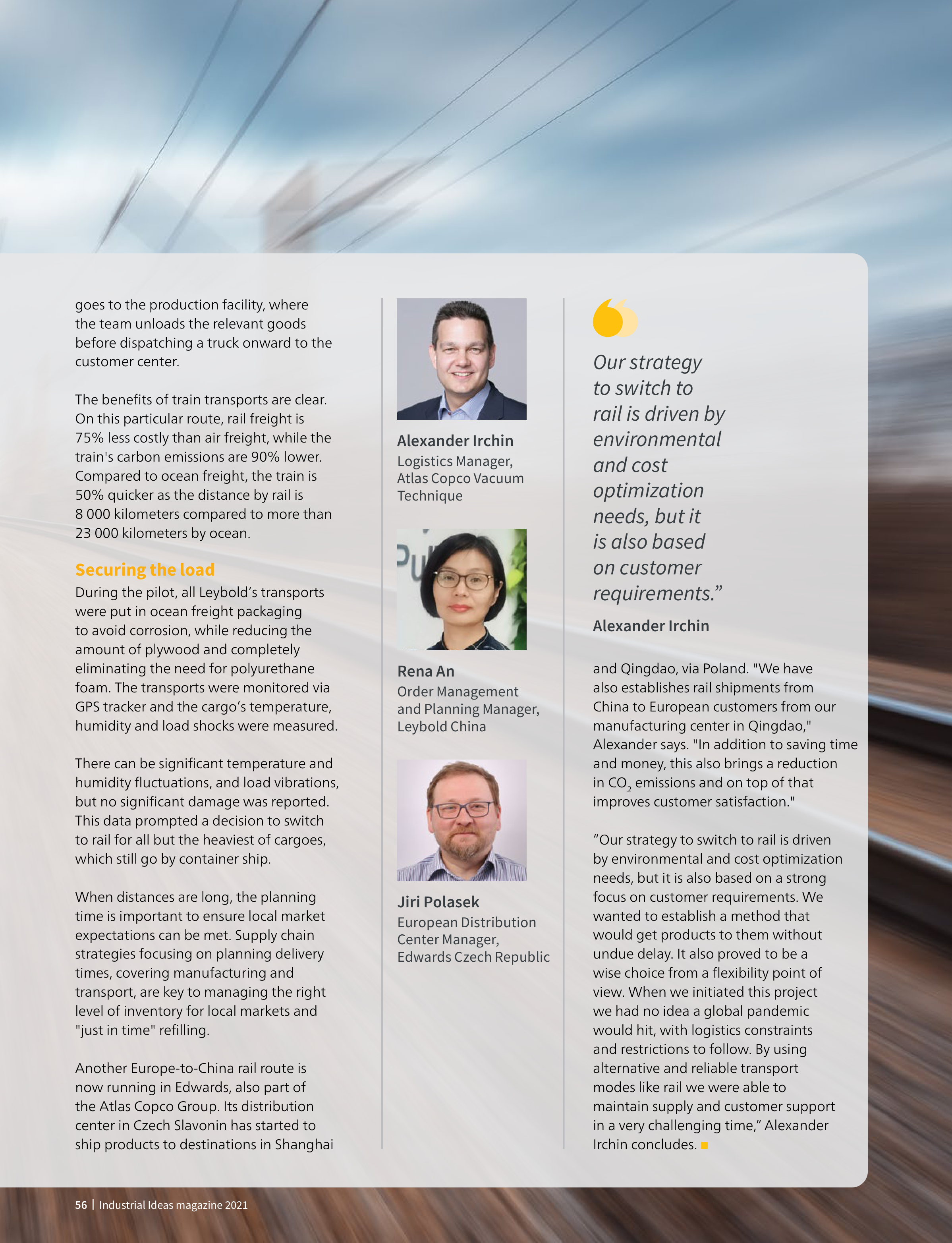




56
Industrial Ideas magazine 2021
Alexander Irchin
Logistics Manager,
Atlas Copco Vacuum
Technique
Rena An
Order Management
and Planning Manager,
Leybold China
Jiri Polasek
European Distribution
Center Manager,
Edwards Czech Republic
goes to the production facility, where
the team unloads the relevant goods
before dispatching a truck onward to the
customer center.
The benefits of train transports are clear.
On this particular route, rail freight is
75% less costly than air freight, while the
train's carbon emissions are 90% lower.
Compared to ocean freight, the train is
50% quicker as the distance by rail is
8 000 kilometers compared to more than
23 000 kilometers by ocean.
Securing the load
During the pilot, all Leybold’s transports
were put in ocean freight packaging
to avoid corrosion, while reducing the
amount of plywood and completely
eliminating the need for polyurethane
foam. The transports were monitored via
GPS tracker and the cargo’s temperature,
humidity and load shocks were measured.
There can be significant temperature and
humidity fluctuations, and load vibrations,
but no significant damage was reported.
This data prompted a decision to switch
to rail for all but the heaviest of cargoes,
which still go by container ship.
When distances are long, the planning
time is important to ensure local market
expectations can be met. Supply chain
strategies focusing on planning delivery
times, covering manufacturing and
transport, are key to managing the right
level of inventory for local markets and
"just in time" refilling.
Another Europe-to-China rail route is
now running in Edwards, also part of
the Atlas Copco Group. Its distribution
center in Czech Slavonin has started to
ship products to destinations in Shanghai
and Qingdao, via Poland. "We have
also establishes rail shipments from
China to European customers from our
manufacturing center in Qingdao,"
Alexander says. "In addition to saving time
and money, this also brings a reduction
in CO
2
emissions and on top of that
improves customer satisfaction."
“Our strategy to switch to rail is driven
by environmental and cost optimization
needs, but it is also based on a strong
focus on customer requirements. We
wanted to establish a method that
would get products to them without
undue delay. It also proved to be a
wise choice from a flexibility point of
view. When we initiated this project
we had no idea a global pandemic
would hit, with logistics constraints
and restrictions to follow. By using
alternative and reliable transport
modes like rail we were able to
maintain supply and customer support
in a very challenging time,” Alexander
Irchin concludes.
n
Alexander Irchin
Our strategy
to switch to
rail is driven by
environmental
and cost
optimization
needs, but it
is also based
on customer
requirements.”
56
Industrial Ideas magazine 2021
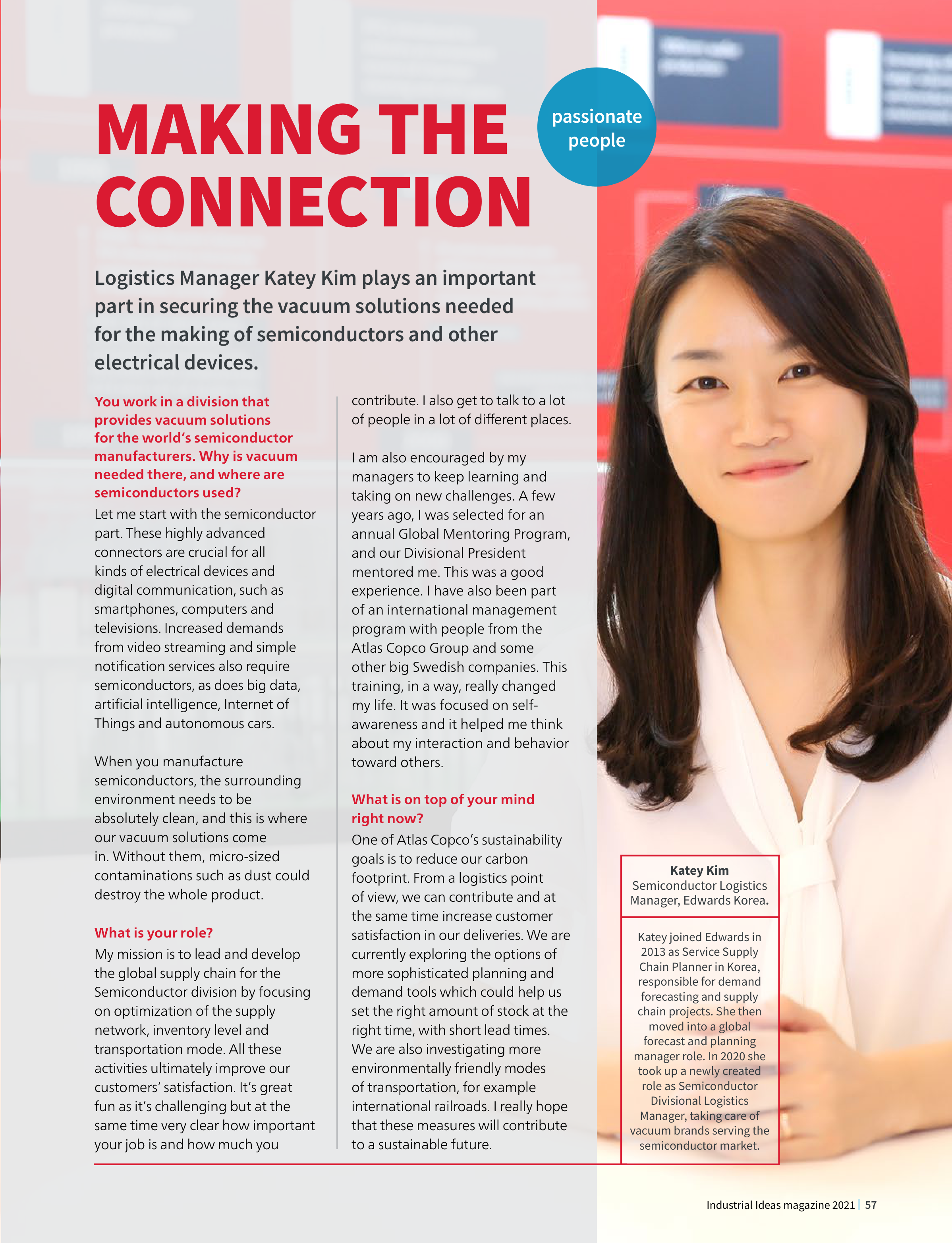

Industrial Ideas magazine 2021
57
contribute. I also get to talk to a lot
of people in a lot of different places.
I am also encouraged by my
managers to keep learning and
taking on new challenges. A few
years ago, I was selected for an
annual Global Mentoring Program,
and our Divisional President
mentored me. This was a good
experience. I have also been part
of an international management
program with people from the
Atlas Copco Group and some
other big Swedish companies. This
training, in a way, really changed
my life. It was focused on self-
awareness and it helped me think
about my interaction and behavior
toward others.
What is on top of your mind
right now?
One of Atlas Copco’s sustainability
goals is to reduce our carbon
footprint. From a logistics point
of view, we can contribute and at
the same time increase customer
satisfaction in our deliveries. We are
currently exploring the options of
more sophisticated planning and
demand tools which could help us
set the right amount of stock at the
right time, with short lead times.
We are also investigating more
environmentally friendly modes
of transportation, for example
international railroads. I really hope
that these measures will contribute
to a sustainable future.
You work in a division that
provides vacuum solutions
for the world’s semiconductor
manufacturers. Why is vacuum
needed there, and where are
semiconductors used?
Let me start with the semiconductor
part. These highly advanced
connectors are crucial for all
kinds of electrical devices and
digital communication, such as
smartphones, computers and
televisions. Increased demands
from video streaming and simple
notification services also require
semiconductors, as does big data,
artificial intelligence, Internet of
Things and autonomous cars.
When you manufacture
semiconductors, the surrounding
environment needs to be
absolutely clean, and this is where
our vacuum solutions come
in. Without them, micro-sized
contaminations such as dust could
destroy the whole product.
What is your role?
My mission is to lead and develop
the global supply chain for the
Semiconductor division by focusing
on optimization of the supply
network, inventory level and
transportation mode. All these
activities ultimately improve our
customers’ satisfaction. It’s great
fun as it’s challenging but at the
same time very clear how important
your job is and how much you
Logistics Manager Katey Kim plays an important
part in securing the vacuum solutions needed
for the making of semiconductors and other
electrical devices.
MAKING THE
CONNECTION
passionate
people
Katey Kim
Semiconductor Logistics
Manager, Edwards Korea
.
Katey joined Edwards in
2013 as Service Supply
Chain Planner in Korea,
responsible for demand
forecasting and supply
chain projects. She then
moved into a global
forecast and planning
manager role. In 2020 she
took up a newly created
role as Semiconductor
Divisional Logistics
Manager, taking care of
vacuum brands serving the
semiconductor market.
Industrial Ideas magazine 2021
57
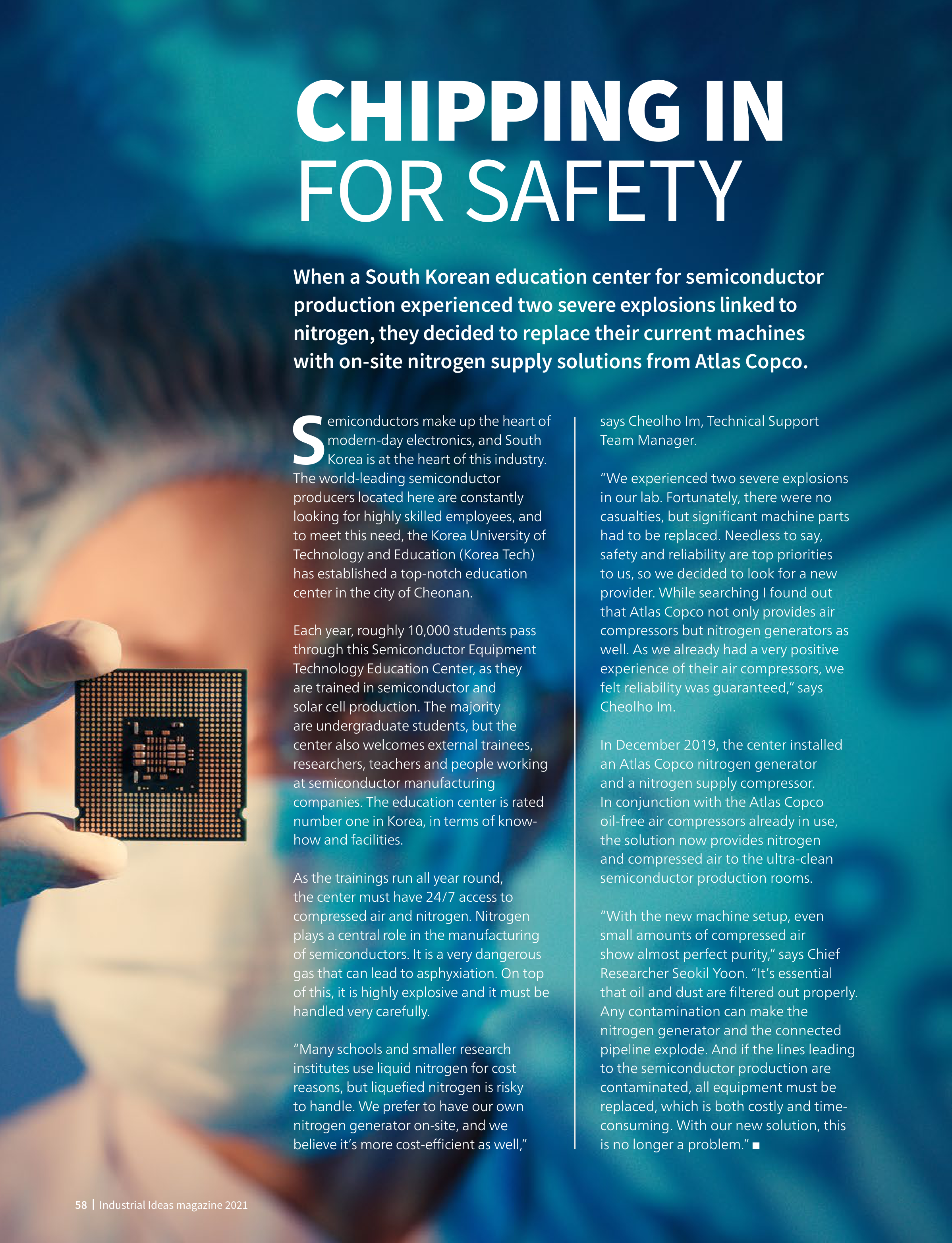

58
Industrial Ideas magazine 2021
S
emiconductors make up the heart of
modern-day electronics, and South
Korea is at the heart of this industry.
The world-leading semiconductor
producers located here are constantly
looking for highly skilled employees, and
to meet this need, the Korea University of
Technology and Education (Korea Tech)
has established a top-notch education
center in the city of Cheonan.
Each year, roughly 10,000 students pass
through this Semiconductor Equipment
Technology Education Center, as they
are trained in semiconductor and
solar cell production. The majority
are undergraduate students, but the
center also welcomes external trainees,
researchers, teachers and people working
at semiconductor manufacturing
companies. The education center is rated
number one in Korea, in terms of know-
how and facilities.
As the trainings run all year round,
the center must have 24/7 access to
compressed air and nitrogen. Nitrogen
plays a central role in the manufacturing
of semiconductors. It is a very dangerous
gas that can lead to asphyxiation. On top
of this, it is highly explosive and it must be
handled very carefully.
“Many schools and smaller research
institutes use liquid nitrogen for cost
reasons, but liquefied nitrogen is risky
to handle. We prefer to have our own
nitrogen generator on-site, and we
believe it’s more cost-efficient as well,”
says Cheolho Im, Technical Support
Team Manager.
“We experienced two severe explosions
in our lab. Fortunately, there were no
casualties, but significant machine parts
had to be replaced. Needless to say,
safety and reliability are top priorities
to us, so we decided to look for a new
provider. While searching I found out
that Atlas Copco not only provides air
compressors but nitrogen generators as
well. As we already had a very positive
experience of their air compressors, we
felt reliability was guaranteed,” says
Cheolho Im.
In December 2019, the center installed
an Atlas Copco nitrogen generator
and a nitrogen supply compressor.
In conjunction with the Atlas Copco
oil-free air compressors already in use,
the solution now provides nitrogen
and compressed air to the ultra-clean
semiconductor production rooms.
“With the new machine setup, even
small amounts of compressed air
show almost perfect purity,” says Chief
Researcher Seokil Yoon. “It’s essential
that oil and dust are filtered out properly.
Any contamination can make the
nitrogen generator and the connected
pipeline explode. And if the lines leading
to the semiconductor production are
contaminated, all equipment must be
replaced, which is both costly and time-
consuming. With our new solution, this
is no longer a problem.”
n
CHIPPING IN
FOR SAFETY
When a South Korean education center for semiconductor
production experienced two severe explosions linked to
nitrogen, they decided to replace their current machines
with on-site nitrogen supply solutions from Atlas Copco.
58
Industrial Ideas magazine 2021
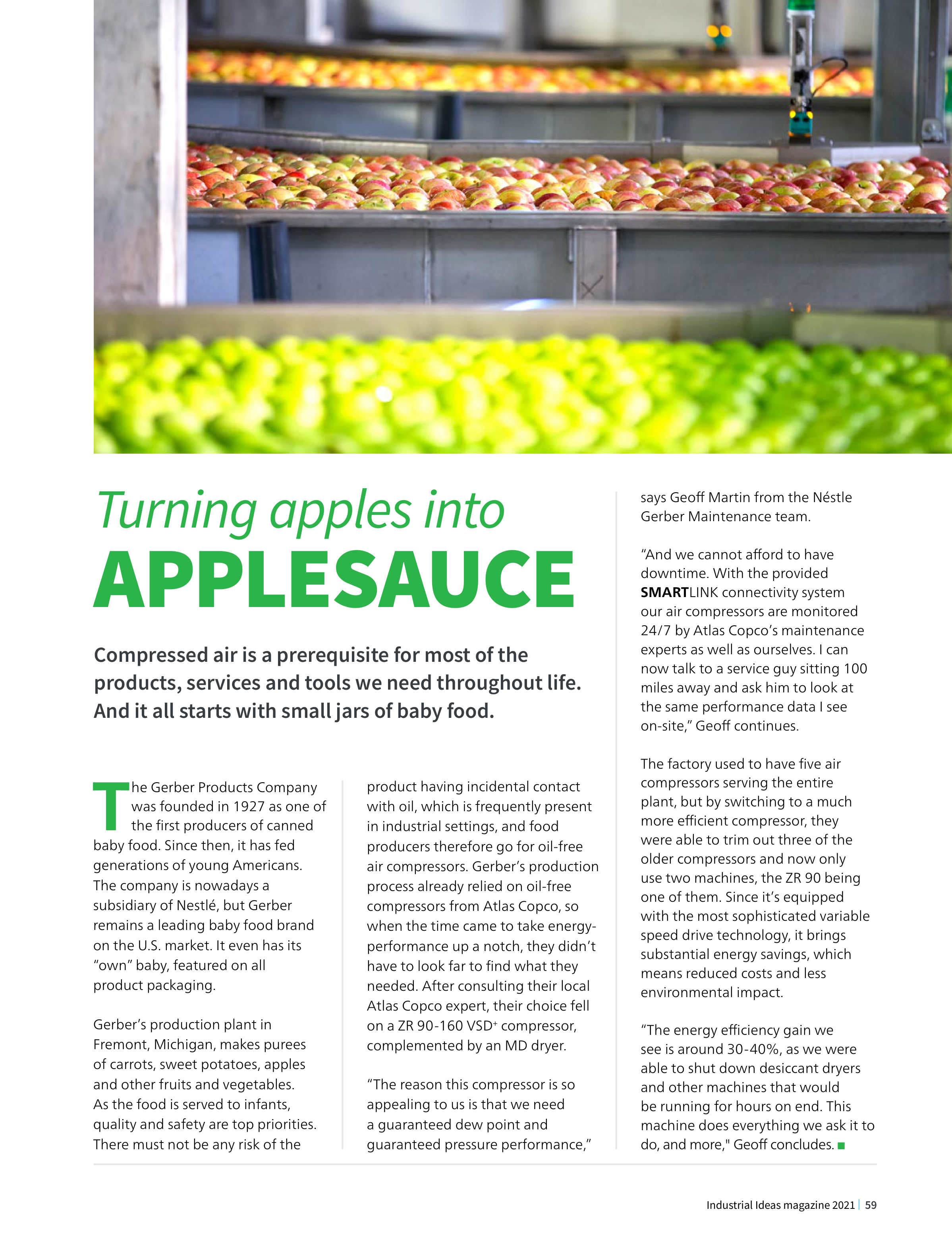
Industrial Ideas magazine 2021
59
Turning apples into
APPLESAUCE
T
he Gerber Products Company
was founded in 1927 as one of
the first producers of canned
baby food. Since then, it has fed
generations of young Americans.
The company is nowadays a
subsidiary of Nestlé, but Gerber
remains a leading baby food brand
on the U.S. market. It even has its
“own” baby, featured on all
product packaging.
Gerber’s production plant in
Fremont, Michigan, makes purees
of carrots, sweet potatoes, apples
and other fruits and vegetables.
As the food is served to infants,
quality and safety are top priorities.
There must not be any risk of the
product having incidental contact
with oil, which is frequently present
in industrial settings, and food
producers therefore go for oil-free
air compressors. Gerber’s production
process already relied on oil-free
compressors from Atlas Copco, so
when the time came to take energy-
performance up a notch, they didn’t
have to look far to find what they
needed. After consulting their local
Atlas Copco expert, their choice fell
on a ZR 90-160 VSD
+
compressor,
complemented by an MD dryer.
“The reason this compressor is so
appealing to us is that we need
a guaranteed dew point and
guaranteed pressure performance,”
Compressed air is a prerequisite for most of the
products, services and tools we need throughout life.
And it all starts with small jars of baby food.
says Geoff Martin from the Néstle
Gerber Maintenance team.
“And we cannot afford to have
downtime. With the provided
SMART
LINK
connectivity system
our air compressors are monitored
24/7 by Atlas Copco’s maintenance
experts as well as ourselves. I can
now talk to a service guy sitting 100
miles away and ask him to look at
the same performance data I see
on-site,” Geoff continues.
The factory used to have five air
compressors serving the entire
plant, but by switching to a much
more efficient compressor, they
were able to trim out three of the
older compressors and now only
use two machines, the ZR 90 being
one of them. Since it’s equipped
with the most sophisticated variable
speed drive technology, it brings
substantial energy savings, which
means reduced costs and less
environmental impact.
“The energy efficiency gain we
see is around 30-40%, as we were
able to shut down desiccant dryers
and other machines that would
be running for hours on end. This
machine does everything we ask it to
do, and more," Geoff concludes.
n


60
Industrial Ideas magazine 2021
Our Water for All initiative supports communities with
limited access to clean water, to prevent acute health
risks and help people build a better future.
Water for All, Atlas Copco’s main community engagement initiative, was founded
in 1984 by a group of employees who wanted to help a community in Peru drill
for water to survive a serious drought. Since then the initiative has grown and
there are now more than 50 local Water for All teams who volunteer to support
projects ranging from small wells to sewer systems for entire villages.
The funding is based on employee donations and the company contributes twice
that amount. So far, Water for All has helped more than two million people get
access to clean water and hygiene facilities. Here you meet two of the many
dedicated supporters.
CHANGES LIVES
Women and young girls are particularly affected by water scarcity as they often must
walk long distances to fetch clean water for their families every day. If the village gets a
local well or water supply system, these girls can instead go to school or spend their time
establishing a thriving business. This has a positive effect on the entire community.
Clean water
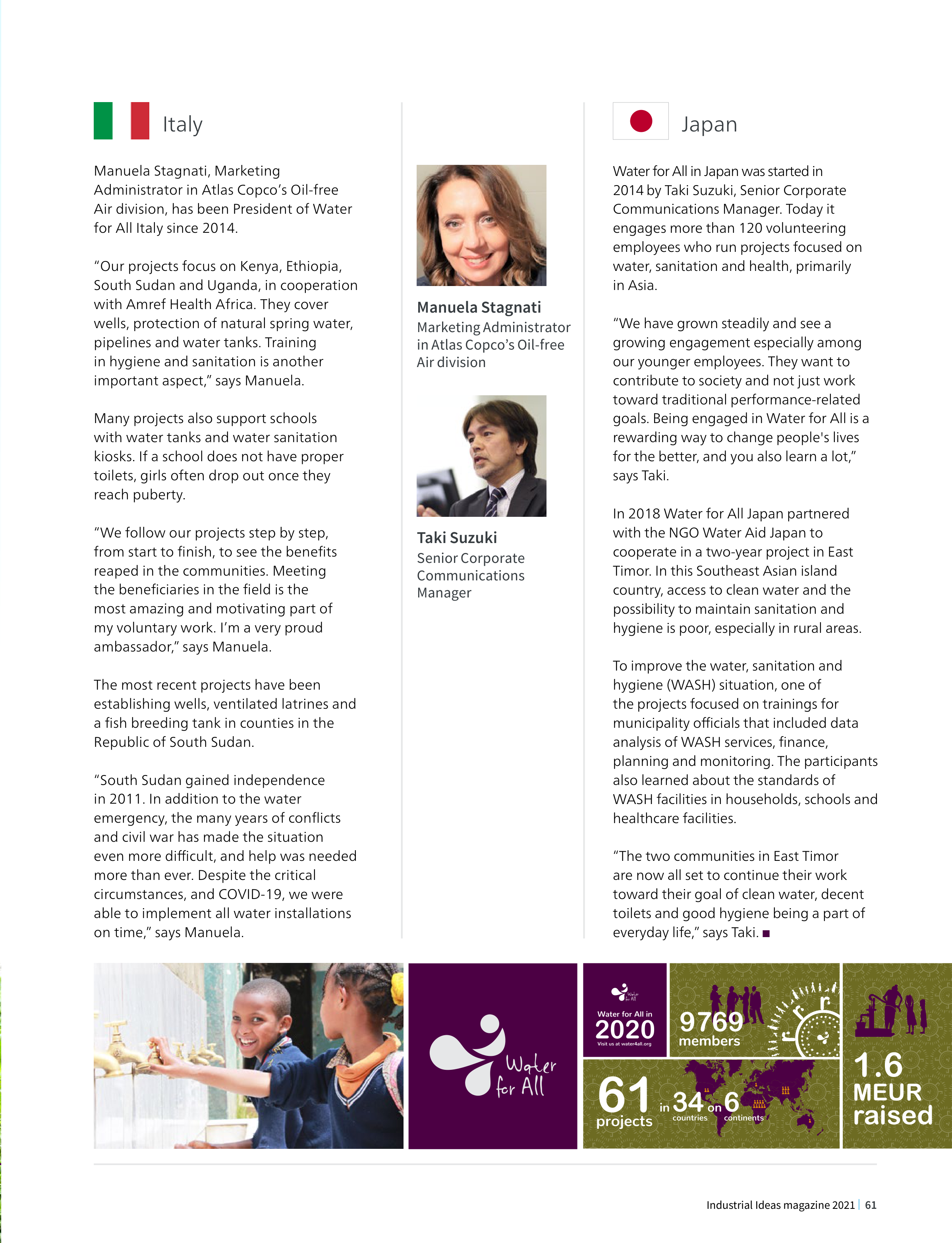





Industrial Ideas magazine 2021
61
2020
9769
61
34
6
1.6
MEUR
raised
Italy
Japan
Manuela Stagnati, Marketing
Administrator in Atlas Copco’s Oil-free
Air division, has been President of Water
for All Italy since 2014.
“Our projects focus on Kenya, Ethiopia,
South Sudan and Uganda, in cooperation
with Amref Health Africa. They cover
wells, protection of natural spring water,
pipelines and water tanks. Training
in hygiene and sanitation is another
important aspect,” says Manuela.
Many projects also support schools
with water tanks and water sanitation
kiosks. If a school does not have proper
toilets, girls often drop out once they
reach puberty.
“We follow our projects step by step,
from start to finish, to see the benefits
reaped in the communities. Meeting
the beneficiaries in the field is the
most amazing and motivating part of
my voluntary work. I’m a very proud
ambassador,” says Manuela.
The most recent projects have been
establishing wells, ventilated latrines and
a fish breeding tank in counties in the
Republic of South Sudan.
“South Sudan gained independence
in 2011. In addition to the water
emergency, the many years of conflicts
and civil war has made the situation
even more difficult, and help was needed
more than ever. Despite the critical
circumstances, and COVID-19, we were
able to implement all water installations
on time,” says Manuela.
Water for All in Japan was started in
2014 by Taki Suzuki, Senior Corporate
Communications Manager. Today it
engages more than 120 volunteering
employees who run projects focused on
water, sanitation and health, primarily
in Asia.
“We have grown steadily and see a
growing engagement especially among
our younger employees. They want to
contribute to society and not just work
toward traditional performance-related
goals. Being engaged in Water for All is a
rewarding way to change people's lives
for the better, and you also learn a lot,”
says Taki.
In 2018 Water for All Japan partnered
with the NGO Water Aid Japan to
cooperate in a two-year project in East
Timor. In this Southeast Asian island
country, access to clean water and the
possibility to maintain sanitation and
hygiene is poor, especially in rural areas.
To improve the water, sanitation and
hygiene (WASH) situation, one of
the projects focused on trainings for
municipality officials that included data
analysis of WASH services, finance,
planning and monitoring. The participants
also learned about the standards of
WASH facilities in households, schools and
healthcare facilities.
“The two communities in East Timor
are now all set to continue their work
toward their goal of clean water, decent
toilets and good hygiene being a part of
everyday life,” says Taki.
n
Manuela Stagnati
Marketing Administrator
in Atlas Copco’s Oil-free
Air division
Taki Suzuki
Senior Corporate
Communications
Manager
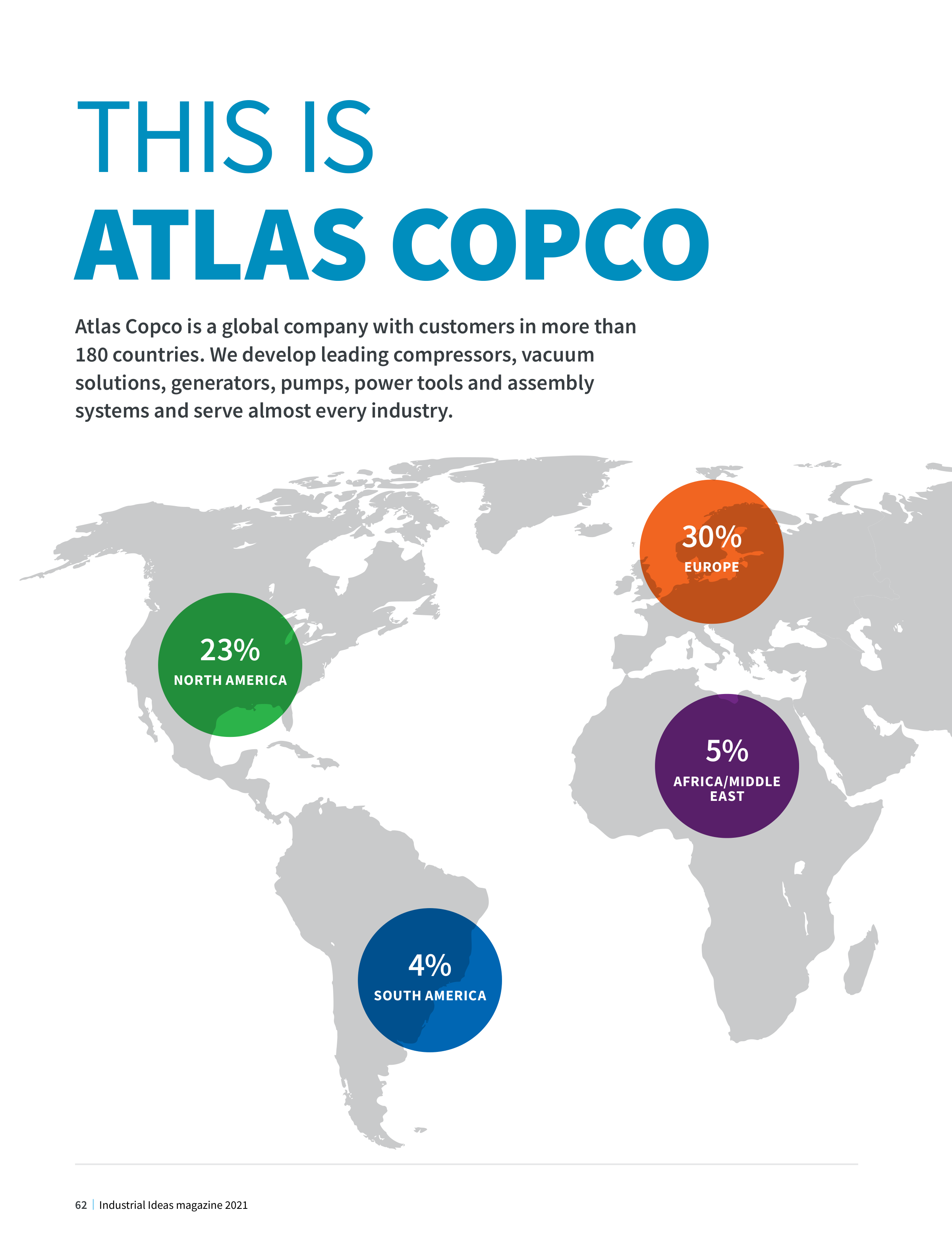
62
Industrial Ideas magazine 2021
Atlas Copco is a global company with customers in more than
180 countries. We develop leading compressors, vacuum
solutions, generators, pumps, power tools and assembly
systems and serve almost every industry.
NORTH AMERICA
23%
SOUTH AMERICA
4%
EUROPE
30%
AFRICA/MIDDLE
EAST
5%
THIS IS
ATLAS COPCO
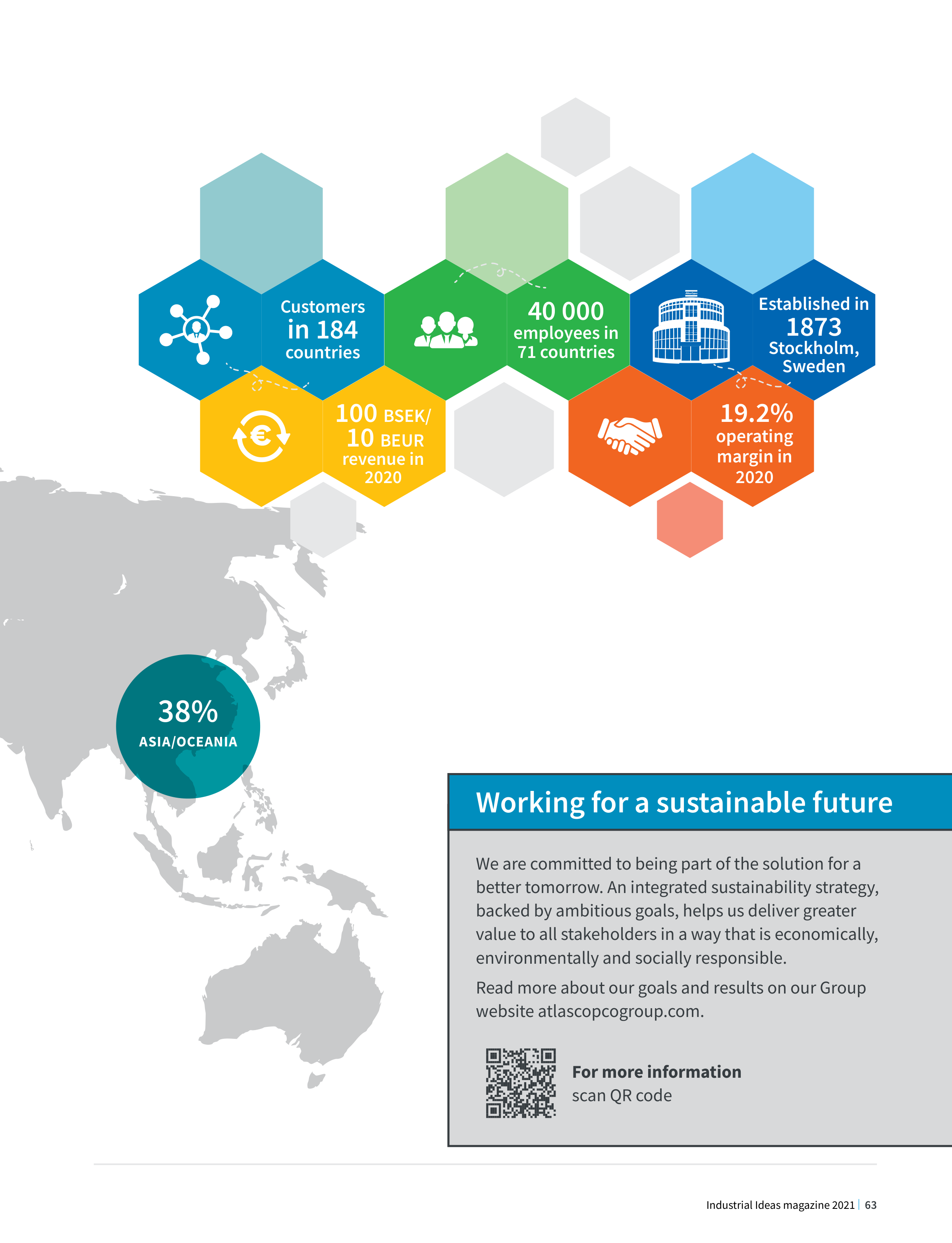
Industrial Ideas magazine 2021
63
ASIA/OCEANIA
38%
Customers
in 184
countries
100
BSEK/
10
BEUR
revenue in
2020
40 000
employees in
71 countries
Established in
1873
Stockholm,
Sweden
19.2%
operating
margin in
2020
Working for a sustainable future
We are committed to being part of the solution for a
better tomorrow. An integrated sustainability strategy,
backed by ambitious goals, helps us deliver greater
value to all stakeholders in a way that is economically,
environmentally and socially responsible.
Read more about our goals and results on our Group
website atlascopcogroup.com.
For more information
scan QR code
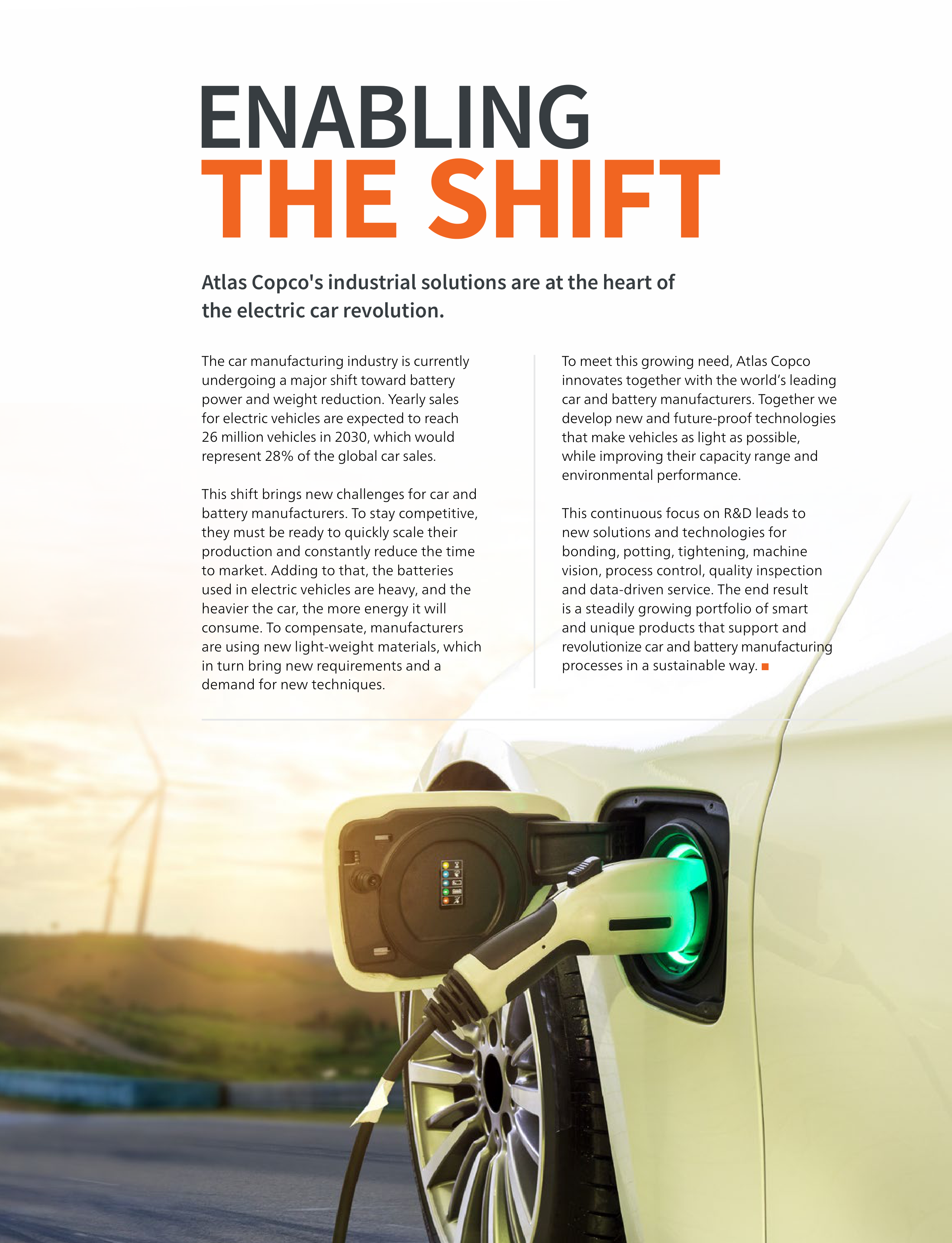

THE SHIFT
ENABLING
The car manufacturing industry is currently
undergoing a major shift toward battery
power and weight reduction. Yearly sales
for electric vehicles are expected to reach
26 million vehicles in 2030, which would
represent 28% of the global car sales.
This shift brings new challenges for car and
battery manufacturers. To stay competitive,
they must be ready to quickly scale their
production and constantly reduce the time
to market. Adding to that, the batteries
used in electric vehicles are heavy, and the
heavier the car, the more energy it will
consume. To compensate, manufacturers
are using new light-weight materials, which
in turn bring new requirements and a
demand for new techniques.
To meet this growing need, Atlas Copco
innovates together with the world’s leading
car and battery manufacturers. Together we
develop new and future-proof technologies
that make vehicles as light as possible,
while improving their capacity range and
environmental performance.
This continuous focus on R&D leads to
new solutions and technologies for
bonding, potting, tightening, machine
vision, process control, quality inspection
and data-driven service. The end result
is a steadily growing portfolio of smart
and unique products that support and
revolutionize car and battery manufacturing
processes in a sustainable way.
n
Atlas Copco's industrial solutions are at the heart of
the electric car revolution.