98
140 YEARS OF INNOVATION
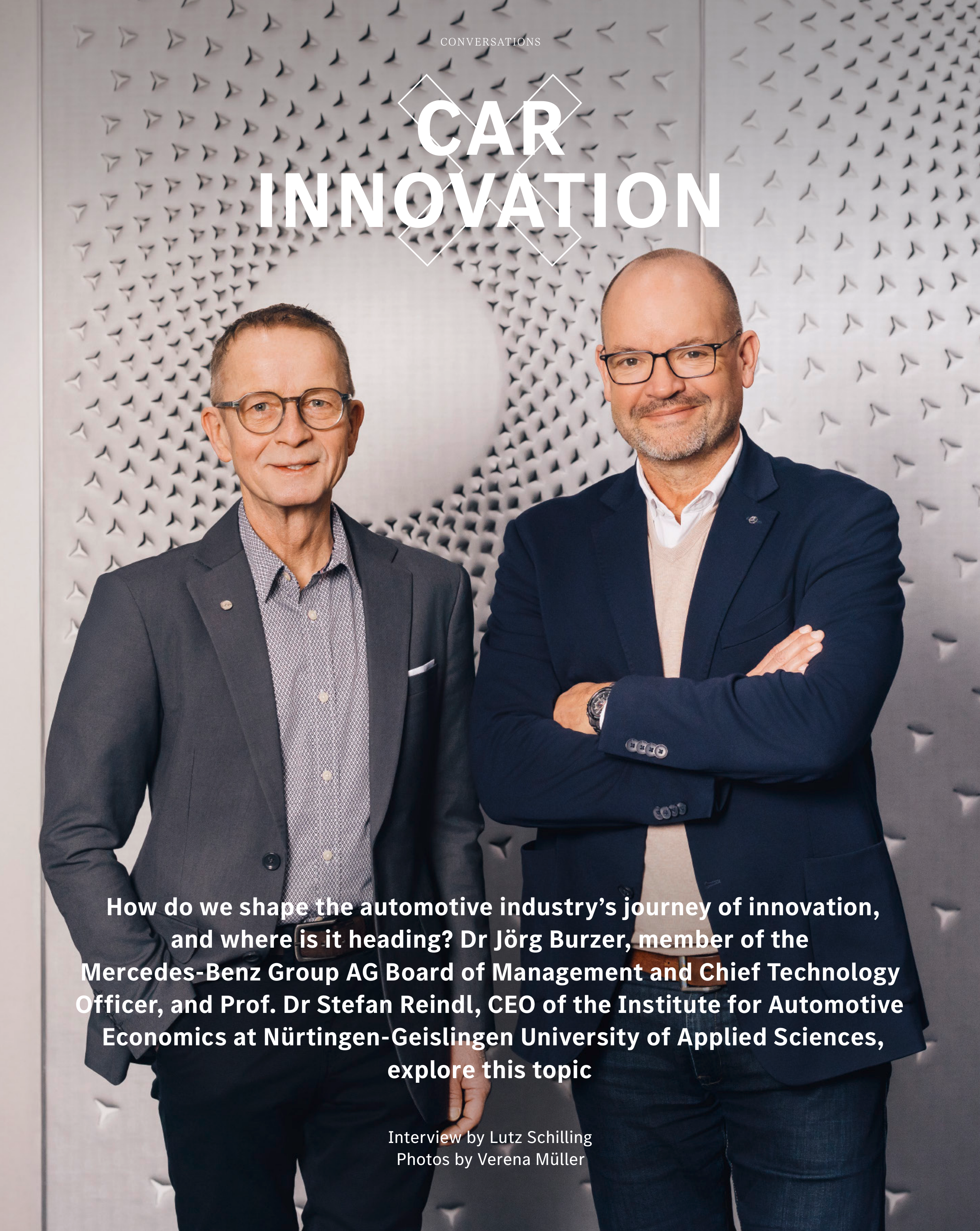
Professor Reindl, you are educating the next
generation. What qualities do young people need
today to drive innovation?
Prof. Reindl: In my view, young people need three
things: Firstly, depth of expertise. We teach economics,
but a sound understanding of the technology is essen-
tial in order to apply it effectively in management. Sec-
ondly, systems thinking and interdisciplinarity. Mobility
today is an interconnected system. It ranges from en-
ergy supply and software to regulatory issues, the user
experience, and sustainability. And thirdly, the ability to
implement innovative projects in an agile manner and
to learn from the process. In other words: test quickly,
learn from the data, and repeat with improvements. The
reality today is that innovation cycles are becoming
shorter, driven by digitalisation and AI.
Jörg Burzer: The major innovations we need now
are conceived as systems and modules, featuring in-
telligent interaction between hardware and software
and our own operating system, which we call MB.OS
(Mercedes-Benz Operating System). This has an impact
on how we collaborate on development, particularly
at a global level. For example, we are working with our
partner Nvidia on our automated driving system. In
China, however, we work with Momenta. This enables
us to cater to the needs of individual customer groups.
Expectations in China are different from those in Europe,
for example.
The complexity involved in innovation is much
greater today, and systemic thinking is a key concept in
this context. And we also need to be brave. Not in the
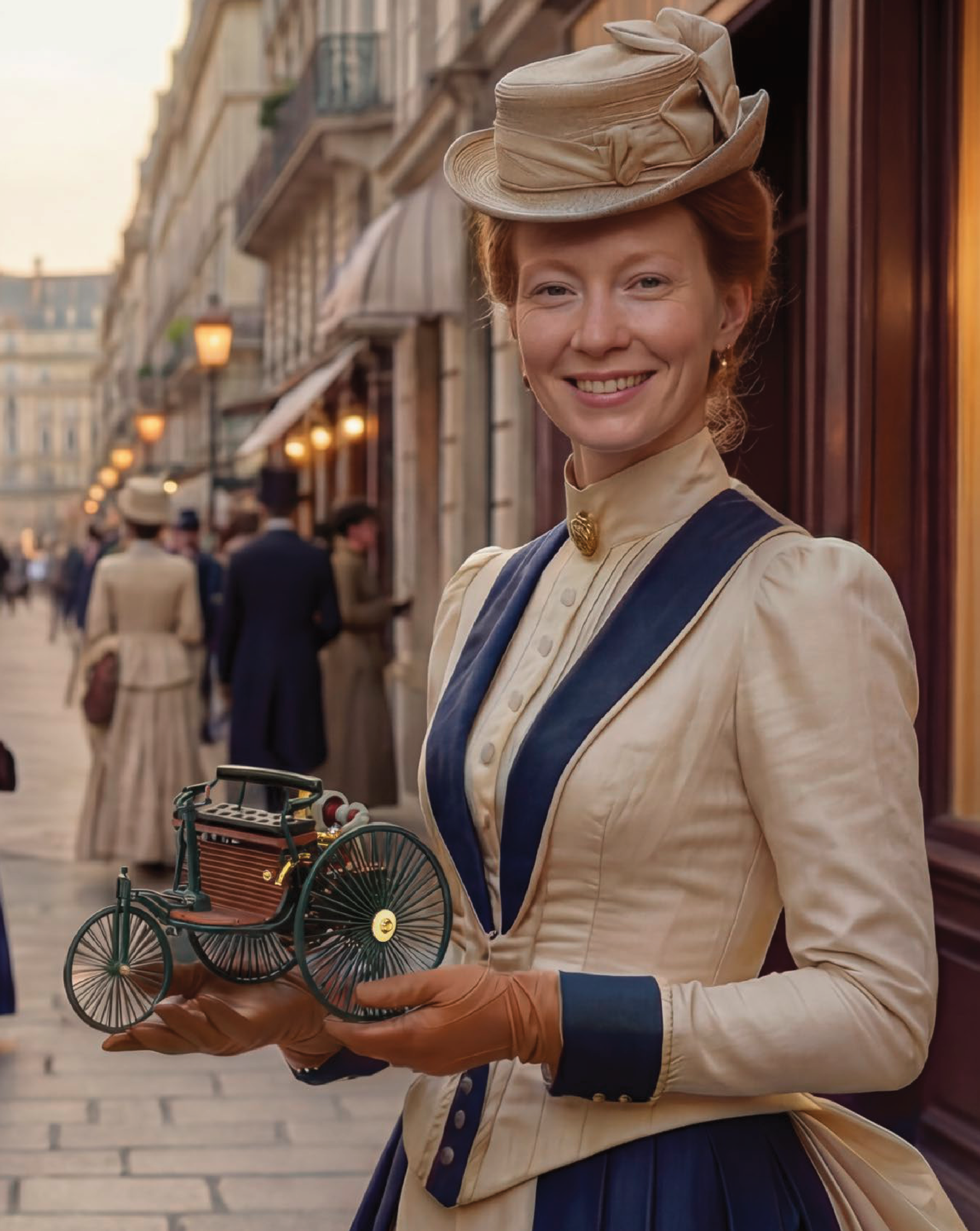
sense of risks associated with the product. But take Carl
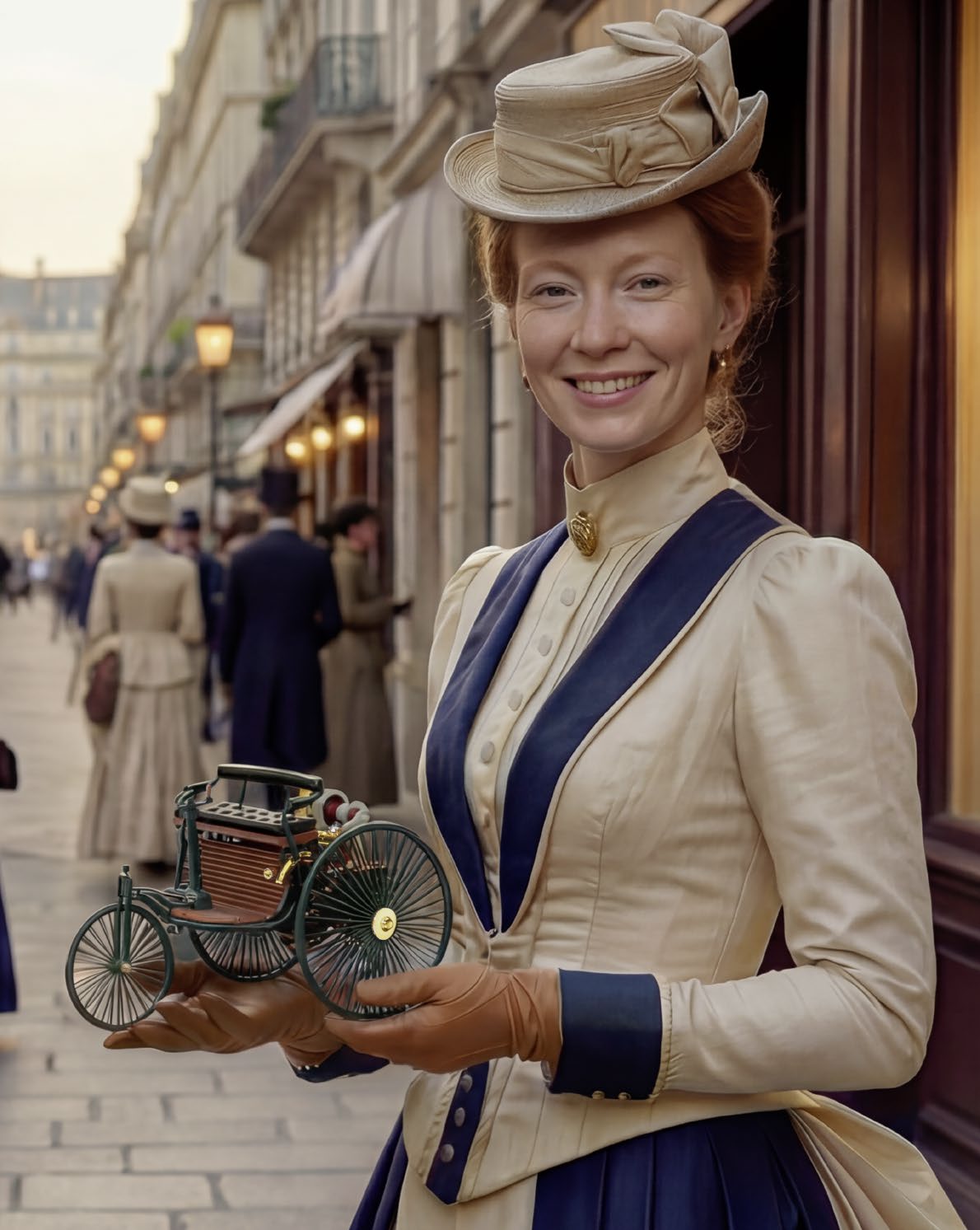
Benz, who was very brave. And in Bertha Benz, he had a
practical partner who, as a courageous and strong wom-
an with a high degree of self-determination, went on to
bring the technology to the roads. These things always
go hand in hand.
Mercedes-Benz talks about constantly rein-
venting the car. What do you mean by that? And
furthermore, is there such a thing as “typical”
Mercedes-Benz innovations?
Jörg Burzer: Groundbreaking innovations and
inventions that we have introduced into our models and
the automotive industry in collaboration with partners
include safety innovations like ABS, ESP, and PRE-SAFE,
for which the Mercedes-Benz brand is renowned. We are
currently developing systems for autonomous driving,
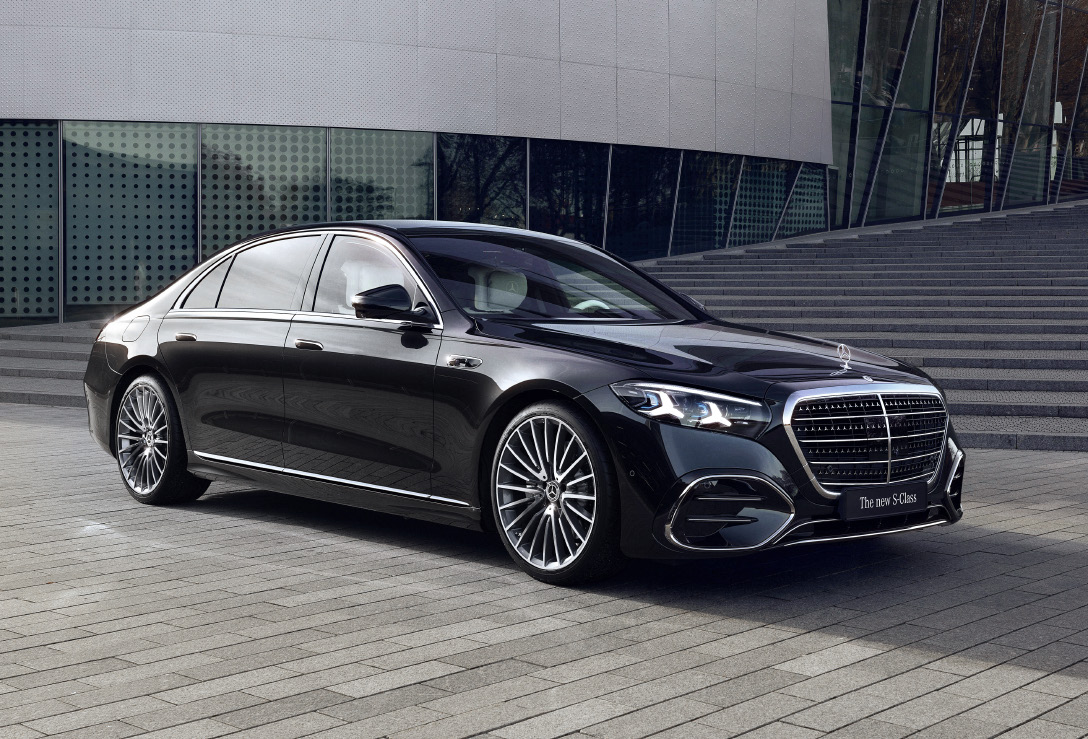
which we introduced to the S-Class in 2021 at Level 3.
Currently, we are working on Level 4 projects using the
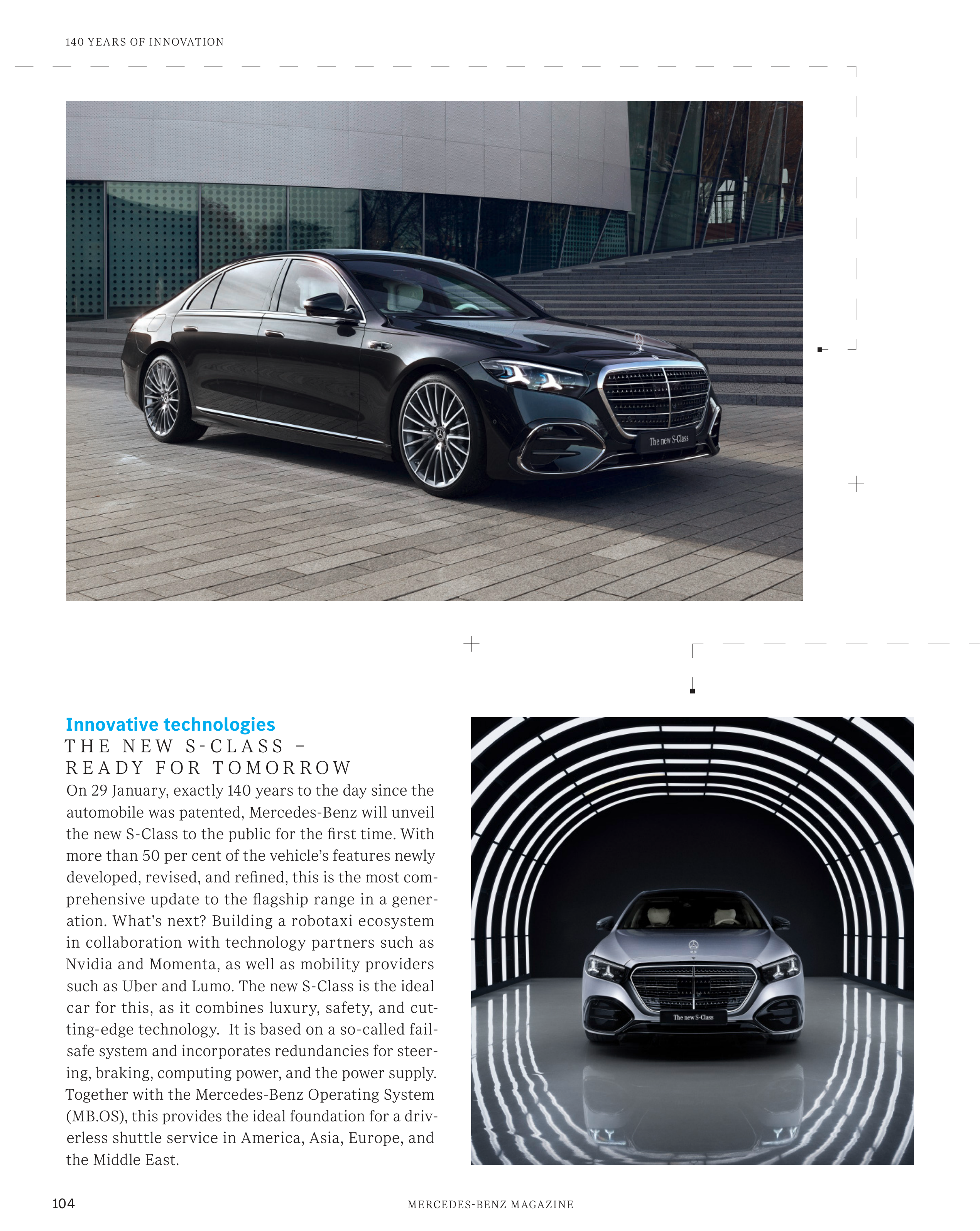
new S-Class as the basis for our robotaxis – not yet in
Germany, but hopefully soon.
It is important never to stand still or rest on one’s
laurels when it comes to innovation, but to keep mov-
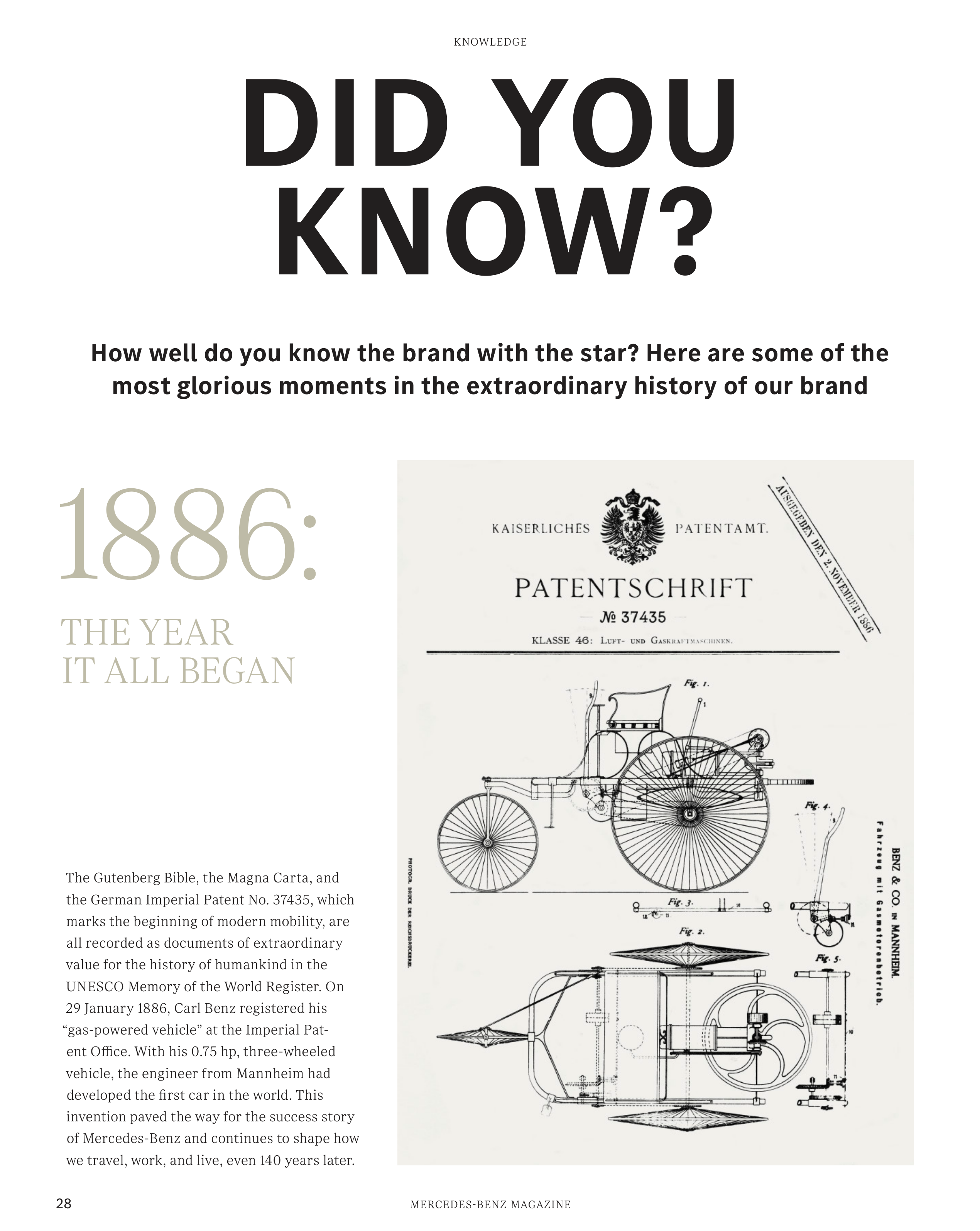
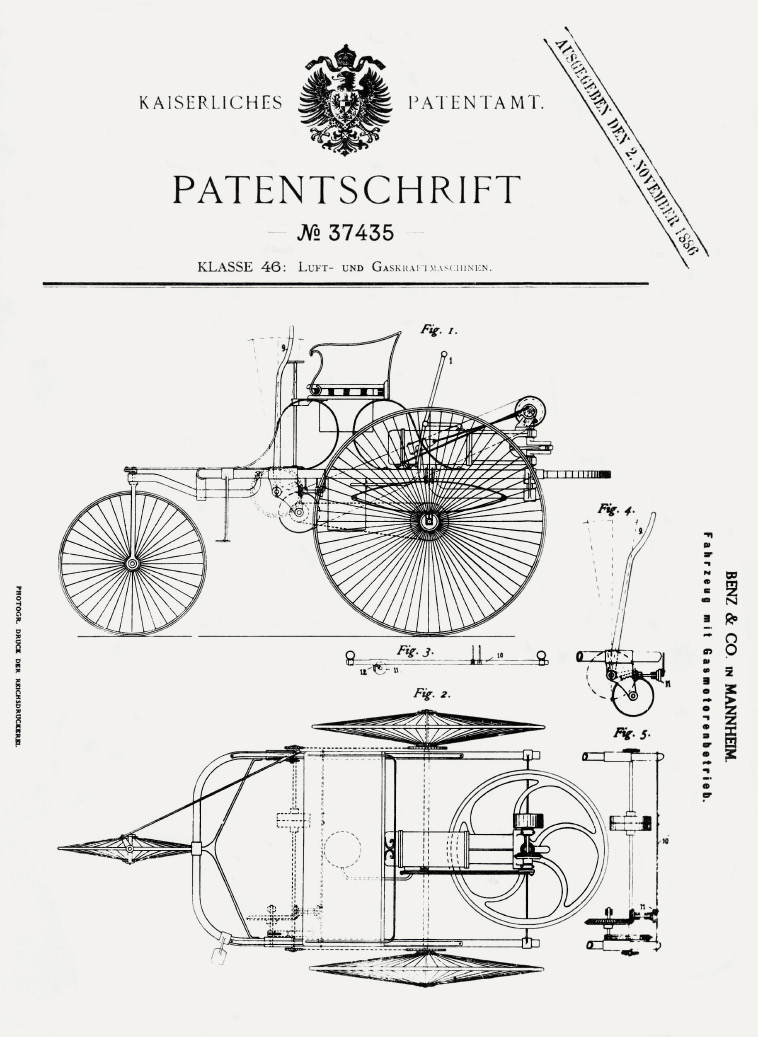
ing forward. Just as Carl Benz’s patent was merely the
start of a journey of innovation that we are continuing.
One difference from the past is that, initially, as many
innovations as possible were reserved for the top-of-
the-range models. In today’s global marketplace, that is
no longer an option. In key sectors such as software and
electric mobility, innovation cycles have become too
fast for this. You have to constantly reinvent yourself
and keep coming up with new ideas.
Professor Reindl, many technological innova-
tions in these systems remain invisible to motor-
ists. How are they actually perceived? And which
innovations make a difference?
Prof. Reindl: Many innovations are perceived
through effects. The customer notices that the car is
safer and more reliable, offers greater comfort, and is
more efficient. Take safety, for example. At first, fea-
tures such as ABS, airbags, and ESP needed explaining,
“In Germany, perfectionism
is highly valued. But
sometimes you just have
to get started”
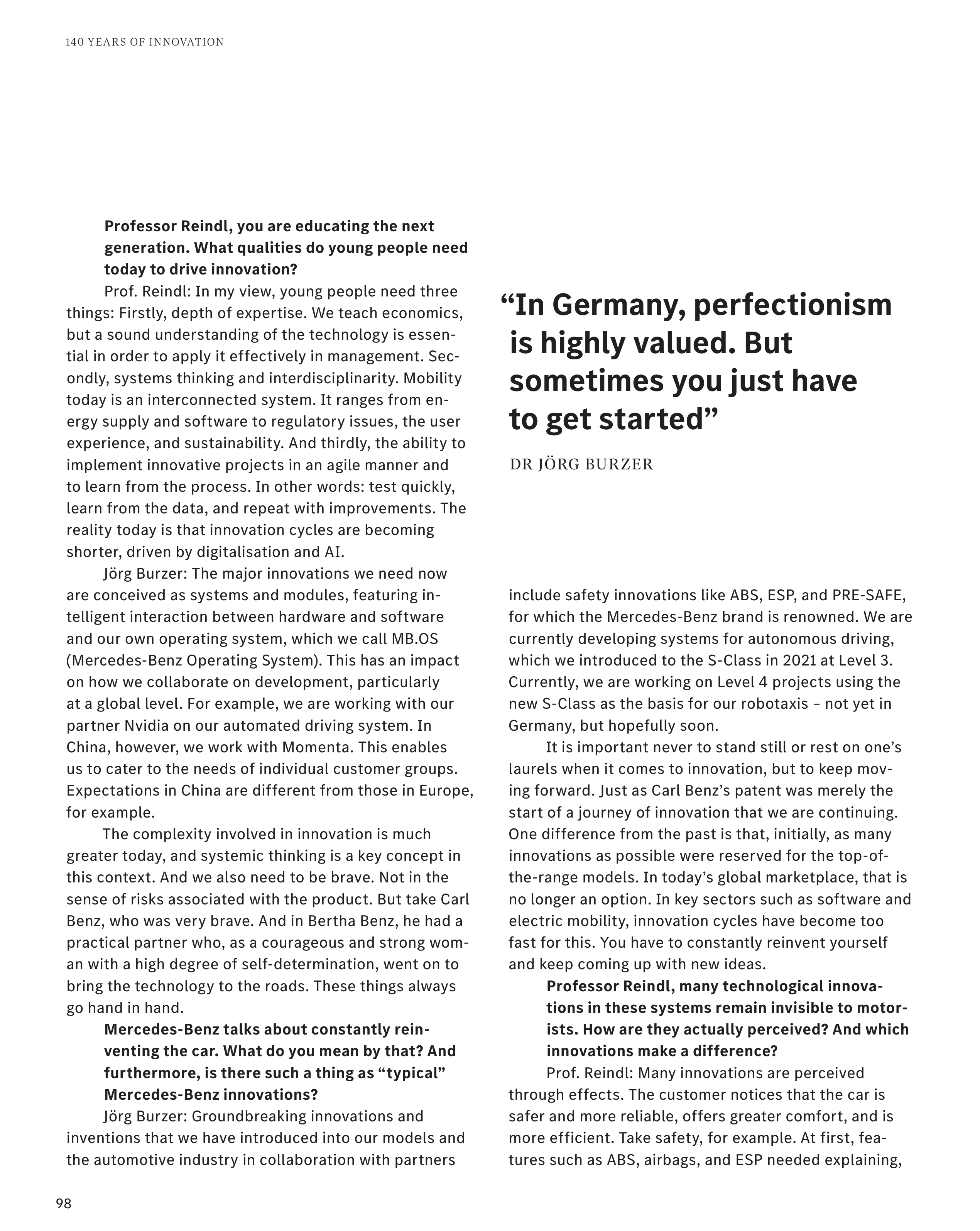
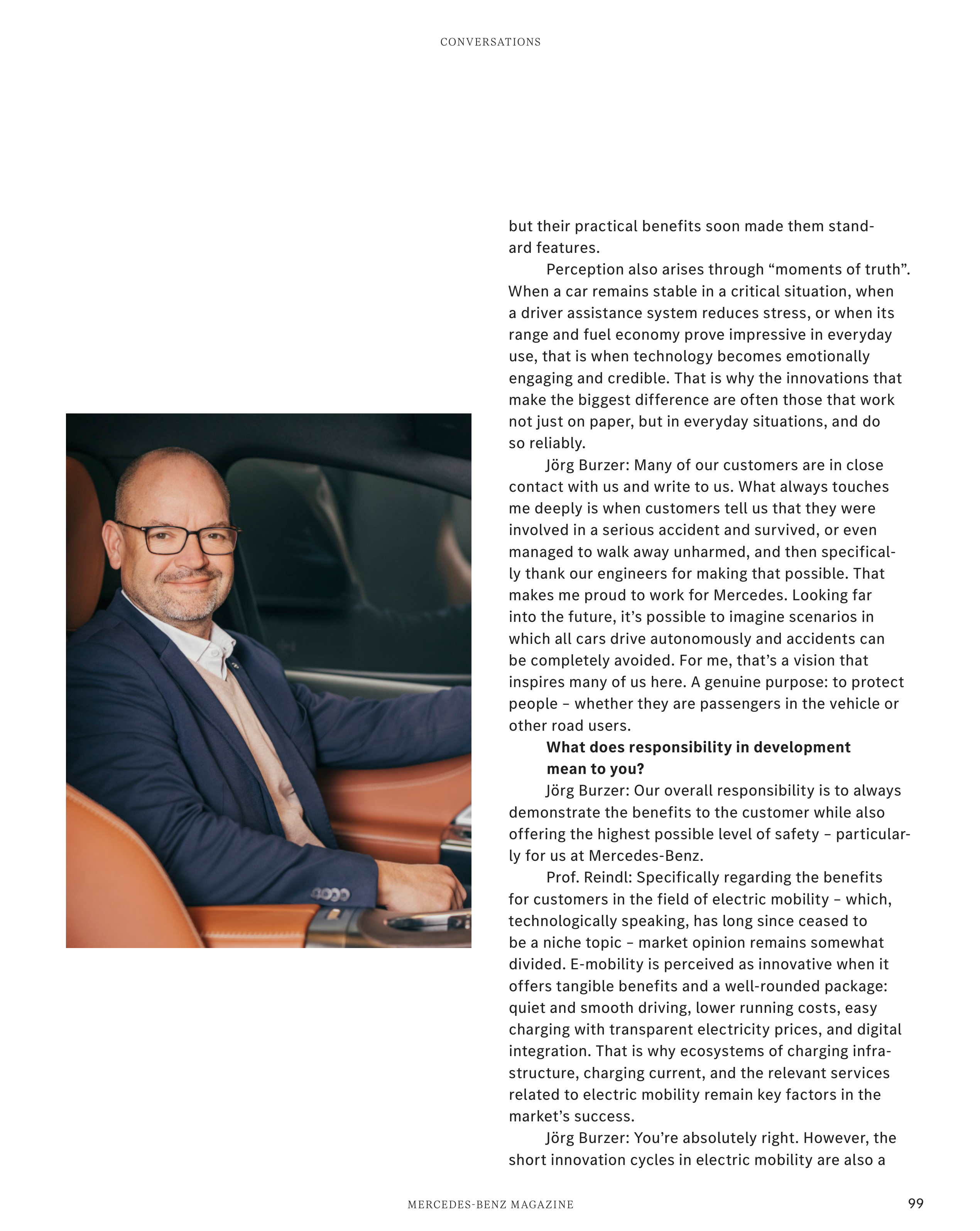
DR JÖRG BURZER